Chisapani Nagarkot Trek – 3 Days from Kathmandu
Trip Duration: 3 Days
Trip Grade: Easy
Group Size: 12
Meals: All meals during the trek
Best Season: October to April
Start Point: Kathmandu (Sundarijal)
Accomodation: Lodge in Chisapani, hotel in Nagarkot
Ending Point: Kathmandu (Changu Narayan)
Max Altitude: 2,400m (Borlang Bhanjyang)
Transportation: Private vehicle
Permits Required: Shivapuri Nagarjun National Park entry
Overview
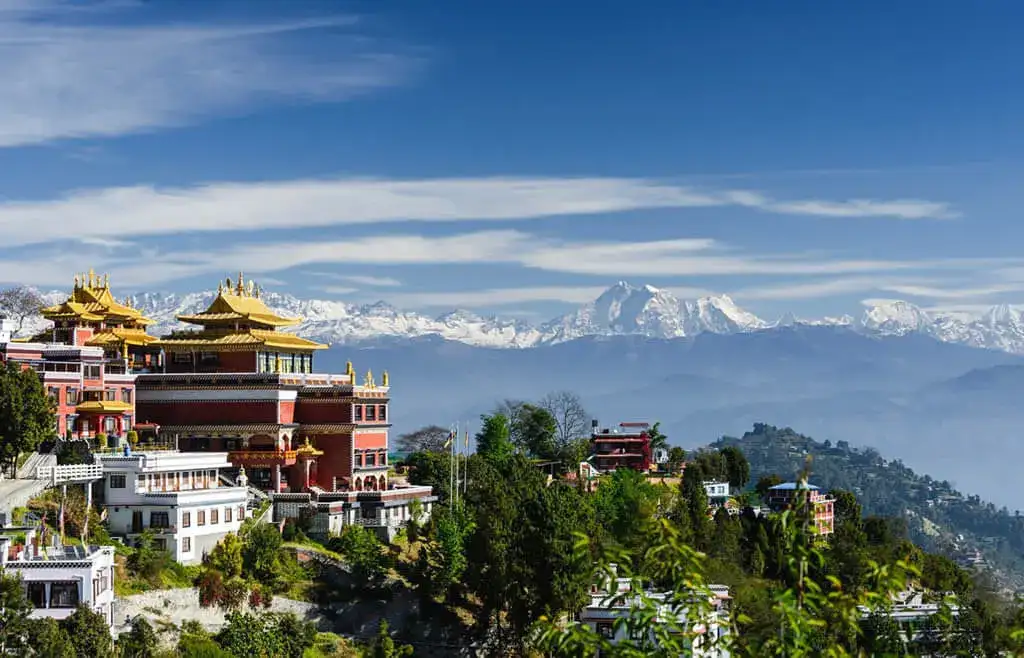
The Chisapani Nagarkot Trek is a three-day walk along the hills on the northern and eastern rim of the Kathmandu Valley. It starts at Sundarijal, less than an hour's drive from the city, climbs through the forest of Shivapuri Nagarjun National Park to the ridge village of Chisapani, follows farm trails and ridges to Nagarkot, and ends at Changu Narayan, the oldest temple in the valley. From the ridges, on clear days, you see a long line of Himalayan peaks from Ganesh Himal and Langtang in the north-west to the Everest region far to the east.
You never go higher than about 2,400 m, so there's no altitude risk and no need for special training. It suits people with only a few days in Nepal, families, first-time trekkers who want to try a teahouse-style trip, and anyone who wants mountain views without flights or long drives. You'll walk 4–7 hours a day with a guide and porter, stay in a lodge in Chisapani and a hotel with mountain views in Nagarkot, and be back in Kathmandu by the afternoon of Day 3.
This page covers the day-by-day route, what each day is like, the best time to go, costs and what to pack.
Trip at a Glance
Detail | Information |
|---|---|
Duration | 3 days, 2 nights, Kathmandu to Kathmandu |
Route | Sundarijal – Mulkharka – Borlang Bhanjyang – Chisapani – Chauki Bhanjyang – Nagarkot – Changu Narayan |
Walking | About 4–5 hours (Day 1), 6–7 hours (Day 2), 3–4 hours (Day 3) |
Highest point | Borlang Bhanjyang, about 2,400 m |
Overnights | Chisapani (about 2,200 m) and Nagarkot (about 2,175 m) |
Grade | Easy to moderate |
Permits | Shivapuri Nagarjun National Park entry |
Accommodation | Lodge in Chisapani, hotel in Nagarkot |
Meals | All meals during the trek (from lunch on Day 1 to lunch on Day 3) |
Group size | 1 to 12 people |
Best months | October to April |
Price | From US$450 per person |
Why Choose the 3-Day Chisapani Nagarkot Trek?
Most treks in Nepal need at least a week and a flight or long drive to reach the trailhead. This one starts on the edge of Kathmandu. That makes it useful in several situations: as a short trip on its own, as a warm-up before a longer trek such as the Langtang Valley Trek, or as an add-on when bad weather has cancelled a mountain flight.
Three days is the natural length for this route. Chisapani and Nagarkot are about a day's walk apart, and each is a viewpoint where you want to be at sunset and sunrise. A two-day version that skips Chisapani or drives one way is possible, and so is a four-day version that adds a night in Dhulikhel or a visit to Bhaktapur. But the three-day route gives you two nights on the ridges, two chances at clear morning views, and a walk that ends at a World Heritage temple rather than a road junction.
The direction matters too. Walking from Sundarijal to Nagarkot means you start with the forest climb while you're fresh, and then spend Day 2 on a mostly gentle ridge walk. Finishing at Changu Narayan puts the cultural visit at the end, with an easy downhill walk and a short drive back to the city.
Be aware that roads now reach both Chisapani and Nagarkot, and parts of the Day 2 route follow quiet dirt roads rather than footpaths. You'll still spend most of the time in forest and farmland, but this is a village and ridge walk, not a wilderness trek.
Shivapuri Nagarjun National Park
The first day of the trek is inside Shivapuri Nagarjun National Park, the protected forest on the northern rim of the Kathmandu Valley. It began as a watershed and wildlife reserve in 1976, protecting the source of much of Kathmandu's drinking water, and became a national park in 2002. The park climbs from about 1,400 m to the summit of Shivapuri, at 2,732 m. For details and fees, see the Nepal Tourism Board page on the park.
The forest is mostly oak, chestnut, pine and rhododendron, which flowers in red and pink from about February to April. The park is known for its birdlife, and walkers often see or hear laughingthrushes, barbets, sunbirds and woodpeckers. Mammals such as barking deer, rhesus macaques, langurs and even leopards live here, though you're unlikely to see the shy ones. Shivapuri Nagarjun is the most visited national park in Nepal, largely because of day visitors from Kathmandu, but on a weekday the Sundarijal trail is quiet.
If you'd like to explore more of the park, our guide to hiking in the Kathmandu Valley describes other trails, including Nagi Gompa and the Shivapuri summit.
Chisapani: The Ridge Village
Chisapani means "cold water" in Nepali. The village is a small cluster of lodges and houses on a saddle at about 2,200 m, on the edge of the national park. Until roads arrived, it was a stop for porters and traders crossing between the Kathmandu Valley and the Helambu region to the north, which is also why it is the first overnight on the Helambu trek.
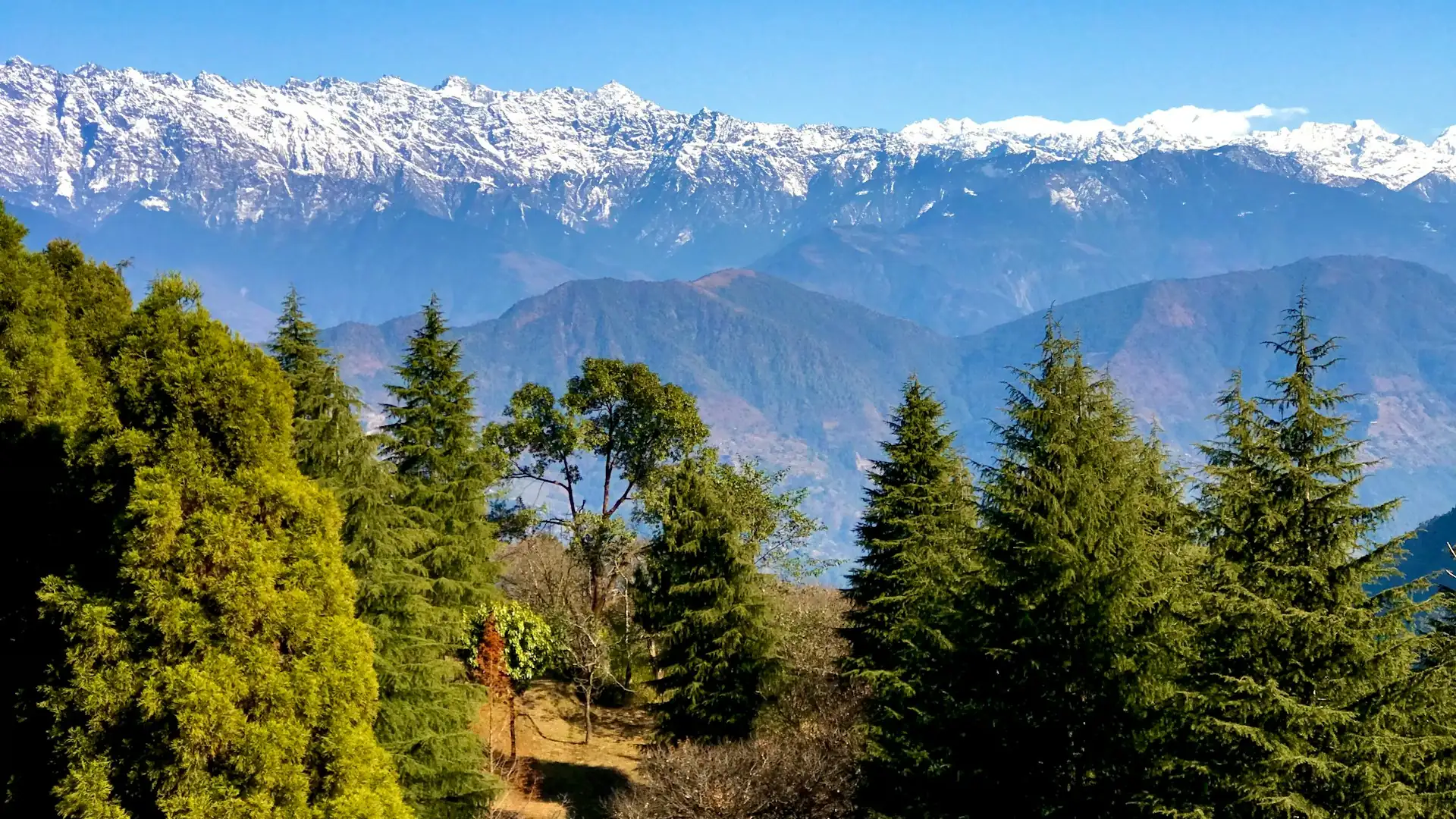
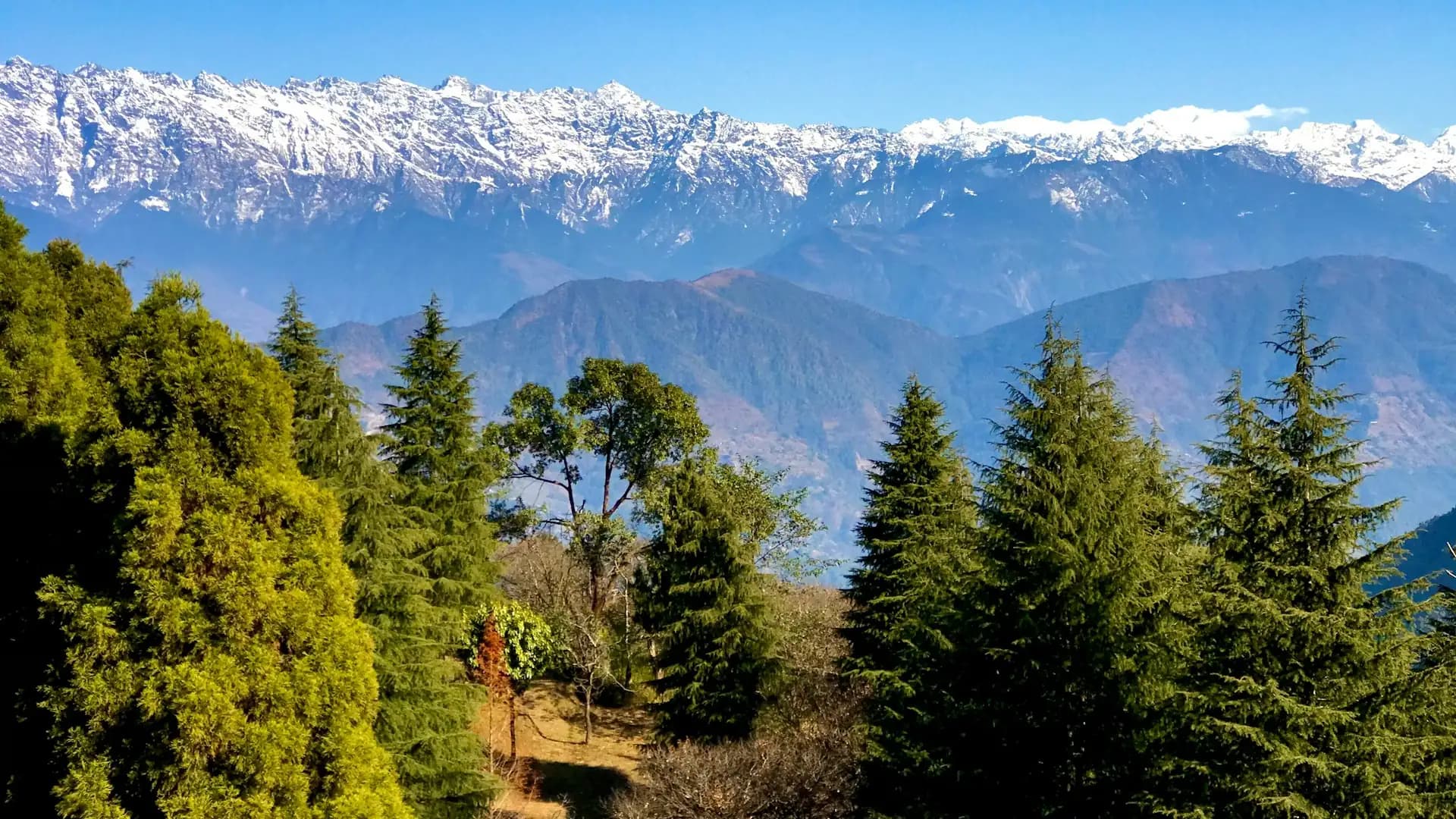
Many of Chisapani's buildings were damaged in the 2015 earthquake and have since been rebuilt. Lodges are simple but comfortable, with private twin rooms and shared or attached bathrooms. The views are the reason to stay. From the ridge, you look north across the Melamchi valley to a long chain of mountains, including Langtang Lirung (7,234 m), Dorje Lakpa (6,966 m) and the peaks of the Jugal range, with Ganesh Himal to the north-west.
Nagarkot: Sunrise on the Valley Rim
Nagarkot is a hill station on the eastern rim of the Kathmandu Valley, about 30 km from the city. It's one of the best-known viewpoints near Kathmandu, and on clear mornings the Himalaya stretches across most of the northern horizon. From west to east, you can pick out Ganesh Himal, Langtang, Dorje Lakpa, the Jugal range and Gaurishankar (7,134 m). On very clear days, a small group of peaks in the Everest region appears far to the east, though Everest itself is a tiny point at the edge of the view, and many visitors can't make it out.
Nagarkot is a resort town now, with a range of hotels, a viewpoint tower on the hill above the village, and walking trails into the pine forests. Weekends bring visitors from Kathmandu, so weekday stays are quieter. For more about the views here, see our articles on whether you can see Everest from Kathmandu and our Nagarkot hiking guide.
Changu Narayan: The Oldest Temple in the Valley
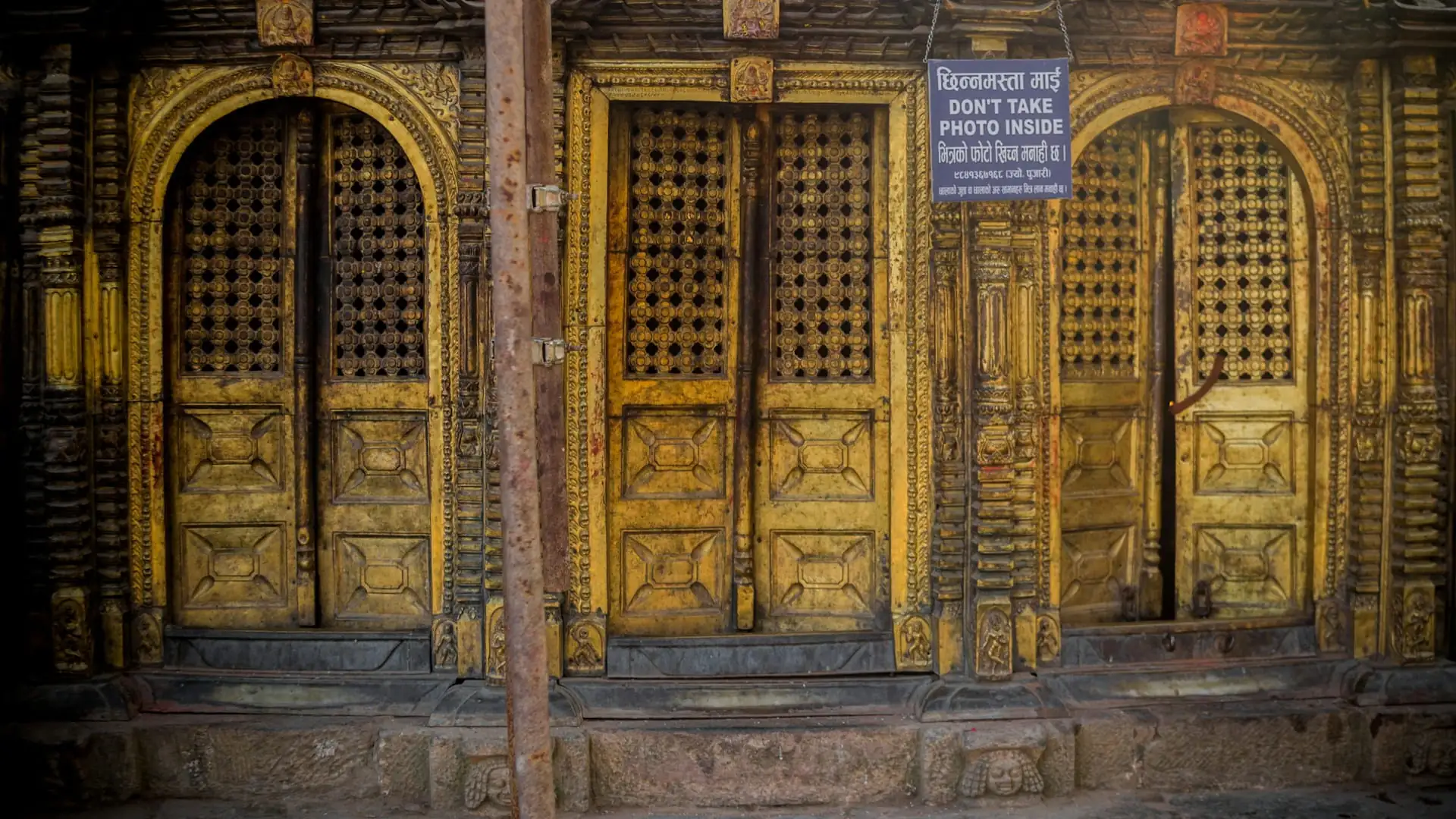
Changu Narayan stands on a ridge at about 1,541 m above the Manohara river. It is one of the seven monument zones that make up the Kathmandu Valley UNESCO World Heritage Site. The temple is dedicated to Vishnu in his form as Narayan. A stone pillar in the courtyard has an inscription from the Licchavi king Manadeva dated to 464 CE, the oldest known inscription in the Kathmandu Valley.
The present two-tiered pagoda was rebuilt in the early 18th century after a fire, and it's covered in carved wooden struts, gilded doors and stone guardians. Around the courtyard are some of the finest Licchavi stone sculptures in Nepal, including Vishnu as Vishwarupa, the many-headed cosmic form, and Vishnu riding Garuda, which appears on the old Nepali ten-rupee note. The temple was damaged in the 2015 earthquake and has been repaired. The small village below the temple has a few cafés and a museum of traditional household objects.
To combine the trek with more of the valley's heritage, read our Kathmandu day tour guide.
Villages and People Along the Route
The hills around Chisapani and Nagarkot are home mainly to Tamang communities, with Brahmin, Chhetri and Newar families in lower villages. The Tamang are one of Nepal's largest ethnic groups. Most are Buddhist, and you'll see small stupas, prayer flags and mani walls along the trail. Many of the young men from these hills work in Kathmandu or abroad, so women and older family members do much of the farm work.
Farming here follows the seasons. In autumn, terraces are golden with rice ready for harvest; in winter, there are fields of wheat and yellow mustard; in spring, you'll see maize planted on the higher slopes. You'll pass people carrying loads of fodder, water buffalo resting outside houses, and children walking long distances to school. A "namaste" goes a long way.
The Mountains You Can See
Peak | Height | Best seen from |
|---|---|---|
Ganesh Himal (Yangra) | 7,422 m | Chisapani and Nagarkot, to the north-west |
Langtang Lirung | 7,234 m | Chisapani, straight north |
Dorje Lakpa | 6,966 m | Chisapani and Nagarkot, north |
Jugal Himal | up to about 7,000 m | Chisapani and Nagarkot, north-east |
Gaurishankar | 7,134 m | Nagarkot, east |
Everest region | 8,000 m and higher | Nagarkot, far east, only on very clear days |
The peaks are 50–150 km away, so they look smaller than they do on a high-mountain trek, but the panorama is wide. Mornings in October, November and December give the best chance of a full view. By late morning, cloud often hides the mountains.
Safety on the Trail
This is one of the safest treks in Nepal, but a few points are worth knowing. Parts of the trail inside the national park are quiet and far from houses, so it's best not to walk them alone. That's one reason we always send a guide, and on busy weekends you'll also meet plenty of other walkers. Stone steps can be slippery after rain or in the morning dew, so take care on the descent to Chisapani and on the last day to Changu Narayan.
On Day 2, some sections follow dirt roads used by jeeps and motorbikes. Your guide will choose footpaths where possible and keep you on the safe side of the road. In winter, mornings on the ridges can be below freezing, so the warm jacket on the packing list isn't optional. In the monsoon, landslides sometimes close short sections of the road and trail, and your guide will reroute if needed. Our guide carries a first aid kit and a phone, and a vehicle can reach both Chisapani and Nagarkot if anyone needs to leave early.
Route, Distance and Walking Hours
Day | Route | Distance | Walking time | Altitude change |
|---|---|---|---|---|
1 | Sundarijal – Mulkharka – Borlang Bhanjyang – Chisapani | about 10–12 km | 4–5 hours | Up about 950 m, down about 200 m |
2 | Chisapani – Jhule – Chauki Bhanjyang – Kattike Bhanjyang – Nagarkot | about 18–20 km | 6–7 hours | Mostly gentle; descent to Chauki Bhanjyang, then climb to Nagarkot |
3 | Nagarkot – Changu Narayan | about 10–12 km | 3–4 hours | Down about 600 m |
Distances and times vary with pace and stops. Day 2 is the longest, though most of it is on easy ground.
Altitude Profile
Place | Altitude |
|---|---|
Kathmandu | 1,400 m |
Sundarijal | about 1,460 m |
Borlang Bhanjyang | about 2,400 m |
Chisapani | about 2,200 m |
Nagarkot | about 2,175 m |
Changu Narayan | 1,541 m |
Sources differ by up to 50 m for Chisapani and Nagarkot, so we give approximate heights.
Map Overview
The route forms an arc around the north-eastern corner of the Kathmandu Valley. From Sundarijal on the valley floor, it climbs north through the national park to Chisapani, then turns east and south-east along the ridges to Nagarkot on the valley's eastern rim. On the last day, it drops south-west to Changu Narayan, about 7 km north of Bhaktapur. Our route map image is shown in the gallery.
How Difficult Is the Chisapani Nagarkot Trek?
We grade it easy to moderate. There's no technical ground and no altitude problem, but there are real ups and downs.
Day 1 has the main climb: about 950 m of ascent, much of it on stone steps. It's steady rather than steep, and you can take it slowly.
Day 2 is the longest day, at 6–7 hours, but it's mostly gentle walking on trails and farm tracks.
Day 3 is mostly downhill, which can be hard on the knees.
If you can walk 4–6 hours with breaks and climb a few hundred steps, you can do this trek. Children from about 8 and fit older walkers often complete it without difficulty. Trekking poles help on the descents.
Fitness and Preparation
You don't need special training, but some walking in the weeks before will make the trek more enjoyable. Try a few walks of 2–3 hours, ideally including hills or stairs, and wear the shoes you'll trek in. If you're arriving in Nepal straight from a long flight, give yourself a day in Kathmandu to recover before starting.
The trek is also a good test before a longer trip. If you're thinking about the Ghorepani Poon Hill Trek or Langtang, three days here will show you how you cope with steps, lodge life and early mornings.
Altitude
At a highest point of about 2,400 m, altitude sickness is very unlikely. Some people notice they get out of breath a little faster on the climbs, but symptoms of altitude illness usually start above about 2,500–3,000 m. You don't need any acclimatization days.
Best Time for the Chisapani Nagarkot Trek
October to November: the best time. Clear skies after the monsoon, sharp mountain views, comfortable walking temperatures, and green terraces turning gold. The busiest season.
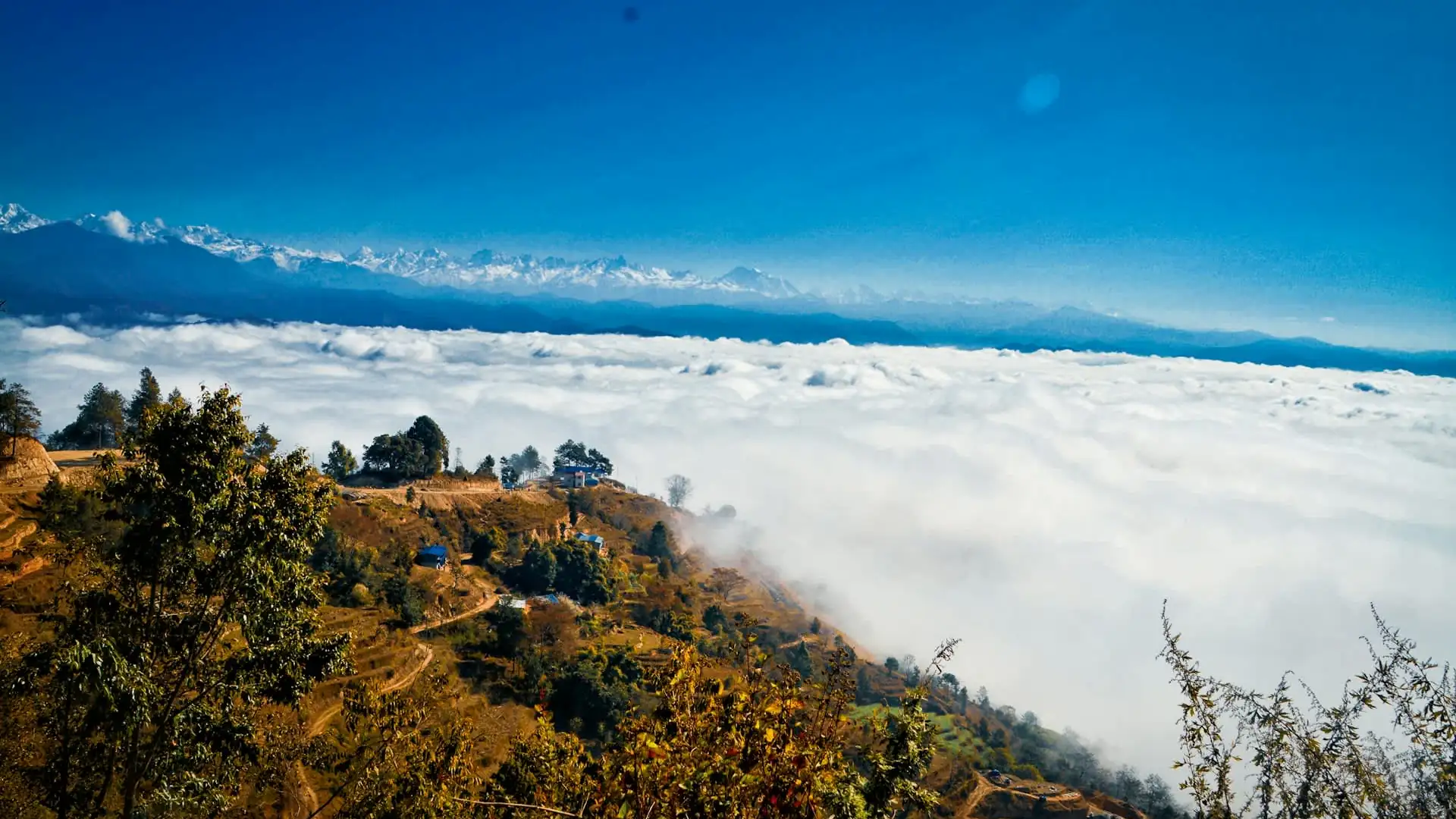
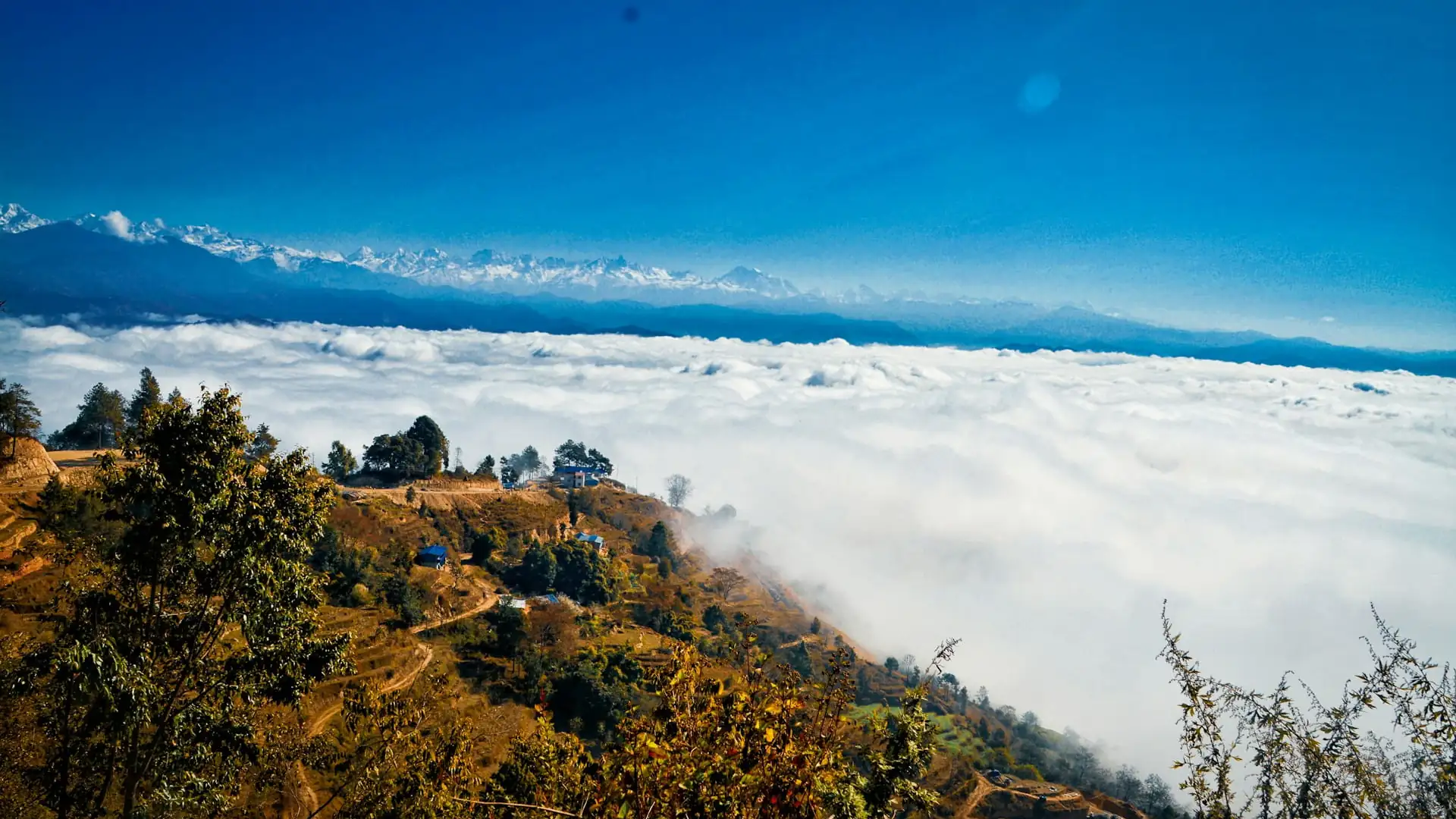
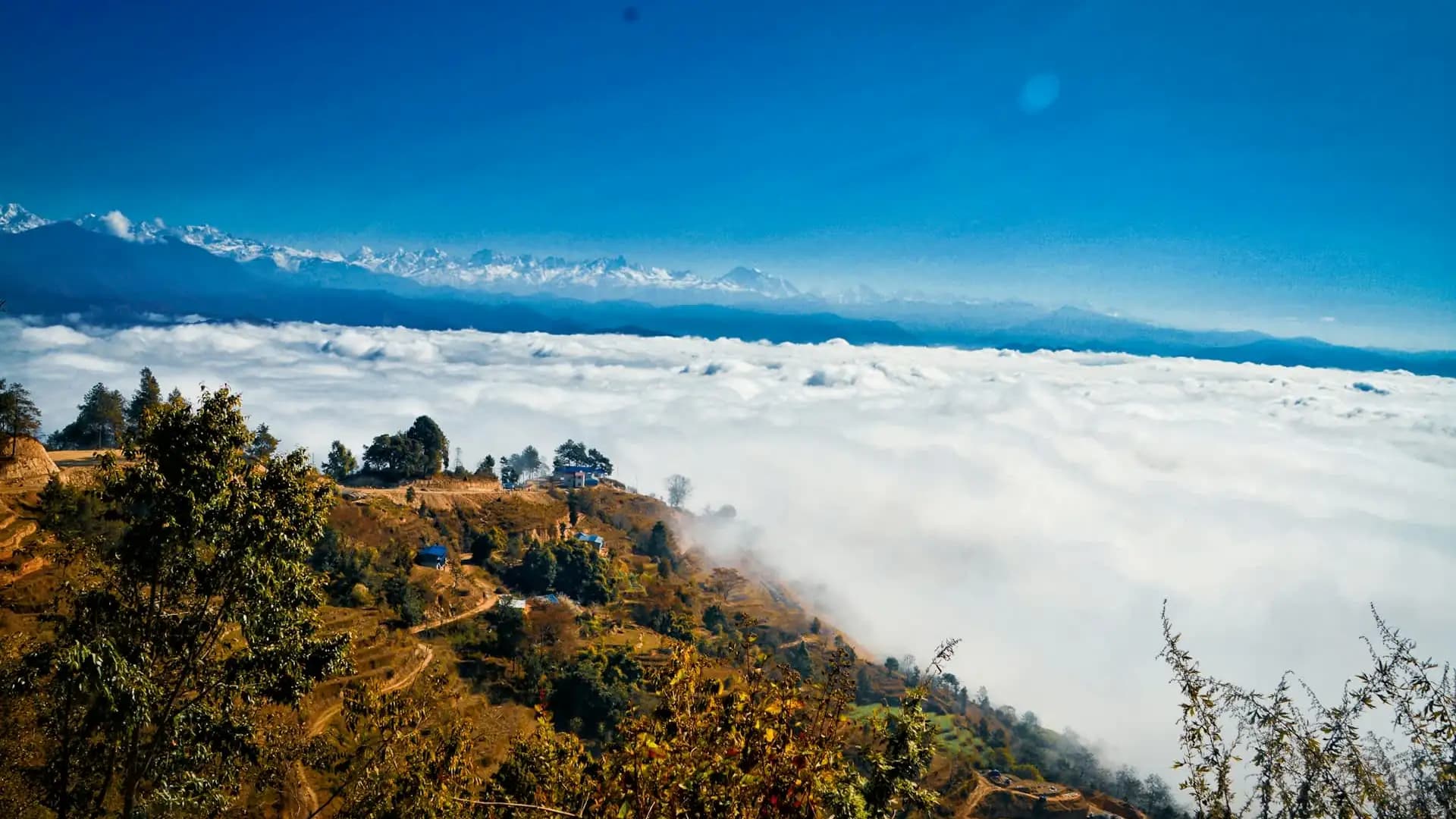
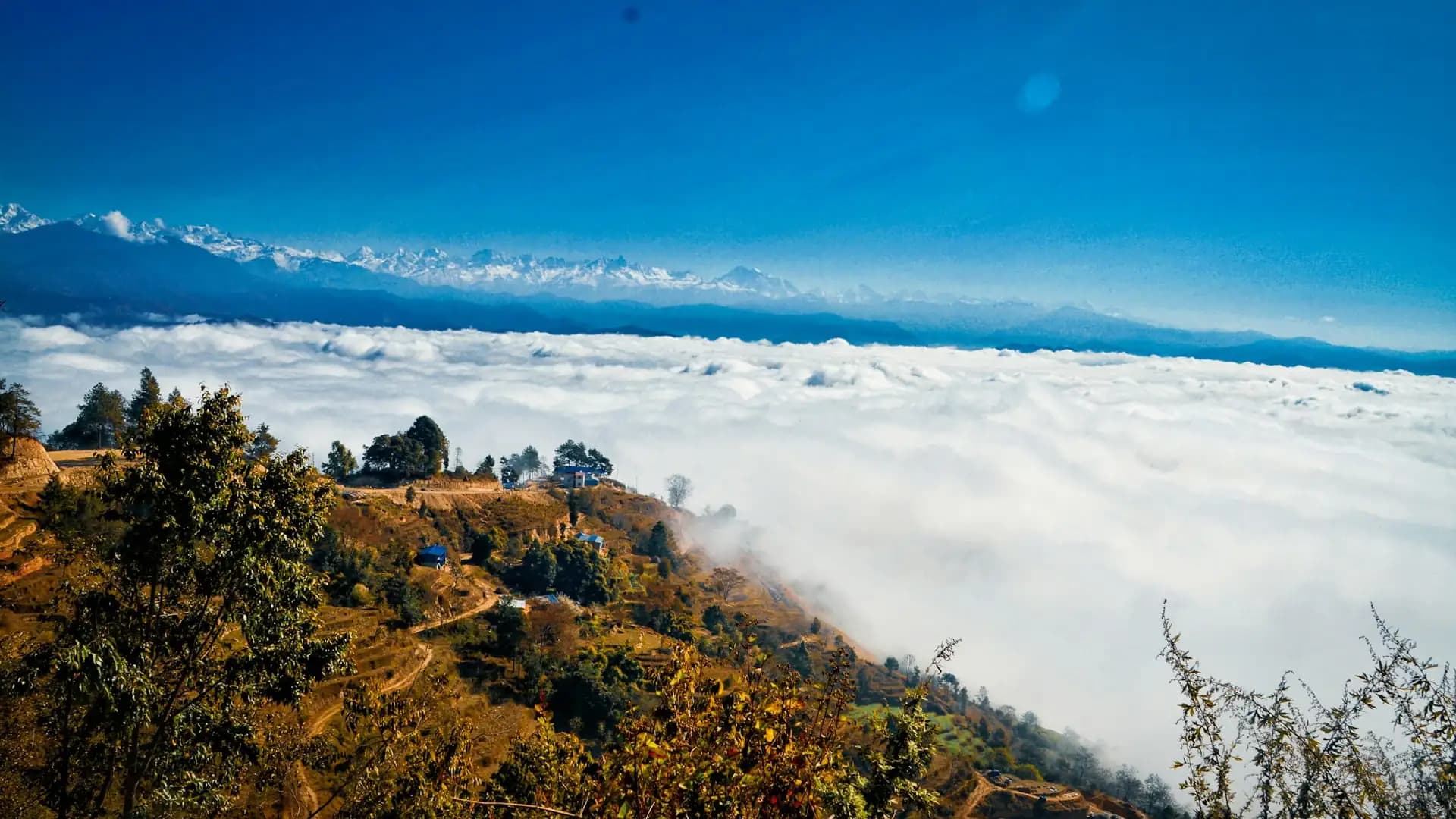
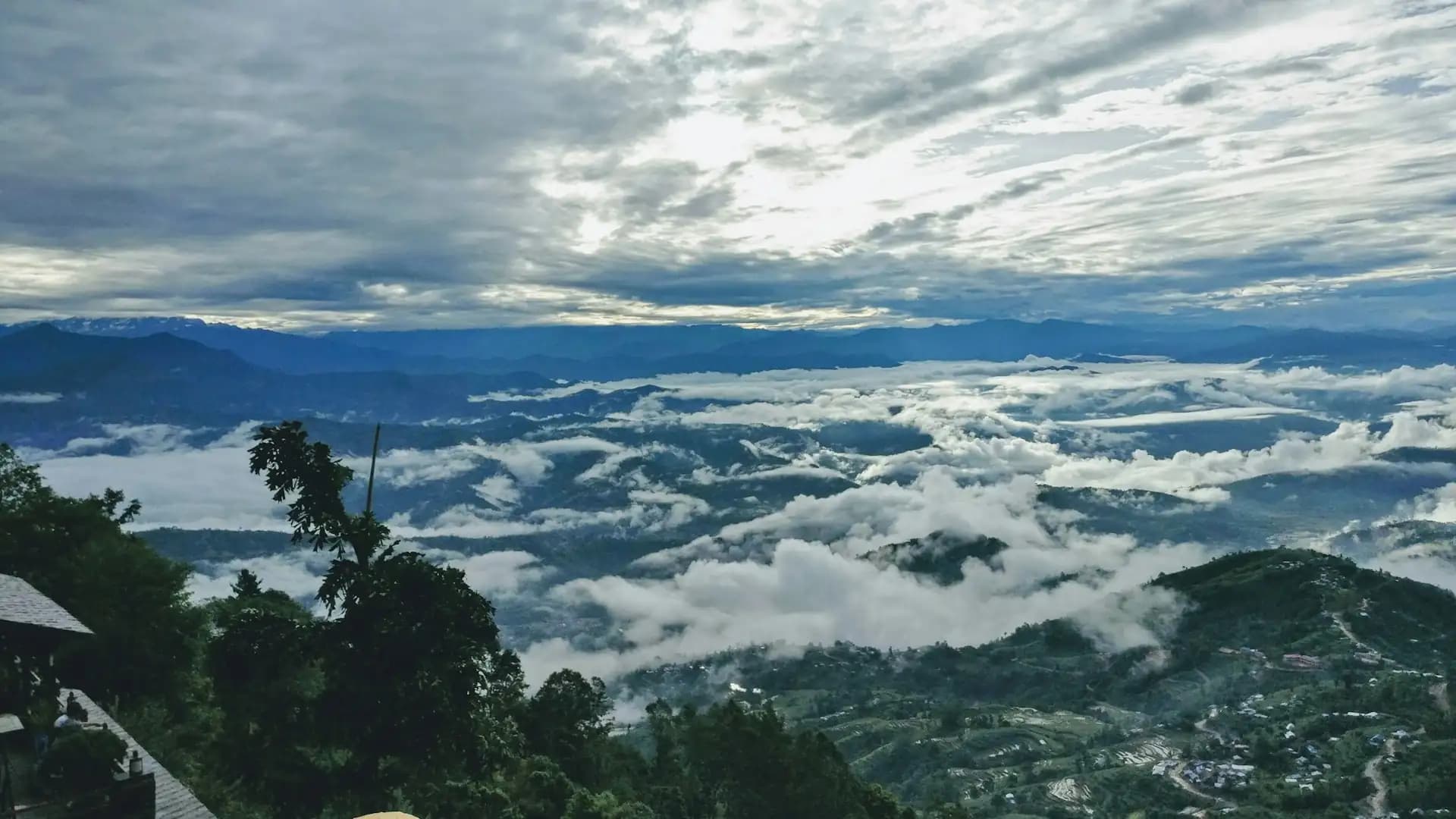
December to February: cold mornings and nights (near freezing at Chisapani and Nagarkot), but dry and often clear. Mornings can be foggy in the valleys, and you sometimes look out over a sea of cloud with the mountains above it.
March to April: warm, with rhododendrons flowering in Shivapuri. Haze builds up as the weeks go on, so mountain views become less reliable by April.
May: hot and hazy; views are often poor.
June to September: monsoon. Trails are muddy and slippery, leeches are common in the forest, and the mountains are usually in cloud. The landscape is very green, and short breaks in the rain can be beautiful, but this isn't the season to come for views.
For more on seasons, see our guide to the best time to hike in Nepal.
Weather by Season
Season | Daytime | Night at Chisapani/Nagarkot | Conditions |
|---|---|---|---|
Oct–Nov | about 15–22°C | about 5–10°C | Clear, dry |
Dec–Feb | about 8–15°C | about −2–5°C | Cold, dry, morning fog |
Mar–Apr | about 15–24°C | about 6–12°C | Warm, flowers, haze later |
May–Sep | about 20–27°C | about 14–18°C | Hot, humid, monsoon rain from June |
These are rough ranges. Ridge-top mornings feel colder in the wind.
Getting There
The trek starts and ends in Kathmandu, so there are no flights. Our vehicle collects you from your hotel and drives about an hour to Sundarijal, north-east of the city. At the end, we pick you up at Changu Narayan and drive about an hour back to your hotel, through the edge of Bhaktapur.
If someone in your group doesn't want to walk the whole route, we can arrange for them to drive to Nagarkot and meet you there.
Accommodation
Chisapani: a lodge with twin rooms, blankets, a dining room and hot showers in most lodges (sometimes solar or gas, so not always reliable). Bathrooms are shared or attached depending on the lodge.
Nagarkot: a hotel with private rooms, attached bathrooms, hot water and mountain views from the terrace or rooms.
Rooms are twin-sharing. Single rooms are often available at a supplement, especially in Nagarkot.
Meals and Drinking Water
All meals from lunch on Day 1 to lunch on Day 3 are included. Lodge and hotel menus include dal bhat, fried rice and noodles, momos, soups, pasta and simple Western dishes, plus porridge, eggs, toast and pancakes for breakfast. Dal bhat comes with refills and is the best value for energy on the trail. Vegetarian food is easy to find.
Bring a refillable bottle and purification tablets or a filter. Lodges sell boiled or filtered water, and bottled water is available in Chisapani and Nagarkot, but refilling reduces plastic waste.
Internet, Mobile Signal and Charging
Mobile coverage from Nepal Telecom and Ncell is generally good along this route, with a few weak spots in the forest. The lodge in Chisapani and the hotel in Nagarkot have Wi-Fi, though it may be slow. You can charge devices at both places. A power bank is useful if you take a lot of photos.
Permits and Fees
Permit | Cost | Included? |
|---|---|---|
Shivapuri Nagarjun National Park entry | NPR 1,000 per foreign visitor (NPR 600 for SAARC nationals) | Yes |
Changu Narayan temple entry | Charged at the site | Yes |
TIMS card | Not required for this route | – |
Nepal tourist visa | US$30 (15 days), US$50 (30 days) | No |
The park fee is paid at the checkpoint near Sundarijal. Children under 10 are usually free. For visas, see the Department of Immigration.
Chisapani Nagarkot Trek Cost
Our price is from US$450 per person, based on two people sharing.
What the price covers | Notes |
|---|---|
Transport | Private vehicle from your Kathmandu hotel to Sundarijal and from Changu Narayan back to Kathmandu |
Guide | Licensed English-speaking trekking guide |
Porter | One porter for every two trekkers |
Accommodation | Lodge in Chisapani, hotel with mountain views in Nagarkot |
Meals | Lunch and dinner on Day 1, all meals on Day 2, breakfast and lunch on Day 3 |
Fees | National park entry and Changu Narayan entry |
Staff costs | Guide and porter wages, meals, accommodation and insurance |
Extra money to budget
Nepal visa: US$30 for 15 days or US$50 for 30 days
Drinks, snacks, hot showers where charged, and Wi-Fi or charging where charged
Tips for guide and porter
Travel insurance
Extra nights in Kathmandu
Solo travellers pay a supplement for a single room and a private guide, and larger groups pay less per person. Ask us for a quote. For a wider view of costs, see our Nepal trekking cost guide.
Optional Add-ons
Bhaktapur. Stop at Bhaktapur Durbar Square on the drive back from Changu Narayan; it's only about 7 km away and one of the best-preserved old towns in Nepal.
Extra night in Nagarkot. For a second sunrise or a relaxed day in the pine forests.
Dhulikhel. Continue from Nagarkot to Dhulikhel or Namo Buddha for a four-day version.
City tours. Our Kathmandu Pokhara Tour or the longer Kathmandu Pokhara Chitwan Tour combine well with this trek.
More hikes. See our list of hiking places in Kathmandu for day walks.
Travel Tips
Start on a weekday if you can; Saturdays are busier on the park trails and in Nagarkot.
Set an alarm for sunrise at both Chisapani and Nagarkot. The best light lasts only about 20 minutes.
Carry a warm layer even on warm days; the ridge tops get cold when the sun goes down.
Walk on the inside of the trail when you meet porters or animals.
Keep a little cash for snacks and drinks at tea shops along the way.
Let your guide know about any dietary needs before you start.
Photography Tips
Chisapani at sunset and sunrise, looking north to Langtang and the Jugal range.
Nagarkot at dawn from the viewpoint tower or your hotel terrace; a zoom lens helps for the distant peaks.
Winter mornings for cloud seas below the ridges.
Changu Narayan's carved struts and stone statues in soft late-morning light.
Ask before photographing people in villages.
Responsible Trekking
Carry out all your rubbish, including wrappers and wet wipes.
Use a refillable bottle rather than buying plastic.
Stay on the trail inside the national park and don't pick plants.
Walk clockwise around stupas and mani walls.
Dress modestly in villages and at the temple.
Buy snacks and tea from village shops along the way; it's a small but real income for local families.
Is the Chisapani Nagarkot Trek Right for You?
This trek is a good fit if:
You have only a few days in Nepal and want to trek, not just sightsee
You want mountain views without flights, long drives or altitude
You're a first-time trekker or travelling with children or older family members
You'd like a warm-up before a longer trek
It may not be the right choice if you want to get close to the big mountains or walk in remote wilderness. For that, look at a longer trek like Langtang, which goes deep into Langtang National Park.
Why Book With Adventure Life Nepal
Adventure Life Nepal was founded by Dil Bahadur Karki, a Himalayan guide with more than 25 years of experience. He started as a porter and guide and has led trekkers from over 40 countries. We are registered with the Nepal Tourism Board and the Trekking Agencies Association of Nepal (TAAN), and our guides are certified by the Nepal Mountaineering Association. We pay and insure our guides and porters properly and keep porter loads light.
Booking, Cancellation & Refund Policy
A 30% deposit confirms your booking; the balance is due before the trek starts.
Cancellations 30 days or more before the start date get a full refund minus administration fees.
Cancellations 15–29 days before the start date carry a 50% fee.
Cancellations under 15 days before the start date are not refunded.
Travel insurance is mandatory.
Read the full terms and conditions before booking.
Book Your Chisapani Nagarkot Trek
Ready to book the Chisapani Nagarkot Trek? Contact us on WhatsApp at +977 9841248242 or email adventurelifenepal@gmail.com with your dates and group size, and we'll confirm the guide, lodges and transport.
Highlights
Itinerary
- Drive: about 15 km, 1 hour. Walking: about 10–12 km, 4–5 hours We pick you up from your hotel in the morning and drive north-east to Sundarijal, at the edge of the valley. At the national park checkpoint, your guide pays the park fee. The trail starts with stone steps beside the water pipeline that carries water from the Sundarijal reservoir to Kathmandu, past small waterfalls in the forest. After the reservoir, you climb through oak and rhododendron forest to Mulkharka, a Tamang village with tea shops and views back over the valley. Above the village, the trail continues to the pass at Borlang Bhanjyang, about 2,400 m, the highest point of the trek. From here, it's a gentle walk down to Chisapani, a small village on an open ridge. If the sky is clear, the sunset lights up Langtang and the peaks to the north.
- Walking: about 18–20 km, 6–7 hours Get up early for sunrise over the Himalaya. After breakfast, the trail drops through forest and farmland to Jhule and then to Chauki Bhanjyang, where we usually stop for lunch. In the afternoon, you walk through Tamang and Brahmin-Chhetri villages, past terraced fields of rice, millet or mustard depending on the season, and climb gradually from Kattike Bhanjyang to Nagarkot. Parts of this day are on farm tracks and dirt roads. Nagarkot sits on the valley rim with views north and east, and many visitors come up from Kathmandu for its sunsets. You'll have time to rest before dinner.
- Walking: about 10–12 km, 3–4 hours. Drive: about 1 hour The day starts with sunrise. The best views are from the Nagarkot viewpoint tower or a hotel terrace, looking north to the Langtang and Jugal ranges and east toward the Everest region. After breakfast, we walk down the long ridge through pine forest and small settlements to Changu Narayan. Here you visit the temple, its stone carvings and the small village around it. After lunch, our vehicle drives you back to your Kathmandu hotel, arriving in the afternoon.
Elevation Profile
Altitude Variation Chart
What's Included
Included
- Pick-up from your Kathmandu hotel and drop-off at the end, by private vehicle
- Private transport to Sundarijal and from Changu Narayan to Kathmandu
- Licensed English-speaking trekking guide
- Porter service (one porter for two trekkers)
- 1 night in a lodge in Chisapani (twin-sharing)
- 1 night in a hotel in Nagarkot with mountain views (twin-sharing)
- All meals during the trek: lunch and dinner on Day 1, breakfast, lunch and dinner on Day 2, breakfast and lunch on Day 3
- Shivapuri Nagarjun National Park entry permit
- Changu Narayan temple entry fee
- Guide and porter wages, meals, accommodation and insurance
- First aid kit carried by the guide
Excluded
- International flights and Nepal visa fee
- Travel insurance
- Accommodation in Kathmandu
- Drinks, snacks and bottled water
- Hot showers, Wi-Fi and charging where lodges charge for them
- Personal expenses
- Tips for guide and porter
- Extra costs from changes to the itinerary for reasons beyond our control
Packing List
Category | Items |
|---|---|
Clothing | Breathable T-shirts, a fleece, a warm down or synthetic jacket for evenings (essential from November to February), light rain jacket, trekking trousers, warm hat, sun hat, gloves in winter |
Footwear | Broken-in trekking shoes or boots with good grip, comfortable socks, sandals for the evenings |
Gear | 20–30 litre day pack (your porter carries the rest), trekking poles, headlamp, sunglasses, water bottle |
Health | Sun cream, lip balm, blister plasters, personal medicines, hand sanitiser, water purification tablets, insect repellent (and leech socks in the monsoon) |
Documents | Passport copy, insurance details |
Other | Power bank, snacks, toilet paper, a small amount of cash in Nepali rupees, camera |
Leave the rest of your luggage at your Kathmandu hotel. Your porter carries one shared bag for every two trekkers, so pack light: about 7–8 kg each.
Frequently Asked Questions
It takes 3 days and 2 nights from Kathmandu, with about 14–16 hours of walking in total over roughly 40 km.
It's easy to moderate. Day 1 has a climb of about 950 m on stone steps, and Day 2 is a long but mostly gentle day. No experience is needed.
On very clear mornings, peaks in the Everest region are visible far to the east, but Everest itself is tiny and hard to pick out. The nearer Langtang, Jugal and Ganesh Himal ranges are much easier to see.
October to April, with October, November and December giving the clearest views. Rhododendrons flower from February to April.
You need a Shivapuri Nagarjun National Park entry permit, which is included in our price. No TIMS card is required.
No. The highest point is about 2,400 m, below the height where altitude sickness usually begins.
Yes, for children who enjoy walking, usually from about 8 years old. The days can be shortened or a vehicle used for part of Day 2 if needed.
Yes, if they can walk 4–6 hours with breaks and manage stone steps. Poles help on the descents.
Chisapani has simple lodges with twin rooms and shared or attached bathrooms. In Nagarkot, we use a hotel with private bathrooms and mountain views.
Dal bhat, noodles, fried rice, momos, soups and simple Western dishes. Vegetarian meals are easy to find.
Our package includes a licensed guide. The trail has several junctions and road sections, and a guide also handles permits, lodges and transport, and tells you about the villages and temples along the way.
Yes, mostly. Both Nepal Telecom and Ncell work along most of the route, and both overnight stops have Wi-Fi.
Only a day pack with water, a warm layer, a rain jacket, sun cream and snacks. Your porter carries your main bag.
Yes, but trails are muddy, leeches are common and mountain views are rare. We recommend October to April.
Yes. A two-day version drives to Sundarijal, walks to Chisapani and then to Nagarkot, and drives back from Nagarkot the next afternoon, without the walk to Changu Narayan. It's a long second day.
Yes. You can add a night in Nagarkot, continue to Dhulikhel and Namo Buddha, or stop in Bhaktapur on the way back.
Our vehicle collects you at Changu Narayan after lunch on Day 3 and drives about an hour to your hotel.
Layers: a T-shirt for walking, a fleece and warm jacket for mornings and evenings, and a rain jacket. In winter, bring a hat and gloves for sunrise.
Tipping is customary. A common guideline is about US$10–15 a day for the guide and US$8–10 a day for the porter, shared among the group.
Yes. Our terms require travel insurance for all trips, covering medical treatment and evacuation.
Gallery & Video
Customer Reviews
Loading reviews...