Manaslu Circuit Trek Package 2026 | 13 Days | Expert Local Guides
Trip Duration: 13 Days
Trip Grade: Moderate
Group Size: Min. 2 Person
Best Season: March–May & Sept–Nov
Start Point: Kathmandu
Ending Point: Kathmandu
Max Altitude: 5,106 m (Larkya La Pass)
Permits Required: MCAP, ACAP, Restricted Area Permit
Overview
Why the Manaslu Circuit is Nepal’s Best-Kept Secret
If you are searching for an authentic, "untouched" trekking experience that rivals the Annapurna Circuit but without the crowds, the Manaslu Circuit Trek is your definitive answer. This 13-day Manaslu Circuit Trek package by Adventure Life Nepal circles the 8th highest peak in the world, Mount Manaslu (8,163m / 26,781 ft). It offers a raw look into the wild Gorkha region, where the atmosphere remains as pure as it was thirty years ago.
Trek Highlights & Geographic Landmarks
The Larkya La Pass: Conquer the massive 5,106 m (16,752 ft) pass, the highest point and most thrilling transition of the trek, offering 360-degree views of the Himlung Himal and Annapurna massifs.
Restricted Area Status: To preserve its unspoiled quality, the region requires a special Manaslu Conservation Area permit. This restricted status ensures you trek on a trail that is rarely taken and never overcrowded.
Cultural Crossroads: Walk through a living museum. You will transition from the Hindu-influenced Gurung and Tamang villages in the lower valleys to the high-altitude Nubri and Manangi Tibetan communities.
The Tibet Connection: Explore the Rui La Pass (5,030 m) near Samdo, providing a rare, direct view across the border into the high Tibetan plateau.
A Theater of Himalayan Titans
The Manaslu Circuit is a visual symphony of the world’s most impressive mountains. From your first step into the conservation area to the final descent, you are surrounded by:
Ngadi Chuli (7,879 m) and Himalchuli (7,893 m)
Ganesh Himal (7,422 m) and Shringi Himal (7,187 m)
Annapurna II (7,937 m) and Annapurna IV (7,525 m)
Hidden Gems: Lake Birendra & Manaslu Base Camp
Our 13-day itinerary includes essential side-trips that many operators skip. You will stand at the edge of Lake Birendra, a turquoise glacial lake that reflects the hanging Manaslu glacier. Additionally, while in Sama Gaun, you will hike to Manaslu Base Camp (4,800 m) to stand directly beneath the "Mountain of the Spirit."
Expert-Led Trekking for the Modern Adventurer
At Adventure Life Nepal, we believe a 10/10 trekking experience requires more than just a map.
Safety First: We monitor your health daily with oximeters to ensure safe acclimatization before crossing the 5,106 m Larkya La.
Local Authority: Our guides are experts in the Gorkha district, ensuring you get deep cultural insights and the safest routes.
Sustainability: We operate with a "Leave No Trace" policy within the Manaslu Conservation Area to protect this fragile ecosystem for future generations.
Is this trek right for you?
This is a moderate to strenuous trek. If you have a solid level of fitness and a craving for high-altitude passes and authentic Buddhist culture, this 13-day circuit is the most rewarding "off-the-beaten-path" trek in Nepal today. Not sure how it stacks up against other routes? Check out our Manaslu vs Annapurna Circuit comparison to help you decide.
Highlights
Itinerary
Your adventure begins the moment you land at Tribhuvan International Airport. After a warm Himalayan welcome, you’ll be transferred to your hotel in the vibrant district of Thamel. This day is dedicated to trek preparation, where you will meet your licensed guide for a detailed briefing and hand over your documents for the Manaslu Restricted Area Permit. Spend your evening wandering through the narrow, colorful streets of Thamel, enjoying a final "civilized" meal before heading into the wilderness.
The adventure officially starts with a scenic drive along the Trishuli River. Leaving the paved highway at Malekhu, you head toward the Gorkha district. The road is rugged but offers spectacular views of terraced farms and rural Nepalese life. You will pass through Arughat and Soti Khola before reaching Machha Khola. Staying here allows you to start your trek deep in the Budhi Gandaki valley, avoiding the lower, dustier road sections.Navigating through the tiny hamlets of Khorlabesi and Tatopani (home to natural hot springs), our tiring feet will meet the cool waters of Dobhan Khola. A hemp bridge floating over this river will next ascend to a path lying beside the Yaru Khola. After traversing this river too, the path will elevate through Thulo Dhunga to Jagat, a small yet important village inside the Budhi Gandaki Valley.
The first day of trekking follows the winding Budhi Gandaki River. The trail is a mix of stone stairs and narrow paths hugging the cliffside. You’ll cross the Khorlabesi hot springs and navigate through the natural Tatopani. Upon reaching Jagat, a beautifully stone-paved village, your guide will register your permits at the first official checkpoint. This village marks your entry into the regulated Manaslu region.
The valley narrows as you trek toward Salleri and Sirdibas. After crossing a long suspension bridge to Philim, you’ll enter a dramatic gorge. The vegetation begins to change into bamboo and tropical forests. As you cross the river multiple times, you arrive in the small settlement of Deng. Here, you’ll notice the first Mani walls and prayer flags, signaling your transition into the Tibetan Buddhist culture of the Upper Nupri region.
Today involves a steady ascent through lush rhododendron and fir forests. The air begins to feel crisper as you climb past 2,500m. You will pass through Bihi and Ghap, where you can see intricate stone carvings. After a final steep climb through the woods, you reach Namrung. This village is famous for its stunning views of Siringi Himal and its well-preserved Buddhist architecture.
After Shyala, a gentle trek through the steppes and stone path will soon take us to Sama Gaun. If you like to adjust to the increasing mountain elevation, you can opt to take a longer route past the Pungyen Gompa to reach Sama Gaun.
A short, easy morning walk leads you to the historic village of Sama Gaun. This short trekking day is vital for acclimatization. Sama Gaun is the largest village in the region and serves as the primary hub for both trekkers and Manaslu expeditions. You will have the afternoon to explore local monasteries, visit the ancient Pungyen Gompa, or interact with the local "Nubri" people who share deep cultural ties with Tibet.
Acclimatization is key to a successful pass crossing, and Samagaun offers the best "walk high, sleep low" opportunities. You can choose a spiritual hike to Pungyen Gompa, a hidden monastery tucked beneath the glaciers of Manaslu, or take the challenging trek to Manaslu Base Camp. Reaching Base Camp (4,800m) allows you to see the crampon-marked ice where expeditions begin their summit bid. Alternatively, a shorter walk to the turquoise Birendra Lake offers a more relaxing day.
The trail follows the descending Budhi Gandaki River, which has now become a small stream. You’ll walk through yak pastures and high-altitude shrubland. Samdo is a Tibetan refugee settlement located just a few kilometers from the border. The village is incredibly remote and offers a glimpse into a lifestyle that has remained unchanged for centuries. The short walking time ensures you save energy for the final ascent.
Today you move toward the "Base Camp" of the pass. You’ll cross the wooden bridge over the Budi Gandaki for the last time and climb toward Dharmasala. This is a basic high-altitude shelter designed for a short stay. It is essential to drink plenty of water and rest early. The air is thin here, and temperatures drop significantly at night, so keep your sleeping bag ready.
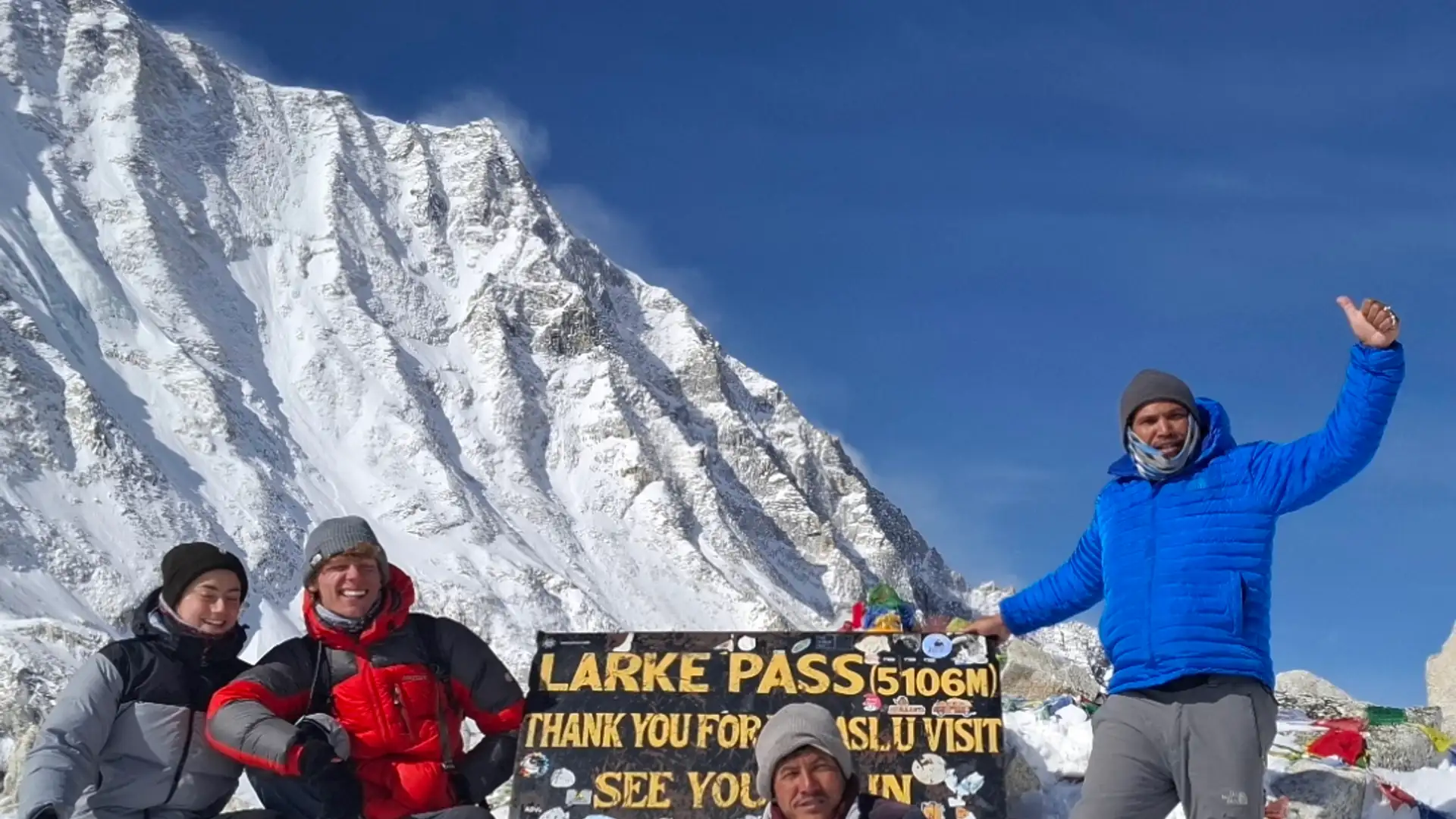
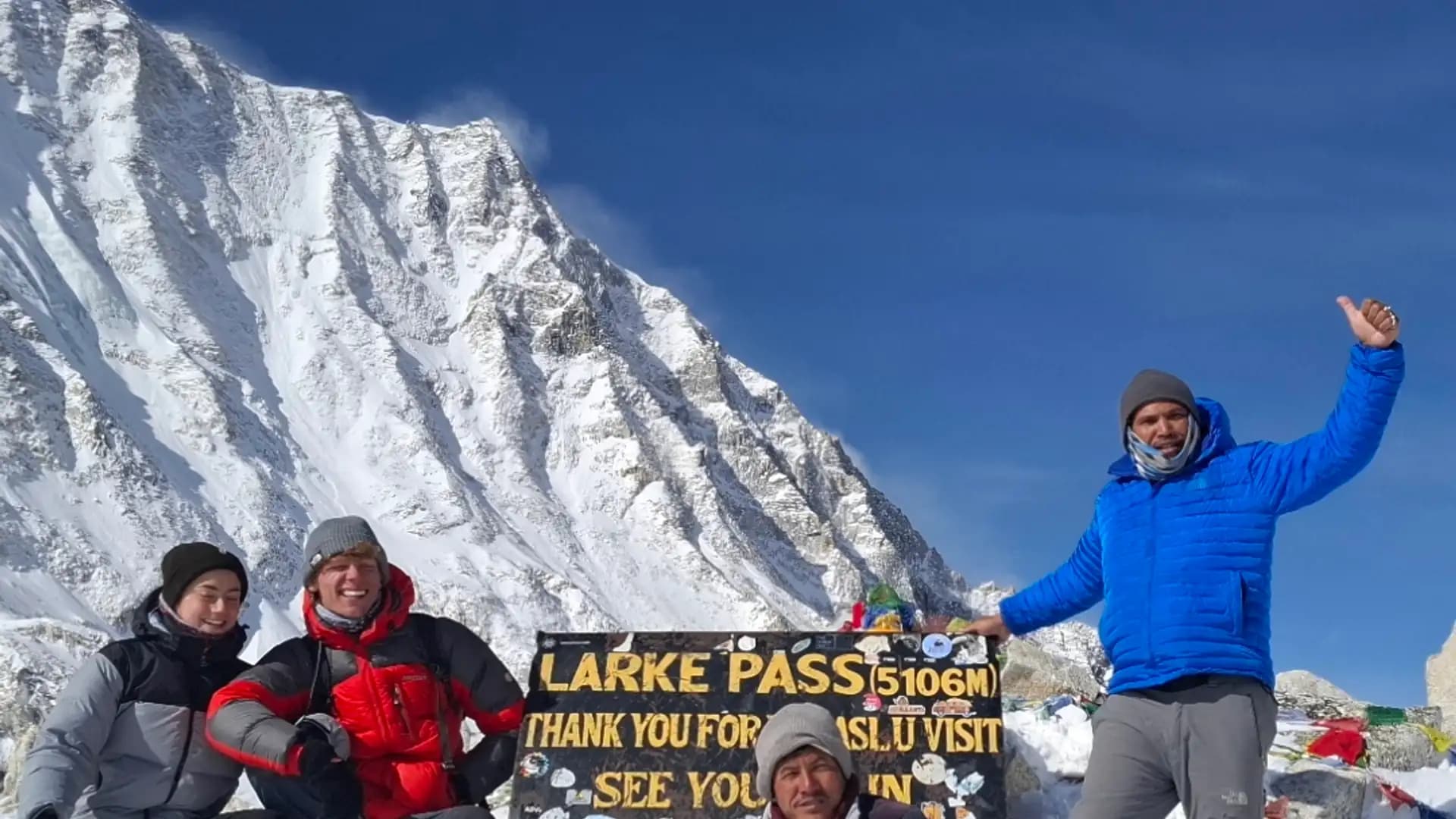
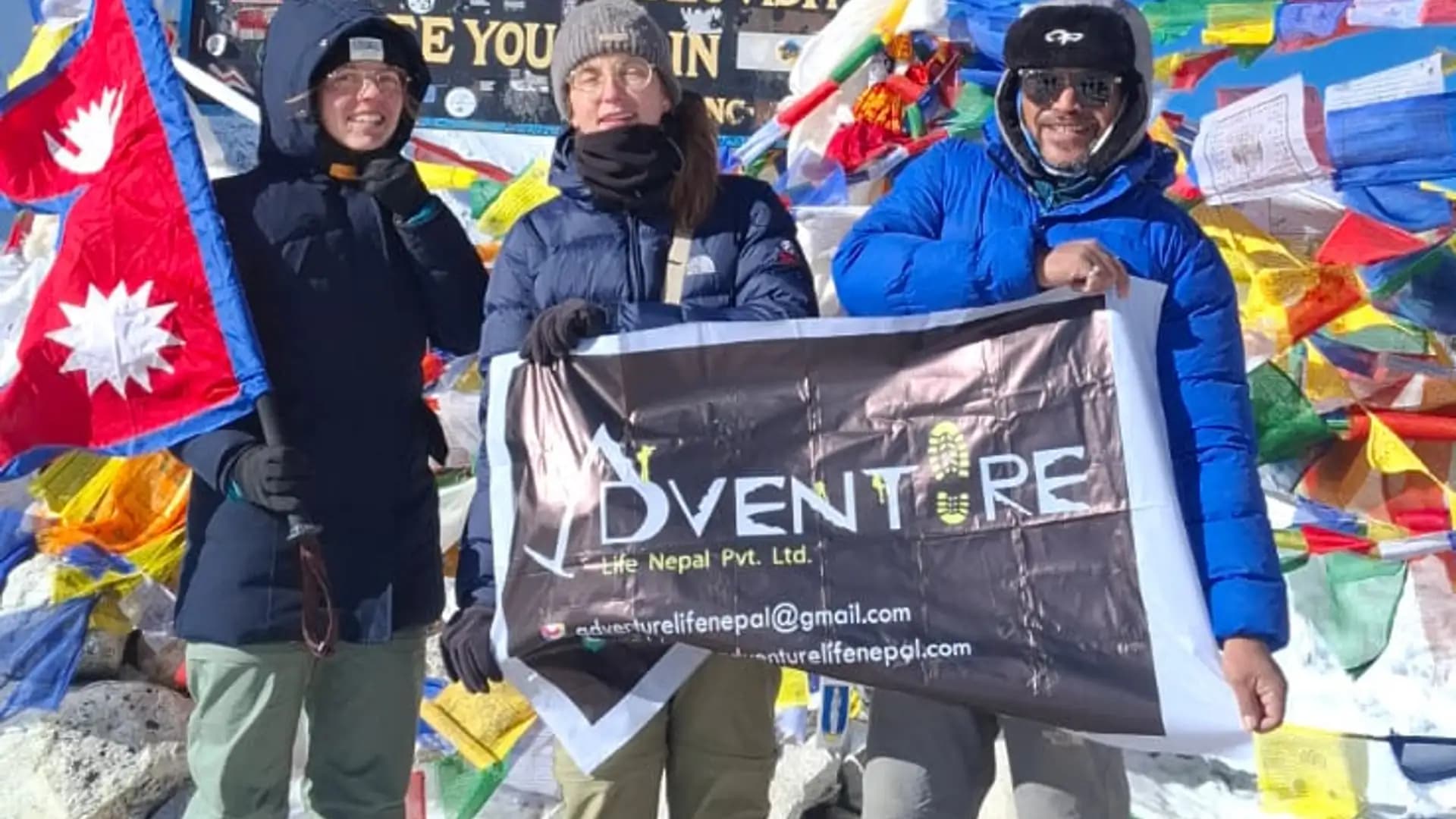
This is the big day. Starting at 3:00 AM, you will climb steadily through glacial moraine to reach the summit of Larkya La Pass (5,106m / 16,752ft). The view from the top is breathtaking, featuring Himlung Himal, Cheo Himal, and the Annapurna range. After the obligatory photos with the prayer flags, a long, steep descent on a scree slope brings you to the beautiful valley of Bimthang, a lush meadow surrounded by massive peaks.
Your final full day of trekking is a long descent through "The Valley of Lilies." You’ll move from the high alpine zone back into thick rhododendron and pine forests. After crossing the Dudh Khola, you reach the village of Tilije and eventually Dharapani. Here, the Manaslu trail joins the famous Annapurna Circuit. You can finally celebrate your achievement with a hot shower and a well-earned feast.
The journey concludes with a two-part road trip. First, you take a local jeep from Dharapani to Besisahar, the district headquarters. From there, you switch to a comfortable bus or private car for the drive back to either Kathmandu or Pokhara. As the urban landscape returns, you’ll carry with you the memories of one of the world's most spectacular mountain circuits.
Elevation Profile
Altitude Variation Chart
What's Included
Included
- All accommodation during trek (tea houses/lodges)
- Three meals per day during trek
- Experienced English-speaking trek guide
- Required permits (MCAP, ACAP, Special Manaslu permit)
- All ground transportation as per itinerary
- Porter service
- First aid and medical kit
Excluded
- International flights
- Nepal visa fees
- Travel insurance
- Personal trekking gear
- Personal expenses
- Tips for guides and porters
- Alcoholic beverages and extra drinks
- Emergency evacuation costs
- Kathmandu accommodation (can be arranged)
- Extra costs due to flight delays/cancellations
Packing List
With over 25 years of experience leading expeditions across the Himalayas, our senior guide, Dil Bahadur Karki, has refined this list to ensure you are prepared for everything from the humid lowlands to the -15°C winds of the Larkya La Pass (5,106 m).
"In my 25 years on the trail, I’ve seen that the best trekker isn't the one with the most gear, but the one with the right layers. Quality over quantity is the secret to the Manaslu Circuit." — Dil Bahadur Karki
1. The Layering System (Upper & Lower Body)
Base Layers: 2x Moisture-wicking thermal tops/bottoms (Merino wool is Dil’s top choice for odor resistance).
Trekking Shirts: 3x Lightweight, quick-dry shirts (avoid cotton!).
Insulation Layer: 1x Heavyweight fleece or primaloft jacket.
The "Big" Down Jacket: 1x High-quality jacket rated to at least -15°C.
Hard Shell: 1x Waterproof/breathable jacket (Gore-Tex) and trousers for the pass.
Trekking Pants: 2x pairs of hiking trousers; 1x pair of shorts for the lower, warmer days.
2. Footwear & Hand Wear
Dil’s Pro-Tip: "Never bring brand-new boots to Manaslu. Wear them for at least 3-4 long hikes before you arrive in Kathmandu to avoid blisters at 4,000 m."
Hiking Boots: Waterproof, mid-to-high cut with a solid grip.
Camp Shoes: Lightweight sneakers or sandals for the tea houses.
Socks: 4x pairs of thick wool hiking socks; 2x pairs of thin liner socks.
Gloves: 1x pair of lightweight fleece gloves; 1x pair of waterproof, insulated mittens for the cold morning at Larkya La.
3. Technical Gear & Sleep System
Sleeping Bag: Rated to -20°C (-4°F). While tea houses provide blankets, a high-quality bag is essential for Samdo and Dharmasala.
Trekking Poles: Essential for saving your knees on the 1,500 m descent from the pass.
Headlamp: Must have high lumens and extra batteries for the 4:00 AM start on Pass Day.
Daypack (30L): To carry your water, camera, sunblock, and extra layers.
4. Health, Hygiene & Dil’s "Secret" Toolkit
Water Purification: SteriPEN or purification tablets (Adventure Life Nepal promotes plastic-free trekking).
Sun Protection: SPF 50+ sunscreen, lip balm, and polarized sunglasses (to prevent snow blindness).
Personal First Aid: Include Diamox (for altitude), Ibuprofen, and plenty of Compeed blister plasters.
Dil’s Veteran Tip: "I always tell my guests to bring a small container of Vicks VapoRub or Tiger Balm. It helps with the dry 'Manaslu cough' and relaxes sore muscles at night."
Frequently Asked Questions
Yes, the Manaslu Circuit Trek is generally considered easier than the Everest Base Camp (EBC) Trek, though both are challenging high-altitude routes. Manaslu's highest point Larkya La Pass at 5,160 m (16,929 ft) is lower than Everest Base Camp at 5,364 m (17,598 ft). Manaslu also sees far fewer trekkers, has fewer teahouses, and feels more remote and adventurous. That said, the steep ascent to Larkya La, unpredictable weather, and limited rescue infrastructure make Manaslu a serious undertaking. Both treks require solid physical fitness, good altitude awareness, and proper acclimatisation.
No. Mount Everest is not visible from the Manaslu Circuit Trek. The Manaslu region lies in Gorkha District, well to the west of the Khumbu (Everest) region, with major ridges blocking any line of sight. From the high points of the circuit including Larkya La Pass (5,160 m) and viewpoints near Samagaon and Samdo trekkers are rewarded with close-up panoramas of Mount Manaslu (8,163 m), Himalchuli, Ngadi Chuli (Peak 29), Ganesh Himal, and Annapurna II. To see Everest, you need to travel to the Khumbu region in eastern Nepal.
Certainly, for a small additional service charge, a private 4WD can be organized for all transfers.
Certainly, convey your preference; the 13 days trip package will not oversee the cost of your Kathmandu stay.
Sure, from Besisahar you can opt to travel to Pokhara instead of Kathmandu.
No, the Manaslu circuit is in the opposite region of Everest; views of Everest are impossible.
Manaslu, Annapurna, Shringi, Ganesh, Himalchuli, Cheo, and more.
Yes; two people are compulsory, so you can be accompanied by a partner or family member.
Yes, a registered guide is strictly compulsory by government regulation.
No, both are non-technical trekking passes, but the journeys are lengthy.
Yes. The Manaslu Circuit is a restricted area, so a government-licensed guide is mandatory and solo trekking is not allowed.
Learn more about Nepal trekking guide requirements
Mount Manaslu (8,163 m) is the world's 8th highest peak and carries a historically high fatality rate. The estimated summit-to-death ratio is approximately 9–11%, meaning roughly one death for every 9–11 successful summits, placing it among the more dangerous 8,000-metre peaks. Avalanches are the leading cause of death, most devastatingly in the 2012 season when 11 climbers were killed in a single event. Other hazards include crevasse falls, extreme cold, and severe altitude illness. In recent years, better weather forecasting and improved safety protocols have reduced fatalities, but Manaslu remains a serious, technically demanding expedition climb.
Gallery & Video
Customer Reviews
Loading reviews...
Leave a Review
From US $1400