Mardi Himal Trek – 9 Days
Trip Duration: 9 Days
Trip Grade: Moderate
Group Size: 12
Meals: Breakfast in the cities; all meals on the trek
Best Season: October–November, March–May
Start Point: Kathmandu
Accomodation: Hotels in Kathmandu and Pokhara, teahouse lodges on the trek
Ending Point: Kathmandu
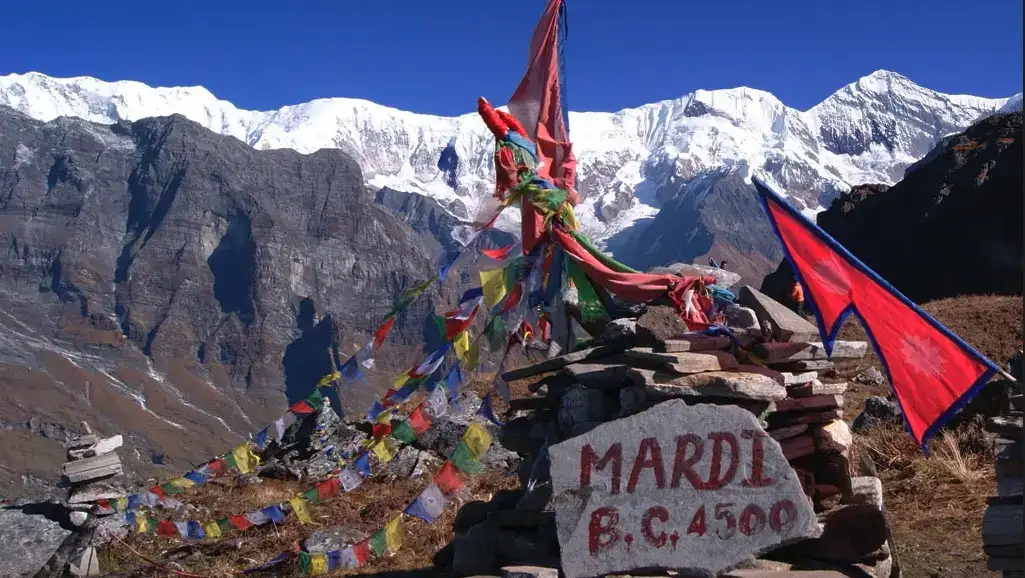
Max Altitude: 4,500 m (Mardi Himal Base Camp)
Transportation: Tourist bus Kathmandu–Pokhara, private vehicle to Kande and from Siding
Permits Required: Annapurna Conservation Area Permit (ACAP)
Overview
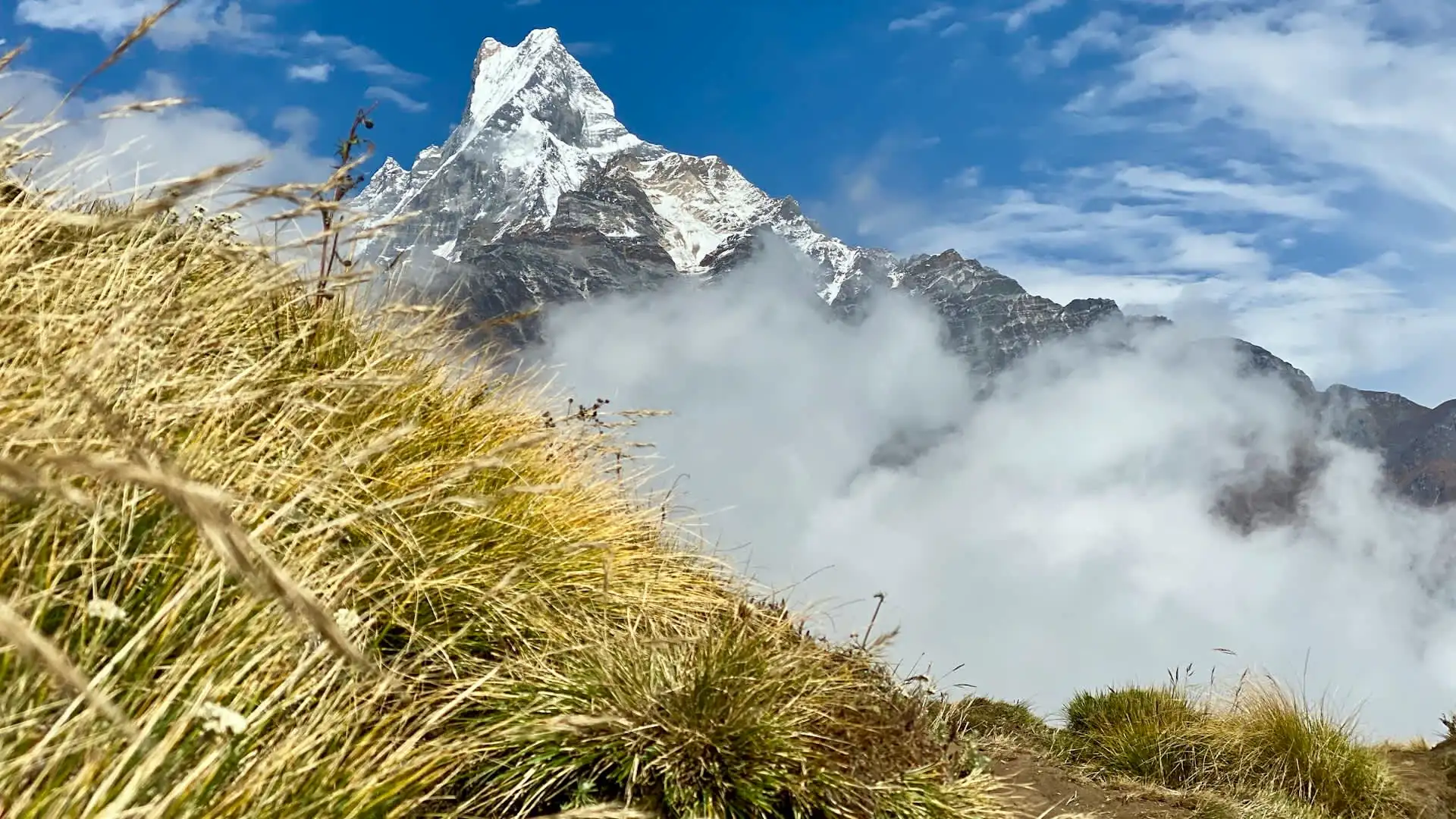
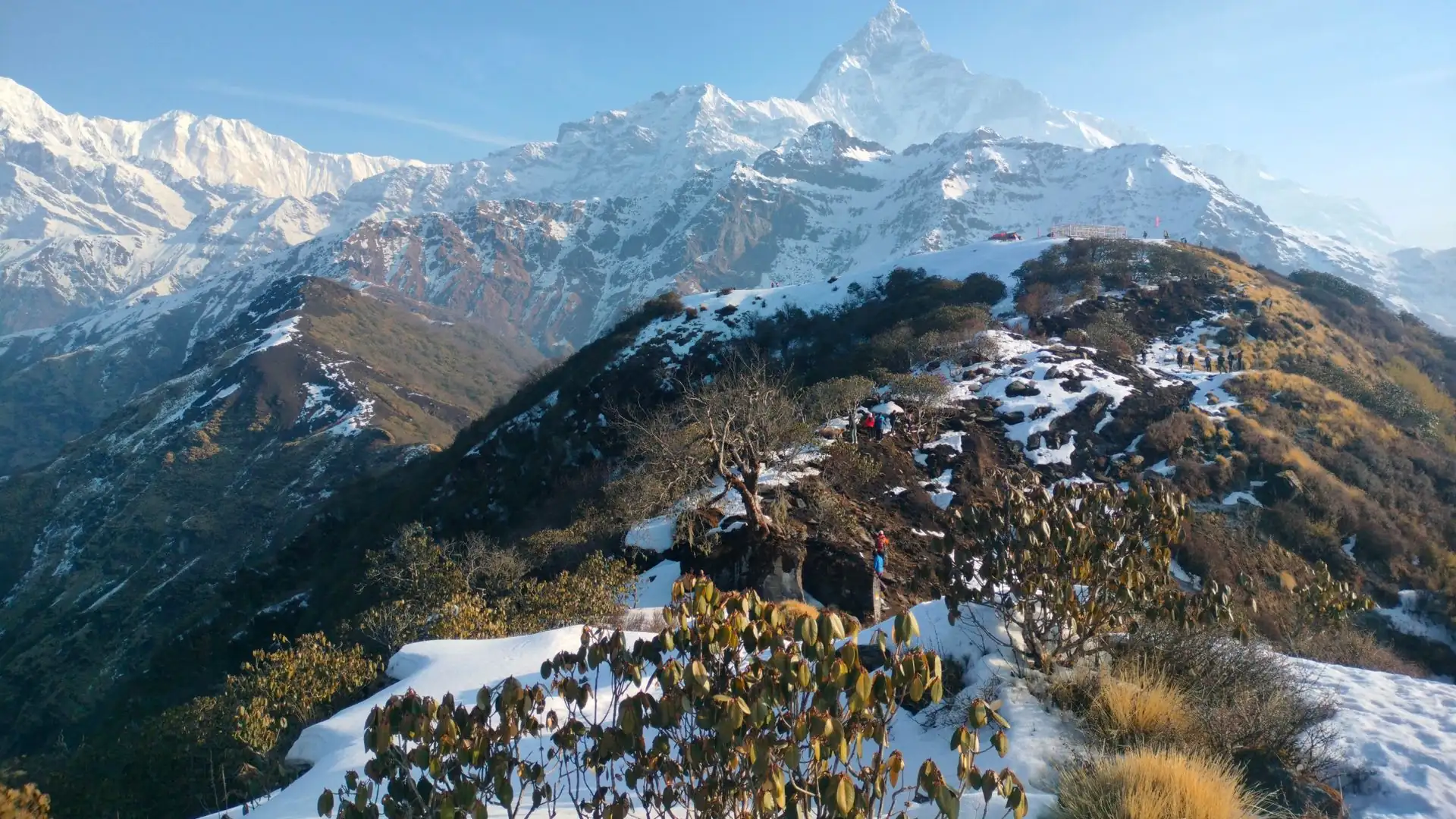
The Mardi Himal Trek follows a narrow, grassy ridge straight up towards Machhapuchhre, the "Fishtail" mountain that towers over Pokhara. In five days on foot you climb from village terraces through mossy rhododendron forest to open ridgeline, then walk to the Upper Viewpoint (4,200 m) and Mardi Himal Base Camp (4,500 m), with Annapurna South, Hiunchuli and Mardi Himal so close they fill the sky.
It's one of the best short treks in Nepal. The trail is quieter than the routes to Annapurna Base Camp and Poon Hill, it starts an hour's drive from Pokhara, and it reaches a higher point than either of them in less time. It's not a stroll, though: the days above High Camp are steep, exposed to wind and cold, and the trail up to the viewpoints is rough. This page explains how we run the trek over 9 days from Kathmandu, what each day is like, how hard it is, what it costs and how to decide whether it's the right trek for you.
Trip at a Glance
Detail | Information |
|---|---|
Duration | 9 days Kathmandu to Kathmandu (5 trekking days) |
Trek start and end | Kande (1,770 m) / Siding (about 1,750 m), near Pokhara |
Highest point | Mardi Himal Base Camp, 4,500 m / 14,764 ft |
Highest overnight | High Camp, 3,580 m / 11,745 ft |
Total walking distance | About 45–50 km |
Daily walking | 3–9 hours |
Difficulty | Moderate (steep climbs and one long day to 4,500 m) |
Accommodation | Hotels in Kathmandu and Pokhara, teahouse lodges on the trek |
Meals | Breakfast in the cities; breakfast, lunch and dinner on the trek |
Permits | Annapurna Conservation Area Permit (ACAP) |
Best months | October–November and March–May |
Group size | 1–12 |
Price | From US$700 per person |
Why This 9-Day Itinerary?
The trek itself takes five days from the road at Kande to the road at Siding. We add a day either side for the Kathmandu–Pokhara journey, plus your arrival and departure days, which makes nine days from Kathmandu to Kathmandu. If you're already in Pokhara, the same trek works as a 5-day trip from Pokhara.
We take the ridge slowly at the top. Some itineraries rush from Pokhara to High Camp in two days. We sleep at Pitam Deurali (2,100 m) and Low Camp (about 3,000 m) first, then have a short day to High Camp (3,580 m). That gives you two gentle nights before you sleep above 3,500 m and three nights before the climb to 4,500 m. Very few people have altitude problems on this schedule.
We go up via Australian Camp and down via Siding. The trail up from Kande passes Australian Camp, one of the best viewpoints near Pokhara, and follows the main ridge. The descent from Low Camp to Siding drops down a different spur into a farming valley, so you see new country on the way down instead of retracing your steps.
We stay at Badal Danda after the base camp. The day to Mardi Himal Base Camp and back is long. Sleeping at Badal Danda (3,210 m), an hour below High Camp, means you lose height that evening and sleep better, and leaves a comfortable walk out to Siding the next day.
Want a different trek? For more time in the Annapurna Sanctuary, see our Annapurna Base Camp Trek. For an easier, shorter walk with sunrise over Dhaulagiri, the Ghorepani Poon Hill Trek is a good choice. Our guide to Mardi Himal vs Annapurna Base Camp compares the two in detail.
Upper Viewpoint or Base Camp: Which Is the Top?
You'll see both names used for the end of the trek, and many itineraries treat them as the same place. They aren't.
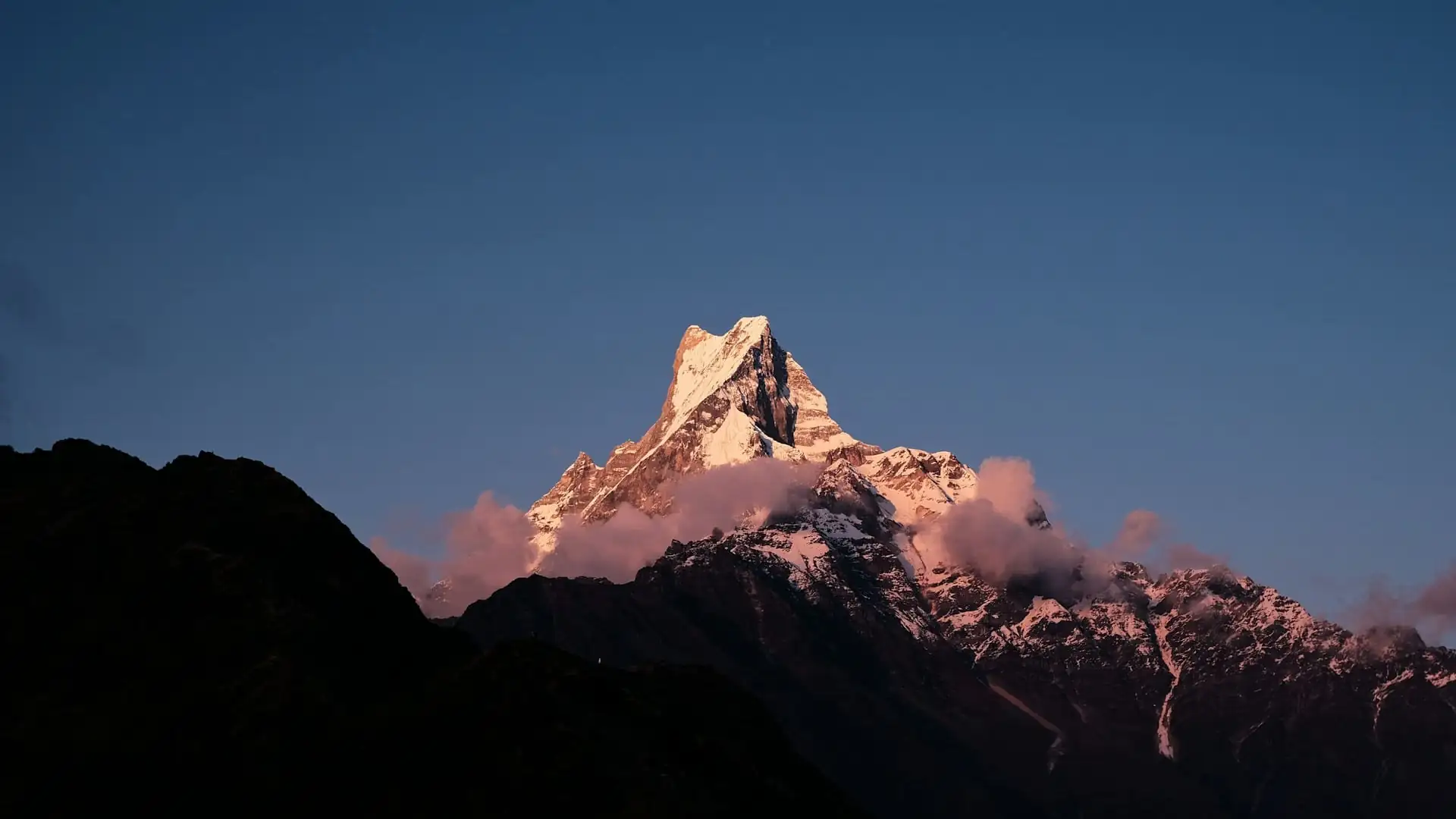
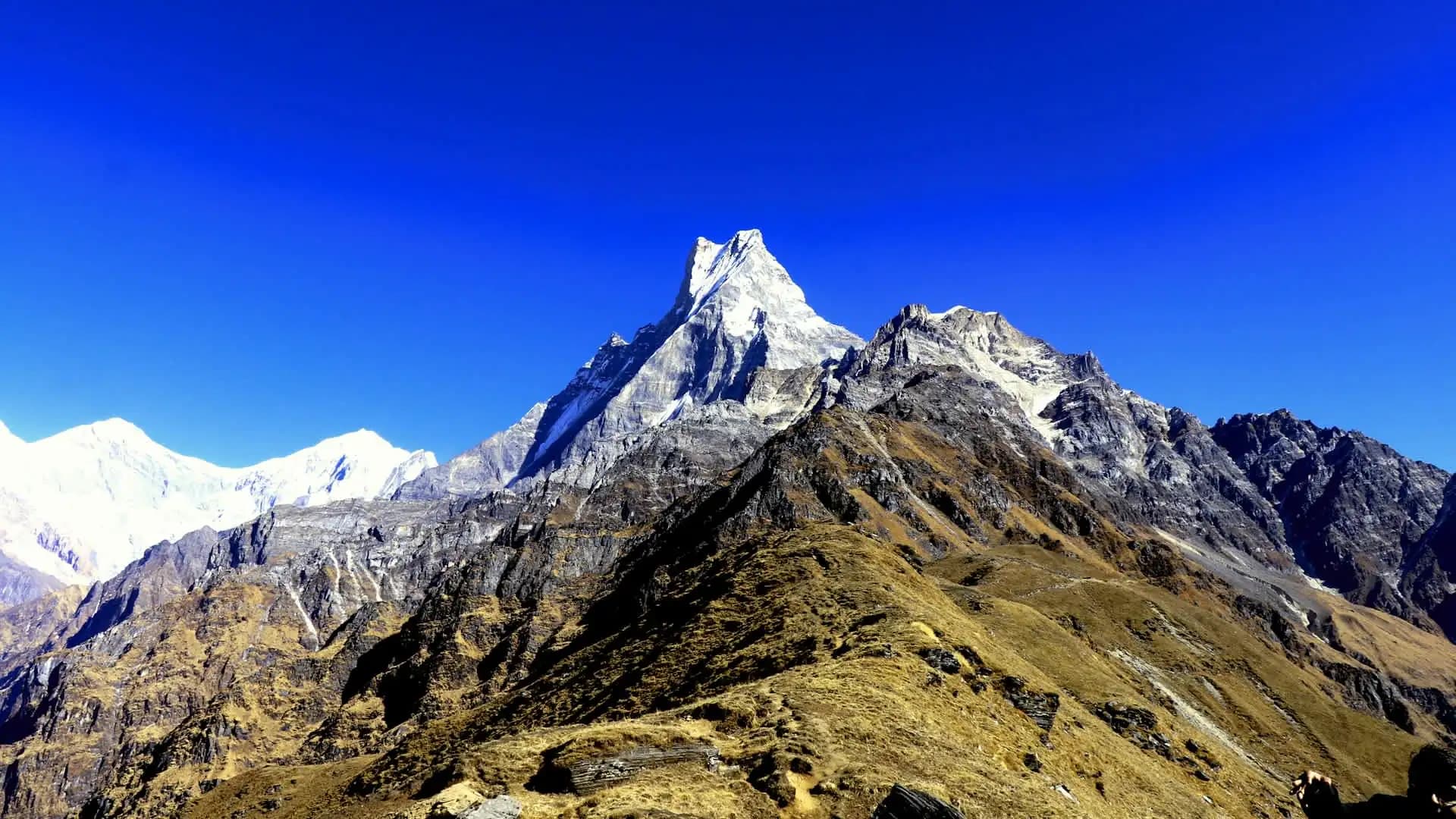
The Upper Viewpoint (about 4,200 m) is the high point of the ridge above High Camp, about 2.5–3 hours' climb. It has the classic Mardi Himal view: Machhapuchhre straight ahead, with Annapurna South and Hiunchuli to the left. Most trekkers turn around here.
Mardi Himal Base Camp (about 4,500 m) lies another 1.5–2 hours beyond, across rougher, rockier ground. It looks into the face of Mardi Himal and the upper slopes of Machhapuchhre, and it's much quieter.
We aim for the base camp when conditions allow. In deep snow, strong wind or poor visibility, the Upper Viewpoint is the safe and sensible turnaround, and the view there is still outstanding. For more on these viewpoints, see our guide to the Mardi Himal View Point, and for the mountain itself, our guide to Mardi Himal peak.
Forests, Wildlife and Villages
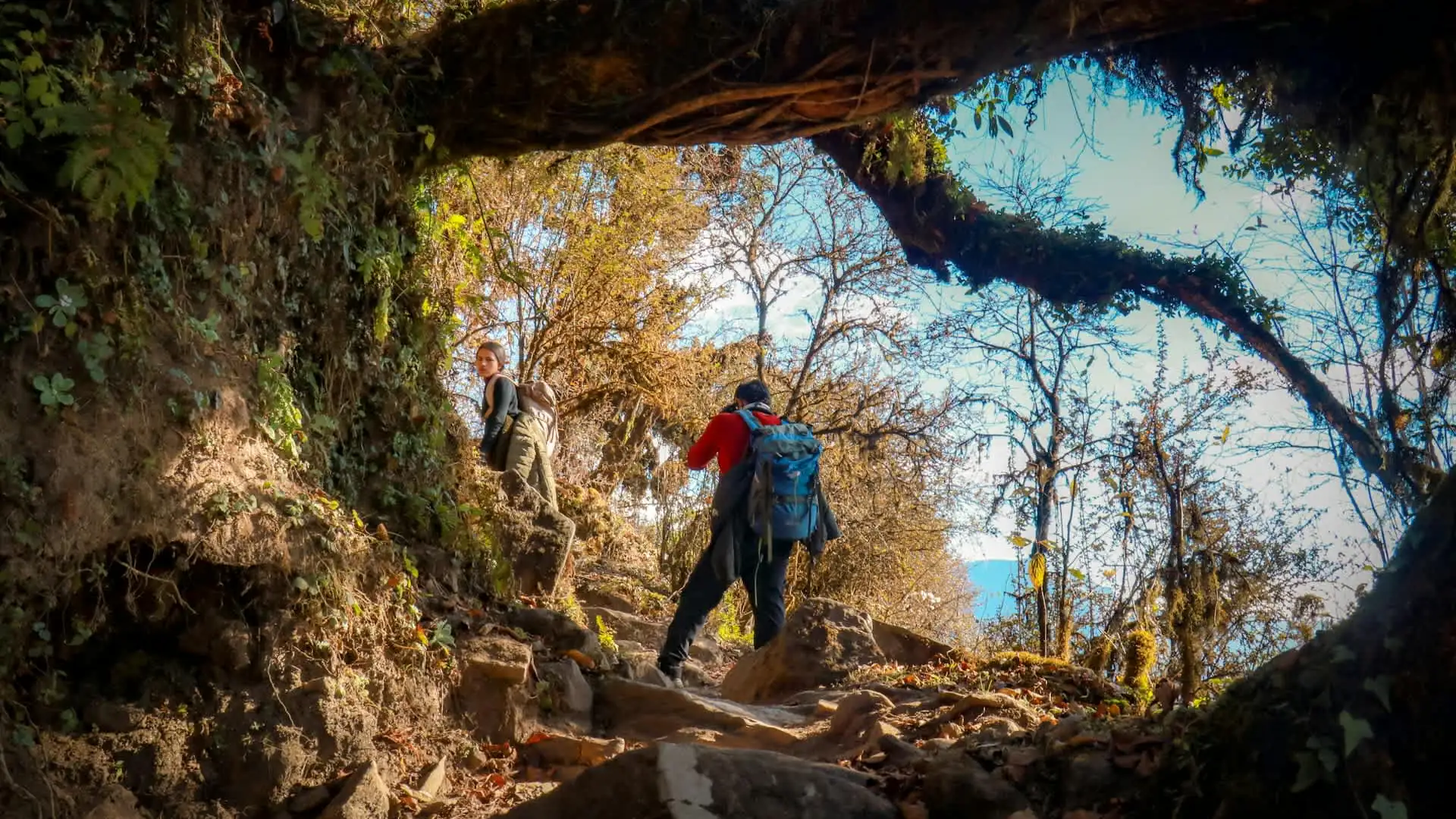
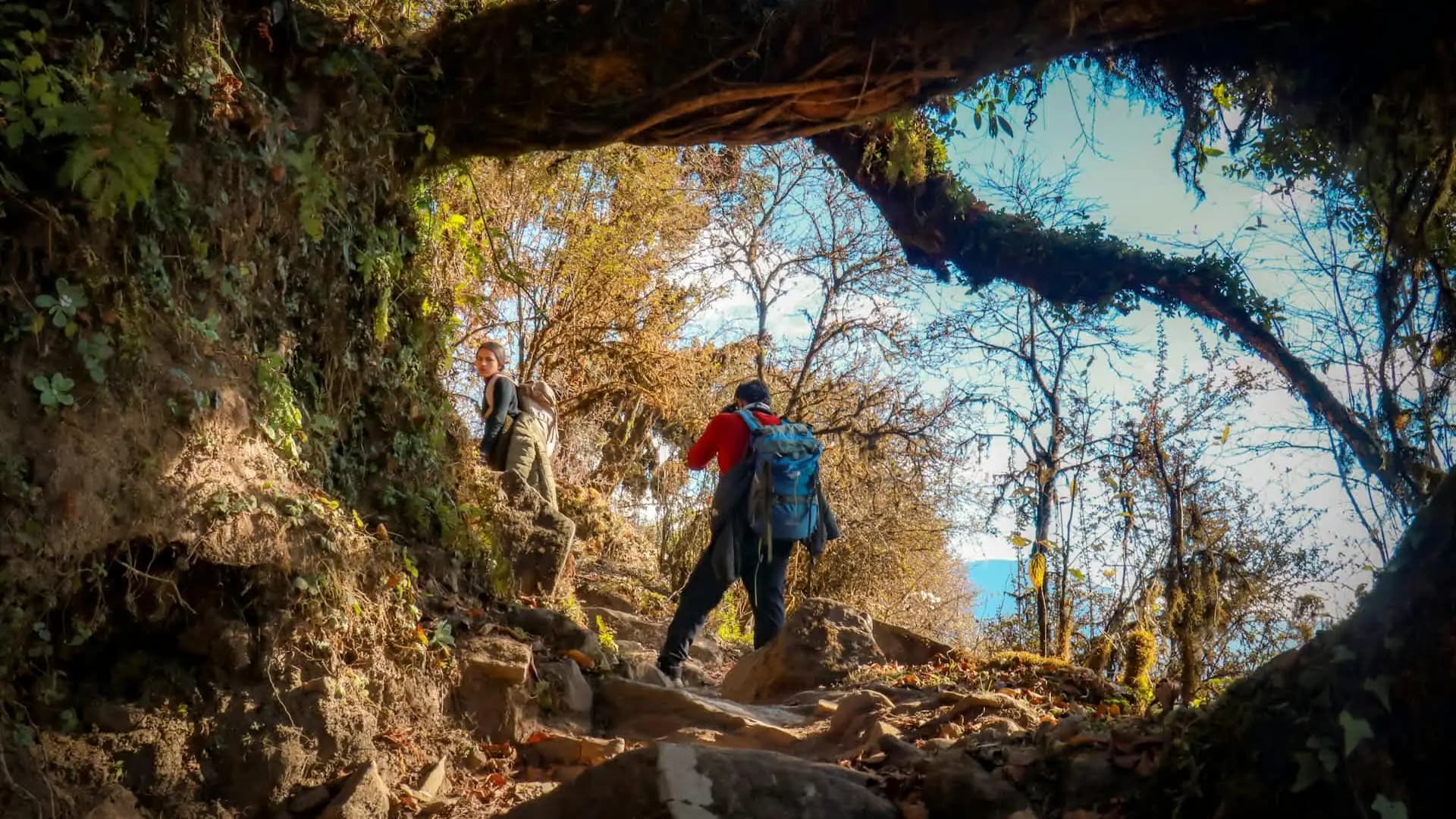
The lower half of the trek is as rewarding as the views at the top. Between Pitam Deurali and Low Camp, the trail climbs through some of the finest old forest on any short trek near Pokhara: tall rhododendron trees, oak, maple and hemlock, their branches draped in moss, ferns and orchids. In March and April, the rhododendrons, Nepal's national flower, turn whole hillsides red, pink and white.
Birdlife is rich. Listen for laughingthrushes and barbets in the forest, and look out for Himalayan monal, Nepal's colourful national bird, on the open slopes around Badal Danda and High Camp, especially early in the morning. Langur monkeys are often seen in the lower forest, and lammergeiers and Himalayan griffon vultures ride the updraughts along the ridge.
The villages at either end of the trek are mainly Gurung. Siding, on the way down, is a quiet farming community of terraced millet and rice fields, buffalo and slate-roofed stone houses, and sees far fewer visitors than Ghandruk or Ghorepani. Your guide can explain local customs and, if time allows, arrange a cup of tea in a village home.
Mountains You'll See
Mountain | Height | Where you see it best |
|---|---|---|
Annapurna South | 7,219 m | Australian Camp, High Camp, Upper Viewpoint |
Machhapuchhre (Fishtail) | 6,993 m | From Pitam Deurali onwards; closest from the Upper Viewpoint |
Lamjung Himal | 6,983 m | Australian Camp |
Hiunchuli | 6,441 m | Australian Camp, High Camp, Upper Viewpoint |
Mardi Himal | 5,587 m | High Camp, Mardi Himal Base Camp |
Machhapuchhre is held sacred and is closed to climbers. A British expedition in 1957 stopped about 150 m below the summit, and no climbing permit has been issued since.
Mardi Himal vs Other Annapurna Treks
Mardi Himal | Annapurna Base Camp | Ghorepani Poon Hill | |
|---|---|---|---|
Days from Pokhara | 5 | 8–10 | 4 |
Highest point | 4,500 m | 4,130 m | 3,210 m |
Crowds | Moderate | Busy in season | Busy in season |
Main view | Machhapuchhre at close range | 360° inside the Annapurna Sanctuary | Dhaulagiri and Annapurna sunrise |
Lodges | Small, simple | Many, larger | Many, larger |
Difficulty | Moderate | Moderate | Easy to moderate |
Mardi Himal suits trekkers who want high mountain views in a short time and don't mind simple lodges. Annapurna Base Camp gives a fuller experience of the Sanctuary, and Poon Hill is the gentlest introduction to trekking in Nepal.
Route, Distance and Walking Hours
Day | Route | Distance | Walking time |
|---|---|---|---|
3 | Kande – Australian Camp – Pothana – Pitam Deurali | 9 km | 4–5 hrs |
4 | Pitam Deurali – Forest Camp – Low Camp | 10 km | 5–6 hrs |
5 | Low Camp – Badal Danda – High Camp | 5 km | 3–4 hrs |
6 | High Camp – Upper Viewpoint – Base Camp – Badal Danda | 14 km | 8–9 hrs |
7 | Badal Danda – Low Camp – Siding | 10 km | 5–6 hrs |
Total | About 45–50 km |
Distances on mountain trails are estimates and vary between maps. For a detailed breakdown, see our guide to the Mardi Himal trek distance.
Altitude Profile
Place | Altitude | Night |
|---|---|---|
Kathmandu | 1,400 m / 4,593 ft | 1, 8 |
Pokhara | 822 m / 2,697 ft | 2, 7 |
Kande | 1,770 m / 5,807 ft | Trailhead |
Australian Camp | about 2,060 m / 6,759 ft | Day 3 |
Pitam Deurali | about 2,100 m / 6,890 ft | 3 |
Forest Camp (Kokar) | about 2,550 m / 8,366 ft | Day 4 lunch |
Low Camp | about 3,000 m / 9,843 ft | 4 |
Badal Danda | 3,210 m / 10,531 ft | 6 |
High Camp | 3,580 m / 11,745 ft | 5 |
Upper Viewpoint | about 4,200 m / 13,780 ft | Day 6 |
Mardi Himal Base Camp | about 4,500 m / 14,764 ft | Day 6 |
Siding | about 1,750 m / 5,741 ft | Day 7 |
Altitudes for the camps vary by 50–150 m between maps and signboards. Our guide to Mardi Himal altitude explains the differences.
Map Overview
From Pokhara, the route heads west by road to Kande on the Baglung highway, then climbs north along the ridge through Australian Camp and Pothana. At Pitam Deurali, the Mardi Himal trail leaves the trails to Landruk and Ghandruk and follows its own ridge north-east, rising through Forest Camp and Low Camp to Badal Danda and High Camp. Above High Camp, the ridge narrows to the Upper Viewpoint and continues to Mardi Himal Base Camp, beneath Mardi Himal and Machhapuchhre. The return drops from Low Camp down a separate spur to Siding, in the Mardi Khola valley, where a road leads back to Pokhara. Our guide to the Mardi Himal route has a step-by-step trail description.
How Difficult Is the Mardi Himal Trek?
We grade it Moderate. It's short, but don't mistake short for easy.
Steep, steady climbing: You gain about 2,700 m from Kande to the base camp in four days, much of it on steep forest and ridge trail with few flat sections.
One long day: The climb to the base camp and back down to Badal Danda takes 8–9 hours, with an early start in the cold and dark.
Rough ground above High Camp: The ridge to the viewpoints is narrow in places, loose and slippery when frosty or wet. It isn't technical, but it needs care.
Weather: The ridge is exposed. Wind, cloud and snow can arrive quickly, especially in the afternoon.
Simple lodges: Rooms are basic and cold at High Camp, and there are few lodges, so you can't easily change plans.
Anyone in good health who walks regularly can do this trek. You don't need trekking experience, but you'll enjoy it more if you've trained. Our guide to Mardi Himal trek difficulty goes into more detail.
Fitness and Training
Start training 6–8 weeks before the trek.
Cardio: 3–4 sessions a week of 30–60 minutes (brisk walking, running, cycling or swimming).
Hills and stairs: The trail is mostly up or down. Walk uphill or climb stairs with a light pack as often as you can.
Long walks: Do at least two 5–6 hour hikes on hilly ground before you travel.
Legs and knees: Squats, lunges and step-downs help on the long descent from Badal Danda to Siding.
Altitude Sickness and Acclimatization
The risk of serious altitude sickness on this trek is low, because you sleep no higher than 3,580 m and only go above 4,000 m for a few hours on Day 6. Mild symptoms, such as a headache or poor sleep at High Camp, are fairly common.
How we reduce the risk:
Two gentle nights at Pitam Deurali and Low Camp before High Camp
A short day to High Camp, arriving early to rest
Going down to Badal Danda the same day you reach the base camp
Daily checks by your guide, with a pulse oximeter at Low Camp and High Camp
Turning back if anyone has worsening symptoms
Walk slowly, drink 2–3 litres of water a day and tell your guide about any headache, nausea or dizziness. Ask your doctor about altitude medication before you travel. This is general guidance, not medical advice. The CDC's Nepal travel health page has more information.
Safety on the Ridge
The ridge above High Camp is the one place where weather really matters.
Early starts: Mornings are usually clearest and calmest. We leave High Camp before dawn.
Snow: From December to March, and sometimes in late autumn or early spring, snow can cover the ridge. We carry microspikes in these months and turn around at the Upper Viewpoint if the trail beyond is unsafe.
Wind and cloud: If the wind is strong or cloud closes in, your guide may turn the group back early. There's no shelter above High Camp.
Staying together: The trail above High Camp can be hard to follow in cloud. Stay with your guide.
Best Time for the Mardi Himal Trek
October to November. The best season. After the monsoon, skies are usually clear and the air is sharp, with the best mountain views of the year. Nights at High Camp are cold but manageable. This is also the busiest time, so lodges at High Camp can fill up.
March to May. The second-best season. Days are warmer and the rhododendron forests flower in March and April. Haze and afternoon cloud are more common, so the clearest views come early in the morning.
December to February. Clear and cold, with snow often on the ridge above High Camp. The trek is possible, but you may need to turn around at the Upper Viewpoint, and some lodges close. Bring warm gear.
June to September. Monsoon. Rain, cloud, leeches and slippery trails in the forest, and few mountain views. Not recommended.
Read our full guide to the best time for the Mardi Himal Trek.
Weather by Season
Season | Pitam Deurali (2,100 m) day / night | High Camp (3,580 m) day / night | Conditions |
|---|---|---|---|
Autumn (Oct–Nov) | 15–20 °C / 5–10 °C | 8–14 °C / −5 to 2 °C | Clear, dry, best views |
Winter (Dec–Feb) | 10–15 °C / 0–5 °C | 2–8 °C / −10 to −3 °C | Cold, clear, snow on the ridge |
Spring (Mar–May) | 15–22 °C / 6–12 °C | 8–15 °C / −3 to 4 °C | Warmer, rhododendrons, afternoon cloud |
Monsoon (Jun–Sep) | 18–24 °C / 12–16 °C | 10–15 °C / 3–8 °C | Rain, cloud, leeches |
These are typical ranges, not forecasts. Wind on the ridge makes it feel colder.
Getting There
Leg | How | Time |
|---|---|---|
Kathmandu – Pokhara | Tourist bus (included), or flight as an upgrade | 6–7 hrs / 25 min |
Pokhara – Kande | Private vehicle | About 1 hr |
Siding – Pokhara | Private jeep | 2–3 hrs |
Pokhara – Kathmandu | Tourist bus (included), or flight as an upgrade | 6–7 hrs / 25 min |
The road from Siding is rough and can be blocked by landslides after heavy rain. If that happens, we walk to the nearest point a jeep can reach or arrange another pickup.
Accommodation
Kathmandu and Pokhara: Comfortable tourist-class hotels with breakfast and private bathrooms.
On the trek: Small, family-run teahouses. Rooms have twin beds with mattresses, pillows and blankets. Toilets are usually shared, and hot showers are available at lower camps for a small fee. High Camp has the most basic lodges, with cold rooms and limited space, so we book ahead in October and November. Bring or rent a sleeping bag rated to about −10 °C.
Meals and Drinking Water
Lodges serve dal bhat, noodles, fried rice, pasta, potatoes, eggs, porridge, Tibetan bread and soups. Dal bhat comes with refills and is the best fuel for the climbs. Menus are shorter and prices higher at High Camp, because everything is carried up the ridge.
Water: Don't drink untreated tap or stream water. Bring purification tablets or a filter bottle, or buy boiled water at lodges. Avoid buying plastic bottles; there's nowhere to recycle them on the ridge.
Internet, Mobile Signal and Charging
Mobile signal: NTC and Ncell work at Australian Camp, Pitam Deurali and in places along the ridge, including parts of High Camp. Coverage is patchy.
Wi-Fi: Some lodges offer it for a small fee. It's slow, and at High Camp it may not work.
Charging: Usually US$1–3 per device, more at High Camp. Bring a power bank.
Permits and Fees
Permit | Cost per person | Notes |
|---|---|---|
Annapurna Conservation Area Permit (ACAP) | NPR 3,000 (about US$22) | Checked at Pothana and other ACAP posts |
TIMS registration | Arranged by us where required | Rules on TIMS in Annapurna have changed several times; we follow the current requirement |
Since April 2023, foreign trekkers in Nepal's conservation areas and national parks must trek with a licensed guide, so independent trekking isn't allowed; see our guide to Nepal's trekking guide rules. Permits are included in our price. For more, read our guide to the Mardi Himal trek permit, or see the National Trust for Nature Conservation, which runs ACAP. For visas on arrival, see the Department of Immigration.
Mardi Himal Trek Cost
Our price: from US$700 per person. It includes two hotel nights each in Kathmandu and Pokhara, all transport, the ACAP permit, all meals and lodges on the trek, a licensed guide and porter support. Ask us about solo rates and larger groups.
Here's roughly where the money goes:
Cost item | Approx. US$ per person |
|---|---|
Tourist bus Kathmandu–Pokhara–Kathmandu | 30 |
Private transfers to Kande and from Siding (shared) | 60 |
Hotels: 2 nights in Kathmandu, 2 in Pokhara | 120 |
Teahouse accommodation, 4 nights | 40 |
Meals on the trek (3 a day for 5 days) | 135 |
Guide (wages, food, lodging, insurance), shared | 140 |
Porter (1 for every 2 trekkers), shared | 70 |
ACAP permit | 25 |
Airport transfers and farewell dinner | 45 |
First aid, oximeter, office costs and taxes | 35 |
Total | 700 |
Extra money to budget:
Item | Typical cost |
|---|---|
Nepal tourist visa | US$30 (15 days) |
Travel insurance covering trekking to 5,000 m and helicopter evacuation | US$60–150 |
Drinks, snacks, hot showers, Wi-Fi and charging | US$10–20 a day |
Lunches and dinners in Kathmandu and Pokhara | US$10–25 a meal |
Tips for guide and porter | US$80–120 per trekker in total |
For more detail, see our guide to the Mardi Himal trek cost.
Optional Add-ons
Flights between Kathmandu and Pokhara instead of the bus, to save about 12 hours of driving
An extra night at High Camp, for a second chance at clear weather or a slower pace to the base camp
Paragliding or boating in Pokhara, on your free evening or an extra day
Kathmandu sightseeing: Swayambhunath, Boudhanath, Pashupatinath and Kathmandu Durbar Square with a local guide
Extend to Annapurna Base Camp: combine with our Short Annapurna Base Camp Trek
More of Nepal: add a few days in Chitwan with our Kathmandu, Pokhara and Chitwan Tour
Travel Tips
Start early on Day 6. Mornings are clearest; cloud often builds by late morning.
Pack warm layers in your daypack, even on sunny days. It's freezing on the ridge before sunrise.
Bring a headtorch for the pre-dawn climb from High Camp.
Carry cash in Nepali rupees. There are no ATMs on the trek; use those in Pokhara.
Use trekking poles, especially for the steep descent to Siding.
Book October and November early, as High Camp has limited beds.
Photography Spots
Australian Camp, for the Annapurna range above the forest at sunrise
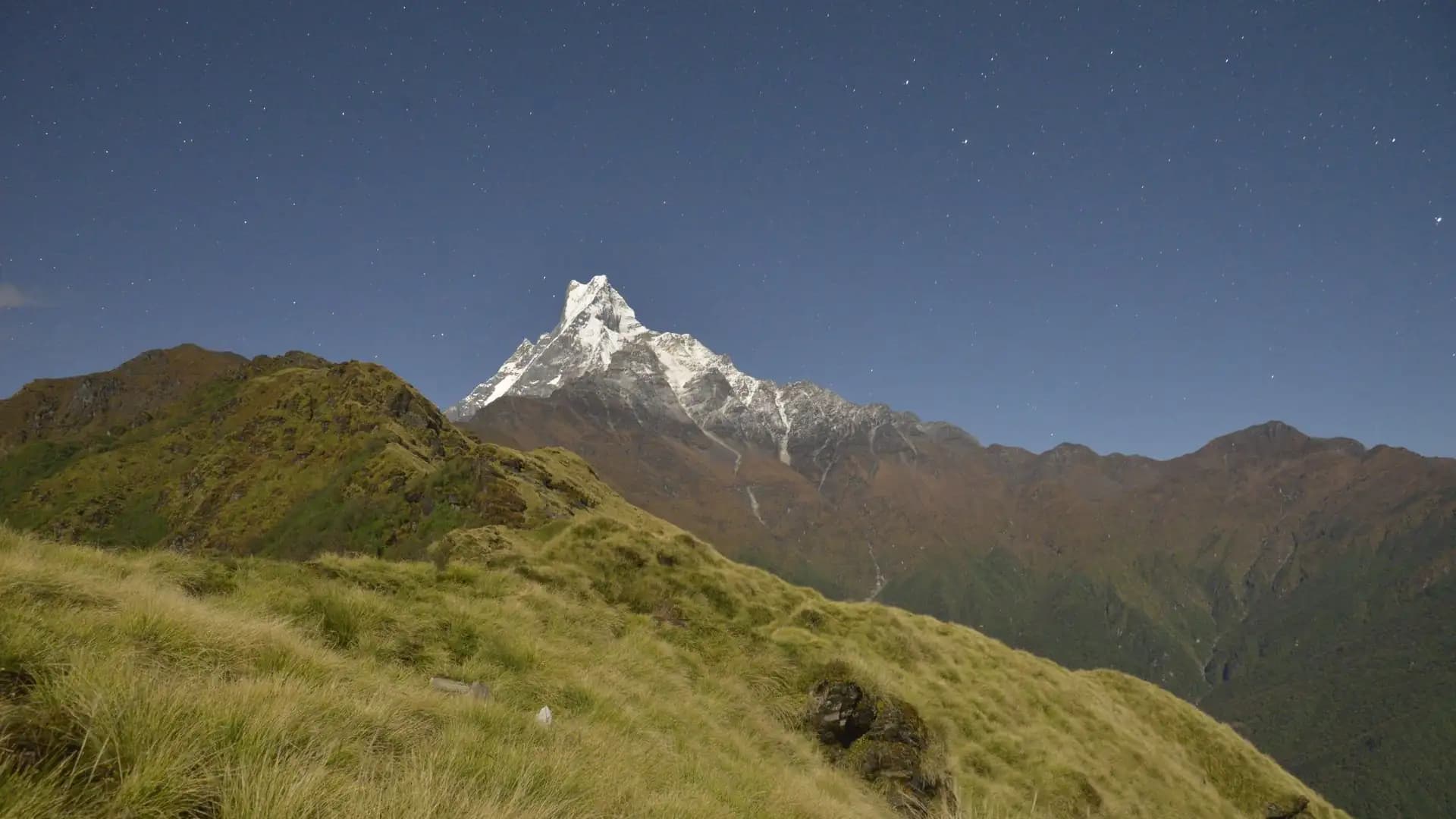
Low Camp, where Machhapuchhre first appears at the end of the forest
Badal Danda, with clouds filling the valleys below the ridge in the afternoon
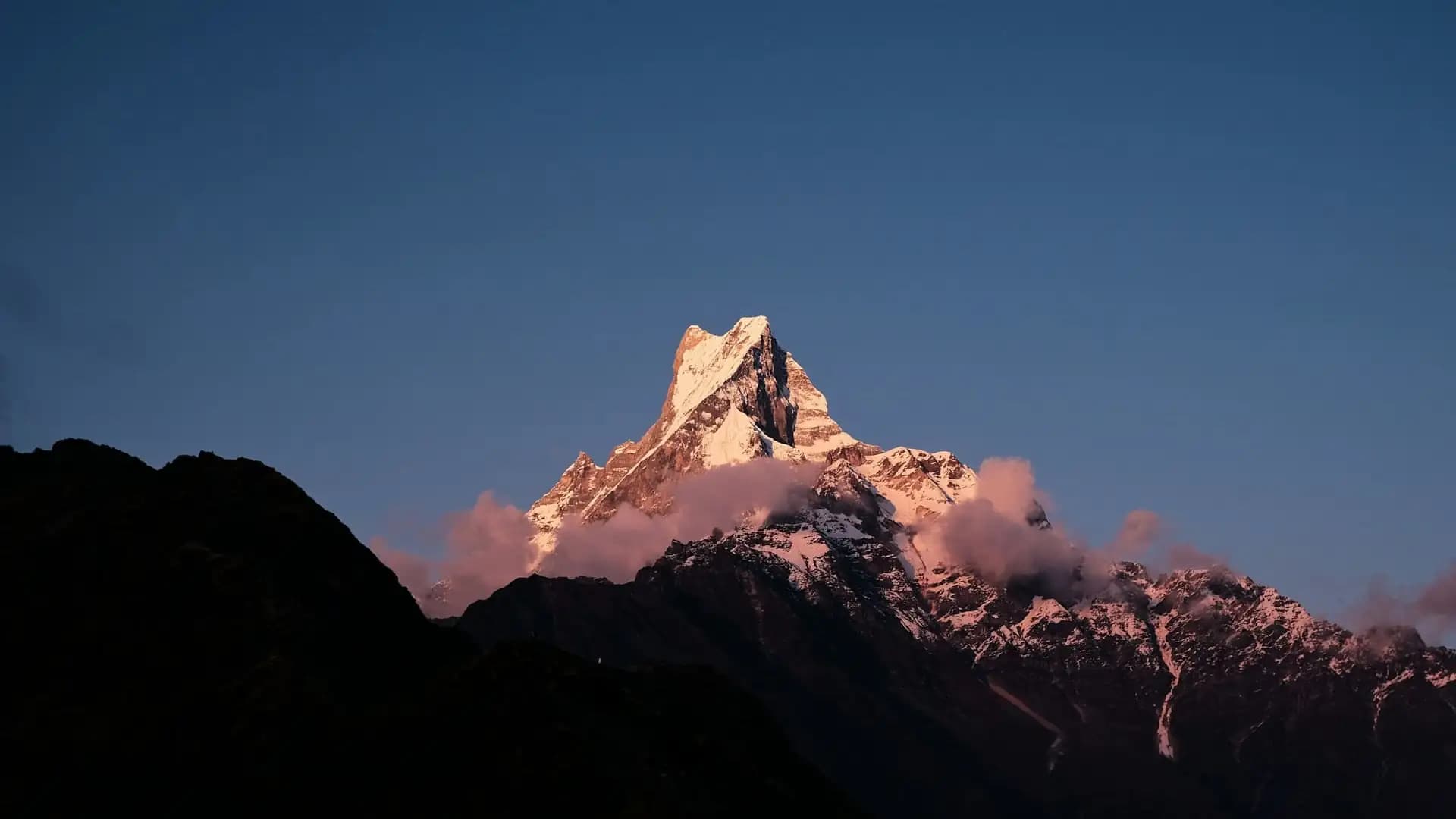
High Camp at sunset, as the light turns Machhapuchhre orange
The Upper Viewpoint at sunrise, for the classic Mardi Himal view
Siding, for terraced fields and Gurung houses
Responsible Trekking
Carry out your rubbish, especially batteries and plastic. High Camp has no way to deal with waste.
Use refillable bottles and purify your own water.
Stay on the trail on the ridge; the grass slopes erode easily.
Respect local customs: walk clockwise around chortens, and ask before photographing people.
Look after your porter. Ours carry no more than 25 kg and have proper clothing, footwear and insurance.
Is the Mardi Himal Trek Right for You?
This trek suits you if you:
Have about a week to spare and want big mountain views in a short time
Are reasonably fit and happy with steep climbs and simple lodges
Prefer quieter trails to the busiest routes in the Annapurna region
Want to reach a higher point than Annapurna Base Camp without a long trek
Choose something else if you:
Want the easiest possible walk: try the Ghorepani Poon Hill Trek
Want to stand inside the Annapurna Sanctuary: choose the Annapurna Base Camp Trek
Want a quiet, longer trek with more villages: consider the Khopra Danda Trek
Want a high-mountain trek from Kathmandu without the drive to Pokhara: see the Langtang Trek
Why Book With Adventure Life Nepal
Founded by a guide. Adventure Life Nepal was started by Dil Bahadur Karki, who began as a porter and has more than 25 years of experience guiding in the Himalaya, with trekkers from more than 40 countries.
Licensed and registered with the Nepal Tourism Board and the Trekking Agencies Association of Nepal (TAAN).
Guides who know the ridge and when it's safe to continue beyond the Upper Viewpoint.
A sensible pace, with two nights below High Camp before the climb to 4,500 m.
Daily health checks with a pulse oximeter at the higher camps.
Fair treatment of porters, with insurance, warm clothing and load limits.
Booking, Cancellation & Refund Policy
A 30% deposit confirms your booking; the balance is due before the trek begins.
30 days or more before departure: full refund minus administrative fees.
15–29 days before departure: 50% cancellation fee.
Less than 15 days before departure: no refund.
Travel insurance covering trekking to 5,000 m and helicopter evacuation is mandatory.
We may change the itinerary because of weather, road conditions, or health and safety reasons.
Full details are on our terms and conditions page.
Book Your Mardi Himal Trek
Walk the ridge to the foot of Machhapuchhre, watch the sun rise from the Upper Viewpoint and stand at Mardi Himal Base Camp, all in less than a week on the trail, with a guide who knows the route. Tell us your dates and group size, and we'll confirm availability and your final price.
Book now or send us a quick enquiry. WhatsApp or call: +977 9841248242 · Email: adventurelifenepal@gmail.com
Highlights
Itinerary
Our team meets you at Tribhuvan International Airport and drives you to your hotel. In the evening, your guide runs through the trek, checks your gear and answers any questions. Thamel's shops sell or rent anything you're missing.
- Drive: 6–7 hours, about 200 km by tourist bus The road follows the Trishuli and Marsyangdi rivers west to Pokhara. On a clear day, Machhapuchhre and the Annapurnas appear above the town as you arrive. You can fly instead (about 25 minutes) for an extra cost. Spend the evening by Phewa Lake.
- Drive: about 1 hour. Walking: 4–5 hours, about 9 km A short drive west of Pokhara brings you to Kande (1,770 m), where the trail climbs through forest to Australian Camp (about 2,060 m), a grassy ridge with a wide view of Annapurna South, Hiunchuli, Machhapuchhre and Lamjung Himal. You continue through Pothana (about 1,890 m), where the ACAP checkpost checks your permit, and on through forest to Pitam Deurali, a small settlement with a few lodges and your first close view of Machhapuchhre.
- Walking: 5–6 hours, about 10 km The best forest walking of the trek. The trail leaves the main Annapurna trail network and climbs a quiet ridge through rhododendron, oak and maple, hung with moss and lichen. In spring, the rhododendrons flower red and pink. You stop for lunch at Forest Camp (about 2,550 m), also called Kokar, then continue climbing to Low Camp, where the trees thin out and Machhapuchhre appears directly ahead.
- Walking: 3–4 hours, about 5 km A short day, but steep. Above Low Camp, the trail climbs out of the forest onto the open ridge at Badal Danda (3,210 m), whose name means "cloud hill": in the afternoons, cloud often fills the valleys below you. The final climb along the ridge to High Camp has views on both sides, and you may see Himalayan monal (danphe), Nepal's national bird, on the grassy slopes. Arriving early gives your body time to adjust before tomorrow's climb, and the sunset on Machhapuchhre from High Camp is one of the highlights of the trek.
- Walking: 8–9 hours, about 14 km The big day. You leave High Camp around 4:30–5 a.m. with headtorches and climb the steep, narrow ridge to the Upper Viewpoint, arriving around sunrise. From here, the Annapurna range stretches across the skyline, with Machhapuchhre so close it seems to lean over you. If the group is going well and the weather is clear, we continue for another 1.5–2 hours over rough, rocky ground to Mardi Himal Base Camp, a broad, open bowl beneath Mardi Himal (5,587 m) and the walls of Annapurna South and Hiunchuli. You then return to High Camp for a late lunch and continue down to Badal Danda for the night. Your guide decides on the day whether to go beyond the Upper Viewpoint, based on the weather, snow and how everyone is feeling.
- Walking: 5–6 hours, about 10 km. Drive: 2–3 hours You descend to Low Camp, then leave the ridge and drop steeply down a quieter spur through forest to Siding, a Gurung farming village of terraced fields and slate-roofed houses. From Siding, a jeep takes you down a rough road to Pokhara. Celebrate the end of the trek with dinner by the lake.
- Drive: 6–7 hours by tourist bus, or a 25-minute flight as an upgrade You return to Kathmandu along the same highway. In the evening, we host a farewell dinner.
We drive you to the airport for your flight home, or help you plan more time in Nepal.
Elevation Profile
Altitude Variation Chart
What's Included
Included
- Airport pickup and drop-off in Kathmandu
- 2 nights in a hotel in Kathmandu with breakfast
- 2 nights in a hotel in Pokhara with breakfast
- Tourist bus Kathmandu–Pokhara–Kathmandu
- Private transfers from Pokhara to Kande and from Siding to Pokhara
- 4 nights in teahouse lodges on the trek
- Breakfast, lunch and dinner during the trek
- Farewell dinner in Kathmandu
- Licensed, English-speaking trekking guide
- Porter service (1 porter for every 2 trekkers)
- Wages, meals, accommodation and insurance for guide and porters
- Annapurna Conservation Area Permit (ACAP) and TIMS where required
- First aid kit and pulse oximeter checks
- All government taxes and service charges
Excluded
- International flights and Nepal visa fees
- Lunch and dinner in Kathmandu and Pokhara (except the farewell dinner)
- Travel insurance covering trekking to 5,000 m and helicopter evacuation
- Drinks, snacks, hot showers, Wi-Fi and battery charging
- Personal trekking gear and clothing
- Kathmandu–Pokhara flights (available as an upgrade)
- Extra nights and meals caused by weather, landslides or leaving the trek early
- Tips for guide, porter and driver
- Anything not listed under What's Included
Packing List
Category | Items |
|---|---|
Clothing | Base layers (2 sets), fleece, down jacket, waterproof and windproof jacket and trousers, trekking trousers, warm hat, sun hat, buff, liner and warm gloves |
Footwear | Broken-in waterproof boots with ankle support, camp shoes or sandals, warm socks, microspikes (December–March) |
Sleeping | Sleeping bag rated to about −10 °C (can be rented in Kathmandu or Pokhara), sleeping bag liner |
Equipment | 25–35 litre daypack, duffel bag for the porter, trekking poles, headtorch, water bottles |
Health and hygiene | Personal medicines, blister kit, water purification tablets or filter, sunscreen (SPF 50), lip balm, hand sanitiser, toilet paper |
Documents and money | Passport, travel insurance details, passport photos, cash in Nepali rupees |
Extras | Sunglasses, power bank, snacks, camera, leech socks or salt (monsoon) |
For a full list, see our Mardi Himal trek packing list.
Frequently Asked Questions
Our itinerary takes 9 days from Kathmandu to Kathmandu, with 5 days of walking. From Pokhara, the trek takes 5 days.
About 4,500 m (14,764 ft). The Upper Viewpoint, where many trekkers turn around, is about 4,200 m. The highest place you sleep is High Camp, at 3,580 m.
It's a moderate trek. The days are short except for the climb to the base camp, but the trail is steep and the ridge above High Camp is rough and exposed. No trekking experience is needed if you're fit.
Yes, if they're in good health and train for a few weeks. It's a popular first trek in Nepal for people who want more than Poon Hill but don't have time for Annapurna Base Camp.
They're different. Mardi Himal is shorter, quieter and reaches a higher point, with Machhapuchhre at close range. Annapurna Base Camp takes longer but puts you inside the Annapurna Sanctuary, surrounded by peaks. Our Mardi Himal vs ABC guide compares them in detail.
The risk of serious altitude sickness is low, because you sleep no higher than 3,580 m. Mild symptoms such as a headache at High Camp are fairly common. Walk slowly, drink plenty of water and tell your guide if you feel unwell.
Yes. Since April 2023, foreign trekkers in Nepal's conservation areas, including the Annapurna Conservation Area, must trek with a licensed guide.
The Annapurna Conservation Area Permit (ACAP), which costs NPR 3,000, plus TIMS registration where it's required at the time. We arrange both.
Our package costs from US$700 per person, including hotels, transport, permits, meals and lodges on the trek, a guide and a porter. Budget another US$200–350 for your visa, insurance, drinks, city meals and tips.
October and November for the clearest views, and March to May for warmer weather and rhododendrons in flower. Winter is possible but cold and snowy on the ridge; the monsoon is wet and cloudy.
Yes, with warm gear and flexibility. Snow often covers the ridge above High Camp from December to February, so you may need to turn back at the Upper Viewpoint. Some lodges close, but High Camp usually has at least one open.
Small, simple teahouses with twin rooms, blankets and shared toilets. Rooms at High Camp are cold and basic. Bring or rent a warm sleeping bag.
Patchy. Mobile signal works at Australian Camp, Pitam Deurali and in places along the ridge. Some lodges have Wi-Fi, but it's slow.
Usually 3–6 hours. The longest day, from High Camp to the base camp and back down to Badal Danda, takes 8–9 hours.
Yes, at most lodges, usually for a small fee. Bring a power bank for High Camp.
Not in normal conditions. The ridge above High Camp is narrow in places and slippery when frosty, so we start early, go at a careful pace and turn around if snow, wind or cloud make it unsafe.
Yes. If you're already in Pokhara, the trek takes 5 days from Pokhara and back. Ask us for the Pokhara-only price.
Warm layers, a down jacket, a waterproof shell, broken-in boots, a sleeping bag rated to about −10 °C, a headtorch and trekking poles. See the packing list on this page and our full Mardi Himal packing list guide.
Yes. Your policy must cover trekking up to 5,000 m and helicopter evacuation.
At least 4–6 weeks ahead for October, November, March and April, as lodges at High Camp fill up. Outside the peak months, a week or two is usually enough.
Gallery & Video

Customer Reviews
Loading reviews...