Everest Base Camp Trek 14 Days (2026 Itinerary & Cost)
Trip Duration: 15 Days
Trip Grade: Moderate
Group Size: 12
Meals: Breakfast, Lunch and Dinner during trekking
Best Season: March, April, May and Sept, Oct, Nov
Start Point: Kathmandu
Accomodation: Hotel/Normal Teahouses
Ending Point: Kathmandu
Max Altitude: Kala Patthar (5,555 m)
Transportation: Private vehicle/Domestic Flight
Permits Required: National Park Permit/Rural Municipality Permit
Overview
The Everest Base Camp Trek is one of Nepal’s most iconic and rewarding trekking adventures, combining well-maintained trails with the breathtaking landscapes of the Himalayas. Situated in the heart of the Khumbu region, this legendary trek offers a perfect balance of natural beauty, cultural immersion, and the thrill of standing at the base of Mount Everest (8,848.86 m) — the highest mountain on Earth.
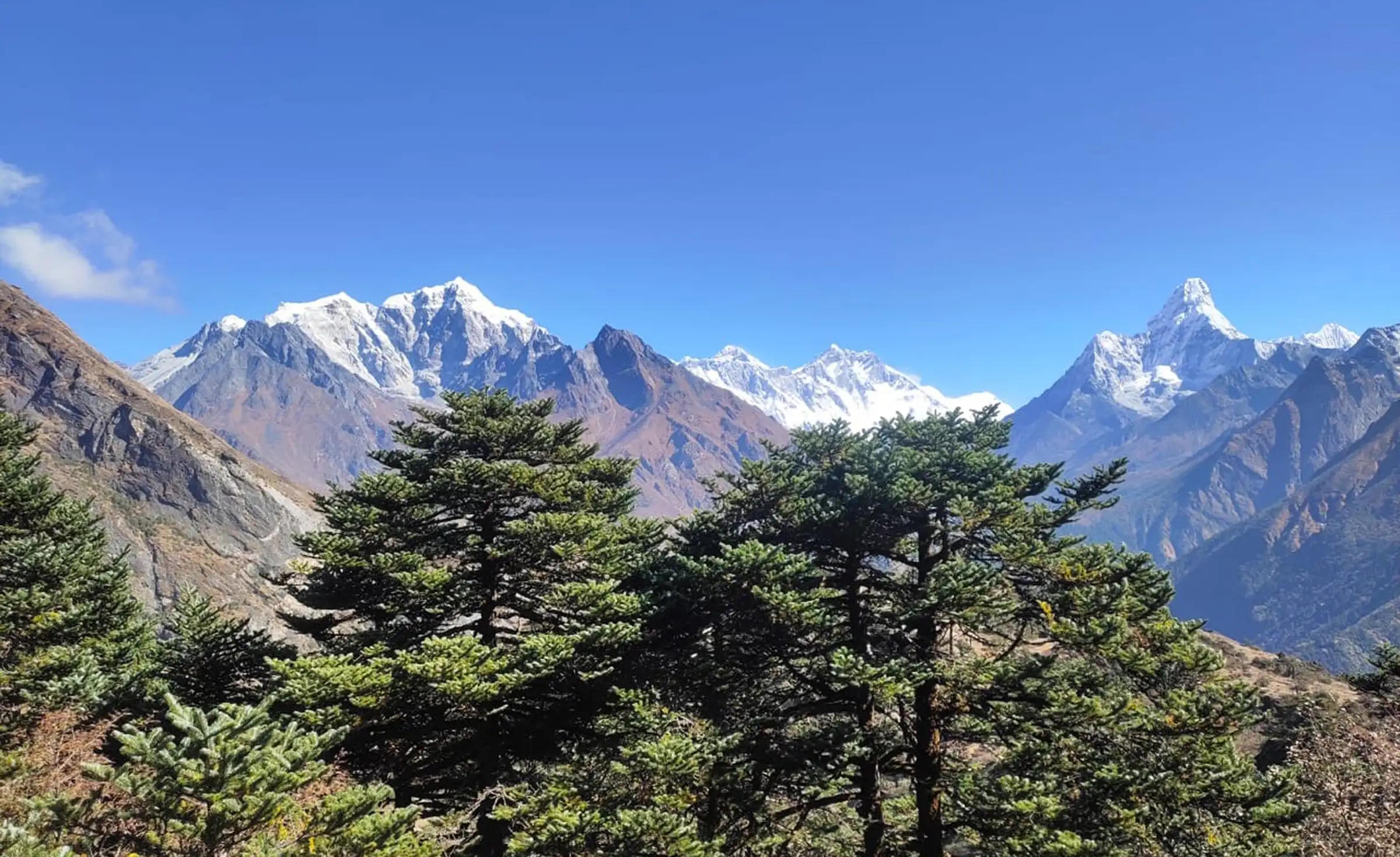
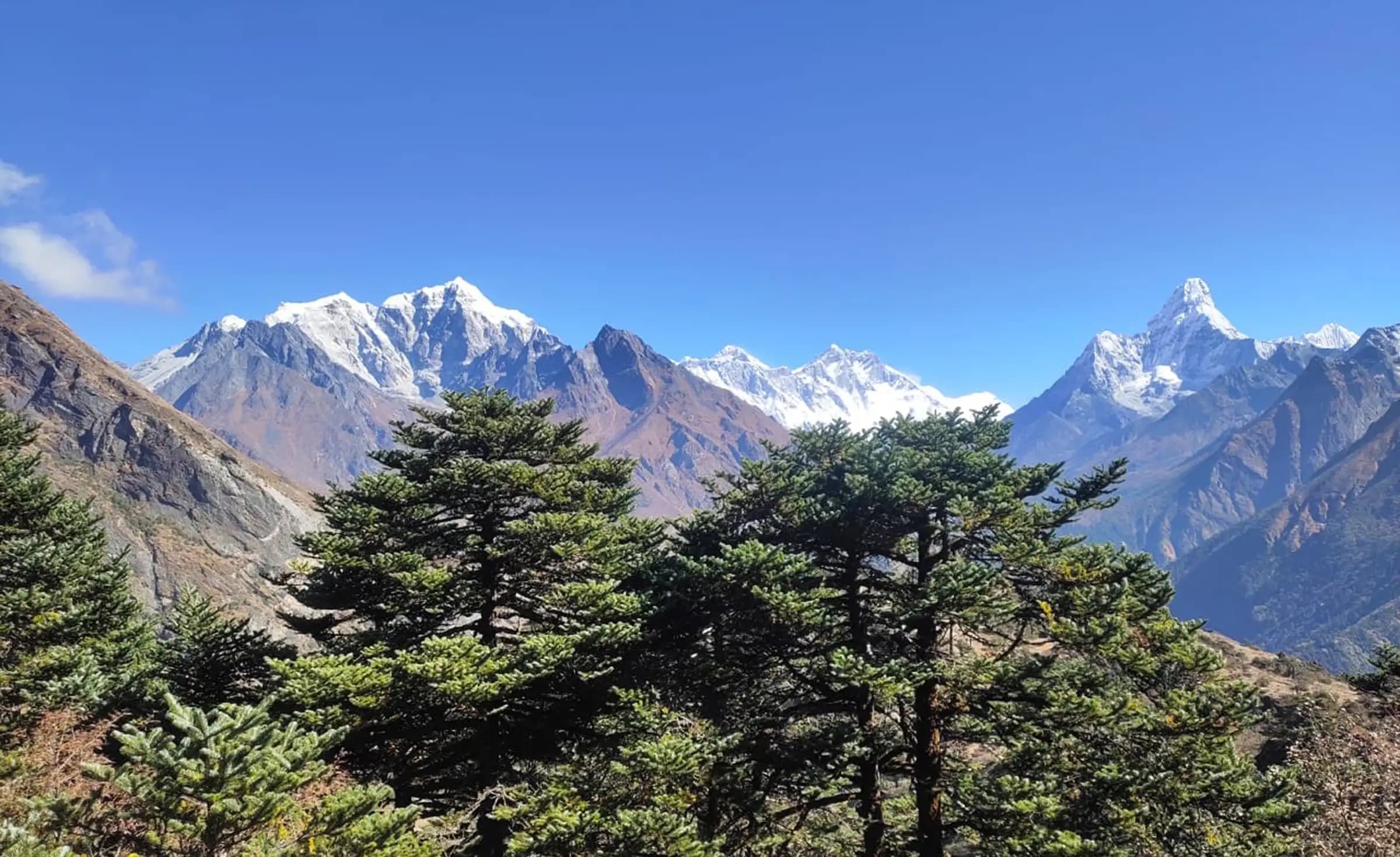
This journey reaches an altitude of about 5,364 meters (17,598 ft) and offers panoramic views of some of the world’s tallest peaks, including Everest, Lhotse, Nuptse, Pumori, Lobuche, Ama Dablam and Cho Oyu. Along the way, trekkers are welcomed by the warm Sherpa hospitality, colorful prayer flags, ancient monasteries, and the spiritual energy of the Himalayas. The adventure begins with a scenic 40-minute flight from Kathmandu to Lukla during the months of January, February, June, July, August, and December.
In March, April, May, October, and November, flights usually operate from Manthali (Ramechhap), which involves a 5–6-hour drive from Kathmandu followed by a short 20-minute flight to Lukla. From Lukla, the trail follows the banks of the Dudh Koshi River, passing through picturesque Sherpa villages and entering Sagarmatha National Park, a UNESCO World Heritage Site known for its rich biodiversity. The route ascends to Namche Bazaar, the bustling heart of the Khumbu region and an essential stop for acclimatization.
After spending a day in Namche, trekkers continue to Tengboche, home to the famous Tengboche Monastery, offering stunning views of Ama Dablam and Everest. The journey then leads through Dingboche and Lobuche, surrounded by dramatic peaks like Lhotse and Nuptse. The trek continues to Gorak Shep, the final settlement before reaching Everest Base Camp, where trekkers walk alongside the Khumbu Glacier, the world’s highest and deepest glacier.
Standing at Base Camp, surrounded by towering mountains, is an unforgettable experience for every adventurer. The following morning, an early hike to Kala Patthar (5,545 m) rewards you with a magnificent sunrise view over Mount Everest and the surrounding Himalayan giants, one of the most breathtaking sights on Earth. After soaking in the views, the route retraces through Pheriche, Tengboche, Namche and finally back to Lukla, where a short flight returns you to Kathmandu, marking the end of an extraordinary Himalayan journey.
Highlights
Itinerary
Upon arrival at Tribhuvan International Airport, our team will greet you and transfer you to your hotel. Later in the day, meet your trekking guide and fellow trekkers for a trip briefing, followed by a welcome dinner.
After a hearty breakfast in Kathmandu, we set off on a scenic drive to Ramechhap via the B.P. Highway. The route offers picturesque views of rolling hills, traditional villages, and terraced farmlands. Ramechhap is a peaceful and less-crowded town that serves as our overnight stop before the early morning flight to Lukla. This drive also allows us to experience the local way of life in the hilly region of Nepal.
An exciting day begins with an early morning flight from Ramechhap to Lukla, landing at one of the most thrilling and scenic airstrips in the world. After meeting our trekking crew in Lukla, we begin our trek through charming Sherpa villages, crossing suspension bridges and walking alongside the glacial waters of the Dudh Koshi River. Our destination for the night is Phakding, a beautiful riverside village nestled in the Khumbu region.
Today’s trek takes us deeper into the Khumbu region as we follow the Dudh Koshi River through lush pine forests and traditional Sherpa villages. We’ll cross several iconic suspension bridges, including the famous Hillary Suspension Bridge. After entering the Sagarmatha National Park at Monjo, we begin a steady ascent through dense forests and winding trails. As we approach Namche Bazaar, the largest Sherpa town in the Everest region, we’ll get our first glimpse of Mt. Everest on a clear day.
Today is a crucial acclimatization day to allow your body to adjust to the higher altitude. Rather than staying idle, we take a short hike up to Syangboche, where we’re rewarded with breathtaking panoramic views of Everest (8,848.86m), Lhotse, Ama Dablam, and other towering peaks. Along the way, we may visit the Everest View Hotel, one of the highest-altitude hotels in the world. After soaking in the views, we return to Namche Bazaar to explore its shops, bakeries, and local culture.
Leaving Namche Bazaar behind, we follow a scenic trail that winds along the mountainside, offering panoramic views of Everest, Lhotse, and Ama Dablam. The trail descends to the Dudh Koshi River before climbing through lush rhododendron and pine forests. Our destination is Tengboche, a spiritual and cultural hub of the Khumbu region. Here, we’ll visit the famous Tengboche Monastery, the largest in the area, set against a stunning Himalayan backdrop.
We begin the day descending through rhododendron forests and peaceful alpine terrain. After crossing the Imja Khola (river) via a suspension bridge, the trail climbs steadily past mani walls and chortens. As we ascend, the landscape becomes more rugged and open, with spectacular views of Ama Dablam, Island Peak, and Lhotse. By afternoon, we arrive in the picturesque village of Dingboche, a high-altitude settlement surrounded by soaring Himalayan peaks and vast yak pastures.
To help our bodies adapt to the increasing altitude, we spend another acclimatization day with a hike to the small settlement of Chhukung. The trail offers panoramic views of the Imja Valley and towering peaks like Island Peak, Lhotse, and Ama Dablam. This light trek improves our chances of a successful and safe journey to Everest Base Camp by aiding acclimatization. After enjoying the serene surroundings of Chhukung, we return to Dingboche for the night.
Today’s journey takes us further into the high alpine landscape. We trek through windswept meadows and along the lateral moraine of the Khumbu Glacier. Along the way, we pass by Thukla Pass, where heartfelt memorials honor climbers who lost their lives on Everest. As we continue, the terrain becomes more rugged, eventually leading us to Lobuche — a small settlement tucked beneath the towering peaks of Nuptse and Lobuche East.
Today marks one of the most memorable highlights of the trek. After an early start from Lobuche, we hike along the rugged path beside the Khumbu Glacier, passing through rocky terrain and glacial moraines to reach Gorakshep — the last settlement before Everest Base Camp. From here, we continue our ascent to Everest Base Camp (5,364m), standing at the foot of the world’s highest peak. After soaking in the awe-inspiring views and capturing unforgettable photos, we return to Gorakshep for the night.
We begin early today with a pre-dawn hike to Kala Patthar, the highest point of the trek. From the summit, we’re rewarded with a breathtaking panoramic sunrise over Mount Everest, Nuptse, Changtse, and surrounding Himalayan giants — a truly unforgettable moment. After spending time soaking in the views and capturing photos, we descend back to Gorakshep for breakfast and continue trekking downhill through glacial valleys to reach the village of Pheriche.
Today, we begin our descent retracing the trail through stunning landscapes of the Everest region. The trek takes us through peaceful alpine meadows, past yak herders’ fields, and along gentle ridges as we make our way toward Kenjuma, a quiet village near Namche Bazaar. The gradual descent helps your body adjust while allowing you to appreciate the breathtaking mountain scenery one last time before reaching lower altitudes.
Today’s trek continues descending through the beautiful landscapes of the Everest region. Passing back through Namche Bazaar, we exit Sagarmatha National Park as we make our way toward the village of Monjo. Along the trail, enjoy views of terraced fields, traditional Sherpa homes, and friendly local communities. Monjo is a peaceful stopover before the final stretch to Lukla.
After an early morning flight from Lukla to Ramechhap, we embark on a scenic drive back to Kathmandu via the B.P. Highway. This marks the end of the trekking adventure, giving you time to relax and reflect on your incredible journey. Spend the evening unwinding in Kathmandu with comfortable accommodation in a 3-star hotel and enjoy the city’s vibrant atmosphere.
After a restful night, enjoy a leisurely breakfast at your hotel before our team transfers you to Tribhuvan International Airport. As you board your flight home or onward destination, take with you unforgettable memories of the majestic Himalayas and the incredible adventure you’ve just completed. Safe travels and we hope to see you again soon!
Elevation Profile
Altitude Variation Chart
What's Included
Included
- All international and domestic airport transfers in Kathmandu via comfortable tourist vehicles
- Round-trip domestic flights between Kathmandu/Manthali and Lukla for a scenic start to your trek
- Kathmandu–Manthali–Kathmandu ground transportation by shared tourist vehicle (depending on flight season)
- Twin-sharing or double rooms in a 3-star standard service hotel in Kathmandu for 2 nights, including daily breakfast. (Private room upgrades are available at an additional cost.)
- Twin-sharing teahouse/guesthouse accommodation for 11 nights during the trek. Rooms with attached bathrooms are provided in Lukla, Phakding and Namche Bazaar
- Three wholesome meals per day (breakfast, lunch and dinner) throughout the trek, featuring a variety of Nepali, Tibetan and international dishes.
- A licensed and experienced English-speaking trekking guide certified by the Nepal government
- Supportive porters to carry luggage (1 porter for every 2 trekkers)
- All wages, meals, accommodation, insurance and necessary gear for the trekking staff are fully covered
- Permits: Sagarmatha National Park Entry Permit/Khumbu Pasang Lhamu Rural Municipality Permit and TIMS (Trekkers’ Information Management System) Card
- A comprehensive first-aid kit, including an oximeter to monitor oxygen levels and pulse rate daily
- Trip completion certificate recognizing your successful journey to Everest Base Camp
- All government taxes, service charges and administrative fees are included in the package.
Excluded
- Lunch and dinner in Kathmandu are not included in the package. You can explore a variety of local and international dining options in the city
- Beverages such as alcohol, soft drinks, bottled water and snacks purchased during the trek are not part of the package cost
- International airfare to and from Nepal, as well as the airport departure tax are excluded
- Nepal Entry Visa fees are not included. You can easily obtain a visa upon arrival at Tribhuvan International Airport, Kathmandu or at Nepalese embassies abroad
- Comprehensive travel insurance with high-altitude trekking and emergency evacuation coverage is mandatory but not included in the trek price
- Tips and gratuities for trekking staff, porters, and drivers are not covered. Though optional, tipping is customary as a gesture of appreciation
- Personal trekking gear and equipment, such as down jackets, sleeping bags, hiking poles, or boots, must be arranged by each participant
- Any other expenses not mentioned under “Price Includes” are the responsibility of the trekkers
Packing List
Preparing the right packing list for the Everest Base Camp Trek is essential for a safe, comfortable, and enjoyable journey to the Himalayas. The trek takes you through varying altitudes and temperatures, so having the appropriate clothing, gear, and equipment is crucial for success. Below is a comprehensive checklist of what to bring for your Everest Base Camp (EBC) Trek.
Clothing
Base Layers: Moisture-wicking thermal tops and bottoms
Insulating Layers: Fleece jacket or down jacket for warmth
Outer Shell: Waterproof and windproof jacket and pants
Trekking Pants: Lightweight, quick-drying pants
T-shirts: Breathable, moisture-wicking shirts (long and short sleeves)
Gloves: Inner thermal gloves and outer waterproof gloves
Headwear: Warm hat, beanie, buff, and sun hat or cap
Underwear and Socks: Multiple pairs of quick-dry socks and comfortable underwear
Footwear
Trekking Boots: Waterproof, well-broken-in boots with good ankle support
Camp Shoes or Sandals: For resting in the evenings at teahouses
Gaiters: To protect from snow, dust, or small rocks
Backpack and Gear
Main Duffel Bag: Provided by most trekking agencies for porters
Daypack (30–40L): To carry essentials like water, snacks, and camera
Sleeping Bag: Rated for –15°C (can be rented in Kathmandu)
Trekking Poles: Adjustable poles for stability on steep terrain
Rain Cover: For both backpack and daypack
Hydration and Snacks
Water Bottles or Hydration Bladder (2–3 liters)
Water Purification Tablets or Filter
Energy Bars, Dry Fruits, or Snacks for extra energy on the trail
Accessories and Essentials
Sunglasses with UV protection
Sunscreen and Lip Balm (SPF 30+)
Headlamp or Flashlight with extra batteries
Personal First Aid Kit and prescribed medications
Trekking Towel, Toiletries, and Wet Wipes
Reusable Bag for waste or dirty clothes
Electronics
Camera or Smartphone for photos
Power Bank or Solar Charger (electricity can be limited in higher areas)
Travel Adapter (Type C/D/M for Nepal)
Documents and Money
Valid Passport and Nepal Visa
Trekking Permits (Sagarmatha National Park, Khumbu Rural Municipality, TIMS)
Frequently Asked Questions
Gallery & Video
Customer Reviews
Loading reviews...