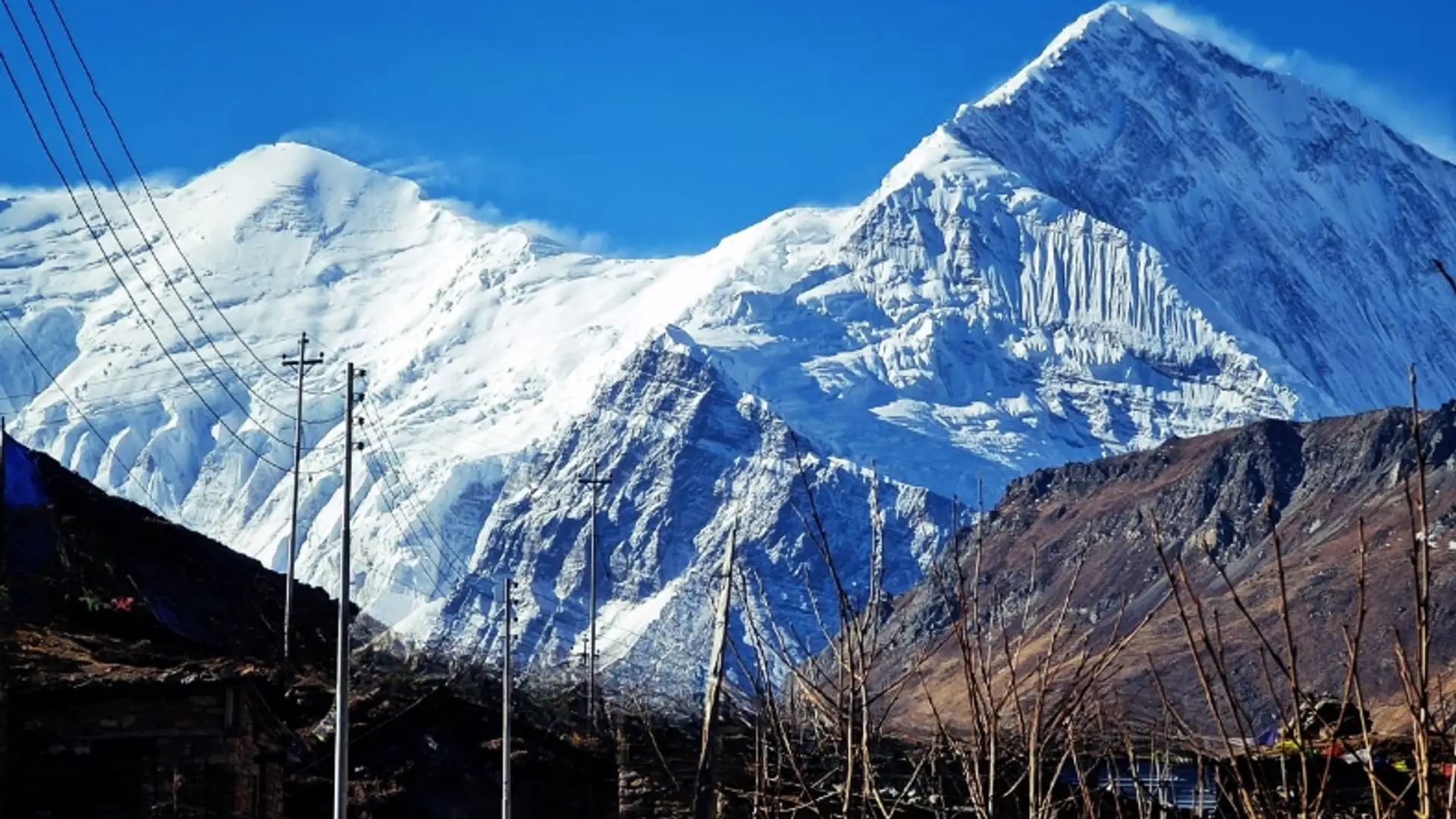
Annapurna Circuit Trek 12 Days
Trip Duration: 12 Days
Trip Grade: Moderate
Group Size: 12
Meals: All meals during the trek; breakfast in cities; welcome and farewell dinners
Best Season: Spring (March–May) and Autumn (September–November)
Start Point: kathmandu
Accomodation: Hotels in Kathmandu and Pokhara; teahouses on the trail
Ending Point: kathmandu
Max Altitude: 5416 m
Transportation: Private jeep and tourist vehicle (optional domestic flight)
Permits Required: ACAP and licensed guide arranged and included
Overview
The Annapurna Circuit is one of Nepal's classic mountain routes, following the northern side of the Annapurna massif through a remarkable range of landscapes and cultures. This 12-day version delivers the defining experiences of the circuit — the ascent through the Marsyangdi valley, the high Manang plateau, the crossing of Thorong La Pass, and the descent to Muktinath and the Kali Gandaki — in a well-paced two-week window.
What makes the circuit distinctive is how completely the surroundings change as you gain height. You start in green middle-hill country of forest, terraced fields and Gurung and Magar villages, and climb steadily north along the Marsyangdi River. As the altitude rises, the vegetation thins, the architecture shifts to flat-roofed stone houses, and the culture takes on a strong Tibetan influence. By Manang you are in a high, dry valley in the rain shadow of the range, with the ice walls of the Annapurnas rising directly across the valley. Cross Thorong La and you drop into Mustang and the Kali Gandaki — a stark, wind-carved world that feels closer to the Tibetan plateau than to the forests where the walk began.
To make good use of the available days, this itinerary reaches the trailhead by road. A jeep transfer carries you up the Marsyangdi valley to Dharapani, from where you begin walking; after the pass, a drive takes you out from Muktinath toward Pokhara. This is a deliberate, honest structure. It trims the lowest, increasingly road-affected sections and concentrates your time on foot on the finest part of the route — the climb through Chame and Pisang to Manang, the acclimatisation days, and the crossing itself — rather than presenting the full three-week traditional walk.
Manang is the heart of the trek. Set at 3,540 metres beneath Annapurna III, Gangapurna and Annapurna IV, it is the natural place to pause and let the body adjust before the higher days. The old Braga (Braka) monastery nearby, built into a cliff of eroded pinnacles, is one of the most atmospheric gompas in the region and a worthwhile visit on the rest day.
From Manang the trail climbs gradually to the foot of the pass, past the grazing settlements of Yak Kharka and Thorong Phedi. The crossing of Thorong La at 5,416 metres is the physical climax of the trek — a long, cold, high-altitude day that rewards steady effort and good acclimatisation, ending with a substantial descent to Muktinath, a site sacred to both Hindus and Buddhists and one of the most important pilgrimage destinations in the Himalaya.
This is a trek for people who want a genuine high-altitude experience with real cultural depth. It involves no technical climbing, but the pass and the days spent at altitude make it more than a gentle introduction. With sensible preparation it is achievable for fit, motivated walkers, including committed first-timers.
Why Choose This 12-Day Annapurna Circuit Trek?
This itinerary is built to give you the circuit's biggest experiences on a schedule that respects both your time and the altitude.
The classic high circuit, well-paced. The route covers the most rewarding section of the Annapurna Circuit — Marsyangdi valley to Manang to Thorong La to Muktinath — with an acclimatisation day built into the schedule rather than treated as optional.
A gentler, safer start. Beginning the walk at Dharapani and climbing gradually through Chame and Pisang gives your body a natural, staged ascent toward Manang, which supports acclimatisation better than driving straight to the higher villages.
Efficient road transfers. A jeep to the trailhead and a drive out after the pass remove the lower valley sections now shared with vehicles, so your walking days are spent on the high, scenic core of the route.
Cultural range, not just altitude. The trail passes through Gurung, Manangi and Thakali communities, Tibetan-influenced villages and monasteries, and the pilgrimage site of Muktinath — a genuinely varied cultural journey.
Time to recover. A rest day in Pokhara after the pass lets you unwind by the lake before the journey home, rounding out the trip rather than rushing straight to the airport.
Because the trek crosses a high pass and spends several nights above 4,000 metres, it suits travellers who arrive reasonably fit and prepared. Those wanting to add Tilicho Lake, Poon Hill or extra acclimatisation days can extend the route — something we are glad to arrange.
The Thorong La Pass Experience
Thorong La is the defining challenge of the Annapurna Circuit. At 5,416 metres it is among the highest points reached on any standard teahouse trek in Nepal, and the crossing is a serious undertaking rather than a formality.
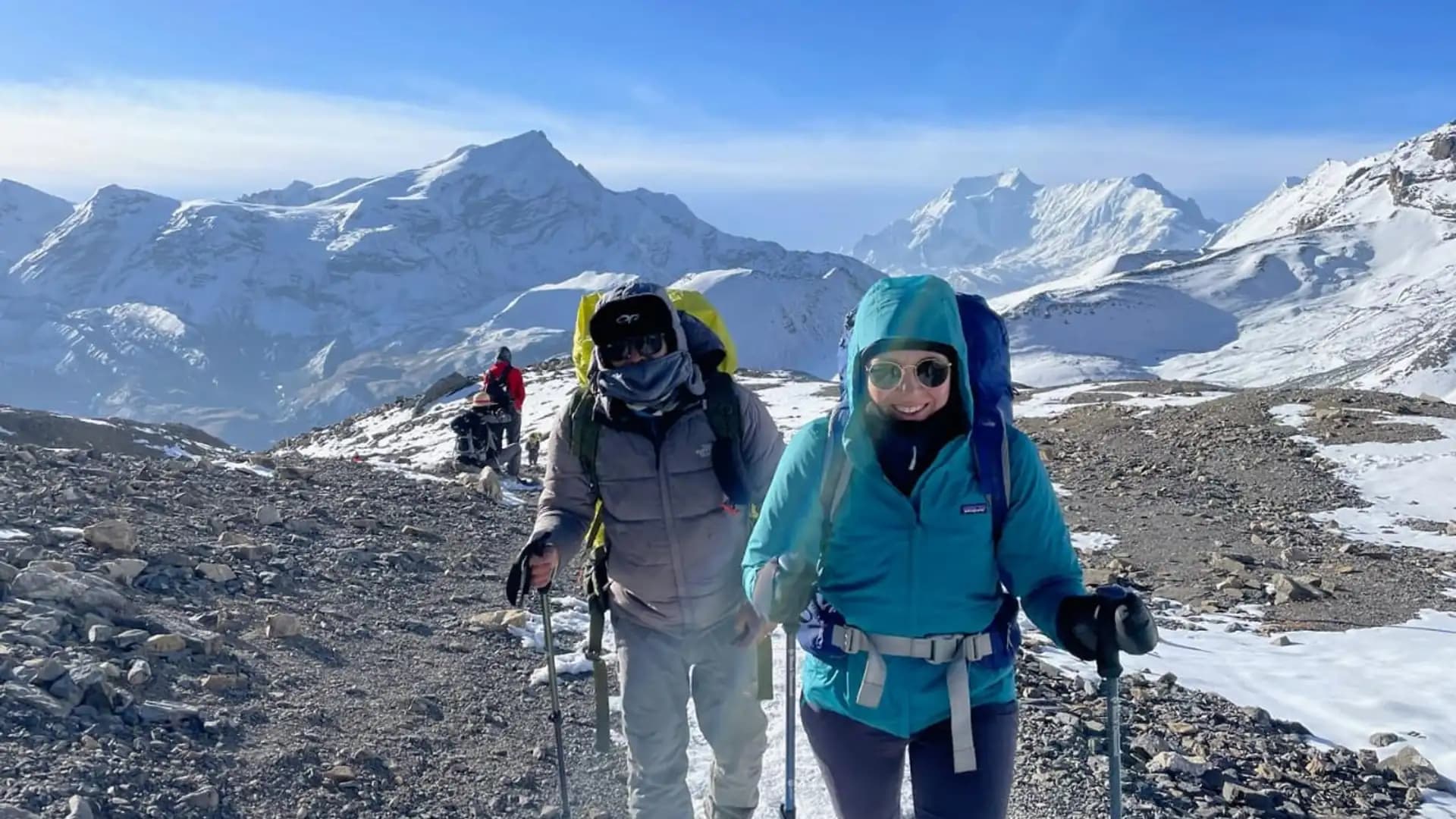
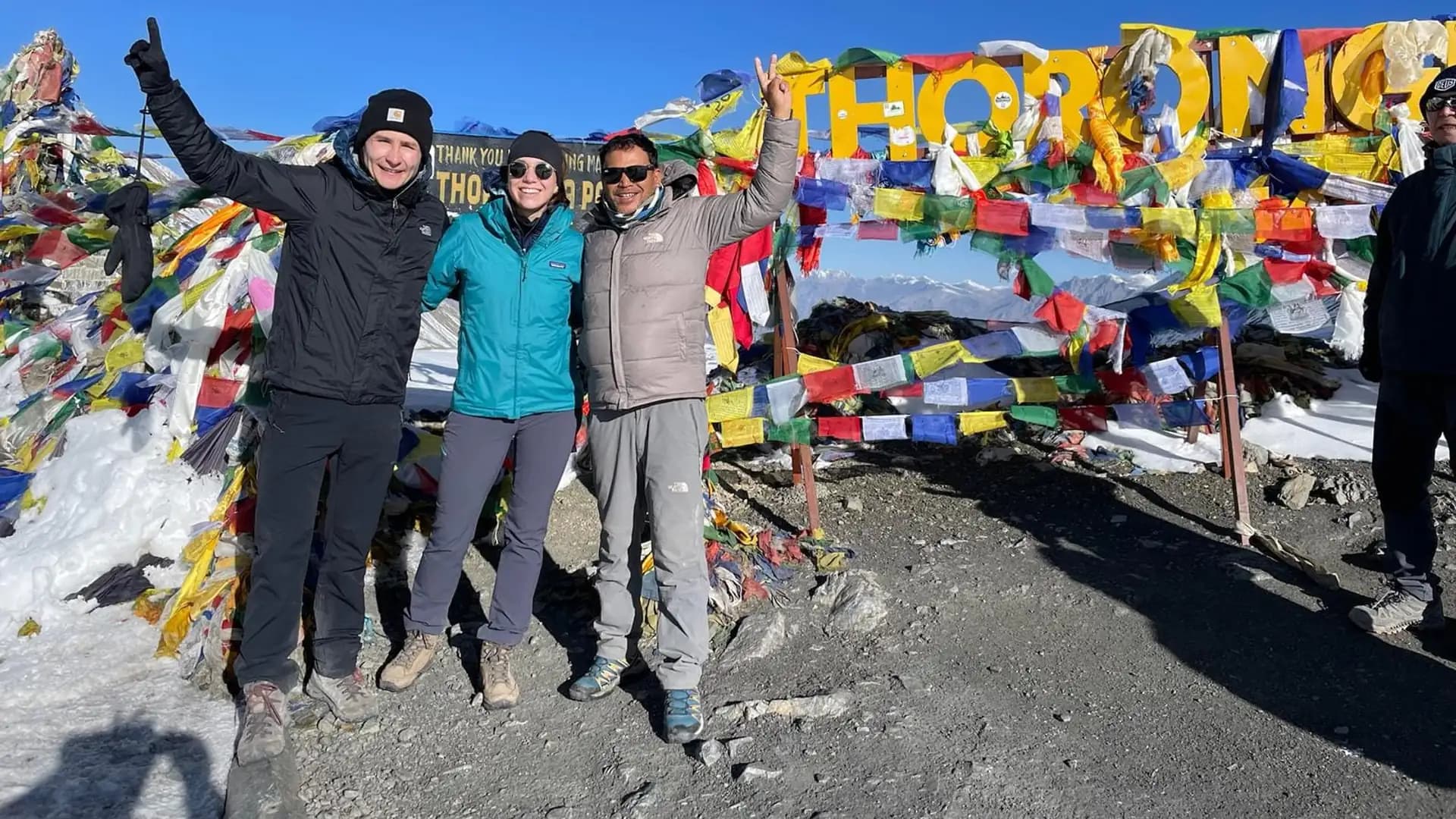
The day begins in darkness, usually well before sunrise, because the pass is known for strong winds that build through the morning; an early crossing means calmer, safer conditions. From Thorong Phedi the trail climbs steadily over a series of false summits before finally reaching the saddle, marked by prayer flags and a wide Himalayan horizon. The air is thin, sub-freezing temperatures are normal, and progress is deliberately slow.
The descent is long and demanding in its own right, dropping well over 1,500 metres to Muktinath on loose ground that works the knees and legs. Trekking poles help considerably here. Weather and trail conditions dictate everything on this day, and there are seasons when snow can affect the crossing. Your guide monitors conditions closely and will hold, adjust or turn back if the pass is not safely passable — reaching Muktinath safely always takes precedence over crossing on a fixed date.
Learn more: [Thorong La Pass Guide]
How Difficult Is This Trek?
This is a demanding high-altitude trek that sits toward the strenuous end of teahouse trekking, mainly because of the pass and the time spent at altitude rather than any technical difficulty.
High altitude. The trek crosses Thorong La at 5,416 m, with several nights spent above 3,500 m and two above 4,000 m.
A long, hard pass day. The crossing involves an early start, a sustained climb in thin air, and a descent of well over 1,500 metres in a single day.
Consecutive trekking days. Multiple days of four to seven hours of walking, some on steep or uneven ground.
Variable conditions. Cold, wind and the possibility of snow at altitude, especially on and around the pass.
You do not need technical climbing skills, but you do need solid cardiovascular fitness, some prior hill-walking experience, and determination. Well-prepared first-time trekkers complete this route regularly, but it rewards genuine preparation.
Learn more: [How Difficult Is the Annapurna Circuit Trek?]
Altitude and Acclimatization — Brief Summary
The highest point of the trek is Thorong La Pass at 5,416 metres, and altitude is the single most important factor to respect on this itinerary. The schedule is arranged to help your body adjust — a staged ascent from Dharapani to Manang, a dedicated rest day in Manang, and short, deliberate stages up to the pass — but no itinerary can prevent altitude illness entirely, and individual responses vary.
On the trail, the priorities are simple and effective: ascend at a steady pace, drink plenty of fluids, and report any persistent headache, nausea or unusual fatigue to your guide without delay. Our guides are experienced in recognising altitude symptoms and will adjust the plan when needed. This is general guidance, not medical advice; travellers with relevant health conditions should consult a doctor before booking.
Learn more: [Annapurna Circuit Trek Altitude and Acclimatization Guide]
Best Time to Trek — Short Overview
Autumn (September–November): The most popular and generally most reliable season, with settled weather, clear skies and the best chance of a straightforward pass crossing.
Spring (March–May): Warmer days, longer light and good visibility, with blooming rhododendron on the lower hills. A strong second window.
Winter (December–February): Very cold at altitude, with a real chance of snow closing Thorong La. Suited to experienced, well-equipped trekkers, and some higher lodges may be closed.
Monsoon (June–August): Wet and cloudy on the southern side, though Manang and Mustang lie partly in the rain shadow and stay drier. Trails lower down can be slippery.
Learn more: [Best Time for Annapurna Circuit Trek]
Accommodation — Package Summary
You stay in comfortable hotels in Kathmandu and Pokhara, and in teahouses along the trail. Teahouses on the circuit are locally run lodges offering simple twin-share rooms, shared bathrooms, and a communal dining room that serves as the warm heart of each stop.
Facilities are more developed in larger villages such as Chame and Manang and become basic at the high stops near the pass, where warmth, hot water and charging are limited and may carry a small charge. Your teahouse accommodation throughout the trek is included.
Learn more: [Annapurna Circuit Trek Accommodation Guide]
Food and Meals — Package Summary
All meals are provided during the trek, with breakfast included at your hotels in Kathmandu and Pokhara, plus welcome and farewell dinners. Teahouse kitchens offer more variety than many expect.
The dependable staple is dal bhat — rice, lentils, vegetables and pickles — usually served with refills and ideal fuel for long days. Menus also include noodles, pasta, potatoes, soups, eggs and Tibetan bread, with vegetarian options available throughout. At altitude, staying well hydrated with water and warm drinks is especially important.
Learn more: [Food on the Annapurna Circuit Trek]
Permits — Package-Relevant Summary
The Annapurna Circuit runs inside the Annapurna Conservation Area, so an Annapurna Conservation Area Permit (ACAP) is required and is checked at the Besisahar/Khudi checkpoint and other points along the route. Since April 2023, foreign trekkers in the Annapurna region must also trek with a licensed guide through a registered agency; independent solo trekking is no longer permitted on these trails.
Adventure Life Nepal arranges your ACAP and provides the licensed guide, along with any other documentation currently required. Permit rules and fees in Nepal change from time to time, and we keep our arrangements up to date with the latest regulations.
Learn more: [Annapurna Circuit Trek Permits Guide]
Fitness and Preparation — Brief Summary
Arriving fit makes a real difference to how you cope with the altitude and the long pass day. Useful preparation focuses on:
Cardiovascular endurance built through regular walking, hiking, running, cycling or swimming
Long walks to accustom your legs to several hours on consecutive days
Uphill and downhill conditioning, since the pass involves a sustained climb and a very long descent
General leg strength and core stability
Breaking in your boots thoroughly before the trip to avoid blisters
Learn more: [How to Prepare for the Annapurna Circuit Trek]
Is This Trek Right for You?
This trek is a good fit if you:
Want a high-altitude Himalayan trek with a major pass and strong cultural variety
Are comfortable walking four to seven hours a day across consecutive days
Have reasonable fitness and, ideally, some multi-day hiking experience
Are prepared to spend several nights above 3,500 m and to cross Thorong La
Value the mix of Tibetan-influenced villages, monasteries and the Muktinath pilgrimage site alongside the mountains
You should think carefully, train more, or consider a gentler route if you have little experience of multi-day hill walking, or a health condition affected by altitude or exertion. If you would prefer a lower, easier trek — or a longer one with extra acclimatisation, Tilicho Lake or Poon Hill — we can suggest suitable alternatives.
Highlights
Itinerary
An early departure heads west along the Prithvi Highway to Besisahar, then leaves the paved road for a rough four-wheel-drive track up the Marsyangdi valley to Dharapani. Expect roughly eight to nine hours in total, depending on road and weather conditions — a long but scenic day of river gorges, waterfalls and terraced hillsides. Starting the walk from Dharapani, rather than driving higher, gives a gentler first night at altitude. Drive: ~8–9 hours. Overnight: Teahouse in Dharapani.
The trekking begins in earnest, following the river upstream through pine and fir forest and passing apple orchards and small settlements. Glimpses of Annapurna II and Lamjung Himal open up along the way. Chame, the administrative centre of Manang district, sits beside the river with a small hot spring nearby. Trek: ~5–6 hours. Overnight: Teahouse in Chame.
The trail continues through forest before the valley narrows beneath the sweeping curved cliff of Paungda Danda, one of the circuit's most striking features. Climbing to Upper Pisang brings the first commanding viewpoint of the trek, with the Annapurna range laid out across the valley and the older upper village worth exploring. Trek: ~5–6 hours. Overnight: Teahouse in Upper Pisang.
Taking the higher trail via the villages of Ghyaru and Ngawal rewards you with superb mountain views and aids acclimatisation, before the route descends toward Manang. The landscape is noticeably drier here, in the rain shadow of the range, and the villages show strong Tibetan influence. Trek: ~6–7 hours. Overnight: Teahouse in Manang.
A rest day here is one of the most important parts of the itinerary. Rather than staying idle, you take a short acclimatisation hike — options include the viewpoint above Gangapurna Lake or a walk toward the Ice Lake — climbing higher during the day and returning to sleep at village level. There is also time to visit the Braga monastery and prepare for the days ahead. Overnight: Teahouse in Manang.
Leaving Manang, the trail climbs steadily above the tree line onto open grazing land, with the valley widening and the air thinning noticeably. Yaks graze the slopes, and blue sheep are sometimes spotted on the higher ground. The shorter distance suits the altitude gain. Trek: ~4–5 hours. Overnight: Teahouse at Yak Kharka.
A short but important day. The trail crosses high, exposed terrain to reach Thorong Phedi, the base of the pass. The distance is modest by design, keeping the altitude gain manageable and leaving the afternoon for rest and light acclimatisation walks. Depending on conditions and how the group is doing, your guide may continue to High Camp to shorten the following morning. Trek: ~3–4 hours. Overnight: Teahouse at Thorong Phedi.
The hardest and most memorable day. You set off well before dawn to cross the pass before the winds pick up, climbing steadily to the prayer-flag-draped saddle of Thorong La at 5,416 metres, with a wide sweep of Himalayan peaks in view. A long descent of well over 1,500 vertical metres then brings you down to Muktinath, an important pilgrimage site for Hindus and Buddhists. This is a demanding seven-to-eight-hour day where steady pacing matters more than speed. Trek: ~7–8 hours. Overnight: Guesthouse in Muktinath.
After the high country, the route drops into the Kali Gandaki valley — the deep gorge between the Annapurna and Dhaulagiri massifs. The drive follows the river down through Thakali villages and continues via Beni to Pokhara, roughly seven to eight hours. A short domestic flight from nearby Jomsom to Pokhara is available as an alternative, subject to weather. Drive: ~7–8 hours. Overnight: Hotel in Pokhara.
A free day by the lake to recover after the pass. You might take a boat out on Phewa Lake, wander the lakeside, or simply rest. The Annapurna and Machhapuchhre skyline that you have just walked beneath is often visible across the water on a clear morning. Overnight: Hotel in Pokhara.
Return to Kathmandu by tourist vehicle along the Prithvi Highway, about six to seven hours, or by a short domestic flight as an upgrade. The evening is free, and a farewell dinner marks the end of the trek. Drive: ~6–7 hours. Overnight: Hotel in Kathmandu.
Free time until your onward flight, with an airport transfer arranged to see you off.
What's Included
Included
- Airport pick-up and drop-off service
- Three meals a day during the trek (breakfast, lunch, and dinner)
- Comfortable accommodation in hotels and tea houses
- Experienced English-speaking guide
- Porters to carry your luggage
- All necessary permits (ACAP and TIMS)
- First aid medical kit
- All ground transportation as per itinerary
- Welcome and farewell dinners
- Insurance for guide and porter
Excluded
- International airfare to and from Kathmandu
- Nepal entry visa fee
- Travel insurance
- Personal expenses (phone calls, laundry, bar bills, battery recharge, bottled water)
- Tips for guides and porters
- Extra night accommodation and meals in Kathmandu due to early arrival or late departure
- Personal trekking equipment and gear
- Any services not mentioned in the 'Includes' section
Packing List
Essential Packing Summary
High altitude and a major pass make good gear more important on this trek than on many others. A practical starting point:
Layered clothing: moisture-wicking base layers, insulating mid-layers, and warm layers for the pass
A warm insulated (down) jacket for the high stops and the crossing
Waterproof and windproof outer layer, jacket and trousers
Sturdy, broken-in trekking boots with good ankle support
Warm hat, gloves and a buff or neck gaiter for the cold pass morning
Trekking poles, particularly useful on the long descent from Thorong La
Daypack, water bottles or hydration system, and a means of purifying water
Sun protection: sunglasses, high-factor sunscreen, lip balm and a sun hat
Headlamp with spare batteries for the pre-dawn pass start
Personal medication, a small first-aid kit, and important documents
Requirements vary by season, with warmer gear essential in winter and early spring.
Learn more: [Complete Annapurna Circuit Trek Packing List]
Frequently Asked Questions
This 12-day version is moderate to strenuous. It crosses Thorong La at 5,416 m and involves long days and several nights at altitude, but no technical climbing. Good fitness and preparation make it far more enjoyable.
Yes. This is a well-established 12-day format that uses a jeep transfer to reach the trailhead and a drive out after the pass, concentrating your walking on the high core of the route while keeping a Manang acclimatisation day in the schedule.
The highest point is Thorong La Pass at 5,416 m (17,769 ft). You reach it on Day 8 before descending to Muktinath.
Most trekking days involve around four to seven hours of walking. The Thorong La crossing is the longest, at roughly seven to eight hours.
Yes. Crossing Thorong La from Thorong Phedi to Muktinath is the central objective of the trek, weather and conditions permitting.
Yes. A full acclimatisation day in Manang (3,540 m), with a short hike to a higher viewpoint, is built into the itinerary before the higher stages.
An Annapurna Conservation Area Permit (ACAP) is required, and foreign trekkers must trek with a licensed guide. We arrange the permit and provide the guide as part of the package.
Hotels in Kathmandu and Pokhara, and teahouse lodges on the trail. Teahouse rooms are simple and usually twin-share, with shared bathrooms and basic facilities at the higher stops.
All meals are included during the trek, along with breakfast at your city hotels and welcome and farewell dinners. Other meals in Kathmandu and Pokhara are not included..
Fit, determined first-time trekkers who prepare properly can complete it, but this is a high-altitude route with a demanding pass day. Some prior multi-day walking experience is a real advantage.
Yes. A licensed guide is now mandatory for foreign trekkers in the Annapurna region, and one is included with this package.
Gallery & Video
Customer Reviews
Loading reviews...