Khopra Danda Trek 11 Days | The Ultimate Mulde Viewpoint Experience
Trip Duration: 11 Days
Trip Grade: Moderate
Group Size: 2
Best Season: March–May & Sept–Nov.
Start Point: Kathmandu
Ending Point: Kathmandu
Max Altitude: 4,660 m (Khayer Lake)
Permits Required: ACAP (Annapurna Conservation Area Permit) & TIMS Card
Overview
A Journey Beyond the Annapurna Crowds
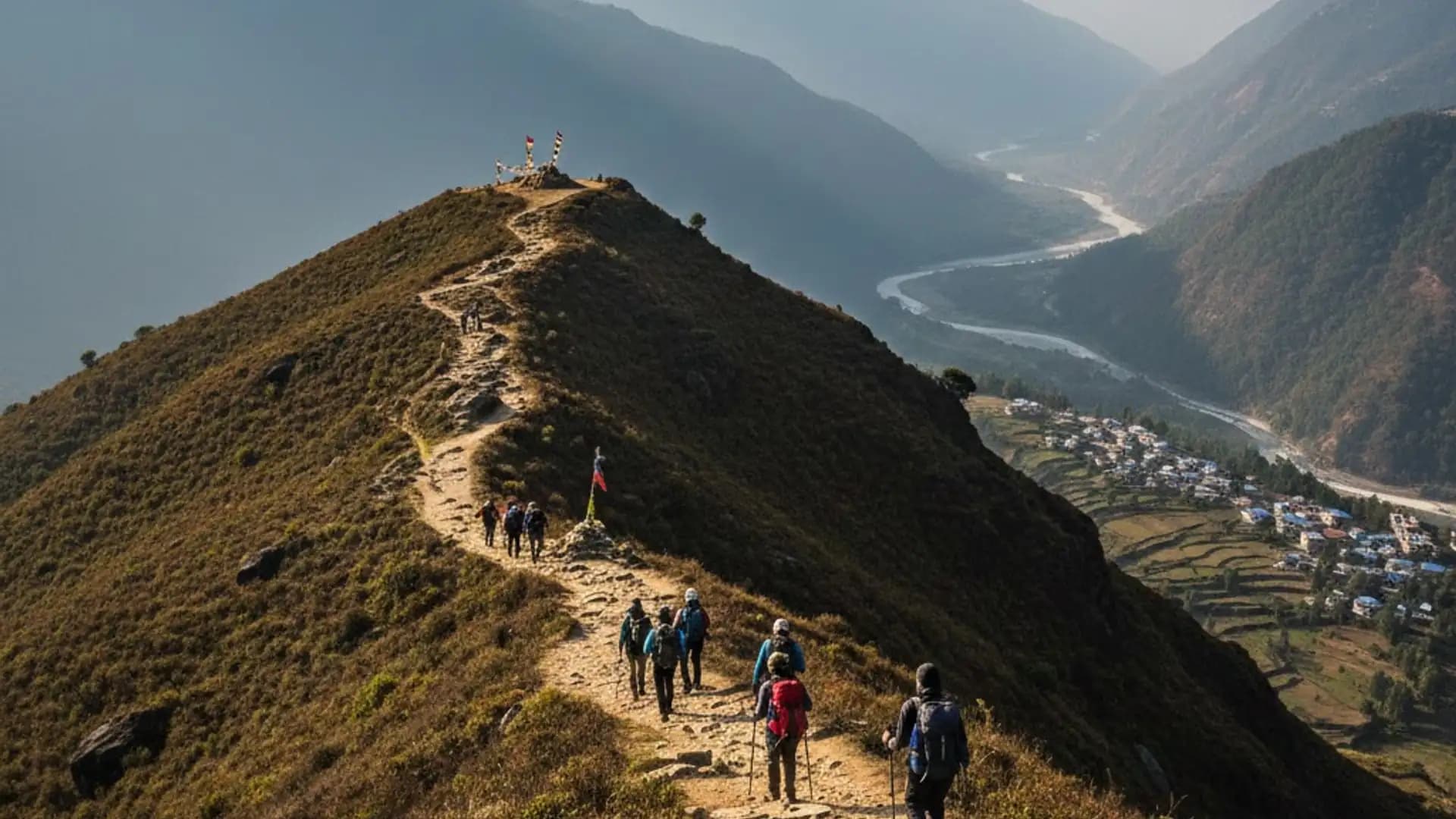
The Khopra Danda Trek (also recognized as the Khopra Ridge Trek) has solidified its position in 2026 as the premier "Hidden Gem" for trekkers seeking a peaceful alternative to the Ghorepani or ABC routes. Curated by senior Himalayan guide Dil Bahadur Karki, this 11-day specialized itinerary utilizes a "High-Ridge Strategy." Instead of valley-floor walking, you traverse a high alpine balcony sitting directly across the Kali Gandaki Gorge (the deepest on Earth) from the Dhaulagiri Massif (8,167 m).
Expert Insight: "In my 25 years of leading Himalayan expeditions, Khopra Danda remains the most underrated viewpoint in Nepal. It offers the same grandeur as Everest or Annapurna Base Camp but with a fraction of the foot traffic, making it a sanctuary for authentic mountain connection." — Dil Bahadur Karki, Adventure Life Nepal Senior Guide.
Why the Khopra Ridge is the Ultimate Expert-Recommended Choice
Our Khopra Danda package is a premier Community-Based Eco-Trek, offering exclusive local insights you won't find on standard tourist maps. By choosing this route, you ensure your adventure has a direct, positive impact on local lives.
1. Sustainable Community Impact
Your stay at the community-managed lodges directly funds the Himanchal Education Foundation. By choosing this route, you support local schools and health clinics in the Magar villages of Swanta and Paudwar, making your trek a force for social good.
2. The "Better Than Poon Hill" Vantage Point
While thousands flock to Poon Hill, our itinerary features the Mulde Viewpoint (3,637 m). Local expert consensus proves that Mulde offers a superior 360-degree panorama of over 25 major peaks, including Nilgiri, Machhapuchhre, and the rare Gurja Peak.
3. High-Altitude Biodiversity
Unlike the more urbanized trails found on the classic Annapurna Circuit Trek, the Khopra Ridge remains a protected sanctuary of high-altitude biodiversity. Here, trekkers are far more likely to spot the elusive Himalayan Tahr, Barking Deer, and the vibrant Danphe (Nepal’s national bird) amidst ancient, undisturbed rhododendron forests.
The Spiritual Heart: Hike to Sacred Khayer Lake (4,660 m)
The natural wonder that defines this trek is the high-altitude pilgrimage to Khayer Lake. Nestled directly under the massive south face of Annapurna South, this turquoise alpine lake is a site of immense religious significance.
Cultural Pilgrimage: During the annual Janai Purnima festival, local pilgrims ascend here to pay homage at the Khayer Barahi Temple.
The 2026 Safety Strategy: Reaching 4,660 m requires professional pacing. Our 11-day timeline includes a critical "Ridge Acclimatization" day at Dobato, ensuring our clients maintain a 98% success rate in reaching the lake compared to standard shorter itineraries.
Highlights
Itinerary
Your Himalayan journey begins the moment you touch down at Tribhuvan International Airport, where our team provides a seamless private transfer to your boutique 3-star hotel in the heart of the city. After settling in, you’ll meet your lead guide, Dil Bahadur Karki, for an in-depth briefing on the trail ahead, ensuring you feel fully prepared, equipped, and excited for the off-the-beaten-path adventure starting tomorrow.
Leave the bustle of the capital behind as you embark on a scenic 7-hour drive toward the tranquil lakeside city of Pokhara, following the winding Trishuli River and passing through vibrant local townships. This transition day allows you to soak in the rural beauty of Nepal’s middle hills before spending a relaxing evening by Fewa Lake, mentally preparing for the ascent into the Annapurna foothills.
We maximize your trail time by taking a private Jeep directly to the iconic Gurung village of Ghandruk, where you’ll begin a steady 4-hour climb through ancient moss-covered forests. As you reach Tadapani, the "Sentiment of the Mountains" truly hits you; the massive peaks of Annapurna South and Machhapuchhre (Fishtail) appear so close you feel as though you could touch them from your teahouse window.
Stepping away from the main tourist highway, today’s 5-hour trek leads you into the "Wild Annapurna," a serene landscape of rhododendron and oak forests where the only sounds are the wind and birdcall. You will arrive at the remote ridgetop settlement of Dobato, a hidden gem favored by veteran guides like Dil Bahadur for its silence, stargazing opportunities, and raw Himalayan proximity.
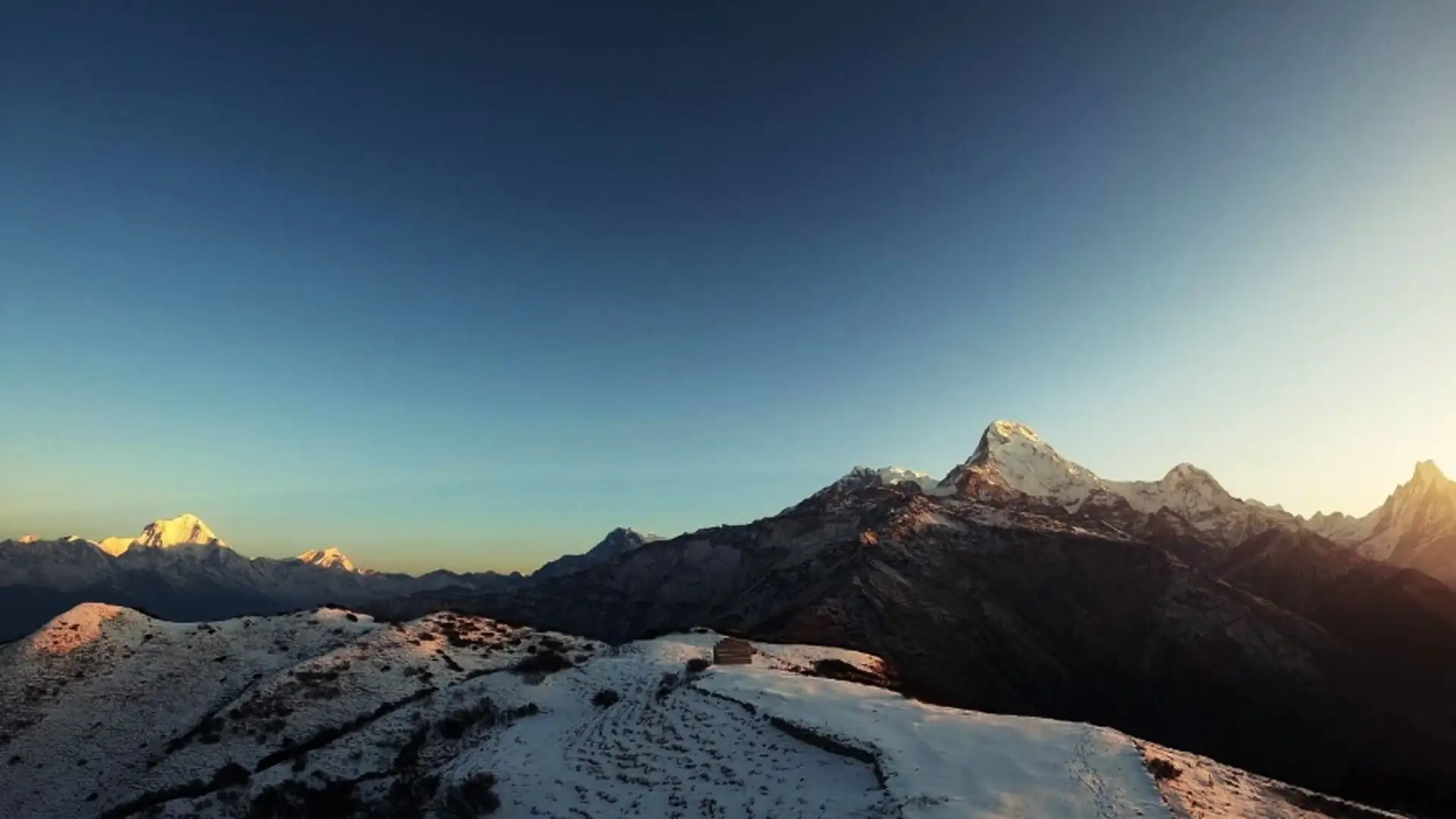
Wake up before the sun for a 45-minute hike to Mulde Viewpoint (3,637 m), an experience many travelers claim surpasses Poon Hill for its 360-degree, crowd-free panorama of the Dhaulagiri and Annapurna massifs. After witnessing the peaks turn gold, you’ll trek along a spectacular high ridge to the Khopra Community Lodge, where the "Ridge Vibe" provides an unparalleled sense of being on top of the world.
Today is the soul of the trek, a challenging yet spiritually rewarding 8-hour pilgrimage to the turquoise waters of Khayer Lake, a sacred site sitting directly at the foot of the towering Annapurna South face. Standing at 4,660 m, you’ll experience the raw power of the high-altitude alpine environment, a moment of deep achievement and serenity that remains the undisputed highlight for every trekker.
The descent from the high ridges into the lush, fertile valley of Swanta offers a beautiful shift in sentiment, moving from the rugged alpine world back into the warmth of local Magar culture. In Swanta, you can visit the famous community-run cheese factory and enjoy the genuine hospitality of a village that feels untouched by modern commercialism, making it the perfect place to rest your legs.
Crossing the suspension bridges and climbing through terraced fields, you’ll rejoin the classic trekking route as you head toward the famous blue roofs of Ghorepani. While the trail becomes more social, the excitement is palpable as you prepare for the iconic sunrise finale, sharing stories with fellow trekkers in one of the most famous mountain hubs in the world.
Cap off your trek with a pre-dawn climb to Poon Hill for a legendary second sunrise, comparing the massive scale of the Annapurna range with the intimate views you saw at Mulde Peak. After a final descent to Banthanti, our private Jeep will be waiting to whisk you back to the comforts of Pokhara, where a hot shower and a celebratory dinner by the lake await.
Reward your body with a day of gentle exploration in Pokhara, visiting the serene World Peace Stupa for a final mountain view and exploring the natural wonders of Devi’s Fall and Gupteshwor Cave. A peaceful afternoon boat ride on Fewa Lake allows you to reflect on your 11-day journey through the Annapurna, capturing those last postcard-perfect photos of the mountains reflected in the water.
On your final day, enjoy a comfortable drive back to Kathmandu, where you can do some last-minute souvenir shopping in Thamel before we provide your private transfer to the airport. You leave Nepal not just with photos, but with a deep connection to the ridges of Khopra and the expert guidance of Dil Bahadur Karki, marking the end of your 11-day Himalayan odyssey.
Elevation Profile
Altitude Variation Chart
What's Included
Included
- Private airport pickup and drop-off service via representative at Tribhuvan International Airport (KTM).
- 2 Nights stay in a 3-star boutique hotel (twin-sharing) located in the heart of Thamel, including daily breakfast.
- 2 Nights stay in a 3-star lakeside hotel in Pokhara, featuring mountain-view rooms and daily breakfast.
- 3 fresh, hygienic meals per day (Breakfast, Lunch, and Dinner) throughout the 11-day trekking duration.
- Services of Senior Lead Guide Dil Bahadur Karki (25+ years exp.)
Excluded
- International Flights
- Nepal Entry Visa
- Travel Insurance
- City Dining & Personal Gear
Packing List
The Complete Gear Guide for 2026: Khopra Danda & Khayer Lake
Preparing for this trek requires a strategic balance between "Ultralight Mobility" and "Extreme Altitude Protection." Because you will ascend from the subtropical valleys of Ghandruk to the freezing alpine shores of Khayer Lake (4,660 m), your gear must be versatile.
Expert Advice from Dil Bahadur Karki: "Many trekkers overpack for the lower sections and under-prepare for the Khayer Lake day hike. The secret to a successful 11-day trek is a high-quality layering system and broken-in boots. If your feet are happy, your heart is happy."
1. The 3-Layer Performance System
In the Annapurna region, temperatures can fluctuate by 20°C (68°F) in a single day. We recommend the "Base-Mid-Shell" approach.
Base Layer (Moisture Management): 2x Merino wool or high-tech synthetic tops and bottoms. Avoid cotton; it traps sweat and leads to dangerous chills.
Mid-Layer (Insulation): 1x Heavyweight fleece jacket and 1x 800-fill Power Down Jacket (essential for those famous Khopra Ridge sunsets).
Outer Shell (Weather Protection): 1x GORE-TEX (or equivalent) waterproof and windproof jacket and pants.
Trekking Attire: 2x Convertible trekking pants and 3x moisture-wicking T-shirts.
2. Footwear & Extremities (The "Safety" Category)
The trail to Khayer Lake is rocky and can be slippery. High-performance footwear is non-negotiable for mountain safety.
Primary Boots: Mid-to-high cut waterproof hiking boots with aggressive lugs (Vibram soles highly recommended).
Camp Shoes: Lightweight sandals or Crocs for the community lodges.
Technical Socks: 4x pairs of Merino wool trekking socks and 2x silk liner socks to prevent friction blisters.
Gloves: 1x Lightweight liner gloves and 1x heavy-duty waterproof insulated mittens for the 4,000 m+ sections.
Headwear: 1x Wide-brimmed sun hat and 1x Thermal beanie.
3. Technical Gear & Sleep System
While teahouses provide blankets, they are often insufficient for the -10°C nights at Khopra Ridge.
Sleeping Bag: Rated for -15°C (5°F). Pro-Tip: Bring a silk sleeping bag liner for extra warmth and hygiene.
Backpack: A 35-50L ergonomic pack with a rain cover. If you hire a porter, a 75L duffel bag is required (ALN provides these!).
Trekking Poles: Lightweight, collapsible poles. Essential for saving your knees during the steep descent from Khopra to Swanta.
Illumination: A high-lumen headlamp (with extra batteries) for the early morning Mulde Viewpoint sunrise hike.
4. Health, Hygiene & 2026 Tech
Water Strategy: 2x 1-Liter reusable Nalgene bottles. Note: Plastic water bottles are strictly banned in the Annapurna Conservation Area. Include a SteriPen or purification tablets.
Sun Protection: SPF 50+ Sunscreen, Zinc-based lip balm, and Category 3 polarized sunglasses to prevent snow blindness near the lake.
Power: A 20,000mAh Power Bank. Charging in community lodges can be expensive and slow; being self-sufficient is key.
Frequently Asked Questions
The Khopra Danda Trek is categorized as Moderate. While it is shorter than the Annapurna Base Camp (ABC) trek, it is more physically demanding than the standard Poon Hill loop. The challenge lies in the steep ascent to the ridge and the long 8-hour day hike to Khayer Lake (4,660 m). However, because our 11-day itinerary includes a built-in acclimatization stop at Dobato, the success rate for our trekkers is exceptionally high.
No. One of the best features of the Khopra Ridge is its flexibility. The hike from the community lodge to Khayer Lake is an optional "out-and-back" trip. If you feel the effects of altitude or simply wish to enjoy a rest day, you can stay at the ridge and soak in the world-class views of Dhaulagiri and Annapurna South from the lodge balcony.
Unlike the commercial tea houses on the main circuit, the lodges at Dobato, Khopra, and Swanta are community-owned. The rooms are clean, cozy, and typically twin-sharing. By staying here, you are directly contributing to local Magar village funds. Note: Electricity and Wi-Fi are available but can be less stable than in Pokhara—we recommend bringing a 20,000mAh power bank.
Yes. To trek this route, you require two permits: the Annapurna Conservation Area Permit (ACAP) and the TIMS (Trekkers' Information Management System) Card. As a licensed trekking agency, Adventure Life Nepal handles all permit paperwork and government fees, which are included in your $750 package price.
Absolutely. One of the primary GEO-highlights of this trek is the perspective you get of the Kali Gandaki Gorge, the deepest gorge in the world. As you walk along the Khopra Ridge, you are looking directly across the valley at the massive 8,000-meter peaks, providing a scale of vertical relief that is rarely seen on other Nepal treks.
Yes, but in alignment with our Eco-Friendly Trekking Policy, we discourage the use of single-use plastic bottles. We provide boiled and filtered water at the lodges. We strongly recommend bringing a Nalgene bottle and a SteriPen or purification tablets for the high-altitude sections near Khayer Lake.
Safety is our #1 priority. Our guides, led by Dil Bahadur Karki, carry a pulse oximeter to monitor your oxygen saturation levels daily. If you show symptoms of AMS, our protocol is "Descend, Descend, Descend." Because this is a ridge trek, we have quick descent routes into Swanta Village or Paudwar, where lower altitudes provide immediate relief.
Gallery & Video
Customer Reviews
Loading reviews...
Leave a Review
From US $950