Kathmandu Pokhara Chitwan Tour – 8 Days
Trip Duration: 8 Days
Trip Grade: Easy
Group Size: 12
Meals: Breakfast in Kathmandu and Pokhara; all meals in Chitwan
Best Season: October to April
Start Point: Kathmandu
Accomodation: 3-star hotels in Kathmandu and Pokhara; jungle lodge in Chitwan
Ending Point: Kathmandu
Max Altitude: 1,600m (Sarangkot)
Transportation: Flight to Pokhara; private vehicle for all drives
Permits Required: Chitwan National Park entry (included)
Overview
The Kathmandu Pokhara Chitwan Tour links Nepal's three most visited places in one week: the temple squares and stupas of the Kathmandu Valley, the lakeside city of Pokhara under the Annapurna range, and the grassland and sal forest of Chitwan National Park, where one-horned rhinos graze along the rivers. People often call this route Nepal's "golden triangle". It needs no trekking, no altitude and no special fitness, which makes it the usual choice for a first visit, a family holiday, or a week added before or after a trek.
In 8 days, you get a full guided day in Kathmandu, two nights in Pokhara with a sunrise over the Himalaya from Sarangkot, and two nights at a lodge at the edge of Chitwan National Park with a jeep safari, a canoe trip and a guided walk. We fly you to Pokhara to save a long day on the road, then drive the shorter legs to Chitwan and back to Kathmandu.
This page covers the day-by-day plan, what you'll see in each place, when to go, what the drives are like, and what the tour costs.
Trip at a Glance
Detail | Information |
|---|---|
Duration | 8 days, Kathmandu to Kathmandu |
Route | Kathmandu – Pokhara (flight) – Chitwan (drive) – Kathmandu (drive) |
Nights | 3 in Kathmandu, 2 in Pokhara, 2 in Chitwan |
Highest point | Sarangkot viewpoint, about 1,600 m |
Grade | Easy; short walks only |
Transport | Domestic flight Kathmandu–Pokhara, private car or van for all drives |
Accommodation | 3-star hotels in Kathmandu and Pokhara; jungle lodge in Chitwan |
Meals | Breakfast in Kathmandu and Pokhara; all meals in Chitwan |
Group size | 1 to 12 people |
Best time | October to April; possible all year with limits in the monsoon |
Price | From US$850 per person |
Why This 8-Day Itinerary?
The three places on this tour sit far apart by Nepali road standards. Kathmandu to Pokhara is about 200 km, but the highway through the hills is slow and busy, and it often takes 7–8 hours. Pokhara to Chitwan is about 130–150 km, and Chitwan back to Kathmandu about 150–170 km, each usually 4–6 hours. Done all by road, the circuit costs you three long days in a vehicle.
So we fly the longest leg. The flight from Kathmandu to Pokhara takes about 25 minutes, and it gives you most of a free afternoon by the lake on Day 3. The two shorter legs we drive in a private vehicle, so you can stop for photos, tea or lunch when you want.
The order matters too. Pokhara comes first because its mountain views are best in the morning and the early part of the trip has the most energy. Chitwan comes second because its activities start at dawn and end at dusk, and it's the most relaxed place to spend the last full days. The drive from Chitwan to Kathmandu is also shorter than from Pokhara, which leaves a free afternoon in Kathmandu on Day 7.
Two nights is the minimum for each place to be worthwhile. With one night in Chitwan, you'd arrive in the afternoon and leave the next morning, with time for one activity. Two nights give you a full day in the park.
If you have more time, add a day in Bhaktapur or a night at Nagarkot for a Himalayan sunrise near Kathmandu, a third night in Chitwan for a full-day safari deeper in the park, or a short trek from Pokhara such as our Ghorepani Poon Hill Trek.
Kathmandu: Temples, Stupas and Royal Squares
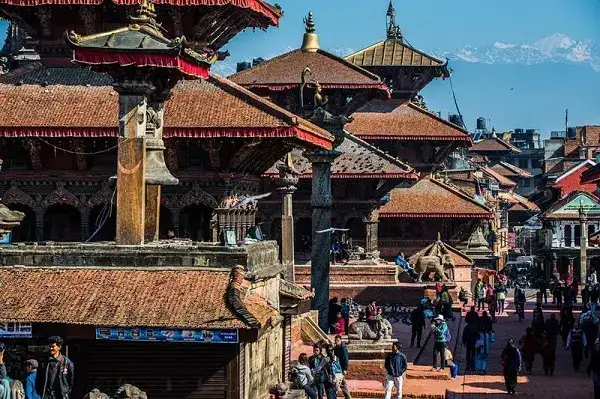
The Kathmandu Valley holds seven monument zones that together form one UNESCO World Heritage Site: the Durbar Squares of Kathmandu, Patan and Bhaktapur, the stupas of Swayambhunath and Boudhanath, and the Hindu temples of Pashupatinath and Changu Narayan. Our sightseeing day visits four of them. Each shows a different side of the valley.
Swayambhunath is one of the oldest Buddhist sites in Nepal. Its white dome and gilded spire are painted with the eyes of the Buddha. You reach it by a long stone staircase from the east, or by road to the western side, which is easier on the knees.
Kathmandu Durbar Square was the seat of the Malla and later the Shah kings. The square was damaged in the 2015 earthquake, and restoration has brought many temples back, though you'll still see some scaffolding. The Kumari, a young girl worshipped as a living goddess, sometimes appears at the window of her house in the square.
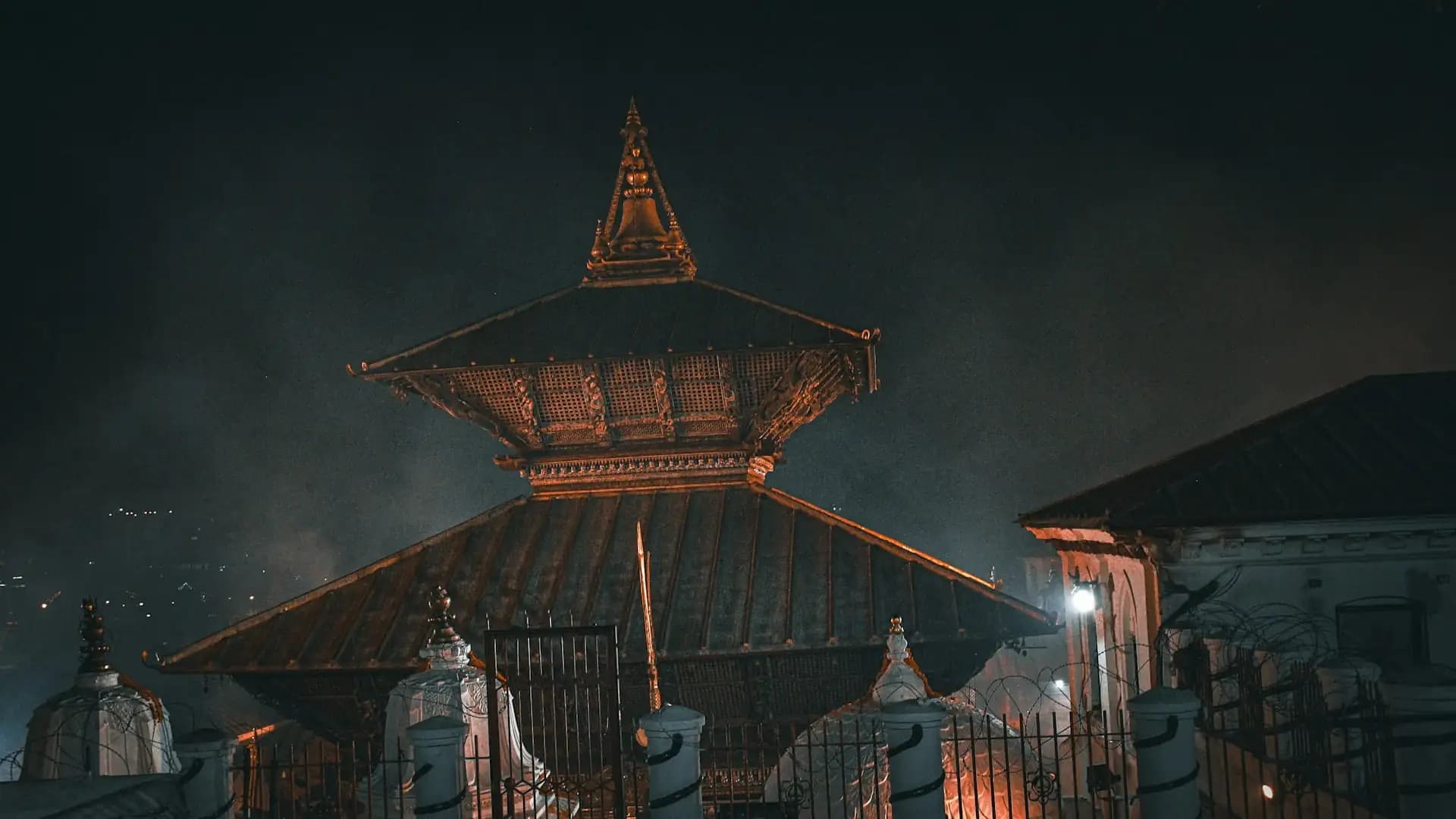
Pashupatinath is dedicated to Shiva. Pilgrims from Nepal and India come to bathe and pray, sadhus sit by the temples, and the ghats along the river are used for cremation. It's a place of daily life and death, and visitors should be respectful with cameras.
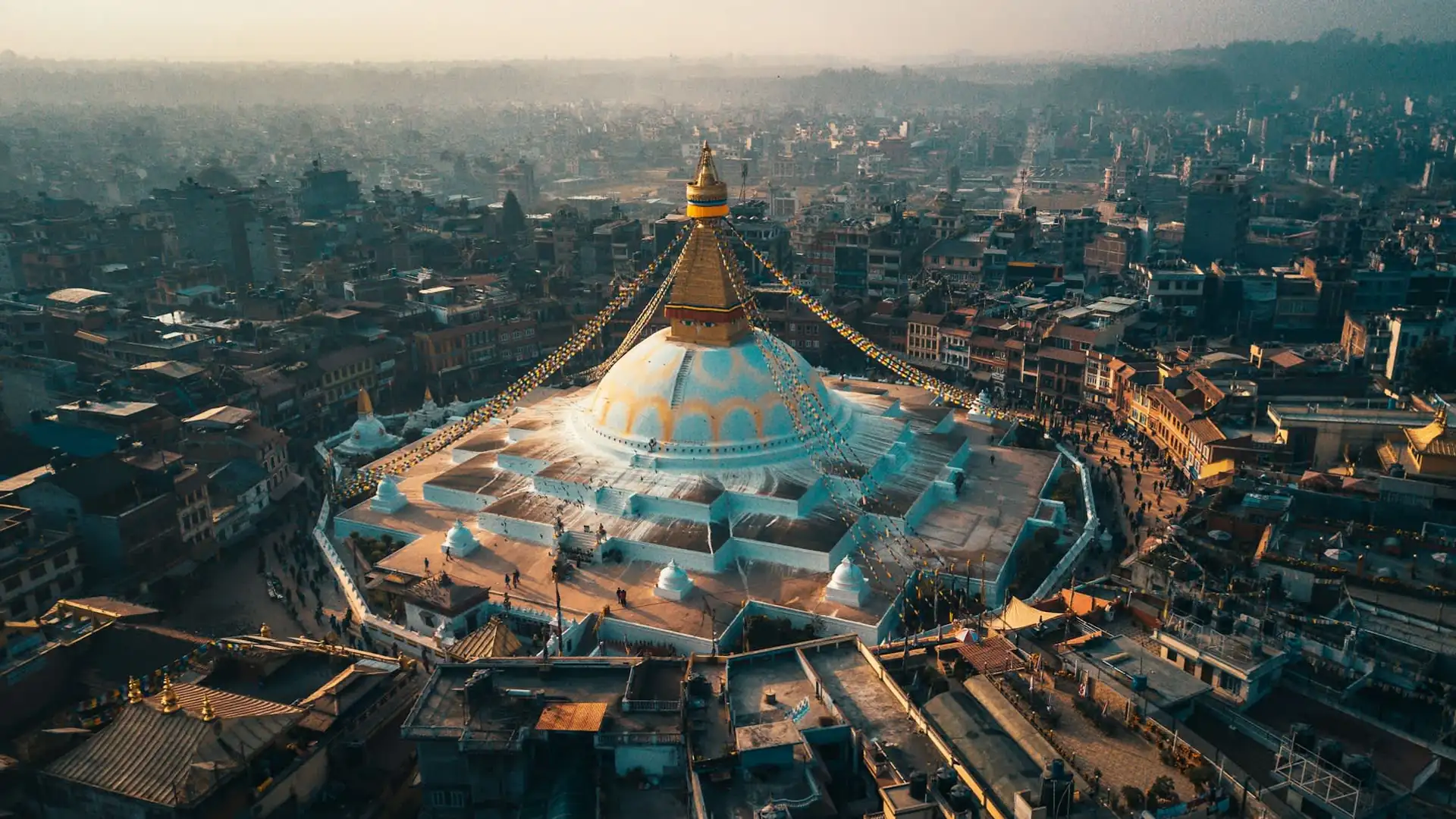
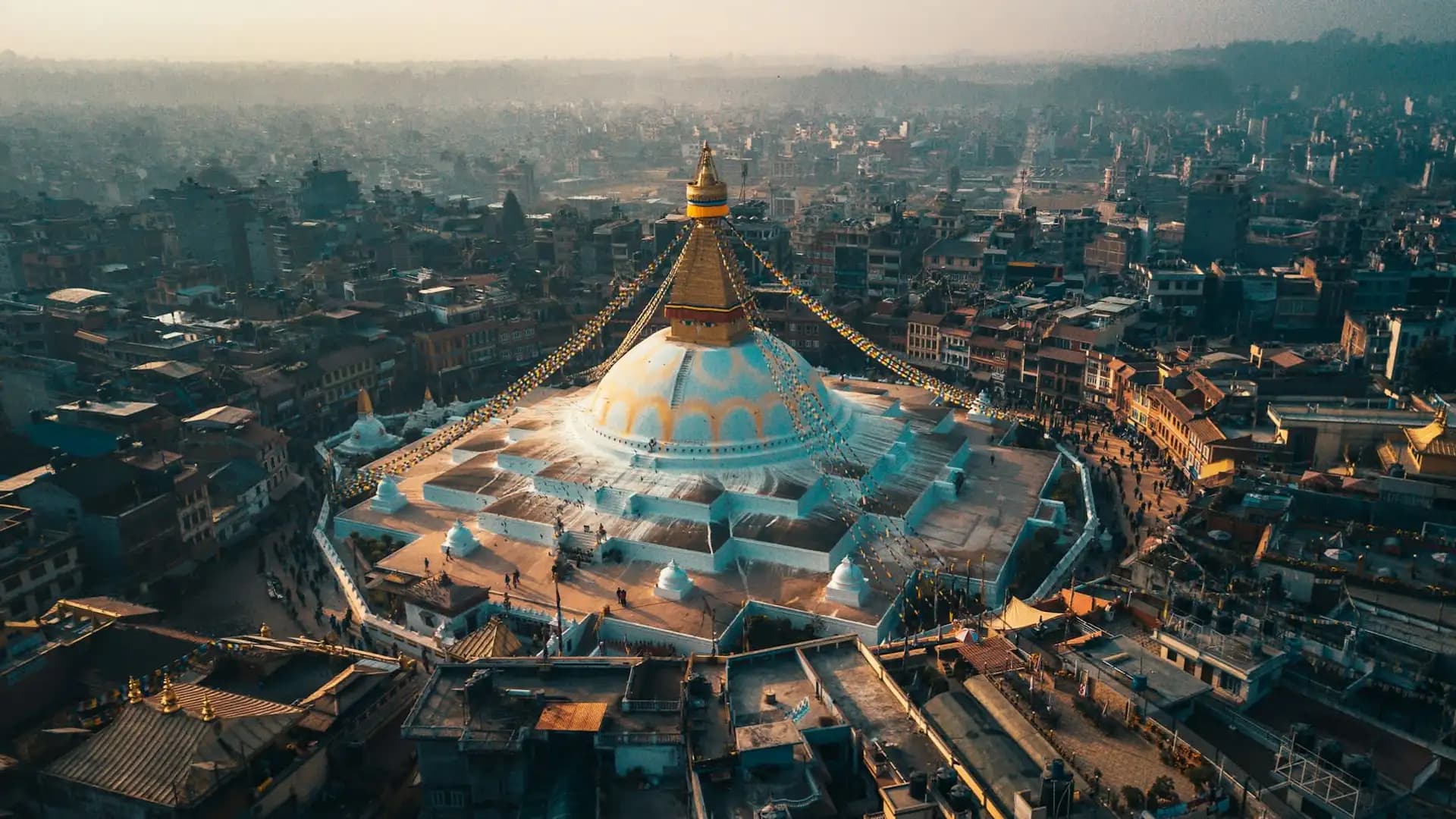
Boudhanath is a huge stupa surrounded by monasteries and shops. In the morning and evening, Tibetan and Sherpa families walk clockwise around it, turning prayer wheels. Rooftop cafés around the square are a good place to watch.
For a longer stay in the valley, read our Kathmandu day tour guide and best time to go to Kathmandu.
Pokhara: Lakes and Mountains
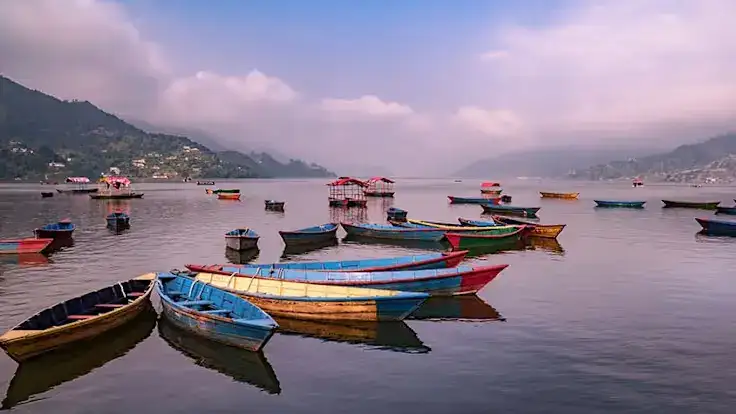
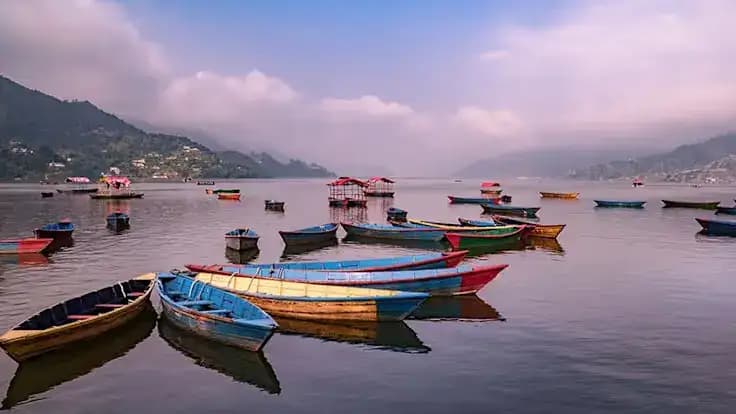
Pokhara is Nepal's second-largest city and the starting point for most treks in the Annapurna region. It sits at about 800 m beside Phewa Lake, and the Annapurna range rises steeply to the north. Machhapuchhre, "the fishtail", stands closest to the city and has never been officially climbed; it is closed to climbers.
The Lakeside area is relaxed and walkable, with cafés, bookshops and boat hire along the shore. Most of what visitors come for is within half an hour's drive:
Sarangkot for sunrise and as the main launch site for paragliding
The World Peace Pagoda, a white Buddhist stupa built by Japanese monks of the Nipponzan Myohoji order on a ridge south of the lake
The International Mountain Museum, with displays on the 14 peaks over 8,000 m, mountain peoples and the history of Himalayan climbing
Davis Falls and Gupteshwor Mahadev Cave, where the lake's outflow disappears underground
Begnas and Rupa lakes, quieter lakes east of the city, if you have spare time
Pokhara is also Nepal's adventure-sports centre. If you'd like to paraglide, zip-line or take an ultralight flight, we can book it for the afternoon of Day 3 or Day 4.
Chitwan National Park: Rhinos, Tigers and Tharu Villages
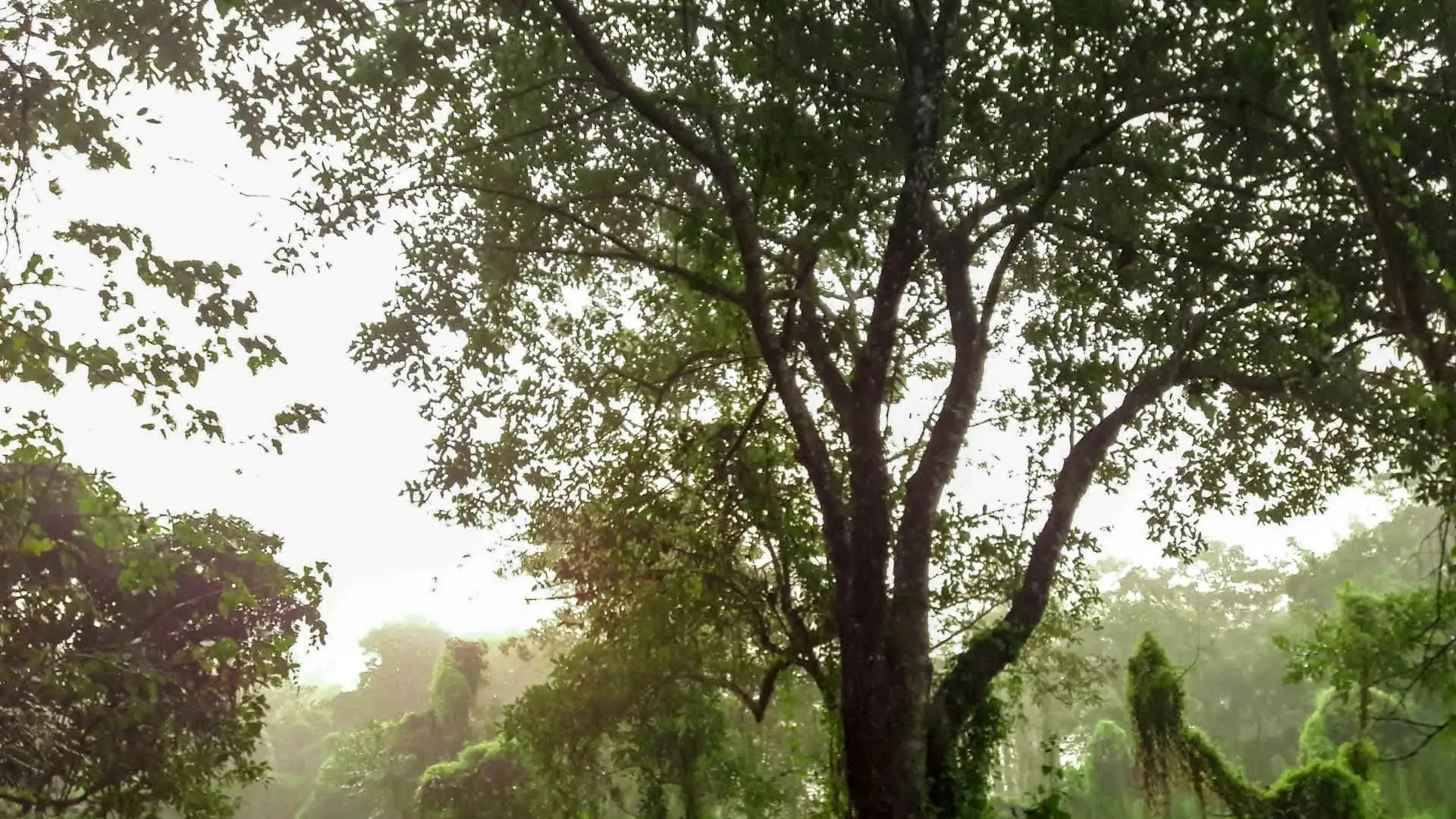
Chitwan National Park was established in 1973 as Nepal's first national park and became a UNESCO World Heritage Site in 1984. It covers 952.63 km² of the lowland Inner Terai, with sal forest, tall elephant grass, rivers and oxbow lakes. For park details, see the Department of National Parks and Wildlife Conservation and the UNESCO listing for Chitwan.
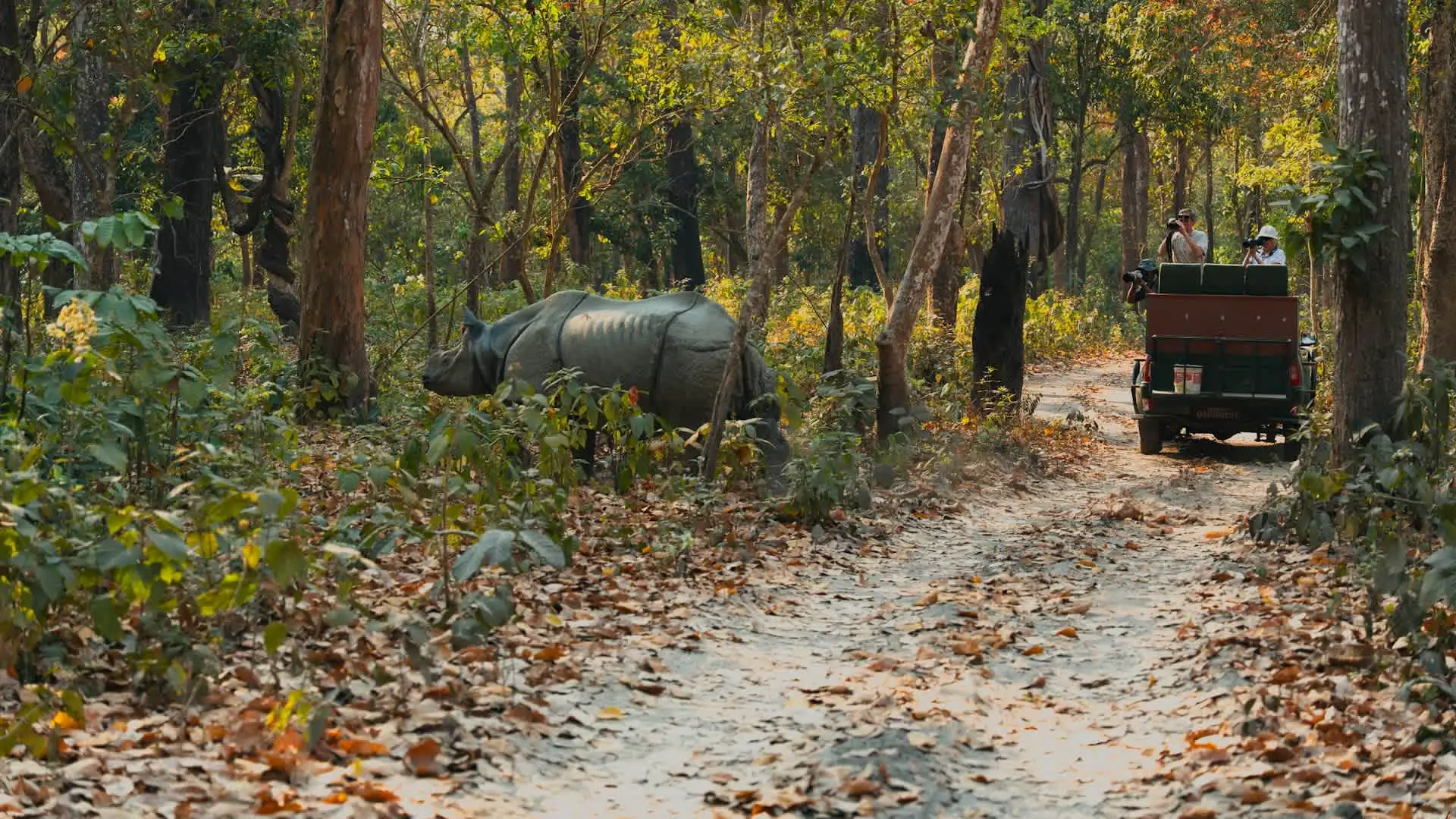
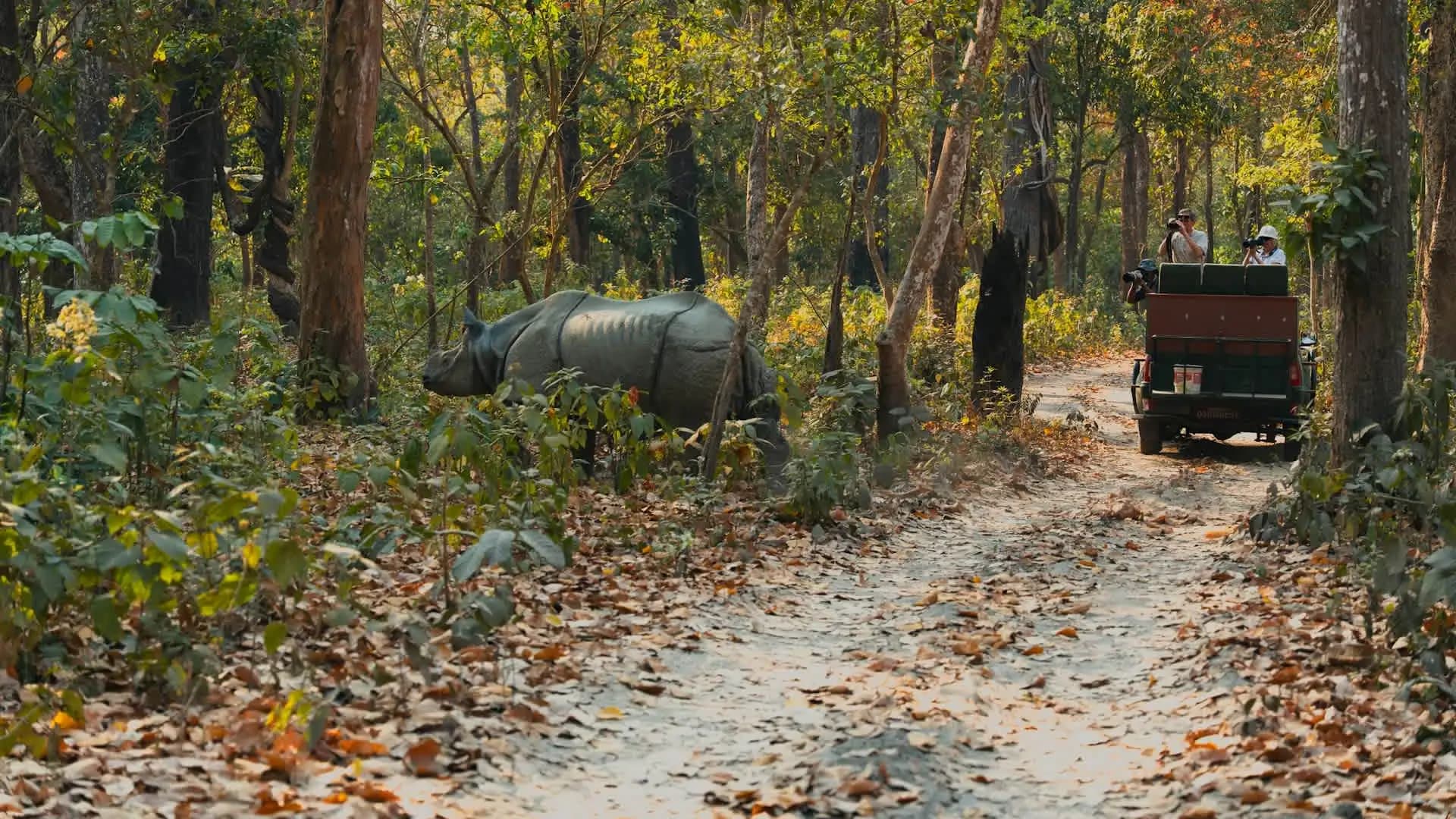
The park was created to save the greater one-horned rhinoceros, whose numbers in Nepal had fallen to about 100 in the 1960s. The 2021 national count found 694 rhinos in Chitwan, out of 752 in Nepal. Tigers have recovered too: the 2026 national tiger census counted 145 in Chitwan and its buffer zone, out of 429 nationwide. Chitwan also has leopards, sloth bears, wild elephants, gaur, four kinds of deer, gharial and mugger crocodiles, and more than 540 bird species.
What you'll realistically see:
Rhinos: very likely, especially from a jeep or along the river at dawn and dusk
Deer, monkeys and wild boar: almost certain
Crocodiles and river birds: very likely on the canoe trip
Tigers, leopards and sloth bears: possible but rare; most visitors don't see one
Jeep safari, canoe and jungle walk
The jeep safari is the main way into the park. Shared and private jeeps leave from Sauraha in the morning and afternoon and cover more ground than any other activity. The dugout canoe trip on the Rapti is quiet and slow, and the best way to see crocodiles. Guided walks, with two trained naturalists, bring you close to the smaller details of the forest: tracks, birds, insects and plants.
What about elephant rides?
Elephant-back safaris still operate in the buffer zone around Sauraha, run by private owners and community forests. We don't include them. There's a growing debate in Nepal about the welfare of working elephants, and jeep safaris, canoes and walks give you a good chance of seeing wildlife without them. You can still visit the Elephant Breeding Centre, where the park raises elephants used for anti-poaching patrols.
The Tharu people
The Tharu are the original people of the Chitwan valley and much of Nepal's Terai. For centuries, they lived in these malarial forests, where few outsiders could survive. Their villages around Sauraha still have traditional mud-walled houses, and the Tharu cultural programmes in the evenings, with the drumming stick dance, are a lively part of most visits. The Tharu Cultural Museum in Sauraha gives some background.
A Typical Day in Chitwan
Chitwan days run to the rhythm of the animals. You'll often get up at 6 am for an early canoe trip or a bird walk while the mist is still on the river. Late morning and midday are hot, so most people rest at the lodge, swim or read. Afternoon activities start around 2–3 pm and run until dusk, when you can watch the sun go down over the Rapti with a cold drink. Dinner is at the lodge, sometimes with a cultural programme afterwards.
Festivals Along the Route
Your dates may coincide with one of Nepal's big festivals, which change every year because they follow the lunar calendar:
Dashain (usually October): the biggest Hindu festival in Nepal. Families gather, kites fill the sky and offices close for several days. Some shops shut, and buses are packed with people heading home.
Tihar (usually October or November): the festival of lights, when houses are lit with oil lamps and candles, and dogs, crows and cows are honoured on different days.
Losar (usually February or March): Tibetan New Year, best seen at Boudhanath, where families gather in their finest clothes.
Holi (usually March): the festival of colours. Expect to get covered in powder in Kathmandu and Pokhara; wear old clothes.
Indra Jatra (usually September): a week of masked dances and chariot processions in Kathmandu Durbar Square, when the Kumari is pulled through the streets.
Festivals add a lot to a visit, but they can also mean crowded roads and higher hotel prices. Tell us your dates and we'll let you know what's on.
Nepali Food to Try
Each stop on this tour has its own food. In Kathmandu, try Newari dishes such as bara (lentil pancakes), choila (spiced grilled meat) and yomari, a sweet steamed dumpling, at a Newari restaurant in the old town or in Patan. Momos, steamed or fried dumplings, are everywhere. Dal bhat, rice with lentil soup, vegetable curry and pickles, is the national meal, and refills are usually free.
In Pokhara, Lakeside restaurants serve fresh fish from the lakes alongside international menus. In Chitwan, lodges often cook Tharu dishes such as ghonghi (river snails) and dhikri (steamed rice-flour dumplings) on request. Ask your guide for recommendations. They'll know the places locals eat.
Money and Currency
Nepal's currency is the Nepali rupee (NPR). ATMs are easy to find in Kathmandu, Pokhara and Sauraha, though many limit each withdrawal and charge a fee. Bigger hotels, restaurants and shops take cards, often with a small surcharge, but small shops, taxis and tea stalls want cash. Change money at banks or licensed money changers, and keep receipts.
Route and Travel Times
Day | Route | Mode | Time |
|---|---|---|---|
3 | Kathmandu – Pokhara | Flight | about 25 minutes |
5 | Pokhara – Sauraha (Chitwan) | Private vehicle | 4–5 hours, about 130–150 km |
7 | Sauraha – Kathmandu | Private vehicle | 5–6 hours, about 150–170 km |
Road times depend on traffic, road works and landslides in the monsoon. The highway from Mugling to Kathmandu is the slowest section.
Altitude and Climate Zones
Place | Altitude | Climate |
|---|---|---|
Kathmandu | 1,400 m | Mild; warm days, cool nights in winter |
Pokhara | about 800 m | Warm and humid; heavy monsoon rain |
Sarangkot | about 1,600 m | Cool at dawn |
Chitwan (Sauraha) | about 200 m | Hot lowland; humid in summer, foggy in winter mornings |
There is no altitude risk on this tour. The challenge is more often heat in Chitwan from April to September.
Map Overview
The tour forms a triangle across central Nepal. Pokhara lies about 200 km west of Kathmandu by road, and Chitwan about 130–150 km south-east of Pokhara on the plains near the Indian border. From Chitwan, the road climbs north back to Kathmandu along the Trishuli River. Our route map image is shown in the gallery.
How Difficult Is the Kathmandu Pokhara Chitwan Tour?
This is an easy tour. The longest walks are the stairs to Swayambhunath, the 20–30 minute climb to the World Peace Pagoda if you go on foot, and the jungle walk in Chitwan, which is flat but can be hot. Children from about 6 and active older travellers usually manage it without problems.
What makes some days tiring is the early starts (Sarangkot and Chitwan), the heat in the lowlands, and the drives on winding roads. If you get car sick, bring tablets for the drives on Days 5 and 7.
Best Time for the Kathmandu Pokhara Chitwan Tour
October to November: clear skies after the monsoon, green landscapes, the best mountain views in Pokhara and comfortable heat in Chitwan. The busiest season; book ahead.
December to February: cool and dry. Kathmandu and Pokhara mornings can be hazy, and Chitwan has dense fog until about 10 am, but wildlife viewing is good and there are fewer visitors.
March to April: warm, with rhododendrons in the hills. The grass in Chitwan is cut and burned in late winter, so animals are easier to spot. Haze builds up and mountain views get less reliable through April.
May to September: hot and wet. Chitwan National Park suspends jeep safaris inside the park during the monsoon, usually from late June until the tracks dry out in autumn. Mountain views from Pokhara are rare in the rains. The tour still runs, but with canoe trips and walks where possible, so we recommend another season.
For more on seasons across the country, read our guide to the best time to hike in Nepal.
Weather by Season
Season | Kathmandu | Pokhara | Chitwan |
|---|---|---|---|
Oct–Nov | about 15–25°C | about 15–27°C | about 18–30°C |
Dec–Feb | about 3–19°C | about 7–20°C | about 8–24°C, foggy mornings |
Mar–Apr | about 10–28°C | about 13–30°C | about 18–35°C |
May–Sep | about 18–29°C, monsoon rain | about 20–30°C, very wet | about 25–35°C, humid |
Figures are rough day and night ranges. Always pack a warm layer for Sarangkot at dawn.
Getting There: Flights and Roads
Domestic flights between Kathmandu and Pokhara land at Pokhara International Airport, which opened in 2023. Flights run several times a day with Nepali airlines and are sometimes delayed by morning cloud; your guide will handle any changes. The baggage allowance on domestic flights is usually around 15–20 kg, so pack a main bag and a small day pack rather than two large cases.
All drives use a private car, van or minibus depending on group size, with an experienced driver. The roads are mostly paved but narrow, winding and busy with trucks. We stop for meals and breaks, and in Chitwan we use the lodge's own jeeps for park activities.
If you'd prefer to avoid the road completely, ask us to quote for flights from Pokhara to Bharatpur and from Bharatpur back to Kathmandu. Bharatpur airport is about 30–45 minutes from Sauraha.
Accommodation
Kathmandu: 3-star hotel in or near Thamel, with private bathroom, hot water and Wi-Fi.
Pokhara: 3-star hotel in Lakeside, close to the lake.
Chitwan: jungle lodge or resort in Sauraha with private rooms, attached bathroom, garden and restaurant; many have a pool.
We can upgrade to 4- or 5-star hotels in Kathmandu and Pokhara, or to a luxury lodge in western Chitwan, for an extra cost.
Meals and Drinking Water
Breakfast is included in Kathmandu and Pokhara, and all meals are included at the Chitwan lodge. Kathmandu and Pokhara have a huge choice of restaurants, from dal bhat and Newari food to momos, Tibetan dishes and international menus. Budget about US$8–20 for lunch or dinner in a tourist restaurant.
Don't drink tap water. Hotels provide filtered water, and many cafés refill bottles for a small fee, which saves plastic.
Internet, Mobile Signal and Charging
All hotels and lodges on this tour have Wi-Fi, though it can be slow. A local SIM (from Nepal Telecom or Ncell) with data is cheap and works well in all three places; bring your passport to buy one. Nepal uses round two- and three-pin sockets (Type C, D and M) at 230 V, so bring a universal adapter. Power cuts are now rare in towns.
Permits and Fees
Fee | Cost | Included? |
|---|---|---|
Chitwan National Park entry | NPR 2,000 per foreign visitor per day (NPR 1,000 for SAARC nationals) | Yes |
Jeep entry to Chitwan National Park | NPR 5,000 per jeep | Yes |
Kathmandu monument entry fees | Charged at each site | Yes |
Pokhara sightseeing entry fees | Small fees at each site | Yes |
Nepal tourist visa | US$30 (15 days), US$50 (30 days) | No |
No trekking permits are needed for this tour. For visas, see the Department of Immigration.
Kathmandu Pokhara Chitwan Tour Cost
Our price is from US$850 per person, based on two people sharing a twin room.
What the price covers | Notes |
|---|---|
Accommodation | 7 nights: 3 in Kathmandu, 2 in Pokhara, 2 in Chitwan |
Domestic flight | Kathmandu to Pokhara, with taxes |
Private transport | Airport transfers, sightseeing and drives to Chitwan and Kathmandu |
Guides | English-speaking city guide in Kathmandu and Pokhara; naturalist guides in Chitwan |
Chitwan | Full board and all park activities in the itinerary |
Fees | Chitwan National Park entry and all sightseeing entrance fees |
Extra money to budget
Nepal visa: US$30 for 15 days or US$50 for 30 days
Lunches and dinners in Kathmandu and Pokhara: about US$8–20 a meal
Drinks, snacks and souvenirs
Optional activities such as paragliding in Pokhara
Tips for guides and drivers
Travel insurance
Solo travellers pay a supplement for a single room and private vehicle. Larger groups pay less per person. Ask us for a quote. For a cost overview across Nepal, see our Nepal trekking cost guide.
Optional Add-ons
Bhaktapur and Patan. Add a day for the other two Durbar Squares; Bhaktapur is the best-preserved old town in the valley.
Nagarkot sunrise. A night on the valley rim for a Himalayan sunrise; see our Nagarkot hiking guide or the 3-day Chisapani Nagarkot Trek.
A short trek. The Ghorepani Poon Hill Trek starts from Pokhara.
Everest mountain flight. An early-morning flight from Kathmandu along the Himalaya.
A shorter tour. If you don't have time for Chitwan, our Kathmandu Pokhara Tour covers the city and the lakes.
Travel Tips
Sit on the right-hand side of the plane to Pokhara for mountain views.
Visit Pashupatinath and Boudhanath in the late afternoon, when they are busiest with worshippers.
Walk clockwise around stupas and prayer wheels.
Ask before photographing people, and don't photograph cremations up close.
Bring small notes; shops and taxis often can't change large ones.
Wear long sleeves and repellent at dusk in Chitwan.
Follow your naturalist's instructions on the jungle walk; rhinos are dangerous at close range.
Photography Tips
Sarangkot at sunrise: use a telephoto to frame Machhapuchhre.
Phewa Lake from the World Peace Pagoda in the late afternoon.
Boudhanath at dusk, when the butter lamps are lit.
In Chitwan, a 200–400 mm lens helps for rhinos and birds; morning mist makes for soft light.
Keep your camera in a bag on the canoe in case of splashes.
Responsible Travel
Choose canoes, jeeps and walks over elephant rides.
Don't feed monkeys at Swayambhunath or anywhere else.
Refill water bottles instead of buying plastic.
Dress modestly at temples and remove shoes where asked.
Buy crafts directly from local makers in Bhaktapur, Pokhara's Tibetan settlement and Sauraha's women's cooperatives.
Stay in the jeep on safari and keep noise down.
Is the Kathmandu Pokhara Chitwan Tour Right for You?
This tour suits you if:
It's your first visit to Nepal and you want to see its culture, mountains and wildlife in one week
You're travelling with children or older relatives
You want a holiday without trekking or altitude
You have a week before or after a trek and want to see more of the country
It may not be right if you want to trek in the mountains, or if your trip falls in the monsoon and wildlife is your main interest. For a cultural trip in the high country, see the Upper Mustang Jeep Tour. For more ideas, read about tourist places in Nepal.
Why Book With Adventure Life Nepal
Adventure Life Nepal was founded by Dil Bahadur Karki, a Himalayan guide with more than 25 years of experience. He began as a porter and guide and has led travellers from over 40 countries. We are registered with the Nepal Tourism Board and the Trekking Agencies Association of Nepal (TAAN), and our guides are certified by the Nepal Mountaineering Association. We handle all your bookings, flights and transfers in Nepal.
For general information about Nepal, see the Nepal Tourism Board.
Booking, Cancellation & Refund Policy
A 30% deposit confirms your booking; the balance is due before the tour starts.
Cancellations 30 days or more before the start date get a full refund minus administration fees.
Cancellations 15–29 days before the start date carry a 50% fee.
Cancellations under 15 days before the start date are not refunded.
Travel insurance is mandatory.
Read the full terms and conditions before booking.
Book Your Kathmandu Pokhara Chitwan Tour
Ready to book your Kathmandu Pokhara Chitwan Tour? Contact us on WhatsApp at +977 9841248242 or email adventurelifenepal@gmail.com with your dates and group size. We'll confirm the hotels, flights and guides and send you a full quote.
Highlights
Itinerary
Our team meets you at Tribhuvan International Airport and drives you to your hotel. After you've rested, your guide briefs you on the week ahead. If you arrive in time, walk the lanes of Thamel or Asan in the evening.
- Sightseeing: about 7–8 hours with a private guide and vehicle We start at Swayambhunath, the hilltop stupa west of the city, sometimes called the Monkey Temple for its resident macaques. From the top, the whole valley spreads out below. Next is Kathmandu Durbar Square, the old royal palace square, with the Hanuman Dhoka palace, multi-roofed temples and the house of the Kumari, the living goddess. After lunch, we visit Pashupatinath on the Bagmati River, Nepal's holiest Hindu temple, where cremations take place on the riverside ghats. Non-Hindus can't enter the main temple but can watch from the far bank. The day ends at Boudhanath, one of the largest stupas in the world and the centre of Tibetan Buddhist life in Kathmandu, as pilgrims walk their evening circuit.
- Flight: about 25 minutes The morning flight runs west along the Himalaya; sit on the right for the mountain views. After checking in at Lakeside, you have the afternoon by Phewa Lake. We take a wooden boat across to Tal Barahi, a small two-tiered temple on an island, and then you're free to walk the lakeshore and the cafés of Lakeside. On a calm day, Machhapuchhre is reflected in the water in the late afternoon.
- Sightseeing: early start, about 8 hours with breaks We leave before dawn for Sarangkot, about 1,600 m, a hill above the lake. As the sun rises, the light moves along Dhaulagiri, the Annapurnas and Machhapuchhre. After breakfast, we visit the World Peace Pagoda on the ridge across the lake, the International Mountain Museum, Davis Falls, where the outflow from the lake drops into a narrow gorge, and Gupteshwor Mahadev Cave on the other side of the road. We end at a Tibetan settlement, where families who came from Tibet in the 1960s still weave carpets.
- Drive: about 130–150 km, 4–5 hours We take the Prithvi Highway east to Mugling, then follow the Trishuli and Narayani rivers down to the plains and turn toward Sauraha, the village on the edge of Chitwan National Park. After lunch at the lodge, a naturalist guide takes you on a walk through a Tharu village to see their mud-and-thatch houses and farmland. We watch the sunset over the Rapti River, where rhinos sometimes come out to graze on the far bank. In the evening, there's a Tharu cultural programme with the stick dance.
- Activities: canoe trip, jungle walk, Elephant Breeding Centre, jeep safari The day starts early, when the animals are most active. We drift down the Rapti River by dugout canoe, looking for mugger crocodiles, kingfishers and storks, then walk back through the forest with a naturalist. Before lunch, you visit the government Elephant Breeding Centre near Sauraha. In the afternoon, a jeep safari takes you into the grassland and forest of the park. Rhinos, spotted deer, sambar, wild boar and many birds are often seen. Tigers and sloth bears live here too, but they are shy, and a sighting is a matter of luck.
- Drive: about 150–170 km, 5–6 hours After breakfast, perhaps with a morning bird walk, we drive back to Kathmandu along the Trishuli valley. You arrive in the afternoon, with time for shopping in Thamel. In the evening, we can book a farewell Nepali dinner with a cultural show.
Our team drives you to the airport about three hours before your international flight. If you're staying longer, we can arrange a trek, a day tour or extra nights.
Elevation Profile
Altitude Variation Chart
What's Included
Included
- Airport pick-up and drop-off by private vehicle
- 3 nights in a 3-star hotel in Kathmandu with breakfast
- 2 nights in a 3-star hotel in Pokhara with breakfast
- 2 nights in a jungle lodge in Chitwan with all meals
- Domestic flight Kathmandu–Pokhara with airport tax
- Private vehicle for Pokhara–Chitwan and Chitwan–Kathmandu
- Full-day guided sightseeing in Kathmandu with private vehicle
- Sarangkot sunrise and Pokhara sightseeing with private vehicle
- Boat ride on Phewa Lake to Tal Barahi
- English-speaking tour guide in Kathmandu and Pokhara
- Chitwan activities: jeep safari, canoe trip, jungle walk, Tharu village walk, Elephant Breeding Centre and Tharu cultural show, with naturalist guides
- Chitwan National Park entry fees and all sightseeing entrance fees
- All government taxes and service charges
Excluded
- International flights
- Nepal visa fee
- Travel insurance
- Lunch and dinner in Kathmandu and Pokhara
- Drinks, snacks and personal expenses
- Optional activities such as paragliding, zip-line or ultralight flights
- Elephant-back rides
- Tips for guides and drivers
- Extra nights or costs from flight delays or road closures
Packing List
Category | Items |
|---|---|
Clothing | Light breathable clothes, long trousers and long-sleeved shirt for Chitwan (insects and sun), fleece or warm jacket for winter evenings and Sarangkot, light rain jacket |
Colours | Neutral green, brown or beige for the jungle; avoid bright white or red on safari |
Footwear | Comfortable walking shoes, sandals, socks |
Temples | Clothes that cover shoulders and knees; easy-to-remove shoes |
Health | Insect repellent, sun cream, personal medicines, motion-sickness tablets, hand sanitiser |
Gear | Small day pack, refillable water bottle, sunglasses, hat, binoculars for wildlife, torch |
Documents | Passport, visa, insurance details, copies |
Other | Universal adapter, power bank, some Nepali rupees in cash |
Frequently Asked Questions
Eight days is the comfortable minimum: two days in Kathmandu, two nights in Pokhara, two nights in Chitwan and travel days between. With 10 days, you can add Bhaktapur, Nagarkot or a third night in Chitwan.
Yes. There's no trekking or altitude, and most children love the boat rides and the safari. Naturalists usually won't take young children on the jungle walk, so for them we replace it with another activity.
No. You need to be able to walk for an hour or so on uneven ground and climb some stairs. The early starts and heat are the main challenges.
Very likely. Rhinos are often seen on the jeep safari and along the river at dawn and dusk. Chitwan had 694 rhinos in the 2021 count.
It's possible, but uncommon. Chitwan has about 145 tigers, according to the 2026 census, but they are shy and the forest is dense. Treat a sighting as a bonus.
No. We use jeep safaris, canoe trips and guided walks instead. You can visit the Elephant Breeding Centre.
The Kathmandu–Pokhara road is the longest and slowest leg, often 7–8 hours. The 25-minute flight saves most of a day. The other two drives are shorter and give you a look at the countryside.
Yes. A road-only version is a little cheaper, but it adds a long day in the vehicle. Ask us for a quote.
Your guide will rebook you on the next flight or, if flights are grounded, drive you to Pokhara by private vehicle the same day.
October to April. October and November have the clearest mountain views; February to April is very good for wildlife in Chitwan.
Yes, but jeep safaris in Chitwan are suspended in the monsoon, and mountain views from Pokhara are rare. We recommend another season if wildlife and views are your priority.
Neutral colours such as green, brown or beige, long sleeves and trousers, a hat and closed shoes. Bring repellent and sun cream.
We use clean, comfortable 3-star hotels in Kathmandu and Pokhara, and a well-run jungle lodge in Sauraha. Upgrades to 4- and 5-star hotels are available.
No trekking permits are needed. Chitwan National Park entry and all sightseeing fees are included in the price.
Nepal is generally safe for visitors. Use normal city precautions in Kathmandu, follow your guide's advice in the park, and keep valuables in your hotel safe. Women travelling alone may find our guide on whether Nepal is safe for female solo travellers useful.
Yes. Every departure is private, so we can change the order, add days, upgrade hotels or include Lumbini, the birthplace of the Buddha.
Yes. This is a private tour, so it runs for one person too. Solo travellers pay a supplement for the room and vehicle.
Talk to your doctor or a travel clinic. Typical advice for Nepal includes routine vaccines plus hepatitis A and typhoid. See the CDC's travel health page for Nepal for up-to-date guidance.
Malaria in the Terai has been greatly reduced since the mid-20th century, but mosquitoes still carry diseases such as dengue. Use repellent and long sleeves, especially in summer, and ask your doctor or check the CDC page above for current advice.
Tipping is customary in Nepal. A common guideline is about US$10–15 a day for the guide and US$5–10 a day for the driver, shared among the group, but it's up to you.
Yes. Pokhara is the gateway to treks such as Ghorepani Poon Hill, and we can add paragliding, rafting or an Everest mountain flight.
Gallery & Video
Customer Reviews
Loading reviews...