Best Time to Hike Nepal for Mountain Views | Season Guide
Every year, thousands of trekkers fly to Nepal, climb for days, and wake at 4 a.m. at a famous viewpoint, only to find a grey wall of cloud where the mountains should be. Others stand at the same spot a week later with a sky so clear that the peaks look close enough to touch. The difference is rarely luck. It is mostly timing.
Choosing the best time to hike Nepal for mountain views is not as simple as "avoid the rain." Clarity depends on moisture, dust, cloud patterns through the day, and how recently the monsoon has washed the air. A cold, dry December morning can beat a warm April one. A rainy-season trek in the right valley can beat a crowded autumn one.
This guide breaks down every season month by month, region by region and viewpoint by viewpoint, with honest trade-offs on cold, crowds and cost, so you can match your dates to the view you actually want.
The Short Answer on Best Time to Hike Nepal
If your priority is... | Go in... | Why |
|---|---|---|
The sharpest, clearest views | October to November | Post-monsoon air is at its cleanest |
Great views with fewer people | Early December or March | Stable weather, quieter trails |
Views plus warmth and flowers | April | Longer days, rhododendron color at mid elevations |
Crisp winter skies and solitude | December to February | Dry and clear, but cold |
Mountain scenery during the rainy season | June to August, in rain-shadow areas only | Regions north of the main range stay far drier |
A cheaper shoulder window | Late September or late May | Mixed conditions, lower demand |
If you can only remember one thing: the best time to hike Nepal for mountain views is generally the stretch from mid-October through November, with March to April as the strongest alternative.
Why Clear Skies Matter More Than "Dry Weather"
Dry and clear are not the same thing. Rain is only one part of what hides mountains.
Humidity and haze. Moist, warm air holds fine particles and scatters light, which softens distant peaks. After months of monsoon rain, the atmosphere is scrubbed clean, which is why autumn skies are so crisp.
Dust and smoke. In the dry months leading up to the monsoon, dust and smoke can build up in the lower valleys and drift upward, which is one reason spring views can look softer, particularly toward the end of the season.
Daily cloud cycles. In the hills, mornings are usually the clearest. As the sun warms the slopes, moisture rises and cloud builds, often covering the peaks by late morning or afternoon. This pattern is strongest in spring and during the monsoon.
Temperature and altitude. Air cools by roughly 6.5°C for every 1,000 m you climb, so high viewpoints are far colder than the valley floor. A "clear day" at 5,000 m can still be well below freezing in the morning. Our Nepal elevation guide shows how fast conditions change with height.
The monsoon calendar. The southwest monsoon normally reaches Nepal around mid-June and withdraws around early October, based on averages used by Nepal's Department of Hydrology and Meteorology, and most of the year's rain falls between June and September. The real dates drift from year to year, so treat them as guides rather than guarantees. You can follow current forecasts through the Department of Hydrology and Meteorology.
The Best Time to Hike Nepal for Mountain Views, Month by Month
Month | Typical conditions | View quality |
|---|---|---|
January | Cold, dry, often very clear; snow possible at higher elevations | Very good, bitterly cold at altitude |
February | Still cold, gradually warming; mostly clear | Very good |
March | Warming, stable, clear mornings, flowers starting at lower elevations | Very good to excellent |
April | Warm days, popular season, some haze building in lower valleys | Good to very good |
May | Hot lower down, hazier, afternoon cloud and storms increase | Fair to good, mornings best |
June | Monsoon arrives, rain and thick cloud | Poor on the south side of the range |
July | Peak monsoon, heavy rain, landslides possible | Poor |
August | Still deep monsoon | Poor |
September | Monsoon fades, skies clearing later in the month | Mixed, improving |
October | Crisp, dry, stable, the classic peak season | Excellent |
November | Very clear, colder mornings and nights | Excellent |
December | Cold, dry, quiet | Very good to excellent |
Ratings reflect general patterns. Individual weeks can break the rule, especially in years when the monsoon starts late or lingers.
Autumn (Late September to November): The Classic Choice
If your only goal is the best time to hike Nepal for mountain views, autumn is the answer most people give, and for good reason. The monsoon has washed the sky, humidity drops, and the weather settles into long runs of stable days.
Late September is a gamble that can pay off. Rain tapers and skies often clear, and trails are green, but early September can still be wet, and the monsoon sometimes lingers. October is the sweet spot: dry, bright, and reliable across almost every region. November is slightly colder but often even clearer, with sharper outlines and fewer crowds than October.
What to expect
Excellent visibility from sunrise to mid-morning, with clouds usually minimal
Cold nights at high elevation and crisp mornings at lodge altitude
The busiest trails, with lodges filling early on popular routes
Higher prices and tighter transport around major festivals such as Dashain and Tihar, which fall in the autumn months, so book early
Best for: first-time visitors, photographers, and anyone who wants the most reliable outcome. If you are weighing a specific route, our guide to the best time for the Manaslu Circuit goes deeper on autumn conditions.
Winter (December to February): Cold, Clear and Quiet
Winter is the underrated season. The air is dry, the sky is often a deep blue, and the crowds thin out dramatically. For pure clarity, the early part of winter, December in particular, can rival autumn.
The trade-off is cold. Nights are freezing at higher elevations, mornings are brutal at viewpoints, and snow can close or complicate high passes. Some lodges at higher elevations reduce services or close during the deepest cold, so route choice and planning matter more.
What to expect
Crisp, long-distance views, especially in the first half of the season
Sub-zero temperatures at altitude and very cold dawns
Shorter days, which limit how far you can walk
Quieter trails and easier lodge availability, though some services are limited
Best for: experienced or well-equipped trekkers, anyone who dislikes crowds, and lower-altitude routes where the cold is manageable. If you want views without extreme conditions, consider a lower route such as Mardi Himal or the Poon Hill region, and ask about conditions before you go. For route-specific advice, see our guide to the best time for the Mardi Himal trek.
Spring (March to May): Flowers, Warmth and Softer Distances
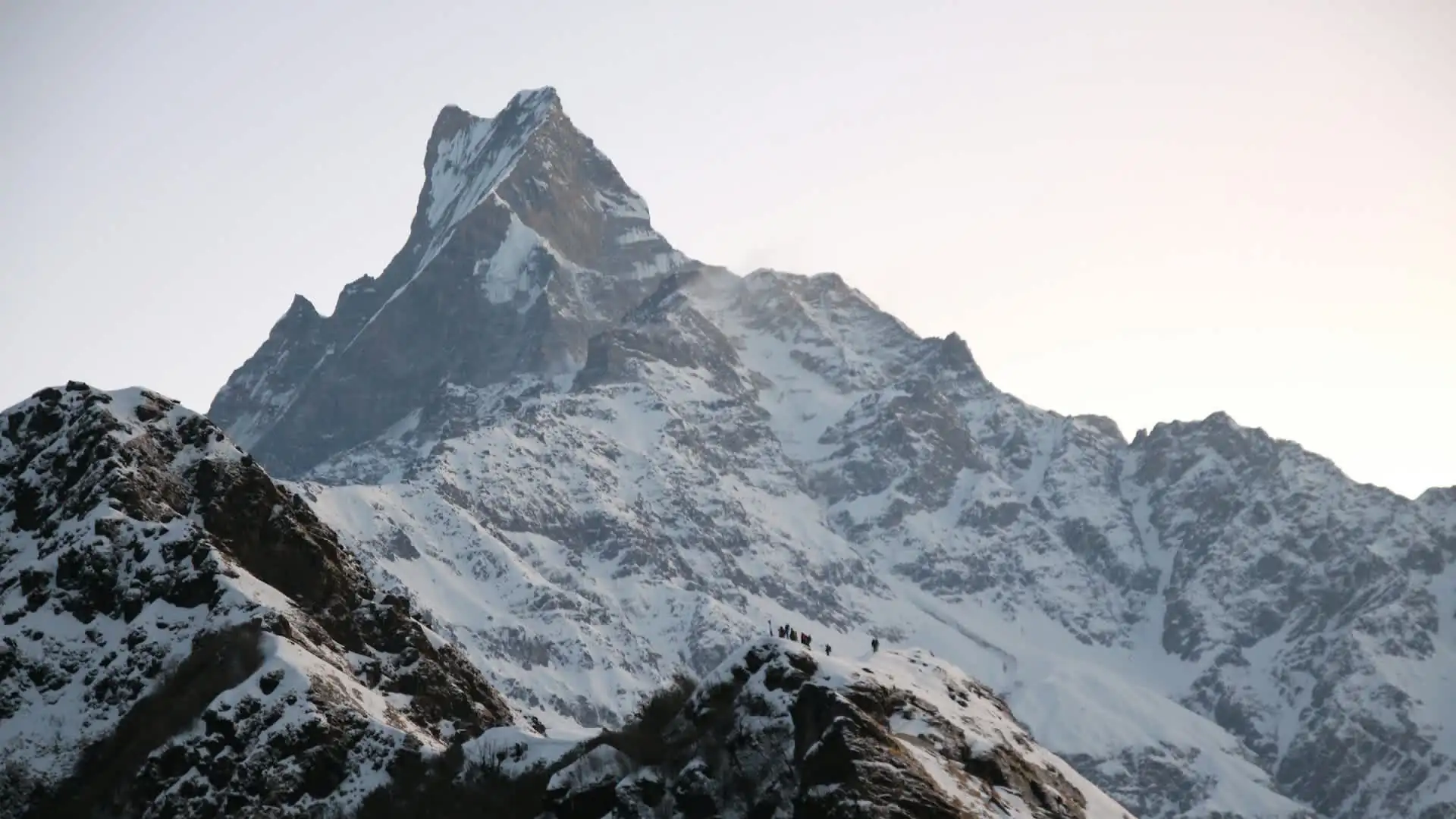
Spring brings warmth, longer days and one of Nepal's most beautiful sights: rhododendron forests in bloom on many mid-elevation routes, typically in the lower and middle sections of the trails. The mountains are also visible, but the distance tends to be softer than in autumn.
March is often the best of the three, with stable weather and clearer mornings. April is the most popular month for good reason, offering warm days and reliable weather, though haze begins to build. May is warmer still and increasingly hazy, with afternoon cloud and pre-monsoon storms becoming more common, so early starts are essential.
What to expect
Warmer temperatures, easier mornings and longer daylight
Flowers and greener hillsides at mid elevations
Softer, hazier distant views as the season progresses
Many Everest expeditions operate in spring, so the Khumbu region can be busy
Best for: people who dislike extreme cold, photographers who want foreground color alongside peaks, and anyone who wants a gentler climate at lodge level.
Monsoon (June to August): Rain, Cloud and the Rain-Shadow Exception
The monsoon is the season most visitors avoid, and for the south side of the Himalaya the reasons are clear: persistent cloud, heavy rain, leeches at lower elevations, slippery trails and landslide risk. Mountain views are rare and unreliable, and some roads and flights are disrupted.
Still, the monsoon is not uniform across the country. Areas north of the main Himalayan range sit in a rain shadow, receiving far less rain than the southern slopes. Upper Mustang is the best-known example, and it remains drier and trekkable during the summer months, with desert-like landscapes and distant snow peaks.
What to expect
Frequent cloud on southern slopes and in mid-hill regions
Lush green scenery, waterfalls and fewer visitors
Disruptions to flights, roads and trail conditions
Better prospects in rain-shadow regions
Best for: people willing to trade peak views for solitude and green landscapes, or those targeting rain-shadow routes. If this is your plan, see our Upper Mustang jeep tour, and for specifics on a classic route in the wet season, our guide to the Manaslu Circuit in monsoon explains what to expect.
The Best Time to Hike by Region
Different regions have different climates and different viewpoints, so the best window shifts slightly depending on where you walk.
Region | Best months for views | Headline viewpoints | Notes |
|---|---|---|---|
Everest (Khumbu) | October to November, March to April | Kala Patthar (5,545 m), Gokyo Ri (5,357 m) | Very cold at altitude; lodges busy in peak months |
Annapurna | October to November, March to April | Poon Hill (3,210 m), Annapurna Base Camp (4,130 m) | Wide choice of short and long routes |
Manaslu | October to November, March to April | Larkya La (5,106 m) region views | Remote and colder at the pass |
Langtang | October to November, March to May | Kyanjin Ri (4,773 m) | Closer to Kathmandu, more accessible |
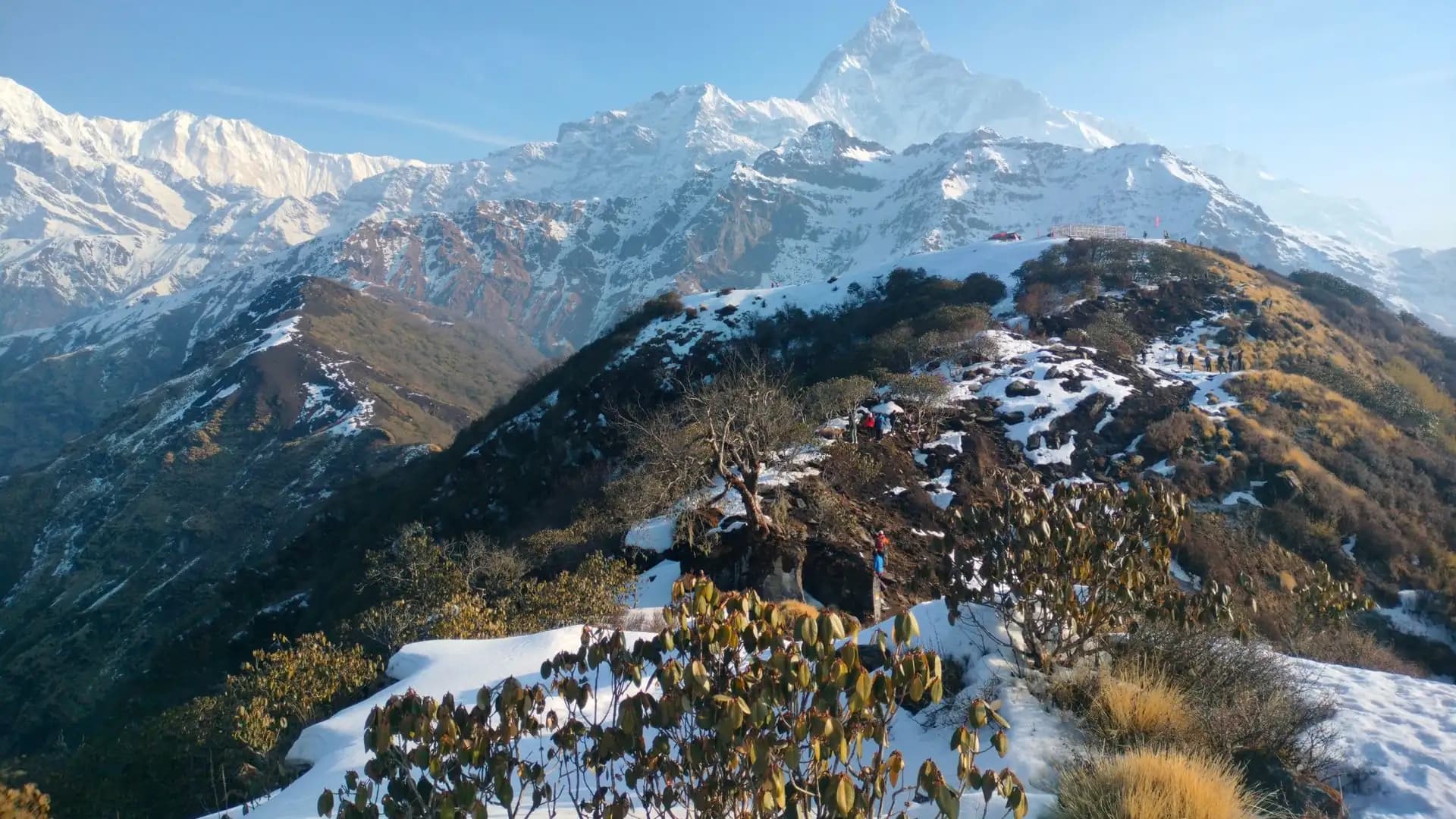
Mardi Himal | October to November, March to April | Upper viewpoints above 4,000 m | Shorter route with dramatic proximity to Machhapuchhre |
Upper Mustang | June to September for rain-shadow trekking, plus spring and autumn | Dry canyons and distant peaks | Rain-shadow region |
Everest Region
Everest views depend on clear mornings at high viewpoints. Kala Patthar, at about 5,545 m, is the classic place to see Everest (8,849 m) rising behind Nuptse and Lhotse, while Gokyo Ri, at about 5,357 m, offers a sweeping panorama that includes four 8,000 m peaks. October and November give the cleanest air, with March and April close behind. Winter is clear but severe. Our Everest Base Camp trek and the Everest Base Camp with Gokyo Lakes trek are built around these windows.
Annapurna Region
The Annapurna region is the most flexible, with options from a few days to three weeks. Poon Hill, at 3,210 m, delivers a classic sunrise over Dhaulagiri and the Annapurna range, while Annapurna Base Camp, at 4,130 m, puts you inside a ring of high peaks. Spring and autumn are best, and winter works at lower elevations. For route-specific conditions, our Annapurna Base Camp trek weather guide breaks it down month by month.
Manaslu and Tsum Valley
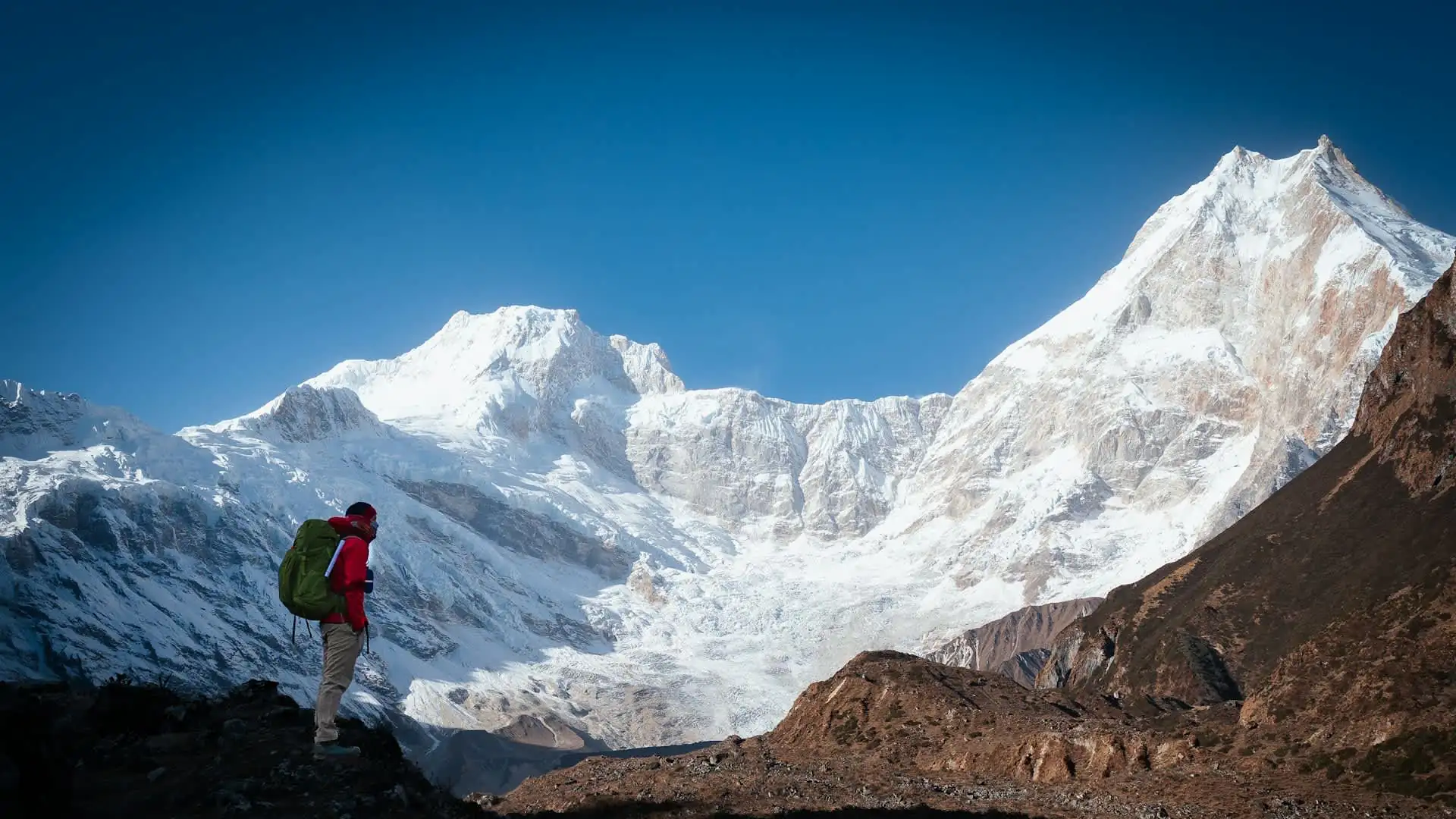
Manaslu, at 8,163 m, is the centerpiece of a remote and rewarding circuit that crosses Larkya La at 5,106 m. Autumn is the most popular and generally the clearest window, while spring is also good. Cold and snow at the pass make winter more demanding, and the monsoon brings heavy rain and landslide risk.
Langtang
Langtang is close to Kathmandu and offers dramatic views of Langtang Lirung and surrounding peaks. Kyanjin Ri, at 4,773 m, is the classic viewpoint above Kyanjin Gompa. Autumn and spring are best. Our Langtang trek uses these windows.
Mardi Himal
Mardi Himal is a shorter route with outsized scenery, putting you close to Machhapuchhre and the Annapurna range. It rewards clear mornings, so autumn and spring are best, and winter can be good at lower elevations if you pack for cold.
Beyond the Famous Routes: Khopra and Gosaikunda
Quieter routes follow the same broad rule: clear air comes after the rains and before the haze, so autumn and spring are the safest choices. Khopra Danda, a high ridge in the Annapurna region at roughly 3,600 m, rewards early mornings with wide views over Dhaulagiri and the Annapurna range, and it is far less crowded than the headline trails. Gosaikunda, a sacred high-altitude lake at around 4,380 m in the Langtang region, is at its most striking on clear autumn mornings, though cold and snow make winter more demanding.
If you are drawn to lesser-known valleys, ask about conditions on the specific route before you commit to dates, because smaller routes often have fewer lodges and less flexibility if the weather turns.
A Closer Look at the Everest Region Through the Year
Because Everest is the dream view for so many people, it is worth looking at that region more closely. In October and November, mornings at high viewpoints are typically crisp and clear, nights at places such as Gorak Shep, at about 5,164 m, fall well below freezing, and the lower valleys can fill with cloud in the afternoon. March and April offer similar clarity early in the day, with milder temperatures and a slightly hazier horizon. In winter the air is very clear but extremely cold, and some lodges at higher elevations run limited services. During the monsoon, cloud and rain dominate the approach, and flights into the mountains are more likely to be delayed or cancelled. Whatever the season, the pattern holds: the clearest hours are the first few after sunrise, so organize your itinerary around being at the viewpoint then.
Which Viewpoints Reward Which Season
Viewpoint | Elevation | Best season for views | Seasonal note |
|---|---|---|---|
Poon Hill | 3,210 m | October to November, March to April | Winter can be excellent but cold at dawn |
Kala Patthar | About 5,545 m | October to November, March to April | Extremely cold at sunrise most of the year |
Gokyo Ri | About 5,357 m | October to November, March to April | Wide panorama that rewards clear mornings |
Kyanjin Ri | About 4,773 m | October to November, March to April | A short, steep climb best done early |
Nagarkot (near Kathmandu) | About 2,175 m | October to February | Even a short hike rewards clear days |
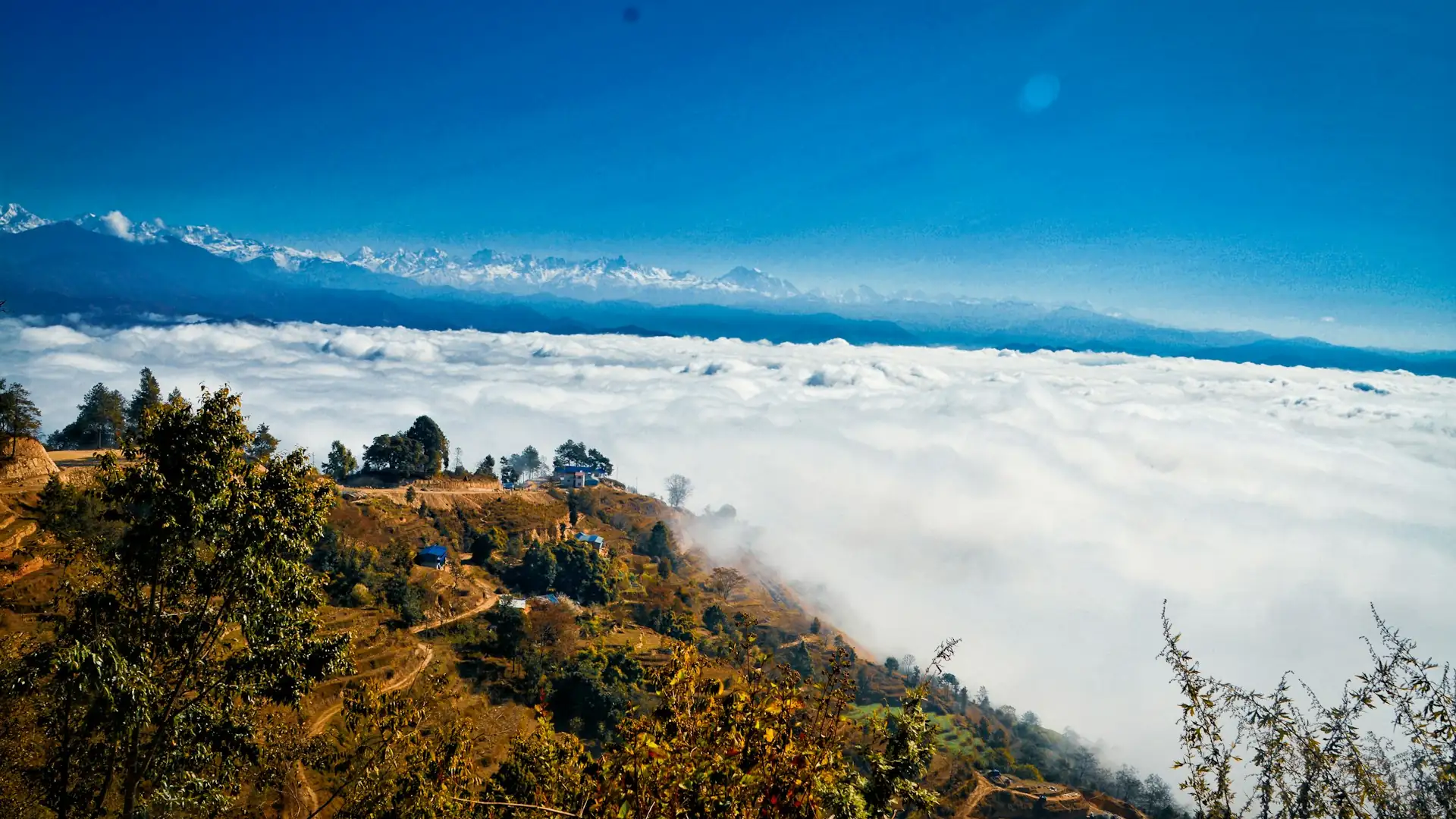
If you only have a short window and live near the capital, remember that a high point on the valley rim can be spectacular on a clear winter morning. Several easy day routes around the valley rim are worth a look if you are based in the capital for a few days.
Time of Day Matters as Much as Time of Year
Even in the best season, the day follows a pattern.
Sunrise to mid-morning: the clearest window by far. Plan every important viewpoint for the first hours of light.
Late morning to afternoon: cloud tends to build, especially in spring and in the shoulder weeks around the monsoon.
Sunset: often beautiful but less reliable than sunrise, especially in warmer months.
Night: in cold, clear conditions, stars over the mountains can be spectacular, and a clear night often leads to a clear morning.
The practical lesson is simple: start early, reach viewpoints before first light, and treat afternoons as rest time rather than view time.
How to Stack the Odds in Your Favor
You cannot control the weather, but you can improve your chances.
Pick the cleanest window you can afford. Mid-October to November is the safest bet.
Build buffer days. A spare day at a high viewpoint lets you wait for a clear morning if the first one is cloudy.
Be flexible with timing. If clouds roll in, stay for another dawn rather than rushing on.
Choose viewpoints with more than one chance. Routes that pass several viewpoints give you multiple opportunities.
Check the forecast but do not obsess. Mountain weather changes fast, and local guides often read the sky better than any app.
Respect altitude. A well-paced itinerary keeps you healthy enough to enjoy the morning you waited for. Check current guide and permit rules early, since they can affect your dates.
Crowds, Flights and Costs: The Trade-Offs
Factor | Peak months (October, April) | Shoulder or off-peak months |
|---|---|---|
Views | Reliable | Variable |
Crowds | High on popular routes | Lower |
Lodge availability | Tight, book early | Easier |
Prices | Higher | Often lower |
Flights and transport | Busy, sometimes delayed | Cloud can disrupt in monsoon |
Temperature | Moderate to cold | Hot or very cold depending on season |
The cheapest option is not always the best value. A trek in the rain with no views can feel like a poor deal, even at a discount. Equally, paying for peak season only makes sense if you build in flexibility.
What to Pack by Season
Season | Key items |
|---|---|
Autumn | Warm layers for high mornings, sun protection, good boots |
Winter | Heavy down jacket, insulated gloves, warm hat, thermal base layers, sleeping bag rated for cold |
Spring | Layers, sun hat, light rain jacket, sun protection |
Monsoon | Waterproof jacket and pack cover, gaiters, leech protection, quick-dry clothing |
Regardless of season, a headlamp for pre-dawn starts and spare camera batteries for the cold are worth the weight.
Common Mistakes When Timing a Himalayan Trek
Assuming "dry season" means clear views. Spring is dry but often hazy.
Booking only one viewpoint day. One chance means one gamble.
Choosing the monsoon for a south-side route. Cloud is the norm.
Ignoring festival dates. Dashain and Tihar affect transport, lodging and prices.
Underpacking for winter. High-altitude cold is severe.
Rushing the itinerary. Without buffer days, bad weather ends the plan.
Planning Your 2027 Dates
For 2027, the pattern will likely repeat. The spring window runs from March into May, and the autumn window begins in late September and runs through November. Popular dates, particularly October and April, fill early, so decide on your route and priorities well in advance. If you are flexible, aim for the early or late edges of the main seasons to find a balance of good views and fewer people.
For general travel information and entry rules, the Nepal Tourism Board is the official starting point.
Dates Are Probabilities, Not Promises
It helps to think of every season as a set of odds rather than a guarantee. The monsoon's arrival and withdrawal shift from year to year, sometimes by a couple of weeks, so a "reliable" late September can turn out wet and a "risky" early September can turn out clear. In the dry months, passing weather systems from the west can bring cloud and snowfall, especially to higher and western parts of the country, even in the middle of a stable season. In late spring, pre-monsoon storms often build in the afternoons well before the rains officially begin.
None of this means planning is pointless. It means the sensible strategy is to pick the window with the best odds, then protect yourself with flexibility. A trek with spare days and a guide who is willing to wait for good weather will almost always beat a rigid, tightly packed schedule in the same month. If you see a forecast of a cloudy morning at your key viewpoint, the right response is usually to stay one more night, not to push on and hope.
Match the Season to Your Trek Length and Fitness
The best month is not only about the sky. It also depends on how long you have and how much cold you want to handle.
Trip style | Typical length | Best-fit seasons | Why |
|---|---|---|---|
Short hill trek (Poon Hill, Mardi Himal region) | About 4 to 10 days | October to November, March to April, also workable in clear winter spells | Lower altitude makes cold manageable and gives more flexibility |
Classic base camp trek (Everest, Annapurna) | About 10 to 16 days | October to November, March to April | Needs stable weather and open lodges at altitude |
Long circuit with a high pass (Annapurna Circuit, Manaslu) | About 14 to 22 days | October to November, with spring as second choice | The pass crossing needs settled, snow-free or manageable conditions |
Rain-shadow region (Upper Mustang) | Varies | June to September, plus spring and autumn | Drier than the southern slopes during the monsoon |
If you are newer to hiking or nervous about cold, lean toward the lower, shorter routes and the milder shoulders of the season. If you are experienced and want solitude, winter on a lower route or a well-chosen high route can be a rewarding choice. In every case, a sensible acclimatization schedule matters more than the month you pick.
What Each Season Gives a Photographer
If you carry a camera, the seasons offer very different pictures.
Autumn: crisp, high-contrast peaks, clean horizons and long runs of clear mornings. This is the easiest season to come home with sharp, dramatic mountain shots.
Winter: deep blue skies, fresh snow on the peaks and long shadows. Light is beautiful but low, and cold drains batteries quickly.
Spring: color. Rhododendron blooms and green terraces give you foreground interest, while the mountains soften into pastel layers in the haze.
Monsoon: moody, dramatic cloud, waterfalls and glowing green hills, with the occasional lucky break in the clouds at dawn.
A few habits help in every season. Be at your viewpoint before first light and stay for the full sequence of color. Keep spare batteries warm in an inner pocket. Use a lens hood or a simple filter to manage glare on snow, and avoid shooting in harsh midday light. Most importantly, resist packing up the moment the sun appears, because the best clarity often arrives in the hour that follows.
Seasonal Health and Safety Notes
Weather affects more than the view. Each season brings its own risks.
Autumn and spring: these are the busiest seasons, and crowded lodges can mean disturbed sleep and rushed itineraries. The main risk is not the weather but pacing. Ascending too quickly leads to altitude sickness, which can occur at any time of year once you are above roughly 2,500 m. Build in acclimatization days regardless of how perfect the forecast looks.
Winter: the main dangers are cold-related. Hypothermia and frostbite are real risks at high elevations, especially at dawn viewpoints, on passes and for anyone who is tired, dehydrated or under-dressed. Short days leave less margin for error, and snow can make some sections slow or unsafe.
Monsoon: trails become muddy and slippery, landslides can block roads and paths, and leeches are common at lower and middle elevations. Rivers swell, and some bridges and routes become unsafe. These conditions are a major reason many operators avoid scheduling standard treks in the summer months.
All seasons: carry travel insurance that covers trekking at your maximum altitude and emergency evacuation, check what your policy actually says, and listen to your guide. For rules around guides and permits that may affect your plans, see our overview of Nepal's trekking guide requirements for 2026.
A Sample Planning Framework: Build the Trek Around the View
A useful way to plan is to decide on your key viewpoint first, then work backward. Here is a simple example of the thinking, not a fixed itinerary.
Planning step | What to decide | Why it matters |
|---|---|---|
1. Choose the view | Everest from Kala Patthar, Annapurna from Poon Hill, Langtang from Kyanjin Ri | Sets your region and altitude |
2. Choose the window | October to November or March to April | Gives the best odds of clear mornings |
3. Add acclimatization | Gradual gains in sleeping altitude with rest days | Protects your health and your chance of enjoying the view |
4. Add buffer days | At least one spare day near the viewpoint | Lets you wait for a clear morning |
5. Plan the viewpoint day | Pre-dawn start, warm layers, headlamp | Makes the most of the clearest hours |
6. Plan the exit | Flexibility for flights or road delays | Reduces stress if the weather turns |
If you are curious about Himalayan viewpoints beyond the headline names, the Mardi Himal region is a good example of a shorter route that rewards early starts. A well-built itinerary does not just tick off places. It leaves room for the mountains to show themselves on their own schedule.
Real-World Scenarios: What Would You Choose?
You have ten days in October and want the safest outcome. Choose a classic route with a clear viewpoint, such as an Annapurna or Everest region trek, and accept that you will share the trail. Book early and add a buffer day.
You are a photographer who hates crowds. Consider early December or March, when light is excellent and trails are quieter. Pack for cold mornings and keep a flexible schedule.
You are traveling on a tighter budget and have flexible dates. Late September or late May can reduce costs, but you are trading certainty for savings. Choose a route with several viewpoints and stay flexible.
You are traveling with family in spring. Choose a lower, shorter route in March or April, when the weather is warmer and the scenery is colorful. Prioritize comfortable lodges and an easy pace.
You are in Nepal during the monsoon and still want mountain scenery. Look at rain-shadow regions such as Upper Mustang, and be realistic about what the southern slopes will offer.
You want the very best views and do not mind the cold. Look at the first half of winter, especially December, on a route where you can manage the temperature.
The Bottom Line
The best time to hike Nepal for mountain views comes down to three questions: how clear do you need the sky to be, how much cold and crowding can you tolerate, and how much flexibility is built into your plan? If clarity is everything, choose mid-October to November. If you want warmth and color, choose March to April. If you want silence and are ready for the cold, consider December. And whichever window you choose, protect it with spare days, early starts and a guide who understands the mountain weather. The mountains do not run on a schedule, but a well-planned trek gives them every chance to appear.
FAQs about Best Time to Hike Nepal
1. What is the best time to hike Nepal for mountain views? Generally October to November, when post-monsoon air is at its clearest. March to April is the next best window, and December can also be excellent for clarity if you can handle the cold.
2. Which month has the clearest mountain views in Nepal? October is widely considered the most reliable, with November often equally clear but colder.
3. Is October or November better for views? Both are excellent. October is warmer and busier, while November is colder but often crisper with fewer people.
4. Can you see mountains during the monsoon? Rarely on southern slopes. Clouds and rain dominate, though brief clear spells can occur, especially in the early morning. Rain-shadow regions such as Upper Mustang are more promising.
5. Is winter a good time for mountain views in Nepal? Often yes, as the air is dry and clear. The challenge is cold, short days, and snow on high passes.
6. Is spring or autumn better for mountain views? Autumn is generally clearer. Spring offers warmth and rhododendron color but tends to be hazier.
7. What is the best time to hike in Nepal for beginners? October to November and March to April, when weather is stable and routes are well supported.
8. When is the best time to see Everest from Kala Patthar? October to November and March to April offer the most reliable clear mornings, though the sunrise is always extremely cold.
9. When is the best time for Annapurna views? October to November and March to April are best. Poon Hill and Annapurna Base Camp both reward clear mornings.
10. When is the best time for Poon Hill sunrise views? October to November and March to April are best, though winter can also be excellent if you handle cold mornings.
11. Is September a good time to hike in Nepal? It is a transition month. Early September can be wet, while late September often clears and offers fresh, green landscapes.
12. Is May good for mountain views? It can be, particularly in the early morning, but haze and afternoon cloud increase as the monsoon approaches.
13. What is the best time to hike Nepal for mountain views without crowds? Early December, March, late September or late May, depending on how much weather risk you will accept. Winter has the fewest people but demands the most preparation.
14. Are there any treks that work well in the monsoon? Rain-shadow routes such as Upper Mustang are the best-known option. Other regions are far more affected by rain and cloud.
15. What time of day gives the best mountain views? Sunrise to mid-morning. Cloud typically builds later in the day, especially in spring and during the monsoon.
16. How cold does it get at high viewpoints? Very cold. Temperatures drop roughly 6.5°C for every 1,000 m of height, and high viewpoints at dawn are often well below freezing, especially in winter.
17. Can I see Mount Everest from Kathmandu or Pokhara? Everest can sometimes be glimpsed from certain high points near Kathmandu on very clear days, although it appears small and distant. From Pokhara, Everest is not visible, but the Annapurna range and Machhapuchhre are.
18. How many days should I allow to improve my chances of clear views? Add at least one spare day at your key viewpoint. More buffer gives you more chances if the first morning is cloudy.
19. Does climate change affect the best time to hike in Nepal? Monsoon timing varies from year to year, with onset and withdrawal dates shifting. Staying flexible and building in buffer days helps.
20. Should I book early for autumn and spring? Yes. Popular windows fill up quickly, especially lodges, flights and guides on well-known routes.
Plan the Best Time to Hike in Nepal With Adventure Life Nepal
Picking dates is the easiest way to improve your trek, and the hardest to get right on your own. Our team at Adventure Life Nepal can help you match a season, route and viewpoint to the kind of view you want, build in buffer days, and plan around crowds, festivals and weather. Whether you are dreaming of Everest at dawn, a quiet winter morning above Pokhara, or a green rain-shadow valley in summer, we will help you plan it.
Talk to an expert on WhatsApp: +977 9841248242