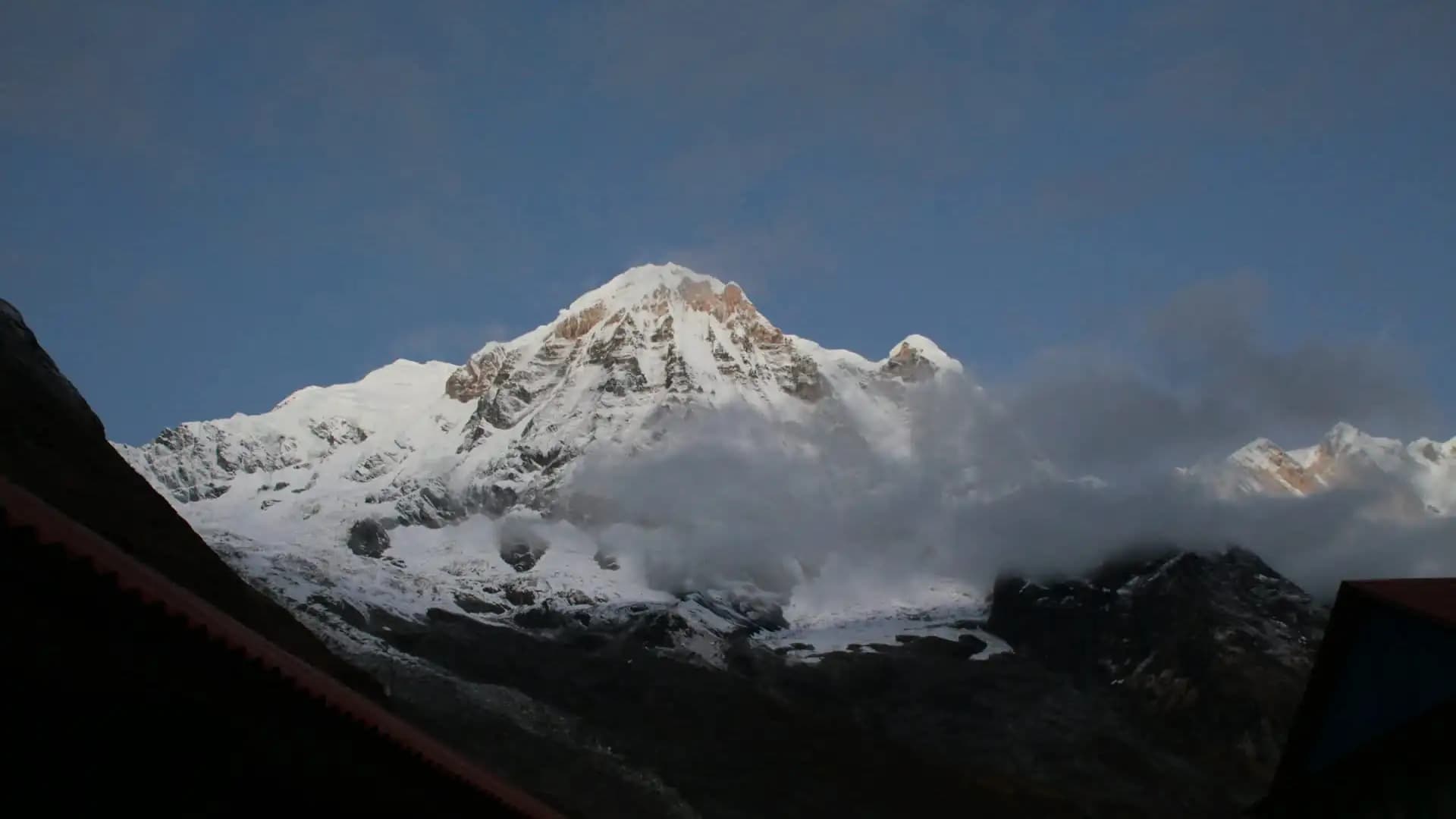
Annapurna Base Camp Trek Weather: Month by Month Guide
Annapurna Base Camp Trek Weather
Ask ten people who've done the Annapurna Base Camp trek what the weather was like, and you'll get ten different answers — because weather on this route isn't a single condition, it's a moving target that changes with both the calendar and your altitude on any given day. Someone who trekked in April will tell you about warm, hazy afternoons and rhododendrons in bloom.
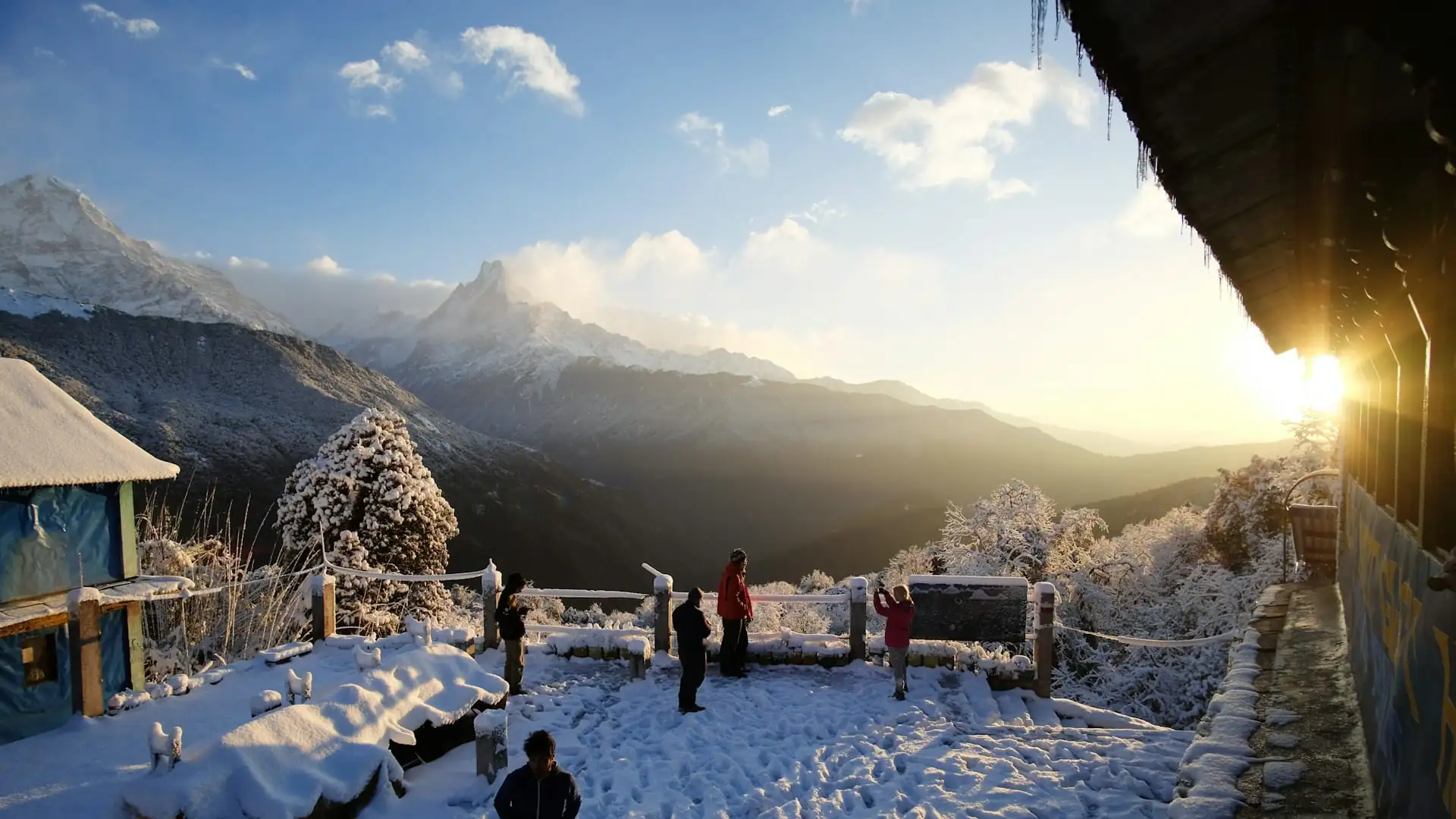
Someone who went in November will describe crisp, cold mornings and some of the clearest mountain views of the year. Someone who braved January will talk about snow crunching underfoot at Machhapuchhre Base Camp and a night so cold their water bottle froze solid inside the tent.
All of them are right, because the Annapurna Base Camp trek runs through several distinct climate zones and across every season of the year, and the "correct" weather answer depends entirely on when you go and how high you've climbed on that particular day.
This guide breaks the year down month by month, zone by zone, so you know exactly what to expect before you commit to a specific departure date — not vague seasonal generalities, but the actual temperature ranges, rainfall patterns, and trail conditions that shape each month on this route.
A caveat worth stating upfront: weather data for a mountain route like this varies somewhat between sources, since it's collected from different elevations, different years, and different measurement points along a trail that spans nearly 3,300 vertical meters. Where figures differ across reliable sources, this guide presents the range rather than picking one number and pretending it's exact — because an honest range is more useful for planning than false precision.
Why Annapurna Base Camp Weather Is Genuinely Complicated
Most weather guides for mountain treks give you a single seasonal summary and call it done. That doesn't really work for ABC, for one structural reason: the trek climbs from roughly 800-1,070 meters near Pokhara and Nayapul to 4,130 meters at base camp, passing through subtropical forest, mid-hill farmland, and high alpine terrain along the way.
A single day's trek can move you through what would, in flat terrain, be considered three or four different climate zones.
That means two things are always true on this trek, in every season:
Lower elevations are consistently warmer and more humid than higher elevations, sometimes by a genuinely dramatic margin.
Base camp itself (4,130m) behaves like a high-altitude environment year-round — even in the warmest months, nights at ABC regularly drop close to or below freezing.
Keep both of these in mind as you read the month-by-month breakdown below, because a single monthly average temperature doesn't capture what you'll actually experience walking from Nayapul to ABC and back.
Elevation Zones and Their General Climate Behavior
Zone | Approximate elevation | General climate character |
|---|---|---|
Lower valley (Nayapul, Birethanti, Ghandruk) | 1,000-2,000m | Warm, subtropical to temperate; the warmest, most humid section of the trek |
Mid-hill forest (Chhomrong, Sinuwa, Bamboo, Dovan) | 2,000-3,000m | Temperate to cool; forested, moderate humidity, cooler nights |
Upper alpine approach (Deurali, Machhapuchhre Base Camp) | 3,000-3,700m | Cold, increasingly exposed; noticeable temperature drop, especially at night |
Annapurna Base Camp / Annapurna Sanctuary | 4,130m | High-altitude alpine; cold year-round, with sub-zero nights even in peak season |
The Four Seasons at a Glance
Season | Months | General character |
|---|---|---|
Spring | March–May | Mild to warm days, cold nights, rhododendrons blooming lower down, increasing afternoon haze as the season progresses |
Monsoon | June–August | Heavy, sustained rainfall; muddy trails, leeches at lower elevation, reduced mountain visibility |
Autumn | September–November | Widely considered the best season — dry air, clear skies, and the most reliable mountain views of the year |
Winter | December–February | Cold and often snowy at higher elevations, but usually stable, clear skies and much quieter trails |
Rainfall Patterns Across the Year
Rainfall is one of the clearest ways to understand seasonal difficulty on this route, since it directly affects trail conditions, visibility, and landslide risk.
Season | Typical monthly rainfall | Effect on the trek |
|---|---|---|
Monsoon (June–August) | Roughly 600-900mm per month | Highest rainfall of the year; slippery trails, harder river crossings, more leeches at lower elevations, and frequent fog or mist obscuring mountain views |
Spring (March–May) | Roughly 30-100mm per month | Occasional showers, generally manageable, rarely trail-disrupting |
Autumn (September–November) | Roughly 30-100mm per month | Low rainfall, especially from mid-September onward; the driest, clearest conditions of the year |
Winter (December–February) | Under 25mm per month typically | Minimal rainfall, though snowfall (not rain) becomes the relevant precipitation concern at higher elevations |
The post-monsoon transition into September and October is particularly notable — as rainfall drops off, dust and haze clear from the air, producing some of the sharpest, clearest mountain visibility of the entire year.
Month-by-Month Weather Breakdown
January
January is consistently identified as the coldest month on the Annapurna Base Camp trek. At base camp itself, average maximum temperatures sit around 7°C, with average minimums dropping to roughly -19°C overnight — genuinely harsh conditions that demand serious cold-weather gear. Lower elevations remain more moderate, with minimum temperatures in the 2-5°C range and daytime highs reaching 12-15°C in the lower valleys.
Snowfall becomes more common at higher elevations, and the section between Deurali and ABC can require additional traction (microspikes or similar) in heavier snow years.
What to expect: Icy trail sections near the top, very cold nights at MBC and ABC, generally clear skies, and a much quieter trail than peak season — many trekkers who prioritize solitude over comfort choose this month deliberately.
February
February shows a gradual improvement over January, though it remains solidly winter. Average maximum temperatures at base camp run around 6°C, with average minimums near -20°C in the coldest stretches — effectively similar to or slightly colder than January in raw numbers, though the trend across the month is toward gradual warming as spring approaches.
Visibility tends to be excellent thanks to clear, dry winter air, even though the cold itself remains a serious factor. Snowfall at higher elevations, sometimes extending into February and March in recent years, can still affect trail conditions above Deurali.
What to expect: Still cold and occasionally snow-affected near the top, clear skies, low trekker numbers, and a trail that rewards good winter gear and preparation.
March
March marks the beginning of spring and a meaningful shift from the depths of winter. Daytime highs at base camp elevation run around 8°C, with nighttime lows still capable of dropping to roughly -12°C. Lower down, conditions warm noticeably, and the first rhododendron blooms typically begin appearing in the mid-elevation forest sections. Rainfall remains low this early in spring, and trails are generally clear of the heaviest snow.
What to expect: A genuine transition month — noticeably milder than deep winter but still requiring warm layers for the upper trail and nights at ABC/MBC.
April
April is widely regarded as one of the best months of the year for this trek. Daytime temperatures at higher elevation warm to around 12°C, with nights around -4°C — a significant improvement over the depths of winter while still requiring proper insulation after dark.
This is peak rhododendron season across the mid-elevation forest zones, adding vivid color to the trail. Daytime haze can build by early-to-mid afternoon as the month progresses, occasionally softening long-distance mountain views later in the day, though morning visibility typically remains strong.
What to expect: Comfortable daytime trekking temperatures, blooming forests, generally stable weather, and a busier trail as spring's popularity peaks.
May
May continues the warm trend, with daytime temperatures at higher elevation reaching around 14°C, though nights can still drop to freezing or below at ABC. As the month progresses toward the monsoon's onset, afternoon cloud cover and occasional rain showers become more frequent, and humidity increases across the region — though mornings typically remain clear enough for solid mountain views. This is generally considered the last fully reliable month before monsoon conditions begin to dominate.
What to expect: Warm, lush trail conditions with increasing afternoon cloud buildup; still a good trekking month, particularly if you plan around clearer morning hours.
June
June marks the beginning of the monsoon season, and conditions shift noticeably. Rainfall increases substantially, trails become muddier and more slippery, and humidity rises across the region. At lower elevations, temperatures can swing widely — from around 20°C during the day down to considerably cooler conditions at night — while higher elevations see daytime temperatures drop into the 0-5°C range in more exposed sections.
The forests turn vivid green and waterfalls swell, which has its own appeal, but the trekking experience becomes noticeably more physically demanding and less scenic in terms of long-range mountain views.
What to expect: Rising rainfall, muddy trails, green landscapes, fewer trekkers, and reduced mountain visibility compared to spring or autumn.
July
July sits at the peak of the monsoon season in Nepal, and this is reflected clearly in rainfall data for the region, with monthly totals running considerably higher than any other time of year. Persistent rain, slippery stone steps, and increased leech activity at lower, forested elevations are the defining features of this month. Some sources note occasional stretches of clearer weather with warm days, but the overall pattern remains one of the wettest and most challenging periods to trek.
What to expect: Heavy, sustained rain, the highest leech activity of the year at lower elevations, muddy trail conditions, and generally poor long-distance visibility.
August
August continues the monsoon pattern established in July, with persistent rainfall and an elevated risk of landslides on steeper or more exposed trail sections, particularly in the lower valley. Visibility remains limited on most days, and trail conditions stay wet and slippery throughout. This is consistently identified across trekking guides as one of the two most difficult months to trek the ABC route, alongside July.
What to expect: Continued heavy rain, landslide risk on vulnerable sections, limited mountain views, and generally the least recommended month for first-time trekkers.
September
September marks the transition out of monsoon and into the autumn trekking season, though the shift is gradual rather than sudden. Early September can still carry residual monsoon rain, particularly in the first half of the month, but conditions stabilize considerably as the month progresses.
Temperatures at higher elevation run in a comfortable range, roughly 10-15°C during the day, and trails begin to dry out, meaningfully reducing landslide risk compared to the peak monsoon months. Trekker numbers remain lower than the October-November peak, making September attractive for those who want autumn's improving conditions without the busiest crowds.
What to expect: A gradual return to stable, dry weather by mid-to-late month, with improving visibility and considerably fewer trekkers than peak autumn season.
October
October is widely regarded as the single most popular and most reliably favorable month for the ABC trek. At base camp elevation, average maximum temperatures run around 16°C with average minimums around -6°C — a comparatively mild range for this altitude, reflecting the stable, dry post-monsoon atmosphere. Rainfall is minimal, skies are consistently clear, and this combination produces some of the best mountain visibility of the entire year.
The trade-off is that October is also the busiest month on the trail, meaning teahouses fill quickly and advance booking is genuinely advisable.
What to expect: The clearest, most stable weather window of the year, excellent mountain views, warm-for-altitude daytime conditions, and the highest trekker volume of any month — plan teahouse bookings ahead of time.
November
November continues the excellent conditions established in October, with daytime temperatures at higher elevation around 6°C and nights dropping to roughly -7°C — noticeably cooler than October but still clear and stable. Crisp air and strong visibility persist through the month, and while the trail remains busy early on, crowds thin somewhat by the month's end, making late November attractive for trekkers who want autumn's reliability with a slightly quieter trail experience.
What to expect: Continued clear skies and strong mountain visibility, cooling temperatures as the month progresses, and gradually thinning crowds compared to the October peak.
December
December marks the beginning of winter, and the shift is noticeable. At base camp elevation, average maximum temperatures drop to around 9.3°C with average minimums around -14°C, and the first significant snowfall of the season typically arrives during this month, transforming the upper trail into a genuinely wintry landscape.
Early December can still offer relatively favorable trekking conditions, but as the month progresses, temperatures continue to fall and snow becomes more established at higher elevations. Trekker numbers drop substantially compared to autumn, offering a quieter, more solitary trekking experience for those prepared for the cold.
What to expect: A clear transition into winter conditions, increasing snow at higher elevations as the month progresses, and a significantly quieter trail than the October-November peak.
Full Month-by-Month Temperature Reference Table (Higher-Elevation / Base Camp Zone)
Month | Avg. daytime high | Avg. nighttime low | General conditions |
|---|---|---|---|
January | ~7°C | ~-19°C | Coldest month; possible snow and icy sections above Deurali |
February | ~6°C | ~-20°C | Still deep winter; gradual warming trend begins late in the month |
March | ~8°C | ~-12°C | Early spring; rhododendrons begin blooming lower down |
April | ~12°C | ~-4°C | Peak spring conditions; warm days, afternoon haze possible |
May | ~14°C | Near freezing | Warm, increasing humidity and cloud as monsoon approaches |
June | Variable, cooler at altitude (0-5°C in exposed high sections) | Cooler, wetter | Monsoon begins; rising rainfall and humidity |
July | Variable, generally mild but very wet | Mild but wet | Peak monsoon rainfall |
August | Variable, generally mild but very wet | Mild but wet | Continued heavy monsoon rain, landslide risk |
September | ~10-15°C | Cooler, improving | Transition month; early rain tapering to stable conditions |
October | ~16°C | ~-6°C | Best overall conditions; clearest skies, busiest trail |
November | ~6°C | ~-7°C | Continued clear, stable weather; cooling temperatures |
December | ~9.3°C | ~-14°C | Winter begins; first significant snowfall typically arrives |
Note: figures above represent averages at or near base camp elevation (4,130m) and vary somewhat between data sources, weather years, and specific measurement points — treat these as planning ranges rather than exact daily forecasts, and always check closer-to-departure conditions with your guide or trekking operator.
Lower-Elevation Temperature Comparison (Nayapul, Ghandruk, Chhomrong Zone)
Because so much of the trek happens well below base camp elevation, it's worth understanding how much milder conditions are lower down.
Season | Daytime temperature (lower elevation) | Nighttime temperature (lower elevation) |
|---|---|---|
Spring (March-May) | Roughly 10-20°C | Roughly 0-10°C |
Monsoon (June-August) | Roughly 20-25°C, humid | Roughly 15-20°C, humid |
Autumn (September-November) | Roughly 10-20°C | Roughly 5-15°C |
Winter (December-February) | Roughly 5-15°C | Roughly 0-5°C, occasionally colder |
This is the core reason packing for ABC requires a genuine layering system rather than a single set of clothing — a warm, humid afternoon in Ghandruk can be followed, just days later, by a well-below-freezing night at MBC or ABC.
Best Season, Ranked: A Practical Comparison
Rank | Season | Why |
|---|---|---|
1 | Autumn (October-November) | Clearest skies, most stable weather, best mountain visibility of the year — the single most recommended window |
2 | Spring (March-May, especially April) | Warm, generally stable conditions plus rhododendron blooms; slightly more afternoon haze than autumn |
3 | Winter (December-February) | Clear, stable skies and quiet trails, but genuinely cold, with possible snow-related trail difficulty above Deurali |
4 | Monsoon (June-August) | Least recommended for most trekkers — heavy rain, leeches, landslide risk, and poor visibility, though the region turns lushly green |
Choosing a Month Based on Your Priorities
Rather than a single universal "best month," the right choice depends on what you're optimizing for.
Priority | Recommended months | Why |
|---|---|---|
Clearest mountain views | October, November | Lowest rainfall, driest air, most consistent visibility of the year |
Warmest overall conditions | April, May | Milder daytime and nighttime temperatures than autumn or winter |
Fewest crowds | Late November, early December, February | Quieter trails without the deepest winter cold of January |
Rhododendron blooms | Late March through April | Peak flowering season in the mid-elevation forest zones |
Lowest cost / off-season rates | December-February, June-August | Lower demand generally corresponds to more flexible teahouse pricing and availability |
Solitude and a quieter Himalayan experience | December, January, June-August (with appropriate gear/expectations) | Substantially lower trekker volume than the October-November peak |
Avoiding monsoon-related trail hazards | Any month outside June-August | Sidesteps the highest rainfall, landslide risk, and leech season entirely |
Weather-Related Trail Conditions by Season
Spring Trail Conditions
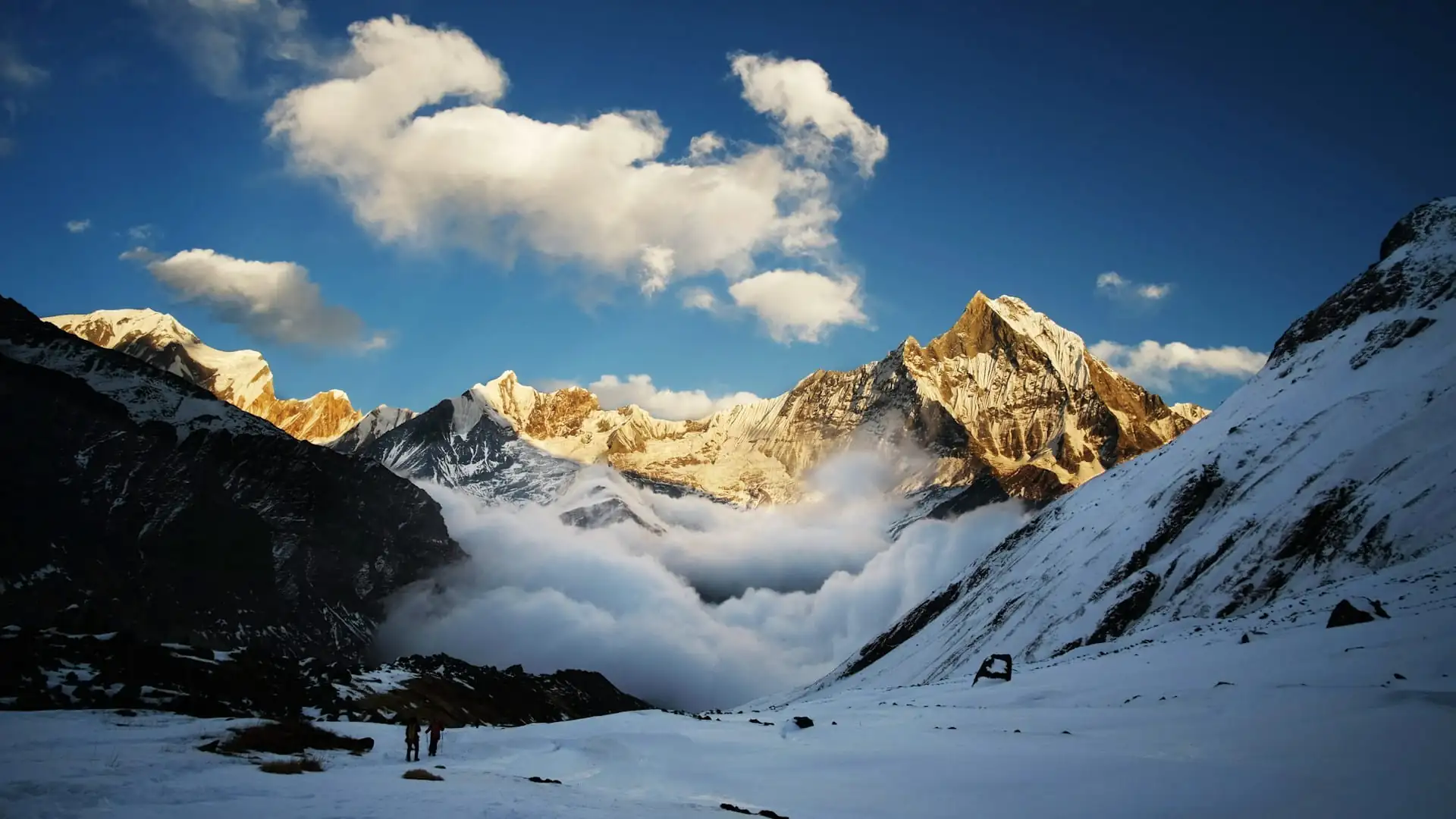
Trails are generally dry and well-maintained through most of spring, with occasional afternoon showers possible, particularly as the season progresses toward May. Snow from the preceding winter typically clears from the upper trail sections by March or early April, though this can vary year to year.
Afternoon haze, building from roughly midday onward, is a known feature of peak spring — planning mountain photography or key viewpoints for the morning hours tends to produce better results.
Monsoon Trail Conditions
This is where weather most directly threatens trail safety. Sustained rainfall makes stone steps slippery, river crossings more difficult, and landslide risk meaningfully higher on steeper or more exposed sections, particularly in the lower valley zones. Leeches become common in the lower, forested parts of the route. Fog and low cloud frequently obscure mountain views for much of the day, though brief clearer windows do occur.
Autumn Trail Conditions
This is the most stable trail condition window of the year. Dry, well-maintained trails, minimal rainfall, and consistently good visibility make this the season most commonly recommended by guides and operators for both first-time and experienced trekkers.
Winter Trail Conditions
Trails remain generally passable and teahouses stay open year-round, though availability narrows in the coldest months as trekker numbers drop. Snowfall at higher elevations, particularly above Deurali on the approach to MBC and ABC, can require additional traction (microspikes or gaiters) and occasionally affects trail conditions enough to warrant extra caution or a guide's judgment on timing.
How Annapurna Base Camp Trek Weather Affects Altitude Sickness Risk
Weather and altitude interact in a few specific ways worth understanding:
Cold temperatures at higher elevation can mask or compound the effects of mild dehydration, which itself worsens susceptibility to Acute Mountain Sickness (AMS) symptoms.
Reduced visibility in monsoon or heavy cloud conditions doesn't directly cause AMS, but it can make it harder for guides to assess a group's pace and condition visually, which is part of why monsoon trekking is generally discouraged for less experienced trekkers.
Snow conditions in winter can slow pacing on the upper trail sections, which — if managed well with proper acclimatization awareness — isn't inherently dangerous, but does require more deliberate planning around rest and pacing than in clearer, faster-moving conditions.
None of this changes the fundamental altitude profile of the trek (ABC still tops out at 4,130m regardless of season), but weather conditions do meaningfully affect how comfortably and safely that altitude is reached in any given month.
Packing Implications by Season
This connects directly to what belongs in your bag — a deeper breakdown exists in a dedicated packing guide, but the core seasonal adjustments are:
Season | Key packing adjustments |
|---|---|
Spring | Standard layering system; rain shell for occasional showers; sun protection for warmer, sometimes hazy days |
Monsoon | Strong waterproof jacket and pants; leech protection (socks or salt) for lower forested sections; extra dry bags for gear protection |
Autumn | Standard layering system; slightly warmer sleeping bag for late-November departures as nights cool further |
Winter | Warmer-rated sleeping bag (-15°C to -20°C comfort rating); microspikes/gaiters for snow-affected sections above Deurali; extra insulating layers and hand warmers |
Teahouse Availability by Season
Weather doesn't just affect the trail — it affects the infrastructure along it. Teahouses generally stay open year-round on the ABC route, but their operating capacity and comfort level shift with the seasons:
Peak autumn (October especially) sees teahouses at or near capacity most nights — advance booking or a guide who can arrange accommodation ahead of arrival is genuinely valuable in this window.
Winter months see reduced trekker volume, meaning more room availability but occasionally more limited services (fewer staff, simpler menus) at the smaller, higher-elevation lodges.
Monsoon months see the lowest trekker volume of the year, and some smaller teahouses may operate on a reduced basis given lower demand.
Weather and the Guide Requirement
Since April 2023, hiring a licensed guide has been mandatory for foreign trekkers on the Annapurna Base Camp route. This has a direct weather-related benefit worth noting here: a guide with current, on-the-ground knowledge of trail conditions — recent snowfall above Deurali, a landslide-affected section during monsoon, or unusually persistent afternoon cloud during spring — provides real-time judgment that a static seasonal guide simply can't replicate.
This is one of the clearer practical arguments for trekking with an experienced, locally based operator rather than relying purely on general seasonal averages when making day-to-day decisions on the trail.
Common Weather-Related Questions Trekkers Ask Before Booking
"Will I see the mountains clearly, or will it be cloudy the whole time?" — This depends heavily on season and even time of day. Autumn offers the most reliable clarity; spring is good but with more afternoon haze; monsoon carries real risk of persistent cloud cover blocking views for extended periods.
"How cold will it actually get at night?" — Even in the warmest months, nights at ABC and MBC regularly approach or drop below freezing; in winter, nighttime lows at base camp can fall to roughly -19°C to -20°C.
"Is rain a daily certainty in monsoon, or just occasional?" — Monsoon rainfall in this region is substantial and frequent, though not necessarily an all-day event every single day; heavier, more sustained rain is more typical than brief scattered showers during this season.
"Can weather actually stop the trek?" — Severe snow at higher elevations in the depths of winter, or serious landslide risk during peak monsoon, can occasionally require a guide to adjust pacing, delay a section, or in rare cases modify an itinerary — another reason experienced local guidance matters.
Planning Your Trip Around Weather with a Local Operator
Weather averages are useful for choosing a season, but the specific conditions you'll actually face — how much snow sits above Deurali this particular winter, whether this year's monsoon has been unusually heavy, how clear this week's forecast looks for summit-day visibility at ABC — require current, local knowledge rather than a historical average.
This is exactly the value a Nepal-based operator like Adventure Life Nepal provides: guides who track real-time conditions on this specific route, itineraries that can be adjusted around a particular week's weather rather than a generic seasonal template, and the on-the-ground judgment to know when a short weather delay is worth taking rather than pushing through deteriorating conditions.
Whether you're chasing the clearest possible October views, planning a quieter winter trek, or simply want an itinerary genuinely built around current conditions rather than last year's averages, working with a team that's actually on these trails week to week makes a meaningful difference.
Frequently Asked Questions about Annapurna Base Camp Trek Weather
1. What is the best month to trek to Annapurna Base Camp for weather?
October is widely considered the single best month, offering the clearest skies, most stable conditions, and best mountain visibility of the entire year, closely followed by November and the spring months of April and May.
2. How cold does it get at Annapurna Base Camp?
It varies by season — average conditions run from roughly 16°C during the day and -6°C at night in October, down to around 6-7°C during the day and -19°C to -20°C at night in the coldest winter months of January and February.
3. Is it safe to trek to Annapurna Base Camp during monsoon season?
It's possible but considerably more difficult — heavy rainfall, slippery trails, leeches at lower elevations, reduced visibility, and increased landslide risk make monsoon (June-August) the least recommended season, particularly for first-time or less experienced trekkers.
4. Does it snow at Annapurna Base Camp?
Yes, particularly from December through March, when snowfall becomes more common at higher elevations, especially on the approach between Deurali and ABC itself.
5. What's the difference between spring and autumn weather on this trek?
Autumn generally offers clearer skies and more stable, dry conditions overall, while spring brings warmer temperatures and rhododendron blooms but somewhat more frequent afternoon haze as the season progresses toward May.
6. How much rain falls during monsoon compared to other seasons?
Monsoon months typically see 600-900mm of rainfall per month, compared to roughly 30-100mm per month during spring and autumn, and under 25mm per month during winter.
7. Can I see Annapurna I clearly from base camp in every season?
Visibility is most reliable in autumn (September-November) and much of spring, particularly in the mornings before afternoon haze or cloud builds. Monsoon months carry a real risk of extended cloud cover obscuring views for much of a given day.
8. Is winter trekking to ABC worth it despite the cold?
Many experienced trekkers find it genuinely worthwhile — winter offers clear, stable skies and dramatically quieter trails, provided you're prepared with appropriately warm gear for temperatures that can drop to -19°C to -20°C overnight at base camp.
9. What month has the warmest daytime temperatures at higher elevation on this trek?
October and May both offer relatively warm daytime highs at base camp elevation (around 14-16°C), though October pairs this with notably clearer, drier conditions than May's increasing pre-monsoon humidity.
10. Does weather affect the difficulty of the trek?
Yes, meaningfully — monsoon rain increases landslide risk and trail slipperiness, winter snow can require extra traction gear on upper sections, and both conditions add physical and logistical difficulty beyond what the route presents in stable spring or autumn conditions.
11. Should I book teahouses in advance based on the season?
Yes, particularly for October, the busiest month of the year on this route — advance booking or working with a guide who can arrange accommodation ahead of your arrival is genuinely worthwhile during peak season.
12. How does weather affect altitude sickness risk on the ABC trek?
Weather doesn't directly cause AMS, but cold conditions can compound the effects of dehydration, and reduced visibility or difficult trail conditions can complicate a guide's ability to manage group pacing — both indirect factors worth being aware of, particularly in winter or monsoon.
13. What's the coldest month to trek Annapurna Base Camp?
January and February are the coldest months, with average nighttime lows at base camp dropping to roughly -19°C to -20°C, alongside the highest likelihood of snow-affected trail sections above Deurali.
14. Is there a "safe" month with both good weather and fewer crowds?
Late November and early December offer a reasonable middle ground — still relatively clear, stable conditions carried over from peak autumn, but with noticeably thinner crowds than the October-November high season.
Final Thoughts on Annapurna Base Camp Trek Weather
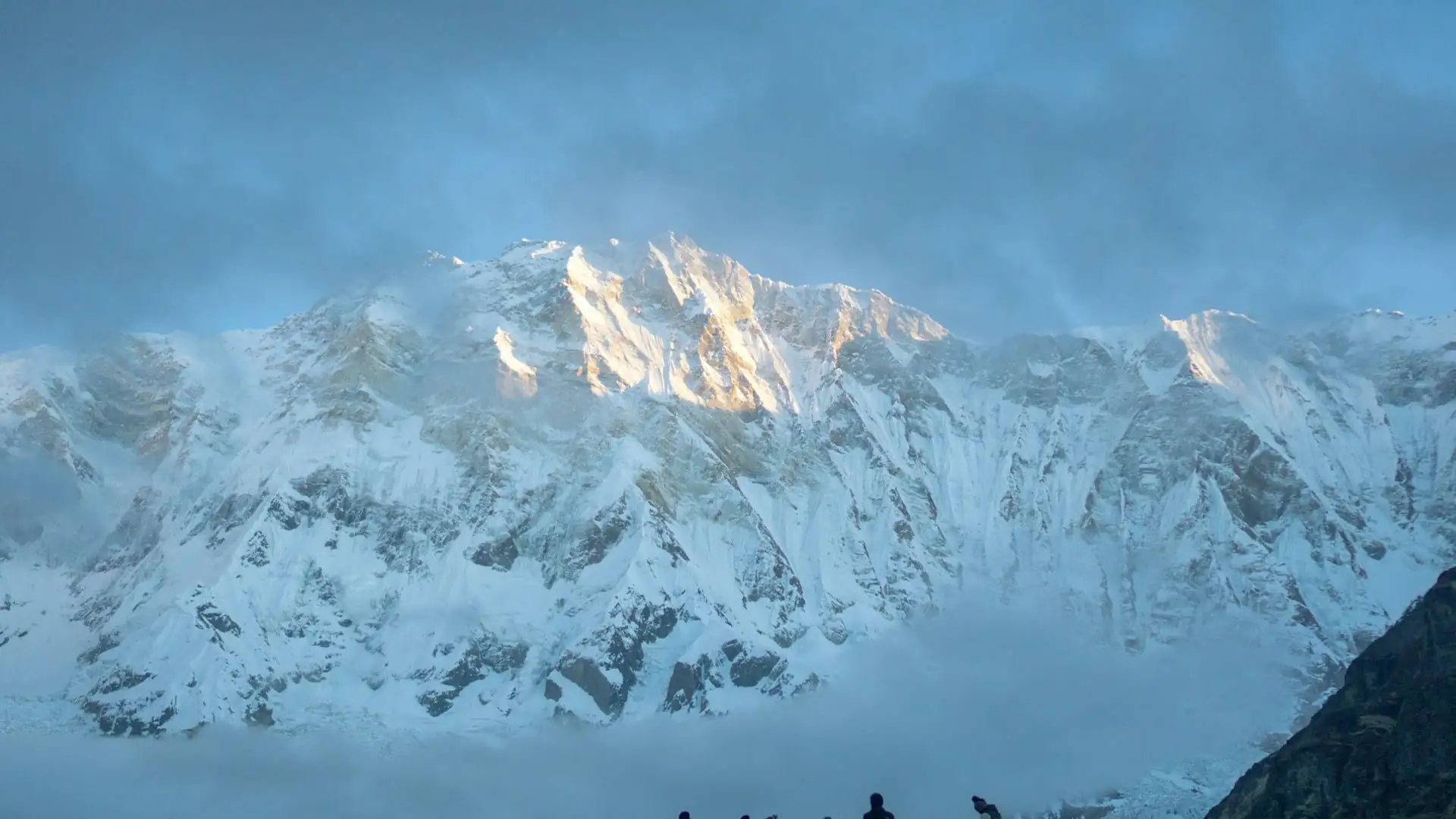
Weather on the Annapurna Base Camp trek isn't a single variable to check once before booking — it's a shifting condition that changes by month, by elevation, and sometimes by hour, across a route that moves from subtropical lowland to high alpine terrain in the span of a week.
Autumn remains the most reliable, clearest window for most trekkers, spring offers a warm and colorful alternative with a bit more afternoon haze, winter rewards those prepared for genuine cold with quiet trails and clear skies, and monsoon is best reserved for those who specifically want a lush, green, low-crowd experience and are prepared for its real challenges.
Whichever month you choose, packing and pacing around the actual conditions of that season — rather than a generic idea of "Himalayan weather" — is what turns a potentially miserable trek into the kind of clear-sky morning at Annapurna Base Camp that makes the whole climb worth it.