
Annapurna Base Camp Trek via Poon Hill – 11 Days
Trip Duration: 11 Days
Trip Grade: Strenuous
Group Size: 12
Meals: Breakfast in the cities; all meals on the trek
Best Season: October–November, March–May
Start Point: Kathmandu
Accomodation: Hotels in Pokhara and Kathmandu, teahouse lodges on the trek
Ending Point: Kathmandu
Max Altitude: 4,130 m (Annapurna Base Camp)
Transportation: Tourist bus Kathmandu–Pokhara, private jeeps to Ulleri and from Jhinu Danda
Permits Required: Annapurna Conservation Area Permit (ACAP)
Overview
The Annapurna Base Camp Trek via Poon Hill combines the two best-known walks in the Annapurna region in one trip. You start with the classic Ghorepani loop, watching the sun rise over Dhaulagiri and Annapurna from Poon Hill (3,210 m), then cross the forested ridge to Tadapani and Chhomrong and follow the Modi Khola gorge into the Annapurna Sanctuary for a night at Annapurna Base Camp (4,130 m).
It's a trek of two halves. The first is a loop through Magar and Gurung villages, rhododendron forest and wide Himalayan panoramas. The second is a climb into a narrow glacial valley that ends in a ring of 7,000 m and 8,000 m peaks. Poon Hill also does a useful job: it takes you above 3,000 m early in the trek, which helps your body adjust before the higher days. This page sets out the 11-day plan, how the route fits together, how hard it is, what it costs and how it compares with the other Annapurna treks we run.
Trip at a Glance
Detail | Information |
|---|---|
Duration | 11 days Kathmandu to Kathmandu (8 trekking days) |
Trek start and end | Ulleri (about 1,960 m) / Jhinu Danda (1,780 m), by jeep from Pokhara |
Highest point | Annapurna Base Camp, 4,130 m / 13,550 ft |
Viewpoints | Poon Hill 3,210 m, Machhapuchhre Base Camp 3,700 m |
Total walking distance | About 80 km |
Daily walking | 4–7 hours |
Difficulty | Moderate to strenuous (long stone staircases and two days above 3,500 m) |
Accommodation | Hotels in Pokhara and Kathmandu, teahouse lodges on the trek |
Meals | Breakfast in the cities; breakfast, lunch and dinner on the trek |
Permits | Annapurna Conservation Area Permit (ACAP) |
Best months | October–November and March–May |
Group size | 1–12 |
Price | From US$850 per person |
Why Combine Poon Hill and Annapurna Base Camp?
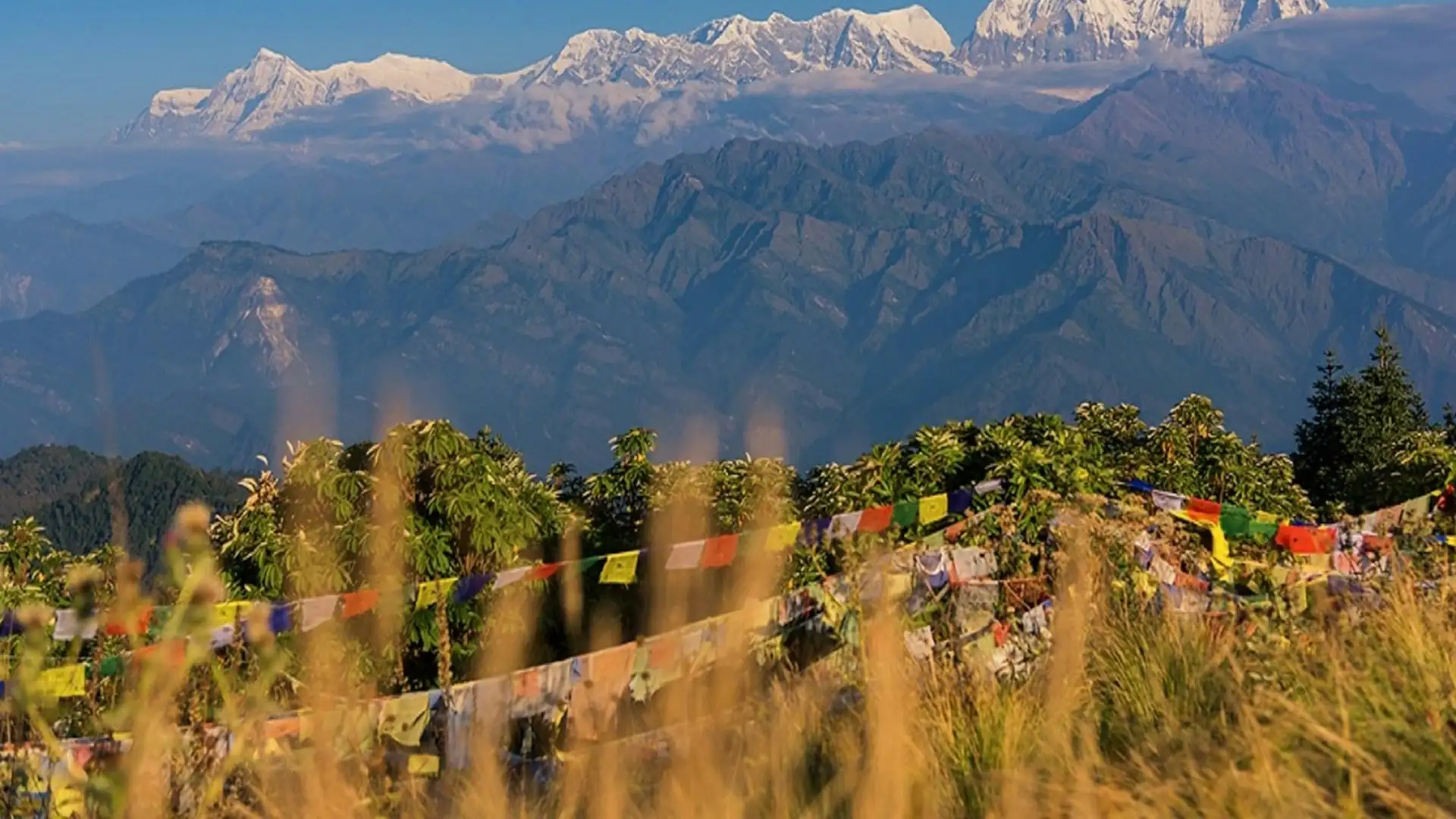
Most people who trek in the Annapurna region choose between the two. Poon Hill gives you a wide panorama of the Dhaulagiri and Annapurna ranges from the outside. Annapurna Base Camp puts you inside the Annapurna massif, looking up at the peaks from the bottom of a glacial basin. Doing both shows you the same mountains from two completely different angles.
The two routes join naturally. From Ghorepani, a ridge trail runs east through forest to Tadapani, then drops to Chhomrong, the gateway to the Sanctuary. Instead of finishing Poon Hill and heading back to Pokhara, you keep walking into the Modi Khola valley.
There's also a practical benefit. Poon Hill at 3,210 m and the night at Ghorepani (2,860 m) take you to a moderate altitude early in the trek, then you drop back down to Chhomrong (2,170 m) before the final climb to base camp. This "up, down, then up again" pattern is good for acclimatization.
ABC via Poon Hill (this trek) | Annapurna Base Camp Trek | Short ABC Trek | Ghorepani Poon Hill Trek | |
|---|---|---|---|---|
Days from Kathmandu | 11 | 14 | 9 | 7 |
Days on foot | 8 | 9 | 6 | 4 |
Poon Hill sunrise | Yes | No | No | Yes |
Night at ABC | Yes | Yes | Yes | No |
Ghandruk village | No | Yes | No | Yes |
Price | From US$850 | From US$1,350 | From US$650 | From US$495 |
Compare the details on our Annapurna Base Camp Trek, Short Annapurna Base Camp Trek and Ghorepani Poon Hill Trek pages.
Why This 11-Day Itinerary?
We drive to Ulleri, not Nayapul. A jeep road now climbs from Nayapul up the Bhurungdi Khola valley. In the dry season, it reaches Ulleri, which saves most of the dusty road walking and the steep Ulleri staircase. If the road is closed or muddy, we start lower at Hile and the first day is longer.
We sleep at Deurali before base camp. Many 10-day itineraries sleep at Himalaya (2,920 m) and then climb more than 1,200 m to sleep at base camp. We push on to Deurali (3,200 m) the day before, so the final climb is about 930 m, and you cross the avalanche-prone gorge above Deurali early in the morning.
We give you a full night at ABC. You arrive at base camp around midday, with time for the sunset, a night in the Sanctuary and sunrise the next morning, rather than a rushed visit.
We finish with the hot springs and a day to get back. The walk out ends at Jhinu Danda's hot springs, and the return to Kathmandu has its own day, so you're not trying to reach the airport straight off the bus.
Sunrise on Poon Hill
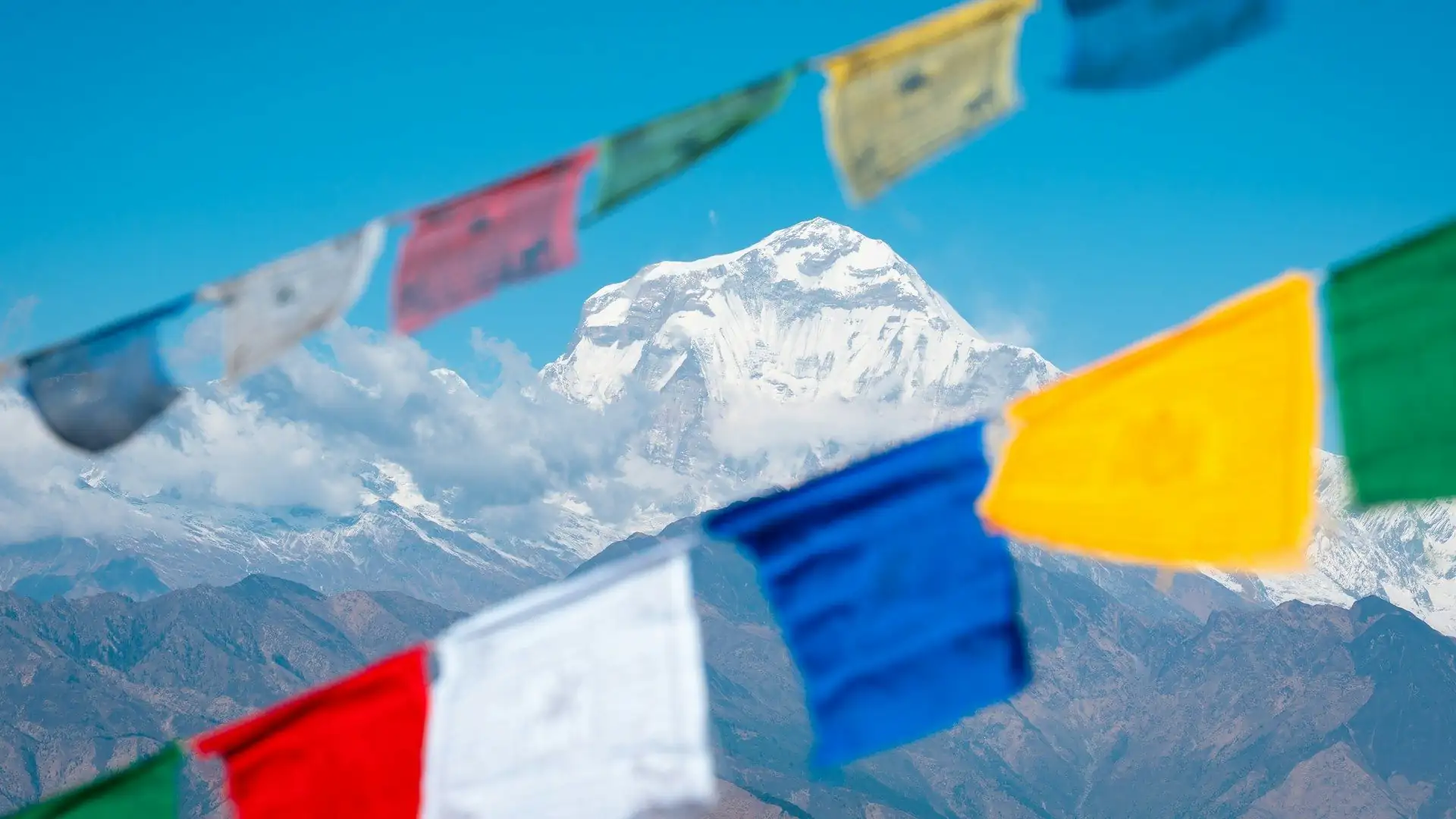
Poon Hill is a grassy summit with a wooden viewing tower, about 45 minutes to an hour above Ghorepani. You leave around 5 a.m. with headtorches and join a stream of trekkers climbing a stone staircase through the forest. In October and November, the sky starts to lighten around 5:45 a.m.
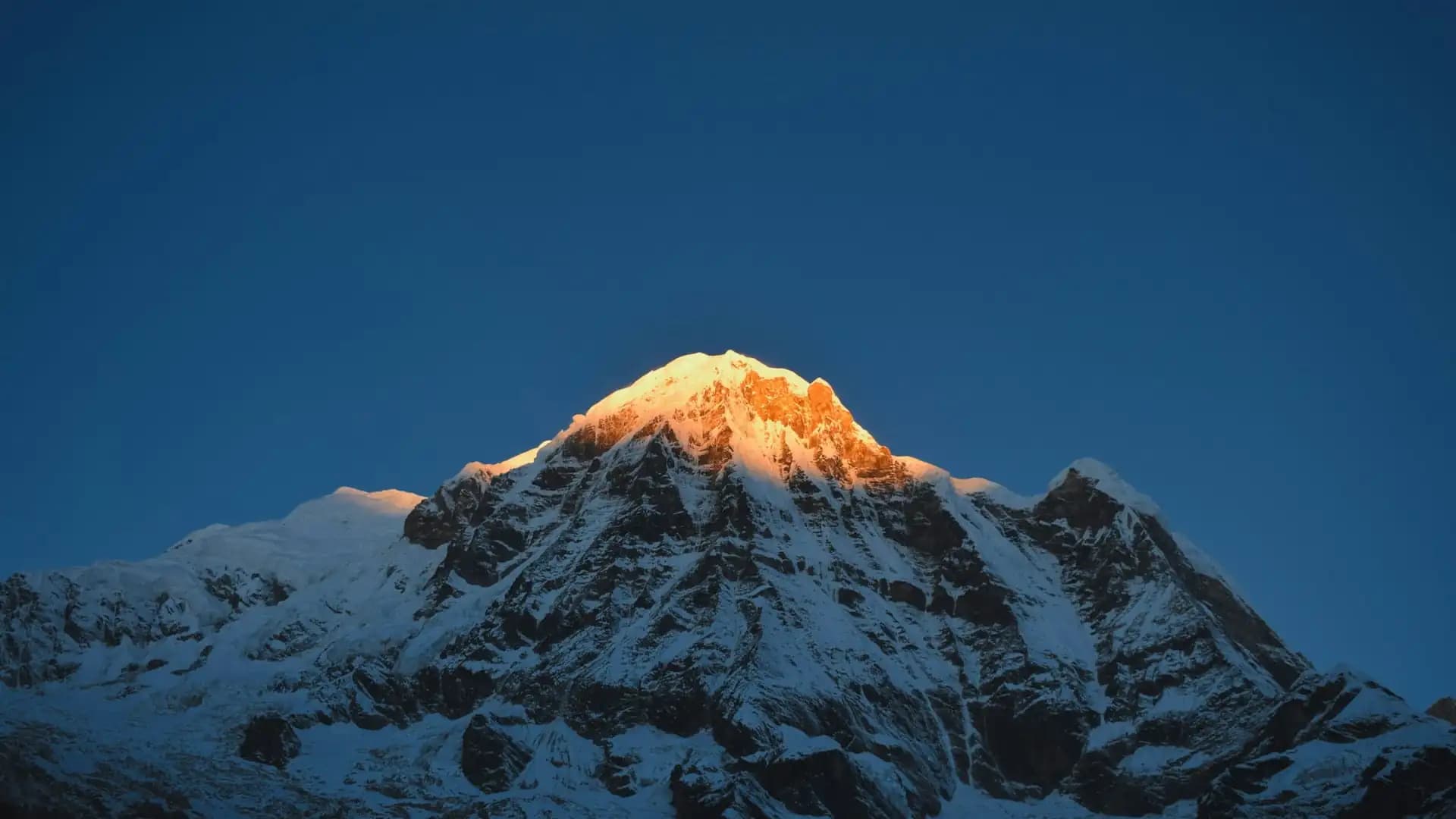
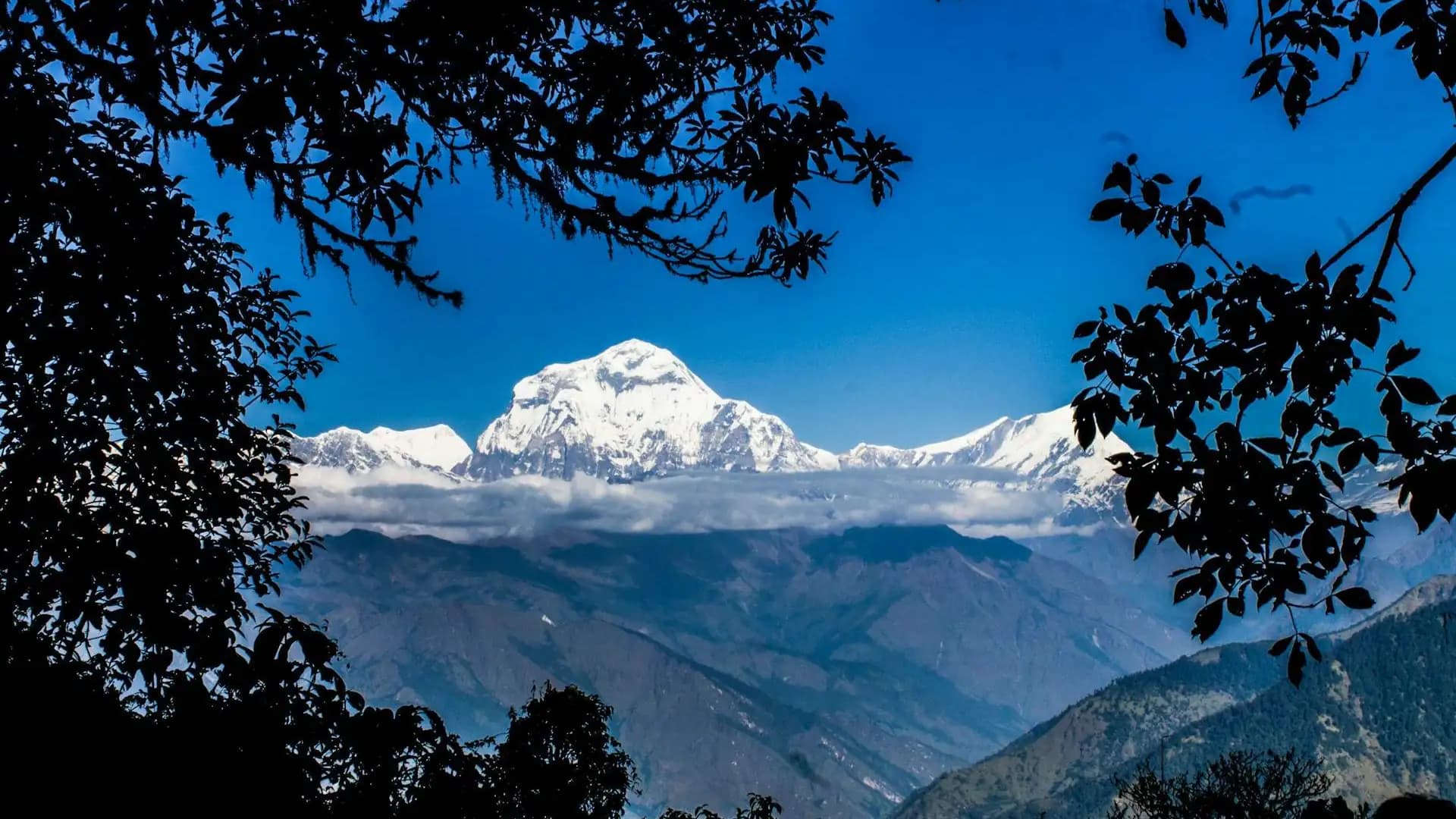
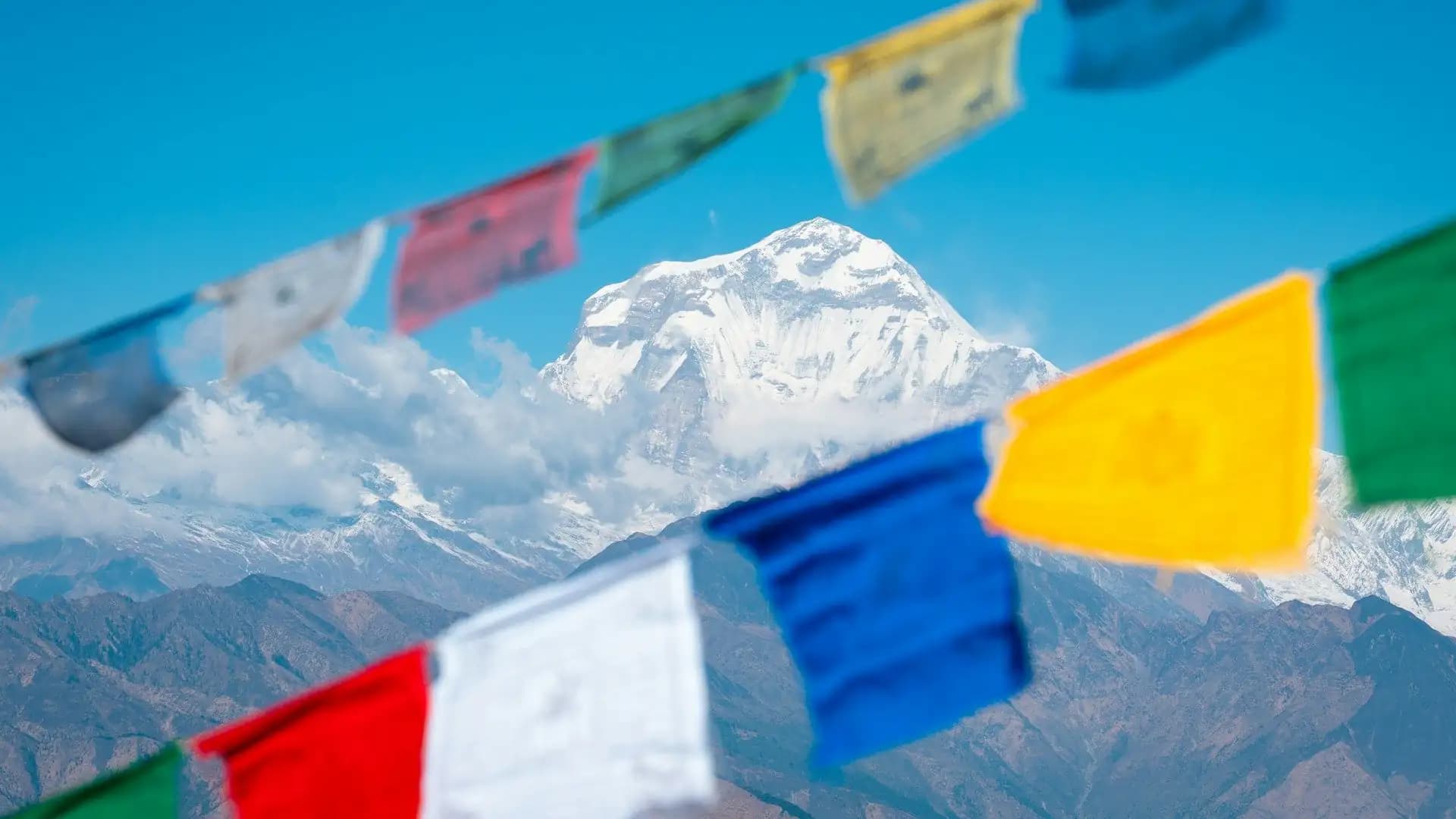
From the top, Dhaulagiri I (8,167 m) dominates the western skyline, with the deep Kali Gandaki gorge beside it. To the east are Annapurna I (8,091 m), Annapurna South, Hiunchuli and the sharp summit of Machhapuchhre. On a clear morning, you can see more than 20 peaks. It gets busy in peak season, so your guide will find you a good spot. A small entry fee is paid at the start of the path, and tea stalls at the top sell hot drinks.
A Night at Annapurna Base Camp
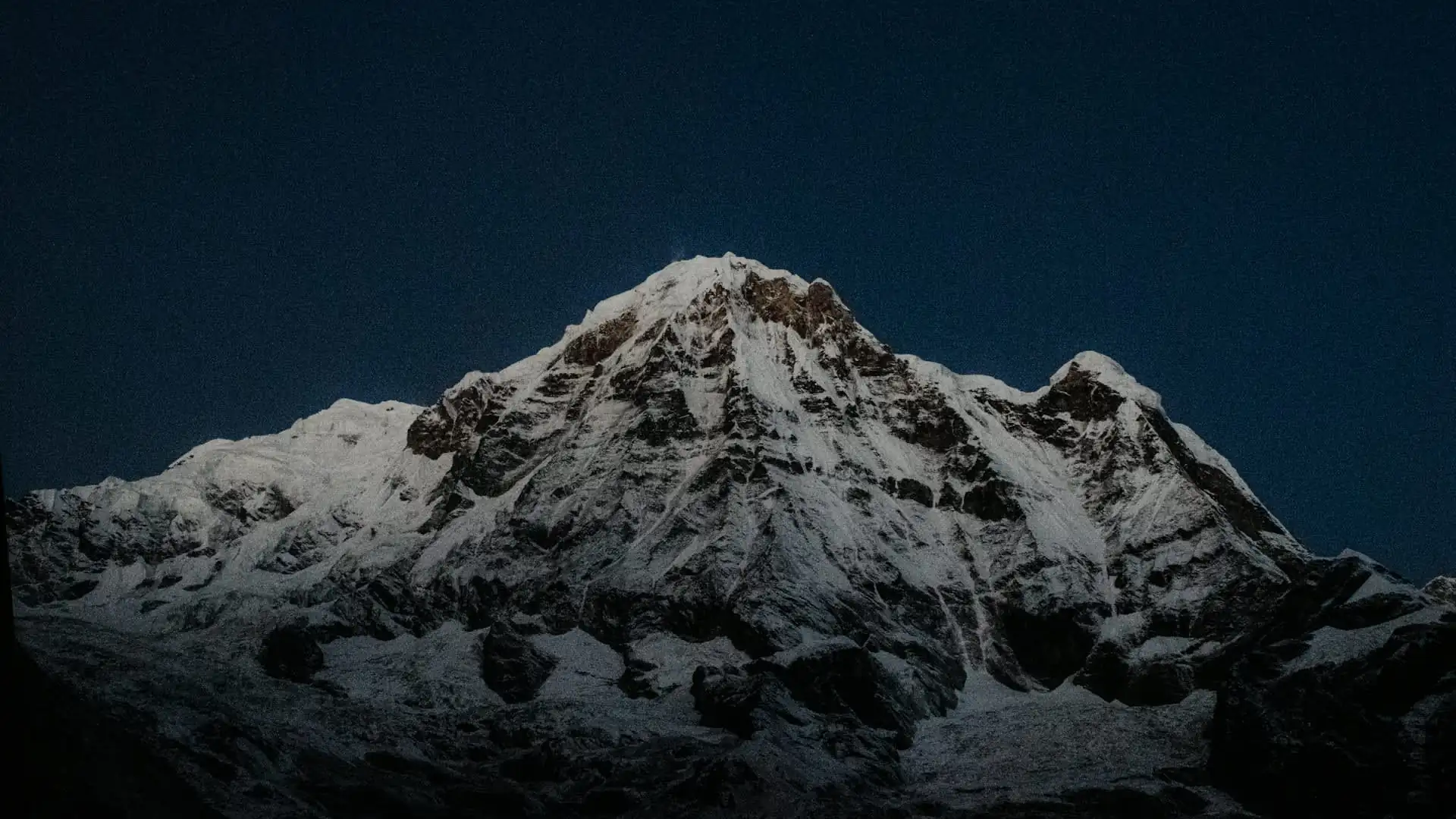
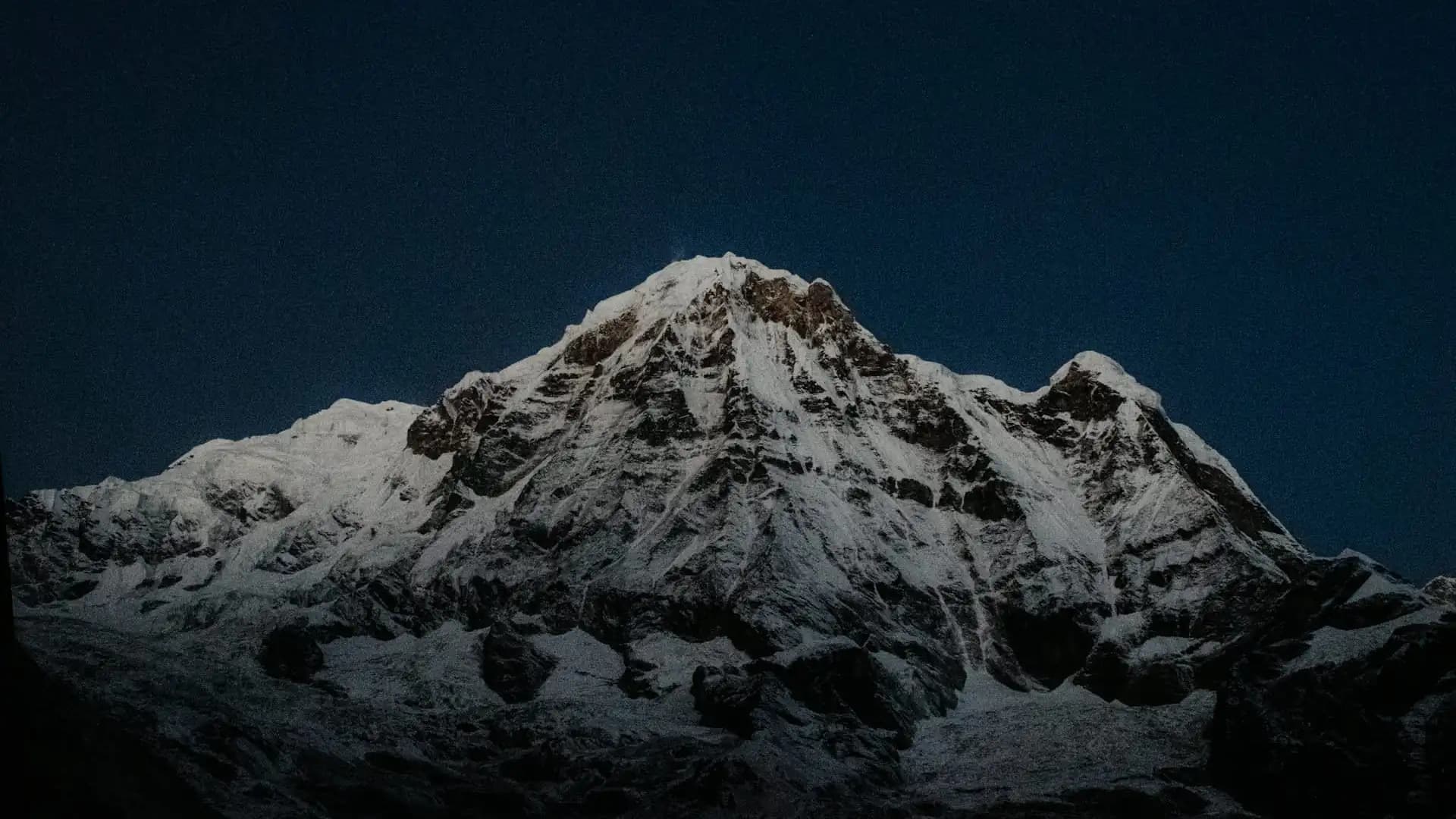
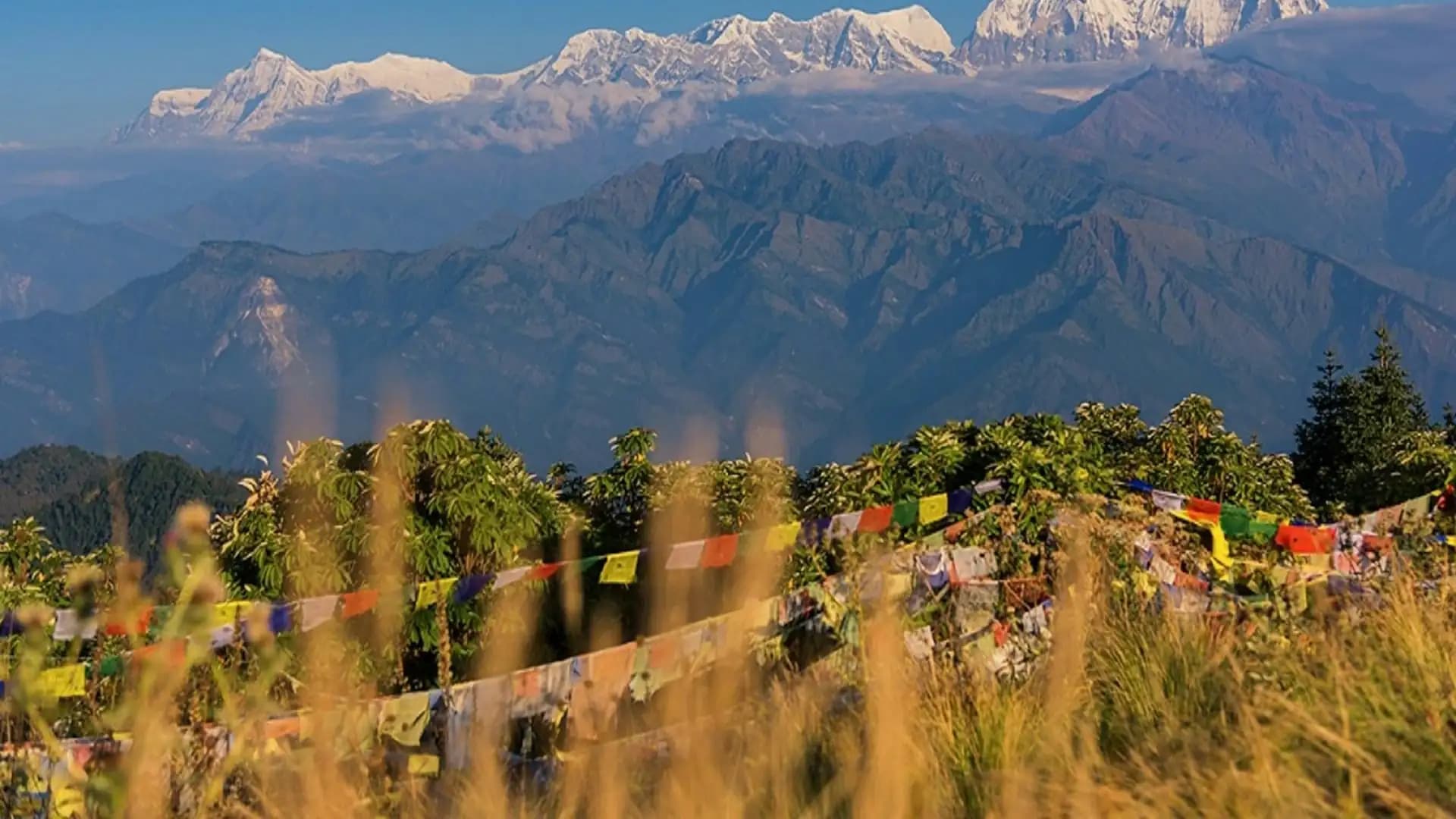
Base camp is a small group of lodges on a grassy shelf beside the moraine of the South Annapurna Glacier, with no village, just the lodges, prayer flags and the mountains in a full circle around you.
Cloud often fills the Sanctuary after midday and clears towards evening, so sunset and sunrise usually bring the best views. The dining room is the only heated place. Rooms are cold and nights drop below freezing in most months, so sleep in layers in a warm sleeping bag. It's normal to sleep lightly at this height; a strong headache that doesn't ease with water and rest is a reason to tell your guide.
Villages and People Along the Way
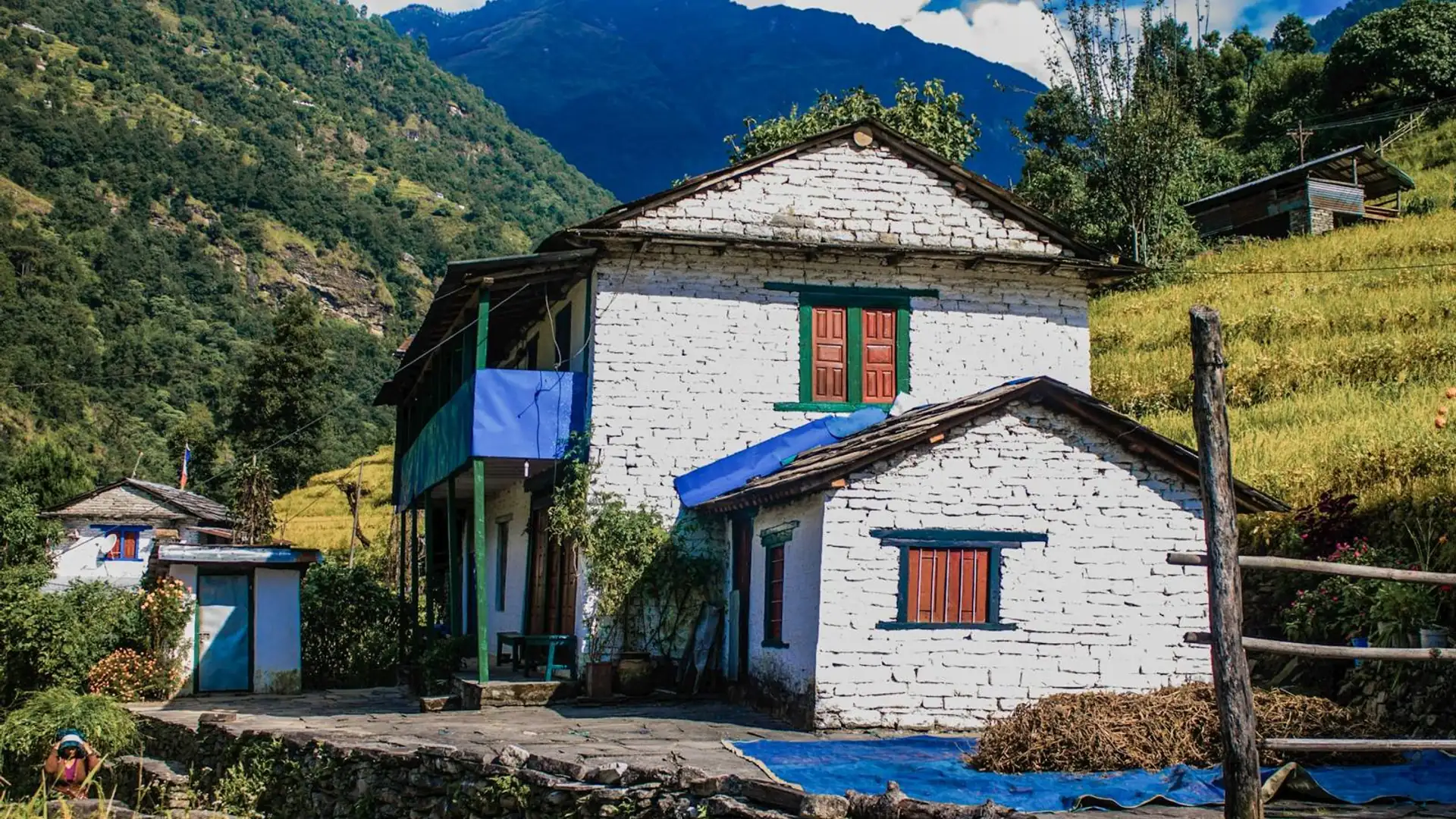
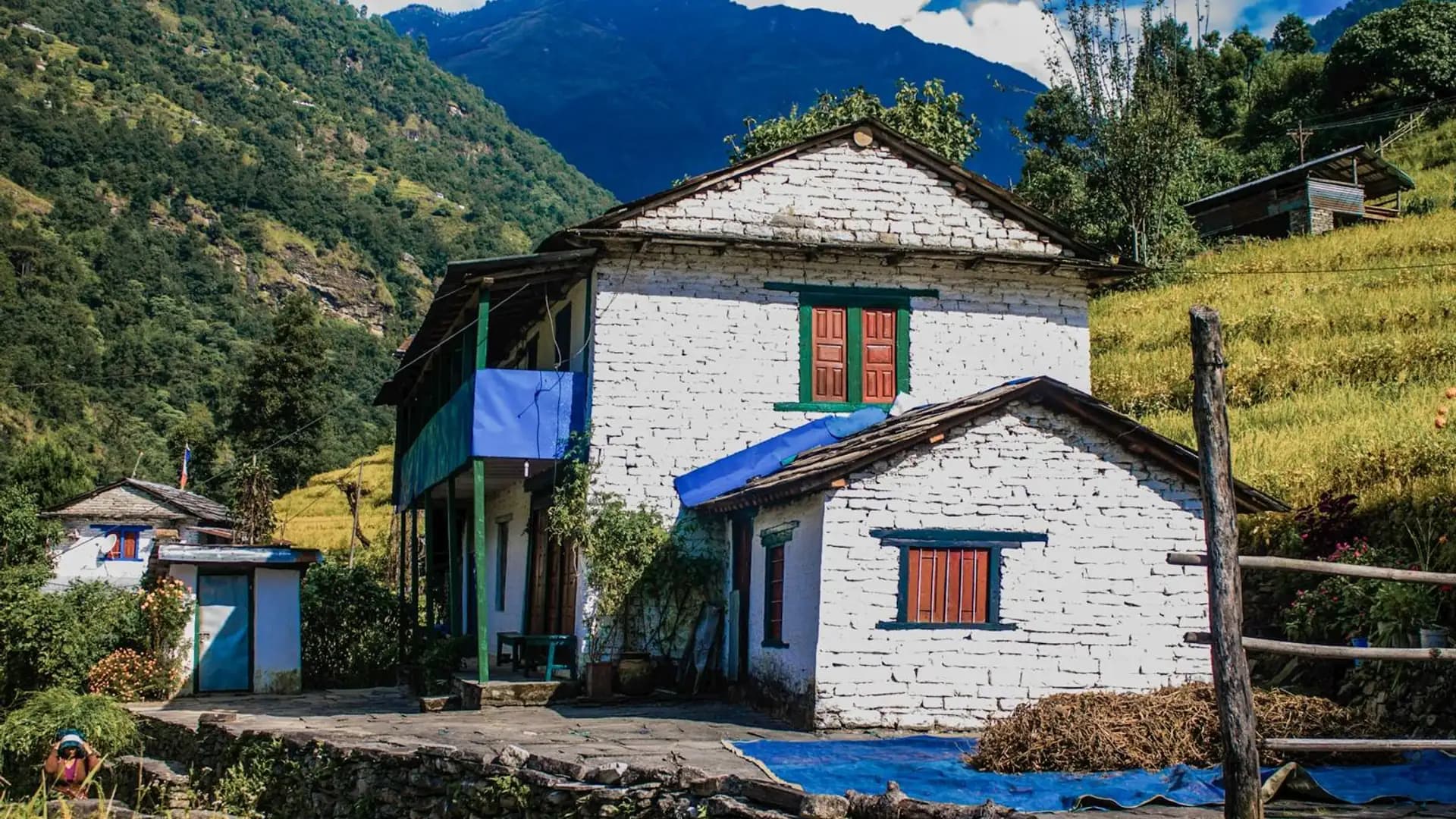
The first half of the trek passes through Magar villages such as Ulleri, whose stone houses and terraces climb the steep slopes of the Bhurungdi Khola valley. Ghorepani's name means "horse water", from the days when it was a stop for mule trains on the trade route between the Kali Gandaki valley and the lowlands.
From Tadapani onwards, you enter Gurung country. Generations of Gurung men from these villages served as Gurkha soldiers in the British and Indian armies, and many of the houses and schools were built with their pensions. Chhomrong is the last permanent village before the Sanctuary. Above it, there are only lodges. The Sanctuary has long been sacred to the Gurung people, and some lodges above Chhomrong still don't serve meat; please don't bring it.
A Typical Day on the Trail
Most days start with breakfast around 7 a.m. and a departure by 8 a.m., after your guide has checked the group. Your porter carries the main bags, so you only need a daypack with water, snacks, a warm layer, a rain jacket and a camera. You walk at a steady pace with regular breaks, stopping for lunch at a lodge on the trail around midday.
Most days end at the next lodge by mid-afternoon. There's time for a hot shower where available, washing clothes, reading or a short walk around the village. Dinner is usually around 6:30 p.m. in the lodge dining room, the warmest place in the building, where your guide talks through the next day's route. Most trekkers are in bed by 9 p.m., ready for another early start.
The Rhododendron Forests
Between Ghorepani and Tadapani, and again in the upper Modi Khola valley, the trail passes through some of the largest rhododendron forests in Nepal. Rhododendron is Nepal's national flower, and here it grows as tall trees, not shrubs. In March and April, the forest turns red, pink and white, with the snow peaks behind. Even outside the flowering season, the old, moss-covered trees make these some of the most beautiful forest walks in the Annapurna region.
Mountains You'll See
Mountain | Height | Where you see it best |
|---|---|---|
Dhaulagiri I | 8,167 m | Poon Hill, Ghorepani |
Annapurna I | 8,091 m | Poon Hill, Annapurna Base Camp |
Gangapurna | 7,455 m | Annapurna Base Camp |
Annapurna South | 7,219 m | Poon Hill, Tadapani, Chhomrong, ABC |
Machhapuchhre | 6,993 m | Tadapani, Chhomrong, Machhapuchhre Base Camp |
Hiunchuli | 6,441 m | Poon Hill, Chhomrong, ABC |
Annapurna I was the first 8,000 m peak to be climbed, by a French expedition in 1950. Machhapuchhre is considered sacred and is closed to climbers.
Route, Distance and Walking Hours
Day | Route | Distance | Walking time |
|---|---|---|---|
2 | Ulleri – Banthanti – Ghorepani | 8 km | 4–5 hrs |
3 | Poon Hill – Ghorepani – Deurali – Tadapani | 13 km | 6–7 hrs |
4 | Tadapani – Chuile – Chhomrong | 9 km | 5–6 hrs |
5 | Chhomrong – Sinuwa – Bamboo | 8 km | 5–6 hrs |
6 | Bamboo – Dovan – Himalaya – Deurali | 10 km | 6–7 hrs |
7 | Deurali – MBC – ABC | 6 km | 4–5 hrs |
8 | ABC – Bamboo | 14 km | 6–7 hrs |
9 | Bamboo – Chhomrong – Jhinu Danda | 10 km | 5–6 hrs |
Total | About 80 km |
Distances on mountain trails are approximate.
Altitude Profile
Place | Altitude | Night |
|---|---|---|
Kathmandu | 1,400 m / 4,593 ft | 10 |
Pokhara | 822 m / 2,697 ft | 1, 9 |
Ulleri | about 1,960 m / 6,430 ft | Trailhead |
Ghorepani | 2,860 m / 9,383 ft | 2 |
Poon Hill | 3,210 m / 10,531 ft | Day 3 |
Tadapani | 2,630 m / 8,629 ft | 3 |
Chhomrong | 2,170 m / 7,119 ft | 4 |
Bamboo | 2,310 m / 7,579 ft | 5, 8 |
Deurali | 3,200 m / 10,499 ft | 6 |
Machhapuchhre Base Camp | 3,700 m / 12,139 ft | Day 7 |
Annapurna Base Camp | 4,130 m / 13,550 ft | 7 |
Jhinu Danda | 1,780 m / 5,840 ft | Day 9 |
Map Overview
From Pokhara, the jeep road runs west to Nayapul and north up the Bhurungdi Khola valley to Ulleri. The trail climbs to Ghorepani and Poon Hill, then turns east along the ridge through Deurali to Tadapani and down to Chhomrong. From Chhomrong, it follows the Modi Khola north through Sinuwa, Bamboo, Dovan, Himalaya and Deurali into the Annapurna Sanctuary at Machhapuchhre Base Camp and Annapurna Base Camp. The return follows the Modi Khola back to Chhomrong and down to Jhinu Danda, where the road leads to Pokhara. For a wider view of the region's routes, see our Annapurna trek map guide.
How Difficult Is This Trek?
We grade it moderate to strenuous. There's no climbing or exposure, but the trail is long and steep in places.
Stone staircases: the climb to Ghorepani, the descent from Tadapani and the 2,000-step staircase below Chhomrong (walked twice) are the hardest parts for most people.
An early start: Day 3 begins before 5 a.m. for Poon Hill and ends 6–7 hours later at Tadapani.
Altitude: two nights above 3,000 m, at Deurali and ABC.
A big descent: Day 8 drops about 1,800 m.
If you can walk 5–6 hours a day on hilly ground for several days in a row, you can do this trek. Our guide to Annapurna Base Camp trek difficulty has more.
Fitness and Training
Train for 6–8 weeks before you go.
Stairs: 30–45 minutes on stairs or a stepper, 3–4 times a week.
Long walks: one 4–5 hour hilly walk a week with a 5–7 kg daypack.
Leg strength: squats, lunges and step-downs to protect your knees.
Back-to-back days: at least two weekends of long walks on consecutive days.
Altitude Sickness and Acclimatization
Mild symptoms such as a headache or poor sleep are common at Deurali and ABC. Serious altitude sickness is uncommon at these heights but possible.
How we manage it:
Poon Hill (3,210 m) and a night at Ghorepani early in the trek, followed by lower nights at Tadapani, Chhomrong and Bamboo
A night at Deurali (3,200 m) before the final climb
Pulse oximeter checks every evening above 3,000 m
Stopping at MBC if anyone has symptoms, and descending if they get worse
Drink 3–4 litres of water a day, walk at a pace where you can still talk and tell your guide about any symptoms. Ask your doctor about altitude medication before you travel. This is general guidance, not medical advice. The CDC's Nepal travel health page has more information, and our guide to Annapurna Base Camp acclimatization goes further.
Avalanche Safety in the Gorge
The trail between Deurali and Machhapuchhre Base Camp runs through a narrow gorge under steep slopes. Avalanches have caused deaths here, mostly in winter and early spring after heavy snow. The risk is low in autumn and late spring, but not zero. Our guides check snow conditions with lodge owners every morning, cross early, don't stop in the avalanche zone and turn back if it's unsafe.
Best Time for the Trek
October to November. The best season, with clear skies on Poon Hill and in the Sanctuary. The busiest time, so lodges at Ghorepani and ABC fill up.
March to May. Rhododendrons bloom around Ghorepani and Tadapani in March and April, turning the forest red and pink. Warmer days, but more haze and afternoon cloud.
December to February. Clear and cold. Snow can close the gorge above Deurali for days at a time, and Poon Hill mornings are freezing.
June to September. Monsoon. Rain, leeches and cloud, with landslides on the roads. Not recommended.
See our guide to Annapurna Base Camp trek weather for month-by-month detail.
Weather by Season
Season | Ghorepani (2,860 m) day / night | ABC (4,130 m) day / night | Conditions |
|---|---|---|---|
Autumn (Oct–Nov) | 12–18 °C / 0–5 °C | 5–12 °C / −8 to −2 °C | Clear, dry, best views |
Winter (Dec–Feb) | 6–12 °C / −5 to 0 °C | 0–6 °C / −15 to −8 °C | Cold, snow above Deurali |
Spring (Mar–May) | 12–20 °C / 2–8 °C | 6–14 °C / −6 to 0 °C | Rhododendrons, afternoon cloud |
Monsoon (Jun–Sep) | 15–22 °C / 10–14 °C | 8–14 °C / 0–4 °C | Rain and cloud |
These are typical ranges, not forecasts.
Getting There
Leg | How | Time |
|---|---|---|
Kathmandu – Pokhara | Tourist bus (included), or flight as an upgrade | 6–7 hrs / 25 min |
Pokhara – Ulleri | Private jeep | 3–4 hrs |
Jhinu Danda – Pokhara | Private jeep | About 3 hrs |
Pokhara – Kathmandu | Tourist bus (included), or flight as an upgrade | 6–7 hrs / 25 min |
Both jeep roads are rough and unpaved. After rain or landslides, the jeep may stop lower down, at Hile on the way in or Siwai on the way out, and we walk the rest.
Accommodation
Pokhara and Kathmandu: comfortable tourist-class hotels with breakfast and private bathrooms.
On the trek: teahouse lodges with twin rooms, mattresses, pillows and blankets. Ghorepani, Chhomrong and Jhinu have the best lodges, some with private bathrooms. Tadapani, Bamboo, Deurali and ABC are simpler, with shared toilets. Ghorepani and ABC fill up in October and November, so we book ahead. Bring or rent a sleeping bag rated to about −10 °C. Read more in our guide to Annapurna Base Camp trek accommodation.
Meals and Drinking Water
Lodges serve dal bhat, noodles, fried rice, pasta, momos, eggs, porridge, Tibetan bread and soups. Dal bhat comes with refills. Ghorepani and Chhomrong have bakeries with apple pie and chocolate cake. Prices rise as you climb.
Water: don't drink untreated water. ACAP runs safe drinking water stations in several villages; otherwise bring purification tablets or a filter bottle.
Internet, Mobile Signal and Charging
Mobile signal: NTC and Ncell work in Ghorepani, Tadapani, Chhomrong and Jhinu, and intermittently up the valley. Don't rely on it above Bamboo.
Wi-Fi: most lodges offer it for a small fee. It's slow higher up.
Charging: usually US$1–3 per device, more at MBC and ABC. Bring a power bank.
Permits and Fees
Permit | Cost per person | Notes |
|---|---|---|
Annapurna Conservation Area Permit (ACAP) | NPR 3,000 (about US$22) | Checked at Birethanti and other ACAP posts |
TIMS registration | Arranged by us where required | Rules on TIMS in Annapurna have changed several times; we follow the current requirement |
Since April 2023, foreign trekkers in Nepal's conservation areas and national parks must trek with a licensed guide; see our guide to Nepal's trekking guide rules. Permits are included in our price. For more, read our guide to Annapurna Base Camp trek permits, or see the National Trust for Nature Conservation, which runs ACAP. For visas on arrival, see the Department of Immigration.
Cost of the Trek
Our price: from US$850 per person, based on two or more people. Ask us about solo rates and larger groups.
Here's roughly where the money goes:
Cost item | Approx. US$ per person |
|---|---|
Tourist bus Kathmandu–Pokhara–Kathmandu | 30 |
Private jeeps Pokhara–Ulleri and Jhinu Danda–Pokhara (shared) | 100 |
Hotels: 2 nights in Pokhara, 1 in Kathmandu | 65 |
Teahouse accommodation, 7 nights | 70 |
Meals on the trek (3 a day for 8 days) | 190 |
Guide (wages, food, lodging, insurance), shared | 180 |
Porter (1 for every 2 trekkers), shared | 90 |
ACAP permit | 25 |
Transfers and farewell dinner | 35 |
First aid, oximeter, office costs and taxes | 65 |
Total | 850 |
Extra money to budget:
Item | Typical cost |
|---|---|
Nepal tourist visa | US$30 (15 days) |
Travel insurance covering trekking to 5,000 m and helicopter evacuation | US$60–150 |
Drinks, snacks, hot showers, Wi-Fi and charging | US$10–20 a day |
Poon Hill and hot springs entry | Small fees |
Lunches and dinners in Pokhara and Kathmandu | US$10–25 a meal |
Tips for guide and porter | US$100–150 per trekker in total |
For a full breakdown, see our guide to the Annapurna Base Camp trek cost.
Optional Add-ons
Ghandruk: add a night in the large Gurung village between Tadapani and Chhomrong
An extra night at MBC or ABC, for a gentler ascent or a second chance at clear weather
Flights between Kathmandu and Pokhara instead of the bus
A free day in Pokhara for paragliding, boating on Phewa Lake or the World Peace Pagoda
Kathmandu sightseeing before or after the trek
Travel Tips
Arrive in Kathmandu the day before Day 1. The bus to Pokhara leaves early.
Pack a headtorch and warm layers for the dark, cold climb to Poon Hill.
Start early on Day 7 to cross the gorge safely and reach ABC before the cloud.
Use trekking poles for the stairs and the long descents.
Bring cash in Nepali rupees. There are no ATMs on the trail.
Pack swimwear and a small towel for the hot springs.
Photography Spots
Poon Hill at sunrise, for Dhaulagiri and the Annapurna range
The ridge above Deurali (Ghorepani side), looking back to Dhaulagiri
Tadapani at dawn, for Machhapuchhre through the trees
Chhomrong, with Annapurna South above the terraces
ABC at sunrise, for the first light on Annapurna I
Responsible Trekking
Carry out your rubbish, especially batteries and plastic.
Use ACAP's water stations or purify your own water.
Respect the Sanctuary: don't bring meat above Chhomrong.
Ask before photographing people, and walk clockwise around chortens and mani walls.
Look after your porter. Ours carry no more than 25 kg and have proper clothing, footwear and insurance.
Is This Trek Right for You?
This trek suits you if you:
Want both the Poon Hill sunrise and a night at Annapurna Base Camp
Have about two weeks in Nepal
Are fit and happy with long staircases and simple lodges
Choose something else if you:
Have less time: the Short Annapurna Base Camp Trek reaches ABC in 9 days
Want a gentler, slower trek with Ghandruk: the Annapurna Base Camp Trek
Want a quieter trail: the Mardi Himal Trek or the Khopra Danda Trek
Why Book With Adventure Life Nepal
Founded by a guide. Adventure Life Nepal was started by Dil Bahadur Karki, who began as a porter and has more than 25 years of experience guiding in the Himalaya, with trekkers from more than 40 countries.
Licensed and registered with the Nepal Tourism Board and the Trekking Agencies Association of Nepal (TAAN).
A safer itinerary, with Poon Hill for early acclimatization and a night at Deurali before base camp.
Guides who know the gorge and check avalanche conditions every morning.
Daily health checks with a pulse oximeter above 3,000 m.
Fair treatment of porters, with insurance, warm clothing and load limits.
Booking, Cancellation & Refund Policy
A 30% deposit confirms your booking; the balance is due before the trek begins.
30 days or more before departure: full refund minus administrative fees.
15–29 days before departure: 50% cancellation fee.
Less than 15 days before departure: no refund.
Travel insurance covering trekking to 5,000 m and helicopter evacuation is mandatory.
We may change the itinerary because of weather, road or avalanche conditions, or health and safety reasons.
Full details are on our terms and conditions page.
Book Your Annapurna Base Camp Trek via Poon Hill
Watch the sunrise from Poon Hill, walk through the rhododendron forest to Chhomrong and spend a night inside the Annapurna Sanctuary, all in eleven days from Kathmandu, with a guide who knows every step of the route. Tell us your dates and group size, and we'll confirm availability and your final price.
Book now or send us a quick enquiry. WhatsApp or call: +977 9841248242 · Email: adventurelifenepal@gmail.com
Highlights
Itinerary
- Drive: 6–7 hours, about 200 km by tourist bus We pick you up from your Kathmandu hotel in the early morning for the bus to Pokhara, along the Trishuli and Marsyangdi rivers. You can fly instead (about 25 minutes) for an extra cost. In the evening, your guide briefs you on the trek by Phewa Lake. Please arrive in Kathmandu at least a day before.
- Drive: 3–4 hours. Walking: 4–5 hours, about 8 km A private jeep takes you west on the Baglung highway to Nayapul, then up a rough road past Birethanti, where your ACAP permit is checked, to Ulleri, a Magar village on a steep hillside. Above Ulleri, the trail climbs steadily through farmland to Banthanti and then into dense oak and rhododendron forest to Ghorepani, a busy village of lodges on a saddle below Poon Hill.
- Walking: 6–7 hours in total, about 13 km You climb to Poon Hill by headtorch, about 45 minutes to an hour, to watch the sunrise light up Dhaulagiri I, Tukuche Peak, Annapurna I, Annapurna South, Hiunchuli and Machhapuchhre. After breakfast back in Ghorepani, the trail follows a ridge to Deurali (about 3,100 m), then drops through quiet rhododendron forest to Banthanti and climbs to Tadapani, a small clearing in the forest with a close view of Machhapuchhre.
- Walking: 5–6 hours, about 9 km A steep descent through forest brings you to Chuile and Gurjung, small Gurung settlements above the Kimrong Khola. You cross the river and climb steadily to Chhomrong, a Gurung village spread across a hillside facing Annapurna South and Machhapuchhre. It's the gateway to the Sanctuary, with good lodges and famous bakeries.
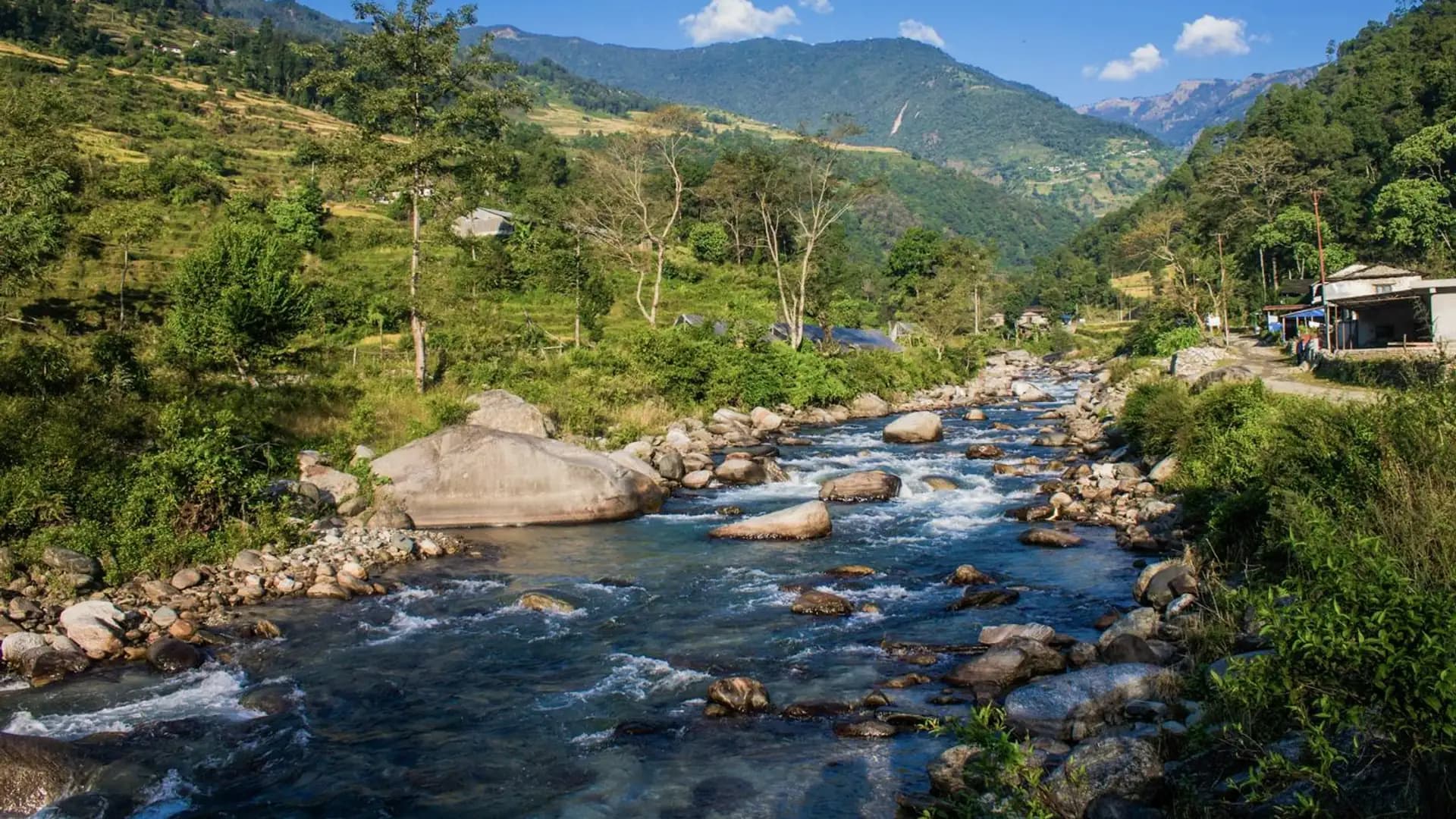
- Walking: 5–6 hours, about 8 km A stone staircase of more than 2,000 steps drops from Chhomrong to the Chhomrong Khola, then the trail climbs to Sinuwa (2,340 m) and enters the forest of the upper Modi Khola. You walk through rhododendron, oak and bamboo to the riverside lodges at Bamboo. Watch for langur monkeys.
- Walking: 6–7 hours, about 10 km You climb through Dovan (2,600 m), past a small shrine to the goddess Barahi, to Himalaya (2,920 m), then on past Hinku Cave to Deurali. The forest thins and the valley narrows. Walk slowly and drink plenty of water.
- Walking: 4–5 hours, about 6 km An early start takes you through the narrow gorge above Deurali before the sun warms the slopes. At the top, the valley opens at Machhapuchhre Base Camp, with the fishtail peak straight above you. A steady climb across open moraine then brings you to Annapurna Base Camp, with the south face of Annapurna I rising above the basin. Rest in the afternoon and stay up for sunset. If anyone has symptoms of altitude sickness, we stop at MBC and walk up to ABC for sunrise instead.
- Walking: 6–7 hours, about 14 km Be outside before dawn for the first light on Annapurna I. After breakfast, you descend through MBC, Deurali, Himalaya and Dovan to Bamboo, a drop of about 1,800 m. Trekking poles help.
- Walking: 5–6 hours, about 10 km. Drive: about 3 hours You climb back to Sinuwa and up the stairs to Chhomrong, then drop steeply to Jhinu Danda. A short walk below the village brings you to the natural hot springs beside the Modi Khola. After a soak, a jeep takes you back to Pokhara.
- Drive: 6–7 hours by tourist bus, or a 25-minute flight as an upgrade You return to Kathmandu. In the evening, we host a farewell dinner.
We drive you to the airport for your flight home, or help you plan more time in Nepal.
Elevation Profile
Altitude Variation Chart
What's Included
Included
- Pickup from your Kathmandu hotel on Day 1 and airport drop-off on Day 11
- Tourist bus Kathmandu–Pokhara–Kathmandu
- 2 nights in a hotel in Pokhara with breakfast
- 1 night in a hotel in Kathmandu with breakfast
- Private jeeps Pokhara–Ulleri and Jhinu Danda–Pokhara
- 7 nights in teahouse lodges on the trek
- Breakfast, lunch and dinner during the trek
- Farewell dinner in Kathmandu
- Licensed, English-speaking trekking guide
- Porter service (1 porter for every 2 trekkers)
- Wages, meals, accommodation and insurance for guide and porters
- Annapurna Conservation Area Permit (ACAP) and TIMS where required
- First aid kit and pulse oximeter checks
- All government taxes and service charges
Excluded
- International flights and Nepal visa fees
- Hotel nights in Kathmandu before Day 1
- Lunch and dinner in Pokhara and Kathmandu (except the farewell dinner)
- Travel insurance covering trekking to 5,000 m and helicopter evacuation
- Drinks, snacks, hot showers, Wi-Fi, battery charging, Poon Hill and hot springs entry
- Personal trekking gear and clothing
- Kathmandu–Pokhara flights (available as an upgrade)
- Extra nights and meals caused by weather, landslides or leaving the trek early
- Tips for guide, porter and driver
Packing List
Category | Items |
|---|---|
Clothing | Base layers (2 sets), fleece, down jacket, waterproof jacket and trousers, trekking trousers, warm hat, sun hat, buff, liner and warm gloves |
Footwear | Broken-in waterproof boots with ankle support, camp shoes or sandals, warm socks |
Sleeping | Sleeping bag rated to about −10 °C (can be rented in Kathmandu or Pokhara), sleeping bag liner |
Equipment | 25–35 litre daypack, duffel bag for the porter, trekking poles, headtorch, water bottles |
Health and hygiene | Personal medicines, blister kit, water purification tablets or filter, sunscreen (SPF 50), lip balm, hand sanitiser |
Documents and money | Passport, travel insurance details, passport photos, cash in Nepali rupees |
Extras | Swimwear and quick-dry towel for the hot springs, sunglasses, power bank, snacks |
For a full list, see our Annapurna Base Camp packing list.
Frequently Asked Questions
Eleven days from Kathmandu to Kathmandu, with eight days of walking.
Yes. The trails join at Tadapani and Chhomrong, so you can walk from Ghorepani and Poon Hill straight into the Annapurna Sanctuary without going back to Pokhara.
4,130 m (13,550 ft). Poon Hill is 3,210 m and Machhapuchhre Base Camp is 3,700 m.
Moderate to strenuous. The trail has long stone staircases and some 6–7 hour days, and you spend two nights above 3,000 m. No climbing skills are needed.
Yes, for fit beginners who train beforehand. The early climb to Poon Hill helps with acclimatization before the higher days.
Yes, on Day 7. You get the sunset and sunrise from base camp.
In October and November, the sky lightens around 5:45 a.m. We leave Ghorepani at about 5 a.m. for the 45-minute to one-hour climb.
Mild symptoms are common above 3,000 m. Serious altitude sickness is uncommon at these heights. We check your oxygen levels every evening, sleep at Deurali before base camp and stop at MBC or descend if needed.
The gorge between Deurali and MBC carries avalanche risk, mainly in winter and early spring. We check conditions every morning, cross early and turn back if it's unsafe.
Yes. Since April 2023, foreign trekkers in the Annapurna Conservation Area must trek with a licensed guide.
The Annapurna Conservation Area Permit (NPR 3,000), plus TIMS registration where it's required at the time. Both are included.
From US$850 per person for two or more people, including transport, hotels, permits, meals and lodges on the trek, a guide and a porter.
October and November for clear skies, and March to April for rhododendrons in bloom. Winter is cold and snow can close the gorge; the monsoon is wet and cloudy.
Simple teahouses with twin rooms and blankets. Ghorepani, Chhomrong and Jhinu have the best lodges; Deurali and ABC are basic.
Most lodges sell Wi-Fi, and mobile signal works in Ghorepani, Tadapani, Chhomrong and Jhinu. Coverage is patchy above Bamboo.
Yes. We can add a night in Ghandruk between Tadapani and Chhomrong, making the trek 12 days.
Between 4 and 7 hours. The longest days are Day 3 (Poon Hill to Tadapani), Day 6 to Deurali and Day 8 down to Bamboo.
Warm layers, a down jacket, a waterproof jacket, broken-in boots, a sleeping bag rated to about −10 °C, a headtorch, trekking poles and swimwear for the hot springs.
Yes. Your policy must cover trekking up to 5,000 m and helicopter evacuation.
At least 4–6 weeks ahead for October, November, March and April, as lodges at Ghorepani and ABC fill up.
Gallery & Video
Customer Reviews
Loading reviews...