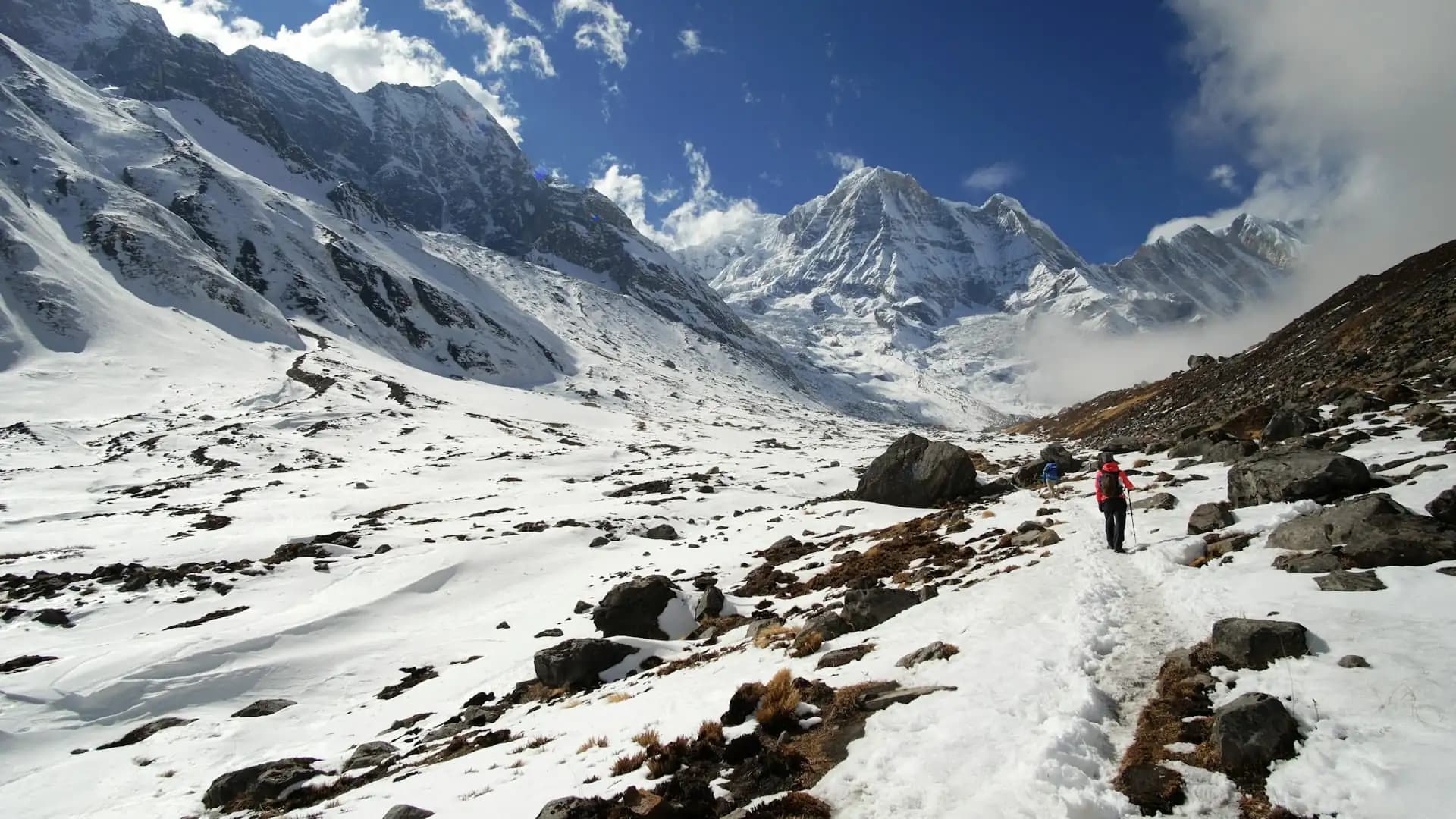
Annapurna Base Camp Trek Difficulty: Complete Guide
Introduction to Annapurna Base Camp Trek Difficulty
"How hard is it, really?" is the question almost every first-time trekker asks before booking the Annapurna Base Camp trek, and it's usually asked with a mix of hope and anxiety — hope that the answer is "very doable," anxiety that it might actually mean multiple days of suffering at altitude with a group of strangers watching. The honest answer sits in the middle, and it's more useful than either extreme: ABC is a genuinely moderate trek, hard enough to demand real preparation, but forgiving enough that it remains one of the most accessible multi-day Himalayan treks in Nepal.
That word "moderate" gets used so often in trekking marketing that it's lost most of its meaning, so this guide exists to actually define it — day by day, section by section, in terms of hours walked, elevation gained, stone steps climbed, and altitude reached, compared honestly against harder treks like Everest Base Camp and gentler treks like Poon Hill. Every figure below has been checked against current route data, because vague reassurance ("it's not that bad!") is exactly the kind of unhelpful non-answer this guide is trying to avoid.
If you're trying to decide whether ABC matches your current fitness, what kind of training actually helps, or which specific days on the itinerary will hurt the most, this is built to answer that directly.
The Short Answer
The Annapurna Base Camp trek is rated a moderate difficulty trek — harder than a casual walking holiday, but well short of technical mountaineering, and generally considered less demanding than Everest Base Camp or the Annapurna Circuit.
It's a non-technical route on established trails, requiring no ropes, no climbing equipment, and no prior mountaineering experience — but it does require genuine physical preparation, since the trek combines sustained daily walking, punishing stone-staircase sections, and real (though moderate) altitude exposure.
Factor | ABC Trek Reality |
|---|---|
Technical skill required | None — no ropes, ice axes, or climbing gear |
Physical fitness required | Moderate to good — regular walking fitness, not athletic performance |
Daily walking time | 5-7 hours on average |
Trek duration | 7-12 days typically (shorter and longer variants exist) |
Total distance | Roughly 70-110+ km round trip, depending on route variant |
Maximum altitude | 4,130m at Annapurna Base Camp |
Biggest physical challenge | Thousands of stone steps, not altitude or technical terrain |
Altitude sickness risk | Present but moderate — lower than Everest Base Camp or the Annapurna Circuit |
Nepal trekking grade | Grade 2 (Moderate) on the standard classification used by most agencies |
Suitable for first-timers? | Yes, with proper preparation — widely considered one of the best "first serious Himalayan trek" options |
Understanding Nepal's Trekking Difficulty Grades
Most Nepali trekking agencies and guiding organizations use a rough grading scale to classify treks by difficulty, which helps set expectations before committing to a route.
Grade | Description | Example treks |
|---|---|---|
Grade 1 (Easy) | Short duration, low altitude, gentle terrain | Short valley walks, Dhampus day hikes |
Grade 2 (Moderate) | Multi-day treks, moderate altitude, some steep sections, no technical skill | Annapurna Base Camp, Ghorepani Poon Hill (lower end), Mardi Himal |
Grade 3 (Moderate to Challenging) | Longer duration, higher altitude, sustained daily effort | Everest Base Camp, Annapurna Circuit |
Grade 4 (Challenging) | High passes, remote terrain, longer acclimatization needs | Manaslu Circuit, Nar Phu Valley |
Grade 5 (Strenuous/Technical) | Requires technical climbing skill, ropes, or mountaineering equipment | Peak climbing expeditions, technical mountaineering routes |
The Annapurna Base Camp trek sits firmly at Grade 2 (Moderate) on this scale — harder than a short scenic walk, but well below the technical or extreme-altitude categories that require specialized climbing skill or equipment.
What "Moderate" Actually Means on This Trek
Rather than leaving "moderate" as a vague marketing term, it's worth breaking down exactly what makes ABC moderately difficult rather than easy or extreme.
Why It's Not Easy
Sustained daily walking of 5-7 hours across 7-12 consecutive days
Total elevation gain of roughly 3,300 meters from the trailhead at Nayapul (1,070m) to base camp (4,130m)
Long sections of steep, uneven stone staircases that tax knees, quads, and balance far more than flat trail distance would suggest
Genuine, if moderate, altitude exposure above 3,000m and 4,000m, where thinner air affects stamina even for physically fit trekkers
Variable weather, particularly afternoon cloud buildup and the possibility of rain or snow depending on season
Cumulative fatigue — the challenge compounds over back-to-back walking days rather than resetting each morning
Why It's Not Extreme
No technical climbing, no ropes, no ice axes, no mountaineering skill required at any point
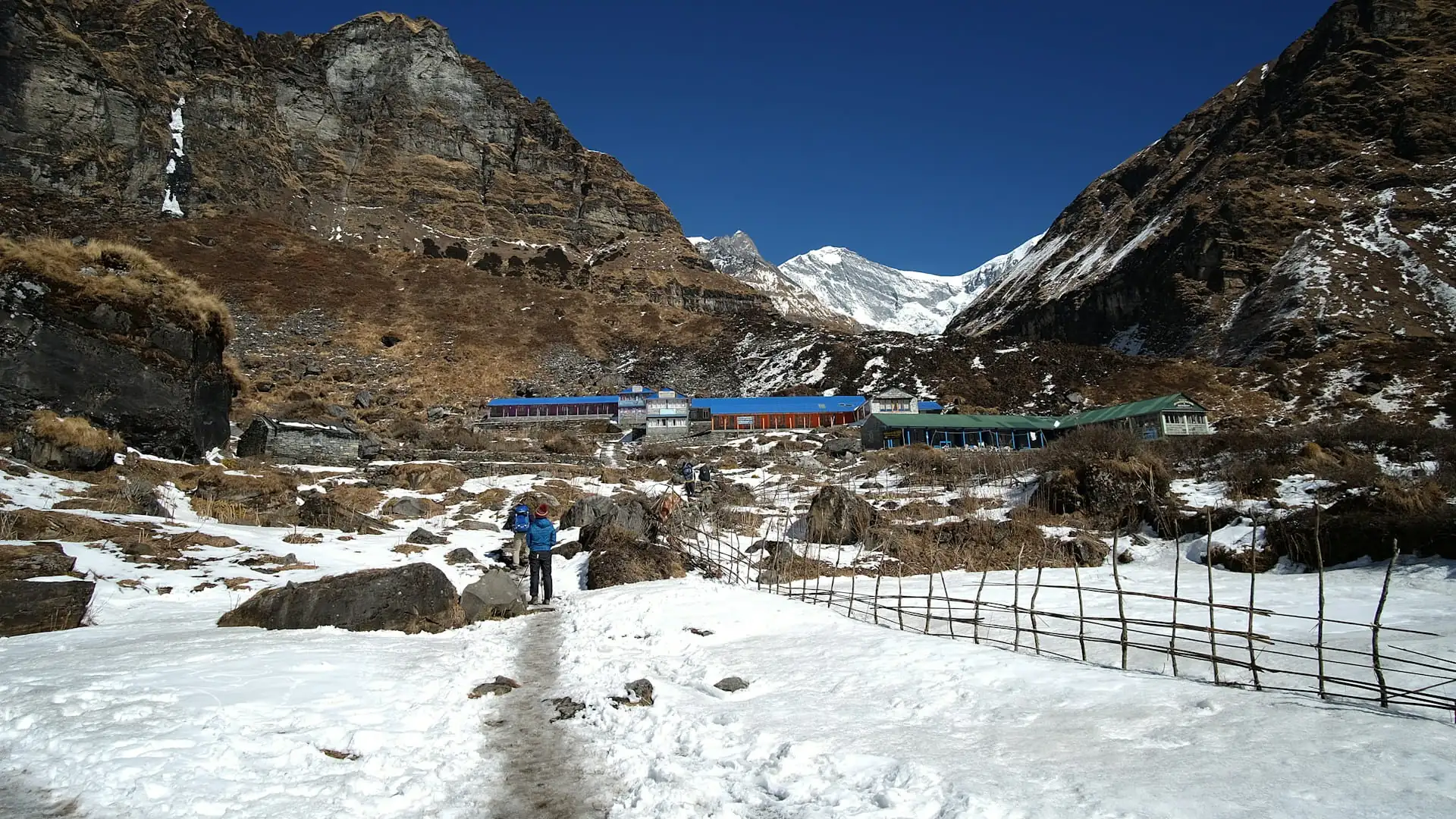
Well-established teahouse infrastructure along the entire route — hot meals, beds, and basic facilities every night, unlike remote camping treks
A maximum altitude of 4,130m, meaningfully lower than Everest Base Camp (5,364m) or the Annapurna Circuit's Thorong La pass (5,416m), which reduces (though doesn't eliminate) altitude sickness risk
A shorter overall duration than most comparable Himalayan treks, meaning less cumulative physical and mental strain than multi-week routes
Well-marked, heavily trekked trails with regular villages, meaning help, rest, and supplies are rarely far away
The Physical Demands, Broken Down
Daily Walking Hours and Distance
Across a standard itinerary, most days on the ABC trek involve 5-7 hours of actual walking, with total distance covered ranging from roughly 70 km (shorter, more direct itineraries) to around 110-120 km (itineraries that include the Poon Hill variant or additional acclimatization stops). This is sustained, moderate-paced walking rather than fast hiking — pace matters far more than raw speed on this route, both for enjoyment and for safety at altitude.
Elevation Gain and Loss
Total elevation gain from the trailhead at Nayapul (1,070m) to Annapurna Base Camp (4,130m) is roughly 3,300 meters — but the real physical toll comes from the fact that this isn't a smooth, continuous climb. The trail repeatedly descends into river valleys and climbs back out the other side, meaning the cumulative elevation gain and loss across the full route is significantly higher than the simple start-to-finish altitude difference would suggest.
A single day might involve descending 300 meters into a valley only to climb 400 meters back out the other side before lunch.
The Stone Staircases: The Real Physical Challenge
Ask experienced ABC guides what actually makes this trek hard, and the answer is rarely "the altitude" — it's the stairs. The trail includes long, sustained stretches of uneven stone steps built into the hillside, and these sections are consistently identified as the toughest physical test on the route, harder on the body than either the walking distance or the altitude alone.
Specific stair sections worth knowing about in advance:
Section | Challenge |
|---|---|
Tikhedhunga to Ulleri (or Nayapul route via Ulleri) | A famously steep, sustained stone staircase climbing well over 3,000 steps in a single push — widely cited as one of the toughest single sections on the entire route |
Chhomrong down to the river, then back up to Sinuwa | A steep descent followed immediately by an equally steep re-ascent, repeated multiple times on this route in both directions |
Ulleri to Ghorepani | Continued steep stone stair sections through forest, testing stamina after the initial Ulleri climb |
Various sections between Bamboo, Dovan, and Deurali | Frequent short, steep ascents and descents through narrow gorge terrain |
These stone staircases are why trekking poles, proper ankle-supporting boots, and pre-trip stair-climbing training (covered below) are consistently recommended above almost any other single piece of preparation advice for this trek.
Terrain Variety
Beyond the stairs, the trail surface itself changes considerably over the route — paved stone paths near villages, dirt forest trails, narrow gorge sections with exposed drops, and rockier, less-maintained terrain in the higher alpine zone near Deurali and the approach to Machhapuchhre Base Camp (MBC).
None of this is technical in a climbing sense, but uneven and variable terrain does demand consistent balance and sure-footedness, especially with a loaded daypack.
Altitude and Acute Mountain Sickness (AMS) Risk
How High Does ABC Actually Go?
Annapurna Base Camp sits at 4,130 meters — high enough to trigger genuine Acute Mountain Sickness symptoms in some trekkers, but meaningfully lower than several other popular Himalayan treks.
Trek | Maximum altitude |
|---|---|
Ghorepani Poon Hill | 3,210m |
Mardi Himal | 4,500m |
Annapurna Base Camp | 4,130m |
Everest Base Camp | 5,364m |
Annapurna Circuit (Thorong La Pass) | 5,416m |
Manaslu Circuit (Larke Pass) | 5,106m |
Because ABC's peak altitude is considerably lower than Everest Base Camp or the Annapurna Circuit, the statistical risk of severe altitude sickness is lower too — but "lower" doesn't mean "absent." Symptoms of AMS can begin to appear at Machhapuchhre Base Camp (MBC, roughly 3,700m) or at ABC itself, and beginners in particular can experience breathlessness and mild symptoms at these elevations even with reasonable fitness.
What AMS Feels Like
Common early symptoms include headache, mild nausea, dizziness, fatigue beyond what exertion alone would explain, and disturbed sleep. These are the body's normal response to reduced oxygen availability at altitude, not necessarily a sign of poor fitness — even very fit trekkers can experience AMS symptoms if they ascend too quickly.
Why ABC's Altitude Risk Is Lower, But Not Zero
The route's relatively gradual altitude profile compared to routes like Everest Base Camp or the Annapurna Circuit is the main reason ABC carries lower AMS risk. There isn't a single, isolated high-altitude push comparable to crossing Thorong La (5,416m) on the Circuit — instead, altitude increases more steadily across several days, giving the body more opportunity to adjust.
That said, AMS risk management still matters:
Ascend gradually and avoid rushing the final push from Deurali to MBC and ABC
Stay well hydrated throughout the trek
Recognize early symptoms and communicate them to your guide rather than pushing through
Descend if symptoms worsen — this is the only reliable treatment for progressing AMS
Discuss preventive medication (such as acetazolamide/Diamox) with a doctor before the trip if you have any history of altitude sensitivity
Physical Fitness: What You Actually Need
The Realistic Fitness Bar
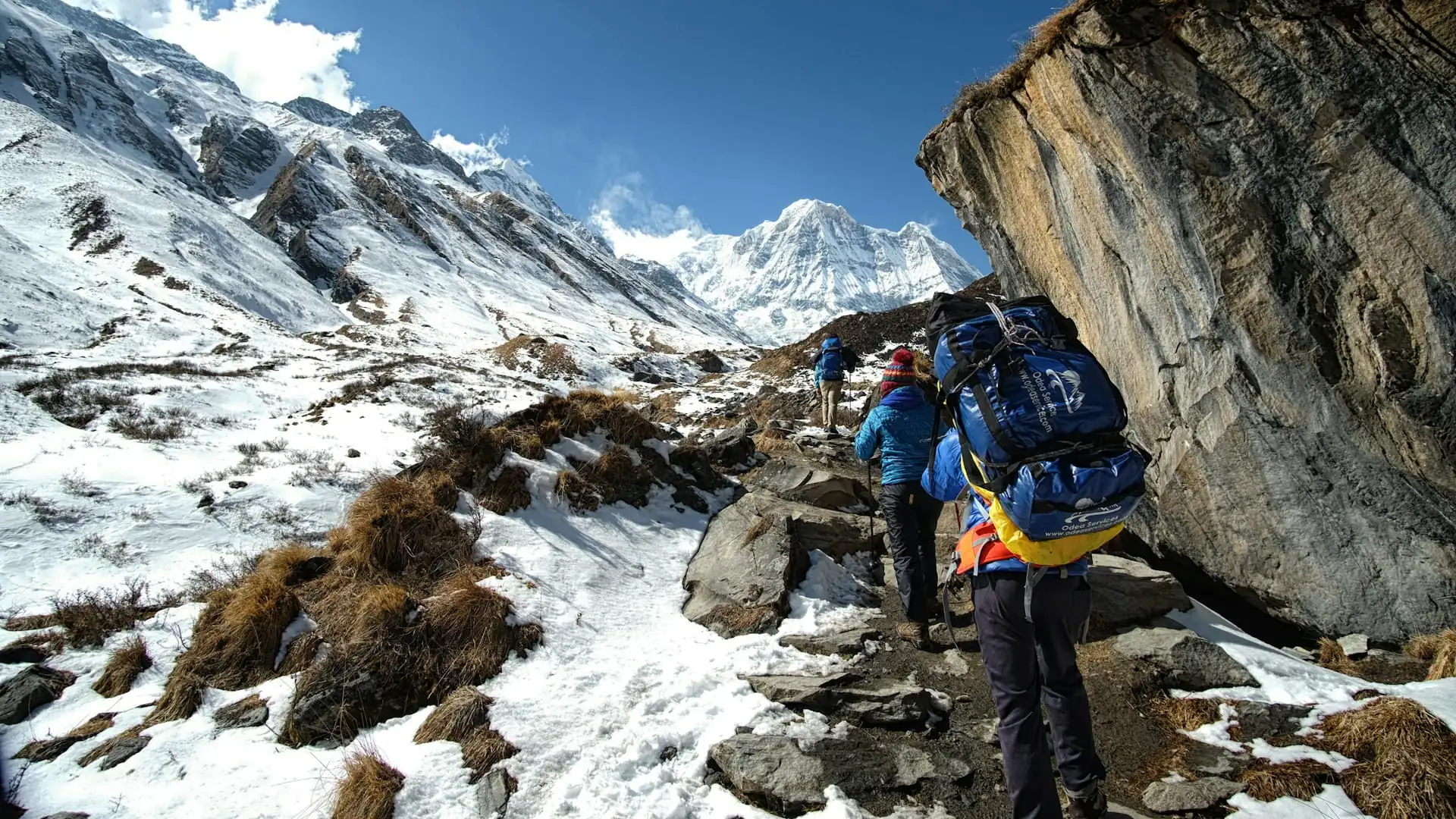
You do not need athletic-level fitness to complete the ABC trek. Most trekking guides describe the baseline fitness requirement as being able to comfortably walk several kilometers without stopping and climb a flight of stairs without excessive breathlessness — a bar that most reasonably active adults, including many with limited prior hiking experience, can meet with focused preparation.
Who Successfully Completes This Trek
First-time international trekkers with no prior Himalayan experience, provided they train adequately beforehand
Desk-job professionals who commit to a structured pre-trip training period, typically 6-8 weeks
Older trekkers and families with reasonably fit teenagers, given the trek's non-technical nature and well-developed teahouse infrastructure
Experienced hikers using ABC as either a standalone goal or a stepping stone toward harder Himalayan objectives
Who Should Prepare More Carefully
Trekkers with no regular exercise habit in the months before departure
Anyone with a history of altitude sickness on previous high-elevation trips
Trekkers with pre-existing knee, hip, or joint issues, given the trek's heavy reliance on stone staircases in both directions
Anyone planning a compressed, faster-paced itinerary (5-6 days) rather than the more common 7-12 day version, since a faster pace reduces natural acclimatization time
Training Recommendations Before the Trek
Timeline
Most guides recommend a 6-8 week structured preparation period before departure, longer if you're starting from a low baseline fitness level.
What to Train
Training focus | Why it matters for ABC specifically | Suggested approach |
|---|---|---|
Cardiovascular endurance | Sustains 5-7 hours of daily walking over consecutive days | Regular walking, hiking, running, cycling, or swimming, 3-4x per week |
Stair-climbing capacity | Directly prepares for the trek's signature stone-staircase sections | Stair machine training, repeated stair climbs, or hill repeats with elevation gain |
Leg strength (quads, calves, glutes) | Reduces injury risk and muscle soreness from repeated steep ascents/descents | Squats, lunges, step-ups, calf raises |
Load-bearing walking | Simulates carrying a daypack over multi-hour walks | Practice hikes wearing the daypack you'll bring, gradually increasing distance |
Balance and ankle stability | Uneven stone and dirt trail surfaces reward stability | Single-leg balance exercises, uneven-terrain walks |
Long-duration walks | Builds the specific stamina needed for consecutive long days | Progressively longer weekend hikes in the weeks before departure |
A Simple Fitness Benchmark
A commonly cited practical benchmark: if you can comfortably walk 5 kilometers without stopping and climb several flights of stairs without significant breathlessness, you're at a reasonable starting fitness level for ABC with proper pre-trip training layered on top.
Day-by-Day Difficulty Breakdown
Understanding which specific days are hardest helps with both mental preparation and pacing decisions. Here's how a standard 10-12 day itinerary breaks down by relative physical demand.
Day | Route segment | Walking time | Relative difficulty | Why |
|---|---|---|---|---|
1 | Nayapul → Ghandruk | 6-7 hrs | Moderate | Longest first day, steady climb, adjusting to trail rhythm |
2 | Ghandruk → Chhomrong | 5-6 hrs | Moderate | Descend-then-climb pattern begins |
3 | Chhomrong → Sinuwa | 4-5 hrs | Moderate-High | Steep descent to river, equally steep re-ascent |
4 | Sinuwa → Bamboo → Dovan → Deurali | 6-7 hrs | High | Longest sustained climbing day, entering alpine zone |
5 | Deurali → MBC → ABC | 4-5 hrs | Moderate-High (altitude) | Shorter distance but altitude effects become noticeable |
6 | ABC → descend to Bamboo/Dovan | 6-7 hrs | High (on knees) | Steep, sustained descent — harder on joints than the climb up |
7 | Descend to Jhinu Danda | 5-6 hrs | Moderate | Continued descent, reward of hot springs at the end |
8 | Jhinu Danda → Nayapul → drive to Pokhara | 4-5 hrs + drive | Low-Moderate | Final descent to trailhead |
If the itinerary includes the Poon Hill variant, add the notoriously steep Tikhedhunga-to-Ulleri staircase section early in the trek — widely considered one of the single hardest stretches on the entire route, regardless of overall trek difficulty.
How ABC Compares to Other Popular Treks
ABC vs. Everest Base Camp (EBC)
This is the single most common difficulty comparison trekkers search for, and the general consensus among experienced guides is consistent: EBC is harder than ABC, for several compounding reasons.
Factor | Annapurna Base Camp | Everest Base Camp |
|---|---|---|
Maximum altitude | 4,130m | 5,364m |
Typical duration | 7-12 days | 12-16 days |
Total distance | ~70-120 km | Generally longer overall trekking distance |
Daily walking hours | 5-7 hours | Similar, 5-7 hours |
Altitude sickness risk | Moderate | Higher, due to greater elevation |
Access | Drivable to/from Pokhara, no mandatory flight | Requires a flight to/from Lukla (weather-dependent, occasionally delayed) |
Signature physical challenge | Stone staircases (Ulleri, Chhomrong-Sinuwa) | Sustained high-altitude exposure over a longer period |
Cost | Generally lower | Generally higher, partly due to the Lukla flight and longer duration |
Best suited for | First-time Himalayan trekkers, those with limited time | Trekkers wanting the Everest region specifically, or with prior high-altitude experience |
The core takeaway most guides offer: ABC is easier, shorter, and generally more affordable than EBC, and is frequently recommended as the better choice for first-time trekkers or as a preparatory trek before attempting EBC or higher.
ABC vs. Annapurna Circuit
The Annapurna Circuit is longer, reaches a higher maximum altitude (5,416m at Thorong La Pass versus 4,130m for ABC), and involves a genuinely demanding single-day high-pass crossing that has no equivalent on the ABC route. The Circuit is generally considered more physically and logistically demanding overall, though it doesn't have ABC's concentrated stone-staircase sections in quite the same way.
ABC vs. Ghorepani Poon Hill
Poon Hill is shorter (typically 4-6 days), reaches a lower maximum altitude (3,210m), and is widely regarded as an easier, more beginner-friendly trek than ABC — often recommended as a good first taste of Himalayan trekking for those unsure whether they're ready for a longer or higher route.
ABC vs. Mardi Himal
Mardi Himal reaches a higher maximum altitude (4,500m) than ABC but generally involves a shorter total trek duration (4-7 days) and less-developed teahouse infrastructure in its upper sections, making it comparably difficult overall but in a different way — more remote and quieter, with a steeper final push to base camp.
ABC vs. Manaslu Circuit
The Manaslu Circuit, crossing the Larke Pass at 5,106m, is considered considerably more demanding than ABC — longer duration, higher altitude, and a restricted-area trek requiring more remote logistics and, in most cases, a longer acclimatization schedule.
Difficulty Comparison Table: ABC Against Nepal's Major Treks
Trek | Max altitude | Typical duration | Relative difficulty |
|---|---|---|---|
Ghorepani Poon Hill | 3,210m | 4-6 days | Easy-Moderate |
Annapurna Base Camp | 4,130m | 7-12 days | Moderate |
Mardi Himal | 4,500m | 4-7 days | Moderate |
Manaslu Circuit | 5,106m | 14-18 days | Challenging |
Everest Base Camp | 5,364m | 12-16 days | Moderate-Challenging |
Annapurna Circuit | 5,416m | 12-18 days | Challenging |
Nar Phu Valley | 5,322m (Kang La Pass) | 12-16 days | Challenging |
Age and Experience Considerations
Is ABC Suitable for Beginners?
Yes — it's frequently cited by guides and agencies as one of the best "first serious Himalayan trek" options precisely because it combines genuine mountain scenery and a real physical challenge with manageable duration, moderate altitude, and dependable teahouse infrastructure throughout.
Is ABC Suitable for Older Trekkers?
Many trekkers in their 50s, 60s, and beyond complete the ABC trek successfully every season. Age itself isn't the limiting factor — general cardiovascular fitness, joint health (given the stair-heavy terrain), and a realistic, unhurried pace matter far more than age alone. Guides commonly recommend older trekkers build in extra rest days and consider a slightly longer itinerary to reduce daily exertion.
Is ABC Suitable for Children?
Families do complete this trek with children, particularly older children and teenagers with reasonable fitness and hiking experience. The lack of technical climbing and the presence of teahouses throughout make it more family-friendly than higher-altitude or more remote routes, though the stone-staircase sections and multi-day cumulative walking still represent a genuine physical challenge for a child, and pacing should be adjusted accordingly.
Seasonal Factors That Affect Difficulty
Difficulty isn't fixed — it shifts meaningfully depending on when you trek.
Season | Effect on difficulty |
|---|---|
Spring (March-May) | Generally favorable; warmer temperatures ease the physical load, though afternoon haze can reduce visibility later in the day |
Autumn (September-November) | Considered the most favorable season overall — stable weather and clear trail conditions reduce weather-related difficulty |
Winter (December-February) | Increases difficulty — cold temperatures, potential snow on the upper trail sections (particularly Deurali to ABC), and shorter daylight hours |
Monsoon (June-August) — trekking during monsoon is possible but considerably harder due to rain, muddy trails, leeches, cloud cover, and possible landslides; not recommended for beginners | Significantly increases difficulty and reduces safety margin |
Winter trekking specifically can require additional gear (microspikes, warmer sleeping bags) and adds a layer of physical difficulty beyond what the trek presents in peak seasons — a detail worth weighing carefully if you're already concerned about fitness level, since combining a challenging season with limited preparation compounds difficulty rather than simply adding to it.
Practical Strategies That Reduce Difficulty
None of these change the trek's fundamental profile, but each meaningfully reduces how hard it feels day to day.
Choose a longer itinerary over a shorter one. A 10-12 day version spreads the same elevation gain over more days, reducing daily exertion and improving natural acclimatization compared to a compressed 6-7 day version.
Use trekking poles. Particularly valuable on the trek's many steep descents, where knee strain — not cardiovascular fatigue — is often the limiting factor.
Hire a guide and porter. A porter carrying your main pack (standard practice on guided treks, including those arranged through Adventure Life Nepal) significantly reduces the physical load you personally carry, letting you focus energy on the walking itself rather than a heavy daypack.
Pace deliberately, especially uphill. A slow, steady pace that avoids heavy breathlessness is more sustainable over multiple consecutive days than pushing hard and needing longer recovery breaks.
Stay hydrated and eat consistently. Both directly affect stamina and altitude tolerance; dehydration and inconsistent eating make every physical challenge on this list harder than it needs to be.
Don't skip acclimatization awareness even on a route with a lower peak altitude. Just because ABC's maximum altitude is lower than EBC's doesn't mean altitude can be ignored — a steady pace above 3,000m remains genuinely important.
Train specifically for stairs, not just general cardio. Given that the staircases are consistently identified as the trek's toughest single element, stair-specific training delivers a disproportionate benefit relative to general fitness training alone.
Signs You Might Be Underprepared
Recognizing these signals honestly, ideally before departure, helps avoid an uncomfortable trek or a forced early turnaround:
Regular breathlessness climbing a single flight of stairs at home
No regular walking or cardio habit in the 2-3 months before departure
A history of significant altitude sickness on previous high-elevation trips without any preparation this time
Existing knee, hip, or ankle issues that flare up on downhill walking, given how stair-and-descent-heavy this route is
Planning a compressed 5-6 day itinerary specifically to save time or money, which reduces both acclimatization buffer and rest opportunity
None of these are automatic disqualifiers — they're simply signals that extra preparation time, a longer itinerary, or a conversation with your trekking operator about pacing is worth prioritizing before departure.
Why Guide and Route Choice Affects Perceived Difficulty
Two trekkers of similar fitness can have very different experiences of "how hard" ABC felt, and a meaningful part of that difference comes down to pacing, itinerary design, and guide support rather than fitness alone.
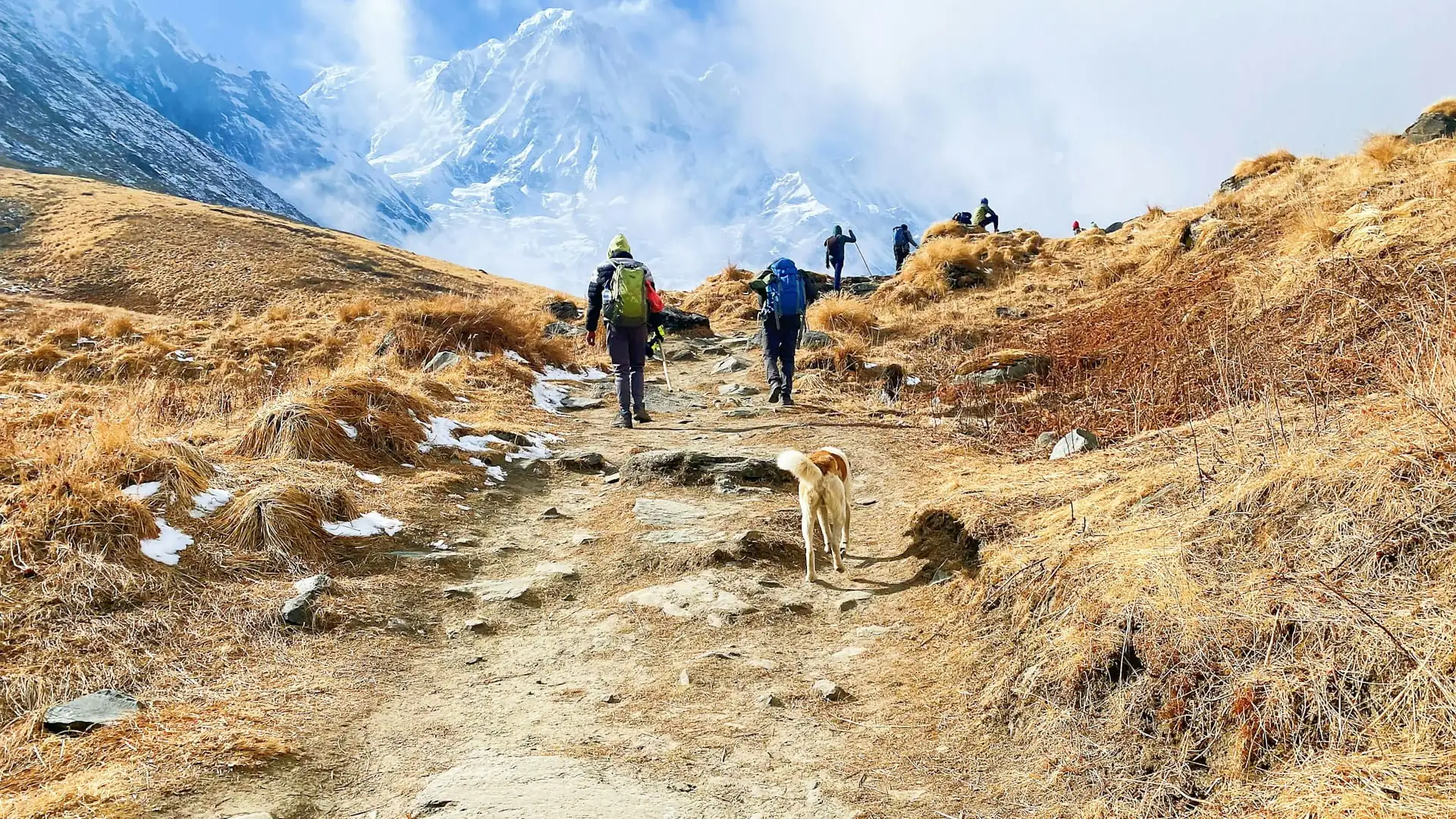
Itinerary pacing. An itinerary built with sensible daily distances and appropriate acclimatization stops feels considerably easier than a compressed version covering the same total distance in fewer days.
Guide experience. An experienced local guide reads a group's pace, adjusts rest stops, and recognizes early fatigue or AMS symptoms before they become serious — all of which meaningfully affects how manageable the trek feels in practice.
Porter support. Carrying only a light daypack rather than a full multi-day pack changes the physical experience of every uphill and downhill section significantly.
Group size and pace matching. A group trekking at a mismatched pace (too fast for some members) can turn a moderate trek into a genuinely exhausting one for those pushed beyond a comfortable rhythm — this is one of the advantages of working with an operator who tailors pacing to the specific group.
This is where working with an experienced, locally based operator like Adventure Life Nepal meaningfully changes the difficulty experience — not by changing the trail itself, but by building an itinerary, pace, and support structure (guide, porter, rest-day placement) that matches your actual fitness level rather than a generic template.
Frequently Asked Questions about Annapurna Base Camp Trek Difficulty
1. Is the Annapurna Base Camp trek difficult for beginners?
It's rated moderate difficulty and is widely considered one of the best first serious Himalayan treks for beginners, provided reasonable pre-trip fitness preparation (typically 6-8 weeks) is done beforehand.
2. What is the hardest part of the ABC trek?
Most guides and experienced trekkers point to the extensive stone staircase sections — particularly the Tikhedhunga-to-Ulleri climb and the repeated steep descent/ascent pattern between Chhomrong and Sinuwa — as the toughest physical element, harder in practice than either the altitude or the total distance.
3. Do I need prior trekking experience for Annapurna Base Camp?
No. ABC is a non-technical trek suitable for first-timers with adequate physical preparation; no prior high-altitude or technical trekking experience is required.
4. Is Annapurna Base Camp harder or easier than Everest Base Camp?
Generally considered easier. ABC reaches a lower maximum altitude (4,130m vs. 5,364m), is typically shorter in duration (7-12 days vs. 12-16 days), and doesn't require a mountain flight, making it more accessible for first-time high-altitude trekkers.
5. How many hours do you walk per day on the ABC trek?
Most days involve 5-7 hours of actual walking time, spread across 7-12 days depending on the specific itinerary chosen.
6. Can I do the ABC trek without any training?
It's possible for very fit individuals, but it's not recommended. Most guides suggest at least 6-8 weeks of structured cardiovascular and stair-specific training before departure to make the trek meaningfully more comfortable and reduce injury risk.
7. Is altitude sickness a real risk on this trek?
Yes, though the risk is lower than on higher treks like Everest Base Camp or the Annapurna Circuit. Symptoms can appear at Machhapuchhre Base Camp (3,700m) or Annapurna Base Camp itself (4,130m), and a steady, gradual pace remains important even given the trek's relatively moderate peak altitude.
8. What fitness level do I need for Annapurna Base Camp?
A practical benchmark commonly cited by guides: comfortably walking 5 kilometers without stopping and climbing multiple flights of stairs without significant breathlessness. Most reasonably active adults can reach this level with focused preparation.
9. Is the ABC trek suitable for older adults?
Yes, many trekkers in their 50s, 60s, and beyond complete it successfully each season, typically by choosing a longer itinerary, prioritizing joint-friendly pacing, and building in extra rest days.
10. Does hiring a porter make the trek significantly easier?
Yes. Carrying only a light daypack rather than a full multi-day pack meaningfully reduces physical strain on both the ascents and, particularly, the knee-heavy descents.
11. Which season makes the ABC trek easiest?
Autumn (September-November) is generally considered the most favorable season, offering the most stable weather and best trail conditions, which reduces weather-related difficulty compared to winter's cold and snow or monsoon's rain and mud.
12. How does trek duration affect perceived difficulty?
A longer itinerary (10-12 days) spreads the same total elevation gain over more days, reducing daily exertion and improving natural acclimatization compared to a compressed 6-7 day version — meaning duration choice directly affects how hard the trek actually feels.
Final Thoughts on Annapurna Base Camp Trek Difficulty
The Annapurna Base Camp trek earns its "moderate" rating honestly — it's genuinely more demanding than a scenic day hike, built around thousands of stone steps and a real (if manageable) altitude challenge, and it rewards trekkers who train specifically for its terrain rather than assuming general fitness will be enough.
But it's also, by design, one of the most achievable multi-day Himalayan treks available: no technical skill required, dependable teahouse infrastructure the entire way, a lower peak altitude than most comparable routes, and a difficulty level that responds well to sensible preparation, the right pace, and good support on the trail.
Train for the stairs, respect the altitude even though it's lower than Everest, and the trek that remains is exactly what most people are actually looking for — hard enough to feel like a real accomplishment, forgiving enough to be within reach.