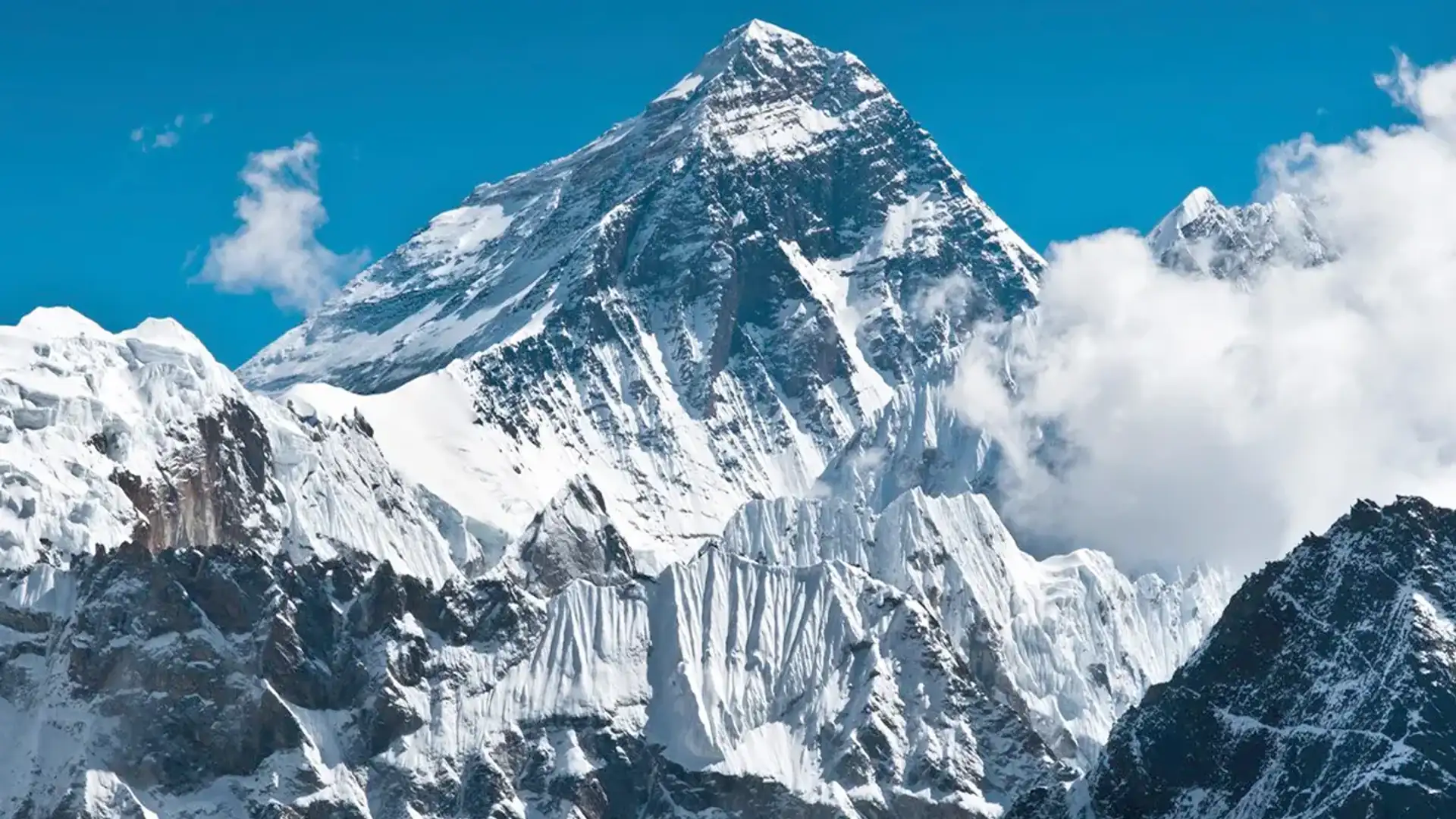
Everest Base Camp with Gokyo Lakes Trek – 17 Days
Trip Duration: 17 Days
Trip Grade: Strenuous
Group Size: 12
Meals: Breakfast in Kathmandu; all meals on the trek
Best Season: Late September–November, April–May
Start Point: Kathmandu
Accomodation: Hotel in Kathmandu, teahouse lodges on the trek
Ending Point: Kathmandu
Max Altitude: 5,545 m (Kala Patthar)
Transportation: Flights to/from Lukla (via Ramechhap in peak season), private vehicle
Permits Required: Sagarmatha National Park, Khumbu Pasang Lhamu Rural Municipality
Overview
The Everest Base Camp with Gokyo Lakes Trek combines the two best valleys of the Khumbu in a single journey. You walk up the quieter Gokyo valley to a chain of turquoise glacier lakes, climb Gokyo Ri (5,357 m) for one of the finest views of Everest anywhere, cross the glaciated Cho La pass (5,420 m) into the main Khumbu valley, and finish at Everest Base Camp and Kala Patthar.
It's a step up from the classic Everest Base Camp trek. You spend more days above 4,500 m, cross a real pass with a short glacier section, and walk through country that sees a fraction of the crowds on the main trail. In return, you get two different sides of Everest, four 8,000 m peaks from Gokyo Ri, and the satisfaction of a route that loops rather than retracing your steps. This page sets out the itinerary day by day, the safer acclimatization schedule we use, what the Cho La crossing is really like, and what the trek costs.
Trip at a Glance
Detail | Information |
|---|---|
Duration | 17 days Kathmandu to Kathmandu (14 trekking days) |
Trek start and end | Lukla (2,860 m) |
Highest point | Kala Patthar, 5,545 m / 18,192 ft |
Other high points | Cho La 5,420 m, Gokyo Ri 5,357 m, Everest Base Camp 5,364 m |
Total walking distance | About 150–160 km |
Daily walking | 4–9 hours |
Difficulty | Strenuous (a glaciated pass and many days above 4,500 m) |
Accommodation | Hotel in Kathmandu, teahouse lodges on the trek |
Meals | Breakfast in Kathmandu; breakfast, lunch and dinner on the trek |
Permits | Sagarmatha National Park, Khumbu Pasang Lhamu Rural Municipality |
Best months | Late September–November and April–May |
Group size | 1–12 |
Price | From US$1,800 per person |
Why This 17-Day Itinerary?
Many itineraries for this trek go from Namche Bazaar (3,440 m) to Phortse Thanga (3,680 m) and then straight to Machhermo (4,470 m), a jump of almost 800 m in sleeping altitude in one night. We think that's too fast. Our route goes through Dole (4,040 m) instead, keeping each night's gain to about 400–600 m above Namche.
The other choices behind the itinerary:
Gokyo first, then Everest Base Camp. Going this way, you're well acclimatized by the time you cross the Cho La and reach the highest points of the trek. It's also the easier direction for the pass.
A full day at Gokyo to climb Gokyo Ri and explore the lakes.
Thangnak before the pass. Sleeping at Thangnak (4,700 m), the foot of the Cho La, shortens the crossing day.
Kala Patthar at sunrise, then a descent to Pheriche to sleep lower.
Other options:
Want only Everest Base Camp? See our Everest Base Camp Trek, 14 days.
Want all three passes? Try the Everest Three High Pass Trek.
Prefer to fly out from base camp? See the EBC Trek with Helicopter Return.
The Gokyo Lakes and Gokyo Ri
The Gokyo Lakes are a chain of glacial lakes at 4,700–5,000 m on the western side of the Ngozumpa Glacier. There are six main lakes, and they're among the highest freshwater lake systems in the world. In September 2007, the lakes and their wetlands were designated a Ramsar site, a wetland of international importance.
Lake | Notes |
|---|---|
Longpongo (first lake) | The smallest, passed on the way up from Machhermo |
Taboche Tsho (second lake) | Just below Gokyo, with views of Taboche peak |
Dudh Pokhari (third lake) | The main lake, with Gokyo village on its shore |
Thonak Tsho (fourth lake) | The largest, about an hour's walk north of Gokyo |
Ngozumpa Tsho (fifth lake) | Below Cho Oyu, with the "Scoundrel's Viewpoint" above |
Gyazumpa Tsho (sixth lake) | The most remote, near the head of the valley |
The lakes are sacred to both Hindus and Buddhists. During the Janai Purnima full moon in August, pilgrims come to bathe in the lakes.
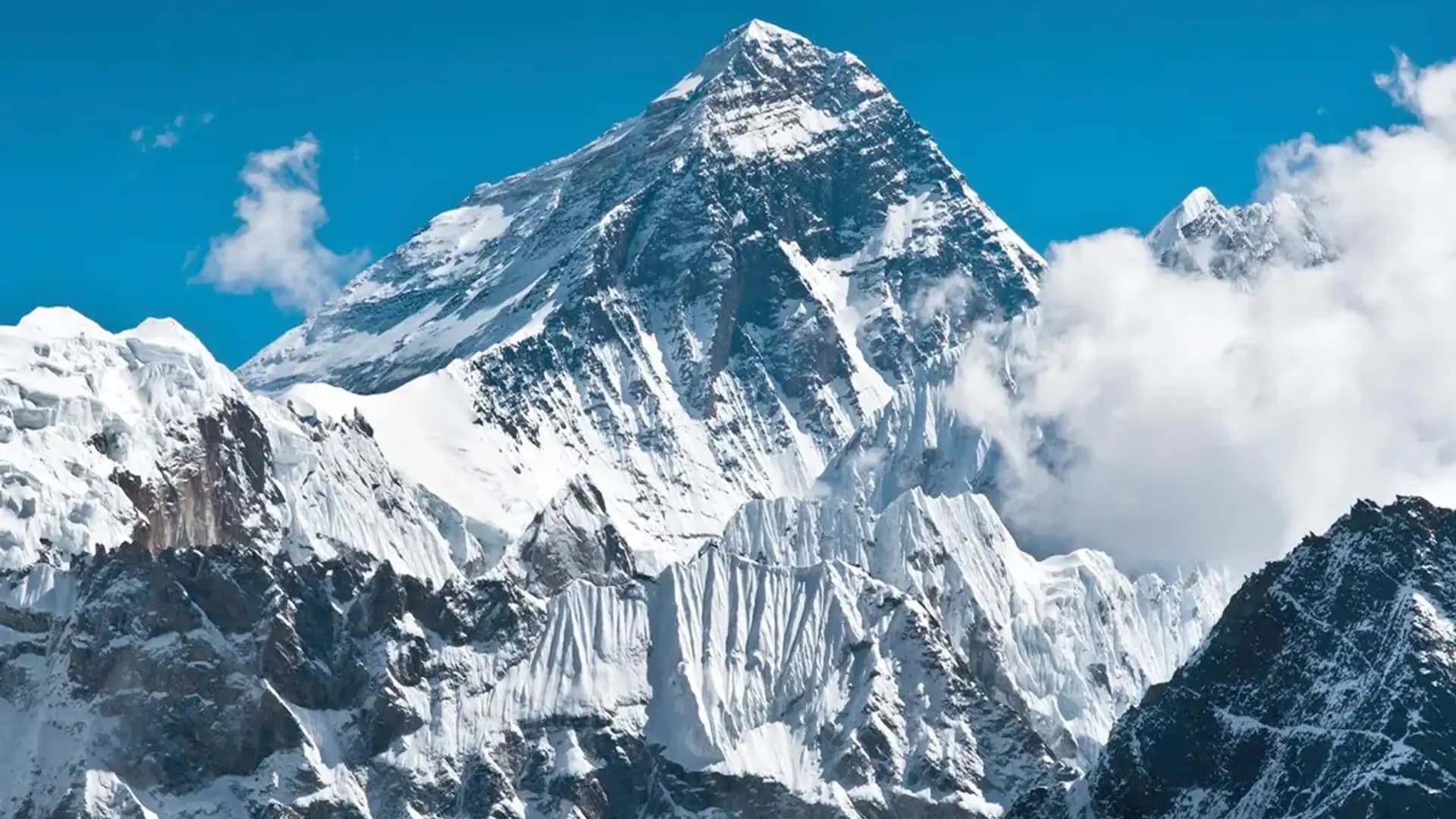
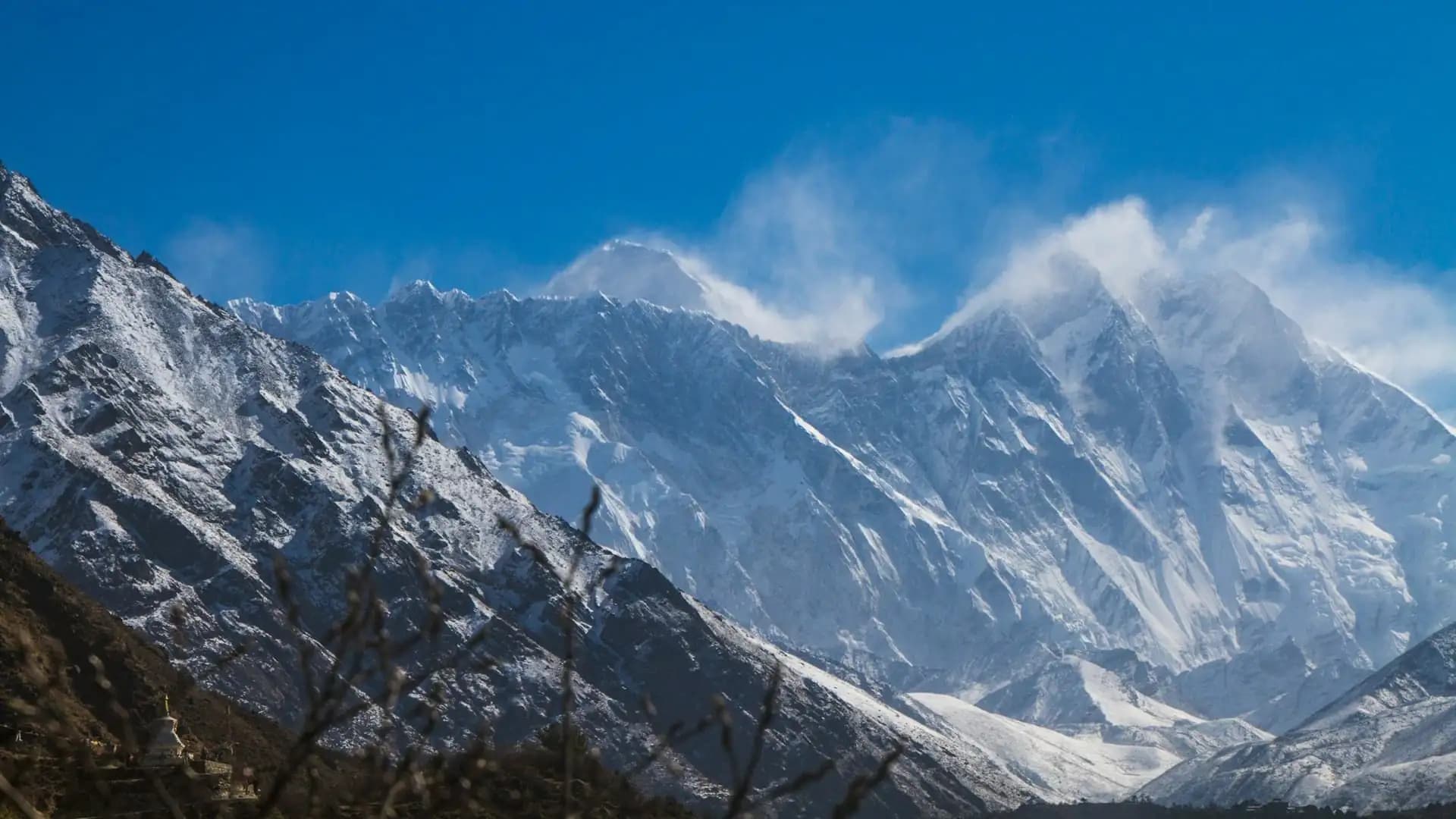
Gokyo Ri (5,357 m) rises above the third lake. The climb is steep but non-technical, and from the summit you see four 8,000 m peaks: Everest (8,849 m), Lhotse (8,516 m), Makalu (8,485 m) and Cho Oyu (8,188 m). Many trekkers think it's a better viewpoint than Kala Patthar, because you see Everest across a wider sweep of mountains and glaciers.
A Day in Gokyo
Gokyo is a cluster of stone lodges on the eastern shore of the third lake, with the moraine wall of the Ngozumpa Glacier rising behind it. Most trekkers spend two nights here, and it's worth slowing down.
Mornings start in the dark for Gokyo Ri, with breakfast back at the lodge by 8 or 9 a.m. The middle of the day is the warmest time: sit by the lake, walk to the moraine to watch the glacier, or wander north to the fourth lake. Afternoons often bring cloud up the valley, and the lodge dining rooms fill with trekkers swapping stories around the stove.
Gokyo's lodges are among the better ones in the upper Khumbu, with glass-fronted dining rooms facing the lake, bakeries and Wi-Fi. Rooms are still unheated and cold at night, so a good sleeping bag matters.
The Cho La Pass
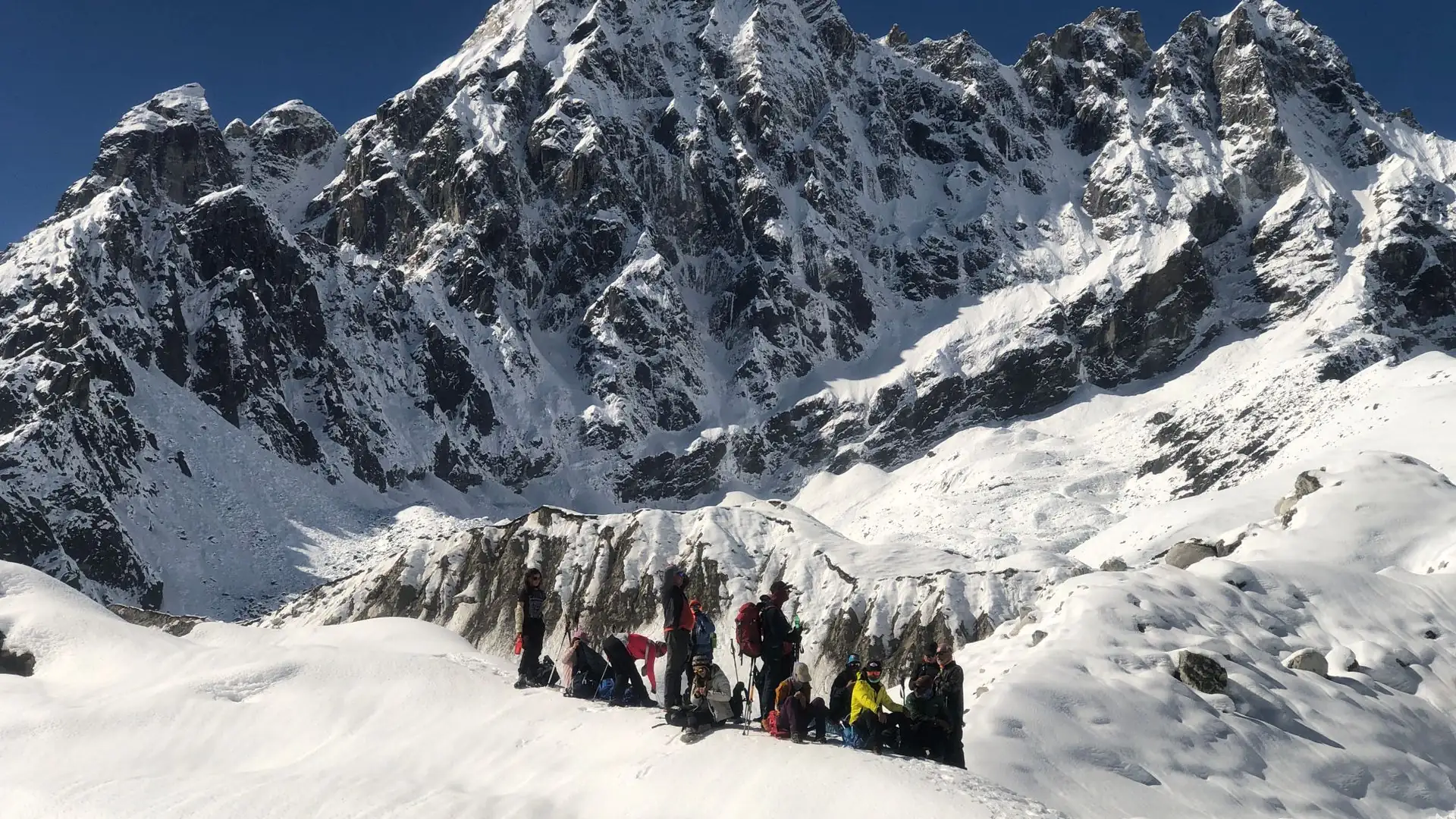
The Cho La (5,420 m) is what turns this trek into a loop, and it's the part that most needs respect.
What it's like. From Thangnak, the trail climbs a rocky valley, then steepens into a boulder field below the pass. Near the top, you cross a short, gently sloping glacier, usually 30–60 minutes long. In good conditions it's a walk on hard snow, but in the early morning, and after fresh snow, it can be icy. The descent on the eastern side is steep and rocky, with loose stones.
Equipment. You don't need ropes or climbing skills. Microspikes or light crampons are useful and are often needed from November to April; your guide will advise and can arrange them. Trekking poles help on the descent.
When it's not safe. Heavy snow can close the pass, especially from December to March. If the guide decides it's unsafe, we reroute via Phortse and Pangboche to reach the Everest Base Camp trail, which adds a day but avoids the pass.
The Ngozumpa Glacier
Between Gokyo and the Cho La lies the Ngozumpa Glacier, which flows south from Cho Oyu for about 36 km, making it the longest glacier in Nepal. Most of its surface is covered in grey rubble and rock, with pools of meltwater and ice cliffs that collapse with a roar on warm afternoons.
From the moraine above Gokyo, you look straight down onto it, and on Day 9 you cross it on a marked path to Thangnak. The route changes a little each year as the ice moves, and your guide will follow the current line. Scientists study the glacier closely, because its meltwater lakes are growing, and its retreat is one of the clearest signs of climate change in the Khumbu.
Wildlife is easier to see in the quiet Gokyo valley than on the main trail. Look for Himalayan tahr on the cliffs, pika among the rocks, and the danphe (Himalayan monal), Nepal's national bird, on the slopes below Dole. Snow leopards live in the area too, though sightings are very rare.
EBC with Gokyo vs Other Everest Treks
Trek | Days | Passes | Difficulty | Best for |
|---|---|---|---|---|
Everest Base Camp | 14 | None | Strenuous | First trip to the Khumbu |
EBC with Gokyo Lakes (this trek) | 17 | Cho La | Strenuous | Two valleys, two big viewpoints, fewer crowds |
Everest Three High Pass | 18 | Kongma La, Cho La, Renjo La | Difficult | Experienced trekkers who want the full circuit |
EBC Trek with Helicopter Return | 12 | None | Strenuous | Less time, no long walk out |
Luxury Everest Base Camp | 16 | None | Strenuous | Better lodges and slower pace |
If you've trekked at altitude before and want more than the classic route, this is the trek we recommend most often. It adds the Gokyo valley's lakes and quieter trails, and the Cho La, without the extra length and difficulty of all three passes.
Mountains You'll See
Peak | Height | Where you see it |
|---|---|---|
Everest | 8,849 m | Gokyo Ri, Kala Patthar, Namche hill |
Lhotse | 8,516 m | Gokyo Ri, Tengboche, Dingboche |
Makalu | 8,485 m | Gokyo Ri |
Cho Oyu | 8,188 m | Gokyo and the upper lakes |
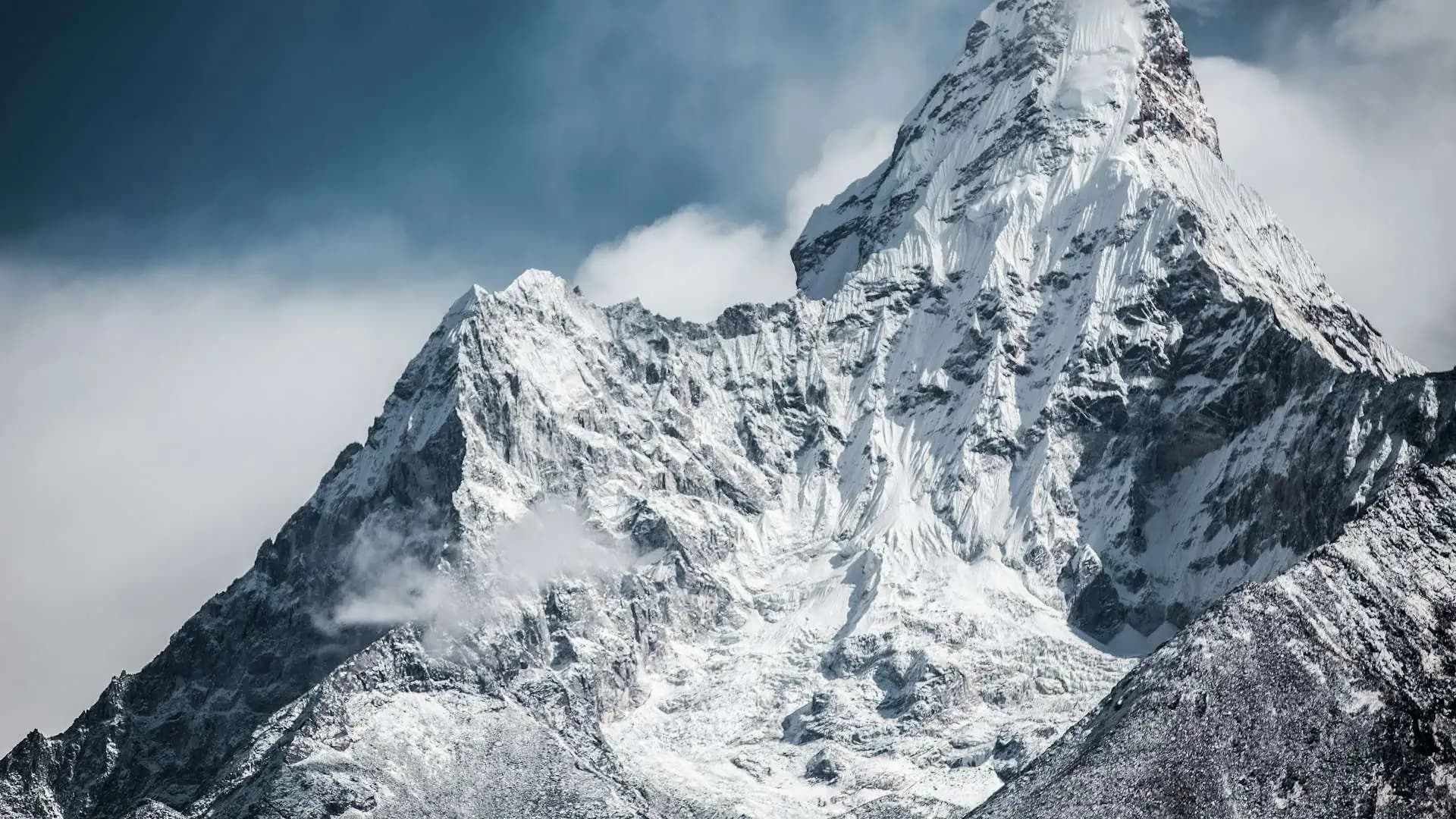
Ama Dablam | 6,812 m | Namche, Mong La, Tengboche, Cho La |
Cholatse | 6,440 m | The Cho La and Dzongla |
Taboche | 6,495 m | Gokyo valley and Dzongla |
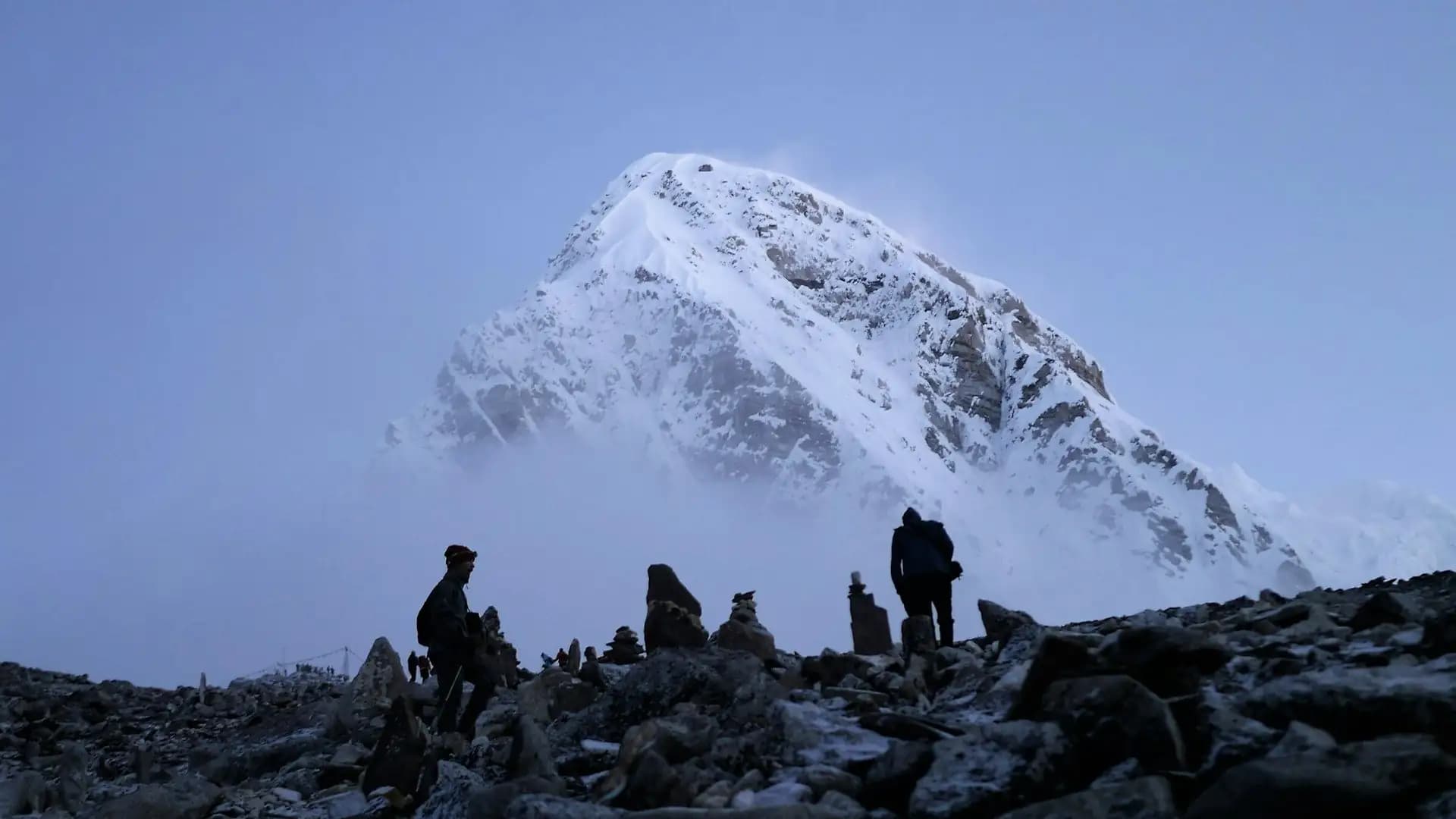
Pumori | 7,161 m | Kala Patthar and Gorak Shep |
Route, Distance and Walking Hours
Day | Route | Distance | Walking time |
|---|---|---|---|
2 | Lukla – Phakding | 8 km | 3–4 hrs |
3 | Phakding – Namche Bazaar | 12 km | 5–6 hrs |
4 | Namche acclimatization hike | 5 km | 4–5 hrs |
5 | Namche – Dole | 11 km | 5–6 hrs |
6 | Dole – Machhermo | 7 km | 3–4 hrs |
7 | Machhermo – Gokyo | 7 km | 4–5 hrs |
8 | Gokyo Ri (and optional lakes) | 4–12 km | 3–7 hrs |
9 | Gokyo – Thangnak | 4 km | 3–4 hrs |
10 | Thangnak – Cho La – Dzongla | 10 km | 7–9 hrs |
11 | Dzongla – Lobuche | 7 km | 3–4 hrs |
12 | Lobuche – Gorak Shep – EBC – Gorak Shep | 12 km | 7–8 hrs |
13 | Gorak Shep – Kala Patthar – Pheriche | 15 km | 7–8 hrs |
14 | Pheriche – Namche Bazaar | 20 km | 6–7 hrs |
15 | Namche Bazaar – Lukla | 19 km | 6–7 hrs |
Total | About 150–160 km |
Altitude Profile
Place | Altitude | Night |
|---|---|---|
Kathmandu | 1,400 m / 4,593 ft | 1, 16 |
Phakding | 2,610 m / 8,563 ft | 2 |
Namche Bazaar | 3,440 m / 11,286 ft | 3, 4, 14 |
Dole | 4,040 m / 13,255 ft | 5 |
Machhermo | 4,470 m / 14,665 ft | 6 |
Gokyo | 4,790 m / 15,715 ft | 7, 8 |
Gokyo Ri | 5,357 m / 17,575 ft | Day 8 hike |
Thangnak | 4,700 m / 15,420 ft | 9 |
Cho La | 5,420 m / 17,782 ft | Crossed Day 10 |
Dzongla | 4,830 m / 15,846 ft | 10 |
Lobuche | 4,910 m / 16,109 ft | 11 |
Gorak Shep | 5,164 m / 16,942 ft | 12 |
Kala Patthar | 5,545 m / 18,192 ft | Day 13 hike |
Pheriche | 4,240 m / 13,911 ft | 13 |
Lukla | 2,860 m / 9,383 ft | 15 |
For more on the heights in the Khumbu, read our guide to Everest Base Camp's elevation.
Map Overview
The map shows the flight to Lukla and the trail north along the Dudh Koshi to Namche Bazaar. From Namche the route turns north up the Gokyo valley through Dole and Machhermo to the Gokyo Lakes, then crosses the Ngozumpa Glacier to Thangnak. The Cho La leads east into the Khumbu valley at Dzongla, joining the main trail at Lobuche for Gorak Shep, Everest Base Camp and Kala Patthar. The return follows the main trail through Pheriche, Tengboche and Namche to Lukla.
How Difficult Is This Trek?
We grade it Strenuous, a clear step up from the standard Everest Base Camp trek.
More time at altitude: Nine nights above 4,000 m, six of them at 4,700 m or higher.
The Cho La: A long day with a boulder scramble, a short glacier crossing and a steep, loose descent.
Four high points: Gokyo Ri, the Cho La, Everest Base Camp and Kala Patthar, each above 5,300 m.
Cold: Nights at Gokyo, Thangnak, Dzongla and Gorak Shep fall well below freezing.
No climbing skills are needed, but you should be fit, ideally with previous multi-day trekking, and comfortable on rough, rocky ground. See our guide to the toughest treks in Nepal to compare.
Fitness and Training
Start training 10–12 weeks before the trek.
Endurance: 4–5 cardio sessions a week of 45–60 minutes.
Long hiking days: Several weekends of back-to-back 6–7 hour hikes with a 7–8 kg pack, including steep and rocky terrain.
Downhill strength: Step-downs, lunges and squats to protect your knees on the Cho La descent.
Balance: Practise walking on uneven ground and boulders if you can.
Altitude Sickness and Acclimatization
With so many nights above 4,500 m, altitude is the main risk on this trek. Mild symptoms such as a headache, poor sleep and loss of appetite are common. Serious altitude illness (HACE or HAPE) is less common but can be life-threatening.
How we reduce the risk:
Two nights in Namche and two in Gokyo, with "climb high, sleep low" hikes
The Dole route, avoiding the big jump from Phortse Thanga to Machhermo
Gokyo before Everest Base Camp, so you're well acclimatized for the highest days
Daily oxygen and pulse checks with a pulse oximeter above 3,000 m
A clear plan to descend, with helicopter evacuation available if needed
Drink 3–4 litres of water a day, walk slowly, avoid alcohol and tell your guide about any symptoms. Ask your doctor about altitude medication before you travel. This is general guidance, not medical advice. The CDC's Nepal travel health page has more information.
Best Time for the EBC with Gokyo Lakes Trek
Late September to November. The best season, with clear skies, dry trails and the most reliable conditions on the Cho La. The lakes are at their bluest in October.
April to May. The second-best season. Warmer, with expedition tents at Everest Base Camp. Snow can linger on the Cho La in early April.
December to March. Cold, with snow often making the Cho La difficult or impassable. Some lodges at Thangnak and Dzongla close. Not recommended for this route.
June to September. Monsoon. Cloud, rain lower down and frequent Lukla flight delays. Not recommended.
For a wider overview, see our guide to the best time to hike in Nepal.
Weather by Season
Season | Gokyo (4,790 m) day / night | Gorak Shep (5,164 m) day / night | Conditions |
|---|---|---|---|
Autumn (Sep–Nov) | 5–10 °C / −8 to −12 °C | 4–8 °C / −10 to −15 °C | Clear, dry, best for the pass |
Winter (Dec–Feb) | −2 to 4 °C / −15 to −20 °C | −5 to 2 °C / −15 to −25 °C | Snow, pass often difficult |
Spring (Apr–May) | 5–12 °C / −6 to −10 °C | 4–10 °C / −8 to −12 °C | Warmer, afternoon cloud |
Monsoon (Jun–Aug) | 8–12 °C / 0–3 °C | 6–12 °C / −3 to 2 °C | Cloud and rain |
These are typical ranges, not forecasts.
Getting There: Lukla Flights
Peak seasons: Most Lukla flights leave from Manthali Airport in Ramechhap, about 4–5 hours' drive from Kathmandu. We collect you around 1–2 a.m.
Other months: Flights usually leave from Kathmandu and take about 35 minutes.
Baggage limit: 15 kg per person, including hand luggage.
Delays: Lukla flights depend on the weather. Keep at least one spare day after the trek before your international flight.
Accommodation
Kathmandu: A comfortable tourist-class hotel with breakfast.
On the trek: Teahouse lodges. Namche, Gokyo and Lobuche have good lodges, some with attached bathrooms. Dole, Machhermo, Thangnak and Dzongla are smaller and more basic, with shared toilets and cold rooms. Lodges at Thangnak and Dzongla fill quickly in October, so we book ahead.
Bring or rent a sleeping bag rated to −15 °C or colder.
Meals and Drinking Water
Lodges serve dal bhat, noodles, pasta, potatoes, eggs, Tibetan bread, soups and porridge. Prices rise the higher you go, as everything is carried up by porters and yaks. Gokyo and Namche have bakeries.
Water: Don't drink untreated water. Bring purification tablets or a filter, or buy boiled water from lodges.
Internet, Mobile Signal and Charging
Mobile signal: NTC and Ncell work in Namche and patchily on the main EBC trail. Signal is weak or absent in the Gokyo valley and at Dzongla.
Wi-Fi: Most lodges sell Wi-Fi, usually through the Everest Link network, by the day or by data bundle.
Charging: US$2–5 per device. Bring a power bank and keep batteries warm.
Permits and Fees
Permit | Cost per person | Where it's issued |
|---|---|---|
Sagarmatha National Park entry | NPR 3,000 (about US$22) | Monjo gate or Kathmandu |
Khumbu Pasang Lhamu Rural Municipality | NPR 3,000 (about US$22) | Lukla |
The TIMS card isn't used in the Everest region; the municipality permit replaced it. Since April 2023, foreign trekkers in Nepal's national parks must trek with a licensed guide; read more in our guide to Nepal's trekking guide rules.
Both permits are included in our price. For park information, see the Department of National Parks and Wildlife Conservation. For visas on arrival, see the Department of Immigration.
EBC with Gokyo Lakes Trek Cost
Our price: from US$1,800 per person (US$1,900 standard rate). It includes permits, return Lukla flights, Kathmandu hotel nights, all lodges and meals on the trek, a licensed guide and porter support.
Here's roughly where the money goes:
Cost item | Approx. US$ per person |
|---|---|
Return Lukla flights (and Ramechhap transfers in peak season) | 450 |
Teahouse accommodation, 14 nights | 150 |
Meals on the trek (3 a day for 14–15 days) | 450 |
Guide (wages, food, lodging, insurance), shared | 260 |
Porter (1 for every 2 trekkers), shared | 150 |
Permits | 45 |
Kathmandu hotel (2 nights), transfers and farewell dinner | 110 |
Microspikes for the Cho La, first aid, oximeter, office costs and taxes | 185 |
Total | 1,800 |
Extra money to budget:
Item | Typical cost |
|---|---|
Nepal tourist visa | US$30 (15 days), US$50 (30 days) |
Travel insurance covering trekking to 6,000 m and helicopter evacuation | US$120–280 |
Drinks, snacks, hot showers, Wi-Fi and charging | US$15–25 a day |
Tips for guide and porter | US$180–280 per trekker in total |
Extra days if weather delays flights or closes the pass | US$40–80 a day |
For a full guide to trekking costs, see our Nepal trekking cost guide.
Optional Add-ons
The fifth Gokyo lake and Scoundrel's Viewpoint on the Gokyo rest day
Renjo La instead of returning via Namche, for experienced trekkers; see our Everest Three High Pass Trek
Island Peak (6,189 m) after Everest Base Camp; see our Island Peak Climbing package
Helicopter flight out from Gorak Shep instead of walking down
An extra night in Gokyo or Namche
Travel Tips
Do the Gokyo valley first. It's better for acclimatization, and the Cho La is easier from west to east.
Pack microspikes or light crampons for the Cho La from November to April.
Start the Cho La early, ideally by 5 a.m., before the snow softens and the wind picks up.
Climb Gokyo Ri for sunrise. The light on Everest is best early, and the summit is often clear before cloud builds.
Carry enough cash. There are ATMs in Lukla and Namche, but they're unreliable, and there are none in the Gokyo valley.
Keep a spare day at the end of the trip for Lukla flight delays.
Photography Spots
Mong La, with Ama Dablam and the Dudh Koshi gorge
The third Gokyo lake at dawn, with Gokyo village on its shore
Gokyo Ri summit, for Everest, Lhotse, Makalu and Cho Oyu
The Ngozumpa Glacier from the lateral moraine above the lakes
The Cho La's prayer flags, looking east to Ama Dablam
Kala Patthar at sunrise, for Everest's summit at close range
Responsible Trekking
Keep the Gokyo Lakes clean. Don't wash in the lakes or leave anything on their shores; they're sacred and a protected wetland.
Carry out batteries and non-burnable rubbish.
Use refillable bottles and treat your own water.
Respect Sherpa culture: walk clockwise around chortens and mani walls, and ask before photographing people.
Look after your porter. Ours carry no more than 25 kg and have proper warm clothing, footwear and insurance.
Is This Trek Right for You?
This trek suits you if you:
Want more than the standard Everest Base Camp trek, with fewer crowds
Are fit and have some multi-day trekking experience, ideally at altitude
Want to see Everest from Gokyo Ri and Kala Patthar
Are comfortable on rocky ground and a short glacier crossing
Choose something else if you:
Are new to trekking at altitude: start with the Everest Base Camp Trek
Want comfortable lodges throughout: see the Luxury Everest Base Camp Trek
Have less than two and a half weeks in Nepal
Why Book With Adventure Life Nepal
Founded by a guide. Adventure Life Nepal was started by Dil Bahadur Karki, who began as a porter and has more than 25 years of experience guiding in the Himalaya, with trekkers from more than 40 countries.
Licensed and registered with the Nepal Tourism Board and the Trekking Agencies Association of Nepal (TAAN).
Guides who know the Cho La and when it's safe to cross.
A safer acclimatization schedule via Dole, not Phortse Thanga.
Daily health checks with a pulse oximeter above 3,000 m.
Fair treatment of porters, with insurance, warm clothing and load limits.
Booking, Cancellation & Refund Policy
A 30% deposit confirms your booking; the balance is due before the trek begins.
30 days or more before departure: full refund minus administrative fees.
15–29 days before departure: 50% cancellation fee.
Less than 15 days before departure: no refund.
Travel insurance covering trekking to 6,000 m and helicopter evacuation is mandatory.
We may change the itinerary because of weather, pass or flight conditions, or health and safety reasons.
Full details are on our terms and conditions page.
Book Your EBC with Gokyo Lakes Trek
See Everest from the turquoise lakes of Gokyo, cross the Cho La and stand at Everest Base Camp, all in one loop, with a guide who knows the pass. Tell us your dates and group size, and we'll confirm availability and your final price.
Book now or send us a quick enquiry. WhatsApp or call: +977 9841248242 · Email: adventurelifenepal@gmail.com
Highlights
Itinerary
We meet you at the airport and take you to your hotel. In the evening, your guide checks your gear and explains the trek, including the Cho La crossing.
- Walking: 3–4 hours, about 8 km In the peak seasons (March–May and October–November), Lukla flights usually leave from Manthali Airport in Ramechhap, a 4–5 hour drive from Kathmandu in the early hours, followed by a 20-minute flight. In other months, flights usually go direct from Kathmandu (about 35 minutes). From Lukla, an easy walk downhill along the Dudh Koshi brings you to Phakding.
- Walking: 5–6 hours, about 12 km The trail follows the river, crossing it on suspension bridges, to the national park gate at Monjo. After Jorsale comes the long climb past the Hillary Suspension Bridge to Namche Bazaar, with your first view of Everest from the hill on a clear day.
- Walking: 4–5 hours round trip Climb to Hotel Everest View (about 3,880 m) for views of Everest, Lhotse and Ama Dablam, or walk to Khumjung village, with its Hillary school and monastery. Return to sleep in Namche.
- Walking: 5–6 hours, about 11 km - Altitude gain: +600 m The trail contours above the Dudh Koshi to Kyangjuma, then turns north and climbs to Mong La (3,975 m), a ridge with a chorten and views of Ama Dablam, Thamserku and Kangtega. It drops steeply to the river at Phortse Thanga, then climbs through rhododendron and birch forest to the small settlement of Dole. This is the start of the quiet Gokyo valley.
- Walking: 3–4 hours, about 7 km - Altitude gain: +430 m A short day on purpose. The trail climbs gently above the tree line through Lhabarma and Luza, with Cho Oyu appearing ahead. Machhermo has a Himalayan Rescue Association aid post, which in season often gives a talk on altitude sickness in the afternoon.
- Walking: 4–5 hours, about 7 km - Altitude gain: +320 m The trail climbs past Pangka to the end moraine of the Ngozumpa Glacier, then follows a chain of lakes: first Longpongo, then Taboche Tsho, and finally Dudh Pokhari, the third lake, with the stone lodges of Gokyo on its shore. The turquoise water with the peaks behind is one of the great sights of the Khumbu.
- Walking: 3–4 hours for Gokyo Ri; optional 5–7 hours to the fourth and fifth lakes Leave before dawn to climb Gokyo Ri, a steep 2–3 hour ascent from the lakeshore. From the top, the view takes in Everest, Lhotse, Makalu and Cho Oyu, four of the world's six highest mountains, with the Ngozumpa Glacier below and Gokyo's lakes laid out like turquoise beads. After breakfast, rest, or walk north to the fourth lake (Thonak Tsho) and, if you're strong, the fifth lake (Ngozumpa Tsho) for a closer view of Cho Oyu.
- Walking: 3–4 hours, about 4 km Cross the Ngozumpa Glacier, a rough path over rubble-covered ice that shifts from year to year, to Thangnak (also called Dragnag), a small cluster of lodges at the foot of the Cho La. Rest in the afternoon and go to bed early.
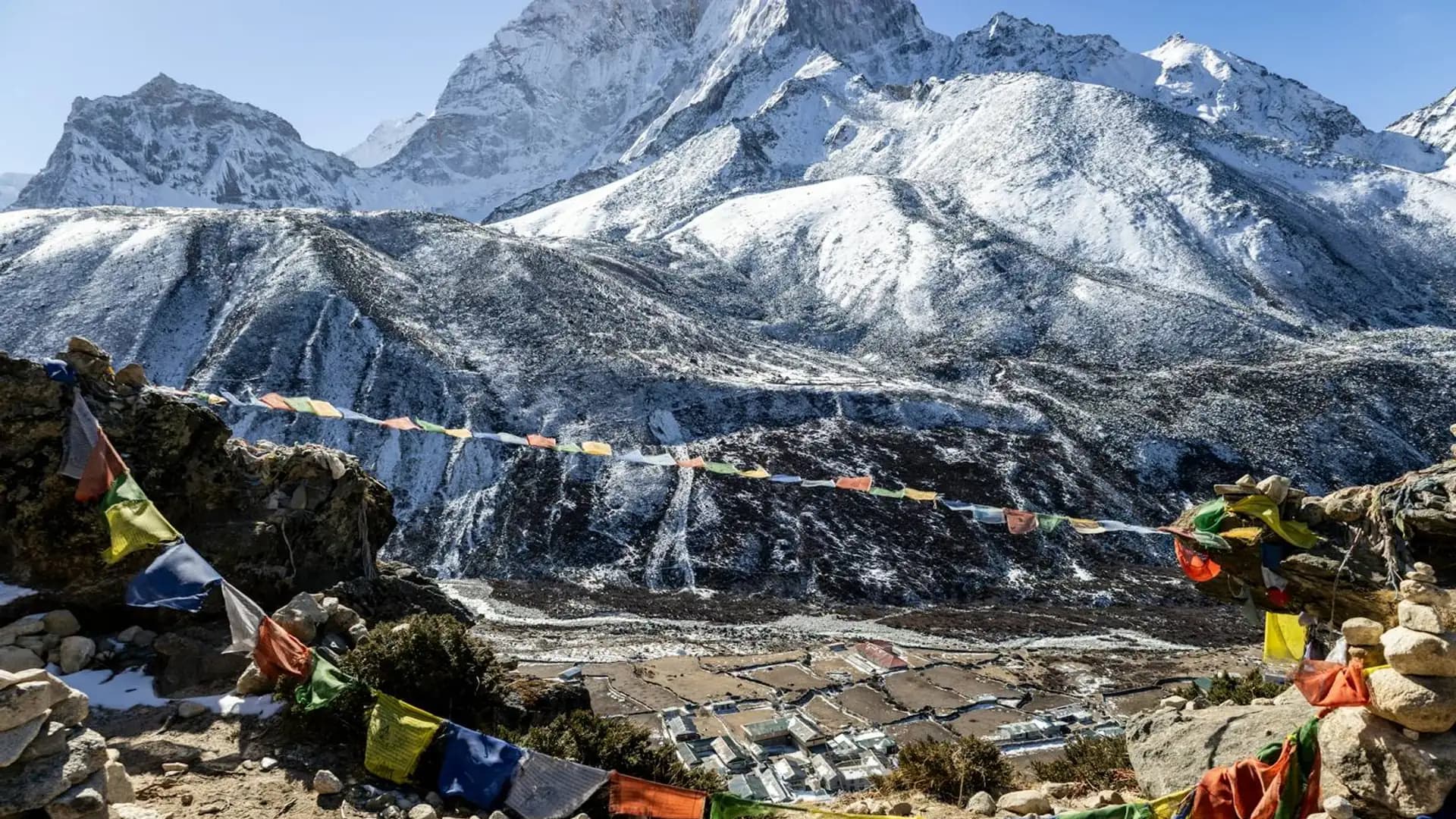
- Walking: 7–9 hours, about 10 km - Altitude: +720 m, then −590 m The hardest day of the trek. You leave before dawn and climb a rocky valley to a steep boulder scramble below the pass. Near the top, you cross a short section of glacier, which can be icy in the morning. Your guide will tell you whether microspikes are needed. From the prayer flags on the Cho La, you look east into the Khumbu, with Ama Dablam on the horizon. The descent is steep and loose, then eases into a long valley to Dzongla, with Cholatse and Lobuche peak above.
- Walking: 3–4 hours, about 7 km A shorter day. The trail contours around the hillside with views of the Chola Tsho lake and Awi peak before joining the main Everest Base Camp trail and reaching Lobuche. Rest after the pass.
- Walking: 7–8 hours, about 12 km Follow the moraine of the Khumbu Glacier to Gorak Shep, then continue to Everest Base Camp, about two hours each way. In April and May, expedition tents fill the glacier below the Khumbu Icefall. Return to Gorak Shep for the night.
- Walking: 7–8 hours, about 15 km Climb Kala Patthar before sunrise for the closest full view of Everest's summit. Return to Gorak Shep for breakfast and descend through Lobuche and Thukla to Pheriche.
- Walking: 6–7 hours, about 20 km A long day downhill, through Pangboche and Tengboche, where the monastery looks across to Ama Dablam, and back to Namche.
- Walking: 6–7 hours, about 19 km The last day on foot, down the hill and along the river to Lukla. In the evening, celebrate with your guide and porters.
Morning flight to Kathmandu, or to Ramechhap and a 4–5 hour drive in peak season. If weather delays the flight, this is where a spare day is useful.
We take you to the airport for your flight home.
Elevation Profile
Altitude Variation Chart
What's Included
Included
- Airport pickup and drop-off in Kathmandu
- 2 nights in a hotel in Kathmandu with breakfast
- Return flights Kathmandu–Lukla–Kathmandu, or via Manthali (Ramechhap) in peak season, including the Ramechhap transfers
- 14 nights in teahouse lodges on the trek (twin sharing)
- Breakfast, lunch and dinner during the trek, with tea or coffee
- Farewell dinner in Kathmandu
- Licensed, English-speaking trekking guide trained in first aid
- Porter service (1 porter for every 2 trekkers)
- Wages, meals, accommodation, insurance and equipment for guide and porters
- Sagarmatha National Park entry permit and Khumbu Pasang Lhamu Rural Municipality permit
- Microspikes for the Cho La when needed
- First aid kit and daily pulse oximeter checks above 3,000 m
- All government taxes and service charges
Excluded
- International flights and Nepal visa fee
- Lunch and dinner in Kathmandu (except the farewell dinner)
- Travel insurance covering trekking to 6,000 m and helicopter evacuation (mandatory)
- Drinks, snacks, hot showers, Wi-Fi and charging on the trek
- Personal trekking gear and clothing
- Helicopter flights, unless caused by a medical emergency covered by your insurance
- Extra nights and meals caused by flight delays, pass closure or early return
- Tips for guide, porter and driver
- Anything not listed under What's Included
Packing List
Category | Items |
|---|---|
Clothing | Base layers (2 sets), fleece, down jacket rated to −15 °C or colder, waterproof and windproof jacket and trousers, trekking trousers, warm hat, sun hat, buff, liner and insulated gloves |
Footwear | Broken-in waterproof boots with ankle support, camp shoes, warm socks, gaiters, microspikes (can be provided) |
Sleeping | Sleeping bag rated to −15 °C or colder (can be rented in Kathmandu) |
Gear | 30–40 L daypack, trekking poles, head torch with spare batteries, 2 water bottles (one insulated) |
Health | Personal medicines, blister kit, water purification, sunscreen SPF 50, lip balm, category 3–4 sunglasses |
Documents | Passport, 2 passport photos, insurance details, cash in Nepali rupees |
Extras | Power bank, quick-dry towel, snacks and energy bars for the pass day |
Frequently Asked Questions
This itinerary takes 17 days from Kathmandu to Kathmandu, with 14 days of walking.
Harder. You spend more nights above 4,500 m and cross the Cho La (5,420 m), which has a steep boulder section and a short glacier crossing.
No. It's a trekking pass, not a climb, but you need to be comfortable on rocky ground. Microspikes are often needed on the glacier section from November to April.
We take a lower route via Phortse and Pangboche to join the Everest Base Camp trail. It adds a day but avoids the pass.
It's better for acclimatization, and the Cho La is easier to cross from west to east.
Many trekkers think so. Gokyo Ri shows four 8,000 m peaks, including Everest, across a wider panorama, while Kala Patthar gives the closest view of Everest's summit. This trek includes both.
Six main lakes, plus many smaller ones. You'll see the first three on the way to Gokyo and can walk to the fourth and fifth on the rest day.
The highest point is Kala Patthar at 5,545 m. The Cho La is 5,420 m, Everest Base Camp 5,364 m and Gokyo Ri 5,357 m.
Yes. Since April 2023, foreign trekkers in Nepal's national parks must trek with a licensed guide.
The Sagarmatha National Park permit and the Khumbu Pasang Lhamu Rural Municipality permit. No TIMS card is needed in the Everest region.
From US$1,800 per person. Budget another US$400–700 for your visa, insurance, drinks, snacks and tips.
Simple teahouse lodges. Namche, Gokyo and Lobuche have good options; Thangnak and Dzongla are very basic.
In most lodges, for a fee, usually via the Everest Link network. Signal is weaker in the Gokyo valley.
Late September to November or April to May. Winter often makes the Cho La difficult.
We rebook you on the next available flight, or arrange a shared helicopter at extra cost if cancellations last several days. Keep a spare day after the trek.
Yes, from Gokyo Ri, and from parts of the trail near the fifth lake. You can't see it from Gokyo village itself.
Yes, to Hindus and Buddhists. Pilgrims visit during the Janai Purnima full moon in August. Please don't swim or wash in the lakes.
Tipping is customary. Most trekkers give their guide and porter a combined US$180–280 each at the end of the trek.
Yes. Island Peak can be added after Everest Base Camp, from Dingboche and Chhukung, for about 4 extra days.
Yes, but we don't recommend it. Going to Everest Base Camp first means crossing the Cho La from east to west, which is steeper on the way up and slipperier on the way down, and you reach the high points before you're fully acclimatized.
Often, from November to April, for the short glacier section of the Cho La. Your guide checks conditions and we can provide them.
At least 2–3 months ahead for October, November, April and May, so we can secure Lukla flights and lodges at Thangnak and Dzongla.
Gallery & Video
Customer Reviews
Loading reviews...
Leave a Review
From US $1900