Nepal Trek and Temples 2027: Best Treks & Sacred Sites Guide
Introduction to Nepal Trek and Temples
In most countries, mountains and temples belong to different trips. In Nepal, they are often the same trip. The trail to Everest Base Camp passes a Sherpa monastery at nearly 3,900 meters. The Annapurna Circuit ends its great pass crossing at a pilgrimage temple that Hindus and Buddhists both hold sacred. A short trek in Langtang leads to a lake where Hindu pilgrims bathe each August. And the valley where most journeys begin, Kathmandu, holds some of the most important temples and stupas in South Asia.
That overlap is what makes the Nepal trek and temples combination so rewarding. You get the physical challenge and scenery of the Himalaya, and you also walk through living religious traditions rather than museum pieces. This guide shows you how to combine the two: the best treks that pass sacred sites, the temples worth adding to any itinerary, when to go, how to behave respectfully, and sample plans for different amounts of time.
Quick Answer: Best Treks That Include Sacred Sites
Trek | Key Sacred Site | Approx. Altitude of Site | Typical Trek Length |
|---|---|---|---|
Everest Base Camp | Tengboche Monastery | About 3,867 m | 12–16 days |
Annapurna Circuit | Muktinath Temple | About 3,710 m | 12–18 days |
Langtang with Gosaikunda | Gosaikunda Lake and Kyanjin Gompa | Lake at about 4,380 m | 5–13 days depending on route |
Manaslu Circuit | Tibetan Buddhist monasteries in the upper valley | Varies | 12–18 days |
Upper Mustang | Lo Manthang and its monasteries | High desert plateau | About 10–14 days |
Short Kathmandu hikes | Jamacho Gumba, Champadevi shrine, Namobuddha | Under about 2,300 m | Half day to 2 days |
Altitudes are approximate and vary slightly by source. The point is the pattern: nearly every classic Nepali trek passes a place of worship worth stopping for.
Why Trekking and Temples Fit Together in Nepal
Nepal is home to a blend of Hindu and Buddhist traditions that overlap in unusual ways. Many sacred places are shared, including Muktinath and Gosaikunda, and the mountains themselves are treated as sacred. Villages along the trails are often organized around a monastery, a prayer wall, or a shrine, so religious life is visible at nearly every stage of a trek. Prayer flags mark passes, long walls of carved stones line the paths, and travelers are expected to pass them keeping the stones on their right-hand side.
This makes a Nepal trek and temples itinerary more than sightseeing. It changes the way you experience the landscape, because each pass, village, and lake has a story attached to it.
Start with the Kathmandu Valley Temples
Most itineraries begin in Kathmandu, and a few days among its temples is a good way to adjust to the country before heading up into the mountains. Seven monument zones in the valley are part of a UNESCO World Heritage listing, and you can see the full list of Nepal's sites on the UNESCO World Heritage Centre page for Nepal.
Site | What It Is | Good to Know |
|---|---|---|
Pashupatinath | Nepal's most important Hindu temple complex, on the Bagmati River | Non-Hindus can view the complex from the opposite bank but generally cannot enter the main temple |
Boudhanath | One of the largest stupas in the world and a center of Tibetan Buddhism | Walk clockwise around the stupa, as local worshippers do |
Swayambhunath | A hilltop Buddhist stupa often called the Monkey Temple | Offers views over the valley; watch for the resident monkeys |
Changu Narayan | Nepal's oldest Hindu temple, dating to the 4th century | Quieter than the other main sites |
Patan and Bhaktapur Durbar Squares | Historic royal squares with temples and Newari architecture | Bhaktapur is widely considered the best preserved |
For a practical route through these sites, see our Kathmandu day tour guide and our broader guide to Nepal's tourist places. Three days in the valley is enough to cover the highlights before a trek.
Muktinath: The Pilgrimage Temple on the Annapurna Circuit
Muktinath is one of the best-known examples of trekking and temples meeting in a single place. The temple sits at about 3,710 meters in the Mustang district, at the foot of Thorong La Pass, and is sacred to both Hindus and Buddhists. Hindus call the area Mukti Kshetra, the place of liberation, and Buddhists know it by a Tibetan name that means "hundred waters." It is also counted among the 108 Divya Desams, the sacred Vishnu temples. Some sources list its elevation closer to 3,800 meters, so treat the figure as approximate.
Feature | What It Is |
|---|---|
The temple | A pagoda-style Vishnu temple at the center of the complex |
Muktidhara | 108 water spouts, often shaped like animal heads, used for ritual bathing in cold glacial water |
Jwala Mai | A shrine beside the main temple where a flame burns, fed by natural gas rising from the ground |
Shaligram stones | Fossil stones sacred to Vishnu worship, associated with the nearby river |
For trekkers on the Annapurna Circuit, Muktinath arrives soon after crossing Thorong La, the 5,416-meter pass, which makes it both a spiritual and a physical milestone. Many pilgrims also reach it by road or a short flight to Jomsom, depending on conditions, so you will often share the site with devotees who have come from across Nepal and India. The local Muktinath Development Committee shares general information on the temple. If you are planning to arrive on foot, it is wise to build in extra days for acclimatization and weather around the pass.
Muktinath Pilgrimage: Practical Tips
Reaching Muktinath is only part of the experience, and a few practical points help you enjoy it. The air is thin and cold at this altitude, so dress in warm layers even on sunny days. Ritual bathing under the 108 spouts is a personal choice rather than an obligation, and the water is glacial, so many visitors simply walk the line of spouts or watch pilgrims. Mornings are usually calmer and clearer, while afternoon winds in the Kali Gandaki valley can be strong. Because the site draws both trekkers and devotees, expect a mix of quiet prayer, chanting, and photography. Take your time, ask before photographing worshippers, and leave room for those who have walked a long way to be there.
Tengboche Monastery: The Spiritual Heart of the Everest Trail
On the Everest Base Camp trek, Tengboche Monastery is the best-known religious stop. It sits at about 3,867 meters on a ridge with views of Everest, Lhotse, and Ama Dablam, and it is the main monastery of the Khumbu region's Sherpa community. It follows the Nyingma tradition of Tibetan Buddhism and was founded in 1916 by Lama Gulu, with strong links to Rongbuk Monastery in Tibet. The monastery has been rebuilt more than once after damage, including in 1934.
Tengboche is also known for the Mani Rimdu festival, held in autumn, usually October or November, with several days of rituals and masked dances that draw Sherpa families and trekkers from across the region. Visitors are welcome to enter the monastery outside ceremonies and are generally asked for a donation to help maintain it. Foreign trekkers pay the Sagarmatha National Park entry fee before reaching Tengboche, and the Everest region trails pass many mani walls, prayer wheels, and smaller monasteries as well.
Our Everest Base Camp Trek includes time in this part of the Khumbu, and if you can time your trip with Mani Rimdu, it adds a memorable cultural dimension to the journey.
Gosaikunda: A Sacred Lake in the Langtang Region
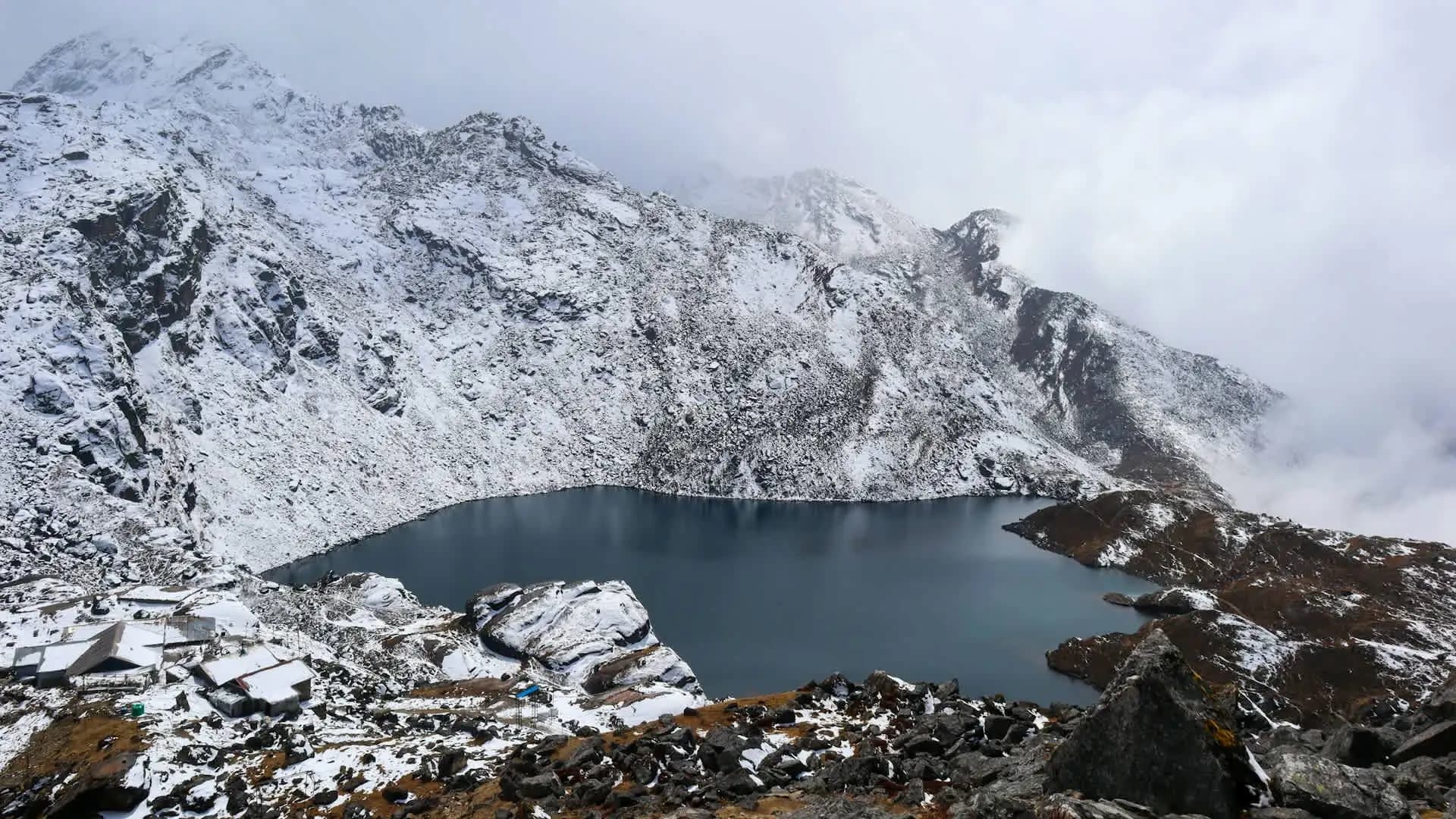
Gosaikunda, at about 4,380 meters in Langtang National Park, is one of Nepal's most important high-altitude pilgrimage sites. According to Hindu tradition, Lord Shiva created the lake by striking the mountain with his trident, and thousands of pilgrims walk to it each year, especially around the August full moon festival of Janai Purnima. Buddhists also hold the area sacred.
The trek works well as a short combination of scenery and devotion, and it can be extended with the Langtang Valley, where Kyanjin Gompa, a monastery near the head of the valley, is a highlight. Our Langtang Gosaikunda Trek package covers the combined route. Because the altitude gain on short itineraries is quick, a slower schedule with an acclimatization stop is wise.
Manaslu and Tsum: Tibetan Buddhist Culture on the Trail
The Manaslu Circuit passes through villages where Tibetan Buddhist culture shapes daily life. Monasteries, prayer walls, and chortens appear regularly from the upper valley onward, and the optional Tsum Valley extension adds remote monasteries and a more traditional atmosphere. The route is a restricted area, so a licensed guide and special permits are required. Our Manaslu Circuit Trek itinerary guide explains the day-by-day structure and where cultural stops fit.
Upper Mustang: A Walled City and Ancient Monasteries
Upper Mustang, a restricted region in the rain shadow of the Himalaya, preserves one of the most intact Tibetan-style cultures in Nepal. Its capital, Lo Manthang, is a walled town with old monasteries and a royal heritage, set in a high desert landscape of red cliffs and wind-carved canyons. Because it is a restricted area, it needs special permits and a guide. If you want to see monasteries without the crowds of the main trails, our Upper Mustang tour is worth considering.
Short Temple Hikes Near Kathmandu
You do not need a multi-week expedition to combine hiking with sacred sites. Several short walks around the valley end at temples, monasteries, or pilgrimage places.
Hike | Sacred Site | Notes |
|---|---|---|
Nagarjun Jamacho | Jamacho Gumba, a small Buddhist monastery | An easy to moderate half-day hike in Shivapuri Nagarjun National Park |
Champadevi | A shrine to the goddess Champa Devi at the summit | Mountain views and a longer, moderate day |
Namobuddha | A Buddhist pilgrimage site and hilltop monastery | Village paths and a cultural focus |
Nagarkot to Changu Narayan | Changu Narayan, Nepal's oldest Hindu temple | A popular walking route linking a viewpoint and a temple |
Chisapani to Nagarkot | Forest and ridge walking with village stays | A short overnight trek |
If you would like an overnight route, our Chisapani Nagarkot Trek package is an easy introduction to trekking near the capital.
Lumbini: The Birthplace of the Buddha
Lumbini, in southern Nepal, is traditionally recognized as the birthplace of Siddhartha Gautama, the Buddha, and was inscribed as a UNESCO World Heritage Site in 1997. It features the Maya Devi Temple, which marks the birth site, and the Ashoka Pillar, along with monasteries built by Buddhist communities from many countries. Lumbini sits in the lowlands, so it pairs well with a trek by giving you a gentler, warm-weather complement. Many travelers visit it before or after a mountain trip, and winter is a pleasant season there.
Hindu and Buddhist Sacred Sites: What Is the Difference?
Visitors often see both traditions in a single day, and knowing the basics helps you read what you are looking at.
Feature | Hindu Sites | Buddhist Sites |
|---|---|---|
Typical structures | Pagoda-style or spired temples with shrines to deities | Stupas, monasteries (gompas), chortens, and mani walls |
Common offerings | Flowers, rice, incense, and red powder | Butter lamps, incense, and prayer flags |
Circling custom | Often walk clockwise around shrines | Walk clockwise around stupas, wheels, and mani walls |
Access | Some temples restrict entry to Hindus | Monasteries are often open to visitors outside ceremonies |
Festivals | Dashain, Tihar, Maha Shivaratri, Janai Purnima | Mani Rimdu, Losar, Buddha Jayanti |
In practice the traditions overlap in Nepal, and places such as Muktinath and Gosaikunda are honored by both, which is part of what makes the country's sacred geography so distinctive.
Symbols You Will See on the Trail
Part of the pleasure of a Nepal trek and temples journey is learning to read the signs along the path.
Symbol | Meaning |
|---|---|
Prayer flags | Strings of colored cloth printed with prayers, usually in five colors, that carry blessings on the wind |
Mani stones and mani walls | Stones carved with the mantra "Om Mani Padme Hum," stacked into long walls |
Chortens | Small Buddhist shrines or stupas, often at entrances to villages and passes |
Prayer wheels | Cylinders filled with mantras, spun clockwise by passersby |
Cairns on passes | Piles of stones left by travelers as offerings for safe passage |
The rule of thumb is simple: pass sacred structures with them on your right, spin prayer wheels clockwise, and never step on mani stones or knock down cairns.
A Festival Calendar for Culture-Minded Trekkers
Festivals can transform a trek, but they follow the lunar calendar, so dates shift every year. Always confirm the exact dates before you book.
Festival | Typical Timing | Where It Shines |
|---|---|---|
Maha Shivaratri | Usually February or March | Pashupatinath in Kathmandu |
Buddha Jayanti | Usually May | Boudhanath, Swayambhunath, and Lumbini |
Janai Purnima | Usually August | Gosaikunda and Kathmandu Valley temples |
Dashain | Usually September or October | Nationwide family celebration; some services slow down |
Tihar | Usually October or November | Lights and festivities across towns |
Mani Rimdu | Usually October or November | Tengboche Monastery in the Everest region |
During Dashain and Tihar, many Nepalis travel home, so transport can be crowded and some businesses close for a few days. Planning around that can save frustration.
Trek First or Temples First?
Many travelers wonder how to sequence the trip. Starting with the Kathmandu Valley temples gives you a few days to adjust to the time zone, shake off jet lag, and learn local customs before a trek. Ending with temples is a pleasant way to recover and celebrate after a demanding trail. Either order works, but an easy temple day just before a trek is a useful hedge against flight delays, because it leaves you flexible rather than rushing from the airport to a mountain trailhead.
Photography and Cultural Sensitivity
Sacred sites are among the most photogenic places in Nepal, but they are also places of worship. Use a quiet approach, avoid flash in dim shrines, and never stand between a worshipper and a statue. Ask before photographing monks or pilgrims, and accept a refusal gracefully. Dawn and dusk usually give the best light at monasteries and stupas, and they are also when rituals are often performed, so patience is rewarded.
Budget Notes for Trek and Temple Trips
A combined itinerary does not cost much more than a trek alone, since temple visits are inexpensive. Entry fees at some Kathmandu Valley sites and donation boxes at monasteries are small compared with trekking permits, guides, and lodging. The main cost drivers remain the trek itself, your guide and porter, internal flights if any, and the season. Booking a package that covers transport and permits makes it easier to see the full cost before you commit.
Responsible Cultural Travel
Treat the places you visit as living communities rather than attractions. Support local lodges and shops, buy crafts directly from makers, and avoid giving sweets or money to children, which can encourage begging. Dress modestly in villages as well as temples, carry out your trash, and learn a few words of Nepali such as "namaste" and "dhanyabad" for thank you. Small gestures of respect often lead to the warmest interactions on the trail.
More Temples Worth Adding Around Kathmandu
Beyond the headline monument zones, a few lesser-visited places reward curious travelers.
Place | Why Visit |
|---|---|
Budhanilkantha | A large reclining Vishnu statue set in a pool, on the northern edge of the valley |
Pharping and Dakshinkali | Hindu and Buddhist sites south of Kathmandu, including a well-known goddess temple and monastery caves |
Kopan and other monasteries | Tibetan Buddhist monasteries that sometimes welcome visitors for short teachings or quiet reflection |
Panauti | An old town with temples and a relaxed pace, often paired with Namobuddha |
These stops are easy to fit into the days before or after a trek, and they offer a calmer view of religious life than the busiest tourist sites.
Altitude and Sacred Sites: A Quick Comparison
It helps to remember that several of Nepal's most important temples sit at real altitude, so treat them as part of your acclimatization plan, not just a photo stop.
Site | Approx. Altitude | Practical Note |
|---|---|---|
Namobuddha | About 1,750 m | Easy day trip; no altitude concern |
Tengboche Monastery | About 3,867 m | Reached on day six or later on most Everest itineraries |
Muktinath Temple | About 3,710 m | Reached after the Thorong La crossing on the Annapurna Circuit |
Gosaikunda Lake | About 4,380 m | A fast altitude gain on short routes, so allow time to adjust |
If you feel unwell at any of these sites, do not push on for the sake of a visit. Descend, rest, and return if possible. Headache, nausea, dizziness, and unusual fatigue are common warning signs.
A 10-Day Example: Kathmandu Temples and a Langtang Sacred Lake Route
To make the idea concrete, here is one way to combine valley temples with a shorter Himalayan trek. Exact stops and timings vary by operator and season.
Day | Plan |
|---|---|
1 | Arrive in Kathmandu and rest |
2 | Visit Boudhanath and Pashupatinath |
3 | Visit Swayambhunath and Patan or Bhaktapur |
4 | Drive to the Langtang region trailhead |
5 | Climb toward Chandanbari (Sing Gompa), passing through forest and Tamang villages |
6 | Continue to Gosaikunda, a sacred lake at about 4,380 m |
7 | Cross the pass toward Ghopte and Helambu |
8 | Descend through forest toward Kutumsang and Chisapani |
9 | Finish at Sundarijal and return to Kathmandu |
10 | Free day for last-minute temples, shopping, or departure |
This kind of plan gives you two or three cultural days at the start and a compact trek with a sacred focus, which suits travelers with about ten days. The key is a conservative pace on the days that gain altitude.
Choosing a Guide Who Understands the Culture
A knowledgeable guide can turn a trek into a much richer experience, especially on routes with many sacred sites. Ask whether your guide can explain the history of monasteries, the meaning of symbols, and local customs, and whether they have experience on the specific route and season you plan to travel. A good guide also helps you navigate etiquette, arranges visits at appropriate times, and will tell you when it is better to observe quietly than to take photographs.
Temple Etiquette on Treks and in Towns
Respect matters more at sacred sites, and a few habits make a big difference.
Situation | What To Do |
|---|---|
Stupas, mani walls, and prayer wheels | Pass on the left side, keeping them to your right, and walk clockwise |
Entering temples and monasteries | Remove shoes, dress modestly, and keep your voice low |
Photography | Ask first, and respect any signs prohibiting photos inside |
Hindu temples | Some restrict entry to Hindus, and leather items may be restricted, so follow posted guidance |
Offerings | Small donations are welcome, and you should never touch religious objects without permission |
Festivals | Keep a respectful distance, and do not interrupt rituals |
Following local customs helps you connect with people and is part of what makes trekking and temples in Nepal so special.
Best Time for Treks and Temples
Season | Conditions | Best For |
|---|---|---|
Autumn (September–November) | The most stable weather and clearest views | Everest, Annapurna, and festivals such as Mani Rimdu |
Spring (March–May) | Warm and clear, rhododendrons at lower elevations | Most treks and temple visits |
Winter (December–February) | Cold at altitude, pleasant in lowland sites such as Lumbini | Valley temples and low-elevation hikes |
Monsoon (June–August) | Rain and cloud in most areas, though some festivals fall here | Cultural travel in rain-shadow regions or selected festivals |
Festival dates follow the lunar calendar and shift each year. Janai Purnima usually falls in August, while Mani Rimdu is usually held in October or November, so confirm the dates for your year before you plan around them.
Sample Itineraries Combining a Nepal Trek and Temples
Length | Plan |
|---|---|
7–8 days | Three days of Kathmandu Valley temples, then an overnight hike such as Chisapani to Nagarkot, ending at Changu Narayan |
12–14 days | Kathmandu temples, then a Langtang and Gosaikunda route with a stop at Kyanjin Gompa |
16–18 days | Kathmandu temples, then the Everest Base Camp trek with Tengboche, timed with Mani Rimdu if possible |
18–21 days | Kathmandu temples, then the Annapurna Circuit finishing at Muktinath, with a Lumbini extension |
Mixing a few days of sightseeing with a trek also helps with acclimatization and recovery, since you avoid going straight from the airport to high altitude.
Permits, Guides, and Practical Notes
Most major trekking areas require permits and, for foreign trekkers, a licensed guide under rules in place since 2023, and restricted regions such as Manaslu and Upper Mustang have long required them. Our guide to Nepal's trekking guide requirement explains how the rule works, and the Nepal Tourism Board is the official source for current visitor information. Some temples and monasteries charge small entrance fees or ask for donations, so carry small cash in Nepali rupees.
What to Pack for Temples and Trails
Item | Why It Matters |
|---|---|
Modest clothing that covers shoulders and knees | Respectful at religious sites |
Easy slip-on shoes or socks | Shoes are removed at many entrances |
Layers and a warm jacket | Temperatures drop quickly at altitude |
A scarf or light shawl | Useful for covering up and for warmth |
Small cash in rupees | Donations and entry fees |
A reusable water bottle | Reduces plastic waste |
Common Mistakes on Trek and Temple Trips
A few avoidable errors come up again and again on combined itineraries.
Cramming too much into too few days. Temples deserve time, and rushing from one site to the next leaves you tired before the trek even begins.
Ignoring festival timing. A festival can be a highlight or a logistical headache, so decide whether you want crowds or quiet and plan accordingly.
Dressing for the trail instead of the temple. Pack at least one modest outfit that covers shoulders and knees, and shoes that are easy to remove.
Skipping acclimatization at high sacred sites. Treat Tengboche, Muktinath, and Gosaikunda as altitude milestones, not casual stops.
Forgetting small cash. Donations, entrance fees, and offerings are usually paid in Nepali rupees.
Photographing without asking. A moment of courtesy often leads to a warmer exchange and a better photograph.
Avoiding these keeps the focus where it belongs: on the experience of walking through a landscape where the mountains and the sacred are woven together.
A Final Thought on Combining the Two
The best Nepal trek and temples trips are not a checklist of famous sites. They are journeys in which the walking and the worship inform each other. A pass crossing feels different when you know pilgrims have crossed it for generations. A quiet morning at a monastery feels deeper after a few days of walking to reach it. If you leave room in your schedule for slow mornings, unplanned conversations, and a bit of weather flexibility, you are likely to remember the sacred places as much as the summits.
Planning Your Nepal Trek and Temples Journey with Adventure Life Nepal
We build itineraries that bring trails and sacred places together, whether that means a few days of valley temples before a trek, a route timed with a festival, or a pilgrimage-focused journey to Muktinath or Gosaikunda. Tell us how much time you have, how much altitude you are comfortable with, and which traditions or sites interest you most, and we will suggest a plan that gives you both the scenery and the cultural depth.
Frequently Asked Questions
1. Which Nepal treks include temples or monasteries? Many do, including the Everest Base Camp trek with Tengboche Monastery, the Annapurna Circuit with Muktinath Temple, Langtang with Gosaikunda and Kyanjin Gompa, and the Manaslu and Upper Mustang regions with their Tibetan Buddhist monasteries.
2. How high is Muktinath Temple? About 3,710 meters, though a few sources cite closer to 3,800 meters. It sits at the foot of Thorong La Pass in the Mustang district.
3. What is special about Muktinath? It is sacred to both Hindus and Buddhists, features 108 water spouts used for ritual bathing, and has a shrine called Jwala Mai where a flame burns, fed by natural gas.
4. How high is Tengboche Monastery? About 3,867 meters, and it is the main monastery of the Sherpa community in the Khumbu region.
5. When was Tengboche Monastery founded? In 1916, by Lama Gulu, and it follows the Nyingma tradition of Tibetan Buddhism.
6. What is the Mani Rimdu festival? A Sherpa Buddhist festival held at Tengboche in autumn, usually October or November, with several days of rituals and masked dances.
7. Why is Gosaikunda Lake sacred? According to Hindu tradition, Lord Shiva created it with his trident, and it is a major pilgrimage site, especially during the August festival of Janai Purnima. Buddhists also hold the area sacred.
8. Can non-Hindus visit Pashupatinath? Non-Hindus can view the temple complex from the opposite bank of the Bagmati River but generally cannot enter the main temple.
9. How should I walk around a stupa or mani wall? Walk clockwise, keeping the stupa or wall on your right-hand side, as local worshippers do.
10. Are there temples on the Everest Base Camp trek? Yes. Tengboche Monastery is the best known, and the route also passes many mani walls, prayer wheels, and smaller monasteries.
11. Can I do a short temple hike near Kathmandu? Yes. Options include Jamacho Gumba, Champadevi, Namobuddha, and the walk between Nagarkot and Changu Narayan.
12. What is the oldest Hindu temple in Nepal? Changu Narayan, which dates to the 4th century, is recognized as Nepal's oldest Hindu temple and is part of the Kathmandu Valley's UNESCO World Heritage listing.
13. Is Lumbini worth visiting with a trek? Yes. It is the traditional birthplace of the Buddha and a UNESCO World Heritage Site, and its warm lowland climate makes a pleasant complement to a mountain trek.
14. What is the best season for trekking and temple visits? Autumn and spring offer the most stable weather, and autumn also includes festivals such as Mani Rimdu.
15. Do I need a guide for treks that pass temples? Foreign trekkers need a licensed guide in most regulated areas under rules in place since 2023, and restricted regions have long required one.
16. What should I wear when visiting temples? Modest clothing that covers shoulders and knees, and shoes that are easy to remove.
17. Can I take photos inside temples and monasteries? Ask first and follow posted rules, since photography is restricted inside some religious sites.
18. How many days should I plan for a trek and temples trip? Around 7 to 8 days for a short combination, and 12 to 21 days for a longer trek with several sacred stops.
19. Is Upper Mustang a good choice for monasteries? Yes. It is a restricted region with Tibetan-style monasteries and the walled town of Lo Manthang, and it requires special permits and a guide.
20. How do I respect local customs on a pilgrimage trek? Dress modestly, remove shoes where asked, walk clockwise around sacred structures, keep your voice low, ask before photographing people, and carry out your trash.
Talk to an Expert
Ready to plan a trek that includes Nepal's sacred sites? Message us on WhatsApp at +977 9841248242 and our team will help you build your itinerary.
Author: Dil Bahadur Karki