Langtang Gosaikunda Trek
Trip Duration: 12 Days
Trip Grade: Moderate
Group Size: Min 2 Person - Max 12 Person
Difficulty: Moderate
Best Season: March–May & Sept–Nov
Max Altitude: 4,380 m
Accommodation: Teahouse/Lodge
Overview
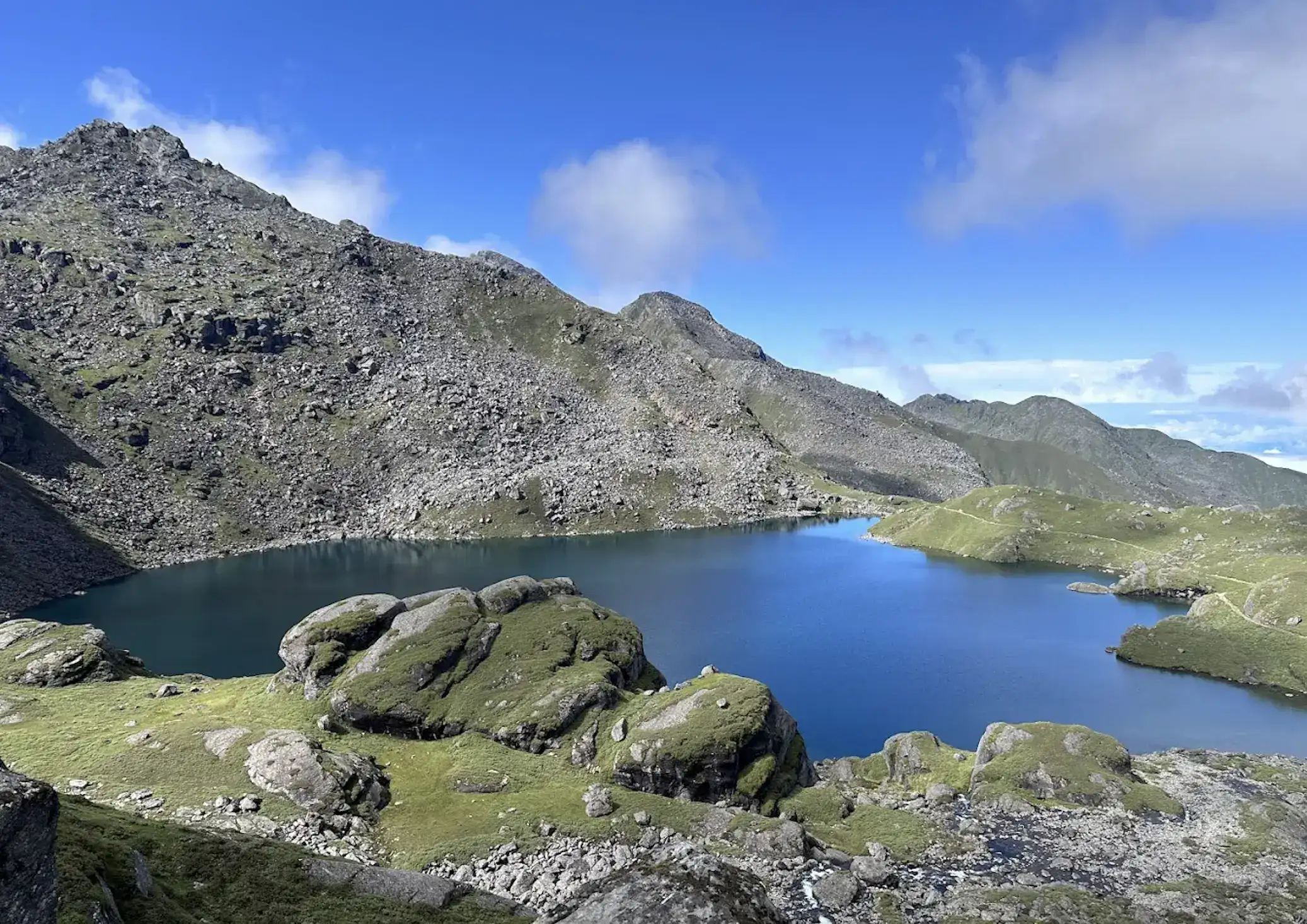
The Langtang Gosaikunda Trek is a 12-day adventure into the heart of Nepal's Langtang region, rich in nature, culture, and mountain views. The trail passes green forests, crystal-clear rivers, and terraced fields that seem to go on forever. Its highlight is the sacred Gosaikunda Lake, a glacial lake ringed by snow-covered peaks, where the setting is as peaceful as it is dramatic.
Along the way, Langtang Lirung, Ganesh Himal, and Dorje Lakpa rise high above the valley, with a new view at almost every turn. You'll also pass through small Tamang and Sherpa villages, where the warm welcome of the local people makes the journey more special. Colorful prayer flags, old monasteries, and spring wildflowers give the trek a spiritual side as well as a scenic one.
This trek suits adventurers who enjoy a moderate challenge. You'll gain altitude gradually, walking through alpine meadows, yak pastures, and rocky trails. Nights are spent in cozy teahouses, with simple, healthy local food and a close look at mountain life. Proper rest and acclimatization are important, especially near Gosaikunda Lake at 4,380 meters, to avoid altitude sickness.
By the end, you'll take home more than views of the landscape: a real sense of pride and a lasting connection to Nepal's wild nature and culture.
Highlights
Itinerary
Your guide meets you at your hotel after an early breakfast and you leave Kathmandu by private jeep. The road climbs out of the valley, drops to the Trishuli River and follows it north, with some diversions around sections damaged in the 2026 flood. You reach Dhunche, the headquarters of Rasuwa district, by late afternoon. Check in to a lodge, meet your porter and take a short walk through the bazaar before dinner.
The trek begins at the Langtang National Park checkpoint, where your permits are registered. You follow the new hillside trail through the Tamang settlements of Thulo Bharkhu and Brabal, staying high above the river. Terraced fields give way to pine and rhododendron forest. Thulo Syaphru sits along a ridge with views of Ganesh Himal, and its lodges make a comfortable first night on the trail.
A steep descent brings you to the Langtang Khola, where the path joins the classic route at Bamboo. From here the trail climbs gently through dense forest alongside the river. Look out for langur monkeys in the trees and, with luck, signs of red panda. After lunch at Rimche you continue a short way to the cluster of lodges at Lama Hotel.
The forest thins as you climb to Ghoda Tabela, where the valley opens and Langtang Lirung appears for the first time. The trail passes yak pastures, prayer wheels and waterdriven mills. Before the village you cross the site of the 2015 landslide and its memorial wall. Langtang village has been rebuilt just beyond it, with warm lodges and wide mountain views.
A short day lets your body adjust to the altitude. You walk past long mani walls and small streams to Kyanjin Gompa, the last settlement in the valley. Arrive by lunch, then spend the afternoon visiting the monastery, sampling fresh yak cheese at the factory and walking toward the glacier viewpoint behind the village.
Today you climb high and sleep low. Set out after breakfast for Kyanjin Ri, the highest point of the trek, where prayer flags frame Langtang Lirung, its glacier and a ring of 6,000 m peaks. Return to Kyanjin Gompa for lunch and a restful afternoon. Strong walkers can choose Tserko Ri (4,984 m) instead, a full-day round trip.
You retrace the valley downhill, and the walking is quick with the altitude behind you. Pass back through Langtang village and Ghoda Tabela, stopping for lunch on the way. The mountains slip out of view as you re-enter the forest. By late afternoon you reach Lama Hotel, where the air feels thick and warm after the high pastures.
Follow the river down to Bamboo, then leave the main valley and climb back up to Thulo Syaphru. The ascent is steady and takes about two hours from the river. An early finish gives you time to explore the village, visit its small monastery and rest before the climb to the lakes begins tomorrow.
The trail to Gosaikunda turns uphill from the top of the village. You climb through oak, hemlock and fir forest, passing a few tea shops and clearings with views back to the Langtang range. Sing Gompa, also called Chandanbari, is a peaceful stop with a monastery and a cheese factory. Sleeping here keeps the altitude gain gradual.
A big day above the treeline. The path climbs to Cholangpati and then Laurebina, where the view stretches from Manaslu and Ganesh Himal to Langtang Lirung. From here a rocky traverse leads past Saraswati Kunda and Bhairav Kunda to Gosaikunda itself. Walk slowly, drink plenty of water and spend the evening by the lake and its small Shiva shrine.
Rise early for sunrise over the lake, then begin the long descent. You return through Laurebina and Sing Gompa before dropping steeply through forest to Dhunche. The day loses more than 2,400 m, so trekking poles are a real help for the knees. Celebrate the end of the trek with your guide and porter over dinner in Dhunche.
After breakfast you drive back to Kathmandu by private jeep, following the Trishuli valley south. You arrive in the afternoon and are dropped at your hotel. The trip ends here, unless you have booked extra nights or another tour with us.
What's Included
Included
- Private jeep from Kathmandu to Dhunche and back
- 11 nights in teahouse lodges on a twin-sharing basis
- Three meals a day on the trek (breakfast, lunch and dinner)
- Licensed, English-speaking trekking guide
- One porter for every two trekkers
- Wages, insurance, meals and lodging for guide and porter
- First aid kit
Excluded
- International flights and Nepal visa fee
- Hotel and meals in Kathmandu
- Travel insurance covering helicopter evacuation
- Hot showers, Wi-Fi and battery charging on the trail
- Bottled water, soft drinks and alcohol
- Extra costs caused by road closures, weather or delays
- Personal trekking gear
Frequently Asked Questions
Yes. The Langtang Valley route reopened on 29 October 2026 on alternative trails from Dhunche, and the Gosaikunda trail is also open. The old Syabrubesi trailhead is not in use for now, so this itinerary starts and ends in Dhunche
It is a moderate trek. You walk five to seven hours on most days on well-used trails, with no technical sections. The hardest days are the climb to Gosaikunda on Day 10 and the long descent to Dhunche on Day 11.
The highest point is Kyanjin Ri at 4,773 m, reached on a day hike. The highest place you sleep is Gosaikunda at 4,380 m. If you add the Laurebina La extension, the pass is 4,610 m.
Mild symptoms such as headache are common above 3,500 m. The itinerary includes an acclimatisation day at Kyanjin Gompa and a night at Sing Gompa to keep the ascent gradual. Your guide checks your oxygen level daily and will descend with you if needed.
October and November give the clearest skies, while March to May brings rhododendron blooms. December to February is possible but cold, and snow can block the trail above Sing Gompa. The monsoon months of June to August bring rain, leeches and landslide risk.
You need a Langtang National Park entry permit and a TIMS card. Both are included in the package and arranged by us before departure. Bring your passport and two passport photos.
Customer Reviews
Loading reviews...