Upper Mustang Jeep Tour – 10 Days
Trip Duration: 10 Days
Trip Grade: Moderate
Group Size: 6
Meals: Breakfast in the cities; all meals in Mustang
Best Season: March–November
Start Point: Kathmandu
Accomodation: Hotels in Kathmandu and Pokhara, lodges and guesthouses in Mustang
Ending Point: Kathmandu
Max Altitude: 3,840 m (Lo Manthang); passes about 4,000 m
Transportation: Flights Pokhara–Jomsom–Pokhara–Kathmandu, private 4x4 jeep, tourist bus
Permits Required: Upper Mustang Restricted Area Permit (US$50/day), ACAP
Overview
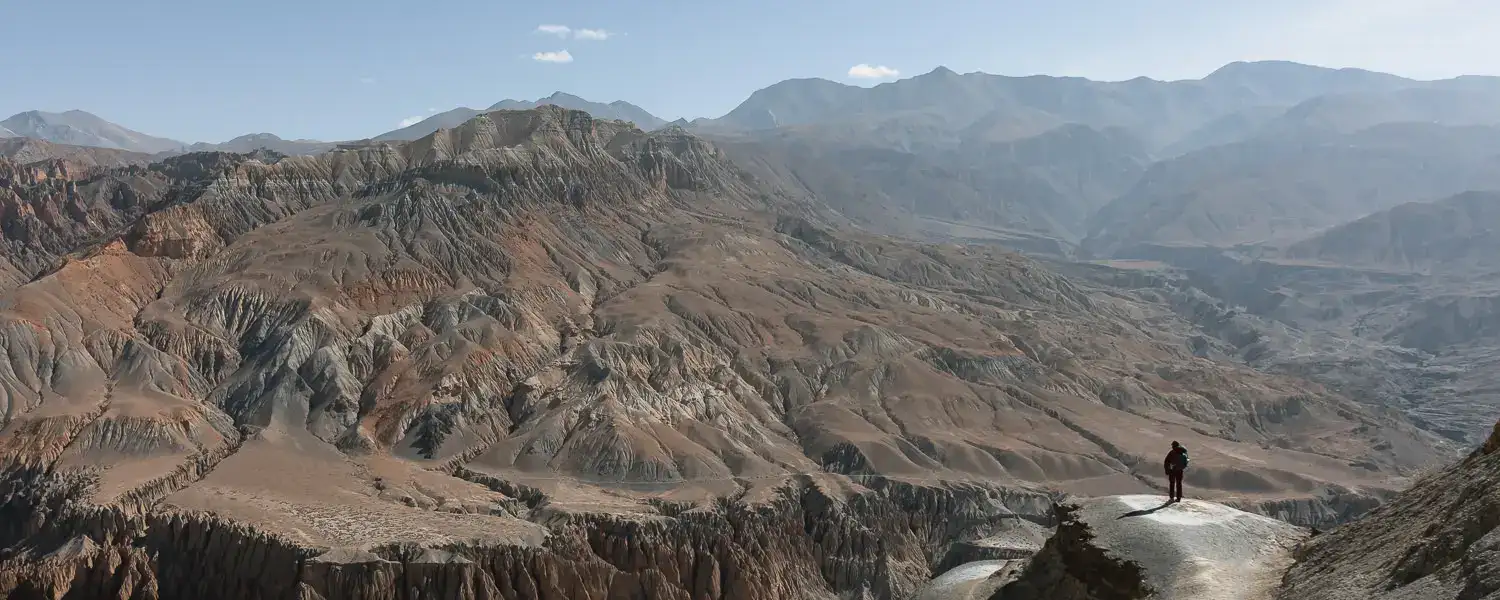
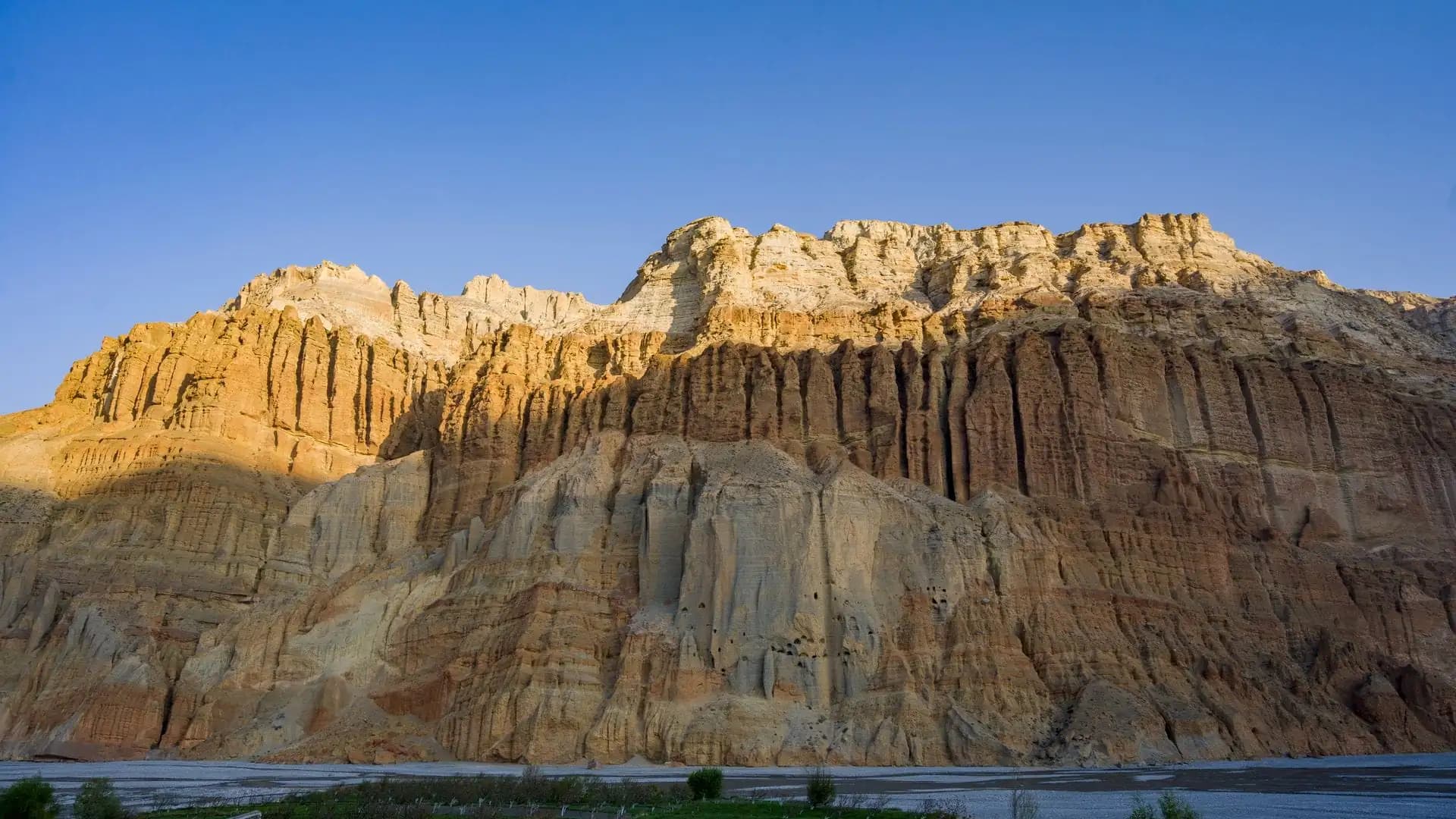
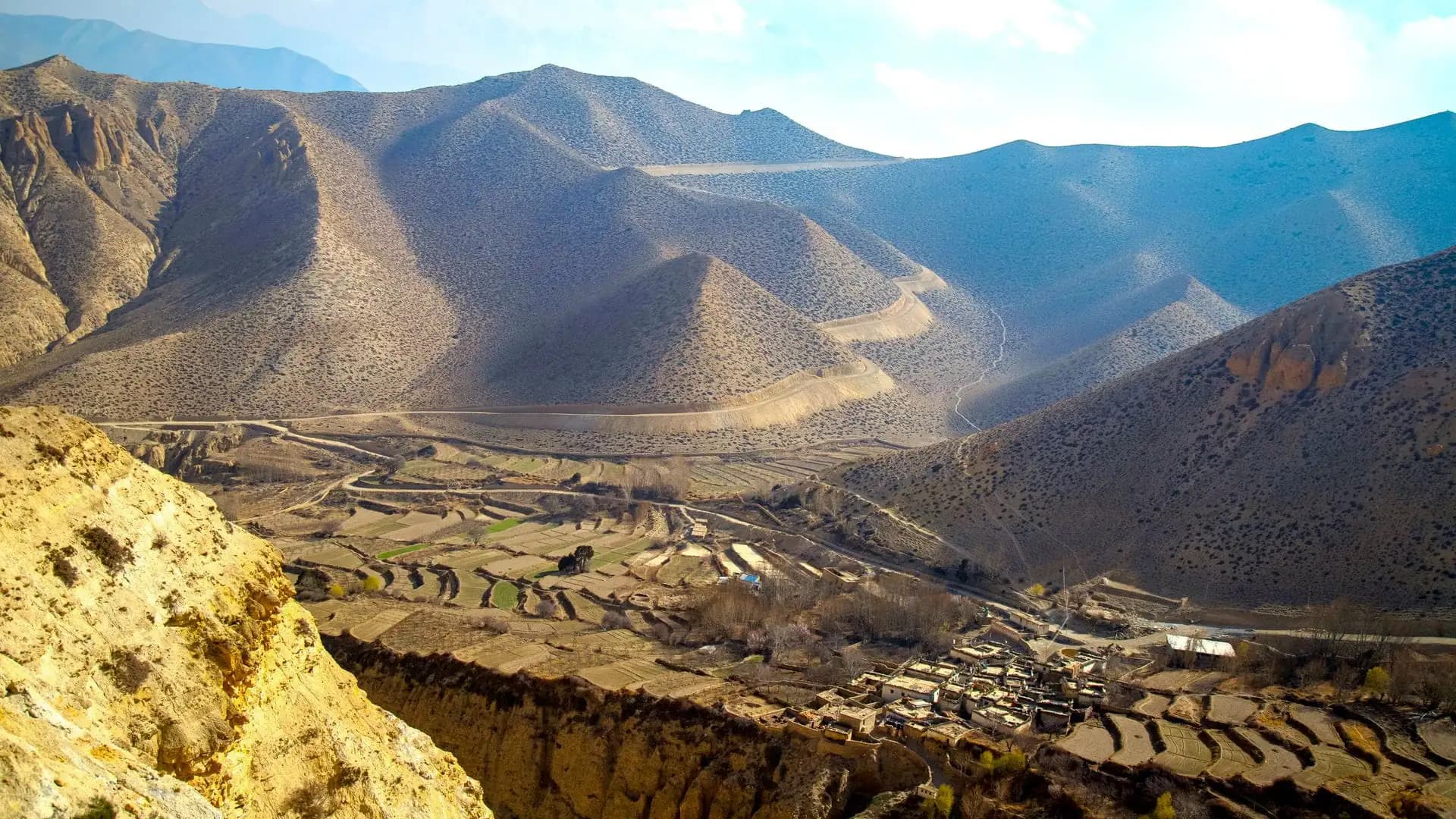
The Upper Mustang Jeep Tour takes you into the old Kingdom of Lo, a high, dry valley north of the Himalaya where the landscape looks more like Tibet than Nepal. In a private 4x4, you follow the Kali Gandaki north from Jomsom past red and ochre cliffs, cave-riddled hillsides and whitewashed villages to Lo Manthang (3,840 m), the walled capital of Mustang, with its 15th-century monasteries and royal palace.
Upper Mustang was closed to foreigners until 1992, and it's still a restricted area with a special permit. For years, that permit cost a flat US$500 for ten days, which made short visits expensive. Since a government decision in November 2025, it costs US$50 per person per day, so a jeep tour that spends five days in the restricted area now pays about half as much. This page explains the 10-day itinerary, what you'll see, what the road is like, the new permit rules and what the trip costs.
Trip at a Glance
Detail | Information |
|---|---|
Duration | 10 days Kathmandu to Kathmandu (5 days inside Upper Mustang) |
Transport | Flights Pokhara–Jomsom–Pokhara, private 4x4 jeep in Mustang |
Highest overnight | Lo Manthang, 3,840 m / 12,598 ft |
Highest point on the road | About 4,000 m, on the passes between Ghami and Lo Manthang |
Difficulty | Easy to moderate (altitude and rough roads, little walking) |
Accommodation | Hotels in Kathmandu and Pokhara, lodges and guesthouses in Mustang |
Meals | Breakfast in the cities; all meals in Mustang |
Permits | Upper Mustang Restricted Area Permit (US$50 per day), ACAP |
Best months | March–November |
Group size | Private trip, 1–6 per jeep |
Price | From US$1,800 per person (two sharing a jeep) |
Why a Jeep Tour?
Upper Mustang has been reachable by road since the late 2000s, when a dirt road was pushed north from Jomsom to Lo Manthang and on towards the Tibetan border. Trekkers still walk to Lo Manthang over 10–14 days, but much of the trail now follows or crosses the road. A jeep tour lets you see the same villages, monasteries and caves in about half the time, with less physical effort.
Jeep tour (this trip) | Upper Mustang trek | |
|---|---|---|
Days from Kathmandu | 10 | 14–17 |
Days inside the restricted area | 5 | 9–12 |
Permit cost (at US$50/day) | About US$250 | About US$450–600 |
Daily effort | Driving 3–8 hours, short walks | Walking 5–7 hours |
Fitness needed | Basic | Good |
Best for | Limited time, older travellers, families, culture and photography | Trekkers who want the full journey on foot |
The trade-off is that you spend a lot of time in the jeep on rough, dusty roads, and you see the country from the road rather than the old walking trails. If you have the time and fitness, the trek is a wonderful experience; if not, the jeep tour is the best way to see Mustang.
Why This 10-Day Itinerary?
We fly to Jomsom, not drive. The road from Pokhara to Jomsom is long and often damaged by landslides. The 20–25 minute flight between the Annapurna and Dhaulagiri massifs saves a full day each way and is a highlight in itself.
We go up slowly. Instead of driving from Jomsom (2,720 m) to Lo Manthang (3,840 m) in one long day, we stop at Chele (3,050 m) and Ghami (3,520 m). That gives you short, relaxed drives, time to visit villages and monasteries along the way, and better acclimatization before you sleep at Lo Manthang.
We spend two nights in Lo Manthang. One full day isn't enough for the walled city and the Chhoser caves; we give you both.
We finish at Muktinath. On the way back, we stay at Muktinath (3,710 m), which is outside the restricted area. You see one of Nepal's most important pilgrimage sites and save a day of permit fees.
We fly straight back to Kathmandu. On Day 9, you fly from Jomsom to Pokhara and connect to a flight to Kathmandu, so you're not on a 7-hour bus ride after the tour.
The New Upper Mustang Permit: US$50 a Day
Upper Mustang is a restricted area, so every foreign visitor needs a Restricted Area Permit (RAP) issued by the Department of Immigration through a registered agency, plus the Annapurna Conservation Area Permit (ACAP).
Permit | Cost per person | Notes |
|---|---|---|
Upper Mustang Restricted Area Permit | US$50 per day inside the restricted area | Checked at Kagbeni; for this tour, 5 days = US$250 |
Annapurna Conservation Area Permit (ACAP) | NPR 3,000 (about US$22) | Covers Jomsom, Muktinath and the rest of the conservation area |
What changed: Until late 2025, the restricted area permit cost a flat US$500 for the first ten days, even if you stayed only four or five. A Cabinet decision on 18 November 2025 amended the Immigration Regulations, setting the fee at US$50 per person per day. For short visits like a jeep tour, this halves the permit cost.
Other rules: you must travel with a licensed guide through a registered agency. The old rule that at least two foreigners had to apply together for a restricted area permit was dropped in March 2026, so solo travellers can now join with just a guide. Both permits are included in our price. For official information, see the Department of Immigration and the National Trust for Nature Conservation, which runs ACAP.
Lo Manthang: The Walled City
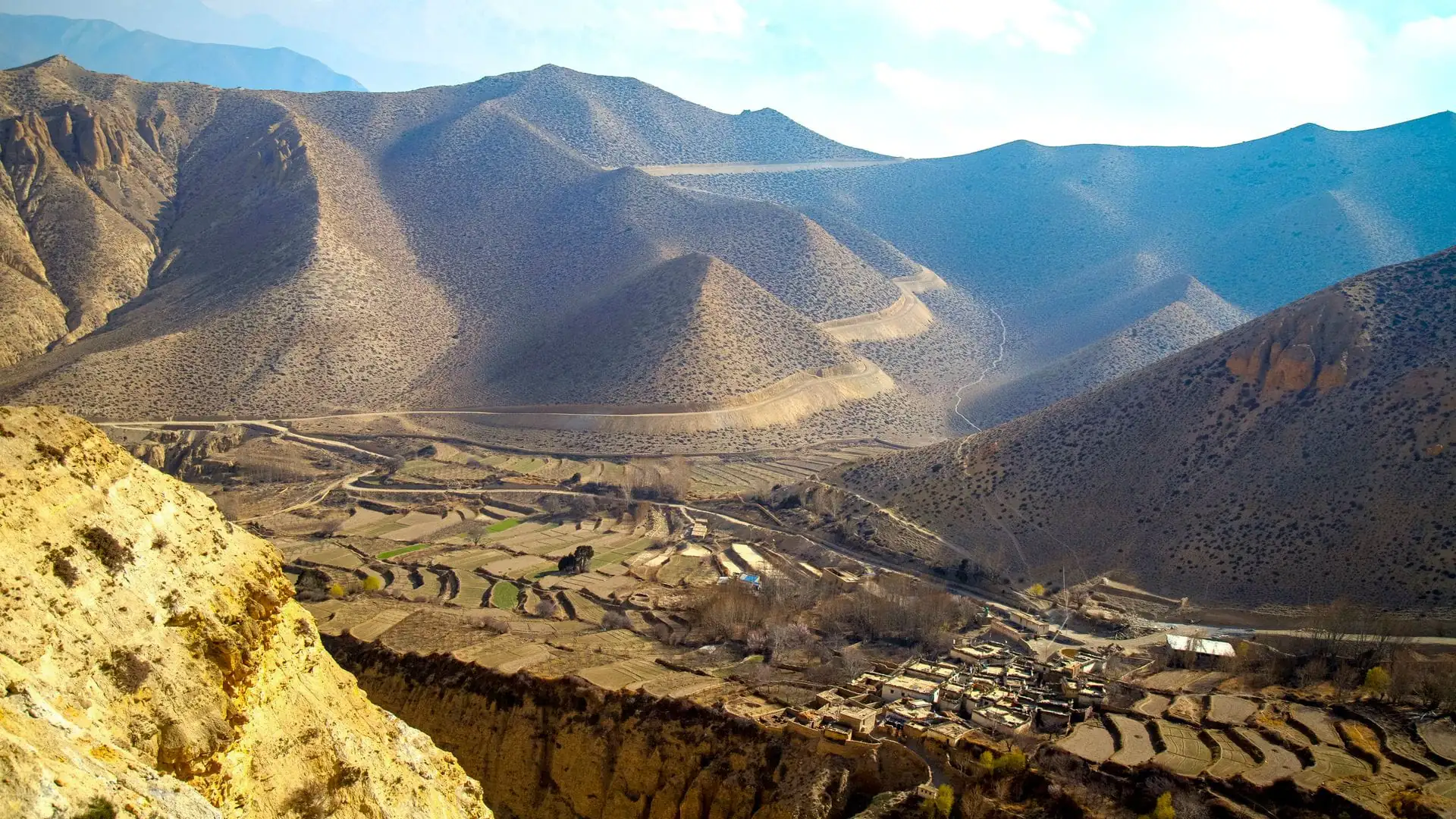
Lo Manthang was founded in the 14th and 15th centuries as the capital of the Kingdom of Lo, which controlled a key stretch of the salt and grain trade between Tibet and the lowlands. Its whitewashed houses, monasteries and four-storey royal palace sit inside a single mud-brick wall, with one main gate. The kingdom was part of Nepal from the late 18th century but kept its own king, with a ceremonial role, until the monarchy was abolished in 2008.
Jampa Lhakhang: a tall, red-walled temple with a giant statue of Maitreya and mandala paintings on its walls.
Thubchen Lhakhang: a large assembly hall with painted walls and carved wooden pillars. Both temples have been carefully restored with local craftspeople over the past three decades.
Chhoede Gompa: the active monastery of Lo Manthang, home to a monastic school.
The royal palace: a large four-storey building in the centre of town, damaged in the 2015 earthquake and under restoration. It isn't usually open, but you can see it from the square.
Many buildings in Lo Manthang have traditional wooden doorways, prayer flags and stacks of firewood on the roofs, a sign of wealth in a land with almost no trees.
Caves, Cliffs and Monasteries
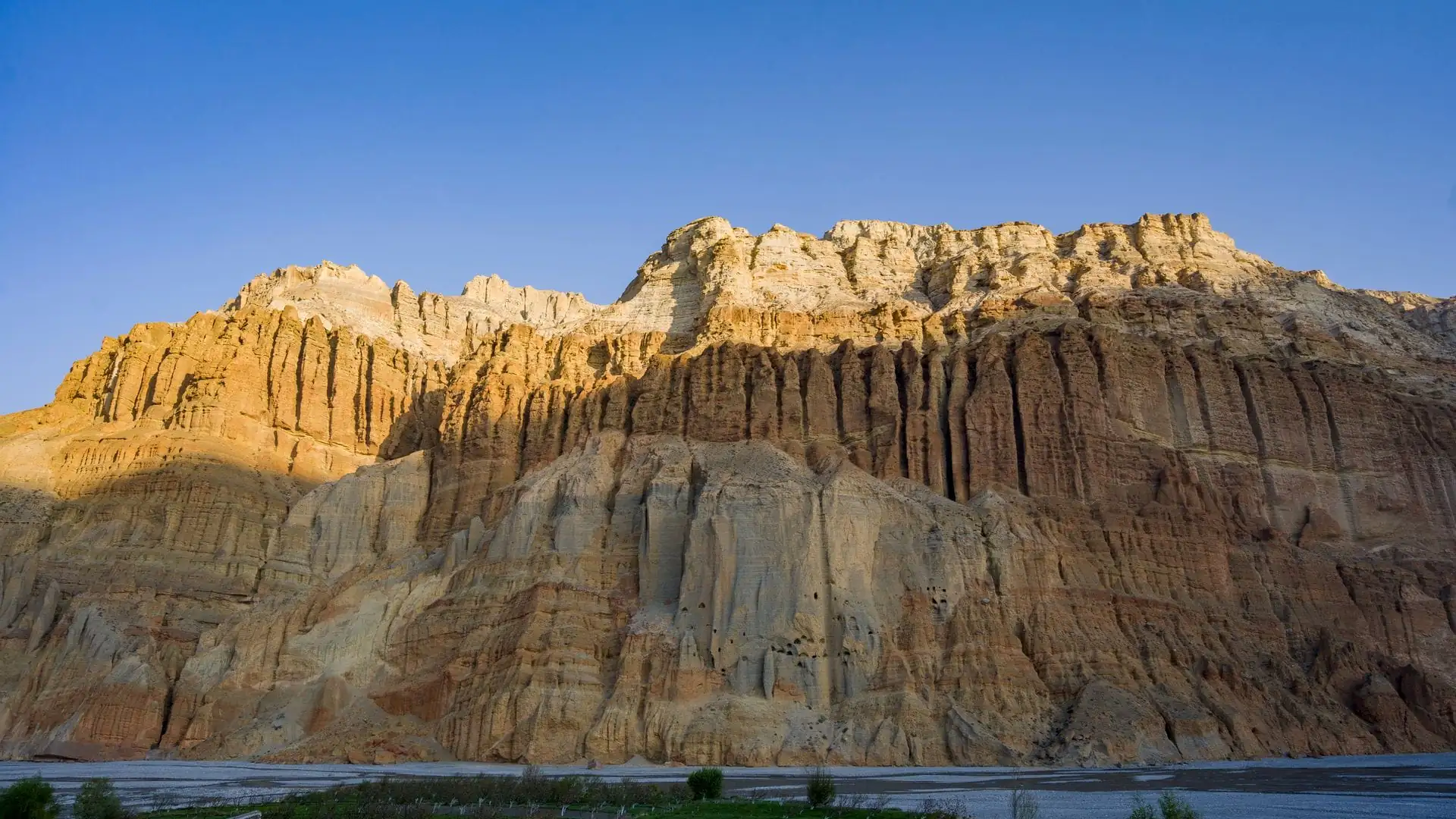
Mustang is famous for its thousands of human-made caves, cut into the soft cliffs. Archaeologists have found that some were used as burial chambers more than 2,000 years ago, while others were used as homes, storerooms and meditation cells. Many are high above the ground and can't be reached without ropes; the ones you visit at Chhoser have been made safe for visitors.
Along the road, look out for cave openings above Chhusang and Tetang, the red and grey striped cliffs near Dhakmar, and the many chortens painted in red, white and grey, the colours of the Sakya school of Tibetan Buddhism that is followed in Lo.
The Tiji Festival
Lo Manthang's best-known festival, Tiji, is held over three days in spring, usually in May, following the Tibetan lunar calendar. Monks in masks and costumes perform dances retelling the story of a deity who defeated a demon and saved the land from drought. If you'd like to time your tour for Tiji, contact us early, as lodges in Lo Manthang fill up months in advance and festival dates change each year.
The People of Lo
The people of Upper Mustang are known as Lobas, "people of Lo". Their language, dress and religion are closely related to those of Tibet, and most follow the Sakya school of Tibetan Buddhism. Life follows the seasons: barley, buckwheat and potatoes are grown in irrigated fields that stand out bright green against the desert, and families keep yaks, goats, sheep and horses. In the coldest months, many people move south to Pokhara or Kathmandu and return in spring.
Trade has always been central to life in Lo. For centuries, salt, wool and livestock came south from Tibet and grain went north, and Lo Manthang grew rich as a stop on the route. Today, the road has brought new goods, motorbikes and tourism, and many young people study or work elsewhere, but village festivals, monasteries and family homes still keep the old way of life alive.
Kagbeni and the Kali Gandaki
Kagbeni, where you enter Upper Mustang, is one of the most atmospheric villages in the region: a maze of narrow lanes, tunnels and mud-brick houses around a red monastery, with green barley fields on the riverbank. The Kali Gandaki here is wide and braided, and the black fossil stones called shaligram, sacred to Hindus as symbols of Vishnu, are found in the river gravel.
South of Kagbeni, the valley runs between Dhaulagiri and the Annapurnas, two 8,000 m mountains less than 40 km apart. It's one of the deepest valleys on Earth and has been a trade route between Tibet and India for centuries.
A Typical Day on the Jeep Tour
Mornings start with breakfast around 7 a.m. and a departure by 8 a.m., when the light is best and the wind hasn't picked up. Most driving days are short, three to four hours, with plenty of stops for photos, short walks and visits to villages and monasteries. Lunch is at a lodge along the way.
You usually reach the next village by early afternoon, with time to explore on foot with your guide, rest or watch village life. Afternoons in the Kali Gandaki valley are often windy and dusty, so it's a good time to be indoors. Dinner is around 6:30 p.m. in the warm dining room, and most people are in bed early.
Route and Driving Times
Day | Route | Travel time |
|---|---|---|
3 | Pokhara – Jomsom (flight), Jomsom – Kagbeni – Chele | 25 min flight, 3–4 hrs drive |
4 | Chele – Samar – Syangboche – Ghami | 3–4 hrs |
5 | Ghami – Dhakmar – Ghar Gompa – Lo Manthang | 3–4 hrs |
6 | Lo Manthang – Chhoser – Lo Manthang | 2 hrs drive, 2–3 hrs walking |
7 | Lo Manthang – Kagbeni – Muktinath | 7–8 hrs |
8 | Muktinath – Jomsom – Marpha – Jomsom | 2–3 hrs |
9 | Jomsom – Pokhara – Kathmandu (flights) | About 1 hr flying |
Driving times depend on road conditions, the number of photo stops and occasional repairs after landslides.
Altitude Profile
Place | Altitude | Night |
|---|---|---|
Kathmandu | 1,400 m / 4,593 ft | 1, 9 |
Pokhara | 822 m / 2,697 ft | 2 |
Jomsom | 2,720 m / 8,924 ft | 8 |
Kagbeni | 2,810 m / 9,219 ft | Day 3 |
Chele | 3,050 m / 10,007 ft | 3 |
Ghami | 3,520 m / 11,549 ft | 4 |
Passes before Lo Manthang | About 4,000 m / 13,123 ft | Day 5 |
Lo Manthang | 3,840 m / 12,598 ft | 5, 6 |
Muktinath | 3,710 m / 12,172 ft | 7 |
For more on altitudes in the region, see our guide to the Annapurna Circuit elevation, which covers Muktinath and the Kali Gandaki valley.
Map Overview
From Pokhara, the flight crosses the Annapurna range to Jomsom in the Kali Gandaki valley. The road runs north up the valley to Kagbeni, then into Upper Mustang through Chhusang and Chele, over a series of passes to Samar, Syangboche and Ghami, and on via Dhakmar and Ghar Gompa to Lo Manthang. Chhoser lies a short drive north of Lo Manthang, towards the Tibetan border. The return follows the same road south to Kagbeni, then turns east to Muktinath before descending to Jomsom and Marpha.
How Difficult Is the Jeep Tour?
We grade it easy to moderate. You don't need to be a trekker, but it's not a luxury coach tour.
Rough roads: much of the road is unpaved, dusty and bumpy, with river crossings and steep drops. Days 3–8 involve 2–8 hours in the jeep.
Altitude: you sleep at 3,500–3,840 m for four nights. Most people feel some breathlessness and may sleep lightly.
Walking: short walks around villages and monasteries, plus steps and ladders at Chhoser. You can skip anything you don't want to do.
Wind and dust: strong winds blow up the Kali Gandaki most afternoons.
The tour suits anyone in reasonable health, including older travellers and families with children who are comfortable at altitude. Talk to your doctor if you have heart or lung conditions.
Altitude Sickness
Even though you don't walk far, altitude affects everyone. Mild symptoms such as a headache or poor sleep are common in Ghami and Lo Manthang. We reduce the risk by climbing gradually, with nights at Chele and Ghami before Lo Manthang, and by checking everyone's oxygen levels with a pulse oximeter each evening. Drink plenty of water, avoid alcohol for the first few nights, and tell your guide about any symptoms. Because you travel by jeep, it's easy to gain height faster than your body can adjust, so take the short walks slowly, especially on the first afternoon in Lo Manthang, and rest if you feel unwell. If symptoms get worse, the cure is to go down, and the jeep makes that quick and simple. This is general guidance, not medical advice. The CDC's Nepal travel health page has more information.
Best Time for the Upper Mustang Jeep Tour
Upper Mustang lies in the rain shadow of the Himalaya, so it gets much less rain than the rest of Nepal.
March to May. Clear skies, warming days and the Tiji festival in May. A very good time to go.
June to August. Unusually for Nepal, Mustang is good during the monsoon, as little rain reaches the plateau. The main risks are delayed Jomsom flights and landslides on the roads further south. Fields are green and barley ripens.
September to November. Clear, dry and the most popular season, with harvest in the villages. Nights are cold by November.
December to February. Very cold, with snow possible and many lodges in Lo Manthang closed. Not recommended.
For an overview of seasons across the country, see our guide to the best time to hike in Nepal.
Weather by Season
Season | Lo Manthang (3,840 m) day / night | Conditions |
|---|---|---|
Spring (Mar–May) | 10–18 °C / −5 to 3 °C | Clear, windy afternoons |
Summer (Jun–Aug) | 15–22 °C / 5–10 °C | Mostly dry, some cloud, green fields |
Autumn (Sep–Nov) | 10–18 °C / −8 to 2 °C | Clear and dry, cold nights |
Winter (Dec–Feb) | −2 to 6 °C / −20 to −10 °C | Very cold, snow possible |
These are typical ranges, not forecasts.
Getting There: Jomsom Flights
Pokhara to Jomsom: about 20–25 minutes, early morning only, because strong winds pick up in the Kali Gandaki valley by late morning.
Delays: flights are often delayed or cancelled by cloud or wind. If the flight can't go, we drive instead (about 7–8 hours from Pokhara).
Baggage: about 10–15 kg per person, depending on the airline. Leave extra luggage in Kathmandu or Pokhara.
Spare day: keep at least one free day in Kathmandu before your international flight.
Accommodation
Kathmandu and Pokhara: comfortable tourist-class hotels with breakfast and private bathrooms.
In Mustang: family-run lodges and guesthouses, many in traditional houses. Most have rooms with private bathrooms in Jomsom, Lo Manthang and Muktinath, and simpler rooms with shared bathrooms in Chele and Ghami. Rooms aren't heated, but lodges provide thick blankets, and the dining rooms are warm in the evenings.
Meals
Lodges serve dal bhat, Tibetan bread, thukpa (noodle soup), momos, pasta, potatoes, eggs and porridge. Thakali dal bhat in Marpha and Jomsom is among the best in Nepal, and Marpha is famous for apple brandy, apple pie and dried apples. All meals in Mustang are included.
Water: buy boiled or filtered water at lodges, or bring purification tablets or a filter bottle.
Internet, Mobile Signal and Charging
Mobile signal: NTC and Ncell work in Jomsom, Muktinath and much of the road, with patchy coverage in Upper Mustang.
Wi-Fi: most lodges in Lo Manthang, Muktinath and Jomsom offer it; it's slower in Chele and Ghami.
Charging: available at most lodges, sometimes for a small fee. Bring a power bank.
Upper Mustang Jeep Tour Cost
Our price: from US$1,800 per person, based on two people sharing a private jeep. The price per person falls for groups of three to six, because the jeep cost is shared. Ask us for a quote for your group size or for a solo trip.
Here's roughly where the money goes, for two people:
Cost item | Approx. US$ per person |
|---|---|
Flights Pokhara–Jomsom–Pokhara | 260 |
Flight Pokhara–Kathmandu | 110 |
Tourist bus Kathmandu–Pokhara | 15 |
Private 4x4 jeep and driver, 6 days (shared by 2) | 630 |
Upper Mustang Restricted Area Permit, 5 days | 250 |
ACAP permit | 25 |
Lodges and all meals in Mustang, 6 nights | 255 |
Guide (wages, food, lodging, insurance, flights), shared | 140 |
Hotels: 2 nights in Kathmandu, 1 in Pokhara | 60 |
Airport transfers and farewell dinner | 30 |
First aid, oximeter, office costs and taxes | 25 |
Total | 1,800 |
Extra money to budget:
Item | Typical cost |
|---|---|
Nepal tourist visa | US$30 (15 days), US$50 (30 days) |
Travel insurance covering travel to 4,500 m and helicopter evacuation | US$50–120 |
Monastery entrance fees and donations | US$5–10 per site |
Drinks, snacks and Wi-Fi | US$10–15 a day |
Lunches and dinners in Kathmandu and Pokhara | US$10–25 a meal |
Tips for guide and driver | US$80–120 per traveller in total |
Optional Add-ons
Tiji festival dates: timing your tour for Lo Manthang's spring festival
An extra night in Lo Manthang for a horse ride to Namgyal Gompa and Tingkhar, or more time with the monasteries
Kagbeni overnight to explore the old village on foot
Helicopter options to or from Lo Manthang, if you're short of time
Pokhara or Chitwan: add a few days in Pokhara or a safari in Chitwan; see our Kathmandu, Pokhara and Chitwan Tour
Kathmandu sightseeing: add a day tour of the valley's UNESCO sites; see our guide to a Kathmandu day tour
Travel Tips
Bring a buff or scarf and sunglasses for the wind and dust.
Pack warm layers even in summer; nights in Lo Manthang are cold.
Carry cash in Nepali rupees. There are ATMs in Jomsom but none in Upper Mustang.
Bring small notes for monastery entrance fees and donations.
Use lip balm and sunscreen; the sun is strong and the air is very dry.
Keep a spare day in Kathmandu for flight delays.
Photography Tips
Ask before photographing people, monks and the inside of monasteries; some temples don't allow photography inside.
Early morning and late afternoon give the best light on the coloured cliffs.
Protect your camera from dust, especially when changing lenses.
Don't fly drones without official permission; Upper Mustang is a sensitive border area.
Responsible Travel
Respect local customs: walk clockwise around chortens, mani walls and monasteries.
Dress modestly in villages and temples.
Don't touch or remove anything from caves, chortens or monasteries.
Carry out your rubbish, especially plastic bottles and batteries.
Support local businesses by buying handicrafts, apples and meals from village families.
Is the Upper Mustang Jeep Tour Right for You?
This trip suits you if you:
Want to see Upper Mustang's culture and landscapes without a long trek
Have about 10 days in Nepal
Are happy with rough roads, dust and simple lodges
Choose something else if you:
Want a full trek on foot: ask us about the Upper Mustang trek
Want a walking trek through the Kali Gandaki valley and over Thorong La: see the Annapurna Circuit Trek and our guide to the Thorong La pass
Want a longer overland journey into Tibet: see our Kailash Mansarovar Overland Tour
Prefer an easy tour with no high altitude: see the Kathmandu and Pokhara Tour
Why Book With Adventure Life Nepal
Founded by a guide. Adventure Life Nepal was started by Dil Bahadur Karki, who began as a porter and has more than 25 years of experience guiding in the Himalaya, with travellers from more than 40 countries.
Licensed and registered with the Nepal Tourism Board and the Trekking Agencies Association of Nepal (TAAN).
Permits handled for you, at the new daily rate.
A slower, safer itinerary, with nights at Chele and Ghami before Lo Manthang.
Experienced Mustang drivers in private 4x4 vehicles.
Daily health checks with a pulse oximeter.
Booking, Cancellation & Refund Policy
A 30% deposit confirms your booking; the balance is due before the tour begins.
30 days or more before departure: full refund minus administrative fees.
15–29 days before departure: 50% cancellation fee.
Less than 15 days before departure: no refund.
Travel insurance covering travel to 4,500 m and helicopter evacuation is mandatory.
We may change the itinerary because of weather, flight or road conditions, or health and safety reasons.
Full details are on our terms and conditions page.
Book Your Upper Mustang Jeep Tour
Drive into the old Kingdom of Lo, explore the walled city of Lo Manthang and its cliff caves, and finish at the sacred temple of Muktinath, all in ten days from Kathmandu, with a private jeep and a guide who knows the region. Tell us your dates and group size, and we'll confirm availability and your final price.
Book now or send us a quick enquiry. WhatsApp or call: +977 9841248242 · Email: adventurelifenepal@gmail.com
Highlights
Itinerary
Our team meets you at Tribhuvan International Airport and drives you to your hotel. In the evening, your guide briefs you on the tour and collects your passport details for the permits.
- Drive: 6–7 hours by tourist bus, or a 25-minute flight as an upgrade The road follows the Trishuli and Marsyangdi rivers west to Pokhara. Spend the evening by Phewa Lake, and get an early night for the morning flight.
- Flight: about 20–25 minutes. Drive: 3–4 hours The early morning flight threads between Dhaulagiri and Annapurna into the Kali Gandaki valley. At Jomsom, you meet your jeep and driver and head north to Kagbeni, a medieval village of mud-brick houses at the gateway to Upper Mustang, where your restricted area permit is checked. Beyond Kagbeni, the valley turns dry and wind-carved, with cave openings high in the cliffs. You pass Tangbe and Chhusang and cross the river to Chele.
- Drive: 3–4 hours with stops A short, spectacular drive climbs over a series of passes with views back to Nilgiri and Annapurna, through Samar and Syangboche, to Ghami, one of the largest villages in Lo. In the afternoon, walk along Ghami's mani wall, one of the longest in Nepal, and through its lanes of whitewashed houses.
- Drive: 3–4 hours with stops You drive below the deep red cliffs of Dhakmar, said in local legend to be stained with the blood of a demon killed by Guru Rinpoche, then climb to Ghar Gompa (Lo Gekar), an old monastery with painted rock carvings and prayer stones. A pass at about 4,000 m leads down to Lo Manthang, a compact walled town on a wide plain, ringed by snowy peaks. Your guide shows you around the lanes in the late afternoon.
- Drive: about 1 hour each way. Walking: 2–3 hours In the morning, you drive north to Chhoser, a valley of cliffs honeycombed with caves. Jhong Cave is a complex of rooms on several levels, reached by ladders and narrow passages, that was used for shelter, storage and meditation. Nearby, Garphu and Nyiphu monasteries are built into the cliffs. In the afternoon, back in Lo Manthang, you visit Jampa and Thubchen Lhakhangs, with their restored 15th-century wall paintings, and see the royal palace from outside.
- Drive: 7–8 hours The longest day of the tour. You retrace the road south through Ghami, Chele and Kagbeni, then climb east to Muktinath, leaving the restricted area. The views back over Mustang and across to Dhaulagiri make up for the bumps.
- Drive: 2–3 hours with stops In the morning, you visit the Muktinath temple complex, with its 108 water spouts and eternal flame, sacred to Hindus as a place of liberation and to Buddhists as Chumig Gyatsa. Then you drive down to Jomsom and on to Marpha, a Thakali village known for its stone-paved lanes, whitewashed houses and apple orchards, before returning to Jomsom for the night.
- Flights: about 20–25 minutes, then about 25 minutes You take the early flight back to Pokhara and connect to a flight to Kathmandu. In the evening, we host a farewell dinner. If weather delays the Jomsom flight, we drive to Pokhara instead (about 7–8 hours), which is why we recommend a spare day before your flight home.
We drive you to the airport for your flight home.
Elevation Profile
Altitude Variation Chart
What's Included
Included
- Airport pickup and drop-off in Kathmandu
- 2 nights in a hotel in Kathmandu and 1 night in Pokhara, with breakfast
- Tourist bus Kathmandu–Pokhara
- Flights Pokhara–Jomsom–Pokhara and Pokhara–Kathmandu
- Private 4x4 jeep with an experienced driver in Mustang
- 6 nights in lodges in Mustang
- Breakfast, lunch and dinner in Mustang
- Farewell dinner in Kathmandu
- Licensed, English-speaking guide
- Wages, meals, accommodation, flights and insurance for the guide
- Upper Mustang Restricted Area Permit and ACAP
- First aid kit and pulse oximeter checks
- All government taxes and service charges
Excluded
- International flights and Nepal visa fees
- Lunch and dinner in Kathmandu and Pokhara (except the farewell dinner)
- Travel insurance covering travel to 4,500 m and helicopter evacuation
- Monastery entrance fees and donations
- Drinks, snacks, hot showers and Wi-Fi
- Extra nights, meals or road transport caused by flight cancellations or landslides
- Tips for guide and driver
- Anything not listed under What's Included
Packing List
Category | Items |
|---|---|
Clothing | Warm base layers, fleece, down jacket, windproof jacket, comfortable trousers, warm hat, sun hat, buff or scarf, gloves |
Footwear | Comfortable walking shoes or light boots, sandals, warm socks |
Equipment | Daypack, sunglasses, headtorch, water bottle |
Health and hygiene | Personal medicines, sunscreen (SPF 50), lip balm, moisturiser, hand sanitiser, wet wipes |
Documents and money | Passport, travel insurance details, passport photos, cash in Nepali rupees |
Extras | Camera with dust protection, power bank, snacks |
Frequently Asked Questions
Ten days from Kathmandu to Kathmandu, with five days inside the Upper Mustang restricted area.
US$50 per person per day inside the restricted area, since a Cabinet decision in November 2025. For this tour, that's about US$250, plus the ACAP permit of NPR 3,000. Both are included in our price.
You must travel with a licensed guide through a registered agency. Since March 2026, you no longer need a second foreign traveller to apply for the permit, so solo travellers can join with a guide.
You sleep at up to 3,840 m in Lo Manthang, and the road crosses passes of about 4,000 m.
Yes, for anyone in reasonable health who can cope with altitude and long, bumpy drives. There's very little walking.
Mostly unpaved, dusty and bumpy, with river crossings and some steep sections. Our drivers know the road well and drive carefully.
Yes. Upper Mustang lies in the rain shadow and stays fairly dry in summer. Flights and roads further south can be disrupted, so allow a spare day.
Tiji takes place over three days in spring, usually in May, on dates set by the Tibetan lunar calendar. Contact us early if you'd like to attend.
Mild symptoms are common above 3,500 m. We climb gradually, with nights at Chele and Ghami, and check everyone's oxygen levels each evening.
We drive between Pokhara and Jomsom instead, which takes about 7–8 hours. This may add a day, so keep a spare day before your international flight.
Family-run lodges and guesthouses, many in traditional houses. Most in Lo Manthang, Jomsom and Muktinath have private bathrooms; Chele and Ghami are simpler.
The palace is under restoration after the 2015 earthquake and isn't usually open, but you can see it from the town square.
Not without official permission. Upper Mustang is a sensitive border area, and flying drones without a permit isn't allowed.
Mobile coverage is patchy in Upper Mustang, but most lodges in Lo Manthang have Wi-Fi.
From US$1,800 per person based on two sharing a jeep, including flights, the jeep, permits, lodges, meals in Mustang, hotels and a guide. Larger groups pay less per person.
Yes. Your policy must cover travel to 4,500 m and helicopter evacuation.
Warm and windproof layers, a down jacket, sunglasses, a buff for the dust, sunscreen, lip balm and comfortable shoes.
Yes. We can add short walks around Lo Manthang, or combine the jeep tour with part of the Annapurna Circuit. Ask us for ideas.
Yes. Upper Mustang is a restricted area, and the permit is only issued through a registered agency, with a licensed guide travelling with you. Our guide is included in the price.
At least 4–6 weeks ahead, and several months ahead for the Tiji festival or October.
Gallery & Video
Customer Reviews
Loading reviews...