
Kailash Mansarovar Overland Tour from Kathmandu – 12 Days
Trip Duration: 12 Days 11 Nights
Trip Grade: Strenuous
Group Size: Min 2 person - Max 10 person
Meals: Breakfast in Kathmandu; breakfast, lunch and dinner in Tibet
Best Season: May to September
Start Point: Kathmandu
Accomodation: Hotels in Kathmandu, Kerung and Saga; guesthouses at Mansarovar, Darchen and on the kora
Ending Point: Kathmandu
Max Altitude: 5,630m (Dolma La Pass)
Transportation: Private vehicle to the border; Tibet-registered vehicle in Tibet
Permits Required: Chinese group visa, Tibet Travel Permit, Alien's Travel Permit, frontier permits
Overview
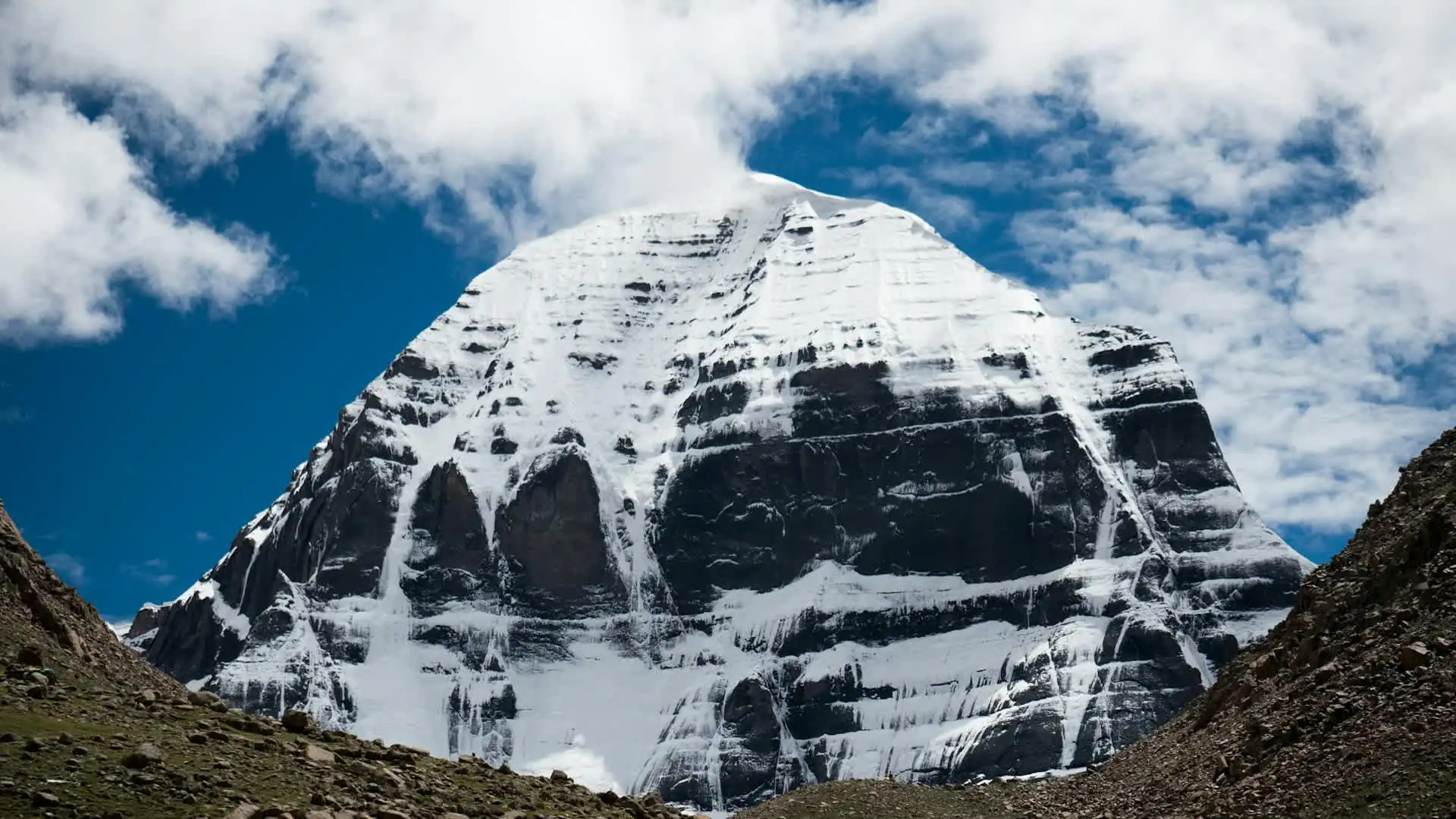
The Kailash Mansarovar Overland Tour from Kathmandu takes you by road across the Nepal–Tibet border at Rasuwagadhi–Kerung, over the Tibetan Plateau to Lake Mansarovar (4,590 m), and around Mount Kailash (6,638 m) on the three-day outer kora. The highest point is the Dolma La pass at 5,630 m. There are no flights inside Tibet and no long trekking approach. Most of the journey is driving, and the hard part is three days of walking at altitudes most people have never slept at.
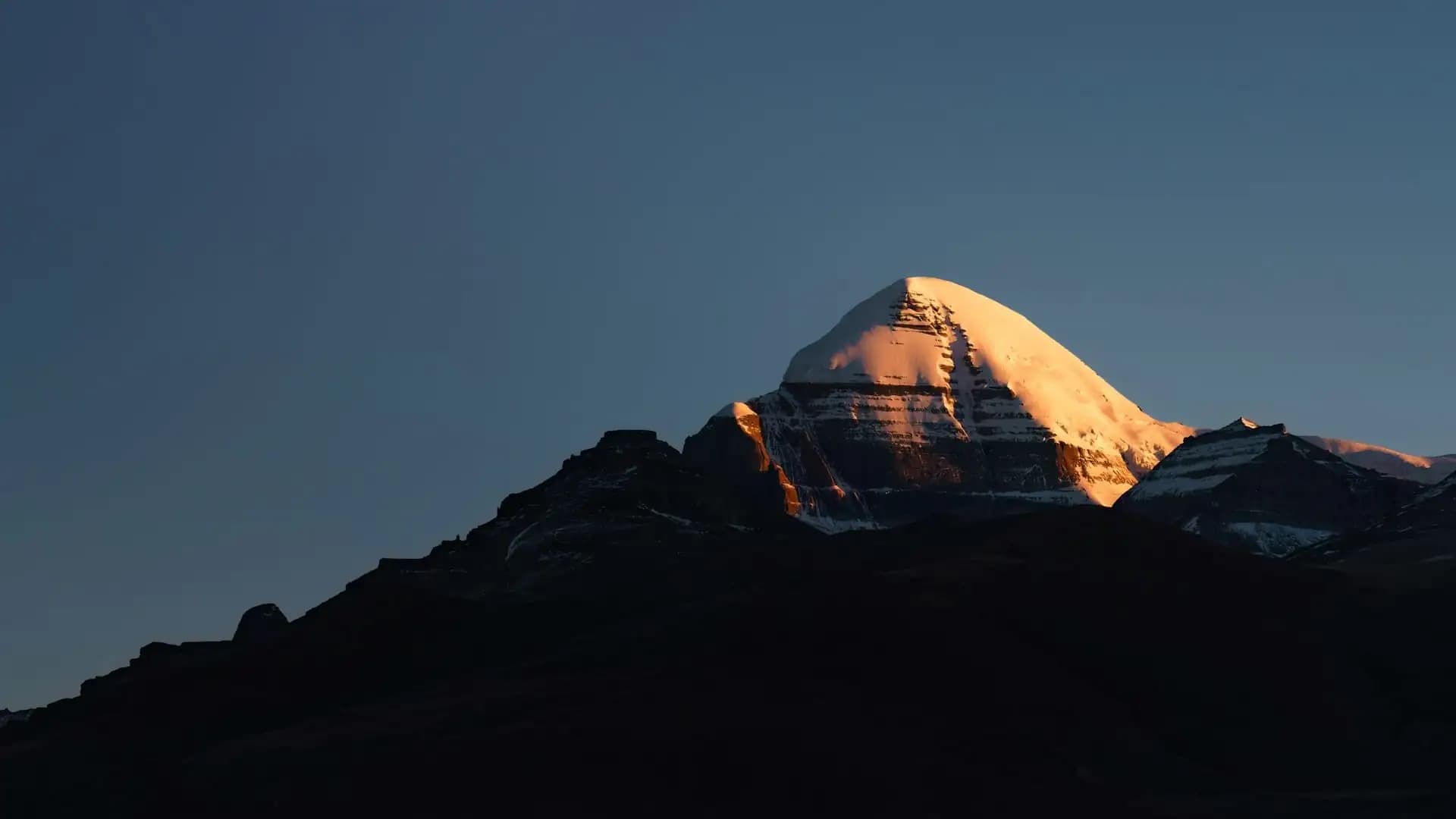
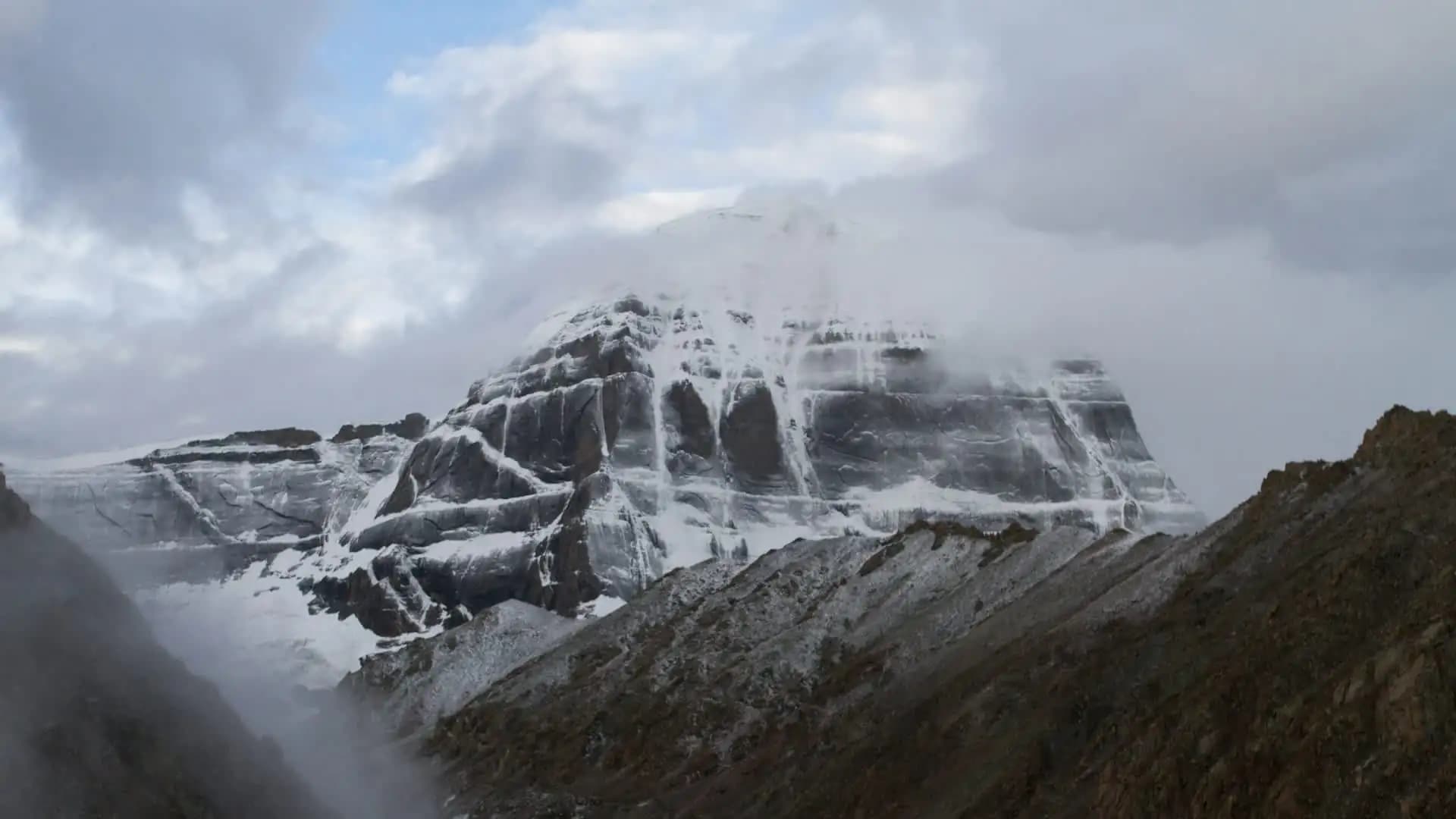
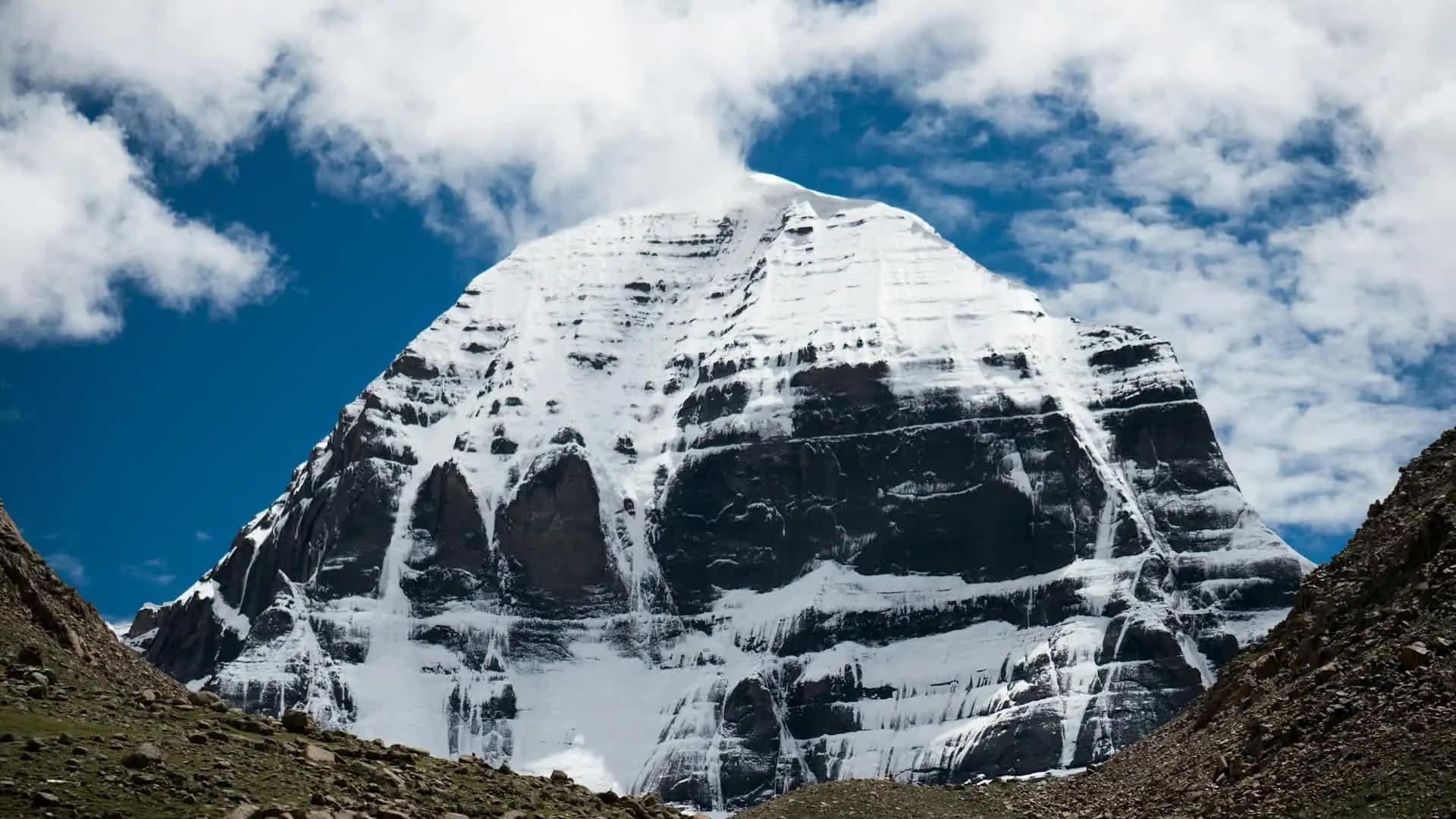
Kailash matters to four religions. Hindus see it as the home of Shiva, Buddhists as the seat of Demchok (Chakrasamvara), Jains as the place where Rishabhanatha attained liberation, and followers of Bön as the centre of their sacred geography. Pilgrims walk around it rather than climbing it; the mountain has never been climbed, and climbing it is not allowed.
This page sets out our 12-day plan, why it takes 12 days rather than the 9 some companies advertise, what the visa and permit process involves, what each day is like, and what the trip costs.
Trip at a Glance
Detail | Information |
|---|---|
Duration | 12 days, Kathmandu to Kathmandu (9 days in Tibet) |
Route | Kathmandu – Rasuwagadhi/Kerung – Saga – Lake Mansarovar – Darchen – Kailash kora – Saga – Kerung – Kathmandu |
Highest point | Dolma La pass, 5,630 m / 18,471 ft |
Highest overnight | Dirapuk, about 5,000 m |
Walking | 3 days on the kora, about 42–45 km on foot (the full circuit is about 52 km; shuttle buses cover the ends) |
Transport | Private vehicle Kathmandu–border; Tibet-registered vehicle with driver in Tibet |
Accommodation | Hotel in Kathmandu, guesthouses and simple hotels in Tibet, basic shared rooms on the kora |
Meals | Breakfast in Kathmandu, all meals in Tibet |
Grade | Strenuous (because of altitude, not technical difficulty) |
Group size | 2 to 10 people |
Best season | May to September |
Paperwork | Chinese group visa, Tibet Travel Permit, Alien's Travel Permit and frontier permits, all arranged by us |
Price | From US$3,200 per person |
Why 12 Days and Not 9?
The old version of this tour ran in 9 days. On paper it works: drive to Kerung, drive to Saga, rest, drive to Mansarovar, drive to Darchen, three kora days, then one long drive home. In practice, it climbs from 2,700 m at Kerung to about 4,600 m at Saga in a single day, and the return squeezes Saga to Kathmandu into one push of well over 12 hours, including two border posts.
A gain of almost 1,900 m in sleeping altitude in one day is far beyond what high-altitude medicine guidelines suggest, which is roughly 300–500 m a day once you are above 3,000 m. You can't fix this entirely on the Kailash road, because there is no town between Kerung and Saga to break the climb. What you can do is spend two nights at Kerung before it, which gives the body time to begin adjusting, and keep three more nights at or around 4,600 m (Saga, Mansarovar and Darchen) before the first night on the kora at about 5,000 m.
That is the logic of our plan:
Two days in Kathmandu for the group visa, final paperwork and a gentle start
Two nights in Kerung (2,700 m) before the big climb
One night each at Saga, Lake Mansarovar and Darchen (all about 4,600 m) before the kora
The three-day kora
Two days back to the border instead of one, with a night at Saga and a night at Kerung
Longer versions of 14–16 days add an extra night at Mansarovar, a rest day at Saga or a detour through Lhasa. They are better for anyone worried about altitude, and we can arrange them. Our 12-day plan is the shortest version we're comfortable selling. Anything shorter means arriving at Dolma La with too little time at height.
The Group Visa and Tibet Permits
This is the part of a Kailash trip most travellers find confusing. Tibet is part of China, and foreign visitors can't travel there independently. For the overland route from Nepal, you need:
Document | What it is | Who arranges it |
|---|---|---|
Chinese group visa | A single sheet listing every member of the group; it replaces a visa in your passport | Applied for by us through a licensed Tibetan agency, issued in Kathmandu |
Tibet Travel Permit | Permission to enter the Tibet Autonomous Region | Our Tibetan partner agency |
Alien's Travel Permit | Required for areas outside Lhasa, including Ngari (where Kailash is) | Our Tibetan partner, on arrival |
Military and frontier permits | Required for border regions such as Ngari | Our Tibetan partner |
Nepal visa | Needed to enter Nepal and re-enter after Tibet (not needed for Indian citizens) | You, on arrival or online |
A few points matter in practice:
A normal Chinese tourist visa doesn't work. If you already hold one in your passport, it usually has to be cancelled or ignored, because entry via Kerung is on the group visa.
You enter and leave Tibet together. The group visa covers everyone on it, so nobody can leave the group early or stay on.
We need your passport details early. Send a clear colour scan of your passport and visa photo as soon as you book, ideally at least 30 days before departure. The permit process starts with these.
Your passport must be valid for at least six months from the date you leave Tibet.
Rules change. Permits for Tibet are sometimes paused at short notice, especially around sensitive dates or during festivals. We'll tell you what applies to your departure when you book, and our refund policy below explains what happens if permits are refused.
For Nepal visas on arrival and online applications, see the Department of Immigration. Nepal's tourist visa allows you to leave and re-enter Nepal while it is valid; just make sure its validity covers your whole trip, from arrival to final departure.
Indian Passport Holders, NRIs and Other Nationalities
The rules differ by passport, and they have changed several times in recent years:
Indian citizens living in India can join a private tour via Nepal. In recent seasons, their group visa has usually been processed through the Chinese Embassy in New Delhi, which means submitting passports in India before travelling to Kathmandu. We'll confirm the current process and timing when you book.
Indian passport holders living abroad (NRIs) and people of Indian origin with foreign passports (including OCI holders) usually have their group visa issued in Kathmandu, and are often grouped separately from resident Indian pilgrims.
Other nationalities have the group visa issued in Kathmandu, which is why our itinerary includes Day 2 in the city.
Age. Chinese authorities have in recent seasons applied an upper age limit of about 70 for pilgrims. A medical fitness certificate may be required. Please check with us before booking if you're close to that age.
Indian citizens don't need a visa for Nepal, but you should carry your passport, because it's needed for the Chinese group visa and at the Tibetan border.
Separate from private tours, the Government of India runs its own Kailash Mansarovar Yatra through the Lipulekh and Nathu La passes, with places allocated by lottery. Our tour is a private alternative via Nepal and has no connection with that programme.
The Kailash Kora: What to Expect
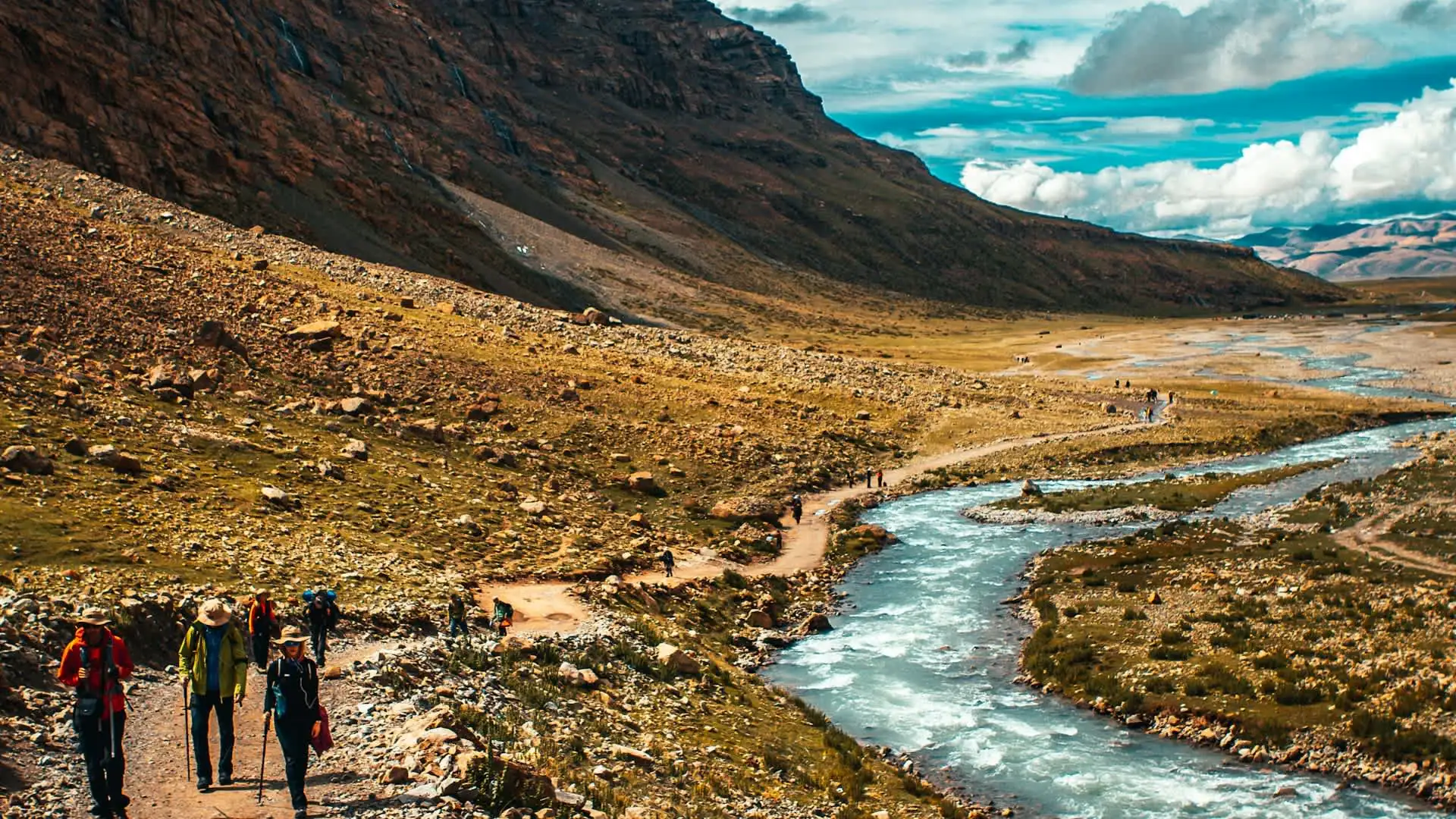
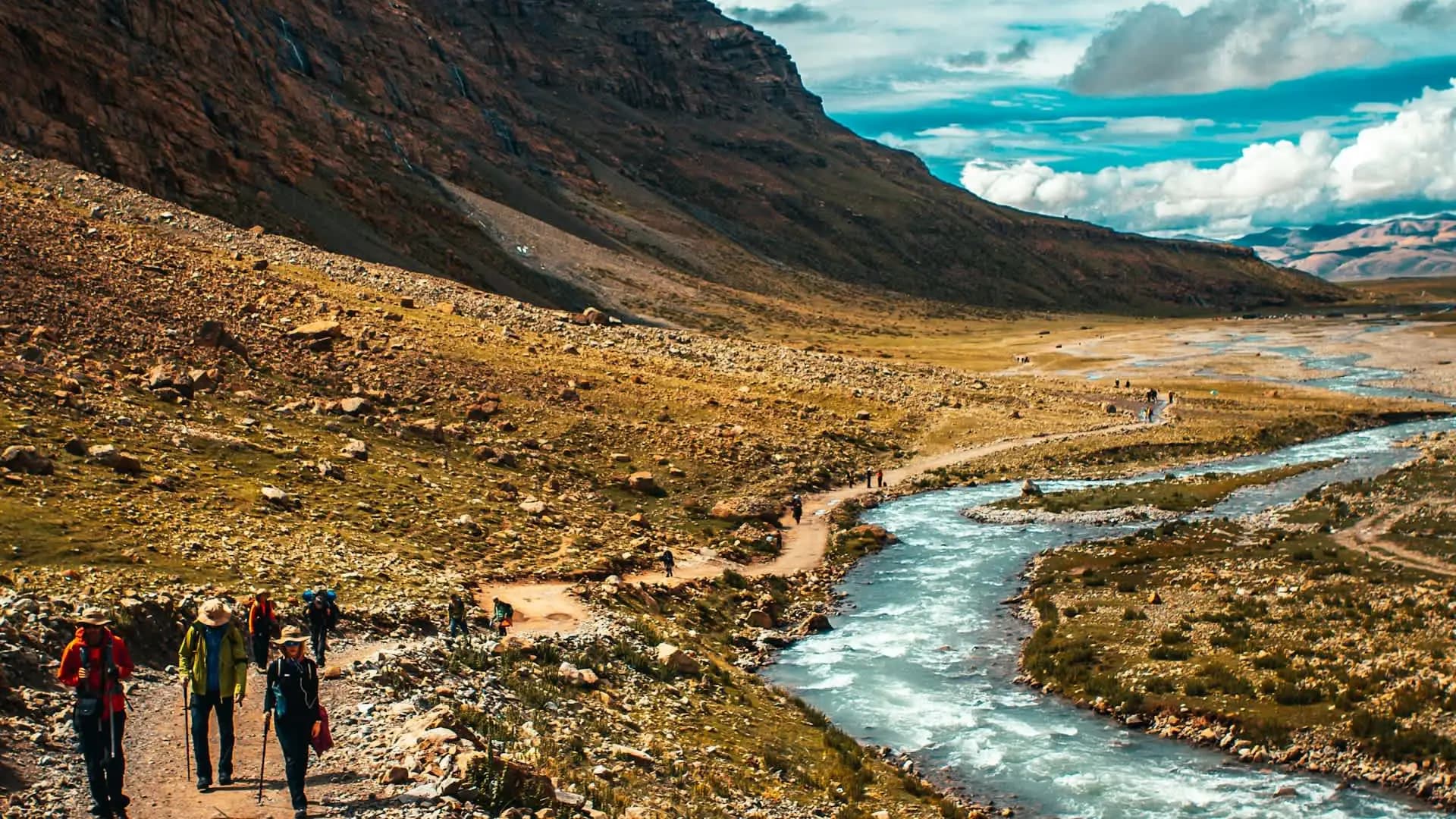
The outer kora is about 52 km. Shuttle buses now cover the first stretch out of Darchen and the last stretch back, so you walk about 42–45 km over three days. Buddhists and Hindus walk clockwise; Bön pilgrims walk anticlockwise, so you'll meet some coming the other way.
Some Tibetan pilgrims do the whole circuit in a single day, starting at 2 or 3 am. A few make it by full-body prostrations, which takes two to three weeks. You'll pass them on the trail and see the leather aprons and wooden hand-boards they use.
Day 1 is long but gentle, rising slowly from about 4,700 m to about 5,000 m. Day 2 is the real test: about 600 m of climbing to Dolma La and then about 800 m of descent, much of it on rock and loose stones. Day 3 is short and downhill.
For anyone who needs help, porters and horses are hired at Darchen through a local cooperative, which sets the rates and assigns the horseman. You can't bring your own porter from Nepal. Horses can't carry riders on the steepest sections near Dolma La, so even riders have to walk the hardest part of the climb and descent. Please tell us at booking if you think you'll want a horse, so we can budget for it.
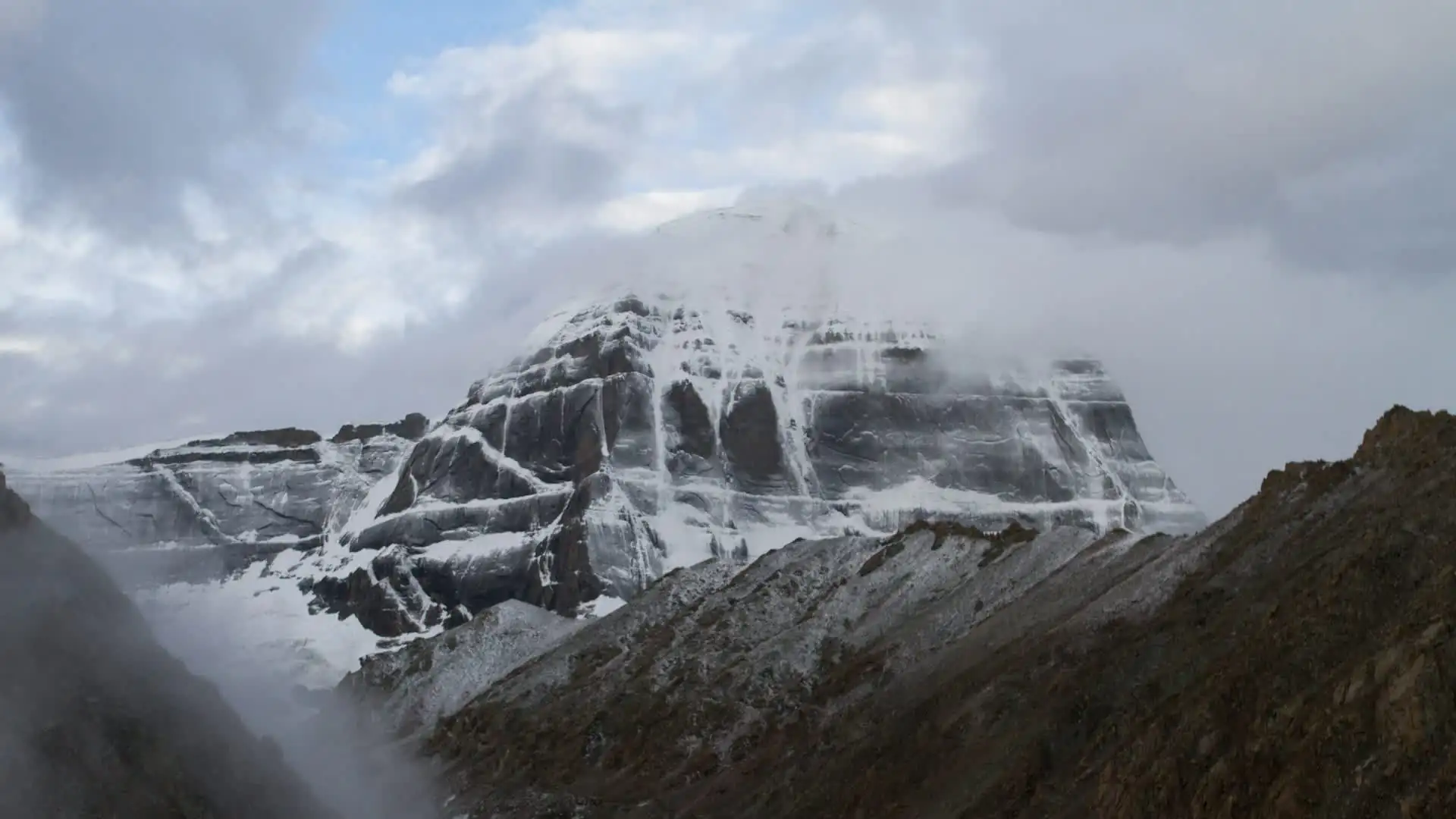
Weather on the kora changes fast. Snow can fall at Dolma La in any month, and wind is constant on the plateau. Our guide decides each morning whether conditions are safe; on rare days the pass is crossed later or the group waits.
Lake Mansarovar and Rakshastal
Lake Mansarovar (Mapham Yumtso in Tibetan) lies at 4,590 m, south-east of Kailash. It's one of the highest large freshwater lakes in the world. For Hindus, it was formed in the mind of Brahma; for Buddhists, it is linked to Lake Anavatapta of the scriptures. Many pilgrims see bathing in it or drinking its water as part of the yatra.
Just west of Mansarovar, separated by a narrow strip of land, is Rakshastal (Langak Tso), a salty lake that Hindu tradition associates with Ravana. The contrast between the two is part of the pilgrimage: one lake is seen as light and the other as dark, and nothing grows on Rakshastal's shores. The view of Kailash across Rakshastal is one of the best photo stops of the trip.
A full parikrama of Mansarovar by vehicle is about 90 km. On this itinerary, we drive part of the shore and visit Chiu Gompa. If you want to walk around the lake as well, add two or three days to the trip.
Life on the Tibetan Plateau
Western Tibet, known as Ngari, is one of the least populated regions of Asia. Between Saga and Darchen, the road passes through grassland and gravel plains at 4,500–5,000 m, with nomad families herding yaks, sheep and goats. Settlements are small, built around the highway, and you'll see new Chinese-built towns beside older Tibetan villages.
Tibetan pilgrims are part of the experience. Families travel from all over Tibet to walk the kora, spinning prayer wheels and chanting as they go. Many will smile and greet you with "tashi delek". Respect their space when taking photos, and always walk clockwise around stupas, mani walls and monasteries.
The Saga Dawa Festival
Saga Dawa, held on the full moon of the fourth Tibetan month (usually late May or June), is the most important day of the year at Kailash. The great Tarboche flagpole is taken down and raised again with new prayer flags, and thousands of pilgrims gather to watch. If your dates match, it's an extraordinary sight. It also means crowded guesthouses, busy trails and, in some years, tighter permit rules. Ask us about Saga Dawa dates when you choose your departure.
Route and Driving Times
Day | Route | Time | Distance |
|---|---|---|---|
3 | Kathmandu – Rasuwagadhi – Kerung | 8–10 hrs | about 160 km |
5 | Kerung – Saga | 6–7 hrs | about 250–280 km |
6 | Saga – Lake Mansarovar | 8–10 hrs | about 450–500 km |
7 | Lake Mansarovar – Darchen | about 1 hr | about 40 km |
8 | Tarboche – Dirapuk (walk) | 5–7 hrs | about 13 km |
9 | Dirapuk – Dolma La – Zuthulphuk (walk) | 8–11 hrs | about 22 km |
10 | Zuthulphuk – road (walk), drive Darchen – Saga | 3–4 hrs walk, 8–9 hrs drive | 10–14 km walk |
11 | Saga – Kerung | 6–7 hrs | about 250–280 km |
12 | Kerung – Rasuwagadhi – Kathmandu | 8–10 hrs | about 160 km |
Driving times depend on road works, checkpoints and, during the monsoon, landslides on the Nepali side of the border. Chinese checkpoints along the highway also record your passport and permits, which adds time.
Altitude Profile
Place | Altitude |
|---|---|
Kathmandu | 1,400 m |
Rasuwagadhi border | about 1,800 m |
Kerung | 2,700 m |
Saga | about 4,600 m |
Lake Mansarovar | 4,590 m |
Darchen | about 4,600–4,675 m |
Dirapuk | about 5,000 m |
Dolma La pass | 5,630 m |
Zuthulphuk | about 4,800 m |
Mount Kailash (not climbed) | 6,638 m |
Sources disagree on several of these heights by 50–200 m, especially Dirapuk, Darchen and Zuthulphuk, so we give approximate figures. The height of Mount Kailash is usually given as 6,638 m.
Map Overview
The route forms a long loop. From Kathmandu, it runs north to the border at Rasuwagadhi, then climbs north-west to Kerung and onto the plateau. At Saga, it turns west along the main road toward Ngari, running parallel to the Himalaya on the Tibetan side. It reaches Lake Mansarovar and Darchen, then circles Kailash on foot clockwise, before returning by the same road. Our route map image is shown in the gallery.
How Difficult Is the Kailash Mansarovar Overland Tour?
We grade this trip Strenuous. Not because the walking is technical (it isn't), but because of the altitude and the long days in a vehicle.
Altitude. You spend six nights at about 4,600 m or higher, and cross 5,630 m on foot. Even fit people feel it.
The kora. Day 2 is a 22 km walk with a steep climb and a long descent, at an altitude where everything takes twice as long.
The driving. Several days of 6–10 hours in a vehicle on roads that are mostly good tarmac in Tibet but rough and slow on the Nepali side.
The comfort level. Guesthouses on the kora are basic, toilets are often outdoor pits, and it is cold at night even in summer.
You don't need trekking experience, but you need to be able to walk 6–8 hours a day with breaks. Pilgrims in their 60s complete the kora every year; the ones who do best walk slowly, eat and drink well, and listen to their bodies.
Fitness and Training
Start training two or three months before departure:
Walk for 2–4 hours at a time, at least twice a week, ideally on hills or stairs
Build up to one long day of 6–7 hours with a light pack
Add cardio (cycling, swimming, brisk walking) 3–4 times a week
Strengthen your legs with squats, lunges and step-ups for the descent from Dolma La
If you have heart or lung conditions, high blood pressure or diabetes, see your doctor before booking. A medical check is a good idea for everyone over 50.
Altitude Sickness on the Kailash Route
This route carries a real altitude risk, and we want you to know that before you book. The jump from Kerung to Saga is large, and once you are on the plateau there is no quick way down: the nearest low ground is Kerung, a full day's drive from Darchen.
Symptoms of acute mountain sickness (AMS) include headache, nausea, loss of appetite, poor sleep and unusual tiredness. Mild symptoms are common on this trip. Warning signs that need immediate action are breathlessness at rest, a wet cough, confusion, loss of balance or severe headache that doesn't improve. These can signal high-altitude pulmonary or cerebral oedema, which can kill.
Our approach:
Two nights in Kerung before the climb to the plateau
Our tour leader checks every member of the group each morning and evening
Emergency oxygen and a first-aid kit travel in the vehicle
Anyone with serious symptoms goes down, even if it means missing the kora; the vehicle can take you back toward Saga or Kerung while the rest of the group continues
Please drink 3–4 litres of water a day and avoid alcohol until after the kora
Many travellers ask their doctor about acetazolamide (Diamox) for this trip. That is a medical decision for you and your doctor. For general guidance, see the CDC's travel health page for China, which covers altitude illness and vaccinations.
Best Time for the Kailash Mansarovar Overland Tour
The season runs from May to September, and permits are normally only issued in this window.
May and early June. Cold nights, clear skies, and snow possible on Dolma La. Saga Dawa usually falls in this period. Good visibility.
Late June to August. The warmest time on the plateau, with the most green grass and nomad camps. This is monsoon season in Nepal, so the road to Rasuwagadhi can be blocked by landslides for hours or days. Tibet sits in the rain shadow and gets far less rain, but afternoon showers and clouds are common.
September. Settled, clear weather returns, nights get colder and the kora is quieter. Many people think this is the best month.
For more on the timing, read our guide to the best time for Kailash parikrama.
Weather by Season
Month | Daytime at Darchen | Night | Notes |
|---|---|---|---|
May | about 5–15°C | below freezing | Clear, windy, snow possible on the pass |
June | about 10–18°C | around 0°C | Saga Dawa crowds some years |
July–August | about 12–20°C | 0–5°C | Warmest; showers; monsoon on the Nepal road |
September | about 8–16°C | below freezing | Clear and quieter |
At Dirapuk and on Dolma La, it can be 5–10°C colder than in Darchen, with strong wind chill. Plan for freezing temperatures at any point of the kora.
Getting There: The Kerung Road
The Rasuwagadhi–Kerung crossing is the main road link between Nepal and Tibet, and the shortest road route from Kathmandu to Kailash. The Nepali side follows the same road as our Langtang Valley Trek as far as Syabrubesi, through the edge of Langtang National Park. It is narrow, partly unpaved and prone to slides in the monsoon.
In Tibet, the road is new tarmac all the way to Darchen. By Chinese rules, foreign groups must travel in a Tibet-registered vehicle with a licensed Tibetan guide, so you change vehicles at the border. Your Nepali tour leader stays with you throughout.
The other route from Nepal flies from Nepalgunj to Simikot and crosses at Hilsa, with a helicopter section. It is quicker but costs more, depends on mountain flights, and gives you less time to adjust to altitude. Ask us if you'd like a quote.
Accommodation
Kathmandu: a comfortable tourist-class hotel, twin-sharing, with breakfast.
Kerung and Saga: simple hotels with private rooms, attached bathrooms and hot water most of the time.
Lake Mansarovar and Darchen: guesthouses with heated or unheated rooms; bathrooms may be shared.
Dirapuk and Zuthulphuk: basic guesthouses with shared rooms of 4–6 beds, thick blankets, no showers and outdoor toilets.
Single rooms are available in Kathmandu, Kerung and Saga for a supplement, but not on the kora.
Meals and Drinking Water
All meals in Tibet are included. Breakfast is usually bread, eggs, porridge or Tibetan tsampa, with tea. Lunch and dinner are a mix of Chinese, Tibetan, Nepali and simple Indian-style dishes, often dal, rice, vegetables and noodles. We can arrange vegetarian meals throughout, and most pilgrim groups eat vegetarian. On kora days, lunch is at a tea tent or guesthouse on the trail, or a packed lunch.
Drink only boiled or treated water. Bottled water is sold everywhere in Tibet, and we carry extra in the vehicle. On the kora, bring a filter or purification tablets, plus a 1-litre insulated bottle so your water doesn't freeze overnight.
Internet, Mobile Signal and Charging
Mobile coverage in Tibet is good along the roads and in towns, and patchy on the kora. Many foreign apps and sites, including Google, WhatsApp, Facebook and Instagram, don't work on Chinese networks. If you need them, use your home SIM on roaming (which normally bypasses the restrictions) or buy an international eSIM before you go. Hotels in Kerung and Saga have Wi-Fi; on the kora, there is little or none.
Charging is possible in towns, sometimes for a small fee on the kora. Bring a power bank, because cold drains batteries quickly. Chinese sockets take most two-flat-pin and some round-pin plugs; a universal adapter is the safe choice.
Note also that Chinese customs check books, maps and devices at the border. Don't carry images of the Dalai Lama or political material about Tibet, and don't fly drones without permission.
Money and Currency
The currency in Tibet is the Chinese yuan (CNY). Most local payments are made by Alipay or WeChat Pay, which many foreigners can now link to an international card, but in small places cash is still the easiest way to pay. Change money in Kathmandu or at the border before entering Tibet; there are few ATMs that accept foreign cards in Ngari. Carry enough yuan for horses or porters, drinks, snacks, showers and tips.
Kailash Mansarovar Overland Tour Cost
Our price is from US$3,200 per person for the 12-day itinerary, on a twin-sharing basis.
What the price covers | Notes |
|---|---|
Chinese group visa and all Tibet permits | The biggest single fixed cost |
Tibetan guide and Tibet-registered vehicle | Required by Chinese rules for foreign groups |
Nepali tour leader | From Kathmandu, with the group throughout |
All transport | Kathmandu–border–Kailash–border–Kathmandu |
Accommodation | 2 nights in Kathmandu, 9 nights in Tibet |
Meals | Breakfast in Kathmandu, all meals in Tibet |
Entrance fees | Kailash and Mansarovar area fees and shuttle buses |
Safety | Oxygen and first-aid kit in the vehicle |
Extra money to budget
Nepal visa: US$30 for 15 days or US$50 for 30 days (free for Indian citizens)
Horse and porter for the kora: set by the Darchen cooperative and paid in yuan; ask us for current rates
Lunches and dinners in Kathmandu: about US$10–25 a meal
Drinks, snacks, hot showers and charging in Tibet
Tips for your guide, driver and tour leader
Travel insurance with cover up to at least 6,000 m and emergency evacuation
Extra nights if the border or a road is closed
Prices for Kailash tours depend heavily on group size and Chinese permit fees, which change from year to year. For a group of fewer than four or for a private departure, please ask us for a quote. For Nepal trip costs more broadly, see our Nepal trekking cost guide.
Optional Add-ons
Extra night at Lake Mansarovar or a full lake parikrama. Two to three extra days.
Kathmandu sightseeing day. Boudhanath, Swayambhunath and Patan before or after the trip; see our Kathmandu day tour guide.
Pokhara extension. Our Kathmandu–Pokhara Tour makes a gentle way to recover after Tibet.
Upper Mustang. If you want more of Tibetan culture without a Chinese visa, the Upper Mustang Jeep Tour visits the old Kingdom of Lo in Nepal.
Everest North Base Camp. A longer Tibet trip can include the Everest north base camp at Rongbuk; ask us for a combined itinerary.
Travel Tips
Send your passport scan as early as possible; the permit timeline depends on it.
Keep your passport with you at all times in Tibet; checkpoints ask for it often.
Carry a small day pack in the vehicle with water, snacks, a warm layer, sun cream and any medicines.
Pack your main bag so you only need a small part of it on the kora. Your large bag stays in the vehicle.
Walk slowly on the kora. Tibetan pilgrims will overtake you; that is fine.
Bring snacks you like, such as nuts, dried fruit and chocolate. Appetite drops at altitude.
Leave a spare day at the end before your flight home.
Photography Tips
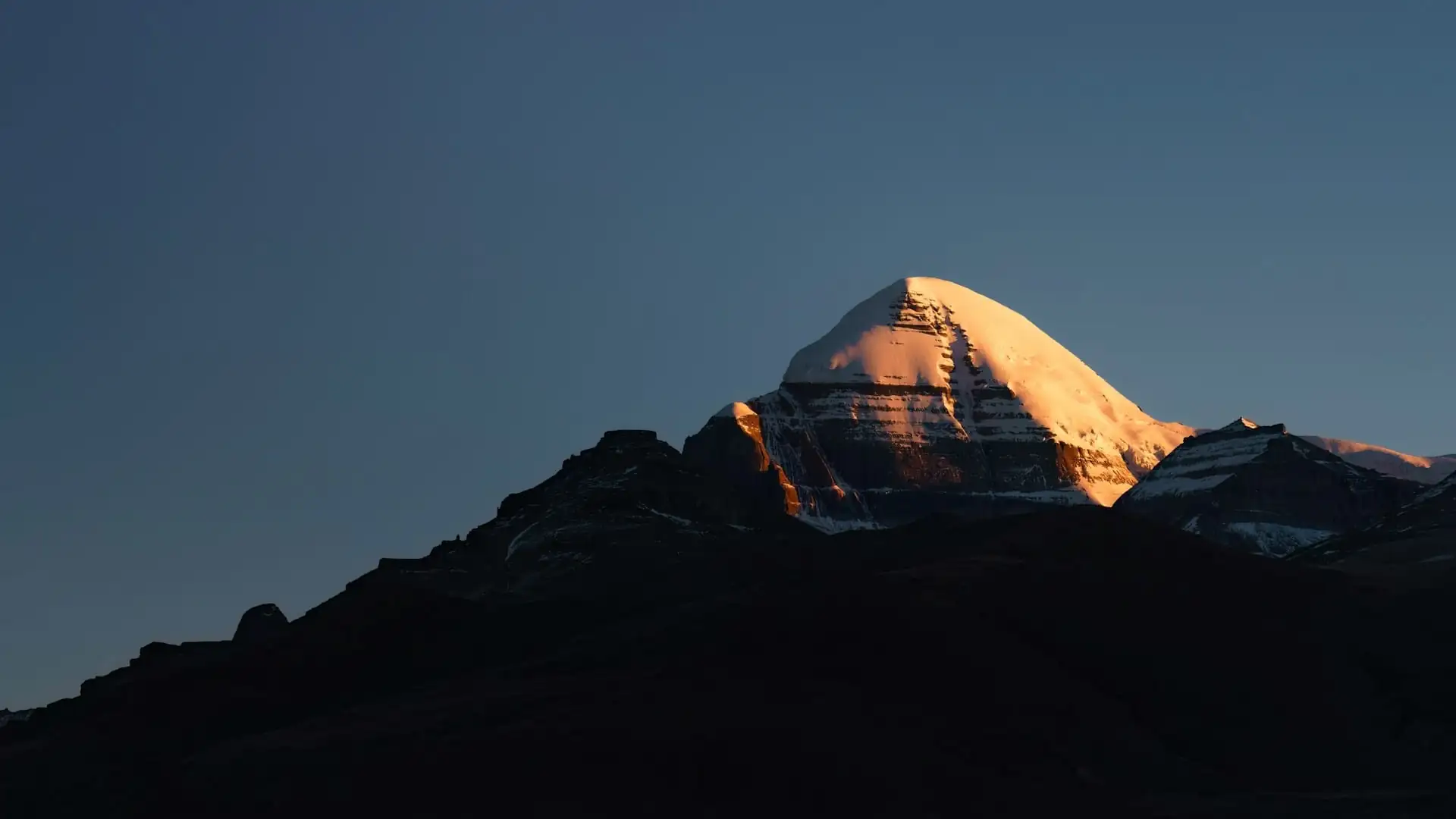
Dirapuk at sunset and sunrise gives the classic view of the north face.
Rakshastal in late afternoon light, with Kailash behind it, is one of the best views of the trip.
Mansarovar at dawn, with Gurla Mandhata reflected on calm days.
Ask before photographing people, monks and rituals; many pilgrims don't mind, but some do.
Cold drains batteries fast. Keep spares in an inside pocket.
Drones need special permits in Tibet and are not allowed without them.
Responsible Travel
Walk clockwise around Kailash, stupas and mani walls, as Buddhists and Hindus do.
Don't touch or remove stones, prayer flags or offerings.
Carry out your own rubbish, especially plastic bottles and wet wipes.
Use the toilets provided, however basic, rather than the open ground.
Dress modestly at monasteries and remove your hat inside.
Be patient at checkpoints and avoid political discussions with your guide or driver; they can be held responsible for what visitors say and do.
Is the Kailash Mansarovar Overland Tour Right for You?
This tour is a good fit if:
You want to see Kailash and Mansarovar as a pilgrim or a traveller, and you're willing to work for it
You're fit enough to walk 6–8 hours a day and in good general health
You're comfortable with basic accommodation and long days in a vehicle
You can accept that Tibetan permit rules and border crossings sometimes change plans
It may not be right if you have a serious heart or lung condition, are over the current age limit, or need comfortable hotels every night. If the kora is too much, ask us about a version where you stay at Darchen and see Kailash from the plateau, or about an aerial darshan flight from Nepalgunj.
For an overview of altitudes elsewhere in Nepal, see our Nepal elevation guide.
Why Book With Adventure Life Nepal
Adventure Life Nepal was founded by Dil Bahadur Karki, a Himalayan guide with more than 25 years in the mountains. He started out as a porter and guide and has led travellers from over 40 countries. We are registered with the Nepal Tourism Board and the Trekking Agencies Association of Nepal (TAAN), and our guides are certified by the Nepal Mountaineering Association. For Kailash, we work with a licensed Tibetan agency for the permits, Tibetan guide and vehicles, and our own tour leader stays with you from Kathmandu to Kathmandu.
For general travel information about Nepal, see the Nepal Tourism Board.
Booking, Cancellation & Refund Policy
A 30% deposit confirms your place; the balance is due before departure.
Cancellations 30 days or more before the start date get a full refund minus administration fees.
Cancellations 15–29 days before the start date carry a 50% fee.
Cancellations under 15 days before the start date are not refunded.
Travel insurance is mandatory and must cover high altitude, evacuation and trip cancellation.
Permit and visa fees paid to Chinese authorities can't always be refunded once applied for.
Read the full terms and conditions before booking.
Book Your Kailash Mansarovar Overland Tour
Ready to plan your Kailash Mansarovar Overland Tour? Contact us on WhatsApp at +977 9841248242 or email adventurelifenepal@gmail.com with your preferred dates, nationality and group size. We'll confirm the permit timeline, answer your questions and help you get ready for the kora.
Highlights
Itinerary
Our team meets you at Tribhuvan International Airport and drives you to your hotel. In the afternoon, your tour leader checks your passport, visa photos and travel insurance, and explains the plan for the group visa. If you arrive early in the day, there's time for a first walk around Thamel or Boudhanath.
The group visa is collected from the Chinese visa office in Kathmandu today, and some departures need each traveller to attend in person for fingerprints. Around that, many pilgrims visit Pashupatinath, Nepal's most important Shiva temple on the Bagmati River, and Budhanilkantha, the reclining Vishnu at the foot of Shivapuri hill. In the evening, we hold a full briefing on altitude, the kora and what to pack for Tibet, and you can buy or rent anything you're missing.
- Drive: about 160 km, 8–10 hours including the border We leave early. The road climbs north out of the Kathmandu Valley through Trishuli and Dhunche, then drops to Syabrubesi on the edge of Langtang National Park. From there it follows the Bhote Koshi to the border at Rasuwagadhi. You clear Nepali exit formalities, walk across the bridge and go through Chinese immigration and customs, where bags are searched thoroughly. On the Tibetan side, you meet your Tibetan guide and vehicle and drive up the forested Kerung valley to Kerung town.
This day is what makes the rest of the trip safer. Kerung sits low enough to sleep well and high enough to start the adjustment. We take an easy morning walk, often up to a viewpoint or a monastery above town, and keep the afternoon free. Drink plenty of water and rest; tomorrow's drive is the biggest altitude gain of the trip.
- Drive: 6–7 hours The road climbs out of the green Kerung valley onto the bare plateau. On a clear day, you pass the turquoise lake of Peiku Tso with Shishapangma (8,027 m), the only 8,000 m peak entirely inside Tibet, rising beyond it. The road then joins the main highway west and crosses the Yarlung Tsangpo (the upper Brahmaputra) before reaching Saga, a busy road town with simple hotels and Sichuanese and Tibetan restaurants. Expect a headache this evening; it is normal at this height, but tell your leader about it.
- Drive: about 450–500 km, 8–10 hours The longest drive of the trip runs west across open plateau past Paryang and nomad camps with yaks and black tents. After the Mayum La pass, the landscape opens out. If the weather is clear, Kailash appears ahead as a white pyramid on the horizon, often to cheers from the group. We reach Lake Mansarovar in the late afternoon, with Gurla Mandhata (7,694 m) above its southern shore.
- Drive: about 1 hour to Darchen Sunrise over Mansarovar is the reason to sleep on the shore. Many Hindu pilgrims take a ritual bath or perform a puja and collect lake water to carry home; the water is very cold, so most people bathe quickly or pour water over themselves. We drive part of the way around the lake, visit Chiu Gompa on its rock above the north-west shore, and stop at Rakshastal, the darker lake beside Mansarovar. In the afternoon, we drive to Darchen, the small town at the foot of Kailash where the kora begins. Here we sort out porters and horses for anyone who wants them.
- Walking: about 13 km, 5–7 hours, after a shuttle bus from Darchen A shuttle bus takes you to Tarboche, the great prayer-flag pole at the start of the kora; Hindu pilgrims call this point Yam Dwar, the gate of Yama. The trail follows the Lha Chu valley upstream past red cliffs, with Chuku Gompa high on the western slope. The gradient is gentle for most of the day, but at this height you'll still be slow. In the afternoon, the valley turns east and the north face of Kailash comes into full view. Dirapuk sits right opposite it.
- Walking: about 22 km, 8–11 hours The hardest day, and the reason people prepare for months. We start before dawn. The climb to Dolma La gains about 600 m, much of it on rocky trail, and every step is hard at over 5,000 m. Along the way, pilgrims pass Shiva-tsal, where Tibetans leave a piece of clothing or a drop of blood as a symbol of leaving their old life behind. The pass itself is covered in prayer flags. Just below it lies Gauri Kund, a small green lake that Hindus associate with Parvati. The descent is steep and loose for the first hour, then the trail follows a long, flat valley to Zuthulphuk.
- Walking: about 10–14 km, 3–4 hours. Drive: 8–9 hours Before leaving, visit the small monastery at Zuthulphuk built around the cave where the yogi Milarepa meditated. The last section of the kora follows a gorge downhill to the road, where a shuttle bus or our vehicle takes us back to Darchen for lunch. The kora is complete. In the afternoon, we drive east past Mansarovar to Saga. This is a long day, but you're now losing height, and most people sleep much better.
- Drive: 6–7 hours We drive back across the plateau to the Kerung valley. The drop to 2,700 m feels like a deep breath after a week at altitude. In the evening, you can get a proper hot shower and an early night before the border.
- Drive: 8–10 hours including the border We cross back into Nepal at Rasuwagadhi, meet our Nepali vehicle and drive down the valley to Kathmandu, arriving in the evening. We drop you at your hotel. If you need an extra night in Kathmandu, we can book it for you; don't plan an international flight for this evening, because the border can be slow.
Elevation Profile
Altitude Variation Chart
What's Included
Included
- Airport pick-up and drop-off in Kathmandu
- 2 nights in a tourist-class hotel in Kathmandu with breakfast (twin-sharing)
- Chinese group visa fee and visa processing
- Tibet Travel Permit, Alien's Travel Permit and frontier/military permits
- Private vehicle from Kathmandu to Rasuwagadhi and back
- Tibet-registered vehicle with driver for the whole Tibet section
- English-speaking licensed Tibetan guide in Tibet
- Experienced Nepali tour leader from Kathmandu throughout the trip
- 9 nights of accommodation in Tibet (hotels, guesthouses and kora guesthouses)
- All meals in Tibet (breakfast, lunch and dinner)
- Kailash and Mansarovar entrance fees and shuttle buses
- Emergency oxygen and first-aid kit in the vehicle
- Border crossing assistance in both directions
- Pashupatinath visit with transport on Day 2
Excluded
- International flights and Nepal visa fees
- Travel insurance (mandatory; must cover high altitude and evacuation)
- Lunch and dinner in Kathmandu
- Horses and porters for the kora (hired at Darchen)
- Single room supplement
- Drinks, snacks, laundry, hot showers and charging fees
- Tips for guide, driver and tour leader
- Extra nights and costs caused by road closures, landslides, permit changes or illness
- Emergency evacuation and medical costs
- Extra hotel night in Kathmandu after the trip
Packing List
Category | Items |
|---|---|
Clothing | Down jacket, waterproof jacket and trousers, fleece, thermal base layers, trekking trousers, warm hat, sun hat, warm gloves and liner gloves, buff or scarf |
Footwear | Broken-in waterproof trekking boots, warm socks (4–5 pairs), sandals or light shoes for the evenings |
Sleeping | Sleeping bag rated to about −10°C, or a warm liner for the kora guesthouses |
Gear | 25–35 litre day pack, trekking poles, headlamp with spare batteries, sunglasses (category 3–4), 1-litre insulated bottle |
Health | Personal medicines, altitude medicine if your doctor advises it, sun cream SPF 50, lip balm, blister kit, hand sanitiser, water purification |
Documents | Passport (6+ months' validity), passport photos, insurance details, copies of documents |
Other | Power bank, universal adapter, snacks, wet wipes, toilet paper, small padlock, cash in Chinese yuan |
Frequently Asked Questions
Our tour takes 12 days from Kathmandu to Kathmandu, with 9 days in Tibet. That includes two nights at Kerung for acclimatization and the three-day kora around Kailash.
Dolma La is usually given as 5,630 m (18,471 ft). It is the highest point of the outer kora and of the whole tour.
The outer kora is about 52 km. With shuttle buses covering the start and end, you walk about 42–45 km over three days.
No. Kailash has never been climbed, and climbing is not permitted out of respect for its religious importance. Pilgrims walk around it.
You need a Chinese group visa plus the Tibet Travel Permit and other permits. A normal Chinese tourist visa in your passport does not work for this route. We arrange all of them.
Yes. Indian citizens can join a private Kailash tour via Nepal. The group visa process for Indian residents has usually run through New Delhi in recent seasons, so please contact us early to plan the timing.
Chinese authorities have recently applied an upper age limit of about 70 for pilgrims, and a medical certificate may be required. Rules can change; check with us before you book.
You should be able to walk 6–8 hours a day with breaks, and up to 11 hours on the day of the Dolma La crossing. Regular walking, hill or stair training and cardio in the months before help a great deal.
Yes. Horses and porters are hired at Darchen through a local cooperative. Riders still have to walk the steepest parts near Dolma La.
May to September is the season. September and late May to June usually have the clearest weather; July and August are warmest but bring monsoon landslides on the Nepal side.
Nights are often below freezing, even in summer, especially at Dirapuk and Zuthulphuk. Days in Darchen are usually about 5–20°C depending on the month.
Most people feel some symptoms, such as a headache or poor sleep, especially after the first night in Saga. Serious altitude sickness is less common, but the risk is real. Our itinerary includes two nights in Kerung, and our leader checks everyone twice a day.
Anyone with serious symptoms goes down. Depending on where we are, the vehicle takes you back to Darchen, Saga or Kerung, and on to Kathmandu if needed. Your insurance must cover this.
Hotels in Kathmandu, Kerung and Saga; guesthouses at Mansarovar and Darchen; basic shared rooms on the kora at Dirapuk and Zuthulphuk.
Yes. We can arrange vegetarian meals throughout the trip, and most pilgrim groups eat vegetarian.
Many Hindu pilgrims do. The water is extremely cold, so a quick dip or pouring water over yourself is the usual practice. Ask your guide where it's allowed.
Not on Chinese networks. Use roaming on your home SIM or an international eSIM if you need WhatsApp, Google or Instagram.
Yes, if there is a group departing on your dates. Because Tibet requires a group visa, we place solo travellers with other guests where possible.
Tibet permits are occasionally paused at short notice. If that happens before departure, we'll offer new dates or another trip. Fees already paid to Chinese authorities may not be refundable, which is why cancellation insurance matters.
Warm layers, a good down jacket, broken-in boots, a warm sleeping bag for the kora, trekking poles, sun protection and Chinese yuan in cash. See the packing list above.
You can bring personal prayer items. Don't carry images of the Dalai Lama or political material about Tibet, because customs checks are strict.
The overland route uses road transport only. The Simikot–Hilsa route needs domestic flights and a helicopter, which add cost, though it saves a few days.
Gallery & Video
Customer Reviews
Loading reviews...