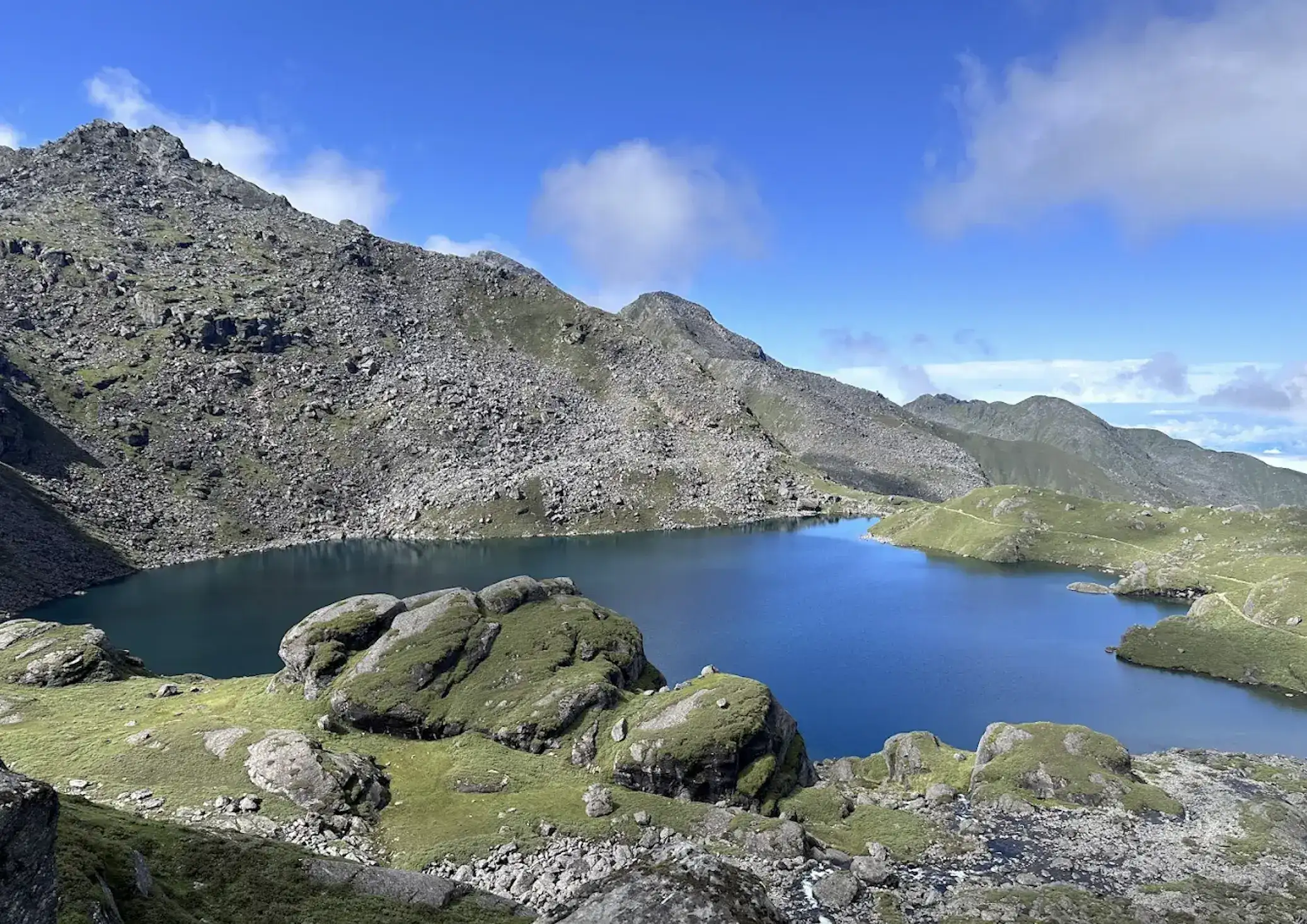
Langtang Trek

Langtang Trek

New(0 reviews)

Trip Duration: 8 Days

Trip Grade: Moderate

Group Size: 12

Best Season: jan-feb

Start Point: Kathmandu

Ending Point: Kathmandu

Max Altitude: 4773 m

Overview

Langtang valley trek is one of among the most beautiful and cultural trekking in Nepal. This trek is mild and also suitable for those who would like to get a brief yet satisfying Himalayan trip at its very heart, the central Himalaya region, which is just a bit far from Kathmandu. The trail passes by the dense alpine forests, Tamang village heritage, alpine grasslands and eventually to the high Himalayan landscape with the close ups of the tall snowcapped mountains. Langtang Valley is a component of the Langtang National Park which has a wide assortment of flora and fauna including red pandas, Himalayan black bear, musk deer, and a varied assortment of birds. The region is not massively crowded and it is a perfect place to explore by a trekker who loves quiet time, nature and real touch with those locals. This trek normally begins with a picturesque driving to Syabrubesi. After that, the trekkers take a journey along the Langtang River with a dense jungle and slowly climb to the high alpine territories. The key points of this trek or walk are Lama Hotel, Langtang Village, Kyanjin Gompa and any other hikes that one can take to Kyanjin Ri or Tsergo Ri with its panoramic scenery of the Langtang range, Langtang Lirung, Dorje Lakpa and other peaks. The spot is well admired for its spectascular views. The Langtang Valley Trek is relatively moderate trekking journey and can be suitable for beginners too. The number of hours that one spends on a daily basis walking is between 5 and 7 hours, allowing an individual time to adjust and have a look of the beauty around him/her. The highest altitude the trekkers can achieve is the Kyanjin Ri which is located at 4773 meters, and it offers one of the spectacular views in the area. The opportunity to witness Tamang and Tibetan-style cultures through histories is one of the most attractive features of the Langtang trek. The people are very warm and you will find yourself learning a lot about their culture, their festivals, their dressings, and Buddhist culture. Accommodation Teahouses, the basic yet comfortable guesthouses that are managed by local people, are available along the trail. They have simple lodgings such as clean beds, hot meals, and in some camps even hot showers with Wi-Fi at extra charge. Food is primarily Nepali (dal bhat / lentils and rice, noodles, soups and Tibetan bread) with some establishment possibly catering to: pancakes, pasta and momos (dumplings). Langtang Trek generally takes between 7 to 8 days and begins and ends in Kathmandu. It is perfect to the one who wishes to see the beauty of Himalayas without bothering to take a long trip or torture oneself to cover the hills. Technical climbing experience is not needed in this trek but as always, it is preferable to build some physical strength by walking, hiking or cardio related exercises prior to the journey. The major means of transport out of Kathmandu to Syabrubesi are bus or jeep. Local buses are cheaper and traveling is slow and jeeps are comfortable and faster. The trek route to Syabrubesi is a beautiful journey in itself, with fantastic views of the hills, through river valleys, and small villages on the way, which leaves one with a taste of Nepal countryside before even starting the trek. Langtang Valley Trek can be regarded as a trail to having one of the best treks in Nepal in a very short period of time as one is allowed to experience all the natural beauty, mountainous view, and Nepalese culture. The trek is also cheaper than longer or more distant treks such as Everest Base Camp or even Annapurna Circuit treks. It is a decent option with an individual traveler, small groups, or even children in families who get used to walking. Additional add-ons are also available in this trek such as an extra acclimatization day in Kyanjin Gompa, a visit to the local cheese factory and day hikes to high ridges to have a better view. Tsergo Ri and Kyanjin Ri form some of the most visited viewing platforms where one gets a 360-degree panorama view of the mountains and is usually credited as the best point of the trek. With an extra day, Langtang trek may be extended to visit the Lakes of Gosaikunda or, even go further of the Tamang Heritage trail. All those extensions result in extra days, and also enable one to explore deeper the beauty of the region and its culture. When it comes to the safety aspect of it, Langtang is a safe trekking trail and has well established tracks and history of tourism. Nevertheless, it is a high-altitude hike, and everyone should observe caution to avoid altitude sickness, just as they should do with any other hike of such nature. A successful and fun trek is one which involves staying hydrated, walking slowly and letting your body acclimatize. It is strongly advised to take travel insurance with high altitude evacuation. The Langtang Valley Trek is a wonderful tasting of Himalayan Trekking in a conclusion. It is not long, yet all packed with experiences that a person remembers a lifetime; natural beauty, views of mountains, wildlife, the hospitality of the locals, and the cultural richness. Regardless of whether you are a first-time trekker or having been to the Himalayas previously, Langtang provides good value adventure in a comparatively short duration and cost. The trek will meet all the needs of every type of traveler: magnificent scenery of the mountains to nature enthusiasts, a great culture to those who want to know something of the tradition and people, and a relaxing setting to all those who want to shed off the bustle of civilized life. It reminds people that even the short treks can provide profound experiences that are engaging and consequential-and Langtang is just that.

Highlights

Scenic drive from Kathmandu to Syabrubesi through terraced hills and mountain views
Trek through lush forests of rhododendron, oak, and bamboo
Stunning views of Langtang Lirung, Dorje Lakpa, and other snow-capped peaks
Visit the traditional Tamang and Tibetan-influenced villages
Explore Kyanjin Gompa, a peaceful Buddhist monastery in the heart of the valley
Hike up to Kyanjin Ri (4,773m) for panoramic Himalayan views
Chance to spot wildlife like red pandas, Himalayan tahr, and monkeys
Walk alongside the Langtang River and through glacial valleys
Experience warm local hospitality in teahouses along the route
Ideal for trekkers seeking a moderate trek with high rewards in a short time

Itinerary

Day 1:

Your adventure begins early with a scenic drive from Kathmandu to Syabrubesi, the gateway to the Langtang Valley. The journey covers approximately 120 kilometers, winding through rugged mountain roads alongside the Trishuli and Bhote Koshi Rivers. Along the way, you’ll pass through terraced farmland, small villages, and forested hills. On clear days, distant snow-capped peaks of Ganesh Himal and Langtang Lirung punctuate the skyline. The road may be bumpy but offers a stunning introduction to Nepal’s natural beauty. Upon arrival in Syabrubesi, you check into a cozy teahouse lodge, where you’ll rest and prepare for the trek ahead. Dinner is served locally, and you’ll have time to soak in the peaceful Himalayan atmosphere. Overnight stay at a teahouse in Syabrubesi.

Day 2:

Leaving Syabrubesi after breakfast, the trail descends briefly to cross the Bhote Koshi River before steadily climbing through dense forests of oak, rhododendron, and pine. Along the way, you cross several suspension bridges and pass small settlements such as Rimche and Bamboo. The forest is alive with bird songs, and if lucky, you might spot Himalayan wildlife like langurs or red pandas. You’ll arrive at Lama Hotel by afternoon, a cluster of traditional teahouses offering warm hospitality and spectacular mountain views. It’s a perfect spot to relax and acclimatize. Overnight stay at a teahouse in Lama Hotel.

Day 3:

Today’s trail climbs steadily through mixed forest, eventually opening to alpine meadows and yak pastures. Along the way, you’ll cross the Ghoda Tabela area, a popular grazing spot for livestock. As you gain altitude, majestic peaks such as Langtang Lirung, Dorje Lakpa, and Naya Kanga come into clearer view. You reach Langtang Village, a serene Tamang settlement rebuilt after the devastating 2015 earthquake. Here, traditional stone houses and prayer flags create an authentic Himalayan cultural experience. A visit to the local monastery and interaction with villagers offers insight into their Tibetan Buddhist heritage. Overnight stay at a teahouse in Langtang Village.

Day 4:

The trek today is shorter but rich in stunning scenery. You traverse yak pastures, mani walls, and prayer flags fluttering in the wind. Upon reaching Kyanjin Gompa, a remote village surrounded by towering peaks, you’ll explore its small but historic Buddhist monastery and visit a local yak cheese factory, where families produce traditional dairy products. The crisp alpine air and panoramic views of Langtang Lirung, Kimshung, and other snow-capped giants create a breathtaking backdrop. You can spend the afternoon resting or taking short hikes around the area. Overnight stay at a teahouse in Kyanjin Gompa.

Day 5:

This day is a day of acclimatization and exploration. You can hike to Kyanjin Ri over breakfast, which gives you a magnificent 360-degree panorama of the Ganesh Himal and Langtang Lirung and other peaks of the Himalayas. To those who prefer something closer to a strenuous hike, Tsergo Ri has even more spectacular views and vantage points, but it is longer and is physically exhausting. The pace will be monitored by the guide and appropriate acclimatization will occur. Back to Kyanjin Gompa to rest and an early supper. Overnight stay at a teahouse in Kyanjin Gompa.

Day 6:

Today, you will start a descent following the same trail through alpine meadows along yak pasture lands and pine forests. Downhill journey is less demanding to the legs yet still demands some focus in the non-even grounds. On your way down, you get a new outlook of the mountains and valleys you had gone through. Reach to Lama Hotel and spend your night there relaxing. Overnight stay at a teahouse in Lama Hotel.

Day 7:

Onwards in the downhill direction through densely forested areas you walk across suspension bridges and go through the familiar villages of Rimche and Bamboo. The trek is mostly less demanding and it leaves a chance to think about the greatness and harshness of the journey. This day, you will finally reach Syabrubesi where you can have your final evening in the valley and party with your trekking team or have some rest as you await the drive. Overnight stay at a teahouse in Syabrubesi.

Day 8:

After breakfast, you board the vehicle for the return drive to Kathmandu. The road retraces the stunning river valleys and terraced hillsides you saw on day one. Upon reaching Kathmandu in the afternoon, you’ll be transferred to your hotel for a well-earned rest. This marks the end of your Langtang trek experience, if you would like to extend your trip in Nepal, simply let us know we will be happy to customize the trip as per your preference, otherwise, leaving you with lasting memories of Himalayan beauty, culture, and adventure. Overnight stay at a hotel in Kathmandu.

What's Included

Included

  • Airport pickup and drop-off in a private vehicle
  • All ground transportation (private jeep/bus to/from Syabrubesi)
  • Accommodation in teahouses during the trek (twin-sharing basis)
  • All meals (breakfast, lunch, dinner) during the trek
  • Experienced English-speaking trekking guide
  • Necessary permits (Langtang National Park permit, TIMS card)
  • Porter service (1 porter for every 2 trekkers)
  • First aid kit and oxygen cylinder
  • All government and local taxes

Excluded

  • International airfare to/from Nepal
  • Nepal visa fee
  • Travel insurance covering high-altitude trekking and evacuation
  • Personal expenses (phone calls, laundry, hot showers, Wi-Fi, etc.)
  • Tips for guide and porter (customary but not included)
  • Bottled water and soft drinks
  • Meals in Kathmandu before and after the trek
  • Any additional accommodation or meals in Kathmandu
  • Optional activities (e.g. extra hikes, cheese factory visit)

Frequently Asked Questions

The trek is considered moderate in difficulty. It involves daily walks of 5–7 hours over uneven and sometimes steep terrain, but no technical climbing skills are required.
The best seasons are autumn (September to November) and spring (March to May) when the weather is clear and temperatures are moderate.
Yes, you need a TIMS card, a Langtang National Park entry permit, and sometimes a local permit at Syabrubesi. These are arranged before or at the start of the trek.
Yes, since the trek reaches nearly 4,984 meters, altitude sickness can occur. Proper acclimatization, hydration, and a gradual pace help minimize risks.
Accommodation is mainly in simple teahouses offering basic rooms with shared bathrooms. Hot showers and electricity are limited but available in some villages.
Food is mostly Nepali-style, including dal bhat (rice and lentils), momos (dumplings), noodles, soups, and some western dishes like pasta and omelets.
Hiring a guide is highly recommended for safety, navigation, and cultural insight. Porters can be hired to carry luggage, making the trek easier physically.
A moderate level of fitness is required. Regular cardio and strength training before the trek will help you enjoy the journey more comfortably.
Mobile coverage is available in some places but can be unavailable in remote areas.
Essentials include sturdy trekking boots, layered clothing, rain gear, sun protection, a good backpack, water purification tablets, and a basic first aid kit.

Customer Reviews

Loading reviews...

Leave a Review

Select Nationality
Share
US $800/Person
Expert Local Guides
Tailor-Made Itineraries
Authentic Cultural Experiences
Sustainable & Responsible Travel

Quick Enquiry

Nationality

You May Also Like

Price from
US $800/pp