Tourist Places Nepal: Kathmandu Valley & UNESCO Sites Guide
Nepal packs an extraordinary range of tourist places into a genuinely small country — ancient royal squares and sacred temples in the Kathmandu Valley, Buddha's actual birthplace in the southern plains, rhino and tiger territory in the subtropical Terai, and, rising above it all, the highest mountains on Earth. Four of these tourist places in Nepal carry UNESCO World Heritage status, and the Kathmandu Valley alone concentrates seven of them within a single, walkable metropolitan area, making it realistically possible to see an extraordinary cross-section of Nepal's culture and history in just a few days before heading further afield.
This guide walks through Nepal's essential tourist places — starting with the Kathmandu Valley's UNESCO sites in detail, then covering Lumbini, Chitwan, Sagarmatha, and the broader list of places most visitors build their trip around.
Quick Answer: Nepal's Must-See Tourist Places
Tourist Place | Type | UNESCO Status | Typical Time Needed |
|---|---|---|---|
Kathmandu Durbar Square | Historic royal square | Yes (Kathmandu Valley) | 2–3 hours |
Patan Durbar Square | Historic royal square | Yes (Kathmandu Valley) | 2–3 hours |
Bhaktapur Durbar Square | Historic royal square | Yes (Kathmandu Valley) | Half day |
Swayambhunath | Buddhist stupa complex | Yes (Kathmandu Valley) | 1–2 hours |
Boudhanath | Buddhist stupa | Yes (Kathmandu Valley) | 1–2 hours |
Pashupatinath | Hindu temple complex | Yes (Kathmandu Valley) | 1–2 hours |
Changu Narayan | Ancient Hindu temple | Yes (Kathmandu Valley) | 1–2 hours |
Lumbini | Buddha's birthplace | Yes (standalone site) | 1–2 days |
Chitwan National Park | Wildlife safari | Yes (standalone site) | 2–3 days |
Sagarmatha National Park | Everest region | Yes (standalone site) | 1–3+ weeks (trekking) |
Pokhara | Lakeside city, Annapurna gateway | Not UNESCO, but major tourist hub | 2–4 days |
Nepal's UNESCO World Heritage Sites: The Full Picture
Nepal holds four UNESCO World Heritage Sites — two cultural, two natural — though because the Kathmandu Valley listing encompasses seven separate monument zones, you'll often see Nepal's heritage sites referred to as "ten" in total when each zone is counted individually.
UNESCO Site | Type | Year Inscribed | Location |
|---|---|---|---|
Kathmandu Valley (7 monument zones) | Cultural | 1979 | Kathmandu, Lalitpur, and Bhaktapur districts |
Sagarmatha National Park | Natural | 1979 | Solukhumbu district, Everest region |
Chitwan National Park | Natural | 1984 | Chitwan district, southern Terai |
Lumbini | Cultural | 1997 | Rupandehi district, southern Nepal |
Sagarmatha National Park and the Kathmandu Valley were inscribed together in 1979, making them Nepal's first UNESCO-recognized tourist places, with Chitwan following in 1984 and Lumbini completing the list in 1997.
The Kathmandu Valley's Seven Monument Zones
This is where most visitors begin, and for good reason — few tourist places in Nepal offer this concentration of UNESCO-listed sites within such a compact, easily navigable area.
Kathmandu Durbar Square (Hanuman Dhoka)
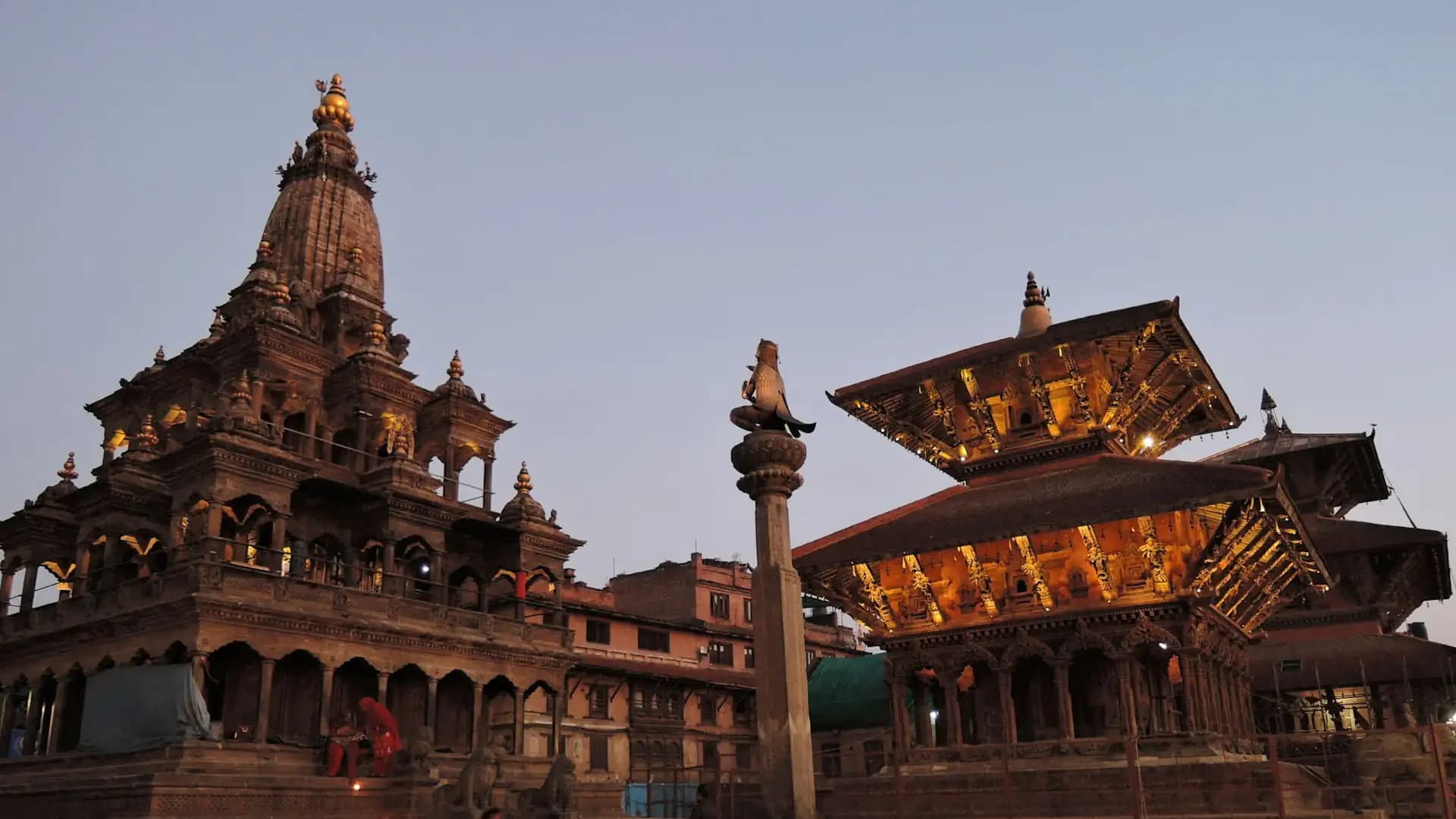
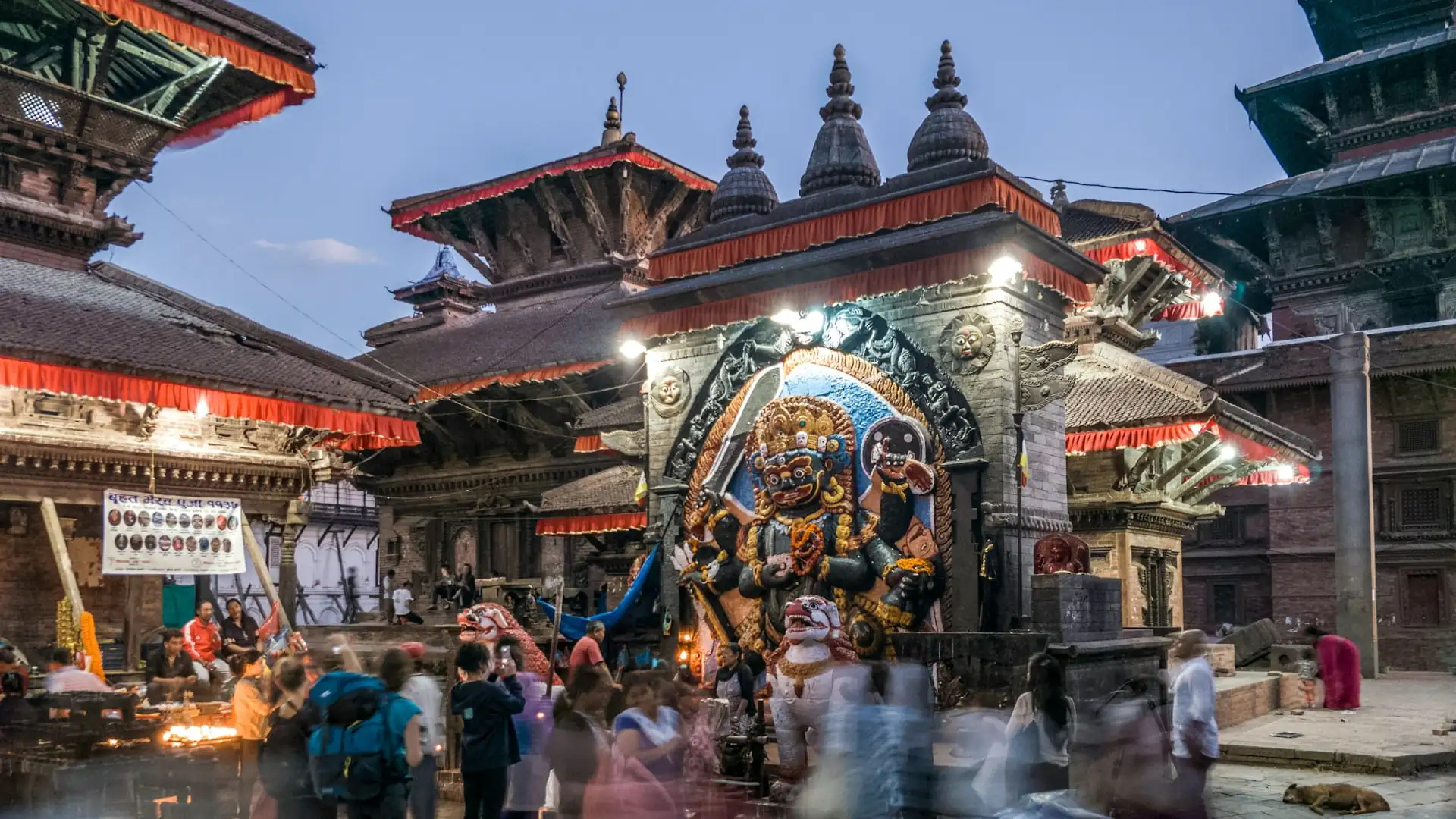
The historic royal palace complex of the old Kathmandu Kingdom, filled with intricately carved temples, courtyards, and the former royal palace itself. This is typically the first stop for visitors exploring the valley's cultural core, and its dense cluster of pagoda-style temples gives a genuine sense of Kathmandu's centuries-old urban history.
Patan Durbar Square
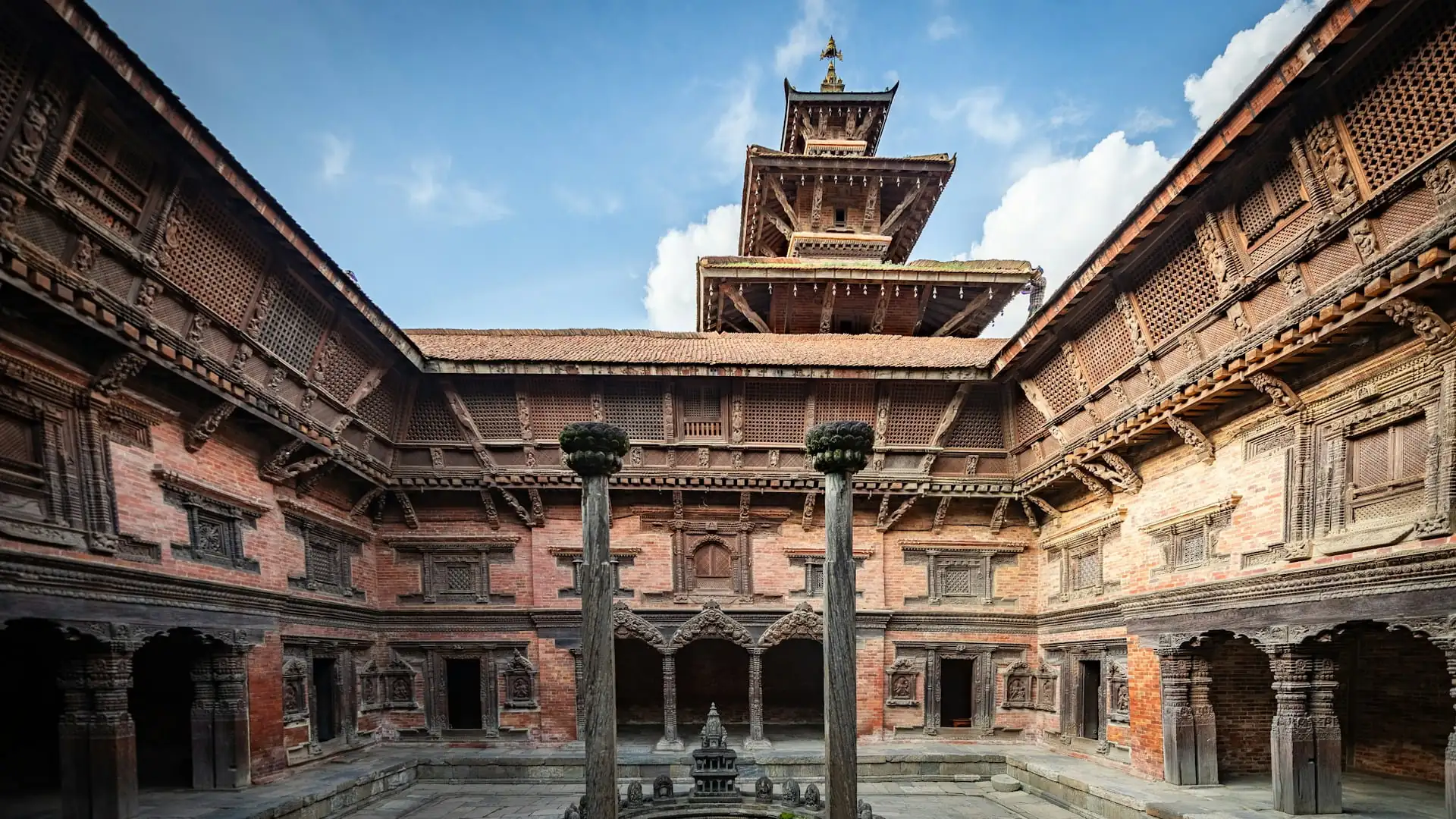
Located in Lalitpur, just across the Bagmati River from central Kathmandu, Patan's Durbar Square is widely regarded as the valley's best-preserved royal square, home to exceptional Newari wood and stone craftsmanship and the excellent Patan Museum housed within the former royal palace.
Bhaktapur Durbar Square
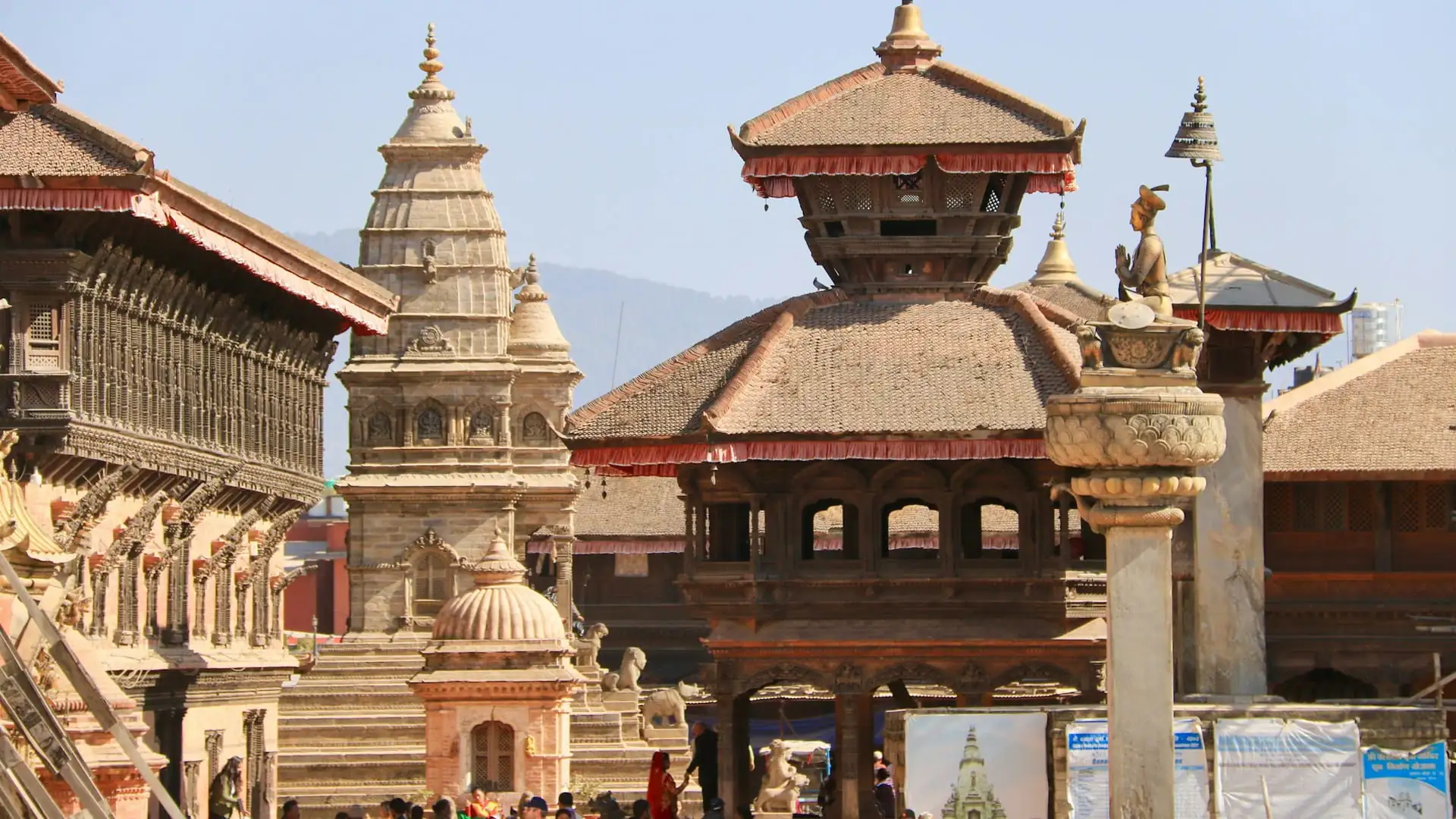
The most intact of the valley's three royal squares, Bhaktapur retains a genuinely medieval atmosphere, with narrow brick-paved lanes, traditional pottery squares, and the towering five-story Nyatapola Temple. Many visitors consider Bhaktapur the single most atmospheric of all the Kathmandu Valley's tourist places, precisely because it has preserved its traditional character more completely than its two sister squares.
Swayambhunath
Perched on a hilltop overlooking Kathmandu, this ancient Buddhist stupa — often called the "Monkey Temple" by visitors, after the resident rhesus macaques — offers sweeping views across the valley alongside its religious significance as one of the oldest Buddhist sites in Nepal.
Boudhanath
One of the largest stupas in the world and a major center of Tibetan Buddhism in Nepal, Boudhanath's massive white dome and painted Buddha eyes are among the most recognizable images associated with Kathmandu. The surrounding neighborhood has a genuinely distinct character, home to a significant Tibetan refugee community and numerous monasteries.
Pashupatinath
Nepal's most important Hindu temple complex, dedicated to Shiva and situated along the sacred Bagmati River. As an active cremation site and major pilgrimage destination, Pashupatinath offers a profound, sometimes intense glimpse into living Hindu religious practice rather than a purely historical monument.
Changu Narayan
Nepal's oldest Hindu temple, dating to the 4th century, Changu Narayan sits on a quiet hilltop outside the main valley and receives considerably fewer visitors than the other six monument zones — a worthwhile stop for travelers wanting a more peaceful, less crowded UNESCO site experience.
For a more detailed, practically organized route through these sites and other Kathmandu highlights, our Kathmandu day tour guide covers how to realistically sequence a single-day or multi-day visit across the valley's main attractions.
Lumbini: The Birthplace of Lord Buddha
Roughly 300 kilometers southwest of Kathmandu in Rupandehi district, Lumbini is among the most significant tourist places in Nepal for an entirely different reason than the Kathmandu Valley's royal history — this is the confirmed birthplace of Siddhartha Gautama, the Buddha, inscribed as a UNESCO World Heritage Site in 1997.
The sacred garden includes the Maya Devi Temple, marking the exact birth site, alongside the Ashoka Pillar erected by the Mauryan emperor in the 3rd century BCE to commemorate the location, and a growing complex of international monasteries built by Buddhist communities from around the world. Lumbini draws pilgrims and cultural travelers alike, and most visitors spend one to two days exploring the sacred garden and surrounding monastic zone.
Chitwan National Park: Nepal's Premier Wildlife Destination
While most of Nepal's tourism narrative centers on mountains and temples, Chitwan National Park offers something genuinely different among the country's major tourist places — a subtropical wildlife sanctuary in the southern Terai lowlands. Established in 1973 as Nepal's first national park and inscribed as a UNESCO site in 1984, Chitwan spans 932 square kilometers of grassland, riverine forest, and wetland habitat — managed today by Nepal's Department of National Parks and Wildlife Conservation — home to one-horned rhinoceros, Bengal tigers, gharial crocodiles, and over 500 recorded bird species. Jungle safaris, canoe trips along the Rapti River, and visits to Tharu indigenous villages make this a markedly different experience from the valley's temple-focused sightseeing, and a popular addition for travelers wanting to pair cultural tourism with wildlife viewing.
Sagarmatha National Park: Gateway to Everest
The fourth of Nepal's UNESCO sites, Sagarmatha National Park, is less a conventional sightseeing destination and more the gateway to the country's most famous trekking region — home to Mount Everest itself and several other peaks above 7,000 meters. Unlike the valley's day-trip-friendly monuments, experiencing Sagarmatha meaningfully requires a proper multi-day trek, typically to Everest Base Camp or one of the region's other classic routes. Our Everest Base Camp Trek package and related itineraries are the standard way travelers access this specific UNESCO site, and our guide on what animals live in the Everest region covers the park's remarkable wildlife alongside its famous mountain scenery.
Beyond UNESCO: Other Major Tourist Places in Nepal
Not every essential destination in Nepal carries UNESCO status, and several of the country's most-visited tourist places sit entirely outside the official heritage list.
Destination | What It Offers | Typical Visit Length |
|---|---|---|
Pokhara | Lakeside city, Annapurna mountain views, paragliding, gateway to major treks | 2–4 days |
Nagarkot | Hillside viewpoint near Kathmandu, sunrise Himalayan panoramas | 1–2 days |
Chisapani | Short hiking destination near Kathmandu, forest and valley views | 1 day |
Bandipur | Preserved Newari hilltop town, considerably quieter than the valley's main squares | 1–2 days |
Thamel (Kathmandu) | Tourist and shopping district, trekking gear, restaurants, nightlife | Ongoing, not a discrete visit |
Pokhara in particular deserves special mention — while it holds no UNESCO designation, it's arguably Nepal's second-most-visited tourist destination after the Kathmandu Valley, serving as the launch point for Annapurna-region treks, a relaxed lakeside base for travelers, and a genuinely spectacular mountain backdrop in its own right. Our Kathmandu-Pokhara tour package and Kathmandu-Pokhara-Chitwan tour both combine these destinations into a single, well-paced itinerary for travelers wanting a broad introduction to Nepal's major tourist places beyond the valley alone.
How Many Days You Need to See Nepal's Top Tourist Places
Itinerary Focus | Recommended Days |
|---|---|
Kathmandu Valley UNESCO sites only | 3–4 days |
Kathmandu Valley + Pokhara | 6–8 days |
Kathmandu Valley + Pokhara + Chitwan | 9–12 days |
Kathmandu Valley + Lumbini | 5–6 days |
Full cultural circuit (Kathmandu, Pokhara, Chitwan, Lumbini) | 12–14 days |
Adding a major trek (Everest, Annapurna, or similar) | Add 10–16 days depending on route |
For travelers with limited time, prioritizing the Kathmandu Valley's monument zones alongside either Pokhara or Chitwan generally gives the most well-rounded sense of Nepal's cultural and natural tourist places without an overly rushed schedule.
Best Time to Visit Nepal's Tourist Places
Season | Conditions | Best For |
|---|---|---|
Autumn (September–November) | Clear skies, stable weather, the most popular season overall | Mountain views, trekking, outdoor sightseeing |
Spring (March–May) | Warm, generally clear, rhododendrons blooming at mid-elevations | Trekking, Kathmandu Valley and Chitwan visits |
Winter (December–February) | Cold mornings in the hills, mild and pleasant in the Terai (Chitwan, Lumbini) | Chitwan wildlife safaris, lower-elevation sightseeing |
Monsoon (June–August) | Heavy rain, lush landscapes, fewer crowds | Budget travel, cultural sites (less ideal for mountain views or trekking) |
Unlike trekking-specific planning, where season matters enormously for safety and views, most of the Kathmandu Valley's UNESCO monument zones are visitable comfortably year-round, since they don't depend on clear mountain visibility the way trekking routes or viewpoints do.
Getting Around Nepal's Tourist Places
Most of the Kathmandu Valley's seven monument zones are reachable by taxi or local transport within 30–60 minutes of each other, making a self-guided or guided day-tour structure genuinely practical for first-time visitors. Destinations further afield — Pokhara, Chitwan, and Lumbini — are reached by domestic flight or road, with flights considerably faster (25–60 minutes) but road travel offering more scenic value for travelers with flexible time. Our general Nepal sightseeing and top attractions guide covers transport logistics across these destinations in more depth, useful for piecing together a realistic multi-stop itinerary.
Combining Kathmandu Valley Sightseeing with Trekking
Many visitors to Nepal's tourist places don't stop at the Kathmandu Valley's temples and squares — they use the city as a launch point for one of the country's major treks, whether that's Everest Base Camp, the Annapurna region, or Manaslu. A practical, well-tested structure is a few days of Kathmandu Valley UNESCO sightseeing before or after a trek, letting you experience both Nepal's cultural heritage and its mountain landscapes within a single trip, rather than treating them as entirely separate visits.
Planning Your Nepal Trip with Adventure Life Nepal
We build itineraries that genuinely combine Nepal's cultural tourist places with its trekking and wildlife destinations, rather than treating Kathmandu sightseeing as a rushed afterthought tacked onto a trek. Whether you're planning a short cultural visit centered on the Kathmandu Valley's UNESCO sites, a broader trip taking in Pokhara and Chitwan, or a longer journey that adds a proper Himalayan trek, it's worth telling us your total available time and priorities so we can put together a realistically paced itinerary rather than an overstuffed one.
Talk to an Expert Before You Book
Planning your first trip to Nepal and want help prioritizing which tourist places fit your timeline? Message us on WhatsApp at +977 9841248242 and we'll help you build an itinerary that makes the most of your visit.
Frequently Asked Questions
1. What are the most important tourist places in Nepal? The Kathmandu Valley's seven UNESCO monument zones, Lumbini (Buddha's birthplace), Chitwan National Park, Sagarmatha National Park (Everest region), and Pokhara are consistently ranked among Nepal's most essential destinations.
2. How many UNESCO World Heritage Sites does Nepal have? Four: the Kathmandu Valley (encompassing seven monument zones), Sagarmatha National Park, Chitwan National Park, and Lumbini.
3. What are the seven monument zones of the Kathmandu Valley? Kathmandu Durbar Square, Patan Durbar Square, Bhaktapur Durbar Square, Swayambhunath, Boudhanath, Pashupatinath, and Changu Narayan.
4. How many days do I need to see Kathmandu Valley's tourist places? Around 3 to 4 days is generally sufficient to visit all seven monument zones at a comfortable, unrushed pace.
5. Is Pokhara a UNESCO World Heritage Site? No, Pokhara doesn't hold UNESCO status, but it remains one of Nepal's most popular tourist places, known for its lakeside setting and Annapurna mountain views.
6. What is the birthplace of Buddha, and is it in Nepal? Lumbini, located in Rupandehi district in southern Nepal, is the confirmed birthplace of Siddhartha Gautama (Buddha) and a UNESCO World Heritage Site.
7. What wildlife can I see in Chitwan National Park? One-horned rhinoceros, Bengal tigers, gharial crocodiles, and over 500 recorded bird species inhabit Chitwan's grassland and riverine forest habitats.
8. When is the best time to visit Nepal's tourist places? Autumn (September–November) and spring (March–May) offer the most stable weather overall, though lower-elevation destinations like Chitwan and Lumbini remain pleasant through winter as well.
9. Can I visit all of Nepal's UNESCO sites in one trip? Yes, with enough time — a combined itinerary covering the Kathmandu Valley, Lumbini, Chitwan, and a trek into the Sagarmatha region typically requires around three to four weeks for a thorough visit.
10. What is the oldest temple in the Kathmandu Valley? Changu Narayan, dating to the 4th century, is recognized as Nepal's oldest Hindu temple and one of the seven Kathmandu Valley monument zones.
11. Is Pashupatinath open to non-Hindu visitors? Non-Hindu visitors can view the temple complex from the opposite bank of the Bagmati River, though entry into the main temple itself is generally restricted to Hindu devotees.
12. How far is Lumbini from Kathmandu? Approximately 300 kilometers, typically reached by a combination of road travel or domestic flight connections via Bhairahawa.
13. What makes Bhaktapur different from Kathmandu and Patan's Durbar Squares? Bhaktapur is widely considered the best-preserved of the three, retaining a more intact medieval atmosphere with traditional brick lanes and less modern development than its two sister squares.
14. Do I need a guide to visit the Kathmandu Valley's tourist places? Not legally required, unlike Nepal's restricted trekking regions, though a knowledgeable guide considerably enriches the historical and religious context of sites like Pashupatinath and Boudhanath.
15. Is Sagarmatha National Park accessible without trekking? Not meaningfully — experiencing this UNESCO site generally requires a multi-day trek into the Everest region, unlike the valley's day-trip-accessible monument zones.
16. What's the best way to combine Kathmandu sightseeing with a trek? A few days of Kathmandu Valley sightseeing before or after a Himalayan trek is a well-tested, practical structure that lets travelers experience both cultural and mountain destinations in one trip.
17. Are Nepal's tourist places affected by earthquakes? Some Kathmandu Valley monuments sustained damage in the 2015 earthquake and have since been restored, though it's worth noting that rebuilding and restoration work has continued at various sites in the years since.
18. What is the significance of Boudhanath specifically? Boudhanath is one of the largest stupas in the world and a major center of Tibetan Buddhism in Nepal, surrounded by a significant Tibetan refugee community and numerous monasteries.
19. Is Chitwan National Park far from Kathmandu? Approximately 165 kilometers, reachable by road in around 5 to 6 hours or by a short domestic flight.
20. What should first-time visitors to Nepal prioritize seeing? The Kathmandu Valley's UNESCO monument zones are the most practical starting point for any first visit, offering the richest concentration of accessible cultural tourist places before branching out to Pokhara, Chitwan, Lumbini, or a trekking region.
Talk to an Expert
Ready to plan your Nepal trip around its best tourist places? Message us on WhatsApp at +977 9841248242 and our team will help you build the right itinerary.
Author: Dil Bahadur Karki