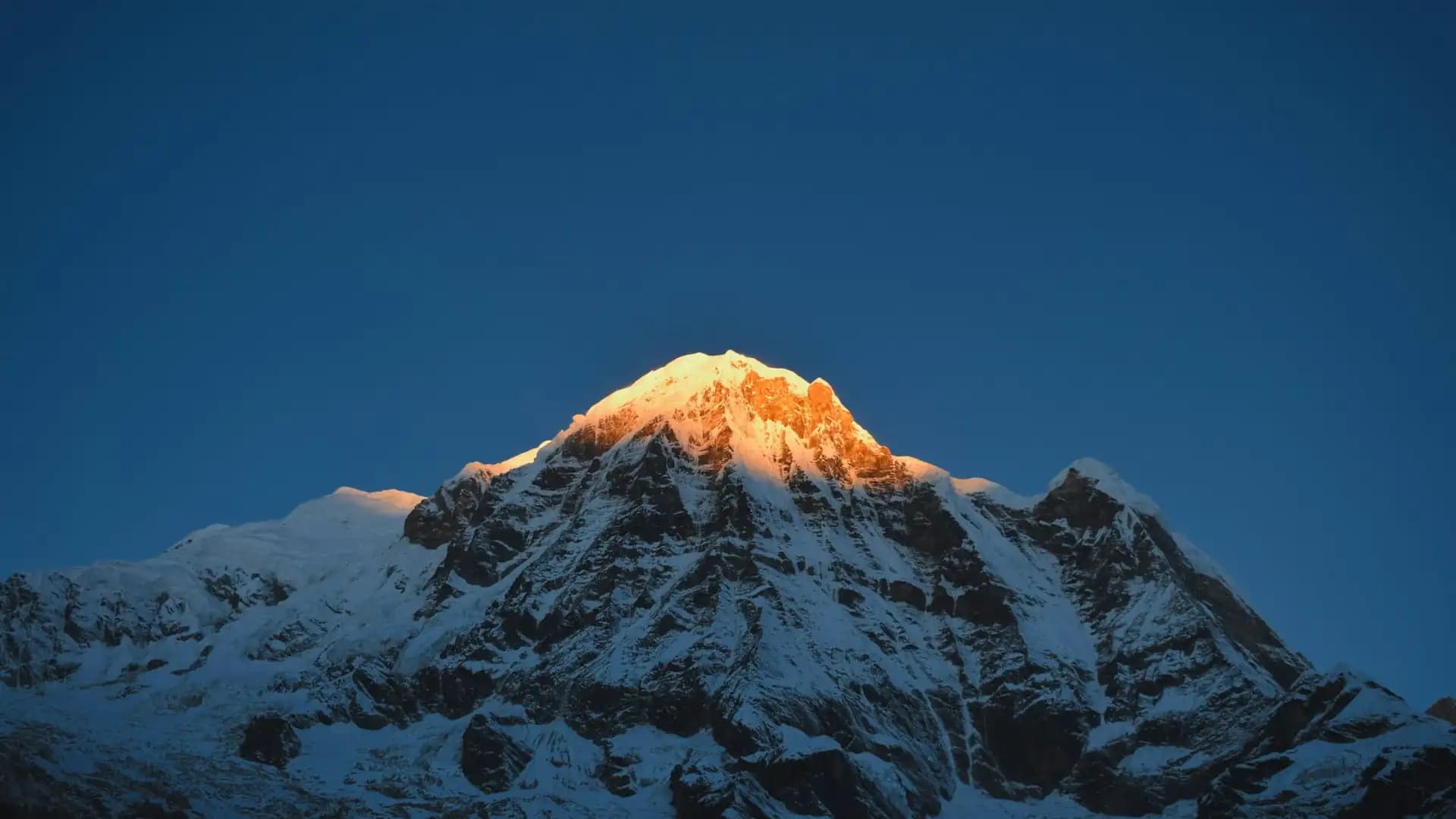
How Many Days to Climb Annapurna: Full Timeline for 2027
How Many Days to Climb Annapurna
Climbing Annapurna I — the actual 8,091-meter summit, not the trek to its base camp — takes between 40 and 50 days from arrival in Kathmandu to return, with most commercial 2026 expeditions structured around a 42-to-48-day itinerary. That timeline isn't padding or bureaucratic caution.
It's the minimum realistic window for proper high-altitude acclimatization, establishing and stocking four high camps, and building in enough flexibility to wait for one of the narrow, unpredictable weather windows that Annapurna's notoriously unstable slopes demand more urgently than almost any other 8,000-meter peak.
This guide breaks down exactly where those 40-plus days go — the trek in, the acclimatization rotations, the summit push, the descent — along with the permits, costs, dangers, and history that make Annapurna I one of the most serious undertakings in high-altitude mountaineering.
Important distinction before we start: This guide covers climbing Annapurna I's actual summit — a serious, technical, high-altitude mountaineering expedition requiring years of prior experience. This is an entirely different undertaking from the Annapurna Base Camp Trek, a moderate, non-technical trekking route to 4,130 meters that requires no climbing skill and takes only 7 to 12 days.
If you're researching a trekking holiday rather than a mountaineering expedition, that's the trek you want — and it's covered in detail in Adventure Life Nepal's separate Annapurna Base Camp Trek guide.
Annapurna I climbing expedition at a glance
Fact | Detail |
|---|---|
Summit elevation | 8,091 m (26,545 ft) — 10th highest mountain on Earth |
Total expedition duration | 40–50 days (most 2026 operators: 42–48 days) |
Approach to Base Camp | 8–12 days trekking, or 2–3 days via helicopter |
Time at/around Base Camp (acclimatization + waiting) | ~29–30 days |
Descent and return | 4–5 days |
Best climbing season | Spring (April–May); secondary autumn window (Sept–Oct) |
~4,130–4,200 m | |
Number of high camps | 4 (Camp I through Camp IV) |
First ascent | June 3, 1950 — Maurice Herzog and Louis Lachenal (French expedition) |
Current fatality-to-summit ratio (early 2026) | ~13.4% (75 deaths / 559 summits) |
Historical fatality ratio (through ~2006) | ~32%–38.7% |
Why "How Many Days" Isn't a Simple Question for Annapurna
Ask the same question about a shorter trekking holiday and you'll get a fairly consistent answer. Ask it about climbing Annapurna I, and the honest response has to start with why the number varies as much as it does — because unlike a fixed trekking itinerary, an Annapurna expedition's duration is fundamentally reactive: built around waiting for conditions that nobody can fully predict in advance.
Three structural factors drive the 40-to-50-day range:
Acclimatization is non-negotiable and slow. The human body cannot be rushed into functioning at extreme altitude — the physiological adaptations required (increased red blood cell production, improved oxygen-carrying capacity) take weeks regardless of fitness level, and skipping or shortening this process dramatically increases the risk of altitude illness and death.
Annapurna's weather windows are unusually narrow and unpredictable. Even relative to other 8,000-meter peaks, Annapurna I has a reputation among professional guides and climbers for offering fewer genuinely safe summit opportunities per season, which means expeditions build in substantial buffer time specifically for waiting.
The mountain's objective hazards demand conservative timing. Frequent avalanches, unstable seracs, and a notoriously exposed route mean rushing the schedule to save a few days carries disproportionate risk on this particular mountain, more so than on several taller but comparatively more predictable 8,000-meter peaks.
The Full Expedition Timeline: Phase by Phase
Phase 1: Kathmandu — Arrival, Permits, and Preparation (2–4 Days)
Every Annapurna I expedition begins in Kathmandu, where climbers spend two to four days handling permit formalities with Nepal's Department of Tourism, final equipment inspections, team briefings, and — for many operators — a traditional puja ceremony before departure.
This stage also involves confirming supplemental oxygen logistics, since most commercial expeditions use bottled oxygen above the higher camps to improve both safety margins and summit success rates, even though a small number of elite climbers each season attempt the mountain without it.
Phase 2: Approach to Base Camp (8–12 Days by Trek, or 2–3 Days by Helicopter)
From Kathmandu, expeditions travel to Pokhara by road or short domestic flight, then continue by road toward the trailhead before beginning the trek in toward Annapurna Base Camp — the same general Sanctuary approach used by standard ABC trekkers, though expedition teams typically follow a route via Ghorepani, Poon Hill, Tatopani, and the Kali Gandaki side of the massif rather than the shorter, more direct Ghandruk-Chhomrong trekking route, given the need to transport substantially more equipment and supplies.
Approach option | Duration | Notes |
|---|---|---|
Standard trekking approach | 8–12 days | Follows a longer route through Ghorepani/Tatopani region; also serves as valuable low-altitude acclimatization time |
Helicopter approach | 2–3 days | Faster but skips the gradual, useful low-altitude acclimatization the trek-in provides |
The trekking approach isn't merely transportation — it functions as genuinely useful acclimatization time before the technical climbing even begins, gradually exposing climbers to increasing altitude over more than a week rather than transporting them abruptly to 4,000-plus meters.
Teams using the helicopter option to save time typically need to build additional acclimatization days into the Base Camp phase to compensate for skipping this gradual approach.
Phase 3: Base Camp — The Expedition's True Headquarters (Roughly Six Weeks)
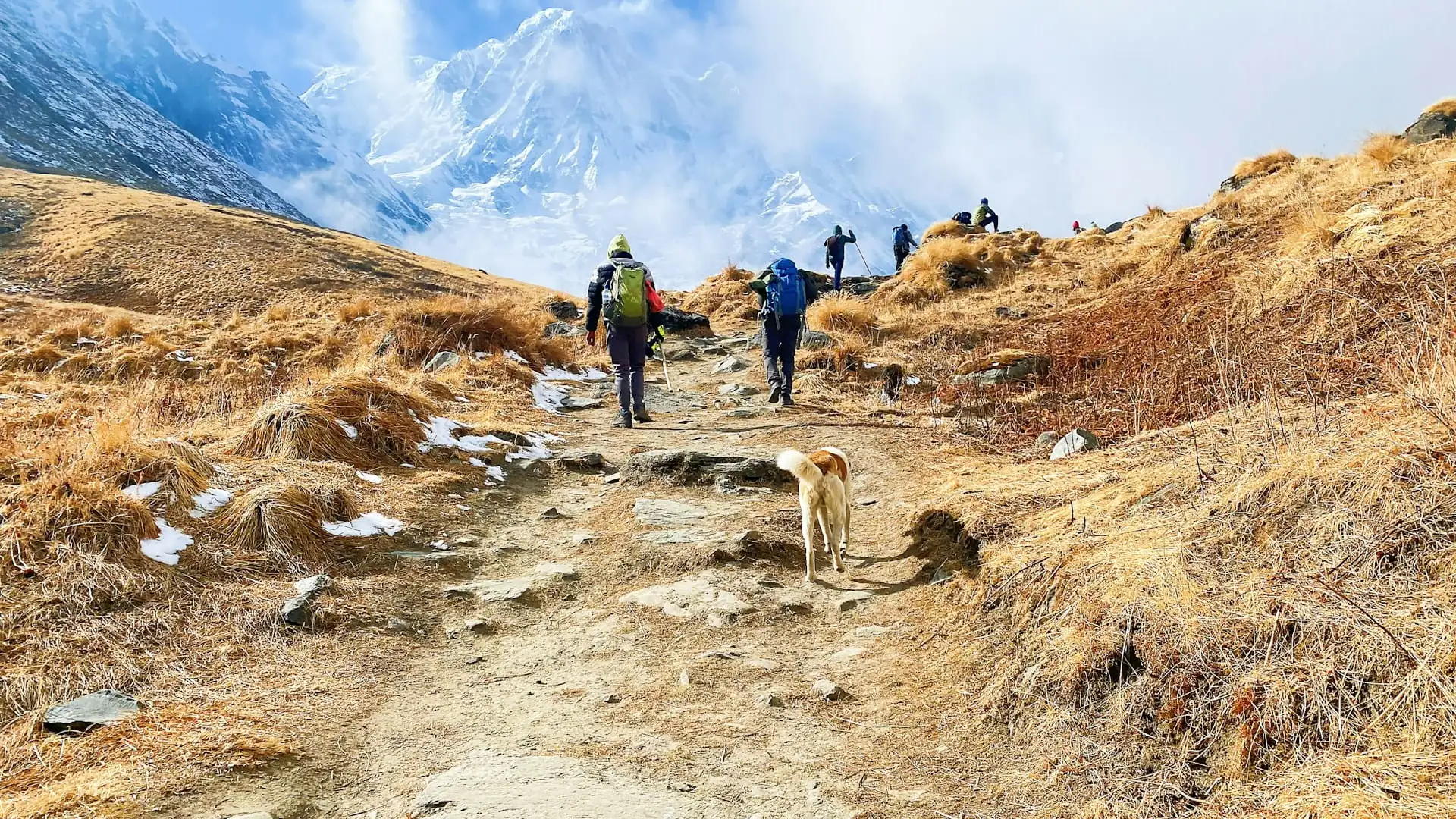
Once established, Annapurna Base Camp — sitting at approximately 4,130 to 4,200 meters, depending on the exact route and season — functions as the expedition's headquarters for the vast majority of the total trip, often cited by operators as home for "nearly six weeks" of the overall itinerary.
This is where the real structural difference between an Everest-style South Col expedition and an Annapurna I expedition becomes clear: Annapurna's north side base camp sits directly beneath the mountain's imposing north face, with the route to Camp I crossing heavily crevassed, avalanche-prone glacial terrain from the very first steps above Base Camp — widely considered one of the most objectively hazardous lower sections of any standard 8,000-meter route, which is part of why teams move through this stretch predominantly in the early morning, when snow conditions are most stable.
Phase 4: Establishing and Stocking the High Camps
Annapurna I's standard route uses four high camps between Base Camp and the summit, and establishing them is a gradual, repeated process rather than a single push.
Camp | Approximate elevation | Notes |
|---|---|---|
Base Camp | ~4,130–4,200 m | Expedition headquarters for most of the trip |
Camp I | ~5,050–5,150 m | Reached by crossing crevassed, avalanche-prone glacier terrain |
Camp II | ~5,700 m | — |
Camp III | ~6,500 m | Increasingly technical terrain begins here |
Camp IV | ~7,400 m | Final camp before the summit push |
Summit | 8,091 m | — |
Sherpa support teams and climbers work together to fix ropes, stock camps with supplies, tents, and oxygen, and establish the safest available line through each section — work that itself requires multiple trips up and down the mountain over a period of roughly three to four weeks, run in parallel with the climbers' own acclimatization rotations.
Phase 5: Acclimatization Rotations (Roughly 24 Days, Overlapping With Camp Establishment)
This is the longest single phase of the expedition and the one most directly responsible for the overall 40-to-50-day timeline. Rather than climbing straight from Base Camp to the summit, climbers make repeated rotations — trips up to progressively higher camps, followed by a full descent back to Base Camp to rest and recover, before climbing again to an even higher point.
This "climb high, sleep low" pattern, identical in principle to the acclimatization strategy used on Everest and every other serious 8,000-meter expedition, is described by several current commercial operators as a structured 24-day rotational schedule involving multiple ascents and descents specifically between Base Camp, Camp I, and Camp II before climbers are considered ready for a genuine summit attempt from higher on the mountain.
Rotation stage | Purpose |
|---|---|
Rotation 1 (BC ↔ Camp I) | Introduce the body to Camp I's altitude and the crevassed lower glacier |
Rotation 2 (BC ↔ Camp II) | Extend exposure to Camp II's altitude |
Rotation 3 (BC ↔ Camp III, sometimes touching Camp IV) | Push acclimatization closer to the altitude required for a summit push |
Rest period at Base Camp | Full recovery and weather monitoring before the final summit attempt |
Between each rotation, climbers rest at Base Camp — sometimes for several days — since descent itself, not just the climbing, is a critical part of what allows the body to adapt before pushing higher again. This extended rotation phase, running in parallel with route-fixing and camp-stocking work by the Sherpa team, is why Base Camp genuinely functions as "home" for the better part of five to six weeks rather than a brief staging stop.
Phase 6: Waiting for the Weather Window
Once rotations are complete and all four camps are stocked, climbers descend to Base Camp and wait for a stable summit weather window — a phase that varies enormously in length depending entirely on the season's conditions and can consume anywhere from several days to over a week of otherwise "idle" time at Base Camp.
Annapurna I's weather windows are widely regarded by professional operators and experienced climbers as narrower and less predictable than those of several taller, more frequently climbed 8,000-meter peaks, a reputation rooted in the mountain's exposure to fast-moving weather systems and its steep, avalanche-prone terrain, which requires more conservative conditions before a summit attempt is considered reasonably safe.
Phase 7: The Summit Push
Once a viable window opens, the final summit push begins — the part of the expedition most people picture, even though it represents only a handful of days within the overall 40-to-50-day timeline. Climbers move up through the established camps, typically spending a night at each, before launching a final overnight push toward the summit from Camp IV (approximately 7,400 meters).
Most climbers begin this final push late at night, walking through the darkness for roughly seven to eight hours, with the goal of reaching the summit in the mid-morning window, generally between 8:00 and 10:00 a.m., before beginning the descent while daylight and weather conditions remain favorable.
Summit day detail | Typical figure |
|---|---|
Departure from Camp IV | Late night (often around midnight) |
Climbing duration to summit | ~7–8 hours |
Typical summit arrival time | 8:00–10:00 a.m. |
Supplemental oxygen | Standard for most commercial climbers above the higher camps |
Phase 8: Descent and Return (4–5 Days from Base Camp to Kathmandu)
After the summit push, climbers descend rapidly back through the camps to Base Camp — a descent that typically takes a fraction of the time the ascent required, since it doesn't require the same acclimatization pacing. From Base Camp, the team retraces the trekking route out — descending through Machhapuchhre Base Camp, Deurali, Himalaya, and down through the forested lower valley to Bamboo, then continuing through Sinuwa to Jhinu Danda, where the natural hot springs beside the Modi Khola River serve as a well-earned, near-universal post-expedition tradition after five-plus weeks of expedition living.
From Jhinu Danda or the equivalent exit point on the route used, teams continue to the road head, drive back to Pokhara, and fly to Kathmandu to formally close out the expedition.
Sample Full Timeline: A Realistic 42–48 Day Expedition
Putting every phase together, here's what a complete, realistic Annapurna I expedition timeline looks like for climbers on the standard route in spring, the primary and most commonly used climbing season.
Days | Phase |
|---|---|
Days 1–3 | Kathmandu: permits, gear checks, team briefing, puja ceremony |
Days 4–5 | Travel to Pokhara, drive to trailhead |
Days 6–15 | Trek in to Base Camp via Ghorepani/Tatopani route (approach doubles as low-altitude acclimatization) |
Days 16–39 | Base Camp phase: camp establishment, rotations (Base Camp ↔ Camp I ↔ Camp II ↔ Camp III), rest periods |
Days 40–43 | Weather window opens; summit push (Base Camp → Camp IV → summit → descent to Base Camp) |
Days 44–47 | Descent from Base Camp through Sanctuary trail to road head, drive to Pokhara |
Day 48 | Fly to Kathmandu, expedition formally concludes |
Some operators build in additional buffer days for weather delays, a second summit attempt window if the first is unsuccessful, or free/rest days in Kathmandu before final departure — pushing total trip length for some itineraries closer to 49 or 50 days when every contingency is accounted for.
Why Annapurna Takes Roughly the Same Time as Everest, Despite Being Lower
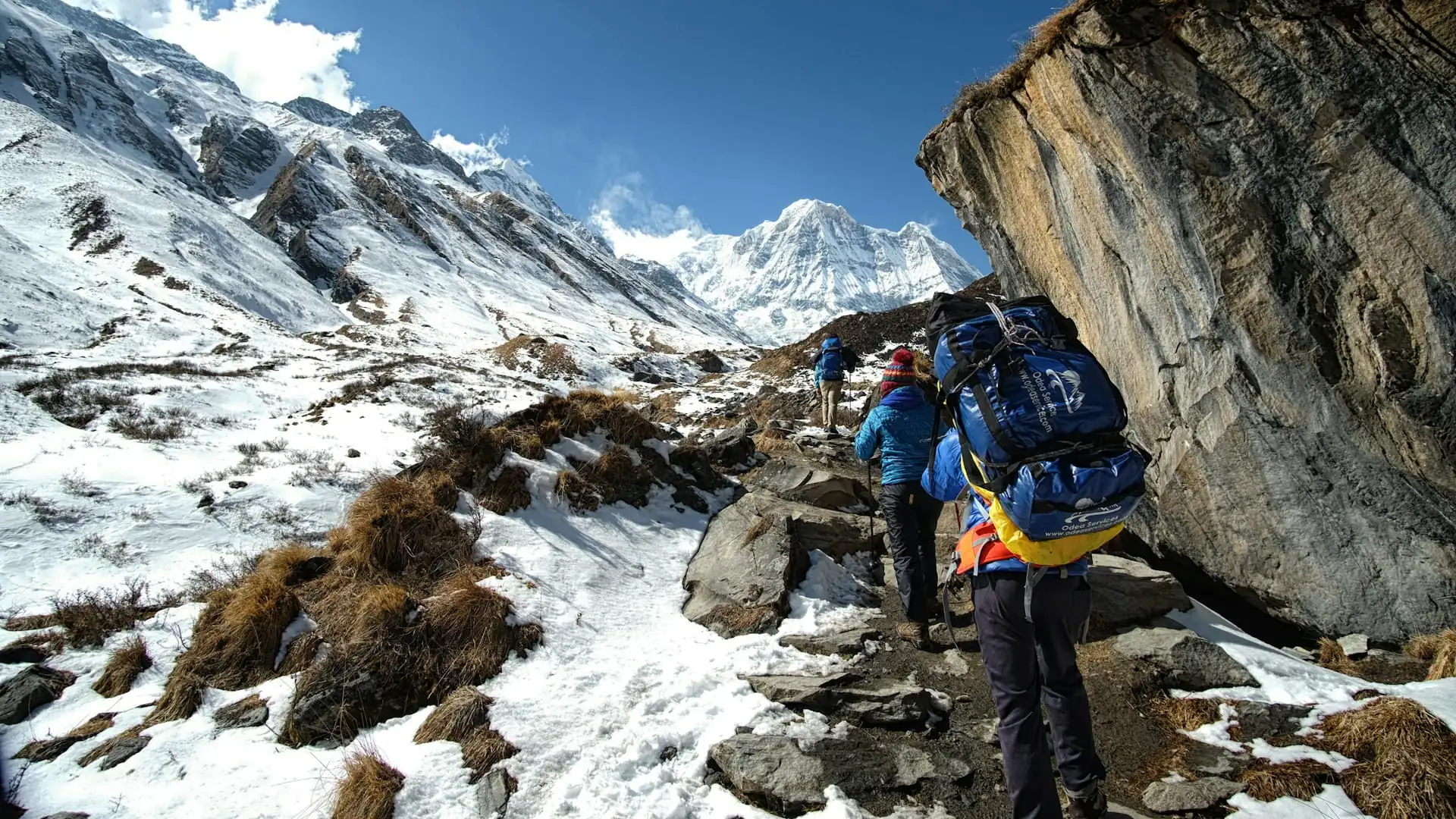
A genuinely useful comparison for understanding Annapurna's timeline: at 8,091 meters, it's considerably lower than Everest's 8,848.86 meters, and lower than several other 8,000-meter peaks climbers often use as stepping stones toward Everest. Yet Annapurna I's expedition length (40–50 days) sits in a broadly similar range to a standard Everest expedition (60–75 days is Everest's typical range, admittedly somewhat longer, but not proportionally shorter in the way raw elevation difference alone might suggest).
The reason isn't altitude — it's risk profile. Everest's South Col route, while extremely demanding, is comparatively well-mapped, heavily trafficked, and benefits from an established seasonal route-fixing system and a fairly reliable, well-forecast spring weather window.
Annapurna I's north side route crosses more consistently avalanche-prone terrain from low on the mountain, has fewer climbers and less well-established seasonal infrastructure, and offers narrower, less predictable weather windows — all of which push expeditions toward longer acclimatization schedules and more conservative summit-window waiting, regardless of the mountain's lower absolute elevation.
Comparison point | Annapurna I | Everest |
|---|---|---|
Summit elevation | 8,091 m | 8,848.86 m |
Typical expedition duration | 40–50 days | 60–75 days |
Primary season | Spring (April–May) | Spring (mid-to-late May window) |
Acclimatization rotation length | ~24 days | 3–4 weeks |
Historical/current fatality ratio | ~13.4% current (down from ~32–38% historically) | Considerably lower, though precise figures vary by source and route |
Route character | Steep, heavily avalanche-prone lower glacier | More established, heavily trafficked route with seasonal fixed ropes |
Why Annapurna I Has the Reputation It Does
Understanding the danger context genuinely matters for understanding why the expedition timeline is built the way it is — every extra rest day, every conservative weather-window decision, reflects lessons learned from a mountain with a serious history.
Annapurna I holds a singular place in mountaineering history: it was the first peak above 8,000 meters ever successfully climbed, reached on June 3, 1950, by French climbers Maurice Herzog and Louis Lachenal — three full years before Everest's first ascent in 1953. That achievement came at extraordinary human cost. Herzog lost his gloves during the descent and suffered severe frostbite requiring the amputation of most of his fingers; Lachenal lost all his toes to frostbite as well.
The expedition also survived a serious crevasse fall involving four team members and a dangerous avalanche during the descent — an account Herzog later documented in his book Annapurna (1951), widely regarded as one of the most influential works in mountaineering literature.
That harrowing first ascent turned out to foreshadow the mountain's long-term reputation. For decades, Annapurna I carried the highest fatality-to-summit ratio of any of the world's fourteen 8,000-meter peaks, historically cited in the range of roughly 32% to 38.7% through approximately 2006 — meaning, for much of the mountain's climbing history, close to one in three (and at times closer to two in five) climbers who attempted the summit did not return safely.
That ratio has fallen substantially since. As of early 2026, approximately 559 climbers have successfully summited Annapurna I while 75 have died attempting it, producing a current fatality-to-summit ratio of approximately 13.4% — still among the highest of any 8,000-meter peak, but a marked improvement attributed to better logistics, improved weather forecasting, and more developed commercial expedition infrastructure than existed in the mountain's earlier climbing decades.
Annapurna I fatality data | Figure |
|---|---|
Historical fatality-to-summit ratio (through ~2006) | ~32%–38.7% |
Current ratio (as of early 2026) | ~13.4% (75 deaths / 559 summits) |
Reasons for historical improvement | Better logistics, improved forecasting, developed commercial expedition infrastructure |
Primary hazard type | Avalanches, particularly on the lower glacier and around the Camp II–Camp III zone |
The mountain's most notorious route beyond the original French line is its South Face — first climbed in 1970 by a British expedition led by Chris Bonington, with Don Whillans making the first ascent from that side. Standard commercial expeditions today, however, predominantly use the North Face route pioneered by Herzog's original 1950 expedition, given its comparatively more established (though still genuinely hazardous) line.
Best Season for an Annapurna I Expedition
Spring (April–May) is the primary and by far the most heavily used climbing season, with the most reliable summit windows typically occurring in late April through mid-May — a period offering the most stable overall weather patterns of the year on this particular mountain, and warmer high-altitude conditions than the alternative autumn window.
Autumn (September–October) functions as a secondary, considerably less popular season, offering shorter and less predictable weather windows along with meaningfully colder conditions than spring — a combination that leads most commercial operators to run the bulk of their Annapurna I departures in spring rather than autumn.
Season | Character |
|---|---|
Spring (April–May) | Primary season; most stable weather; most reliable summit windows in late April–mid-May |
Autumn (September–October) | Secondary season; colder; shorter, less predictable windows |
Winter/Monsoon | Not used for standard commercial Annapurna I expeditions |
Permits Required for Annapurna I
Climbing Annapurna I requires an Annapurna I climbing permit issued directly by Nepal's Department of Tourism, in addition to the standard Annapurna Conservation Area Permit (ACAP) that covers entry into the broader conservation area through which the approach route passes.
As with other major 8,000-meter peaks in Nepal, the climbing royalty fee itself varies by season and is subject to periodic government revision — climbers should confirm the current fee schedule directly with their operator or Nepal's Department of Tourism close to their planned departure date, given the pattern of periodic increases across Nepal's permit system in recent years.
Requirement | Notes |
|---|---|
Annapurna I climbing permit | Issued by Nepal's Department of Tourism; fee varies by season |
Annapurna Conservation Area Permit (ACAP) | Required for the approach route through the conservation area |
Licensed climbing Sherpa/guide | Standard practice; many operators provide mandatory 1:1 Sherpa support per climber |
Insurance | High-altitude mountaineering insurance with emergency evacuation coverage is essential, not optional |
What Skill Level Does This Actually Require?
Unlike the Annapurna Base Camp trek, which is explicitly a non-technical route accessible to reasonably fit hikers with no prior climbing experience, an Annapurna I expedition demands genuine, extensive mountaineering credentials.
Operators consistently describe the climb as requiring extensive experience in technical alpine climbing, glacier travel, and prior high-altitude expedition experience — this is not recommended for novice climbers, and reputable operators generally expect climbers to have already summited at least one other high-altitude peak, ideally including prior experience above 7,000 or 8,000 meters, before attempting Annapurna I specifically given its elevated objective hazard profile relative to several other 8,000-meter peaks.
Skill/experience area | Why it matters on Annapurna I |
|---|---|
Technical alpine climbing | Route includes steep snow and ice sections, particularly above Camp II |
Glacier travel and crevasse navigation | The lower route from Base Camp to Camp I crosses heavily crevassed terrain |
Prior high-altitude expedition experience | Strongly recommended given the mountain's elevated risk profile |
Physical conditioning | Sustained effort across a 40-to-50-day expedition, including a demanding multi-day summit push |
Mental resilience and decision-making under pressure | Objective hazards (avalanche risk, weather volatility) require sound judgment throughout |
Cost Considerations
Annapurna I expedition costs vary considerably by operator, level of support (including Sherpa-to-climber ratio, which some operators set at a mandatory 1:1), supplemental oxygen provisions, and the specific season and route chosen.
Costs are generally comparable to, or in some cases lower than, an equivalent Everest expedition, though climbers should expect a genuinely substantial total investment reflecting the extended duration, specialized equipment, permit fees, and the extensive Sherpa support infrastructure required for a mountain with Annapurna I's risk profile.
Given the wide variation between operators and the way pricing structures differ (all-inclusive versus base-camp-services-only packages, for instance), prospective climbers should request a detailed, itemized quote directly from their chosen operator rather than relying on any single published figure.
How the Expedition Timeline Compares to the ABC Trek
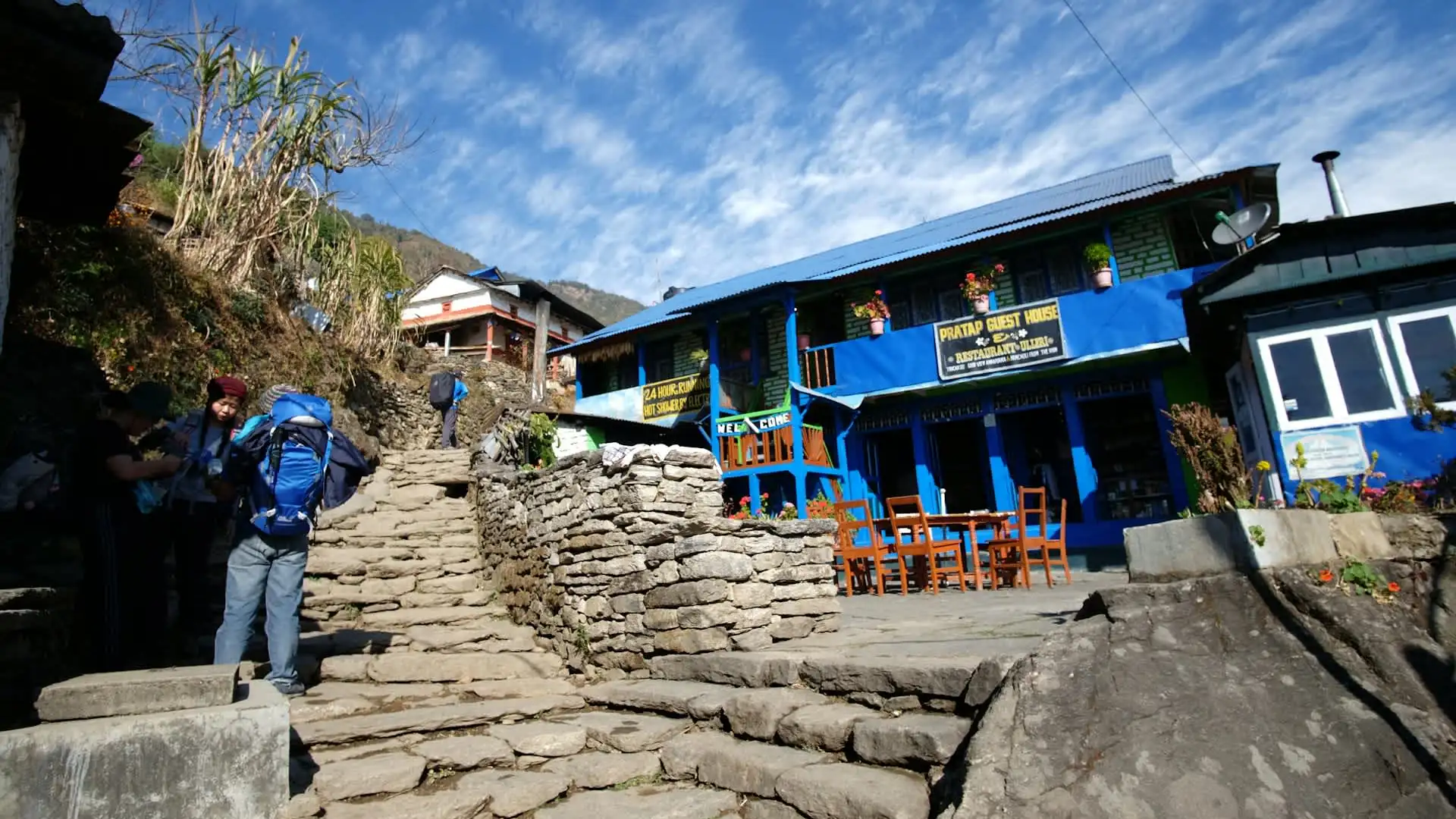
It's worth stating this comparison plainly, since the two are frequently confused given their overlapping name and shared approach route through much of the Annapurna Sanctuary.
Factor | Annapurna Base Camp Trek | Annapurna I Climbing Expedition |
|---|---|---|
Destination | Base Camp (~4,130 m) | Summit (8,091 m) |
Duration | 7–12 days | 40–50 days |
Technical skill required | None | Extensive technical alpine climbing experience |
Route | Standard, well-established trekking trail | Includes glacier travel, fixed ropes, four high camps |
Risk level | Moderate (altitude-related risk primarily) | Extreme (avalanche, technical, and altitude risk) |
Guide requirement | Mandatory licensed trekking guide | Mandatory experienced climbing Sherpa/guide team, often 1:1 ratio |
Suitable for | Reasonably fit trekkers, including relative beginners | Experienced mountaineers with prior high-altitude summit experience |
Both routes share the same lower and middle sections of the approach through Ghandruk, Chhomrong, or the Ghorepani/Tatopani corridor, and both pass through — or terminate at — the same general Annapurna Base Camp region beneath Annapurna I's imposing north face.
But from Base Camp onward, the two experiences diverge entirely: trekkers turn around and head home, while expedition climbers are only beginning the most demanding and time-consuming phase of a multi-week undertaking.
Why Timeline Discipline Matters More on Annapurna Than Almost Anywhere Else
Given the mountain's historical and current fatality data, the case for respecting the full 40-to-50-day timeline — rather than attempting to compress it — is considerably stronger on Annapurna I than on many other 8,000-meter peaks.
Several factors specifically reinforce this:
Acclimatization rushed is acclimatization that fails. Climbers who compress rotations to save time face materially higher risk of altitude illness precisely at the point in the expedition (the summit push) where mistakes are least recoverable.
Weather-window patience is a genuine safety strategy, not overcaution. Given Annapurna's narrower, less predictable windows relative to other major peaks, teams that push forward on marginal weather rather than waiting for a genuinely stable window are taking on disproportionate risk, a pattern reflected in the mountain's historical fatality data.
Route-fixing and camp-stocking take real time regardless of climber readiness. Even a climber who acclimatizes unusually quickly still depends on Sherpa teams having completed the multi-week process of fixing ropes and stocking camps through consistently hazardous lower-glacier terrain — a process that can't be safely rushed regardless of any individual climber's schedule.
Frequently Asked Questions about How Many Days to Climb Annapurna
How many days does it take to climb Annapurna I?
Most commercial 2026 expeditions run 40 to 50 days total, with the most common itineraries falling around 42 to 48 days from Kathmandu arrival to return.Is this the same as the Annapurna Base Camp Trek?
No. The Annapurna Base Camp Trek is a 7-to-12-day non-technical trek to 4,130 meters, requiring no climbing skill. Climbing Annapurna I is a 40-to-50-day technical mountaineering expedition to the 8,091-meter summit, requiring extensive prior high-altitude climbing experience.Why does it take so long compared to the raw distance and elevation involved?
Because the human body cannot safely acclimatize to extreme altitude quickly, and because Annapurna I's narrow, less predictable weather windows and consistently hazardous lower-glacier terrain both demand a conservative, well-buffered schedule rather than a compressed one.What's the best season to climb Annapurna I?
Spring (April–May) is the primary season, with the most reliable summit windows typically occurring in late April through mid-May. Autumn (September–October) is a secondary, colder, and less predictable option.How dangerous is Annapurna I compared to other 8,000-meter peaks?
Historically, it carried the highest fatality-to-summit ratio of any 8,000-meter peak, cited around 32% to 38.7% through roughly 2006. As of early 2026, that ratio has fallen to approximately 13.4% (75 deaths across 559 summits) due to improved logistics, forecasting, and commercial expedition infrastructure — though it remains among the highest of any 8,000-meter peak.How many high camps are used on the standard route?
Four: Camp I (~5,050–5,150 m), Camp II (~5,700 m), Camp III (~6,500 m), and Camp IV (~7,400 m), above which climbers launch the final summit push.Do climbers use supplemental oxygen on Annapurna I?
Most commercial expeditions use supplemental oxygen above the higher camps to improve both safety and summit success rates. A small number of highly experienced climbers each season attempt the mountain without it, though this requires exceptional fitness and experience.What permits are required?
An Annapurna I climbing permit issued by Nepal's Department of Tourism, plus the standard Annapurna Conservation Area Permit (ACAP) for the approach route.Who made the first ascent, and when?
Maurice Herzog and Louis Lachenal, part of a French expedition, reached the summit on June 3, 1950 — the first successful ascent of any peak above 8,000 meters, three years before Everest's first ascent in 1953.Can beginners attempt Annapurna I?
No. Reputable operators require extensive prior technical alpine climbing and high-altitude expedition experience, generally including at least one prior high-altitude summit, before considering a climber ready for Annapurna I specifically.How does the approach to Base Camp work?
Most expeditions trek in over 8 to 12 days via a route through Ghorepani, Poon Hill, and Tatopani, which also serves as valuable low-altitude acclimatization. A faster 2-to-3-day helicopter approach is available but skips this gradual acclimatization benefit.What happens if the weather window never opens during the scheduled expedition?
This is a genuine risk on Annapurna I given its narrower, less predictable windows. Teams build buffer days into the schedule specifically for this scenario, and in some cases a summit attempt may need to be abandoned if no viable window materializes within the planned expedition length.
Conclusion on How Many Days to Climb Annapurna
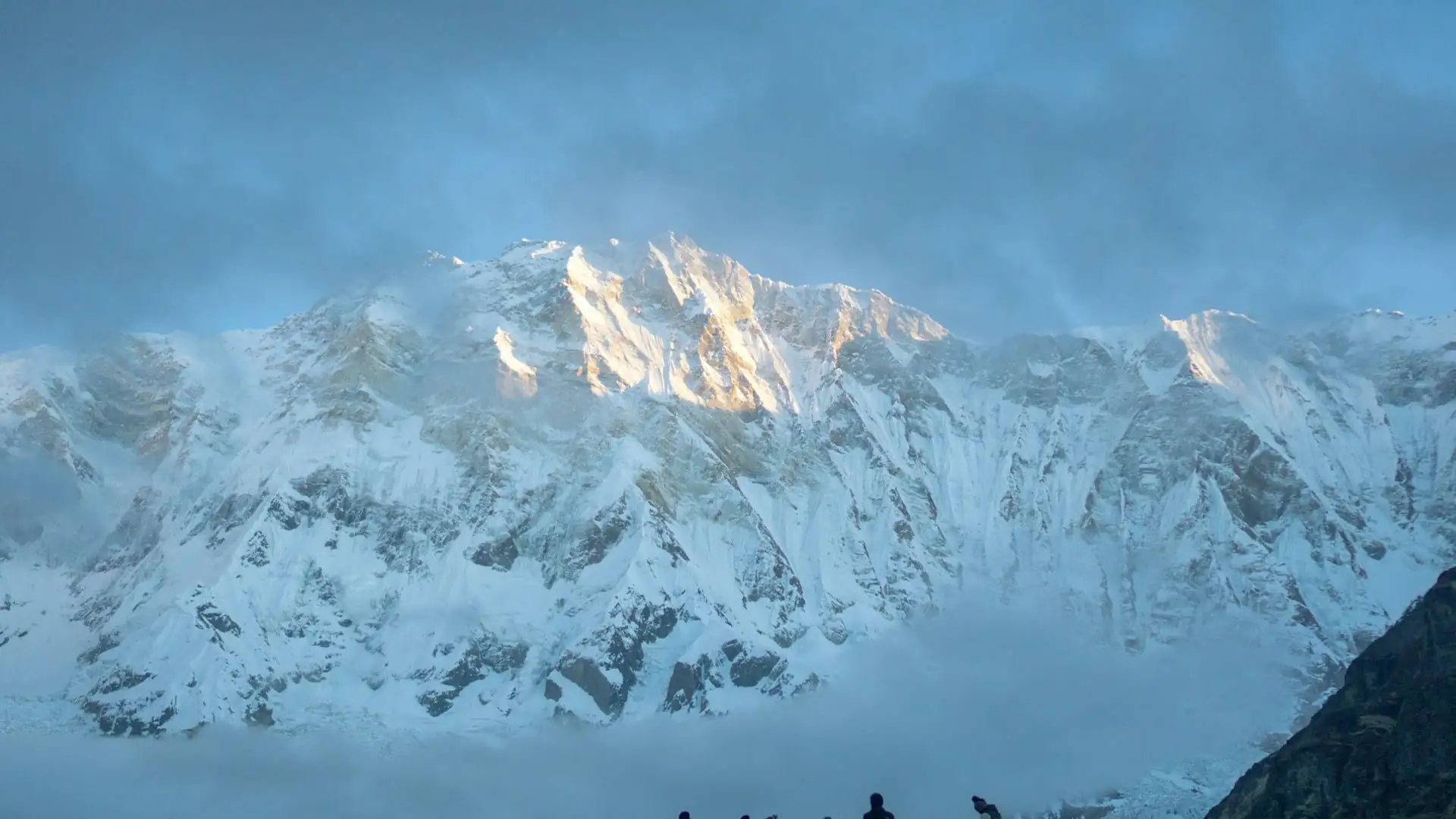
Climbing Annapurna I takes 40 to 50 days not because of bureaucracy or overcaution, but because the mountain itself — its extreme altitude, its narrow and unpredictable weather windows, and its historically severe fatality record — genuinely demands that much time to attempt safely.
Roughly two weeks go to the trek in and acclimatization along the way; nearly six weeks are spent based at Camp, running acclimatization rotations, establishing high camps, and waiting for conditions to align; and the summit push itself, the moment climbers train years for, is typically just a handful of days sandwiched inside a much longer, much more patient process.
For the small number of experienced mountaineers each season with the technical background and high-altitude credentials to reasonably attempt this mountain, that timeline — and the discipline to respect it rather than compress it — remains the single most important factor separating a successful, safe expedition from a statistic.
For everyone else drawn to Annapurna's extraordinary scenery without the technical climbing ambition, the good news is that the Annapurna Base Camp Trek delivers a genuinely close, awe-inspiring view of this same storied mountain in a fraction of the time, no climbing experience required — and it's exactly the kind of trip Adventure Life Nepal builds its Annapurna itineraries around, whichever side of that line you're standing on.