Annapurna Base Camp Elevation – How High Is It Really?
Annapurna Base Camp Elevation
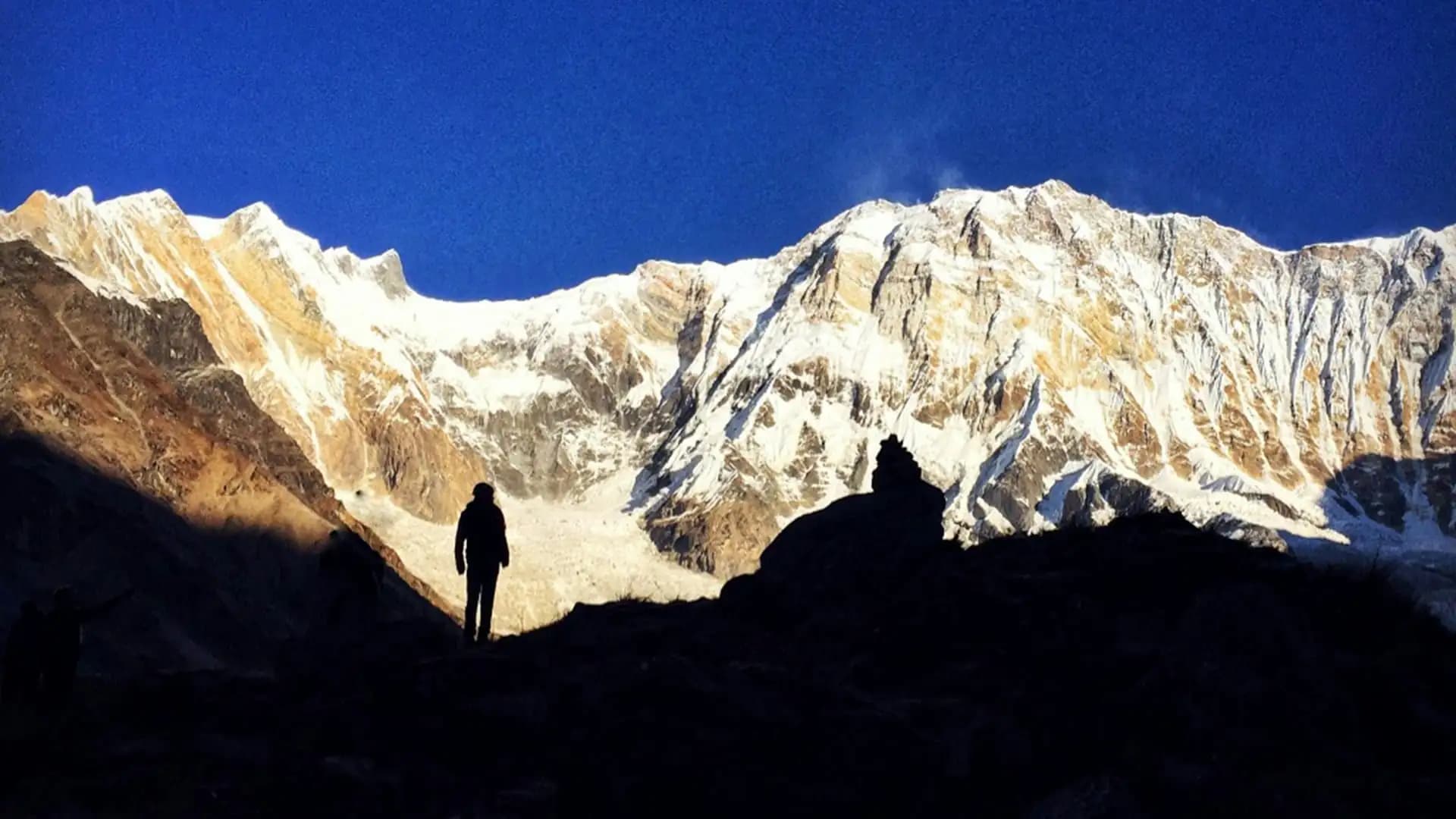
Annapurna Base Camp sits at 4,130 meters (13,550 feet) above sea level, nestled inside a dramatic natural amphitheater of towering peaks in central Nepal. That number alone doesn't tell the full story, though — ABC's elevation matters less for its raw altitude and more for where it sits: directly beneath Annapurna I, the tenth-highest and, by most historical measures, the deadliest mountain on Earth above 8,000 meters.
This guide covers exactly how high Annapurna Base Camp really is, how it compares to Nepal's other major trekking destinations, what that altitude means physically for trekkers, and the mountain looming above it that gives the entire trek its name and reputation.
Annapurna Base Camp Elevation at a glance
Fact | Detail |
|---|---|
Annapurna Base Camp (ABC) elevation | 4,130 m (13,550 ft) |
Machhapuchhre Base Camp (MBC) elevation | ~3,700 m (12,139 ft) |
Annapurna I summit elevation | 8,091 m (26,545 ft) |
Machhapuchhre (Fishtail) summit elevation | 6,993 m (22,943 ft) |
Trek starting point (Nayapul) | ~1,070 m (3,510 ft) |
Total elevation gain from Nayapul | ~3,060 m |
First ascent of Annapurna I | June 3, 1950, Maurice Herzog and Louis Lachenal |
Annapurna Conservation Area size | 7,629 sq km |
How High Is 4,130 Meters, Really?
Numbers alone don't tell you much without context. Here's what 4,130 meters actually means in practical terms:
ABC sits considerably lower than Everest Base Camp on the Nepal side (5,364 m) — a difference of well over 1,200 meters, which is part of why ABC is generally considered a less physically demanding, lower-altitude-risk trek than its more famous counterpart.
It's higher than the summit of Mont Blanc (4,809 m) is not quite accurate here — actually, ABC sits below Mont Blanc's summit by about 680 meters, though it's still well above the elevation at which most people begin to notice reduced oxygen availability.
Atmospheric oxygen at 4,130 meters is meaningfully reduced compared to sea level, though not nearly to the degree experienced at Everest Base Camp or Thorong La Pass — a fact that makes ABC a popular choice for trekkers wanting a genuine high-altitude Himalayan experience without the more serious altitude sickness risk profile of Nepal's highest routes.
ABC sits roughly at the same general elevation band as many ski resort towns in the Rockies or Alps at their higher lift stations, though reached entirely on foot over several days rather than by cable car.
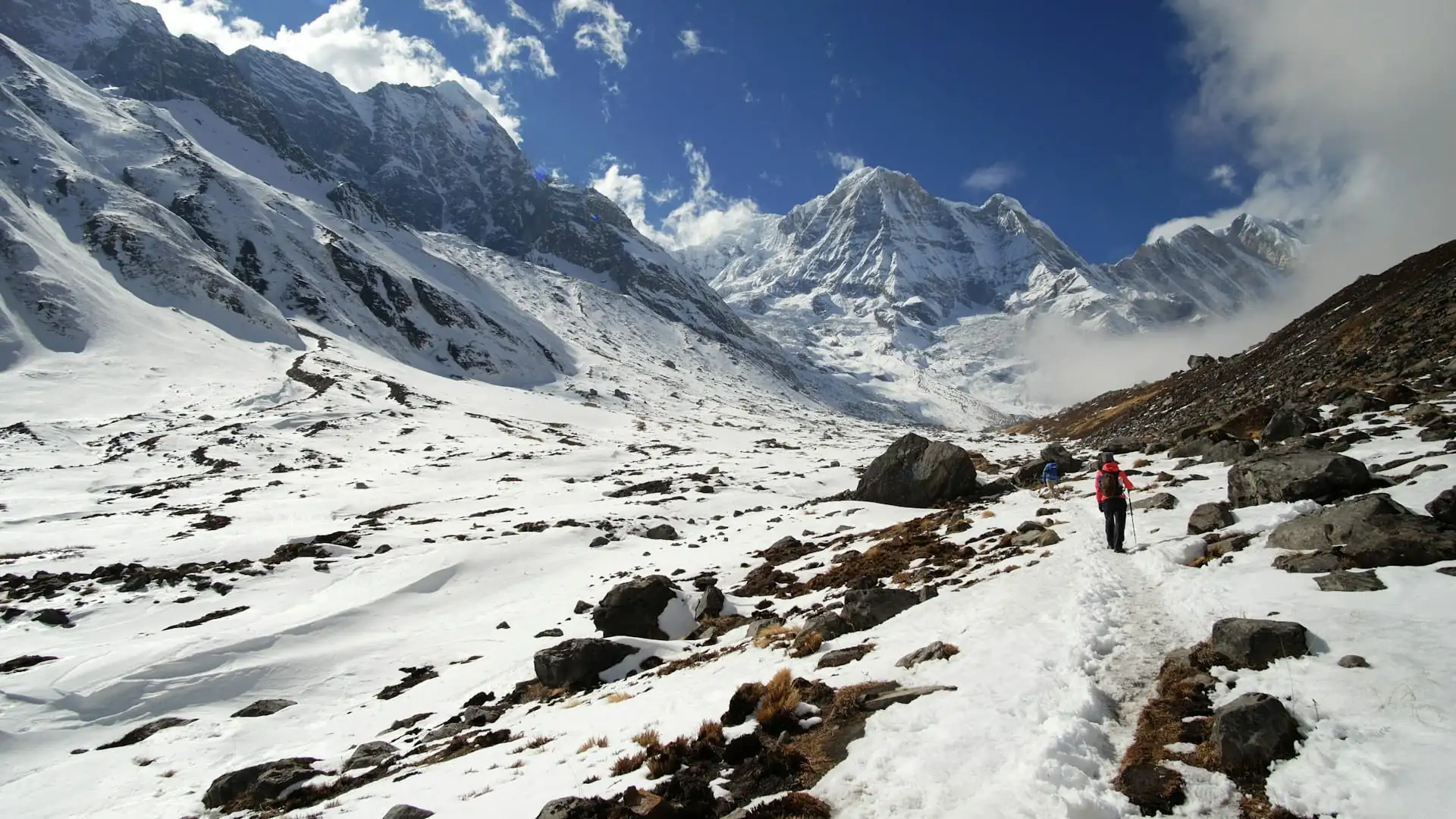
The key practical point: ABC is genuinely high enough that altitude sickness is a real consideration and proper acclimatization matters, but it sits meaningfully below the altitude threshold where the most severe forms of altitude illness become significantly more common — which is one reason ABC is frequently recommended as an excellent "first high-altitude trek" for those newer to Himalayan trekking.
Why Annapurna Base Camp Sits Where It Does
Annapurna Base Camp occupies a genuinely unusual position in the Himalayan landscape: it sits inside what's often called the Annapurna Sanctuary, a natural amphitheater formed by a near-continuous ring of peaks — Annapurna I (8,091 m), Annapurna South (7,219 m), Hiunchuli (6,441 m), Gangapurna (7,455 m), and Machhapuchhre (6,993 m) among them — that encircle the base camp on nearly all sides.
This bowl-shaped geography is part of why reaching ABC feels so different from arriving at a more exposed base camp like Everest's: rather than a flat glacial plain with peaks visible at a distance, ABC sits genuinely enclosed within a ring of towering rock and ice, with several 7,000-and-8,000-meter summits visible simultaneously from a single vantage point.
The base camp itself sits on the Modi Khola valley floor, having been reached via a trail that climbs steadily up the same river valley from the trek's starting point near Nayapul, at roughly 1,070 meters. This means virtually the entire vertical gain of the trek — around 3,060 meters — happens over the course of the approach, making the elevation profile of the trek itself as important to understand as the base camp's final altitude.
Elevation Profile of the Standard ABC Route
The classic route to Annapurna Base Camp, most commonly approached via Ghandruk and Chhomrong, climbs through a sequence of villages that also function as informal acclimatization checkpoints, even though ABC's final altitude doesn't demand the same rigorous rest-day structure required on treks like Everest Base Camp or the Annapurna Circuit.
Stop | Elevation | Typical day |
|---|---|---|
Nayapul / Samrung (start) | ~1,070 m | Day 1 |
Ghandruk | 1,940 m | Day 1–2 |
Chhomrong | ~2,170 m | Day 2–3 |
Sinuwa | 2,340–2,360 m | Day 3 |
Bamboo | ~2,310 m | Day 3–4 |
Dovan | ~2,600 m | Day 4 |
Himalaya | ~2,920 m | Day 4–5 |
Deurali | 3,230 m | Day 5 |
Machhapuchhre Base Camp (MBC) | ~3,700 m | Day 6 |
Annapurna Base Camp (ABC) | 4,130 m | Day 6 |
Notice the largest single-day elevation gain on the route happens on the final push from Deurali to ABC via MBC — roughly 900 to 990 meters in one day, a genuinely significant jump that's part of why most itineraries treat this stretch with particular care, even though the overall trek is considered more forgiving on altitude than Nepal's highest routes.
ABC vs. Nepal's Other Major Trekking Elevations
Understanding where Annapurna Base Camp sits relative to Nepal's other well-known trekking and mountaineering elevations helps put the number 4,130 meters into useful context.
Destination | Elevation | How it compares to ABC |
|---|---|---|
Poon Hill | 3,210 m | Lower than ABC by 920 m |
Annapurna Base Camp | 4,130 m | — |
Kathmandu | ~1,400 m | Much lower; no altitude risk |
3,440 m | Lower than ABC by 690 m | |
Everest Base Camp | 5,364 m | Higher than ABC by 1,234 m |
Thorong La Pass | 5,416 m | Higher than ABC by 1,286 m |
Kala Patthar | 5,644 m | Higher than ABC by 1,514 m |
Everest summit | 8,848.86 m | Higher than ABC by 4,718.86 m |
Annapurna I summit | 8,091 m | Higher than ABC by 3,961 m |
This comparison makes a genuinely useful point for trip planning: ABC sits in a meaningfully lower altitude tier than Everest Base Camp, the Annapurna Circuit's Thorong La Pass, or Kala Patthar, which is a major reason ABC is often recommended over those routes for trekkers with less high-altitude experience, tighter time budgets, or a lower risk tolerance for altitude sickness — without sacrificing the genuine high-mountain scenery and Himalayan immersion those higher routes are known for.
The Mountain Above: Annapurna I
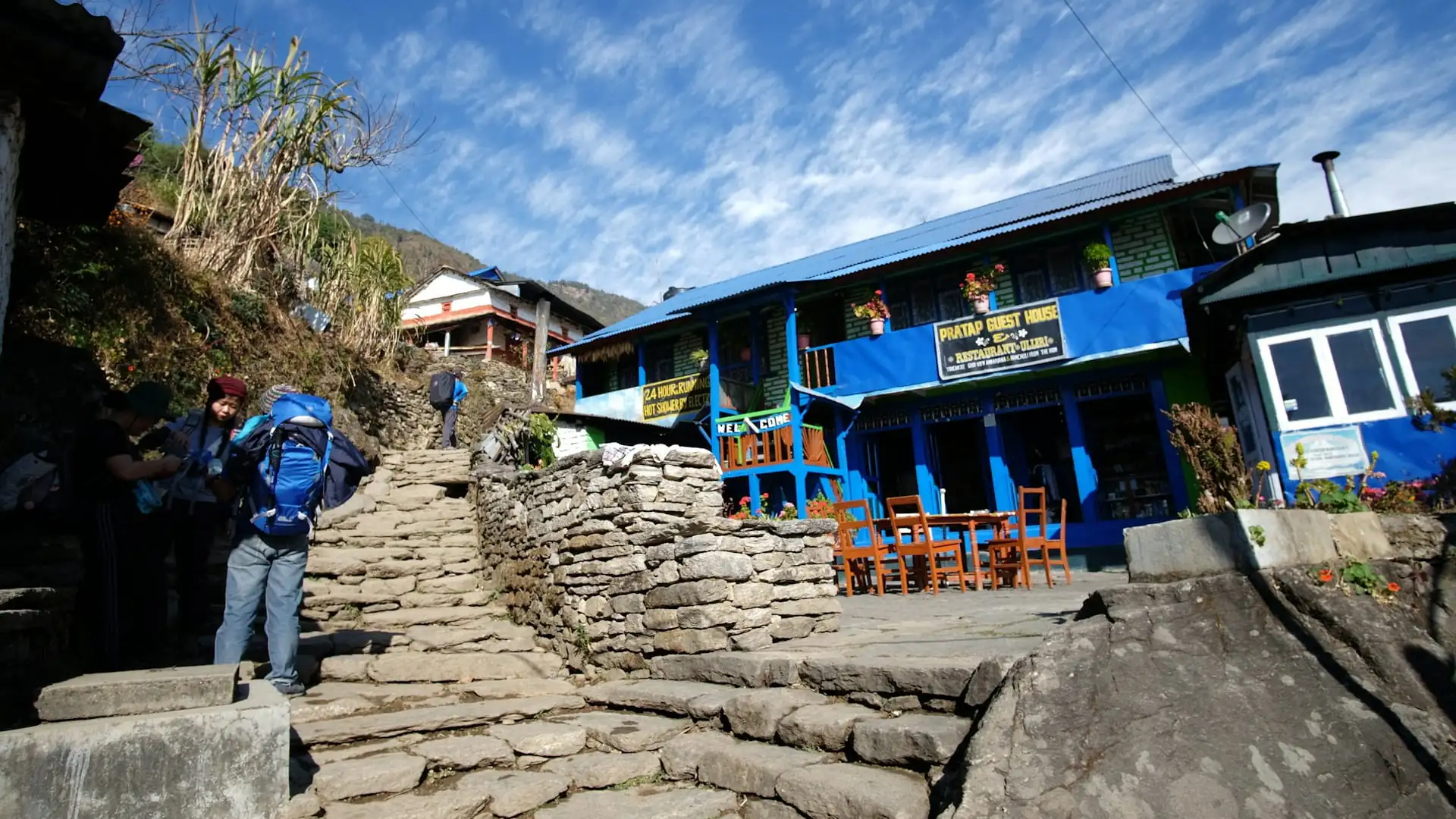
Annapurna Base Camp takes its name from Annapurna I, the massif's highest peak at 8,091 meters (26,545 ft), which rises directly above the base camp and dominates the view from nearly every angle within the Sanctuary. Annapurna I holds a singular distinction in mountaineering history: it was the first peak above 8,000 meters ever successfully climbed, reached on June 3, 1950, by French climbers Maurice Herzog and Louis Lachenal — a full three years before Everest's first ascent in 1953.
That first ascent came at extraordinary cost. Herzog lost his gloves during the descent and suffered severe frostbite that ultimately required the amputation of most of his fingers; Lachenal lost all his toes to frostbite as well. The expedition also survived a crevasse fall involving four team members and a serious avalanche during the descent — a harrowing account Herzog later documented in his book Annapurna, first published in 1951 and widely regarded as one of the most influential works in mountaineering literature.
That difficult first ascent turned out to foreshadow Annapurna I's long-term reputation. For decades, Annapurna I carried the highest fatality-to-summit ratio of any of the world's fourteen 8,000-meter peaks, historically cited in the range of roughly 32% to 38% — meaning, for much of the mountain's climbing history, close to one in three climbers who attempted the summit did not return safely.
More recent data compiled by the Himalayan Database and reflected in current Guinness World Records figures shows this ratio has fallen substantially as the number of successful ascents has grown and mountaineering equipment, weather forecasting, and rescue capability have improved: as of Guinness's February 2025 published figures, Annapurna I's fatality rate stands at approximately 13.4% (75 recorded deaths across 559 recorded ascents) — still among the highest of any 8,000-meter peak, but a marked improvement from the historical figures most commonly cited from the mountain's earlier climbing decades.
Annapurna I fatality data | Figure |
|---|---|
Historical fatality-to-summit ratio (earlier decades) | ~32%–38% |
Current published ratio (Guinness, data through Feb 2025) | ~13.4% (75 deaths / 559 ascents) |
Total successful summits (as of early 2025) | 559 recorded ascents |
Primary cause of fatalities | Avalanches, particularly around 5,900 m between Camp II and Camp III |
The reasons behind Annapurna I's dangerous reputation are well documented: frequent and often unpredictable avalanches (the deadliest single incident occurred on September 19, 1991, when six climbers died in a single avalanche), a notoriously difficult and exposed South Face first climbed in 1970 by a British expedition led by Chris Bonington, and generally severe, fast-changing weather patterns across the massif.
None of this affects trekkers heading only to Base Camp — reaching ABC involves no technical climbing whatsoever — but it's genuinely part of what makes standing at 4,130 meters, looking directly up at the mountain, such a striking experience: you're looking at one of the most storied and formidable peaks in mountaineering history from remarkably close range.
Machhapuchhre: The Sacred, Unclimbed Neighbor
Machhapuchhre — commonly called "Fishtail" for its distinctive twin-pronged summit shape — rises to 6,993 meters directly beside the route to Base Camp and is, for many trekkers, the single most photographed peak of the entire trip, thanks to its dramatic profile and its proximity to the trail, particularly visible from Machhapuchhre Base Camp itself.
Unlike virtually every other major peak in the region, Machhapuchhre has never been officially summited. It's considered sacred by local Hindu communities, associated with the god Shiva, and the Nepali government has restricted mountaineering permits for its summit out of respect for that religious significance since a 1957 British expedition came within roughly 50 meters of the true summit and voluntarily turned back.
Because of this, Machhapuchhre remains one of the very few prominent Himalayan peaks of its height that has never been officially climbed to its true summit — a fact that adds a distinct layer of mystique to a mountain that already dominates the skyline throughout the trek's final days.
Why Elevation Shapes the ABC Trekking Experience
Understanding the elevation profile isn't just trivia — it directly explains several practical realities of the trek that trekkers notice firsthand.
Temperature drops noticeably at Base Camp. Even though 4,130 meters is considerably lower than Everest Base Camp, overnight temperatures at ABC and MBC still regularly fall below freezing, particularly outside the warmer months, given the high-altitude, high-latitude exposure of the Sanctuary and the way cold air pools in the enclosed amphitheater terrain.
Altitude sickness risk exists but is more manageable. Because ABC's final elevation sits below the 4,500-to-5,000-meter range where AMS risk climbs sharply, the trek is generally considered accessible to a wider range of trekkers, including reasonably fit first-timers with no prior high-altitude experience — though basic altitude awareness, proper pacing, and hydration still matter, since AMS can occur even at moderate elevations if ascent is rushed.
The Sanctuary's bowl shape affects weather quickly. Because ABC sits enclosed by peaks on nearly all sides, weather — particularly afternoon cloud buildup — can change rapidly within the Sanctuary, which is part of why most itineraries plan for an early morning arrival and viewing window at Base Camp, before afternoon cloud cover typically rolls in and obscures the surrounding peaks.
Shorter overall trek duration than higher routes. Because ABC's elevation doesn't require the extended, multi-week acclimatization rotations used on serious mountaineering expeditions or even the longer rest-day structure of the Everest Base Camp trek, the standard ABC trekking itinerary runs a comparatively compact 7 to 12 days round-trip, depending on route and pace — considerably shorter than the 12-to-14-day standard for Everest Base Camp.
Altitude Sickness on the ABC Trek: What to Actually Expect
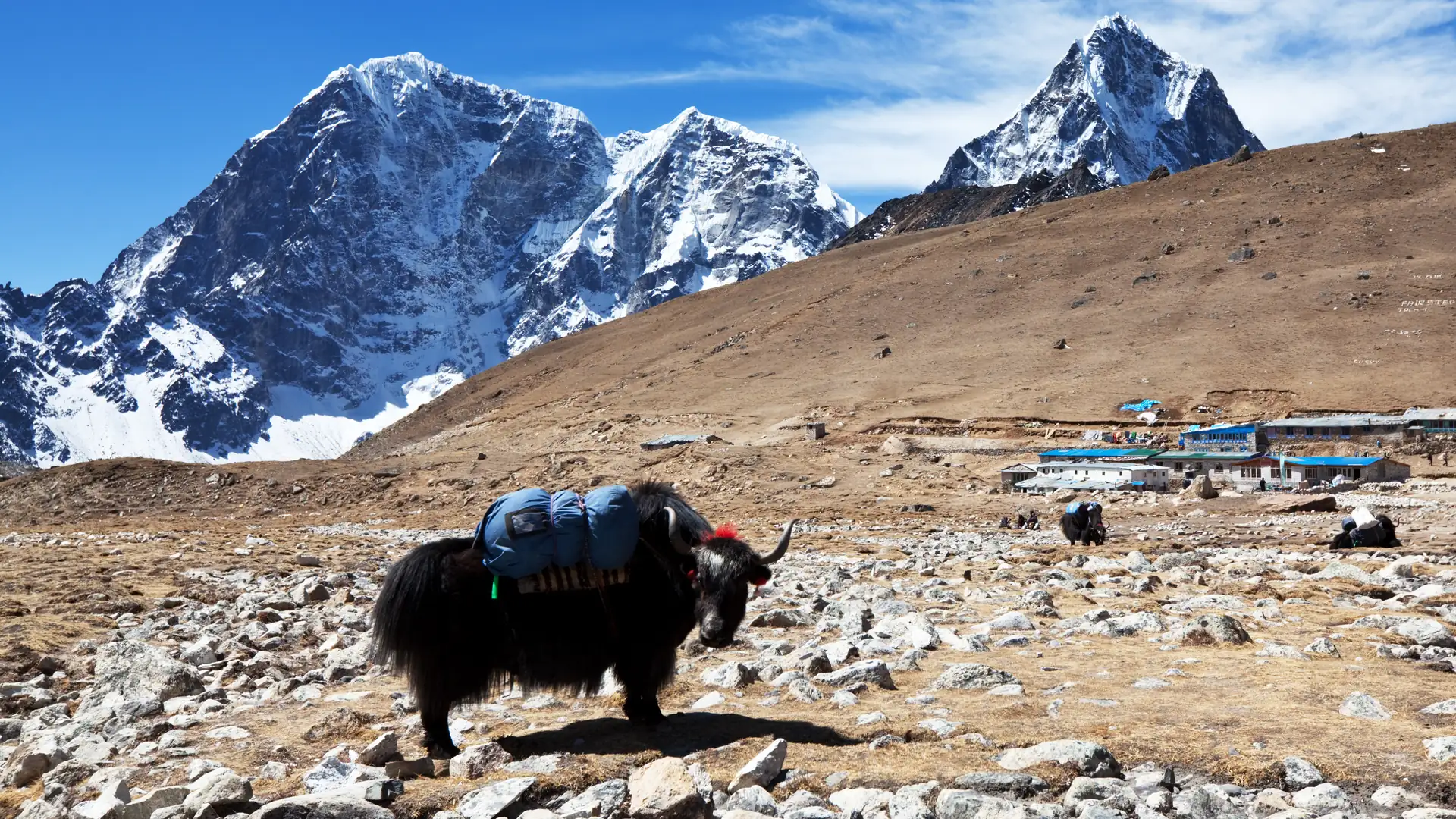
Acute Mountain Sickness (AMS) risk on the ABC trek is real but generally more moderate than on Nepal's higher routes, given that the trek's highest point sits at 4,130 meters rather than above 5,000 meters. Early AMS symptoms — headache, mild nausea, dizziness, disrupted sleep — can still occur, particularly for trekkers who ascend the final Deurali-to-ABC stretch too quickly given its roughly 900-to-990-meter single-day gain, the largest jump on the route.
The standard mitigation approach mirrors every other high-altitude Nepali trek: avoid excessive single-day elevation gain where possible, stay well hydrated, eat enough even if appetite drops, and take any early symptoms seriously rather than pushing through them.
A guide experienced in recognizing AMS symptoms and willing to adjust pacing if needed remains one of the most valuable safety resources on the route, even though ABC's overall altitude profile makes it a genuinely more forgiving trek than Everest Base Camp or the Annapurna Circuit's Thorong La crossing.
Elevation zone on ABC trek | AMS risk level |
|---|---|
Below 3,000 m (Nayapul to Sinuwa) | Minimal |
3,000–3,700 m (Deurali to MBC) | Low-to-moderate |
3,700–4,130 m (MBC to ABC) | Moderate, primarily due to the single-day elevation jump |
Best Time to Experience Annapurna Base Camp's Elevation
Because ABC's altitude puts it in a genuinely different weather zone than the lower villages along the approach, seasonal timing meaningfully affects both comfort and visibility at Base Camp itself.
Autumn (late September to November) offers the clearest skies of the year following the monsoon, with the sharpest views of Annapurna I, Machhapuchhre, and the surrounding Sanctuary peaks, and is widely considered the best overall season for the trek.
Spring (March to May) brings warmer temperatures and blooming rhododendron forests on the lower stages of the trail, alongside generally stable weather at altitude, though visibility can occasionally be hazier than autumn.
Winter (December to February) is trekkable but considerably colder at Base Camp itself, with overnight temperatures regularly dropping well below freezing, and occasional heavy snowfall that can affect trail conditions on the higher stages.
Monsoon (June to August) brings frequent rain, leech-prone lower trail sections, and significantly reduced visibility of the surrounding peaks even upon reaching Base Camp itself, making it the least recommended season for this particular trek.
Season | Conditions at ABC's elevation |
|---|---|
Autumn (late Sep–Nov) | Clearest skies, best overall visibility |
Spring (Mar–May) | Warm, generally stable, occasional haze |
Winter (Dec–Feb) | Cold, possible snow, fewer crowds |
Monsoon (Jun–Aug) | Poor visibility, wet trail, not recommended |
Frequently Asked Questions about Annapurna Base Camp Elevation
What is the exact elevation of Annapurna Base Camp?
4,130 meters (13,550 feet) above sea level.Is Annapurna Base Camp higher or lower than Everest Base Camp?
Lower. Everest Base Camp sits at 5,364 meters, more than 1,200 meters higher than Annapurna Base Camp.How high is the mountain above Annapurna Base Camp?
Annapurna I, the peak directly above Base Camp, rises to 8,091 meters — the tenth-highest mountain in the world and the first 8,000-meter peak ever summited, in 1950.Is Annapurna Base Camp dangerous due to altitude?
Altitude sickness risk exists but is generally more moderate than on higher Nepali treks like Everest Base Camp or the Annapurna Circuit, given ABC's comparatively lower final elevation.What is Machhapuchhre Base Camp's elevation, and how does it relate to ABC?
MBC sits at approximately 3,700 meters, about 430 meters below ABC, and functions as the final overnight stop before most trekkers push on to Base Camp itself, often before dawn.Why hasn't Machhapuchhre ever been officially climbed?
It's considered sacred in local Hindu tradition, and Nepal has restricted summit permits for the peak out of respect for that religious significance since a 1957 British expedition turned back roughly 50 meters short of the true summit.How much elevation gain is involved in the ABC trek overall?
Roughly 3,060 meters from the standard starting point near Nayapul (about 1,070 m) to Base Camp itself (4,130 m).Is Annapurna I really the deadliest mountain in the world?
Historically, yes, by fatality-to-summit ratio — figures in the 32%–38% range were commonly cited for decades. More recent data shows the ratio has fallen to around 13.4% as successful ascents have increased and climbing conditions have improved, though it remains among the highest of any 8,000-meter peak.Do I need mountaineering experience to reach Annapurna Base Camp?
No. Reaching ABC involves no technical climbing — it's a trekking route accessible to reasonably fit hikers with proper preparation, distinct entirely from any attempt on Annapurna I's summit itself.What's the largest single-day elevation gain on the ABC trek?
The final stretch from Deurali to Annapurna Base Camp (via Machhapuchhre Base Camp), which involves roughly 900 to 990 meters of gain in a single day — the steepest jump on the route.
Conclusion on Annapurna Base Camp Elevation
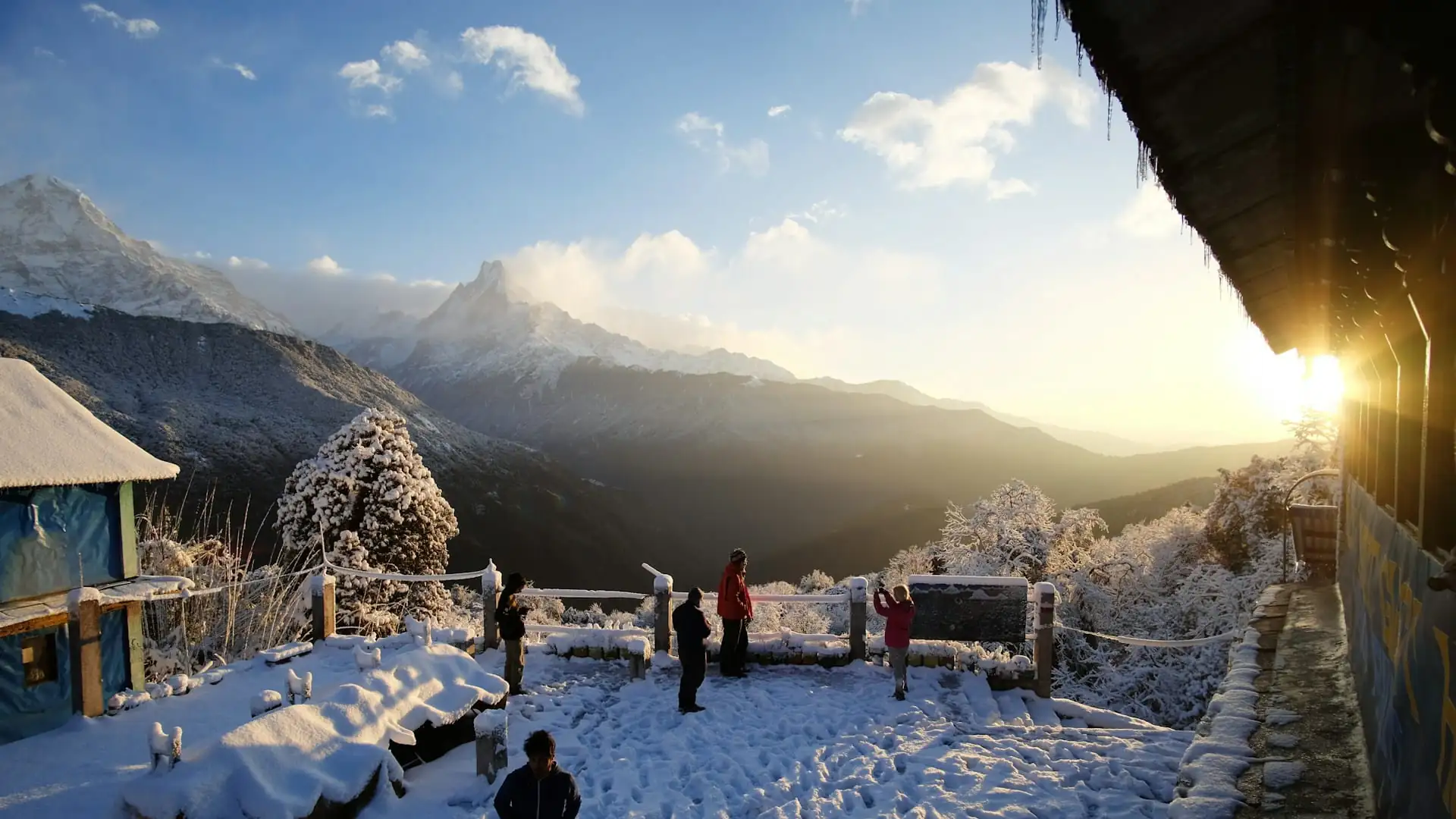
Annapurna Base Camp's elevation — 4,130 meters — tells only part of the story of why this trek is so beloved. The real significance lies in what surrounds that number: a natural amphitheater ringed by some of the Himalayas' most striking peaks, a sacred, still-unclimbed summit in Machhapuchhre, and, towering directly above it all, Annapurna I — the mountain that first proved 8,000 meters was climbable, at tremendous human cost, and has carried a formidable reputation ever since.
Trekkers reaching Base Camp today walk into that history without needing a single piece of climbing gear, standing at an altitude high enough to feel genuinely remote and dramatic, yet low enough to remain one of the more accessible high-Himalaya experiences Nepal has to offer.
For travelers weighing where to point a Himalayan trip, that combination — real altitude, real mountaineering history, and a comparatively forgiving elevation profile — is exactly what makes Annapurna Base Camp one of Nepal's most rewarding, best-balanced treks, and exactly the kind of trip Adventure Life Nepal builds its ABC itineraries around.