Annapurna Base Camp Trek Guide: Everything to Know
Annapurna Base Camp Trek Guide
The Annapurna Base Camp (ABC) trek is widely considered the best all-around introduction to Himalayan trekking in Nepal — a 7-to-12-day route that climbs from subtropical foothill villages through rhododendron forests into a dramatic natural amphitheater at 4,130 meters, ringed by peaks including Annapurna I (8,091 m), the first 8,000-meter mountain ever climbed.
It demands real fitness and genuine altitude awareness, but requires no technical climbing skill and no extreme high-altitude acclimatization schedule, making it accessible to a far wider range of trekkers than routes like Everest Base Camp or the Annapurna Circuit.
This guide covers everything needed to plan the trek properly: the route day by day, permits, costs, accommodation, packing, safety, and the mountain history that makes the destination itself so remarkable.
Annapurna Base Camp trek at a glance
Fact | Detail |
|---|---|
Maximum elevation | 4,130 m (13,550 ft) at ABC |
Trek duration | 7–12 days (varies by route and pace) |
Starting point | Nayapul or Samrung, near Pokhara (~1,070 m) |
Difficulty | Moderate |
Best seasons | March–May (spring), late September–November (autumn) |
Permits required | ACAP (mandatory) + licensed guide (mandatory since 2023) |
Accommodation | Teahouses the entire route |
Total elevation gain | ~3,060 m from Nayapul |
Nearest major city | Pokhara |
Mountain overhead | Annapurna I (8,091 m), Machhapuchhre (6,993 m) |
Why Trek to Annapurna Base Camp
Among Nepal's major trekking routes, ABC occupies a genuinely distinctive place. It delivers a full high-Himalayan experience — glaciated peaks, dramatic altitude change, multi-day teahouse trekking — without the extended time commitment, higher altitude sickness risk, or logistical complexity of Everest Base Camp or the Annapurna Circuit.
Where EBC reaches 5,364 meters and typically takes 12 to 14 days, and the Annapurna Circuit crosses Thorong La at 5,416 meters over 12 to 17 days, ABC tops out at a comparatively gentler 4,130 meters and can be completed in as little as 7 days for strong, well-acclimatized trekkers, or a more relaxed 10 to 12 days for those wanting extra buffer and side exploration.
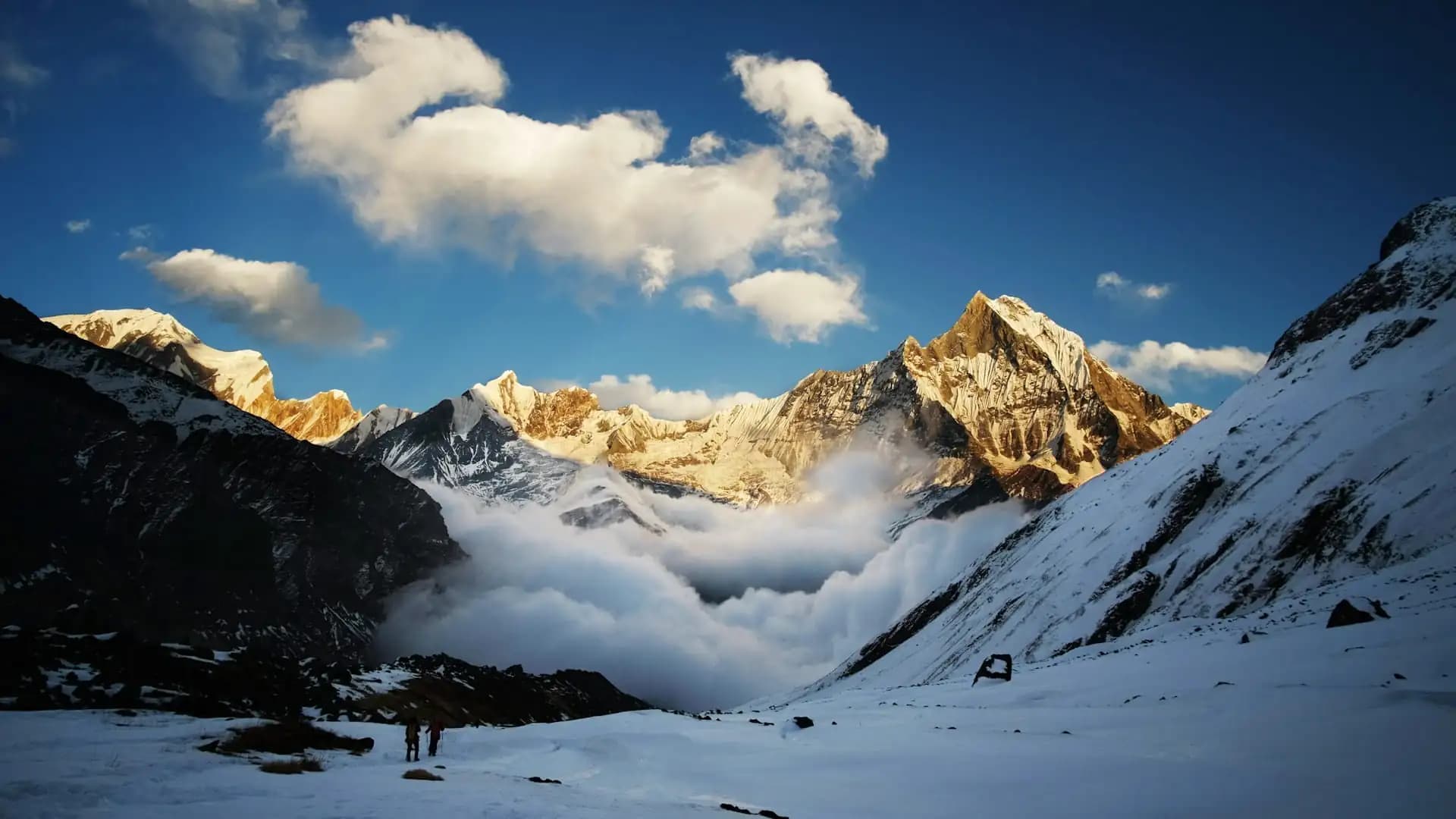
What ABC doesn't sacrifice for that shorter, gentler profile is scenery. The trek's final approach delivers trekkers directly into the Annapurna Sanctuary — a natural bowl formed by a near-continuous ring of peaks including Annapurna I, Annapurna South (7,219 m), Hiunchuli (6,441 m), Gangapurna (7,455 m), and Machhapuchhre (6,993 m) — putting multiple 7,000-and-8,000-meter summits within view simultaneously from a single vantage point, a genuinely rare geographic arrangement even by Himalayan standards.
The route also passes through some of the most ecologically and culturally varied terrain of any major Nepal trek: subtropical lower valleys, dense rhododendron and oak forest (spectacular in bloom during spring), traditional Gurung and Magar villages, and finally the stark, high-altitude terrain of the Sanctuary itself — a genuine cross-section of Nepal's Midlands and lower Himalaya in a single, relatively compact route.
The Standard Route: Day-by-Day Itinerary
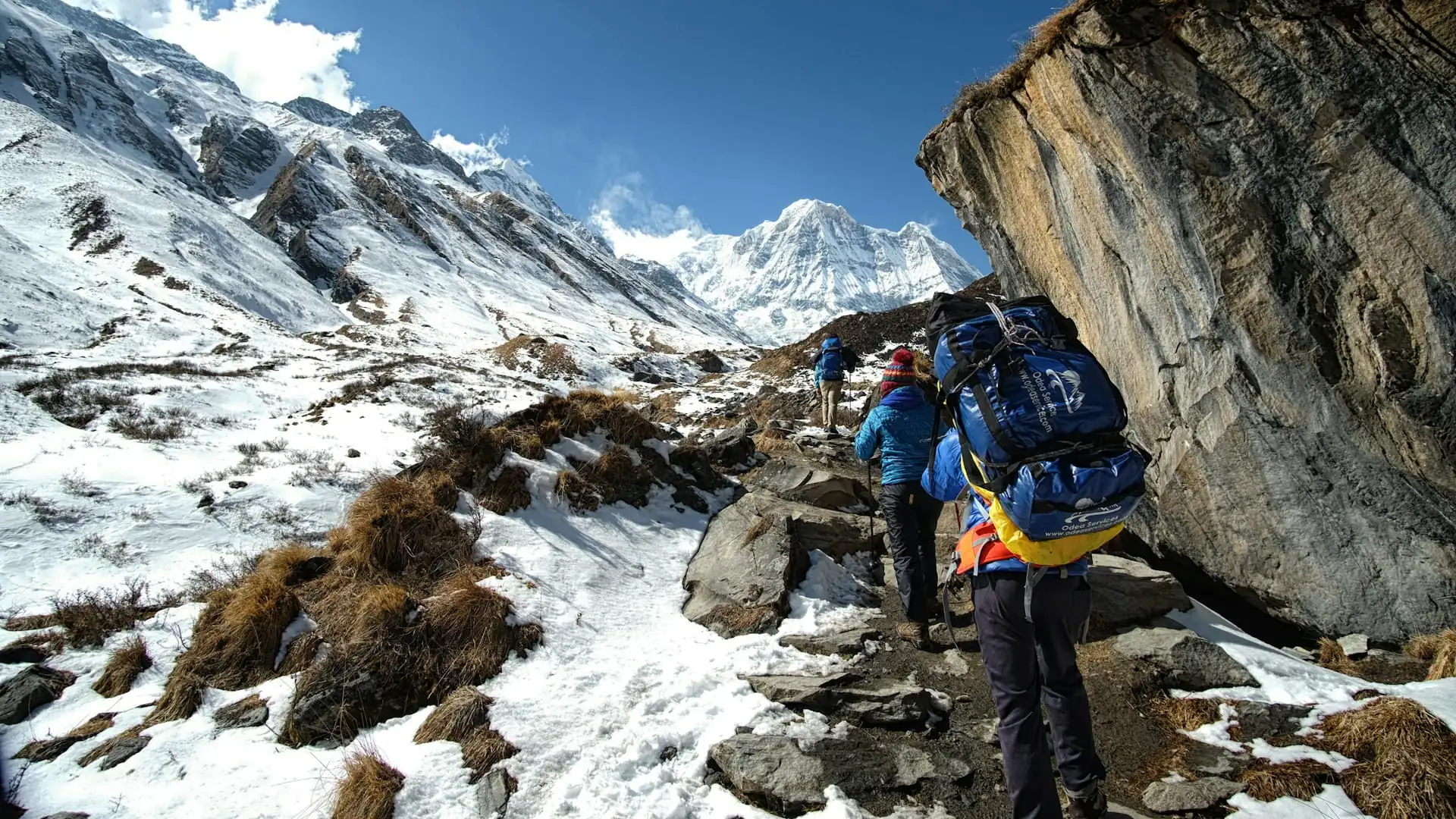
The classic ABC route runs via Ghandruk and Chhomrong, and most guided itineraries from Pokhara follow a broadly similar structure, though exact day counts vary depending on pace, side trips, and whether the trek starts and ends at the same point or loops via a different descent route.
Day | Route segment | Elevation (end of day) |
|---|---|---|
Day 1 | Pokhara to Nayapul, drive; trek to Tikhedhunga or Ghandruk | 1,700–1,940 m |
Day 2 | Trek to Ghandruk (if not already there) or on to Chhomrong | 1,940–2,170 m |
Day 3 | Chhomrong to Sinuwa/Bamboo | 2,310–2,360 m |
Day 4 | Bamboo to Himalaya/Deurali | 2,920–3,230 m |
Day 5 | Deurali to Annapurna Base Camp (via Machhapuchhre Base Camp) | 4,130 m |
Day 6 | Explore ABC; begin descent to Bamboo or Jhinu Danda | 2,310–1,780 m |
Day 7 | Descend to Jhinu Danda (hot springs) or Ghandruk | 1,780–1,940 m |
Day 8 | Trek out to Nayapul; drive back to Pokhara | ~1,070 m |
A 7-day version of this itinerary compresses several of these stages into longer walking days, generally recommended only for fit, experienced trekkers already acclimatized to moderate altitude.
Many operators, including Adventure Life Nepal, offer a more measured 10-to-12-day version that adds a rest or side-trip day, extra time at Ghandruk or Chhomrong, and a stop at Jhinu Danda's natural hot springs on the descent — a well-earned reward for tired legs after the push to Base Camp and back.
Elevation Profile of the Trek
Understanding exactly how the trek climbs is genuinely useful for pacing expectations, since the elevation gain is not evenly distributed across the route.
Stop | Elevation | Gain from previous stop |
|---|---|---|
Nayapul / Samrung (start) | ~1,070 m | — |
Tikhedhunga | ~1,540 m | ~470 m |
Ghorepani (optional side route) | 2,860 m | — |
Ghandruk | 1,940 m | — |
Chhomrong | ~2,170 m | ~230 m (net, after descent/reascent) |
Sinuwa | 2,340–2,360 m | ~190 m |
Bamboo | ~2,310 m | Slight descent from Sinuwa |
Dovan | ~2,600 m | ~290 m |
Himalaya | ~2,920 m | ~320 m |
Deurali | 3,230 m | ~310 m |
Machhapuchhre Base Camp (MBC) | ~3,700 m | ~470 m |
Annapurna Base Camp (ABC) | 4,130 m | ~430 m |
The steepest single-day climb on the standard itinerary happens on the final push — from Deurali through MBC to ABC — gaining roughly 900 meters in one day.
This is a genuinely demanding stretch, both because of the altitude and because it's typically undertaken after several consecutive days of trekking fatigue, which is why most well-designed itineraries treat Deurali as an important staging point rather than rushing straight through it.
Difficulty: What to Actually Expect
ABC is generally rated moderate in difficulty — harder than a short lower-altitude walk like Poon Hill, but considerably more forgiving than Everest Base Camp or the Annapurna Circuit in terms of both altitude and technical demands. No ropes, crampons, or climbing experience are required anywhere on the standard route; the entire trek follows established, well-maintained trekking trails and stone stairways.
The physical demands come primarily from three sources: sustained daily walking (typically 5 to 7 hours per day, occasionally longer on the summit-push day), significant elevation gain and loss on a route that involves repeated steep ascents and descents through river valleys rather than one continuous climb, and — on the final days — genuine but moderate altitude effects as trekkers cross above 3,000 meters.
A distinctive feature of this route, worth flagging specifically: the stone stairway sections between Ghandruk, Chhomrong, and the lower Modi Khola valley involve a considerable number of steps, both up and down, that surprise many first-time trekkers with how demanding they are on the knees and quads — arguably tougher in the moment than the higher-altitude sections nearer Base Camp itself. Trekking poles are genuinely useful here, not just at altitude.
Difficulty factor | ABC trek reality |
|---|---|
Technical climbing skill required | None |
Maximum altitude | 4,130 m (moderate altitude risk) |
Daily walking hours | 5–7 hours typical, longer on summit day |
Terrain | Well-established trail; extensive stone stairways |
Fitness level needed | Moderate — regular hiking/cardio fitness sufficient with preparation |
Prior trekking experience required | Helpful but not mandatory |
Permits Required for the ABC Trek
Every trekker heading to Annapurna Base Camp needs to enter the Annapurna Conservation Area, Nepal's largest protected area at 7,629 square kilometers, and doing so legally requires specific documentation.
ACAP (Annapurna Conservation Area Permit) is the core, non-negotiable requirement, currently priced at NPR 3,000 (roughly USD 23) for foreign nationals and NPR 1,000 for SAARC nationals, with children under 10 exempt from the fee. This fee is flat regardless of trek length or season, and is checked at multiple checkpoints along the route, most notably at Birethanti near the trailhead and again at Chhomrong roughly midway through the trek.
TIMS Card (Trekkers' Information Management System) occupies a genuinely inconsistent position as of 2026. Some agencies and checkpoints continue to issue and check it (priced at NPR 2,000 for individual foreign trekkers, NPR 1,000 for those trekking through an organized group), while other current reports indicate it's no longer consistently enforced on standard Annapurna routes.
Given this inconsistency, the most reliable approach is to let a registered trekking agency handle whatever documentation is currently required at the time of booking, rather than relying on any single source for the latest status.Licensed guide. Since April 2023, trekking without a licensed guide has been illegal across all Annapurna Conservation Area routes, ABC included — this is a legal requirement enforced at checkpoints, not a recommendation. Trekkers arriving without a guide risk being turned back or fined regardless of prior experience.
Permit | Cost (2026, foreign nationals) | Status |
|---|---|---|
ACAP | NPR 3,000 (~USD 23) | Mandatory, consistently enforced |
TIMS | NPR 2,000 (~USD 15–17) | Inconsistently enforced — verify with agency |
Licensed guide | Varies, often bundled into packages | Mandatory since April 2023 |
Trekking without a valid ACAP permit carries real consequences: a doubled on-the-spot fee at checkpoints (NPR 6,000 instead of NPR 3,000 for foreign nationals), processing delays, and in more serious cases, forced return or denial of further entry — meaning the modest savings some trekkers imagine from skipping permits don't materialize in practice.
What the Trek Costs
A guided ABC package typically runs anywhere from roughly $500 to $900 per person for a standard group departure, with private or premium packages running higher, and independent trekking (still requiring a guide under current rules) generally costing somewhat less if managed carefully.
Cost category | Typical range |
|---|---|
Guided group package (7–10 days) | $500–$900 |
Private/customized package | $900–$1,500+ |
Permits (ACAP + TIMS if applicable) | $23–$40 |
Guide (if hired independently, per day) | $20–$35 |
Porter (per day, if selected) | $18–$30 |
Teahouse room (per night) | $2–$15, rising with altitude |
Meals (per day on trail) | $15–$30, rising with altitude |
Pokhara–Nayapul transport (round trip) | $15–$40 |
Hot showers, Wi-Fi, charging (daily incidentals) | $5–$15 |
A guided package from a registered agency like Adventure Life Nepal typically bundles ACAP, guide services, teahouse accommodation, and three daily meals into a single package price, meaning trekkers don't need to negotiate individual room and meal rates at each village stop — the guide manages this automatically, generally securing better rates and more reliable rooms than an independent trekker navigating the system alone, particularly during the busier autumn season.
Teahouse Accommodation on the Route
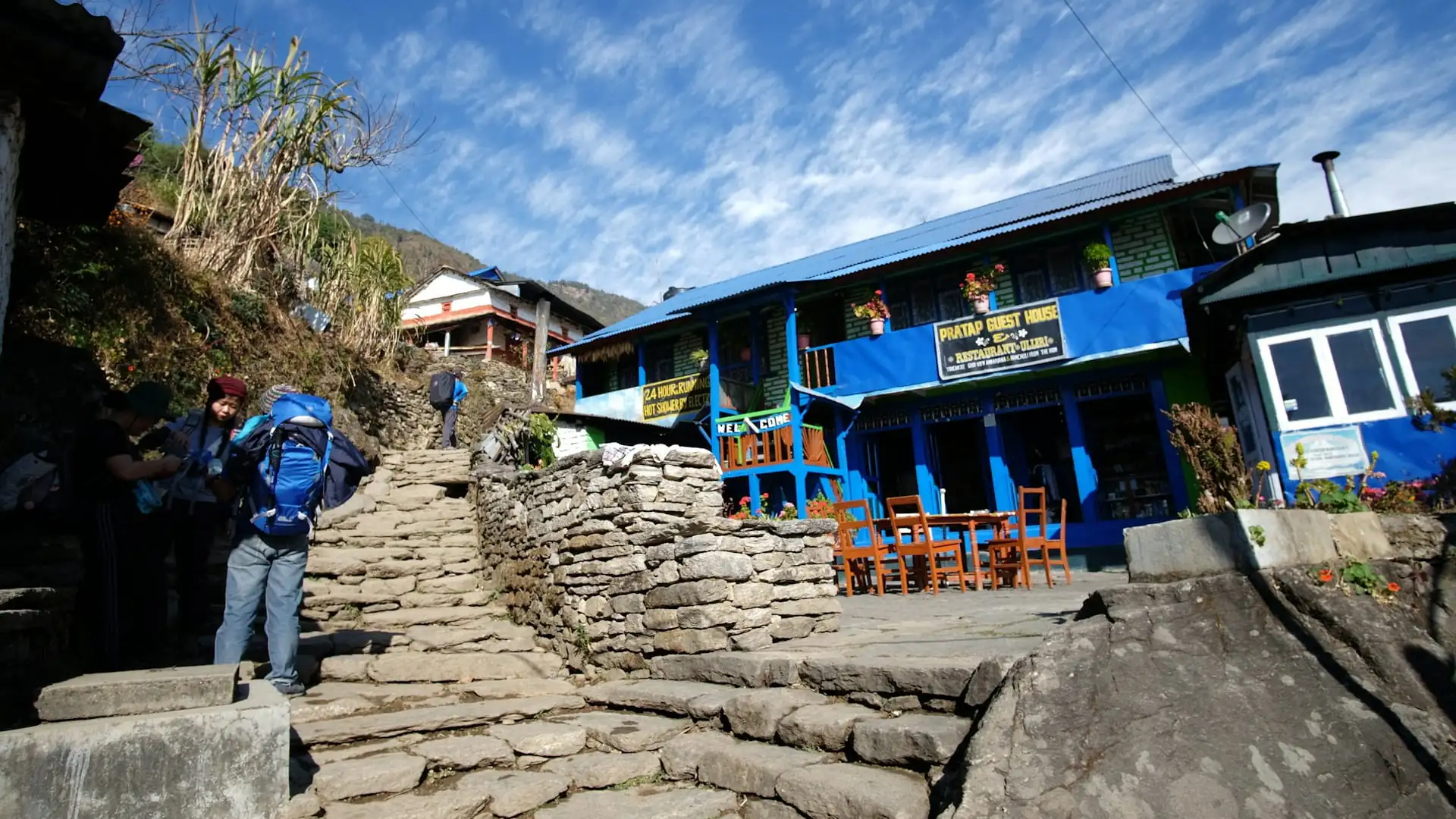
Every night on the ABC trek is spent in a teahouse — a small, family-run guesthouse offering a basic private room and home-cooked meals. There is no camping and no hotel-chain infrastructure anywhere along the route. Understanding how teahouse economics work is genuinely useful before setting out: rooms are frequently offered free or heavily discounted on the condition that trekkers eat all their meals at that same lodge, since teahouse owners make their real margin on food rather than room rates.
This isn't a scam — it's the standard arrangement that keeps the entire system functioning, and guides handle it automatically as part of a booked package.
Village | Elevation | Typical room cost | Typical dal bhat cost |
|---|---|---|---|
Ghandruk | 1,940 m | $3–$6 | $4–$6 |
Chhomrong | ~2,170 m | $4–$8 | $5–$7 |
Sinuwa/Bamboo | 2,310–2,360 m | $4–$8 | $5–$8 |
Dovan | ~2,600 m | $5–$10 | $6–$9 |
Himalaya/Deurali | 2,920–3,230 m | $6–$12 | $6–$11 |
Machhapuchhre Base Camp | ~3,700 m | $8–$15 | $8–$12 |
Annapurna Base Camp | 4,130 m | $8–$15 | $8–$14 |
Room quality varies noticeably by altitude. Below Chhomrong, attached bathrooms are increasingly common, particularly at newer or recently renovated lodges. Above Sinuwa, and especially from Dovan through to Base Camp itself, shared bathrooms down the hall are the norm, and hot showers — where available at all — typically require an extra fee and become genuinely limited or unavailable at Machhapuchhre Base Camp and ABC during colder months, since the gas or solar heating systems struggle at that elevation and temperature.
Chhomrong deserves a specific mention: several of its teahouses are run by retired Gurkha soldiers and their families, and a number offer a noticeably higher standard of hospitality than the more basic lodges found higher up the trail — worth a slightly longer stop if time allows.
Booking ahead isn't usually necessary outside peak season, though during the busiest weeks of October and November, capacity at Machhapuchhre Base Camp and ABC itself can genuinely fill up, occasionally requiring shared rooms for trekkers arriving without a guide's advance phone-ahead arrangement.
Food on the Trail
Every teahouse along the route runs a broadly similar menu, centered on dal bhat — Nepal's staple combination of rice, lentil soup, vegetable curry, and pickle — which remains the best value and most practical fuel for repeated trekking days, both for its comparatively lower cost and because most teahouses offer unlimited refills at no extra charge.
Western-style dishes (pasta, pizza, momo, fried rice) are available at nearly every stop but cost noticeably more, particularly the higher the village sits, since everything above Ghandruk has to be carried in by porter or mule given the lack of road access.
A practical habit worth adopting: stick primarily to dal bhat and well-cooked, hot local dishes at higher elevations rather than raw vegetables, dairy, or meat, both for cost reasons and because food safety and refrigeration standards become genuinely harder to maintain the further you get from road access.
Getting to the Trailhead
The ABC trek begins near Pokhara, Nepal's second-most-visited city and the standard gateway to the Annapurna region.
Most itineraries start with a drive of one to two hours from Pokhara to Nayapul or Samrung, the standard trailhead, followed immediately by the first day of walking toward Tikhedhunga or Ghandruk depending on the specific route variant chosen.
Leg | Typical transport | Duration |
|---|---|---|
Kathmandu to Pokhara | Tourist bus | 6–7 hours |
Kathmandu to Pokhara | Domestic flight | ~25 minutes |
Pokhara to Nayapul/Samrung | Private jeep or shared transport | 1–2 hours |
Return: Nayapul to Pokhara | Private jeep or shared transport | 1–2 hours |
Given that Pokhara functions as the logistics hub for the entire trip, most trekkers spend at least one full day in the city before or after the trek — often both — to arrange final gear, permits, and transport, and to enjoy Pokhara's own attractions (Phewa Lake, Sarangkot's sunrise viewpoint, and the wider lakeside town) as a natural bookend to the trekking portion of the trip.
Packing List for the ABC Trek
Because the trek spans a genuinely wide range of elevations and temperatures — from subtropical lower valleys to sub-freezing conditions at Base Camp — layering is the central packing principle, rather than any single piece of "right" gear.
Category | Key items |
|---|---|
Layering | Moisture-wicking base layers, insulating mid-layer (fleece or light down), waterproof/windproof outer shell |
Footwear | Broken-in trekking boots, comfortable camp shoes/sandals, wool hiking socks |
Cold-weather specific | Down jacket, warm hat, gloves, buff or scarf for wind/dust |
Sleep | Sleeping bag liner or lightweight sleeping bag (teahouse blankets are often thin) |
Sun protection | Sunglasses, sunscreen, sun hat — UV exposure is significantly higher at altitude |
Trekking gear | Trekking poles, headlamp with spare batteries, daypack (20–30L) |
Health/hygiene | Basic first-aid kit, personal medications, water purification tablets or filter, hand sanitizer |
Electronics | Power bank, universal adapter (charging costs extra at higher villages) |
Documents | Passport, permit copies, travel insurance details, cash in small Nepali rupee denominations |
Trekking poles are worth calling out specifically for this route — the extensive stone stairway sections between the lower villages are genuinely harder on the knees than many trekkers expect, and poles meaningfully reduce strain on both the steep ascents and, especially, the long descents.
Cash in small denominations matters because higher-altitude teahouses, particularly above Chhomrong, are far less likely to accept cards or make change for large notes.
Gear can be bought new, brought from home, or rented in Pokhara's Lakeside district, where rental shops offer sleeping bags, down jackets, and trekking poles at reasonable daily rates — a practical option for travelers who don't want to invest in cold-weather gear they may not use again soon.
Best Time to Trek to Annapurna Base Camp
Season | Months | Conditions |
|---|---|---|
Spring | March–May | Warm, rhododendron forests in bloom, generally stable weather |
Autumn | Late September–November | Clearest skies, most stable weather, most popular season |
Winter | December–February | Cold at altitude, possible snow near ABC, fewer crowds |
Monsoon | June–September | Frequent rain, leeches on lower trail, poor visibility near ABC |
Autumn (late September to November) is widely considered the best overall season, offering the clearest post-monsoon skies and the sharpest views of Annapurna I, Machhapuchhre, and the surrounding Sanctuary peaks — though this is also peak season, meaning more crowded trails and teahouses, and the season where advance booking matters most.
Spring (March to May) runs a close second, adding blooming rhododendron forests on the lower stages — a genuinely spectacular addition to the trek's forested sections — though visibility near the top can occasionally be hazier than autumn's crisper conditions.
Winter (December to February) is trekkable but considerably colder, particularly at Machhapuchhre Base Camp and ABC itself, where overnight temperatures regularly drop well below freezing and occasional heavy snowfall can affect the higher stages of the trail.
Monsoon (June to September) brings the least favorable conditions: frequent rain, leech-prone lower forest sections, and — critically — reduced visibility of the surrounding peaks even upon reaching Base Camp itself, making this the season least recommended for a trek whose main appeal is the mountain panorama at the top.
Altitude Sickness and Safety
Acute Mountain Sickness (AMS) risk on the ABC trek is real but generally more moderate than on Nepal's higher routes, given the trek's maximum elevation of 4,130 meters sits below the 4,500-to-5,000-meter range where AMS risk climbs more sharply. Even so, basic altitude awareness matters, particularly on the steepest single-day gain of the trek — the roughly 900-to-990-meter climb from Deurali through MBC to ABC.
Early AMS symptoms include headache, mild nausea, dizziness, and disrupted sleep. AMS risk depends far more on ascent rate than on general fitness level — a genuinely fit trekker who moves too fast is just as vulnerable as a less athletic trekker who paces themselves properly. The standard mitigation approach: avoid rushing the final ascent, stay well hydrated, eat enough even if appetite drops at altitude, and take any early symptoms seriously rather than pushing through them.
A licensed guide experienced in recognizing early AMS symptoms, and willing to adjust pace or recommend descent if needed, remains one of the most valuable safety resources on the route — one of the practical reasons behind Nepal's current mandatory-guide requirement, beyond navigation and permit logistics alone.
Travel insurance with coverage for emergency evacuation at moderate-to-high altitude is strongly recommended for this trek, even though ABC's altitude profile is more forgiving than Everest Base Camp or the Annapurna Circuit — helicopter evacuation costs, if needed without insurance, can run into the thousands of dollars regardless of the specific altitude involved.
Annapurna I: The Mountain Above Base Camp
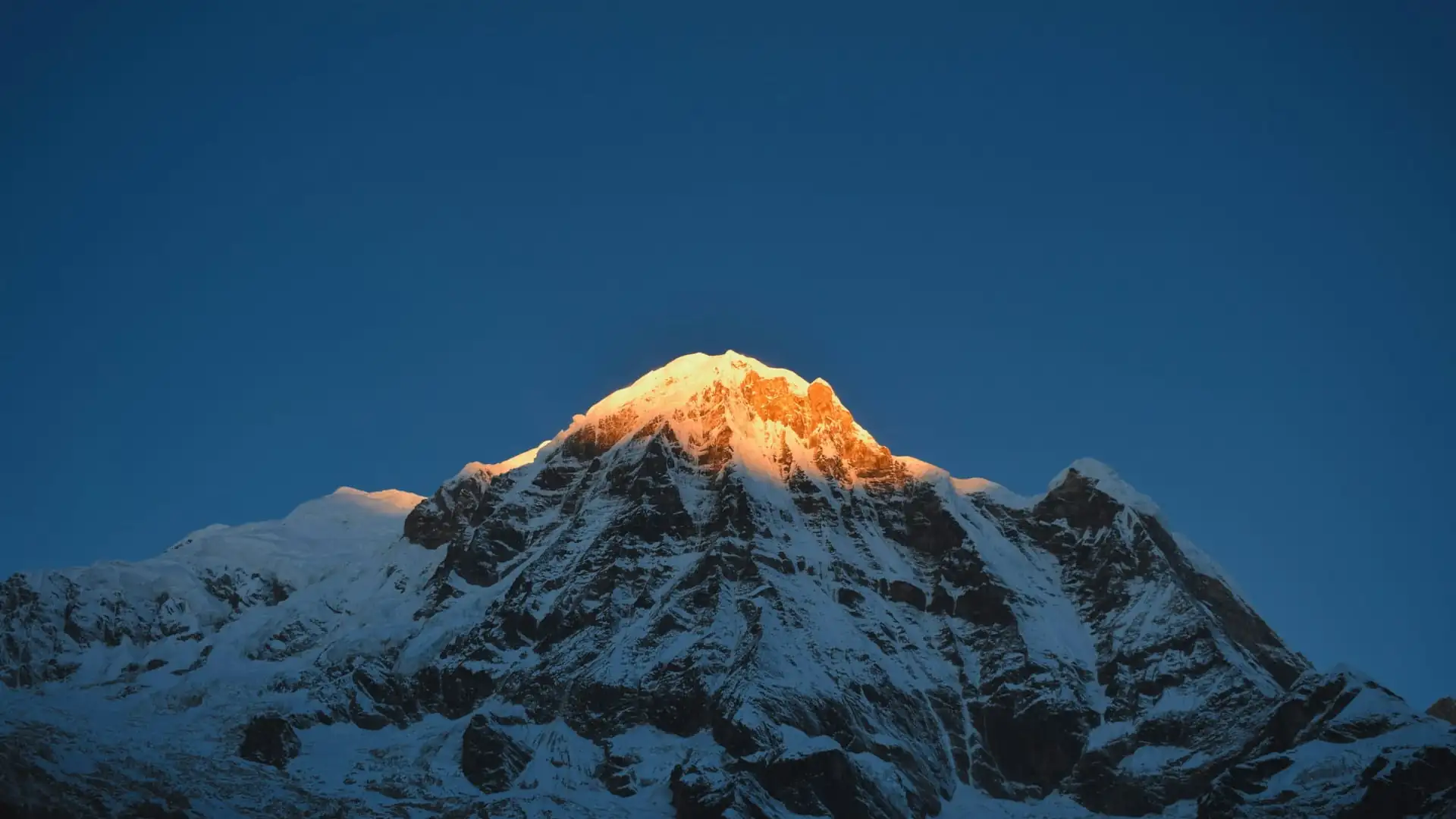
Annapurna Base Camp takes its name from Annapurna I, the massif's highest peak at 8,091 meters (26,545 ft), rising directly above the base camp and dominating the view from nearly every angle within the Sanctuary. Annapurna I holds a singular place in mountaineering history: it was the first peak above 8,000 meters ever successfully climbed, reached on June 3, 1950, by French climbers Maurice Herzog and Louis Lachenal — three years before Everest's first ascent in 1953.
That achievement came at extraordinary human cost. Herzog lost his gloves during the descent and suffered severe frostbite that ultimately required amputation of most of his fingers; Lachenal lost all his toes to frostbite as well. The expedition also survived a serious crevasse fall involving four team members and a dangerous avalanche during the descent — an account Herzog later documented in his book Annapurna (1951), widely regarded as one of the most influential works in mountaineering literature.
That difficult beginning turned out to foreshadow the mountain's long-term reputation. For decades, Annapurna I carried the highest fatality-to-summit ratio of any of the world's fourteen 8,000-meter peaks, historically cited in the range of roughly 32% to 38%.
More recent data compiled by the Himalayan Database, reflected in Guinness World Records figures published through February 2025, shows this ratio has fallen substantially as successful ascents have grown and climbing conditions have improved: approximately 13.4% (75 recorded deaths across 559 recorded ascents) — still among the highest of any 8,000-meter peak, but a marked improvement from the historical figures most commonly associated with the mountain.
None of this affects trekkers heading only to Base Camp, since reaching ABC involves no technical climbing whatsoever. But it adds genuine weight to the experience of standing at 4,130 meters looking directly up at one of the most storied and formidable peaks in mountaineering history, from remarkably close range.
Machhapuchhre: The Sacred, Unclimbed Peak
Machhapuchhre — "Fishtail," named for its distinctive twin-pronged summit — rises to 6,993 meters directly beside the route to Base Camp and is, for many trekkers, the single most photographed peak of the entire trip, thanks to its dramatic profile and close proximity to the trail. Unlike nearly every other major peak in the region, Machhapuchhre has never been officially summited.
It's considered sacred by local Hindu communities, associated with the god Shiva, and Nepal has restricted mountaineering permits for its true summit out of respect for that religious significance since a 1957 British expedition came within roughly 50 meters of the top and voluntarily turned back.
This makes Machhapuchhre one of the very few prominent Himalayan peaks of its height never officially climbed to its true summit — a detail that adds real character to a mountain already dominating the skyline throughout the trek's final days.
Cultural Context Along the Route
The ABC trek passes primarily through Gurung and Magar villages — two of Nepal's indigenous hill ethnic groups, historically associated with farming, animal husbandry, and, notably, military service in the British and Indian Gurkha regiments. Ghandruk in particular is one of the largest and most well-preserved Gurung villages in the region, with traditional stone-and-slate architecture, a small but informative Gurung Museum documenting local Gurkha history and culture, and — for trekkers with extra time — the option of a homestay directly with a local family, offering a more immersive look at daily village life than a standard teahouse stay provides.
Chhomrong, similarly, carries a strong Gurkha heritage, with several teahouses run by retired soldiers and their families. This cultural layer, running alongside the trek's natural scenery, is a genuine part of what makes ABC feel like more than simply a walk to a viewpoint — the lower and middle stages of the route offer real insight into the communities that have lived in and shaped this landscape for generations, well before it became one of Nepal's most popular trekking destinations.
How a Guided Package Simplifies the Trek
For most trekkers, particularly first-timers unfamiliar with Nepal's teahouse system, permit rules, and altitude management, a guided package removes the majority of logistical friction from the trip.
A standard package from a registered agency like Adventure Life Nepal typically includes: ACAP (and any currently applicable TIMS registration), a licensed guide, teahouse accommodation each night, three daily meals on the trail, ground transport between Pokhara and the trailhead, and ongoing altitude and safety monitoring throughout the trek.
What a guided package typically covers | What's usually extra |
|---|---|
ACAP permit | International flights |
TIMS (where currently applicable) | Nepal visa fee |
Licensed guide | Travel/medical insurance |
Teahouse accommodation each night | Personal trekking gear |
Three daily meals | Hot showers, Wi-Fi, device charging |
Ground transport Pokhara–trailhead–Pokhara | Tips for guide/porter |
Altitude monitoring and safety support | Alcoholic drinks, specialty snacks |
This structure means trekkers don't need to independently negotiate room rates, manage the "eat where you sleep" teahouse arrangement, track shifting TIMS enforcement, or make real-time pacing decisions around altitude — the guide handles all of it, drawing on established relationships with lodge owners built over repeated seasons on the route, which becomes particularly valuable during the busier autumn season when capacity at higher stops can genuinely tighten.
Frequently Asked Questions
How long does the Annapurna Base Camp trek take?
Standard itineraries run 7 to 12 days, depending on pace, route variant, and whether side trips or extra rest days are included.How high is Annapurna Base Camp?
4,130 meters (13,550 feet) above sea level.Is the ABC trek difficult?
It's rated moderate — no technical climbing skill is required, but it involves sustained daily walking, significant elevation gain and loss, and extensive stone stairway sections that are genuinely demanding on the legs.Do I need a guide for the ABC trek?
Yes. Solo, unguided trekking has been illegal across Annapurna Conservation Area routes, including ABC, since April 2023.What permits do I need?
The ACAP permit (currently NPR 3,000 for foreign nationals) is mandatory. TIMS card requirements are inconsistently enforced as of 2026 — confirm current status with your trekking agency.Is altitude sickness a serious risk on this trek?
Less so than on Everest Base Camp or the Annapurna Circuit, given ABC's lower final elevation, but genuine altitude awareness still matters, particularly on the steep final push from Deurali to Base Camp.What's the best time of year to trek to ABC?
Autumn (late September to November) is generally considered best for clear skies and stable weather, followed closely by spring (March to May) for rhododendron blooms and generally good conditions.Where do I stay each night on the trek?
Teahouses — small, family-run guesthouses offering basic private rooms and home-cooked meals — the entire route, with no camping required.How much does the ABC trek cost?
A guided group package typically runs $500–$900 per person for a standard 7-to-10-day itinerary, with permits, guide, accommodation, and meals bundled into the price; private or premium packages run higher.Can beginners do this trek?
Yes, with reasonable preparation. ABC is frequently recommended as an excellent first high-altitude trek given its moderate difficulty, shorter duration, and more forgiving altitude profile compared to Nepal's higher routes.What mountain is Annapurna Base Camp named after, and how tall is it?
Annapurna I, the tenth-highest mountain in the world at 8,091 meters, and the first 8,000-meter peak ever successfully climbed, in 1950.Can I climb Machhapuchhre while on this trek?
No — Machhapuchhre has never been officially summited and remains closed to mountaineering out of respect for its sacred status in local Hindu tradition. Trekkers view it from the trail but do not climb it.Is Wi-Fi and phone charging available along the route?
Yes, in most villages, typically for a small additional fee, though availability and reliability decrease at higher elevations, particularly at Machhapuchhre Base Camp and ABC itself.How does ABC compare to Everest Base Camp for a first-time trekker?
ABC is generally considered more accessible — shorter, lower in maximum elevation, and involving lower altitude sickness risk — while still delivering a genuine high-Himalaya trekking experience with dramatic close-range mountain views.
Conclusion on Annapurna Base Camp Trek Guide
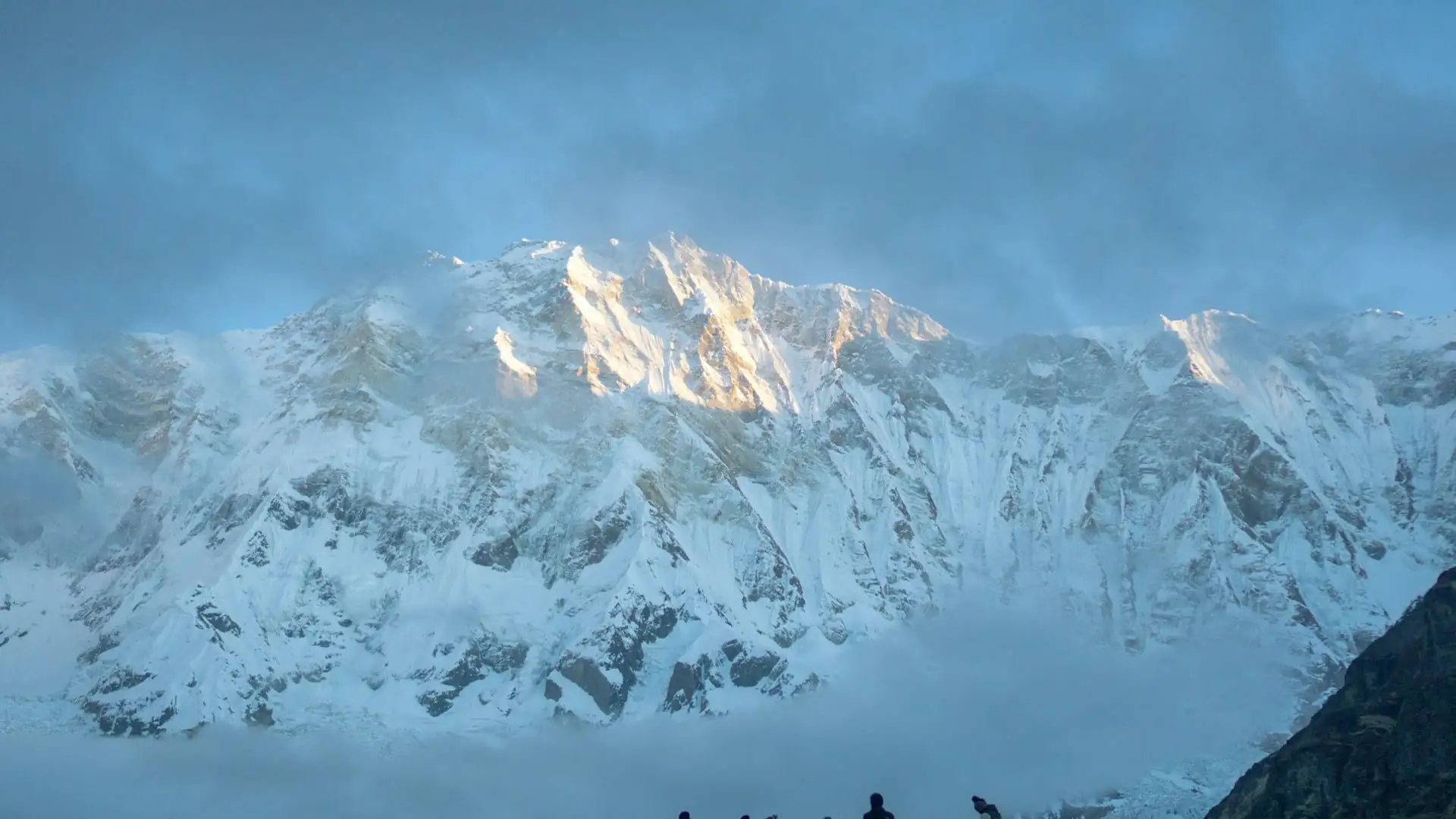
The Annapurna Base Camp trek delivers an unusually complete Himalayan experience for its relatively modest time and difficulty demands: subtropical forest trails, traditional Gurung and Magar villages, a genuinely dramatic final approach into a natural amphitheater of 7,000-and-8,000-meter peaks, and a close-range encounter with Annapurna I — one of the most storied and formidable mountains in climbing history — all within a week to twelve days of trekking, without a single technical climbing move required. It asks real fitness and genuine respect for altitude, but rewards that effort with a mountain panorama that few other treks in the world can match at this level of accessibility.
For travelers deciding where to point their first, or next, Himalayan trip, Annapurna Base Camp remains one of Nepal's most consistently rewarding answers — and Adventure Life Nepal builds every ABC itinerary specifically around getting trekkers to that amphitheater safely, comfortably, and with a genuine understanding of the extraordinary place they're standing in once they arrive.