Animals That Live on Mount Everest: Snow Leopards & Wildlife
No animal lives at Mount Everest's actual summit — above roughly 8,000 meters, the so-called "death zone" has too little oxygen and too much cold to sustain permanent life of any kind, human or otherwise. But the question of what animals live on Mount Everest usually means something broader: the wildlife of the surrounding Sagarmatha National Park, a 1,148-square-kilometer protected area that stretches from forested valleys at under 3,000 meters up toward Everest's base and beyond. Within that range, the Everest region is home to a genuinely remarkable set of animals that live on Mount Everest's lower and middle slopes — from the elusive snow leopard to Nepal's national bird, the colorful Himalayan monal.
This guide covers exactly which animals share this landscape with Everest, where each species actually lives within the park's dramatic elevation range, and what you might realistically expect to see if you're trekking through the region yourself.
Quick Answer: Animals of the Everest Region by Elevation
Elevation Zone | Representative Animals |
|---|---|
Below 3,000 m (forested valleys) | Red panda, Indian/common leopard, langur monkeys, pheasants |
3,000–4,000 m (subalpine forest and scrub) | Musk deer, Himalayan black bear, marten, blood pheasant |
4,000–5,000 m (alpine meadow and rocky slopes) | Himalayan tahr, serow, goral, snow leopard, marmot, pika |
Above 5,000 m (high alpine, near permanent snow) | Occasional snow leopard range, bearded vulture, snow pigeon, snowcock |
Above 8,000 m ("death zone") | No permanent wildlife; only rare transient sightings |
Does Anything Actually Live Near Everest's Summit?
It's worth addressing this directly, since it's genuinely the most common misconception behind the question. Above roughly 8,000 meters, oxygen levels drop to around a third of sea-level conditions, temperatures stay well below freezing year-round, and there's no vegetation or water source to sustain life. No animal makes this zone its home.
That said, a few genuinely remarkable exceptions are worth knowing. The Himalayan jumping spider (Euophrys omnisuperstes) holds the record for the highest confirmed permanent animal residence on Earth, having been documented around 6,700 meters on Everest's slopes, surviving on wind-blown insect debris rather than any local food web. Bar-headed geese, one of the highest-flying bird species in the world, have been recorded crossing the Himalayas at altitudes exceeding Everest's summit during their migration, though they don't live there — they simply fly over at extreme altitude on their way between breeding and wintering grounds. These are fascinating exceptions precisely because they prove the rule: genuine, sustained animal life on Mount Everest stops well below the summit itself.
Sagarmatha National Park: Where Everest's Wildlife Actually Lives
Nearly everything meaningful about the animals that live on Mount Everest's surrounding landscape takes place within Sagarmatha National Park, established in 1976 and designated a UNESCO World Heritage Site. The park spans an extraordinary elevation range, from around 2,845 meters near Monjo and Jorsalle up to Everest's 8,849-meter summit, encompassing seven peaks above 7,000 meters within its boundaries. More than 1,000 recorded plant species and around 200 bird species make this one of the most biodiverse high-altitude protected areas anywhere in the world, despite — or perhaps because of — its extreme conditions.
For context on how this elevation range compares to the rest of Nepal's trekking regions, our Nepal elevation guide is a useful companion reference, and our Everest Base Camp elevation guide covers the specific altitude profile trekkers experience along the standard route.
Mammals: The Full Picture by Elevation
Sagarmatha National Park's mammal checklist includes somewhere between 28 and 31 documented species, depending on the specific survey referenced, with the following representing the animals most consistently identified across wildlife authorities and park records.
Animal | Typical Elevation Range | Conservation Status |
|---|---|---|
Snow leopard | Above 3,500 m, rocky high-alpine terrain | Vulnerable (IUCN) |
Himalayan tahr | 2,500–5,000 m, steep rocky slopes | Near Threatened |
Himalayan musk deer | 3,000–4,000 m, subalpine forest and scrub | Endangered |
Himalayan serow | 2,000–4,000 m, forested and rocky terrain | Near Threatened |
Goral | 2,000–4,000 m, steep rocky hillsides | Near Threatened |
Red panda | Below 3,500 m, temperate forest | Endangered |
Himalayan black bear | 2,000–4,000 m, forested zones | Vulnerable |
Grey/Tibetan wolf | 3,500–5,500 m, open alpine terrain | Vulnerable |
Himalayan marmot | 3,500–5,000 m, open alpine meadow | Least Concern |
Pika | 3,500–5,500 m, rocky alpine terrain | Least Concern |
Beech marten | 2,500–4,000 m, forest edge | Least Concern |
Common/Indian leopard | Below 3,000 m, lower forested valleys | Vulnerable |
The Snow Leopard: Everest's Most Iconic Resident
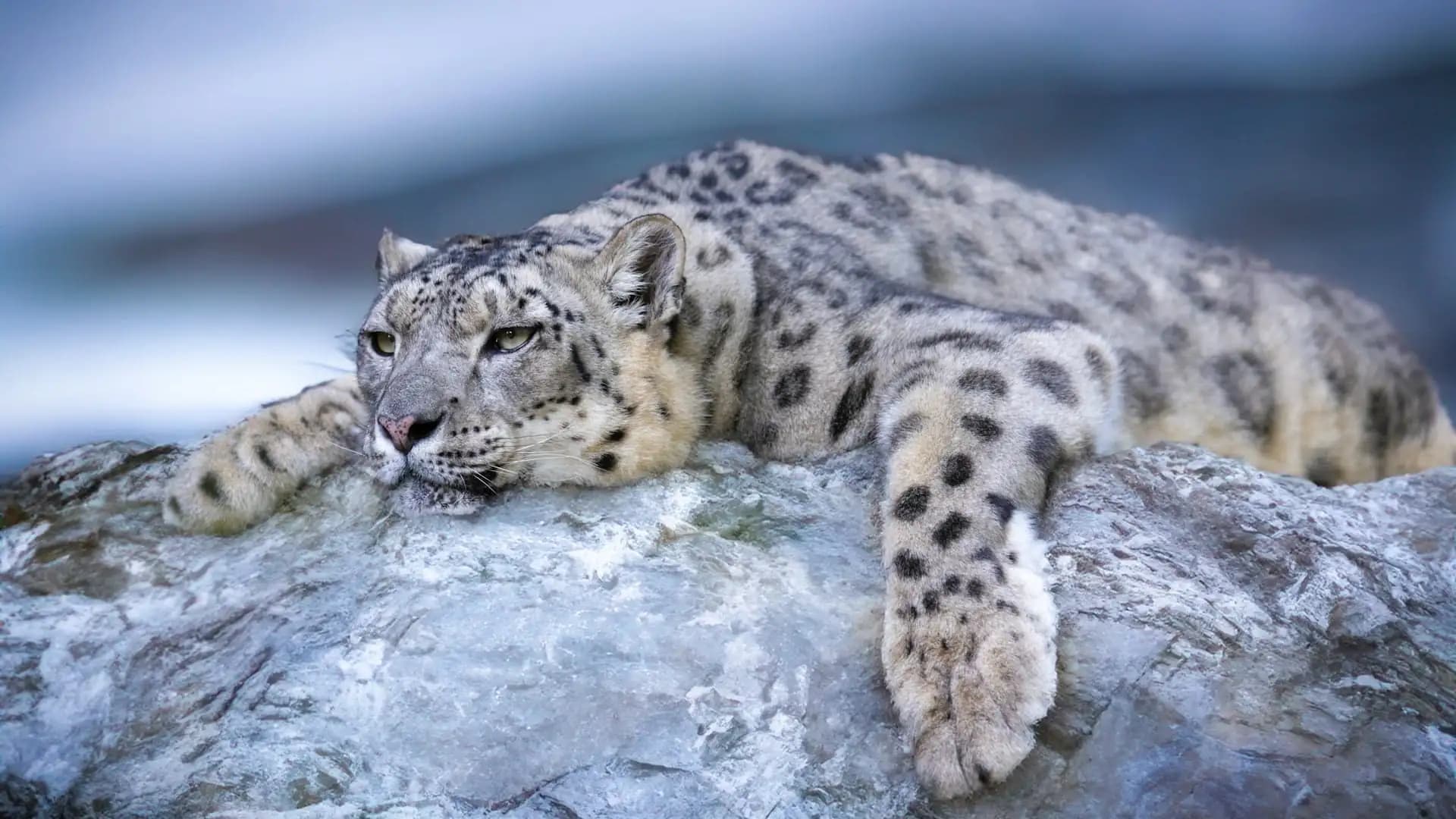
If one species defines the question of what animals live on Mount Everest's wild slopes, it's the snow leopard. Known locally and internationally as the "ghost of the mountains," this large cat inhabits the park's steep, rocky terrain above roughly 3,500 meters, preying primarily on Himalayan tahr and blue sheep. Despite being Sagarmatha's most celebrated resident, snow leopards are genuinely elusive — solitary, well-camouflaged, and largely nocturnal, meaning the overwhelming majority of trekkers who walk through the park never see one directly, even those who spend weeks in prime snow leopard habitat. Evidence of their presence — scrapes, tracks, and occasionally prey remains — is considerably more commonly encountered than the animal itself. Conservation research has noted a gradual recovery in the park's snow leopard population in recent years, closely tied to the recovery of its prey species following decades of protection.
Yaks: The Animal Most Trekkers Actually See
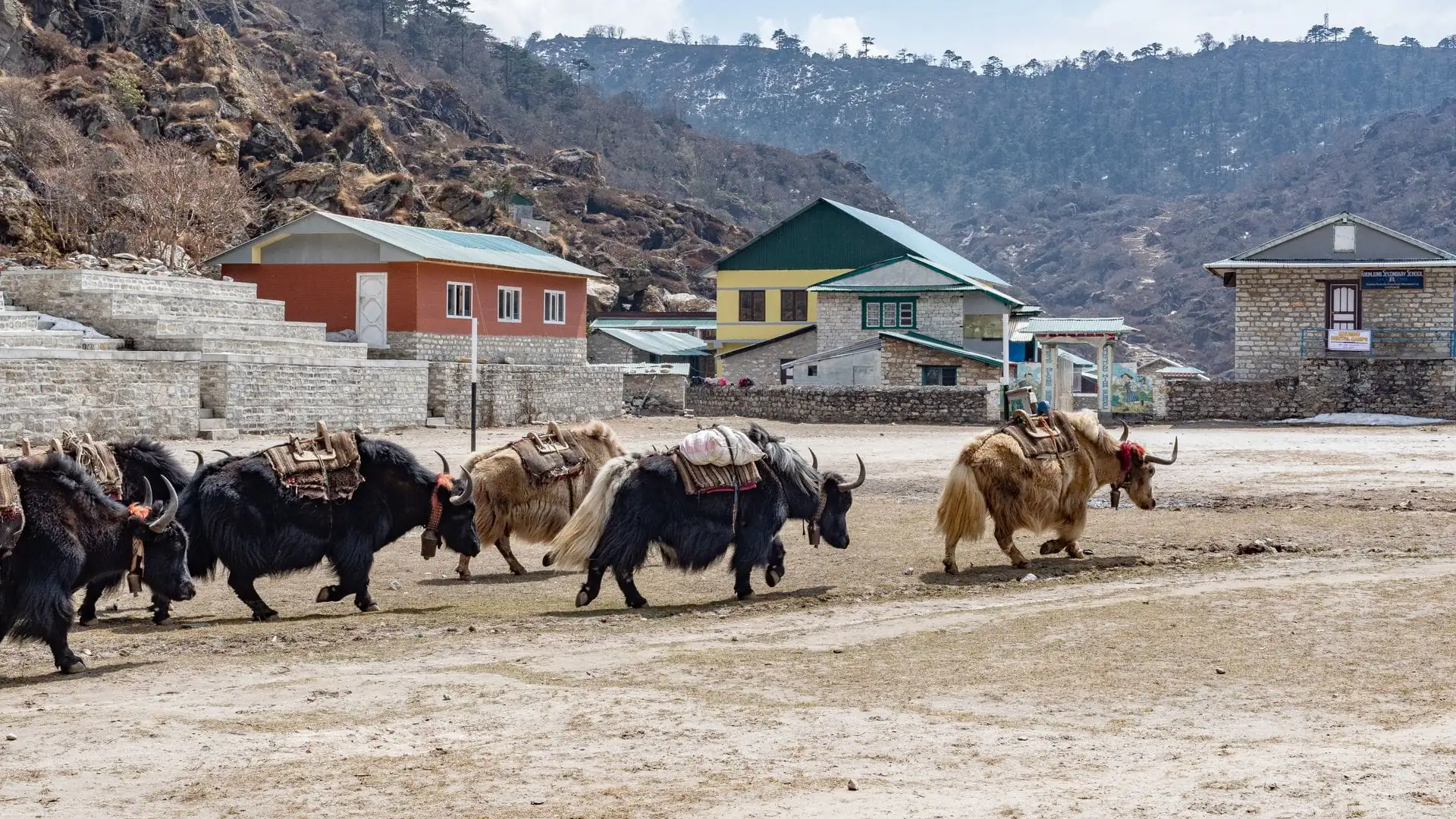
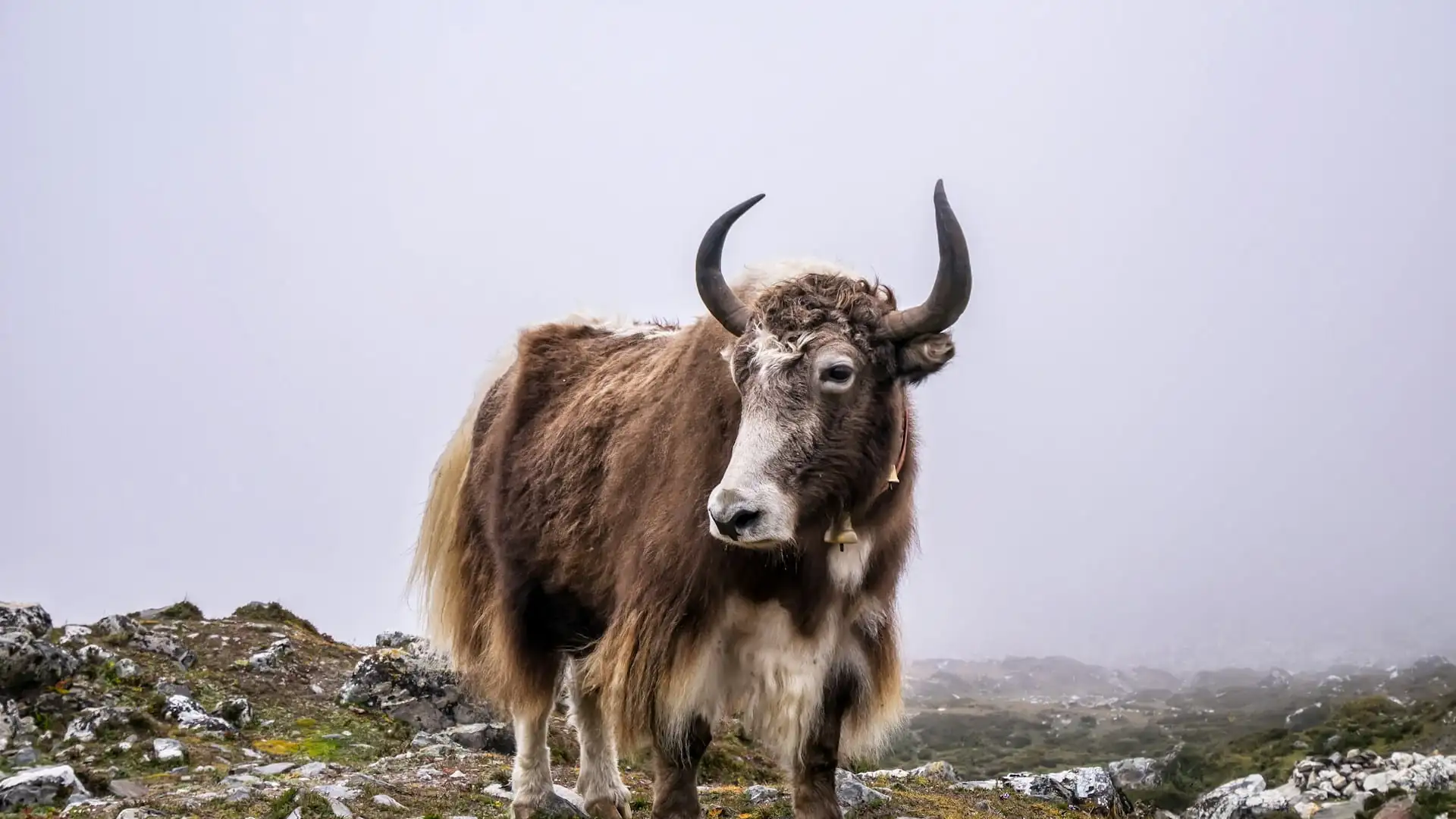
Ask most Everest Base Camp trekkers which animal they encountered most often, and the answer is almost always the yak — though it's worth clarifying an important distinction here. True wild yaks (Bos mutus) are a genuinely rare, critically threatened species found almost exclusively on the remote Tibetan Plateau, and they do not meaningfully occur within Sagarmatha National Park or along the standard Everest trekking routes. What trekkers actually see on the trail are domesticated yaks and, even more commonly, dzopkyo — a yak-cattle hybrid bred specifically for portering loads at the lower-to-mid altitudes where pure yaks struggle with the warmer conditions. These domesticated animals are a working part of the Khumbu region's economy and culture rather than wildlife in the strict sense, but they're genuinely central to how goods and supplies move through this roadless, high-altitude landscape, and they're an iconic, constant presence on the trail regardless of their domesticated status.
Birds of the Everest Region
With around 200 recorded species, Sagarmatha National Park is recognized as an Important Bird Area, and birdlife is genuinely one of the more accessible ways to experience the region's wildlife, since many species are considerably easier to spot than the park's shyer mammals.
Bird | Notable Features |
|---|---|
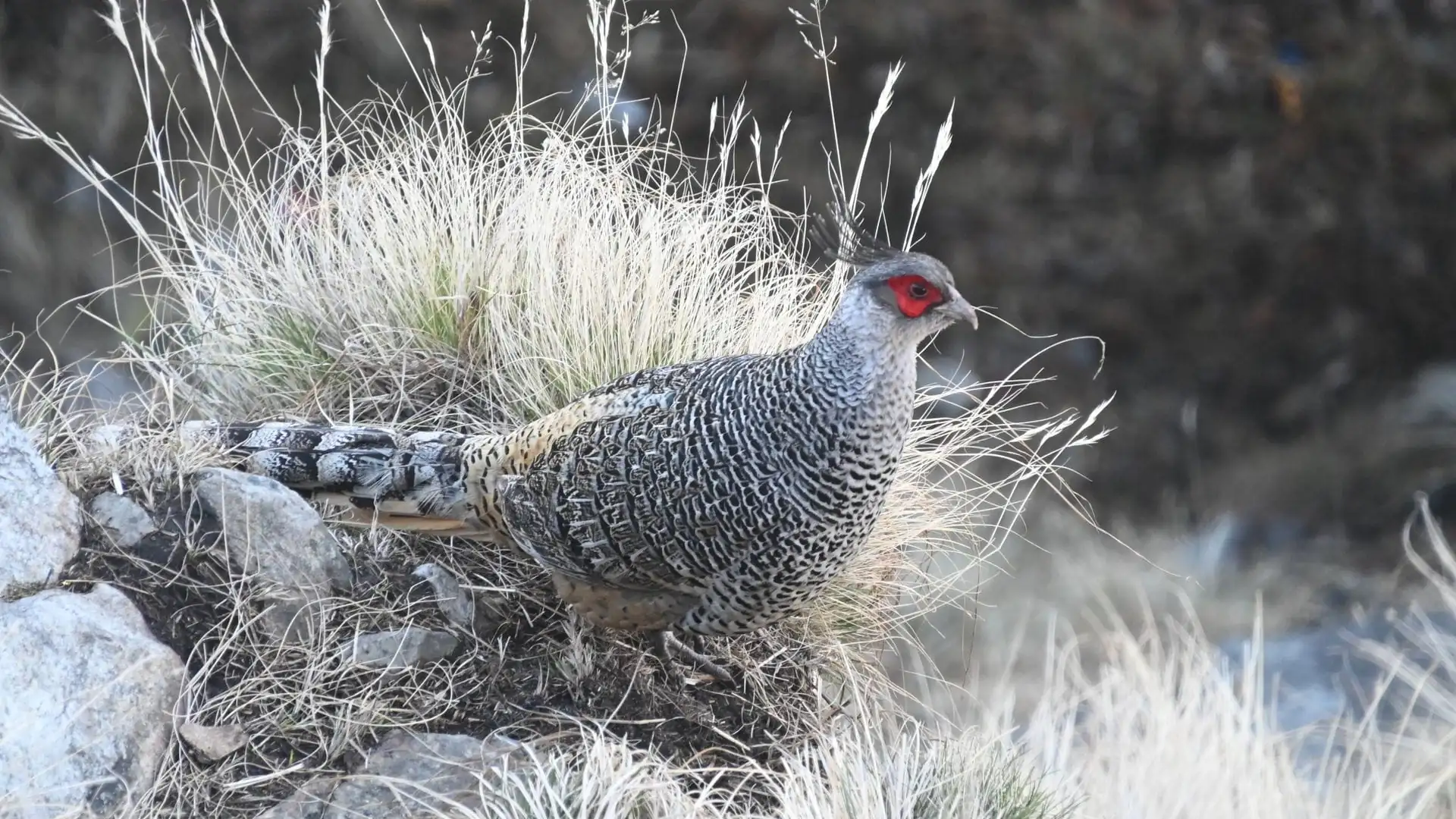
Himalayan monal (danphe) | Nepal's national bird; males display iridescent, multicolored plumage |
Blood pheasant | Named for the red-flecked plumage on its breast and face |
Snow partridge | High-altitude ground bird, found on rocky alpine slopes |
Snow pigeon | Common at higher elevations near rocky outcrops |
Himalayan snowcock | Large, well-camouflaged high-altitude game bird |
Bearded vulture (lammergeier) | One of the world's largest vultures, known for dropping bones from height to crack them open |
Himalayan griffon vulture | A major scavenger species across the high Himalaya |
Alpine chough / yellow-billed chough | Commonly seen at high camps, including near Everest Base Camp itself |
The Himalayan monal holds particular significance as Nepal's national bird, and while it favors slightly lower, forested elevations than the park's iconic mammals, it remains one of the most visually striking animals associated with the broader Everest region.
Red Pandas: Endangered and Rarely Seen
Red pandas occupy the lower, more densely forested sections of Sagarmatha National Park, generally below 3,500 meters, favoring bamboo understory and temperate forest rather than the open alpine terrain associated with the park's higher-elevation icons like the snow leopard. They're endangered, genuinely shy, and largely nocturnal or crepuscular, meaning sightings are rare even for researchers actively studying the species, let alone trekkers passing through on a standard itinerary. Their presence in the park is still a meaningful part of why Sagarmatha's biodiversity protection matters beyond its headline high-altitude species.
Other Notable Animals Worth Knowing
Himalayan tahr. A wild goat species found on the park's steep rocky slopes, these are among the more commonly and reliably sighted larger mammals for trekkers, often visible from the trail itself on exposed hillsides.
Musk deer. Small, shy forest dwellers notable for the males' elongated canine teeth and for producing musk long valued commercially, which historically made them a poaching target before stronger protections were introduced.
Pika. Small, rabbit-relative mammals commonly seen darting between rocks at higher elevations — one of the more reliably spotted small mammals precisely because they're active during the day, unlike many of the park's larger, more nocturnal residents.
Himalayan marmot. Social, burrow-dwelling rodents often seen in open alpine meadows, recognizable by their distinctive warning whistle when disturbed.
Conservation Status: Why So Many of These Animals Are Threatened
Threat Level | Species |
|---|---|
Endangered | Red panda, Himalayan musk deer |
Vulnerable | Snow leopard, Himalayan black bear, common leopard |
Near Threatened | Himalayan tahr, Himalayan serow, goral |
A combination of habitat pressure, historical poaching (particularly for musk deer and snow leopard pelts), and the inherent vulnerability of small, isolated high-altitude populations has placed several of the Everest region's signature species under meaningful conservation concern, as tracked by the IUCN Red List. Sagarmatha National Park's protected status, managed by Nepal's Department of National Parks and Wildlife Conservation, along with broader regional conservation efforts, has been credited with measurable recovery in some populations, though several species remain genuinely at risk.
Where to Spot Wildlife Along the Everest Base Camp Trek
Trekkers walking the standard route have realistic opportunities to encounter some of this wildlife, though patience and quiet observation matter considerably more than luck alone.
Trail Section | Wildlife Most Likely Encountered |
|---|---|
Lukla to Namche Bazaar | Pheasants, occasional musk deer in forested sections |
Namche Bazaar to Tengboche | Himalayan tahr on exposed slopes, various pheasant species |
Tengboche to Dingboche | Blood pheasant, marmots in open meadow sections |
Dingboche to Everest Base Camp | Pika, snow pigeon, occasional snow leopard sign (rarely the animal itself) |
Gokyo Valley (alternate route) | Himalayan tahr, a wider range of high-altitude bird species |
Our Everest Base Camp Trek package and Everest Base Camp with Gokyo Lakes Trek both pass through prime wildlife habitat across these elevation zones, and for trekkers specifically prioritizing a broader wildlife and scenery experience across multiple valleys, our Everest Three High Passes Trek covers considerably more of the park's elevation range in a single trip.
Best Time to See Wildlife in the Everest Region
Season | Wildlife Visibility |
|---|---|
Spring (March–May) | Good; animals more active as temperatures warm, rhododendron blooms attract some bird species |
Autumn (September–November) | Good; clear weather aids visibility, though animals are somewhat more dispersed than in spring |
Winter (December–February) | Lower-elevation sightings more likely as animals move down from the highest zones to escape deep snow |
Monsoon (June–August) | Limited trekking activity generally, though lush conditions support active wildlife at lower elevations |
Early morning and late afternoon consistently offer the best wildlife visibility, regardless of season, since most of the park's mammals are more active during these cooler, quieter periods of the day.
Planning Your Wildlife-Focused Trek with Adventure Life Nepal
Our guides know this landscape well enough to point out tahr on a distant ridge, identify a blood pheasant's call before it's visible, or explain the difference between genuine wild yak lore and the domesticated animals actually working the trail — details that meaningfully deepen a trek beyond just reaching Base Camp itself. If wildlife spotting is a real priority for your trip, it's worth mentioning that directly when planning your itinerary, since route choice and pacing both affect your realistic chances of seeing some of the Everest region's more elusive residents. You can explore our full range of Everest region trekking packages to find the itinerary that best fits your interests.
Frequently Asked Questions
1. What animals live on Mount Everest? No animals live permanently at the summit itself, but the surrounding Sagarmatha National Park is home to snow leopards, Himalayan tahr, musk deer, red pandas, Himalayan black bears, and around 200 bird species, distributed across its dramatic elevation range.
2. Do any animals live at Everest's summit? No. Above roughly 8,000 meters, oxygen levels and temperatures cannot sustain permanent animal life, though the Himalayan jumping spider has been documented as high as 6,700 meters, and migrating bar-headed geese occasionally fly over the summit altitude without living there.
3. What is the most iconic animal associated with Mount Everest? The snow leopard is widely considered the Everest region's most iconic and elusive resident, inhabiting the steep, rocky terrain above roughly 3,500 meters within Sagarmatha National Park.
4. Are yaks wild animals that live on Mount Everest? Not typically. True wild yaks are rare and found almost exclusively on the remote Tibetan Plateau. The yaks and yak-hybrids (dzopkyo) seen by trekkers on Everest routes are domesticated pack animals, not wildlife.
5. Do red pandas live near Mount Everest? Yes, in the lower, forested sections of Sagarmatha National Park, generally below 3,500 meters, though they're endangered, shy, and rarely seen by trekkers.
6. How many bird species live in the Everest region? Around 200 species have been recorded in Sagarmatha National Park, which is officially recognized as an Important Bird Area.
7. What is Nepal's national bird, and does it live near Everest? The Himalayan monal (danphe), known for its iridescent, multicolored plumage, is Nepal's national bird and is found in the forested elevations of the Sagarmatha National Park region.
8. Can trekkers realistically see a snow leopard on the Everest Base Camp trek? It's genuinely rare. Snow leopards are solitary, well-camouflaged, and largely nocturnal, so most trekkers who spot any sign of them find tracks or scrapes rather than the animal itself.
9. What animals are most commonly seen by trekkers on the Everest Base Camp route? Himalayan tahr, various pheasant species, pika, marmots, and domesticated yaks/dzopkyo are the animals trekkers most realistically encounter along the standard trail.
10. Are there any dangerous predators on the Everest trekking route? Snow leopards and occasionally wolves inhabit the region, but neither poses a realistic threat to trekkers, given their elusive nature and strong tendency to avoid human contact.
11. What is the highest-altitude animal known to live on Mount Everest? The Himalayan jumping spider, documented at approximately 6,700 meters, holds the record for the highest confirmed permanent animal residence on Earth.
12. Is Sagarmatha National Park home to any endangered species? Yes, including the red panda and Himalayan musk deer, both classified as endangered, along with several other species listed as vulnerable or near threatened.
13. When is the best time to spot wildlife in the Everest region? Early morning and late afternoon offer the best visibility regardless of season, with spring and autumn generally providing the most favorable overall trekking and wildlife-viewing conditions.
14. Do any big cats besides the snow leopard live in the Everest region? Yes, the common (Indian) leopard inhabits the park's lower-elevation forested valleys, distinct from the snow leopard's higher-altitude rocky habitat.
15. What do snow leopards eat in the Everest region? Primarily Himalayan tahr and blue sheep, along with smaller prey such as marmots and pika when larger prey is scarce.
16. Are there vultures on Mount Everest? Yes, the bearded vulture (lammergeier) and Himalayan griffon vulture are both present in the region, playing an important scavenging role in the high-altitude ecosystem.
17. How has Sagarmatha National Park's wildlife population changed over time? Conservation efforts since the park's 1976 establishment have supported a gradual recovery in several species, including snow leopard numbers, closely linked to improved protection of prey species like Himalayan tahr.
18. What animals might I see specifically near Everest Base Camp itself? At this high elevation, expect birds like the alpine chough and snow pigeon, along with occasional pika, rather than the park's larger forest-dwelling mammals, which favor lower elevations.
19. Is it legal to hunt or disturb wildlife in Sagarmatha National Park? No. The park is a strictly protected area, and hunting, disturbing, or removing wildlife is prohibited, in line with both national park regulations and the park's UNESCO World Heritage status.
20. How many mammal species live in Sagarmatha National Park overall? Documented checklists vary between approximately 28 and 31 mammal species, depending on the specific survey, reflecting the park's genuinely diverse high-altitude ecosystem.
Talk to an Expert
Planning an Everest trek and want to know more about the region's wildlife along your specific route? Message us on WhatsApp at +977 9841248242 and our team will help you plan accordingly.
Author: Dil Bahadur Karki