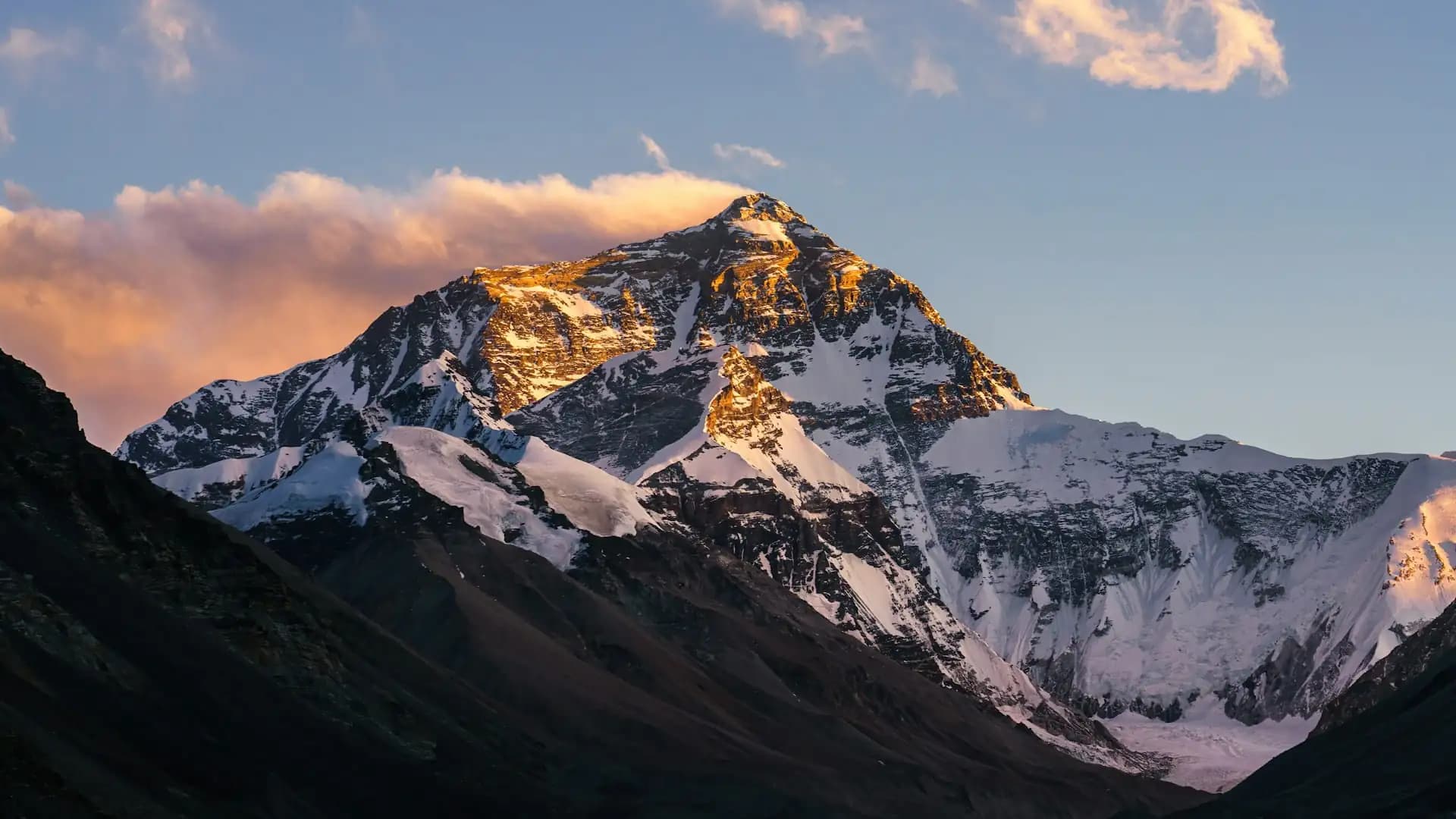
Mt Everest Base Camp Elevation: Height, Route & Facts
Mt Everest Base Camp Elevation
Mount Everest Base Camp sits at 5,364 meters (17,598 feet) above sea level on the Nepal side. That's the number most people are searching for, and it's the correct, current figure used by Nepal's Department of Tourism and every reputable trekking record.
But that single number doesn't tell you much on its own — and if you're actually planning a trek, the elevation of the destination matters far less than what happens to your body on the way there.
This guide covers both: the hard facts, and the context that makes them useful.
Everest Base Camp elevation at a glance
Location | Elevation (meters) | Elevation (feet) |
|---|---|---|
Everest Base Camp, Nepal (South) | 5,364 m | 17,598 ft |
Everest Base Camp, Tibet (North) | 5,150 m | 16,900 ft |
Kala Patthar (main summit) | 5,644 m | 18,519 ft |
Gorak Shep | 5,164 m | 16,942 ft |
Mount Everest summit | 8,848.86 m | 29,031.7 ft |
Why There Are Two Different Everest Base Camp Elevations
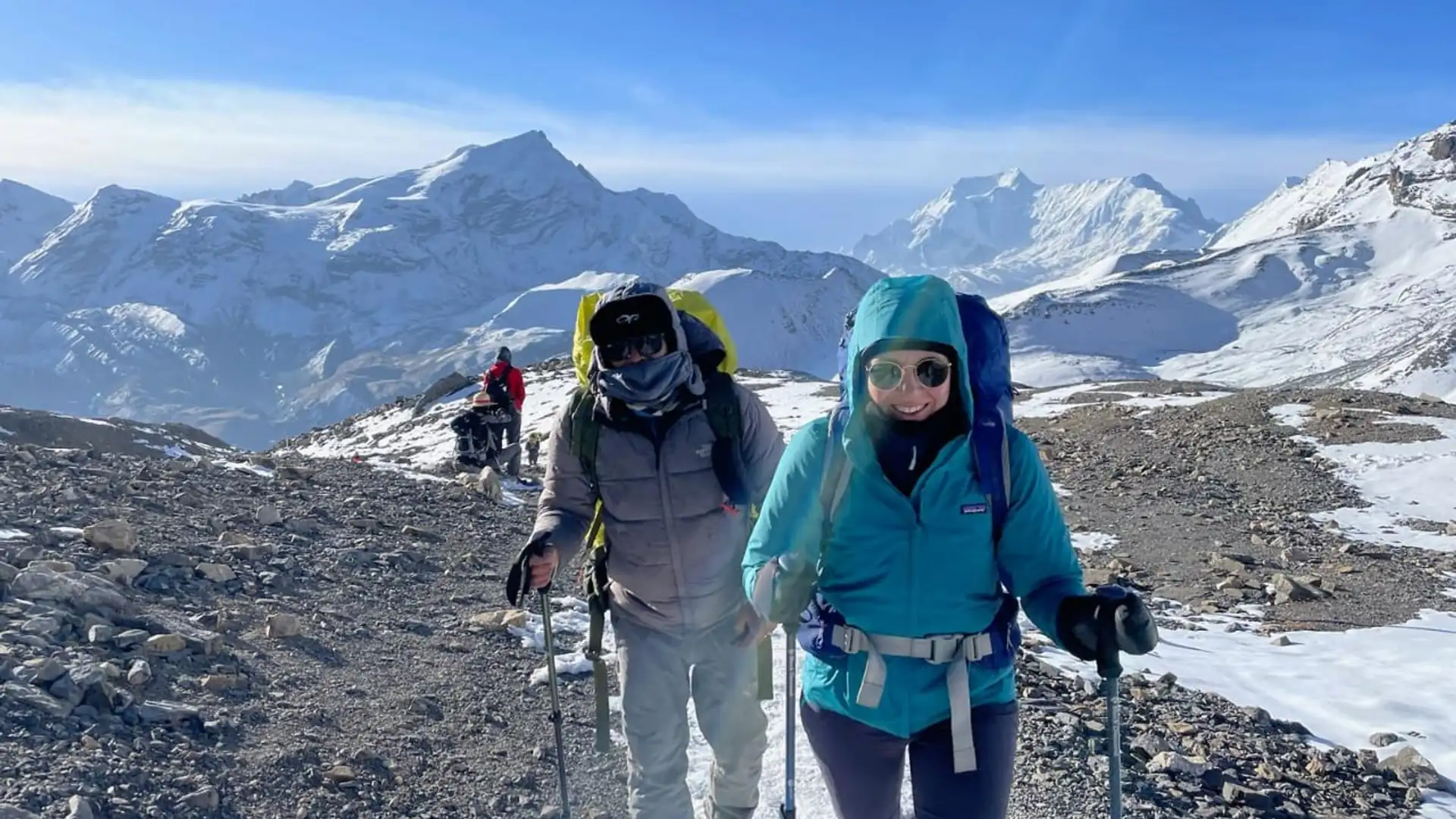
Everest has two base camps, sitting on opposite sides of the mountain, and they are not interchangeable.
South Base Camp, in Nepal's Khumbu region, is the one almost everyone means when they say "Everest Base Camp." It sits at 5,364 meters on the Khumbu Glacier, at the foot of the notorious Khumbu Icefall, and it's reached exclusively on foot — there's no road anywhere near it. This is the base camp used for the standard South Col climbing route, and it's the destination of the classic EBC trek.
North Base Camp, in Tibet, sits lower at roughly 5,150 meters. It's used for the North Col climbing route on the Chinese side of the mountain. The key practical difference isn't really the 214-meter elevation gap — it's accessibility. The Tibetan side has a road that vehicles can drive almost to the camp, while the Nepal side demands five to eight days of trekking through Sherpa villages just to arrive.
That's also why you'll sometimes see the Tibet figure quoted as "5,200 meters" — some sources measure the old expedition base camp, while more recent figures reflect the current tourist viewing area, which sits at a slightly different point on the moraine. Both are correct depending on exactly which spot is being measured; neither is a mistake, and the discrepancy is worth understanding rather than dismissing as an error, since it explains why you'll see conflicting numbers across otherwise reliable sources.
It's also worth noting that neither base camp is a permanent structure. Both are seasonal tent settlements, assembled fresh each climbing season and dismantled afterward. Base Camp isn't a building or a fixed marker you can visit year-round in its full form — during the pre-monsoon climbing season (roughly April to May), the Nepal side becomes a temporary city of hundreds of tents housing climbers, Sherpas, cooks, and support staff. Outside that window, trekkers still reach the same geographic point and the same elevation, but the tent city itself isn't there.
How High Is 5,364 Meters, Really?
Numbers on a page don't mean much until you compare them to something familiar.
Here's what 5,364 meters actually represents:
It's higher than every mountain in the contiguous United States, including Denali's base regions and the entire European Alps, including Mont Blanc's summit (4,809m).
It's roughly 60% of Everest's own summit height — you are already more than halfway up the world's tallest mountain, vertically, just by standing at base camp.
It sits close to the cruising altitude of a small aircraft, and well above the altitude at which most people would need supplemental oxygen if they arrived there instantly rather than acclimatizing gradually.
Atmospheric pressure at EBC is roughly half of sea level pressure. Each breath delivers roughly half the oxygen your body is used to.
It's higher than the summit of Mount Kenya (5,199m) and close to the height of Pico de Orizaba (5,636m), Mexico's tallest peak — mountains that require technical climbing skill to summit, while EBC is reached on a trekking trail.
That last comparison is a useful gut check for first-time trekkers: you don't need mountaineering skills to stand at 5,364 meters, but your body still experiences roughly the same thin-air conditions a technical climber would face on a serious peak elsewhere in the world. The elevation number is a fact; the physiological impact is the reason the trek takes as long as it does, and why preparation matters more than raw fitness.
The Elevation Profile: How You Actually Get There
Nobody flies into 5,364 meters. The trek is a staged climb through a series of villages, each one an acclimatization checkpoint as much as a destination.
Stop | Elevation | Typical day |
|---|---|---|
1,400 m | Day 0 (arrival) | |
Lukla | 2,860 m | Day 1 (fly in, short trek) |
Phakding | 2,610 m | Day 1 |
Namche Bazaar | 3,440 m | Day 2–3 (acclimatization stop) |
Tengboche | 3,860 m | Day 4 |
Dingboche | 4,410 m | Day 5–6 (acclimatization stop) |
Lobuche | 4,940 m | Day 7 |
Gorak Shep | 5,164 m | Day 8 |
Everest Base Camp | 5,364 m | Day 8 |
Kala Patthar (viewpoint) | 5,644 m | Day 9 |
Notice the pattern: two dedicated acclimatization days, at Namche and Dingboche, and a total elevation gain of roughly 3,964 meters from Lukla to EBC, spread across eight days rather than attempted in one push. That pacing isn't arbitrary — it follows the widely used mountaineering guideline of not increasing sleeping altitude by more than roughly 300–500 meters per day once above 3,000 meters, with a rest day built in every 1,000 meters or so. Rush that pacing and altitude sickness risk climbs sharply; respect it, and the vast majority of reasonably fit trekkers reach EBC without serious problems.
It also helps to understand what an "acclimatization day" actually involves, because it isn't a rest day in the usual sense. On acclimatization days at Namche and Dingboche, the standard practice is to hike higher during the day — often several hundred meters above the overnight elevation — and then descend back down to sleep.
This "climb high, sleep low" approach exposes the body to thinner air during the day, triggering physiological adaptation, while still allowing recovery at a lower, more oxygen-rich elevation overnight. Skipping these hikes in favor of a full lie-down rest day actually reduces their acclimatization value, even though it feels like the more restful choice.
Kala Patthar: The Highest Point Most Trekkers Reach
If you're chasing the highest elevation on the standard trek, it isn't EBC — it's Kala Patthar, a rocky outcrop above Gorak Shep on the ridge of Pumori. Its main, flag-covered summit sits at approximately 5,644 meters, though you'll see the figure quoted anywhere from 5,545m to 5,644m depending on the source, because there are two nearby high points on the same ridge and not every writer distinguishes between them. The prayer-flag-covered summit — the one virtually everyone climbs — is the higher of the two, and it's the one referenced by essentially every trekking itinerary that lists a Kala Patthar sunrise hike.
The reason trekkers detour here matters as much as the number: Base Camp itself does not offer a clear view of Everest's summit. Nuptse and the surrounding ridgeline block the sightline directly from the glacier. Kala Patthar, sitting nearly 300 meters higher and positioned differently on the terrain, is where you actually see Everest's summit pyramid — which is why most itineraries treat it as the true emotional high point of the trip, both literally and figuratively.
Most trekkers climb Kala Patthar before dawn, starting from Gorak Shep in the dark to reach the summit for sunrise. The pre-dawn timing isn't just for the photography, although the golden light on Everest's summit pyramid is genuinely spectacular — it's also because winds tend to pick up later in the morning at that elevation, and clear visibility is more reliable before the sun heats the valley air.
Temperatures at the summit before sunrise commonly drop to -15°C to -20°C even in peak trekking season, so this short two-to-three-hour round trip demands full cold-weather gear despite being one of the shortest hikes of the entire trip.
Everest Base Camp vs. the Summit: The Real Distance
Base Camp is where the trek ends. It's where the climb begins. The gap between the two is enormous and worth stating plainly: Everest's summit sits at 8,848.86 meters (29,031.7 ft), a figure made official on December 8, 2020, following the first joint elevation survey ever conducted together by Nepal and China. That's a vertical gain of roughly 3,485 meters from Base Camp to the top — more than three times the elevation gain of the entire eight-day trek from Lukla.
Reaching EBC takes strong legs and patience. Reaching the summit from there takes weeks of further acclimatization on the mountain, supplemental oxygen above roughly 7,500 meters, and specialized mountaineering skill. The two achievements aren't on the same scale, and no reputable guide should imply otherwise.
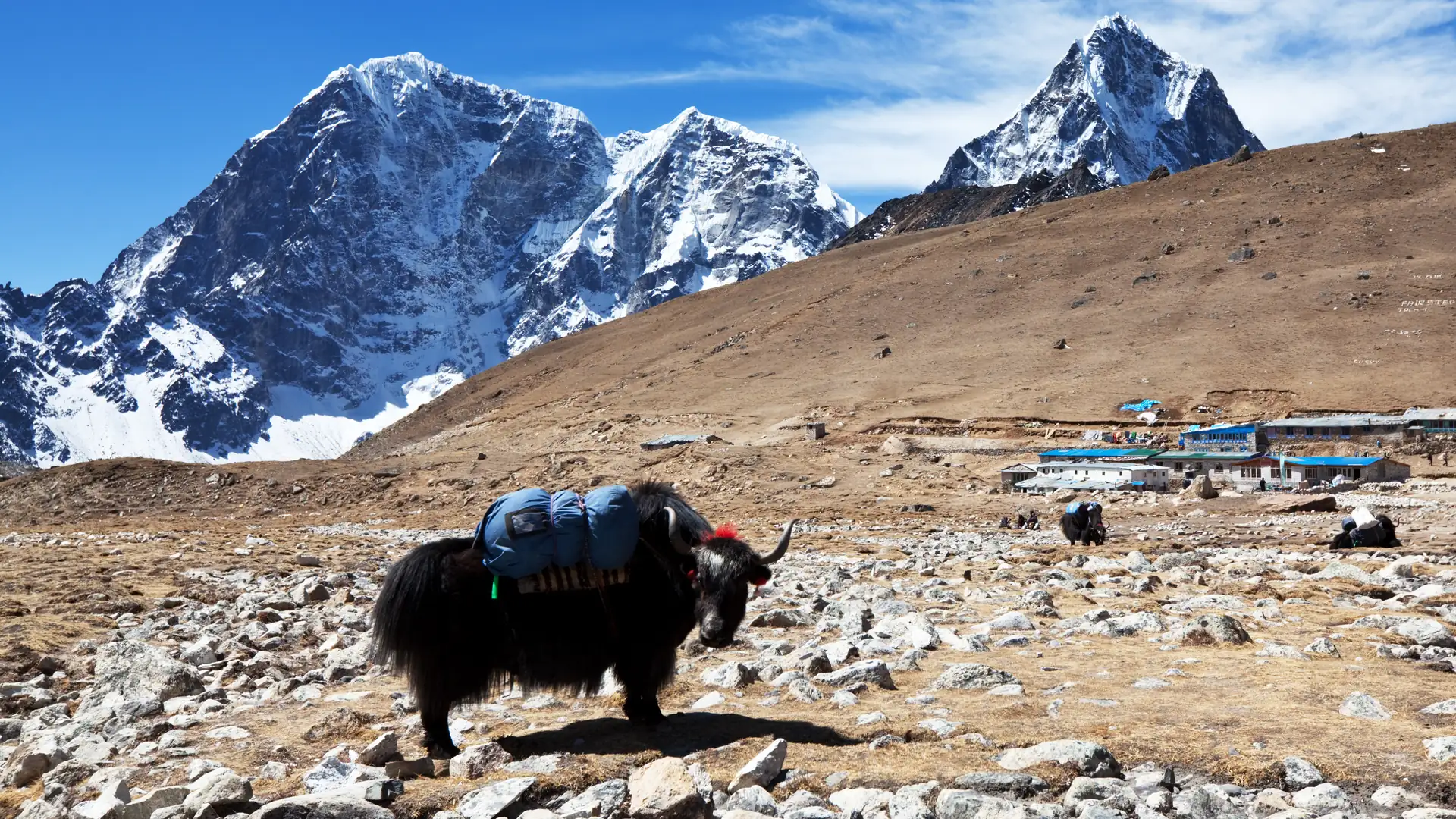
Between Base Camp and the summit, climbers pass through four established high camps, each adding elevation and difficulty. Camp 1 sits at roughly 6,065 meters, reached by crossing the Khumbu Icefall — widely considered one of the most dangerous sections of the entire route due to shifting ice seracs and crevasses. Camp 2 sits around 6,400 meters, Camp 3 around 7,200 meters on the Lhotse Face, and Camp 4, the "South Col," sits at approximately 7,950–8,000 meters — the final camp before a summit push into what climbers call the "death zone," the altitude above 8,000 meters where the human body can no longer acclimatize and is effectively dying by the hour.
None of this applies to trekkers heading only to Base Camp, but understanding the scale helps explain why EBC, demanding as it is, remains an entirely different undertaking from summiting.
Why the Elevation Makes This Trek Physically Demanding
The number 5,364m matters practically because of what thin air does to the body, not because of the altitude itself. Above roughly 3,000 meters, oxygen availability drops enough that most people notice some effect — shortness of breath on exertion, faster heart rate at rest, disrupted sleep. Above 4,000 meters, acute mountain sickness (AMS) becomes a real risk for anyone ascending too quickly, regardless of fitness level. Fitness reduces fatigue; it does not meaningfully reduce AMS risk, which is driven almost entirely by ascent rate and individual physiology.
This is one of the most misunderstood facts about high-altitude trekking — marathon runners and gym regulars get AMS just as often as first-time hikers, sometimes more often, because their fitness tempts them to move faster than their body can adapt.
Temperature compounds the challenge. As a rough field rule, air temperature drops by about 6–7°C for every 1,000 meters gained, which is why Lukla at 2,860m can feel like a mild autumn day while EBC at 5,364m regularly drops well below freezing overnight, even in trekking season. Pack and pace for both the elevation and the cold — they arrive together.
Overnight temperatures at Base Camp itself can fall to -15°C or lower during the main spring and autumn trekking windows, and considerably colder outside those seasons.
Hydration and appetite are also affected by elevation in ways that surprise many first-time trekkers. The dry, thin air at altitude increases fluid loss through breathing alone, and altitude commonly suppresses appetite even as the body's energy demands increase. It's typically recommend three to four liters of water daily above 3,000 meters, along with consciously eating enough even when hunger signals feel muted — a habit that matters more for a successful trek than any single piece of gear.
Best Time to Visit, Given the Elevation
Because EBC sits above 5,000 meters year-round, weather windows matter more here than at almost any other trekking destination. Two seasons dominate: pre-monsoon spring (March to May) and post-monsoon autumn (late September to November). Both offer relatively stable weather and clearer visibility of the peaks, though spring tends to be slightly warmer at altitude while autumn typically offers the crispest, clearest mountain views following the monsoon rains.
Winter (December to February) is trekkable for experienced, well-equipped trekkers, but overnight temperatures at higher elevations like Dingboche, Lobuche, and Base Camp itself can drop well below -20°C, and some teahouses reduce services.
Monsoon season (June to August) brings low cloud cover, obscured mountain views, and trail conditions that make the elevation gain feel harder without the payoff of visibility — most agencies advise against it for this specific trek.
How Trekking Agencies Build Itineraries Around Elevation
This is the piece most articles skip entirely: elevation numbers should directly shape the itinerary you book, not just sit in a trivia section.
A well-built EBC itinerary is designed around the elevation profile, not around a fixed number of days. Look for:
A minimum of two acclimatization days built in at Namche Bazaar (3,440m) and Dingboche (4,410m), not treated as optional extras.
Daily elevation gains kept within safe range once above 3,000 meters, rather than compressed to shorten the trip.
A guide trained to recognize early AMS symptoms and authorized to alter the itinerary — including descent — if needed.
Contingency days built into the schedule for weather delays at Lukla, which are common and can otherwise compress your acclimatization schedule if not planned for.
A realistic daily walking pace, generally five to seven hours, that avoids pushing trekkers to their limit on the same day they're also gaining significant elevation.
At Adventure Life Nepal, itineraries are built with this elevation logic first — the days, rest stops, and pacing exist specifically to get trekkers to 5,364 meters, and up to Kala Patthar's 5,644 meters, as safely and comfortably as the terrain allows.
Frequently Asked Questions about Mt Everest Base Camp Elevation
1. What is the exact elevation of Everest Base Camp?
The Nepal (South) Base Camp sits at 5,364 meters (17,598 feet) above sea level. This is the figure used by Nepal's trekking and tourism authorities.
2. Is Everest Base Camp the highest point on the EBC trek?
No. Kala Patthar, a viewpoint above Gorak Shep, reaches roughly 5,644 meters — about 280 meters higher than Base Camp itself, and most itineraries include it as an optional but highly recommended add-on.
3. How much higher is the Everest summit than Base Camp?
The summit stands at 8,848.86 meters, roughly 3,485 meters higher than Base Camp — more than three times the total elevation gained during the entire trek from Lukla.
4. Why do some websites list Everest Base Camp at 5,360m or 5,380m instead of 5,364m?
Minor variations come from different survey methods and rounding conventions over the years. 5,364 meters is the figure most consistently used today by Nepali authorities and current maps.
5. What is the elevation of the Tibet side of Everest Base Camp?
The North Base Camp in Tibet sits at approximately 5,150 meters, though some sources cite up to 5,200 meters depending on whether they're referencing the traditional expedition camp or the current tourist viewing area.
6. Do I need supplemental oxygen to reach Everest Base Camp?
No. Trekkers reach Base Camp on foot without supplemental oxygen. Oxygen becomes a practical necessity for climbers well above 7,500 meters on the way to the summit, not on the trek to Base Camp.
7. How many days does it take to reach 5,364 meters safely?
Most reputable itineraries take 8 days from Lukla to Base Camp, including two acclimatization days, to manage the altitude gain safely.
8. What's the elevation gain per day on the EBC trek?
It varies by stage, but averages roughly 300–450 meters per day of net altitude gain above 3,000m, which is the range generally considered manageable for acclimatization.
9. Can beginners handle the elevation of Everest Base Camp?
Yes, with the right itinerary. Altitude sickness risk depends far more on ascent pace than on fitness level, so a properly paced schedule with rest days matters more than athletic background.
10. Is Kala Patthar or Everest Base Camp harder to reach?
Kala Patthar is technically easier terrain but sits at a higher, thinner-air elevation, making the final push there feel more physically taxing despite the shorter distance.
11. How does Everest Base Camp's elevation compare to Kilimanjaro?
Kilimanjaro's summit sits at 5,895 meters, actually higher than Everest Base Camp. However, EBC involves a longer multi-day approach and colder average conditions during the main trekking seasons.
12. What altitude sickness symptoms should I watch for near Base Camp?
Headache, nausea, dizziness, and disrupted sleep are early signs of acute mountain sickness. Any of these warrant informing your guide immediately and considering a pause or descent before continuing.
13. Why was Everest's official height changed to 8,848.86 meters?
In December 2020, Nepal and China jointly announced this figure after their first-ever shared survey, replacing previously separate Nepali and Chinese measurements that differed slightly.
14. Does the elevation of Everest Base Camp change with the seasons?
The physical elevation is fixed, but the Khumbu Glacier beneath the camp shifts slightly year to year, meaning the exact camp location on the ice moves marginally between climbing seasons even though the recorded elevation stays consistent.
Conclusion on Mt Everest Base Camp Elevation
Everest Base Camp's elevation — 5,364 meters on the Nepal side — is a fixed, well-documented fact, but it's only the starting point for understanding what the trek actually demands. The real story is in the profile: eight days of carefully staged ascent from Lukla, two acclimatization stops built around the "climb high, sleep low" principle, a final push past Gorak Shep to Base Camp itself, and for most trekkers, one more early-morning climb up Kala Patthar to finally see Everest's summit unobstructed.
None of it requires technical climbing skill. All of it requires respecting how thin air, cold temperatures, and ascent pace interact at altitude. Whether you're checking this number out of curiosity or planning the EBC trek itself, the elevation isn't just a statistic — it's the reason the itinerary looks the way it does, and understanding it is the first real step toward standing at 5,364 meters yourself.