Nepal Sightseeing Places: Top Attractions to See in 2026
Nepal Sightseeing Places
Nepal packs an extraordinary range of sightseeing into a genuinely small country — ancient royal cities and living goddess traditions in the Kathmandu Valley, the birthplace of the Buddha on the southern plains, jungle safaris tracking rhinos and Bengal tigers, and lakeside hill stations with some of the most accessible mountain panoramas anywhere in the Himalayas, all without setting foot on a multi-day trekking trail.
This guide covers Nepal's essential sightseeing destinations for 2026 — what each one actually offers, how much time to budget, and how to string them together into a realistic itinerary.
Top Nepal's Sightseeing Places regions at a glance
Region | Known for | Typical time needed |
|---|---|---|
Kathmandu Valley | UNESCO heritage sites, temples, stupas, old royal cities | 2–3 days |
Pokhara | Lakes, mountain views, adventure sports | 2–3 days |
Jungle safari, rhinos, Bengal tigers | 2 days | |
Lumbini | Birthplace of the Buddha, monasteries | 1–2 days |
Bandipur | Preserved hill-town, mountain views | 1 day / overnight |
Nagarkot | Sunrise Himalayan panoramas | Half-day to overnight |
Kathmandu Valley: Nepal's Living Museum
The Kathmandu Valley is where nearly every Nepal itinerary begins and ends, and it earns that position on its own merits — this compact bowl of hills, roughly 30 kilometers across, contains seven separate UNESCO World Heritage monument zones, more than 130 significant historical monuments, and the still-functioning traditions of the Newar civilization that produced them.
The Kathmandu Valley was inscribed on UNESCO's World Heritage list in 1979, grouped as seven distinct monument zones rather than a single site — meaning a Kathmandu Valley sightseeing itinerary is, in effect, a tour of seven separate UNESCO destinations within one relatively small area.
The seven UNESCO monument zones of the Kathmandu Valley:
Site | Type | Highlight |
|---|---|---|
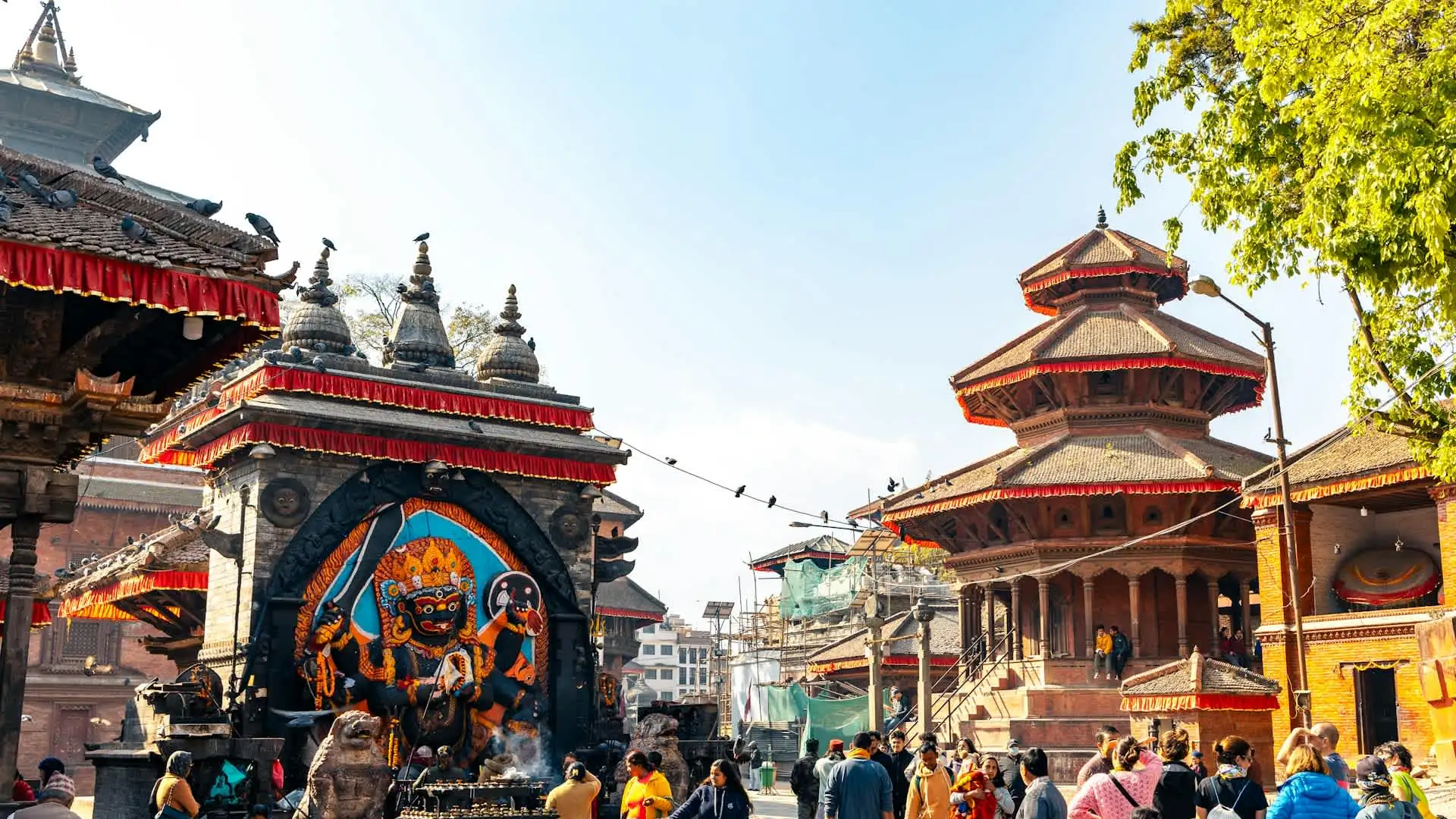
Kathmandu Durbar Square (Hanuman Dhoka) | Former royal palace complex | Kumari Ghar (living goddess residence), Kaal Bhairav statue |
Patan Durbar Square | Former royal palace complex | Finest Newari stone and metal sculpture in Nepal |
Bhaktapur Durbar Square | Former royal palace complex | 55-Window Palace, Nyatapola Temple, vehicle-free medieval core |
Swayambhunath Stupa | Buddhist stupa | Oldest Buddhist monument in the valley; hilltop setting |
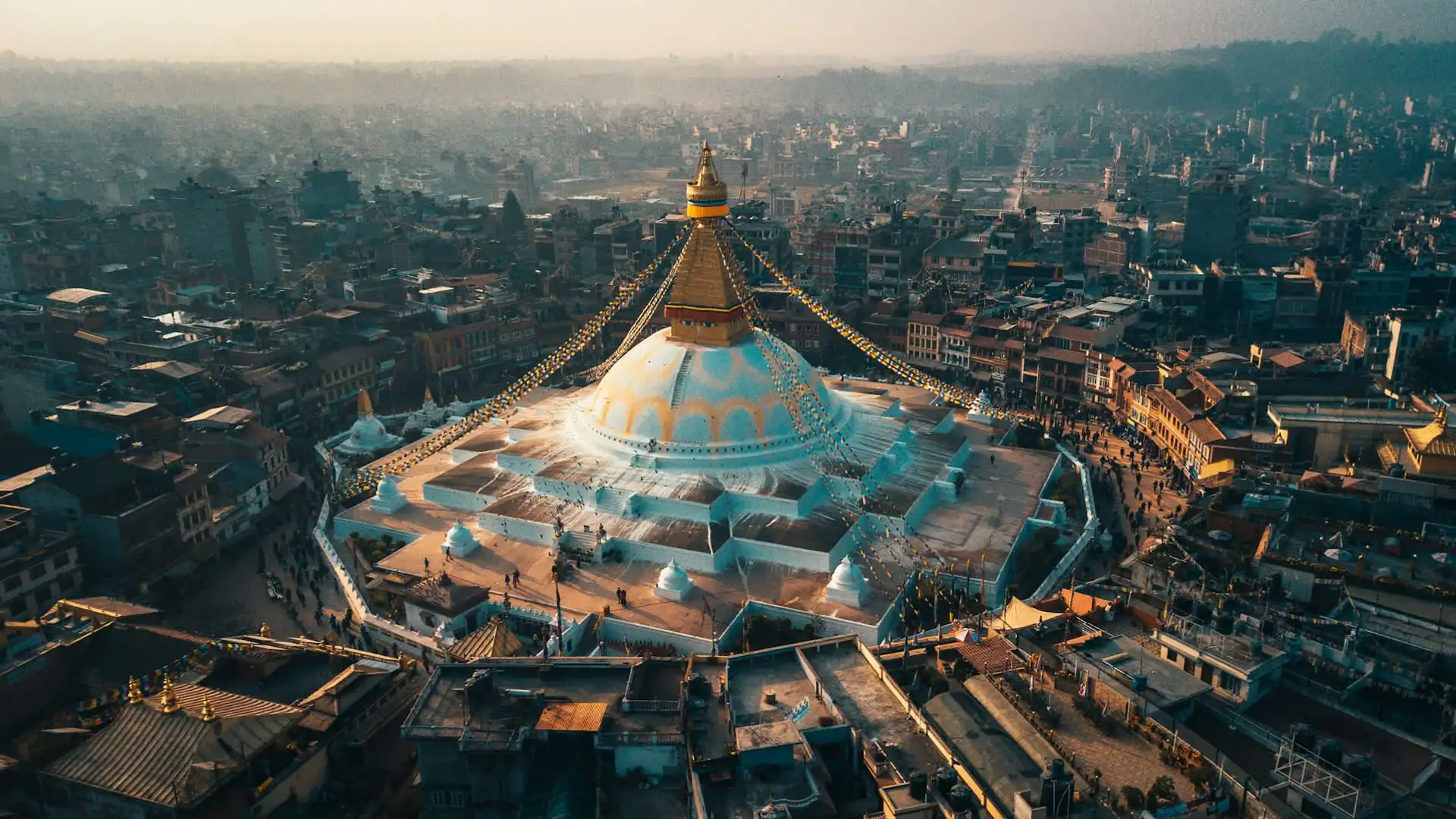
Boudhanath Stupa | Buddhist stupa | Largest stupa in Nepal; major Tibetan Buddhist community |
Pashupatinath Temple | Hindu temple complex | Nepal's most sacred Hindu site; riverside cremation ghats |
Changu Narayan Temple | Hindu temple complex | One of the valley's earliest inscriptions, dating to the 5th century AD |
Kathmandu Durbar Square, also called Hanuman Dhoka or Basantapur Durbar Square, served as the royal palace complex for both the Malla and later Shah dynasties, and its buildings and courtyards date largely from the 12th to 18th centuries.
It's also home to the Kumari Ghar, the residence of Nepal's living goddess tradition, where a young girl selected through a rigorous traditional process is venerated as the living incarnation of the goddess Taleju — a genuinely unique cultural institution found nowhere else in the world in quite this form.Patan Durbar Square, in the city of Lalitpur just across the Bagmati River from central Kathmandu, is often called the "City of Arts" for its concentration of exceptional Newari metalwork and stone sculpture, and offers a noticeably calmer, more relaxed visiting experience than the busier central Kathmandu square, with several boutique guesthouses and quiet courtyards nearby.
Bhaktapur Durbar Square, roughly 13 kilometers east of central Kathmandu, is widely regarded as the best-preserved of the three former royal cities. Bhaktapur — nicknamed "the City of Devotees" — largely bans vehicle traffic in its historic core, which has helped preserve its medieval character more thoroughly than anywhere else in the valley, right down to the terracotta-tiled rooftops and pottery squares still in daily use.
Swayambhunath, informally known to visitors as the "Monkey Temple" for its resident population of monkeys, sits atop a hill on the western edge of Kathmandu and contains the oldest Buddhist monument in the entire valley. The climb to the top is rewarded with sweeping views across the city alongside the stupa itself.
Boudhanath, on the eastern side of Kathmandu, is home to the largest stupa in Nepal and functions as the spiritual center of one of the largest Tibetan Buddhist communities outside Tibet itself, with the surrounding streets lined with monasteries, prayer-wheel-lined walkways, and thangka painting workshops.
Pashupatinath, on the banks of the Bagmati River, is Nepal's most important Hindu temple complex, dedicated to Shiva, and remains an active pilgrimage and cremation site — visitors are welcome to observe cremation ceremonies along the riverbank from a respectful distance, offering a genuinely rare, unfiltered look at how Hindu death rites are practiced.
Changu Narayan, the least-visited but arguably most historically significant of the seven sites, sits on a hilltop northeast of Bhaktapur and combines a working Hindu temple complex with a traditional Newari village, home to an inscription dating to the 5th century AD — among the oldest in the entire valley.
Realistically, seeing all seven sites properly — rather than rushing through for a quick photo at each — takes two to three full days, and most agencies, including Adventure Life Nepal, build Kathmandu Valley sightseeing into the opening days of a Nepal itinerary specifically for this reason, both to allow proper time at each site and to give new arrivals a day or two to acclimatize to the 1,400-meter elevation of Kathmandu itself before heading to higher altitudes elsewhere in the country.
Pokhara: Lakes, Mountains, and Adventure
Pokhara, roughly 200 kilometers west of Kathmandu, is Nepal's second-most-visited city and offers a dramatically different pace and setting — a lakeside town framed by some of the most accessible close-range Himalayan views in the country, and the standard gateway for anyone heading into the Annapurna region, whether for a full multi-day trek or simply a day of sightseeing.
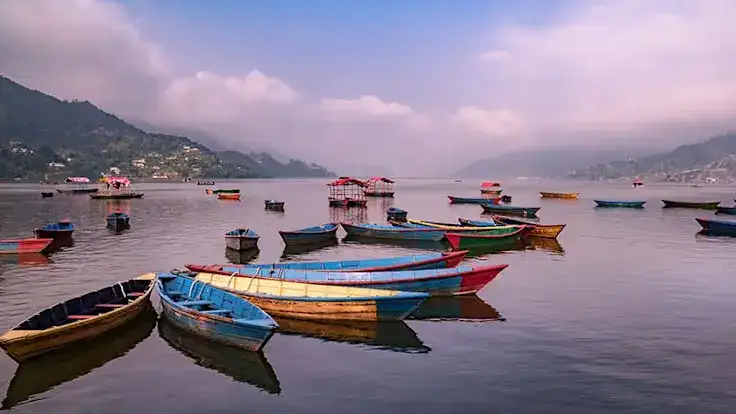
Phewa Lake, Pokhara's centerpiece, sits at an elevation of 742 meters and is the second-largest lake in Nepal, covering roughly 5.7 square kilometers. On clear days, the lake's still surface produces a striking mirror reflection of Machhapuchhre (the "Fishtail" mountain, considered sacred and, notably, never officially summited out of respect for local beliefs, despite one disputed 1957 British attempt that stopped short of the true peak), along with the wider Annapurna range beyond it.
The small Tal Barahi Temple, built on an island near the lake's center, is reachable by a short boat ride and is one of Pokhara's most photographed spots.Sarangkot, a hilltop viewpoint at roughly 1,600 meters on the outskirts of Pokhara, is the city's signature sunrise destination, offering a sweeping Himalayan panorama that includes Dhaulagiri (8,167 m) to the west, Machhapuchhre (6,997 m), and Annapurna II (7,937 m) — a remarkable amount of 7,000-and-8,000-meter peak visibility for a site reachable by a short drive or hike from town. Sarangkot is also Pokhara's main paragliding launch site, and tandem paragliding flights over the lake and valley are one of the city's most popular adventure activities.
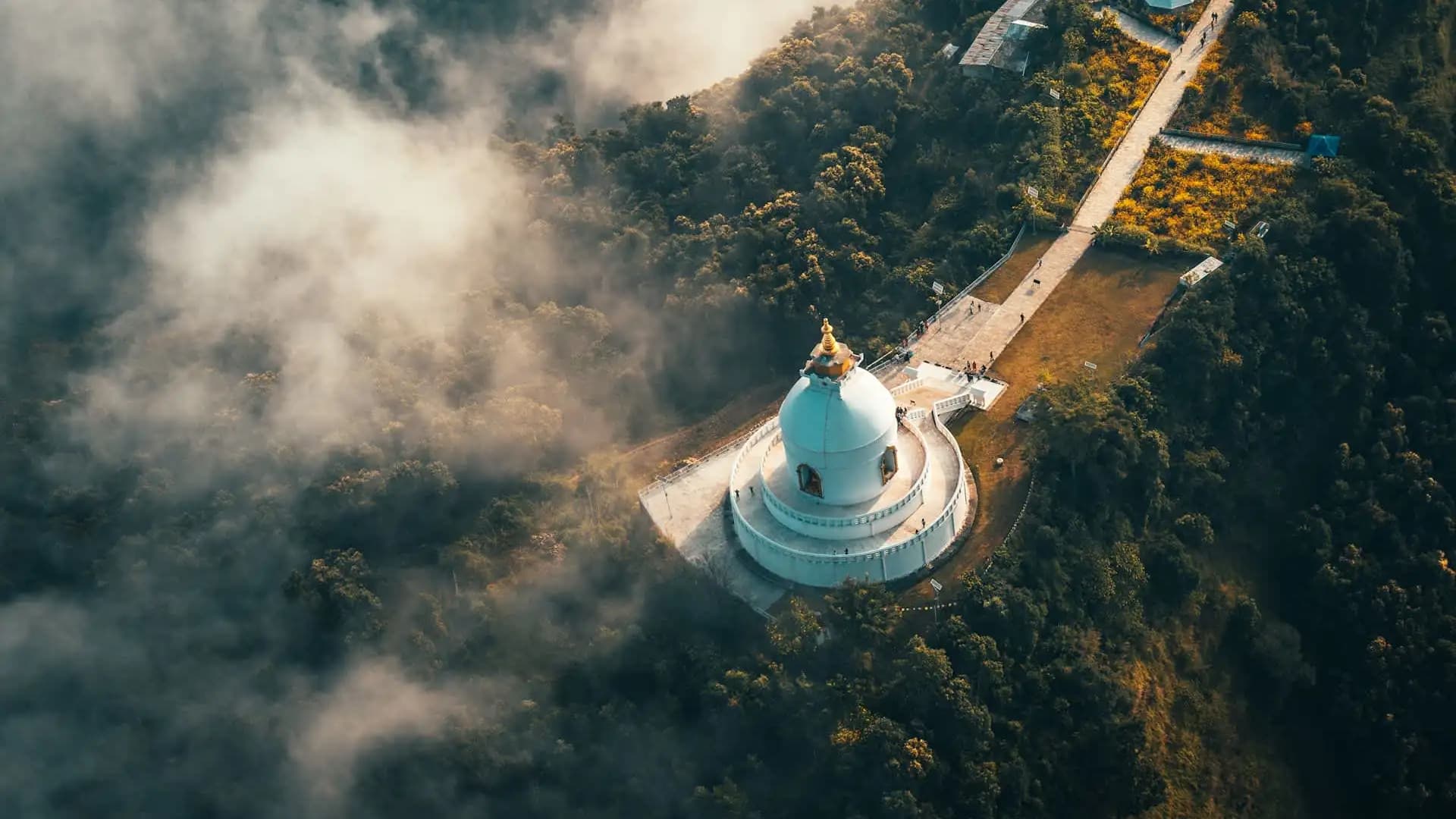
The World Peace Pagoda, a large white stupa built in the early 1970s as part of a global Buddhist peace initiative, sits on a forested hill overlooking Phewa Lake and is reachable either by a hiking trail or a short boat ride across the lake followed by a climb — a popular half-day combination for visitors who want both a lake outing and a viewpoint in one trip.
Davis Falls (Patale Chhango) and the adjacent Gupteshwor Mahadev Cave form Pokhara's other classic half-day sightseeing pairing — a dramatic waterfall that disappears underground into a channel, connected to a nearby limestone cave containing a Shiva shrine, both easily combined into a single short excursion from Lakeside.
Most visitors spend two to three days in Pokhara, whether purely for sightseeing or as a staging point before or after an Annapurna trek — the city functions as both a genuine destination in its own right and the standard logistics hub for the entire Annapurna region.
Chitwan National Park: Jungle Safari
Chitwan National Park, in Nepal's southern lowlands (the Terai region), was established in 1973 as Nepal's first national park and was inscribed as a UNESCO World Heritage Site in 1984. It protects roughly 932 square kilometers of subtropical jungle and grassland, and is internationally recognized as one of the most important remaining habitats for the greater one-horned rhinoceros and the Bengal tiger, alongside gharial crocodiles, wild elephants, and over 500 recorded bird species.
A typical Chitwan visit runs two days and includes a mix of activities: jeep safaris through the park's core grassland and forest areas in search of rhinos and, with considerably more luck, tigers; canoe rides along the Rapti River, which double as a strong opportunity to spot gharial crocodiles and a wide range of waterbirds; guided nature walks led by trained park naturalists; and, at several lodges bordering the park, cultural evenings featuring traditional dance performances by the local Tharu community, the indigenous ethnic group of the Chitwan region with a distinct culture, cuisine, and architectural style shaped by centuries of adaptation to life in this malaria-prone lowland jungle before modern medicine made permanent settlement here more viable for outsiders.
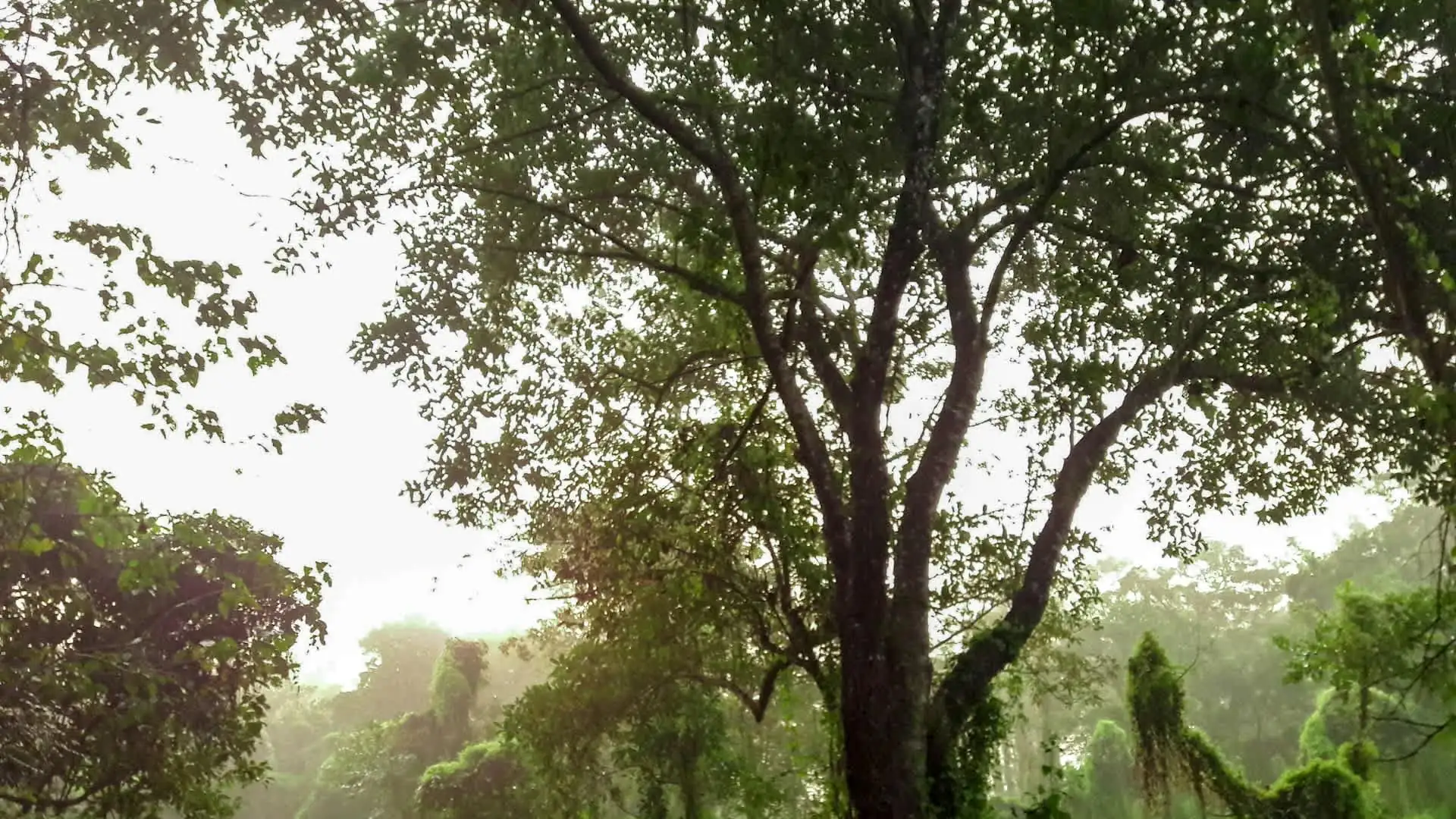
Chitwan sits at a dramatically lower elevation than the rest of a typical Nepal itinerary — roughly 150 meters above sea level — meaning it also offers a genuinely different climate experience: hot, humid, and tropical, in sharp contrast to the temperate Kathmandu Valley and the cold high-altitude regions most visitors associate with Nepal.
Lumbini: The Birthplace of the Buddha
Lumbini, in Nepal's southern plains near the Indian border, is one of Buddhism's four most important pilgrimage sites worldwide, marking the birthplace of Siddhartha Gautama — the Buddha — in approximately the 6th century BCE. It was inscribed as a UNESCO World Heritage Site in 1997, recognized specifically for its direct archaeological association with the Buddha's birth.
The Maya Devi Temple, named for the Buddha's mother, sits at the heart of the Lumbini Sacred Garden complex and encloses the precise archaeologically marked spot traditionally identified as the birth site itself, along with the ancient foundations of earlier shrines built on the same location across many centuries. Just outside the temple stands the Ashoka Pillar, erected around 249 BCE by the Mauryan emperor Ashoka to commemorate his own pilgrimage to the site, and bearing one of the earliest known inscriptions confirming Lumbini as the Buddha's birthplace — a genuinely significant piece of historical and archaeological evidence, not just a religious tradition.
Beyond the core Sacred Garden, Lumbini's surrounding Monastic Zone hosts dozens of Buddhist monasteries built by different countries and Buddhist traditions from around the world — Thai, Japanese, Chinese, Myanmar, Sri Lankan, Vietnamese, Cambodian, and several others — each reflecting its home country's distinct architectural style, making a walk through the Monastic Zone as much an architectural tour of global Buddhism as a single pilgrimage site.
Most itineraries budget one to two days for Lumbini, and it's most commonly combined with Chitwan or a Pokhara-to-Lumbini overland route, since it sits somewhat apart from the standard Kathmandu-Pokhara-Chitwan triangle most first-time visitors follow.
Bandipur: The Overlooked Hill Town
Bandipur, a small hilltop town roughly midway between Kathmandu and Pokhara, is one of Nepal's best-preserved traditional Newari settlements and remains considerably less visited than the Kathmandu Valley's Durbar Squares, despite offering a genuinely comparable architectural and cultural experience in a quieter, car-free setting.
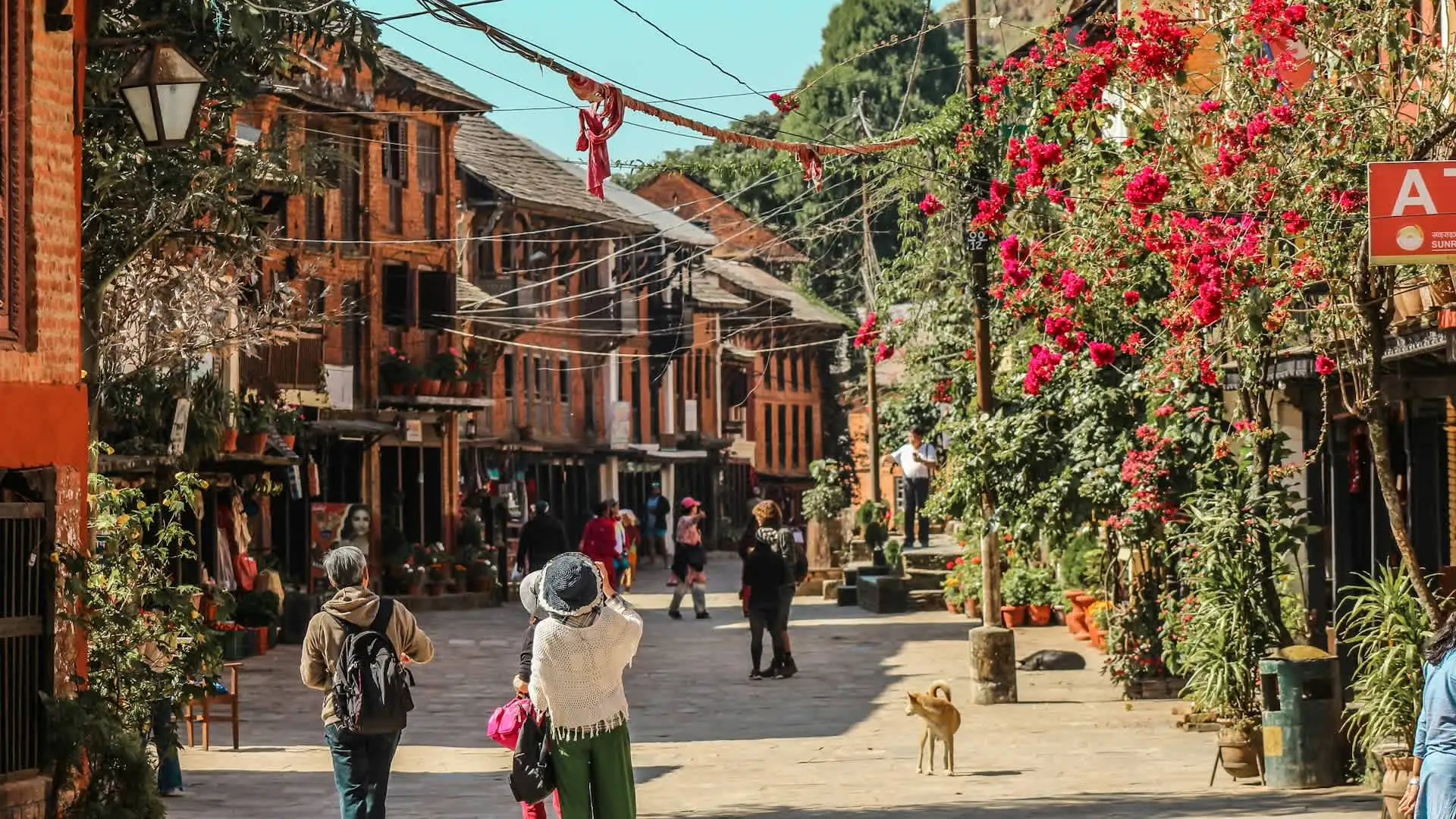
Perched on a hill crest with views across central Nepal and the Marsyangdi valley, Bandipur's cobblestone main street, preserved 18th- and 19th-century Newari townhouses, and relaxed pace make it an increasingly popular stop for travelers looking to break up the Kathmandu-to-Pokhara drive with an overnight stay rather than treating it as a pure drive-through.
Nagarkot and Nearby Viewpoints
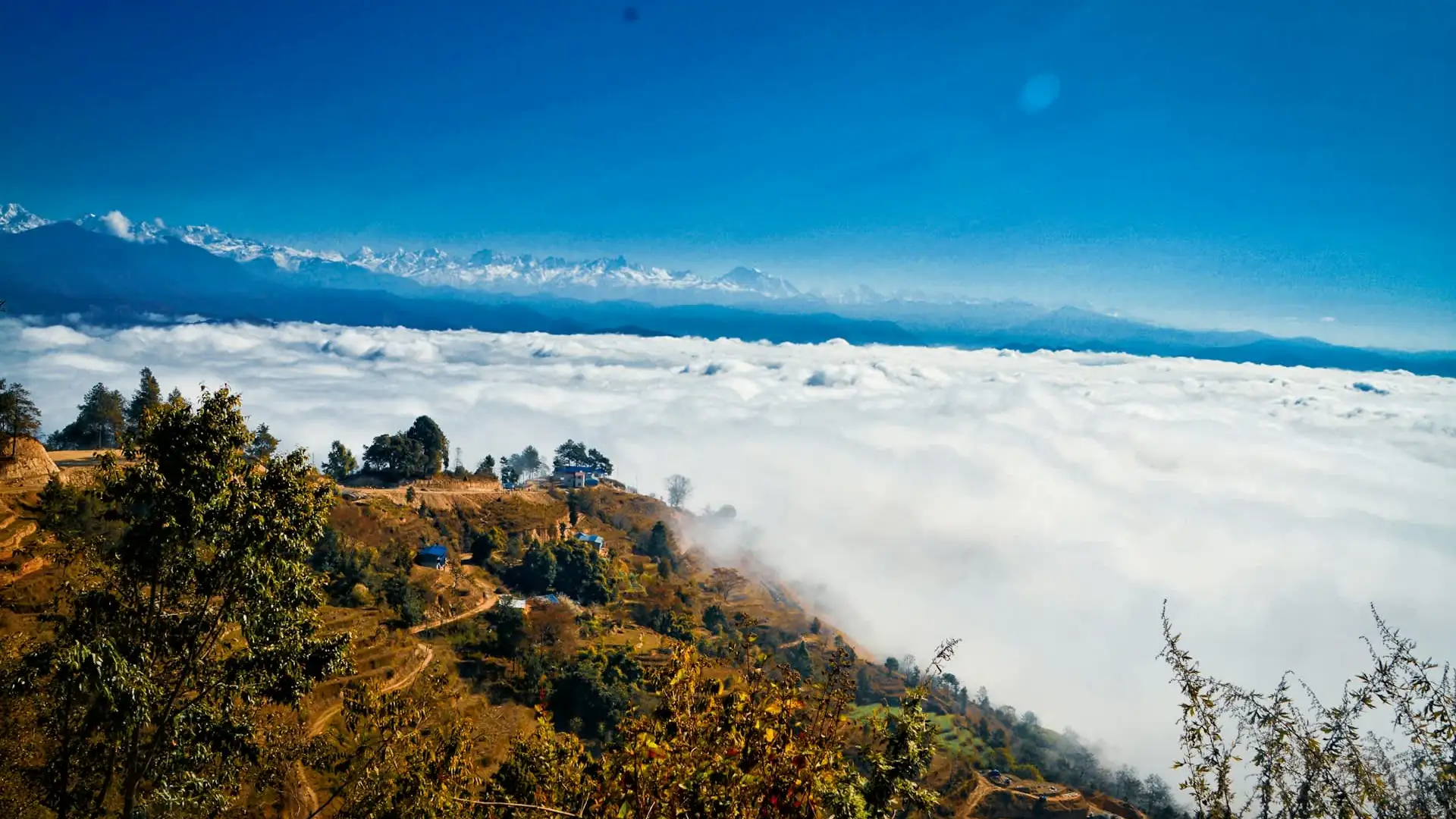
For travelers who want a Himalayan mountain panorama without committing to a trek, Nagarkot — a hill station roughly 32 kilometers east of Kathmandu, at approximately 2,175 meters elevation — remains the most popular nearby option, particularly for sunrise viewing. On clear days, especially in autumn and winter, Nagarkot offers wide views across a significant stretch of the Himalayan range.
Visibility is weather-dependent and not guaranteed on any given day, so travelers seeking a reliable mountain view rather than a chance at one are often better served by a short scenic mountain flight departing directly from Kathmandu, which flies above the haze layer that frequently limits ground-level visibility from valley viewpoints.
Nearby viewpoint | Distance from Kathmandu | Elevation | Best for |
|---|---|---|---|
Nagarkot | ~32 km | 2,175 m | Sunrise Himalayan panorama |
Chandragiri Hills | ~16 km | 2,551 m | Fast cable-car access, wide views |
Dhulikhel | ~30 km | ~1,550 m | Quieter alternative, cultural interest |
Suggested Sightseeing Itineraries
Short trip (5–6 days): Kathmandu Valley (2–3 days) → Pokhara (2–3 days), with an optional Nagarkot sunrise excursion added on either end.
Standard trip (8–10 days): Kathmandu Valley (2–3 days) → Chitwan National Park (2 days) → Pokhara (2–3 days) → optional Nagarkot or Bandipur stop.
Extended trip (12–14 days): Kathmandu Valley (2–3 days) → Chitwan (2 days) → Lumbini (1–2 days) → Pokhara (2–3 days) → Bandipur or Nagarkot (1 day), with additional flexibility to add a short trek (such as Poon Hill or a portion of the Annapurna foothills) for travelers wanting a taste of trekking without committing to a full multi-day route.
Itinerary length | Regions covered | Pace |
|---|---|---|
5–6 days | Kathmandu Valley, Pokhara | Efficient, hits the highlights |
8–10 days | + Chitwan National Park | Balanced culture, wildlife, and mountains |
12–14 days | + Lumbini, Bandipur/Nagarkot | Comprehensive, unhurried |
Best Time of Year for Sightseeing
Unlike high-altitude trekking, most of Nepal's core sightseeing destinations — the Kathmandu Valley, Pokhara's lakeside, Chitwan, and Lumbini — are accessible and enjoyable across a wider stretch of the year, though conditions still vary meaningfully by season.
Season | Months | Sightseeing conditions |
|---|---|---|
Autumn | Late September–November | Clearest skies, best mountain visibility, most popular season overall |
Winter | December–February | Cold mornings but often very clear; fewer crowds at major sites |
Spring | March–May | Warm, generally good conditions; can be hazier later in the season |
Monsoon | June–September | Frequent rain, lush green landscapes, fewer crowds, reduced mountain visibility |
Autumn is consistently the most popular season for sightseeing-focused visits, largely for the same reason it's the peak trekking season: clear post-monsoon skies dramatically improve visibility at Sarangkot, Nagarkot, and other mountain viewpoints, and comfortable daytime temperatures make walking tours of Kathmandu's Durbar Squares and Chitwan's jungle trails considerably more pleasant than during the hot, humid pre-monsoon months.
Practical Tips for Sightseeing in Nepal
Entry fees apply at most major sites. Kathmandu, Patan, and Bhaktapur Durbar Squares, along with Swayambhunath, Boudhanath, Pashupatinath, and Changu Narayan, each charge a separate entrance fee for foreign visitors, typically payable in cash (Nepali rupees or, at some sites, major foreign currency) at the site entrance.
Dress modestly at religious sites, particularly Pashupatinath and the various Durbar Square temples, and be aware that non-Hindus are not permitted to enter the innermost sanctum of Pashupatinath's main temple, though the surrounding riverside complex and cremation ghats remain fully open to all visitors.
A licensed local guide adds real value at heritage sites, since much of what makes the Durbar Squares, Boudhanath, and Lumbini genuinely meaningful — the specific symbolism of individual carvings, the history behind particular shrines, the significance of ongoing rituals — isn't obvious from simply walking through, and a knowledgeable guide turns a photo-stop into a genuinely informative visit.
Combine sightseeing with acclimatization if a trek follows. For travelers planning to trek after their sightseeing days — whether Everest Base Camp, the Annapurna Circuit, or Annapurna Base Camp — the days spent sightseeing in Kathmandu at 1,400 meters function as useful, low-effort acclimatization time before heading to considerably higher altitudes on the trail.
Frequently Asked Questions about Nepal Sightseeing Places
How many days do I need for Nepal sightseeing without trekking?
A well-paced trip covering the Kathmandu Valley, Pokhara, and Chitwan realistically takes 8 to 10 days; a shorter 5-to-6-day trip covering just Kathmandu and Pokhara is workable but faster-paced.What are the must-see UNESCO sites in Kathmandu?
All seven monument zones — Kathmandu, Patan, and Bhaktapur Durbar Squares, Swayambhunath, Boudhanath, Pashupatinath, and Changu Narayan — are worth visiting, though Bhaktapur and Boudhanath are frequently singled out as the most atmospheric and best-preserved.Is Chitwan worth visiting if I'm not particularly interested in wildlife?
Yes — beyond the safari itself, Chitwan offers a genuinely different climate and landscape from the rest of a typical Nepal itinerary, along with exposure to Tharu culture that most Kathmandu- or Pokhara-focused trips miss entirely.Can I see Lumbini as a day trip from Pokhara?
It's possible but rushed given the drive distance; most itineraries budget at least one overnight in Lumbini to properly see the Sacred Garden and Monastic Zone without feeling pressed for time.Do I need a guide for Kathmandu Valley sightseeing?
Not strictly required, but strongly recommended — the historical and religious context behind the Durbar Squares and major temples adds considerably to the experience and isn't always apparent without local knowledge.Is Pokhara worth visiting if I'm not trekking?
Absolutely — Phewa Lake, Sarangkot's sunrise views, and adventure activities like paragliding stand entirely on their own, independent of any trekking plans.What's the best season for sightseeing versus trekking?
Autumn and winter both suit sightseeing well due to clearer skies; sightseeing-focused travel is considerably more season-flexible than trekking, since major heritage sites, Chitwan, and Lumbini remain accessible and enjoyable even during the monsoon months, unlike high-altitude trekking routes.Are entrance fees expensive at Nepal's major sites?
Fees vary by site and are generally modest for the value offered, payable directly at each location; a full day covering multiple Durbar Squares and religious sites typically involves several separate ticket purchases rather than one combined pass.What's the entrance fee for foreign visitors at Kathmandu Durbar Square?
Kathmandu Durbar Square charges a separate foreign visitor entrance fee, payable in cash at the ticket counter near the square; Patan and Bhaktapur Durbar Squares each have their own separate fees rather than a shared combined ticket.Can I visit Pashupatinath if I'm not Hindu?
Yes, but non-Hindus are not permitted inside the innermost sanctum of the main temple. The surrounding riverside complex, courtyards, and cremation ghats remain fully open to all visitors, and much of the site's cultural significance is visible from these outer areas.Is Nagarkot worth an overnight stay, or is a day trip enough?
An overnight stay is generally recommended if seeing the sunrise matters to you, since the best mountain visibility is typically in the very first hour after dawn, before daytime haze builds up — a day trip from Kathmandu can work but usually means missing that window.What's the difference between Sarangkot and Nagarkot for mountain views?
Sarangkot, near Pokhara, offers closer views of the Annapurna range and Machhapuchhre; Nagarkot, near Kathmandu, offers a wider panorama that can include Everest to the northeast alongside other ranges, though visibility of Everest specifically is far less reliable than the Annapurna views from Sarangkot.Is it safe to travel independently in Nepal for sightseeing, or should I book a guided tour?
Independent sightseeing in Kathmandu, Pokhara, and other major towns is generally straightforward and safe for most travelers. A guided tour adds convenience for logistics, permits (where relevant), and cultural context, but isn't a strict safety requirement for standard sightseeing destinations, unlike restricted trekking areas.What should I wear when visiting temples and religious sites in Nepal?
Modest clothing covering shoulders and knees is expected at most temples and stupas. Some sites also ask visitors to remove shoes and leather items before entering certain areas, particularly at Hindu temples.Can Nepal sightseeing be combined with a short trek, like Poon Hill?
Yes — shorter treks such as Poon Hill (a 3-to-5-day option departing from Pokhara) are commonly added onto a sightseeing-focused itinerary for travelers who want a taste of trekking and closer mountain views without committing to a longer route like the Annapurna Circuit or Everest Base Camp.How do I get between Kathmandu, Pokhara, Chitwan, and Lumbini?
Tourist buses, private jeep transfers, and short domestic flights all connect these destinations. Flights save significant time, particularly between Kathmandu and Pokhara, while road travel offers scenic value at the cost of longer travel days.Is Bandipur worth adding to an itinerary if I already have limited time?
If your route already runs overland between Kathmandu and Pokhara, Bandipur is an easy and worthwhile stop to break up the drive, offering a well-preserved Newari hill town experience with far fewer crowds than the Kathmandu Valley's Durbar Squares.What's the best way to see all seven Kathmandu Valley UNESCO sites without rushing?
Two to three full days is realistic for a proper visit to all seven monument zones, allowing time to actually take in the architecture and rituals at each site rather than treating them as quick photo stops — trying to cover all seven in a single day is possible but leaves little room to absorb any of them.
Conclusion on Nepal Sightseeing Places
Nepal's sightseeing highlights cover a remarkable amount of ground for such a compact country — living royal cities and a genuine goddess tradition in the Kathmandu Valley, one of the most sacred pilgrimage sites in world religion at Lumbini, tiger and rhino habitat in Chitwan's subtropical lowlands, and lakeside mountain views in Pokhara that rival anything reachable without a multi-day trek.
None of it requires technical trekking experience or high-altitude acclimatization, which makes Nepal a genuinely accessible destination for travelers who want the country's culture, history, and mountain scenery without committing to weeks on a trail.
Whether you have five days or two weeks, the combination of the Kathmandu Valley, Pokhara, and one or two of Chitwan, Lumbini, and Bandipur gives a complete, well-rounded picture of what makes Nepal one of the most rewarding countries in Asia to actually walk around in — not just look at from a trekking summit.