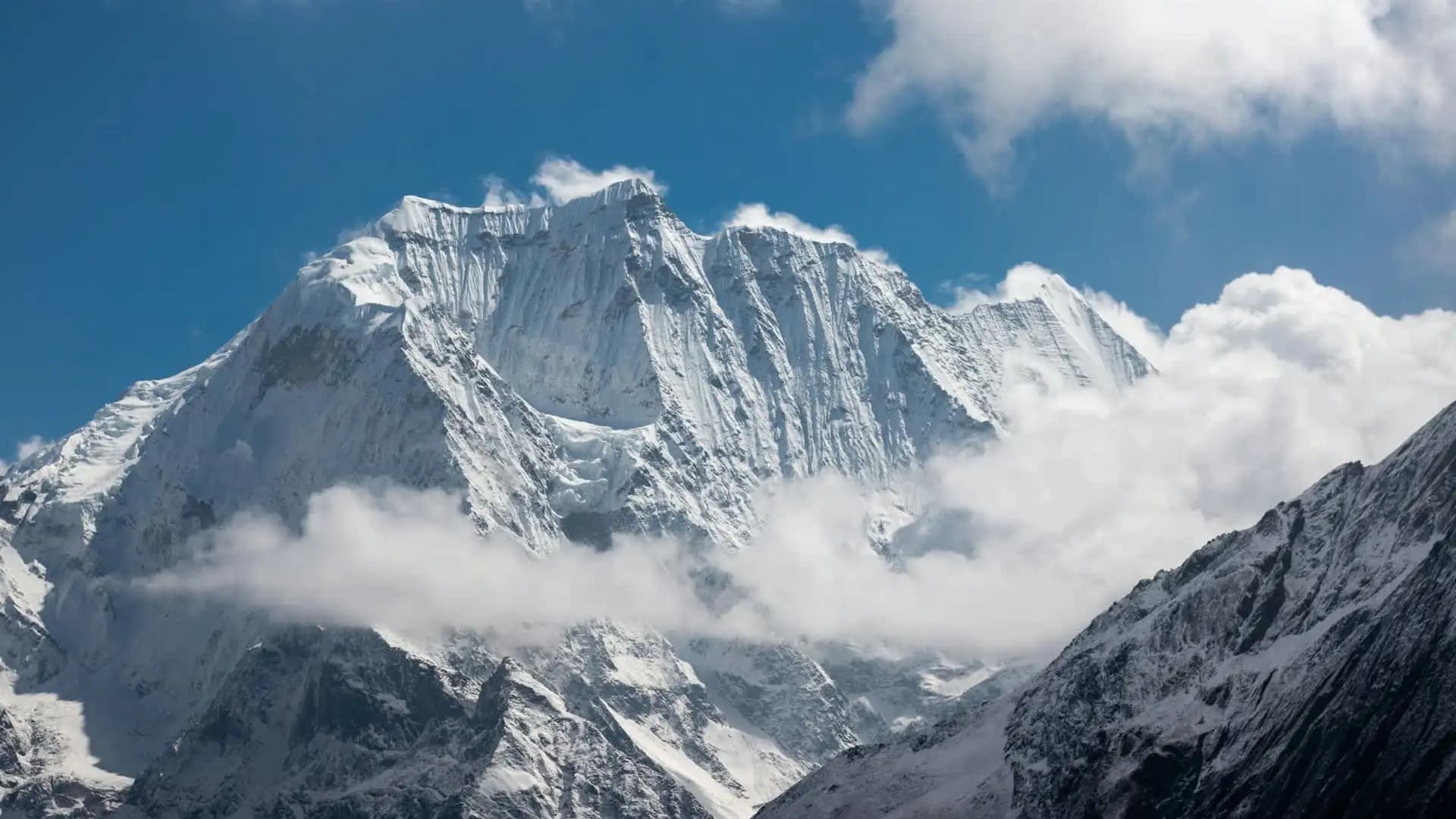
Manaslu Circuit Trek Itinerary 2026: 10, 12, 14 & 18-Day Options
Introduction to Manaslu Circuit Trek Itinerary
The Manaslu Circuit Trek can be planned across several itinerary lengths depending on available time, fitness level, and how much acclimatization buffer and side-trip exploration you want built in — with 10-day compressed itineraries, 12-to-14-day standard itineraries, and 16-to-18-day extended itineraries (often including the Tsum Valley extension) all commonly offered by registered operators.
This guide breaks down exactly what each itinerary length looks like day by day, the trade-offs between them, and which option genuinely suits different types of trekkers.
Manaslu Circuit Itinerary Options at a Glance
Itinerary length | Trail days | Total trip days (incl. Kathmandu) | Best suited for |
|---|---|---|---|
10-day compressed | 9–10 days | 11–12 days | Very fit trekkers with limited time, some prior high-altitude experience |
12-day standard | 11–12 days | 13–14 days | The most commonly booked, balanced option |
14-day standard-plus | 13–14 days | 15–16 days | Trekkers wanting extra acclimatization buffer and side-trip flexibility |
16–18 day extended | 15–18 days | 17–20 days | Trekkers adding Tsum Valley or a fully relaxed pace with maximum buffer |
Why Manaslu Circuit Itineraries Vary in Length
Unlike some treks with a single dominant standard itinerary, Manaslu Circuit packages genuinely vary in length across operators for several real reasons:
Starting point choice — beginning at Soti Khola versus Machha Khola changes the total day count by roughly one day.
Acclimatization philosophy — some operators build in a single Samagaon rest day (the bare minimum considered safe), while others add additional buffer days given the trek's genuine remoteness and the seriousness of the Larkya La crossing at 5,106 meters.
Side trip inclusion — Manaslu Base Camp, Birendra Lake, Pungyen Monastery, and the separate Tsum Valley extension can each be included or excluded, meaningfully changing total trip length.
Ending point and post-pass pacing — some itineraries move quickly from Bhimtang through Dharapani to Besisahar, while others take a more leisurely pace through Tilje and the lower Marsyangdi valley.
The Core Route Structure (Applies to Every Itinerary Length)
Regardless of exact day count, every Manaslu Circuit itinerary follows the same fundamental geographic structure — what changes between options is how many overnight stops are used to cover this ground and whether optional extensions are included.
Stage | Elevation | Appears in every itinerary? |
|---|---|---|
Kathmandu to Machha Khola/Soti Khola (drive) | 869–970 m | Yes |
Machha Khola/Soti Khola to Jagat | 1,340–1,410 m | Yes |
Jagat to Namrung (via Deng) | 2,630 m | Yes |
Namrung to Samagaon (via Lho) | 3,520–3,530 m | Yes |
Samagaon acclimatization day | 3,520–3,530 m | Yes (mandatory) |
Samagaon to Dharamsala (via Samdo) | 4,460 m | Yes |
Dharamsala over Larkya La to Bhimtang | 5,106 m (pass), 3,590–3,720 m (Bhimtang) | Yes |
Bhimtang to Dharapani | 1,860–1,963 m | Yes |
Dharapani/Besisahar to Kathmandu (drive) | 1,400 m | Yes |
The 10-Day Compressed Itinerary
A genuinely compressed Manaslu Circuit itinerary combines several standard stages into longer individual days, and is generally recommended only for very fit trekkers with prior high-altitude experience, given the reduced buffer for weather delays or acclimatization issues.
Sample 10-day itinerary
Day | Route | Elevation (end of day) | Distance |
|---|---|---|---|
1 | Kathmandu to Machha Khola (drive) | 869–970 m | ~157–165 km (drive) |
2 | Machha Khola to Jagat | 1,340–1,410 m | ~17–22 km |
3 | Jagat to Deng | 1,804–1,860 m | ~19–20 km |
4 | Deng to Namrung | 2,630 m | ~17–19 km |
5 | Namrung to Samagaon (via Lho and Shyala) | 3,520–3,530 m | ~17–19 km |
6 | Samagaon to Samdo | 3,860–3,875 m | ~8–9 km |
7 | Samdo to Dharamsala (Larkya Phedi) | 4,460 m | ~6–13 km |
8 | Dharamsala over Larkya La to Bhimtang | 5,106 m (pass), 3,590–3,720 m | ~16–24 km |
9 | Bhimtang to Dharapani | 1,860–1,963 m | ~18–19 km |
10 | Drive Dharapani/Besisahar to Kathmandu | 1,400 m | ~175–220 km (drive) |
What makes this version demanding: This compressed structure removes the dedicated Samagaon acclimatization day entirely — a genuine trade-off that significantly increases altitude sickness risk given the substantial remaining elevation gain from Samagaon to the pass. Some 10-day itineraries instead compress lower-valley stages to free up a rest day at Samagaon while still finishing in 10 days; trekkers should scrutinize the exact day-by-day plan carefully, since not all "10-day" itineraries are structured the same way, and the presence or absence of a genuine acclimatization day matters far more than the headline day count.
Who this suits: Trekkers with limited vacation time, strong prior high-altitude trekking experience, and confidence in their acclimatization ability. This is not the recommended default for first-time high-altitude trekkers.
The 12-Day Standard Itinerary
Twelve days (on the trail, often marketed with a couple of additional buffer/arrival days in Kathmandu bringing the total closer to 13–14) is among the most frequently booked itinerary lengths, and represents a genuine balance between time efficiency and safe acclimatization pacing.
Sample 12-day itinerary
Day | Route | Elevation (end of day) |
|---|---|---|
1 | Kathmandu to Machha Khola (drive) | 869–970 m |
2 | Machha Khola to Jagat | 1,340–1,410 m |
3 | Jagat to Deng | 1,804–1,860 m |
4 | Deng to Namrung | 2,630 m |
5 | Namrung to Samagaon (via Lho and Shyala) | 3,520–3,530 m |
6 | Acclimatization day at Samagaon (optional Manaslu Base Camp or Birendra Lake hike) | 3,520–3,530 m |
7 | Samagaon to Samdo | 3,860–3,875 m |
8 | Samdo to Dharamsala (Larkya Phedi) | 4,460 m |
9 | Dharamsala over Larkya La to Bhimtang | 5,106 m (pass), 3,590–3,720 m |
10 | Bhimtang to Tilje/Dharapani | 1,860–1,963 m |
11 | Drive Dharapani/Besisahar to Kathmandu | 1,400 m |
12 | Departure/buffer day | — |
Why this length works well for most trekkers: The mandatory acclimatization day at Samagaon is properly built in, giving the body genuine time to adjust before continuing to the higher, more demanding stages toward Larkya La. This is widely considered the minimum reasonable itinerary length for trekkers without extensive prior high-altitude experience.
Who this suits: The majority of reasonably fit trekkers with at least some general hiking background, seeking a genuine high-altitude Himalayan experience within a realistic two-week vacation window.
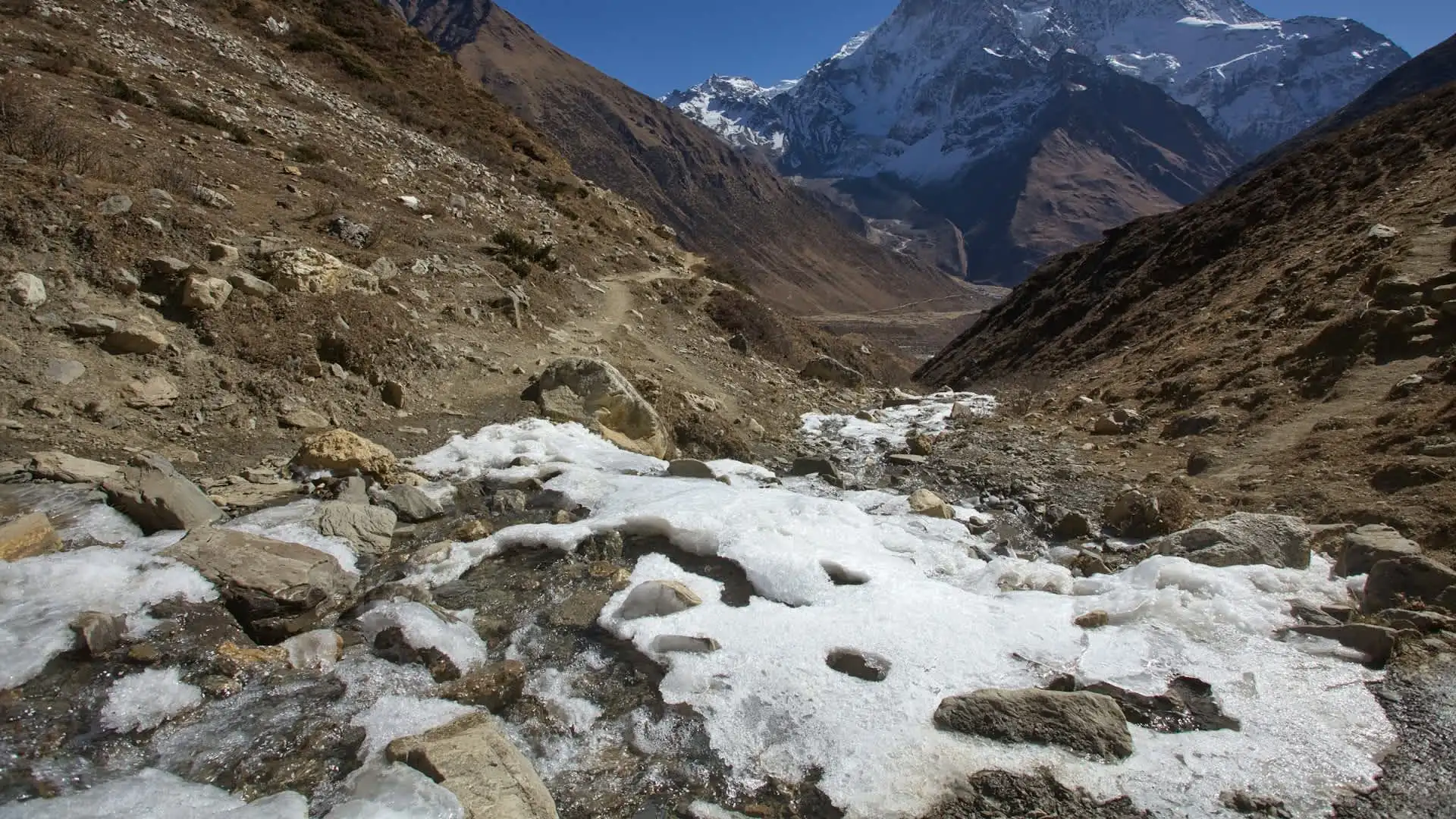
The 14-Day Standard-Plus Itinerary
A 13-to-14-day itinerary builds in additional buffer beyond the bare minimum, typically through an extra rest day, a more gradual pace through the lower valley, or optional side-trip time at Samagaon.
Sample 14-day itinerary
Day | Route | Elevation (end of day) |
|---|---|---|
1 | Kathmandu to Soti Khola (drive) | ~700–870 m |
2 | Soti Khola to Machha Khola | 869–970 m |
3 | Machha Khola to Jagat | 1,340–1,410 m |
4 | Jagat to Deng | 1,804–1,860 m |
5 | Deng to Namrung | 2,630 m |
6 | Namrung to Samagaon (via Lho and Shyala) | 3,520–3,530 m |
7 | Acclimatization day at Samagaon (Manaslu Base Camp and/or Birendra Lake, plus Pungyen Monastery) | 3,520–3,530 m |
8 | Samagaon to Samdo | 3,860–3,875 m |
9 | Samdo to Dharamsala (Larkya Phedi) | 4,460 m |
10 | Dharamsala over Larkya La to Bhimtang | 5,106 m (pass), 3,590–3,720 m |
11 | Bhimtang to Tilje | ~1,700–1,900 m |
12 | Tilje to Dharapani, then onward to Besisahar | 1,860–1,963 m |
13 | Drive Besisahar to Kathmandu | 1,400 m |
14 | Departure/buffer day | — |
Why this length is worth considering: Starting from Soti Khola rather than driving directly to Machha Khola adds a genuine extra walking day at lower altitude, providing additional low-altitude conditioning before the trek's more demanding stages. The additional day around Samagaon also allows time for both the Manaslu Base Camp side trip and a visit to Pungyen Monastery, rather than having to choose between them.
Who this suits: Trekkers prioritizing a genuinely comfortable pace, first-timers to high-altitude trekking, and anyone wanting maximum flexibility to enjoy Samagaon's side-trip highlights without rushing.
The 16-to-18 Day Extended Itinerary (With Tsum Valley)
For trekkers with significant time available, extending the standard Manaslu Circuit with the Tsum Valley side trip — a separate restricted area requiring its own additional permit — creates one of the most comprehensive and culturally immersive trekking itineraries available in Nepal.
Sample 18-day itinerary structure
Phase | Days | Route |
|---|---|---|
Approach | 1–3 | Kathmandu to Machha Khola, then to Jagat and Philim |
Tsum Valley extension | 4–9 | Philim into Tsum Valley (Chumling, Chhokangparo, Mu Gompa, Rachen Gompa), then back to Philim |
Main Manaslu Circuit | 10–16 | Philim to Deng, Namrung, Samagaon (with acclimatization day), Samdo, Dharamsala, over Larkya La to Bhimtang, then to Dharapani |
Return | 17–18 | Dharapani/Besisahar to Kathmandu, departure/buffer |
Why this length is worth considering: Tsum Valley is a genuinely distinct restricted area — a historically isolated Buddhist "hidden valley" with its own monasteries, culture, and traditions — that most Manaslu Circuit trekkers never see, since it requires a separate permit and a meaningful time commitment. Combining both into a single extended trip delivers an exceptionally comprehensive Himalayan cultural and mountain experience.
Who this suits: Trekkers with two-and-a-half to three weeks available, a strong interest in remote Buddhist culture beyond the main circuit, and a desire for one of Nepal's most complete and least-crowded trekking experiences.
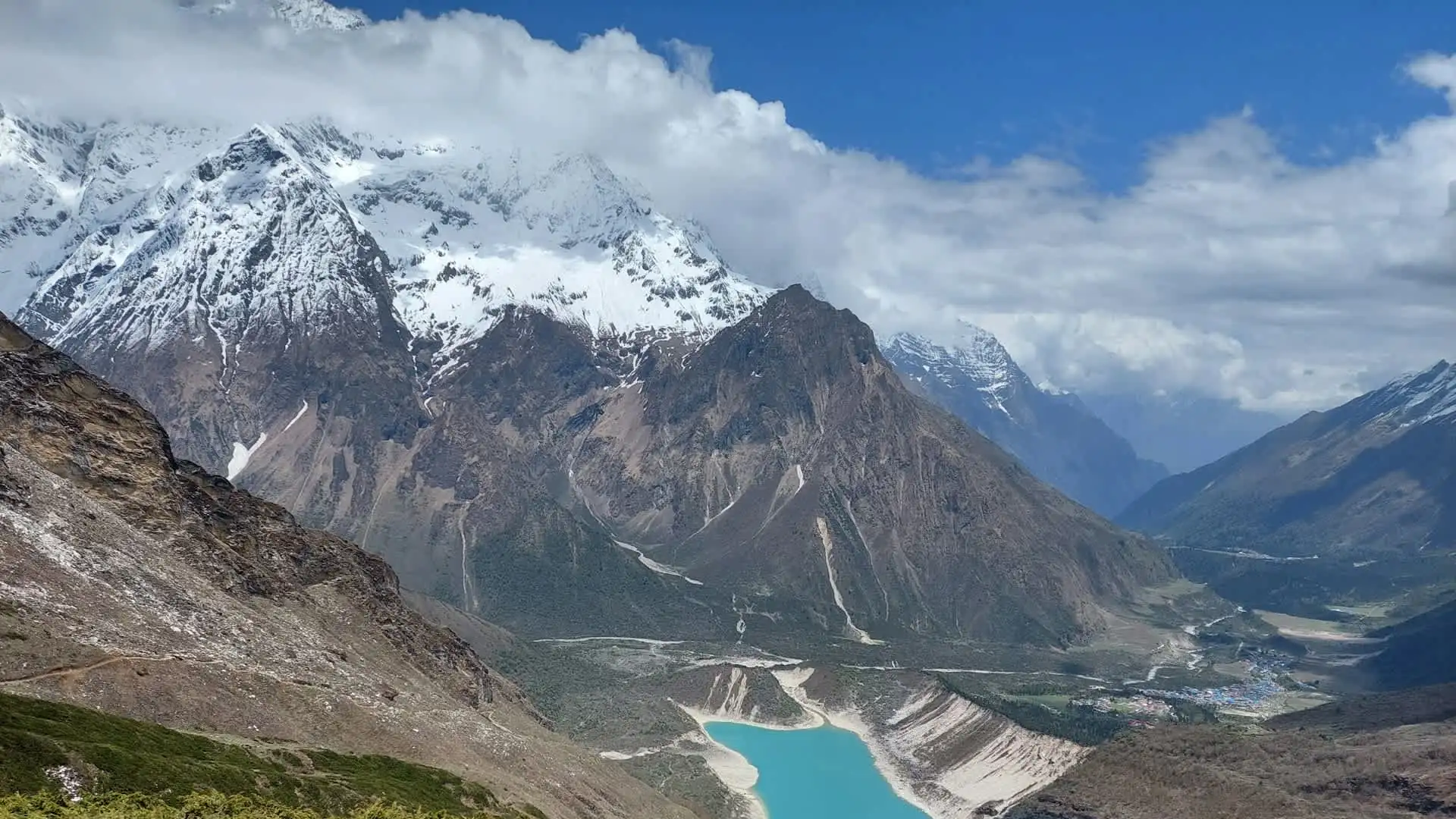
Comparing All Itinerary Options Side by Side
Factor | 10-Day | 12-Day | 14-Day | 16–18 Day (+ Tsum Valley) |
|---|---|---|---|---|
Dedicated Samagaon acclimatization day | Often skipped or compressed | Yes, standard | Yes, with extra flexibility | Yes, plus additional acclimatization built into Tsum Valley section |
Side trips included | Rarely | Optional (Manaslu Base Camp/Birendra Lake) | Usually both side trips possible | Full Tsum Valley extension plus main circuit side trips |
Starting point | Machha Khola (direct drive) | Machha Khola (direct drive) | Often Soti Khola | Machha Khola, with extended Philim detour |
Suitable for first-timers | Not recommended | Yes | Yes, ideal | Yes, for those specifically wanting the extended cultural experience |
Suitable for experienced trekkers | Yes | Yes | Yes (more relaxed) | Yes (maximum depth) |
Total permit cost | Standard | Standard | Standard | Higher — includes separate Tsum Valley RAP |
Relative package cost | Lowest | Moderate | Moderate–higher | Highest |
How Total Trip Length Differs From Trail Days
An important distinction worth clarifying: "how long is the Manaslu Circuit" as a trail-days question (9 to 18 days, depending on option) differs from the total time commitment of the full trip once Kathmandu arrival, permit processing, and any departure buffer days are included.
Component | Typical duration |
|---|---|
Kathmandu arrival, permits, gear check | 1–2 days |
Trek itself | 9–18 days, depending on option chosen |
Recommended departure buffer day in Kathmandu | 1 day |
Realistic total trip time from arrival to departure | 11–20 days |
Given that Nepal's tourist visa options run 15, 30, or 90 days, most trekkers choosing a 12-to-14-day Manaslu itinerary opt for the 30-day visa, comfortably covering the trek itself plus reasonable buffer for Kathmandu logistics on either end.
Factors That Genuinely Change How Long Your Trek Will Take
Beyond simply selecting an itinerary length in advance, several real-world factors can extend actual time on the trail regardless of the plan you started with.
Factors that can extend the trek
Weather delays at Larkya La, particularly snow accumulation that leads a guide to recommend waiting an extra day for safer crossing conditions
Mild altitude symptoms at Samagaon or Samdo warranting an additional rest day
Road conditions on the Kathmandu-to-Machha Khola drive, particularly during monsoon season when landslide risk can delay the journey
Group pace, since guided group treks generally move at the pace of the slowest comfortable member
Factors that can compress the trek
Strong prior acclimatization from a recent previous high-altitude trek
Starting at Machha Khola directly rather than Soti Khola, saving roughly a day
Exceptional fitness level, allowing longer daily distances without excessive fatigue
Factor | Typical effect on total duration |
|---|---|
Weather delay at Larkya La | +1 day |
Additional rest day for mild AMS symptoms | +1 day |
Monsoon-season road delays to the trailhead | +0.5–1 day |
Strong prior acclimatization | Can enable the shorter end of standard ranges |
Duration and Difficulty: Why Length Matters for Safety, Not Just Comfort
Unlike some shorter treks where a compressed itinerary mainly affects comfort, on the Manaslu Circuit the itinerary length has a direct bearing on genuine safety, given the trek's remoteness and the seriousness of the Larkya La crossing.
Itinerary length | Days from Namrung (2,630 m) to Larkya La (5,106 m) | Implication |
|---|---|---|
10-day (no dedicated rest day) | 3–4 days | Compressed acclimatization schedule, higher AMS risk |
12-day (standard, one rest day) | 4–5 days | Meets generally accepted minimum acclimatization pacing |
14–18 day (extended) | 5–7+ days | More generous buffer, lower relative AMS risk |
This table illustrates why the 12-day itinerary is generally treated as something close to a genuine minimum for safe acclimatization, rather than simply the "default" option — trekkers considering the more compressed 10-day version should have a clear-eyed understanding that they're accepting meaningfully less acclimatization buffer in exchange for time savings.
Sample Extended Itinerary: The Full 16-Day Standard Circuit (No Tsum Valley)
For trekkers wanting maximum comfort and side-trip time on the core circuit without adding the separate Tsum Valley extension, a 16-day itinerary offers a genuinely relaxed pace.
Day | Route | Elevation (end of day) |
|---|---|---|
1 | Kathmandu to Soti Khola (drive) | ~700 m |
2 | Soti Khola to Machha Khola | 869–970 m |
3 | Machha Khola to Jagat | 1,340–1,410 m |
4 | Jagat to Deng | 1,804–1,860 m |
5 | Deng to Namrung | 2,630 m |
6 | Namrung to Lho | 3,180 m |
7 | Lho to Samagaon | 3,520–3,530 m |
8 | Acclimatization day at Samagaon (Manaslu Base Camp side trip) | 3,520–3,530 m |
9 | Rest/exploration day at Samagaon (Birendra Lake, Pungyen Monastery) | 3,520–3,530 m |
10 | Samagaon to Samdo | 3,860–3,875 m |
11 | Samdo to Dharamsala (Larkya Phedi) | 4,460 m |
12 | Dharamsala over Larkya La to Bhimtang | 5,106 m (pass), 3,590–3,720 m |
13 | Bhimtang to Tilje | ~1,700–1,900 m |
14 | Tilje to Dharapani/Besisahar | 1,860–1,963 m |
15 | Drive Besisahar to Kathmandu | 1,400 m |
16 | Departure/buffer day | — |
This structure splits the Namrung-to-Samagaon stage across two separate overnight villages (Lho, then Samagaon) rather than combining them into one longer day, and adds a full second exploration day at Samagaon — genuinely useful for trekkers wanting to properly experience both major Samagaon side trips without compressing them into a single busy rest day.
How Adventure Life Nepal Structures Itinerary Options
Given how much genuine flexibility exists in Manaslu Circuit itinerary planning, Adventure Life Nepal offers the full range of standard options — compressed 10-day, standard 12-day, comfortable 14-day, and extended 16-to-18-day itineraries with the optional Tsum Valley addition — and helps trekkers choose based on an honest conversation about available time, fitness level, and prior high-altitude experience, rather than defaulting every booking to the shortest marketable option.
For trekkers without significant prior high-altitude trekking experience, the 12-to-14-day version with a full Samagaon rest day is generally the recommended starting point.
FAQs about Manaslu Circuit Trek Itinerary
How many days does the Manaslu Circuit Trek take? Most itineraries run 9 to 18 days on the trail, with 12 to 14 days being the most commonly booked standard length, and 16 to 18 days for extended itineraries including the Tsum Valley side trip.
Is a 10-day Manaslu Circuit itinerary realistic? Genuinely compressed 10-day versions exist and are physically possible for very fit, experienced trekkers, but many compress or skip the dedicated Samagaon acclimatization day, meaningfully increasing altitude sickness risk — not recommended as a default choice for first-time high-altitude trekkers.
What's the difference between a 12-day and 14-day itinerary? The extra days in a 14-day itinerary are typically used to start from Soti Khola rather than Machha Khola directly, and to allow more flexible time at Samagaon for both the Manaslu Base Camp and Birendra Lake side trips, resulting in a more comfortable overall pace.
Does a shorter itinerary make the trek easier? No — the total elevation gain and distance stay largely the same regardless of itinerary length, so a shorter trek generally means less acclimatization buffer and a higher average daily physical demand, not less overall effort.
How long should I budget for the full trip, including Kathmandu arrival and departure? A realistic total time commitment, including the trek itself and reasonable buffer for permits and logistics, is 11 to 20 days depending on which itinerary length you choose.
Is the Samagaon acclimatization day mandatory? It's not legally mandatory, but it's strongly recommended and included in nearly every reputable operator's standard itinerary, given the substantial remaining elevation gain from Samagaon to Larkya La.
Can I extend the Manaslu Circuit into a longer combined itinerary? Yes — the most common extension is Tsum Valley, a separate restricted area requiring its own additional permit, extending the total trip to 16–18 days or more.
Which itinerary length is best for a first-time high-altitude trekker? The 12-to-14-day standard itinerary, given its properly built-in Samagaon acclimatization day and more comfortable overall pacing.
What could cause my trek to take longer than planned? Weather delays at Larkya La (particularly snow accumulation), mild altitude symptoms warranting an extra rest day, or road delays on the Kathmandu-to-trailhead drive, particularly during monsoon season.
Is the compressed 10-day version cheaper than the 12-or-14-day options? Generally yes, since total cost scales with guide-days, porter-days, teahouse nights, and permit-day fees — fewer days on the trail typically means a lower total package price, though the RAP's per-day fee structure means the savings aren't purely linear.
Does starting from Soti Khola or Machha Khola change the total itinerary length? Yes, modestly — starting from Soti Khola typically adds one extra day to the total itinerary compared to driving directly to Machha Khola.
How long is the descent portion of the trek? Typically 2 to 3 days, covering the descent from Larkya La through Bhimtang to Dharapani, followed by a drive back through Besisahar to Kathmandu.
Is it possible to do the Tsum Valley extension without the full Manaslu Circuit? This is uncommon in practice — most operators combine Tsum Valley with the main circuit given the shared approach route through Philim, though some standalone Tsum Valley-only itineraries do exist.
Which duration option does Adventure Life Nepal recommend most often? The 12-to-14-day standard itinerary for trekkers with reasonable fitness and no major prior altitude concerns, and the 16-to-18-day extended version (with Tsum Valley) for trekkers with significant time seeking a more comprehensive, culturally immersive experience.
Does the itinerary length affect my permit costs? Yes, directly — the Restricted Area Permit charges a daily rate beyond the first 7 days (USD 15/day in autumn, USD 10/day in the December–August window), so a longer itinerary increases this specific cost component.
What's a realistic minimum itinerary length for safety, not just comfort? Most guides and agencies consider 11 to 12 trail days, including a genuine Samagaon rest day, close to the practical minimum for reasonably safe acclimatization pacing on this specific trek.
How does the 18-day itinerary with Tsum Valley differ structurally from the standard circuit? It adds a substantial detour through Philim into the Tsum Valley (visiting Chumling, Chhokangparo, and monasteries like Mu Gompa and Rachen Gompa) before returning to the same route point and continuing on the standard Manaslu Circuit toward Samagaon and Larkya La.
Can I do a 9-day itinerary on the Manaslu Circuit? Some very compressed itineraries approach 9 trail days, but these carry meaningful acclimatization risk given the trek's altitude profile and are only advisable for highly experienced, well-acclimatized trekkers under close guide supervision.
Does a longer itinerary mean a more expensive trip overall? Generally yes, in absolute terms, since more days mean more guide/porter fees, teahouse nights, and permit-day charges — though per-day cost sometimes decreases slightly on longer, less rushed itineraries due to less need for premium jeep transport speed.
Should I choose my itinerary length based on my fitness or my available vacation time? Ideally both together — available time sets the outer limit, but within that limit, prioritizing a genuine Samagaon acclimatization day and reasonable daily pacing (rather than the absolute shortest possible itinerary) is the safer, generally more enjoyable approach for most trekkers.
Conclusion on Manaslu Circuit Trek Itinerary
The honest answer to "how long is the Manaslu Circuit Trek" is a genuine range rather than a single number: anywhere from a compressed 9-to-10-day itinerary for very fit, experienced trekkers, through the standard, widely recommended 12-to-14-day version most trekkers choose, up to a comprehensive 16-to-18-day itinerary for those adding the Tsum Valley extension.
What matters most in choosing between these options isn't simply picking the shortest one that fits your calendar — it's understanding that the trek's genuine physical and altitude demands don't shrink along with a compressed schedule, and that the dedicated Samagaon acclimatization day in particular represents a meaningful safety buffer worth protecting rather than trading away for a shorter trip.
Adventure Life Nepal builds each of these itinerary options with that trade-off clearly in mind, matching the day count to the trekker's actual fitness, experience, and available time — so that whichever length you choose, you reach Larkya La properly acclimatized and ready for one of Nepal's most rewarding and least-crowded high-altitude crossings.