Annapurna Base Camp Packing List: Gear, Clothes & Tips
Introduction to Annapurna Base Camp Packing List
Somewhere around Dovan or Deurali on the trail to Annapurna Base Camp, you'll pass someone in flip-flops asking a teahouse owner if they have a spare fleece. You'll also pass someone else hauling a 20-kilogram duffel stuffed with gear built for an Everest winter expedition, sweating through the lower forest section in a down jacket they didn't need until three days later. Both of these people made the same mistake: they didn't understand what actually happens to the weather and terrain between Pokhara and the Annapurna Sanctuary.
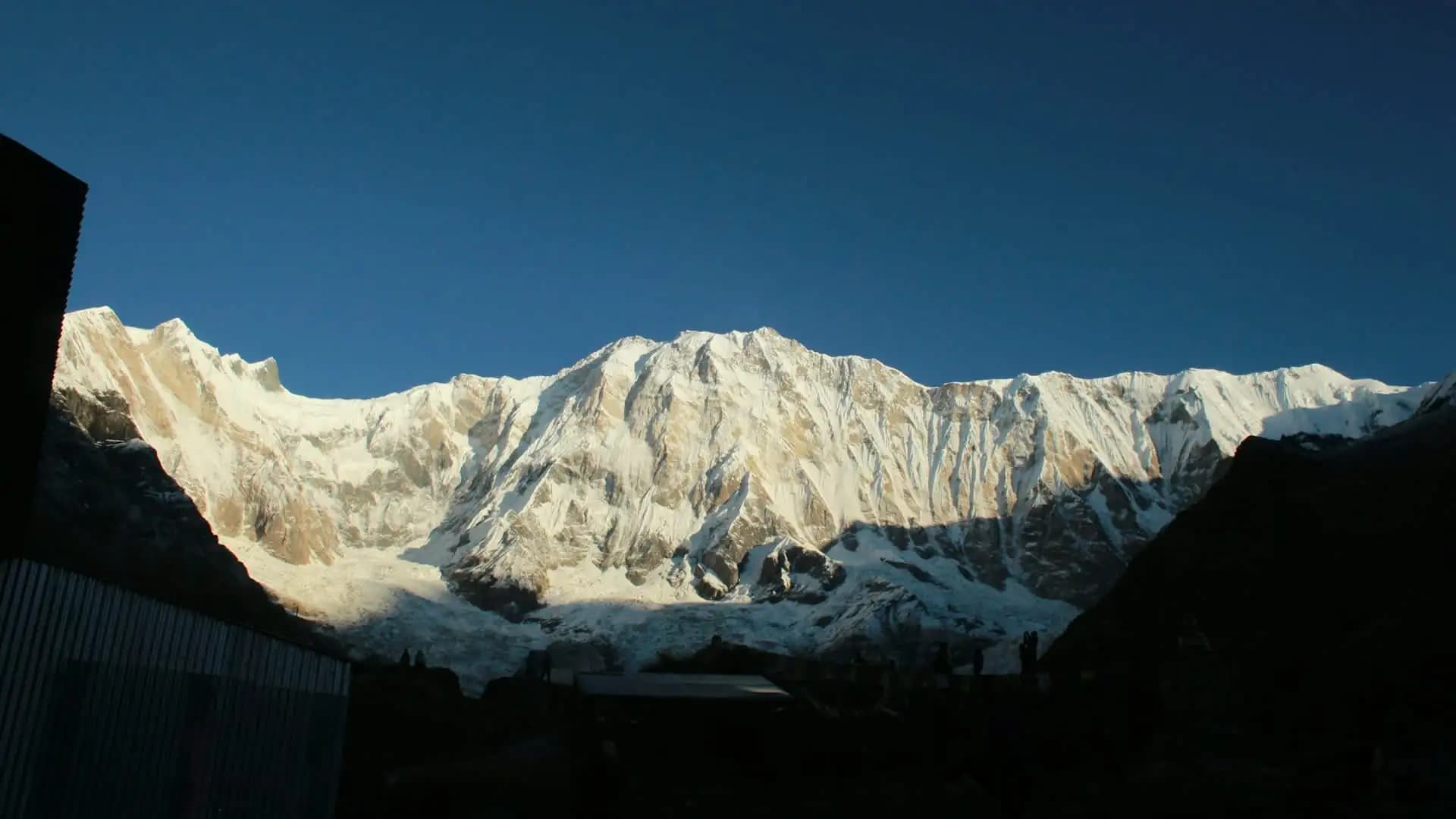
The Annapurna Base Camp (ABC) trek is unusual among Himalayan treks because it moves through several distinct climate zones in a single week. You start in the subtropical lowlands around Pokhara, at roughly 800 meters, and ascend to a high-altitude alpine environment at Annapurna Base Camp, 4,130 meters — meaning you can experience warm, humid conditions at the beginning and end of your trek, and potentially sub-zero temperatures at base camp, regardless of season.
That single fact is the reason a proper ABC packing list looks different from a packing list for a single-elevation trek. You're not packing for one climate. You're packing for four or five.
This guide breaks down exactly what to bring, why each item earns its place in your bag, how to layer correctly for the temperature swings you'll actually encounter, what changes by season, and what you can skip entirely because Nepal's teahouses and rental shops already have it covered.
Every temperature and seasonal detail below has been checked against current trekking data for the region, because guessing wrong on a sleeping bag rating or a jacket's warmth at 4,130 meters isn't a minor inconvenience — it's a genuinely miserable, occasionally dangerous night.
Why the Annapurna Base Camp Trek Is Hard to Pack For
Before the checklist, it's worth understanding the specific climate challenge this trek presents, because it explains almost every packing decision that follows.
Temperatures on the trail vary dramatically by elevation zone: in the lower regions you can expect roughly 10-15°C during the day and 0-5°C at night; in the mid regions, roughly 5-10°C during the day and -5-0°C at night; and at ABC itself, conditions can range from -15°C to 5°C during the day and -20°C to -5°C at night.
That's not a typo — the difference between a warm, sweaty afternoon in the lower Modi Khola valley and a bitterly cold night at Annapurna Base Camp can be a 30-degree Celsius swing within the same week, sometimes within the same 24 hours if you're pushing from Deurali to ABC and back down again quickly.
On top of elevation, season changes everything. January — the coldest month on the trail — brings overnight temperatures at base camp that regularly drop below -10°C, and the section between Deurali and Annapurna Base Camp can require microspikes or gaiters. By contrast, at the height of clear autumn weather, ABC's average maximum temperature sits around 9.3°C with an average minimum around -14°C — still cold at night, but with far more comfortable daytime trekking conditions.
The practical upshot: your packing list has to cover a genuine range, from t-shirt weather in Pokhara's terraced lowlands to a jacket-and-thermals night at nearly 4,200 meters — and it has to do this without you hauling a 25-kilogram bag up several thousand stone steps.
The Layering System: The Core Principle Behind Every Packing Decision
Nearly every experienced trekker in the Himalaya packs clothing around a four-layer system rather than a pile of individual jackets. Understanding this system makes every clothing decision below make sense.
Layer | Purpose | Example items |
|---|---|---|
Base layer | Wicks sweat away from skin; worn against the body at all times | Thermal top and bottoms, moisture-wicking t-shirts |
Mid layer (insulating) | Traps body heat | Fleece jacket, lightweight wool sweater |
Insulation layer (heavy) | Provides serious warmth at high altitude and at rest | Down jacket or synthetic insulated jacket |
Shell layer | Blocks wind and rain; doesn't need to be warm on its own | Waterproof/windproof jacket and pants |
The advantage of this system over a single heavy coat is flexibility — you add or remove layers as you move between the warm lower valleys and the cold upper sanctuary, rather than sweating through one all-purpose jacket in the forest and still being cold at ABC.
Master Packing List: Full Overview
Here's the complete list at a glance before the detailed breakdown below. Items marked "essential" should not be skipped under any circumstances; items marked "recommended" significantly improve comfort and safety but have workarounds if left behind; items marked "optional" are nice-to-haves depending on personal preference or specific trip dates.
Category | Item | Priority |
|---|---|---|
Upper body | Moisture-wicking base layer tops (x2-3) | Essential |
Upper body | Fleece or wool mid-layer | Essential |
Upper body | Insulated down/synthetic jacket | Essential |
Upper body | Waterproof, windproof shell jacket | Essential |
Upper body | Trekking t-shirts (x2-3) | Recommended |
Lower body | Thermal base layer bottoms | Essential |
Lower body | Trekking pants (quick-dry, 2 pairs) | Essential |
Lower body | Waterproof/windproof shell pants | Essential |
Lower body | Shorts (lower elevation days) | Optional |
Footwear | Broken-in waterproof trekking boots | Essential |
Footwear | Trekking socks, wool or synthetic blend (4-6 pairs) | Essential |
Footwear | Liner socks | Recommended |
Footwear | Camp shoes / sandals | Recommended |
Footwear | Gaiters | Recommended (essential in winter) |
Footwear | Microspikes/crampons | Season-dependent |
Head & hands | Warm insulated hat/beanie | Essential |
Head & hands | Sun hat or cap | Essential |
Head & hands | Insulated gloves | Essential |
Head & hands | Liner gloves | Recommended |
Head & hands | Buff/neck gaiter | Recommended |
Head & hands | Sunglasses (UV protection) | Essential |
Sleep | Sleeping bag (rated appropriately) | Essential |
Sleep | Sleeping bag liner | Recommended |
Bags | Duffel bag (for porter) | Essential |
Bags | Daypack (25-35L) | Essential |
Bags | Dry bags / packing cubes | Recommended |
Bags | Rain cover for daypack | Recommended |
Trekking gear | Trekking poles | Essential |
Trekking gear | Headlamp + spare batteries | Essential |
Health | First aid kit | Essential |
Health | Diamox (acetazolamide) or altitude medication | Recommended (consult a doctor) |
Health | Personal medications | Essential (if applicable) |
Health | Water purification tablets/filter/SteriPen | Essential |
Health | Hand sanitizer, wet wipes | Essential |
Health | Sunscreen (high SPF) and lip balm with SPF | Essential |
Documents | Passport + photocopies | Essential |
Documents | Passport photos | Essential |
Documents | ACAP and TIMS permit copies | Essential |
Documents | Travel insurance details | Essential |
Documents | Cash (Nepali rupees, small denominations) | Essential |
Electronics | Power bank | Essential |
Electronics | Universal/Nepal plug adapter | Recommended |
Electronics | Camera | Optional |
Food | Energy/protein bars, electrolyte powder | Recommended |
Misc | Reusable water bottle (1-2L) or hydration bladder | Essential |
Misc | Trekking towel (quick-dry) | Recommended |
Misc | Earplugs | Recommended |
Misc | Toiletries (biodegradable soap, toothbrush, etc.) | Essential |
Misc | Duct tape, small repair kit | Optional |
Misc | Book, cards, or entertainment for evenings | Optional |
Upper Body Clothing in Detail
Base Layers
Base layers sit directly against your skin and do the critical job of moving sweat away from your body — cotton fails badly at this (it holds moisture and gets cold), so merino wool or synthetic wicking fabrics are the standard recommendation across the trekking industry.
2-3 long-sleeve thermal or merino wool base layer tops
2-3 short-sleeve moisture-wicking t-shirts for the warmer lower-elevation days around Pokhara, Nayapul, and Ghandruk
Mid Layers
1 fleece jacket or wool pullover, worn over your base layer in cooler conditions at mid-elevation villages like Chhomrong, Sinuwa, and Bamboo
Insulation Layer
1 down jacket or high-quality synthetic insulated jacket, rated for temperatures well below freezing. This is your primary defense against the cold at MBC and ABC, where nighttime temperatures regularly drop into double-digit negative figures in the colder months and stay near or below freezing even in the "warm" trekking seasons.
Shell Layer
1 waterproof, windproof jacket (ideally with taped seams) — needed both for rain in shoulder-season months and for wind protection at higher elevation, particularly around Deurali and the exposed final approach to ABC.
Lower Body Clothing in Detail
Item | Notes |
|---|---|
Thermal base layer leggings | Worn under trekking pants once you climb above roughly 2,500-3,000m or in the evening at any elevation |
Trekking pants (2 pairs) | Quick-dry, breathable fabric; convertible zip-off pants are popular but not essential |
Waterproof/windproof shell pants | For rain and wind protection, especially useful on the exposed stretch above Deurali |
Shorts | Optional, useful only on warm lower-valley days near Pokhara, Nayapul, and Ghandruk |
Underwear | Moisture-wicking synthetic or wool, enough for the full trip plus laundry gaps |
A note on quantity: most teahouses along the ABC route do not offer reliable laundry service above Chhomrong (and washing clothes that won't dry in cold, humid mountain air is its own problem), so pack enough base layers and underwear for several consecutive days rather than planning to wash mid-trek.
Footwear: The Single Most Important Gear Decision
More ABC trekkers end their trip early because of foot problems — blisters, cold feet, twisted ankles on wet stone steps — than almost any other single cause. Footwear deserves outsized attention on this list.
Trekking Boots
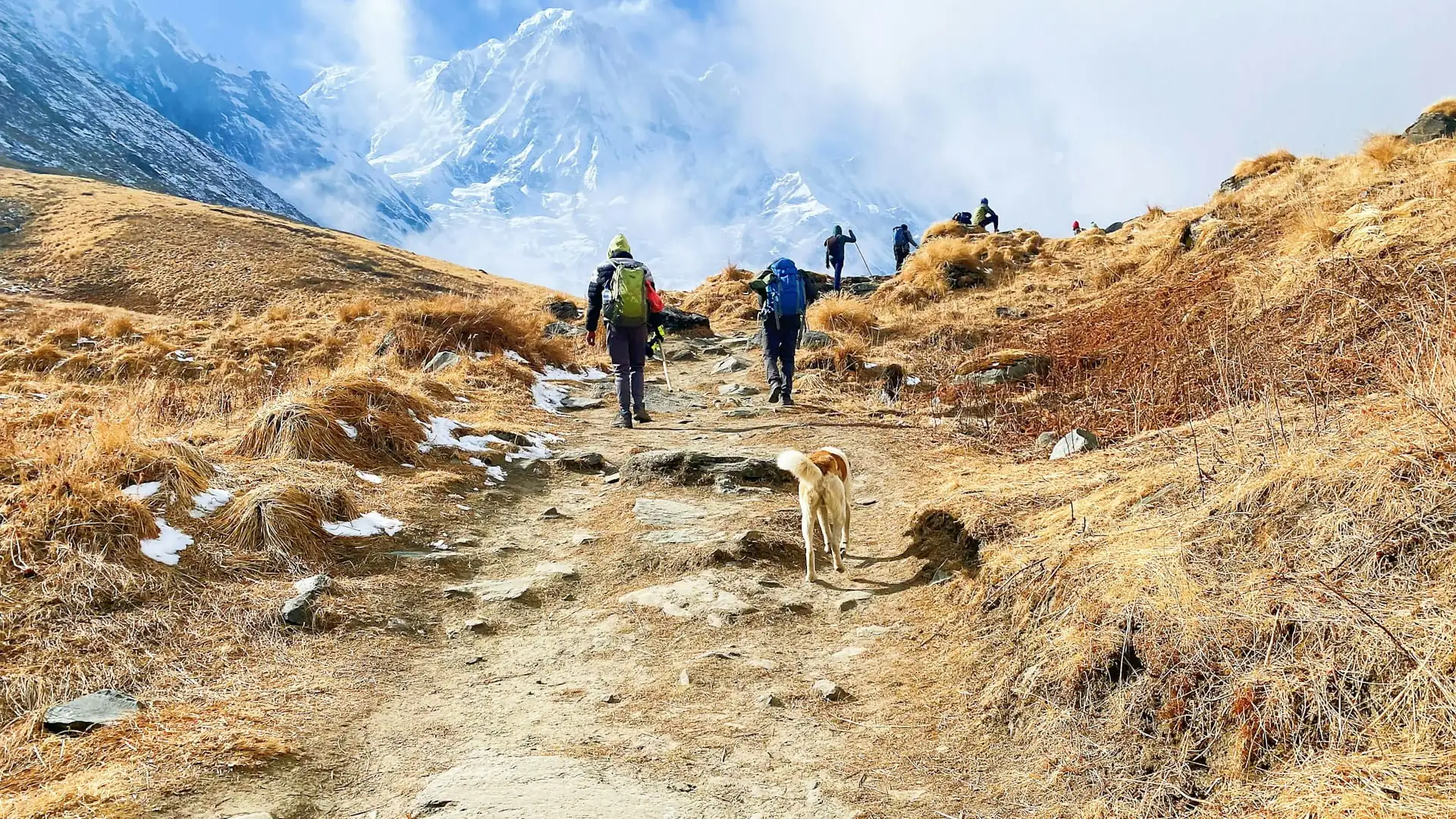
Choose waterproof, ankle-supporting trekking boots, not trail runners or sneakers. The trail includes long stretches of uneven stone steps (particularly around Chhomrong and Sinuwa, and the staircase sections near Ulleri if you're combining with Poon Hill), which reward ankle support.
Break your boots in before the trip. New boots on a multi-day trek is one of the most common and preventable causes of blister-related trip disruption. Aim for at least several weeks of regular wear before departure.
A mid-weight boot is usually sufficient for ABC — you don't need mountaineering-grade boots designed for actual glacier travel, since this is a non-technical trekking route throughout.
Socks
4-6 pairs of wool or wool-blend trekking socks — avoid cotton, which holds moisture and causes blisters.
1-2 pairs of thin liner socks, worn underneath thicker socks, reduce friction and further blister risk.
Pack a couple of extra pairs specifically for sleeping in cold teahouse rooms.
Camp Shoes
Lightweight sandals or slip-on shoes for evenings at teahouses, giving your feet a break from boots and making trips to shared bathrooms easier.
Gaiters and Traction
Gaiters keep snow, mud, and pebbles out of your boots — genuinely useful in the shoulder seasons and close to essential in winter.
Microspikes or lightweight crampons become relevant above Deurali in the colder months, particularly January, when snow cover is heaviest and the trail can require extra traction. In peak spring and autumn conditions, most trekkers don't need them, but it's worth checking current trail conditions with your guide or operator before departure if you're trekking in the shoulder or winter months.
Head and Hand Protection
Item | Purpose |
|---|---|
Warm insulated beanie/hat | Essential at MBC and ABC where nighttime and early-morning temperatures drop well below freezing |
Sun hat or cap with brim | Protects against strong UV exposure at altitude on clear days |
Buff or neck gaiter | Versatile — sun protection, wind protection, or an extra warm layer around the neck and face |
Insulated gloves | Needed for the cold mornings and evenings above Chhomrong, and essential at ABC itself |
Liner gloves | Thin, worn under insulated gloves or alone in milder conditions; useful for tasks needing dexterity (camera, zippers) without exposing bare skin |
UV-protective sunglasses | Sun exposure and glare increase significantly with altitude; essential even without snow on the ground, and critical if there's any snow cover reflecting sunlight |
Sleeping Gear
Most teahouses along the ABC route provide blankets, but these are frequently insufficient for the cold at higher elevations, and hygiene standards for shared bedding vary. A dedicated sleeping bag is standard practice for this trek.
Sleeping bag rated to at least -10°C to -15°C (comfort rating) is the widely recommended standard for ABC, given that nighttime temperatures at base camp itself can fall as low as -20°C in the coldest conditions. If trekking in peak winter (December-February), a warmer-rated bag is safer given that base camp nighttime temperatures regularly fall to -15°C or below in January and February specifically.
A sleeping bag liner (silk or fleece) adds several degrees of warmth, keeps the bag cleaner, and is inexpensive and lightweight to carry.
Sleeping bags are widely available to rent in Kathmandu or Pokhara if you don't own appropriate cold-weather gear — a detail covered in more depth further down this guide.
Bags: Duffel, Daypack, and Organization
Duffel Bag (Porter Bag)
If you're trekking with a porter — standard practice on guided ABC trips, including those arranged through Adventure Life Nepal — your main gear goes into a duffel bag that the porter carries, generally weight-limited to around 10-15 kg depending on the operator's policy. A durable, water-resistant duffel with solid strap and zip construction is worth the investment, since it takes real abuse on the trail.
Daypack
You'll personally carry a 25-35 liter daypack with the items you need during the day: water, snacks, camera, extra layer, rain jacket, sunscreen, and any personal medication. A daypack with a proper hip belt distributes weight better over long trekking days.
Organization Extras
Dry bags or packing cubes keep gear organized inside the duffel and protect electronics and spare clothing from moisture.
A rain cover for your daypack (many packs come with one built in) is worth checking before departure, since afternoon showers are common even outside monsoon season.
Trekking Poles
Trekking poles are one of the most commonly recommended (and commonly skipped, to trekkers' later regret) items on this route. The ABC trail includes long, punishing stretches of stone steps in both directions — poles reduce strain on knees during steep descents (notably from Chhomrong down toward Jhinu Danda and back up multiple times, and the descent from ABC/MBC afterward) and improve stability on uneven or icy sections.
Adjustable, collapsible poles pack down small and are widely available for rent in Pokhara if you'd rather not carry your own from home.
Headlamp and Light
A headlamp with spare batteries is essential, not optional — teahouse electricity is inconsistent above the lower villages, early starts (particularly toward MBC and ABC for sunrise views) happen in the dark, and shared bathroom facilities are often outside the main lodge building.
Cold temperatures drain batteries faster than normal, so carrying spares (and keeping them in an inner pocket close to body heat overnight) matters more here than it would at home.
Health, Hygiene, and First Aid
First Aid Kit
A basic personal first aid kit should include:
Blister treatment (moleskin, blister plasters)
Pain relievers / anti-inflammatories
Any personal prescription medications, packed in original labeled containers
Basic wound care supplies (antiseptic, bandages)
Rehydration salts / electrolyte tablets
Any known allergy medication (antihistamines)
Altitude Considerations
Annapurna Base Camp sits at 4,130 meters, which is high enough for Acute Mountain Sickness (AMS) to be a genuine consideration, even though the trek's altitude profile is more gradual than routes like the Annapurna Circuit or Everest Base Camp. Symptoms include headache, nausea, dizziness, and disturbed sleep.
Many trekkers discuss preventive medication such as acetazolamide (commonly known by the brand name Diamox) with a doctor before departure — this is a prescription decision that should be made with a physician familiar with your health history, not decided from a packing list.
The only reliable treatment for worsening AMS symptoms is descent, and a good guide will build acclimatization awareness into your itinerary regardless of medication choices.
Hygiene Items
Hand sanitizer and biodegradable wet wipes — genuinely essential, since running water for handwashing becomes less reliable the higher you go
A quick-dry travel towel
Toothbrush, toothpaste, and biodegradable soap
Toilet paper (teahouses above the lower villages often don't supply it)
Sunscreen, high SPF — UV exposure increases substantially with altitude, and reflected light off snow can cause serious sunburn even on cool days
SPF lip balm — wind and sun both crack lips badly at altitude
Water Purification
Bottled water is available at teahouses along the route, but it's both expensive at higher elevations and creates plastic waste in a fragile conservation area. Most experienced trekkers and reputable operators recommend one of the following instead:
Water purification tablets (iodine or chlorine dioxide based)
A portable filter (such as a squeeze-style filter)
A UV purifier (such as a SteriPen), noting that battery reliability drops in cold conditions
A reusable 1-2 liter water bottle or hydration bladder, refilled from teahouse taps or boiled water rather than bought bottled each day
Documents and Money
Item | Notes |
|---|---|
Passport | Original, plus at least one photocopy kept separately from the original |
Passport-sized photos | Required for permit applications (ACAP and TIMS) |
Permit copies | ACAP (Annapurna Conservation Area Permit) and TIMS card, physically checked at multiple checkpoints along the route |
Travel insurance documents | Should specifically cover high-altitude trekking and emergency evacuation; verify the altitude coverage limit covers at least 4,130m |
Cash (Nepali Rupees) | ATMs disappear above Pokhara/Nayapul; carry enough small-denomination cash for teahouse meals, snacks, hot showers, and charging fees for the full trek, since card payment is essentially nonexistent on the trail |
A reminder worth repeating here: keep permit documents accessible and dry, since they're checked at multiple points including Birethanti, Ghandruk, and Chhomrong.
Electronics
Item | Notes |
|---|---|
Power bank | High-capacity recommended; charging at teahouses above the lower villages often costs a small per-hour or per-device fee, and isn't always reliable |
Universal plug adapter | Nepal uses a mix of socket types; a universal adapter avoids compatibility issues |
Phone | Useful for photos and offline maps; expect very limited or no signal above the mid-route villages |
Camera | Optional, for those who want higher-quality photos than a phone provides |
Spare batteries | Cold weather drains batteries significantly faster; keep spares warm in an inner jacket pocket |
Food and Snacks
Teahouses along the entire ABC route serve meals (typically a mix of Nepali dal bhat, noodles, soups, and simple Western-style dishes), so you don't need to carry your own food supply. That said, most trekkers still bring:
Energy or protein bars for the trail between meals
Electrolyte powder or tablets, useful for managing hydration and mild altitude symptoms
A small stash of familiar snacks for comfort on longer or harder days
Rehydration salts, which double as both a hydration aid and a mild AMS symptom management tool
Miscellaneous but Useful Items
Earplugs — teahouse walls are thin, and shared lodges mean early risers, snoring neighbors, and occasional late-night trekking groups
Duct tape (a small amount wrapped around a trekking pole or lighter) — useful for improvised gear repairs
A small padlock for duffel security, particularly during transport
A book, cards, or a lightweight entertainment option — evenings at teahouses start early and stretch long, since there's little to do after dark beyond the dining room fire and conversation
A journal or notebook if you like documenting the trip in detail
Seasonal Packing Adjustments
The ABC trek can be done nearly year-round, but what you pack should shift meaningfully depending on when you go.
Spring (March–May)
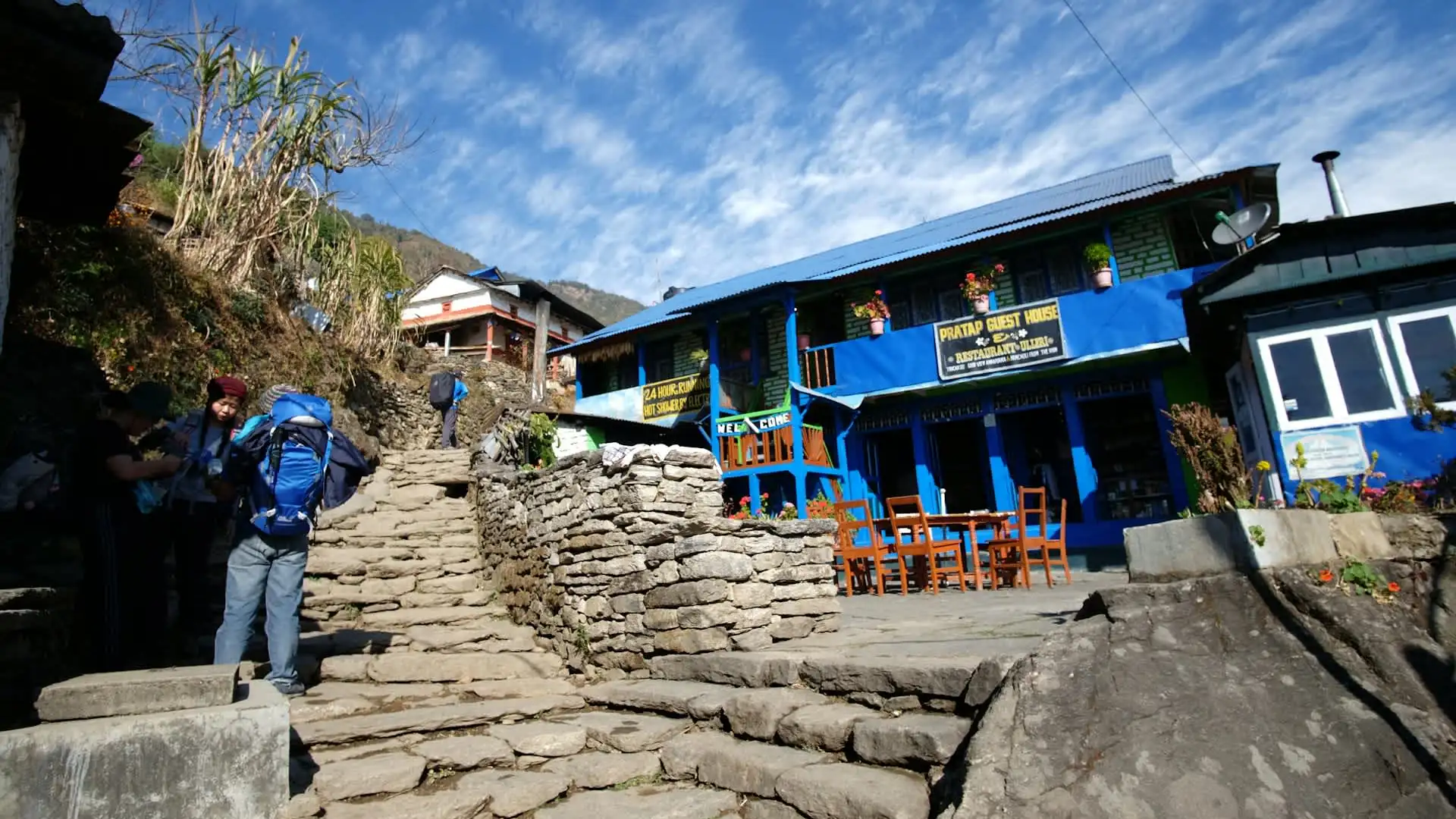
Spring is the second-best trekking window, with rhododendrons blooming at lower elevations from late February through April. The downside is afternoon haze building from around noon, which can obscure Annapurna South and Machhapuchhre by the time you reach MBC.
Standard 4-layer system remains appropriate
Lighter gloves and headwear generally sufficient compared to winter
Rain layer still worth carrying for occasional afternoon showers
Sun protection becomes more important as daytime temperatures rise at lower elevations
Autumn (September–November)
October and November are widely considered the clearest, most stable months for trekking, with the post-monsoon sky typically cleaner and more consistent than at other times of year. Visibility in November is often exceptional, offering some of the clearest skies of the year for viewing peaks like Annapurna I and Hiunchuli.
This is peak trekking season — pack a full standard kit as outlined above, without significant additions
Nights get progressively colder as the season moves from September into November, so a slightly warmer sleeping bag is worth considering for late-November departures
Teahouses fill up fast in this window — booking accommodation in advance is advisable for October specifically, while mid-November onward tends to have more availability
Winter (December–February)
January and February are the coldest months, with base camp nighttime temperatures regularly falling to -15°C or below, and a higher risk of trail-blocking snowfall above roughly 3,000 meters.
Additional winter-specific packing needs:
Extra winter item | Reason |
|---|---|
Heavier-rated sleeping bag (-15°C to -20°C comfort rating) | Standard shoulder-season bags may be inadequate for the coldest nights |
Microspikes or lightweight crampons | The Deurali-to-ABC section can require additional traction in snow-covered winter conditions |
Extra insulating layers | Standard down jacket may need a heavier fleece or second mid-layer underneath in the coldest weeks |
Hand warmers | Genuinely useful for the coldest mornings and at ABC itself |
Extra batteries/power bank capacity | Cold weather significantly reduces battery life |
Trails typically stay open through winter with proper preparation, though snow accumulation can occasionally require route adjustments — this is another reason a guide with current, on-the-ground trail knowledge is valuable in this season specifically.
Monsoon (June–August)
Trekking during monsoon is possible but considerably harder due to rain, muddy trails, leeches, cloud cover, and possible landslides — not ideal for beginners. Most operators, including Adventure Life Nepal, generally advise against this season for first-time high-altitude trekkers.
If trekking during monsoon anyway:
Extra monsoon item | Reason |
|---|---|
High-quality waterproof jacket and pants | Rain is frequent and can be sustained |
Leech socks or salt | Leeches are common on lower forested sections |
Extra dry bags | Protects gear from persistent humidity and rain |
Quick-dry everything | Standard cotton or slow-drying fabrics become miserable in sustained humidity |
What NOT to Pack
Overpacking is one of the most common mistakes on this trek, and it has real consequences — a heavier bag means a harder trek for you and, if you're using a porter, a heavier and potentially unsafe load for them. A few things worth leaving at home:
Cotton clothing — slow to dry, holds moisture, and gets cold once damp; a poor fit for any layering system in this climate
Excess "just in case" clothing — teahouses along the route sell or rent basics if something's forgotten, and the layering system above genuinely covers the range of conditions you'll face
Heavy mountaineering gear (ice axes, harnesses, technical crampons) — unnecessary, since ABC is a non-technical trekking route throughout
Full-size toiletries — travel-sized versions save meaningful weight over a multi-day trek
Multiple guidebooks or heavy paper maps — a single lightweight reference or a downloaded offline map serves the same purpose for far less weight
A hair dryer or other electrical appliances — teahouse power is limited and inconsistent; these are impractical rather than merely unnecessary
Renting vs. Buying Gear in Kathmandu or Pokhara
Both Kathmandu (particularly the Thamel district) and Pokhara have well-established trekking gear markets, with numerous shops renting or selling everything from sleeping bags and down jackets to trekking poles and gaiters. This is a genuinely practical option for travelers who don't want to fly with bulky cold-weather gear, or who are combining a Nepal trip with other destinations where heavy winter equipment wouldn't otherwise be useful.
Items commonly rented rather than bought:
Sleeping bags (rated for the specific season of your trek)
Down jackets
Trekking poles
Microspikes/crampons (in winter or shoulder-season snow conditions)
Items most trekkers prefer to buy new or bring from home, for fit and hygiene reasons:
Trekking boots (should be broken in well before the trek, which rules out last-minute rental)
Socks and base layers
Personal first aid and medication
Operators arranging guided treks — including Adventure Life Nepal — can typically advise on reliable rental shops and, in some cases, include specific gear items as part of a trek package, which is worth asking about directly when booking.
Weight Guidelines: Daypack vs. Duffel
A common point of confusion is how to split gear between what you carry yourself and what a porter carries. As a general guideline for a standard porter-supported trek:
Bag | Typical weight range | Contents |
|---|---|---|
Daypack (self-carried) | 3-6 kg | Water, snacks, camera, rain jacket, extra warm layer, sunscreen, first aid essentials, permits/documents |
Duffel (porter-carried) | 10-15 kg | Main clothing, sleeping bag, remaining gear, toiletries |
Porter weight limits vary by operator and by local guiding association guidelines, so it's worth confirming your specific operator's limit before finalizing what goes in the duffel — packing lighter than the stated limit is generally appreciated by porters and better for everyone's pace on the trail.
A Complete Packing Checklist by Category
For a final at-a-glance reference, here is the complete list organized for actual packing, rather than by explanation:
Clothing
2-3 base layer tops (long sleeve, wicking)
2-3 t-shirts (short sleeve)
1 fleece or wool mid-layer
1 insulated down/synthetic jacket
1 waterproof, windproof shell jacket
1 thermal base layer bottoms
2 pairs trekking pants
1 pair waterproof/windproof shell pants
1 pair shorts (optional)
5-7 pairs underwear
4-6 pairs trekking socks
1-2 pairs liner socks
1-2 pairs sleeping socks
Footwear
1 pair broken-in waterproof trekking boots
1 pair camp shoes/sandals
Gaiters
Microspikes (season-dependent)
Head, Hands, Eyes
Warm insulated beanie
Sun hat/cap
Buff/neck gaiter
Insulated gloves
Liner gloves
UV-protective sunglasses
Sleep
Sleeping bag (appropriately rated for season)
Sleeping bag liner
Bags
Duffel bag (for porter)
Daypack (25-35L)
Dry bags/packing cubes
Daypack rain cover
Gear
Trekking poles
Headlamp + spare batteries
Reusable water bottle or hydration bladder
Water purification method
Health
First aid kit
Personal medications
Any altitude medication discussed with a doctor
Hand sanitizer/wet wipes
Sunscreen (high SPF)
SPF lip balm
Toothbrush, toothpaste, biodegradable soap
Travel towel
Toilet paper
Documents/Money
Passport + photocopy
Passport photos
ACAP and TIMS permit copies
Travel insurance documents
Nepali rupees, small denominations
Electronics
Power bank
Plug adapter
Phone/camera
Spare batteries
Extras
Energy/protein bars
Electrolyte powder
Earplugs
Small padlock
Book/cards/entertainment
A Note on Packing for Guided vs. Independent Trekking
Since April 2023, a licensed guide has been required on most Annapurna region trekking routes, including the ABC trail. Trekking with a guide and porter through an operator like Adventure Life Nepal changes a few packing considerations worth flagging:
Your operator will typically confirm porter weight limits in advance, which should shape how much you pack into your duffel
Some operators supply or can arrange rental for bulkier items like sleeping bags, saving you the need to bring one from home
Your guide will have current, on-the-ground knowledge of trail conditions (snow levels, whether microspikes are currently needed, teahouse availability), which is valuable input for last-minute packing decisions once you arrive in Nepal
Group logistics (shared meal stops, set daily distances) mean your daypack should prioritize items you need access to throughout the walking day, since your duffel won't be reachable again until you reach that night's teahouse
Frequently Asked Questions on Annapurna Base Camp Packing List
1. What's the single most important item on an ABC packing list?
A properly rated sleeping bag and a good pair of broken-in, waterproof trekking boots are the two items most experienced trekkers and guides would flag as non-negotiable — cold nights and foot problems are the two most common sources of a genuinely miserable trek.
2. Do I need a four-season sleeping bag for Annapurna Base Camp?
Not necessarily "four-season" in the technical mountaineering sense, but you do need one rated to at least -10°C to -15°C comfort for most of the year, and a warmer rating (-15°C to -20°C) if trekking in December through February, given how cold nights at ABC and MBC regularly get.
3. Can I rent gear in Nepal instead of bringing it from home?
Yes. Kathmandu and Pokhara both have well-established rental shops for sleeping bags, down jackets, trekking poles, and microspikes — a practical option if you don't want to fly with bulky cold-weather gear.
4. Do I need crampons or microspikes for the ABC trek?
Generally not in peak spring or autumn conditions, but the Deurali-to-ABC section can require microspikes or gaiters in winter months, particularly January, when snow cover is heaviest. Check current conditions with your guide or operator closer to your trek dates.
5. How cold does it actually get at Annapurna Base Camp?
It varies significantly by season — average conditions run from roughly 9°C during the day down to around -14°C at night in the clearer autumn months, dropping further to -15°C or colder overnight in the depths of winter (January-February).
6. Is altitude sickness medication necessary for this trek?
It's a personal medical decision to discuss with a doctor before departure, not a standard packing item — but many trekkers do carry acetazolamide (Diamox) as a preventive measure given that ABC sits at 4,130 meters, high enough for genuine AMS risk.
7. Should I bring my own water bottle or buy bottled water on the trail?
A reusable bottle plus a purification method (tablets, filter, or UV purifier) is strongly recommended over buying bottled water throughout, both for cost (bottled water gets progressively more expensive at higher elevations) and for reducing plastic waste in the conservation area.
8. How many days of clothing should I pack, given limited laundry options?
Enough base layers and underwear for the full trek length without relying on laundry — most teahouses above the lower villages don't offer reliable laundry service, and clothing dries slowly in cold, humid mountain air.
9. What should go in my daypack versus my porter-carried duffel?
Your daypack should hold anything you need access to during the walking day — water, snacks, camera, an extra layer, rain gear, sunscreen, and documents. Everything else (main clothing supply, sleeping bag, spare gear) goes in the duffel your porter carries.
10. Is it worth bringing trekking poles, or can I buy/rent them locally?
Either works — poles are widely available to rent or buy cheaply in Pokhara. What matters is having them: they significantly reduce knee strain on the trail's many steep stone-step descents, particularly around Chhomrong and the return from ABC/MBC.
11. What's the biggest packing mistake first-time ABC trekkers make?
Overpacking cotton clothing and "just in case" extra layers, while underestimating how cold it actually gets at MBC and ABC specifically — the lower valleys can genuinely feel warm and tropical, which leads people to underprepare for the dramatic temperature drop higher up.
12. Do I need different gear if I'm trekking with a guide from Adventure Life Nepal versus independently?
The core packing list is the same either way, but a guided trek through an operator typically comes with clearer porter weight guidance, potential gear rental arrangements, and current on-the-ground advice about seasonal conditions (like whether microspikes are currently needed) that's harder to access independently.
Final Thoughts on Annapurna Base Camp Packing List
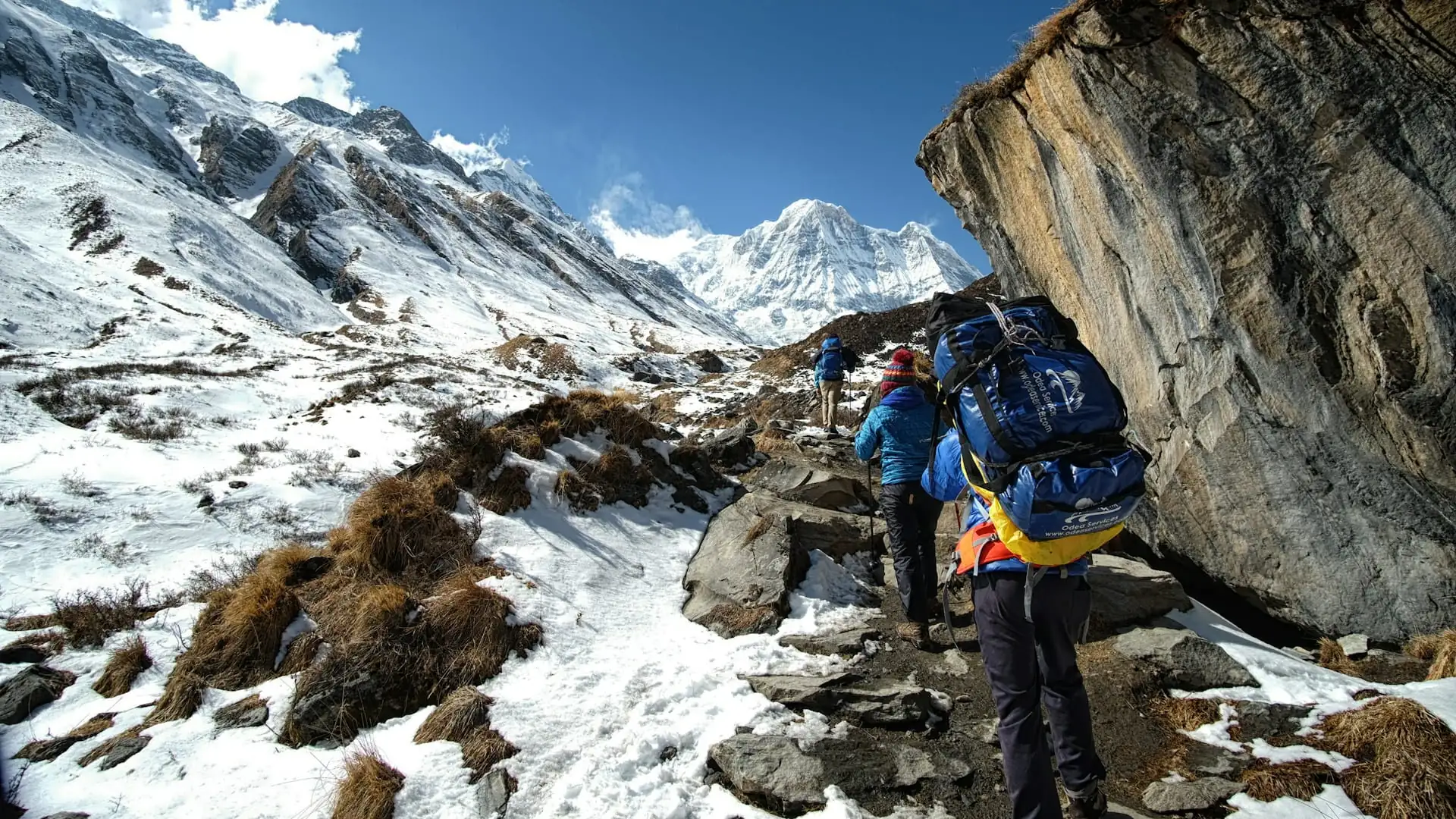
The Annapurna Base Camp trek rewards trekkers who pack for the climate it actually has, not the climate they expect from a single Himalaya mental image. That means real cold-weather gear for a mountain that stays near or below freezing at night regardless of season, real rain protection for a route that sees weather shift quickly, and genuinely broken-in footwear for a trail built almost entirely from stone steps.
Get the layering system right, respect the temperature swing between the lowlands and the Sanctuary, and the rest of the packing list falls into place — leaving you free to focus on the actual reason you're there: the moment the trail opens up and Annapurna I appears at the head of the valley, close enough to feel real.