Annapurna Base Camp Trek Accommodation: Teahouses and Cost
Annapurna Base Camp Trek Accommodation
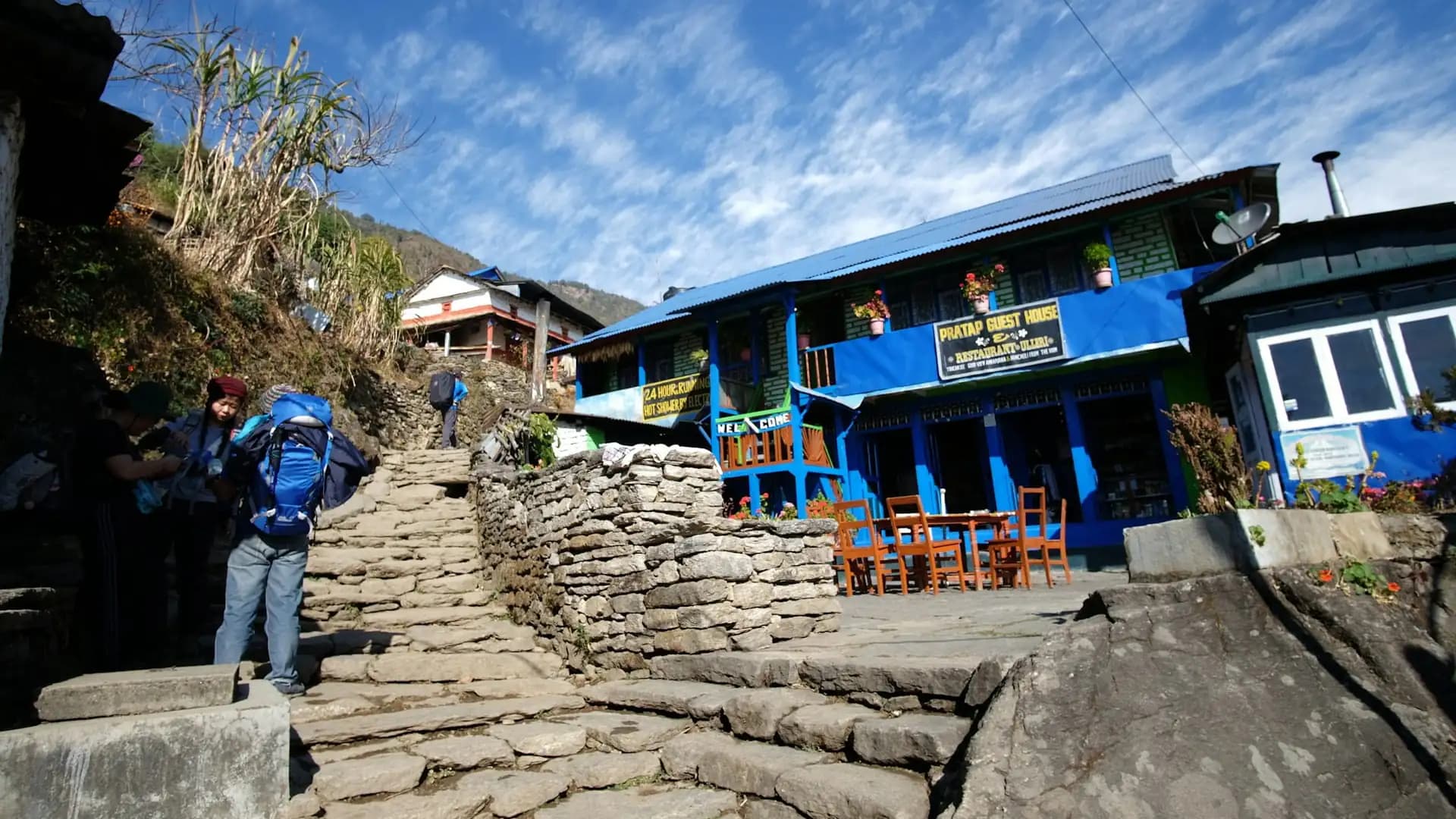
Every night on the Annapurna Base Camp trek is spent in a teahouse — a small, family-run guesthouse offering a basic private room and home-cooked meals — and there is no camping, no hotel chain, and no need to carry your own tent anywhere along the route.
Room costs run from roughly $2–$5 in the lower villages up to $8–$15 near Base Camp itself, though most trekkers end up paying far less than the room rate suggests once they understand how the system actually works: teahouses make their real income from meals, not rooms, and pricing reflects that.
This guide walks through exactly what teahouse accommodation looks like at every stage of the ABC trek, what it costs, how to book it, and what genuinely helps versus what's just internet folklore.
ABC trek accommodation at a glance
Detail | Information |
|---|---|
Accommodation type | Teahouses (family-run guesthouses) the entire route |
Room type | Twin-bed private rooms, shared bathrooms below Chhomrong-and-above |
Typical room cost | $2–$5 (lower villages) to $8–$15 (Deurali, MBC, ABC) |
Typical meal cost | $4–$6 (dal bhat, lower villages) to $8–$14 (near ABC) |
Attached bathroom availability | Common in Ghandruk/Chhomrong; rare above Deurali |
Hot shower | $2–$5, gas or solar-heated, limited above Deurali |
Wi-Fi | Available in most villages, $2–$5, weaker/unreliable near ABC |
Booking ahead | Not usually required except peak season (Oct–Nov) |
ABC elevation | 4,130 m (13,550 ft) |
How the Teahouse System Actually Works
The teahouse model that covers virtually the entire Annapurna Base Camp route is built around one central, unwritten rule: rooms are cheap or free, and food is where the lodge makes its money. A teahouse owner who quotes a very low room rate — sometimes as little as $2 to $3 a night, occasionally offered free — is expecting you to eat breakfast, lunch, and dinner at their establishment rather than wandering to a competitor down the trail.
This isn't a scam or a bait-and-switch; it's simply how the economics of a remote, non-electrified mountain lodge work, and virtually every guide and every experienced trekker follows this pattern by default: sleep and eat at the same teahouse.
Trying to game this system — booking the cheapest room and then eating elsewhere — is both socially frowned upon on the trail and often practically pointless, since a lodge that senses this will simply raise the room rate to compensate. The far more sensible approach, and the one built into every properly run guided package, is to treat the teahouse as a package deal: one lodge, one set of meals, one night, repeated at each stop along the route.
Room Quality and What to Expect
Teahouse rooms on the ABC route are simple by almost any standard — twin beds with a thin mattress and blankets, a small table, bare wood or concrete walls, and a single window. Below Chhomrong, in villages like Ghandruk, attached bathrooms are increasingly common, particularly in newer or recently renovated lodges.
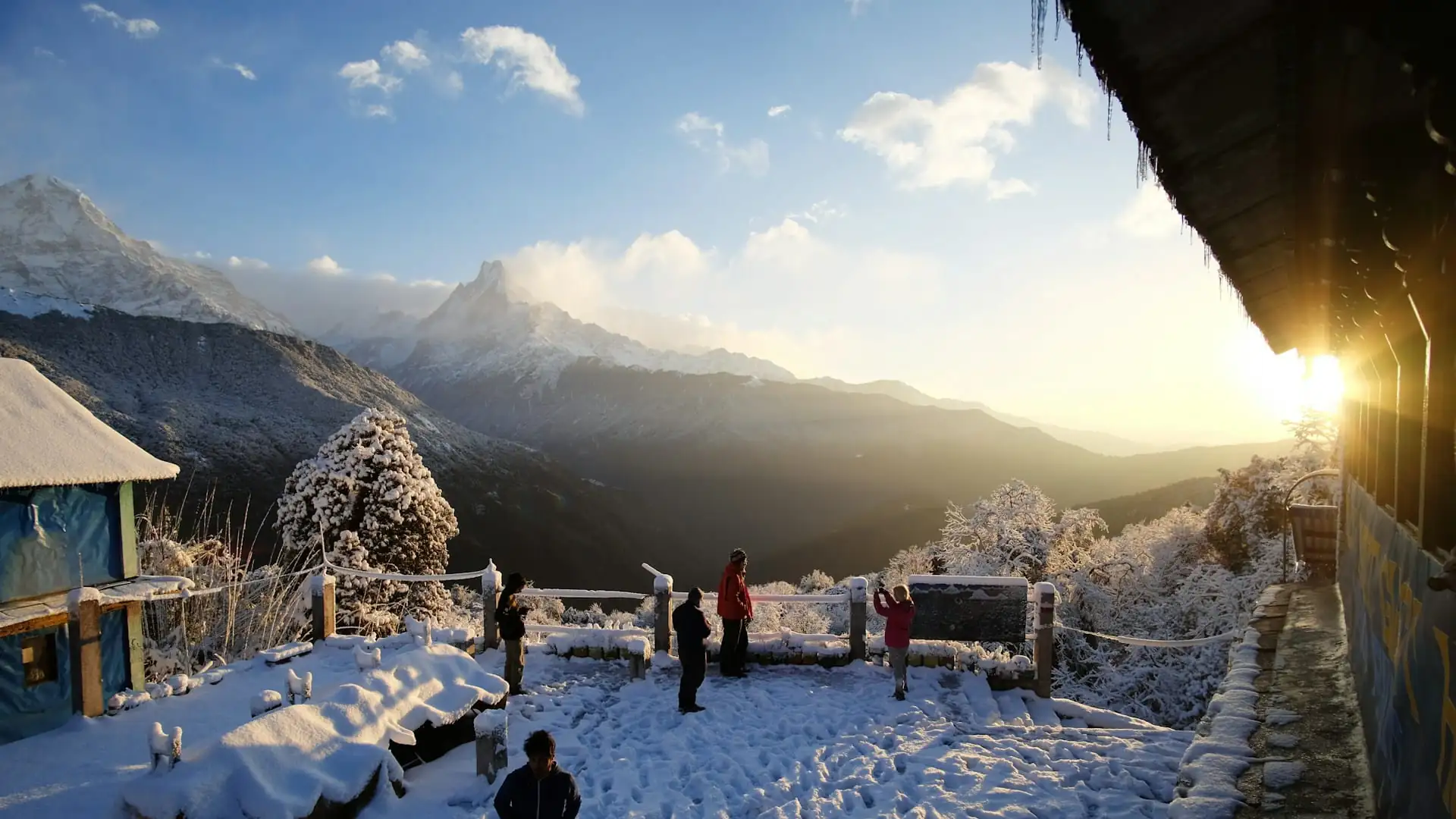
Above Sinuwa, and especially from Dovan through to Annapurna Base Camp itself, shared bathrooms down the hall are the norm, and hot water — where available at all — usually comes from a gas-heated shower requiring an extra fee rather than an in-room tap.
Route section | Typical room standard |
|---|---|
Ghandruk, Chhomrong | Attached bathroom common; some heritage-style Gurung lodges |
Sinuwa, Bamboo, Dovan | Shared bathroom typical; basic wood-panel rooms |
Himalaya, Deurali | Very basic; shared bathroom, limited hot water, thin walls |
Machhapuchhre Base Camp (MBC) | Basic, cold; rooms fill fast, limited capacity |
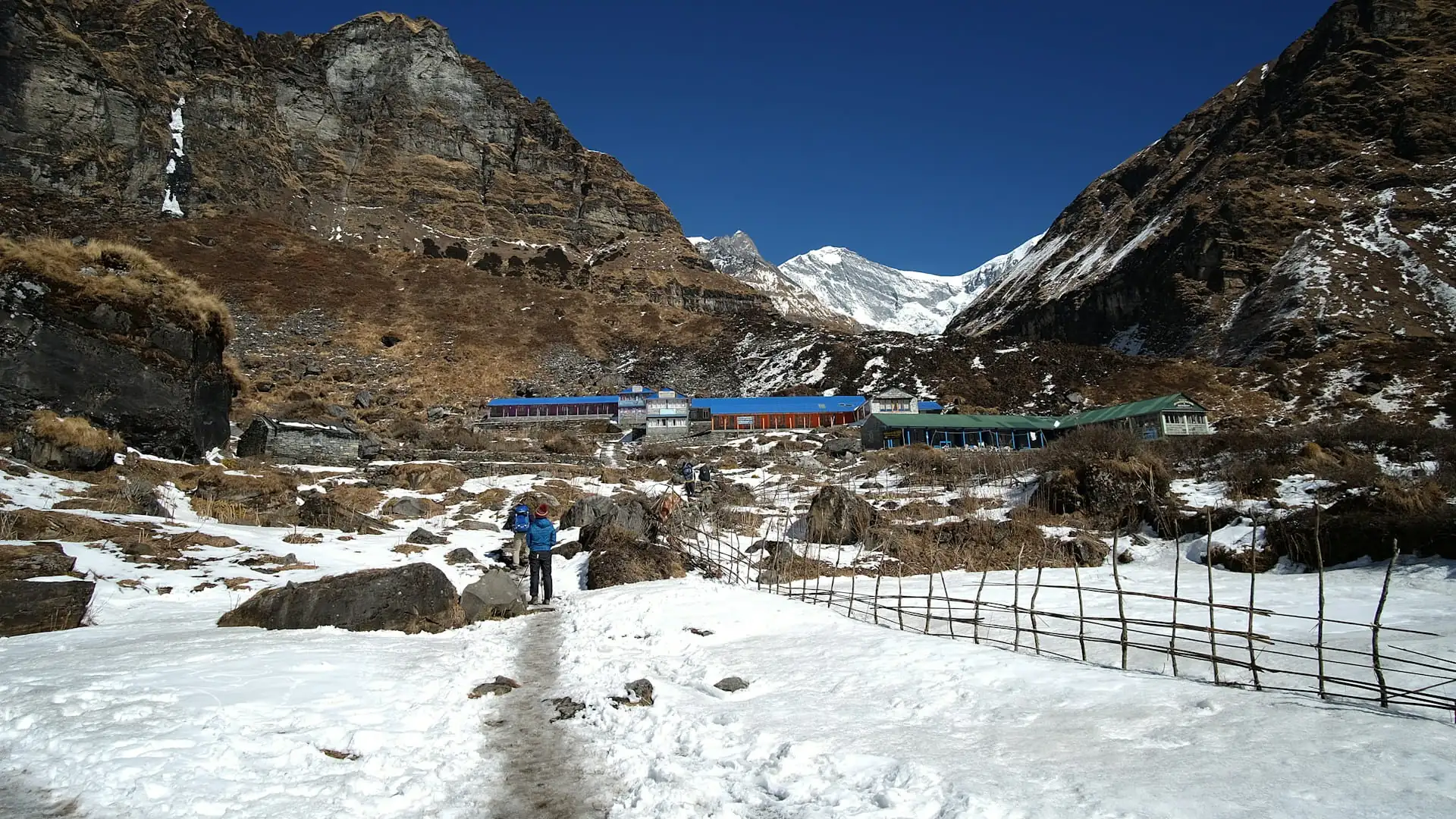
Annapurna Base Camp (ABC) | Most basic tier; dormitory-style overflow possible in peak season |
Chhomrong deserves a specific mention: a number of its teahouses are run by retired Gurkha soldiers and their families, and several offer a noticeably higher standard of hospitality and, in some cases, small cultural evenings or shared meals that go beyond the standard lodge experience elsewhere on the route — worth asking your guide about if you're interested in a slightly deeper cultural stop partway through the trek.
As you climb higher, expect thinner walls, colder rooms with minimal insulation, and — particularly at Machhapuchhre Base Camp and Annapurna Base Camp itself — genuinely limited capacity during the busiest weeks of the peak seasons, occasionally requiring trekkers to share a room or accept dormitory-style overflow accommodation if arriving late in the day during October or November.
Teahouse Costs by Stage: The Full Route Breakdown
Here's what accommodation and food realistically cost at each major stop on the classic route via Ghandruk and Chhomrong, from the road-head near Nayapul/Samrung through to Base Camp and back.
Village | Elevation | Typical room cost | Typical dal bhat cost |
|---|---|---|---|
Nayapul / Samrung (start) | ~1,070 m | $3–$6 | $4–$6 |
Ghandruk | 1,940 m | $3–$6 | $4–$6 |
Chhomrong | ~2,170 m | $4–$8 | $5–$7 |
Sinuwa (Lower/Upper) | 2,340–2,360 m | $4–$8 | $5–$8 |
Bamboo | ~2,310 m | $4–$8 | $5–$8 |
Dovan | ~2,600 m | $5–$10 | $6–$9 |
Himalaya | ~2,920 m | $6–$10 | $6–$10 |
Deurali | 3,230 m | $6–$12 | $7–$11 |
Machhapuchhre Base Camp (MBC) | ~3,700 m | $8–$15 | $8–$12 |
Annapurna Base Camp (ABC) | 4,130 m | $8–$15 | $8–$14 |
Jhinu Danda (descent, hot springs) | ~1,780 m | $3–$6 | $4–$6 |
The pattern here mirrors every other high-altitude teahouse trek in Nepal: prices rise steadily with elevation because everything — food, gas canisters, building materials, even the wood used for cooking fires at lower elevations — has to be carried in by porter or mule, since there's no road access anywhere past Ghandruk on the standard route.
A jar of jam or a chocolate bar that costs a dollar in Pokhara can reasonably cost three or four times that at Deurali or ABC, and that markup reflects real transport cost rather than opportunism.
Daily Extras: Showers, Charging, and Wi-Fi
Beyond room and food, a handful of small recurring costs shape the real daily budget on the ABC trek:
Extra | Typical cost | Availability |
|---|---|---|
Hot shower | $2–$5 | Common below Deurali; limited/unavailable at MBC and ABC in cold weather |
Device charging | $1–$3 per charge | Most villages; solar-dependent at higher elevations |
Wi-Fi | $2–$5 | Widely available lower down; weaker and less reliable near ABC |
Extra snacks (chocolate, biscuits) | $2–$5 | Prices rise noticeably with altitude |
Bottled/boiled water | $1–$4 | Carrying a filter or purification tablets reduces this cost meaningfully |
At Machhapuchhre Base Camp and Annapurna Base Camp specifically, hot showers are frequently unavailable altogether during colder months, simply because the gas or solar systems that heat water struggle at that elevation and temperature — worth mentally preparing for rather than expecting as a given amenity this high on the trek.
Homestays: A Lower-Altitude Alternative
In the lower villages — primarily Ghandruk, Chhomrong, and Sinuwa — a genuine homestay option exists alongside standard teahouses, where trekkers can arrange to stay directly with a local family, sharing home-cooked meals and getting a more immersive look at daily Gurung village life than a standard lodge stay offers. This isn't available at higher elevations, where the small, thinly populated settlements exist essentially to serve trekkers and don't support family homestays in the same way.
Guides can typically arrange this in advance for trekkers specifically interested in the cultural dimension of the lower trek stages, and it's worth raising with your agency before departure if it appeals to you, since it's not automatically included in a standard package itinerary.
Do You Need to Book Teahouses in Advance?
For most of the year, no — teahouses along the ABC route operate on a first-come, first-served basis, and guides typically call ahead by phone from the previous village to confirm rooms for the group at the next stop, which is standard practice on any guided package. Independent trekkers can generally do the same informally, or simply arrive and ask, since capacity outside peak weeks is rarely an issue on this well-established route.
The exception is the peak trekking season — mid-October through November, when weather, visibility, and trail conditions are at their best, and demand spikes accordingly. During this window, particularly at capacity-constrained higher stops like MBC and ABC itself, rooms can genuinely fill up, and trekkers arriving late in the afternoon without a guide's advance phone call risk being offered a shared dormitory space instead of a private room, or in rare cases having to continue to the next available lodge.
Booking through a registered agency like Adventure Life Nepal largely eliminates this risk, since experienced guides know which lodges to call and when, and maintain relationships with lodge owners built over repeated seasons on the route.
How Guided Packages Handle Accommodation
A standard guided ABC package from a registered agency like Adventure Life Nepal typically includes teahouse accommodation as a bundled part of the overall package price, along with three daily meals, permits, and guide services — meaning trekkers don't need to negotiate room rates or manage the "eat where you sleep" arrangement themselves, since the guide handles this automatically at each stop.
This matters more than it might initially seem: guides know which lodges in each village offer the most reliable rooms, cleanest facilities, and best food quality, and they book ahead specifically to avoid the capacity issues that can arise during busy weeks.
For trekkers unfamiliar with how the teahouse economy functions, this removes a genuine source of friction and confusion from the trip, particularly for first-time visitors to Nepal's teahouse trekking system.
What a guided package typically covers | What's usually extra |
|---|---|
Teahouse room each night | Hot showers |
Three daily meals | Wi-Fi |
Guide coordination with lodge owners | Device charging |
Permit arrangement (ACAP, TIMS) | Bottled water beyond basic allowance |
Porter service (if selected) | Alcoholic drinks, specialty snacks |
Food at Teahouses: What's Actually on the Menu
Every teahouse along the route runs essentially the same style of menu, heavily built around dal bhat — Nepal's staple combination of rice, lentil soup, vegetable curry, and pickle — which remains the best value and most practical option throughout the trek, both because of its comparatively lower price and because most teahouses offer unlimited refills at no extra charge, making it genuinely effective fuel for repeated days of uphill walking.
Western-style dishes — pasta, pizza, momo (Nepali dumplings), fried rice — are available at nearly every stop but cost noticeably more, particularly the higher the village sits, and quality can vary more than with the simpler, more consistently prepared local dishes.
A practical habit worth adopting from early in the trek: sticking primarily to dal bhat and other well-cooked, hot local dishes rather than raw vegetables, dairy, or meat at higher elevations, both for cost reasons and because refrigeration and food safety standards become harder to maintain the further you get from road access.
Practical Tips for a Comfortable Teahouse Experience
Carry a sleeping bag liner or a lightweight sleeping bag, even though teahouses provide blankets — the provided bedding is often thin, and nights above 3,000 meters get genuinely cold, particularly at Deurali, MBC, and ABC.
Bring earplugs. Teahouse walls are thin, and with dozens of trekkers passing through peak-season lodges, early departures, snoring, and general foot traffic are common enough that earplugs meaningfully improve sleep quality.
Carry small denomination Nepali rupees. Higher-altitude teahouses, particularly above Chhomrong, are far less likely to accept cards or larger notes, and can't always make change for large bills — cash in small denominations avoids awkward transactions.
Expect early lodge routines. Most teahouses along this route are run by early-rising families, and common areas often open for breakfast well before dawn to accommodate trekkers wanting an early start, particularly on the final push to ABC.
Don't expect much choice at the very top. At Machhapuchhre Base Camp and Annapurna Base Camp specifically, menus shrink considerably compared to lower villages — this is normal, reflects genuine supply constraints at that altitude, and isn't a sign of a poorly run lodge.
Respect the shared dining room as a social space. Teahouse dining rooms function as the main gathering and heating point each evening (often centered around a wood or gas stove), and they're genuinely one of the better parts of the trek — a natural place to meet other trekkers and swap trail notes, weather updates, and stories from the day.
Altitude and Accommodation: Why the Villages Are Spaced the Way They Are
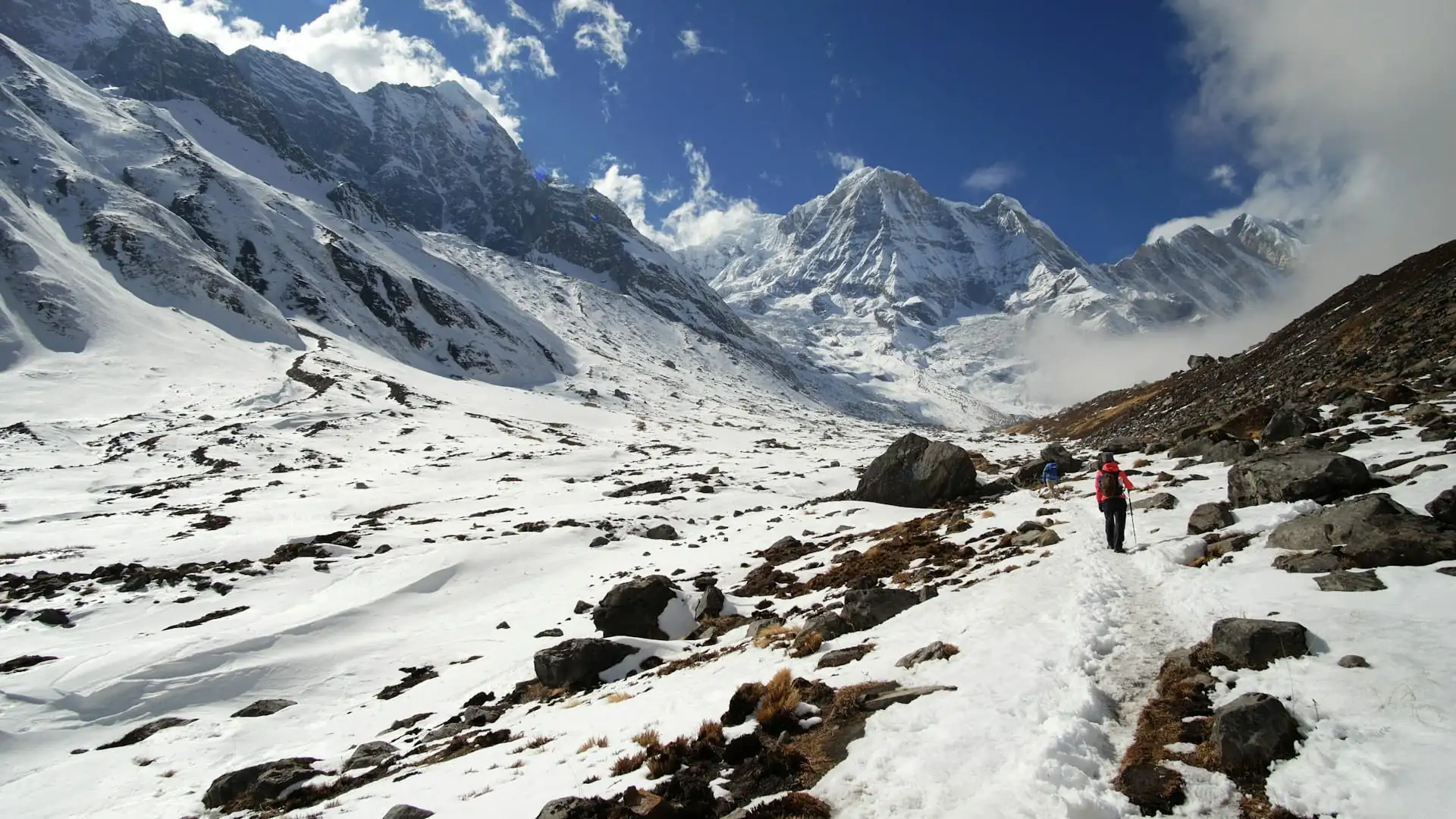
The village spacing on the ABC route isn't arbitrary — it reflects a genuine effort to manage altitude gain sensibly, even though ABC's final elevation of 4,130 meters is considerably lower than Everest Base Camp's 5,364 meters, meaning altitude sickness risk on this trek is comparatively more manageable, particularly for first-time high-altitude trekkers.
Even so, the standard itinerary avoids excessive single-day elevation gains: most stages keep net altitude gain within the commonly recommended 300–600 meter range, with the notable exception of the final push from Deurali to ABC, which involves a gain of roughly 990 meters in a single day — the largest jump on the route, and the reason most itineraries treat Deurali as an important staging point rather than rushing straight through it.
Stage | Elevation gain |
|---|---|
Ghandruk to Chhomrong | ~230 m net (with descent and reascent) |
Chhomrong to Sinuwa | ~190 m (after a steep initial descent) |
Sinuwa to Bamboo/Dovan | ~350–450 m |
Dovan to Deurali | ~630 m |
Deurali to ABC (via MBC) | ~900–990 m (largest single-day gain on the route) |
This is also part of why a rushed 5-to-7-day version of the ABC trek, while physically possible for very fit and experienced trekkers, is generally not recommended for first-timers: the Ghandruk and Chhomrong stages aren't purely cultural stops, they function as genuine lower-altitude acclimatization steps that a compressed itinerary skips or significantly shortens.
Frequently Asked Questions about Annapurna Base Camp Trek Accommodation
Do I need to book teahouses in advance for the ABC trek?
Generally no, except during peak season (mid-October to November), when capacity at higher stops like MBC and ABC can genuinely fill up. Guides typically call ahead from the previous village to secure rooms regardless of season.How much does a night in a teahouse cost on the ABC trek?
Roughly $2–$6 in lower villages and $8–$15 near Base Camp, though many teahouses offer free or heavily discounted rooms if you eat all your meals at that lodge — the standard, expected arrangement on this and most Nepali teahouse treks.Are hot showers available the whole way?
No. Hot showers are common and inexpensive below Deurali but become limited, and sometimes entirely unavailable, at Machhapuchhre Base Camp and Annapurna Base Camp, particularly during colder months.Is Wi-Fi available on the ABC trek?
Yes, in most villages, usually for a small fee ($2–$5), though connection quality weakens considerably the closer you get to Base Camp.Can I get a private room, or will I have to share?
Private twin rooms are standard and typically available throughout the year. During peak season weeks, particularly at ABC and MBC, capacity constraints can occasionally mean sharing a room or, rarely, dormitory-style accommodation if arriving late without an advance booking.Do I need to carry my own sleeping bag?
Teahouses provide blankets, but many trekkers bring a sleeping bag liner or lightweight sleeping bag for extra warmth, particularly for the colder nights at Deurali, MBC, and ABC.What food is available at teahouses on this trek?
Dal bhat (with free refills) is the standard, best-value option throughout. Western-style dishes like pasta and pizza are available almost everywhere but cost more, particularly at higher elevations.Are homestays available on the ABC trek?
Yes, but only in the lower villages — Ghandruk, Chhomrong, and Sinuwa — where trekkers can arrange to stay with a local family rather than a standard teahouse. This isn't available at higher altitudes.How does teahouse cost compare to a guided package price?
Guided packages from agencies like Adventure Life Nepal typically bundle teahouse accommodation and meals directly into the overall trip cost, meaning trekkers don't need to negotiate individual room and meal rates at each stop along the way.Why do prices rise so much the closer you get to Base Camp?
Everything above Ghandruk — food, gas, building materials — has to be carried in by porter or mule since there's no road access, and that transport cost is reflected directly in what teahouses charge for rooms, meals, and extras the higher you climb.Is electricity available for charging devices at teahouses?
Yes, at most stops, usually for NPR 100-300 per device. Charging becomes less reliable above MBC, so a power bank is worth carrying for the final two nights.What's the difference in room quality between lower and higher altitude teahouses?
Lower villages like Ghandruk and Chhomrong often have sturdier, more finished lodges with better insulation, while rooms at Deurali, MBC, and ABC tend to be simpler wooden structures built to withstand cold and weather rather than offer comfort.Do teahouses have common dining/heating areas?
Yes — every teahouse has a shared dining hall, usually with a wood or dung-burning stove, which serves as the main gathering and warming spot each evening since individual rooms are unheated.Is it possible to trek the ABC route without staying overnight at Base Camp itself?
Yes — some itineraries stay at MBC and do a day trip to ABC for sunrise before descending, either to avoid the coldest night or as a precaution against altitude sickness, though most standard itineraries do include an ABC overnight.Are there toilet facilities at every teahouse, and are they Western or squat-style?
Yes, every teahouse has toilets, though the style shifts with altitude — Western-style flush toilets are common in lower villages, while squat toilets, sometimes without running water, become more typical from Himalaya village upward.What should I pack specifically for teahouse comfort rather than trekking itself?
Useful extras include a headlamp for nighttime bathroom trips, earplugs for thin-walled rooms, flip-flops for indoor/bathroom use, and hand sanitizer, since hot water for washing isn't always guaranteed at higher stops.Can dietary restrictions (vegetarian, gluten-free, etc.) be accommodated at teahouses?
Vegetarian options are widely and easily available since dal bhat is naturally vegetarian-friendly; gluten-free and other specific restrictions are harder to accommodate reliably, especially at higher-altitude teahouses with limited menus.Do teahouse owners expect tips in addition to room and meal payments?
Tipping teahouse staff directly isn't standard practice the way tipping guides and porters is, though rounding up or leaving a small tip for particularly helpful lodge owners is appreciated, not expected.
Conclusion to Annapurna Base Camp Trek Accommodation
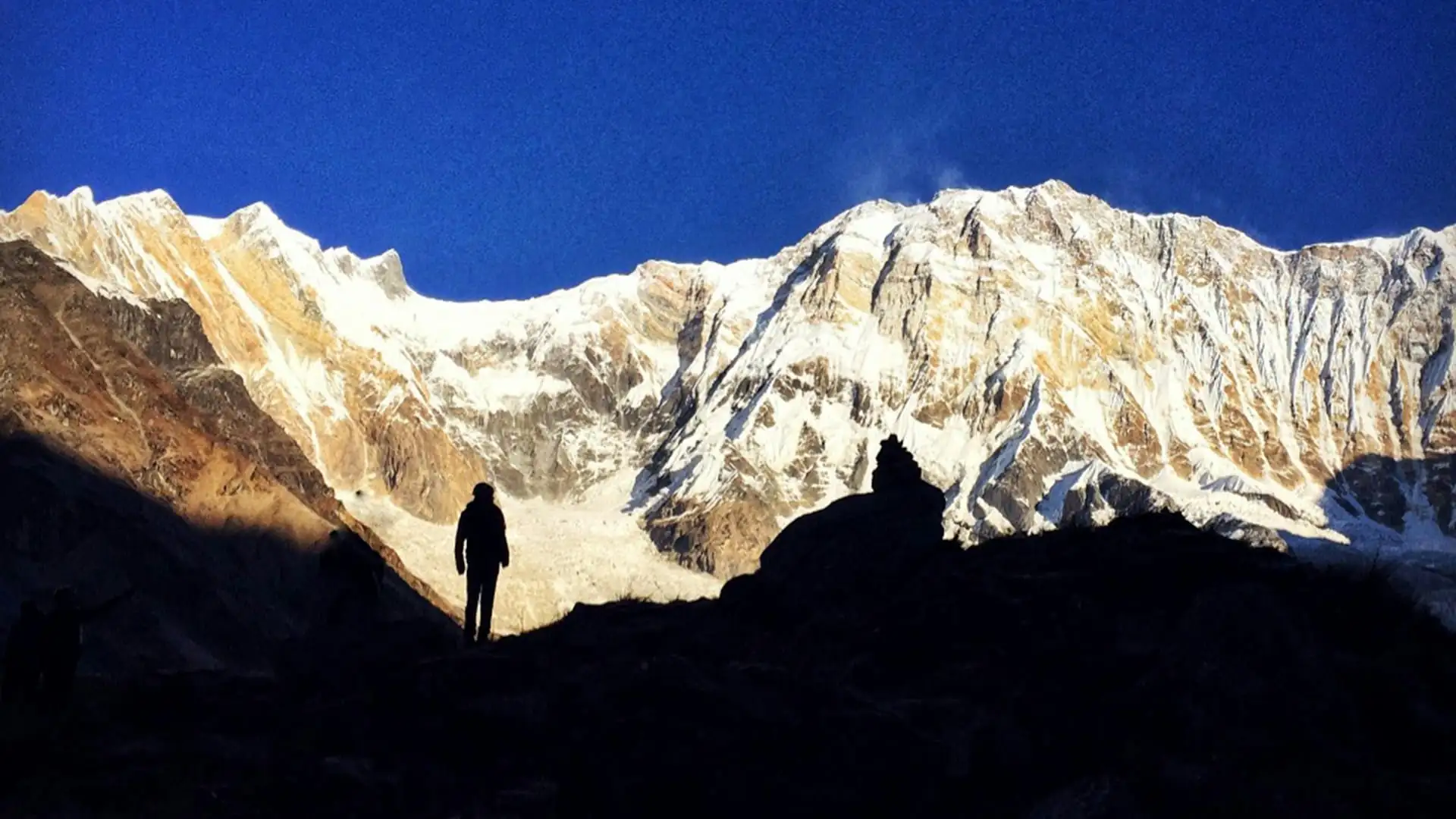
Accommodation on the Annapurna Base Camp trek is simple by design: a teahouse bed and a hot plate of dal bhat at the end of every walking day, priced modestly at low elevation and rising steadily — but predictably — as you climb toward 4,130 meters. Understanding the "eat where you sleep" system, knowing roughly what to expect at each stage from Ghandruk through to Base Camp, and packing a few small comfort items for the colder, more basic lodges near the top is really all it takes to have a smooth, comfortable experience on this route.
For trekkers who'd rather not manage lodge bookings, meal negotiations, and peak-season capacity risk on their own, a guided package handles all of it — leaving you to focus on the forest trails, the suspension bridges, and the moment the Annapurna Sanctuary finally opens up around you at Base Camp itself.