Peak Climbing in Nepal 2027 | Best Peaks, Costs & Guide
At 3 a.m. on summit day, nobody talks. Headlamps bob in a slow line up a frozen slope, crampons squeak on old snow, and the only real conversation is between you and your own breathing. Hours later, the sun hits the ridgeline and you are standing above 6,000 meters with Everest, Lhotse and Makalu sitting on the horizon like they have always been waiting for you.
That moment is why peak climbing in Nepal pulls in thousands of trekkers who never imagined themselves as mountaineers. You do not need years of expedition experience to get there. You do need honesty about your fitness, patience with altitude, and the right team around you.
This guide walks through the peaks worth your time, what they actually demand, what they cost in 2026, when to go, how to prepare, and how to avoid the mistakes that turn a dream climb into a cold, expensive lesson.
What "Trekking Peak" Really Means in Nepal
In Nepal, a trekking peak is a mountain that the Nepal Mountaineering Association (NMA) lists for climbing under a simpler permit system than the big expedition summits. The listed peaks generally sit between roughly 5,500 m and 6,500 m. Climbers, guides and agencies often call them Nepal trekking peaks, and you will see the phrase "climbing peaks" used the same way.
Here is the part brochures skip: the word "trekking" describes the permit category, not the experience. Every one of these mountains involves snow, ice or rock, and many involve fixed ropes, crampons and exposure. The number of listed peaks has shifted over the years, which is why you will see different totals quoted across the internet. What matters for you is the specific peak, its route and its difficulty.
Expedition peaks, such as Everest or Ama Dablam, are a different league. They need different permits, much larger logistics and far more technical skill. If your ambition is the big one someday, trekking peaks are the sensible first step, and our breakdown of how hard it is to climb Everest shows how big that jump really is. If you are curious about what else rises around the Khumbu, peaks near Everest is a good map of the neighborhood.
The Best Peaks to Climb in Nepal at a Glance
Peak | Region | Height | Best for | Technical feel |
|---|---|---|---|---|
Mera Peak | Khumbu (Hinku valley) | 6,476 m (north summit) | First 6,000 m climb, big views | Glacier walking, long and high, modest technical steps |
Island Peak (Imja Tse) | Khumbu | 6,165 m | Beginners wanting real climbing | Steep headwall, fixed ropes, crevasse crossing |
Lobuche East | Khumbu | 6,119 m | Climbers wanting rock and ice, more exposure | More technical than Island Peak for many |
Pisang Peak | Annapurna | 6,091 m | Combining with the Annapurna Circuit | Steep snow, committed summit day |
Larkya Peak | Manaslu | 6,010 m | Adding to the Manaslu Circuit | Moderate snow and ridge climbing |
Naya Kanga | Langtang | 5,844 m | A Langtang add-on with real snow climbing | Moderate |
Yala Peak | Langtang | 5,732 m | Lower, gentler introduction | Easier snow slopes |
Typical full trips for the three famous Khumbu options run around 14 to 19 days from Kathmandu, including acclimatization and weather buffer.
Peak-by-Peak: What Each Climb Actually Feels Like
Mera Peak (6,476 m)
Mera is often sold as the easiest 6,000-meter peak in Nepal, and the slopes are mostly gentle. The first ascent was made in 1953 by Jimmy Roberts and Sen Tenzing. But "gentle" and "easy" are not the same thing. The challenge here is altitude, cold and a long summit day, not technical climbing.
The approach through the Hinku valley is remote and beautiful, usually crossing the Zatrwa La at around 4,600 m before dropping into quieter valleys. It is wilder than the Everest Base Camp corridor, with fewer lodges and fewer crowds. On a clear summit morning, five 8,000-meter giants are visible at once, which is why people forgive it for being long.
Choose Mera if you walk strongly, handle cold well and want a first high summit without steep ice. Think twice if you have never slept above 5,000 m.
Island Peak, Imja Tse (6,165 m)
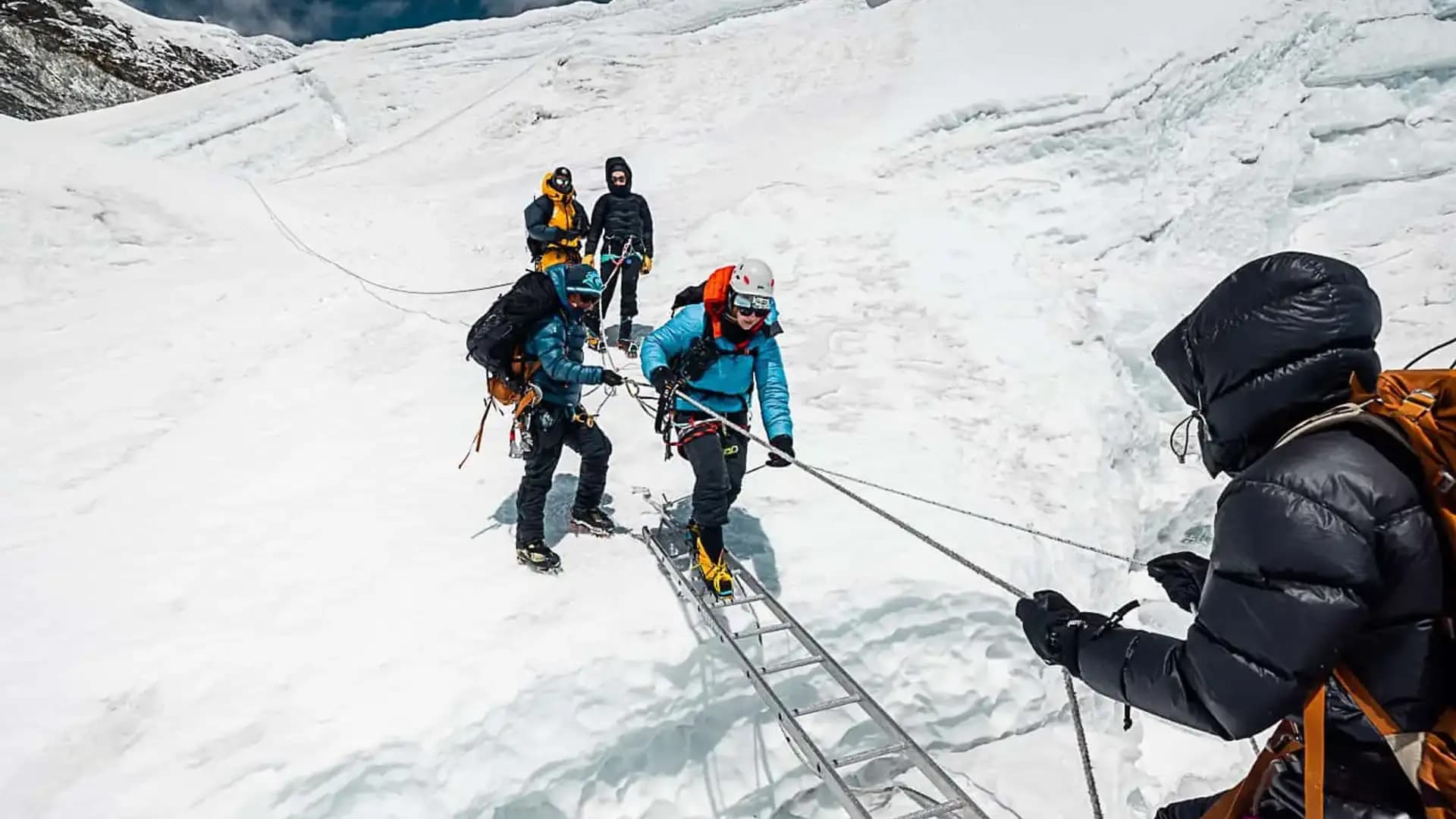
Island Peak is the classic "first real climb." The route from base camp (around 5,100 m) leads to a high camp, then summit day includes a steep headwall secured with fixed ropes and, in many seasons, a crevasse crossing with a ladder. The summit ridge is narrow enough to keep your attention.
This is where beginners learn to trust their gear. You will use a harness, jumar (ascender), crampons and an ice axe, and a good guide will spend a pre-climb day teaching exactly that. The peak earned its name from early British explorers who saw it as an island in a sea of ice.
Choose Island Peak if you want genuine climbing skills with strong guide support. It combines beautifully with an Everest region trek, which is why our Everest Base Camp trek is a natural acclimatization route.
Lobuche East (6,119 m)
Lobuche East sits close to the Khumbu Glacier and looks spectacular. It is a step up in exposure and technicality from Island Peak for many climbers, with mixed ground and a narrow ridge. A detail many people miss: the lower summit that many parties reach can be mistaken for the top, while the true summit lies further along the ridge. Know which one your team is aiming for before you leave high camp. For background on the mountain's two peaks and their classification, the Lobuche overview is a useful reference.
Choose Lobuche East if you already have some alpine or winter hiking experience and want something more committing.
Pisang Peak (6,091 m), Annapurna
Pisang is the one to pick if you prefer Annapurna scenery over Khumbu crowds. It is usually climbed from the Manang side and pairs naturally with the Annapurna Circuit trek. Summit day is steep and sustained, and the weather above Manang can turn quickly, so it rewards good acclimatization.
Larkya Peak (6,010 m), Manaslu
Larkya Peak sits near the Larkya La (5,106 m) and works well as an add-on to the Manaslu Circuit trek. The Manaslu region is quieter and more culturally rich than the headline routes, which makes this a strong choice for people who want a peak without the queues.
Yala Peak (5,732 m) and Naya Kanga (5,844 m), Langtang
The Langtang valley offers the gentlest entry to snow climbing. Yala Peak is the lower, more approachable of the two, while Naya Kanga adds a more serious snow climb. Both pair well with the Langtang trek, and the valley is close enough to Kathmandu that logistics stay simple.
How Hard Is It, Honestly?
Because peak climbing in Nepal is often marketed to trekkers, many people arrive expecting a long walk with a rope somewhere. Here is a more useful way to think about it.
Level | Typical peak | What it asks of you |
|---|---|---|
1. High altitude walker | Yala Peak | Strong trekking fitness, basic crampon use |
2. Glacier walker | Mera Peak | Long cold days, altitude tolerance, patience |
3. Beginner climber | Island Peak | Fixed-rope work, steep snow, comfort with exposure |
4. Developing alpinist | Lobuche East | Mixed ground, narrower ridges, quicker decisions |
The most common reason climbers turn back is not technical difficulty. It is a combination of altitude, cold, sleep loss and an exhausting summit day. Technical skills can be taught in a day. Altitude tolerance cannot be rushed, which is why itineraries with spare days succeed more often than rushed ones.
You do not need prior climbing experience for the most popular peaks if you are strong and well guided. You do need to be honest about whether you recover well on long days, handle cold, and stay calm on exposed ground.
Best Time for Peak Climbing in Nepal
Two windows dominate, and the NMA permit fee structure reflects that.
Season | Months | What to expect |
|---|---|---|
Spring | March to May | Warmer, longer days, more rhododendron color; busier on popular peaks; higher permit fee |
Autumn | September to November | Clear skies and stable weather after the monsoon; cold in late season; lower permit fee than spring |
Winter | December to February | Extreme cold and wind, fewer climbers; only for experienced and well-equipped parties |
Summer/Monsoon | June to August | Rain, cloud and flight delays; rarely ideal for Khumbu climbs |
For most first-timers, October and early November or April and early May give the best balance of stable weather and manageable cold. Whichever window you pick, build in at least one spare day, because summit weather decides everything. For route-level seasonal advice across the country, see our Nepal elevation guide to understand how altitude changes the conditions you will meet.
How Much Does Peak Climbing in Nepal Cost in 2027?
Costs split into three buckets: the government permit, the package or services, and the extras nobody mentions up front.
Permit fees (NMA, per person)
The NMA revised its peak permit fees from September 2025. For popular peaks such as Mera Peak, Island Peak and Lobuche East, the commonly quoted structure now is:
Season | Permit fee (foreign climbers, per person) |
|---|---|
Spring (March to May) | USD 350 |
Autumn (September to November) | USD 175 |
Winter (December to February) | USD 175 |
Summer (June to August) | USD 175 |
You may still see older figures of USD 250 spring, USD 125 autumn and USD 70 winter/summer on some websites. Those reflect the earlier structure. Fees and classifications can change, so always confirm the current rate with your agency or the Nepal Mountaineering Association before you pay.
Typical package costs
Fully supported packages vary widely based on peak, group size, guide ratio, lodge or tent camps, and what is included. As a broad market range for 2026, expect roughly USD 2,000 to 3,800 per person for a well-run, guided climb from Kathmandu, with Mera often at the lower end and Lobuche East or private departures higher. Treat this as a planning range, not a quote.
Usually included | Often not included |
|---|---|
Climbing permit and park fees | International flights and Nepal visa |
Guide, porters, staff wages | Travel and rescue insurance |
Lodge or camp accommodation | Personal climbing gear if not rented |
Meals during the trek | Tips for guides and porters |
Domestic flights to and from Lukla (some packages) | Extra nights in Kathmandu, bottled drinks, hot showers, charging |
Hidden costs worth budgeting for
Gear rental in Kathmandu (boots, crampons, harness, helmet) if you do not own them
Tips for your team, usually a meaningful part of their income
Extra days if flights are delayed or weather blocks the summit
Evacuation or hospital costs if you travel without proper insurance
For a wider view of trip budgeting, our Nepal trekking cost guide for 2026 breaks down daily costs on the trail.
Permits and Paperwork
Climbing a trekking peak requires an NMA climbing permit, plus the permits for the park or conservation area where your route sits. In the Everest region this includes national park entry and a local municipality permit. These are normally arranged through a licensed agency, along with your trekking documents.
You will need a valid passport, a Nepal visa, passport photos and a copy of your travel insurance. Unlike expedition peaks, trekking peaks do not require a government liaison officer, but a licensed guide is strongly recommended and, depending on the route and current regulations, may be required for part of your journey. Our guide on Nepal trekking guide requirements in 2026 explains where rules apply. For general entry and tourism information, the Nepal Tourism Board is the official starting point.
A Sample Route: How an Island Peak Climb Is Paced
Every itinerary differs, but the structure below shows why acclimatization takes the bulk of your time.
Stage | Where | Approximate altitude | Purpose |
|---|---|---|---|
Arrival | Kathmandu | 1,400 m | Briefing, gear check |
Fly in | Lukla, then Phakding | 2,800 m | Start walking |
Acclimatize | Namche Bazaar | 3,440 m | Rest day with a short hike |
Climb high | Dingboche | 4,410 m | Another acclimatization day |
Staging | Chhukung | 4,730 m | Last lodge before base camp |
Base camp | Island Peak Base Camp | around 5,100 m | Skills practice day |
High camp | Above base camp | around 5,600 m | Early rest before the push |
Summit | Island Peak | 6,165 m | Pre-dawn start, long day |
Descent | Back to Lukla | 2,860 m | Spare days absorb weather delays |
Peak season flights to and from Lukla sometimes operate from Ramechhap (Manthali) airport rather than Kathmandu, depending on the year, so ask your agency how they plan for it. Adding the Everest Base Camp route first, as in our Everest Base Camp with Gokyo Lakes trek, gives your body extra time at altitude before the real climb begins.
Training: A Practical 12-Week Framework
Start 12 to 16 weeks before departure. The goal is endurance and recovery, not heroics.
Weeks | Focus | Example |
|---|---|---|
1 to 4 | Aerobic base | 3 to 4 cardio sessions weekly; one long hike |
5 to 8 | Strength and load | Weighted pack hikes, stair or hill repeats, leg and core strength |
9 to 11 | Back-to-back long days | Two long hikes on consecutive days, wearing your boots |
12 | Taper | Reduce volume, rest, finalize gear |
Two details separate good preparation from average. First, train in the boots you will wear, because blisters end more climbs than people admit. Second, practice eating and drinking on the move, since appetite fades with altitude.
Gear: What to Bring and What to Rent
Category | Bring your own | Often rented in Kathmandu |
|---|---|---|
Boots | Broken-in, insulated mountaineering boots if you own them | Double boots |
Climbing hardware | Helmet, harness if you prefer your own | Crampons, ice axe, jumar, carabiners |
Layers | Base layers, mid layers, shell | Down jacket, sleeping bag (high-altitude rated) |
Hands and head | Quality gloves and a warm hat | Mittens |
Essentials | Sunglasses with side protection, headlamp, water bottles | Trekking poles |
Never rent your first pair of boots without testing the fit. Hands and feet are what fail first in the cold, so spend on gloves, socks and boots before anything else.
Altitude, Safety and Insurance
Altitude sickness is the main medical risk. Above about 3,000 m, increase your sleeping altitude gradually and take rest days rather than racing. Symptoms such as persistent headache, nausea, dizziness or unusual fatigue are warnings. Severe forms, high altitude pulmonary edema (HAPE) and high altitude cerebral edema (HACE), are emergencies that require immediate descent. Some climbers use acetazolamide (Diamox) as a preventive, but that is a decision to make with your own doctor.
On the mountain, the main hazards are crevasses, cold injury, rockfall and weather changes. Guides set turnaround times for a reason. Respecting them is the most important safety habit you can have.
Insurance matters more than most people expect. Standard travel policies often cap altitude far below 6,000 m. Look for a policy that explicitly covers mountaineering at your peak's altitude and helicopter evacuation, and read the exact wording before you buy. For altitude fundamentals across routes, our Annapurna acclimatization insights apply just as well to climbing.
How to Choose a Trustworthy Operator
Peak climbing in Nepal is not a product to be bought on price alone. Before you commit, ask questions that reveal how a company works.
Green flags
Clear explanation of what is and is not included
A named lead guide with real experience on your specific peak
Realistic guide-to-climber ratio and a plan for climbers who struggle
Built-in spare days and an acclimatization schedule you can read
Insurance and fair wages for porters and staff
First aid kit, pulse oximeter and an emergency plan
Red flags
A price far below the market range with no explanation
Pressure to book quickly or pay everything up front
Vague answers about permits, guides or evacuation
Promises of near-guaranteed summits
No spare days in the itinerary
Common Mistakes First-Time Climbers Make
Rushing acclimatization. Short itineraries look attractive but cut your safety margin.
Skipping the skills day. Practicing crampons and fixed ropes at base camp is not optional.
Underestimating cold. Summit mornings are often well below freezing, with wind making it feel colder.
Poor boot choice. Untested boots ruin summit days.
Choosing by photo, not by ability. Pick the peak that matches your level, not the most photogenic one.
Ignoring the summit-day turnaround time. Pride has ended more expeditions than weather.
Not budgeting for extras. Tips, rentals and spare days add up.
Which Peak Should You Choose?
If you... | Consider |
|---|---|
Want a high summit with minimal technical climbing | Mera Peak |
Want a first real climb with strong guiding | Island Peak |
Have some alpine experience and want more challenge | Lobuche East |
Prefer Annapurna scenery and fewer crowds | Pisang Peak |
Want quiet trails and culture with a peak | Larkya Peak |
Want the gentlest introduction | Yala Peak |
Frequently Asked Questions about Peak Climbing in Nepal
1. What is peak climbing in Nepal? It means climbing mountains that the Nepal Mountaineering Association lists as trekking peaks, usually between about 5,500 m and 6,500 m. They need a climbing permit but not the large logistics of an expedition. Despite the name, they involve snow, ice and technical equipment.
2. Is peak climbing in Nepal safe for beginners? It can be, with good preparation, proper acclimatization and a licensed, experienced guide. The main risks are altitude, cold and crevasses, all of which are managed through route design and conservative decision-making. No high-altitude climb is risk-free.
3. Which is the easiest peak to climb in Nepal? Yala Peak in Langtang and Mera Peak in the Khumbu are commonly regarded as the least technical. Mera is easier technically but higher and colder, so "easy" depends on how you handle altitude.
4. What is the best peak to climb in Nepal for first-timers? Island Peak is the popular choice for beginners who want real climbing with guide support, and Mera Peak suits those who want altitude with less technical difficulty.
5. How much does it cost to climb Island Peak? The NMA permit is USD 350 in spring and USD 175 in autumn under the revised fee structure, and fully supported packages commonly fall around USD 2,000 to 3,800 per person depending on services. Always confirm what is included.
6. How much is the Mera Peak permit in 2026? Under the revised NMA structure, USD 350 in spring and USD 175 in autumn, winter and summer. Confirm the current rate when booking, as classifications and fees can change.
7. Do I need climbing experience for Island Peak? Not necessarily. Strong fitness, good altitude tolerance and willingness to learn fixed-rope and crampon skills on a base camp training day are usually enough with a competent guide.
8. How hard is Mera Peak compared to Island Peak? Mera has gentler slopes and less technical climbing but is higher, colder and often a longer summit day. Island Peak is shorter but steeper, with a headwall and a more exposed summit ridge.
9. What is the best month to climb a trekking peak in Nepal? October and early November in autumn, and April to early May in spring, usually give the most stable weather.
10. How many days does it take? Most popular Khumbu climbs take about 14 to 19 days from Kathmandu, including acclimatization and weather buffer days.
11. Do I need a guide? For climbing a trekking peak, going with a licensed guide is strongly recommended and usually expected. Glaciers, crevasses and fixed ropes require experience, and rescue is difficult without a team.
12. Can I climb a peak in Nepal solo? Independent travel is not recommended on glaciated peaks. Regulations around guides vary by route and can change, so confirm current requirements before planning.
13. What fitness level do I need? You should comfortably do several hours of hiking on consecutive days with a pack, and recover well. Cardiovascular endurance and leg strength matter more than gym numbers.
14. What is the difference between a trekking peak and an expedition peak? Trekking peaks fall under NMA permits and are generally lower and less logistically complex. Expedition peaks, such as Everest or Ama Dablam, need Department of Tourism permits, larger teams and much higher technical skill.
15. How cold is summit day? Typically well below freezing, and wind can make it feel far colder. In the colder months it can drop significantly lower. Warm layers, insulated boots and mittens are essential.
16. What insurance do I need? A policy that explicitly covers mountaineering at your peak's altitude and includes emergency helicopter evacuation. Many standard policies cap altitude far lower, so read the wording carefully.
17. What gear can I rent in Kathmandu? Most climbing hardware (crampons, ice axe, harness, jumar), down jackets and sleeping bags can be rented in Thamel. Boots, gloves and base layers are better brought from home if you can.
18. Can I combine a peak climb with Everest Base Camp? Yes, and it is a smart way to acclimatize. Many climbers trek to Everest Base Camp or Gokyo first, then head for Island Peak or Lobuche East.
19. How do I avoid altitude sickness? Ascend gradually, take acclimatization days, stay hydrated, avoid alcohol and descend if symptoms worsen. Ask your doctor about preventive medication before you travel.
20. Can I climb during monsoon or winter? It is possible for experienced, well-equipped climbers but not recommended for beginners. Monsoon brings rain, clouds and flight disruptions, and winter brings severe cold and wind.
Ready to Plan Your Climb?
Choosing a peak is exciting, but the right route, season and team turn it into a summit instead of a story about what went wrong. If you are weighing Mera, Island Peak, Lobuche East or an Annapurna or Manaslu option, talk with the Adventure Life Nepal team and we will help you match the peak to your fitness, timing and budget.
Chat with an expert on WhatsApp: +977 9841248242