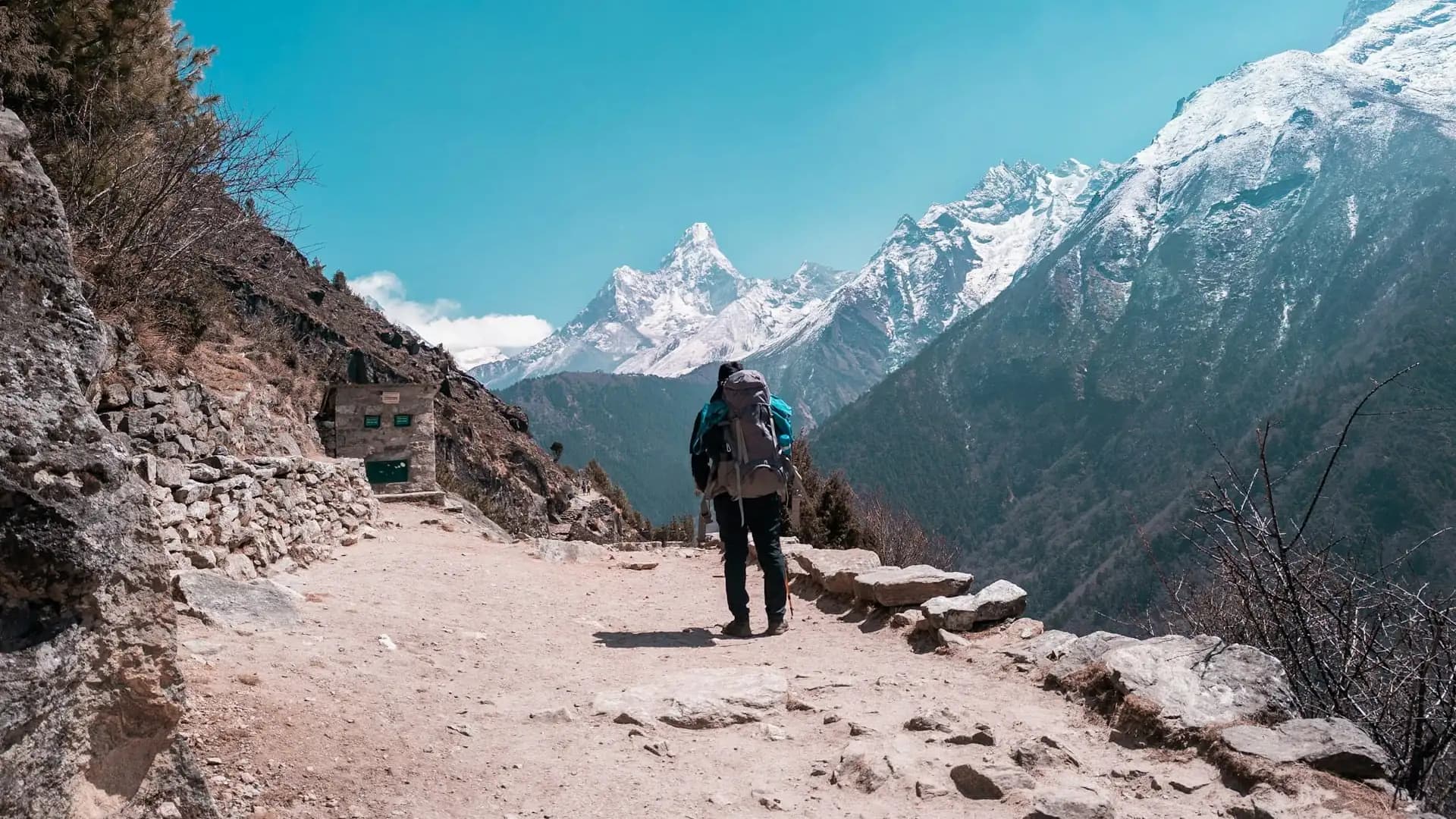
How Hard Is It to Climb Everest? Complete Difficulty Guide
Introduction on How Hard Is It to Climb Everest
Climbing Mount Everest is one of the hardest things a person can attempt, but not primarily for the reason most people assume. On the standard routes, the technical climbing is moderate by serious mountaineering standards — there are no overhanging walls or vertical ice faces that would stop a competent alpinist.
What makes the climb so punishing is everything stacked around the terrain: an expedition that takes roughly two months, a summit at 8,849 meters where the air holds about a third of the oxygen found at sea level, brutal cold, unpredictable weather, a dangerous icefall near the start, and a long final push through what climbers call the death zone.
So if you're asking how hard it is to climb Everest, the honest answer has layers. It's physically extreme, mentally exhausting, financially enormous, and statistically risky, yet also more achievable for well-prepared climbers than the mountain's reputation suggests. This guide breaks down every dimension of the difficulty, using the most recent data we could verify, so you can understand exactly what you'd be signing up for.
Quick Answer: How Hard Is Climbing Everest?
Factor | Reality |
|---|---|
Summit elevation | 8,849 m (8,848.86 m as measured in 2020; commonly rounded to 8,849 m) |
Technical difficulty (standard South Col route) | Moderate by mountaineering standards, but made far harder by altitude and conditions |
Typical expedition length | Roughly 6–9 weeks, including acclimatization |
Oxygen at the summit | About one-third of sea-level availability |
Summit success rate (members, 2010–2025) | Around 63% per Himalayan Database reporting |
Long-run historical success rate | Closer to 40% across all eras |
Overall death rate | Roughly 1% of climbers, with figures near 1.1% reported |
Minimum realistic cost | Climbing permit alone is $15,000; total from Nepal typically starts above $40,000 |
Supplemental oxygen | Used by the overwhelming majority of summiteers |
Guide requirement | Licensed guide required; solo climbing above 8,000 m banned in Nepal |
What Makes Everest So Hard? The Core Factors
Most climbers and mountaineering analysts point to the same group of challenges when explaining how difficult climbing Everest really is. None of them alone is unique, but together they make this mountain a genuinely different undertaking from almost any other climb on Earth.
Altitude. This is the central difficulty. At the summit, atmospheric pressure is roughly a third of what it is at sea level, which means every breath delivers dramatically less oxygen. Even acclimatized climbers feel extreme fatigue and impaired judgment up high.
Duration. A typical Everest expedition runs around two months door to door. That means weeks of living at base camp and above, rotating up and down the mountain to acclimatize, and managing health, morale, and logistics the whole time.
Cold and wind. Temperatures on summit day can fall far below freezing, with wind chill making exposed skin dangerous within minutes. Frostbite and hypothermia are constant risks.
Objective hazards. The Khumbu Icefall near the start of the route, avalanche-prone slopes, and serac fall make parts of the climb dangerous regardless of skill or fitness.
Narrow weather windows. Safe summit conditions usually occur only in short windows, typically in May, when the jet stream shifts. Reaching the top requires being in position and healthy at exactly the right moment.
Crowding. In busy seasons, bottlenecks near the summit ridge can force climbers to wait in the death zone, burning oxygen and energy.
The Death Zone: Why Altitude Is the Real Challenge
Above roughly 8,000 meters, the human body can no longer acclimatize. Instead of adapting, it slowly deteriorates. Climbers lose appetite, can't sleep properly, think more slowly, and risk life-threatening conditions like high-altitude pulmonary edema and cerebral edema. This is the zone where most climbers use supplemental oxygen, and where the margin between success and disaster becomes thin.
Camp or Landmark (South Col Route) | Approximate Altitude | Notes |
|---|---|---|
Everest Base Camp | 5,364 m | Start of the climbing expedition |
Camp 1 | About 6,000 m | Above the Khumbu Icefall |
Camp 2 (Advanced Base Camp) | About 6,400 m | Key acclimatization and staging camp |
Camp 3 | About 7,200 m | On the Lhotse Face |
Camp 4 (South Col) | About 7,900 m | The last camp before the summit push, at the edge of the death zone |
Summit | 8,849 m | Reached after a long, cold push from the South Col |
Figures for individual camps vary slightly between operators and seasons, since camps are set up fresh each year, but this progression captures the standard structure of the climb.
Health Risks at Extreme Altitude
Beyond the climbing itself, the human body is under constant stress on Everest. Understanding the main medical risks is part of understanding why this climb is so demanding.
Condition | What It Is | Why It Matters |
|---|---|---|
Acute mountain sickness (AMS) | Headache, nausea, dizziness, and fatigue from rapid altitude gain | Common and usually manageable, but can progress if ignored |
High-altitude pulmonary edema (HAPE) | Fluid building up in the lungs | Life-threatening; requires immediate descent and oxygen |
High-altitude cerebral edema (HACE) | Swelling of the brain | Life-threatening; causes confusion and loss of coordination |
Frostbite | Freezing of skin and tissue, especially fingers, toes, and the face | Can cause permanent tissue loss |
Hypothermia | Dangerous drop in core body temperature | A constant risk during long, windy exposure |
Snow blindness | Painful sunburn of the eyes from intense UV at altitude | Preventable with proper eye protection |
Exhaustion | Extreme fatigue, impaired judgment, and slowed decision-making | A major contributor to accidents on summit day |
Because symptoms can worsen quickly, experienced operators monitor their climbers closely, and a willingness to turn back when something feels wrong is one of the most important safety skills on the mountain. For general medical guidance on recognizing altitude illness before any high-altitude trip, the CDC's travel health guidance on high elevation is a useful independent reference.
Technical Difficulty: The Route Section by Section
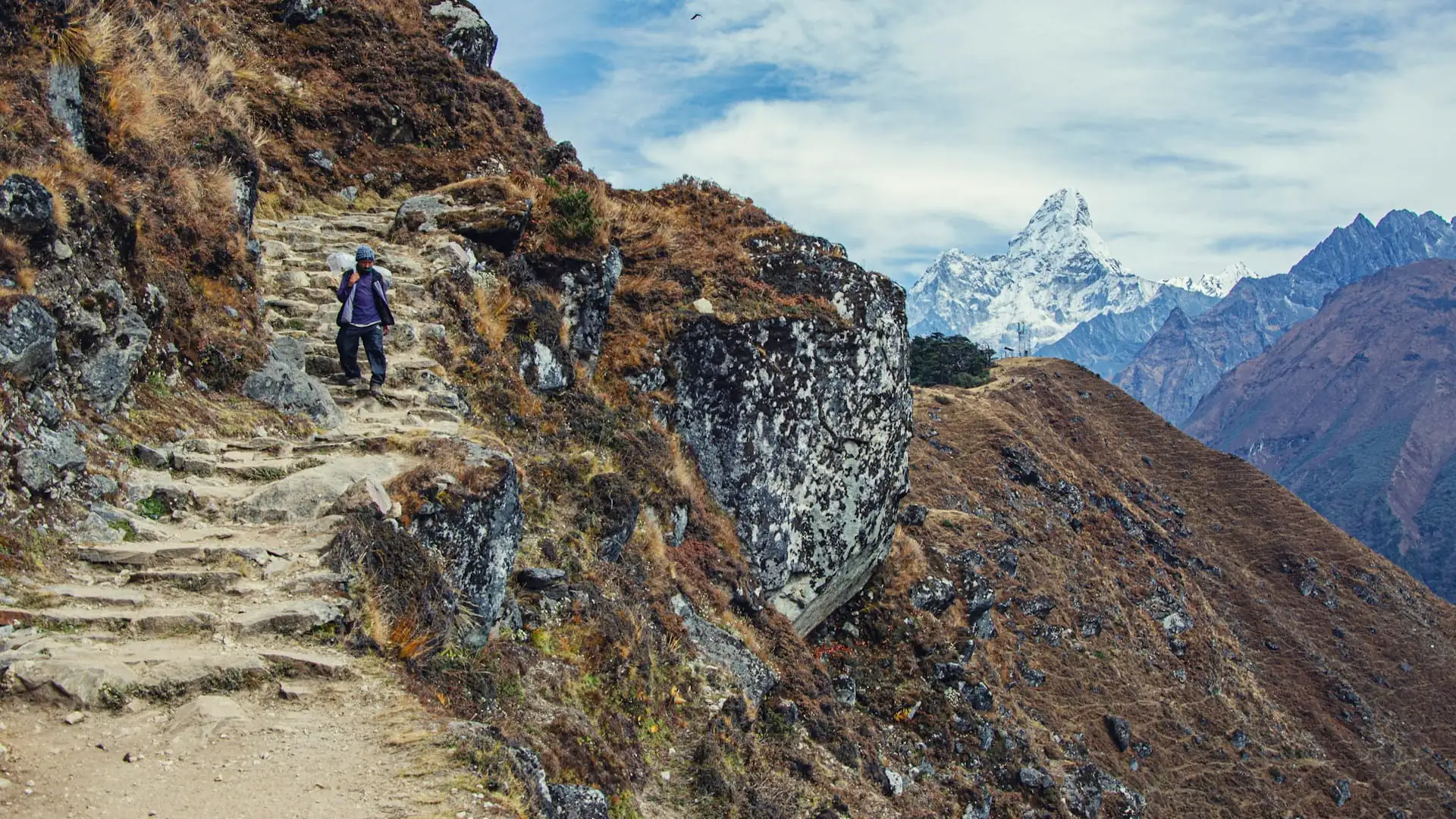
Compared with many technical peaks, the standard Nepal-side route has a reputation for being straightforward in terms of pure climbing. That reputation is true only in a limited sense. Each section brings its own challenges.
Route Section | What It Involves | Main Difficulty |
|---|---|---|
Khumbu Icefall | Crossing a glacier maze of crevasses and unstable ice towers using fixed ropes and aluminum ladders | Objective danger from collapsing ice; most climbers cross it multiple times during acclimatization |
Western Cwm | A long, flat-looking glacial valley leading to Camp 2 | Intense heat reflecting off the snow, hidden crevasses |
Lhotse Face | A steep wall of hard ice climbed on fixed ropes toward Camp 3 and Camp 4 | Sustained steepness at high altitude |
South Col to the summit ridge | Mixed snow, ice, and rock; the highest and coldest section | Oxygen deprivation, extreme cold, exposure, and exhaustion |
Summit ridge | A narrow, exposed ridge in the final stretch | Exposure and potential crowding |
The key point is that most of this terrain is climbed on fixed ropes set by a specialist team of Sherpa climbers at the start of each season. That infrastructure is what makes the mountain accessible to non-professional climbers, but it doesn't remove the underlying difficulty of working at extreme altitude.
A Typical Summit Day, Hour by Hour
Summit day is the single hardest push of the entire expedition, and it's worth understanding how it actually unfolds, because the timing is as important as the climbing.
Approximate Time | What Happens |
|---|---|
9–11 p.m. | Climbers leave Camp 4 at the South Col by headlamp, already on supplemental oxygen |
Midnight–3 a.m. | Steady climbing toward the Balcony, at roughly 8,400 meters, in the dark and cold |
3–6 a.m. | Continuing up to the South Summit, around 8,750 meters, when temperatures are often at their lowest |
5–10 a.m. | Reaching the summit, usually spending only a short time at the top |
Late morning to afternoon | Descending to Camp 4, often continuing lower once the group has rested |
In total, summit day commonly lasts roughly 12 to 18 hours, and sometimes longer when there are delays or crowding. Most operators set a strict turnaround time, often early in the afternoon, after which climbers who haven't reached the top are expected to turn around regardless of how close they are. This discipline matters because many of Everest's worst accidents have involved climbers who pushed on too late, running low on oxygen and daylight with a long descent still ahead.
The Mental and Psychological Difficulty
Discussions of how hard it is to climb Everest tend to focus on the body, but many climbers say the mental side is just as demanding. Weeks of living in a tent, repeated rotations through the Khumbu Icefall, disrupted sleep, loss of appetite, and the constant background awareness of risk wear down even strong, motivated people. Add the pressure of an expensive expedition, the uncertainty of waiting for a weather window, and the emotional weight of seeing accidents or rescues on the mountain, and the psychological load becomes substantial.
Successful climbers typically describe a few shared traits: patience during long waits, the discipline to follow the guides' plan, the humility to turn around when conditions turn, and the resilience to keep moving when tired, cold, and uncomfortable. These qualities are difficult to train in a gym, which is part of why prior experience on other high mountains is so valuable.
How Long Does It Take to Climb Everest?
Time on the mountain is a major part of the difficulty. A full expedition usually unfolds across several phases: arriving in Kathmandu, trekking to Base Camp, a series of acclimatization rotations up toward Camp 2 or Camp 3, a rest period, and finally the summit push when the weather allows. For a deeper look at the timeline, our guide on how long it takes to climb Mount Everest breaks down each phase in detail.
Phase | Typical Duration |
|---|---|
Trek to Everest Base Camp | 8–12 days |
Acclimatization rotations | 3–4 weeks |
Rest and weather waiting | 1–2 weeks |
Summit push and descent | About 4–7 days |
Total expedition | Roughly 6–9 weeks |
That length of time away from home, living in basic conditions at altitude, is itself a significant physical and psychological burden, and it's one of the factors that separates Everest from shorter high-altitude climbs.
The Two Main Routes: Nepal Side vs. Tibet Side
Most climbers use one of two standard routes, and each has its own character.
Feature | South Col Route (Nepal) | North-East Ridge Route (Tibet) |
|---|---|---|
Approach | Trek through the Khumbu region to Base Camp at about 5,364 m | Road access to a Base Camp at roughly 5,150 m |
Key hazards | Khumbu Icefall, avalanche-prone slopes, Lhotse Face | Cold, strong winds, and a series of rocky steps high on the ridge |
General reputation | The more popular route, with extensive commercial infrastructure | Often described as colder and windier, with different logistics and permits |
Share of summits | The majority of recent summits | A smaller share |
Neither route is easy. Most commercial expeditions run from the Nepal side, which is also where the trek to Base Camp becomes a major draw for non-climbers.
The Role of Sherpas in Making the Climb Possible
It's impossible to discuss how hard it is to climb Everest without acknowledging the people who make the climb feasible for most visitors. Sherpa and other high-altitude support climbers fix the ropes through the icefall and up the Lhotse Face, carry heavy loads of oxygen and equipment to the high camps, and guide clients through the most dangerous sections. In recent seasons, Himalayan Database reporting has shown that summits by Sherpa and hired staff have outnumbered summits by foreign clients, reflecting how heavily commercial expeditions rely on this support.
This labor comes with real risk. Support climbers make many more trips through the icefall than their clients do, which exposes them to hazards far more often. Anyone considering an expedition should look closely at how an operator treats, equips, insures, and pays its Sherpa team, since that is a strong indicator of overall quality and safety.
Success Rates: What the Data Actually Shows
Success statistics for Everest are often quoted inconsistently, so it helps to be precise about what each figure measures. According to the Himalayan Database, the long-standing archive of expedition records, members (non-Sherpa climbers) between 2010 and 2025 had a summit success rate of roughly 63%. Over the entire historical record, going back to the early decades of climbing, the rate is much lower, closer to 40%, because early expeditions had far less knowledge, gear, and weather forecasting.
Measure | Approximate Rate |
|---|---|
Member summit success rate, 2010–2025 | About 63% |
Long-run historical member success rate | Around 40% |
Women's summit success rate in spring 2025 | About 76% |
Men's summit success rate in spring 2025 | About 56% |
Recent seasons have also been busy. According to the Himalayan Database's reporting, 851 people reached the summit in spring 2025, making it the third-busiest Everest season on record, behind only 2019. This growth in traffic reflects the commercial infrastructure that now supports the climb, from fixed ropes to weather forecasting, though it also contributes to crowding.
Independent reporting by veteran Everest chronicler Alan Arnette and the Himalayan Database are the most widely cited sources for these figures, and they are worth consulting directly if you want the latest season-by-season numbers.
How Dangerous Is It? Death Rates and Causes
Honest difficulty assessment has to include risk. According to figures compiled from the Himalayan Database, the overall death rate on Everest sits at roughly 1% of climbers, with reported rates of around 1.14% for men and 0.81% for women. More than 330 people have died on the mountain since climbing began in earnest, with the total reaching 335 as of December 2024.
Statistic | Figure |
|---|---|
Overall death rate | Roughly 1% |
Death rate, men | About 1.14% |
Death rate, women | About 0.81% |
Total recorded deaths through December 2024 | Around 335 |
Deadliest single recent season | 2023, with at least 17 deaths |
It's worth putting these numbers in context. Everest has the highest absolute number of deaths among the 8,000-meter peaks, simply because it sees by far the most climbers, but its death rate per climber is actually lower than several other 8,000ers. Annapurna, for example, is widely cited as having a far higher death rate, at around 3.3%.
The causes of death on Everest are a mix of objective and human factors. Avalanches and falls account for a large share, alongside altitude-related illness, exhaustion, and exposure. Better weather forecasting, more experienced support teams, and widespread use of supplemental oxygen are generally credited with reducing the death rate over recent decades compared with the early eras of Everest climbing.
The Role of Supplemental Oxygen
Nearly all commercial climbers use bottled oxygen above Camp 3 or Camp 4, and many also use it for sleeping at lower camps. Only a small minority of summiteers have ever reached the top without it. Climbing without supplemental oxygen is considered one of the most extreme feats in mountaineering, with markedly higher risk, and it is not a realistic goal for most climbers. Using oxygen doesn't make the climb easy, it simply makes survival at that altitude possible for people who aren't elite athletes with extraordinary physiological tolerance.
Experience and Fitness: Who Can Climb Everest?
You don't need to be a professional alpinist to climb Everest with a commercial team, but you do need serious preparation. Most reputable operators expect climbers to arrive with significant prior experience, which commonly includes time on high peaks above 6,000 meters, solid cardiovascular fitness, and comfort with crampons, fixed ropes, and cold-weather camping.
A typical pathway involves progressing through a series of increasingly demanding objectives, with climbing permits for trekking peaks handled through Nepal's mountaineering authorities. Many climbers begin with trekking at altitude, move on to trekking peaks such as Island Peak or Mera Peak, then attempt a mountain above 7,000 meters or an 8,000-meter peak like Cho Oyu before committing to Everest.
Nepal has also been tightening the rules around who can attempt it. A new Tourism Bill, passed by Nepal's National Assembly, would require climbers to prove they have previously summited a 7,000-meter peak within Nepal before receiving an Everest permit. As of the most recent reports we reviewed, this requirement had been approved in legislation but was not yet fully in force, so the exact status is worth confirming with an operator close to your travel dates. Other requirements already reported in recent seasons include a valid medical certificate, a licensed guide, a ban on solo climbing above 8,000 meters, and a rule that each climber must bring back a set amount of waste from the mountain.
What Does It Cost?
Cost is part of what makes Everest hard to attempt, since it creates a barrier on top of the physical and technical demands. Nepal raised the Everest climbing permit fee from $11,000 to $15,000 per climber in September 2025. That is only the government fee; the total price of a commercial expedition is much higher.
Cost Category | Approximate Range |
|---|---|
Nepal climbing permit | $15,000 per climber |
Total commercial expedition (Nepal side) | Typically starting above $40,000, and commonly ranging from about $40,000 to $100,000+ depending on service level |
Supplemental oxygen, Sherpa support, insurance, and logistics | Included in operator packages at varying levels |
The wide range reflects differences in guide quality, Sherpa-to-client ratios, oxygen quantity, camp comfort, and rescue and insurance arrangements. Cheaper isn't always safer, and experienced mountaineers often advise prioritizing operator quality and support levels over saving money.
Crowding and Summit Traffic
One of the more modern difficulties is simply other people. In busy seasons, hundreds of climbers aim for the same narrow weather windows, which can lead to queues on the final ridge. Waiting in the death zone drains oxygen supplies, increases exposure to cold, and has been linked to some of the worst tragedies in recent years. Choosing an operator with strong logistics and planning around less crowded windows can reduce, but not eliminate, this risk.
How Everest Compares to Other Famous Climbs
Context helps put the difficulty in perspective. Here's how Everest stacks up against other well-known mountains in terms of altitude and the kind of commitment involved.
Mountain | Approximate Elevation | Typical Time Commitment | Character |
|---|---|---|---|
Mont Blanc | About 4,800 m | A few days | Alpine climbing with technical sections |
Kilimanjaro | 5,895 m | About 5–9 days | A non-technical high-altitude trek |
Denali | 6,190 m | Around three weeks | Cold, heavy-load expedition climbing |
Aconcagua | About 6,960 m | Around two to three weeks | A high, non-technical expedition with severe weather |
Cho Oyu | 8,188 m | About six weeks | A first 8,000-meter peak for many climbers |
Everest | 8,849 m | About 6–9 weeks | The highest peak on Earth, with death-zone exposure |
Everest is not the most technically demanding mountain in the world, but it combines more difficulty factors at once than almost any other: extreme altitude, long duration, cold, objective hazards, and the logistical and financial scale of the expedition.
Common Myths About Climbing Everest
"It's basically a long walk with ropes." The fixed ropes do make the route more accessible, but climbers still need to manage crampons, steep ice, thin air, and exhaustion in conditions that can turn dangerous quickly.
"You need to be an elite athlete." Exceptional fitness helps, but experience, judgment, and the ability to handle altitude matter just as much. Plenty of successful climbers are strong, well-prepared amateurs rather than professional athletes.
"Using bottled oxygen is cheating." Supplemental oxygen is a safety tool, not a shortcut. Even with oxygen, the summit push is extremely hard, and climbing without it carries markedly higher risk.
"Money can buy a summit." Cost is a large barrier, but no amount of money removes the need for fitness, acclimatization, good weather, and a bit of luck.
Climbing Everest vs. Trekking to Everest Base Camp
For many travelers, the real question behind "how hard is it to climb Everest" is whether they can experience the mountain without taking on such extreme risk. The answer is yes, and that's where trekking comes in. The Everest Base Camp trek takes you into the heart of Sagarmatha National Park to Base Camp at 5,364 meters, with the option of climbing Kala Patthar for a closer view, without technical climbing or the death zone.
Factor | Climbing Everest | Everest Base Camp Trek |
|---|---|---|
Maximum altitude | 8,849 m | About 5,364 m at Base Camp; Kala Patthar at roughly 5,550–5,650 m depending on the source |
Technical skills needed | Crampons, fixed ropes, high-altitude mountaineering | None |
Duration | 6–9 weeks | About 12–16 days |
Typical cost | $40,000–$100,000+ | A tiny fraction of that |
Risk level | Significant, with a death rate near 1% | Low when properly acclimatized, though altitude illness is possible |
Prior experience | Substantial high-altitude experience | Reasonable fitness; no mountaineering needed |
If you'd like to understand exactly how high the trek goes, our guide to Mount Everest Base Camp elevation covers the altitude profile in detail, and our Everest Base Camp Trek package is the standard way to experience the region on foot.
For trekkers wanting a longer, more varied adventure, the Everest Base Camp with Gokyo Lakes Trek and the Everest Three High Passes Trek add more of the region's scenery and altitude.
How to Prepare If Everest Is Your Long-Term Goal
If climbing Everest is something you genuinely want to pursue, preparation is a multi-year process rather than a single training block.
Build altitude experience gradually. Start with trekking at altitude, then progress to climbs above 6,000 meters, then 7,000 meters, learning how your body responds at each stage.
Develop technical skills. Learn to use crampons, ice axes, ascenders, and fixed rope systems on lower peaks before relying on them at extreme altitude.
Train for endurance, not just strength. Everest rewards sustained aerobic fitness, strong legs and core, and the ability to keep moving for many hours while tired and cold.
Choose a reputable operator. Look for transparent safety records, strong Sherpa support, adequate oxygen supplies, and clear rescue and insurance arrangements.
Check current regulations. Rules around permits, experience requirements, and guide use have been changing, so confirm the latest requirements before committing money and time.
For context on how Nepal's elevations compare across treks and peaks as you build experience, our Nepal elevation guide is a useful reference.
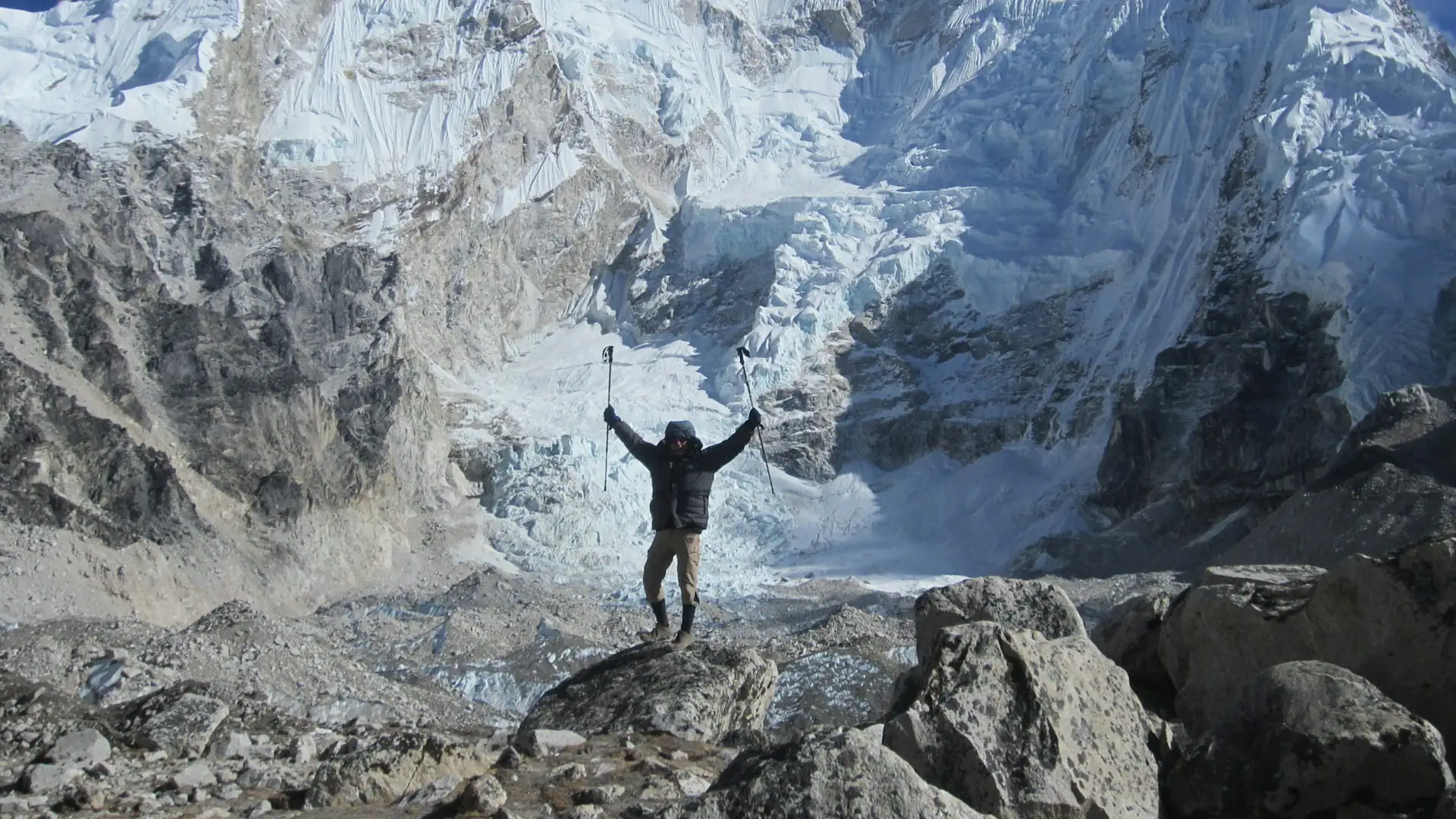
Planning Your Everest Journey with Adventure Life Nepal
Our focus is on trekking in the Everest region, and we take the same care with altitude and acclimatization on the trail to Base Camp that serious climbers apply higher up the mountain. If you're curious about Everest but not ready for a summit expedition, a well-paced trek is the best way to experience the mountain and the Khumbu valley, and it's also an excellent first step for anyone who wants to test how their body handles altitude before considering anything more ambitious.
If you're thinking about a long-term climbing pathway, we're happy to talk through how trekking and lower-altitude objectives can fit into that plan, and to be honest about what we can and can't arrange.
Frequently Asked Questions
1. How hard is it to climb Everest for an average person? It's extremely demanding. Even with fixed ropes and Sherpa support, climbers face extreme altitude, cold, and fatigue over roughly two months. Success requires serious prior mountaineering experience, high fitness, and substantial preparation.
2. Is Everest technically difficult to climb? On the standard routes, the technical climbing is moderate by mountaineering standards, since most steep sections are done on fixed ropes. The extreme difficulty comes from altitude, weather, duration, and objective hazards rather than from highly technical rock or ice.
3. What is the success rate for climbing Everest? According to the Himalayan Database, members (non-Sherpa climbers) had a summit success rate of roughly 63% between 2010 and 2025, while the long-run historical rate across all eras is closer to 40%.
4. How many people die climbing Everest? The overall death rate is roughly 1% of climbers, and more than 330 people have died on the mountain, with around 335 recorded through December 2024.
5. What is the death zone on Everest? It's the region above roughly 8,000 meters, where oxygen levels are too low for the body to acclimatize, so health deteriorates the longer a climber stays.
6. How long does it take to climb Everest? A full expedition typically takes about 6 to 9 weeks, including the trek to Base Camp, multiple acclimatization rotations, and the summit push.
7. Do you need oxygen to climb Everest? Nearly all commercial climbers use supplemental oxygen at higher camps and on summit day. Only a small minority have summited without it, and doing so carries markedly higher risk.
8. How much does it cost to climb Everest? The Nepal climbing permit alone is $15,000 per climber, and total commercial expedition costs typically start above $40,000, ranging up to $100,000 or more depending on service level.
9. Do I need prior climbing experience to climb Everest? In practice, yes. Reputable operators expect significant high-altitude experience, and Nepal has approved legislation that would require a prior 7,000-meter summit in Nepal, though its enforcement status should be confirmed with an operator.
10. Can you climb Everest without a guide? No. Nepal requires a licensed guide, and solo climbing above 8,000 meters has been banned, so every climber must be supported by a qualified team.
11. What is the hardest part of climbing Everest? Most climbers cite the summit push through the death zone as the hardest part, along with the Khumbu Icefall for its objective danger and the sustained exhaustion of weeks at altitude.
12. Is the Khumbu Icefall dangerous? Yes. It's one of the most hazardous sections of the route because of shifting ice, crevasses, and the risk of collapse, which is why climbers cross it early in the day and limit time spent there.
13. When is the best time to climb Everest? Spring, particularly May, offers the most reliable summit windows when the jet stream moves away from the summit and temperatures are most favorable.
14. Is Everest more dangerous than other 8,000-meter peaks? Everest has the highest absolute number of deaths because it sees the most climbers, but its death rate per climber is lower than several other 8,000ers, with Annapurna cited as having a much higher rate.
15. Can a fit trekker climb Everest after doing Everest Base Camp? The Base Camp trek is a very different challenge from climbing the mountain. It can be a useful first experience of altitude, but climbing Everest requires technical mountaineering skills and much deeper high-altitude experience.
16. How high is Everest Base Camp compared to the summit? Everest Base Camp sits at about 5,364 meters, while the summit is 8,849 meters, meaning the climb involves roughly another 3,500 meters of altitude gain above where trekkers stop.
17. Is climbing Everest harder from Nepal or Tibet? Each side has distinct challenges. The Nepal side involves the Khumbu Icefall, while the Tibet side is often described as colder and windier. Most commercial climbs run from the Nepal side.
18. How many people climb Everest each year? Several hundred reach the summit each season, with 851 summits in spring 2025 according to the Himalayan Database, making it the third-busiest season on record.
19. Why is Everest so crowded? A growing commercial industry, fixed ropes, better forecasting, and narrow weather windows concentrate many climbers into the same short periods, which can create queues near the summit.
20. If I can't climb Everest, how can I experience it? Trekking to Everest Base Camp is the most popular option, offering close views of Everest and the surrounding peaks without technical climbing, and typically takes around 12 to 16 days.
Talk to an Expert
Ready to explore Everest on foot, or want honest advice on the best route for your fitness and goals? Message us on WhatsApp at +977 9841248242 and our team will help you plan.
Author: Dil Bahadur Karki