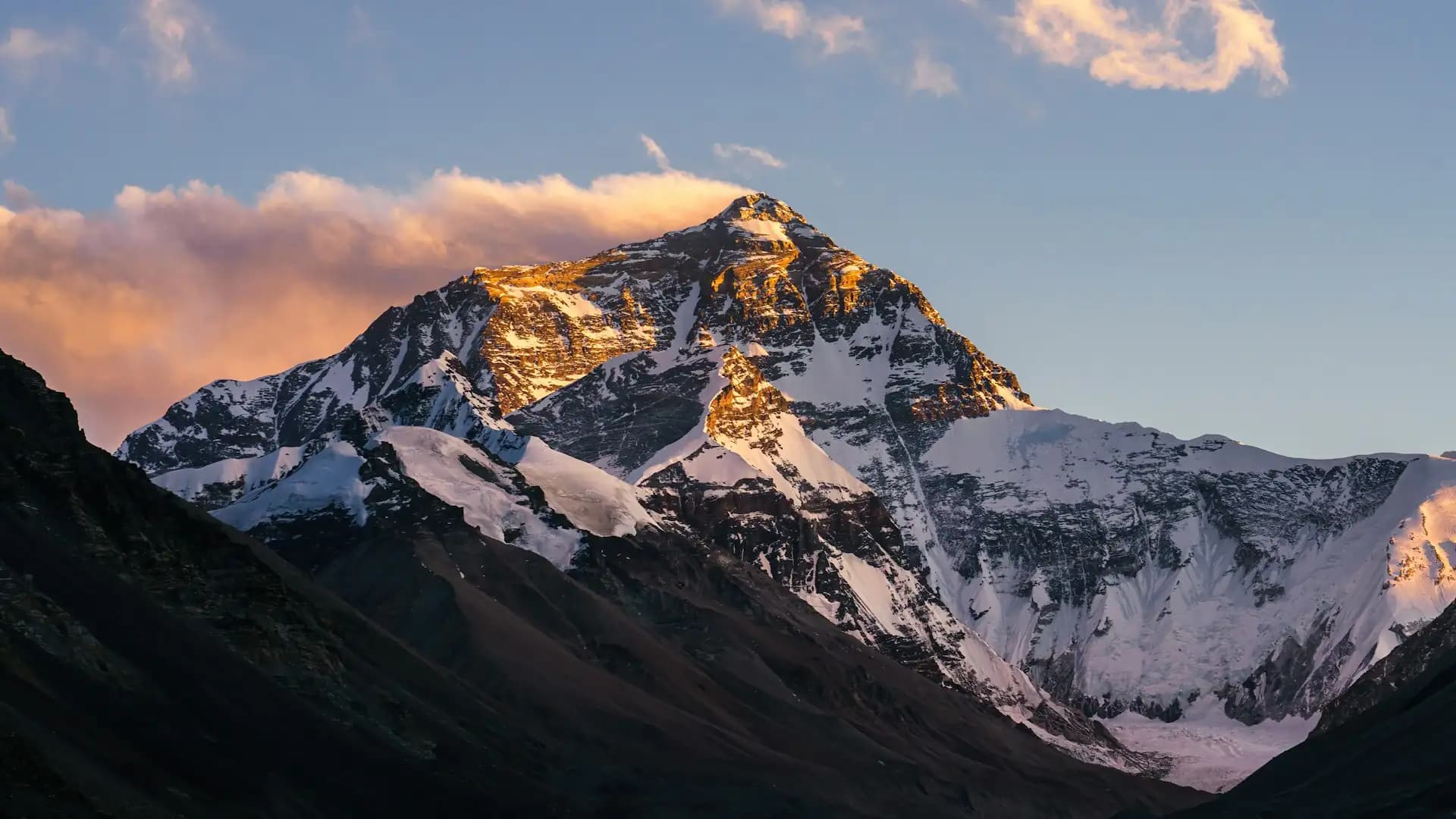
How Long Does It Take to Climb Mount Everest in 2026?
How Long Does It Take to Climb Mount Everest
A standard Mount Everest expedition takes between 60 and 75 days from arrival in Kathmandu to return, though the actual summit push itself — the part most people picture when they imagine "climbing Everest" — is only a few days of that entire window.
Nearly all of the time is spent trekking to Base Camp, running acclimatization rotations up and down the mountain, and waiting at Base Camp for a stable weather window in mid-to-late May.
Everest expedition timeline at a glance
Phase | Typical duration |
|---|---|
Kathmandu arrival, permits, gear check | 2–4 days |
Trek from Lukla to Everest Base Camp | 8–10 days |
Acclimatization rotations (Base Camp to Camps 1–3 and back) | 3–4 weeks |
Waiting at Base Camp for a summit weather window | Variable, often 1–2 weeks |
Summit push (Base Camp to summit and back) | 5–6 days |
Descent to Lukla and flight to Kathmandu | 2–3 days |
Total (standard expedition) | 60–75 days (8–10 weeks) |
Furtenbach Adventures "Flash" expedition (hypoxic pre-acclimatization) | ~2–3 weeks on the mountain |
Why Everest Takes Two Months, Not Two Weeks
The honest answer to "how long does it take to climb Everest" is that the mountain itself doesn't take that long to physically walk up — the altitude does. At the summit, roughly a third of the oxygen available at sea level reaches your lungs with each breath. The human body cannot adapt to that thin an atmosphere quickly; it has to be exposed to progressively higher elevations, repeatedly, over weeks, to trigger the physiological changes — increased red blood cell production, improved oxygen-carrying capacity, adjusted breathing patterns — that make survival above 8,000 meters possible at all, even briefly.
That's the entire reason a standard Everest expedition runs six to ten weeks instead of the six or seven days it would take to simply walk the physical distance from Base Camp to the summit and back. Climbers aren't slow because the route is long.
They're slow because the body needs that much time to adapt, and rushing the process dramatically increases the risk of Acute Mountain Sickness (AMS), High Altitude Pulmonary Edema (HAPE), and High Altitude Cerebral Edema (HACE) — all of which can be fatal, and all of which become far more likely when ascent is rushed.
Phase 1: Arrival, Permits, and Gear Checks in Kathmandu (2–4 Days)
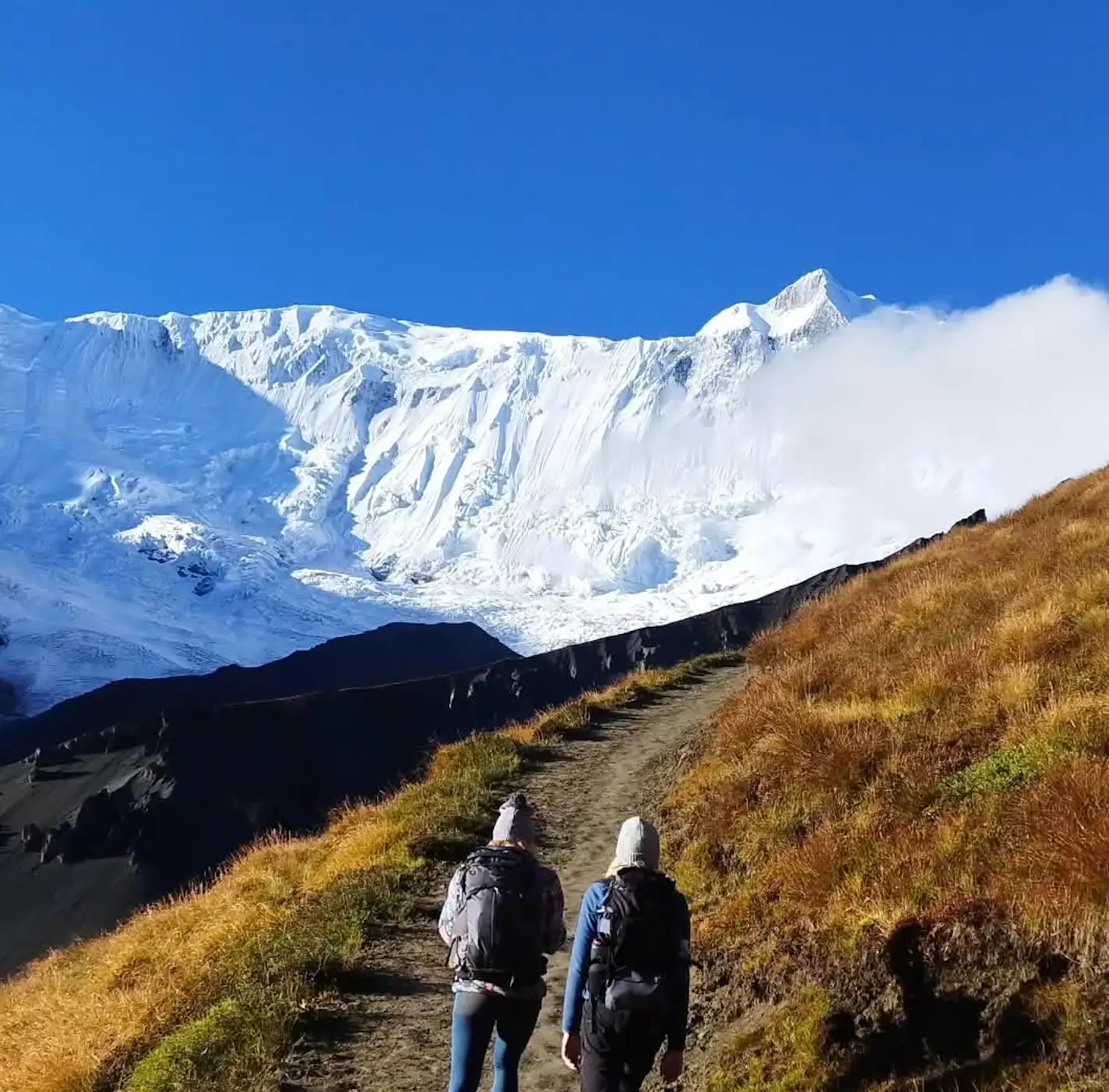
Every expedition begins in Kathmandu. Climbers typically spend two to four days here before flying to Lukla, handling final gear checks, meeting their guiding team and Sherpa crew, attending a permit briefing, and — for many operators — a formal puja or blessing ceremony conducted before departure, which is also frequently repeated at Base Camp itself before anyone steps onto the Khumbu Icefall.
This stage also involves the paperwork side of the climb, which has become significantly more involved in recent years. As of the 2025–2026 climbing seasons, Nepal requires climbers attempting any peak over 8,000 meters to be accompanied by a guide at a ratio of at least one guide per two climbers, and also requires proof of a minimum insurance coverage level for death and rescue repatriation. None of this is optional, and it's typically finalized in Kathmandu before departure to the mountain.
Phase 2: Trekking from Lukla to Base Camp (8–10 Days)
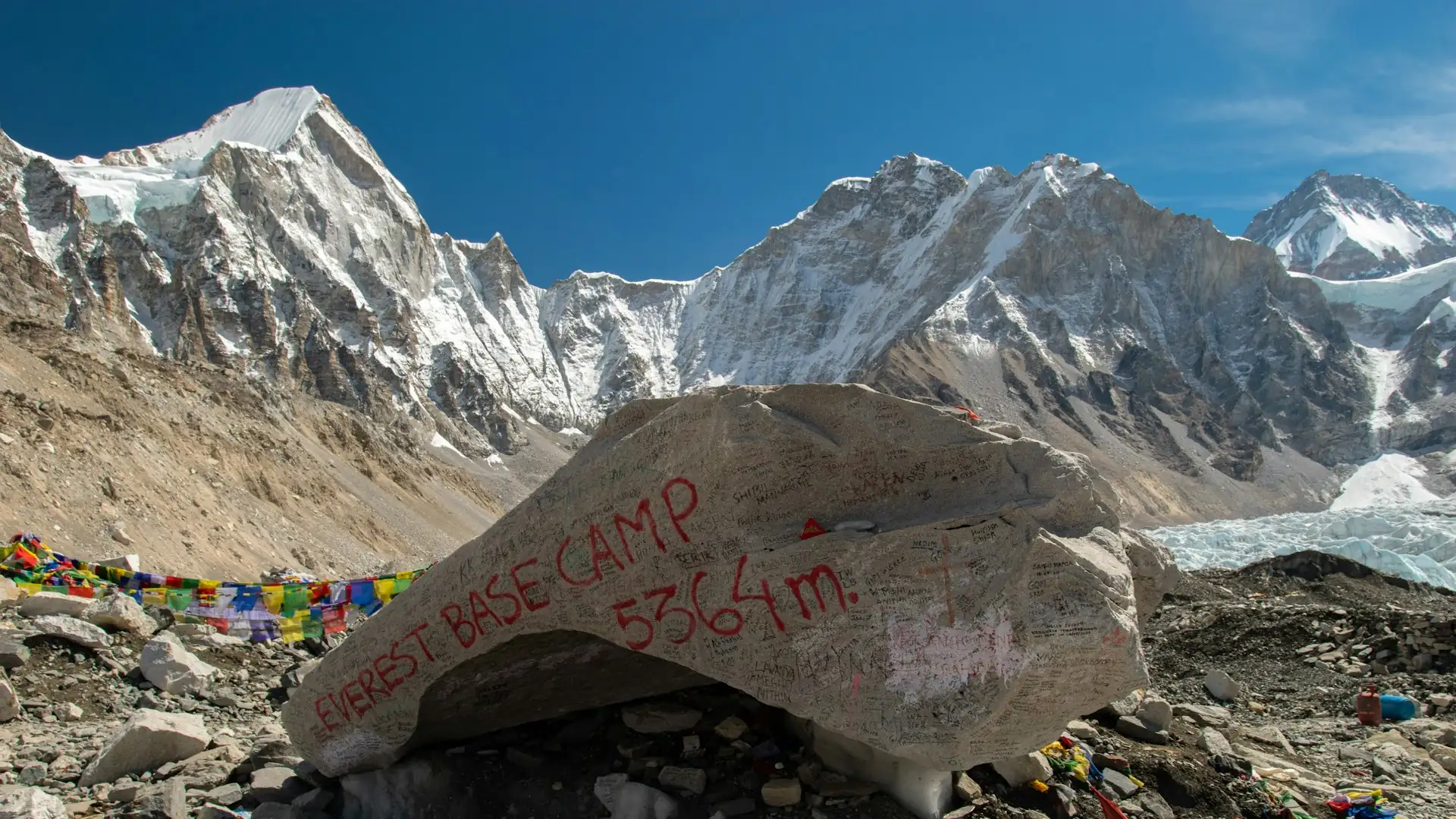
From Kathmandu, climbers fly into Lukla (2,860m) and begin the same trekking route used by Everest Base Camp trekkers — through Phakding, Namche Bazaar, Tengboche, Dingboche, and Lobuche, before reaching Base Camp itself at 5,364 meters. This stage takes 8 to 10 days, and it's already doing real acclimatization work even though it's officially just "the approach."
The trek includes built-in rest days at Namche Bazaar (3,440m) and Dingboche (4,410m), which allow the body to begin adjusting to altitude well before the technical climbing even starts.
Stop | Elevation | Typical day |
|---|---|---|
Lukla | 2,860 m | Day 1 |
Namche Bazaar | 3,440 m | Day 2–3 (acclimatization) |
Tengboche | 3,860 m | Day 4 |
Dingboche | 4,410 m | Day 5–6 (acclimatization) |
Lobuche | 4,940 m | Day 7 |
Everest Base Camp | 5,364 m | Day 8–10 |
Climbers arriving at Base Camp aren't remotely ready to attempt the summit yet. Base Camp is where the actual expedition — as opposed to the approach trek — genuinely begins.
Phase 3: Acclimatization Rotations (3–4 Weeks)
This is the longest and least glamorous part of an Everest expedition, and it's the phase almost entirely responsible for why the whole process takes so long. Rather than climbing straight from Base Camp to the summit, climbers make a series of "rotations" — repeated trips up to progressively higher camps on the mountain, followed by a full descent back to Base Camp (or lower) to rest and recover, before climbing again to an even higher point.
This "climb high, sleep low" pattern is the core physiological strategy behind all high-altitude mountaineering, and it typically plays out over three to four weeks on Everest specifically.
A standard South Col route rotation schedule looks roughly like this:
Rotation | Route | Purpose |
|---|---|---|
Rotation 1 | Base Camp → Camp 1 (through Khumbu Icefall) → back to Base Camp | Introduce the body to the Icefall and Camp 1's altitude (~6,065m) |
Rotation 2 | Base Camp → Camp 1 → Camp 2 → back to Base Camp | Extend exposure to Camp 2's altitude (~6,400m) |
Rotation 3 | Base Camp → Camp 2 → Camp 3 → back to Base Camp (or Lower Camp) | Push exposure to Camp 3 (~7,200m) on the Lhotse Face, often with a night or partial night spent there |
Rest period | Base Camp | Full recovery before the summit push, often coinciding with the wait for a weather window |
Between each rotation, climbers rest at Base Camp for several days, since the descent itself — not just the climbing — is part of what allows the body to recover and adapt before the next push. Skipping or shortening this process is one of the most common causes of failed summit attempts and altitude-related medical emergencies on the mountain.
Phase 4: Waiting for the Weather Window (Highly Variable)
Once rotations are complete, climbers descend to Base Camp and wait — sometimes for a week, sometimes for two — for a stable weather window near the summit. Everest's summit sits in the path of the jet stream for most of the year, and winds at that altitude can regularly exceed hurricane force, making a summit attempt not just uncomfortable but lethal.
The narrow spring window when the jet stream typically lifts off the summit — usually falling sometime in mid-to-late May — is why the overwhelming majority of Everest summits happen within just a handful of days each year, a pattern that produces the crowded "traffic jam" photos near the Hillary Step that circulate almost every climbing season.
This waiting period is unpredictable by nature. A team with excellent acclimatization and a strong summit push plan can still lose a week or more simply waiting for forecasters to identify a viable window, and in a poor weather year, some expeditions never get a clean shot at all.
Phase 5: The Summit Push (5–6 Days)
Once a weather window opens, the final summit push begins — and this is the part of the expedition most people actually picture when they think about "climbing Everest," even though it represents only a small fraction of the total time on the mountain.
A typical summit push on the South Col route runs 5 to 6 days round-trip from Base Camp:
Day | Stage | Approx. elevation |
|---|---|---|
Day 1 | Base Camp → Camp 1 | 6,065 m |
Day 2 | Camp 1 → Camp 2 | 6,400 m |
Day 3 | Camp 2 → Camp 3 | 7,200 m |
Day 4 | Camp 3 → Camp 4 (South Col) | ~7,950–8,000 m |
Night | Rest briefly at Camp 4, then depart for summit push, often around midnight | — |
Day 5 | Summit attempt (8,848.86 m) → descend to Camp 2 or Camp 3 | — |
Day 6 | Descend to Base Camp | 5,364 m |
The final stretch above Camp 4 — through what's known as the "death zone," the altitude above 8,000 meters where the human body can no longer acclimatize and is effectively deteriorating by the hour even with supplemental oxygen — is typically climbed overnight, so climbers reach the summit around sunrise and have enough daylight remaining to descend to a safer camp before dark.
Most climbers spend only minutes at the actual summit before beginning the descent, since time spent that high carries real risk regardless of how the ascent went.
Phase 6: Descent to Lukla and Return to Kathmandu (2–3 Days)
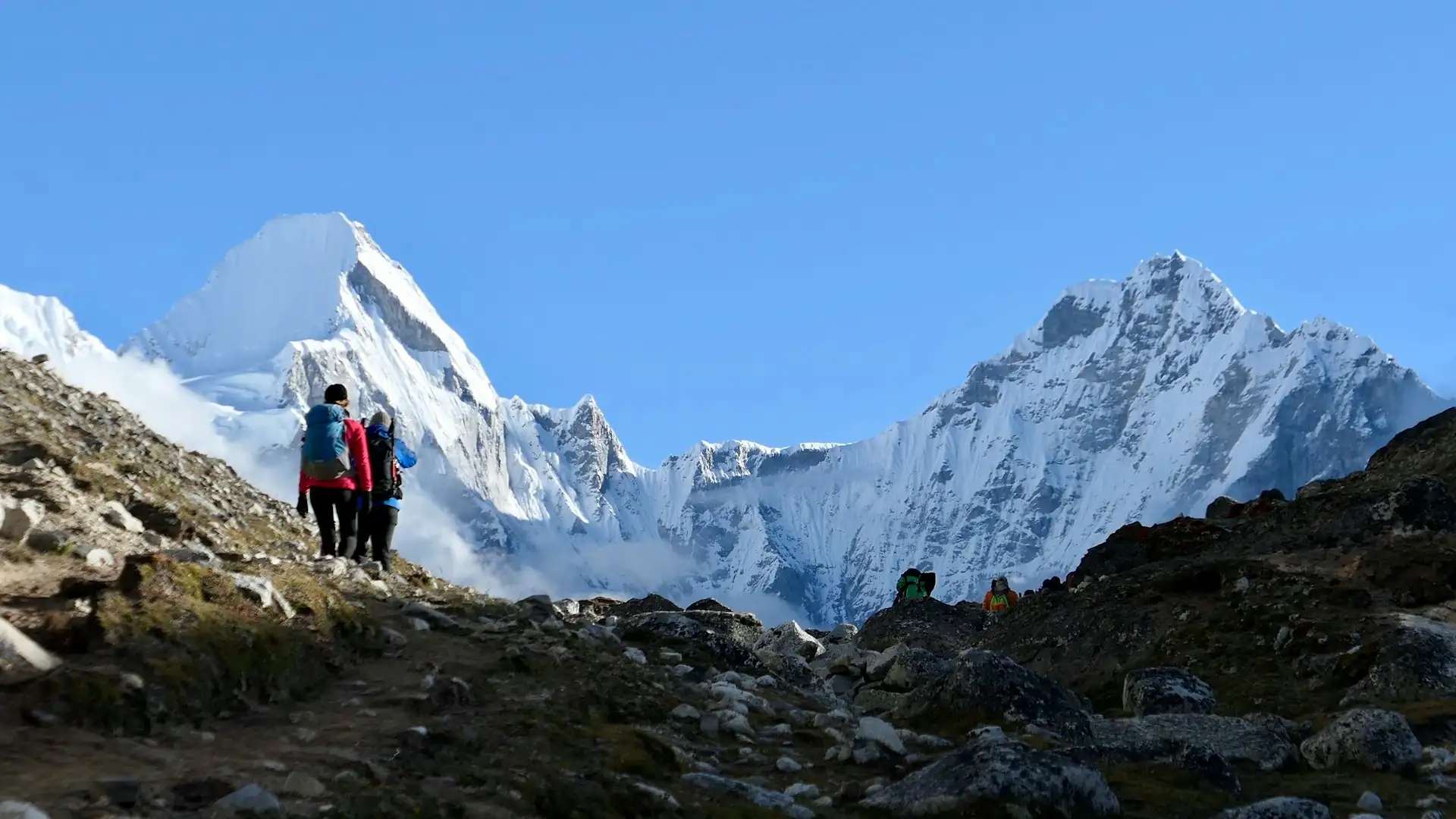
After the summit push, climbers rest briefly at Base Camp, pack out, and retrace the trekking route back to Lukla — typically in 2 to 3 days rather than the original 8-to-10-day approach, since descending doesn't require the same acclimatization pacing.
From Lukla, a short flight returns climbers to Kathmandu, where the expedition formally ends.
Faster Options: "Flash" Expeditions and Pre-Acclimatization
In recent years, several operators — most notably the Austrian company Furtenbach Adventures — have offered significantly compressed Everest expeditions using a technique called hypoxic pre-acclimatization. Rather than spending three to four weeks acclimatizing on the mountain itself through repeated rotations, climbers sleep in altitude tents at home for weeks or months before ever arriving in Nepal, artificially triggering much of the same physiological adaptation in advance.
This allows some "Flash" expeditions to compress the on-mountain portion of the climb to roughly two to three weeks total, cutting out most of the traditional rotation schedule since the body has already done a substantial share of its adaptation before setting foot on the mountain.
This approach remains controversial within the climbing community — some argue it improves safety by reducing total exposure time to the Khumbu Icefall and other objective hazards, while others argue it undermines the traditional skill-building and gradual acclimatization judgment that mountaineering has historically demanded.
Either way, it represents a genuine and growing shift in how "how long does it take to climb Everest" gets answered, since a small but increasing share of climbers are now doing it in under a month rather than two.
How Fast Can the Actual Climb Be Done? Speed Records
Separate from full expedition length, there's a long — and at times legally disputed — history of speed-climbing records measuring just the time from Base Camp to summit and back. The current Guinness-recognized record for the fastest ascent from Nepal's South Base Camp, with supplemental oxygen, belongs to Lhakpa (Lakpa) Gelu Sherpa, who reached the summit in 10 hours, 56 minutes, and 46 seconds in May 2003, with a full round-trip (Base Camp to summit and back to Base Camp) of 18 hours and 20 minutes.
A rival claim by Pemba Dorje Sherpa of 8 hours and 10 minutes, set in 2004 and initially awarded a Guinness World Record, was later challenged in Nepal's courts. In 2018, Nepal's Supreme Court ultimately ruled that Pemba Dorje's claim lacked sufficient verification, and the record was formally reinstated to Lhakpa Gelu.
On the oxygen-free side, Spanish ultrarunner and ski mountaineer Kilian Jornet climbed Everest's North Face from Base Camp without bottled oxygen or fixed ropes in roughly 26 hours round-trip in May 2017, one of the fastest known times for an unsupported ascent.
These speed records are entirely separate from a standard guided expedition timeline — they represent elite athletes deliberately skipping the rotation-and-rest structure that virtually every other climber relies on, and they're not achievable, or advisable, for the vast majority of climbers attempting the mountain.
What Actually Changes the Length of an Everest Expedition
Several factors push a given expedition toward the shorter or longer end of the 60-to-75-day range:
Weather. This is the single biggest variable. A poor-weather season can force teams to wait at Base Camp for an extra week or two beyond what they budgeted, and in rare cases can eliminate a viable summit window for the season entirely.
Route conditions. Icefall doctors — the specialized Sherpa team responsible for fixing and maintaining the route through the Khumbu Icefall each season — need time to establish and repair the route as the glacier shifts. Delays in route-fixing at the start of the season push back the entire rotation schedule for every team on the mountain.
Team size and logistics. Larger commercial expeditions sometimes move more slowly through the rotation schedule simply due to group logistics, while smaller or more experienced teams can occasionally compress rotations slightly, though there's a hard physiological floor below which acclimatization simply doesn't work regardless of team size.
Individual acclimatization. Some climbers adapt to altitude faster than others for reasons that aren't fully within their control — genetics, prior high-altitude experience, and general health all play a role. Guided expeditions build in a standard schedule, but individual climbers sometimes need additional rest days if they're not adapting on pace.
Pre-acclimatization strategy. As covered above, climbers who arrive having already spent weeks in altitude tents or at high-altitude training locations can shorten their required time on the mountain itself, sometimes substantially.
Permit validity. As of the 2025–2026 rule changes, Everest climbing permits issued by Nepal's Department of Tourism are valid for 55 days, down from a previous 75-day validity window — a change that adds some scheduling pressure to expeditions that might otherwise have built in more buffer time for weather delays.
What the 2026 Season Looks Like
Nepal significantly restructured Everest's permit system heading into the 2025–2026 seasons. The royalty fee for foreign climbers on the standard South Col route during spring (March–May) — historically the busiest and most popular season by far — rose from USD 11,000 to USD 15,000 per person, the first increase since 2015, effective September 1, 2025.
Autumn permits rose from USD 5,500 to USD 7,500, and winter/monsoon permits rose from USD 2,750 to USD 3,750 over the same period. Alongside the fee increase, the government introduced tighter regulations: a mandatory guide requirement (at least one guide per two climbers on any peak above 8,000 meters), a mandatory minimum insurance/death-repatriation coverage requirement, and the shortened 55-day permit validity window mentioned above.
None of these changes affect the physiological timeline of the climb itself — the body still needs the same weeks of acclimatization it always has — but they do add administrative steps and cost considerations that shape how expeditions plan their season.
A Realistic Full Timeline Example
Putting all of the above together, here's what a complete, realistic Everest expedition timeline looks like for a climber following the standard South Col route in spring, the most common approach used by the vast majority of climbers each year:
Week | Activity |
|---|---|
Week 1 | Arrive Kathmandu, gear checks, fly to Lukla, begin trek |
Week 2 | Continue trek through Namche, Tengboche, Dingboche to Base Camp |
Week 3 | Settle into Base Camp, puja ceremony, begin Rotation 1 (Camp 1) |
Week 4 | Rest, begin Rotation 2 (Camp 1 → Camp 2) |
Week 5 | Rest, begin Rotation 3 (Camp 2 → Camp 3) |
Week 6 | Extended rest at Base Camp, monitor weather forecasts |
Week 7 | Weather window opens, summit push begins |
Week 8 | Summit achieved, descend to Base Camp, trek/fly back to Kathmandu |
Week 9–10 | Buffer for weather delays, extended waiting, or a second summit attempt window if the first was missed |
Most operators deliberately budget for that final buffer, since even a well-run expedition with strong acclimatization can still lose a week or more simply waiting for the atmosphere above 8,000 meters to cooperate.
FAQs on How Long Does It Take to Climb Mount Everest
How long does it take to climb Mount Everest in 2026?
Climbing Mount Everest typically takes 60 to 75 days total, including acclimatization, weather delays, and summit rotations. The actual summit push from Base Camp takes about 2 months, factoring in the standard South Col route via Nepal.What is the shortest time to climb Everest?
The fastest recorded ascents (using pre-acclimatization methods like hypoxic tents or Xenon gas) have been completed in under 2 weeks. However, for traditional climbers, the safe minimum is around 40 days.How many days does the Everest expedition take from Kathmandu?
A full Everest expedition from Kathmandu, including the Lukla flight, Base Camp trek, acclimatization rotations, and summit attempt, generally takes 60 to 65 days round trip.How long is the trek to Everest Base Camp before climbing?
The trek to Everest Base Camp alone takes 8 to 10 days from Lukla, with climbers spending an additional 2 to 3 days acclimatizing in Namche Bazaar and Dingboche.Why does climbing Everest take so long?
Climbers need extended time for altitude acclimatization to avoid altitude sickness, along with multiple rotations between camps to help the body adjust to lower oxygen levels before the final summit push.What is the best month to climb Everest in 2026?
The pre-monsoon season (April to May) is the most popular climbing window, offering the most stable weather. A smaller post-monsoon window exists in September to November.How many rotations are needed before summiting Everest?
Climbers typically complete 2 to 3 acclimatization rotations between Base Camp and higher camps (Camp 1, 2, and 3) before making their final summit attempt.How long does the summit push take on Everest?
The final summit push from Base Camp to the top and back typically takes 5 to 7 days, including rest at high camps and the critical push from South Col (Camp 4) to the summit.How long do climbers stay at Everest Base Camp?
Climbers usually spend 4 to 6 weeks at or near Base Camp for acclimatization, weather waiting, and rotational climbs before attempting the summit.What is the total time commitment for an Everest expedition in 2026?
Including travel to Nepal, permits, trekking, acclimatization, and the climb itself, most climbers should plan for 2 to 2.5 months total.How long does it take to walk from Base Camp to the summit of Everest?
The final ascent from South Col (Camp 4) to the summit takes about 8 to 12 hours, while the entire route from Base Camp to summit and back spans several days due to required rest at intermediate camps.Can you climb Everest faster with prior acclimatization?
Yes, climbers who pre-acclimatize using altitude tents or high-altitude training at home can shorten their expedition by 2 to 3 weeks compared to traditional rotation-based schedules.How long does it take to get climbing permits for Everest in 2026?
Nepal's Department of Tourism typically processes Everest permits within a few weeks, though most expedition companies handle this in advance as part of the booking process.What is the average age-related time difference for climbing Everest?
Older or less experienced climbers may need additional acclimatization days, sometimes extending the total expedition by 1 to 2 weeks compared to highly experienced mountaineers.How long does it take to descend from Everest after summiting?
Descent from the summit back to Base Camp typically takes 2 to 3 days, followed by a return trek to Lukla of another 3 to 4 days.Is it possible to climb Everest in under a month?
Traditional climbing without pre-acclimatization rarely allows a full expedition under a month due to the physiological need for gradual altitude adjustment, which is essential for safety.How long does training for Everest take before the actual climb?
Most climbers spend 6 to 12 months in physical training and prior high-altitude expeditions (such as climbing 6,000m to 7,000m peaks) before attempting Everest.What causes delays in Everest summit timelines?
Common delays include unpredictable weather windows, overcrowding at the Hillary Step and summit ridge, and unexpected health issues requiring extra acclimatization time.How long is the flight and travel time to reach Everest Base Camp?
Travel typically includes a flight to Kathmandu, a short flight to Lukla (25-30 minutes), and then an 8 to 10 day trek to Base Camp.How long does it take to plan an Everest expedition for 2026?
Most climbers begin planning and booking 6 to 12 months in advance to secure permits, guides, and the optimal climbing season slot.
Conclusion to How Long Does It Take to Climb Mount Everest
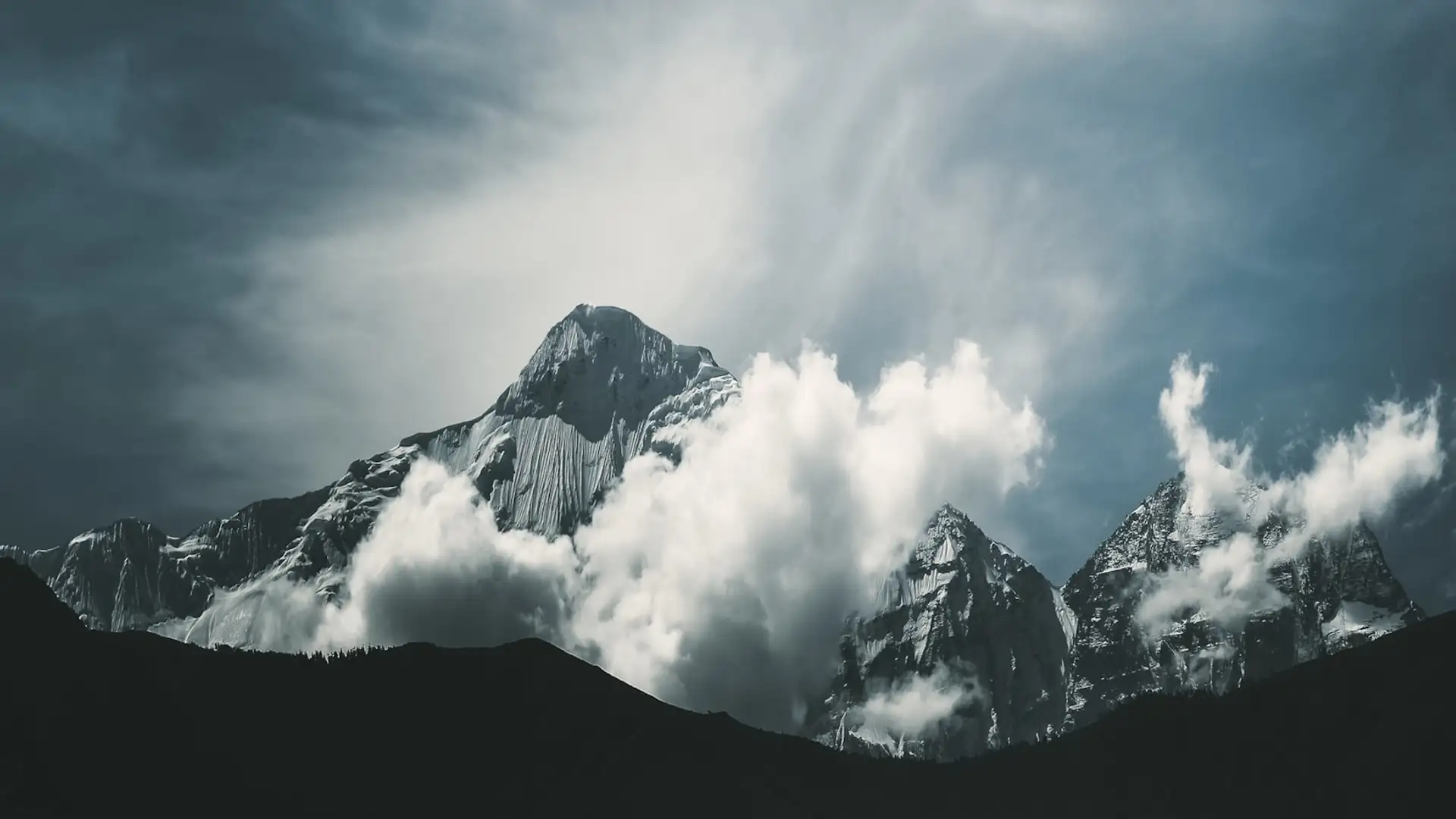
Climbing Mount Everest takes 60 to 75 days for the vast majority of climbers, and only a small fraction of that time is spent actually moving toward the summit. Roughly two weeks go to trekking in and out, three to four weeks go to acclimatization rotations up and down the mountain's lower camps, and the summit push itself — the part that gets photographed and remembered — is typically just five or six days sandwiched inside a much longer, much slower process built almost entirely around giving the body time to adapt to air that has a third of the oxygen it's used to.
Newer hypoxic pre-acclimatization methods have started to compress that timeline for a small number of climbers willing to do the adaptation work at home before ever arriving in Nepal, and speed-climbing records prove the physical ascent itself can, in extreme cases, be done in under a day.
But for the overwhelming majority of climbers standing at Base Camp each spring, the honest answer to "how long will this take" has stayed remarkably consistent for decades: about two months, most of it spent waiting, resting, and letting the body catch up to where the legs already want to go.