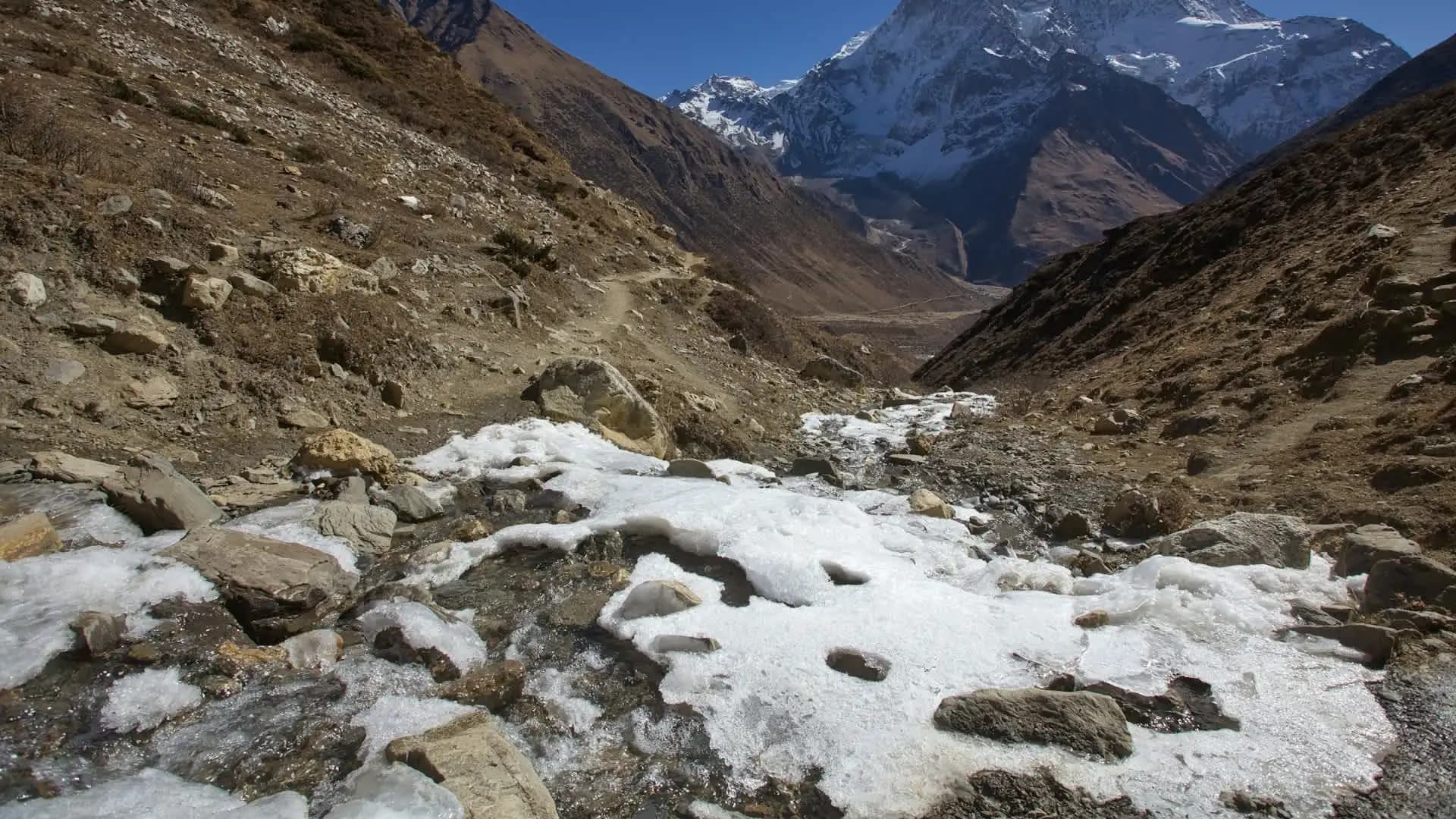
Best Time for Manaslu Circuit Trek | Season & Weather Guide
Introduction to Best Time for Manaslu Circuit Trek
The best time to trek the Manaslu Circuit is during autumn (September to November) or spring (March to May), when weather is most stable, visibility of Manaslu and the surrounding peaks is at its best, and conditions at Larkya La Pass (5,106 m) are safest to cross.
Autumn is generally considered the single best season overall, though it also carries the highest Restricted Area Permit cost of the year. Winter (December–February) and monsoon (June–August) are both trekkable in principle but come with genuine trade-offs — winter risks snow-related pass closures, while monsoon brings persistent poor visibility and landslide-prone lower trail sections.
This guide breaks the year down month by month, translating Nepal's known seasonal weather patterns up to the trek's high-altitude sections, so you can choose the window that actually fits what you want from the trip.
Best Time for Manaslu Circuit at a Glance
Season | Months | Overall rating |
|---|---|---|
Autumn | September–November | Excellent — the single most recommended season |
Spring | March–May | Excellent — a very strong second choice |
Winter | December–February | Fair — trekkable but genuine snow risk at Larkya La |
Monsoon | June–August | Poor — not recommended given visibility and trail conditions |
Why Season Matters More on Manaslu Than on Many Other Treks
The Manaslu Circuit's defining physical challenge — the 5,106-meter Larkya La Pass — sits meaningfully higher than most of Nepal's popular trekking destinations, and unlike lower-altitude routes where weather mainly affects comfort and photography, conditions at this altitude can directly affect whether the pass is safely crossable at all.
Heavy snowfall can make the crossing genuinely hazardous or impassable, particularly in winter, while the route's overall remoteness — with more limited infrastructure and rescue logistics than the Annapurna Circuit or Everest Base Camp — means that weather-related complications here carry somewhat higher stakes than on more established, better-resourced routes. Season selection on Manaslu isn't purely a comfort question; it's a genuine safety consideration tied directly to the pass crossing.
Understanding Nepal's Base Climate Pattern First
Since the Manaslu Circuit begins with a long drive from Kathmandu to Machha Khola, and Kathmandu's climate data is the most reliably documented reference point for the broader central Nepal region, it's worth starting there before extrapolating up to the trek's higher elevations.
Month | Avg. high (Kathmandu) | Avg. low (Kathmandu) | Avg. rainfall (mm) |
|---|---|---|---|
January | 16.0°C (60.8°F) | 5.9°C (42.6°F) | 56 mm |
February | 18.2°C (64.8°F) | 7.4°C (45.3°F) | 52 mm |
March | 22.1°C (71.8°F) | 10.3°C (50.5°F) | 64 mm |
April | 25.7°C (78.3°F) | 13.5°C (56.3°F) | 82 mm |
May | 26.5°C (79.7°F) | 16.8°C (62.2°F) | 183 mm |
June | 26.5°C (79.7°F) | 19.8°C (67.6°F) | 500 mm |
July | 25.9°C (78.6°F) | 20.7°C (69.3°F) | 777 mm |
August | 26.0°C (78.8°F) | 20.6°C (69.1°F) | 633 mm |
September | 25.6°C (78.1°F) | 19.3°C (66.7°F) | 364 mm |
October | 23.5°C (74.3°F) | 15.2°C (59.4°F) | 126 mm |
November | 20.2°C (68.4°F) | 11.0°C (51.8°F) | 37 mm |
December | 17.3°C (63.1°F) | 7.5°C (45.5°F) | 28 mm |
The pattern here is unmistakable and matches the broader monsoon cycle that governs seasonal trekking recommendations across Nepal: July and August are dramatically wetter than the rest of the year, while October through February are considerably drier.
This single pattern — a sharp monsoon rainfall spike from roughly June through early September, bracketed by drier spring and autumn shoulder seasons — is the foundational driver behind the "best time to trek" recommendation for essentially every major Nepal route, Manaslu Circuit included.
Translating Base Climate to the Trek's Higher Elevations
As a rough field rule, air temperature drops by about 6 to 7°C for every 1,000 meters gained. Applying this to the Manaslu Circuit's elevation profile gives a realistic sense of how much colder conditions become as the trek climbs from the lower Budhi Gandaki valley toward Larkya La.
Location | Elevation | Approx. temperature relative to Kathmandu |
|---|---|---|
Kathmandu (trip start) | ~1,400 m | Baseline |
Machha Khola (trek start) | ~870–930 m | Roughly similar to or slightly warmer than Kathmandu |
Samagaon | 3,520–3,530 m | Roughly 14–15°C cooler than Kathmandu |
Samdo | 3,860–3,875 m | Roughly 16–17°C cooler than Kathmandu |
Dharamsala (Larkya Phedi) | 4,460 m | Roughly 20–21°C cooler than Kathmandu |
Larkya La Pass | 5,106 m | Roughly 24–26°C cooler than Kathmandu |
This means that even during a comfortable, mild period in Kathmandu, trekkers should expect genuinely cold conditions from Samagaon onward, and well-below-freezing pre-dawn temperatures at Dharamsala and the pass itself — a gap that's easy to underestimate when packing or planning based on how the weather feels at trip start.
Month-by-Month Breakdown
January
Base conditions: Kathmandu's coldest month, averaging 16.0°C by day and 5.9°C at night, with relatively low rainfall (56 mm).
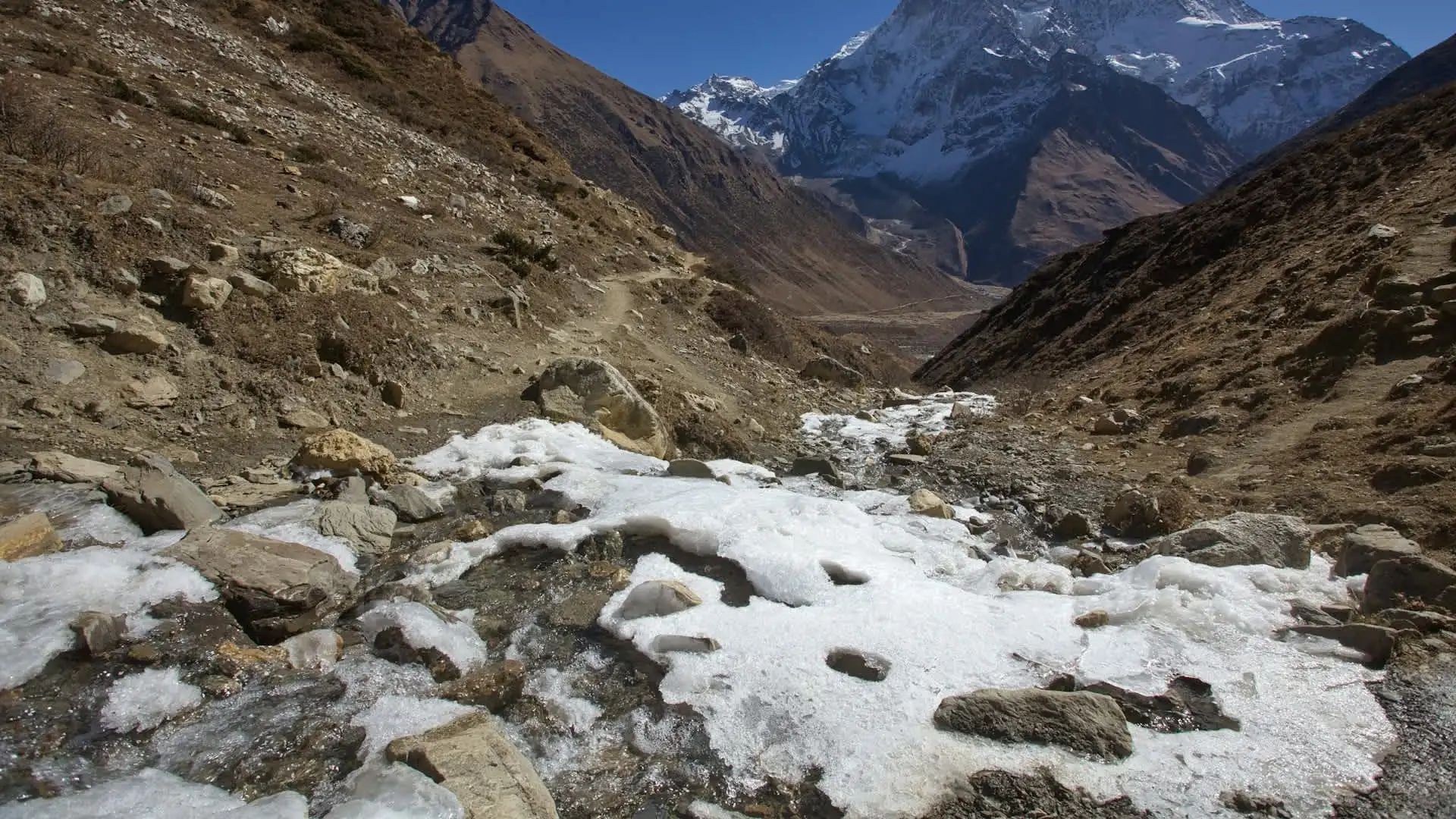
At altitude: Genuinely cold at Samagaon and above, with Larkya La regularly affected by snow accumulation from earlier winter storms. Crossing the pass in January carries real risk of snow-related delays or, in poor conditions, temporary impassability.
Permit consideration: Falls within the lower RAP rate window (December–August: USD 75 for the first 7 days).
Verdict: Trekkable for well-prepared, experienced trekkers with a guide familiar with current winter conditions, but not the recommended default given genuine snow risk at the pass.
February
Base conditions: Similar to January, warming slightly to 18.2°C by day, 7.4°C at night, with rainfall remaining low (52 mm).
At altitude: Still cold, with snow conditions at Larkya La remaining a genuine concern, though beginning to ease slightly as the month progresses toward spring.
Permit consideration: Lower RAP rate window continues.
Verdict: Similar profile to January — a legitimate option only for well-prepared, experienced trekkers accompanied by a guide with current route knowledge.
March
Base conditions: A clear shift toward spring, with Kathmandu warming to 22.1°C by day and 10.3°C at night. Rainfall remains modest (64 mm).
At altitude: This marks the practical start of the spring trekking window. Conditions at Larkya La become noticeably more manageable than deep winter, though snow from the winter season can still linger on the pass early in the month.
Permit consideration: Lower RAP rate window (December–August) still applies through this month.
Verdict: Good, improving through the month — an increasingly favorable choice as spring conditions establish themselves.
April
Base conditions: Warm and pleasant in Kathmandu, averaging 25.7°C by day and 13.5°C at night, with rainfall still relatively low (82 mm).
At altitude: Generally stable spring conditions prevail, with good visibility odds and considerably reduced snow risk at Larkya La compared to the winter months.
Permit consideration: Lower RAP rate window continues through August.
Verdict: Excellent — widely regarded as one of the strongest single months for the trek, combining favorable weather with the lower off-peak RAP rate.
May
Base conditions: Warm and increasingly humid in Kathmandu, with daytime temperatures around 26.5°C and rainfall rising notably to 183 mm, signaling the approach of the monsoon.
At altitude: Still generally trekkable and often clear in the mornings, though afternoon cloud buildup becomes more frequent as the month progresses toward the monsoon's onset.
Permit consideration: Lower RAP rate window continues.
Verdict: Good, though increasingly variable toward the end of the month — trekkers aiming for late May should build in extra flexibility given the approaching monsoon transition.
June
Base conditions: Rainfall jumps sharply to 500 mm in Kathmandu, marking the genuine onset of the monsoon, with daytime temperatures around 26.5°C but significantly higher humidity.
At altitude: Frequent cloud cover and increasing rainfall begin to meaningfully undercut visibility of Manaslu and the surrounding peaks, along with deteriorating trail conditions on the lower Budhi Gandaki sections.
Permit consideration: Lower RAP rate window continues (through August).
Verdict: Not recommended. This marks the start of the least favorable window of the year for this trek.
July
Base conditions: Among the wettest months of the year in Kathmandu, averaging 777 mm of rainfall — the genuine peak of the monsoon.
At altitude: Heavy, persistent cloud cover essentially eliminates clear mountain views for most of the month, and the lower Budhi Gandaki gorge sections become genuinely muddy, slippery, and prone to landslide risk during periods of heavy rainfall.
Permit consideration: Lower RAP rate window continues.
Verdict: Not recommended. Along with August, this is among the least favorable months of the year for the Manaslu Circuit.
August
Base conditions: Still deep in the monsoon, with 633 mm of rainfall in Kathmandu — only modestly drier than July.
At altitude: Conditions remain similar to July — persistent cloud cover, reduced visibility, and increased landslide risk on the lower trail sections.
Permit consideration: This is the final month of the lower RAP rate window before the seasonal rate increases in September.
Verdict: Not recommended, for the same reasons as June and July.
September
Base conditions: The monsoon begins to taper in Kathmandu, though rainfall remains meaningful at 364 mm for the month overall, meaning early September still carries significant monsoon characteristics.
At altitude: Early September remains unfavorable, similar to the peak monsoon months. Conditions improve meaningfully as the month progresses, particularly from mid-to-late September onward, as the monsoon retreat begins.
Permit consideration: The higher autumn RAP rate (USD 100 for the first 7 days, then USD 15/day) begins on September 1st, applying for the entire month regardless of when conditions actually improve.
Verdict: Mixed — early September should generally be avoided, but late September marks the genuine transition into the autumn trekking window, making the back half of the month an increasingly favorable, if not yet peak, choice.
October
Base conditions: A dramatic improvement in Kathmandu, with rainfall dropping sharply to 126 mm and comfortable daytime temperatures around 23.5°C.
At altitude: This is peak autumn trekking season — clear, stable post-monsoon skies dramatically improve visibility of Manaslu, the surrounding peaks, and the Larkya La crossing itself, delivering some of the best conditions of the year for this specific trek.
Permit consideration: Higher autumn RAP rate applies.
Verdict: Excellent — widely considered one of the two best months of the year for the Manaslu Circuit, alongside November.
November
Base conditions: Continuing the autumn improvement, with rainfall dropping further to just 37 mm and cooling but still comfortable daytime temperatures around 20.2°C.
At altitude: Clear skies, stable weather, and excellent visibility remain the norm through most of November, though nights at Samagaon, Samdo, and especially Dharamsala grow progressively colder as the month advances toward winter, and Larkya La can begin seeing early-season snow toward the very end of the month.
Permit consideration: Higher autumn RAP rate applies through November 30th.
Verdict: Excellent — alongside October, this is one of the two most consistently recommended months for the Manaslu Circuit, combining the year's clearest visibility with generally manageable conditions at the pass, though trekkers scheduling late November should build in some flexibility given the approaching winter transition.
December
Base conditions: A clear transition into winter in Kathmandu, with rainfall dropping to among the lowest of the year (28 mm) and cooling daytime temperatures around 17.3°C.
At altitude: Genuinely cold conditions return at Samagaon and above, with increasing likelihood of snow accumulating at Larkya La as the month progresses — a meaningful risk factor for the pass crossing, particularly later in December.
Permit consideration: The lower off-peak RAP rate (USD 75 for the first 7 days) resumes on December 1st.
Verdict: Fair early in the month for well-prepared, cold-tolerant trekkers seeking clear skies, lower permit costs, and minimal crowds; becomes progressively riskier at the pass as December advances toward full winter conditions.
Season-by-Season Summary Table
Season | Months | Temperature at altitude | Larkya La conditions | RAP cost | Overall recommendation |
|---|---|---|---|---|---|
Spring | March–May | Mild, cooling notably at altitude | Generally manageable, improving through the season | Lower rate (Dec–Aug) | Excellent |
Autumn | September–November | Mild, cooling through November | Best conditions of the year | Higher rate (Sep–Nov) | Excellent |
Winter | December–February | Genuinely cold, often well below freezing at altitude | Real snow risk, possible temporary closures | Lower rate (Dec–Aug) | Fair — experienced trekkers only |
Monsoon | June–August | Warm but humid at lower elevations | Less relevant given poor overall conditions before reaching the pass | Lower rate (Dec–Aug) | Not recommended |
Why Autumn Is Generally Considered the Single Best Season
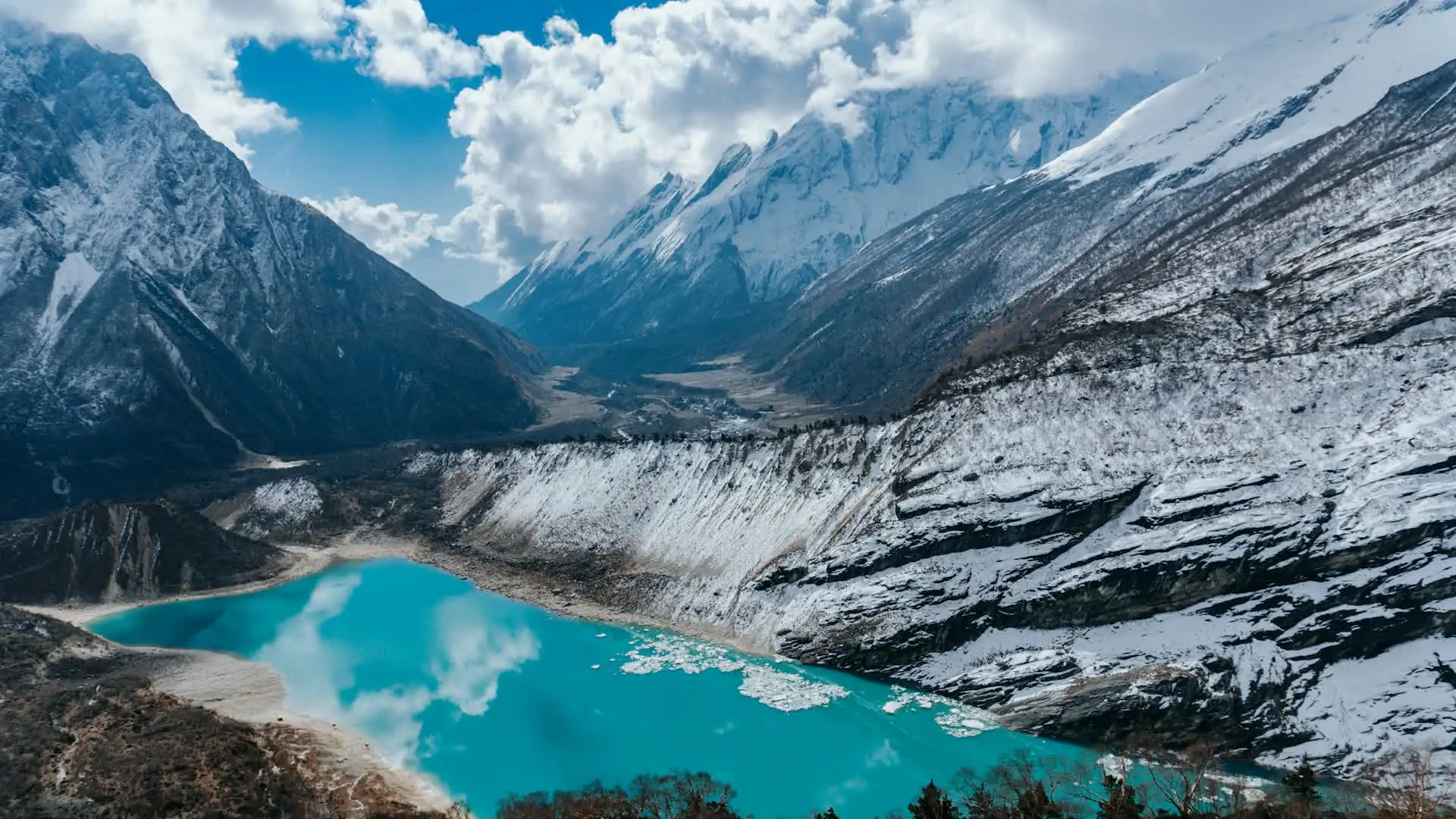
Autumn combines several genuinely favorable factors that don't fully align in any other season:
The clearest skies of the year, as the retreating monsoon leaves the atmosphere washed clean of dust and haze, dramatically improving visibility of Manaslu, Samagaon's mountain views, and the panorama from Larkya La itself.
The most stable conditions for the pass crossing, with a lower likelihood of the sudden snow accumulation that can complicate winter attempts.
Comfortable temperatures at lower and mid-altitude sections of the route, even as conditions grow genuinely cold from Samagaon upward.
The trade-off is cost — autumn carries the highest Restricted Area Permit rate of the year (USD 100 for the first 7 days versus USD 75 in the December–August window), a genuine budget consideration worth weighing against the season's clear advantages in weather reliability.
Why Spring Is a Genuinely Strong Alternative
Spring offers a compelling combination of its own: generally stable weather approaching autumn's reliability, the lower off-peak RAP rate (since the higher rate doesn't begin until September 1st), and the visual bonus of rhododendron blooms at the trek's lower elevations, similar to the seasonal highlight found on treks like Mardi Himal and the Annapurna Circuit.
The trade-off: spring's later weeks, particularly May, see increasing afternoon cloud buildup and rising humidity as the monsoon approaches, meaning visibility becomes somewhat less reliable than autumn's more consistently clear conditions — trekkers scheduling for spring should generally aim for March or April rather than late May for the most reliable conditions.
Winter Trekking: What to Genuinely Expect
Winter isn't the recommended primary season for the Manaslu Circuit, but it remains a legitimate option for well-prepared, experienced trekkers specifically seeking solitude, lower permit costs, and are ready for genuinely cold, potentially challenging conditions at the pass.
Winter trekking is a reasonable option if:
You have genuine cold-weather gear rated for well-below-freezing conditions at Dharamsala and the pass itself.
You're trekking with a guide experienced in current winter conditions on this specific route, given the trek's greater remoteness and more limited winter infrastructure compared to the Annapurna Circuit or Everest Base Camp.
You're flexible about the possibility of weather-related delays or, in more severe conditions, a need to postpone or abandon the pass crossing attempt.
You specifically want the lower off-peak permit rate and minimal crowds.
Winter trekking is not recommended if:
You don't have access to genuinely warm, sub-freezing-rated gear.
You're inexperienced with cold-weather or snow trail conditions at high altitude.
Guaranteed passage over Larkya La is essential to your trip, since winter genuinely carries the risk of the pass becoming temporarily unsafe or impassable following significant snowfall.
Monsoon Trekking: Why It's Genuinely Not Recommended
Unlike some lower-altitude regions of Nepal where monsoon trekking remains reasonably viable, the Manaslu Circuit's monsoon-season experience is meaningfully compromised for several specific reasons:
Persistent cloud cover obscures the mountain views that are central to the trek's appeal, particularly at Samagaon and Larkya La.
The lower Budhi Gandaki gorge sections become genuinely hazardous, with increased landslide risk on the narrow, cliff-hugging trail sections during periods of heavy monsoon rainfall.
Leeches become a genuine nuisance on the lower forested sections of the trail.
Trail conditions deteriorate significantly, with muddy, slippery sections throughout the lower and middle stages of the route.
Given the Manaslu Circuit's already greater remoteness and more limited infrastructure compared to routes like the Annapurna Circuit, the added landslide and trail-safety risks of monsoon season make this an even less advisable window for this specific trek than for some of Nepal's more established, better-resourced routes.
How Season Affects Permit Costs Specifically
Because the Manaslu Restricted Area Permit's pricing structure is directly tied to season, timing decisions on this trek carry a genuine cost dimension that doesn't apply to the same degree on treks like the Annapurna Circuit or Everest Base Camp, where permit costs stay flat year-round.
RAP season | First 7 days | Each additional day | Applies to months |
|---|---|---|---|
Autumn (peak) | USD 100 | USD 15/day | September, October, November |
Winter/Spring/Summer (off-peak) | USD 75 | USD 10/day | December through August |
For a standard 12-to-14-day trek, this seasonal difference can add up to USD 30–50 in additional permit cost for trekkers choosing autumn over the off-peak window — a modest but real factor worth weighing alongside the genuine weather and safety advantages autumn otherwise offers.
How Season Affects Trip Duration and Itinerary Planning
Season | Typical itinerary impact |
|---|---|
Autumn | Standard 11–14 day itinerary works well; minimal weather-related buffer typically needed |
Spring | Similar to autumn; consider slightly more buffer in late May given approaching monsoon |
Winter | Build in extra contingency days given genuine potential for snow-related delays at Larkya La |
Monsoon | Not recommended regardless of itinerary length, given persistent poor conditions throughout |
Packing Considerations by Season
Given the substantial elevation-driven temperature drop discussed earlier, packing needs to account for genuinely cold conditions from Samagaon onward regardless of season, with additional adjustments for winter specifically.
Item | Spring/Autumn | Winter |
|---|---|---|
Down jacket | Essential | Essential, heavier rating recommended |
Sleeping bag rating | -15°C to -20°C sufficient for Dharamsala/pass area | -20°C or warmer recommended |
Gloves | Insulated gloves sufficient | Heavier insulated gloves, consider liner gloves too |
Gaiters | Optional, useful near the pass | Strongly recommended given increased snow likelihood |
Trekking poles | Recommended | Recommended, particularly useful on any icy sections |
Layering system | Standard base/mid/outer layers | Same system, with heavier mid-layer options |
FAQs about Best Time for Manaslu Circuit Trek
What is the single best month to trek the Manaslu Circuit? October and November are generally considered the two best months, offering the clearest skies and most stable conditions for the Larkya La crossing. March and April are a close second, with the added benefit of the lower off-peak permit rate.
Is the Manaslu Circuit trekkable year-round? Technically yes, but monsoon season (June through August) is not recommended due to persistent cloud cover, landslide risk on lower trail sections, and reduced visibility. Winter is trekkable for well-prepared, experienced trekkers but carries genuine snow risk at Larkya La.
How cold does it get at Larkya La Pass? Given the 5,106-meter elevation, temperatures regularly drop well below freezing, particularly during the pre-dawn crossing typical of this route, even during the main spring and autumn trekking seasons, and considerably colder during winter months.
Is spring or autumn better for the Manaslu Circuit? Both are excellent choices. Autumn generally offers the clearest, most stable visibility of the year, while spring offers similarly strong conditions plus a lower off-peak permit rate and rhododendron blooms at lower elevations.
Why does autumn cost more in permit fees than other seasons? The Restricted Area Permit's peak-season rate (USD 100 for the first 7 days, versus USD 75 in the December–August window) applies specifically to September, October, and November, reflecting the higher demand and generally more favorable conditions during this window.
Should I avoid monsoon season entirely? Yes, for this specific trek. The Manaslu Circuit's lower Budhi Gandaki gorge sections become genuinely hazardous during monsoon rainfall, with increased landslide risk, and persistent cloud cover throughout the trip obscures the trek's core mountain-view highlights.
Is winter trekking on the Manaslu Circuit safe? It can be, for well-prepared, experienced trekkers with genuine cold-weather gear and a guide familiar with current winter conditions, but it carries real risk of snow-related delays or, in severe conditions, a temporarily impassable Larkya La Pass.
How much colder is Larkya La than Kathmandu? Roughly 24 to 26°C colder, based on the standard elevation-temperature relationship applied to the roughly 3,700-meter elevation difference between Kathmandu (~1,400 m) and the pass (5,106 m).
Does the season affect how many days the trek takes? Not significantly for spring or autumn — the standard 11-to-14-day itinerary generally holds. Winter trekkers may want to build in extra contingency days given the increased possibility of snow-related delays at the pass.
When do the rhododendron forests bloom on the lower sections of this route? Peak bloom season is generally March through April, making early-to-mid spring the best window specifically for trekkers wanting to see this feature of the lower trail.
What's the worst month to trek the Manaslu Circuit? July, typically the wettest month of the year in the broader region, offering the least favorable combination of visibility and trail safety conditions of the entire year.
Does the permit rate change mid-month, or only at the start of a season? The RAP rate is tied to the calendar month rather than actual weather conditions — the higher rate applies for the entirety of September, October, and November regardless of specific weather that year, and the lower rate applies for the entirety of December through August.
Is Larkya La more dangerous in winter than the Annapurna Circuit's Thorong La? Both passes carry genuine winter risk given their similarly extreme altitudes (5,106 m and 5,416 m respectively), though Manaslu's greater overall remoteness and more limited winter infrastructure can make weather-related complications somewhat more consequential on this specific route.
Can I get a discount by trekking in the off-peak season? Yes, in terms of the Restricted Area Permit specifically — the December-to-August rate is meaningfully lower than the September-to-November rate — though this needs to be weighed against winter's genuine weather and safety trade-offs, or monsoon's poor visibility and trail conditions.
What's the ideal month if I want both good weather and lower permit costs? March or April — both fall within the lower off-peak RAP rate window (which runs through August) while still offering generally favorable spring trekking conditions, before the wetter, hazier conditions of late spring set in.
How does the Manaslu Circuit's best season compare to the Annapurna Circuit's? Both treks follow essentially the same seasonal pattern — autumn and spring recommended, monsoon avoided, winter requiring extra caution — reflecting the shared regional monsoon cycle that governs trekking conditions across central Nepal.
Is early September a good time to start the trek? Generally not recommended — early September still carries significant monsoon characteristics in most years, with conditions typically not improving meaningfully until mid-to-late September.
Does winter trekking reduce crowds significantly? Yes, considerably — winter is the quietest season on this already less-crowded route, appealing to trekkers specifically seeking maximum solitude, provided they're prepared for the genuine cold and potential pass-crossing risk involved.
Should I check weather forecasts specifically for Larkya La before my crossing day? Yes — given the pass's altitude and the trek's overall remoteness, your guide should be actively monitoring conditions in the days leading up to the crossing, and trekkers should be prepared to adjust timing if a guide recommends waiting for more stable conditions.
What happens if Larkya La is genuinely impassable due to snow when I arrive? In rare cases of severe snow conditions, guides may recommend delaying the crossing attempt by a day or more, or in the most extreme scenarios, an alternative return route may need to be considered — this underscores why choosing autumn or spring, and building some itinerary buffer, is genuinely advisable rather than purely a comfort preference.
Conclusion on Best Time for Manaslu Circuit Trek
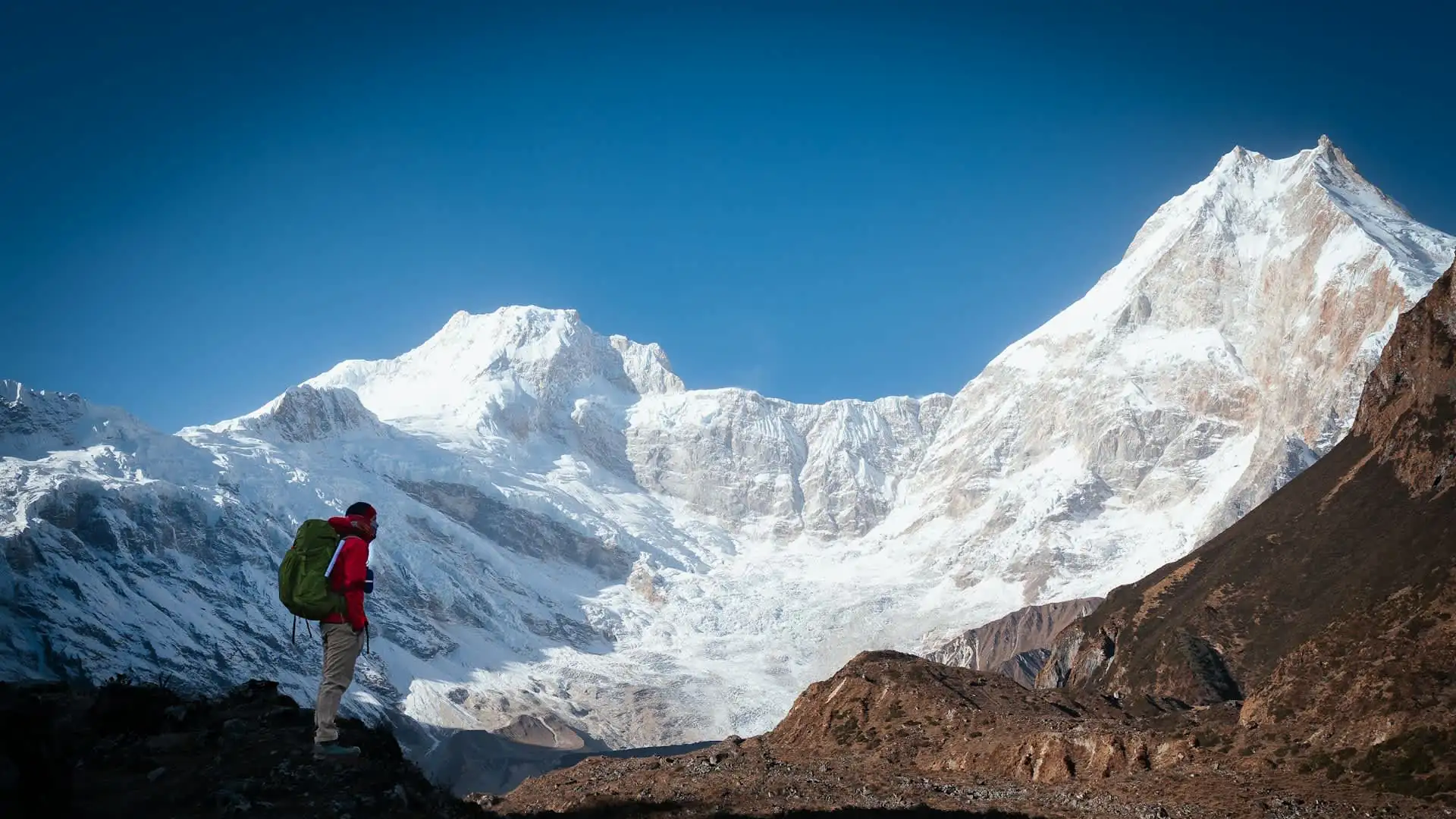
Choosing when to trek the Manaslu Circuit comes down to matching the region's well-documented seasonal weather pattern to what actually matters most for your trip: autumn (September–November) delivers the clearest, most reliable conditions of the year, both for mountain visibility and for the safety of the Larkya La crossing, at the cost of the year's highest permit rate; spring (March–May) offers nearly as strong conditions with the added benefit of lower off-peak permit pricing and rhododendron blooms, provided you schedule for March or April rather than late May; winter remains a genuine, quieter, and cheaper option for well-prepared, experienced trekkers willing to accept real snow-related risk at the pass; and monsoon (June–August) is worth avoiding entirely, given how directly persistent cloud cover and landslide-prone lower trail sections undermine both the safety and the core appeal of this specific route.
Whichever window fits your schedule and risk tolerance, understanding the roughly 25-degree temperature gap between Kathmandu and Larkya La — and the direct link between season and permit cost unique to this trek — matters just as much as the calendar month itself. Adventure Life Nepal times every Manaslu Circuit itinerary around these same seasonal and permit patterns, so trekkers reach Larkya La with the best realistic combination of clear conditions, safe passage, and a fair understanding of exactly what each season costs and delivers.