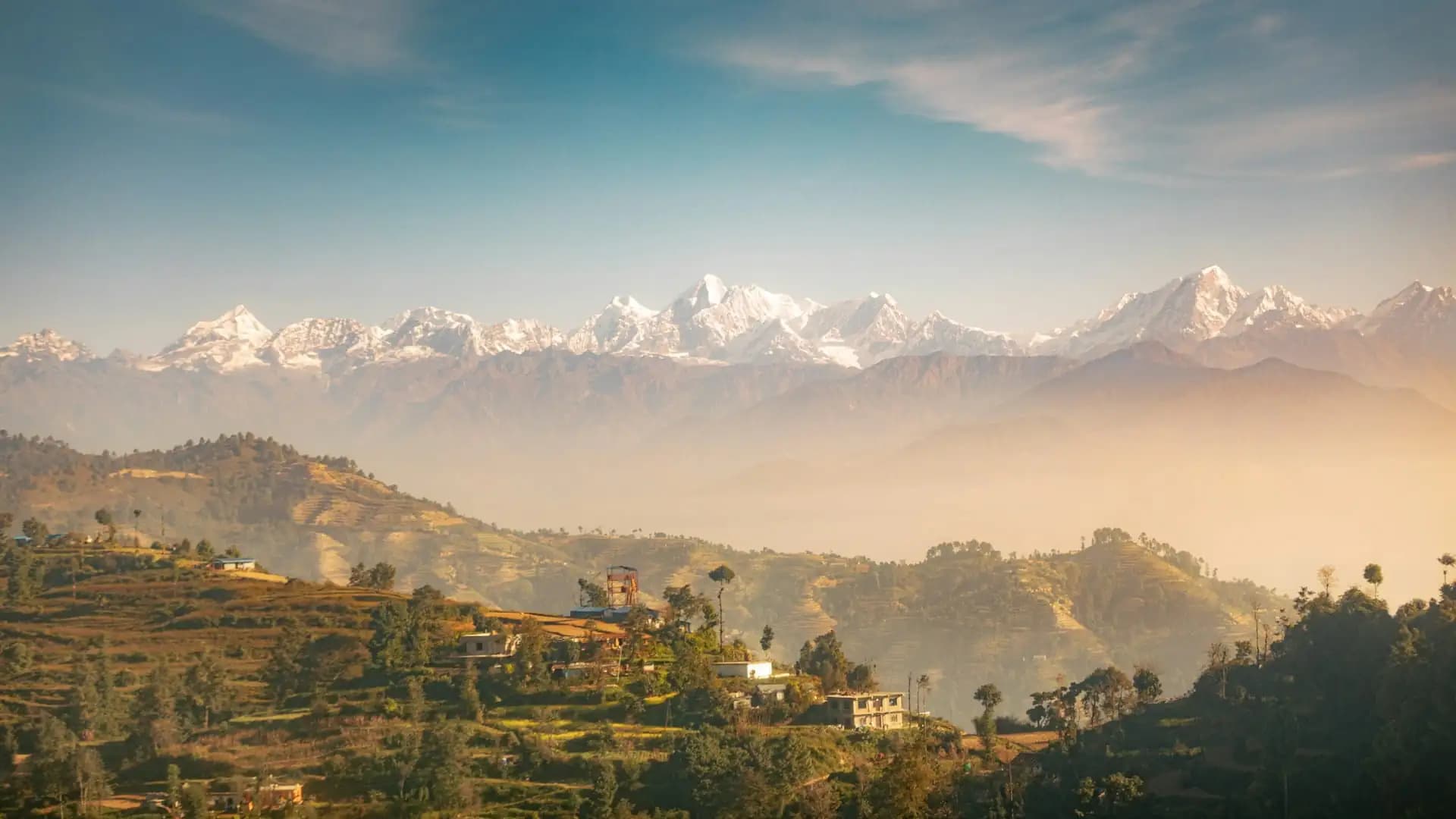
Can You See Mt Everest From Kathmandu in 2026?
Can You See Mt Everest From Kathmandu? Technically, yes — but only just, only under rare conditions, and not from where most visitors assume. Mount Everest sits roughly 160 to 165 kilometers northeast of central Kathmandu in a straight line, and under normal atmospheric conditions it is not visible from the city, blocked by a combination of distance, intervening peaks, and the haze and pollution that regularly sit over the Kathmandu Valley.
On rare, exceptionally clear days — most famously during the 2020 COVID-19 lockdown, when reduced traffic dramatically improved air quality — Everest's summit has been photographed peeking above closer mountain ranges from spots within the valley itself. For a reliable view without a multi-day trek, the honest answer points travelers toward nearby hill stations like Nagarkot and Chandragiri, or a short mountain flight.
This guide covers exactly what's visible from where, why the city view is so unreliable, and what your realistic options are if you want to see Everest without trekking to the Khumbu.
Quick answer: your options for seeing Everest near Kathmandu
Option | Distance from Kathmandu | Reliability | Time needed |
|---|---|---|---|
Central Kathmandu (city, rooftops) | 0 km (city itself) | Extremely rare, near-impossible in practice | N/A |
Nagarkot | ~32 km | Possible on very clear days, not guaranteed | Half-day to overnight |
Chandragiri Hills | ~16 km | Possible on very clear days, not guaranteed | Half-day |
Dhulikhel | ~30 km | Possible on very clear days | Half-day to overnight |
Daman | ~80 km | Considered one of the more reliable wide-panorama spots | Full day |
Mountain scenic flight | Departs Kathmandu airport | Highly reliable, weather-dependent | ~1 hour flight |
Helicopter tour to EBC | Departs Kathmandu | Highly reliable, close-up | Half-day |
Everest Base Camp Trek | 8–10 days trekking from Lukla | Reliable at Kala Patthar viewpoint | 12–14 days total |
Why Kathmandu Isn't the Vantage Point People Assume It Is
It's a genuinely common assumption among first-time visitors to Nepal that, since Kathmandu is the gateway to the Himalayas, Everest should simply be visible somewhere on the skyline. In reality, three separate factors work against that assumption at once.
Distance. Kathmandu sits at roughly 1,400 meters elevation, and Everest's summit sits at 8,848.86 meters, but the straight-line distance between them is substantial — around 160 to 165 kilometers to the northeast. That's a genuinely long way to resolve a mountain peak clearly, even one as enormous as Everest, especially through the lower, denser layers of atmosphere near the valley floor.
Intervening peaks. This is the factor most visitors don't expect. Kathmandu's sightline toward Everest passes directly over a closer range of 6,000-to-7,000-meter peaks in the Rolwaling Himal — most notably Kang Nachugo and Chobutse — sitting roughly 75 to 100 kilometers closer to Kathmandu than Everest itself. These nearer, still-massive mountains sit in front of Everest from Kathmandu's perspective and block most of the Everest massif from view.
Detailed sightline analysis (using topographic panorama-generation tools that calculate exactly which peaks are geometrically visible from a given point, accounting for the curvature of the earth and intervening terrain) confirms that from spots in the Kathmandu Valley, only the very top of Everest's summit pyramid — roughly the upper few hundred meters — clears the Rolwaling ridgeline.
Nuptse and Lhotse, Everest's close neighbors that are normally visible alongside it from closer vantage points in the Khumbu, remain completely hidden behind the Rolwaling peaks even when Everest's summit itself is technically visible.Haze and pollution. Even when the geometry works in a viewer's favor, Kathmandu's air quality is frequently the deciding factor. The valley regularly experiences significant haze, dust, and vehicle and industrial pollution, particularly during the monsoon season (June to September) and through the drier winter months when there's less wind to disperse particulates. On a typical day, this haze alone is enough to make even much closer mountains — let alone something 160+ kilometers away — invisible from the valley floor, regardless of the underlying geometry.
The 2020 Lockdown: When Kathmandu Actually Saw Everest
The clearest, most well-documented confirmation that Everest is at least occasionally visible from within the Kathmandu Valley came out of an unusual moment: the COVID-19 lockdown of 2020. With dramatically reduced traffic and industrial activity, Kathmandu's air quality improved sharply for a period, and several residents and photographers captured images of snow-capped peaks that are normally completely obscured by smog.
One image in particular, taken by a Nepali photographer from Chobar — a village on a hillside along the Bagmati River on Kathmandu's southern fringe — showed what appeared to be Everest's summit and South-East Ridge visible above the closer Rolwaling peaks. The photo prompted genuine scrutiny from experienced Himalayan climbers and mountain photographers, since Everest's profile looks different depending on the angle it's viewed from, and confirming an identification from an unfamiliar westward-facing angle isn't straightforward.
Using specialized topographic panorama tools that calculate precisely which peaks are geometrically visible from a given coordinate and elevation, the identification was confirmed: the photograph genuinely showed Everest's summit and South-East Ridge, positioned roughly 164 to 165 kilometers away, with the closer 6,000-plus-meter Rolwaling peaks correctly explaining why Nuptse and Lhotse remained hidden while the very top of Everest cleared the ridgeline.
Interestingly, this wasn't actually a new discovery — it turned out to echo something documented decades earlier. A British newspaper correspondent covering the 1953 first ascent of Everest, while reporting from a hotel near Kathmandu's Jawalakhel neighborhood, wrote at the time that Everest was, in his words, technically within sight from the hotel roof, though usually obscured by heat haze rising up from the Indian plains in the mornings and by cloud cover from afternoon storms.
That 1953 account, combined with the 2020 photographic confirmation, makes a reasonably strong case that Everest has always been technically visible from certain elevated points within the Kathmandu Valley — just almost never in practice, because the combination of clear skies, low pollution, and the right viewing angle rarely lines up all at once.
The practical takeaway: don't plan a Kathmandu trip around seeing Everest from the city itself. It is possible in principle, has happened, and has been documented and verified — but it depends on conditions so specific and so rare that no reasonable travel itinerary should be built around it.
Nagarkot: The Most Popular Nearby Viewpoint
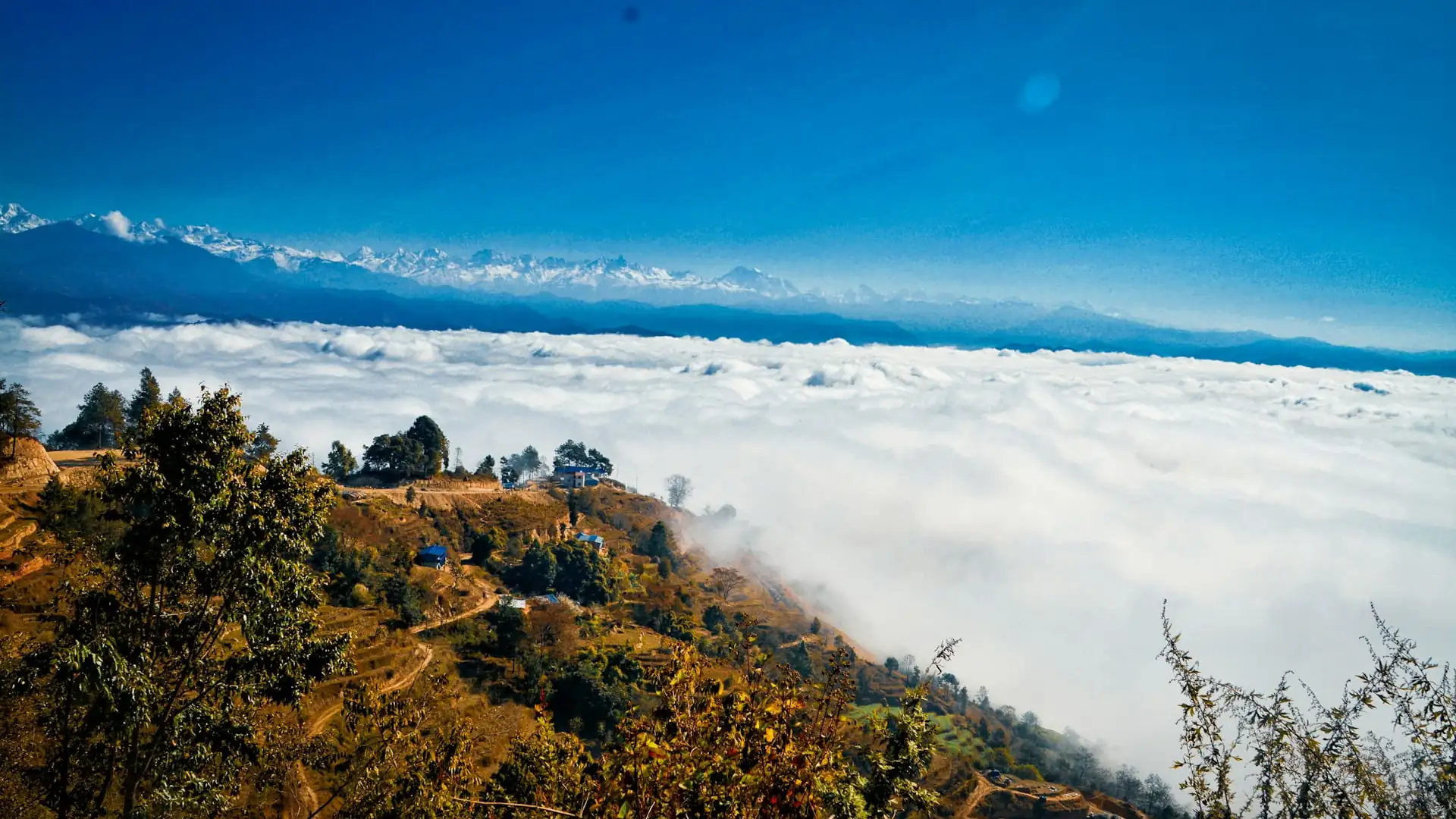
Nagarkot, a hill town roughly 32 kilometers east of Kathmandu, sitting at approximately 2,175 meters elevation, has the strongest reputation among Kathmandu-area viewpoints for Himalayan mountain views, including Everest. It's a genuinely popular sunrise and sunset destination, and on clear days it offers panoramic views that can include Everest to the northeast alongside the Annapurna range to the northwest.
That reputation deserves a caveat, though: a meaningful share of photographs circulated online as "Everest from Nagarkot" are, on closer inspection, actually images of the Ganesh Himal range — a separate, closer, and more visually striking set of peaks to the northwest that photograph far more dramatically than Everest's distant, partially obscured profile to the northeast.
Genuine Everest sightings from Nagarkot do happen, particularly on cold, crystal-clear mornings after a period of good weather (autumn and winter tend to offer the best odds), but visitors should set realistic expectations: Everest, when visible from Nagarkot at roughly 140 kilometers distance, appears as a modest, distant peak rather than a dominating presence on the skyline, and it competes visually with several other prominent, closer mountains in the same panorama.
Getting to Nagarkot: The drive from Kathmandu typically takes one and a half to three hours depending on traffic and road conditions. Many visitors choose to stay overnight to catch both sunset and the following sunrise, since mountain visibility tends to be best in the very early morning before daytime haze builds up.
Chandragiri Hills: The Closest Viewpoint
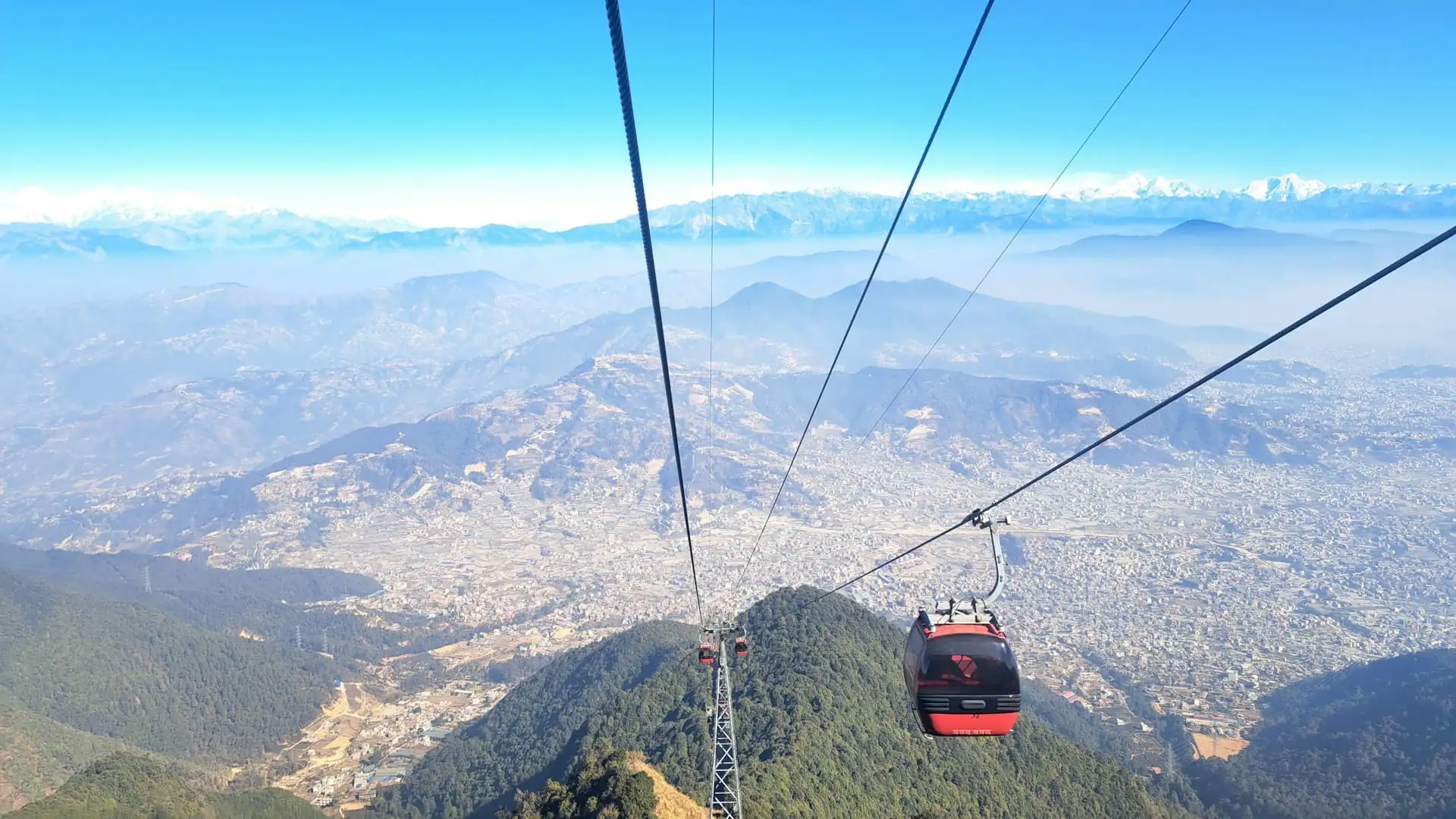
Chandragiri Hills, located roughly 7 to 16 kilometers southwest of Kathmandu (sources vary slightly depending on the exact measuring point used), offers the most convenient of the nearby viewpoints thanks to a cable car that runs from Thankot up to the hilltop at approximately 2,551 meters elevation. On clear days, Chandragiri offers a wide panoramic sweep of the Himalayan range, including a distant view toward Everest, alongside closer and often more visually prominent peaks.
Getting to Chandragiri: The cable car ride itself takes roughly 10 minutes each way, making Chandragiri the fastest and least logistically demanding of the nearby mountain-viewing options — a genuine half-day trip from central Kathmandu including travel time, cable car ride, and time at the summit.
Dhulikhel and Daman: Alternative Viewpoints
Dhulikhel, a traditional Newar town roughly 30 kilometers east of Kathmandu, offers a quieter alternative to Nagarkot with somewhat less obstruction from nearby hills, along with genuine cultural and architectural interest beyond just the mountain views. It's often recommended for travelers who want a less touristy version of the same general experience Nagarkot offers.
Daman, considerably farther out at roughly 80 kilometers from Kathmandu along the Tribhuvan Highway toward Pokhara, is less frequently visited specifically because of the distance, but is generally considered by experienced trekkers and photographers to offer one of the widest and most reliable Himalayan panoramas in the region, spanning a huge stretch of the central Himalayan range in a single sweep on a clear day.
Viewpoint | Distance from Kathmandu | Elevation | Notable for |
|---|---|---|---|
Nagarkot | ~32 km east | 2,175 m | Best-known, sunrise views, but crowded and hit-or-miss |
Chandragiri Hills | ~16 km southwest | 2,551 m | Fastest access via cable car |
Dhulikhel | ~30 km east | ~1,550 m | Quieter, cultural interest alongside mountain views |
Daman | ~80 km southwest | ~2,322 m | Widest, most reliable panoramic sweep |
Mountain Scenic Flights: The Most Reliable Option
For travelers who want a genuinely reliable, close-up view of Everest without the uncertainty of hilltop viewpoints and without committing to a multi-day trek, mountain scenic flights departing directly from Kathmandu's Tribhuvan International Airport are the most dependable option. These flights typically last around an hour, fly along the length of the Himalayan range including the Everest massif, and are specifically scheduled for early morning departures, when visibility is typically at its best before daytime haze and cloud cover build up.
A distinctive and consistently praised feature of these flights is that every passenger is guaranteed a window seat, and crews typically rotate seating or invite passengers to the cockpit briefly during the flight so that everyone gets a clear, close view of Everest and its neighboring giants — Lhotse, Nuptse, and Makalu among them — rather than only the passengers seated on one side of the aircraft.
Because these flights are weather-dependent, they're occasionally delayed or, less commonly, canceled and rescheduled if visibility conditions are too poor even for the aircraft's higher vantage point. Even so, they represent by far the most consistent way to actually see Everest clearly on a single-day visit to Nepal, since the flight altitude puts the aircraft well above the haze layer that regularly obscures ground-level views from Kathmandu and its surrounding hills.
Helicopter Tours: Closer, Faster, More Expensive
An increasingly popular alternative to the fixed-wing mountain flight is a helicopter tour, which typically flies closer to the mountains and often includes a brief landing near Everest Base Camp or at a high-altitude viewpoint such as Kala Patthar, allowing passengers to step out and experience the altitude and views directly rather than only through an aircraft window.
These tours are considerably more expensive than a standard mountain scenic flight and are usually built as half-day excursions from Kathmandu, but they offer both closer visual proximity to Everest and, for many travelers, a genuinely memorable few minutes standing at high altitude without undertaking the multi-day trek required to reach the same elevation on foot.
The Only Way to See Everest Up Close: The EBC Trek
For travelers with the time and physical readiness for it, the Everest Base Camp Trek remains the only way to see Everest genuinely up close without technical climbing. The standard trek runs roughly 12 to 14 days round-trip from Kathmandu, flying into Lukla and trekking through the Khumbu region via Namche Bazaar, Tengboche, Dingboche, and Lobuche before reaching Everest Base Camp itself at 5,364 meters.
Notably, Base Camp itself does not offer a clear view of Everest's summit — the mountain's own ridgelines, along with Nuptse, block the direct sightline from the glacier floor. The genuinely close, unobstructed view of Everest's summit pyramid comes from Kala Patthar, a viewpoint above the village of Gorak Shep at approximately 5,644 meters, which most EBC itineraries include as a dawn hike near the end of the trek specifically because it's the best accessible vantage point for seeing Everest's summit clearly on the standard route.
An alternative and, for many trekkers, equally rewarding vantage point is Gokyo Ri, reached via the Gokyo Lakes route on the western side of the Khumbu valley, which offers a wide panoramic view that includes Everest, Lhotse, Makalu, and Cho Oyu together in a single sweep — considered by many experienced trekkers to be one of the finest mountain panoramas in the entire Everest region.
Why "Can I See Everest From Kathmandu" Is the Wrong Starting Question
If the underlying goal is simply "I want to see Mount Everest during my trip to Nepal," the honest, practical framing isn't really about Kathmandu at all — it's about choosing the right tool for the time and budget available. A single day in Kathmandu with no trekking plans still leaves a mountain flight or, with a bit more budget, a helicopter tour as genuinely reliable options.
A few extra days open up Nagarkot, Chandragiri, or Dhulikhel as low-cost, low-commitment add-ons, with the caveat that success depends heavily on weather and air quality on the specific day visited. And for travelers with the physical fitness and roughly two weeks available, the Everest Base Camp Trek remains the gold standard — not just for seeing Everest, but for experiencing the Khumbu region, Sherpa culture, and the high Himalayas directly, culminating in views from Kala Patthar or Gokyo Ri that no hilltop near Kathmandu, and no aircraft window, can fully replicate.
Best Time of Year for Mountain Visibility Near Kathmandu
Visibility from any of the hilltop viewpoints, and to a lesser extent from mountain flights, varies significantly by season, largely driven by the same monsoon and haze patterns that affect trekking conditions throughout Nepal.
Season | Months | Visibility conditions |
|---|---|---|
Autumn | Late September–November | Generally the clearest skies of the year, following the monsoon; strong recommendation for mountain viewing |
Winter | December–February | Often very clear on cold mornings, though can be hazier midday |
Spring | March–May | Can be hazy, particularly later in spring due to regional agricultural burning and rising temperatures |
Monsoon | June–September | Frequent cloud cover and rain; least reliable period for mountain visibility from any ground-level viewpoint |
Across all viewpoints and all seasons, early morning — generally within the first hour or two after sunrise — consistently offers the best visibility, since afternoon heating tends to generate haze, cloud buildup, and reduced clarity as the day progresses.
This is precisely why virtually every Kathmandu-area mountain-viewing itinerary, whether hilltop visits or scenic flights, is scheduled around dawn departures rather than midday or afternoon timing.
Air Quality: The Underappreciated Factor
It's worth stating plainly that Kathmandu's air quality has a more decisive effect on mountain visibility, even from the best nearby viewpoints, than most visitors expect. The city's Air Quality Index (AQI) frequently reaches unhealthy levels, particularly during the dry winter months when reduced wind allows pollutants to accumulate, and during specific periods of regional agricultural burning in spring.
When AQI readings are favorable, the odds of seeing distant peaks from Nagarkot, Chandragiri, or even central Kathmandu itself improve meaningfully; when they're not, no amount of clear-sky optimism will produce a visible mountain on the horizon, regardless of the underlying geometric visibility.
Travelers with a strong interest in mountain photography sometimes track real-time AQI data for the Kathmandu Valley alongside standard weather forecasts specifically for this reason, since a clear sky and low pollution don't always coincide on the same day.
FAQs about Can You See Mt Everest From Kathmandu
Can you see Mount Everest from central Kathmandu?
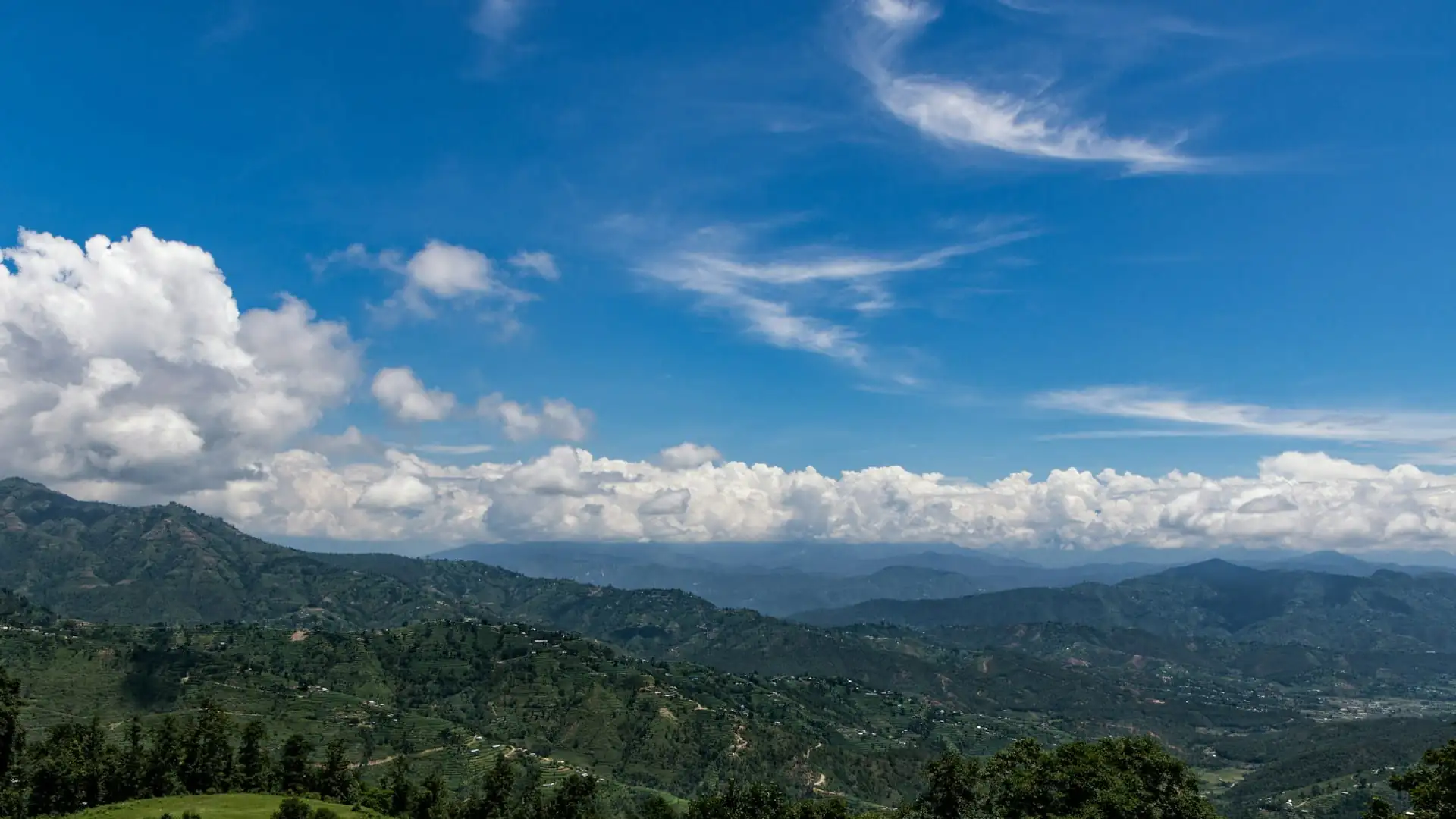
Technically yes, under very rare conditions — documented and verified during the 2020 COVID-19 lockdown when pollution levels dropped sharply — but this is not something to plan a trip around. Under normal, everyday conditions, Everest is not visible from central Kathmandu.How far is Mount Everest from Kathmandu?
Roughly 160 to 165 kilometers in a straight line to the northeast.Why can't you normally see Everest from Kathmandu even on a clear day?
Closer 6,000-to-7,000-meter peaks in the Rolwaling Himal sit directly in the sightline and block most of the Everest massif from view, and Kathmandu's frequent haze and pollution further reduce visibility even when the underlying geometry would technically allow a partial view of the summit.What's the best nearby place to see Everest without trekking?
Nagarkot and Chandragiri Hills are the two most commonly recommended options, though visibility on any given day depends heavily on weather and air quality. A mountain scenic flight from Kathmandu is considerably more reliable.Is Nagarkot guaranteed to show Everest?
No. Nagarkot offers a genuine chance of seeing Everest on clear mornings, particularly in autumn and winter, but many photos labeled "Everest from Nagarkot" online are actually of the closer, more visually striking Ganesh Himal range.How long is a mountain scenic flight from Kathmandu?
Typically around one hour, with every passenger guaranteed a window seat and often a brief cockpit visit for photos.Do I need to trek to see Everest up close?
Yes, for a genuinely close, ground-level view. The Everest Base Camp Trek, via the Kala Patthar viewpoint (5,644m) or the Gokyo Ri viewpoint (5,357m), remains the only way to see Everest at close range without technical climbing.Can you see Everest from Everest Base Camp itself?
No — Base Camp's own surrounding terrain, including Nuptse, blocks the direct view of the summit. Kala Patthar, a separate viewpoint above Base Camp, is where trekkers actually see Everest's summit clearly.What's the best season for mountain visibility near Kathmandu?
Autumn (late September to November) generally offers the clearest skies of the year, followed by winter on cold, clear mornings. Spring can be hazy due to regional agricultural burning, and monsoon season (June–September) offers the least reliable visibility.Is a helicopter tour better than a fixed-wing mountain flight for seeing Everest?
Helicopter tours generally fly closer and sometimes include a brief landing near Everest Base Camp or Kala Patthar, offering a more immersive experience, but at significantly higher cost than a standard scenic mountain flight.
Conclusion on Can You See Mt Everest From Kathmandu
The honest answer to "can you see Mount Everest from Kathmandu" is a genuinely qualified yes: it has happened, it has been photographically documented and verified, and there's even a first-hand account from 1953 describing the same theoretical visibility from a Kathmandu hotel roof. But in practice, for the overwhelming majority of visitors on the overwhelming majority of days, Everest stays hidden behind closer peaks and behind the valley's persistent haze.
If seeing Everest matters to your trip, the realistic path runs through Nagarkot or Chandragiri for a chance at a distant view, a mountain scenic flight for a reliable close-up from the air, or — for those with the time and fitness — the Everest Base Camp Trek itself, where Kala Patthar and Gokyo Ri deliver the close, unmistakable view that no vantage point near Kathmandu can consistently offer.
Kathmandu remains the gateway to Everest in every practical sense. It's just not, on most days, the viewpoint.