Island Peak Climbing – 17 Days from Kathmandu
Trip Duration: 17 Days
Trip Grade: Strenuous
Group Size: Min 1 person - Max 12 person
Meals: Breakfast in Kathmandu; all meals in the mountains
Best Season: Autumn (October–November) and Spring (April–May)
Start Point: Kathmandu
Accomodation: Hotel in Kathmandu; teahouses on the trek; tented camp at base camp
Ending Point: Kathmandu
Max Altitude: 6,165 m
Transportation: Flights to and from Lukla (via Ramechhap in peak season); private transfers
Permits Required: NMA climbing permit, Sagarmatha National Park and Khumbu municipality fees included
Overview
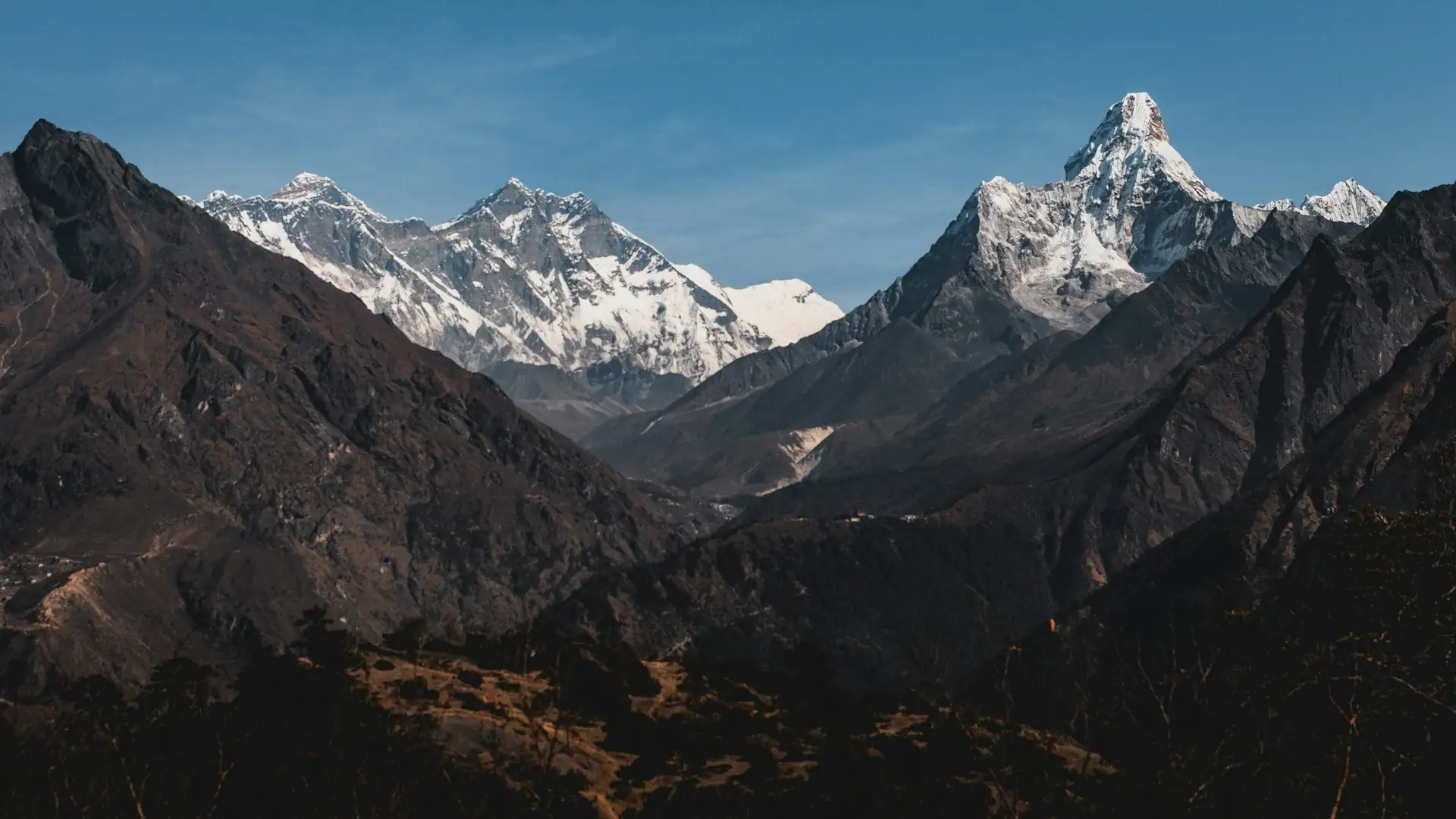
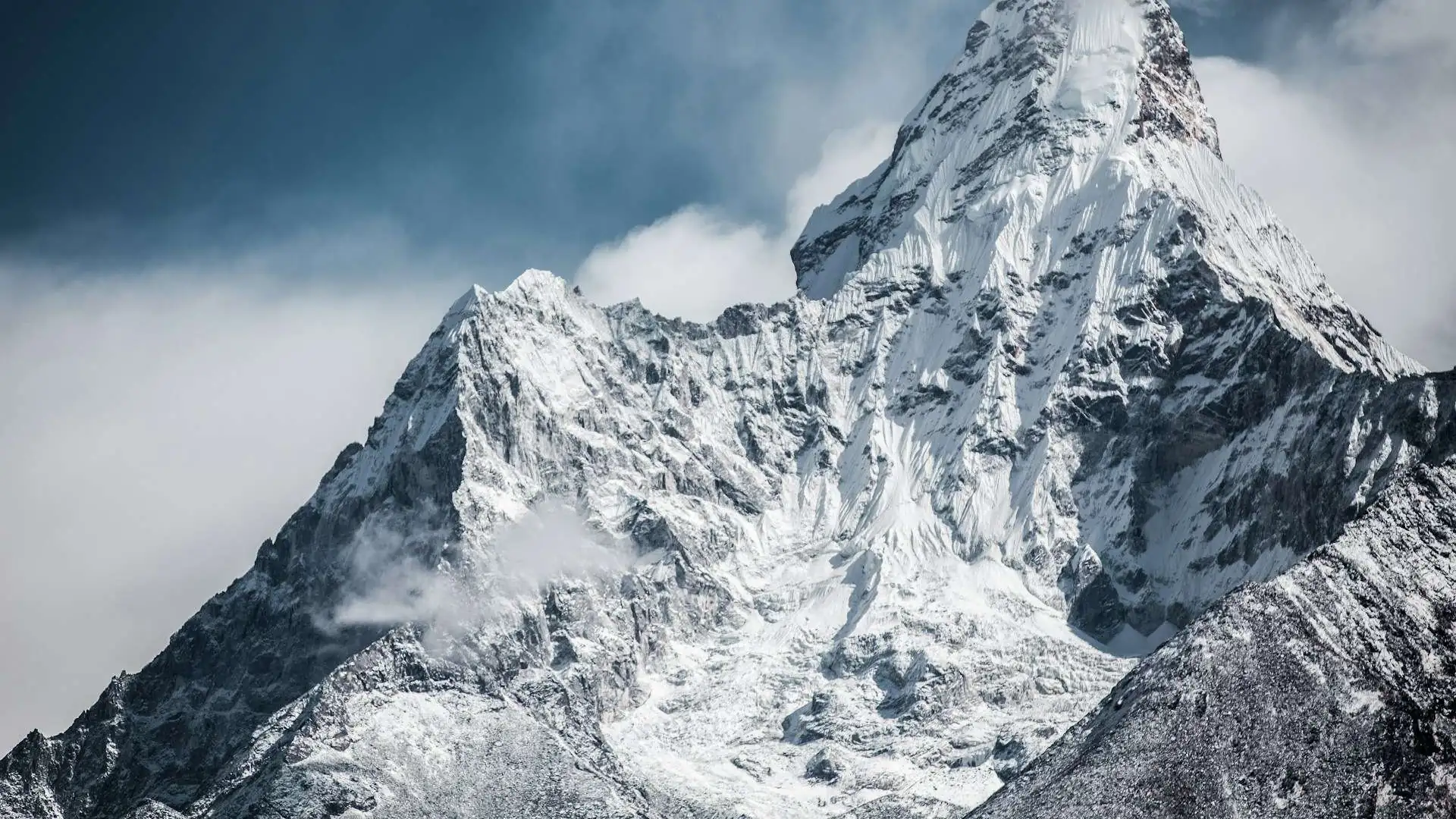
Island Peak Climbing is the most common first step from Himalayan trekking into real mountaineering. Imja Tse, as Nepal officially calls it, rises to 6,165 m (often listed as 6,189 m) at the head of the Imja valley, below the south face of Lhotse. The British Everest expedition named it Island Peak in 1953, because from Dingboche it looks like an island in a sea of ice.
The climb isn't a walk-up. Summit day crosses a crevassed glacier on a rope, climbs a steep snow and ice headwall on fixed lines, and finishes on a narrow, exposed ridge. You don't need previous climbing experience, because our climbing guides teach the skills at base camp. What you do need is good fitness, a willingness to be cold and tired for a long day, and an itinerary that gives your body time to adjust to the altitude.
This 17-day package is built around that last point. It includes three acclimatization days, a hike to Chhukung Ri (5,546 m), a training session at base camp, and a spare day for weather before the walk out.
Trip at a Glance
Detail | Information |
|---|---|
Duration | 17 days (14 days in the mountains) |
Start / End | Kathmandu / Kathmandu |
Summit | Island Peak (Imja Tse), 6,165 m / 20,226 ft |
Base camp | Pareshaya Gyab, about 5,087 m |
Climbing grade | Alpine PD / PD+ (moderately difficult) |
Technical sections | Roped glacier travel, ladders over crevasses (some seasons), 45–50° fixed-rope headwall, exposed summit ridge |
Summit day | 10–14 hours round trip |
Walking days | 4–7 hours |
Accommodation | Hotel in Kathmandu, teahouses on the trek, tents at base camp |
Meals | Breakfast in Kathmandu; all meals in the mountains |
Transport | Flights to and from Lukla (via Ramechhap in peak season) |
Permits | NMA climbing permit, Sagarmatha National Park, Khumbu Pasang Lhamu Rural Municipality (all included) |
Best months | April–May and October–November |
Group size | 1–12 climbers |
Price | From US$2,450 per person |
Why This 17-Day Itinerary Works
Some operators sell Island Peak in 12–14 days. It can be done, but most failed summit attempts come down to two things: poor acclimatization and bad weather on the planned day. This itinerary deals with both.
Three proper acclimatization days. You spend two nights each in Namche (3,440 m) and Dingboche (4,410 m), and do a hike to Chhukung Ri (5,546 m) before sleeping at base camp. By summit day you've already been above 5,500 m and come back down, which is how the body adapts.
A spare day for weather. High winds or fresh snow can close the headwall for a day. Day 12 is kept free so one bad morning doesn't end your climb. If we don't need it, we use it on the way down.
Training before the summit, not on it. The afternoon you arrive at base camp, your climbing guide sets up a practice line and runs you through clipping in, using the ascender and abseiling. Arriving at the headwall at 7 a.m. already knowing the routine saves time and energy when you have the least of both.
Climbing from base camp. We climb from base camp at about 5,087 m rather than moving to a high camp. It makes summit day longer, but you sleep lower and better, and you don't spend an extra night above 5,500 m.
If you also want to stand at Everest Base Camp, we can add it before the climb. Our Everest Base Camp Trek shows that route, and we combine the two on request.
Route Overview
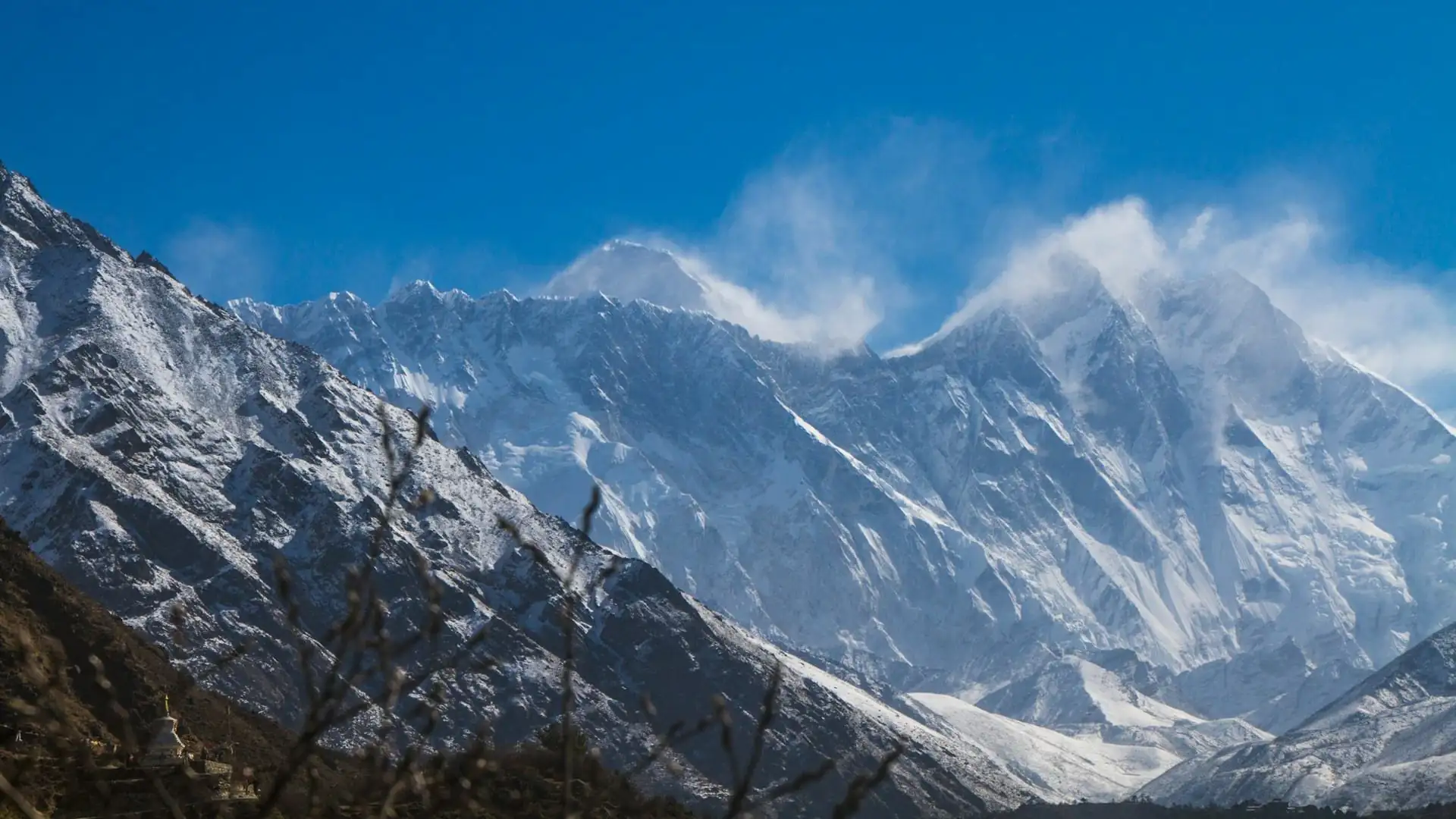
The route follows the main Everest Base Camp trail as far as Pangboche, then turns east up the Imja valley instead of north toward the Khumbu glacier. That turn is what gives Island Peak its character: the Imja valley is quieter than the main Everest trail, and it runs straight toward the Lhotse–Nuptse wall.
From Chhukung, the climbing route goes up the Lhotse glacier moraine to base camp, then up a gully and across the Imja glacier to the south-west face of Imja Tse. The headwall leads onto the south-east summit ridge.
For more on the climbing peaks in this area, see our guide to peaks near Everest.
Distance & Walking Hours
Day | Section | Distance (approx.) | Time |
|---|---|---|---|
2 | Lukla – Phakding | 8 km | 3–4 hrs |
3 | Phakding – Namche | 11 km | 5–6 hrs |
5 | Namche – Tengboche | 10 km | 5–6 hrs |
6 | Tengboche – Dingboche | 11 km | 5–6 hrs |
8 | Dingboche – Chhukung | 5 km | 3–4 hrs |
10 | Chhukung – Base Camp | 7 km | 3–4 hrs |
11 | Base Camp – Summit – Base Camp | about 8 km | 10–14 hrs |
13 | Base Camp – Pangboche | 16 km | 6–7 hrs |
14 | Pangboche – Namche | 13 km | 5–6 hrs |
15 | Namche – Lukla | 19 km | 6–7 hrs |
Acclimatization hikes on Days 4, 7 and 9 add roughly 15 km. Mountain distances are estimates; time depends more on gradient and altitude than on kilometres.
Altitude Profile
Place | Altitude | Day |
|---|---|---|
Kathmandu | 1,400 m / 4,593 ft | 1, 16 |
Lukla | 2,860 m / 9,383 ft | 2, 15 |
Phakding | 2,610 m / 8,563 ft | 2 |
Namche Bazaar | 3,440 m / 11,286 ft | 3–4, 14 |
Tengboche | 3,860 m / 12,664 ft | 5 |
Dingboche | 4,410 m / 14,469 ft | 6–7 |
Chhukung | 4,730 m / 15,518 ft | 8–9 |
Chhukung Ri | 5,546 m / 18,196 ft | 9 (hike) |
Island Peak Base Camp | about 5,087 m / 16,690 ft | 10–12 |
Island Peak summit | 6,165 m / 20,226 ft | 11 |
Pangboche | 3,985 m / 13,074 ft | 13 |
Map Overview
The map follows the Dudh Koshi valley north from Lukla to Namche, then the Imja Khola past Tengboche and Pangboche to Dingboche. From Dingboche, the route heads east up the Imja valley to Chhukung and base camp, with the summit at the junction of the Imja and Lhotse glaciers. The return retraces the same line south.
Difficulty Level
Island Peak is graded Alpine PD to PD+, meaning "moderately difficult" in the alpine scale. For a trekker, it's a real step up. For a climber, it's an introductory peak. These are the parts that make it hard:
Altitude: Summit day starts above 5,000 m and reaches 6,165 m. Everything is slower and more tiring up there, and the cold makes it worse.
The length of summit day: 10–14 hours, starting in the middle of the night, with the hardest climbing in the middle.
The headwall: 45–50° snow and ice on a fixed rope. It isn't vertical, but it's steep enough that you rely on your crampons, the ascender and your arms.
The summit ridge: Narrow, with drops on both sides. You stay clipped to a rope.
The descent: Abseiling the headwall and recrossing the glacier when you're tired is where accidents tend to happen. Your guide sets the pace.
Island Peak is technically harder than Mera Peak, which is higher but mostly a glacier walk. For a broader view of climbing in Nepal, read our guide to peak climbing in Nepal.
Fitness Requirements and Training
You don't need previous climbing experience, but you do need a strong base of fitness. We recommend at least two to three months of preparation:
Cardio endurance: 4–5 sessions a week of running, cycling, stair climbing or hill walking, building to 60–90 minutes.
Long days with weight: Every second weekend, hike 6–8 hours with a 10–12 kg pack, including steep ground.
Leg and core strength: Step-ups, lunges, squats and planks twice a week. Your legs do the work on the headwall, not your arms.
Skills, if possible: A one-day snow skills or indoor rope course at home makes base camp training far easier. It isn't required, but it helps.
Previous altitude: A trek above 4,000–5,000 m, such as our Everest Three High Pass Trek, is the best preparation. If you've never been above 4,000 m, tell us when you book.
Altitude Sickness & Acclimatization
Above about 2,500 m, the body needs time to adjust to lower oxygen levels. Acute mountain sickness (AMS) shows up as headache, nausea, poor sleep and loss of appetite. In rare cases it progresses to HAPE (fluid on the lungs) or HACE (swelling of the brain), which are medical emergencies.
The only cure is going down, so prevention matters:
Gradual ascent: You sleep at 2,610 m, 3,440 m (two nights), 3,860 m, 4,410 m (two nights), 4,730 m (two nights) and then 5,087 m.
Climb high, sleep low: Each rest day includes a hike several hundred metres above where you sleep.
Daily checks: Your guide checks your oxygen saturation and pulse with an oximeter every evening and asks about symptoms.
Emergency backup: Our guides carry a first-aid kit and emergency oxygen on high-altitude trips. In a serious case, the answer is descent and, if needed, helicopter evacuation, which is why insurance with evacuation cover is required.
Drink 3–4 litres of water a day, avoid alcohol, and tell your guide about symptoms early. This is general guidance, not medical advice. Talk to your doctor about altitude medication such as acetazolamide before you travel. The CDC's Nepal travel health page has more.
Best Time for Island Peak Climbing
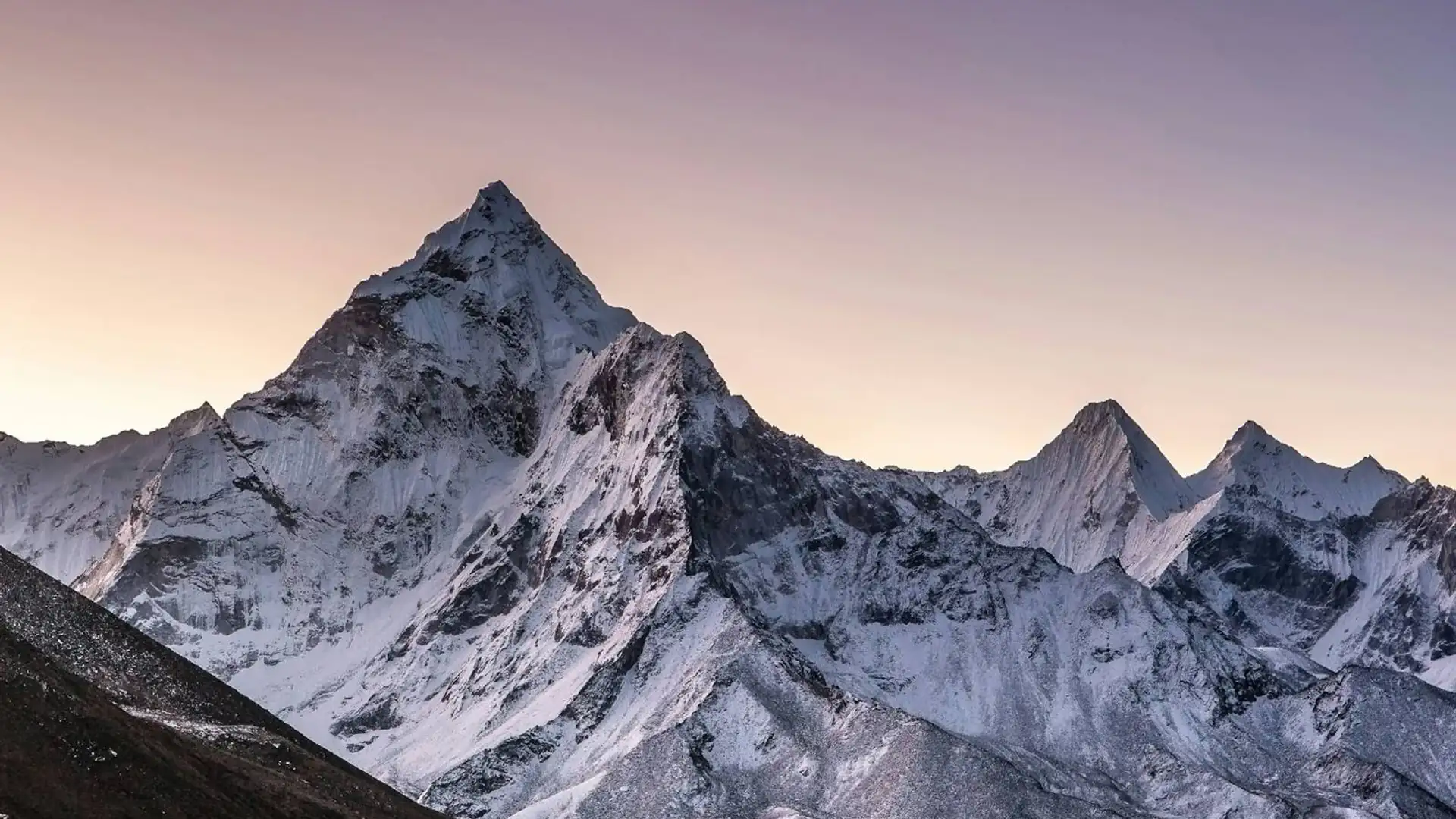
October to November is the most reliable window. Skies are clear after the monsoon, the snow is settled, and the climbing permit costs less than in spring. Nights at base camp are cold, usually well below freezing.
April to May is the other main season. Days are longer and slightly warmer, but more climbers are on the mountain, and afternoon cloud is more common. The permit costs more in spring.
Late March and early December can work for experienced, well-equipped groups. Conditions are colder and less predictable.
June to September (monsoon) and mid-December to February (winter) aren't recommended. Monsoon brings cloud, rain lower down and fresh snow higher up. Winter brings strong wind and extreme cold on the summit ridge.
For trekking seasons across Nepal, see our guide to the best time to hike in Nepal.
Weather by Season (Island Peak Base Camp, about 5,087 m)
Season | Months | Daytime | Night | Conditions |
|---|---|---|---|---|
Autumn | Oct–Nov | 0–10 °C | −10 to −15 °C | Clearest skies, stable, best overall |
Winter | Dec–Feb | −5 to 5 °C | −15 to −25 °C | Clear but very cold and windy |
Spring | Apr–May | 3–12 °C | −8 to −12 °C | Longer days, busier, afternoon cloud |
Monsoon | Jun–Sep | 5–12 °C | −5 to 0 °C | Cloud, snow and poor visibility |
Temperatures are typical ranges. The summit, with wind, can feel 10–15 °C colder than base camp.
Getting There: Flights and Transport
Leg | How | Time |
|---|---|---|
Airport – hotel, Kathmandu | Private car | 20–40 min |
Kathmandu – Ramechhap (peak season) | Shared tourist vehicle | 4–5 hrs |
Ramechhap – Lukla | Small aircraft | 20–25 min |
Kathmandu – Lukla (off-peak) | Small aircraft | About 30 min |
Since 2019, Nepal's aviation authority has moved most peak-season Lukla flights to Manthali Airport in Ramechhap to ease congestion in Kathmandu. Whether you fly from Kathmandu or Ramechhap depends on the date, and we confirm it before you travel.
Lukla flights only operate in clear weather, usually in the morning. Delays of a day or more happen every season. If flights are cancelled for several days, a shared helicopter seat (extra cost) is often the fastest option. Our spare day and the extra day we recommend before your international flight are there for exactly this reason.
Accommodation
Kathmandu: A tourist-class hotel with private, en-suite rooms and breakfast, twin-share.
On the trek: Teahouses (family-run lodges) with simple twin rooms. In Namche and Lukla, many lodges have attached bathrooms and good hot showers. Above Dingboche, rooms are basic, unheated and often below freezing at night, and toilets are shared. The dining room stove is the warmest place in the building.
Base camp: Two-person tents with foam mattresses, a dining tent, a kitchen tent and a toilet tent. Our crew cooks all meals at camp. A good sleeping bag rated to −20 °C is essential.
Meals & Drinking Water
All meals are included from Lukla onward, and breakfast is included in Kathmandu.
Teahouse menus carry dal bhat, noodles, fried rice, pasta, potatoes, soups, eggs, porridge and Tibetan bread. Dal bhat is the best fuel for long days. At base camp, our cook prepares simple, high-calorie meals. Your appetite will drop at altitude, so eat even when you don't feel like it.
For water, use purification tablets or a filter with tap water, or buy boiled water at teahouses. Bottled water is available but adds plastic to a fragile area. Bring two 1-litre insulated bottles; on summit day, keep one inside your jacket so it doesn't freeze.
Internet, Mobile Network & Charging
Mobile signal: Nepal Telecom and Ncell work in Lukla, Namche and several other villages, with patchy coverage higher up. Don't count on signal at base camp.
Wi-Fi: Most lodges sell access through the Everest Link network on prepaid cards. It gets slower and more expensive as you climb.
Charging: Available at most teahouses for a fee. At base camp there's no regular charging, so bring a large power bank and keep batteries warm in your sleeping bag.
Permits & Fees
All permits are included in the package price, and we arrange them for you.
Permit | Foreign nationals | Issued by |
|---|---|---|
Island Peak climbing permit (spring, Mar–May) | US$350 | Nepal Mountaineering Association |
Island Peak climbing permit (autumn, winter, summer) | US$175 | Nepal Mountaineering Association |
Sagarmatha National Park entry | NPR 3,000 (about US$23) | Sagarmatha National Park |
Khumbu Pasang Lhamu Rural Municipality fee | NPR 3,000 (about US$23) | Local government, paid at Lukla or Monjo |
Garbage deposit | Refundable deposit per team | Nepal Mountaineering Association |
The climbing permit fees for Island Peak were raised from 1 September 2025. The Everest region doesn't use the TIMS card. A licensed climbing guide is required for all Nepal Mountaineering Association peaks.
Official information: Nepal Mountaineering Association and Nepal Tourism Board.
Island Peak Climbing Cost
Package price: from US$2,450 per person for 2 or more climbers, based on an autumn permit. For spring departures (March to May), add US$175 for the higher climbing permit. Solo climbers and private trips are priced on request.
Here's roughly where the money goes, per person in a group of two:
Cost item | Approx. US$ |
|---|---|
Lukla flights (return) and Ramechhap transfers | 470 |
Climbing permit (autumn), park and municipality fees | 221 |
Trekking guide (wages, food, lodging, flights, insurance) | 430 |
Climbing guide for summit day and training (one per two climbers) | 260 |
Porter (one per two climbers) | 150 |
Teahouse rooms and three meals a day | 440 |
Base camp tents, cook, kitchen crew and fuel | 160 |
Kathmandu hotel, 2 nights with breakfast | 80 |
Group climbing gear (ropes, ice screws, snow bars), first aid and emergency oxygen | 90 |
Office support, taxes and contingency | 149 |
Total | 2,450 |
Extra money to budget (not included):
Personal climbing gear rental if you don't own it: roughly US$100–250 for the full set
Lunch and dinner in Kathmandu: US$10–25 per meal
Drinks, snacks, showers, Wi-Fi and charging: US$15–25 a day, more above Dingboche
Tips for guides, climbing guide and porters: plan for around 10% of the trip price, shared among the team
Nepal visa on arrival: US$30 for 15 days or US$50 for 30 days (see the Department of Immigration)
There are ATMs in Namche, but they're unreliable. Bring enough Nepali rupees from Kathmandu. For country-wide costs, read our Nepal trekking cost guide.
Optional Add-ons
Everest Base Camp and Kala Patthar before the climb, adding about 4 days. This also improves acclimatization. See our Everest Base Camp Trek.
Gokyo Lakes on the way in; see our Everest Base Camp with Gokyo Lakes Trek
Private climbing guide (one guide per climber) for more flexibility on summit day
Helicopter return from Dingboche or Lukla to Kathmandu instead of walking out or flying
Upgraded lodges on the trek; see our Luxury Everest Base Camp Trek for the standard
Extra nights in Kathmandu before or after the trip
Travel Tips
Break in your mountaineering boots, or wear rental boots on the acclimatization hikes. Blisters on summit day end climbs.
Practise with your gloves on. Clipping carabiners and using the ascender in heavy gloves is the skill most people struggle with.
Keep batteries and water warm. Sleep with your phone, headlamp batteries and water bottle in your sleeping bag at base camp.
Eat and drink on summit day. Small snacks every hour and sips of warm water make a big difference by the headwall.
Respect the turnaround time. Your climbing guide sets a time to turn back whether or not you've reached the top. It's there to get you down safely in daylight.
Pack your carry-on for Lukla. The baggage limit is usually 10 kg checked and 5 kg hand luggage. Extra weight costs extra or waits for a later flight.
Photography Spots
Summit ridge: Lhotse's south face behind you and Makalu to the east. A small, light camera or phone is easier than a large camera with gloves on.
The headwall at first light: The line of headlamps above and below you on the rope.
Chhukung Ri: The best panorama of the trip, with Island Peak below and Ama Dablam to the south.
Tengboche monastery: With Ama Dablam behind, especially in the late afternoon.
Dingboche at dusk: Stone-walled fields in the foreground with Island Peak at the head of the valley.
Hillary Bridge: Prayer flags strung across the gorge above the Dudh Koshi.
Ask before photographing people, and don't photograph inside monasteries without permission.
Responsible Climbing
Carry everything down. The garbage deposit is refunded only when the team's waste is accounted for. We bring all base camp rubbish back down.
Use the toilet tent at base camp, not the moraine. Human waste in a glacier area doesn't break down.
Refill instead of buying plastic water bottles. There's no recycling above Namche.
Respect Sherpa culture. Walk clockwise around stupas and mani walls, and ask before entering monasteries.
Look after the crew. We pay fair wages, insure our staff, provide proper gear for the climbing team and limit porter loads.
Read more about the people who make these trips work in our guide to trekking guides in Nepal.
Is Island Peak Right for You?
Island Peak Climbing suits you if you:
Have trekked at altitude before and want your first 6,000 m summit
Are fit enough to walk 6–8 hours a day for consecutive days
Are comfortable with heights, exposure and long, cold days
Want a climb with real technical sections, but with training and guides
Are thinking about bigger peaks later and want to learn the basics
Think twice, or choose a different trip, if you:
Have never been above 4,000 m: start with our Everest Base Camp Trek instead
Want the views without the technical climbing: Chhukung Ri and Kala Patthar give big views with no ropes
Have heart or lung conditions affected by altitude or cold. Talk to your doctor first.
Why Book With Adventure Life Nepal
Run by a mountain guide. Adventure Life Nepal was founded by Dil Bahadur Karki, who has spent more than 25 years guiding in Nepal's mountains and has led trekkers from over 40 countries.
Licensed and registered. We're registered with the Nepal Tourism Board and the Trekking Agencies Association of Nepal (TAAN). Our guides hold Nepal Mountaineering Association certification.
Safety equipment carried. Guides carry a first-aid kit, a pulse oximeter and emergency oxygen, and are trained in wilderness first aid and altitude illness response.
Clear pricing. The cost table above shows what you're paying for, and the spring permit difference is stated up front.
Small groups. A maximum of 12 climbers, and private trips on any date.
Fair treatment of staff. Fair wages and insurance for every guide, climbing guide and porter.
Booking, Cancellation & Refund Policy
A 30% deposit confirms your booking.
30 days or more before the start date: full refund minus administrative fees.
15–29 days before: a 50% cancellation fee applies.
Less than 15 days before: no refund.
Travel insurance covering climbing to 6,200 m and helicopter evacuation is required for every climber.
We may change or cancel a climb because of weather, natural disasters or other events outside our control.
Full details are on our terms and conditions page.
Plan Your Island Peak Climb
Island Peak is a serious climb, but it's within reach of a well-prepared trekker with the right itinerary and guides. Tell us your dates, your previous altitude experience and your group size, and we'll check permits and flights and confirm your climbing team and price.
Book now or send us a quick enquiry. WhatsApp or call: +977 9841248242 · Email: adventurelifenepal@gmail.com
Highlights
Itinerary
We meet you at Tribhuvan International Airport and drive you to your hotel. In the afternoon your guide checks your climbing gear, sizes rental boots and crampons if you need them, and goes through the plan. Thamel's equipment shops are a short walk from the hotel for anything missing. Please arrive by early afternoon, or a day earlier if you can; Lukla flights leave at dawn.
• Flight: About 30 minutes from Kathmandu, or 20–25 minutes from Ramechhap • Walking: 3–4 hours, about 8 km In spring and autumn, most Lukla flights leave from Manthali Airport in Ramechhap rather than Kathmandu. On those dates we drive you there in the early hours (about 4–5 hours). Flights only operate in clear morning weather, so delays of a few hours, or a day, are normal. From Lukla, the trail drops gently along the Dudh Koshi river through Sherpa villages with prayer wheels and mani stones. It's a short first day on purpose.
• Walking: 5–6 hours, about 11 km • Elevation gain: About 830 m The trail crosses the river several times on suspension bridges and enters Sagarmatha National Park at Monjo, where permits are checked. After Jorsale comes the long climb to Namche, crossing the high Hillary Bridge. On a clear day, a bend partway up gives you a first glimpse of Everest. Namche sits in a horseshoe-shaped bowl, with bakeries, gear shops and a Saturday market.
• Walking: 4–5 hours round trip • High point: About 3,880 m Rest days at altitude work best when you climb high and sleep low. We hike up to the Everest View Hotel area and the village of Khumjung (3,780 m), with views of Everest, Lhotse, Ama Dablam and Thamserku, then return to Namche for the night. The afternoon is free for the Sherpa Culture Museum or Namche's cafés.
• Walking: 5–6 hours, about 10 km A contouring trail with Ama Dablam ahead leads to Phunki Tenga on the river, followed by a steady climb through pine and rhododendron forest to Tengboche. The monastery here is the largest in the Khumbu, and visitors can sit in on the afternoon prayers.
• Walking: 5–6 hours, about 11 km The trail descends to Deboche, crosses the Imja Khola and climbs through Pangboche. The trees give way to juniper and stone-walled fields. Dingboche sits on a broad shelf in the Imja valley, with Island Peak visible at the far end. This is where many people first feel the altitude, so walk slowly.
• Walking: 4–5 hours round trip • High point: About 5,000 m on the Nangkartshang ridge A steep path climbs the ridge above the village. From the top, Makalu appears to the east, and you look straight down the Imja valley toward Island Peak. Go as high as feels right, then return to Dingboche for lunch and an easy afternoon.
• Walking: 3–4 hours, about 5 km A short, gradual walk up the Imja valley under the south face of Lhotse. Chhukung is a handful of lodges at the edge of the moraine, the last settlement before base camp. The afternoon is for rest and a gear check, and any final rental items can be sorted here.
• Walking: 5–6 hours round trip • Elevation gain: About 800 m This is the most important acclimatization day of the trip. The trail to Chhukung Ri is steep, and the last section is a scramble over rocks. From the top, the Lhotse–Nuptse wall fills the north, Island Peak sits below you to the east, and Makalu and Ama Dablam stand to either side. You return to Chhukung to sleep. If you have a headache that won't go away tonight, your guide will want to know.
• Walking: 3–4 hours, about 7 km The trail follows the moraine of the Lhotse glacier to base camp at Pareshaya Gyab, a sandy flat beside a glacial lake. Our crew has the tents up and a kitchen running. After lunch, your climbing guide sets up a fixed rope on a nearby slope and teaches the routine you'll use tomorrow: fitting crampons and harness, clipping into the fixed line, climbing with an ascender, and abseiling down. Early dinner and early bed.
• Climbing: 10–14 hours round trip • Elevation gain: About 1,080 m We start between 1 and 3 a.m. by headlamp. The first hours follow a rocky trail and a steep gully to the crampon point at the edge of the glacier, at around 5,700 m. Here you put on crampons and rope up. The glacier crossing has crevasses, and in some seasons there are aluminium ladders across them. At the foot of the headwall you clip into the fixed line. The wall is about 100–150 m of snow and ice at 45–50°, climbed one step at a time with the ascender. Above it, a short, narrow ridge leads to the small summit. Expect to reach the top in the mid-morning, then turn around: you abseil down the headwall, retrace the glacier and walk back to base camp by mid-afternoon.
This day is held back in case wind, snow or a slow group delays the summit. If the climb goes as planned on Day 11, we use the day to descend more slowly and comfortably.
• Walking: 6–7 hours, about 16 km A long but mostly downhill day back through Chhukung and Dingboche to Pangboche. With every hundred metres you lose, sleep and appetite improve. Pangboche's monastery is one of the oldest in the Khumbu.
• Walking: 5–6 hours, about 13 km The trail descends past Tengboche to the river, then climbs back to the contour path into Namche. A hot shower and a bakery stop are traditional.
• Walking: 6–7 hours, about 19 km The last trekking day retraces the route down the Dudh Koshi valley. The final climb into Lukla is short but steep. In the evening, the crew usually celebrates the end of the trip together.
Morning flight to Kathmandu, or to Ramechhap followed by the drive back. The afternoon is free for rest or shopping in Thamel.
We drive you to the airport for your flight home. Lukla flight delays are common, so if you can, book your international flight a day or two after this date. Itinerary note: Mountain weather, flight delays and your group's acclimatization can change the plan. Your guide makes these decisions on the spot, and safety always comes first.
Elevation Profile
Altitude Variation Chart
What's Included
Included
- Airport pickup and drop-off in Kathmandu
- 2 nights hotel in Kathmandu, twin-share with breakfast
- Return flights to Lukla (from Kathmandu or Ramechhap) and transfers
- Teahouse accommodation on the trek
- Tented camp at Island Peak Base Camp with dining, kitchen and toilet tents
- Breakfast, lunch and dinner from Lukla and back
- Licensed, English-speaking trekking guide
- Licensed climbing guide for training and summit day (one per two climbers)
- Porter (one per two climbers)
- Island Peak climbing permit (autumn rate), Sagarmatha National Park permit and Khumbu Pasang Lhamu Rural Municipality fee
- Garbage deposit and waste management at base camp
- Group climbing equipment: fixed ropes, ice screws, snow bars
- Staff wages, meals, lodging, flights and insurance
- First aid kit, pulse oximeter and emergency oxygen
- Sleeping bag on loan if needed
- All government taxes and office service charges
Excluded
- International flights and Nepal visa fees
- Travel insurance covering climbing to 6,200 m and helicopter evacuation (mandatory)
- Spring climbing permit supplement (US$175, March–May departures)
- Personal climbing gear and its rental
- Lunch and dinner in Kathmandu
- Drinks, snacks, hot showers, Wi-Fi and battery charging
- Extra nights in Kathmandu or Lukla due to flight delays
- Helicopter flights if Lukla flights are cancelled
- Tips for guides, climbing guide and porters
- Costs caused by events outside our control (weather, flight cancellations, illness, strikes)
- Anything not listed under "What's Included"
Packing List
Category | What to bring |
|---|---|
Climbing gear (rent or bring) | Double or insulated mountaineering boots, crampons, harness, ascender (jumar), figure-8 or ATC descender, 2 locking and 2 non-locking carabiners, helmet, ice axe |
Upper body | Thermal base layers, fleece, heavy down jacket (−20 °C), waterproof hard shell |
Lower body | Trekking trousers, thermal leggings, insulated or softshell climbing trousers, waterproof over-trousers |
Hands & head | Thin liner gloves, insulated gloves, heavy mitts, warm hat, buff, sun hat |
Eyes | Category 4 glacier glasses, ski goggles for wind |
Feet | Trekking boots for the approach, warm socks, gaiters, camp shoes |
Sleeping | Sleeping bag rated to −20 °C (we can lend one) |
Gear | 35–45 L backpack, trekking poles, headlamp with spare batteries, 2 insulated water bottles |
Health | Personal medicines, altitude medication (ask your doctor), blister kit, high-SPF sunscreen, lip balm |
Documents | Passport with 6 months' validity, 4 passport photos, insurance details, cash |
You can rent most climbing gear in Kathmandu or Chhukung. Rental boots are the item to check most carefully, so try them on during the Day 1 gear check.
Frequently Asked Questions
Yes, if you're a fit trekker with some altitude experience. You don't need previous climbing experience, because your climbing guide teaches the rope skills at base camp. Complete newcomers to altitude should do a trek above 4,000 m first.
Island Peak (Imja Tse) is 6,165 m (20,226 ft), the height used by the Nepal Mountaineering Association. Many sources list 6,189 m. The difference comes from different surveys, not different summits.
It's a slope of snow and ice about 100–150 m high at roughly 45–50°. You climb it on a fixed rope with an ascender and crampons. It's tiring at that altitude, but it isn't vertical, and you're attached to the rope the whole time.
It varies by season, weather and group, and no official figure is published each year. The most common reasons for turning back are altitude sickness, cold and weather. A well-acclimatized itinerary with a spare day gives you the best chance.
No. You can rent boots, crampons, a harness, an ascender, a helmet and an ice axe in Kathmandu or Chhukung. If you own well-fitting mountaineering boots, bring them.
At the start of summit day, temperatures are usually −10 to −20 °C, and wind on the ridge makes it feel colder. A heavy down jacket, mitts and warm boots are essential.
In some seasons, yes. The glacier has crevasses, and ladders are sometimes placed across them. Whether they're needed changes year to year as the glacier moves. Your guide briefs you at base camp.
Usually 10–14 hours round trip from base camp. You leave between 1 and 3 a.m., reach the top in mid-morning, and are back at camp by mid-afternoon.
No. A licensed climbing guide is required for all Nepal Mountaineering Association peaks. It's also the safer choice on a glaciated mountain.
Island Peak is more technical because of the headwall and the ridge. Mera Peak is higher (6,476 m) but mostly a glacier walk. Many climbers find Mera harder on the body and Island Peak harder on technique.
Yes. Adding Everest Base Camp and Kala Patthar before the climb takes about 4 extra days and also improves acclimatization. See our Everest Base Camp Trek; we can build the combined version for you.
There's no fixed minimum age. We look at each younger climber individually, and climbers under 18 need a parent or guardian on the trip. Fitness and previous altitude experience matter more than age.
Your safety comes first. If you turn around, a guide takes you back to base camp. There's no refund for unused parts of the trip, which is one reason we recommend good travel insurance.
Yes. It's a condition of booking. Your policy must cover climbing up to 6,200 m and helicopter evacuation. Many standard travel policies stop at lower altitudes, so check the wording.
Around US$300–500 in Nepali rupees for drinks, snacks, showers, Wi-Fi, charging and tips, plus extra for gear rental if you need it. Bring cash from Kathmandu.
In spring and autumn, Nepal's aviation authority moves most Lukla flights to Manthali Airport in Ramechhap to reduce congestion in Kathmandu. It means an early-morning drive of 4–5 hours before the flight.
Delays are common. We rebook you on the next available flight. If flights are cancelled for several days, you can take a shared helicopter seat at extra cost. This is why we recommend a buffer day before your international flight.
Tap water isn't safe to drink untreated. Use purification tablets or a filter, or buy boiled water at teahouses. At base camp, our crew boils water for you.
Yes, at most teahouses for a fee. There's no regular charging at base camp, so bring a power bank and keep batteries warm.
Our groups have a maximum of 12 climbers, with one climbing guide for every two climbers on summit day. Private trips are available on any date.
October and November are the most reliable for clear weather, and the permit is cheaper. April and May are the second choice, with warmer days but more climbers on the route.
Three to six months ahead for October, November, April and May, so we can secure Lukla flights and permits. Other months need less notice.
Members of the 1953 British Everest expedition named it because, seen from Dingboche, it looks like an island in a sea of ice. It was renamed Imja Tse in 1983, but Island Peak is still the name most people use.
Gallery & Video
Customer Reviews
Loading reviews...