Everest Base Camp Trek with Helicopter Return – 12 Days
Trip Duration: 12 Days
Trip Grade: Strenuous
Group Size: Min 2 person - Max 12 person
Meals: Breakfast in Kathmandu; all meals on the trek
Best Season: Autumn (October–November) and Spring (March–May)
Start Point: Kathmandu
Accomodation: Hotel in Kathmandu; teahouses on the trek
Ending Point: Kathmandu
Max Altitude: 5,644 m (Kala Patthar)
Transportation: Flights to and from Lukla; shared helicopter from Gorak Shep to Lukla
Permits Required: Sagarmatha National Park and Khumbu municipality fees included
Overview
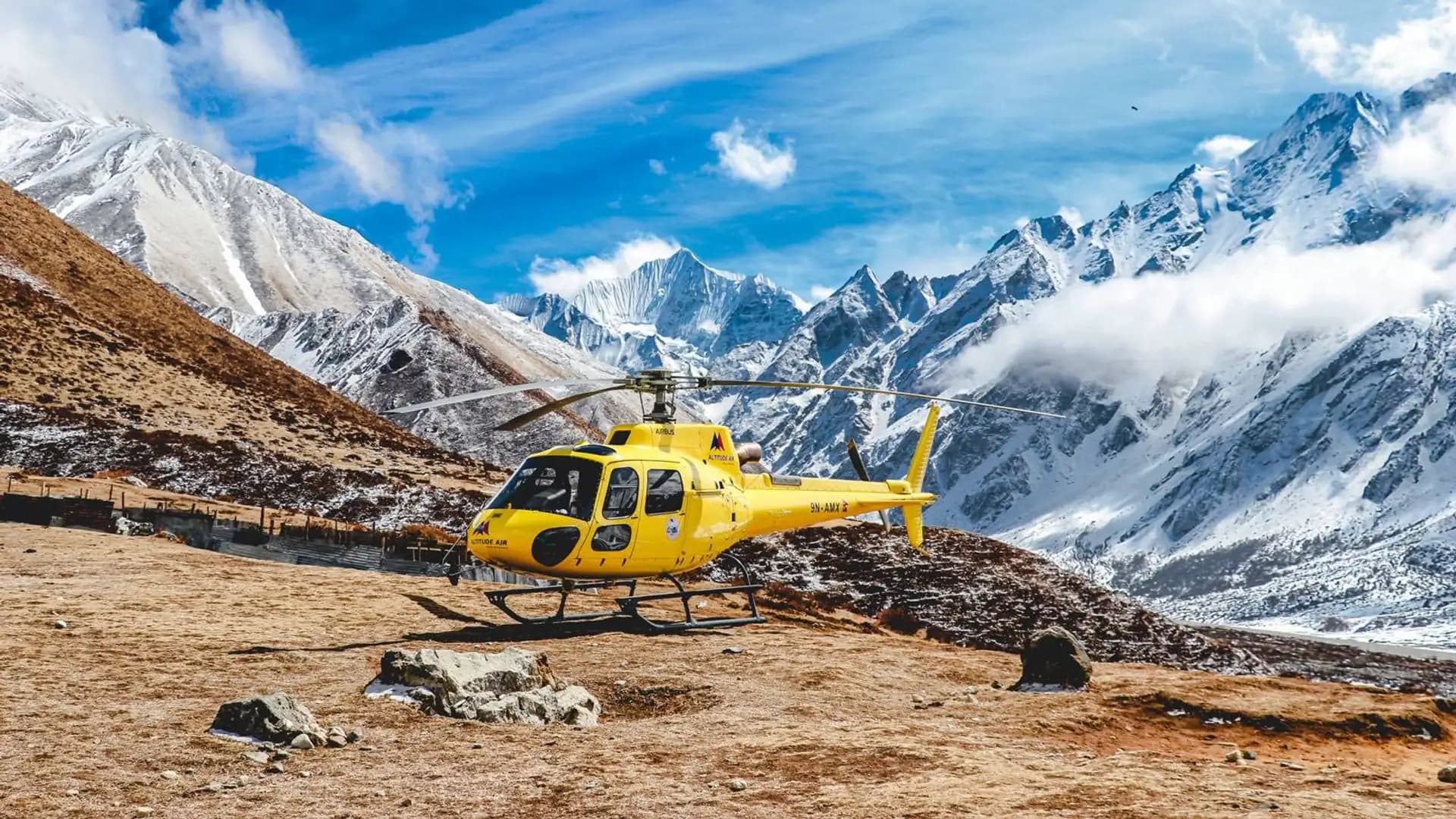
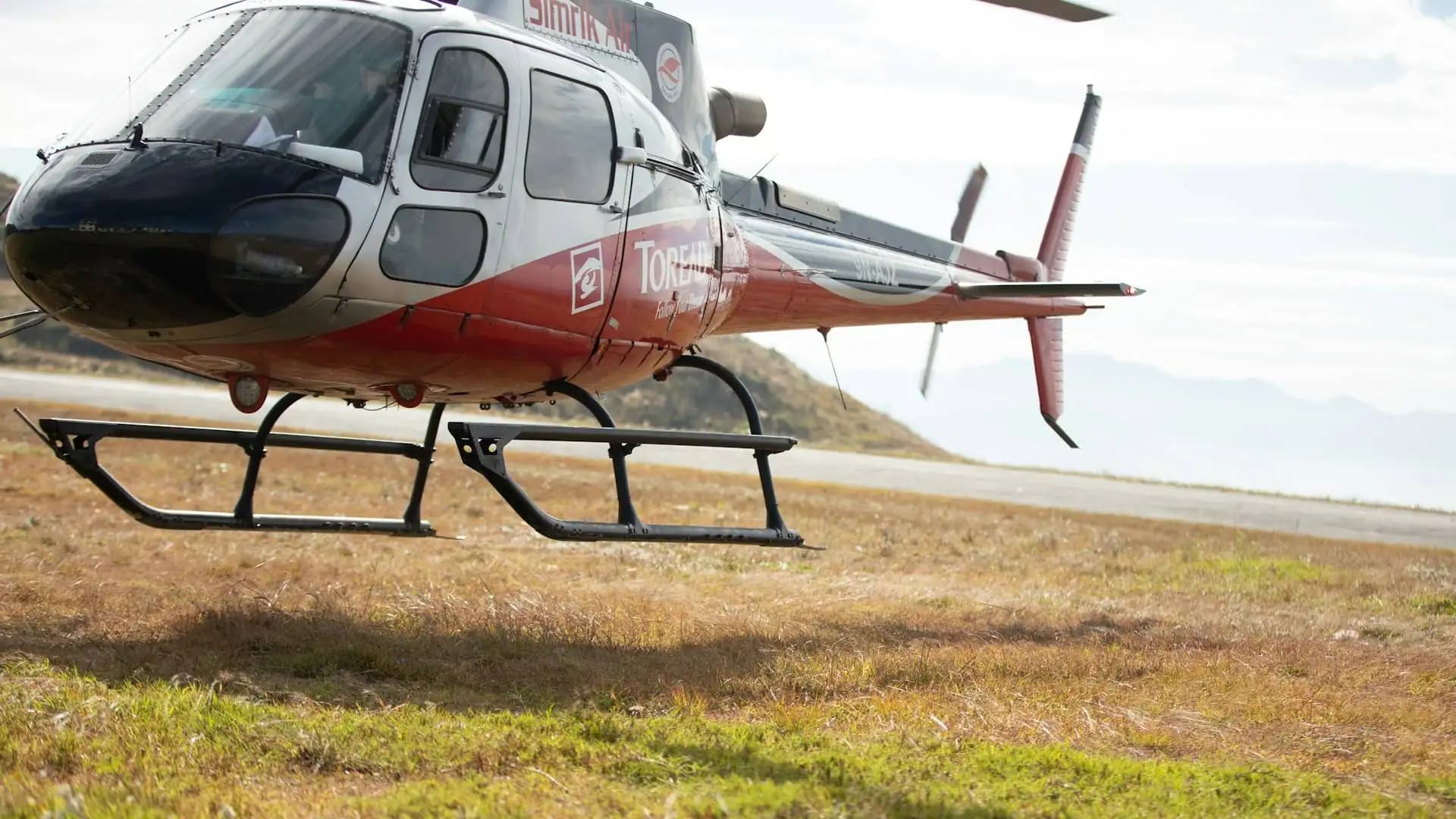
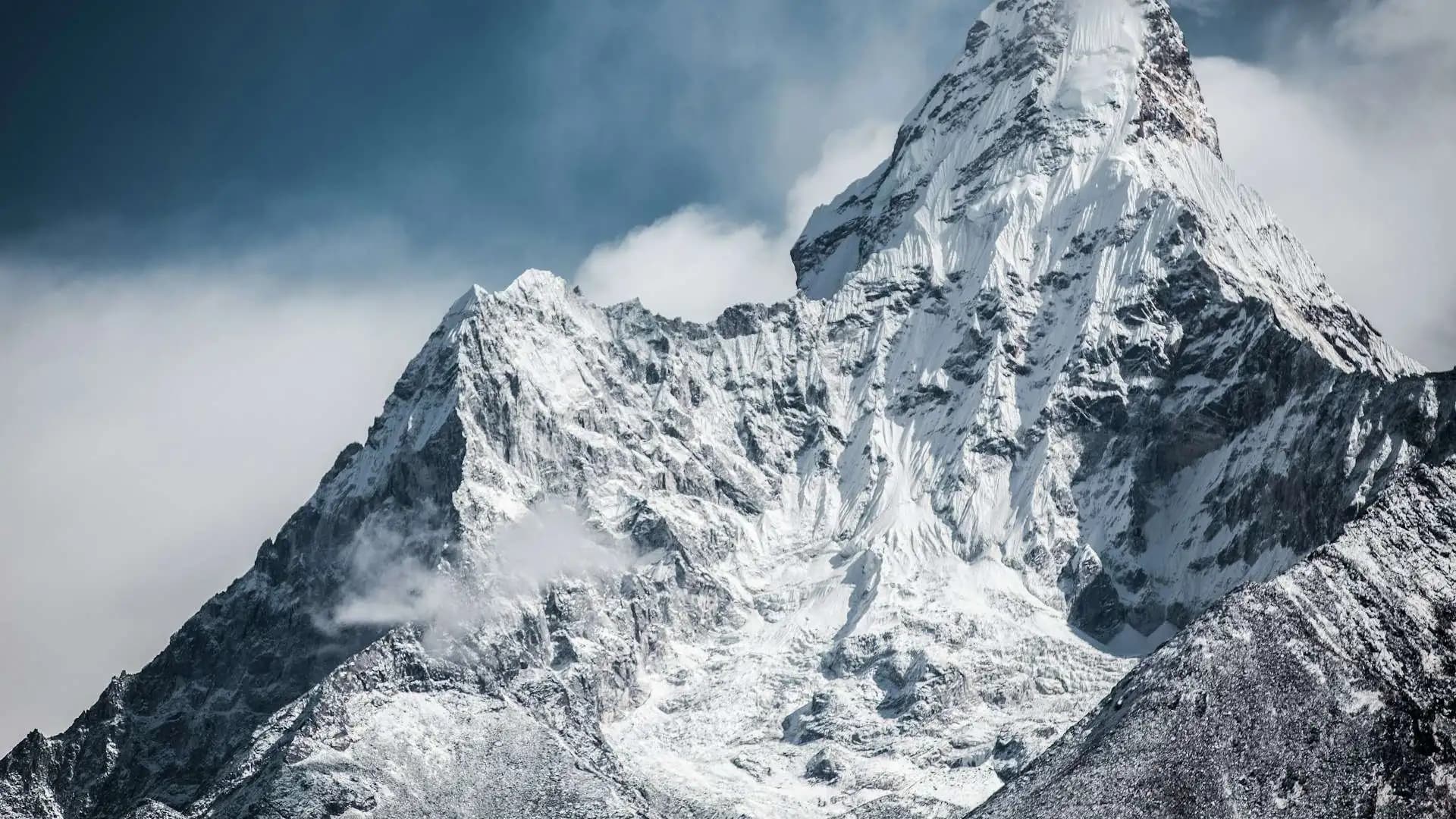
The Everest Base Camp Trek with Helicopter Return lets you walk every step up to Everest Base Camp (5,364 m) and Kala Patthar, then skip the three-day walk back down. After sunrise on Kala Patthar, a helicopter picks you up at Gorak Shep and flies you down the Khumbu valley to Lukla in about 15–20 minutes, past Ama Dablam, Lhotse and Tengboche monastery from the air.
You still do the whole climb on foot, so you still need the acclimatization days, the fitness and the patience the trek demands. The helicopter replaces only the descent: the knee-heavy days from Gorak Shep to Pheriche, Namche and Lukla. That cuts the standard 14–15 day trip to 12 days and turns the hardest part of the return into one of the best views of the trip.
This package suits trekkers with limited holiday time, people who have walked the route before and don't need to repeat the descent, and anyone who wants a helicopter flight in the Himalaya without paying for a separate scenic tour. It's priced for a shared helicopter, with private charters available.
Trip at a Glance
Detail | Information |
|---|---|
Duration | 12 days (9 days on foot) |
Start / End | Kathmandu / Kathmandu |
Highest point | Kala Patthar, 5,644 m on most maps (some sources give 5,545 m) |
Everest Base Camp | 5,364 m / 17,598 ft |
Highest overnight | Gorak Shep, about 5,164 m |
Helicopter | Shared, Gorak Shep to Lukla, about 15–20 minutes |
Walking per day | 3–8 hours |
Difficulty | Strenuous (high altitude, no technical climbing) |
Accommodation | Hotel in Kathmandu, teahouses on the trek |
Meals | Breakfast in Kathmandu; all meals on the trek |
Transport | Flights to and from Lukla (via Ramechhap in peak season), shared helicopter from Gorak Shep |
Permits | Sagarmatha National Park, Khumbu Pasang Lhamu Rural Municipality (both included) |
Best months | March–May and late September–November |
Group size | 2–12 people (shared helicopter); private trips on request |
Price | From US$2,150 per person |
Why This 12-Day Itinerary Works
The classic Everest Base Camp trek is 12–14 days, and about a quarter of that is walking back down the way you came. Many trekkers find the descent the least interesting part: the same trail, tired legs and steep stone steps that are hard on the knees.
The full ascent, at the right pace. We don't shorten the way up. You still spend two nights in Namche (3,440 m) and two in Dingboche (4,410 m), with acclimatization hikes on each rest day. Altitude is the main risk on this trek, and the helicopter doesn't change that, so we don't cut corners on the climb.
Kala Patthar before the flight. Helicopters fly best in the calm, clear morning. You hike Kala Patthar at dawn, when Everest is lit and the sky is clearest, then come down to Gorak Shep for breakfast and the flight.
Helicopter to Lukla, plane to Kathmandu. The shared helicopter takes you from Gorak Shep to Lukla. You overnight in Lukla and take the morning flight to Kathmandu (or Ramechhap) the next day. This keeps the price far lower than flying the helicopter all the way to Kathmandu. A direct flight to Kathmandu is available as an upgrade.
Built-in flexibility. If clouds stop the helicopter on Day 10, you still have Day 11 in the plan, and you can always walk down to a lower landing point. Day 12 gives a further buffer before your international flight.
If you'd rather walk the whole route, see our standard Everest Base Camp Trek. For more comfort, our Luxury Everest Base Camp Trek uses upgraded lodges.
How the Helicopter Return Works
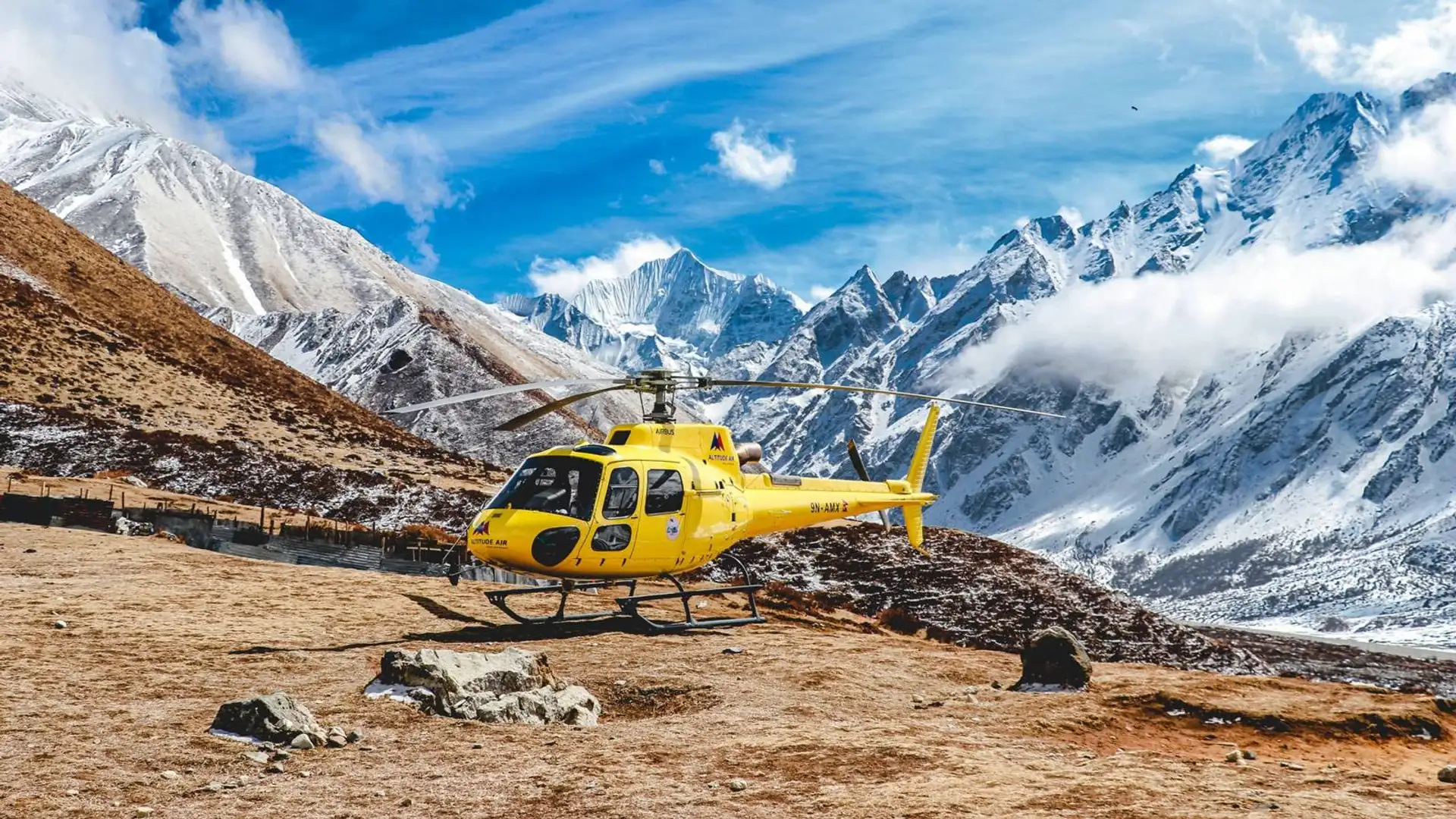
Where it picks you up. The helicopter lands at the helipad at Gorak Shep (about 5,164 m), after your Kala Patthar sunrise hike. It doesn't land at Everest Base Camp itself.
Shared, not private. The price is based on a shared helicopter, usually with other trekkers. Seats are arranged by the helicopter company, so departure times can shift by an hour or two.
Passenger limits at altitude. Helicopters lose lifting power in thin air. At Gorak Shep, they can usually take only two or three passengers per lift, sometimes stopping at a lower point to drop people and come back for more before flying on to Lukla.
Baggage. Weight limits are tight. Your main duffel (about 10 kg) and a daypack are normally fine. Your porter's load may go on the same flight or a separate one.
If the weather is bad. Helicopters can't fly in cloud or strong wind. If they can't reach Gorak Shep, we wait, or you walk down to Pheriche or Dingboche for a pickup there. Day 11 is the built-in buffer. Extra lodge nights caused by weather aren't included.
Upgrades. You can fly direct from Gorak Shep to Kathmandu, or book a private helicopter for your group. We quote these at the time of booking.
Helicopter Return vs Walking Down: Which Is Right for You?
Helicopter return | Walking down | |
|---|---|---|
Total trip length | 12 days | 14–15 days |
Days of descent | About 20 minutes by air | 3 days on foot (Gorak Shep – Pheriche – Namche – Lukla) |
Cost | Higher (the shared helicopter seat is the main extra) | Lower |
Strain on knees | Very little | High: about 2,300 m of descent, much of it on stone steps |
What you see | Ama Dablam, Tengboche and the Khumbu valley from the air | The same valley on foot, with a night in Pheriche |
Weather risk | Flight can be delayed by cloud or wind | Walking is rarely stopped by weather |
Best for | Short holidays, knee problems, a memorable ending | Tight budgets, trekkers who enjoy every step |
When the helicopter makes most sense. If your holiday is limited to two weeks including flights, the three saved days are the difference between reaching base camp and not going at all. It also helps trekkers who struggle with long, steep descents. Knees take far more strain going down than going up, and the stone staircases below Namche are hard on tired legs.
When walking down makes more sense. If you have the time and the budget matters, walking down costs less and lets you see Pheriche and spend another night in Namche. Some trekkers also enjoy the descent, because their appetite and sleep improve with every day.
A middle option. If you're undecided, book the standard trek and keep the helicopter as an option. Your guide can arrange a seat from Gorak Shep or Pheriche on the trail if it's available, though prices are usually higher at short notice and seats aren't guaranteed.
What You'll See at Everest Base Camp and Kala Patthar
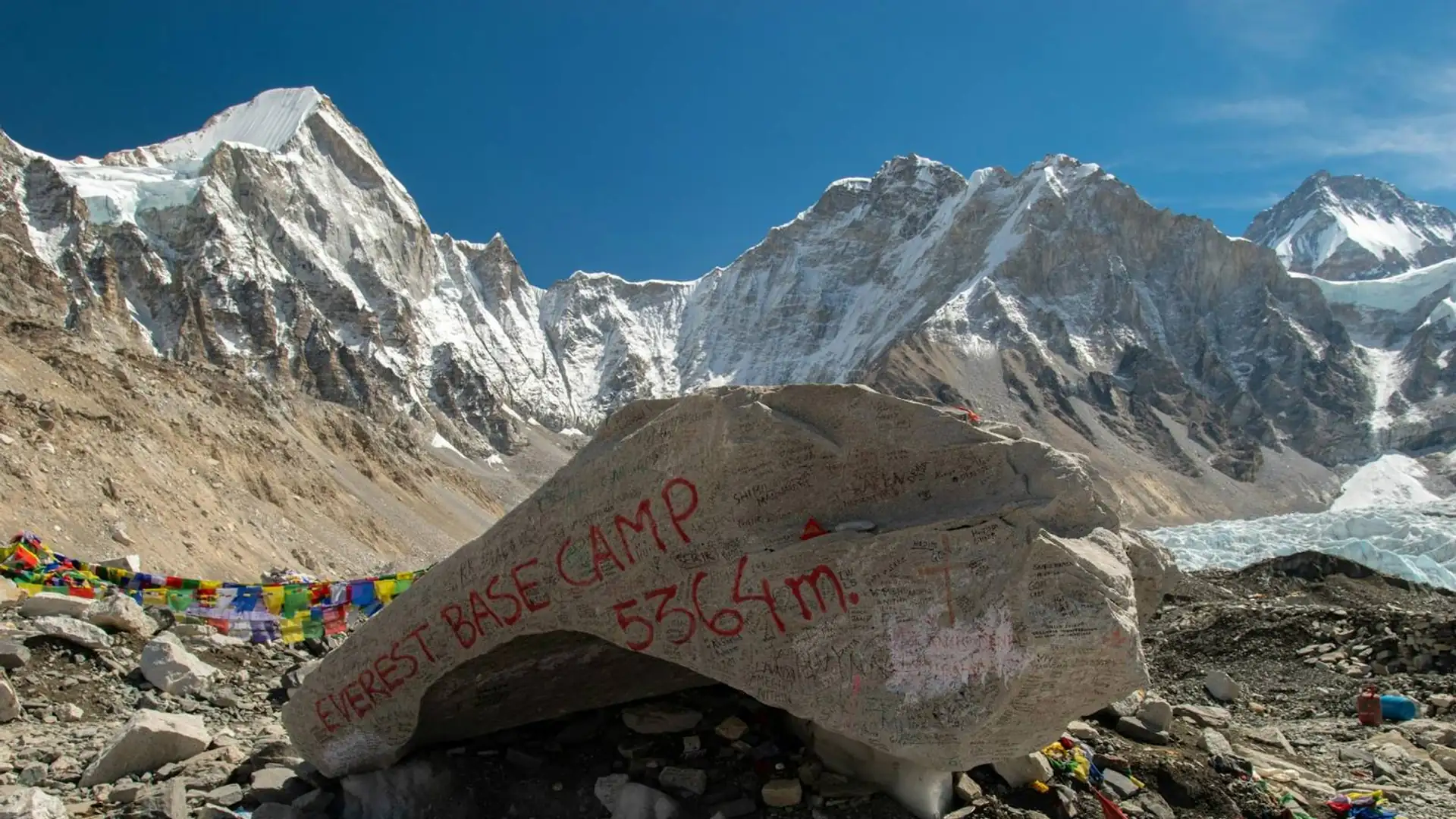
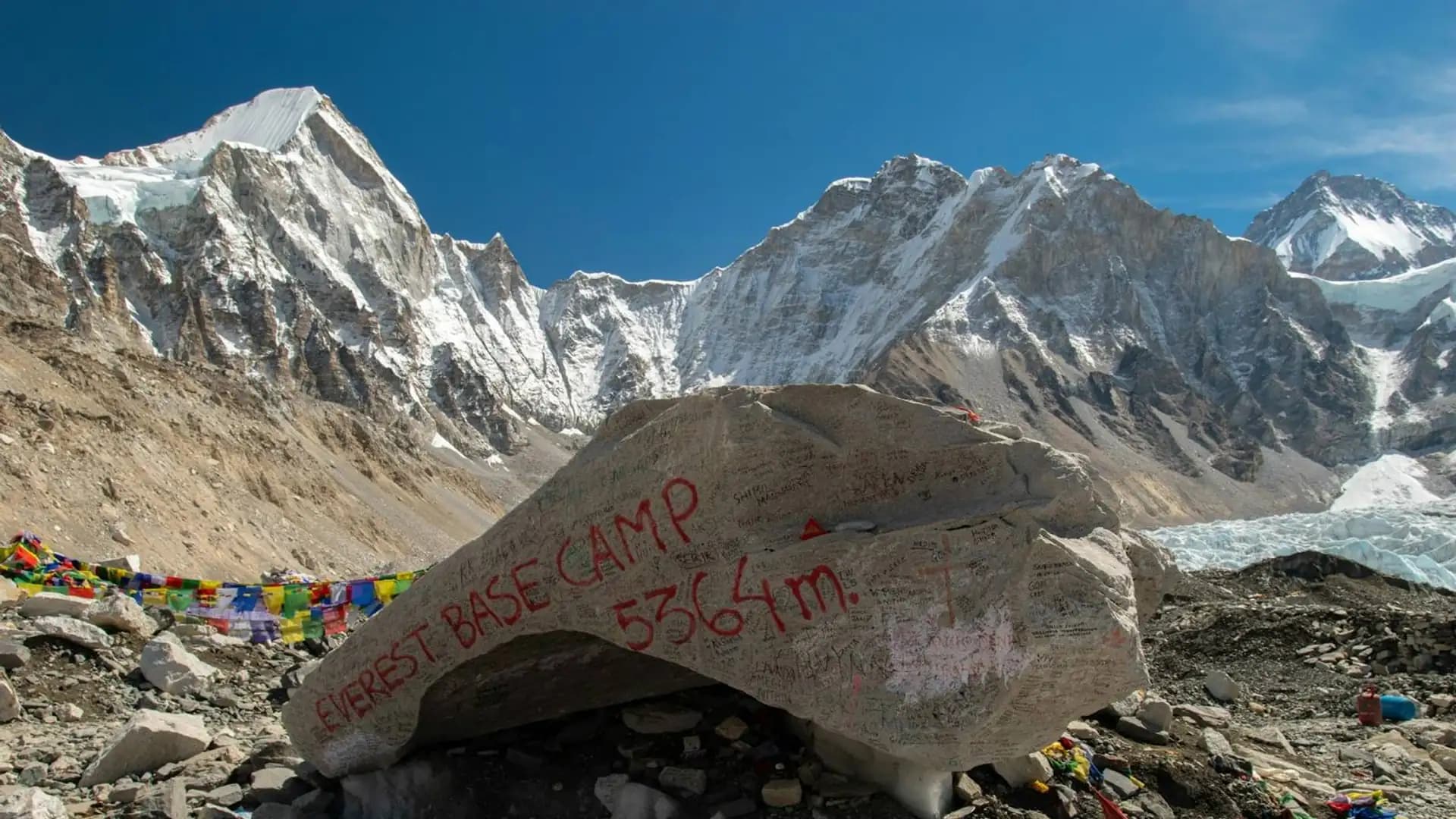
Many first-time trekkers are surprised by Everest Base Camp. You stand on the rocky edge of the Khumbu Glacier, beside a large boulder marked with prayer flags and painted signs, with the jumbled ice towers of the Khumbu Icefall rising above. It's an impressive place, but Everest's summit isn't visible from here. The Nuptse ridge blocks the view.
In spring (April to May), base camp is busy with climbing expeditions, and yellow and orange tents spread across the glacier. Trekkers can't enter the expedition camps, but you'll see the activity from the edge. In autumn, base camp is quiet, with few or no tents, and the glacier and icefall are the main attraction.
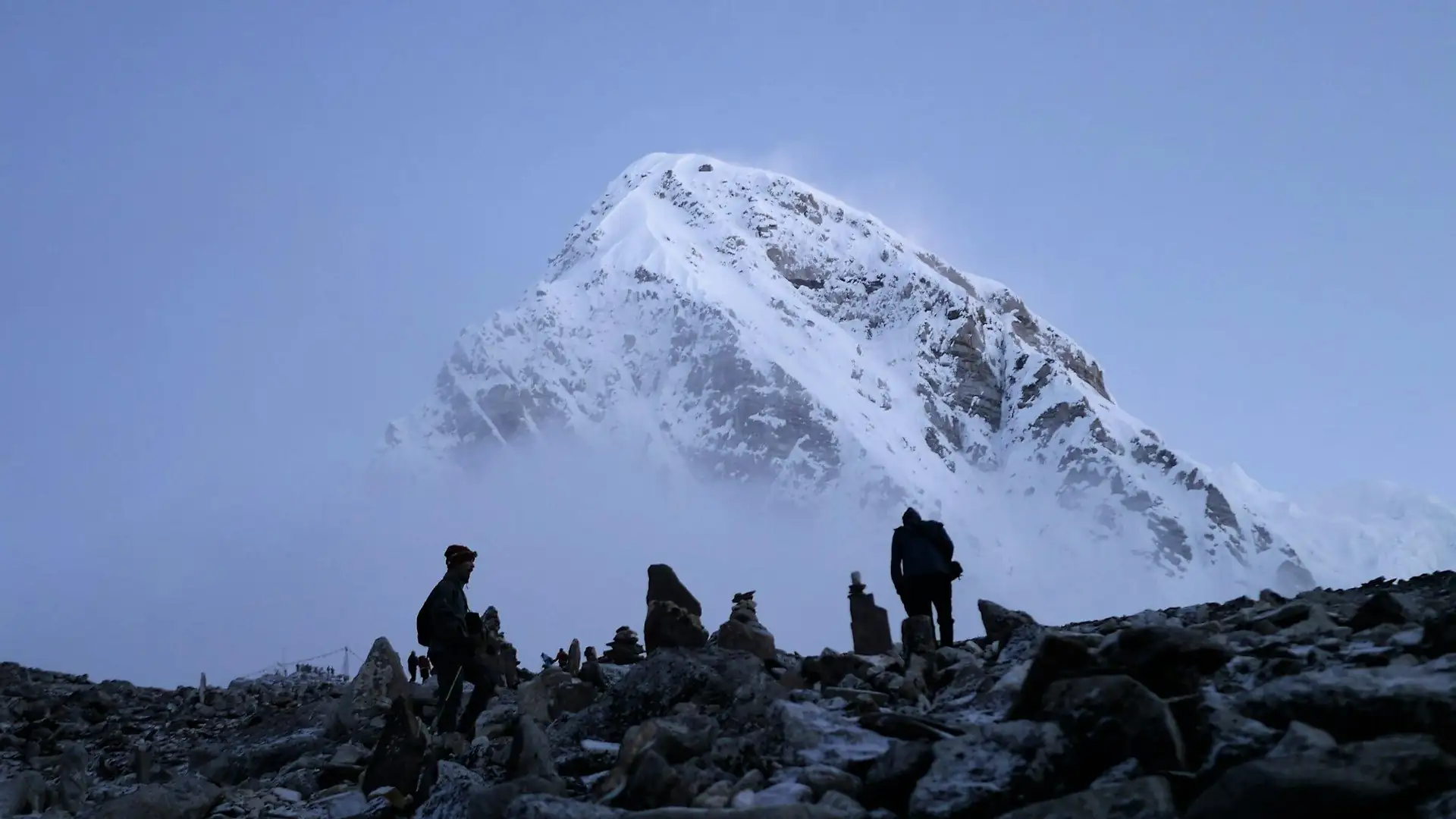
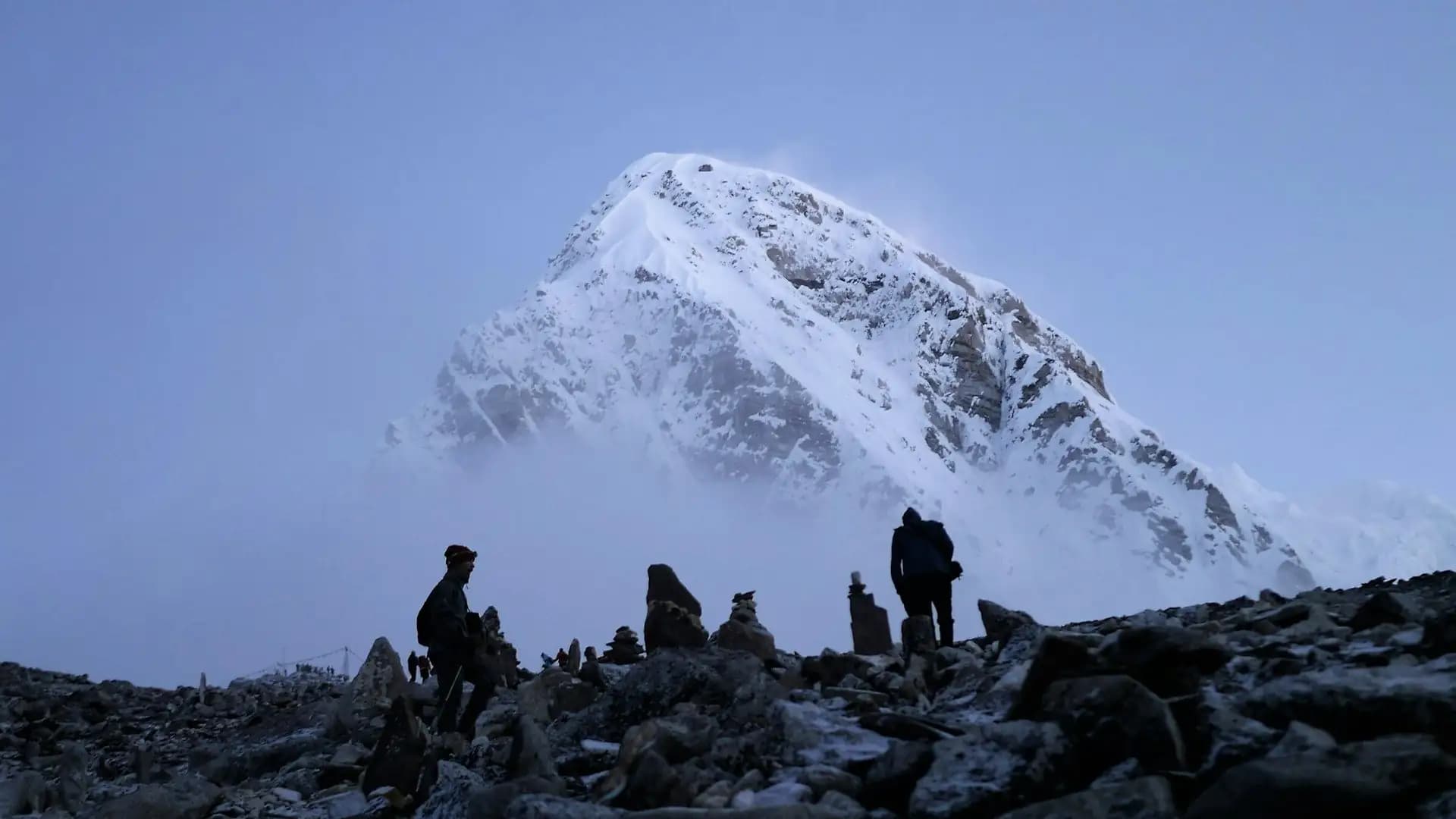
Kala Patthar is where you get the classic Everest view. It's a dark, rocky ridge rising above Gorak Shep, and from the top you see Everest's black summit pyramid directly across the glacier, with Nuptse to its right, Lhotse behind, and Pumori rising steeply just behind you. The climb takes 1.5–2 hours and is the hardest short walk of the trek because of the altitude. Going at sunrise means clear skies, calm air and the first light on Everest's summit, followed by the helicopter later the same morning.
Route Overview
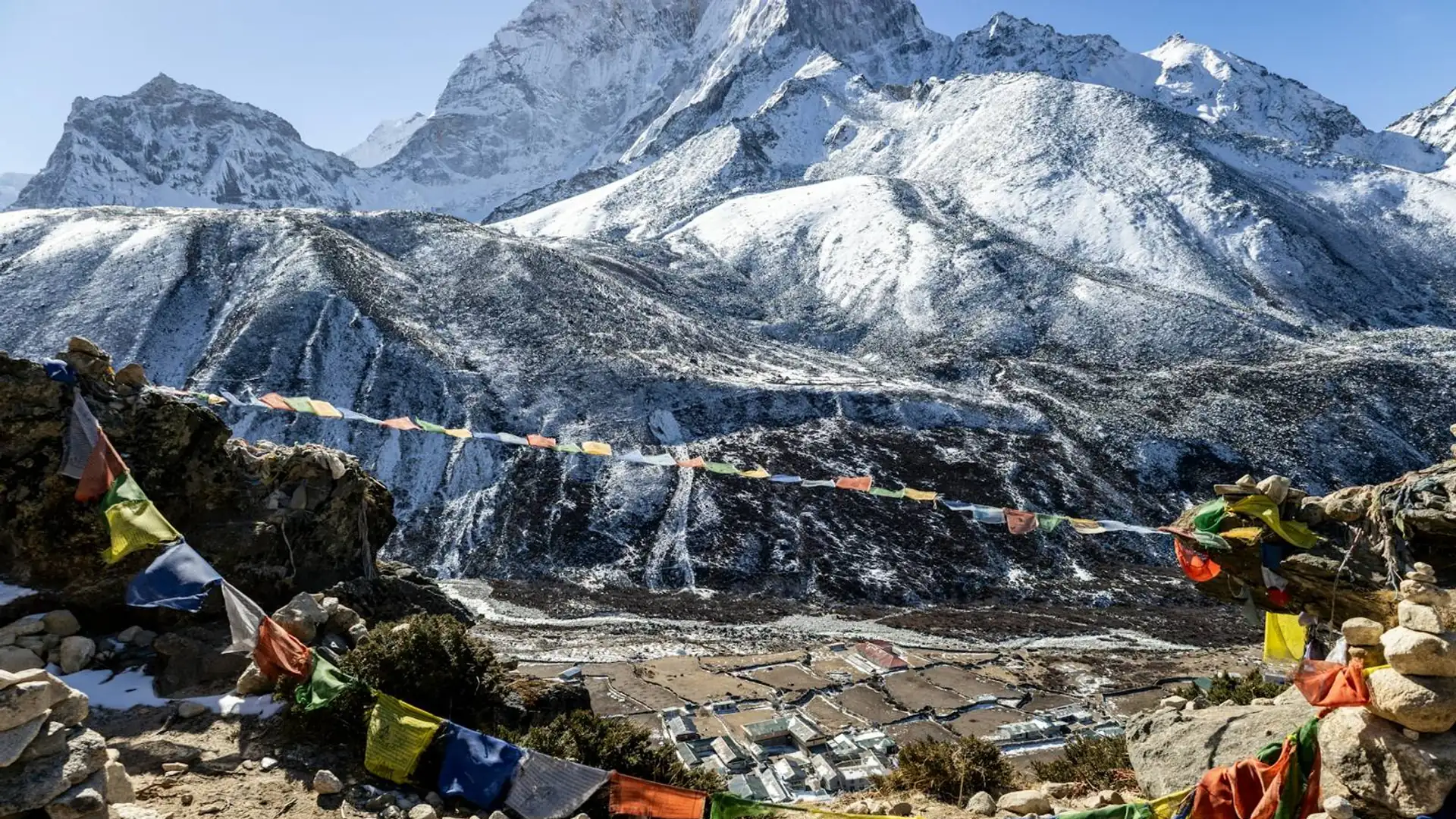
The trek follows the classic Everest Base Camp route north from Lukla up the Dudh Koshi valley to Namche Bazaar, then along the Imja Khola through Tengboche and Pangboche to Dingboche. From Dingboche, the trail swings north into the Khumbu valley, past Thukla and Lobuche, to Gorak Shep. Everest Base Camp and Kala Patthar are both short excursions from Gorak Shep.
On the return, the helicopter follows the same valleys south to Lukla in minutes rather than days.
For more on the altitudes involved, see our guide to Everest Base Camp's elevation.
Distance & Walking Hours
Day | Section | Distance (approx.) | Time |
|---|---|---|---|
2 | Lukla – Phakding | 8 km | 3–4 hrs |
3 | Phakding – Namche | 11 km | 5–6 hrs |
5 | Namche – Tengboche | 10 km | 5–6 hrs |
6 | Tengboche – Dingboche | 11 km | 5–6 hrs |
8 | Dingboche – Lobuche | 8 km | 5–6 hrs |
9 | Lobuche – Gorak Shep – EBC – Gorak Shep | 12 km | 7–8 hrs |
10 | Gorak Shep – Kala Patthar – Gorak Shep | 4 km | 2.5–3 hrs |
10 | Gorak Shep – Lukla by helicopter | — | 15–20 min |
The total on foot is about 65 km, plus roughly 10 km of acclimatization hikes. Walking the descent instead would add about 40 km over three days.
Altitude Profile
Place | Altitude | Day |
|---|---|---|
Kathmandu | 1,400 m / 4,593 ft | 1, 11 |
Lukla | 2,860 m / 9,383 ft | 2, 10 |
Phakding | 2,610 m / 8,563 ft | 2 |
Namche Bazaar | 3,440 m / 11,286 ft | 3–4 |
Tengboche | 3,860 m / 12,664 ft | 5 |
Dingboche | 4,410 m / 14,469 ft | 6–7 |
Lobuche | about 4,940 m / 16,207 ft | 8 |
Gorak Shep | about 5,164 m / 16,942 ft | 9 |
Everest Base Camp | 5,364 m / 17,598 ft | 9 |
Kala Patthar | 5,644 m / 18,517 ft | 10 |
Map Overview
The map follows the Dudh Koshi north from Lukla to Namche, then the Imja Khola past Tengboche to Dingboche. From Dingboche the line turns north up the Khumbu valley via Thukla and Lobuche to Gorak Shep, with short spurs to Everest Base Camp and Kala Patthar. A dashed line shows the helicopter route straight back down the valley to Lukla.
Difficulty Level
We grade this trek strenuous. There's no technical climbing, but altitude and long days make it demanding.
Altitude: You sleep above 5,000 m at Gorak Shep and climb to about 5,644 m on Kala Patthar. Most trekkers feel the thin air from Dingboche onwards.
Long days: Day 9 is 7–8 hours, and Kala Patthar starts in the dark and the cold.
Cold: Nights at Lobuche and Gorak Shep are well below freezing in every season.
Terrain: Mostly good trails, but with steep sections, stone steps and rocky moraine near base camp.
The helicopter makes the trip easier on your knees and shorter overall, but not easier on the way up. If you're unsure, see our article on base camp trekking in Nepal for how the main base camp treks compare.
Fitness Requirements and Training
You don't need trekking experience, but you need good general fitness. Start preparing 8–12 weeks before you travel.
Cardio: 4–5 sessions a week of walking, running, cycling or stair climbing, building to an hour or more.
Long walks: Once a week, walk 5–7 hours with a daypack, ideally on hills.
Stairs: Climbing stairs or hills prepares you for the steep sections above Namche and on Kala Patthar.
Strength: Squats, lunges and step-ups twice a week.
Boots: Wear your trekking boots on every training walk.
Altitude Sickness & Acclimatization
Acute mountain sickness (AMS) usually begins above about 2,500 m and shows up as headache, nausea, tiredness and poor sleep. Left untreated, it can progress to HAPE or HACE, which are life-threatening. The only reliable treatment is to go down.
Gradual ascent: You sleep at 2,610 m, 3,440 m (two nights), 3,860 m, 4,410 m (two nights), about 4,940 m and about 5,164 m.
Climb high, sleep low: Both acclimatization days include hikes several hundred metres above where you sleep.
Daily checks: Your guide checks your blood oxygen and pulse with an oximeter every evening.
Emergency backup: Guides carry a first-aid kit and emergency oxygen on high-altitude treks. If someone becomes seriously ill, a helicopter evacuation can be arranged, which your insurance must cover.
Drink 3–4 litres a day, avoid alcohol and tell your guide about symptoms early. This is general guidance, not medical advice. Talk to your doctor about altitude medication before you travel. The CDC's Nepal travel health page is a good starting point.
Best Time for the EBC Trek with Helicopter Return
October to November gives the clearest skies and the most reliable helicopter weather. Mornings are usually calm and cloud-free. It's the busiest time on the trail.
March to May is the second main season. Days are warmer, rhododendrons bloom lower down, and expedition tents fill Everest Base Camp. Afternoon cloud is more common, so morning flights matter.
December to February is cold but often clear, with fewer trekkers. Some higher lodges close, and nights at Gorak Shep drop well below −15 °C.
June to September is the monsoon. Cloud often grounds both Lukla flights and helicopters for days, so we don't recommend this package in those months.
See our guide to the best time to hike in Nepal for more detail.
Weather by Season (around Gorak Shep, about 5,164 m)
Season | Months | Daytime | Night | Helicopter conditions |
|---|---|---|---|---|
Autumn | Oct–Nov | 0–10 °C | −10 to −15 °C | Best: clear, calm mornings |
Winter | Dec–Feb | −5 to 5 °C | −15 to −25 °C | Often clear, but wind can stop flights |
Spring | Mar–May | 3–12 °C | −8 to −12 °C | Good mornings, cloud builds after midday |
Monsoon | Jun–Sep | 5–12 °C | −5 to 0 °C | Frequent cloud and cancellations |
These are typical ranges. Kala Patthar at sunrise is usually 5–10 °C colder than the village, with wind.
Getting There: Flights and Transport
Leg | How | Time |
|---|---|---|
Airport – hotel, Kathmandu | Private car | 20–40 min |
Kathmandu – Ramechhap (peak season) | Shared tourist vehicle | 4–5 hrs |
Ramechhap or Kathmandu – Lukla | Small aircraft | 20–35 min |
Gorak Shep – Lukla | Shared helicopter | 15–20 min |
Lukla – Kathmandu or Ramechhap | Small aircraft | 20–35 min |
In spring and autumn, most Lukla flights leave from Manthali Airport in Ramechhap to reduce congestion in Kathmandu. We confirm which applies to your dates before you travel. All mountain flights depend on clear weather, and delays of a day or more happen every season.
Accommodation
Kathmandu: A tourist-class hotel with private, en-suite rooms and breakfast, twin-share.
On the trek: Teahouses (family-run lodges) with simple twin rooms. In Phakding, Namche and Lukla many have attached bathrooms and good hot showers. From Dingboche upwards, rooms are basic and unheated, toilets are shared, and Gorak Shep's lodges are the most basic of all. The dining room stove is where everyone gathers in the evening.
For upgraded lodges with en-suite rooms on most nights, see our Luxury Everest Base Camp Trek.
Meals & Drinking Water
All meals are included on the trek, and breakfast is included in Kathmandu.
Teahouse menus include dal bhat, noodles, fried rice, pasta, potatoes, soups, eggs, porridge and Tibetan bread, plus pizza and baked goods in Namche. Dal bhat is the best fuel for long days. Food is carried up by porters and yaks, so prices rise with altitude.
Don't drink untreated tap or stream water. Use purification tablets or a filter, or buy boiled water from teahouses. Bring two 1-litre bottles.
Internet, Mobile Network & Charging
Mobile signal: Nepal Telecom and Ncell work in Lukla, Namche and several villages, with patchy coverage higher up.
Wi-Fi: Most lodges sell access through the Everest Link network on prepaid cards. It gets slower and more expensive as you climb.
Charging: Available at most teahouses for a fee. Bring a power bank and keep batteries warm at night.
Permits & Fees
Both permits are included, and we arrange them for you.
Permit | Foreign nationals | Where |
|---|---|---|
Sagarmatha National Park entry | NPR 3,000 (about US$23) | Monjo checkpoint or in Kathmandu |
Khumbu Pasang Lhamu Rural Municipality fee | NPR 3,000 (about US$23) | Lukla or Monjo |
The Everest region uses these two permits instead of the TIMS card. Fees can change, and we always charge the current official rate. Official information: Nepal Tourism Board and Department of National Parks and Wildlife Conservation.
Everest Base Camp Trek with Helicopter Return Cost
Package price: from US$2,150 per person for 2 or more people, including the shared helicopter from Gorak Shep to Lukla. Solo travellers and private helicopter flights are priced on request, because a shared seat depends on other passengers.
Here's roughly where the money goes, per person in a group of two:
Cost item | Approx. US$ |
|---|---|
Lukla flights (in and out) and Ramechhap transfers | 470 |
Shared helicopter seat, Gorak Shep to Lukla | 600 |
Sagarmatha National Park and municipality fees | 46 |
Trekking guide (wages, food, lodging, flights, insurance) | 330 |
Porter (one per two trekkers) | 110 |
Teahouse rooms and three meals a day | 360 |
Kathmandu hotel, 2 nights with breakfast | 80 |
First aid, emergency oxygen, office support, taxes and contingency | 154 |
Total | 2,150 |
Upgrade options (per person, quoted at booking):
Helicopter direct from Gorak Shep to Kathmandu instead of Lukla
Private helicopter charter for your group
Helicopter instead of the plane between Kathmandu and Lukla
Extra money to budget (not included):
Lunch and dinner in Kathmandu: US$10–25 per meal
Drinks, snacks, hot showers, Wi-Fi and charging: US$15–25 a day, more above Dingboche
Tips for guide and porter: around 10% of the trip price is a common guideline
Nepal visa on arrival: US$30 for 15 days or US$50 for 30 days (see the Department of Immigration)
For general costs, read our Nepal trekking cost guide.
Optional Add-ons
Direct helicopter to Kathmandu from Gorak Shep, saving the Lukla night
Private helicopter for your group or family
Gokyo Lakes on the way up; see our Everest Base Camp with Gokyo Lakes Trek
The three high passes instead of the standard route; see our Everest Three High Pass Trek
Island Peak for experienced trekkers; see our Island Peak Climbing
Extra Kathmandu nights or a day of sightseeing in the Kathmandu Valley
Travel Tips
Pack light for the helicopter. Keep your duffel around 10 kg and carry valuables, camera and a warm layer in your daypack.
Keep the morning free. Helicopters fly early. Be ready at the Gorak Shep helipad when your guide says, even if you're tired from Kala Patthar.
Don't plan your international flight for Day 11. Weather can push both the helicopter and the Lukla flight back a day.
Carry cash. There are ATMs in Lukla and Namche, but they're unreliable. Bring Nepali rupees from Kathmandu.
Take it slowly above Dingboche. Walking slowly is the single best thing you can do to avoid altitude sickness.
Sit by the window on the helicopter if you can. Your guide can ask, but seats depend on weight balance.
Photography Spots
Kala Patthar at sunrise: Everest's summit pyramid, Nuptse and the Khumbu Icefall.
Everest Base Camp: The prayer flags and the icefall behind them.
From the helicopter: Ama Dablam and Tengboche from the air. Phones work well through the window.
Tengboche monastery: With Ama Dablam behind, especially in the late afternoon.
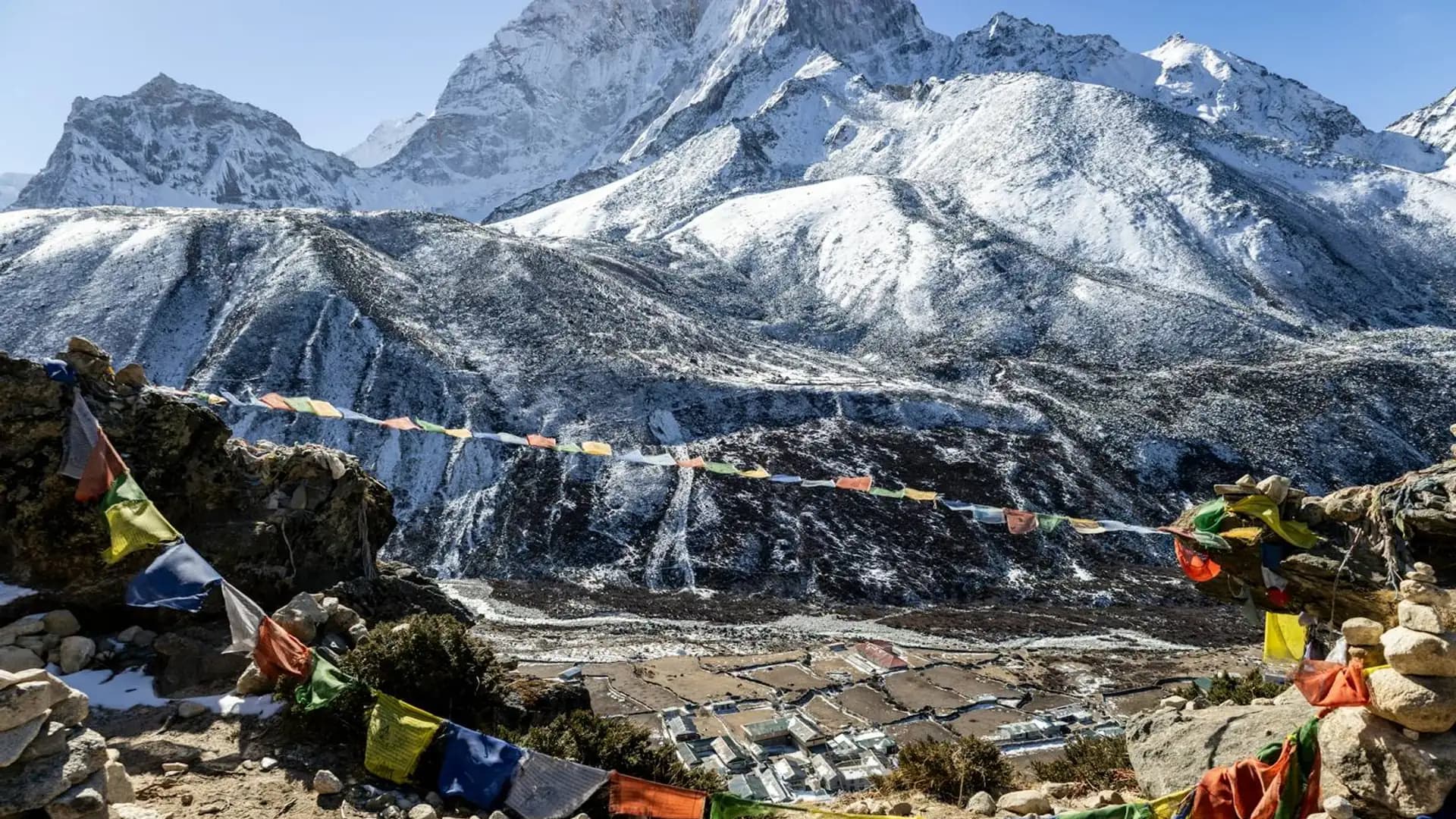
Thukla pass memorials: Prayer flags and stone chortens with Pumori behind.
Hillary Bridge: Prayer flags across the gorge above the Dudh Koshi.
Ask before photographing people, and don't photograph inside monasteries without permission.
Responsible Trekking
Carry your rubbish out, including batteries. Waste management at high altitude is limited.
Refill, don't buy plastic bottles. Use purification tablets or a filter.
Respect Sherpa culture. Walk clockwise around stupas and mani walls, and ask before entering monasteries.
Give way to yaks on the mountain side of the trail.
Look after the crew. We pay fair wages, insure our staff and limit porter loads. Read more in our guide to trekking guides in Nepal.
Is This Trek Right for You?
This trek suits you if you:
Want to reach Everest Base Camp and Kala Patthar on foot but have limited time
Would like a helicopter flight in the Himalaya as part of the trip
Have knee problems that make long descents painful
Have done the EBC trek before and want a different ending
Think twice, or choose a different trip, if you:
Want to walk the whole route: our Everest Base Camp Trek costs less
Want a quieter, more varied loop: the Everest Three High Pass Trek avoids retracing your steps without a helicopter
Have heart or lung conditions affected by altitude. Talk to your doctor first.
Why Book With Adventure Life Nepal
Run by a guide. Adventure Life Nepal was founded by Dil Bahadur Karki, who has more than 25 years of guiding experience in Nepal and has led trekkers from over 40 countries.
Licensed and registered. We're registered with the Nepal Tourism Board and the Trekking Agencies Association of Nepal (TAAN). Our guides hold Nepal Mountaineering Association certification.
Safety equipment carried. Guides carry a first-aid kit, a pulse oximeter and emergency oxygen, and are trained in wilderness first aid.
Honest about the helicopter. We explain how shared flights, altitude limits and weather work, so you know what to expect on the day.
Clear pricing. The cost table above shows what you're paying for.
Small groups. A maximum of 12 trekkers, and private trips on any date.
Booking, Cancellation & Refund Policy
A 30% deposit confirms your booking.
30 days or more before the start date: full refund minus administrative fees.
15–29 days before: a 50% cancellation fee applies.
Less than 15 days before: no refund.
Travel insurance covering trekking to 6,000 m and helicopter evacuation is required for everyone.
We may change or cancel a trek because of weather, natural disasters or other events outside our control.
Full details are on our terms and conditions page.
Plan Your Everest Base Camp Trek with Helicopter Return
Walk to the foot of Everest, watch sunrise from Kala Patthar, and fly back down the valley the same morning. Tell us your dates and group size, and we'll check flights and helicopter availability and confirm your price.
Book now or send us a quick enquiry. WhatsApp or call: +977 9841248242 · Email: adventurelifenepal@gmail.com
Highlights
Itinerary
We meet you at Tribhuvan International Airport and drive you to your hotel in Thamel. In the afternoon or evening your guide briefs you on the trek, checks your gear and answers questions. Thamel's gear shops are nearby for anything you need to rent or buy.
• Flight: About 30 minutes from Kathmandu, or 20–25 minutes from Ramechhap • Walking: 3–4 hours, about 8 km In spring and autumn, most Lukla flights leave from Manthali Airport in Ramechhap. On those dates we drive you there in the early hours (about 4–5 hours). After landing in Lukla, the trail drops gently along the Dudh Koshi river through Sherpa villages to Phakding. A short first day on purpose.
• Walking: 5–6 hours, about 11 km • Elevation gain: About 830 m The trail crosses the river on suspension bridges and enters Sagarmatha National Park at Monjo, where permits are checked. After Jorsale comes the long climb to Namche, crossing the high Hillary Bridge. On a clear day you get your first view of Everest from the trail. Namche sits in a horseshoe-shaped bowl, with bakeries, gear shops and a Saturday market.
• Walking: 4–5 hours round trip • High point: About 3,880 m We hike up to the Everest View Hotel area and the village of Khumjung (3,780 m), with views of Everest, Lhotse, Ama Dablam and Thamserku, then return to Namche to sleep. The afternoon is free for the Sherpa Culture Museum, a bakery or rest.
• Walking: 5–6 hours, about 10 km A contouring path with Ama Dablam ahead leads to Phunki Tenga on the river, followed by a steady climb through pine and rhododendron forest to Tengboche. The monastery is the largest in the Khumbu, and visitors can sit in on afternoon prayers.
• Walking: 5–6 hours, about 11 km The trail descends to Deboche, crosses the Imja Khola and climbs through Pangboche. The trees thin out into juniper and stone-walled fields. Dingboche sits on a broad shelf of the Imja valley under Ama Dablam and Lhotse. This is where many people first notice the altitude.
• Walking: 4–5 hours round trip • High point: About 5,080 m on the Nangkartshang ridge A steep path climbs the ridge above the village. From the top you see Makalu to the east and Island Peak at the head of the Imja valley. Go as high as feels right, then return to Dingboche for an easy afternoon.
• Walking: 5–6 hours, about 8 km The trail crosses open pasture above Pheriche to Dughla (Thukla), then climbs steeply to the Thukla pass. The ridge here is lined with stone memorials to climbers and Sherpas who died on Everest. Beyond, the trail follows the edge of the Khumbu Glacier's moraine to Lobuche.
• Walking: 7–8 hours, about 12 km • Longest day of the trek An early start along the moraine brings you to Gorak Shep, a cluster of lodges on a sandy lakebed, in about 3 hours. After lunch, the trail follows the glacier's edge over rocky ground to Everest Base Camp, beside the Khumbu Icefall. In spring, the expedition tents are here. In autumn, the area is quieter. Walk back to Gorak Shep for the night.
• Kala Patthar hike: 1.5–2 hours up, 1 hour down • Helicopter: About 15–20 minutes, Gorak Shep to Lukla You start in the dark, around 4:30–5 a.m., and climb the steep, sandy slope of Kala Patthar. At sunrise, the light reaches Everest's summit pyramid first, then Nuptse, Lhotse and Pumori. After photos, you walk back to Gorak Shep for breakfast. The helicopter usually arrives mid-morning, weather permitting. At this altitude, a helicopter can only lift two or three passengers at a time in the thin air, so larger groups are flown in short shuttles via a lower landing point such as Pheriche before continuing to Lukla. The flight down the Khumbu valley passes Ama Dablam, Pangboche and Tengboche. You land in Lukla with the afternoon free.
Morning flight to Kathmandu, or to Ramechhap followed by the drive back in peak season. The afternoon is free for rest or shopping in Thamel. If the helicopter was delayed on Day 10, this day is used for the helicopter and Lukla flights instead.
We drive you to the airport for your flight home. Because mountain flights are weather-dependent, we recommend booking your international flight for this day or later. Itinerary note: Mountain weather, flight delays and your group's acclimatization can change the plan. Your guide makes these decisions on the spot, and safety always comes first.
Elevation Profile
Altitude Variation Chart
What's Included
Included
- Airport pickup and drop-off in Kathmandu
- 2 nights hotel in Kathmandu, twin-share with breakfast
- Flights Kathmandu (or Ramechhap) to Lukla and Lukla to Kathmandu (or Ramechhap), with transfers
- Shared helicopter flight from Gorak Shep to Lukla
- Teahouse accommodation on the trek
- Breakfast, lunch and dinner on the trek
- Licensed, English-speaking trekking guide
- Porter (one for every two trekkers)
- Sagarmatha National Park permit and Khumbu Pasang Lhamu Rural Municipality fee
- Staff wages, meals, lodging, flights and insurance
- First aid kit, pulse oximeter and emergency oxygen
- Sleeping bag on loan if needed
- All government taxes and office service charges
Excluded
- International flights and Nepal visa fees
- Travel insurance covering trekking to 6,000 m and helicopter evacuation (mandatory)
- Lunch and dinner in Kathmandu
- Helicopter upgrades (direct to Kathmandu or private charter)
- Extra nights or helicopter waiting caused by bad weather
- Drinks, snacks, hot showers, Wi-Fi and battery charging
- Personal trekking gear
- Tips for guide and porter
- Costs caused by events outside our control (weather, flight cancellations, illness, strikes)
- Anything not listed under "What's Included"
Packing List
Category | What to bring |
|---|---|
Upper body | Thermal base layers, 2 trekking shirts, fleece jacket, down jacket rated to about −15 °C, waterproof shell |
Lower body | 2 trekking trousers, thermal leggings, waterproof over-trousers |
Feet | Broken-in waterproof trekking boots, 4 pairs of trekking socks, camp shoes |
Head & hands | Warm hat, sun hat, buff, liner gloves, insulated gloves |
Eyes & skin | Category 3–4 sunglasses, high-SPF sunscreen, lip balm |
Sleeping | Sleeping bag rated to −15 °C (we can lend one) |
Gear | 25–35 L daypack, trekking poles, headlamp with spare batteries, 2 water bottles |
Health | Personal medicines, altitude medication (ask your doctor), blister kit, purification tablets |
Documents | Passport, 2 passport photos, insurance details, cash in Nepali rupees |
Keep your main duffel to about 10 kg for the Lukla flight and the helicopter. Anything you don't need on the trek can stay at your hotel in Kathmandu. Down jackets and sleeping bags are easy to rent in Thamel.
Frequently Asked Questions
No. The helicopter picks you up at the helipad in Gorak Shep, a 2–3 hour walk from base camp. You walk to Everest Base Camp on Day 9 and to Kala Patthar on Day 10 before the flight.
Shared, with other trekkers, which keeps the cost down. Private charters are available as an upgrade.
About 15–20 minutes from Gorak Shep to Lukla. With shuttles at altitude, the whole transfer can take longer.
Helicopters lose lifting power in thin air. At Gorak Shep, they usually carry only two or three passengers per lift, so groups are moved in short shuttles via a lower landing point.
We wait for the weather to clear, which usually happens within a day. If needed, you walk down to a lower landing point such as Pheriche. Day 11 is built in as a buffer.
Yes, as an upgrade. The standard package flies the helicopter to Lukla and uses a plane from Lukla to Kathmandu the next day, which is much cheaper.
The way up is the same, so the altitude challenge is the same. The helicopter removes the three-day descent, which is hard on the knees.
Yes. You still sleep above 5,000 m at Gorak Shep, so the itinerary keeps two acclimatization days.
Keep your main duffel to around 10 kg and carry a small daypack. Exact limits depend on the helicopter and the weather.
Yes, but because the helicopter is shared, the solo price depends on how many seats are filled. We'll quote you a solo price or match you with other trekkers.
Most maps give 5,644 m, though some sources use 5,545 m. Either way, it's the highest point of the trek and gives the best view of Everest's summit.
Not really. Everest's summit is hidden behind the Nuptse ridge from base camp itself. That's why Kala Patthar, above Gorak Shep, is the main viewpoint.
Yes. It's a condition of booking. Your policy must cover trekking to at least 6,000 m and helicopter evacuation.
Nights are usually −10 to −15 °C in autumn and spring, and colder in winter. A warm sleeping bag and down jacket are essential.
The Sagarmatha National Park permit and the Khumbu Pasang Lhamu Rural Municipality fee. Both are included. The Everest region doesn't use the TIMS card.
Mobile signal is available in many villages, and most lodges sell Wi-Fi through prepaid cards. Coverage is patchy above Dingboche.
Yes. Down jackets, sleeping bags and trekking poles are easy to rent in Thamel. We can also lend you a sleeping bag.
Fit enough to walk 5–8 hours a day for several days in a row at altitude. No climbing experience is needed.
October and November have the most reliable helicopter weather. April and May are the next best.
Two to four months ahead for October, November, April and May, so we can secure Lukla flights and helicopter seats.
Yes. Gokyo Lakes, the Three Passes or Island Peak can all be combined with a helicopter return. Ask us for a custom itinerary.
Gallery & Video
Customer Reviews
Loading reviews...