Base Camp Trekking in Nepal 2027 | Best Treks, Costs & Guide
Introduction on Base Camp Trekking in Nepal
There is a particular moment on every base camp trek that people struggle to describe afterwards. The trail stops climbing, the valley opens into a bowl of ice and rock, and you realise the mountains you have been looking at for days are no longer on the horizon. You are standing under them. Prayer flags snap in the wind, a teahouse stove is somewhere behind you, and the air is thin enough that you laugh at your own breathlessness.
That moment is the reason base camp trekking in Nepal has become one of the most popular adventures in the Himalaya. It asks for fitness and patience, not mountaineering skills, and it takes you to places most visitors only see in photographs. But the phrase covers a wide range of trips. Some base camp treks are a comfortable week on well-supplied trails. Others are three-week expeditions into remote valleys where a night in a tent is normal.
This guide helps you tell them apart: which base camps you can actually reach, how high each one is, what permits you need, what it really costs, when to go and how to prepare. If you want the wider picture of what trekking in Nepal involves, our overview of the best time to hike in Nepal is a useful companion to the season advice below.
What "Base Camp" Actually Means
A base camp is the staging camp at the foot of a big mountain. Climbing expeditions set up tents there, store equipment and wait for weather windows before going higher. It is a working camp, not a viewpoint, and it often sits on a glacier or moraine rather than in a meadow.
Trekkers are different from climbers. You walk to the base camp, spend a night or a few hours there, and walk back. You do not climb the mountain, and you do not need technical equipment. What changes from trek to trek is how you get there, how high it is, how many other people are on the trail and how comfortable the lodging is along the way.
One useful thing to know early is that a few base camps are straightforward trekking destinations with lodges along the route, while others are remote and need tents, a longer schedule and a more experienced team. The table below sorts the main options.
The Main Base Camp Treks in Nepal at a Glance
Base camp trek | Base camp altitude | Mountain it sits beneath | Typical length | Character |
|---|---|---|---|---|
Everest Base Camp | 5,364 m | Mount Everest (8,848.86 m) | About 12 to 14 days | The classic; teahouses all the way, moderate to challenging |
Annapurna Base Camp | 4,130 m | Annapurna I (8,091 m) | About 7 to 12 days | A glacial basin ringed by peaks, moderate |
Mardi Himal Base Camp | About 4,500 m | Mardi Himal | About 4 to 9 days | Shorter, quieter ridge trek, moderate |
Manaslu Base Camp | About 4,800 m | Manaslu (8,163 m) | Usually a side trip on the Manaslu Circuit | Remote region, restricted-area rules apply |
Makalu Base Camp | About 4,870 m | Makalu (8,485 m) | About 16 to 18 days | Wild and steep, challenging |
Kanchenjunga Base Camps | About 5,143 m (north); about 4,730 m (south) | Kanchenjunga (8,586 m) | About 16 to 24 days | Very remote, restricted-area permit required |
Dhaulagiri Base Camp | About 4,700 m | Dhaulagiri I (8,167 m) | About 2.5 to 3 weeks | Demanding, largely a camping trek |
Altitudes for base camps are approximate because camp positions and published figures differ between sources. Treat them as a planning guide rather than a survey. Of these, Everest, Annapurna and Mardi Himal are the ones most first-time visitors choose, because they have established lodges, clear routes and plenty of experienced operators.
Everest Base Camp: The Classic
Everest Base Camp is the most famous destination in Nepal trekking, and the reputation is earned. The trail runs through Sagarmatha National Park, which was established in 1976 and inscribed as a UNESCO World Heritage Site in 1979. It follows the Dudh Kosi river past Sherpa villages, monasteries and prayer wall after prayer wall, with Ama Dablam and Thamserku shadowing you for days.
How the route climbs
The standard route begins with a flight to Lukla and follows a gradual climb up the Khumbu valley. The altitudes below are approximate and vary slightly by source.
Stage | Approx. altitude | What to expect |
|---|---|---|
Lukla | About 2,860 m | Arrival by air; the trek begins on a well-worn trail |
Namche Bazaar | About 3,440 m | The Sherpa trading hub; usually the first acclimatisation stop |
Tengboche | About 3,860 m | Monastery with a classic view of Everest, Lhotse and Ama Dablam |
Dingboche | About 4,410 m | Second acclimatisation stop in an open valley |
Lobuche | About 4,900 m | Last big village before the final push |
Gorak Shep | 5,164 m | Last settlement; where trekkers sleep before Kala Patthar |
Everest Base Camp | 5,364 m | The destination; a tent city in spring |
Kala Patthar | About 5,550 to 5,650 m (sources vary) | The best viewpoint for Everest itself |
The surprise most trekkers do not expect
You cannot see the summit of Everest from Everest Base Camp. The ridge of Nuptse hides the upper mountain from the camp. The usual answer is to climb Kala Patthar from Gorak Shep, often at sunrise, where Everest appears behind Nuptse with Lhotse beside it and Pumori rising immediately beside you. Many people find Kala Patthar the real highlight, even though Base Camp is the goal on the map. For the exact altitude profile along this route, our guide to Everest Base Camp elevation goes into it day by day.
Getting to Lukla in the modern era
Most visitors fly into Lukla's Tenzing–Hillary Airport. In the peak spring and autumn seasons, most of these flights now operate from Manthali Airport in Ramechhap, roughly 132 km east of Kathmandu and about a four-to-five-hour drive, rather than from Kathmandu itself, in order to ease congestion at the capital's airport. Winter and monsoon flights more often leave from Kathmandu. Weather at Lukla, rather than the departure airport, is what most often causes delays, so build a spare day or two into your plans and check the current arrangement with your operator before you book. The Tenzing–Hillary Airport entry on Wikipedia gives a concise overview of how the airport works.
Who it suits
Everest Base Camp suits fit walkers who are comfortable with several days of five- to seven-hour walking and who accept that nights above 4,000 m can be cold and sleep can be poor. The route has built-in acclimatisation days, and teahouses are available throughout. If you want the full itinerary with transfers, lodging and permits handled, our Everest Base Camp Trek is built around the standard route with time for acclimatisation.
Annapurna Base Camp: The Sanctuary Walk
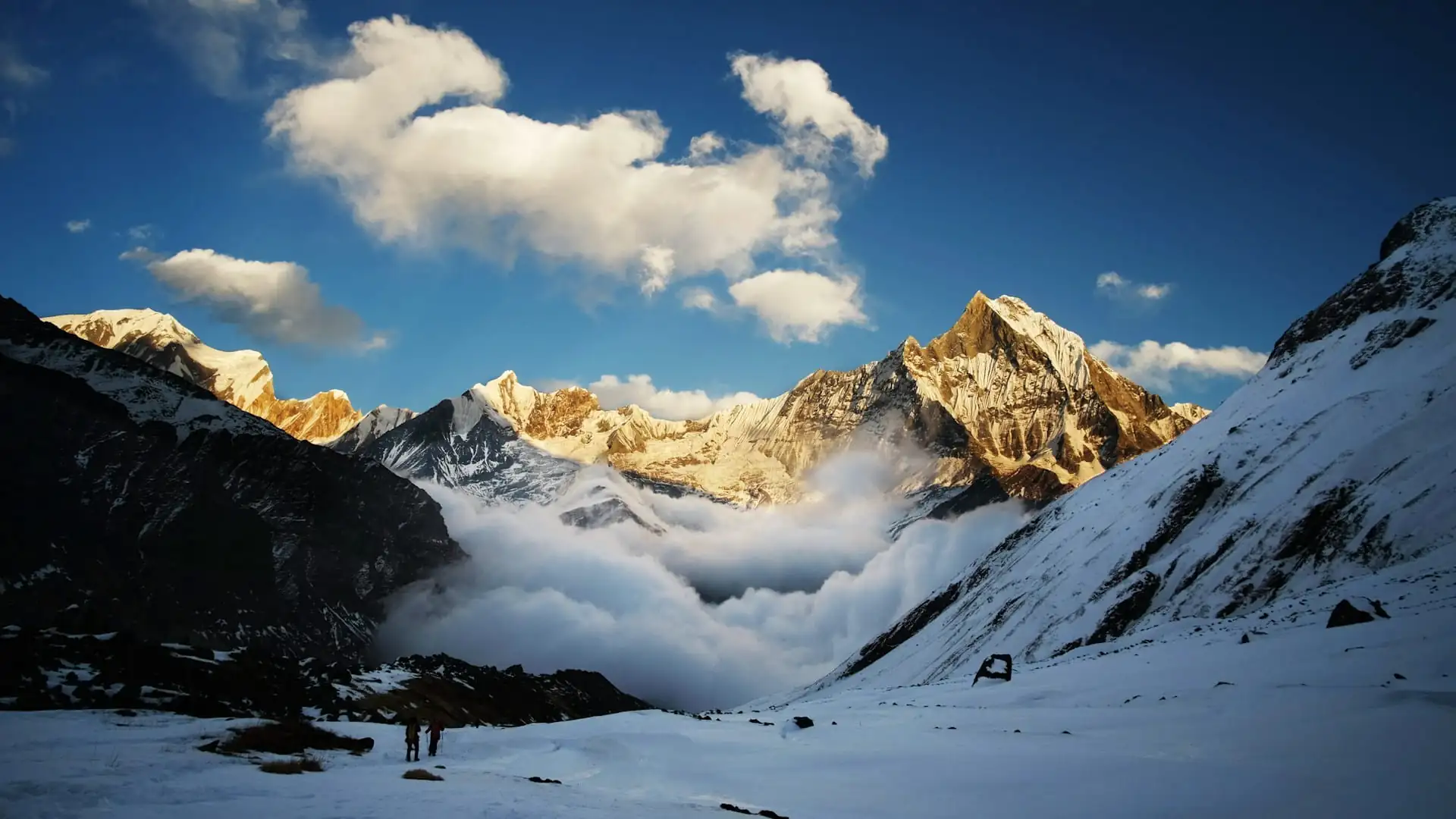
If Everest is the most famous base camp, Annapurna Base Camp may be the most beautiful on a single day. At 4,130 m, it sits inside the Annapurna Sanctuary, a glacial basin ringed by Annapurna I (8,091 m, the tenth highest mountain on Earth), Annapurna South, Hiunchuli and the sharp pyramid of Machhapuchhre, often called Fishtail. Machhapuchhre is regarded as sacred and is closed to climbers.
The trek lies in the Annapurna Conservation Area and is usually completed in about 7 to 12 days, depending on where you start and how many rest days you take. A common route begins near Pokhara and climbs through rhododendron forest, terraced hillsides and Gurung villages before entering the Sanctuary. Machhapuchhre Base Camp, at about 3,700 m, is the last stop before Annapurna Base Camp itself.
What makes it different from Everest
Lower altitude. The highest point is 4,130 m, compared with 5,364 m at Everest Base Camp.
Faster climb. Because the trail goes from warm valleys to over 4,000 m in a few days, there are fewer built-in rest days than on the Everest route, and people can still feel altitude symptoms around Deurali and Machhapuchhre Base Camp. Do not assume that a lower summit means no risk.
Easier access. The trek starts near Pokhara, with no mountain flight involved.
Shorter commitment. It fits into a week or so, which suits people with limited holiday time.
If you want a ready-made itinerary, our Annapurna Base Camp Trek covers the standard route with guides, permits and teahouse lodging arranged.
Mardi Himal Base Camp: The Quieter Ridge
Mardi Himal is the base camp trek many people choose when they want mountain views without long days or high altitude. The route climbs a forested ridge in the Annapurna region, passing Forest Camp, Low Camp and High Camp, and rewards you with close views of Machhapuchhre, Annapurna South and Mardi Himal itself.
Published figures for the highest point vary, because itineraries differ. Mardi Himal Base Camp is commonly listed at about 4,500 m, with the upper viewpoint at around 4,200 m. Whether a group reaches the base camp itself depends on conditions, weather and fitness, so ask your operator which point their itinerary targets. The trek lies within the Annapurna Conservation Area and needs the ACAP permit. It is usually graded moderate and is popular as a shorter alternative to Annapurna Base Camp. Our Mardi Himal Trek is a good starting point if this style appeals.
The Remote Base Camps: Makalu, Kanchenjunga, Manaslu and Dhaulagiri
Beyond the big three, Nepal has several base camp treks that are far quieter and far more demanding. They are for people with trekking experience, flexible schedules and a taste for solitude.
Trek | Where it is | Permits and rules (reported) | What to expect |
|---|---|---|---|
Makalu Base Camp (about 4,870 m) | Makalu Barun National Park, eastern Nepal | National park entry permit; no restricted-area permit reported | Starts near Num after a flight to Tumlingtar; crosses passes such as the Shipton La; typically 16 to 18 days |
Kanchenjunga Base Camps (north about 5,143 m; south about 4,730 m) | Kanchenjunga Conservation Area, far east | Conservation area permit plus a restricted-area permit | Very remote; long walk-in; often 16 to 24 days |
Manaslu Base Camp (about 4,800 m) | Manaslu Conservation Area | Conservation area permit plus restricted-area permit for the circuit | Usually a day excursion from Samagaon during the Manaslu Circuit |
Dhaulagiri Base Camp (about 4,700 m) | Western Nepal | Arranged through an operator | Demanding, mostly camping, around 2.5 to 3 weeks |
A few honest points about these. First, rules for restricted areas change and are usually tied to group size and to using a registered agency, so confirm them with an operator before you plan. Second, facilities are thinner: expect basic lodges in places and camping in others. Third, solitude is the main attraction, but it also means help is farther away, so insurance and operator quality matter even more.
What a Standard Everest Base Camp Itinerary Looks Like
Seeing the shape of a trek makes the altitude numbers easier to understand. This is a typical 12-day pattern, not a fixed schedule, and altitudes are approximate. Good operators adjust it to the weather, flight timings and how the group is feeling.
Day | Route | Sleeping altitude (approx.) | Notes |
|---|---|---|---|
1 | Fly to Lukla, walk to Phakding | About 2,600 m | A short first day to warm up |
2 | Phakding to Namche Bazaar | About 3,440 m | A steady climb with suspension bridges |
3 | Acclimatisation day in Namche | About 3,440 m | Short hike high, return to sleep low |
4 | Namche to Tengboche | About 3,860 m | Monastery and first big mountain views |
5 | Tengboche to Dingboche | About 4,410 m | Open, windy valley |
6 | Acclimatisation day in Dingboche | About 4,410 m | Another hike high, sleep low |
7 | Dingboche to Lobuche | About 4,900 m | Moraine and memorial cairns |
8 | Lobuche to Gorak Shep, then Everest Base Camp | 5,164 m | The big day; return to Gorak Shep to sleep |
9 | Kala Patthar at sunrise, then descend towards Pheriche or Dingboche | Lower | The Everest view, then a long descent |
10 to 11 | Return to Namche, then Lukla | About 3,440 m, then 2,860 m | Descent is fast, and legs ache more than lungs |
12 | Fly to Kathmandu or Ramechhap | n/a | Allow a spare day for weather |
Notice how the two acclimatisation days sit exactly where the altitude starts to bite. Operators who compress this pattern save a day or two but give up margin for weather and for your body.
Variations on the Classic: Gokyo, the High Passes and Comfort Upgrades
Not everyone wants the standard line. The Everest region offers several ways to extend or reshape the trek.
Everest Base Camp with Gokyo Lakes. This adds the Gokyo valley, a chain of turquoise glacial lakes, and the climb to Gokyo Ri at 5,357 m, which is often described as one of the finest viewpoints in Nepal for seeing Everest, Lhotse, Makalu and Cho Oyu together on a clear day.
The Three High Passes. A demanding loop crossing Kongma La, Cho La and Renjo La, each at well over 5,000 m. It suits experienced trekkers with extra time and strong acclimatisation.
Luxury or comfort-focused versions. These offer upgraded lodges, smaller groups and sometimes a helicopter return, which saves roughly three days of walking down.
The best choice depends on how much time you have and how you handle altitude. More days almost always means a better, safer experience.
Common Mistakes on Base Camp Treks (and How to Avoid Them)
Most problems on the trail are predictable, which means most of them are avoidable.
Going up too fast. The single most common mistake. Take the rest days seriously, even if you feel strong.
Choosing the cheapest quote without checking inclusions. If a price looks too good, something is usually missing: permits, porters, meals or a safety margin.
Packing too much. Heavy bags make every ascent harder. Pack layers, not duplicates, and ask what your porter can carry.
Wearing new boots. Blisters ruin treks. Break your boots in well before you leave.
Wearing cotton. It stays wet and cold. Choose synthetic or wool layers.
Ignoring the weather buffer. Flights, roads and passes can all be delayed. A spare day at the end is cheap insurance.
Under-insuring. A policy that does not cover your maximum altitude or helicopter evacuation is of little use when it matters.
Hiding symptoms. Pride has no place at altitude. Tell your guide early.
How to Choose the Right Base Camp Trek for You
Most people choose on three things: time, fitness and what they want to feel. This table maps those to the options above.
If you want... | Consider | Why |
|---|---|---|
The iconic Everest experience | Everest Base Camp | Sherpa culture, the biggest mountains, and the Kala Patthar sunrise |
A shorter trip with huge mountain views | Annapurna Base Camp | About a week, lower altitude, spectacular basin |
Quiet trails and a gentler pace | Mardi Himal | Less crowded, shorter days, moderate altitude |
Solitude and a real expedition feel | Makalu or Kanchenjunga | Remote valleys, fewer trekkers, long schedule |
The widest panorama in the Everest region | Everest Base Camp with Gokyo Lakes | Adds the Gokyo valley and Gokyo Ri's views |
A more comfortable version of the classic | Luxury Everest Base Camp trek | Upgraded lodging and support |
If you are undecided between two, ask yourself honestly how your body handles altitude and how many days you can spare. A well-paced week beats a rushed fortnight every time.
Best Time for Base Camp Trekking in Nepal
The two classic windows are spring (March to May) and autumn (September to November). Both offer the most dependable combination of stable weather, comfortable daytime temperatures and clear mountain views, and both are the busiest seasons on the trails.
Season | Months | What to expect |
|---|---|---|
Autumn | September to November | Clearest skies and sharpest views; the most popular window, so book early |
Spring | March to May | Warmer days and rhododendrons blooming on lower trails, especially in April; occasional afternoon cloud |
Winter | December to February | Very cold at altitude, with snow possible on higher sections; quiet trails and crisp air, though some high lodges may close |
Monsoon | June to August | Rain and cloud hide the mountains; flights are more likely to be delayed; lower trails can be leech-prone and landslides affect roads |
A few practical notes make a real difference. Lukla flights in the peak windows are generally scheduled early in the morning, and cloud typically builds later in the day, so slack in your schedule is worth more than any piece of gear. For the Annapurna and Mardi Himal region, autumn and spring are likewise considered best, with October often singled out for its clarity. If you prefer fewer people, the shoulder weeks at the start and end of each season, and the quieter regions in the far east, are your best bet.
Permits and Rules for Base Camp Trekking in Nepal
Permits depend on the region. Most base camp treks pass through a national park or conservation area, and you pay an entry fee at the start. The Nepal Tourism Board publishes the park entry fee table, and the figures below come from it. Children under 10 enter free in every case.
Area | Used for | Foreign visitors, per entry | SAARC nationals | Nepali citizens |
|---|---|---|---|---|
Sagarmatha National Park | Everest Base Camp | NPR 3,000 | NPR 1,500 | NPR 100 |
Annapurna Conservation Area | Annapurna Base Camp, Mardi Himal | NPR 3,000 | NPR 1,000 | NPR 100 |
Makalu-Barun National Park | Makalu Base Camp | NPR 3,000 | NPR 1,500 | NPR 100 |
Manaslu Conservation Area | Manaslu Circuit and Manaslu Base Camp | NPR 3,000 | NPR 1,000 | NPR 100 |
Kanchenjunga Conservation Area | Kanchenjunga Base Camps | NPR 2,000 | NPR 500 | NPR 100 |
You can see the full list on the Nepal Tourism Board's park entry fee page. For background on the Everest region's park, UNESCO's page on Sagarmatha National Park is the authoritative source.
Other permits and paperwork
Local entry fee in the Everest region. A separate local fee is collected by the local municipality. Reported amounts have been in the range of NPR 2,000 to 3,000, and arrangements have changed in recent years, so confirm the current figure when you book.
Restricted-area permits. Remote regions such as Kanchenjunga and Manaslu need a restricted-area permit in addition to the conservation area fee, and these are generally arranged through a registered agency.
TIMS. Sources disagree on whether the old TIMS card is still required on particular routes, with some operators referring to e-TIMS or local permit arrangements. Ask your agency exactly which documents apply to your route and dates rather than relying on an older guide.
Guides. Nepal has been moving towards requiring foreign trekkers in national parks and conservation areas to hire a licensed guide through a registered trekking agency. Enforcement has reportedly varied from place to place and over time, so verify what applies on your dates. Our breakdown of the Nepal trekking guide requirement for 2026 explains who is affected and what changed.
Permit rules and fees are among the first things to go out of date in any trekking guide, including this one. A registered operator will handle the paperwork and confirm the current requirements.
How Much Does Base Camp Trekking in Nepal Cost?
Prices vary widely, mainly because "base camp trek" covers a large range of trips. Operators quote very different numbers depending on what is included, group size, season and comfort level. The ranges below reflect what many Nepal-based operators publish for 2026, and they are best used as a sanity check rather than a promise.
Trek | Commonly quoted guided price (per person) | Notes |
|---|---|---|
Everest Base Camp, standard teahouse package, 12 to 14 days | Roughly US$1,300 to US$2,500 | Often includes Lukla flights, permits, guide, porter, lodging and meals |
Everest Base Camp, premium or helicopter-return | Roughly US$3,000 to US$5,000 or more | Better lodges, smaller groups or a helicopter flight out |
Annapurna Base Camp, 7 to 12 days | Roughly US$700 to US$1,200 | Lower because there is no mountain flight and the trek is shorter |
Mardi Himal | Typically lower than Annapurna Base Camp | Shorter itineraries; check what is included |
Remote treks (Makalu, Kanchenjunga) | Higher, reflecting the longer duration and logistics | Camping support and restricted-area permits add cost |
A few things move the price more than the destination does:
Group size. Fixed costs such as the lead guide's daily rate are shared across a group, so a solo or two-person private trip costs more per head than a group departure.
What is included. Check whether park permits, Lukla flights (including the Ramechhap transfer), porters, three daily meals, insurance and airport transfers are in the price.
Season. Peak autumn and spring dates cost more than monsoon or winter departures.
Comfort level. Standard teahouses, upgraded lodges and luxury lodges sit in very different price brackets.
Costs people forget
Even with an all-inclusive package, you will spend on extras: travel insurance with high-altitude and evacuation cover, tips for your guide and porters, hot showers and device charging at higher teahouses, bottled or boiled water, snacks, and personal gear. Prices of meals and small services rise with altitude because supplies are carried farther. For a wider budgeting framework across Nepal's treks, our Nepal trekking cost guide for 2026 breaks down what drives the totals.
When comparing quotes, ask four questions. Are park permits and the local fee included? Is the guide licensed and employed through a registered agency? Are internal flights and transfers included, including a Ramechhap transfer if applicable? And what happens to the cost if flights are delayed? A low headline price often hides one of those answers.
A Day on a Base Camp Trek: What Life on the Trail Is Really Like
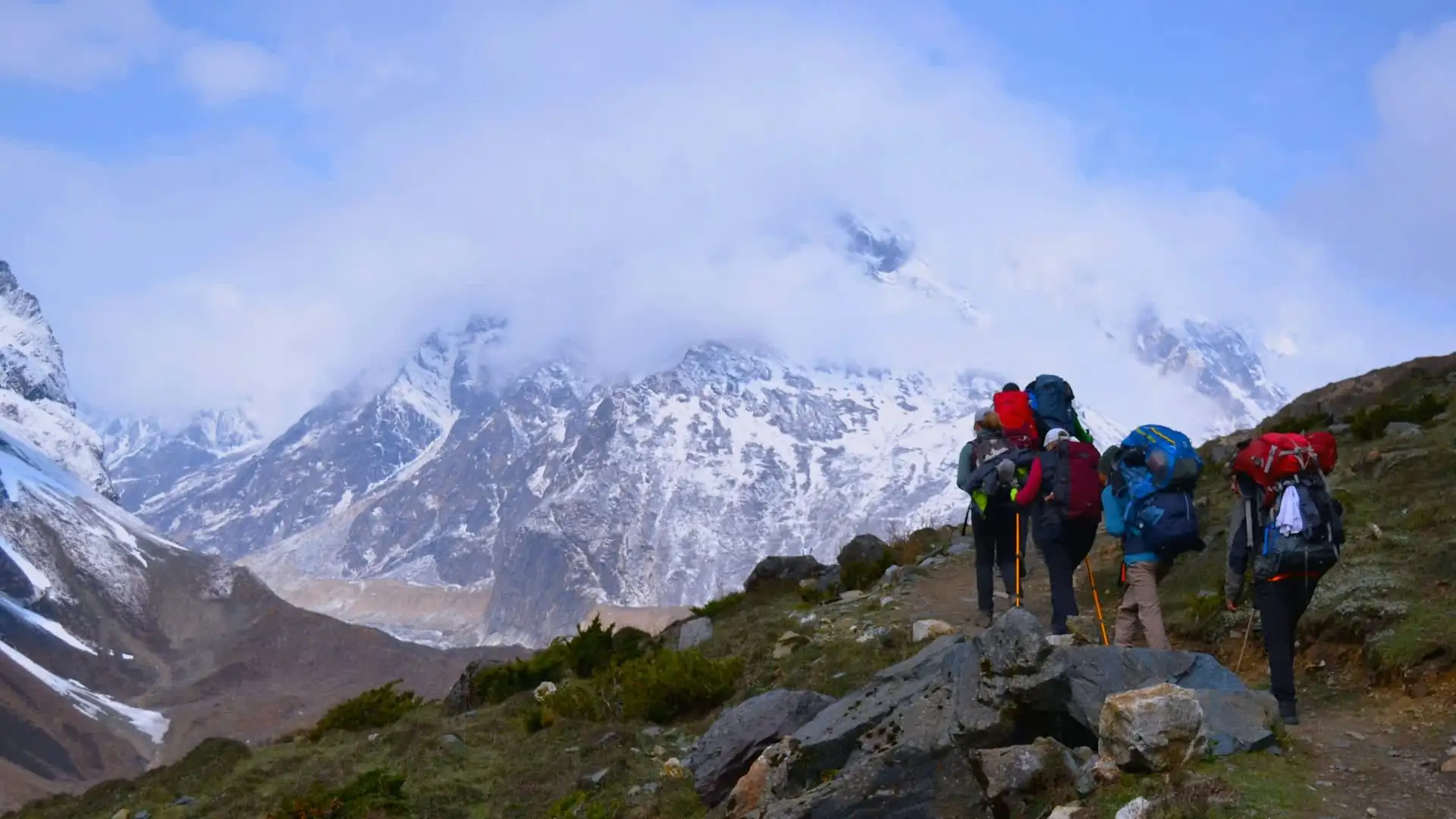
Most base camp treks follow a rhythm that surprises first-timers by how quickly it becomes comfortable.
Early start. Breakfast is usually around 6:30 or 7:00, often porridge, eggs, toast or Tibetan bread. Walking begins soon after, because mornings are clearer and calmer at altitude.
Walking in stages. Typical days include five to seven hours of walking with a lunch stop. The pace is steady rather than fast, and a slow pace is actually the right one.
Arrival and rest. You reach the teahouse by mid-afternoon, drink hot tea and rest. Dining rooms are the social heart of each lodge, usually warmed by a stove.
Dinner and early bed. Dal bhat, noodles, soups, pasta and rice dishes are standard. Many trekkers are asleep by 8 or 9 p.m.
Teahouse rooms are generally simple twin rooms with mattresses, and you carry or rent a sleeping bag. Bathrooms are often shared, and showers and charging cost extra, especially higher up. Mobile and Wi-Fi coverage is patchy and sometimes paid. Carry cash in small notes, because ATMs are scarce or absent on the trail.
Altitude and Safety: The Part That Deserves Respect
Altitude is the main risk on any base camp trek, and it can affect anyone regardless of age or fitness. The standard medical guidance for travel above about 3,000 m is to limit how much higher you sleep each night, commonly by no more than roughly 300 to 500 m, and to take a rest day every three to four days. Good itineraries are built around that principle.
Habit | Why it helps |
|---|---|
Ascend gradually and take scheduled rest days | Gives your body time to adapt |
Hike high, sleep low where possible | Stimulates adaptation without raising your sleeping altitude |
Drink plenty of fluids | Thin, dry air dehydrates you quickly |
Eat even without appetite | Your body needs fuel to adapt and stay warm |
Avoid alcohol and sleeping pills at altitude | They can mask symptoms and depress breathing |
Tell your guide how you feel, honestly | Early action is the best treatment |
Know the warning signs. A persistent headache, nausea, dizziness, unusual breathlessness and disturbed sleep are signals to stop going up. If symptoms worsen, you descend. Severe symptoms such as confusion, loss of coordination or breathlessness at rest are emergencies. If you want to discuss preventive medication, talk to a doctor who understands altitude before you travel.
Insurance matters. Make sure your travel insurance explicitly covers trekking to the altitude you plan to reach and includes emergency helicopter evacuation. Check the maximum altitude it covers and the claims process.
Weather and flights. Delays are normal, particularly at Lukla. Treat a buffer day as part of the plan rather than a failure.
Getting Ready: Fitness, Gear and Mindset
You do not need to be an athlete, but you do need to be prepared for several consecutive days of walking uphill with a daypack.
Fitness. Regular uphill walking, stair climbing or hiking with a loaded pack in the weeks before your trip makes a bigger difference than gym sessions alone. Aim to build up to five to seven hours of continuous walking so the daily routine feels familiar.
Gear essentials. Broken-in waterproof boots, layers that cope with both warm valleys and freezing nights, a warm hat and gloves, a good sleeping bag rated for cold nights (or one you can rent), trekking poles, sun protection, a headlamp and a water bottle with a purification method.
Mindset. The most useful mental adjustment is to treat the trek as a series of small days rather than one big challenge. Walk slowly, accept that some nights will be cold and some sleep will be bad, and remember that turning around is a legitimate outcome, not a failure.
Trekking Responsibly on Nepal's Base Camp Trails
Base camp routes are popular, and the people who live along them carry the burden of that popularity. A few habits make a real difference.
Carry out what you carry in. Waste management is a serious challenge at altitude. Use refill stations or purification instead of single-use plastic bottles where possible.
Respect local customs. Pass mani walls and chortens on the left, keep your voice low near monasteries and ask before photographing people.
Support local businesses. Choose family-run lodges, local guides and locally owned operators, so that income stays in the communities along the trail.
Look after the people who carry for you. Make sure your operator pays fair wages, provides proper insurance and equipment for guides and porters, and sets sensible load limits.
Stay on the trail and give wildlife space. Fragile alpine environments take a long time to recover.
Frequently Asked Questions About Base Camp Trekking in Nepal
1. What is base camp trekking in Nepal? It is walking to the base camp of a major Himalayan mountain along established trails, usually staying in teahouses or camps. You do not climb the mountain itself, and no mountaineering skills are required for the mainstream routes.
2. Which is the most popular base camp trek in Nepal? Everest Base Camp is the most famous, with Annapurna Base Camp the other big favourite. Mardi Himal has also grown quickly as a shorter, quieter alternative.
3. How high is Everest Base Camp? About 5,364 m. The highest point on the standard trek is usually Kala Patthar, at roughly 5,550 to 5,650 m depending on the source.
4. How high is Annapurna Base Camp? About 4,130 m, inside the Annapurna Sanctuary at the foot of Annapurna I.
5. Can you see Everest from Everest Base Camp? No. The summit is hidden behind the ridge of Nuptse. Trekkers climb Kala Patthar above Gorak Shep for a clear view of Everest.
6. How many days does Everest Base Camp take? A typical guided trek takes about 12 to 14 days including flights and acclimatisation days. Faster itineraries exist, but a slower pace is safer.
7. How many days does Annapurna Base Camp take? Usually about 7 to 12 days depending on where you start and how many rest days you include.
8. Which base camp trek is best for beginners? Annapurna Base Camp and Mardi Himal are often recommended for fit first-timers because they are shorter and lower, though neither is trivial. Everest Base Camp is also done by many first-timers who prepare well.
9. Is Everest Base Camp difficult? It is usually rated moderate to challenging. The challenge is mainly altitude and repetitive multi-day walking rather than technical difficulty.
10. What is the best time for base camp trekking in Nepal? Autumn (September to November) and spring (March to May) are the best seasons for most routes, thanks to stable weather and clearer views.
11. Can you trek to base camp in winter or monsoon? Winter is possible with proper gear and flexibility, though it is cold and some lodges close. Monsoon trekking is possible in some regions, but views are limited and flights and roads are less reliable.
12. How much does Everest Base Camp cost? Many Nepal-based operators quote roughly US$1,300 to US$2,500 per person for a standard guided teahouse package, with premium and helicopter options costing more. Check what is included.
13. How much does Annapurna Base Camp cost? Commonly quoted guided prices run from roughly US$700 to US$1,200 for 7 to 12 days, depending on group size, route and inclusions.
14. What permits do I need for Everest Base Camp? A Sagarmatha National Park entry permit (NPR 3,000 for foreigners per the Nepal Tourism Board) plus a local entry fee in the Everest region. Your agency will confirm the current documents.
15. What permits do I need for Annapurna Base Camp? An Annapurna Conservation Area permit (NPR 3,000 for foreigners per the Nepal Tourism Board). Confirm with your operator whether any additional card or registration applies.
16. Do I need a guide for base camp treks? Nepal's rules point towards foreign trekkers in national parks and conservation areas using a licensed guide through a registered agency, though enforcement has reportedly varied. Ask your operator to confirm the current requirement.
17. Do I need to fly to Lukla for Everest Base Camp? Most trekkers do, because it saves several days of walking. In peak seasons most Lukla flights operate from Manthali in Ramechhap rather than Kathmandu, so confirm the arrangement for your dates.
18. How do I avoid altitude sickness on a base camp trek? Ascend gradually, include rest days, drink plenty of fluids, eat regularly, avoid alcohol and tell your guide about any symptoms. If symptoms worsen, descend. Speak to a doctor about preventive medication if you are concerned.
19. Which base camp treks are the most remote? Kanchenjunga and Makalu are among the most remote, with long walk-ins, fewer lodges and, for Kanchenjunga, a restricted-area permit requirement.
20. Is travel insurance necessary for base camp trekking? Yes. Choose a policy that explicitly covers trekking at your maximum altitude and includes emergency helicopter evacuation and medical costs.
Ready to Plan Your Base Camp Trek?
The best base camp trek is not the highest or the most famous. It is the one that fits your time, your fitness and the kind of landscape that makes you stop walking just to look. If you are weighing Everest against Annapurna, wondering whether Mardi Himal is enough, or curious about the quieter valleys of the east, our team can help you choose a route, a season and a pace that works for you.
Talk to an expert on WhatsApp: +977 9841248242
You can also reach us through our contact page, and we will reply with route options, permit guidance and a clear, itemised quote.
Written by Dil Bahadur Karki