Mardi Himal Trekking Itinerary: 3, 4, 5, 7 & 9-Day Options
Introduction to Mardi Himal Trekking Itinerary
Most people searching for a Mardi Himal itinerary aren't actually confused about the trek itself — they're confused about how many days to give it. That's the real question hiding behind this search. You've got a flight to Nepal booked, a rough window of free time, and five different websites telling you five different things: three days, four days, five, seven, nine. Which one is actually right for you?
This guide answers that directly. Below you'll find the real trail statistics for every common Mardi Himal itinerary length, what changes between them, what stays the same, and a straightforward way to decide which one fits your fitness, your calendar, and your budget. We've built and run all five versions of this trek out of Pokhara, so the altitudes, distances, and daily walking times here reflect what actually happens on the trail — not a recycled template.
Quick Answer: Which Mardi Himal Itinerary Should You Choose?
If you only read one section, read this one.
Itinerary | Trekking Days | Total Days (incl. Kathmandu) | Max Altitude Reached | Difficulty | Best For |
|---|---|---|---|---|---|
3-Day Mardi Himal | 2–3 days | 4–5 days | 3,550–4,200 m (High Camp or viewpoint) | Moderate–Challenging (fast pace) | Very tight schedules, fit trekkers, no acclimatization buffer |
4-Day Mardi Himal | 4 days | 6 days | 4,200–4,500 m (Base Camp viewpoint) | Moderate | Time-limited but fit travelers wanting the full base camp view |
5-Day Mardi Himal | 5 days | 7 days | 4,500 m (Mardi Himal Base Camp) | Easy–Moderate | The most balanced, most-booked option |
7-Day Mardi Himal | 5–6 days | 8–9 days | 4,500 m (Mardi Himal Base Camp) | Easy–Moderate | First-time trekkers, families, better acclimatization |
9-Day Mardi Himal | 6–7 days | 9–10 days | 4,500 m + side exploration | Easy–Moderate | Slow travelers, photographers, those combining Poon Hill or Australian Camp extras |
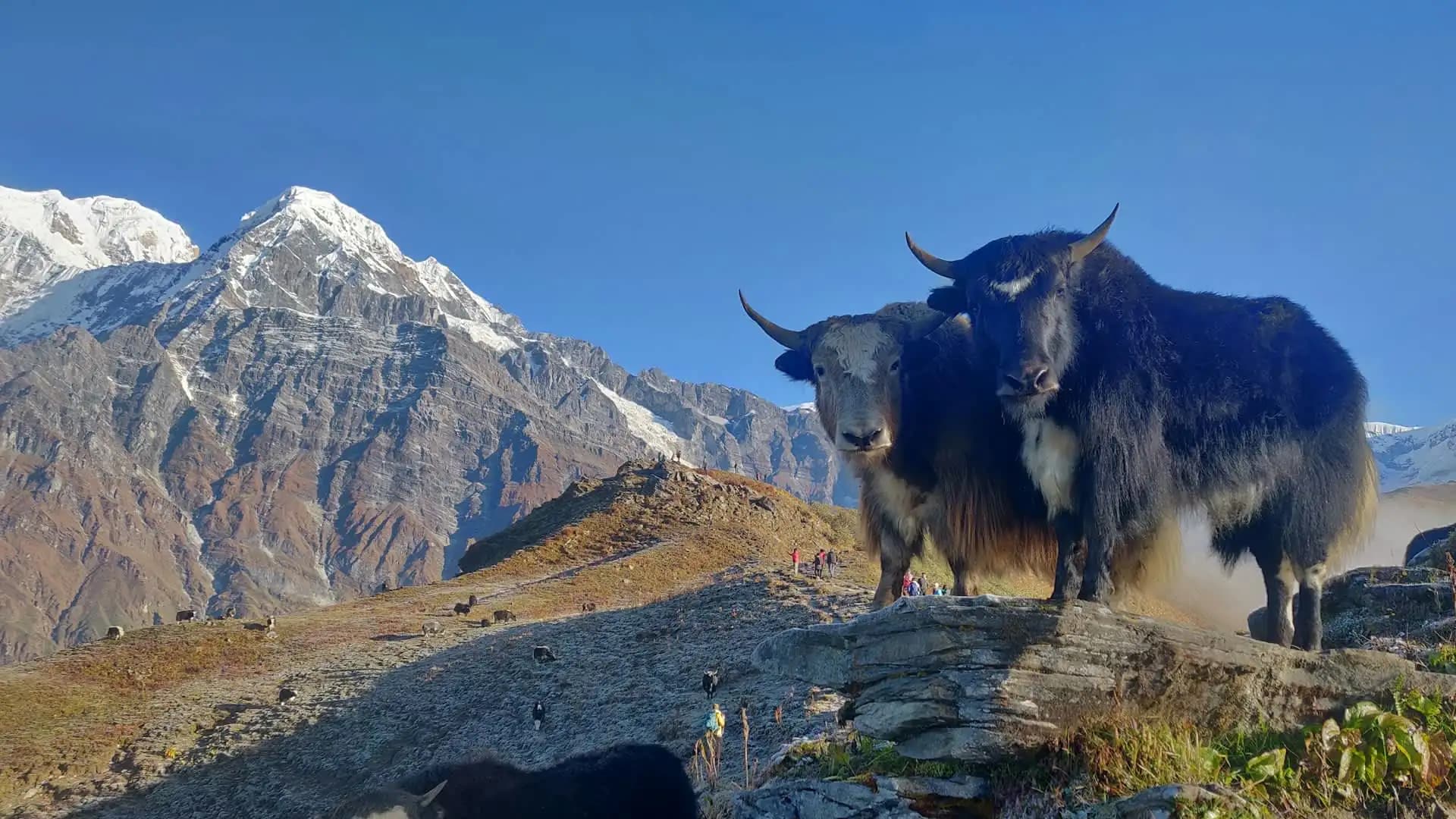
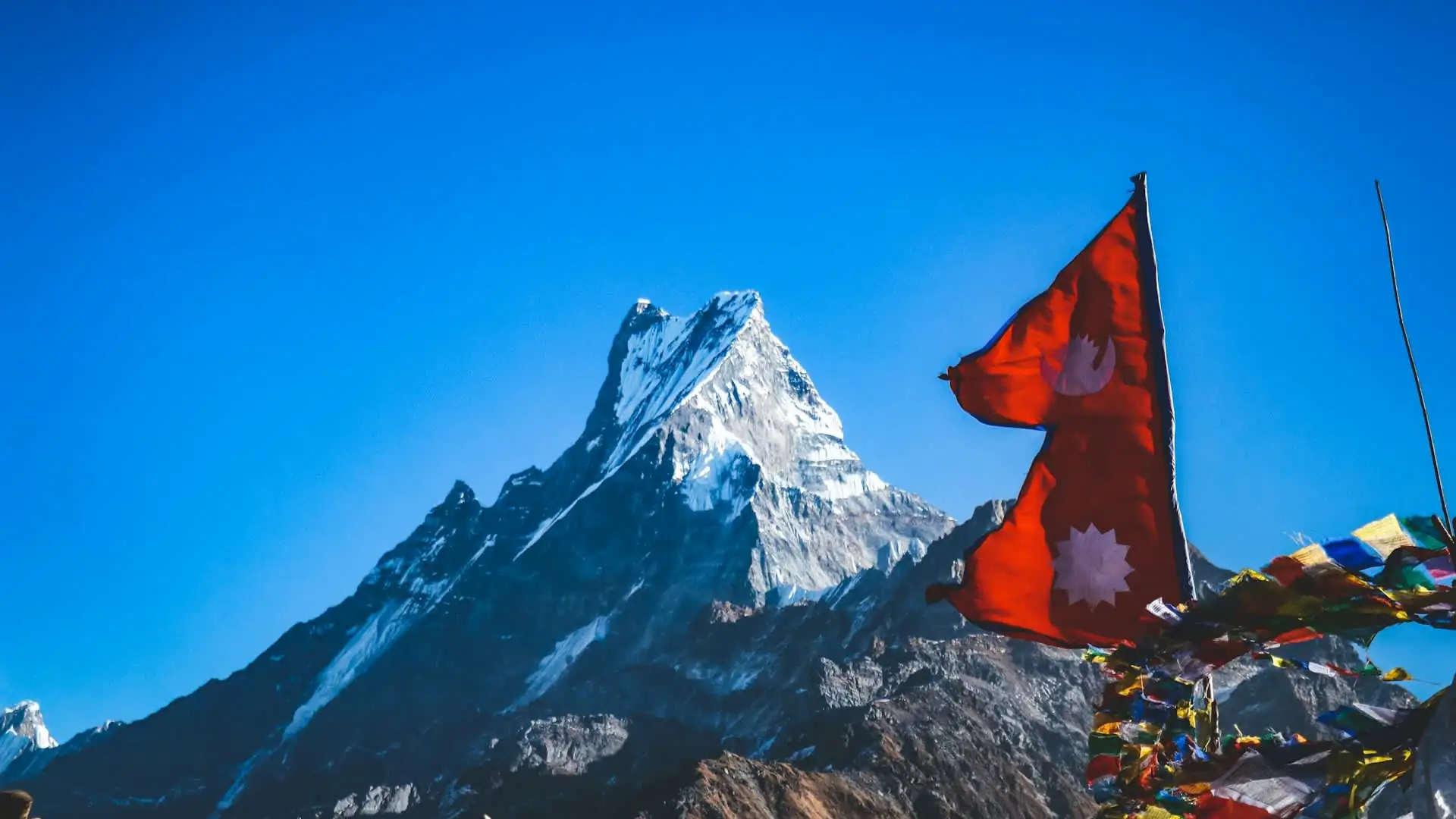
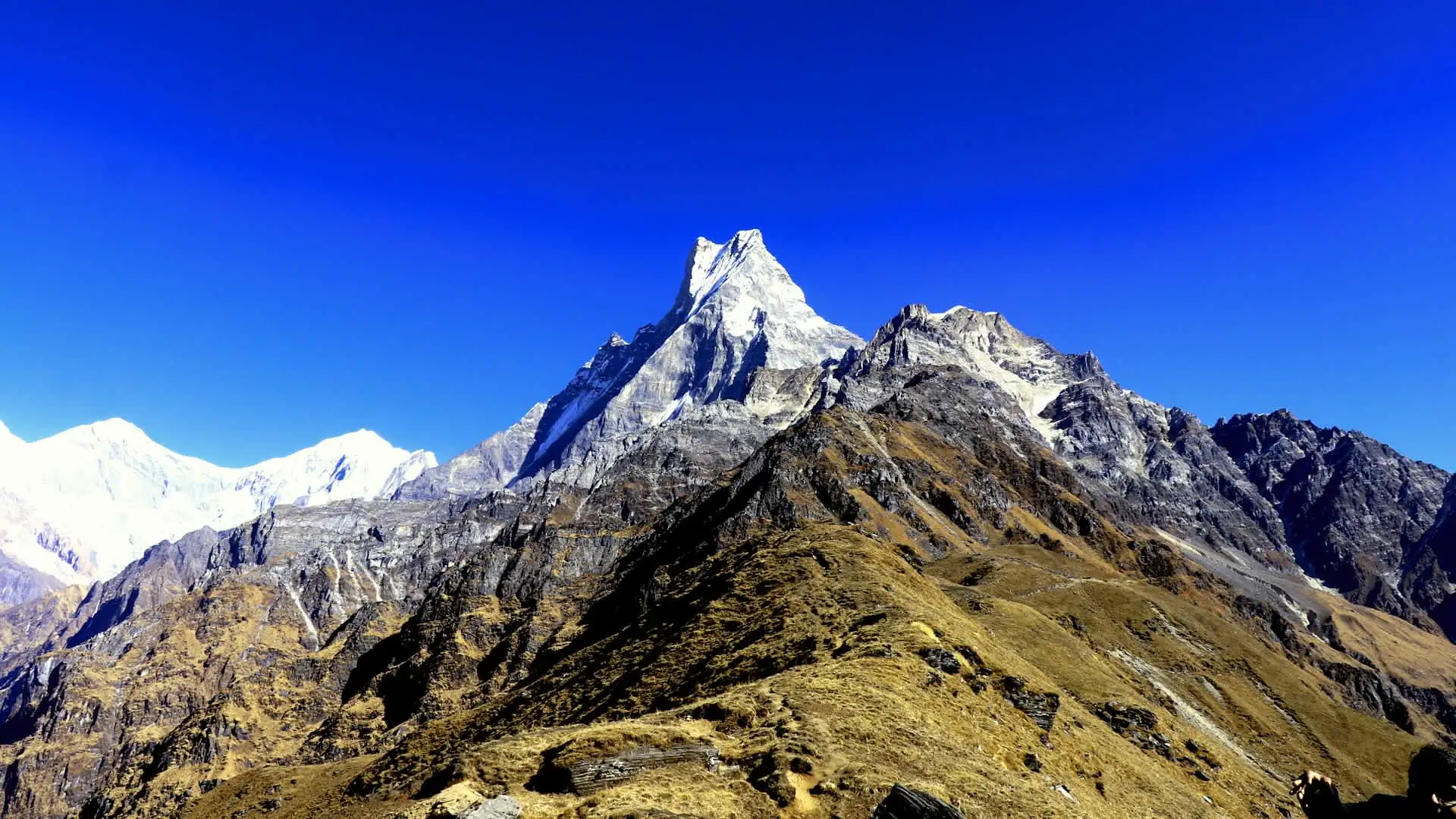
Every version above ends at the same place — the Mardi Himal viewpoint and Base Camp area, with Machapuchhre (Fishtail), Annapurna South, Hiunchuli, and Annapurna I filling the skyline. What changes is your pace, your acclimatization buffer, and how much of the lower rhododendron forest and ridge villages you actually get to enjoy rather than rush through.
What Is the Mardi Himal Trek, Really?
Mardi Himal is a 5,587-meter peak tucked between the far more famous Annapurna and Machapuchhre massifs, in the Annapurna Conservation Area of Nepal's Gandaki Province. The trekking route that shares its name doesn't summit the peak — it climbs a narrow forested ridge to a viewpoint and base camp area around 4,200–4,500 meters, close enough that Machapuchhre's fishtail summit feels like it's directly overhead.
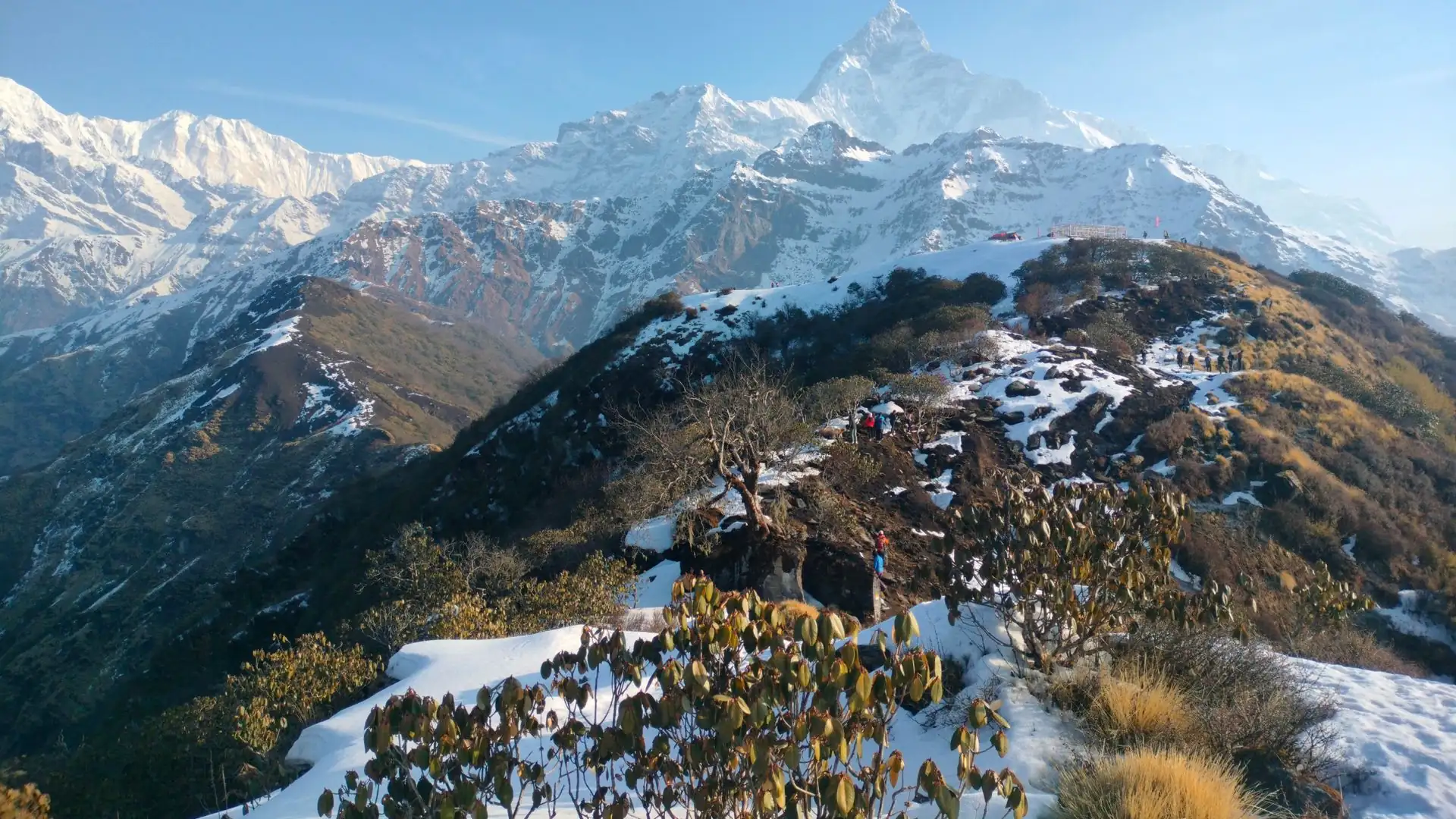
The trail only opened to trekkers in 2012, which is late by Nepal standards. That's exactly why it still feels uncrowded compared to Annapurna Base Camp or the Everest region — you're walking a route with a fraction of the trail traffic, through rhododendron and oak forest that most Annapurna itineraries skip entirely, then up onto open alpine ridge with almost nothing blocking the view.
What makes Mardi Himal genuinely different from other short Annapurna treks:
You pass through four distinct ecological zones in under a week — subtropical forest, rhododendron and oak forest, alpine shrubland, and high-altitude rock and scree — a range of terrain that's hard to match on a trek this short.
The final ridge walk to the viewpoint is narrow and exposed, with Machapuchhre so close it dominates the entire frame — a very different feeling from the wide amphitheater view at Annapurna Base Camp.
Teahouses exist at every stage, so you're never camping unless you choose to.
No technical climbing or glacier travel is involved at any itinerary length.
Best Time to Trek Mardi Himal
Two windows work well, and they offer genuinely different experiences rather than one being simply "better."
Season | Months | Conditions | Trade-offs |
|---|---|---|---|
Spring | March–May | Rhododendron forests in bloom (especially late March–April), warm days, clear mountain views by morning | Afternoon haze can build up; more trekkers on trail |
Autumn/Early Winter | September–December | The clearest, most stable mountain views of the year; crisp air; stable weather | Colder nights above 3,000 m, especially November onward; peak season crowding in October |
Monsoon | June–August | Lush, quiet, few trekkers | Leeches on lower trail, cloud cover blocking views most days, slippery stone steps |
Deep Winter | January–February | Near-total solitude, snow-dusted forest | High Camp and Base Camp routes can close after heavy snow; teahouses may be unstaffed |
If you're choosing based purely on view quality, late September through November gives the most reliable mountain visibility of any window. If you want fewer people on the trail without sacrificing much clarity, the first half of March or the tail end of November are the sweet spots locals actually recommend.
How Difficult Is the Mardi Himal Trek?
Rated easy-to-moderate by most operators, and that's fair for the 5, 7, and 9-day versions. It's less fair for the compressed 3-day itinerary, which is genuinely demanding because it removes the acclimatization buffer the longer versions build in deliberately.
What makes it manageable at any length:
No technical climbing, no crampons, no ropes.
Teahouses at every overnight stop, so you're carrying a daypack, not camping gear.
The steepest sustained climbing happens on Day 2 or 3 of most itineraries (Low Camp to High Camp), and it's short enough to manage with regular rest breaks.
What makes it harder than its "easy-moderate" label suggests:
The final push to the viewpoint/Base Camp on summit morning is a genuine high-altitude push, often starting at 4–5 a.m. in freezing temperatures, with a steep, sometimes icy or windy ridge in the final 200–300 vertical meters.
You spend two to three consecutive nights above 3,000 meters on the standard 5-day and longer versions, and altitude affects fit and unfit trekkers unpredictably.
Stone stairs on the lower trail (particularly around Deurali and Forest Camp) are relentless — more knee-jarring than technically hard.
A reasonable baseline: if you can comfortably hike 5–6 hours a day on hilly terrain with a daypack, you can do the 5, 7, or 9-day itinerary. The 3-day version should be reserved for trekkers who are already acclimatized (from a previous trek that week) or who have strong high-altitude experience.
Permits and Costs for Mardi Himal in 2026
Every itinerary length requires the same two permits, since they're tied to the region, not the trip duration.
Permit | Foreign Nationals | SAARC Nationals | Notes |
|---|---|---|---|
ACAP (Annapurna Conservation Area Permit) | NPR 3,000 (~USD 22–23) | NPR 1,000 | Mandatory; funds conservation and community projects in the region |
TIMS Card | NPR 2,000 individually (~USD 15), often NPR 1,000 if arranged through an agency | NPR 500–1,000 | Confirms your trip is registered for trekker safety tracking |
Machhapuchhre Rural Municipality local fee | Around NPR 500 (~USD 4) | Similar or discounted | Collected at trailhead checkpoints (commonly Kande) |
Combined, budget roughly USD 40–50 per person for permits, plus your guide's daily rate if you're not already on a full package. As of Nepal's current trekking regulations, a licensed guide is required for foreign trekkers in the Annapurna Conservation Area — this isn't optional paperwork, it's enforced at permit checkpoints, so factor a guide's cost (commonly USD 25–35/day) into any independent plan.
Beyond permits, a mid-range full package (permits, guide, teahouse accommodation, meals on trail, and Kathmandu–Pokhara transport) typically runs USD 450–700 for the standard 5-day version, scaling up for the 7 and 9-day itineraries because of extra teahouse nights and meals, and down slightly for the 3–4 day compressed versions since there are fewer trail nights — though not proportionally, since transport and permit costs stay fixed.
The 3-Day Mardi Himal Trek Itinerary
This is the trek at its most compressed — built for trekkers who are short on time, already fit, and ideally already partly acclimatized. It typically starts from a higher trailhead (Kalimati or Dhampus village) to cut out the lowest, flattest section of trail, going almost straight into the climb.
Day | Route | Altitude Reached | Distance | Walking Time |
|---|---|---|---|---|
1 | Drive to Kalimati/Dhampus, trek to Forest Camp or Low Camp | ~2,600 m | 12–13 km | 6–7 hrs |
2 | Forest Camp/Low Camp to High Camp | ~3,550–3,600 m | 8–9 km | 5–6 hrs |
3 | High Camp to viewpoint/Base Camp area, then descend to Kande/Pokhara | 4,200 m (up), then descend to ~1,770 m | 13+ km round trip plus descent | 7–8 hrs |
Because there's no rest day and each day covers significant elevation gain, this itinerary carries real altitude risk if you're not already acclimatized. It's genuinely rewarding for the right trekker, but it is not the version to hand a first-time high-altitude hiker.
The 4-Day Mardi Himal Trek Itinerary
A slightly gentler version of the compressed trek, adding one extra trekking day so the climb from High Camp to the true Base Camp area (4,500 m) doesn't have to happen on the same day as a long descent.
Day | Route | Altitude | Distance | Walking Time |
|---|---|---|---|---|
1 | Pokhara–Kande drive, trek to Deurali | ~2,100 m | 5.7 km | 4 hrs |
2 | Deurali to Low Camp | ~2,970 m | 11 km | 5–6 hrs |
3 | Low Camp to High Camp | ~3,600 m | 4.2 km | 4–5 hrs |
4 | High Camp to Mardi Himal viewpoint/Base Camp (4,500 m), descend to Sidhing or Kande for pickup | 4,500 m up, descend | Variable, long day | 7–8 hrs total |
This is a genuinely tough single push on the final morning, but the extra acclimatization night at Low Camp before High Camp makes it noticeably safer and more comfortable than the 3-day version.
The 5-Day Mardi Himal Trek Itinerary (Most Popular)
This is the itinerary most trekkers end up booking, because it hits the sweet spot: enough days to acclimatize properly, short enough to fit a one-week Nepal trip alongside a couple of days in Kathmandu and Pokhara.
Day | Route | Altitude | Distance | Walking Time |
|---|---|---|---|---|
1 | Pokhara to Kande, trek to Australian Camp / Pothana | ~2,050 m | 8 km | 4–5 hrs |
2 | Pothana to Forest Camp (Low Camp) via Deurali | ~2,600 m | 10–12 km | 5–6 hrs |
3 | Forest Camp/Low Camp to High Camp | ~3,580 m | 6–7 km | 5–6 hrs |
4 | High Camp to Mardi Himal viewpoint/Base Camp (4,500 m) and back to High Camp or down to Siding/Low Camp | 4,500 m round trip | 10–13 km | 6–7 hrs |
5 | Descend to Siding or Kande, drive back to Pokhara | Descend to ~1,000 m | Variable | 5–6 hrs |
Note the structure: the summit push and descent aren't crammed into the trip's final hours — you still have a buffer day to descend safely and comfortably, which meaningfully lowers altitude-related risk compared to the 3 and 4-day versions.
The 7-Day Mardi Himal Trek Itinerary
The 7-day version doesn't add extra trekking days so much as it adds breathing room — shorter daily walking hours, an extra night at a mid-altitude stop, and often a rest/acclimatization stop at Low Camp before pushing higher. It's the itinerary we recommend most often for first-time trekkers, families, and anyone traveling with kids or older relatives.
Day | Route | Altitude | Notes |
|---|---|---|---|
1 | Kathmandu to Pokhara (flight or drive) | 822 m | Arrival and prep day in Pokhara |
2 | Pokhara–Kande drive, trek to Australian Camp | ~2,050 m | Gentle first day |
3 | Australian Camp to Forest Camp/Low Camp | ~2,600–3,050 m | Enters rhododendron forest |
4 | Forest Camp to High Camp | ~3,580 m | Steeper, shorter day |
5 | High Camp to Mardi Himal viewpoint/Base Camp and back to High Camp or Badal Danda | 4,500 m round trip | Early 4–5 a.m. start recommended |
6 | Descend to Siding/Kande, drive to Pokhara | Descend | Lower-body relief day |
7 | Pokhara to Kathmandu | 1,300 m | Return travel day |
This structure spreads elevation gain more evenly across days 2–5, which is precisely what reduces altitude sickness risk — gradual ascent with lower daily gain above 3,000 meters, rather than the steep single-day jumps required by the compressed versions.
The 9-Day Mardi Himal Trek Itinerary
The longest common version, built for travelers who'd rather move slowly, spend more time photographing the forest and villages, or fold in an extra side excursion (commonly Australian Camp sunrise viewpoints or an additional night around Landruk/Ghandruk on the way out).
Day | Route | Notes |
|---|---|---|
1 | Arrival in Kathmandu | Trip briefing, gear check |
2 | Fly or drive to Pokhara | Free afternoon by Phewa Lake |
3 | Pokhara–Kande drive, trek to Australian Camp | Easy introduction day |
4 | Australian Camp to Forest Camp | Rhododendron forest |
5 | Forest Camp to Low Camp | Rest/acclimatization stop possible here |
6 | Low Camp to High Camp | Shorter, steeper climb |
7 | High Camp to Mardi Himal viewpoint/Base Camp and back to Low Camp or Siding | Summit morning |
8 | Descend to Kande, drive to Pokhara | Optional Sarangkot sunset add-on |
9 | Pokhara to Kathmandu | Departure |
The extra days here aren't padding — they buy you flexibility for weather delays (common above 3,500 m during shoulder season), better acclimatization, and time to actually sit in a teahouse courtyard with tea and watch Machapuchhre catch the evening light, instead of rushing past it.
How to Actually Choose Your Itinerary Length
Rather than guessing, run through these questions:
How many total days do you have in Nepal? If your entire Nepal trip is 7 days or fewer including flights, the 3 or 4-day version is your only realistic option. If you have 10+ days total, the 7 or 9-day itinerary lets you enjoy the trek rather than survive it.
Have you trekked above 3,000 meters before? If this is your first time at altitude, avoid the 3-day itinerary regardless of your fitness level. Altitude sickness isn't correlated with fitness — it's about ascent rate, and the compressed itinerary ascends fastest.
Are you traveling with kids, older family members, or anyone with a heart or lung condition? Choose the 7 or 9-day version. The extra acclimatization nights aren't a luxury for these travelers — they're a safety margin.
Do you want to combine Mardi Himal with another short trek or activity (paragliding, Poon Hill, a Pokhara lake day)? The 9-day itinerary, or a custom extension of the 7-day version, leaves room for this without feeling rushed.
Is budget the primary constraint? Permits, guide fees, and Kathmandu–Pokhara transport are largely fixed costs regardless of trek length, so the 3 and 4-day versions save you mainly on teahouse nights and meals — often less than you'd expect relative to the added altitude risk.
What to Pack for Mardi Himal (By Itinerary Length)
Pack requirements barely change between the 3-day and 9-day versions — you'll face the same 4,500 m cold regardless of trip length, just for fewer or more nights.
Layering system: moisture-wicking base layer, insulating mid-layer (fleece or light down), waterproof/windproof outer shell.
A proper down jacket rated for sub-zero temperatures — High Camp and Base Camp mornings regularly drop below freezing even in peak season.
Sturdy, broken-in trekking boots — the stone-step sections around Deurali and Forest Camp are unforgiving on new boots.
Trekking poles — genuinely useful on both the steep ascent to High Camp and the knee-jarring descent afterward.
Headlamp — nearly every itinerary length includes a pre-dawn start for the viewpoint push.
Sun protection — UV exposure above 3,500 m is intense even on cool days; sunglasses with UV protection, sunscreen, and a hat are non-negotiable.
A basic first-aid kit and any personal medication, plus a general awareness of altitude sickness symptoms (see below).
Cash in Nepali rupees — teahouses above Low Camp rarely accept cards, and Wi-Fi/charging often carries a small per-use fee.
Accommodation and Food on the Trail
Every itinerary length above uses teahouse accommodation — simple twin rooms, shared bathrooms above Low Camp, and hot showers that become rarer (and cost extra) the higher you climb. Rooms are basic but genuinely warm-enough with the right sleeping bag, and Wi-Fi is available at most stops for a small fee, though it thins out above High Camp.
Meals follow the standard Nepal teahouse menu: dal bhat (the trekker's staple — rice, lentil soup, vegetable curry, often with unlimited refills), noodle and pasta dishes, momos, soup, and basic breakfast options like porridge, eggs, and Tibetan bread. Prices climb with altitude since everything is carried up by porter or mule — expect meals to cost noticeably more at High Camp than at Australian Camp.
Altitude Sickness: What Every Itinerary Length Needs to Take Seriously
Mardi Himal's summit push tops out around 4,500 meters, which is well within the altitude range where mild acute mountain sickness (AMS) is common and severe AMS, while rarer, is possible.
Watch for: headache, nausea, dizziness, unusual fatigue, and loss of appetite. These are common and usually manageable with rest, hydration, and a slower pace.
Take seriously and descend immediately if you notice: confusion, loss of coordination, severe headache that doesn't respond to rest, or shortness of breath at rest (not just on exertion). These can signal High Altitude Cerebral or Pulmonary Edema, both of which require immediate descent, not "wait and see."
This is precisely why itinerary length matters more than fitness level here. The 5, 7, and 9-day itineraries build in gradual ascent and, where possible, a "climb high, sleep low" pattern that gives your body time to adjust. The 3-day version removes almost all of that buffer — it's not inherently unsafe with a good guide and careful pacing, but it demands more caution and honest self-assessment before you commit to it.
Mardi Himal vs. Annapurna Base Camp vs. Poon Hill
If you're still deciding whether Mardi Himal is even the right trek, here's how it stacks up against Annapurna's other short, popular routes.
Factor | Mardi Himal | Annapurna Base Camp | |
|---|---|---|---|
Typical duration | 3–9 days | 7–12 days | 3–5 days |
Max altitude | ~4,500 m | ~4,130 m | ~3,210 m |
Crowd levels | Low–moderate | High in peak season | Very high (day-hike friendly) |
Trail character | Forest ridge to alpine viewpoint | Wide amphitheater valley to base camp | Short sunrise viewpoint hike |
Best for | Trekkers wanting altitude + solitude on a short timeline | Trekkers wanting the classic, dramatic base camp experience | First-timers, families, very limited time |
Mardi Himal essentially sits between the two — more remote and higher than Poon Hill, shorter and less crowded than Annapurna Base Camp.
Planning Your Mardi Himal Trekking Itinerary with Adventure Life Nepal
Every itinerary in this guide, 3, 4, 5, 7, or 9 days Mardi Himal Trek is one we run regularly out of Pokhara, with licensed guides who know exactly how to pace each version for the trekkers actually walking it, not a generic script. If you're unsure which length fits your dates and fitness, that's a five-minute conversation we're happy to have before you book anything — including honest advice if we think a longer itinerary would serve you better than the one you had in mind.
Permits, guide arrangements, teahouse bookings, and Kathmandu–Pokhara transport are handled as part of any package we put together, so the only real decision left on your end is how many days you want to give the mountains.
Frequently Asked Questions about Mardi Himal Trekking Itinerary
1. How many days do I really need for the Mardi Himal Trek? Five days is the most balanced option for most trekkers — enough time to acclimatize gradually without needing a full nine-day trip. Choose 3–4 days only if you're short on time and already comfortable at altitude; choose 7–9 days if you're a first-timer, traveling with family, or want a more relaxed pace.
2. Is the Mardi Himal Trek suitable for beginners? Yes, particularly on the 5, 7, or 9-day itineraries, which build in gradual altitude gain. The compressed 3-day version is better suited to trekkers with prior high-altitude experience.
3. What is the maximum altitude on the Mardi Himal Trek? Most itineraries reach around 4,500 meters at the Mardi Himal viewpoint/Base Camp area, though some routes stop closer to 4,200 meters depending on trail conditions and the exact final stop chosen.
4. Do I need a guide for the Mardi Himal Trek? Yes. Current Nepal trekking regulations require foreign trekkers in the Annapurna Conservation Area to be accompanied by a licensed guide, and this is checked at permit stations.
5. What permits do I need for Mardi Himal? You need the ACAP (Annapurna Conservation Area Permit) and a TIMS card, plus a small local Machhapuchhre Rural Municipality fee at the trailhead. Combined, these run roughly USD 40–50 per person.
6. When is the best time to trek Mardi Himal? March to May (spring, with blooming rhododendron forests) and September to December (autumn, with the clearest mountain views) are the two recommended windows.
7. Can I trek Mardi Himal during monsoon season? It's possible but not recommended. June to August brings heavy cloud cover that frequently blocks mountain views, plus leeches and slippery stone trail sections at lower elevations.
8. How cold does it get at High Camp and Base Camp? Nighttime temperatures at High Camp (3,580 m) and the Base Camp viewpoint (4,500 m) commonly drop below freezing, even during peak trekking seasons, so a proper cold-weather sleeping bag and down jacket are essential.
9. Is Mardi Himal harder than Annapurna Base Camp? Not generally — Mardi Himal covers less distance and fewer overall trekking days, though the final summit-morning push is steep and demanding regardless of which itinerary length you choose.
10. What's the difference between Mardi Himal viewpoint and Mardi Himal Base Camp? Some itineraries stop at the upper viewpoint (around 4,200 m), while others continue slightly further to what's marked as Base Camp (around 4,500 m). The two are close together, and most guided itineraries include both.
11. Do teahouses have Wi-Fi and charging along the route? Most do, for a small per-use fee, though availability becomes less reliable above High Camp. It's worth carrying a power bank as backup.
12. Can children or older trekkers do the Mardi Himal Trek? Yes, particularly on the 7 or 9-day itineraries, which allow for a slower pace and better acclimatization. The compressed 3-day version isn't recommended for younger children or trekkers with health considerations.
13. How much does a full Mardi Himal Trek package cost? A mid-range guided package (permits, guide, teahouse accommodation, meals on trail, and transport) typically runs USD 450–700 for the standard 5-day itinerary, scaling with trip length.
14. What mountains can I see from the Mardi Himal viewpoint? Machapuchhre (Fishtail) dominates the view at close range, alongside Annapurna I, Annapurna South, and Hiunchuli — a genuinely different perspective on these peaks than you get from Annapurna Base Camp or Poon Hill.