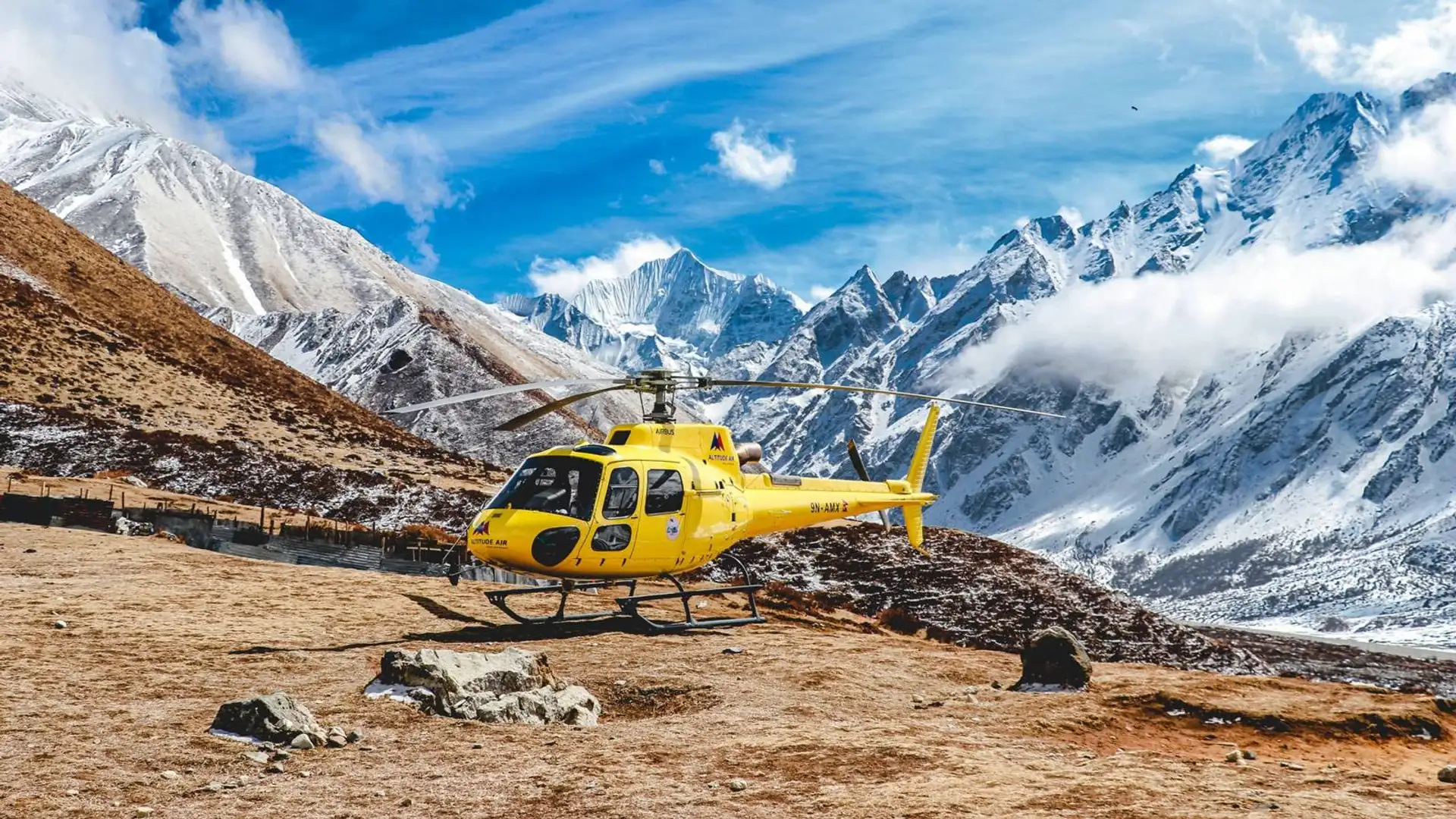
Everest Base Camp Helicopter Tour
Trip Duration: 1 Day
Trip Grade: Easy
Group Size: 5
Meals: Breakfast at Hotel Everest View (extra)
Best Season: October–November, March–May
Start Point: Kathmandu
Accomodation: Not included (day tour)
Ending Point: Kathmandu
Max Altitude: 5,550 m (over Kala Patthar)
Transportation: Helicopter and private car
Permits Required: Sagarmatha National Park, Khumbu Pasang Lhamu Municipality
Overview
The Everest Base Camp Helicopter Tour takes you from your Kathmandu hotel to the foot of Mount Everest and back in a single morning. You fly past Lukla, up the Dudh Koshi and Khumbu valleys, over the Khumbu Glacier, Everest Base Camp and Kala Patthar, then land at Hotel Everest View (3,880 m) for breakfast facing Everest, Lhotse and Ama Dablam. You're back in Kathmandu by lunchtime.
It covers in four or five hours what takes trekkers more than a week on foot. That makes it the right choice for travellers who don't have two weeks, can't trek at high altitude, or want to see Everest up close with a parent, a child or a partner who wouldn't manage the walk. It's also a popular add-on for people who have already trekked and want to see the mountains from the air.
This page explains exactly how the day works, what you'll see from each side of the helicopter, the difference between a shared flight, a Kala Patthar landing and a private charter, what it costs and what's included, and how to avoid the problems that most often spoil the day: weather, altitude and expectations.
Trip at a Glance
Detail | Information |
|---|---|
Duration | 4–5 hours (half day), Kathmandu to Kathmandu |
Departure | Around 6–6:30 a.m. from Kathmandu domestic terminal |
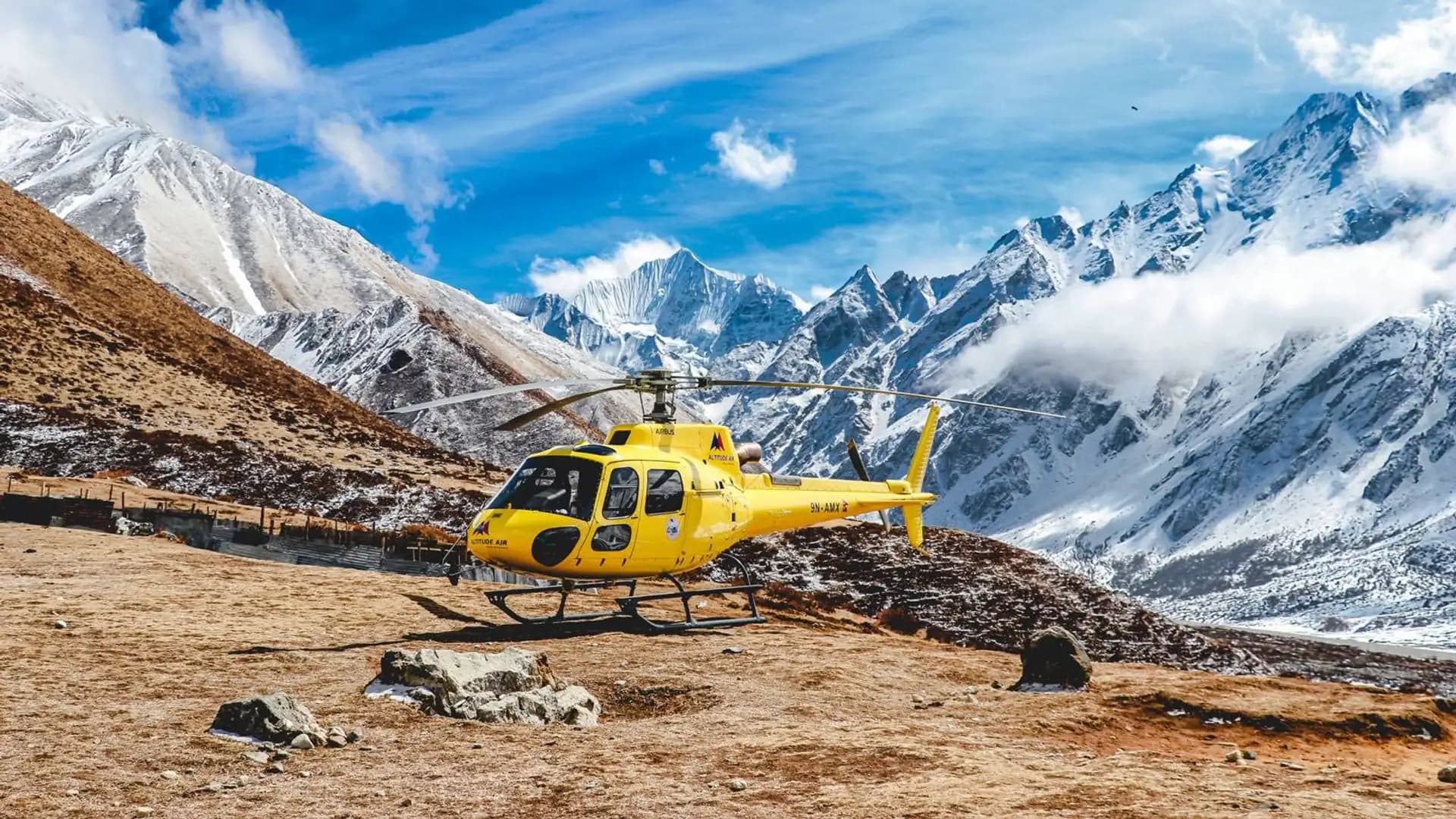
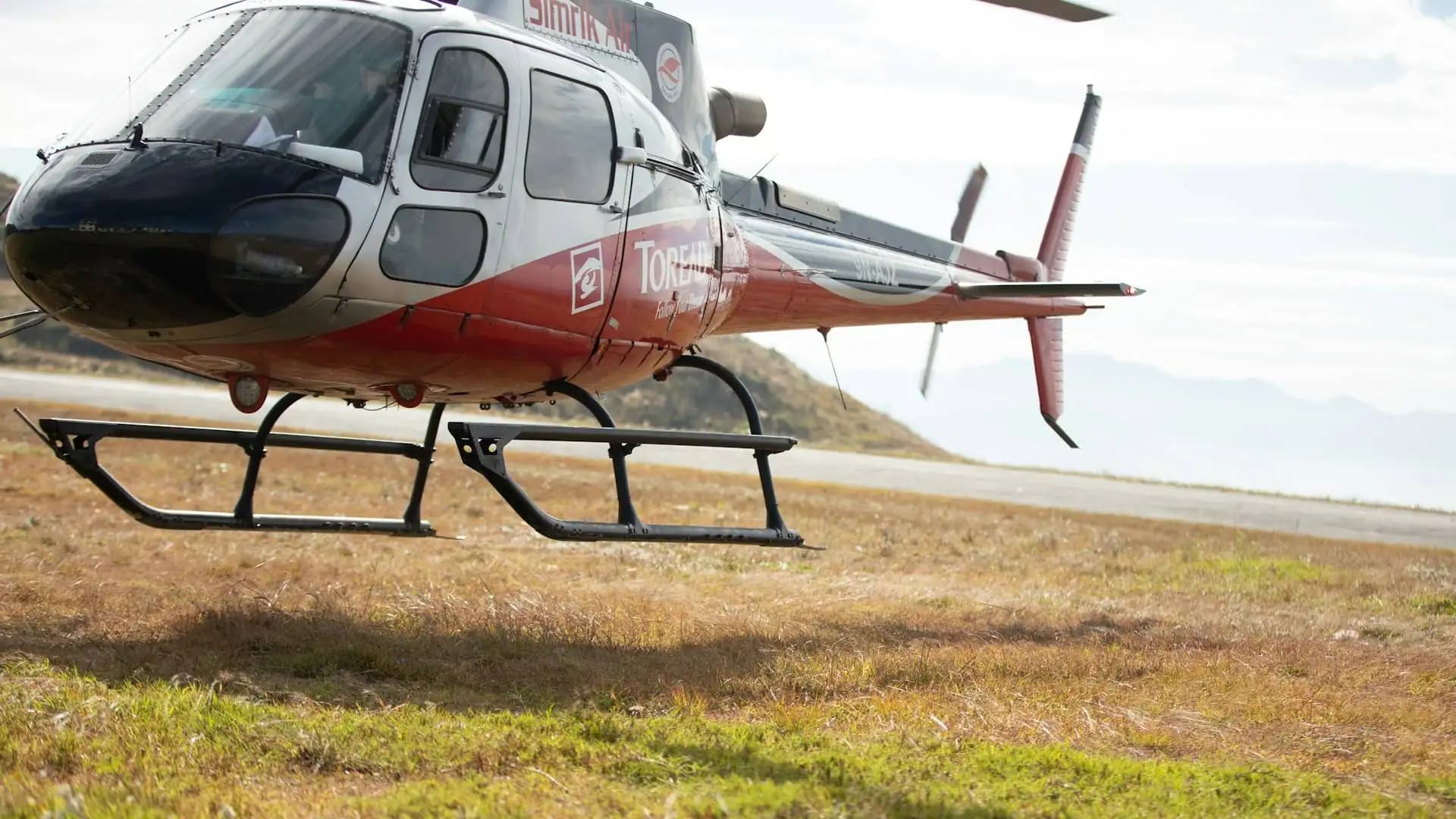
Aircraft | Single-engine helicopter (Airbus H125 / AS350 type), up to 5 passengers |
Route | Kathmandu – Lukla – Khumbu valley – Everest Base Camp and Kala Patthar – Hotel Everest View – Lukla – Kathmandu |
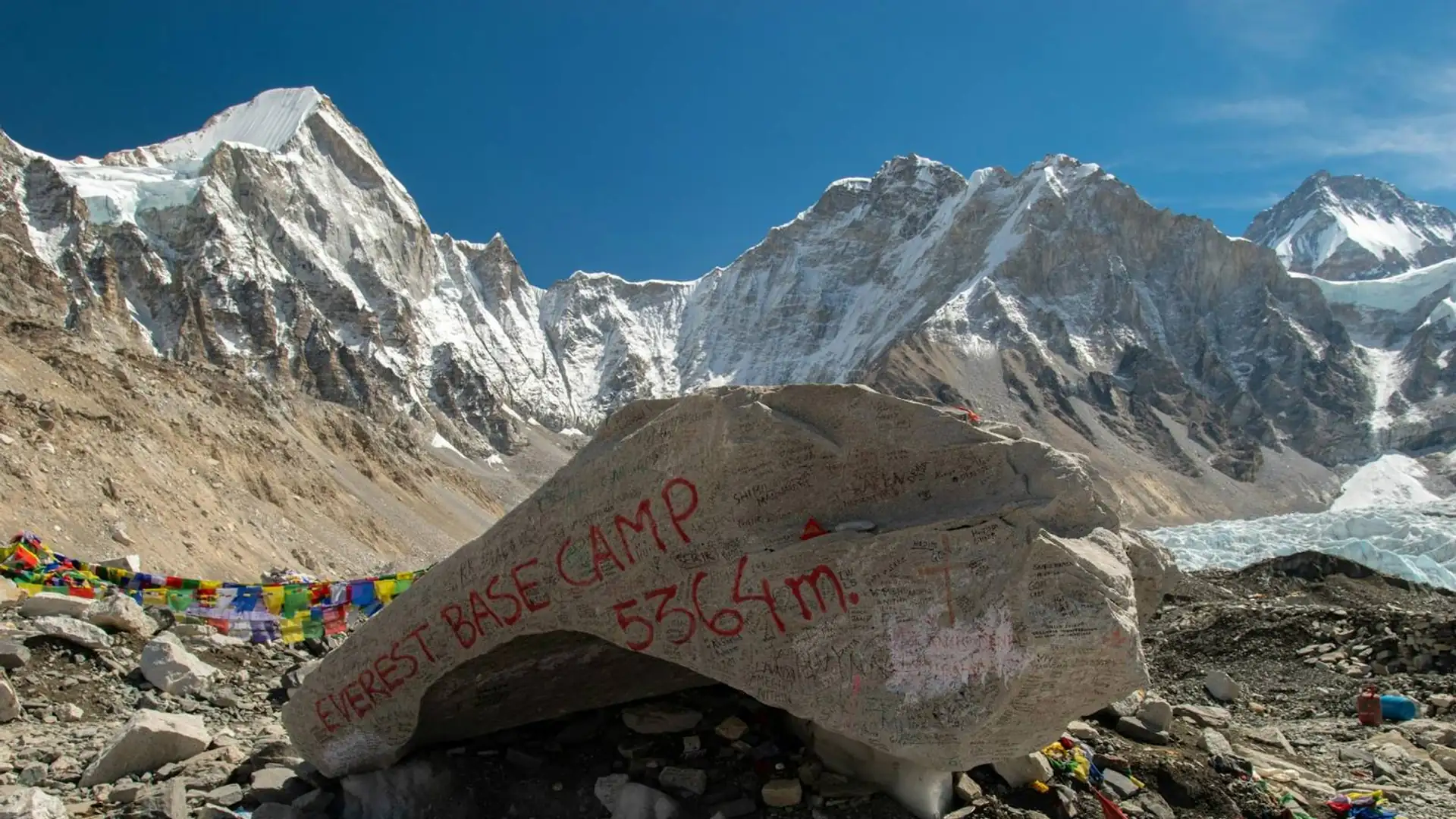
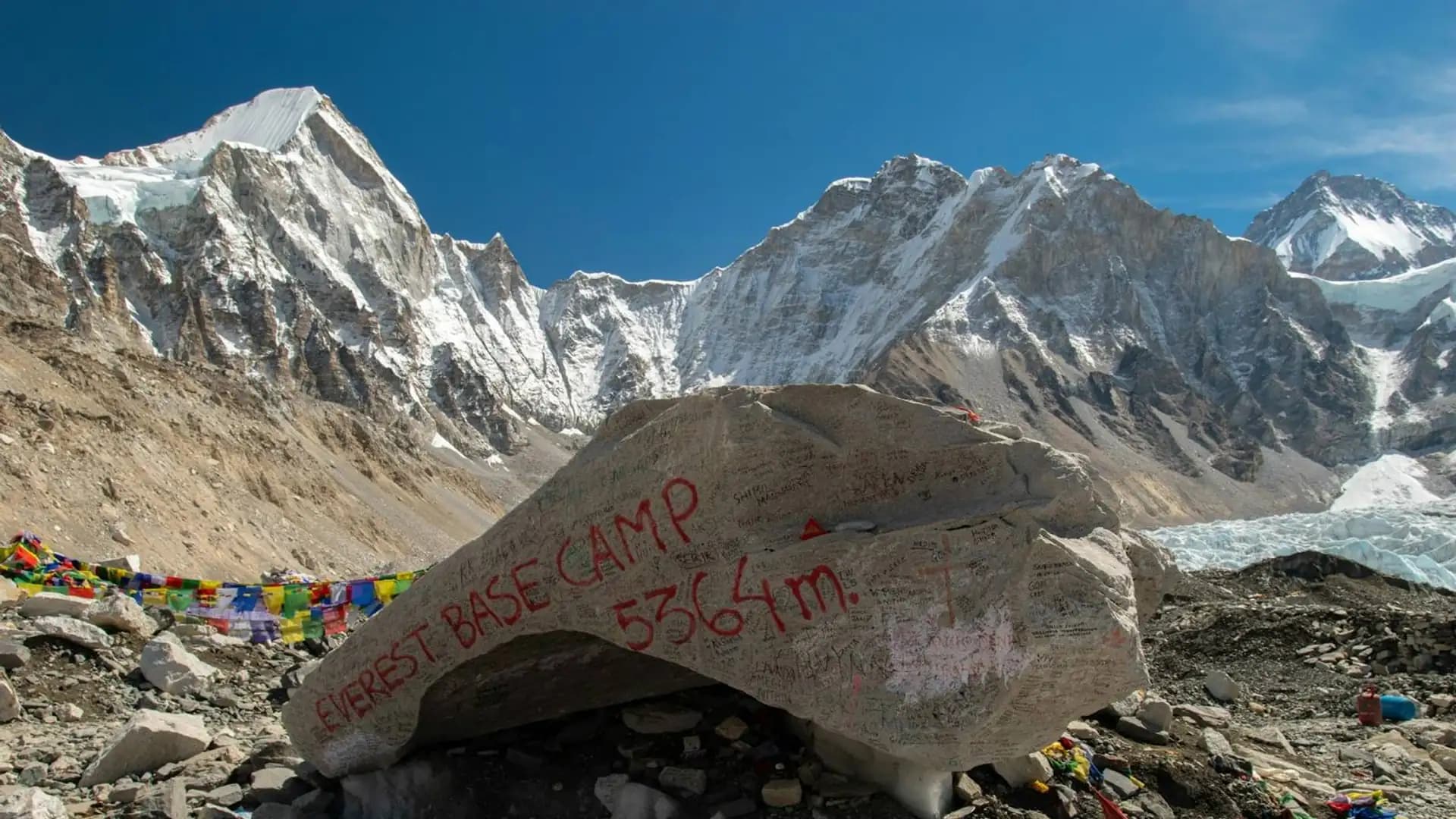
Highest point | Over Kala Patthar (about 5,550–5,640 m); Everest Base Camp is 5,364 m |
Breakfast stop | Hotel Everest View, about 3,880 m (breakfast extra) |
Fitness needed | None; short walks on flat ground only |
Type | Shared seat or private charter |
Permits | Sagarmatha National Park and local municipality fees (included) |
Best months | October–November and March–May |
Price | From US$1,390 per person (shared seat) |
Why Choose the Everest Base Camp Helicopter Tour?
It's the only way to see Everest up close in one day. On foot, Everest Base Camp is 8–9 days from Lukla because your body needs time to adjust to the altitude. By helicopter, you're there in about two hours and back down before altitude can affect you.
It works for almost everyone. Children, older travellers and people who can't do a multi-day trek can all take this tour. The only walking is a few minutes on flat ground at the helipad and hotel.
It fits into a short holiday. If you're in Nepal for a week, a morning flight to Everest leaves time for Kathmandu's heritage sites, Pokhara or Chitwan. See our Kathmandu, Pokhara and Chitwan tour for ideas.
It's more than a sightseeing flight. Fixed-wing "mountain flights" from Kathmandu show Everest from a distance through the window. The helicopter flies into the Khumbu itself, past the faces of the peaks, and lands in the mountains.
Honest trade-offs. It isn't cheap, and it depends entirely on weather. You also don't get the experience of walking into the mountains, meeting Sherpa villages day by day, or standing at base camp after earning it. If you have the time and fitness, our Everest Base Camp Trek or EBC Trek with Helicopter Return give you both.
What You'll See From the Helicopter
Peak or feature | Height | Where you see it |
|---|---|---|
Mount Everest | 8,849 m | From the upper Khumbu valley, Kala Patthar and Hotel Everest View |
Lhotse | 8,516 m | Behind the Nuptse ridge, and from the hotel |
Nuptse | 7,861 m | Directly above Everest Base Camp |
Ama Dablam | 6,812 m | Close by on the way up and from the hotel |
Pumori | 7,161 m | Above Kala Patthar and Gorak Shep |
Thamserku | 6,623 m | Above Namche and Lukla |
Kangtega | 6,782 m | Above Tengboche |
Khumbu Glacier and Icefall | — | The ice river below Everest Base Camp |
Namche Bazaar and Tengboche | 3,440 m / 3,860 m | Villages below you in the valley |
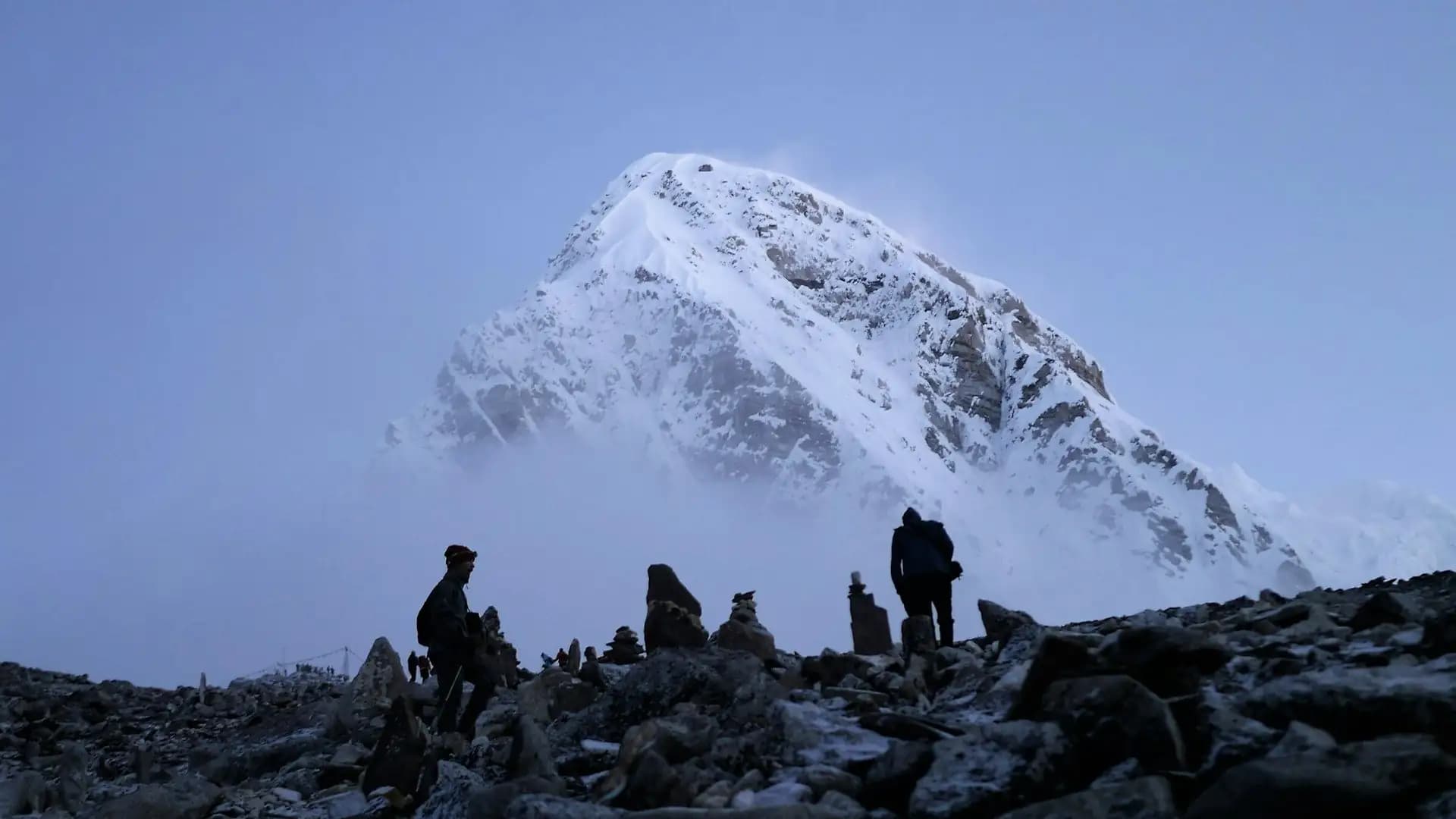
Everest Base Camp from the air. In spring, the tents of the climbing expeditions are spread across the glacier, and the Khumbu Icefall rises behind them. In autumn and winter, base camp is mostly empty and the glacier itself is the view. Everest's summit can't be seen from base camp, but it can from the air and from Kala Patthar, which is why the flight passes over both.
Which side to sit on. It matters less than you might think. The helicopter turns at the head of the valley and flies back down the same way, so both sides get the main peaks at some point. Seats are assigned by the pilot for weight balance, and on shared flights passengers often swap seats at Lukla or Pheriche.
Shared Flight, Kala Patthar Landing or Private Charter?
Option | What happens | Best for | Price |
|---|---|---|---|
Shared flight | Up to 5 passengers. Flies over Everest Base Camp and Kala Patthar, lands at Lukla and Hotel Everest View. | Solo travellers, couples, best value | From US$1,390 per person |
Kala Patthar landing | Small group (usually 2–3 passengers) lands briefly at Kala Patthar before breakfast. | Travellers who want to stand at 5,500 m+ with Everest in front | On request |
Private charter | The whole helicopter for your group, with your choice of landings and time on the ground. | Families, photographers, special occasions | On request (per helicopter) |
About landing at Kala Patthar. Helicopters can land at Kala Patthar, but only with a light load, because the air is so thin. That's why shared five-passenger flights usually fly over it, and landings are sold separately or on private charters. Time on the ground is short, typically 5–15 minutes, both for safety and because staying longer at 5,500 m without acclimatization can make you unwell.
About landing at Everest Base Camp. Commercial sightseeing helicopters don't normally land at Everest Base Camp itself. The glacier surface, expedition activity and safety rules make Kala Patthar the usual high landing point instead.
Helicopter Tour vs Mountain Flight vs Trek
Helicopter tour | Mountain flight | Everest Base Camp trek | |
|---|---|---|---|
Time needed | Half a day | About 1 hour | 12–15 days |
How close you get | Into the Khumbu valley, over base camp | Along the range at a distance | On foot to base camp and Kala Patthar |
Landings | Lukla, Hotel Everest View, optional Kala Patthar | None | — |
Fitness | None | None | Good fitness, days at high altitude |
Altitude risk | Very low (minutes up high) | None (pressurised plane) | Real, needs acclimatization |
Cost | Highest per hour | Lowest | Mid-range, but over two weeks |
Experience | Close-up views and a breakfast stop in the mountains | A panoramic look at the whole range | The full Sherpa villages, trails and culture |
Choose the helicopter if you want to get close to Everest and stand in the mountains without trekking. Choose the mountain flight if your budget is tight and a distant view of Everest is enough. Choose the trek if you have the time and fitness. It's the experience most trekkers remember longest, built from small moments in villages and teahouses that a flight can't give you.
Many travellers combine them. They fly in by helicopter and trek a few days around Namche, or trek up and take our EBC Trek with Helicopter Return for the flight down.
Route Overview
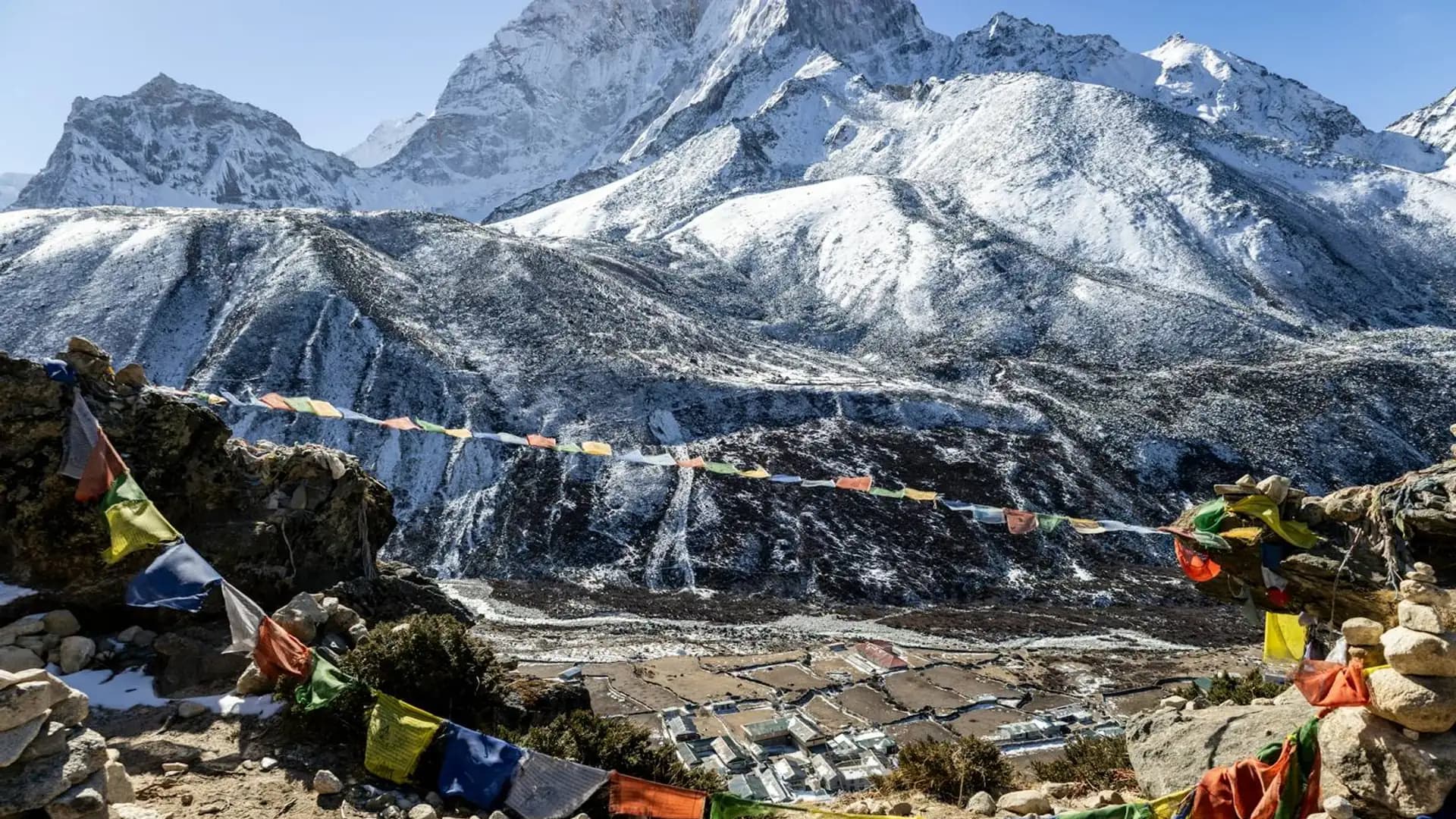
The flight follows the same valleys trekkers walk in a week. From Kathmandu, the helicopter heads east to Lukla, the gateway to the Everest region. From Lukla it turns north up the Dudh Koshi valley, past Phakding and Namche Bazaar, then follows the Imja Khola past Tengboche before turning up the Khumbu valley past Pheriche and Lobuche to Gorak Shep, Kala Patthar and Everest Base Camp. On the way back, it drops to Syangboche above Namche for Hotel Everest View, then returns to Lukla and Kathmandu.
To understand how high each stop is, see our guide to Everest Base Camp's elevation.
Flight Times and Distances
Leg | Approx. flight time |
|---|---|
Kathmandu – Lukla | 45–60 min |
Refuel at Lukla | 10–15 min on the ground |
Lukla – Khumbu valley – EBC and Kala Patthar | 25–40 min |
EBC area – Hotel Everest View (Syangboche) | 10–15 min |
Breakfast stop | About 1 hour |
Hotel Everest View – Lukla – Kathmandu | 50–70 min including refuel |
Total | About 4–5 hours door to door |
Altitude Profile
Place | Altitude | Time on the ground |
|---|---|---|
Kathmandu | 1,400 m / 4,593 ft | Start and finish |
Lukla | 2,860 m / 9,383 ft | 10–15 min refuel, twice |
Pheriche (shuttle point, if used) | about 4,240 m / 13,911 ft | A few minutes |
Everest Base Camp | 5,364 m / 17,598 ft | Flown over |
Kala Patthar | about 5,550–5,640 m / 18,200–18,500 ft | Flown over, or 5–15 min with a landing |
Hotel Everest View | about 3,880 m / 12,730 ft | About 1 hour |
Map Overview
The map shows a line from Kathmandu east to Lukla, then north up the Dudh Koshi and Khumbu valleys to Everest Base Camp and Kala Patthar. A second line marks the return via Syangboche (Hotel Everest View) and Lukla to Kathmandu.
Is the Helicopter Tour Safe at Altitude?
You'll briefly be well above 5,000 m without having acclimatized, so altitude matters even on a short flight.
Over Kala Patthar and base camp, you're in the helicopter, and exposure lasts only minutes. Most people notice nothing more than slight breathlessness.
If you land at Kala Patthar, walk slowly, don't run or jump, and keep the stop short. Some people feel dizzy or get a headache. Symptoms usually ease quickly once the helicopter descends.
At Hotel Everest View (3,880 m), most people feel fine, though you may be short of breath on stairs.
The pilot can descend immediately if anyone feels unwell. Rapid descent is the treatment for altitude symptoms.
Who should check with a doctor first: people with heart or lung conditions, high blood pressure, sickle cell disease, or who are pregnant. Most operators don't recommend high-altitude helicopter tours during pregnancy. This is general guidance, not medical advice. The CDC's Nepal travel health page has more on altitude.
Best Time for an Everest Helicopter Tour
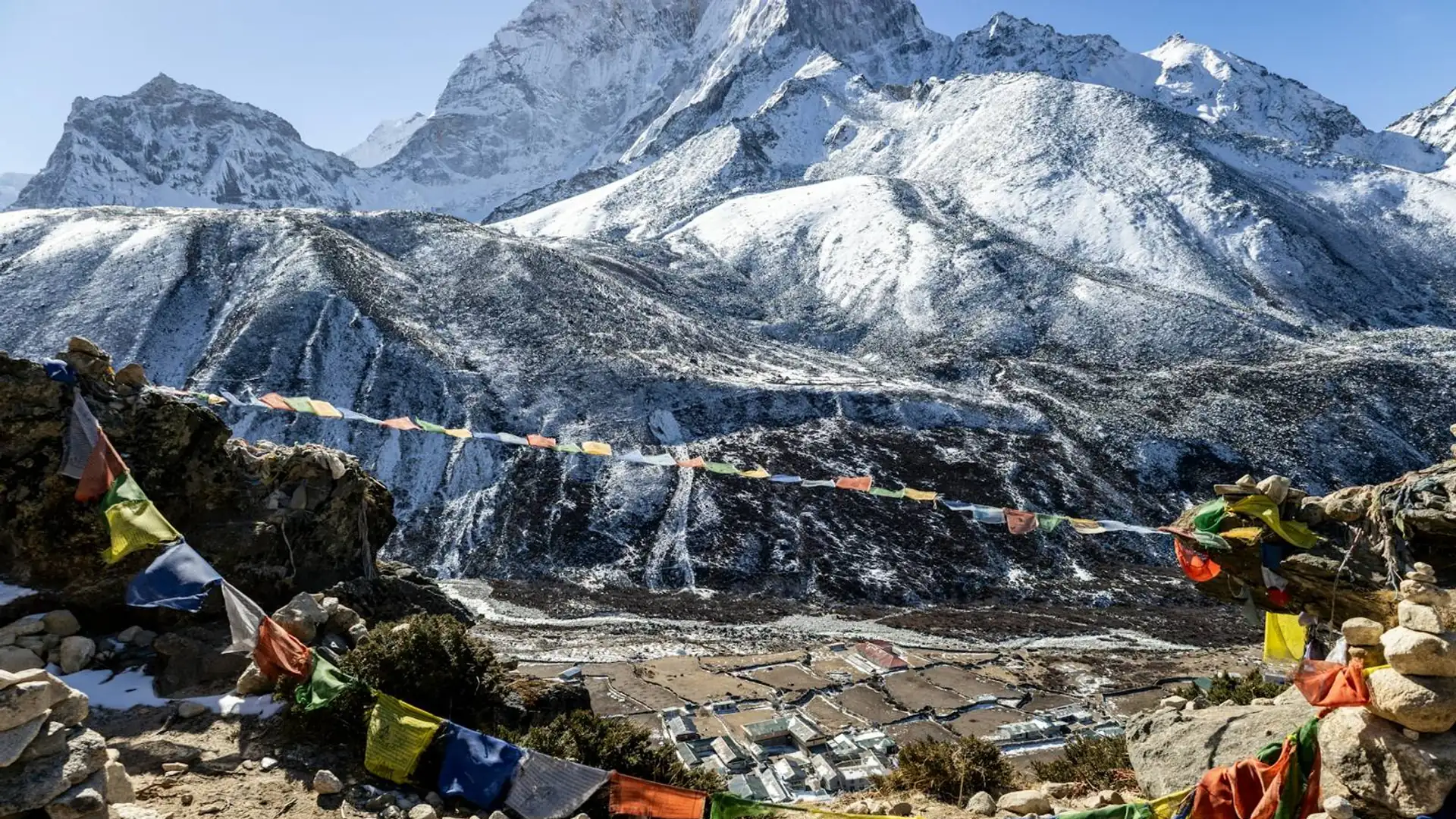
October to November: The clearest skies of the year and calm mornings. This is the most reliable time to fly.
March to May: Good flying weather in the mornings, with expedition tents at base camp. Haze and afternoon cloud build as the season goes on, so early departures matter.
December to February: Often very clear and quiet, but cold, with stronger winds at altitude. Good for photography on calm days.
June to September (monsoon): Cloud and rain cause frequent cancellations. Flights do operate on clear mornings, but you'll need flexible dates.
Whatever the season, keep at least one or two spare days in Kathmandu after your planned flight date in case the weather delays it. For a wider look at the seasons, read our guide to the best time to hike in Nepal.
Weather by Season (Everest region, mornings)
Season | Months | Hotel Everest View (3,880 m) | Above Kala Patthar | Flying conditions |
|---|---|---|---|---|
Autumn | Oct–Nov | 0–8 °C | −10 to −15 °C | Best: clear and calm |
Winter | Dec–Feb | −8 to 3 °C | −15 to −25 °C | Clear, but wind can stop flights |
Spring | Mar–May | 2–10 °C | −8 to −12 °C | Good mornings, cloud later |
Monsoon | Jun–Sep | 8–14 °C | −3 to 2 °C | Frequent cancellations |
These are typical early-morning ranges. Wind at altitude makes it feel colder, and the helicopter door may be opened at landing points.
Planning Your Day: Before and After the Flight
The day before. Confirm your pickup time with us in the evening. Lay out warm clothes, your passport, charged batteries and a small daypack, and get to bed early. Eat a normal dinner, and go easy on alcohol, which makes altitude harder on the body.
Arrival in Nepal. Don't book the helicopter for the morning after a long-haul flight if you can avoid it. Give yourself a day to recover. If the weather delays the flight, you'll also want a spare morning or two before you leave Kathmandu.
On the morning. Have a light snack before pickup, because breakfast at Hotel Everest View is around 8:30–9 a.m. at the earliest. Keep your phone and spare batteries in an inside pocket so the cold doesn't drain them.
After you land. You'll be back by around midday with a free afternoon. Many people visit Boudhanath Stupa or Pashupatinath, which are close to the airport, or rest and look through their photos. If you feel tired or have a mild headache from the altitude, drink water and take it easy. It usually passes within a few hours.
If the flight is delayed. Delays are usually short, an hour or two waiting for cloud to clear at Lukla. If the pilot cancels for the day, we rebook you for the next available morning. Keep your plans for the following days flexible.
How Safe Are Helicopter Flights in Nepal?
Mountain flying in Nepal is demanding, and safety comes down to weather judgment, aircraft and experience.
Weather decides everything. Pilots won't fly into cloud or strong wind in the Khumbu, and they make the final call on the day. A cancelled flight is a safety decision, not a failure of service.
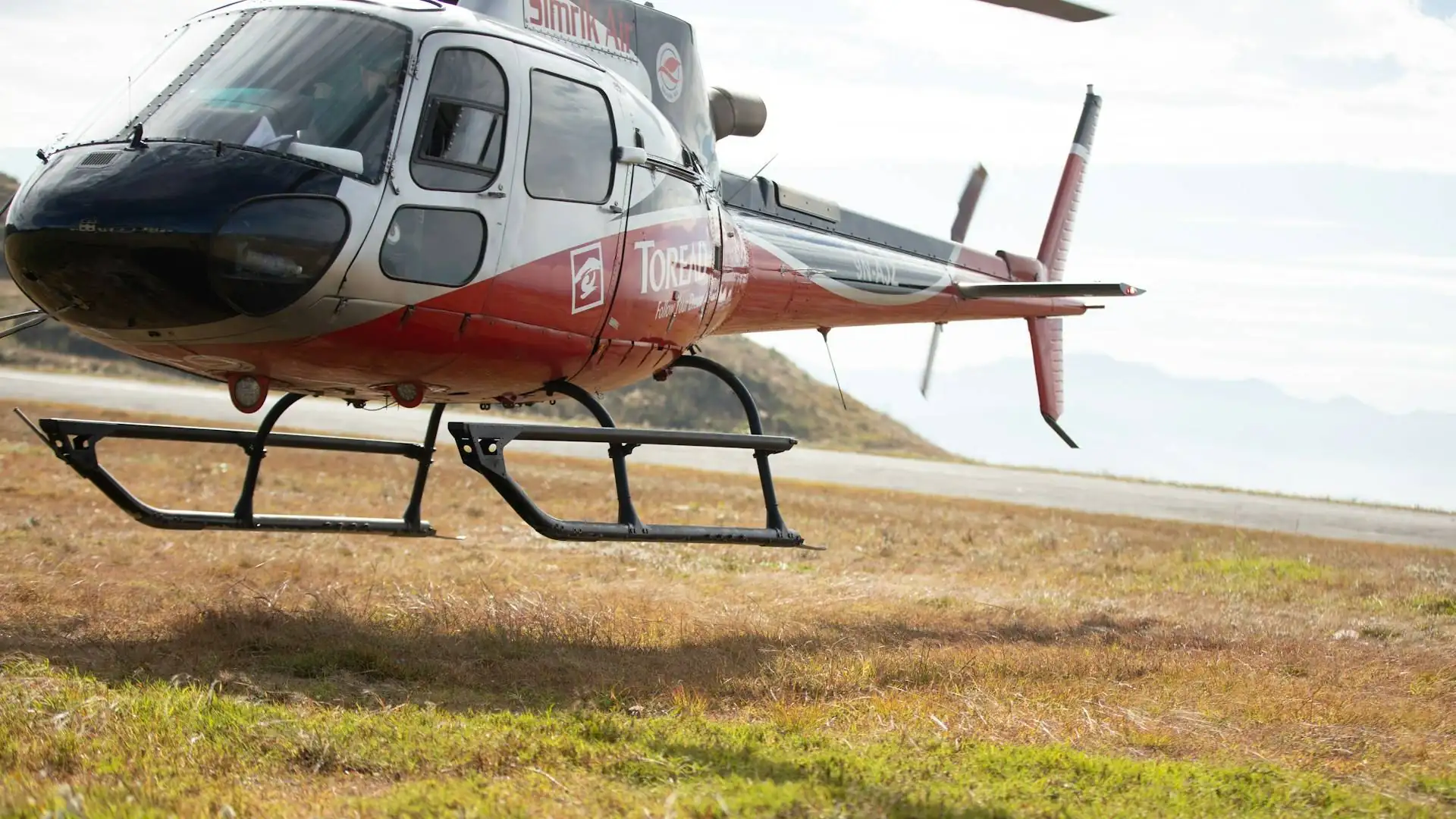
Aircraft built for altitude. Most Everest tours use single-engine helicopters such as the Airbus H125 (AS350 B3), a type designed for high-altitude work and used for mountain rescue.
Experienced mountain pilots. The companies flying in the Everest region also fly rescue and supply missions, so their pilots know the valleys and the conditions well.
Load limits at altitude. Splitting passengers above 4,500 m and keeping landings short are standard safety practices, not shortcuts.
Your part. Follow the crew's instructions, approach and leave the helicopter only when told, stay away from the tail rotor, and keep loose items secured during landing.
We book flights only with licensed helicopter operators in Nepal and pass on any weather or schedule changes as soon as we hear about them.
Weight, Seats and Baggage
Helicopters fly to strict weight limits, especially at altitude.
Passenger weight: Tell us your weight when booking. If you weigh over about 100 kg, we may need to adjust seating or the load.
Baggage: Bring only a small daypack (camera, water, warm layer). Larger bags stay at your hotel.
Seats: The pilot assigns seats to balance the helicopter. On shared flights you may swap seats during the stops.
Above 4,500 m: Fewer passengers can fly at once. Groups may be split at Pheriche and reunited afterwards.
Getting There: Transport
Leg | How |
|---|---|
Hotel – Kathmandu domestic terminal | Private vehicle (included) |
Kathmandu – Everest region – Kathmandu | Helicopter |
Domestic terminal – hotel | Private vehicle (included) |
The tour starts and finishes at your hotel in Kathmandu. Most international flights can't be booked on the same day, so plan to arrive at least a day before and leave at least a day after.
Accommodation and Meals
Accommodation: This is a day tour, so no accommodation is included. Stay anywhere in Kathmandu. We pick up from hotels in Thamel and the main tourist areas. If you need a hotel, we can book one for you.
Breakfast at Hotel Everest View: The hotel sits on a ridge above Namche Bazaar and has long been described as one of the highest-placed hotels in the world. Breakfast is usually a set menu of eggs, toast, pancakes, tea and coffee, served on the terrace or indoors depending on the weather. It isn't included in the tour price. Expect to pay about US$40 per person, paid locally.
Permits and Fees
Fee | Amount (approx.) | Included? |
|---|---|---|
Sagarmatha National Park entry | NPR 3,000 per person | Yes |
Khumbu Pasang Lhamu Rural Municipality fee | NPR 2,000–3,000 per person | Yes |
Kathmandu and Lukla airport taxes | About NPR 500 each | Yes |
Breakfast at Hotel Everest View | About US$40 per person | No |
Fees are set by the authorities and can change. We always charge the current official rate. For park information, see the Department of National Parks and Wildlife Conservation. For visas, see the Department of Immigration.
Everest Base Camp Helicopter Tour Cost
Shared flight: from US$1,390 per person, including hotel transfers, the shared helicopter seat, permits, municipality fees and airport taxes. Kala Patthar landings and private charters are quoted on request, because the price depends on group size, landing time and season.
Here's roughly where the money goes for a shared seat:
Cost item | Approx. US$ |
|---|---|
Shared helicopter seat (fuel, landing fees, crew) | 1,250 |
National park, municipality and airport fees | 52 |
Hotel transfers in Kathmandu | 15 |
Office support, insurance for staff, taxes and contingency | 73 |
Total | 1,390 |
Extra money to budget:
Breakfast at Hotel Everest View: about US$40
Down jacket rental in Thamel, if needed: a few dollars
Tips for the pilot and ground staff: optional
Prices published online vary widely, partly because some operators leave out the permits and taxes. Ours include them. Before booking with anyone, check whether a quote includes fees, whether it's a flyover or a landing, and how many passengers share the helicopter.
Optional Add-ons
Kala Patthar landing for a few minutes at about 5,550 m with Everest in front of you
Private charter for your family or group, with flexible timing
Combine with a trek: fly in by helicopter and trek out, or trek in and fly out on our EBC Trek with Helicopter Return
Upgrade your trek: add a helicopter flight to our Luxury Everest Base Camp Trek
Kathmandu sightseeing in the afternoon after you land
Pokhara or Chitwan after the flight; see our Kathmandu Pokhara Tour
Travel Tips
Book the earliest flight you can. Mornings are clearest. Cloud often builds in the Khumbu after 10–11 a.m.
Keep spare days. Plan your flight two or three days before your international departure, so a weather delay doesn't mean missing it.
Charge everything the night before, and keep batteries warm in an inside pocket.
Wear dark clothing for photos. Light clothing reflects in the window.
Turn off flash and press the lens close to the window to cut reflections.
Don't overexert at landings. Walk slowly at Kala Patthar and Hotel Everest View.
Eat a light snack before you leave. Breakfast is a couple of hours away.
Photography Tips
Shoot through the window at an angle, with the lens close to the glass and your hand or a dark cloth around it to cut reflections.
Use a fast shutter speed (1/1000 s or faster) to reduce vibration.
Phones work well. Use burst mode and avoid digital zoom.
Best moments: Ama Dablam on the way up, the Khumbu Icefall and base camp from above, Everest's summit near Kala Patthar, and the hotel terrace at breakfast.
Drones aren't allowed in Sagarmatha National Park without a special permit, so leave yours at the hotel.
Responsible Travel
Keep landings short and quiet. Helicopter traffic affects people and wildlife in the Khumbu.
Take your rubbish back with you, including wrappers and batteries.
Respect Sherpa culture. Ask before photographing people, and don't climb on prayer stones or mani walls.
Consider trekking too. Trekkers spend money in local lodges for days, which supports Khumbu families more directly than a day tour. Our Everest Base Camp Trek is the classic way to do it.
Is the Everest Helicopter Tour Right for You?
This tour suits you if you:
Want to see Everest up close but don't have time to trek
Are travelling with older relatives or children
Have health or mobility reasons that rule out a high-altitude trek
Want a special experience for a birthday, honeymoon or anniversary
Have already trekked and want to see the region from the air
Think twice, or choose a different trip, if you:
Have heart or lung conditions affected by altitude. Check with your doctor first.
Are on a tight budget: a fixed-wing mountain flight costs far less, though it doesn't fly into the valley or land
Want the full experience of walking into the Himalaya: try our Everest Base Camp Trek
Why Book With Adventure Life Nepal
Local and experienced. Adventure Life Nepal was founded by Dil Bahadur Karki, a Himalayan guide with more than 25 years of experience in Nepal.
Licensed and registered. We're registered with the Nepal Tourism Board and the Trekking Agencies Association of Nepal (TAAN).
Clear pricing. Our shared price includes permits and taxes, and we tell you exactly what's extra.
Honest about landings. We explain what a shared flight, a landing and a private charter actually include, so there are no surprises on the day.
Help with the whole trip. We can combine the flight with a trek, tours in Kathmandu or a visit to Pokhara and Chitwan.
Booking, Cancellation & Refund Policy
A 30% deposit confirms your booking.
30 days or more before the flight: full refund minus administrative fees.
15–29 days before: a 50% cancellation fee applies.
Less than 15 days before: no refund.
Weather: If the flight can't operate because of weather, we move you to the next available morning. If you can't take an alternative date, contact us and we'll explain the options under our terms.
We may change or cancel a flight because of weather, aviation restrictions or other events outside our control.
Full details are on our terms and conditions page.
Book Your Everest Base Camp Helicopter Tour
See Everest Base Camp, the Khumbu Icefall and Everest's summit, have breakfast facing the world's highest mountain, and be back in Kathmandu by lunch. Tell us your preferred date, how many people are travelling and whether you want a landing or private flight, and we'll confirm availability and your price.
Book now or send us a quick enquiry. WhatsApp or call: +977 9841248242 · Email: adventurelifenepal@gmail.com
Highlights
Itinerary
5:30–6:00 a.m. Hotel pickup. We collect you from your Kathmandu hotel and drive you to the domestic terminal at Tribhuvan International Airport. Bring your passport. 6:00–6:30 a.m. Check-in and safety briefing. Passengers and bags are weighed so the pilot can plan the load. You'll be briefed on getting in and out of the helicopter safely. 6:30–7:30 a.m. Kathmandu to Lukla. The flight east takes about 45–60 minutes, over terraced hills with the Himalaya on your left. At Lukla (2,860 m), the helicopter refuels for 10–15 minutes. 7:30–8:30 a.m. Up the Khumbu valley. From Lukla, the helicopter follows the Dudh Koshi valley past Namche Bazaar and Tengboche, with Ama Dablam, Thamserku and Kangtega close by. It continues up the Khumbu valley past Pheriche and Lobuche, over the Khumbu Glacier, Everest Base Camp and Kala Patthar. On shared flights, the group may be split at Pheriche into two smaller loads, because the helicopter can carry fewer passengers in the thin air above 4,500 m. 8:30–9:45 a.m. Breakfast at Hotel Everest View (3,880 m). The helicopter lands at Syangboche, a short walk from the hotel. On a clear morning, the terrace looks straight across to Everest, Lhotse and Ama Dablam. Breakfast takes about an hour. 9:45–11:30 a.m. Return to Kathmandu. The helicopter flies back down to Lukla to refuel, then on to Kathmandu. 11:30 a.m.–12:30 p.m. Drop-off. We drive you back to your hotel. You have the afternoon free. Times are approximate and depend on weather, air traffic and the number of passengers.
Elevation Profile
Altitude Variation Chart
What's Included
Included
- Hotel pickup and drop-off in Kathmandu
- Shared helicopter flight Kathmandu – Lukla – Everest Base Camp and Kala Patthar (flyover) – Hotel Everest View – Kathmandu
- Landing and refuelling stops at Lukla
- Sagarmatha National Park entry fee
- Khumbu Pasang Lhamu Rural Municipality fee
- Kathmandu and Lukla airport taxes
- Fuel surcharge, landing fees and government taxes
- Support from our Kathmandu office on the day
Excluded
- Breakfast at Hotel Everest View (about US$40)
- Kala Patthar landing and private charter supplements
- Hotel accommodation in Kathmandu
- International flights and Nepal visa
- Travel insurance (strongly recommended)
- Drinks, personal expenses and tips
- Extra hotel nights if the flight is delayed by weather
- Anything not listed under "What's Included"
Packing List
Item | Why |
|---|---|
Warm down or insulated jacket | It's well below freezing at altitude, especially with the door open |
Warm hat and gloves | For landings and photos outside |
Sunglasses and sunscreen | Strong sun and glare off snow |
Comfortable shoes with grip | Helipads can be icy or uneven |
Camera or phone, fully charged | Cold drains batteries fast; bring a spare |
Small daypack and water bottle | Keep it light |
Passport | Needed for the domestic terminal |
Nepali rupees | For breakfast, drinks and tips |
You can rent a down jacket in Thamel for a few dollars if you didn't bring one.
Frequently Asked Questions
No. Sightseeing helicopters fly over Everest Base Camp but don't normally land there. The usual high landing point is Kala Patthar, which has a better view of Everest anyway.
Yes, on a landing flight or private charter. Because the air is thin, helicopters can only land there with a light load, usually 2–3 passengers. The stop is short, typically 5–15 minutes.
About 4–5 hours from hotel pickup to drop-off, including about an hour for breakfast.
Up to 5 passengers. At higher altitude, the group may be split into two smaller loads and reunited at Pheriche.
It's unlikely, because you spend only minutes at very high altitude. If you land at Kala Patthar, walk slowly and keep the stop short. Tell the pilot if you feel unwell, and the helicopter will descend.
Generally yes, for people in good health. Children, parents and grandparents do this tour every season. Anyone with heart or lung conditions should check with a doctor first.
The flight only goes if the pilot judges it safe. If it's cancelled, we move you to the next available morning. That's why we recommend keeping spare days in Kathmandu.
No. Breakfast at Hotel Everest View costs about US$40 per person, paid locally.
Yes, on a clear day. You see it from the upper Khumbu valley, over Kala Patthar and from the Hotel Everest View terrace.
A mountain flight is a fixed-wing plane that flies along the Himalaya from Kathmandu and back without landing. The helicopter flies into the Everest valleys, much closer to the peaks, and lands at Lukla and Hotel Everest View.
Warm layers, a down jacket, hat, gloves, sunglasses and shoes with good grip. It's below freezing at altitude even in spring.
Helicopters fly to strict weight limits. Tell us your weight when booking. If you weigh more than about 100 kg, we may need to adjust the seating or load.
Seats are assigned by the pilot for balance. All seats have a window, and passengers often swap during the stops on shared flights.
It isn't required for the tour, but we strongly recommend travel insurance that covers flight delays and cancellations.
Yes. A private charter gives you the whole helicopter, with flexible timing and landings. We quote it based on your group size and plans.
Yes. The Sagarmatha National Park fee, the local municipality fee and airport taxes are all included in our price.
Yes. You can fly to Lukla or higher and trek out, or trek in and fly out on our EBC Trek with Helicopter Return. Ask us for a custom itinerary.
For October, November, April and May, book a few weeks ahead to secure the date you want. In other months, a few days' notice is often enough.
Not without a special permit. Drones aren't allowed in Sagarmatha National Park without official permission.
Yes, but the monsoon (June to September) has frequent cancellations. October–November and March–May are the most reliable.
The pilot briefs you before take-off and the flight is smooth in calm morning air. Sitting at the front or near the middle can help if you're nervous.
Gallery & Video
Customer Reviews
Loading reviews...