Annapurna Base Camp Distance | How Far Is the Trek?
Introduction to Annapurna Base Camp Distance
"How far is the Annapurna Base Camp trek?" sounds like a question with one clean answer, and then you actually start researching it and find total distance figures ranging from 70km to over 130km for what's nominally the same trek.
That's not sloppy reporting — it's a genuine reflection of the fact that "the ABC trek" isn't a single fixed path. It's a network of route options that share a common destination (Annapurna Base Camp, 4,130 meters) but differ meaningfully in where they start, whether they include the Poon Hill sunrise detour, and which villages they route through on the way up and back down.
This guide exists to make sense of that range — not by picking one number and presenting it as definitive, but by breaking down exactly which route variant produces which total distance, what each individual day and segment covers in kilometers, and why the "how far" question genuinely depends on choices you make when planning your specific itinerary.
Every distance figure below has been checked against multiple current route descriptions, and because these figures vary meaningfully between reliable sources — a reflection of different measurement methods, slightly different trail choices, and the genuine complexity of a route with several starting points — this guide presents honest ranges throughout rather than false precision.
The Short Answer to Annapurna Base Camp Distance
Total round-trip distance for the Annapurna Base Camp trek typically falls somewhere between 70 km and 130 km, depending primarily on your starting trailhead and whether your itinerary includes the Ghorepani/Poon Hill detour.
Route style | Approximate total round-trip distance |
|---|---|
Direct route via Jhinu Danda/Matkyu (shortest option) | Roughly 70 km |
Direct route via Ghandruk (most common standard route) | Roughly 80-115 km |
Full loop including Ghorepani and Poon Hill | Roughly 90-130 km |
The wide range here isn't a data error — it reflects genuinely different trekking experiences, from a faster, more direct 6-8 day trip to a longer 10-14 day version that adds the famous sunrise viewpoint and a different set of villages along the way.
Why the Annapurna Base Camp Distance Figures Vary So Much
Before diving into detailed breakdowns, it's worth understanding the handful of factors that actually drive this range, since they explain almost every discrepancy you'll encounter when researching this trek.
Factor | How it affects total distance |
|---|---|
Starting trailhead | Nayapul, Ghandruk, and Jhinu Danda/Matkyu all serve as valid starting points, with meaningfully different distances to ABC from each |
Poon Hill inclusion | Adding the Ghorepani/Poon Hill detour adds roughly 20-35 km to the total round trip compared to a direct route |
Return route choice | Some itineraries descend the same way they ascended; others loop back via a different combination of villages |
Measurement method | Different trekking companies and guidebooks measure trail distance slightly differently, leading to natural variation even for the same physical route |
Road access changes | Improved road access to some trailheads over recent years has shifted where "day one" effectively begins for many trekkers |
Distance From Different Starting Points
This is the single most useful table for understanding why total trip distance varies so much — where you actually start walking makes a real difference.
Starting point | One-way distance to ABC | Notes |
|---|---|---|
Nayapul | Roughly 45-65 km | The most traditional and commonly cited trailhead, accessible by road from Pokhara |
Ghandruk | Roughly 40-42 km | A common alternative starting point, itself reached by a shorter drive/trek from Nayapul |
Jhinu Danda / Matkyu | Roughly 35 km | The shortest common starting point, often used for faster itineraries |
Driving distance from Pokhara to Nayapul is approximately 42 km, typically covered in 1-1.5 hours by vehicle — this road-accessible starting point is why Nayapul remains the default trailhead for most standard itineraries, even though Ghandruk and Jhinu Danda offer shorter walking distances to ABC itself.
Total Distance by Route Configuration
Configuration 1: The Direct Route (Shortest Option)
Detail | Figure |
|---|---|
Typical trailhead | Jhinu Danda or Matkyu |
Total round-trip distance | Roughly 70 km (43 miles) |
Typical duration | 6-8 days |
Best suited for | Fit trekkers with limited time who want the most direct path to ABC without the Poon Hill detour |
Configuration 2: The Standard Ghandruk Route
Detail | Figure |
|---|---|
Typical trailhead | Nayapul, via Ghandruk |
Total round-trip distance | Roughly 80-115 km |
Typical duration | 7-10 days |
Best suited for | The most commonly booked version of this trek — a solid balance of cultural villages, manageable pacing, and reasonable duration |
Configuration 3: The Full Loop via Ghorepani and Poon Hill
Detail | Figure |
|---|---|
Typical trailhead | Nayapul, via Ulleri, Ghorepani, and Poon Hill |
Total round-trip distance | Roughly 90-130 km |
Typical duration | 10-14 days |
Best suited for | Trekkers with more time who want the famous Poon Hill sunrise viewpoint included alongside the base camp destination |
Segment-by-Segment Distance Reference
This is the most detailed breakdown available — the actual distance between each major waypoint on the trail, which you can combine in different orders depending on which specific itinerary variant you're planning.
Segment | Approximate distance | Approximate walking time |
|---|---|---|
Nayapul to Birethanti | ~1.5 km | ~30 minutes |
Birethanti to Tikhedhunga | ~3.5 km | ~1.5 hours |
Tikhedhunga to Ulleri (via the famous 3,000+ stone steps) | ~2 km | ~2 hours |
Ulleri to Ghorepani | ~10 km | ~5-6 hours |
Ghorepani to Poon Hill (sunrise side trip) | ~1.5 km | ~45 minutes |
Ghorepani to Tadapani | ~7 km | ~3-4 hours |
Tadapani to Chhomrong (via Chuile) | ~13-15 km | ~6-7 hours |
Chhomrong to Sinuwa | ~4 km | Includes a steep descent and re-climb |
Sinuwa to Bamboo | ~3 km | Descent into forest |
Bamboo to Dovan | ~3 km | River valley terrain |
Dovan to Himalaya (teahouse stop) | ~3 km | Forest trail |
Himalaya to Deurali | ~3-4 km | ~1.5-2.5 hours, uphill through thinning trees |
Deurali to Machhapuchhre Base Camp (MBC) | ~4 km | ~2-2.5 hours, open terrain above treeline |
MBC to Annapurna Base Camp (ABC) | ~3-4 km | ~2-2.5 hours, glacial fields and open Sanctuary bowl |
Adding up the direct Chhomrong-to-ABC stretch alone (Chhomrong → Sinuwa → Bamboo → Dovan → Himalaya → Deurali → MBC → ABC) comes to roughly 20-22 km, illustrating how the trek's back half — despite feeling like the "real" climb toward base camp — actually covers less raw distance than the approach through the lower villages, largely because elevation gain, not horizontal distance, is what makes this stretch feel demanding.
Day-by-Day Distance: A Standard 7-8 Day Itinerary (Ghandruk Route)
Day | Route | Distance | Elevation |
|---|---|---|---|
1 | Pokhara/Nayapul → Ghandruk | Roughly 10-20 km (varies by exact trailhead and source) | Gain to ~1,940-2,200m |
2 | Ghandruk → Chhomrong | Roughly 10-22 km (sources vary meaningfully here) | Descend then re-climb to ~2,170m |
3 | Chhomrong → Bamboo or Dovan | Roughly 7-10 km | Descent then sustained climb through forest |
4 | Bamboo/Dovan → Deurali | Roughly 6-7 km | Gain to ~3,200-3,230m |
5 | Deurali → MBC → Annapurna Base Camp | Roughly 7-9 km | Gain to 4,130m |
6 | ABC → descend to Bamboo or Sinuwa | Roughly 12-18 km | Steep, sustained descent |
7 | Descend to Jhinu Danda | Roughly 10-12 km | Continued descent, hot springs stop |
8 | Jhinu Danda → Nayapul → drive to Pokhara | Roughly 10-11 km + drive | Final descent to trailhead |
Day-by-Day Distance: A Standard 10-Day Itinerary (Via Poon Hill)
Day | Route | Distance | Highlights |
|---|---|---|---|
1 | Nayapul → Tikhedhunga | ~10 km | Terraced fields, gentle ascent |
2 | Tikhedhunga → Ghorepani | ~12 km | The famous 3,000+ Ulleri stone steps, rhododendron forest |
3 | Ghorepani → Tadapani (via Poon Hill sunrise) | ~10 km | Sunrise viewpoint, forested trails |
4 | Tadapani → Chhomrong | ~8 km | Gurung village, mountain views |
5 | Chhomrong → Bamboo | ~7 km | Bamboo forest trail |
6 | Bamboo → Deurali | ~7 km | Waterfalls, rocky ascent |
7 | Deurali → Annapurna Base Camp | ~7 km | Panoramic Himalayan amphitheater |
8 | ABC → Bamboo | ~14 km | Long descent with changing scenery |
9 | Bamboo → Jhinu Danda | ~10 km | Hot spring relaxation |
10 | Jhinu Danda → Nayapul → Pokhara | ~11 km + drive | Easy final walk and drive |
Total for this configuration: roughly 96 km walked across the full itinerary.
Day-by-Day Distance: A Faster 5-Day Itinerary (Shortest Common Route)
Day | Route | Distance |
|---|---|---|
1 | Pokhara → Samrung/Matkyu → trek toward Chhomrong | ~12-15 km |
2 | Chhomrong → Himalaya (via Sinuwa, Bamboo, Dovan) | ~10-12 km |
3 | Himalaya → Deurali → MBC → Annapurna Base Camp | ~12-14 km |
4 | ABC → MBC → Deurali → Bamboo → Sinuwa | ~16-18 km |
5 | Sinuwa → Samrung → drive to Pokhara | ~7-8 km walking + drive |
Total for this configuration: roughly 52-60 km — the most compressed, physically demanding version of the trek, best suited to very fit trekkers with limited time, willing to trade rest days for a shorter overall trip.
Distance in Miles: A Quick Conversion Reference
Route configuration | Kilometers | Miles |
|---|---|---|
Shortest direct route | ~70 km | ~43 miles |
Standard Ghandruk route | ~80-115 km | ~50-71 miles |
Full Poon Hill loop | ~90-130 km | ~56-81 miles |
Nayapul to ABC (one way) | ~45-65 km | ~28-40 miles |
Ghandruk to ABC (one way) | ~40-42 km | ~25-26 miles |
Jhinu Danda to ABC (one way) | ~35 km | ~22 miles |
Daily Walking Distance: What to Actually Expect
Across virtually every itinerary variant, daily walking distance typically falls in a fairly consistent range, even though total trip distance varies considerably based on route choice.
Metric | Typical range |
|---|---|
Daily distance | Roughly 5–20 km per day, with most days in the 7–14 km range |
Daily walking time | Roughly 4–7 hours, with some longer descent days pushing 7–8 hours |
Longest single day (typically the descent day) | Can reach 16–18 km, particularly when descending from ABC back toward Bamboo or Sinuwa in one push |
Shortest single day | Can be as little as 3–7 km, particularly the final push from Deurali/MBC to ABC itself, where altitude slows pace regardless of short horizontal distance |
Why Distance Alone Doesn't Tell the Whole Story
This is worth stating plainly, since it's easy to look at a table of kilometers and assume it directly predicts difficulty: distance and difficulty are not the same thing on this trek. A 7 km day from Deurali to Annapurna Base Camp, gaining roughly 900 meters of elevation and reaching 4,130 meters, is considerably harder than a 15 km day on relatively flat lower-valley terrain near Nayapul or Ghandruk.
What actually drives difficulty on a given day | Why |
|---|---|
Elevation gain/loss, not raw distance | A short but steep day (like Deurali to ABC) can be more demanding than a longer, flatter one |
Stone staircase sections | The Ulleri stone steps (part of the Poon Hill route) and the Chhomrong descent/re-climb are consistently identified as tougher than their distance alone would suggest |
Altitude | Above roughly 3,000m, the same physical distance takes noticeably longer and feels more demanding due to reduced oxygen availability |
Terrain surface | Forest trail, exposed alpine terrain, and river valley sections all present different physical demands even at equivalent distances |
A deeper breakdown of this exists in a dedicated difficulty guide, but it's worth flagging here specifically because so many first-time trekkers plan around total kilometers without accounting for how unevenly the actual physical demand is distributed across those kilometers.
Comparing ABC's Distance to Other Nepal Treks
Trek | Typical total distance |
|---|---|
Ghorepani Poon Hill (standalone, without ABC) | Roughly 40-45 km round trip |
Annapurna Base Camp | Roughly 70-130 km round trip, depending on route configuration |
Mardi Himal | Roughly 40 km round trip |
Khopra Danda / Khayer Lake | Roughly 55-60 km round trip |
Everest Base Camp | Generally covers a longer total distance than ABC, given its longer typical duration |
Annapurna Circuit | Roughly 100-230 km, depending on how much of the route is walked versus covered by jeep |
This comparison helps place ABC in context: it's meaningfully longer than the shorter regional treks like Poon Hill or Mardi Himal, but shorter overall than either Everest Base Camp or the full Annapurna Circuit — part of why it's frequently recommended as a solid middle-ground option for trekkers choosing their first serious multi-day Himalayan trek.
How Itinerary Length Affects Daily Distance
Itinerary length | Effect on daily distance |
|---|---|
5-6 days (compressed) | Highest daily distance (often 10-18 km/day), fastest overall pace, least rest buffer |
7-9 days (standard) | Moderate daily distance (typically 7-14 km/day), the most commonly booked balance |
10-14 days (extended, via Poon Hill) | Lower average daily distance spread across more days, generally the most comfortable pacing, particularly valuable for less experienced trekkers |
Choosing a longer itinerary doesn't necessarily mean covering less total distance — in fact, the Poon Hill loop variants often cover more total kilometers than the direct route — but it does mean that distance is spread more gradually across additional days, which generally makes for a more comfortable, better-acclimatized trekking experience.
Factors That Change Your Specific Trek's Distance
Trailhead Choice
Starting from Nayapul versus Ghandruk versus Jhinu Danda/Matkyu changes your one-way distance to ABC by as much as 30 km, which compounds significantly across a full round trip.
Whether You Include Poon Hill
Adding the Ghorepani/Poon Hill detour typically adds roughly 20-35 km to your total round-trip distance compared to a direct route, along with 2-3 additional trekking days.
Return Route Choice
Some itineraries retrace their ascent route almost exactly; others loop back through a different combination of villages (for example, descending via Jhinu Danda and a hot springs stop rather than reversing the exact ascent path), which affects the total distance walked even for trekkers who started at the same trailhead.
Helicopter Return Option
Some premium packages offer a helicopter return from Annapurna Base Camp directly to Pokhara, which obviously eliminates the multi-day descent distance entirely — a meaningful consideration for trekkers with limited time or those prioritizing a faster overall trip, though it comes at a considerably higher cost than the standard walking descent.
A Complete Distance Comparison Table: Every Configuration Side by Side
Configuration | Total round-trip distance | Typical duration | Includes Poon Hill? |
|---|---|---|---|
Shortest direct (Jhinu Danda/Matkyu) | ~70 km | 5-8 days | No |
Standard Ghandruk route | ~80-115 km | 7-10 days | No |
Full Poon Hill loop | ~90-130 km | 10-14 days | Yes |
Compressed express (very fit trekkers) | ~52-60 km | 5 days | No |
Practical Planning Implications of These Distance Figures
If time is limited, the shorter Jhinu Danda/Matkyu direct route (roughly 70 km, 5-8 days) offers the fastest realistic path to Annapurna Base Camp and back.
If you want the classic, most commonly booked experience, the standard Ghandruk-route itinerary (roughly 80-115 km, 7-10 days) balances distance, duration, and cultural village stops effectively.
If you have more time and want the added Poon Hill sunrise experience, the full loop (roughly 90-130 km, 10-14 days) is worth the extra days and distance, particularly for first-time Himalayan trekkers who want a more gradual, better-acclimatized pace alongside the additional highlight.
Regardless of configuration, expect your longest single day to be a descent day — the drop from ABC back toward Bamboo or Sinuwa is consistently the highest-kilometer single day across nearly every itinerary variant, since it's common to cover in one day what took two days to ascend.
Planning Your Specific Route Distance with a Local Operator
The range of total distances covered in this guide — 70 km to 130 km depending on configuration — reflects genuinely different trekking experiences, and choosing the right one for your fitness level, available time, and priorities (speed versus the Poon Hill add-on versus a more gradual acclimatization pace) is a real planning decision worth getting right before you commit to dates and flights.
This is where working with an experienced, locally based operator like Adventure Life Nepal adds practical value beyond the numbers in this guide: route recommendations based on your specific fitness level and available time, accurate current distance and timing estimates reflecting actual current trail conditions (rather than a generic figure that may not account for recent trail changes), and the flexibility to adjust between a direct route, the standard Ghandruk route, or the full Poon Hill loop based on what you're actually looking for from the trip.
Frequently Asked Questions about Annapurna Base Camp Distance
1. How many kilometers is the Annapurna Base Camp trek total?
Total round-trip distance typically ranges from roughly 70 km to 130 km, depending on your starting trailhead and whether your itinerary includes the Ghorepani/Poon Hill detour.
2. Why do different sources give such different distance figures for this trek?
Because "the ABC trek" covers several distinct route configurations — different starting trailheads (Nayapul, Ghandruk, Jhinu Danda), whether Poon Hill is included, and different return routes — all of which produce genuinely different total distances, not measurement errors.
3. What's the shortest way to reach Annapurna Base Camp?
Starting from Jhinu Danda or Matkyu offers the shortest one-way distance, roughly 35 km, and the shortest total round trip at roughly 70 km, typically completed in 5-8 days.
4. How far is Annapurna Base Camp from Nayapul?
Roughly 45-65 km one way, depending on the exact route chosen (direct versus via Ghorepani and Poon Hill), making it the longer of the common starting-point options but also the most traditional and road-accessible trailhead.
5. Does including Poon Hill add much distance to the trek?
Yes, meaningfully — typically an additional 20-35 km to your total round-trip distance, along with 2-3 extra trekking days, in exchange for the famous sunrise viewpoint and additional highland villages.
6. What's the longest single day of walking on this trek?
Typically the descent day from Annapurna Base Camp back toward Bamboo or Sinuwa, often covering 12-18 km in a single day as trekkers descend what took two ascending days to climb.
7. How many kilometers do you walk per day on average?
Most days fall in the 7-14 km range, though this varies by itinerary configuration — compressed 5-day itineraries can involve daily distances up to 16-18 km, while extended 10-14 day itineraries spread distance more gradually.
8. Is the driving distance from Pokhara to Nayapul included in trek distance figures?
No — the roughly 42 km drive from Pokhara to Nayapul is separate from trekking distance figures, which describe only the walked portion of the trip starting from the trailhead itself.
9. How does ABC's total distance compare to Everest Base Camp?
Everest Base Camp generally covers a longer total distance, reflecting its typically longer duration (12-16 days versus ABC's 7-14 days), though both treks vary based on specific route configuration.
10. Does a shorter total distance mean an easier trek?
Not necessarily — a shorter, more compressed itinerary (like the 5-day, ~52-60 km version) actually involves higher daily distances and less acclimatization buffer, making it more physically demanding day-to-day despite covering less total ground overall.
11. What's the distance between Machhapuchhre Base Camp (MBC) and Annapurna Base Camp (ABC)?
Roughly 3-4 km, typically taking around 2-2.5 hours given the altitude and open, glacial terrain of this final stretch.
12. How far is it from Chhomrong to Annapurna Base Camp?
Roughly 20-22 km one way via the standard route through Sinuwa, Bamboo, Dovan, Himalaya, Deurali, and MBC — a stretch typically covered over 2-3 trekking days rather than in a single push.
13. Should I choose my itinerary based on distance or duration?
Duration is generally the more useful planning metric, since it accounts for both distance and elevation gain — a longer-duration itinerary spreads the same or greater total distance more gradually, generally improving both comfort and acclimatization compared to a compressed, high-daily-distance version.
14. Can I customize my route to change the total distance?
Yes — trailhead choice (Nayapul, Ghandruk, or Jhinu Danda), whether to include Poon Hill, and your chosen return route all meaningfully affect total distance, and a good operator can help tailor these choices to your available time and fitness level.
Final Thoughts on Annapurna Base Camp Distance
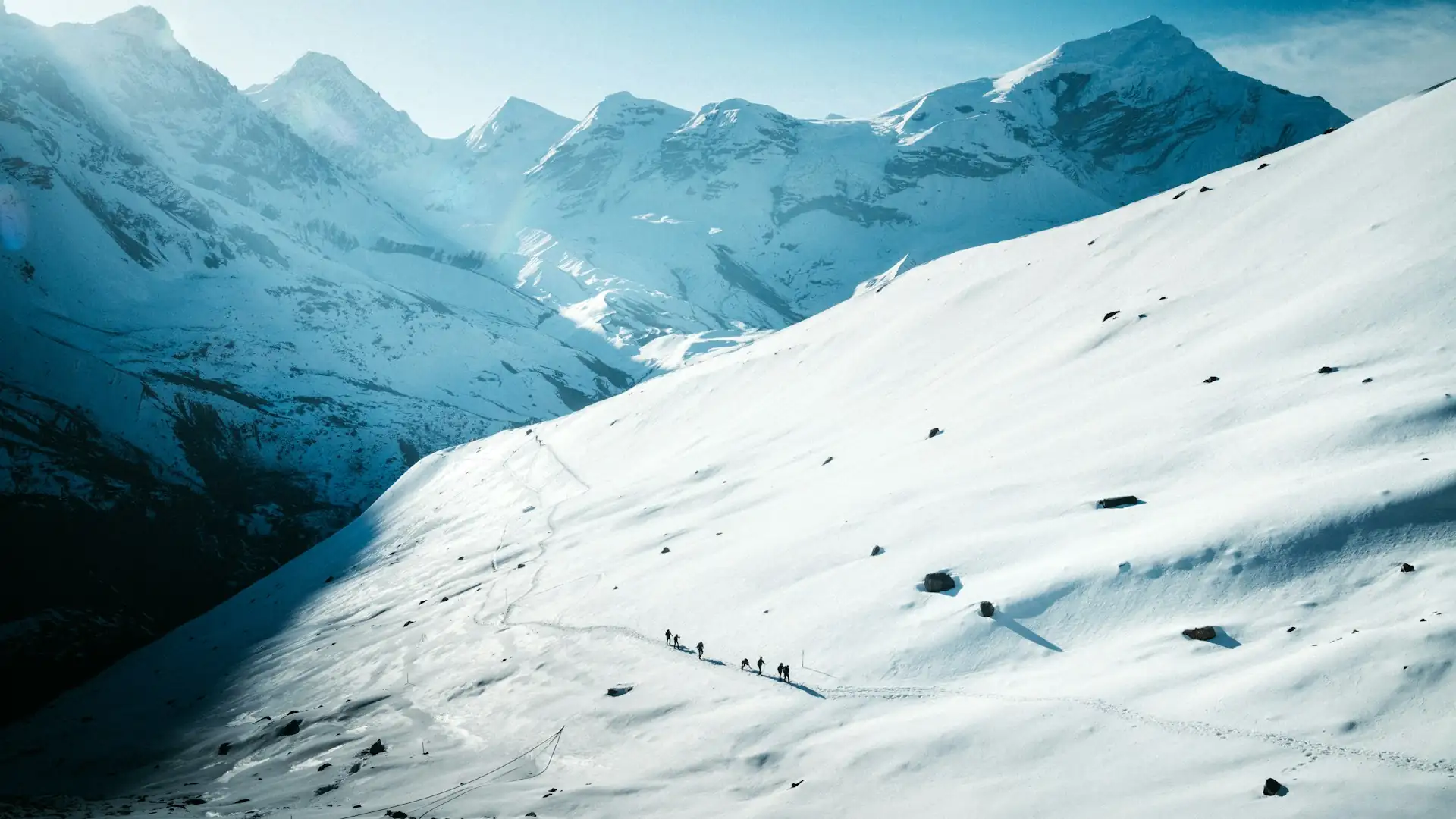
The Annapurna Base Camp trek doesn't have one single distance because it isn't one single route — it's a family of route configurations sharing the same destination but genuinely different paths to get there, ranging from a fast, direct 70 km trip to a fuller 130 km loop that adds the celebrated Poon Hill sunrise along the way.
Understanding this range, rather than fixating on a single headline number, is what actually helps you plan well: pick a starting trailhead and route configuration that matches your available time and fitness level, remember that elevation gain — not raw kilometers — is what really drives difficulty on this trek, and build your itinerary around the daily distance and pacing that suits you, whether that's a compressed express version or the fuller, more gradual loop through Ghorepani and Poon Hill.