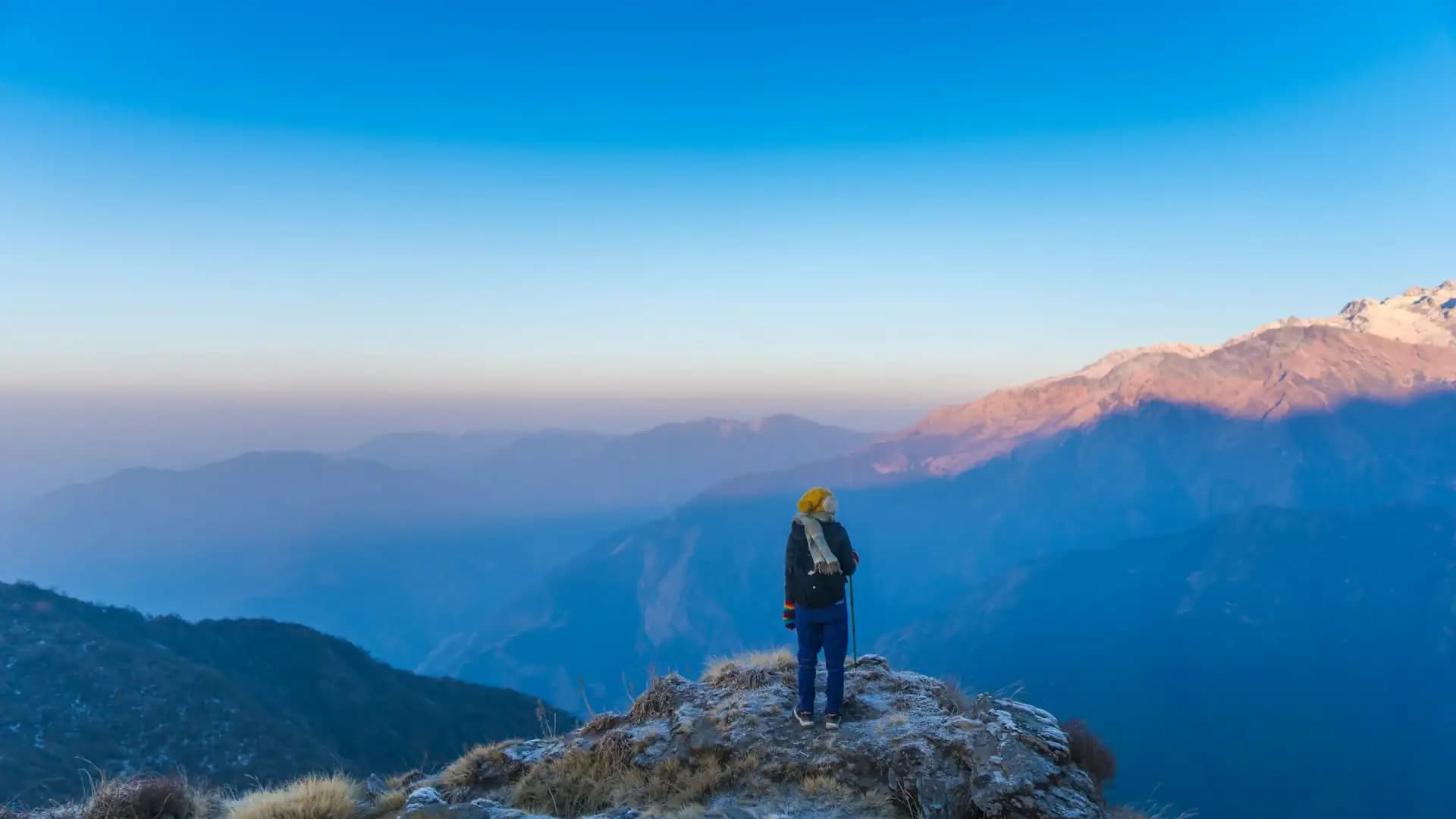
Mardi Himal View | What to See & Expect on the Trek
Introduction to Mardi Himal View
There's a reason the Mardi Himal trek has grown from a virtually unknown side route into one of the most recommended short treks in the Annapurna region over the past decade, and it isn't the trek's modest length or its manageable difficulty — it's the view. Specifically, it's how close that view gets.
Unlike Poon Hill, where Machhapuchhre and the Annapurna range sit at a respectful, postcard distance across a wide valley, the Mardi Himal ridge climbs directly toward the base of Machhapuchhre's south face, close enough that by the time you reach the upper viewpoints, the fishtail peak doesn't feel like a backdrop anymore — it feels like something you're standing inside of.
This guide is built specifically around that view — what you'll actually see, at which elevation, from which named viewpoint, and how that view changes as you climb from the lower rhododendron forest to the exposed ridge above 4,000 meters.
Every peak name, elevation, and viewpoint detail below has been checked against current route information for this specific trek, because "amazing mountain views" is the kind of vague promise every trekking brochure makes — this guide is meant to tell you exactly what that promise actually delivers.
Quick Facts: The Mardi Himal View at a Glance
Fact | Detail |
|---|---|
Trek's highest point | Mardi Himal Base Camp, 4,500m |
Best single viewpoint | Upper Viewpoint, 4,200m |
Closest major peak | Machhapuchhre (Fishtail), 6,993m |
Namesake peak | Mardi Himal, 5,587m |
Key peaks visible | Machhapuchhre, Annapurna South, Hiunchuli, Mardi Himal, and — from certain vantage points — Annapurna I and Gangapurna |
Trek's defining characteristic | Among the closest trekking views of Machhapuchhre's south face anywhere in the Annapurna region |
Best time for clear views | Autumn (September-November) and spring (March-May), particularly early morning before cloud buildup |
Why Mardi Himal's Views Are Considered Different From Other Annapurna Treks
Most trekking routes into the Annapurna region approach the massif from a wide angle, viewing the peaks across a valley or from a distant ridge. Mardi Himal does something structurally different — it climbs a narrow ridge directly up the southeastern flank of the massif, threading between Machhapuchhre and the Annapurna Sanctuary rather than looking at either from a distance. The result is a trek widely described as offering some of the closest views of Machhapuchhre and Annapurna South of any trekking route in the region, since the trail's whole trajectory points directly at these peaks rather than skirting past them.
This proximity is compounded by the trek's relative obscurity compared to routes like Annapurna Base Camp or Poon Hill — Mardi Himal remained a lesser-known trekking option for years, and even with its rising popularity, it still sees meaningfully fewer trekkers than the region's headline routes, meaning the views at the upper viewpoints often come without the crowds that can accompany a Poon Hill sunrise.
The Peaks You'll Actually See
Machhapuchhre (Fishtail Mountain) — 6,993m
This is the trek's defining peak, and for good reason. Machhapuchhre's distinctive twin-summit shape — resembling a fish's tail, which gives the mountain its name — dominates the skyline for most of the trek's upper section. The mountain is considered sacred in local culture and has never been officially summited out of respect for that significance.
Mardi Himal is frequently described as the closest trekking viewpoint to this sacred, unclimbed peak, and by the time you reach High Camp and the Upper Viewpoint, you're standing directly beneath its south face — close enough that the mountain fills a genuinely dominant portion of the visible sky.
Annapurna South — 7,219m
Visible from nearly every major viewpoint on the trek, Annapurna South is one of the massif's most consistently prominent peaks from this specific route, appearing alongside Machhapuchhre and Hiunchuli from as low as roughly 2,100 meters on the trail and remaining a constant presence through to Mardi Himal Base Camp.
Hiunchuli — 6,441m
Rounding out the trio of peaks visible from the lower and middle sections of the trek, Hiunchuli appears consistently alongside Annapurna South and Machhapuchhre from multiple viewpoints, including the early stop at Australian Camp.
Mardi Himal — 5,587m
The trek's namesake peak, and the one closest to the trail's actual endpoint. Visible clearly from High Camp, the Upper Viewpoint, and Mardi Himal Base Camp itself, it offers a more intimate, close-range mountain view compared to the larger, more famous peaks surrounding it.
Annapurna I — 8,091m
Several current route descriptions specifically note Annapurna I as visible from High Camp and the base camp viewpoint, given the trek's position on the massif's flank — a genuinely notable inclusion, since it means Mardi Himal offers a view of Nepal's 10th-highest mountain (and the world's first 8,000-meter peak ever climbed) alongside its more immediate neighboring peaks.
Gangapurna
Mentioned by several sources as visible from portions of the trail, particularly around Low Camp and High Camp, adding to the sense of a genuinely panoramic Annapurna massif view rather than a single-peak focus.
More Distant Peaks (Exceptional Visibility Only)
At least one detailed route source describes additional, more distant peaks occasionally visible from the Mardi Viewpoint on exceptionally clear days, including Dhaulagiri, Nilgiri, and Tukuche Peak to the west. This kind of extended visibility depends heavily on atmospheric clarity and shouldn't be treated as a guaranteed feature of the trek, but it illustrates just how expansive the panorama can become under ideal conditions.
Which Mountains Are Visible at Which Elevation
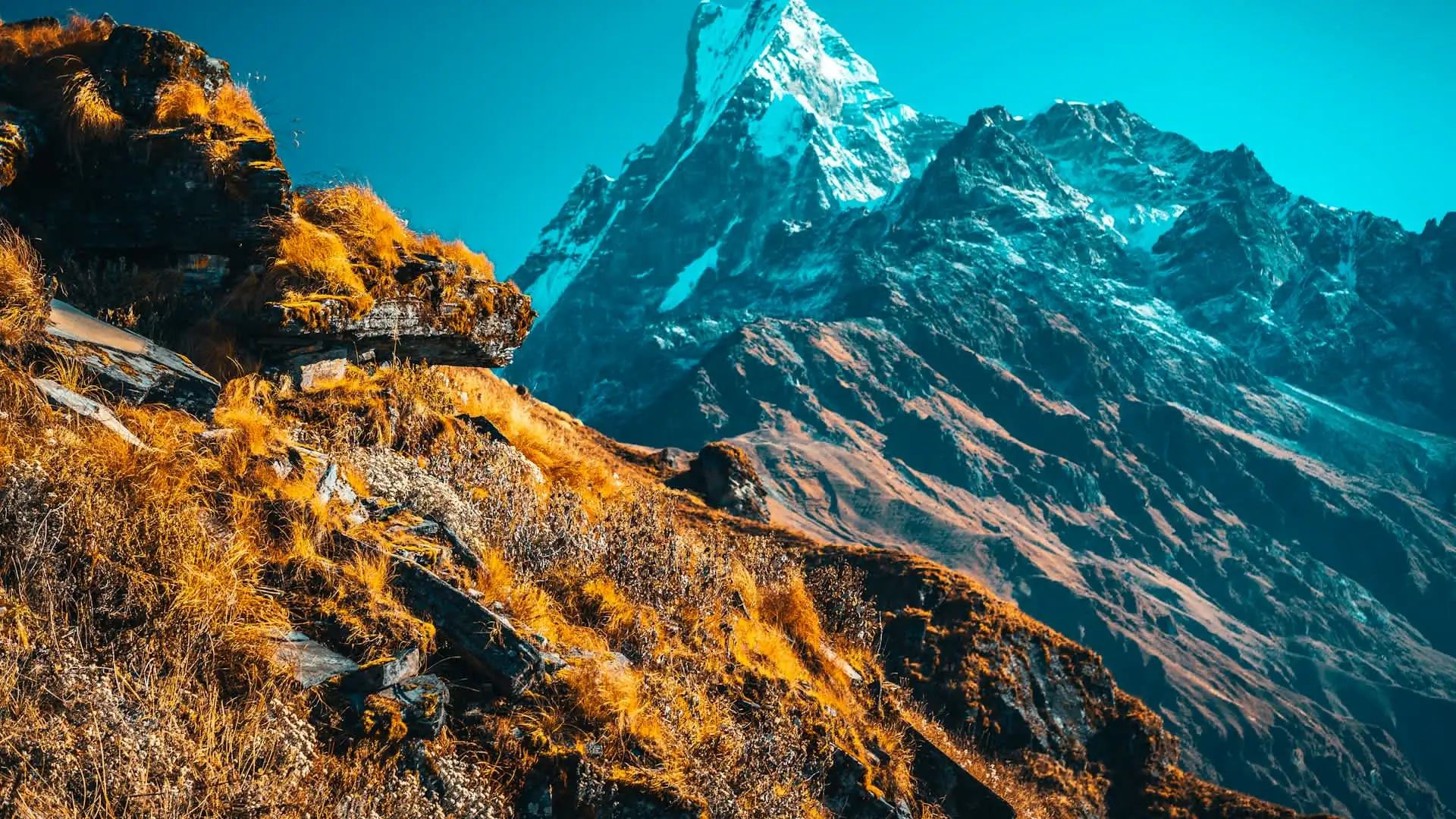
This is one of the most useful things to understand before you go — the view doesn't suddenly appear at the top; it builds progressively as you climb, with the same core peaks becoming visible earlier than many trekkers expect.
Elevation | Key mountains visible |
|---|---|
~2,100m (Australian Camp area) | Annapurna South, Hiunchuli, Machhapuchhre |
~2,520m (Forest Camp area) | Annapurna South, Hiunchuli, Machhapuchhre |
~2,970m (Low Camp area) | Annapurna South, Hiunchuli, Machhapuchhre, with Gangapurna becoming visible |
~3,580m (High Camp) | Machhapuchhre (dominant, close-range), Annapurna South, Hiunchuli, and — per several current sources — Annapurna I |
~4,200m (Upper/Mardi Himal Viewpoint) | Full panorama: Machhapuchhre, Annapurna South, Mardi Himal, Hiunchuli, Tent Peak, and on exceptionally clear days more distant peaks |
~4,500m (Mardi Himal Base Camp) | The trek's fullest panorama: Mardi Himal, Machhapuchhre's south face at extremely close range, Annapurna South, Hiunchuli, and Annapurna I |
This progressive build is part of what makes the trek so rewarding even for those who don't push all the way to base camp — genuinely spectacular views begin appearing from as low as roughly 2,100 meters, well before the trek's more strenuous upper sections.
Key Viewpoints, In Detail
Australian Camp (~2,060m)
The trek's first notable viewpoint, reached via a stone staircase climb of roughly 1-1.5 hours from Kande. This is where the mountain views genuinely begin — Annapurna South, Hiunchuli, and Machhapuchhre are all visible from here, offering an early payoff before the trail continues into denser forest.
Forest Camp (~2,500-2,600m)
A mid-route stop where the same core trio of peaks (Annapurna South, Hiunchuli, Machhapuchhre) remains visible, with views becoming somewhat more open as the trail gains elevation and forest cover begins to thin.
Low Camp (~2,950-2,970m)
Views continue to open up here, with Gangapurna joining the visible peaks alongside the established trio — this is also generally where the character of the trail begins shifting from dense forest toward more exposed ridge walking.
High Camp (~3,540-3,600m)
This is where the trek's views take a genuine step up in intensity. High Camp sits close enough to Machhapuchhre that the mountain becomes a dominant, close-range presence rather than a distant peak — several sources describe the fishtail summit as appearing so close from High Camp that it feels almost within reach. Views here also commonly include Annapurna South, Hiunchuli, and, per multiple current route descriptions, Annapurna I itself.
Upper Viewpoint / Mardi Himal Viewpoint (~4,200m)
Widely cited as the single best viewpoint on the entire trek, and in some route descriptions as the trek's actual highest point (with base camp itself treated as a further, optional extension). From here, the panorama includes Mardi Himal, the Annapurna range broadly, Hiunchuli, Tent Peak, and Machhapuchhre — set against, as several sources describe it, a backdrop of blue sky and barren, snow-dusted hills that makes this one of the most photographed vantage points on the shorter Annapurna-region treks.
Mardi Himal Base Camp (4,500m)
The trek's ultimate destination and highest point on most standard itineraries. From here, trekkers stand directly beneath the south face of Machhapuchhre and Mardi Himal itself, with a panorama that several route descriptions specifically credit as including Mardi Himal, Annapurna South, Machhapuchhre, and Hiunchuli — with Annapurna I frequently noted as visible as well from this specific vantage point.
Sunrise and Sunset: When the View Peaks
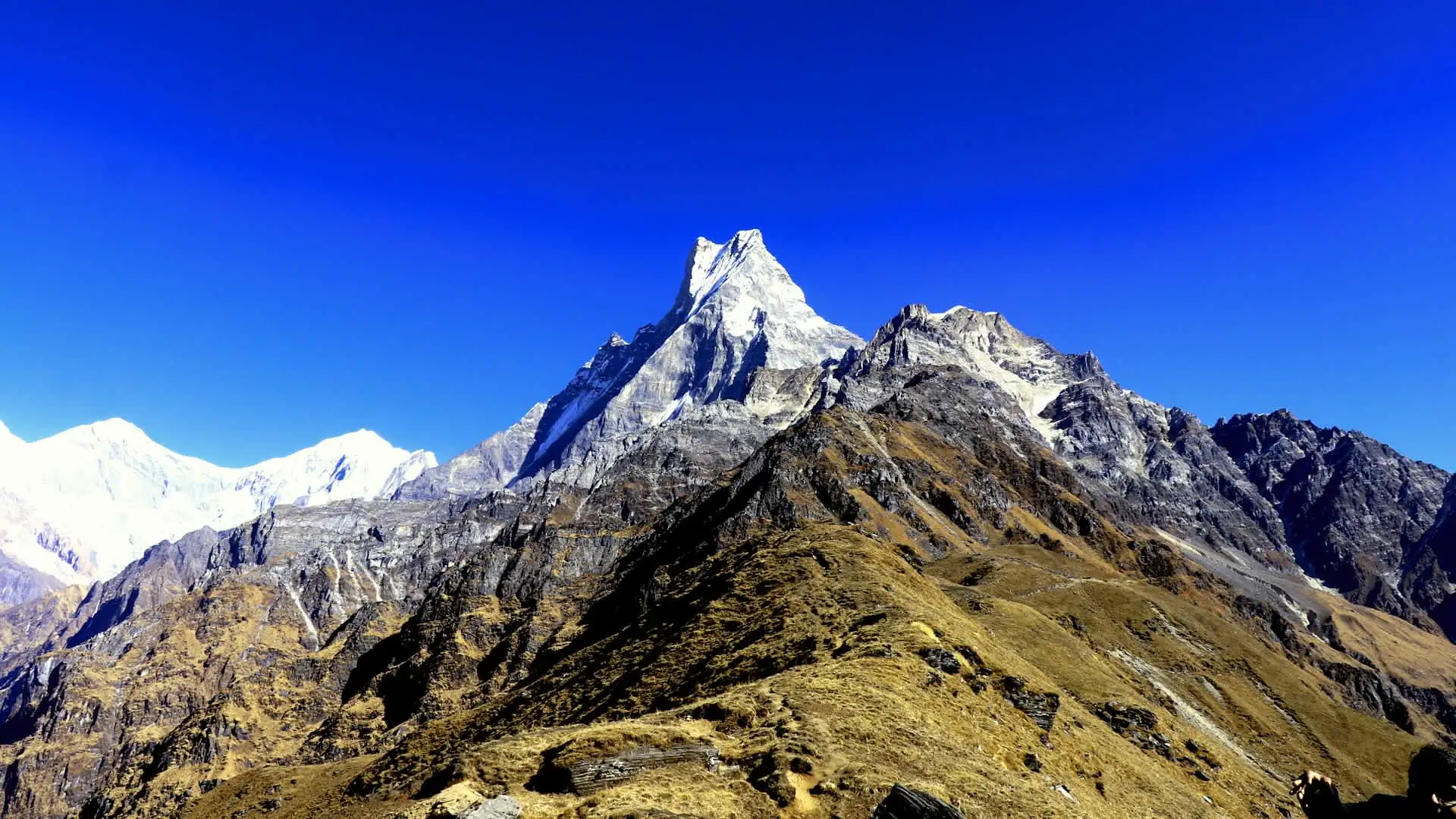
Sunrise
Sunrise from Mardi Himal Base Camp is described across multiple sources as one of the most memorable moments of the entire trek, with golden early light illuminating Annapurna South and Gangapurna while Machhapuchhre's fishtail massif rises directly ahead.
This is the payoff moment most trekkers plan their final push specifically around — reaching the upper viewpoint or base camp before or right at first light for the clearest, most dramatic lighting on the surrounding peaks.
Sunset
High Camp offers notably strong sunset views as well, with the gently rising Fishtail massif catching evening light — a quieter, less crowded counterpart to the sunrise rush, and worth timing your arrival at High Camp specifically to catch if your itinerary allows an evening at this elevation before the final push higher.
How the View Compares to Poon Hill
This is one of the most common comparisons trekkers research before choosing between Nepal's two most popular short Annapurna-region viewpoint treks.
Factor | Mardi Himal | Ghorepani Poon Hill |
|---|---|---|
Highest viewpoint | Mardi Himal Base Camp, 4,500m | Poon Hill, 3,210m |
Distance to Machhapuchhre | Considerably closer, given the trek's direct approach up the mountain's flank | More distant, viewed across a wider valley |
Crowd levels | Meaningfully quieter, given the trek's lower overall popularity | Famously crowded at sunrise, particularly in peak season |
Peak variety visible | Machhapuchhre, Annapurna South, Hiunchuli, Mardi Himal, and often Annapurna I | Dhaulagiri and Annapurna ranges from a broader panoramic angle |
Overall trek character | A single sustained ridge climb toward one dominant close-up view | A shorter loop through villages with one iconic sunrise viewpoint |
The general consensus among experienced guides: Poon Hill offers a broader, more panoramic sweep of the entire Annapurna and Dhaulagiri ranges from a single accessible point, while Mardi Himal offers a more intimate, close-range, and progressively building view centered specifically on Machhapuchhre — different experiences rather than one being straightforwardly "better."
Best Season for Clear Mardi Himal Views
Season | Months | View quality |
|---|---|---|
Spring | March-May | Generally good visibility, with rhododendron blooms adding color to the lower forest sections; some afternoon haze can build later in the day, particularly as the season progresses |
Monsoon | June-August | Generally poor visibility, with cloud cover and rain frequently obscuring mountain views for much of the day |
Autumn | September-November | Widely regarded as the best season for clear views — stable, dry air and minimal cloud cover produce the most consistently sharp mountain panoramas of the year |
Winter | December-February | Often very clear skies given the dry, cold air, though genuinely cold temperatures at the upper viewpoints require serious preparation |
For the clearest possible views specifically, autumn mornings are the most consistently recommended window — both because of the season's overall stability and because morning light, before any daytime cloud buildup, tends to offer the sharpest visibility on this particular trek.
Practical Tips for Getting the Best Views
Start early on push days toward the Upper Viewpoint and Base Camp. Cloud cover, when it develops, tends to build through the day rather than at dawn — an early departure maximizes your chance of a clear panorama.
Don't rush past the lower viewpoints. Australian Camp and Forest Camp already offer genuine, rewarding views of Annapurna South, Hiunchuli, and Machhapuchhre — worth pausing at rather than treating purely as waypoints to something better higher up.
Budget time at High Camp for both sunset and sunrise if your itinerary allows. Many trekkers focus purely on the base camp sunrise and miss High Camp's strong evening light on the Fishtail massif.
Pack a proper camera or capable phone with spare, warm-kept batteries. Cold temperatures at the upper viewpoints (particularly High Camp and above) drain batteries considerably faster than normal, and this is a genuinely easy problem to avoid with minimal preparation.
Bring sun protection even on cold mornings. UV exposure at these elevations is considerably stronger than it feels given the cold temperatures, and the reflected light off any snow cover intensifies this further.
What Can Obstruct the View
Understanding what can go wrong helps set realistic expectations rather than guaranteed promises:
Monsoon season cloud cover is the single biggest risk to visibility — heavy, sustained cloud from June through August frequently obscures mountain views for much of the day, which is a major reason this season is generally discouraged for this trek.
Afternoon haze in spring, building from around midday onward, can soften long-distance visibility even on otherwise clear spring days — a reason morning timing matters even outside the riskiest monsoon months.
Occasional cloud even in the best seasons. Autumn and winter offer the most reliable conditions, but mountain weather is never fully guaranteed — a single cloudy morning during an otherwise clear week is a genuine, if uncommon, possibility worth accepting as part of any high-altitude trek.
The Trek Itself: Brief Practical Context for the Views Above
For context on how the views above fit into the actual trekking experience:
Detail | Figure |
|---|---|
Typical duration | 4-8 days depending on itinerary |
Maximum elevation | 4,500m at Mardi Himal Base Camp |
Typical starting point | Kande or Phedi, reached by drive from Pokhara |
Overall difficulty | Moderate — no technical climbing required, though the final push above High Camp involves a steady, sometimes steep ridge climb |
Trail character | Rhododendron, oak, maple, and hemlock forest in the lower sections, transitioning to exposed alpine ridge above High Camp |
The trek's relatively short duration and moderate difficulty are part of why it's frequently recommended as an accessible way to experience genuinely close-range, high-altitude Annapurna region views without the longer time commitment of Annapurna Base Camp or the altitude demands of the Annapurna Circuit.
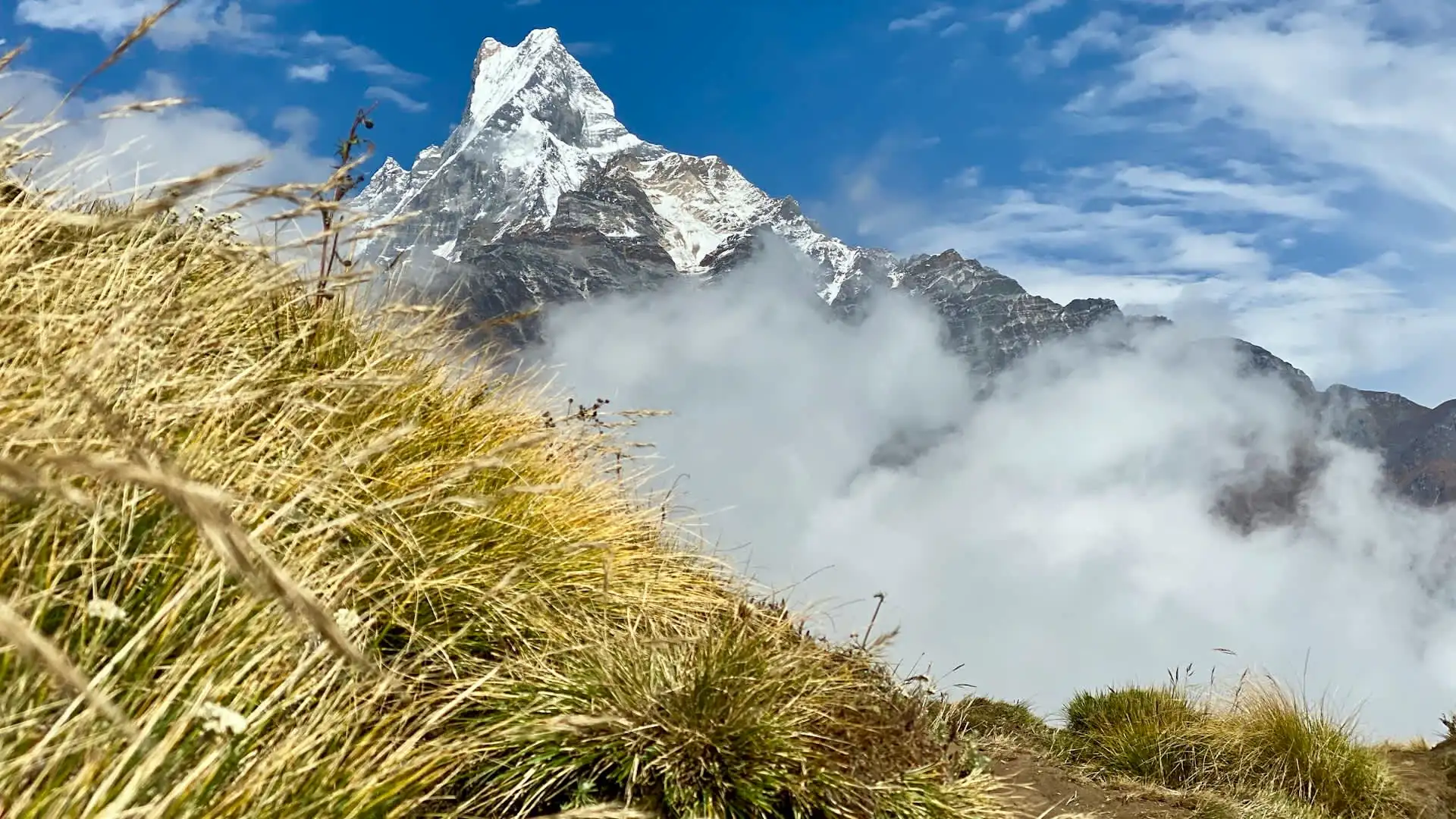
A Day-by-Day Mardi Himal View Summary
Day | Route segment | Views encountered |
|---|---|---|
1 | Kande/Phedi → Australian Camp → Forest Camp | First views of Annapurna South, Hiunchuli, Machhapuchhre begin around 2,100m |
2 | Forest Camp → Low Camp | Continued views of the same core peaks, with Gangapurna beginning to appear |
3 | Low Camp → High Camp | Machhapuchhre becomes dominant and close-range; Annapurna I often visible |
4 | High Camp → Upper Viewpoint/Mardi Himal Base Camp → back to High Camp or Low Camp | The trek's fullest panorama — Mardi Himal, Machhapuchhre's south face at extremely close range, Annapurna South, Hiunchuli, and Annapurna I |
5+ | Descent via Siding Village | Views recede as the trail drops back into forest and farmland |
Why the View Alone Makes This Trek Worth Considering
For travelers weighing multiple short Annapurna-region trekking options, Mardi Himal's specific combination of proximity to Machhapuchhre, relative quiet compared to more popular routes, and a genuinely progressive, building panorama across its four to eight days makes it a strong choice specifically for those prioritizing the visual experience of the mountains over other considerations like cultural village stops (which are more limited on this route than on, say, the Ghandruk-heavy sections of the Annapurna Base Camp trek) or a longer overall duration.
This is where a locally based operator like Adventure Life Nepal can help match the trip to what you're actually looking for — if the close-up Machhapuchhre view is the priority, an itinerary built around maximizing time at High Camp, the Upper Viewpoint, and Base Camp (including, where the season allows, both a sunset at High Camp and sunrise at the top) makes a meaningful difference to the experience, compared to a rushed itinerary that treats these viewpoints as brief checkpoints rather than the trek's actual destination.
Frequently Asked Questions about Mardi Himal View
1. What mountains can you see from the Mardi Himal trek?
Primarily Machhapuchhre (6,993m), Annapurna South (7,219m), Hiunchuli (6,441m), and Mardi Himal itself (5,587m), with Annapurna I (8,091m) and Gangapurna also visible from several upper viewpoints including High Camp and Mardi Himal Base Camp.
2. What is the best viewpoint on the Mardi Himal trek?
The Upper Viewpoint (also called Mardi Himal Viewpoint), at roughly 4,200 meters, is widely cited as the single best vantage point on the trek, offering a panorama including Mardi Himal, the broader Annapurna range, Hiunchuli, and Machhapuchhre.
3. How close is the Mardi Himal trek to Machhapuchhre?
Genuinely close — this trek is frequently described as the closest trekking viewpoint to Machhapuchhre's sacred, unclimbed peak, with the mountain's south face dominating the view from High Camp onward.
4. At what elevation do the mountain views begin on this trek?
As low as roughly 2,100 meters, near Australian Camp, where Annapurna South, Hiunchuli, and Machhapuchhre are already visible — well before the trek's more strenuous upper sections.
5. Can you see Annapurna I from Mardi Himal?
Yes, according to several current route descriptions — Annapurna I (8,091m) is visible from High Camp and Mardi Himal Base Camp, adding the world's first-climbed 8,000-meter peak to the trek's panorama.
6. Is the Mardi Himal view better than Poon Hill's?
They're different rather than directly comparable — Poon Hill offers a broader, more panoramic sweep across the Annapurna and Dhaulagiri ranges from a single accessible point, while Mardi Himal offers a closer, more intimate, progressively building view centered specifically on Machhapuchhre.
7. When is the best time to see clear views on this trek?
Autumn (September-November) is generally considered the best season for clear, stable views, with early morning timing (before any daytime cloud buildup) offering the sharpest visibility.
8. Is Mardi Himal Base Camp the highest viewpoint on the trek?
Yes, at 4,500 meters, it's the trek's highest point, though the Upper Viewpoint at roughly 4,200 meters is sometimes cited as offering the single most complete panorama.
9. Are the views crowded on this trek compared to other Annapurna routes?
Generally no — Mardi Himal remains meaningfully less visited than routes like Poon Hill or Annapurna Base Camp, meaning the upper viewpoints often offer a quieter experience than more famous sunrise spots in the region.
10. What's the closest peak visible on the Mardi Himal trek?
Machhapuchhre (6,993m) is both the closest and most dominant peak from the trek's upper sections, given the route's direct approach up the mountain's southeastern flank.
11. Does weather commonly obstruct the views on this trek?
Monsoon season (June-August) carries a significant risk of cloud cover obscuring views for much of the day; autumn and winter offer the most reliable visibility, with spring generally good but prone to some afternoon haze.
12. What does the view look like from High Camp specifically?
High Camp offers a close-range, dominant view of Machhapuchhre's south face, along with Annapurna South, Hiunchuli, and, per several sources, Annapurna I — both strong sunset views in the evening and a solid staging point for the sunrise push higher the next morning.
13. Is sunrise or sunset better on this trek?
Both offer genuine highlights — sunrise from Mardi Himal Base Camp is widely cited as one of the trek's most memorable moments, while sunset from High Camp offers a quieter, equally striking view of the Fishtail massif in evening light.
14. Do you need to reach Base Camp to get a good view, or is the Upper Viewpoint enough?
The Upper Viewpoint (4,200m) alone offers a genuinely complete panorama and is sometimes treated as the trek's practical highlight, though continuing to Base Camp (4,500m) brings you directly beneath Machhapuchhre and Mardi Himal's south faces for an even closer perspective.
Final Thoughts on Mardi Himal View
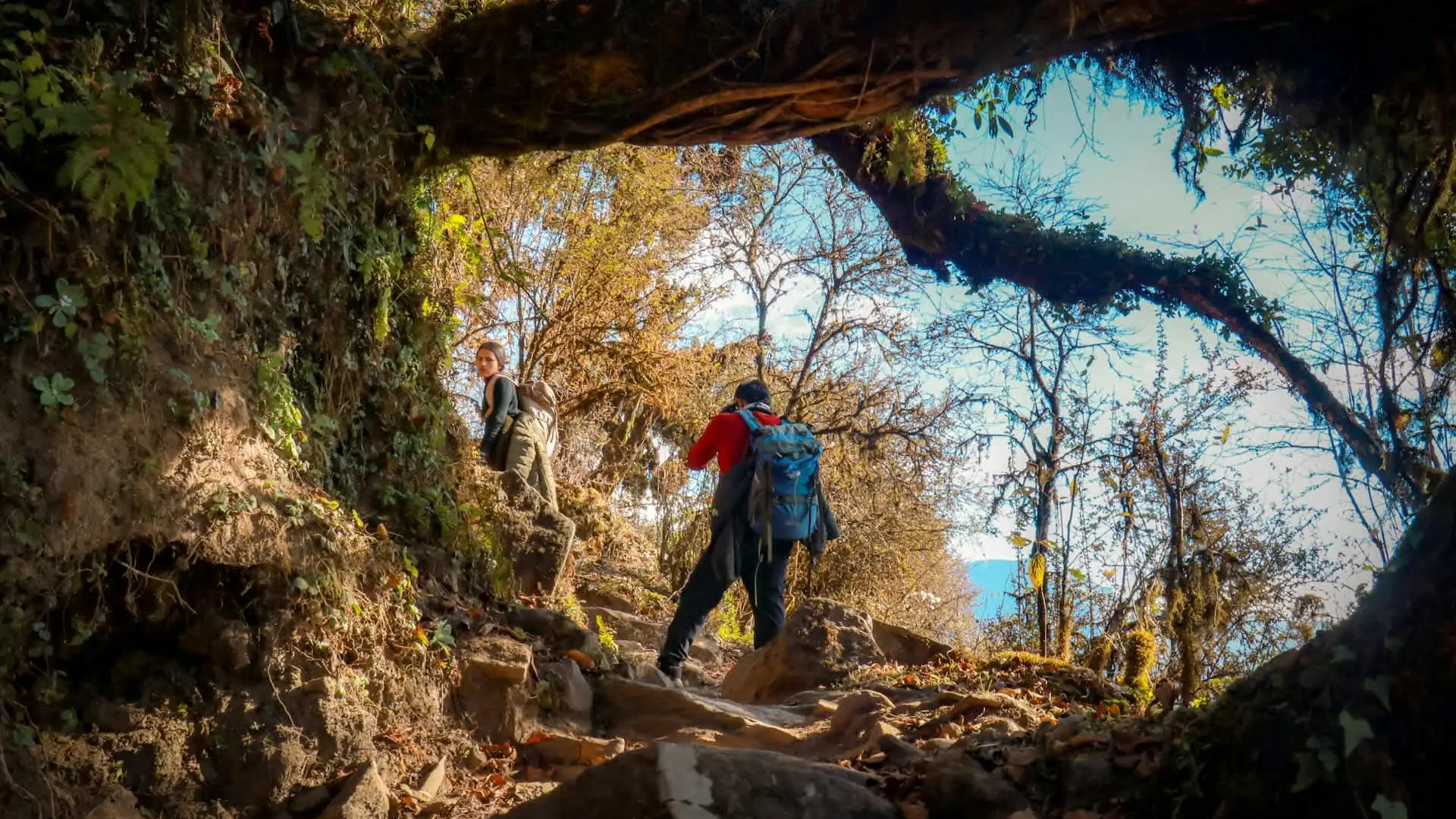
The Mardi Himal trek earns its growing reputation almost entirely on the strength of what you actually see, and it delivers on that promise progressively rather than saving everything for a single dramatic reveal — genuine mountain views begin as low as 2,100 meters, build steadily through Forest Camp and Low Camp, and reach their full intensity at High Camp and the Upper Viewpoint, where Machhapuchhre's south face stops being a distant landmark and becomes something you're standing directly beneath.
Whether your priority is the closest possible view of the sacred Fishtail peak, a quieter alternative to Poon Hill's crowded sunrise, or simply the most visually rewarding short trek available in the Annapurna region, understanding exactly which peaks appear at which elevation — and timing your push to the upper viewpoints for clear morning light — is what turns a good trek into the kind of view that genuinely justifies every step of the climb.