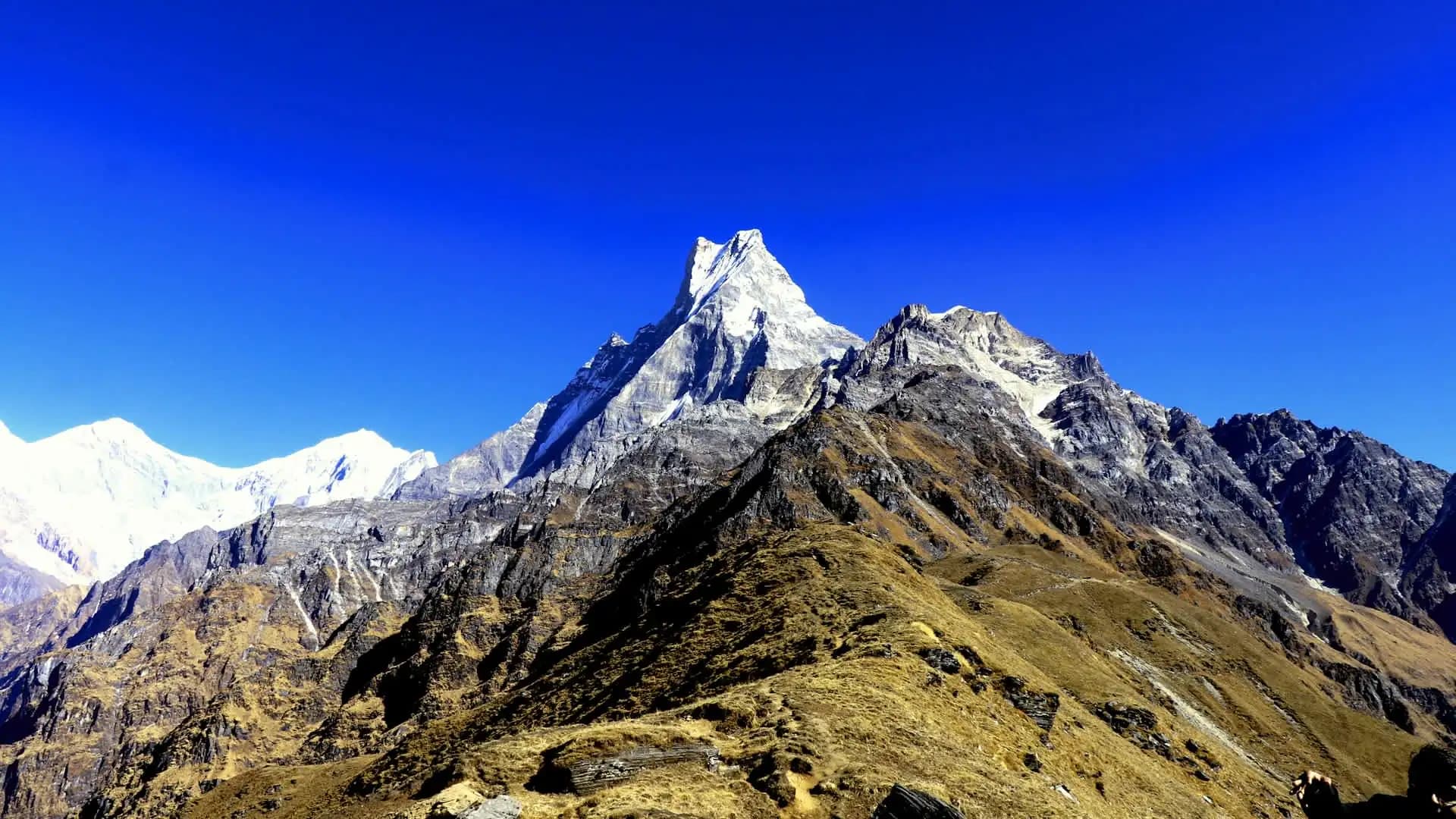
Mardi Himal Trek Permit: Costs, Requirements & How to Get
Introduction to Mardi Himal Trek Permit
If you're searching for permit information on Mardi Himal specifically, you're probably past the "should I do this trek" stage and into the "what do I actually need to bring and pay for" stage — which is exactly where permit confusion tends to hit hardest. Nepal's permit system has changed meaningfully since 2023, and a lot of what's still floating around online reflects the old rules, old prices, and an old assumption that independent trekkers can simply walk into an office and buy their way onto the trail. That's no longer accurate for Mardi Himal, and getting it wrong at a checkpoint mid-trek is a genuinely bad way to find out.
This guide covers exactly what you need, what it costs in 2026, where to get it, what's changed, and how to avoid the mistakes that actually turn trekkers back at Kande.
Quick Answer: Mardi Himal Trek Permits at a Glance
Permit | Required? | Cost (Foreign Nationals) | Cost (SAARC Nationals) | Issued By |
|---|---|---|---|---|
ACAP (Annapurna Conservation Area Permit) | Yes, mandatory | NPR 3,000 (~USD 22–25) | NPR 1,000 (~USD 8) | NTNC / Nepal Tourism Board |
TIMS Card (Trekkers' Information Management System) | Yes, mandatory | NPR 2,000 individually, often NPR 1,000 via a registered agency | NPR 500–1,000 | TAAN, via registered trekking agency |
Machhapuchhre Rural Municipality Local Fee | Yes, mandatory | Approximately NPR 500 (~USD 4) | Similar, sometimes discounted | Local municipality, collected at checkpoint |
Licensed Trekking Guide | Yes, legally mandatory since 2023 | USD 25–35/day (not a permit fee, but legally required alongside permits) | Same | Registered trekking agency (TAAN-affiliated) |
Combined permit total for foreign nationals: roughly NPR 5,000–5,500 (approximately USD 38–42), plus your guide's daily rate. Children under 10 are exempt from the ACAP fee regardless of nationality.
Why Mardi Himal Requires Permits at All
The Mardi Himal trail runs entirely inside the Annapurna Conservation Area (ACA) — Nepal's largest protected area, managed by the National Trust for Nature Conservation (NTNC) since the 1980s. Every trekker entering this zone, regardless of which specific trail they're walking (Mardi Himal, Annapurna Base Camp, Poon Hill, or the full Annapurna Circuit), needs the same regional ACAP permit.
It's not a Mardi Himal-specific document — it's your entry pass to the entire conservation area, and fees collected go directly toward trail maintenance, conservation work, and community development projects along the route.
The TIMS card serves a different purpose: it's a safety and tracking system that logs who's on the trail, which route they're following, and how to reach their emergency contacts if something goes wrong. It exists independently of ACAP and is checked separately at trailhead posts.

The ACAP Permit: Full Breakdown
What It Costs in 2026
Trekker Category | ACAP Fee (NPR) | Approx. USD |
|---|---|---|
Foreign nationals | NPR 3,000 | USD 22–25 |
SAARC nationals (India, Bangladesh, Pakistan, Sri Lanka, Bhutan, Maldives, Afghanistan) | NPR 1,000 | USD 8 |
Children under 10 (any nationality) | Free | Free |
Nepali citizens | Free | Free |
The Nepal government has held this fee structure steady into 2026 — if you see NPR 2,000 quoted anywhere, that reflects an outdated pre-2023 figure and should be disregarded.
Documents You Need for ACAP
Original passport, valid for at least six months beyond your trek start date (photocopies alone aren't accepted for the initial application)
A valid Nepal visa or entry stamp, confirming legal entry into the country
Two passport-sized photographs (35mm x 45mm, color, plain white background, taken within the last three months)
A completed application form, available at the permit counter
Fee paid in Nepali rupees, cash only — permit counters do not accept cards or foreign currency
A practical tip worth repeating from experienced trekkers: bring four passport photos rather than two. Between ACAP, TIMS, and the occasional visa or checkpoint form, two photos disappear faster than expected, and the nearest replacement photo booth is not on the trail.
Where to Get the ACAP Permit
Location | Address/Area | Hours |
|---|---|---|
Kathmandu | Nepal Tourism Board / Tourist Service Centre, Bhrikutimandap (near Thamel) | Sunday–Friday, 9:00 a.m.–5:00 p.m.; closed Saturday |
Pokhara | NTNC / Nepal Tourism Board office, Damside area | Sunday–Friday, 9:00 a.m.–5:00 p.m.; closed Saturday |
Online | NTNC's official portal (epermit.ntnc.org.np) | 24/7 application; requires digital passport photo upload and card payment, which carries a small processing surcharge |
Processing at either physical counter typically takes 10–20 minutes outside peak season, and up to 30–60 minutes during the busiest weeks of October–November and March–May. The ACAP permit is not available at Tribhuvan International Airport in Kathmandu or at Pokhara Airport — you have to obtain it at one of the offices above, or have your trekking agency arrange it in advance, before you head toward the trailhead.
The permit itself is single-entry, tied to your exact passport name, and must be carried with you at all times on the trail — it's the document checked most closely at every Annapurna Conservation Area checkpoint, including the Kande entry point most Mardi Himal itineraries pass through.
The TIMS Card: What Changed and What It Costs Now
The TIMS card system has gone through a significant shift since 2023, and this is where the most outdated information tends to circulate.
The Pre-2023 System (No Longer Applies)
Previously, independent "Free Individual Trekkers" (FIT) could buy their own TIMS card directly, without a guide or agency involvement, for a lower fee.
The Current System (2023 Onward)
Following Nepal Tourism Board and Trekking Agencies' Association of Nepal (TAAN) decisions implemented from April 2023, independent FIT TIMS cards were discontinued. TIMS cards are now issued only through registered trekking agencies, as part of a guided trek booking — you can no longer walk in as a solo trekker and buy one independently for conservation-area routes like Mardi Himal.
TIMS Card Type | Cost (Foreign Nationals) | Cost (SAARC Nationals) | Notes |
|---|---|---|---|
Individual (pre-2023 system) | NPR 2,000 | NPR 500–1,000 | No longer available as a standalone independent option for ACA routes |
Through a registered agency (current standard) | Often NPR 1,000, bundled into your trek package | Discounted proportionally | This is the practical route for essentially all Mardi Himal trekkers today |
Documents Required for TIMS
Copy of your passport (bio page and visa stamp)
One passport-sized photo
Your trekking itinerary and route details
Proof of travel insurance is recommended, and required by many registered agencies before they'll process your TIMS application
The Local Municipality Fee
Beyond ACAP and TIMS, Mardi Himal trekkers pay a small additional fee to the Machhapuchhre Rural Municipality, since the trail passes through its jurisdiction. This is typically around NPR 500 (approximately USD 4) for foreign nationals, collected at a checkpoint along the route (commonly near Kande) rather than at the main permit offices in Kathmandu or Pokhara. It's a minor cost, but it's worth having small NPR cash on hand specifically for this, since trailhead checkpoints don't offer card payment or change from large notes.
The Mandatory Guide Rule: What It Means for Mardi Himal Permits
This is the single most important change affecting anyone planning Mardi Himal in 2026, and it directly shapes how you'll actually obtain your permits.
What the rule says: Effective April 1, 2023, the Nepal Tourism Board and TAAN mandated that all foreign trekkers in regulated areas — including the Annapurna Conservation Area — must be accompanied by a licensed guide affiliated with a registered trekking agency. This applies regardless of your experience level, fitness, or how many times you've trekked in Nepal before. Nepali citizens are exempt from this requirement.
What this means practically for permits: Because TIMS cards are now issued only through registered agencies, and because guides are mandatory in the Annapurna Conservation Area, the process of "getting your permits" and "booking a guide" have effectively merged for most trekkers. You're not going to walk into the Pokhara tourism office, buy a TIMS card independently, and then separately hire a freelance guide — the current system routes both through a licensed trekking company.
Penalties for non-compliance: Trekkers found without a guide at ACA checkpoints face fines that have been reported as high as NPR 50,000 (approximately USD 375) under the current regulation, along with the practical consequence of being stopped and required to either arrange a guide on the spot — usually at a worse rate than booking ahead — or turn back entirely.
A note on enforcement variability: Enforcement has been inconsistent across different trekking regions since the rule's introduction, with some areas (notably parts of the Everest/Solukhumbu region) reportedly less strictly checked in the rule's early months.
The Annapurna Conservation Area, where Mardi Himal sits, has generally seen more consistent enforcement given the volume of trekkers passing through its main checkpoints like Kande. Regulations and enforcement levels can continue to evolve, so it's worth confirming current requirements with a registered agency shortly before your trip rather than relying solely on trip reports from prior seasons.
Total Mardi Himal Permit Cost: The Real Numbers
Putting it all together, here's what foreign trekkers should budget for permits and legally required guide arrangements in 2026.
Item | Cost (NPR) | Cost (USD, approx.) |
|---|---|---|
ACAP Permit | 3,000 | 22–25 |
TIMS Card (via agency) | ~1,000–2,000 | 8–15 |
Local Municipality Fee | ~500 | 4 |
Permit subtotal | ~4,500–5,500 | ~35–44 |
Licensed guide (per day, separate from permits) | — | 25–35/day |
For a standard 5-day Mardi Himal trek, expect your guide cost alone to add roughly USD 125–175 on top of the permit total, unless you've booked a full package where this is already bundled into a single price.
How to Actually Get Your Mardi Himal Permits: Step by Step
Option 1: Book Through a Registered Trekking Agency (Standard Route for Most Trekkers)
Confirm your trek dates and itinerary length with your chosen agency.
Send scanned copies of your passport bio page, visa, and two passport photos.
The agency processes both ACAP and TIMS on your behalf, as part of your booking, along with assigning your licensed guide.
You collect physical permit documents either on arrival in Kathmandu/Pokhara or your guide carries them for checkpoint presentation.
Carry your original passport with you throughout the trek — checkpoints cross-reference the permit against it.
This is the practical default for nearly all Mardi Himal trekkers today, given the mandatory guide requirement.
Option 2: Apply for ACAP Yourself, Arrange TIMS Through Your Agency Separately
Some trekkers prefer to handle their own ACAP application (particularly the online option) while still booking a guide and TIMS through an agency for the mandatory guide requirement.
Apply for ACAP online via the NTNC portal, or visit the Kathmandu/Pokhara office in person with your documents.
Pay the fee (cash at the counter, or card online with a small surcharge).
Separately confirm your guide booking and TIMS arrangement with a registered trekking agency well before your trek start date.
Bring both permit documents with you to the trailhead.
Option 3: Full-Service Package (Permits, Guide, and Logistics Bundled)
Most trekkers booking through an established agency — including Adventure Life Nepal — never handle permit paperwork directly at all. You provide passport copies and photos in advance, and permits, TIMS, the local fee, and your licensed guide are arranged as a single package before you arrive at the trailhead.
This is generally the least stressful option, particularly for first-time visitors to Nepal unfamiliar with the office locations and cash-only payment requirements.
Documents Checklist: What to Bring for Mardi Himal Permits
Original passport, valid at least six months beyond your trek start date
Nepal visa or valid entry stamp
Four passport-sized photographs (35mm x 45mm, color, white background, taken within the last three months) — bring extra, not just the minimum two
Photocopy of your passport bio page and visa stamp (useful backup at multiple checkpoints)
Cash in Nepali rupees for any fees not already covered by your agency (small denominations are more useful at trailhead checkpoints than large notes)
Proof of travel insurance, particularly one covering high-altitude trekking and emergency evacuation, which most registered agencies will ask for before finalizing your TIMS arrangement
Common Mistakes That Cause Permit Problems on the Trail
Relying on outdated blog posts quoting NPR 2,000 for ACAP or describing independent TIMS purchase — both reflect the pre-2023 system and will lead to confusion or wasted time at the counter.
Arriving without physical passport photos, assuming photo services will be readily available — while some offices offer quick photo booths, it's far more efficient to arrive prepared.
Assuming permits can be bought at Kathmandu or Pokhara airport — they can't; you need the dedicated NTB/NTNC offices or an agency handling it in advance.
Trying to trek without a guide to save money, unaware of the mandatory guide rule — this risks fines and being turned back at the Kande checkpoint, which is far more disruptive (and often more expensive) than simply booking a guide from the outset.
Letting your passport's remaining validity run under six months without realizing this can complicate visa and permit processing.
Not carrying small NPR cash for the local municipality fee, which is typically collected separately from the main ACAP/TIMS payment and isn't always card-friendly.
Permit Validity and Where They're Checked on the Mardi Himal Trail
The ACAP permit is generally valid for a single continuous entry into the conservation area, tied to your specific dates and passport details — it isn't a multi-trip annual pass. On the Mardi Himal route, the main checkpoint where permits are checked is typically at Kande, the primary trailhead most itineraries start from, with the local municipality fee often collected at the same or a nearby checkpoint.
Your guide will carry or help present the relevant documents at each checkpoint along the way, and you should expect your original passport to be requested for cross-checking, not just the permit paper itself.
Frequently Asked Questions
1. What permits do I need for the Mardi Himal Trek? You need the ACAP (Annapurna Conservation Area Permit) and a TIMS card, plus a small local Machhapuchhre Rural Municipality fee collected at the trailhead checkpoint.
2. How much does the Mardi Himal Trek permit cost in 2026? Combined, foreign nationals should budget roughly NPR 5,000–5,500 (approximately USD 38–44) for ACAP, TIMS, and the local fee, separate from your guide's daily cost.
3. Can I get a TIMS card as an independent solo trekker? No, not for the Annapurna Conservation Area since 2023. TIMS cards are now issued only through registered trekking agencies, as part of a guided booking.
4. Do I need a guide for Mardi Himal in 2026? Yes. Nepal's regulations, in place since April 2023, require foreign trekkers in the Annapurna Conservation Area to be accompanied by a licensed guide from a registered trekking agency.
5. What happens if I'm caught trekking without a guide? You risk being stopped at a checkpoint and required to hire a guide on the spot or turn back, along with potential fines reported as high as NPR 50,000 (approximately USD 375) under the current regulation.
6. Where can I get the ACAP permit? At the Nepal Tourism Board/NTNC offices in Kathmandu (Bhrikutimandap, near Thamel) or Pokhara (Damside), or online through NTNC's official e-permit portal. It is not available at either airport.
7. What documents do I need for the ACAP permit? Your original passport (valid at least six months beyond your trek), a valid Nepal visa, two recent passport-sized photographs, a completed application form, and the fee in Nepali rupees cash.
8. Are children exempt from Mardi Himal trek permit fees? Yes, children under 10 are exempt from the ACAP fee regardless of nationality.
9. Is the permit cost different for SAARC nationals? Yes. SAARC nationals pay significantly less — NPR 1,000 for ACAP compared to NPR 3,000 for other foreign nationals, with similarly reduced TIMS fees.
10. Can I pay for permits by card? Physical permit counters in Kathmandu and Pokhara accept cash only, in Nepali rupees. The online ACAP application accepts card payment, with a small processing surcharge.
11. How long does it take to get an ACAP permit? Typically 10–20 minutes at either counter outside peak season, though this can extend to 30–60 minutes during the busiest trekking months (October–November and March–May).
12. Do I need travel insurance to get a Mardi Himal permit? It's not always a formal requirement for ACAP itself, but proof of travel insurance covering high-altitude trekking is commonly requested by registered agencies before they'll process your TIMS card and guide booking.
13. Can I arrange all my Mardi Himal permits through my trekking agency? Yes, and this is now the standard, most efficient approach for the vast majority of trekkers, given that TIMS and the mandatory guide requirement are already tied to booking through a registered agency.
14. Where exactly are permits checked on the Mardi Himal trail? The main checkpoint is at Kande, the typical trailhead, where both your ACAP permit and the local municipality fee are commonly verified before you begin the trek toward Australian Camp and beyond.
Let Adventure Life Nepal Handle Your Mardi Himal Permits
Given how tightly the current system ties permits, TIMS, and the mandatory guide requirement together, the simplest and most reliable path for most trekkers is having all of it arranged as part of your booking rather than piecing it together yourself across two offices and an online portal.
We handle ACAP, TIMS, the local municipality fee, and your licensed guide as a single coordinated process — you send us your passport copy and photos, and everything is ready before you set foot on the trail at Kande. If you're unsure which documents you already have on hand versus what still needs sorting before your trip, that's a quick conversation worth having with us well ahead of your travel dates.