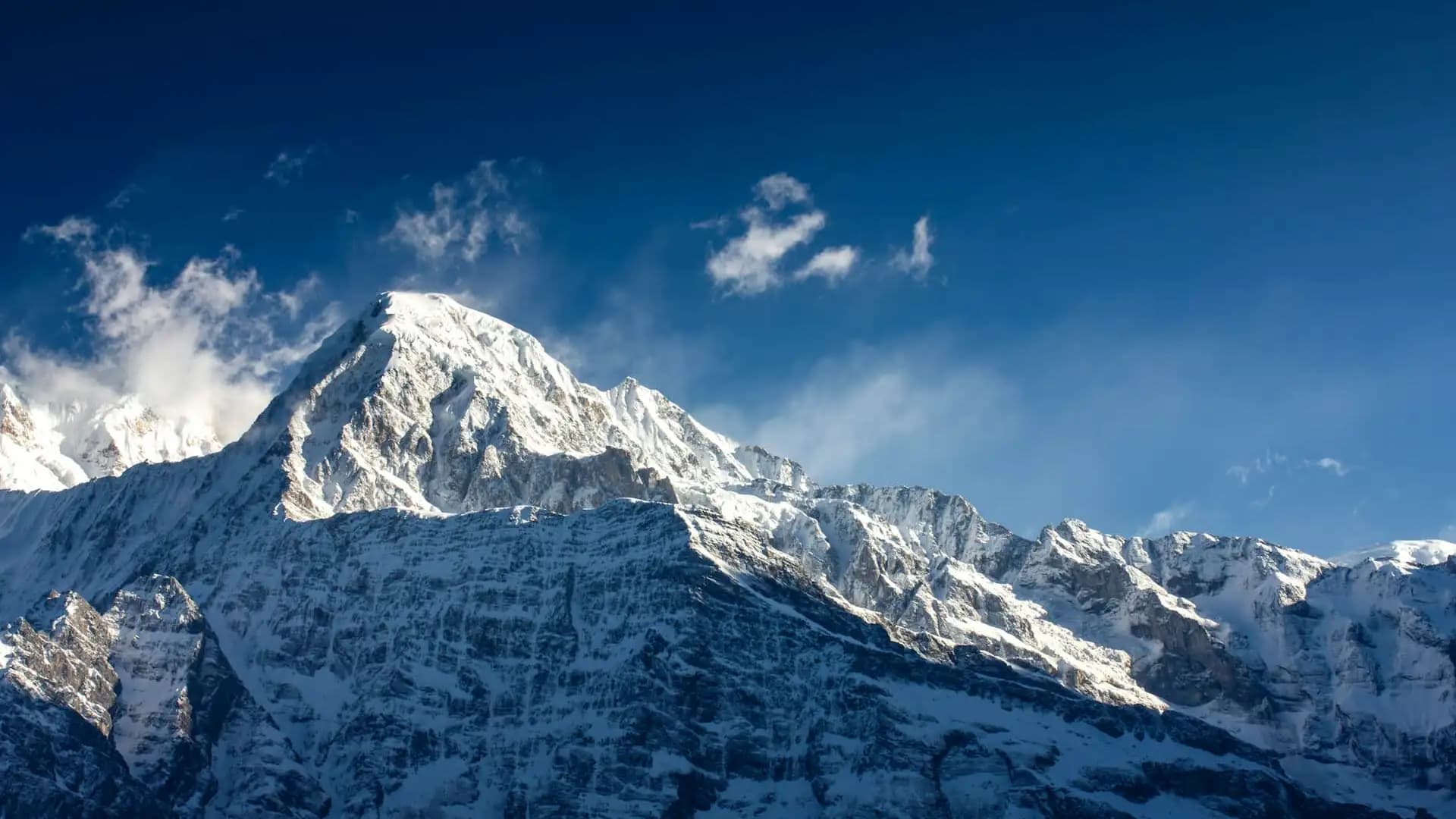
Mardi Himal Peak 2026: Height , Climbing Guide & First Ascent
Introduction to Mardi Himal Peak
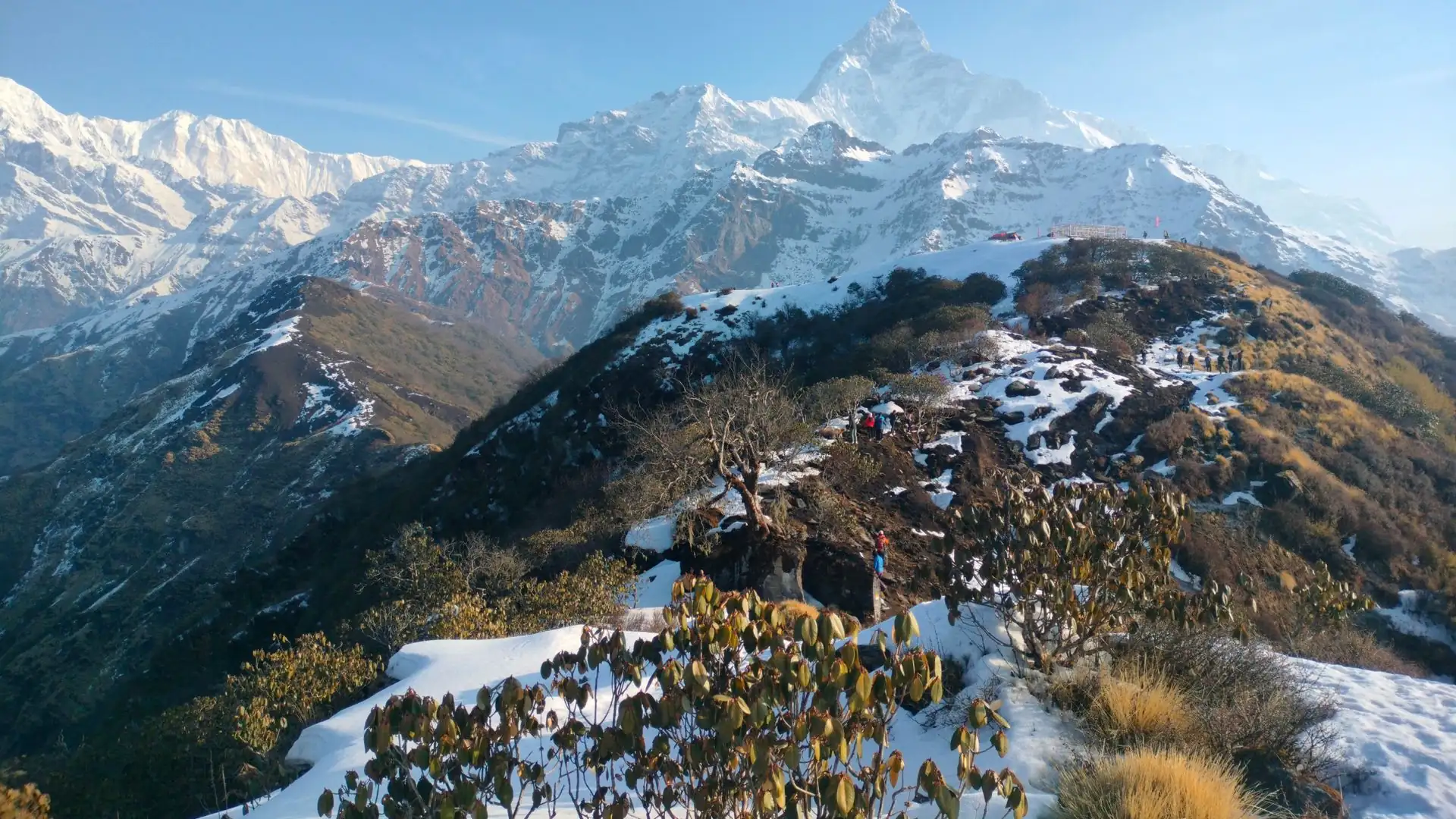
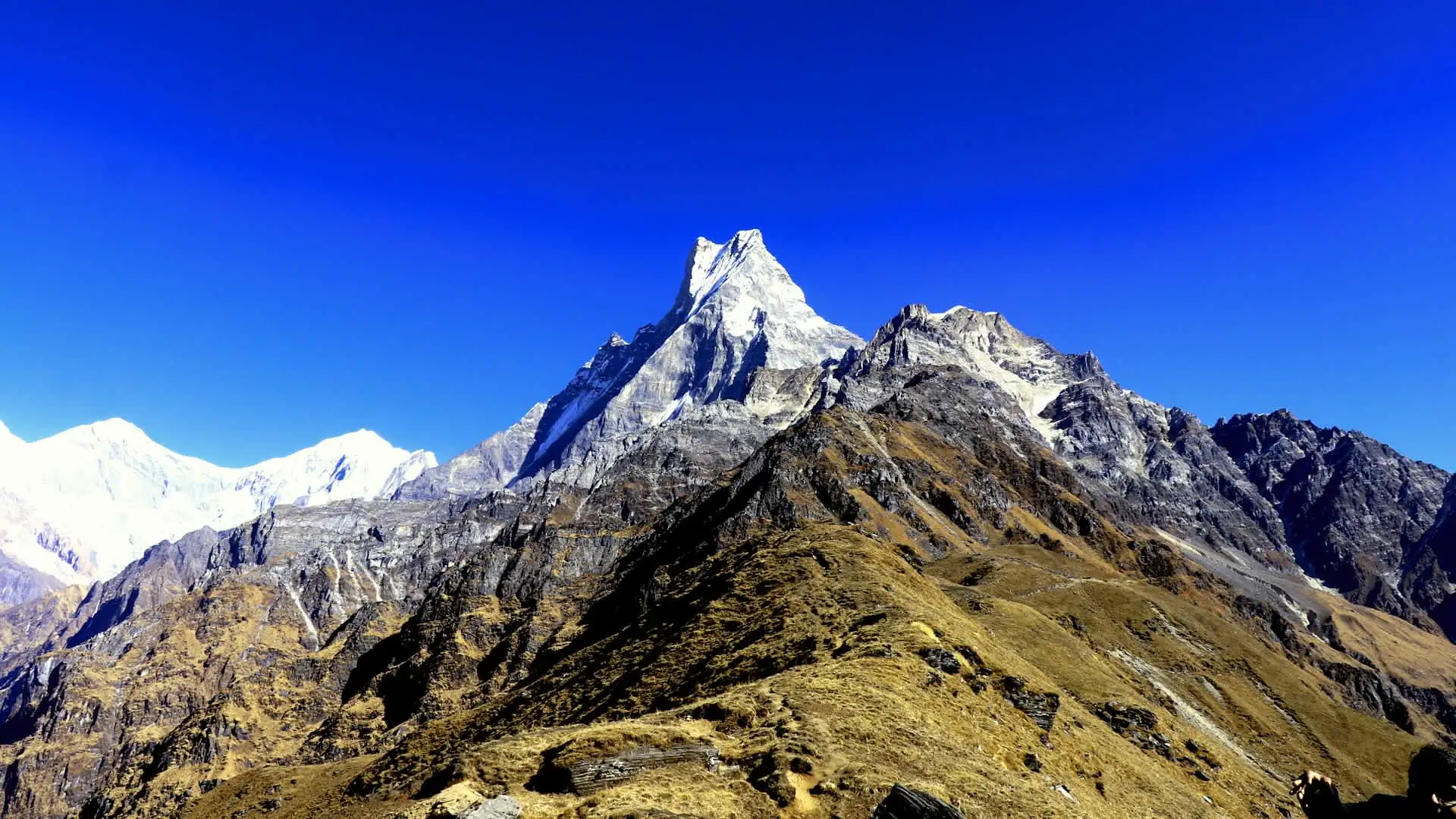
Every year, thousands of trekkers complete "the Mardi Himal Trek" and walk away with photos of a spectacular, snow-dusted summit rising directly ahead of them — and almost none of them have actually stood on it. That's not a criticism; it's simply how this mountain works. The vast majority of the "Mardi Himal Trek" traffic tops out at Base Camp (4,500m) or the Upper Viewpoint (4,200m), both of which offer a genuinely close-up view of the peak itself without ever touching its actual summit ridge.
The true summit of Mardi Himal — 5,587 meters, first reached in 1961 — remains a separate undertaking entirely, requiring technical climbing skill, specific gear, and, depending on current regulations, additional permitting.
This guide is built specifically around the mountain itself: its height, its exact location relative to its far more famous neighbors, the history of its first ascent, what the actual climbing route involves, current permit requirements (which have genuinely shifted in recent years and are worth understanding carefully), and how the peak-climbing expedition differs in every practical sense from the popular trek that shares its name.
Every fact below has been checked against current available sources, and where those sources present conflicting information — which happens with this peak's permit status specifically, a genuinely evolving area of Nepali mountaineering regulation — that conflict is flagged clearly rather than resolved with false confidence.
Quick Facts: Mardi Himal Peak at a Glance
Fact | Detail |
|---|---|
Height | 5,587m (18,330 ft) |
Coordinates | Roughly 28°28'25"N, 83°55'39"E |
Location | Annapurna Himal, Himalayas, Nepal |
Nearest major peaks | Machhapuchhre (6,993m) to the north, separated by a col at roughly 5,200m; Annapurna South (7,219m) nearby |
First ascent | 1961, by Basil Goodfellow |
Expedition context | Part of a British expedition led by Jimmy Roberts |
Classification | A Nepalese government-designated "trekking peak," open to climbers via permit or, more recently, permit-free depending on current regulation |
Standard climbing route | South ridge, via a snow gully — described as a relatively straightforward ascent by mountaineering standards |
Technical grade | PD (Peu Difficile) to AD (Assez Difficile) on the French Alpine Scale, depending on route and conditions |
Trekking trail opened | 2012 |
Annual ascents | Very few — the peak is considered overshadowed by neighboring Machhapuchhre and sees only a handful of summits per year |
Geography: Where Mardi Himal Actually Sits
Mardi Himal is a 5,587-meter peak positioned beneath its much more prominent neighbor, Machhapuchhre (6,993m), in the Annapurna region of Nepal — separated from Machhapuchhre by a col at roughly 5,200 meters. It sits within the broader Annapurna Himal, part of the Annapurna Massif, and is flanked more broadly by Annapurna South (7,219m) to the west.
This positioning — genuinely close to two far more famous and much higher peaks — is a significant part of why Mardi Himal receives relatively little independent mountaineering attention despite its accessibility as a designated trekking peak.
Climbers heading to this region are far more likely to be drawn by Machhapuchhre's dramatic, sacred, and unclimbed profile, or by the broader Annapurna Sanctuary itself, than by Mardi Himal specifically — a mountain that, for most visitors to the area, functions more as a spectacular foreground feature of the trekking route than as a climbing objective in its own right.
The First Ascent: 1961
Mardi Himal was first successfully summited in 1961, with Basil Goodfellow credited as the climber who reached the top, as part of a British expedition led by the noted mountaineer and Gurkha officer Jimmy Roberts.
Roberts is a genuinely significant figure in the broader history of this region — he's widely credited as a foundational figure in Nepal's early commercial trekking and mountaineering industry, and he had a documented earlier connection to the immediate area: in 1957, Roberts led an expedition attempting to summit the neighboring, sacred peak of Machhapuchhre, an attempt that was ultimately abandoned before reaching the true summit, out of respect for the mountain's religious significance to local communities — a decision that, notably, effectively established Machhapuchhre's continued status as an officially unclimbed peak to this day.
The connection between these two expeditions — Roberts' 1957 Machhapuchhre attempt and the 1961 first ascent of Mardi Himal that he also led — places Mardi Himal's climbing history directly within the broader story of Western mountaineering's early engagement with the Annapurna Sanctuary region during this pioneering post-war period of Himalayan exploration.
From Unclimbed Ridge to Popular Trekking Route: The 2012 Turning Point
For decades after its 1961 first ascent, Mardi Himal remained a genuinely obscure objective, visited by very few climbers and essentially unknown as a trekking destination. That changed in 2012, when the Mardi Himal Trek hiking route was formally opened — a trail following the mountain's ridge toward the summit, with lodges and teahouses developed up to an elevation of roughly 3,550 meters (High Camp), and a further push possible to "Base Camp" at 4,500 meters.
This 2012 development is the direct reason the "Mardi Himal Trek" exists as a mainstream trekking product today — prior to this, there was no established trail infrastructure supporting non-technical trekkers anywhere near this close to the mountain. The trek itself is classified by the Nepalese government as accessing a designated "trekking peak," and is now offered by numerous expedition and trekking companies, drawing both Nepali domestic tourists and international visitors in significant numbers.
The Critical Distinction: The Trek vs. The Climb
This is the single most important thing to understand about "Mardi Himal Peak" as a search topic, because the overwhelming majority of commercially available "Mardi Himal" trips are treks to Base Camp, not climbs to the actual summit.
Aspect | The Trek (to High Camp / Base Camp) | The Climb (to the true 5,587m summit) |
|---|---|---|
Maximum elevation reached | 4,200-4,500m (Upper Viewpoint / Base Camp) | 5,587m (true summit) |
Technical skill required | None — non-technical walking trail throughout | Genuine mountaineering skill required |
Equipment needed | Standard trekking gear (boots, poles, layers) | Ropes, crampons, ice axe, harness, and related technical climbing equipment |
Typical duration | 4-8 days | 12-16 days for a full expedition itinerary |
Guide requirement | Licensed trekking guide (mandatory since 2023) | Licensed climbing Sherpa/guide with technical mountaineering experience |
Route character | Forested lower trail transitioning to an exposed alpine ridge | South ridge route via a snow gully, above the trekking trail's terminus |
Who it's suited for | The vast majority of trekkers, including relative beginners with reasonable fitness | Experienced trekkers stepping up to technical peak climbing, or those with prior mountaineering exposure |
If you searched "Mardi Himal Peak" hoping to understand the trek most people do, the relevant information is that you will see the peak up close — genuinely close, given how directly the trekking trail approaches it — without actually climbing it. If you're specifically researching the technical summit climb, the rest of this guide covers that in detail below.
The Climbing Route: What the Actual Summit Push Involves
The most common climbing route on Mardi Himal follows the south ridge, described by experienced mountaineering sources as offering a relatively straightforward ascent using a snow gully — meaning the technical difficulty, while real, is considered moderate by Himalayan peak-climbing standards rather than extreme.
Detail | Figure/description |
|---|---|
Standard route | South ridge |
Key technical feature | A snow gully forming the main ascent line |
Technical grade | PD (Peu Difficile / "Slightly Difficult") to AD (Assez Difficile / "Fairly Difficult") on the French Alpine Scale, depending on specific route and current snow/ice conditions |
Equipment required | Ropes, crampons, ice axe, harness, and standard high-altitude mountaineering gear |
Guide requirement | A licensed climbing Sherpa or mountain guide with technical experience |
Because Mardi Himal is overshadowed by Machhapuchhre and receives comparatively little climbing traffic, it's frequently described in mountaineering circles as a genuinely quiet, uncrowded objective — a real contrast to more heavily trafficked trekking peaks elsewhere in Nepal, such as Island Peak in the Everest region.
Permit Status: A Genuinely Evolving Situation
This deserves careful, honest treatment, because current sources present meaningfully different information about whether Mardi Himal requires a formal climbing permit beyond the standard trekking permits.
What Different Current Sources Say
Source position | What it states |
|---|---|
Some current operators (2025-2026 sourced) | State that no separate climbing permit or fee is required to summit Mardi Himal — only the standard ACAP and TIMS trekking permits are needed |
Other current sources | State that an additional NMA (Nepal Mountaineering Association) trekking-peak permit is required specifically for the 5,587m summit push, separate from standard trekking permits |
A mountaineering reference source, discussing 2023-era regulation changes | Notes that Mardi Himal, at 5,587m — below the 5,800m threshold — is now classified as permit-free for climbing purposes, following a change to NMA trekking peak rules |
What This Likely Means
The most plausible explanation for this discrepancy is a genuine regulatory shift: Nepal's trekking peak permit rules have been revised in recent years, and peaks below a certain elevation threshold (roughly 5,800m, based on available information) may no longer require a formal NMA climbing permit the way they historically did as part of the official "trekking peaks" list.
Given that regulations governing mountaineering in Nepal are updated periodically and can vary by specific peak and current administrative decision, the responsible approach for anyone planning an actual Mardi Himal summit climb is to confirm current permit requirements directly with the Nepal Mountaineering Association or a registered, experienced expedition operator before finalizing any climbing plans — this guide can tell you the general landscape and the genuine uncertainty in current sources, but it cannot substitute for a direct, current confirmation given how genuinely this specific detail appears to be in flux.
What Remains Consistently Required Regardless
Regardless of whether a separate climbing permit applies, every source agrees on the baseline requirements that apply to anyone entering the Annapurna Conservation Area for either the trek or the climb:
Permit | Cost | Applies to |
|---|---|---|
ACAP (Annapurna Conservation Area Permit) | NPR 3,000 (roughly USD 22-25) for non-SAARC foreigners; reduced rate for SAARC nationals | Both trekkers and climbers |
TIMS Card | Included in the roughly USD 40 combined permit cost commonly cited for this route | Both trekkers and climbers |
A Typical Mardi Himal Peak Climbing Expedition: What It Involves
For climbers pursuing the actual technical summit rather than the standard trek, dedicated expedition operators offer structured itineraries — typically running 12-16 days from Kathmandu and back.
Stage | What it involves |
|---|---|
Approach trek | Walking through Pokhara-area villages toward the mountain, following either the standard trekking trail or a more remote alternative approach (some operators route via less-trafficked paths like Saitighatta, Kaltha, and the Korchan ridge specifically to avoid the standard commercial trekking route) |
Base camp establishment | A dedicated high-altitude base camp, separate from the trekking "Base Camp" at 4,500m used by standard trekkers |
Acclimatization and training day | A dedicated day for climbers to acclimatize and, particularly for those newer to technical climbing, practice with ropes, crampons, and ice axe technique before the summit push |
Summit push | The technical ascent via the south ridge and snow gully to the 5,587m summit |
Descent | Often routed through a different, less-trafficked area — some operators specifically include a descent through the Pipar Lake wilderness area before returning to Pokhara |
This structure is notably different from the standard trek — dedicated high-altitude camping logistics, technical climbing training, and a genuinely different overall pace and purpose, oriented toward summiting rather than simply reaching a scenic viewpoint.
Who Should Consider the Actual Peak Climb vs. the Standard Trek
Profile | Recommended option |
|---|---|
First-time Himalaya visitor, moderate fitness, primarily interested in scenery | The standard trek to Base Camp/Upper Viewpoint (4,200-4,500m) |
Experienced trekker wanting to try technical mountaineering for the first time | The peak climbing expedition, specifically marketed by several operators as suitable for "novice climbers and experienced trekkers looking to step up to technical peak climbing" |
Experienced climber seeking a quiet, uncrowded technical objective | The peak climbing expedition — Mardi Himal's low annual ascent numbers and relatively moderate PD-AD grading make it a genuinely appealing, low-crowd alternative to more heavily trafficked Nepali trekking peaks |
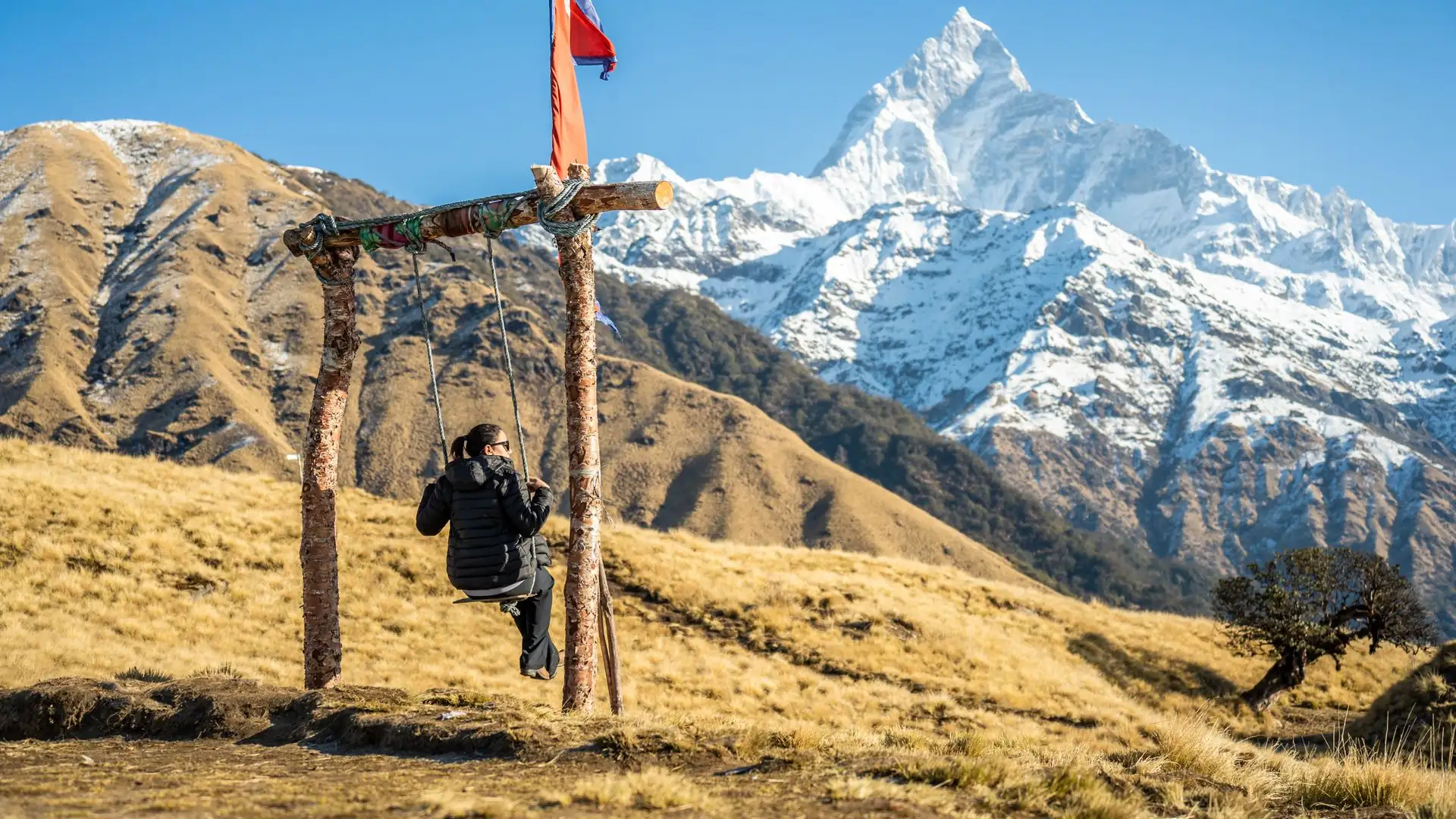
Someone specifically wanting to see Machhapuchhre up close without technical climbing | The standard trek — this delivers the closest non-technical view of Machhapuchhre available in the region, without any need for the summit climb |
How Mardi Himal Compares to Other Nepali Trekking Peaks
For climbers weighing Mardi Himal against other popular NMA-designated trekking peaks in Nepal, a few general points of comparison:
Peak | Height | General technical grade | Notable characteristic |
|---|---|---|---|
Mardi Himal | 5,587m | PD-AD | Quiet, low-traffic, close to Machhapuchhre in the Annapurna region |
Island Peak (Imja Tse) | 6,189m | PD | One of the most popular and heavily climbed trekking peaks in the Everest region |
Mera Peak | 6,476m | PD | The highest of Nepal's standard trekking peaks, popular in the Everest region |
Singu Chuli (Fluted Peak) | 6,501m | Requires ice climbing equipment, NMA permit roughly USD 350 for up to 4 members | A neighboring Annapurna Sanctuary peak with a higher, more technical profile than Mardi Himal |
Mardi Himal's relatively lower elevation and moderate PD-AD grading, combined with its genuinely low ascent numbers, position it as a comparatively accessible entry point into technical Himalayan peak climbing — though "accessible" here still means genuine mountaineering skill and equipment, not simply strong trekking fitness.
Best Season for Climbing Mardi Himal
Season | Suitability |
|---|---|
Spring (March-May) | Generally favorable, alongside autumn, for both the trekking approach and the technical summit push |
Monsoon (June-August) | Generally avoided, given poor visibility and unstable snow conditions on the upper mountain |
Autumn (September-October-November) | Widely considered one of the two best windows, offering stable weather for both approach trekking and the technical climb |
Winter (December-February) | Technically possible but considerably harder, given colder temperatures and more challenging snow/ice conditions on the summit route |
Spring and autumn are consistently identified as the two prime windows for this climb, matching the broader pattern across most Himalayan peak-climbing objectives in Nepal.
Why Mardi Himal Sees So Few Ascents
A few compounding factors explain why this genuinely accessible, moderately-graded peak remains a low-traffic climbing objective:
It's overshadowed by Machhapuchhre. Positioned directly beneath one of the most visually striking and culturally significant peaks in Nepal, Mardi Himal simply doesn't draw the same attention as its far more famous, photogenic, and sacred neighbor.
The trek itself already delivers a spectacular view. Since the non-technical trek reaches 4,200-4,500m with close-up views of both Machhapuchhre and Mardi Himal itself, many visitors who might otherwise consider a technical summit push are already satisfied by the trekking experience alone.
It doesn't carry the same prestige or "bucket list" status as taller, more famous trekking peaks like Island Peak or Mera Peak, which draw far larger numbers of climbers specifically seeking a recognizable Himalayan summit credential.
Regulatory and logistical uncertainty around permits, as discussed above, may also factor into why fewer dedicated expedition operators actively promote this specific summit compared to more established trekking-peak objectives.
Practical Gear for the Actual Summit Climb
Beyond standard high-altitude trekking gear, climbers attempting the true summit need genuine technical mountaineering equipment:
Category | Specific gear |
|---|---|
Climbing hardware | Crampons, ice axe, climbing harness, carabiners, ascender/jumar |
Rope systems | Fixed ropes are typically used on the steeper sections of the snow gully, managed by the climbing Sherpa/guide team |
Footwear | Mountaineering boots rated for technical ice/snow climbing, distinct from standard trekking boots |
Protective gear | Helmet, given rockfall and icefall risk on technical terrain |
High-altitude clothing | A more robust cold-weather system than standard trekking gear, given time spent on exposed technical terrain above 4,500m |
This is a meaningfully different packing list from the standard trek, and anyone considering the peak climbing option should plan gear (whether bought or rented through a specialized operator) around genuine technical mountaineering requirements rather than assuming standard trekking gear will suffice.
The Trekking Route to Base Camp: A Brief Overview for Context
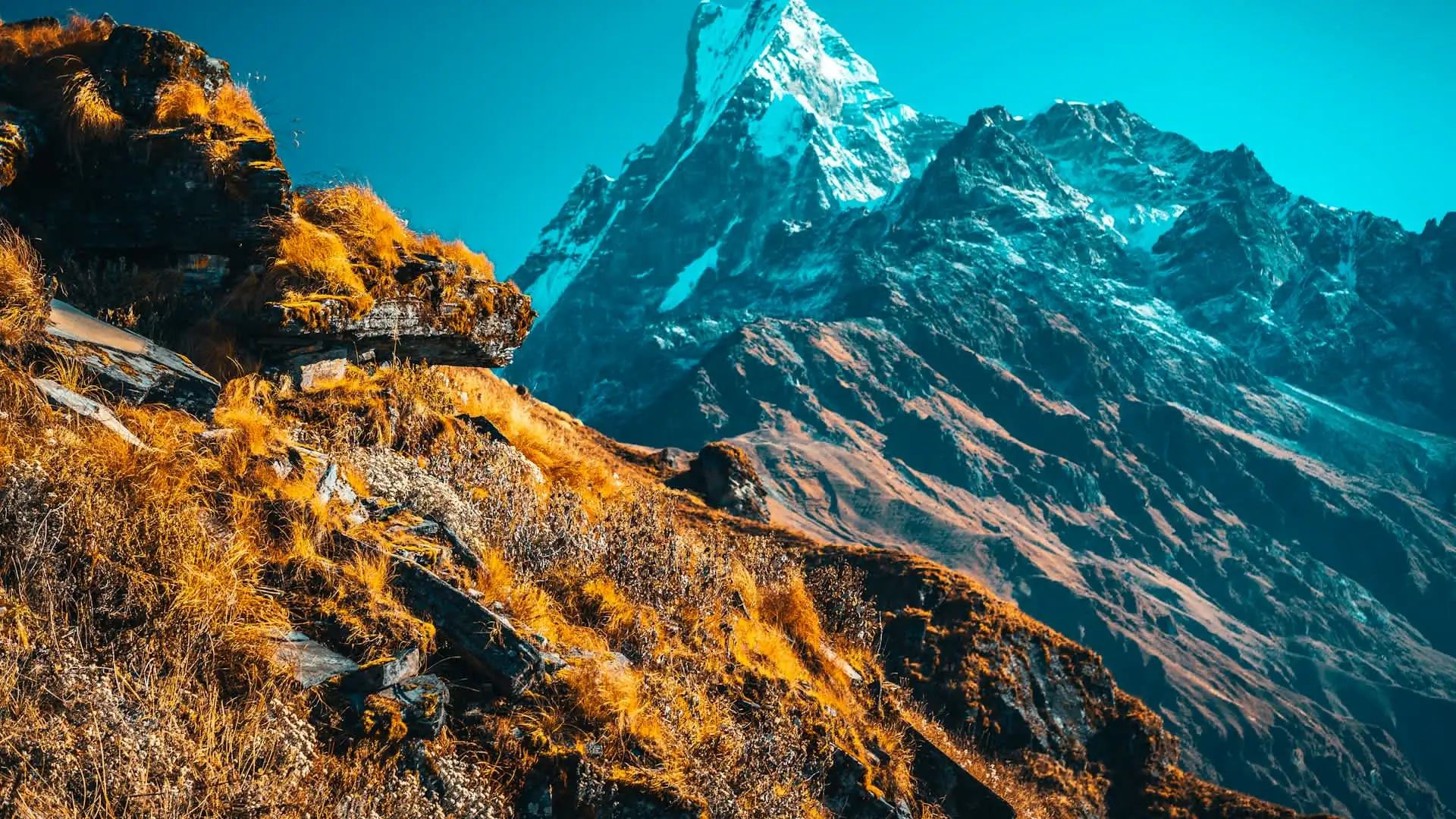
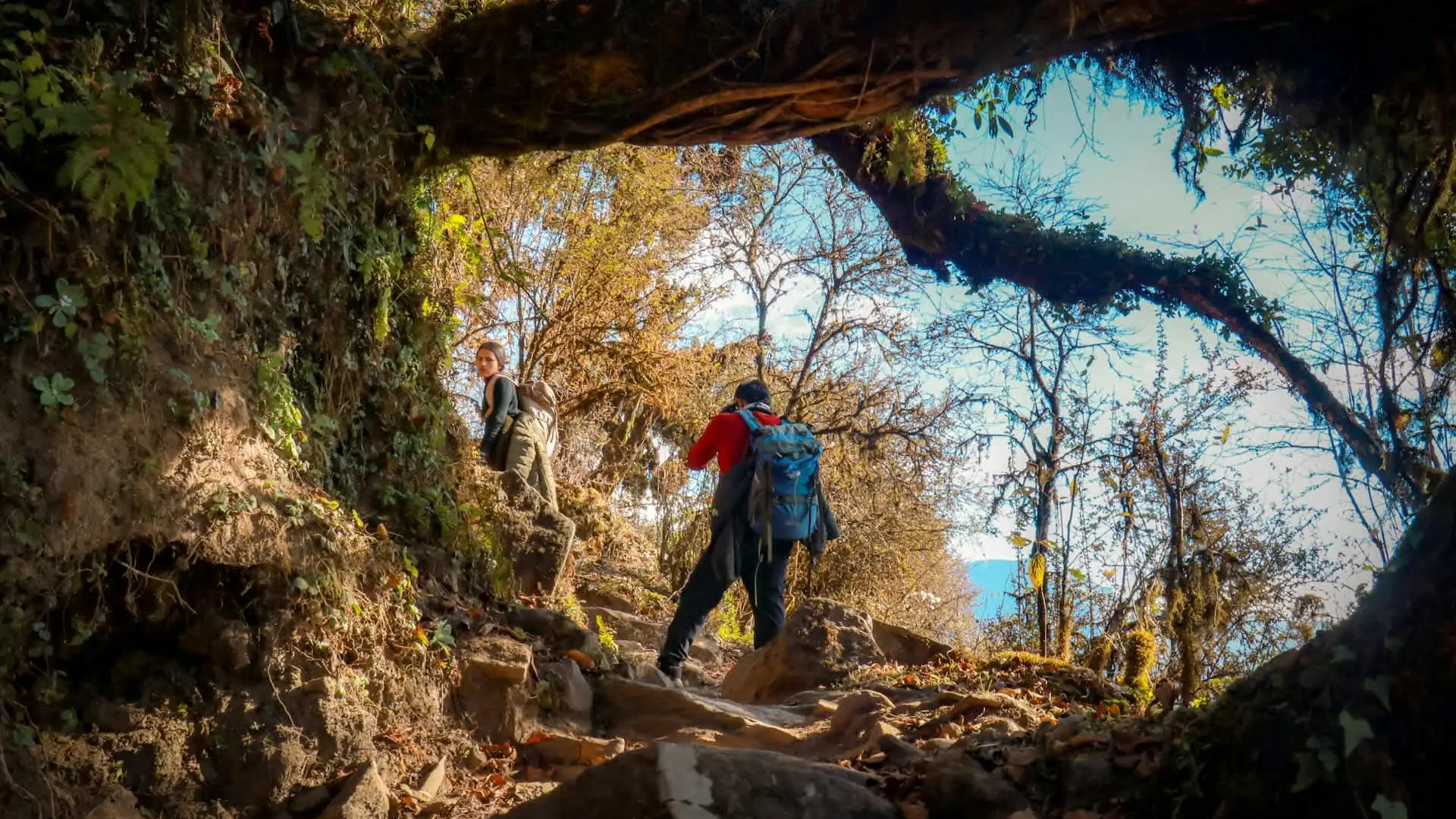
The trek starts from Pokhara and follows a route through the villages of Dhampus and Pothana, passing through dense forests of oak, rhododendron, and bamboo before heading toward Mardi Himal Base Camp at 4,500 meters. There are three major stopping points between Pokhara and the mountain: the first being either Dhampus or an alternative starting point called Australian Base Camp, which has over 30 homestays and teahouses; the next is Forest Camp, with 7-8 teahouses; and above that sit two further camps, Low Camp and High Camp.
This trek is undertaken by significant numbers of both Nepali domestic tourists and international visitors, reflecting its accessibility and the genuine visual reward it offers without requiring technical climbing skill.
Planning a Mardi Himal Trip With a Local Operator
Whether your interest lies in the standard, non-technical trek to Base Camp — the choice for the overwhelming majority of visitors — or the genuine technical challenge of summiting the 5,587-meter peak itself, this is a route where local, current knowledge genuinely matters, particularly given the real uncertainty around current permit requirements for the technical climb.
Working with an experienced, locally based operator like Adventure Life Nepal means access to current, confirmed information on exactly what permits and preparation your specific trip requires — whether that's a straightforward, well-paced trek to enjoy the region's famously close-up views of Machhapuchhre and Mardi Himal, or a properly equipped, professionally guided technical expedition to the actual summit, complete with the climbing Sherpa support, training days, and gear planning that a genuine mountaineering objective like this demands.
Frequently Asked Questions about Mardi Himal Peak
1. How tall is Mardi Himal?
Mardi Himal stands at 5,587 meters (18,330 feet), located in the Annapurna Himal of Nepal, positioned beneath the much more prominent neighboring peak of Machhapuchhre.
2. Who first climbed Mardi Himal, and when?
Basil Goodfellow reached the summit first in 1961, as part of a British expedition led by the noted mountaineer Jimmy Roberts.
3. Do most people who do the "Mardi Himal Trek" actually reach the summit?
No — the overwhelming majority of trekkers reach Base Camp (4,500m) or the Upper Viewpoint (4,200m), both well below the true 5,587-meter summit, which requires separate technical climbing skill and equipment.
4. Do I need a climbing permit to summit Mardi Himal?
This is genuinely unclear from current sources — some indicate no separate permit is required beyond standard ACAP/TIMS trekking permits, given the peak's classification below a 5,800m threshold following recent regulation changes, while others still reference a required NMA trekking-peak permit. Confirming current requirements directly with a registered operator or the Nepal Mountaineering Association before planning a climb is strongly recommended.
5. What permits are definitely required regardless of climbing plans?
The ACAP (Annapurna Conservation Area Permit, roughly USD 22-25) and the TIMS card are required for anyone entering the Annapurna Conservation Area, whether trekking to Base Camp or attempting the technical summit.
6. What's the standard climbing route on Mardi Himal?
The south ridge, ascended via a snow gully — described by mountaineering sources as a relatively straightforward technical ascent, graded PD to AD on the French Alpine Scale.
7. When did the Mardi Himal Trek (to Base Camp) open as a trekking route?
2012 — prior to this, the mountain had very little established trail infrastructure, and the trek as a mainstream product is a relatively recent development compared to the 1961 first ascent of the peak itself.
8. How does Mardi Himal compare in difficulty to other Nepali trekking peaks like Island Peak?
Mardi Himal, at 5,587m and graded PD-AD, is somewhat lower and comparably or slightly less technically demanding than peaks like Island Peak (6,189m, PD) or Mera Peak (6,476m, PD), though all require genuine mountaineering skill and equipment.
9. Why does Mardi Himal see so few climbing ascents each year?
Primarily because it's overshadowed by the far more famous, dramatic, and sacred neighboring peak of Machhapuchhre, and because the non-technical trek already delivers spectacular close-up views without requiring a technical summit push.
10. What equipment is needed for the actual summit climb, beyond standard trekking gear?
Crampons, an ice axe, a climbing harness, a helmet, mountaineering boots, and rope systems for the steeper sections of the snow gully — genuinely different from the standard trekking gear list used for the Base Camp trek.
11. How long does a full Mardi Himal peak climbing expedition typically take?
Roughly 12-16 days from Kathmandu and back, including approach trekking, a dedicated acclimatization and technical training day, the summit push itself, and descent.
12. Is Mardi Himal suitable for climbers with no prior technical mountaineering experience?
Some operators specifically market the expedition as suitable for "novice climbers and experienced trekkers looking to step up to technical peak climbing," typically with dedicated training days built into the itinerary — but genuine preparation and a properly experienced guide team remain essential.
13. What's the best season to climb Mardi Himal's true summit?
Spring (March-May) and autumn (September-November) are both considered favorable windows, offering more stable weather for the technical summit push compared to monsoon or winter conditions.
14. Is Mardi Himal separated from Machhapuchhre by any notable feature?
Yes — the two peaks are separated by a col at roughly 5,200 meters, with Machhapuchhre rising considerably higher (6,993m) and remaining officially unclimbed out of respect for its sacred status.
Final Thoughts on Mardi Himal Peak
Mardi Himal occupies a genuinely interesting dual identity: a modestly sized but real Himalayan peak, first climbed in 1961 by a name largely forgotten outside dedicated mountaineering history, and simultaneously the namesake of one of Nepal's most popular short treks — a trek that brings tens of thousands of visitors close enough to photograph the mountain in stunning detail without a single one of them needing to touch its actual summit ridge.
Whether your interest is the accessible, non-technical trek to Base Camp and its genuinely spectacular close-up views of Machhapuchhre, or the quieter, more demanding technical climb to the true 5,587-meter summit via its south ridge snow gully, understanding this distinction — and, for the latter, confirming current permit requirements directly given how genuinely unsettled that detail currently is — is the essential first step to planning the right trip for what you're actually looking for.