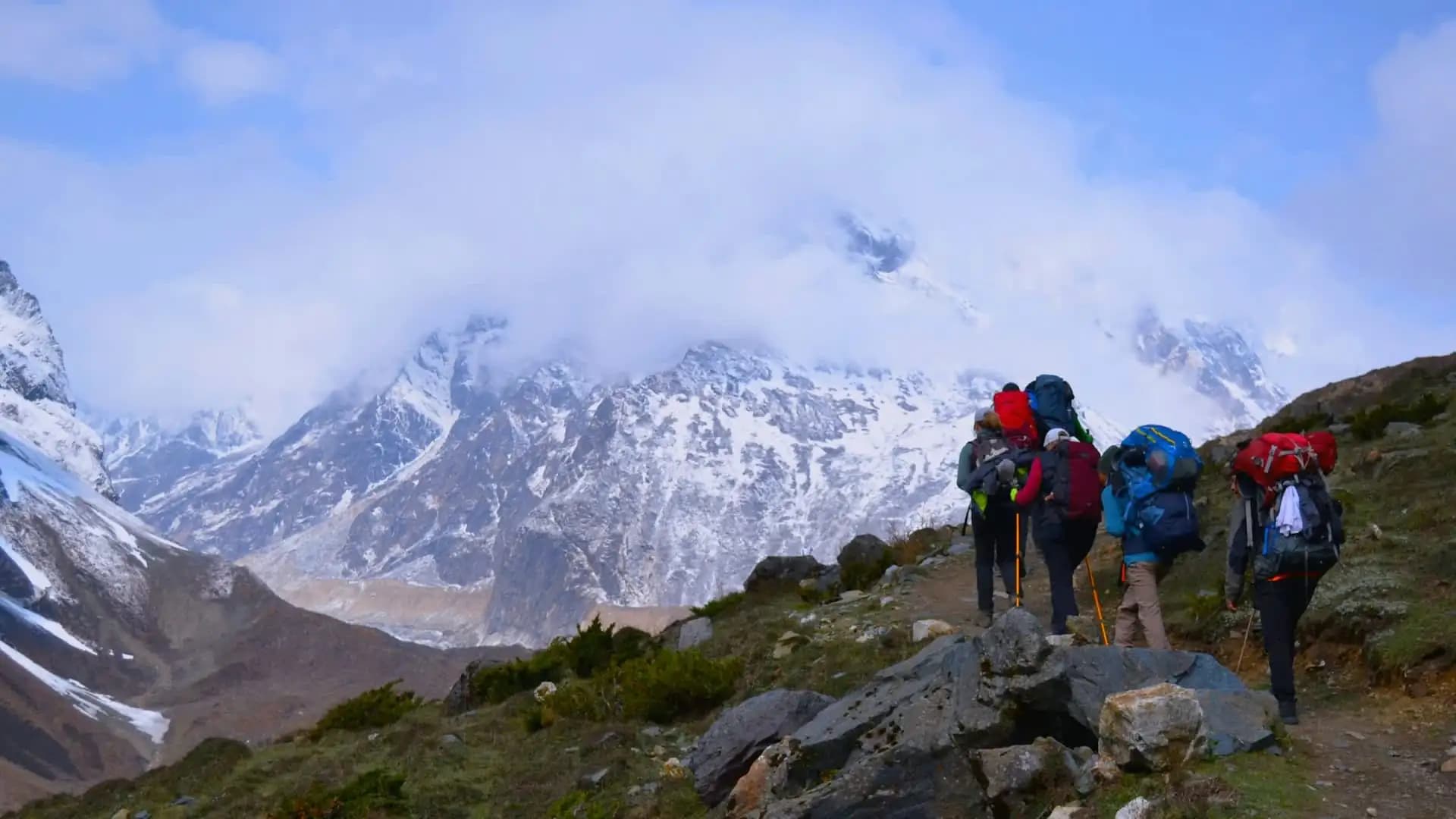
Manaslu Circuit Trekking Cost 2026: Full Budget & Price Breakdown
Introduction to Manaslu Circuit Trekking Cost
A guided Manaslu Circuit Trek typically costs between USD 700 and USD 1,500+ per person in 2026, depending on trek duration, group size, season, and level of service — with permits alone accounting for USD 150 to USD 265 of that total, given the restricted-area permit system this trek requires.
Because Manaslu involves three separate permits, a mandatory guide, and a more remote route than the Annapurna Circuit or Everest Base Camp, understanding exactly where the money goes is more important here than on treks with simpler cost structures.
This guide breaks down every real cost category — permits, guide and porter fees, teahouse accommodation, food, transport, gear, and the extras that catch first-time trekkers off guard — so you can build an accurate 2026 budget before booking.
Manaslu Circuit Trek Cost at a Glance
Cost category | Typical range (USD) |
|---|---|
Guided package (11–14 days, standard) | $700–$1,536 |
Permits (RAP + MCAP + ACAP + local fee) | $150–$265 |
Guide (per day, if hired independently) | $25–$30 |
Porter (per day, if hired independently) | $20–$30 |
Teahouse room (per night) | $3–$15, rising with altitude |
Meals (per day on trail) | $15–$36 (based on $5–$12 per meal) |
Nepal tourist visa (30 days) | $50 |
Kathmandu–Machha Khola transport (one way) | Included in most packages |
Travel insurance (with high-altitude coverage) | $50–$150+ |
Why Manaslu Costs More Than the Annapurna Circuit
Before breaking down individual cost categories, it's worth understanding why Manaslu Circuit trekking generally costs more overall than a comparable Annapurna Circuit trip, despite both treks running similar lengths and reaching similar maximum altitudes.
Three permits instead of one. The Annapurna Circuit requires only the ACAP permit (~USD 23–30). Manaslu requires the Restricted Area Permit (RAP), the Manaslu Conservation Area Permit (MCAP), and the Annapurna Conservation Area Permit (ACAP) — a meaningfully larger permit cost from the outset.
Seasonal RAP pricing adds real cost, especially in autumn. The RAP's peak-season rate (September–November) runs USD 100 for the first 7 days plus USD 15 per additional day — considerably more than any single permit required for the Annapurna Circuit.
Greater remoteness increases logistics costs. More limited road access and infrastructure in the upper Nupri region can mean higher costs for supplies, transport, and guide/porter logistics compared to the increasingly road-accessible Annapurna Circuit.
Lower trekker volume means less price competition. With considerably fewer trekkers on this route compared to Annapurna or Everest, teahouses and local services don't benefit from the same economies of scale that have helped moderate costs on more heavily trafficked routes.
Permits: The Biggest Fixed Cost Category
Every trekker on the Manaslu Circuit needs three separate permits, and understanding the full cost structure here is essential to budgeting accurately, since this single category can represent a significant share of the total trip cost.
1. Manaslu Restricted Area Permit (RAP)
Season | First 7 days | Each additional day |
|---|---|---|
Autumn (September–November) | USD 100 | USD 15/day |
Winter, Spring, Summer (December–August) | USD 75 | USD 10/day |
Worked example — a standard 9-day restricted-area window (roughly matching a 12-to-14-day full itinerary):
Season | Calculation | Total RAP cost |
|---|---|---|
Autumn | $100 (first 7 days) + 2 × $15 | $130 |
Dec–Aug | $75 (first 7 days) + 2 × $10 | $95 |
The RAP can only be obtained through a registered trekking agency, since independent application for this specific permit isn't possible — a genuine structural reason booking through an agency like Adventure Life Nepal is effectively mandatory for this trek, beyond simply being convenient.
2. Manaslu Conservation Area Permit (MCAP)
Nationality | Cost |
|---|---|
Foreign nationals (non-SAARC) | NPR 3,000 (~USD 23–30) |
SAARC nationals | NPR 1,000 (or NPR 200, per some sources) |
Nepali citizens | NPR 100 |
This is a flat, one-time fee regardless of how many days the trek takes — a genuinely simple cost compared to the seasonal RAP structure.
3. Annapurna Conservation Area Permit (ACAP)
Nationality | Cost |
|---|---|
Foreign nationals (non-SAARC) | NPR 3,000 (~USD 23–30) |
SAARC nationals | NPR 1,000 |
Required because the trek's final stretch, from around Dharapani onward, exits the Manaslu Conservation Area and enters the Annapurna Conservation Area.
4. Chum-Nubri Rural Municipality local fee
Fee | Cost |
|---|---|
Local development fee (collected at Jagat) | NPR 1,000–2,000 (~USD 8–15) |
Full permit cost summary
Permit | Cost (2026) |
|---|---|
RAP (autumn, standard 9-day restricted window) | ~$130 |
RAP (Dec–Aug, standard 9-day restricted window) | ~$95 |
MCAP | ~$23–30 |
ACAP | ~$23–30 |
Chum-Nubri local fee | ~$8–15 |
Total (autumn) | ~$185–$205 |
Total (Dec–Aug) | ~$150–$170 |
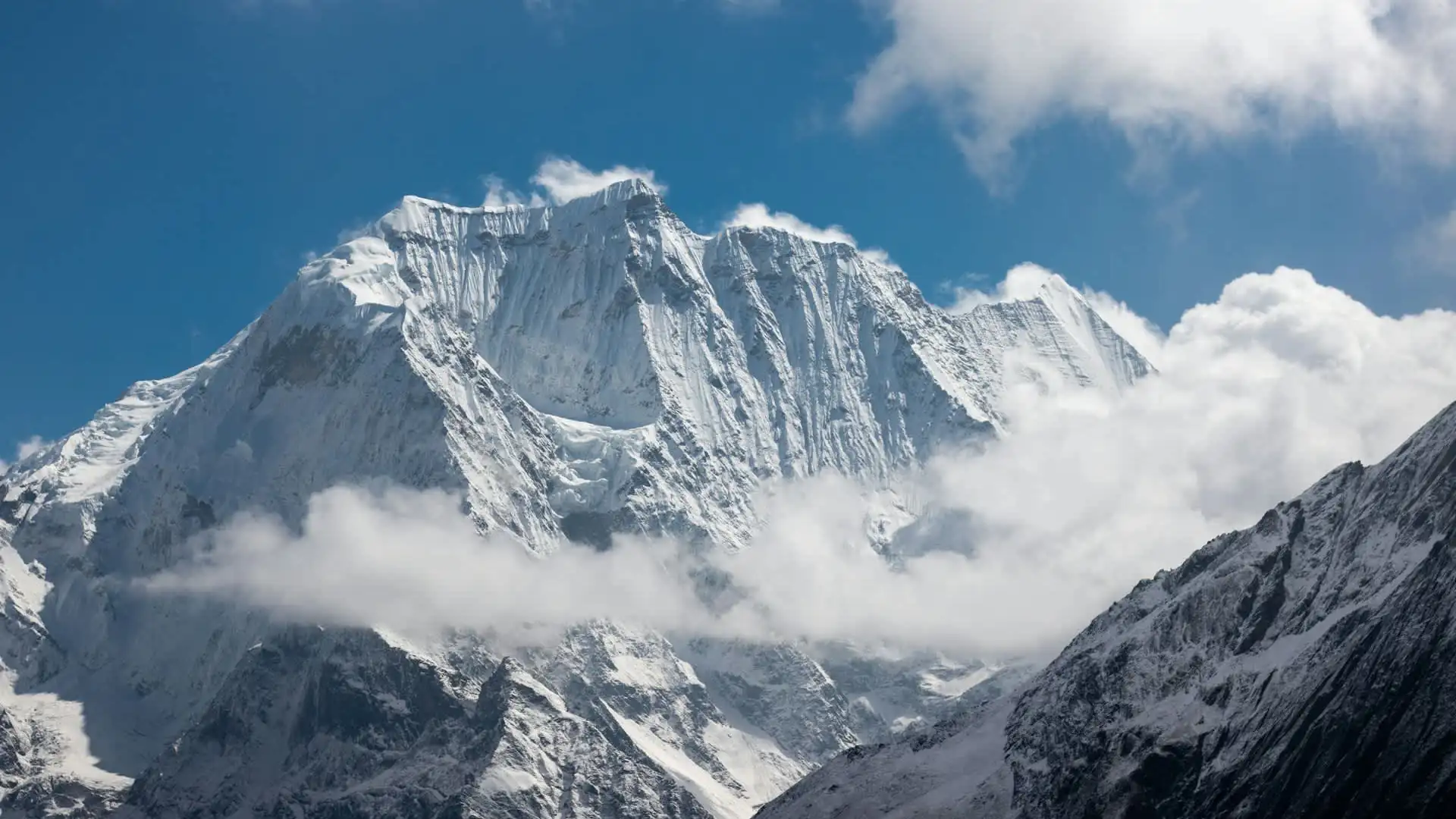
For a standard 12-to-14-day full trip (which typically spends more than 9 days within the restricted zone itself, depending on exact itinerary pacing), total permit costs commonly land in the range of USD 150 to USD 265, with autumn trekkers paying toward the higher end of that range and December-to-August trekkers paying meaningfully less for the RAP specifically.
Guide and Porter Costs
A licensed guide is legally mandatory for the entire Manaslu Circuit, and most trekkers also hire a porter given the trek's length and the load involved in a multi-week trip through a remote region.
Role | Typical daily rate | Notes |
|---|---|---|
Licensed guide | $25–$30/day | Mandatory by law for this restricted-area trek |
Porter | $20–$30/day | Often shared between two trekkers |
Combined porter-guide | Sometimes offered on budget packages | Less common given the guide's mandatory specialized restricted-area training |
For a standard 11-to-14-day trek, budgeting roughly $275–$420 for a guide and a similar or somewhat lower amount for a porter (if shared between two trekkers) is a reasonable starting point — though many all-inclusive packages fold these costs directly into the headline package price rather than billing them separately.
Tipping is customary and expected, and functions as a meaningful part of guide and porter income, similar to standard practice across Nepal's trekking industry. A reasonable guideline is $5–$15 per day for a guide and $5–$10 per day for a porter, typically given as a lump sum on the final evening, working out to roughly $70–$210 total for a guide and $35–$140 for a porter across an 11-to-14-day trek.
Teahouse Accommodation Costs
The Manaslu Circuit runs entirely on the teahouse system, and given the route's greater remoteness compared to the Annapurna Circuit, room and meal pricing patterns follow a similar but somewhat steeper altitude-driven curve.
Section of the route | Typical room cost per night |
|---|---|
Lower valley (Machha Khola to Namrung) | $3–$6 |
Mid-altitude (Lho, Samagaon) | $5–$10 |
High altitude (Samdo, Dharamsala) | $8–$15 |
Post-pass (Bhimtang, Tilje, Dharapani) | $3–$8 |
As with other Nepal teahouse treks, rooms are frequently offered free or heavily discounted on the condition that trekkers eat all their meals — breakfast, lunch, and dinner — at that same lodge. This is standard practice across the route and something your guide will manage automatically as part of a booked package.
Food Costs on the Trail
Meal prices rise with altitude and remoteness, reflecting the genuine cost and difficulty of transporting food into an area with even more limited road access than the Annapurna region.
Meal type | Lower villages | Higher altitude (Samagaon and above) |
|---|---|---|
Dal bhat (with refills) | $5–$7 | $8–$12 |
Western-style meals (pasta, noodles) | $5–$9 | $9–$12 |
Tea/coffee | $1–$2 | $2–$4 |
Bottled water | $1–$2 | $3–$5 |
The commonly cited range of $5–$12 per meal on this trek runs somewhat higher than the equivalent figures on the Annapurna Circuit, reflecting Manaslu's greater remoteness. As with every other teahouse trek in Nepal, dal bhat remains the best value and most practical fuel for long trekking days, particularly given its usual unlimited-refill policy.
"Hidden" Extras That Add Up
Several costs are easy to underestimate on a multi-week trek through a more remote region than the Annapurna Circuit or Everest Base Camp.
Extra cost | Typical price | Notes |
|---|---|---|
Hot shower | $2–$5 | Increasingly limited above Samagaon |
Device charging | $1–$3 per charge | Solar-dependent at higher villages |
Wi-Fi | $2–$5 | Less consistently available than on the Annapurna Circuit, particularly above Samagaon |
Extra snacks | $2–$7 | Prices rise sharply with altitude and remoteness |
Bottled/purified water | $1–$5 | A purification method meaningfully reduces this cost |
A reasonable daily allowance for these incidentals is $15–$25 per day, similar to comparable treks, though trekkers should be prepared for somewhat less consistent Wi-Fi and charging availability given Manaslu's more limited infrastructure development compared to the increasingly connected Annapurna Circuit.
Getting to the Trailhead: Transport Costs
The Manaslu Circuit typically starts with a long road journey from Kathmandu to Machha Khola or Soti Khola, and finishes with a drive from Dharapani back through Besisahar to Kathmandu.
Route | Option | Cost/Notes |
|---|---|---|
Kathmandu to Machha Khola | Local bus or private jeep | ~160 km, 8–10 hours; typically included in guided packages |
Dharapani to Besisahar | Local jeep/bus | ~43 km, several hours; typically included in packages |
Besisahar to Kathmandu | Tourist bus or private vehicle | ~175 km, 6–8 hours; typically included in packages |
Because these transport legs are long and logistically involved, the overwhelming majority of trekkers book them as part of a guided package rather than arranging independently — a genuine practical advantage of going through a registered agency for this specific, more remote route.
Nepal Tourist Visa Cost
Every non-Indian foreign national needs a Nepal tourist visa, applicable regardless of which trek is chosen.
Visa duration | Cost (2026) |
|---|---|
15 days | USD 30 |
30 days | USD 50 |
90 days | USD 125 |
Given that a standard 12-to-14-day Manaslu trek, plus a few days in Kathmandu before and after, typically fits within a 30-day window, most trekkers choose the 30-day visa option. Indian citizens do not require a visa under the 1950 Indo-Nepal Treaty of Peace and Friendship.
Gear: Buy, Rent, or Bring From Home
Given Manaslu's genuine remoteness and the extreme altitude reached at Larkya La (5,106 m), gear preparation matters as much here as on the Annapurna Circuit.
Item type | Best approach |
|---|---|
Trekking boots | Bring from home, well broken in |
Down jacket | Bring from home if quality allows; otherwise rent in Kathmandu |
Sleeping bag (rated for genuinely cold conditions) | Rent in Kathmandu if you don't already own cold-weather-rated gear |
Trekking poles | Bring or rent |
Duffel bag for porter | Rent or borrow |
Kathmandu's Thamel district is the standard place to rent or purchase gear before departing for Machha Khola, since Manaslu's more remote route offers far fewer gear shop options along the trail itself compared to the Annapurna Circuit's Pokhara-adjacent access.
Travel Insurance
Given Larkya La's 5,106-meter altitude and the route's genuine remoteness — with more limited emergency evacuation and resupply infrastructure than the Annapurna Circuit or Everest Base Camp — travel insurance with confirmed high-altitude and emergency helicopter evacuation coverage is essential, not optional, for this specific trek.
Insurance consideration | Why it matters |
|---|---|
High-altitude coverage (to at least 5,500–6,000 m) | Larkya La reaches 5,106 m; buffer coverage accounts for itinerary changes |
Emergency helicopter evacuation | The primary rescue method from this remote route |
Confirmed coverage for restricted areas | Some policies exclude specific restricted zones — verify explicitly |
Costs generally run $50 to $150+ for a two-to-three-week policy with adequate high-altitude and evacuation coverage, similar to other major Nepal treks, though trekkers should specifically confirm their policy covers restricted-area trekking, since this designation occasionally affects standard travel insurance terms.
Sample Budget Breakdowns
Budget-conscious guided trek, 12 days, off-peak season (Dec–Aug):
Item | Cost |
|---|---|
RAP (off-peak, ~9 restricted days) | $95 |
MCAP | $25 |
ACAP | $25 |
Local fee | $10 |
Guide (12 days @ $25/day) | $300 |
Teahouse rooms (12 nights) | $70 |
Food (12 days @ ~$25/day) | $300 |
Transport (Kathmandu–Machha Khola–Kathmandu) | Included in package |
Guide tip | $80 |
Subtotal (excl. visa, insurance, gear) | ~$905 |
Mid-range guided package, 12–14 days, autumn (peak season):
Item | Cost |
|---|---|
Package price (permits, guide, porter, teahouses, meals) | $900–$1,300 |
Tips (guide + porter combined) | $150–$250 |
Personal extras (showers, wifi, snacks) | $200–$300 |
Subtotal (excl. visa, insurance, international flights) | ~$1,250–$1,850 |
Full-service/premium package, 14 days:
Item | Cost |
|---|---|
Package price (comprehensive service, private departure options) | $1,300–$1,536+ |
Tips | $150–$300 |
Personal extras | $200–$300 |
Subtotal (excl. visa, insurance, international flights) | ~$1,650–$2,136 |
Across every tier, remember to add the Nepal visa fee ($50 for the standard 30-day option), travel insurance ($50–$150+), and international airfare to Kathmandu (highly variable by origin).
What Actually Changes the Total Cost
Season. Autumn's higher RAP rate directly increases permit costs compared to the December-to-August window, and peak-season demand can also modestly increase teahouse and guide/porter rates given higher overall trekker volume during this period.
Trek length and extensions. Every additional day adds RAP cost directly ($10–$15/day depending on season), plus additional accommodation, food, and guide/porter costs — and a Tsum Valley extension adds its own separate permit cost (USD 30–40 for the first 7 days, plus USD 7/extra day) on top of the base Manaslu Circuit cost.
Group size. Guided packages typically become cheaper per person as group size increases, since fixed costs like guide fees and transport get distributed across more trekkers.
Comfort level and operator choice. Basic teahouse-standard packages sit at the lower end of the price range; more comprehensive service packages with additional support staff or higher-comfort accommodation choices increase costs correspondingly.
Independent vs. fully guided arrangement. Since a guide is mandatory regardless, there's less scope on this trek than on, say, the Annapurna Circuit for trekkers to meaningfully reduce costs through independent arrangement — the mandatory guide and complex permit system push most of the cost structure toward agency-organized packages by default.
Comparing Manaslu Circuit Cost to Other Major Nepal Treks
Trek | Typical guided package cost | Permit cost |
|---|---|---|
Poon Hill | $300–$500 | ~$23–30 (ACAP) |
Annapurna Base Camp | $500–$900 | ~$23–30 (ACAP) |
Mardi Himal | Lower, given shorter duration | ~$23–30 (ACAP) |
Annapurna Circuit | $800–$1,800 | ~$23–30 (ACAP) |
Manaslu Circuit | $700–$1,536 | $150–$265 (RAP + MCAP + ACAP + local fee) |
Everest Base Camp | Varies, generally higher given flight costs | ~$40 (Sagarmatha permit + local fee, comparable range) |
Manaslu's overall package cost sits in a broadly similar range to the Annapurna Circuit, but its permit costs are considerably higher, reflecting the restricted-area system this trek requires — a genuine structural cost difference that trekkers should factor in when comparing headline package prices between treks, since a lower Manaslu package quote might still include a proportionally larger permit-cost component than an equivalent Annapurna Circuit quote.
FAQs about Manaslu Circuit Trekking Cost
How much does the Manaslu Circuit Trek cost in total for 2026? A standard 11-to-14-day guided package typically runs USD 700 to USD 1,536, with permits alone accounting for USD 150 to USD 265 depending on season.
Why are Manaslu's permits more expensive than the Annapurna Circuit's? Because Manaslu requires three separate permits (RAP, MCAP, ACAP) plus a local development fee, reflecting its restricted-area status, while the Annapurna Circuit requires only the single ACAP permit.
Does the season I choose affect my total cost significantly? Yes — the Restricted Area Permit costs USD 100 for the first 7 days in autumn (September–November) versus USD 75 for the first 7 days from December through August, a meaningful difference for the permit portion of your budget.
Can I trek Manaslu independently to save money? No, not fully. A licensed guide is legally mandatory for the entire restricted section of this route, and the RAP permit itself can only be obtained through a registered trekking agency.
How much should I budget per day once on the trail? Food and accommodation together typically run $30–$40 per day for a mid-range experience, excluding guide/porter fees which are usually bundled into a package price.
Is tipping really necessary on this trek? Yes, it's well-established practice and forms a meaningful part of guide and porter income. Budgeting $70–$210 for a guide and $35–$140 for a porter across an 11-to-14-day trek is standard.
Do I need a TIMS card, and does it add to my cost? No — the Restricted Area Permit system replaces the need for a TIMS card on this trek, so there's no additional TIMS cost to budget for.
How much does the Tsum Valley extension add to my cost? The Tsum Valley Restricted Area Permit costs an additional USD 30–40 for the first 7 days (depending on season) plus USD 7 per additional day, on top of the base Manaslu Circuit permit costs.
Is travel insurance really necessary, or can I skip it to save money? It should not be skipped. Given Larkya La's 5,106-meter altitude and the route's genuine remoteness, insurance with confirmed high-altitude and helicopter evacuation coverage is essential — an emergency evacuation without insurance can cost thousands of dollars.
How much should I budget for the Nepal visa? USD 50 for the standard 30-day multiple-entry visa, which comfortably covers a standard 12-to-14-day trek plus a few days in Kathmandu before and after.
Does group size affect the total package cost? Yes — guided packages typically become cheaper per person as group size increases, since fixed costs like guide fees and transport are distributed across more trekkers.
What's the single biggest cost difference between Manaslu and the Annapurna Circuit? Permits. Manaslu's three-permit restricted-area system costs USD 150–265, compared to roughly USD 23–30 for the Annapurna Circuit's single ACAP permit.
Are meals more expensive on Manaslu than on other Nepal treks? Generally yes, somewhat — the commonly cited range of $5–$12 per meal reflects Manaslu's greater remoteness compared to the increasingly road-accessible Annapurna Circuit.
Does the RAP cost increase if I extend my trek beyond the standard itinerary? Yes — the RAP charges an additional daily rate (USD 15/day in autumn, USD 10/day in the December–August window) for every day beyond the initial 7-day period, so extending your itinerary directly increases this specific cost.
Is Manaslu cheaper or more expensive overall than Everest Base Camp? The two are broadly comparable in guided package cost, though Everest Base Camp trekkers typically also budget for the Lukla flight, a cost category that doesn't have a direct equivalent on the road-accessed Manaslu Circuit.
What's included in a typical guided Manaslu package? Permits (RAP, MCAP, ACAP, local fee), a licensed guide, porter (often shared), teahouse accommodation, three daily meals, and ground transport between Kathmandu and the trailhead in both directions.
What's usually NOT included in a guided package? International flights, the Nepal visa fee, travel insurance, personal trekking gear, alcoholic drinks, hot showers and device charging at higher altitude, and tips for guide and porter.
How much does hiring a guide and porter cost if arranged independently rather than through a package? Roughly $25–$30/day for a guide and $20–$30/day for a porter, though most trekkers find booking through a registered agency more cost-effective and logistically simpler given the mandatory guide requirement.
Is the Manaslu Circuit a budget-friendly trek compared to Nepal's other major routes? Not particularly, given its higher permit costs — it sits in a similar overall package-cost range to the Annapurna Circuit, but with a proportionally larger share of that cost going toward mandatory restricted-area permits rather than guide, porter, or accommodation costs.
What's the most cost-effective season to trek Manaslu? The December-to-August window offers the lower RAP rate (USD 75 for the first 7 days versus USD 100 in autumn), though trekkers should weigh this against the generally more challenging weather and visibility conditions outside the peak autumn season.
Conclusion on Manaslu Circuit Trekking Cost
The Manaslu Circuit Trek doesn't have a single fixed price tag — it has a range shaped by season, trek duration, group size, and service level, running roughly from $700 for a lean off-season guided package up to $1,500 or more for a comprehensive peak-season experience. What sets Manaslu's cost structure apart from Nepal's other major treks is the restricted-area permit system: three separate permits (RAP, MCAP, ACAP) plus a local development fee, totaling $150 to $265 depending on season, represent a meaningfully larger fixed cost than the single ACAP permit required for the Annapurna Circuit.
Understanding this cost structure — where the permit money goes, how season affects the RAP rate specifically, and what genuinely counts as an "extra" beyond a standard package — lets trekkers build an accurate budget rather than being surprised by Manaslu's higher upfront permit costs partway through planning.
Working with a registered agency like Adventure Life Nepal, which handles all three permits and the mandatory guide arrangement as standard practice, removes the genuine complexity this trek's cost structure otherwise presents, letting trekkers focus their budgeting energy on the choices that actually shape the experience: which season to go, how many days to spend on the trail, and whether a Tsum Valley extension is worth the additional permit cost.