Manaslu Circuit Trek Guide | Itinerary, Cost, Permits & Tips
Introduction to Manaslu Circuit Trek Guide
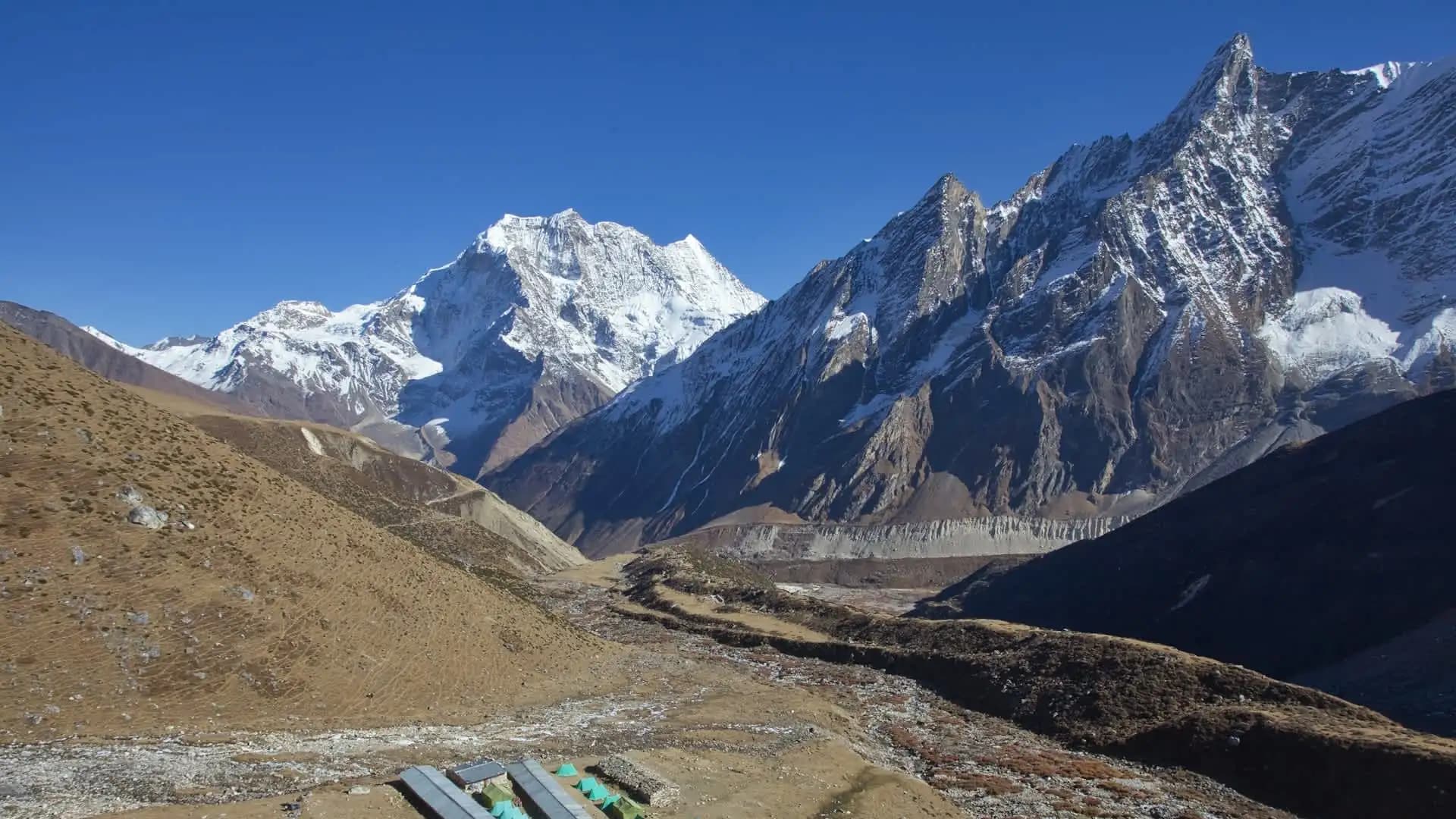
The Manaslu Circuit Trek circles Mount Manaslu (8,163 m), the eighth-highest mountain in the world, crossing the Larkya La Pass at 5,106 meters before descending into the Annapurna region near Dharapani. Often described as a quieter, more remote alternative to the Annapurna Circuit, Manaslu combines genuine high-altitude trekking, Tibetan-influenced Nupri culture, and dramatically fewer crowds — all inside a restricted area that requires special permits and a licensed guide.
This guide covers the complete route, permit requirements, realistic costs, best seasons, and practical tips for planning a 2026 Manaslu Circuit trek.
Manaslu Circuit Trek at a Glance
Fact | Detail |
|---|---|
Mountain the trek circles | Mount Manaslu, 8,163 m (26,781 ft) — 8th highest mountain in the world |
Highest point on the trek | Larkya La Pass, 5,106 m (16,752 ft) |
Typical duration | 11–18 days (12–14 days most common) |
Total distance | Approximately 150–177 km depending on start/end points |
Starting point | Machha Khola or Soti Khola (~870–930 m) |
Finishing point | Dharapani (~1,860–1,953 m), continuing to Besisahar |
Difficulty | Moderate to challenging |
Permits required | Manaslu Restricted Area Permit (RAP), MCAP, ACAP |
Guide requirement | Mandatory — solo trekking not permitted |
Best seasons | Spring (March–May) and autumn (September–November) |
Why Trek the Manaslu Circuit
Manaslu offers a genuinely different experience from Nepal's more famous circuits. Where the Annapurna Circuit and Everest Base Camp trek see heavy trekker traffic, particularly during peak season, Manaslu's restricted-area status — requiring special permits and a mandatory guide — has kept trekker numbers meaningfully lower, preserving both a quieter trail experience and villages that feel less shaped by mass tourism than comparable stops elsewhere in Nepal.
The route follows the Budhi Gandaki River valley through a genuine cross-section of Nepal's geography and culture: subtropical lower valleys and terraced farmland give way to Tibetan-influenced Buddhist villages in the upper Nupri region, culminating in a high mountain pass crossing that rivals Thorong La on the Annapurna Circuit for scale and drama, with considerably fewer trekkers sharing the trail.
Mount Manaslu: The Mountain Behind the Trek
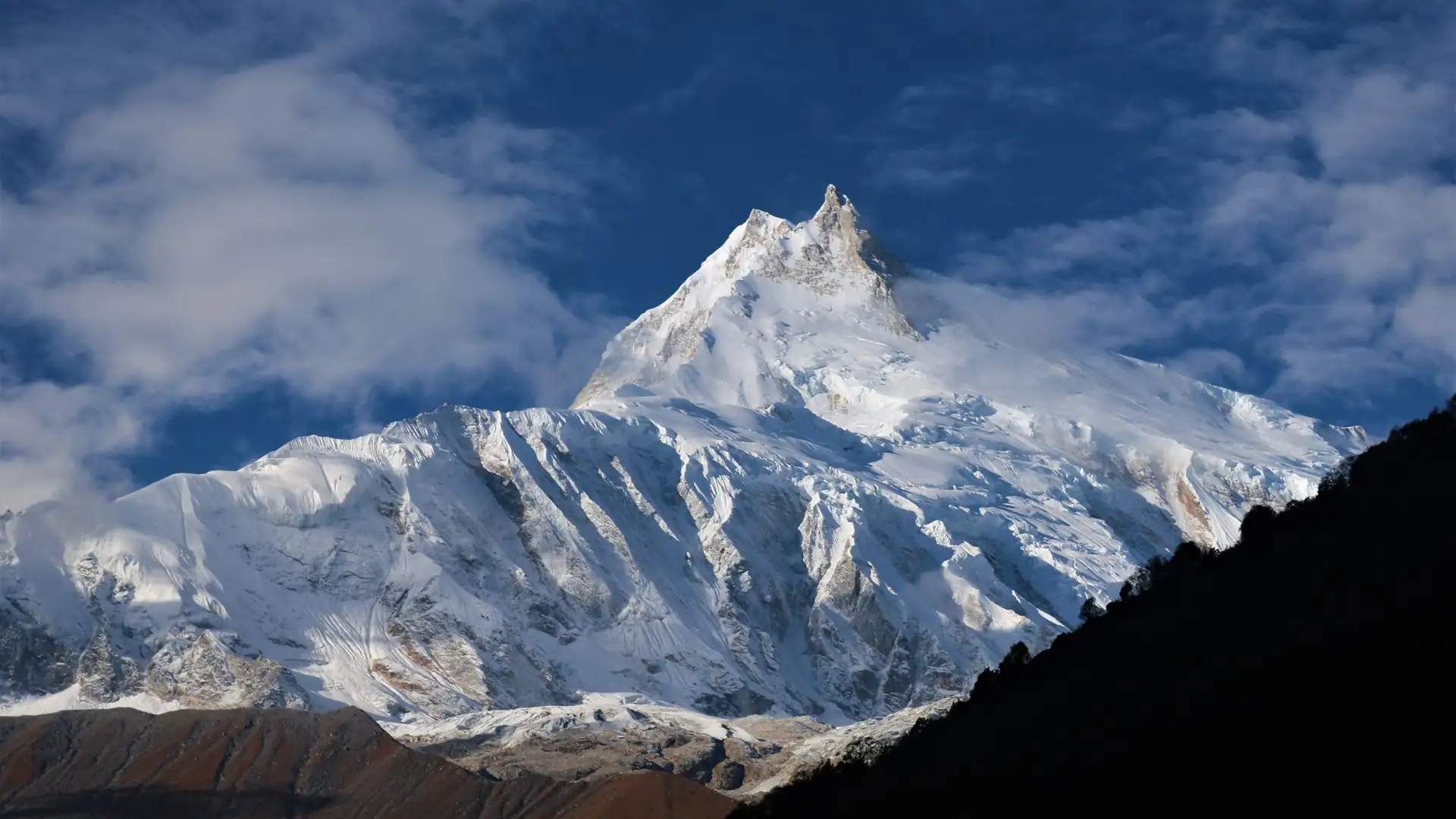
Manaslu, at 8,163 meters, is the eighth-highest mountain in the world and sits entirely within Nepal, unlike several other 8,000-meter peaks that straddle the Nepal-China border. Its name derives from the Sanskrit word "manasa," roughly translating to "mountain of the spirit" or "intellect," a name widely believed to reflect the mountain's towering presence over the surrounding landscape.
The first successful ascent of Manaslu was achieved on May 9, 1956, by Toshio Imanishi and Gyalzen Norbu, as part of a Japanese expedition — a milestone that led to Manaslu becoming closely associated with Japanese mountaineering, since Japanese teams made several of the pioneering attempts on the mountain during the 1950s.
Manaslu has since become one of the more frequently climbed 8,000-meter peaks for commercial expeditions, in part because it's considered somewhat more accessible from a technical standpoint than several other peaks in this elevation category, though it still carries real objective risk, including notable avalanche danger on certain sections of its standard route.
Trekkers on the Manaslu Circuit don't climb the mountain itself, but the standard route offers some of the closest trekking-accessible views of an 8,000-meter peak available anywhere in Nepal, particularly from Samagaon and the nearby Manaslu Base Camp side trip.
The Complete Route: Day-by-Day Itinerary
The most commonly used Manaslu Circuit itinerary runs 11 to 14 days on the trail (before adding Kathmandu arrival/departure days), following the Budhi Gandaki River from the lowlands up to Samagaon, across Larkya La, and down into the Marsyangdi valley near Dharapani.
Standard 12-Day Trekking Itinerary
Day | Route | Elevation | Distance | Walking time |
|---|---|---|---|---|
1 | Drive Kathmandu to Machha Khola | ~870–930 m | ~160 km (drive) | 8–10 hours |
2 | Machha Khola to Jagat | 1,340 m | ~16–22 km | 6–7 hours |
3 | Jagat to Deng | 1,860 m | ~19–20 km | 6–7 hours |
4 | Deng to Namrung | 2,630 m | ~17–19 km | 6–7 hours |
5 | Namrung to Samagaon (via Lho and Shyala) | 3,520–3,530 m | ~18 km | 6–8 hours |
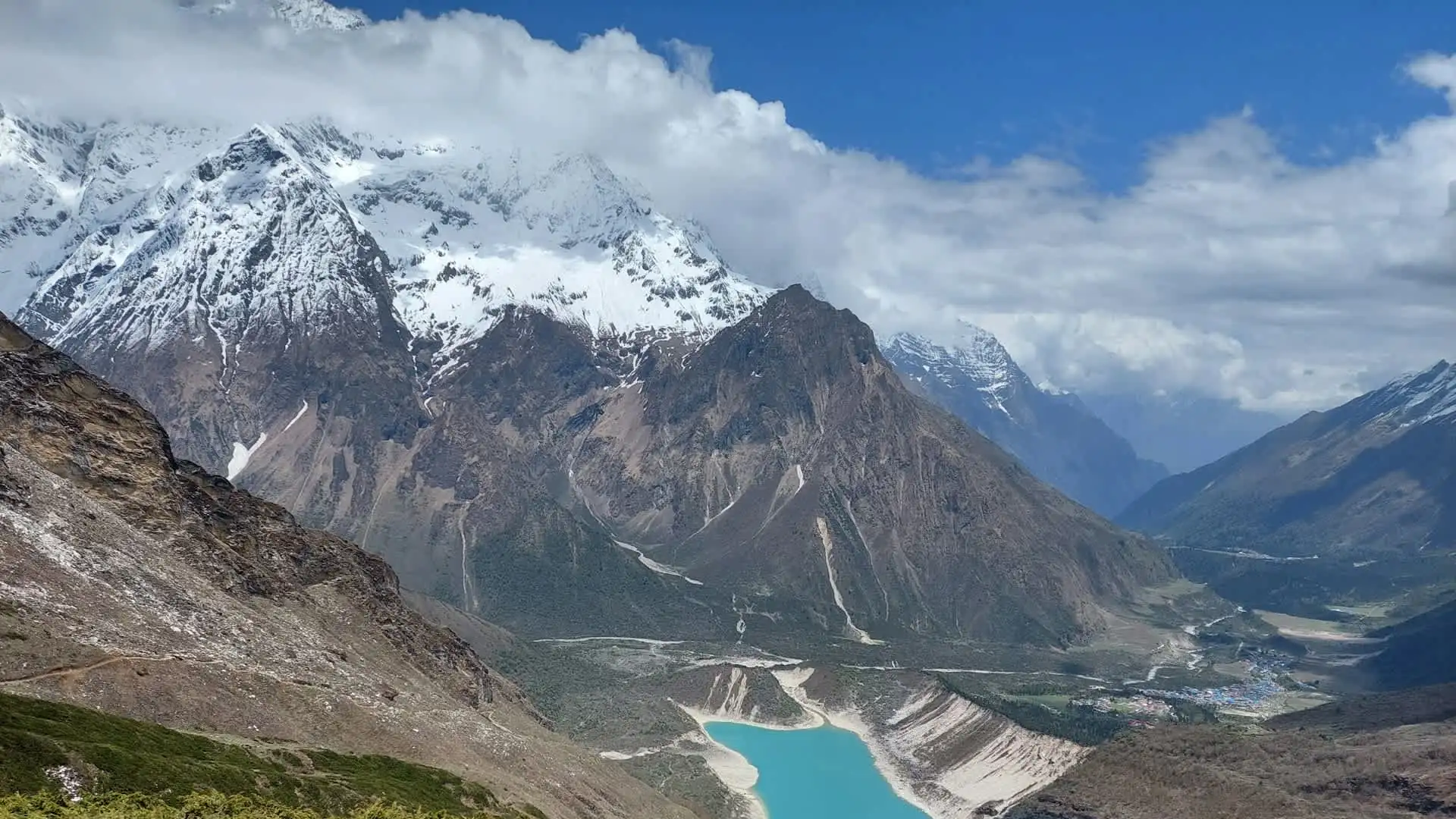
6 | Acclimatization day at Samagaon (optional hike to Manaslu Base Camp or Birendra Lake) | 3,520–3,530 m | Variable | 2–7 hours (optional) |
7 | Samagaon to Samdo | 3,875 m | ~8 km | 3–4 hours |
8 | Samdo to Dharamsala (Larkya Phedi) | 4,460 m | ~6–7 km | 3–5 hours |
9 | Dharamsala over Larkya La Pass to Bhimtang | 5,106 m (pass), 3,590–3,720 m (Bhimtang) | ~16–24 km | 8–10 hours |
10 | Bhimtang to Tilje/Dharapani | 1,860–1,953 m | ~18–19 km | 6–7 hours |
11 | Drive Dharapani to Besisahar to Kathmandu | 1,400 m | ~175–220 km (drive) | 8–10 hours |
12 | Departure/buffer day | — | — | — |
Longer itineraries (up to 15–18 days) typically add extra acclimatization days, a Tsum Valley side trip, or additional buffer for the Larkya La crossing, while more compressed 10-day versions remove some of the buffer without changing the core route structure.
Elevation Profile: The Complete Picture
Understanding the full elevation profile helps illustrate why proper pacing matters so much on this specific trek — the route climbs from below 1,000 meters to over 5,100 meters within roughly a week and a half.
Location | Elevation |
|---|---|
Kathmandu | ~1,400 m |
Machha Khola/Soti Khola | 870–930 m |
Jagat | 1,340 m |
Deng | 1,860 m |
Namrung | 2,630 m |
Lho | 3,180 m |
Samagaon | 3,520–3,530 m |
Samdo | 3,860–3,875 m |
Dharamsala (Larkya Phedi) | 4,460 m |
Larkya La Pass | 5,106 m |
Bhimtang | 3,590–3,720 m |
Dharapani | 1,860–1,953 m |
Besisahar | 760 m |
The route's structure genuinely mirrors the Annapurna Circuit's approach to Thorong La — a steady climb through a river valley to a high-altitude staging village (Samagaon, playing a similar role to Manang), followed by a further push to a pass-adjacent camp (Dharamsala, similar to Thorong Phedi), before the pass crossing itself and a steep descent on the other side.
The Larkya La Pass Crossing
At 5,106 meters, Larkya La is the trek's highest point and its defining physical challenge — a genuinely demanding crossing that, like Thorong La on the Annapurna Circuit, is typically undertaken with a pre-dawn start to avoid the stronger winds that build later in the day and to maximize the chances of a clear weather window.
Key facts about the crossing:
The crossing day (Dharamsala to Bhimtang via the pass) is the longest and most demanding single day of the trek, typically taking 8 to 10 hours.
Total distance covered on crossing day often runs 16 to 24 kilometers, combined with a significant net elevation change.
The descent from the pass to Bhimtang drops substantially in a single push, similar in character to the Thorong La to Muktinath descent on the Annapurna Circuit.
Weather conditions at this altitude can change quickly, and trekkers should treat the crossing with the same seriousness given to any Himalayan pass above 5,000 meters.
Permits Required for the Manaslu Circuit (2026)
The Manaslu Circuit requires more permits than most other Nepal treks, reflecting its restricted-area status. As of 2026, trekkers need three separate permits.
1. Manaslu Restricted Area Permit (RAP)
This is the primary, cost-driving permit, and its price varies by season and trek duration.
Season | First 7 days | Each additional day |
|---|---|---|
Autumn (September–November) | USD 100 | USD 15/day |
Winter, Spring, Summer (December–August) | USD 75 | USD 10/day |
The RAP covers the restricted stretch of the route, generally cited as running from Jagat to Dharapani (or, in some sources, to Sama Gaon), and can only be obtained through a registered trekking agency — independent application isn't possible for this specific permit.
2. Manaslu Conservation Area Permit (MCAP)
Nationality | Cost |
|---|---|
Foreign nationals (non-SAARC) | NPR 3,000 (~USD 23–30) |
SAARC nationals | NPR 1,000 (or in some sources, NPR 200) |
Nepali citizens | NPR 100 |
This is a flat, one-time fee regardless of trek duration, covering entry into the Manaslu Conservation Area.
3. Annapurna Conservation Area Permit (ACAP)
Nationality | Cost |
|---|---|
Foreign nationals (non-SAARC) | NPR 3,000 (~USD 23–30) |
SAARC nationals | NPR 1,000 |
Required because the final stretch of the circuit, from around Dharapani onward, falls within the Annapurna Conservation Area rather than the Manaslu Conservation Area.
Additional local fee
A Chum-Nubri Rural Municipality development fee, typically around NPR 1,000–2,000 (roughly USD 8–15), is also collected, generally at Jagat.
Permit summary table
Permit | Cost (2026) | Notes |
|---|---|---|
RAP (autumn) | USD 100 first 7 days + USD 15/extra day | Covers restricted section; agency-only application |
RAP (Dec–Aug) | USD 75 first 7 days + USD 10/extra day | Lower off-season rate |
MCAP | NPR 3,000 (~USD 23–30) | Flat fee, one-time |
ACAP | NPR 3,000 (~USD 23–30) | Flat fee, one-time |
Chum-Nubri local fee | ~NPR 1,000–2,000 (~USD 8–15) | Collected at Jagat |
TIMS card | Not required | RAP replaces the need for TIMS on this route |
Total permit cost for a standard 12-to-14-day trek typically runs approximately USD 150 to USD 265 per person depending on season and exact duration, with autumn (peak season) at the higher end and the December-to-August window offering meaningfully lower RAP costs.
The Mandatory Guide Requirement
A licensed guide is legally required for the entire Manaslu Circuit, enforced at multiple checkpoints between Jagat and Dharapani — this is not optional or a recommendation, but a hard requirement tied directly to the Restricted Area Permit system. In March 2026, Nepal removed the previous minimum-group-size requirement of two trekkers per group for several restricted areas, including routes in this general regulatory category — meaning solo trekkers can now be issued permits individually, but the guide requirement itself remains fully in place regardless of group size.
Requirement | 2026 status |
|---|---|
Licensed guide | Mandatory, no exceptions |
Minimum group size | Removed as of March 2026 — solo trekkers can now obtain permits |
Independent (unguided) trekking | Not permitted anywhere on the restricted section |
How Much Does the Manaslu Circuit Trek Cost?
Total trip cost varies by operator, group size, itinerary length, and level of service, but a reasonable range for a standard guided package can be outlined as follows.
Cost category | Typical range |
|---|---|
Guided package (11–14 days, group departure) | $700–$1,536 per person, depending on operator and inclusions |
Permits (RAP + MCAP + ACAP + local fee) | $150–$265, depending on season and duration |
Guide and porter (per day, if hired separately) | $25–$30/day each |
Teahouse meals | $5–$12 per meal |
Kathmandu–Machha Khola transport (round trip) | Included in most packages; independently arranged transport costs vary |
A guided package from a registered agency typically bundles permits, guide, porter, teahouse accommodation, and meals into a single price — a genuinely practical approach given the mandatory guide requirement and the complexity of arranging three separate permits independently.
Teahouse Accommodation Along the Route
Like most major Nepal treks, the Manaslu Circuit runs on the teahouse system throughout — small, family-run guesthouses offering basic private rooms and home-cooked meals, with the same general "eat where you sleep" arrangement common across Nepal's trekking regions.
Section of the route | Teahouse standard |
|---|---|
Lower valley (Machha Khola to Namrung) | Basic to moderate, increasingly Tibetan-influenced further up |
Mid-altitude (Lho, Samagaon, Samdo) | Basic, genuine Tibetan Buddhist village character |
High altitude (Dharamsala/Larkya Phedi) | Very basic, limited facilities, cold |
Post-pass (Bhimtang, Tilje, Dharapani) | Basic to moderate, back into more established trekking infrastructure |
Given the route's more remote, restricted-area status compared to the Annapurna Circuit or Everest Base Camp, teahouse infrastructure is generally somewhat more basic overall, particularly in the upper Nupri villages — a genuine trade-off for the quieter, less-commercialized trail experience this route is known for.
Best Time to Trek the Manaslu Circuit
Season | Months | Conditions |
|---|---|---|
Spring | March–May | Good weather, rhododendron blooms at lower elevations, generally stable conditions for the Larkya La crossing |
Autumn | September–November | Clearest skies of the year, most popular season, best mountain visibility |
Winter | December–February | Cold, Larkya La can become genuinely difficult or risky to cross due to snow; lower RAP cost during this window |
Monsoon | June–August | Wet, leech-prone lower trail, reduced visibility, landslide risk on lower sections; lower RAP cost during this window |
Autumn is generally considered the single best season, offering the clearest visibility of Manaslu and the surrounding peaks along with the most stable conditions for the Larkya La crossing, though it also comes with the highest RAP cost of the year. Spring is a strong second choice.
Winter crossings of Larkya La require genuine caution given snow accumulation at that altitude, and while the off-season RAP pricing (December through August) is lower, this reflects the more challenging conditions during parts of that window rather than a straightforwardly "better value" period.
Difficulty: What to Genuinely Expect
The Manaslu Circuit is generally rated moderate to challenging — a step up in difficulty from the Annapurna Base Camp trek, broadly comparable to the Annapurna Circuit, given the similar maximum altitude (5,106 m vs. 5,416 m) and comparable trek length.
Difficulty factor | Manaslu Circuit reality |
|---|---|
Technical climbing skill required | None |
Maximum altitude | 5,106 m (Larkya La) |
Total trek length | 11–18 days |
Remoteness | Higher than Annapurna Circuit or EBC — fewer rescue and resupply options |
Terrain | River valley trail, transitioning to high alpine terrain near the pass |
Acclimatization requirement | Significant — built-in rest day at Samagaon is essential, not optional |
The trek's remoteness is a genuine difficulty factor worth taking seriously — unlike the Annapurna Circuit, which has seen substantial road development easing evacuation and resupply logistics in recent years, Manaslu's restricted-area status has kept infrastructure development more limited, meaning emergency evacuation and rescue logistics can be more challenging in parts of this route, reinforcing the importance of proper acclimatization and a guide experienced with current conditions.
Cultural Highlights Along the Route
The Manaslu Circuit passes through a genuinely rich cultural corridor, with a clear cultural shift as the trail climbs from the lower Budhi Gandaki valley into the upper Nupri region.
Lower valley villages (Machha Khola, Jagat) reflect a mixed cultural influence typical of Nepal's mid-hills.
Deng and Namrung mark the beginning of stronger Tibetan Buddhist cultural influence, visible in increasingly prominent mani walls, chortens, and monastery architecture.
Samagaon and Samdo, in the upper Nupri region, are genuinely Tibetan-influenced villages, historically connected to trans-Himalayan trade routes with Tibet, and offer some of the most culturally distinctive stops on the entire route.
Pungyen Monastery, near Samagaon, is a notable side-trip destination for trekkers with extra time, offering both religious significance and close mountain views.
This cultural progression — from mixed lowland influence to genuinely Tibetan highland culture — closely parallels what trekkers experience on the Annapurna Circuit's approach to Manang, though the Manaslu region's more restricted tourism history has generally preserved a somewhat less commercialized version of this cultural transition.
Optional Extension: Tsum Valley
Trekkers with additional time available frequently extend the Manaslu Circuit with a side trip into Tsum Valley, a separate restricted area branching off the main route, historically significant as a former Buddhist "hidden valley" with its own distinct culture and monasteries.
Tsum Valley permit | Cost |
|---|---|
Peak season (September–November) | USD 40 first 7 days + USD 7/extra day |
Off-season (December–August) | USD 30 first 7 days + USD 7/extra day |
This is a separate restricted area permit from the main Manaslu RAP, and the extension typically adds several additional days to the overall itinerary — a worthwhile consideration for trekkers with two-plus weeks available who want an even quieter, more culturally immersive addition to the main circuit.
Comparing Manaslu Circuit to the Annapurna Circuit
Given how frequently these two treks are compared, a direct side-by-side is genuinely useful for trekkers deciding between them.
Factor | Manaslu Circuit | Annapurna Circuit |
|---|---|---|
Highest point | Larkya La, 5,106 m | Thorong La, 5,416 m |
Typical duration | 11–18 days | 12–20 days |
Total distance | ~150–177 km | 160–230 km |
Crowds | Considerably quieter | Busier, more established trekking infrastructure |
Permits | RAP + MCAP + ACAP (restricted area) | ACAP only |
Guide requirement | Mandatory | Mandatory |
Road development | More limited | More extensive, especially near Manang and Muktinath |
Cultural character | Strong Tibetan influence in upper Nupri region | Strong Tibetan influence around Manang |
Overall permit cost | Higher (restricted area fees) | Lower |
The core trade-off: Manaslu offers a quieter, more remote experience at a somewhat higher permit cost and with a comparably demanding pass crossing, while the Annapurna Circuit offers more established infrastructure, generally lower permit costs, and a somewhat more road-accessible (and therefore, in places, less pristine) trail experience.
Physical Preparation Recommendations
Given the trek's genuine altitude demands (5,106 m) and extended duration, preparation should mirror what's recommended for comparably demanding treks like the Annapurna Circuit.
Preparation area | Recommendation |
|---|---|
Cardiovascular training | 8–12 weeks before departure, building toward sustained multi-hour hikes |
Footwear | Broken-in trekking boots, tested on training hikes well before departure |
Altitude awareness | Understand AMS symptoms and response; discuss preventive medication with a doctor if desired |
Cold-weather gear | Genuine down jacket, warm layers, given Larkya La's extreme altitude and Dharamsala's basic facilities |
Travel insurance | Essential, with confirmed high-altitude and emergency evacuation coverage given the route's remoteness |
FAQs about Manaslu Circuit Trek Guide
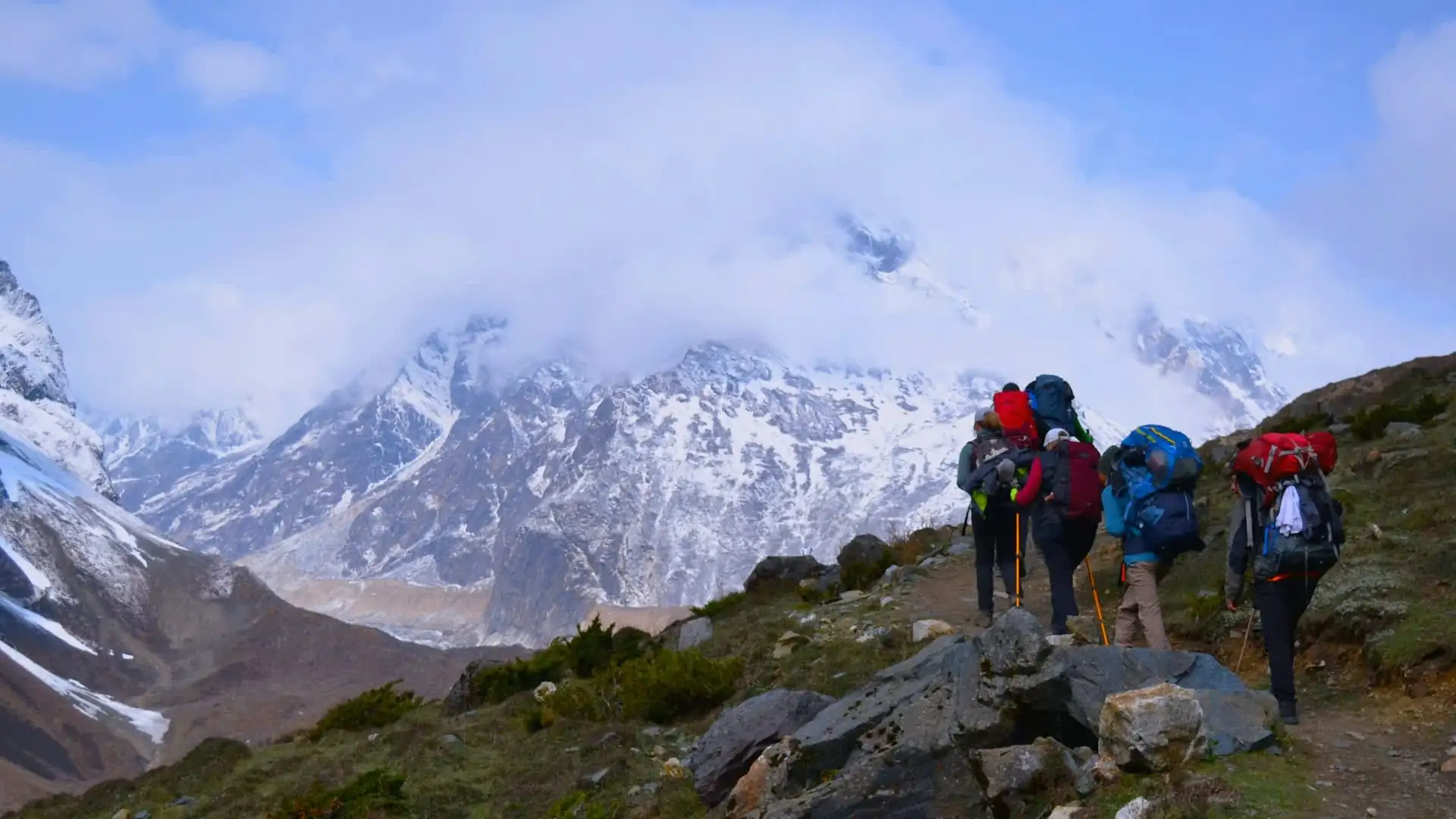
How long does the Manaslu Circuit Trek take? Most itineraries run 11 to 18 days on the trail, with 12 to 14 days being the most common standard length.
What is the highest point on the Manaslu Circuit? Larkya La Pass, at 5,106 meters (16,752 feet).
How tall is Mount Manaslu? 8,163 meters (26,781 feet), making it the eighth-highest mountain in the world.
Do I need a guide for the Manaslu Circuit? Yes, without exception. A licensed guide is legally required for the entire restricted section of the route, enforced at multiple checkpoints.
Can I trek Manaslu solo? As of March 2026, the previous minimum-group-size requirement of two trekkers has been removed, so solo trekkers can now obtain permits individually — but a licensed guide is still mandatory regardless of group size.
What permits do I need for the Manaslu Circuit? Three permits: the Manaslu Restricted Area Permit (RAP), the Manaslu Conservation Area Permit (MCAP), and the Annapurna Conservation Area Permit (ACAP), plus a small local development fee collected at Jagat.
How much does the Manaslu Circuit Trek cost in total? Permits alone typically cost USD 150 to USD 265 depending on season and duration; a full guided package generally runs $700 to $1,500+ per person depending on operator, group size, and inclusions.
Do I need a TIMS card for this trek? No — the Restricted Area Permit system replaces the need for a TIMS card on the Manaslu Circuit.
When is the best time to trek Manaslu? Autumn (September–November) offers the clearest skies and most stable conditions, though it also carries the highest permit cost. Spring (March–May) is a strong alternative with generally good weather.
Is the Manaslu Circuit harder than the Annapurna Circuit? The two are broadly comparable in difficulty, with Manaslu's Larkya La (5,106 m) sitting slightly lower than Thorong La (5,416 m), but Manaslu's greater remoteness and more limited infrastructure add a genuine additional difficulty factor.
How does Manaslu compare to Everest Base Camp in difficulty? Manaslu's Larkya La crossing at 5,106 meters is comparable in altitude challenge to Everest Base Camp's Kala Patthar viewpoint (5,644 m), though the two treks follow very different route structures and cultural regions.
What's the total distance of the Manaslu Circuit? Approximately 150 to 177 kilometers depending on the exact start and end points used.
Can the Manaslu Circuit be combined with other treks or extensions? Yes — Tsum Valley is a popular restricted-area extension requiring its own separate permit, and some itineraries connect the trek's ending near Dharapani into a partial Annapurna Circuit route.
Is the Manaslu Circuit less crowded than the Annapurna Circuit? Yes, considerably — the restricted-area permit system and mandatory guide requirement have kept trekker numbers meaningfully lower than on the more established Annapurna Circuit.
What's the acclimatization day built into the standard itinerary for? A rest day at Samagaon (3,520–3,530 m), allowing the body to adjust before continuing to Samdo, Dharamsala, and the Larkya La crossing — genuinely important given the substantial remaining elevation gain ahead.
Do I need travel insurance for this trek? Yes, essential — given Larkya La's 5,106-meter altitude and the route's genuine remoteness, insurance with confirmed high-altitude and emergency helicopter evacuation coverage is a non-negotiable preparation step.
What's the closest view of Manaslu itself available on this trek? From Samagaon and the optional Manaslu Base Camp side trip, which offers some of the closest trekking-accessible views of an 8,000-meter peak available anywhere in Nepal.
Is the Larkya La crossing dangerous? Under normal conditions with proper acclimatization and a guide experienced with the route, most trekkers cross safely, though the crossing demands the same respect given to any Himalayan pass above 5,000 meters — an early start, weather awareness, and willingness to delay if conditions warrant it.
Why does the RAP cost more in autumn than in other seasons? The higher autumn rate reflects peak-season demand and the clearer, more stable weather conditions typically available during that window, while the lower December-to-August rate corresponds to more challenging or less predictable conditions during parts of that period.
Is the Manaslu Circuit suitable for a first Himalayan trek? It's generally better suited to trekkers with some prior high-altitude trekking experience, given the route's remoteness, the significant altitude at Larkya La, and the more limited infrastructure compared to Nepal's more established treks like Everest Base Camp or the Annapurna Circuit.
Conclusion on Manaslu Circuit Trek Guide
The Manaslu Circuit Trek offers a genuine alternative to Nepal's more famous circuits — a comparably dramatic high-altitude pass crossing at Larkya La, close-range views of the world's eighth-highest mountain, and a rich Tibetan Buddhist cultural corridor through the upper Nupri region, all with considerably fewer trekkers on the trail than the Annapurna Circuit or Everest Base Camp. The trade-off is real: more complex permit requirements, a higher overall permit cost, and greater remoteness that demands more careful preparation and a guide genuinely experienced with current route conditions.
For trekkers who've already experienced Nepal's more established routes and are looking for something quieter, more culturally immersive, and every bit as physically rewarding, Manaslu delivers a Himalayan crossing that rivals its more famous counterparts in every respect except the crowds.
Adventure Life Nepal builds every Manaslu Circuit itinerary around this exact balance — genuine acclimatization pacing, an experienced guide who knows the restricted-area logistics, and enough time built in to properly experience one of Nepal's most rewarding and least-crowded classic treks.