Mardi Himal View Point 2026: Altitude, Sunrise & Trek Guide
Introduction to Mardi Himal View Point
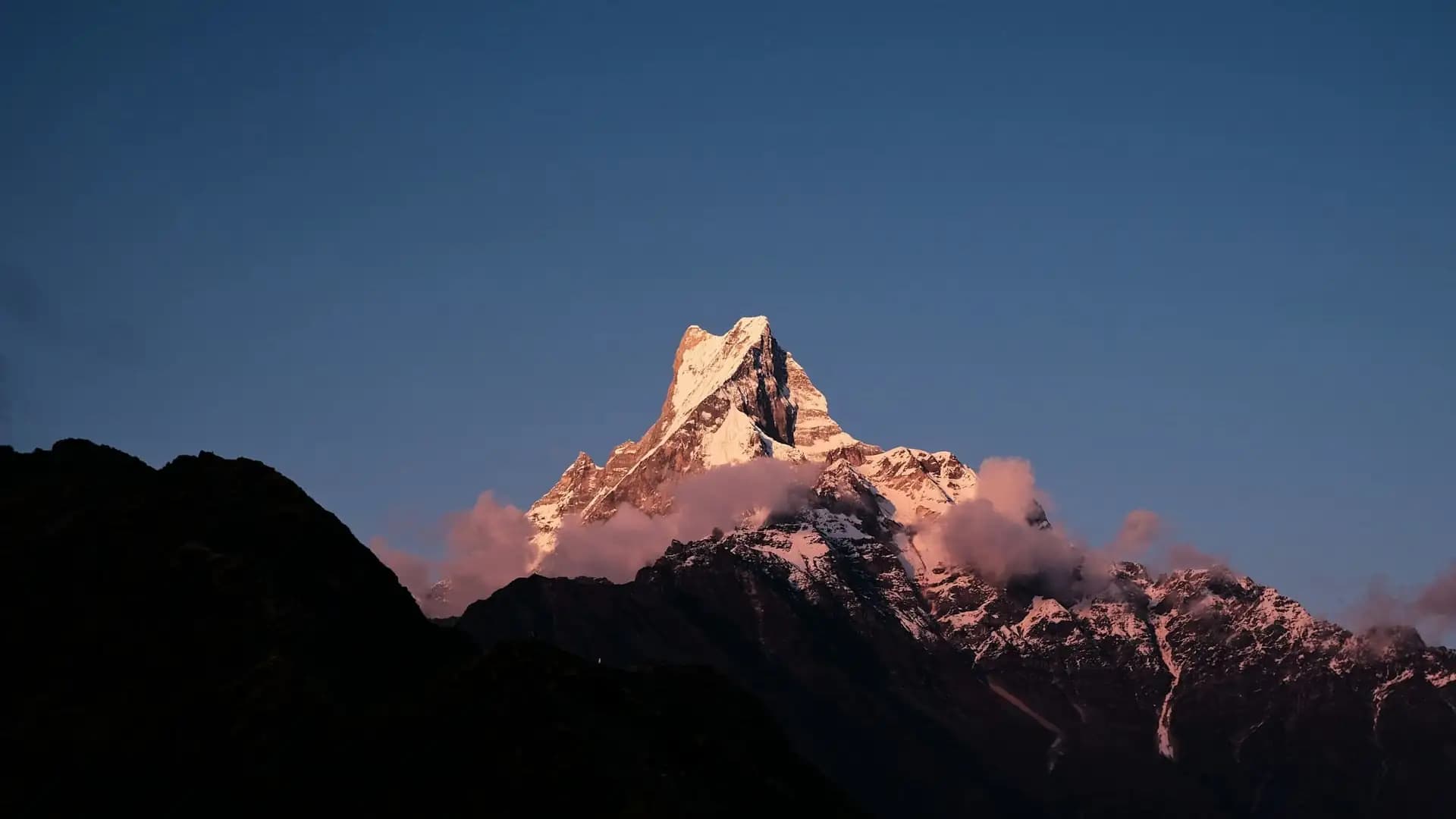
There's a specific moment every Mardi Himal trekker is chasing, whether they've articulated it or not: standing on a narrow ridge above 4,000 meters, in the dark, watching the first light hit Machapuchhre's fishtail summit close enough that it feels like you could reach it before breakfast. That moment happens at one place, the Mardi Himal View Point, and almost everything else in the trek's planning exists to get you there for sunrise, in one piece, with clear skies.
This guide is built around that single destination rather than the trek as a whole. If you already know you're doing Mardi Himal and you specifically want to understand the viewpoint itself, its real altitude, what the final morning actually involves, what you'll see, and how to time it for the best possible sunrise, this is the guide for that.
Quick Facts: Mardi Himal View Point
Detail | Information |
|---|---|
Altitude | Approximately 4,200–4,250 m (13,780–13,940 ft) |
Nearest overnight stop | High Camp (3,580 m) or Badal Danda (3,210 m) |
Distance/time from High Camp | 4–7 km, roughly 2–3 hours one way |
Typical wake-up time for sunrise | 4:00–5:00 a.m. |
Best season for clear views | Late September–November; March–April |
Peaks visible | Machapuchhre (Fishtail), Annapurna I, Annapurna South, Hiunchuli, Gandharva Chuli, Mardi Himal |
Relationship to "Base Camp" | A separate, slightly lower stop roughly 1–1.5 hours below Mardi Himal Base Camp (4,500 m) |
Trail surface | Narrow ridge, loose scree and rock in the final stretch, occasional ice in winter |
Region | Annapurna Conservation Area, Gandaki Province, Nepal |
Where Exactly Is the Mardi Himal View Point?
The Mardi Himal View Point sits on a narrow alpine ridge above High Camp, in the Annapurna Conservation Area, roughly midway between Pokhara and the base of Machapuchhre's southern face. It's part of the broader Mardi Himal trekking route, a trail that only opened in 2012, but it functions as its own distinct landmark, separate from both High Camp below it and Mardi Himal Base Camp slightly above it.
This distinction matters more than most planning guides admit. Three different points get casually referred to as "the top of Mardi Himal trek," and they're not the same place:
High Camp (3,580 m) — the last teahouse stop, where nearly everyone sleeps before summit morning.
Mardi Himal View Point / Upper View Point (4,200–4,250 m) — the ridge point most itineraries treat as the primary sunrise destination.
Mardi Himal Base Camp (4,500 m) — a further, higher point beyond the viewpoint, reached by continuing roughly 1–1.5 hours past it.
None of these is the summit of Mardi Himal itself, which rises to 5,587 meters and requires a technical climbing permit entirely separate from the trekking permits covered later in this guide. The View Point and Base Camp are both trekking destinations, reachable on foot without ropes or climbing gear.
Mardi Himal View Point Altitude, Explained Properly
Because so much conflicting altitude information circulates for this trek, it's worth being precise here rather than rounding loosely.
Landmark | Altitude (meters) | Altitude (feet) |
|---|---|---|
Low Camp | ~2,970–3,050 m | 9,744–10,007 ft |
Badal Danda (Middle Camp) | ~3,210 m | 10,531 ft |
High Camp | ~3,580 m | 11,745 ft |
Mardi Himal View Point | ~4,200–4,250 m | 13,780–13,940 ft |
Mardi Himal Base Camp | ~4,500 m | 14,763 ft |
Mardi Himal (the peak itself) | 5,587 m | 18,330 ft |
Machapuchhre (visible from viewpoint) | 6,993 m | 22,943 ft |
The gap between High Camp and the View Point — roughly 620–670 vertical meters — is covered in a single push on summit morning, which is precisely why this stretch is the most physically demanding part of the entire trek, regardless of which overall itinerary length you've chosen.
The Sunrise Hike: What Actually Happens on Summit Morning
This is the part every trekker wants specifics on, so here's what a realistic summit morning looks like, based on how it plays out on the trail rather than how it reads in a brochure.
4:00–5:00 a.m. — Wake-up. Guides typically knock on doors while it's still fully dark and noticeably cold, often below freezing at High Camp even in peak season. Tea or coffee is usually available before departure, though a full breakfast is normally saved for after the return.
Departure by headlamp. The first section out of High Camp climbs steadily through the last of the tree line into open alpine terrain. This part of the trail is well-trodden but narrow, and a headlamp is not optional — there's no ambient light this early, and the ridge has real drop-offs on either side in places.
The ridge walk. As you gain altitude, the trail narrows onto an open ridge with minimal vegetation. This is both the most exposed and the most spectacular section — wind picks up noticeably, and at this altitude your pace naturally slows regardless of fitness level.
Arrival before first light. Most guided groups aim to reach the View Point 20–40 minutes before actual sunrise, giving time to catch your breath, layer up further (temperatures at the viewpoint before sunrise commonly sit several degrees colder than at High Camp), and find solid footing before the light show starts.
The sunrise itself. Machapuchhre catches the first alpenglow, turning gold and then white as the light spreads across Annapurna South, Hiunchuli, and Annapurna I in sequence. This typically unfolds over 20–30 minutes, not an instant event — worth knowing so you don't rush your photos in the first five minutes and miss the best light later.
Decision point: viewpoint or push on to Base Camp. Trekkers who feel strong and have time often continue the additional 1–1.5 hours to Mardi Himal Base Camp (4,500 m) for an even closer angle on the mountain walls. Others, especially those feeling the altitude, turn back from the View Point itself — which is a completely reasonable choice, not a lesser experience.
Return to High Camp. The descent takes roughly half the time of the ascent, and breakfast is usually waiting back at the teahouse.
What You'll Actually See From the Viewpoint
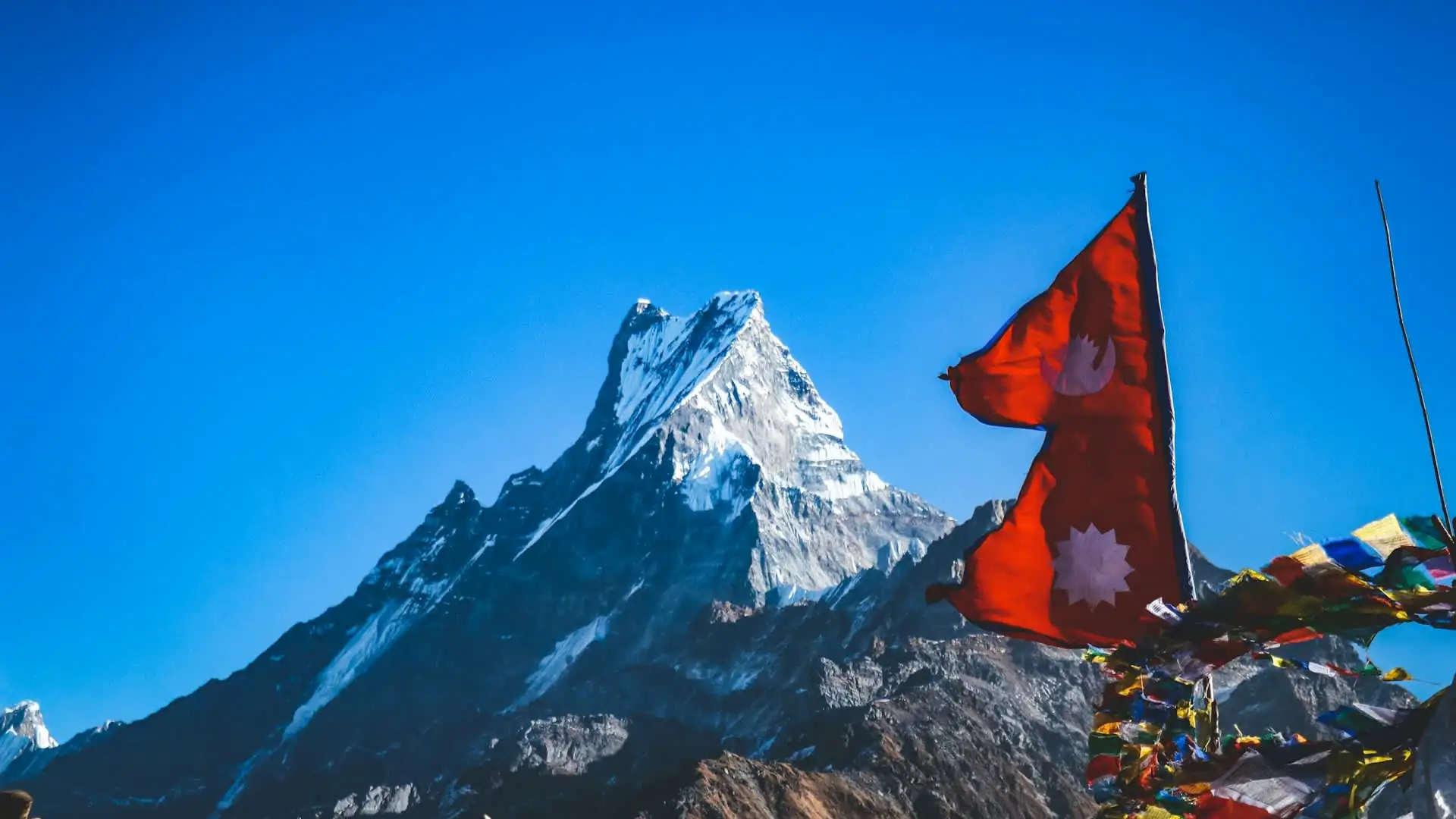
The panorama from the Mardi Himal View Point is genuinely different from what you get at Annapurna Base Camp or Poon Hill, mainly because of proximity and angle rather than raw altitude.
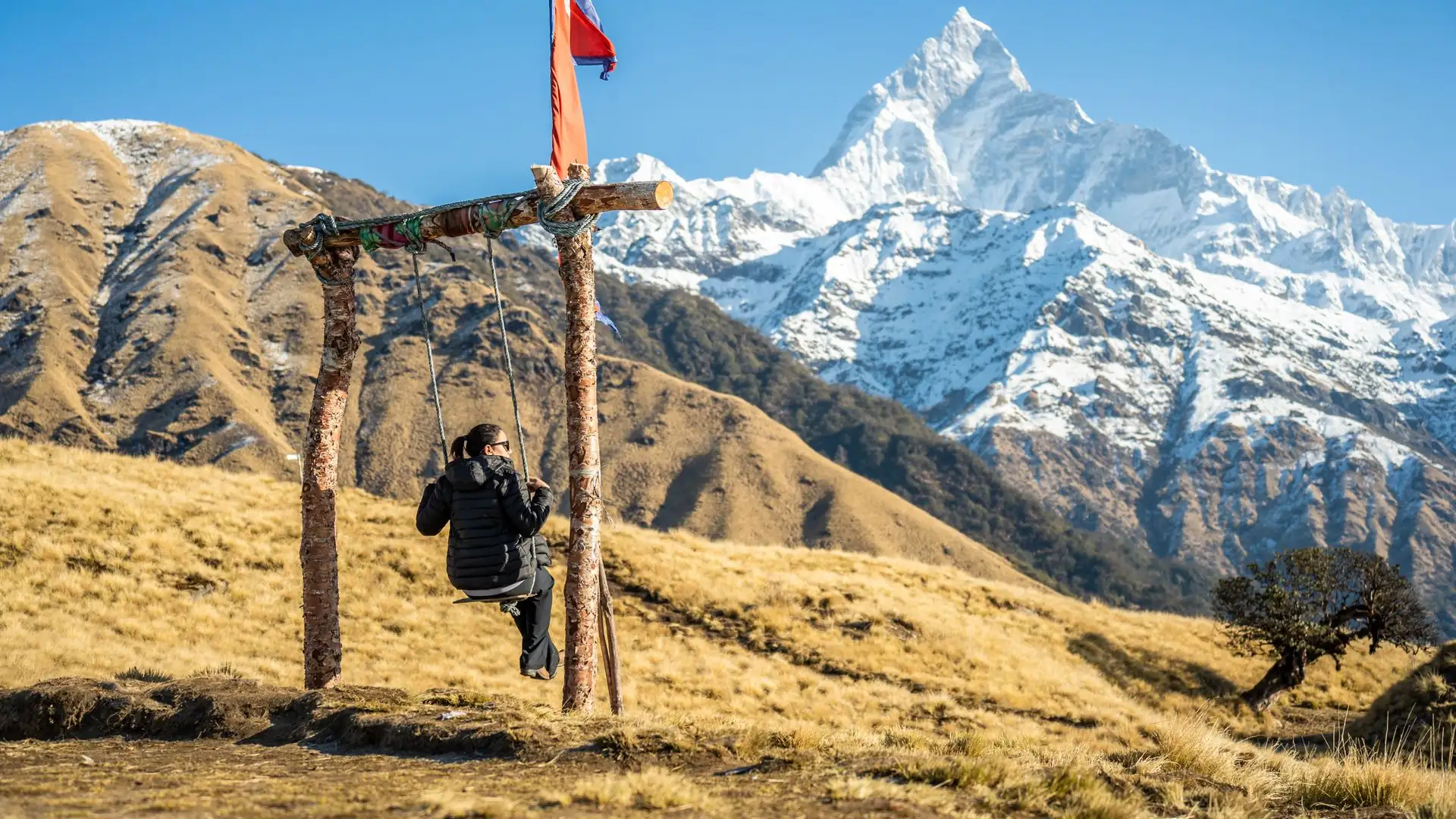
Machapuchhre (Fishtail, 6,993 m) dominates the view at close range — its south face rises almost directly in front of you, and because the peak is sacred and unclimbed, it retains a distinctive untouched profile.
Annapurna South (7,219 m) and Hiunchuli (6,441 m) sit to the west, forming the other side of the amphitheater.
Annapurna I (8,091 m), one of the world's 8,000-meter peaks, is visible further along the range on clear mornings.
Gandharva Chuli and, on especially clear days, sections of the wider Annapurna and Dhaulagiri ranges round out the panorama.
Mardi Himal itself (5,587 m) rises much closer than the other named peaks, since you're standing on its own ridge system.
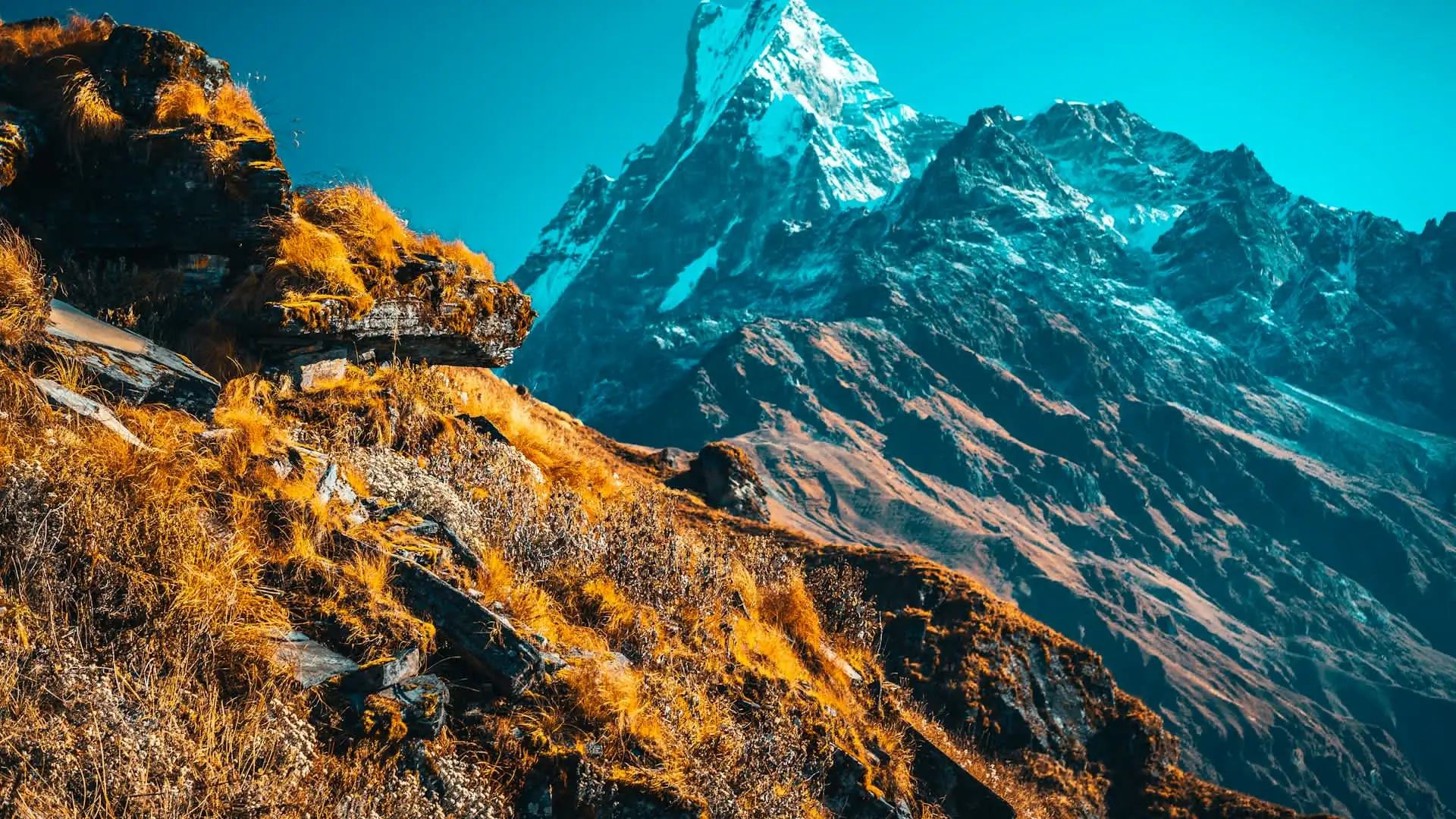
What makes this particular vantage point distinctive isn't sheer altitude — Everest Base Camp and Annapurna Base Camp both sit at comparable or higher elevations — it's the narrowness of the ridge and the closeness of Machapuchhre specifically, which most other trekking routes only view from much greater distance.
How to Reach the Mardi Himal View Point (Route Summary)
Every standard Mardi Himal itinerary funnels toward this same final push, regardless of overall trip length. Here's the condensed route logic:
Stage | Typical Route | Altitude Range |
|---|---|---|
Approach | Pokhara → Kande (drive) → Australian Camp / Pothana → Deurali | 1,770 m → ~2,600 m |
Forest section | Deurali → Forest Camp / Low Camp | 2,600 m → 2,970–3,050 m |
Ridge ascent | Low Camp → Badal Danda → High Camp | 3,050 m → 3,580 m |
Summit push | High Camp → Mardi Himal View Point (→ optional Base Camp) | 3,580 m → 4,200–4,500 m |
If you're planning your full trip, note that trekkers reach this same viewpoint whether they choose a compressed 3–4 day itinerary or a more gradual 7–9 day version — the destination doesn't change, only how much acclimatization buffer you build in beforehand, which matters directly for how you'll feel on this final stretch.
Compressed itineraries reach the viewpoint with less time to adjust to altitude; longer itineraries arrive with your body considerably better prepared for the thinner air at 4,200 meters.
Best Time to Visit the Mardi Himal View Point for Clear Skies
Sunrise views are entirely weather-dependent, so timing matters more here than almost anywhere else in trip planning.
Season | Months | Viewpoint Conditions |
|---|---|---|
Autumn | Late September–November | The most reliable clear mornings of the year; crisp, stable air; November mornings are cold but consistently clear |
Spring | March–April | Good visibility, especially early in the window before pre-monsoon haze builds; rhododendron blooms lower on the trail |
Late Spring | May | Warmer, but afternoon haze increases and morning cloud can build faster |
Monsoon | June–August | Not recommended — cloud cover frequently obscures the viewpoint entirely, and the ridge trail becomes slippery |
Winter | December–February | Often exceptionally clear air, but High Camp and the viewpoint trail can be snow-covered or icy, and some teahouses reduce services |
If clear sunrise photography is your main priority, late October through mid-November offers the most consistent results, with the trade-off of larger crowds during Nepal's peak trekking season.
How Difficult Is the Final Push to the Viewpoint?
This section deserves its own honest treatment, because it's routinely undersold in generic trek descriptions.
What makes it hard:
You're climbing 620–670 vertical meters at altitudes where oxygen availability is meaningfully reduced — roughly 60% of sea-level oxygen at 4,200 meters.
The trail is narrow ridge walking with drop-offs, done partly in darkness by headlamp.
Wind exposure increases sharply above the tree line, and pre-dawn temperatures regularly sit well below freezing.
Loose scree and rock sections near the top demand careful footing, especially in low light.
In winter or after fresh snowfall, sections can ice over, requiring extra caution or, occasionally, microspikes.
What makes it manageable:
The distance itself is short — 4–7 km round trip in most itinerary structures — so it's a demanding morning, not a demanding multi-day slog.
No technical climbing skills, ropes, or crampons are needed under normal conditions.
A slow, steady pace (rather than rushing to beat the light) is genuinely more effective here than speed, and licensed guides pace groups accordingly.
You can turn back at the View Point itself without missing "the real experience" — the panorama here is a complete, worthwhile destination on its own, separate from the additional push to Base Camp.
A fair summary: moderately difficult primarily because of altitude and cold, not because of technical terrain. Reasonably fit trekkers who've acclimatized properly over the preceding days handle it without major issue; those attempting it on a rushed itinerary with no acclimatization buffer feel it considerably more.
What to Pack Specifically for Viewpoint Morning
Beyond your general trek packing list, summit morning has its own specific requirements, since you're facing the coldest temperatures and highest altitude of the entire trip in a single early-morning window.
A reliable headlamp with spare batteries — cold temperatures drain batteries faster than expected.
Your warmest layer combination — down jacket over a fleece mid-layer over a base layer is standard; pre-dawn temperatures at the viewpoint are colder than anywhere else you'll sleep or stand on the trek.
Gloves and a warm hat — wind chill on the exposed ridge is significant even when the daytime temperature elsewhere feels manageable.
Trekking poles — genuinely useful on the loose scree sections and for the descent afterward.
A fully charged camera or phone, kept warm in an inner pocket — cold batteries lose charge dramatically faster, a common frustration for trekkers who pull out a phone at the summit only to find it's already at 10%.
Water that won't freeze — an insulated bottle or one kept inside your jacket performs far better than an exposed bottle in freezing pre-dawn temperatures.
Sunglasses, packed for the descent — UV exposure increases sharply once the sun is fully up.
Photography Tips for the Mardi Himal View Point
Arrive early enough to set up before the light changes — the best color often happens in the 10–15 minutes before the sun clears the ridge, not after.
Shoot Machapuchhre first, since it typically catches light before the western peaks do.
Bring a spare battery or power bank — cold drains batteries fast, and this is a one-shot morning; there's no returning for a reshoot.
Use foreground elements — prayer flags, the ridge trail itself, or fellow trekkers silhouetted against the peaks — to add depth rather than shooting the mountain range alone.
Don't rush back down immediately — the light continues to develop and shift for 20–30 minutes after sunrise, often producing better shots than the first few minutes.
Mardi Himal View Point vs. Base Camp: Which Should You Aim For?
This is one of the most common points of confusion in trip planning, so here's a direct comparison.
Factor | Mardi Himal View Point (4,200–4,250 m) | Mardi Himal Base Camp (4,500 m) |
|---|---|---|
Extra time required | Baseline | +1–1.5 hours beyond the viewpoint |
Altitude gain from High Camp | ~620–670 m | ~920 m |
View quality | Excellent, close-range Machapuchhre and Annapurna South | Slightly closer and more elevated angle; some report it as marginally superior in clear conditions |
Physical demand | Moderate | Moderate-to-higher, given the added ascent at already-thin air |
Recommended for | Most trekkers, including first-timers and less experienced hikers | Trekkers feeling strong, acclimatized, and with extra time before descent |
The honest takeaway: the View Point alone delivers a complete, spectacular sunrise experience. Pushing on to Base Camp is a bonus for trekkers who feel good and have the morning's schedule to spare — not a requirement for a worthwhile trip.
Altitude and Safety Considerations Specific to the Viewpoint
Because the viewpoint sits above 4,000 meters and is typically reached after a rapid pre-dawn ascent from High Camp, it's worth taking altitude seriously here specifically, even if you've felt fine on the lower trail.
Common, manageable symptoms: mild headache, breathlessness on exertion, feeling colder than expected, general fatigue at the top. These usually ease once you're moving slower or resting briefly.
Symptoms that mean you should turn back or descend: persistent worsening headache, nausea, dizziness, confusion, or unusual clumsiness. A good guide will actively watch for these signs during the ascent and will not hesitate to turn a trekker back — this is standard practice, not a failure of the trip.
Practical mitigation:
Choose an itinerary length that gives you at least two nights above 3,000 meters before summit morning, rather than rushing straight up.
Stay well hydrated in the days leading up to the push — dehydration compounds altitude symptoms.
Avoid alcohol at High Camp the night before.
Walk at a genuinely slow, steady pace on the ascent rather than matching a faster group's speed.
The viewpoint is achievable for the large majority of reasonably fit trekkers, but it's also the single point on the trek where rushing the itinerary has the most direct, tangible consequence — this is exactly why itinerary length and pacing (covered in our broader Mardi Himal itinerary guide) matter as much as fitness level.
Planning Your Sunrise at Mardi Himal View Point with Adventure Life Nepal
We build every Mardi Himal itinerary around this exact morning — it's the destination the entire trip is designed to deliver safely and with the best possible weather odds. Our guides know the trail well enough to judge, in real time, whether pushing on to Base Camp makes sense for your group that particular morning, or whether the View Point itself, with time to actually take it in rather than rush back down, is the better call.
If you're weighing which itinerary length gives you the strongest shot at a clear sunrise here, or you want to build in an extra acclimatization night specifically to arrive at this final push feeling strong rather than depleted, that's a conversation worth having before you book — and one we're glad to walk through with you.
Frequently Asked Questions about Mardi Himal View Point
1. What is the altitude of the Mardi Himal View Point? The Mardi Himal View Point sits at approximately 4,200 to 4,250 meters (13,780–13,940 feet), distinct from Mardi Himal Base Camp, which is slightly higher at around 4,500 meters.
2. Is the Mardi Himal View Point the same as Mardi Himal Base Camp? No. They're two separate stops on the same ridge, roughly 1–1.5 hours apart. The View Point is the primary sunrise destination for most itineraries; Base Camp is a further, higher point some trekkers continue on to.
3. How far is the Mardi Himal View Point from High Camp? Roughly 4–7 kilometers round trip, taking about 2–3 hours one way depending on pace, trail conditions, and altitude adjustment.
4. What time do I need to wake up for sunrise at the viewpoint? Most guided groups depart High Camp between 4:00 and 5:00 a.m. to reach the viewpoint 20–40 minutes before sunrise.
5. What mountains can I see from the Mardi Himal View Point? Machapuchhre (Fishtail), Annapurna South, Hiunchuli, Annapurna I, Gandharva Chuli, and Mardi Himal itself are all visible on a clear morning.
6. Is the hike to the viewpoint dangerous? It's not technically dangerous under normal conditions — no ropes or climbing gear are needed — but it involves a narrow, exposed ridge in the dark, loose scree near the top, and real altitude effects, so a slow pace and a licensed guide matter.
7. Do I need crampons or special gear for the summit push? Not typically, though in winter or after fresh snowfall, sections of the trail can ice over, and some trekkers use microspikes for extra grip.
8. What's the best month to see a clear sunrise from Mardi Himal View Point? Late September through November offers the most consistently clear mornings, followed by March and early April.
9. Can beginners reach the Mardi Himal View Point? Yes, particularly on itineraries with at least two acclimatization nights above 3,000 meters beforehand. It's a demanding morning, but not a technically difficult one.
10. Should I go all the way to Base Camp or stop at the View Point? The View Point alone offers a complete, spectacular panorama. Continuing to Base Camp is worthwhile if you're feeling strong and have extra time, but it isn't necessary for a satisfying trip.
11. How cold is it at the viewpoint during sunrise? Temperatures commonly sit well below freezing before sunrise, even during peak trekking seasons, with wind chill making it feel considerably colder on the exposed ridge.
12. Is Mardi Himal View Point higher than Poon Hill? Yes. Poon Hill's viewpoint sits at around 3,210 meters, while the Mardi Himal View Point reaches roughly 4,200–4,250 meters — nearly 1,000 meters higher.
13. What should I bring specifically for the sunrise hike? A headlamp, your warmest layers, gloves, trekking poles, a fully charged and warmly stored camera or phone, and water kept insulated against freezing.
14. Can I skip the sunrise hike and still see the view later in the day? Yes, though clarity often deteriorates as clouds build through the morning, especially outside peak autumn season, so sunrise remains the most reliable window for an unobstructed panorama.