Highlights of Manaslu Circuit Trek: Top Sights & Experiences
Introduction to Highlights of Manaslu Circuit Trek
The Manaslu Circuit Trek delivers an unusually complete Himalayan experience in a single route: close-range views of the world's eighth-highest mountain, a genuine trans-Himalayan cultural corridor through Tibetan-influenced Nupri villages, a dramatic 5,106-meter pass crossing, and some of the quietest, least-commercialized trails of any major trek in Nepal.
Because the route sits within a restricted area requiring special permits and a mandatory guide, it has largely avoided the heavy trekker traffic that now characterizes the Everest and Annapurna regions — meaning nearly every highlight on this route is experienced with a fraction of the crowds.
This guide walks through every major highlight of the Manaslu Circuit, from the mountain itself to the small cultural and natural details that make this one of Nepal's most rewarding lesser-known treks.
Manaslu Circuit Highlights at a Glance
Highlight | Why it matters |
|---|---|
Mount Manaslu (8,163 m) | 8th-highest mountain in the world, viewed at close range from Samagaon |
Larkya La Pass (5,106 m) | The trek's dramatic high-altitude crossing point |
Samagaon and Manaslu Base Camp | Closest trekking-accessible views of the mountain |
Pungyen Monastery | Historic Tibetan Buddhist monastery near Samagaon |
Birendra Lake | Glacial lake beneath Manaslu's flank |
Dramatic river gorge and suspension bridges on the lower trail | |
Tsum Valley (optional extension) | A separate restricted "hidden valley" with distinct culture |
Nupri region villages | Tibetan-influenced culture, monasteries, and mani walls |
Quiet, uncrowded trails | Restricted-area status keeps trekker numbers meaningfully lower |
Diverse climate zones | Subtropical valley to high alpine terrain in a single trek |
Highlight 1: Close-Range Views of Mount Manaslu
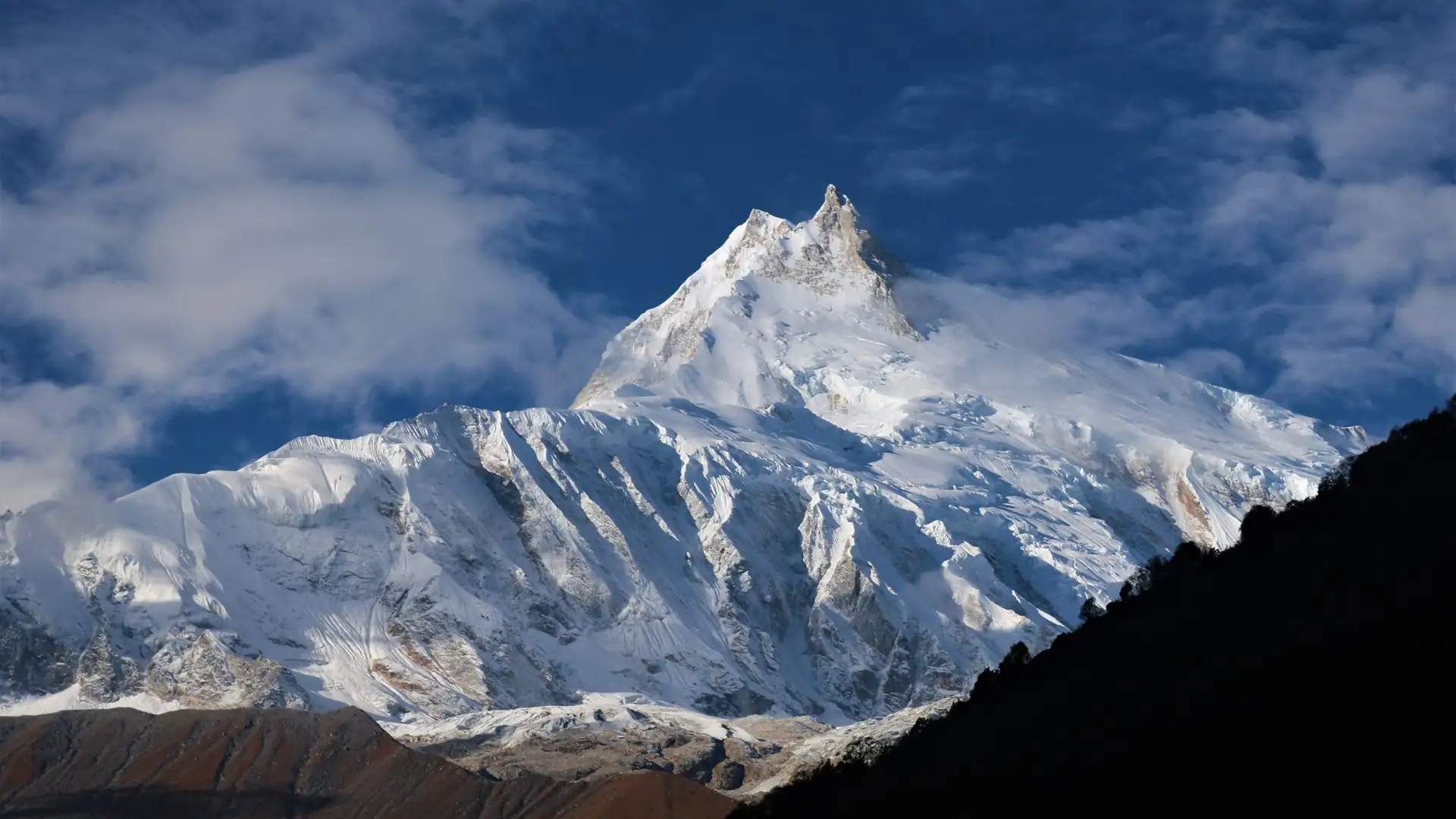
The trek's namesake mountain is, unsurprisingly, its single greatest highlight. Manaslu, at 8,163 meters, is the eighth-highest mountain in the world and sits entirely within Nepal's borders. Its name derives from the Sanskrit word "manasa," commonly translated as "mountain of the spirit" or "intellect" — a name that reflects the mountain's imposing, almost meditative presence over the surrounding Nupri region.
The mountain was first successfully climbed on May 9, 1956, by Toshio Imanishi and Gyalzen Norbu as part of a Japanese expedition, a landmark ascent that established a lasting connection between Manaslu and Japanese mountaineering — several of the pioneering expeditions on the mountain during the 1950s were Japanese-led, and the peak remains closely associated with that mountaineering history today.
What makes Manaslu a genuine trekking highlight, rather than simply a distant backdrop, is how close the standard trekking route brings you to the mountain itself — considerably closer than most treks bring visitors to their namesake 8,000-meter peak, rivaling the proximity Annapurna Base Camp trekkers experience with Annapurna I.
Viewpoint | Distance/character of view |
|---|---|
Lho village | First clear, dramatic views of Manaslu opening up |
Samagaon | Close-range views, considered one of the best vantage points on the entire trek |
Manaslu Base Camp (side trip) | The closest trekking-accessible point to the mountain itself |
Larkya La Pass | Sweeping high-altitude views of Manaslu and surrounding peaks from the pass |
Highlight 2: The Larkya La Pass Crossing
At 5,106 meters, Larkya La is both the trek's greatest physical challenge and one of its defining scenic highlights. The crossing — typically undertaken with a pre-dawn start from Dharamsala (Larkya Phedi) to reach the pass in good conditions before winds pick up later in the day — delivers sweeping panoramic views across the Manaslu massif on one side and toward the Annapurna range on the descent toward Bhimtang.
What makes this crossing a genuine highlight rather than simply an obstacle:
The sense of scale at 5,106 meters, standing among some of the highest terrain most trekkers will ever experience without technical climbing equipment
The dramatic shift in landscape between the ascent side (Nupri region, Tibetan-influenced) and the descent side (toward Bhimtang and the Marsyangdi valley, closer in character to the Annapurna region)
The genuine sense of achievement and remoteness that comes from crossing a major Himalayan pass on one of Nepal's quieter major routes
The crossing day is typically the longest of the entire trek, often taking 8 to 10 hours and covering considerable distance and elevation change — but it's consistently cited by past trekkers as one of the most memorable single days of the entire journey.
Highlight 3: Samagaon — The Trek's Cultural and Scenic Heart
Samagaon (3,520–3,530 m) functions as the Manaslu Circuit's equivalent of Manang on the Annapurna Circuit or Namche Bazaar on the Everest Base Camp trek — a substantial, culturally rich village that serves both as the trek's key acclimatization stop and as a highlight destination in its own right.
What makes Samagaon special:
Genuine Tibetan Buddhist architecture and culture, reflecting the village's historic connections to trans-Himalayan trade with Tibet
Close, dramatic views of Manaslu directly from the village itself
A natural base for two of the trek's best side-trip highlights: Manaslu Base Camp and Birendra Lake
The trek's mandatory acclimatization day is typically spent here, giving trekkers genuine time to explore rather than simply resting
Highlight 4: Manaslu Base Camp Side Trip
For trekkers with the time and acclimatization to spare during the Samagaon rest day, a side trip to Manaslu Base Camp offers the closest possible trekking-accessible vantage point to the mountain itself, without requiring any technical climbing skill.
Detail | Information |
|---|---|
Starting point | Samagaon |
Round-trip time | Typically 4–7 hours, depending on pace and exact route |
Highlight | Closest trekking-accessible view of Manaslu |
Recommended for | Trekkers who feel well-acclimatized on their Samagaon rest day |
This side trip isn't part of every itinerary by default, since it adds a genuinely demanding day during what's meant to be a rest period — but for trekkers who feel strong, it's widely regarded as one of the most rewarding optional additions to the standard route.
Highlight 5: Birendra Lake
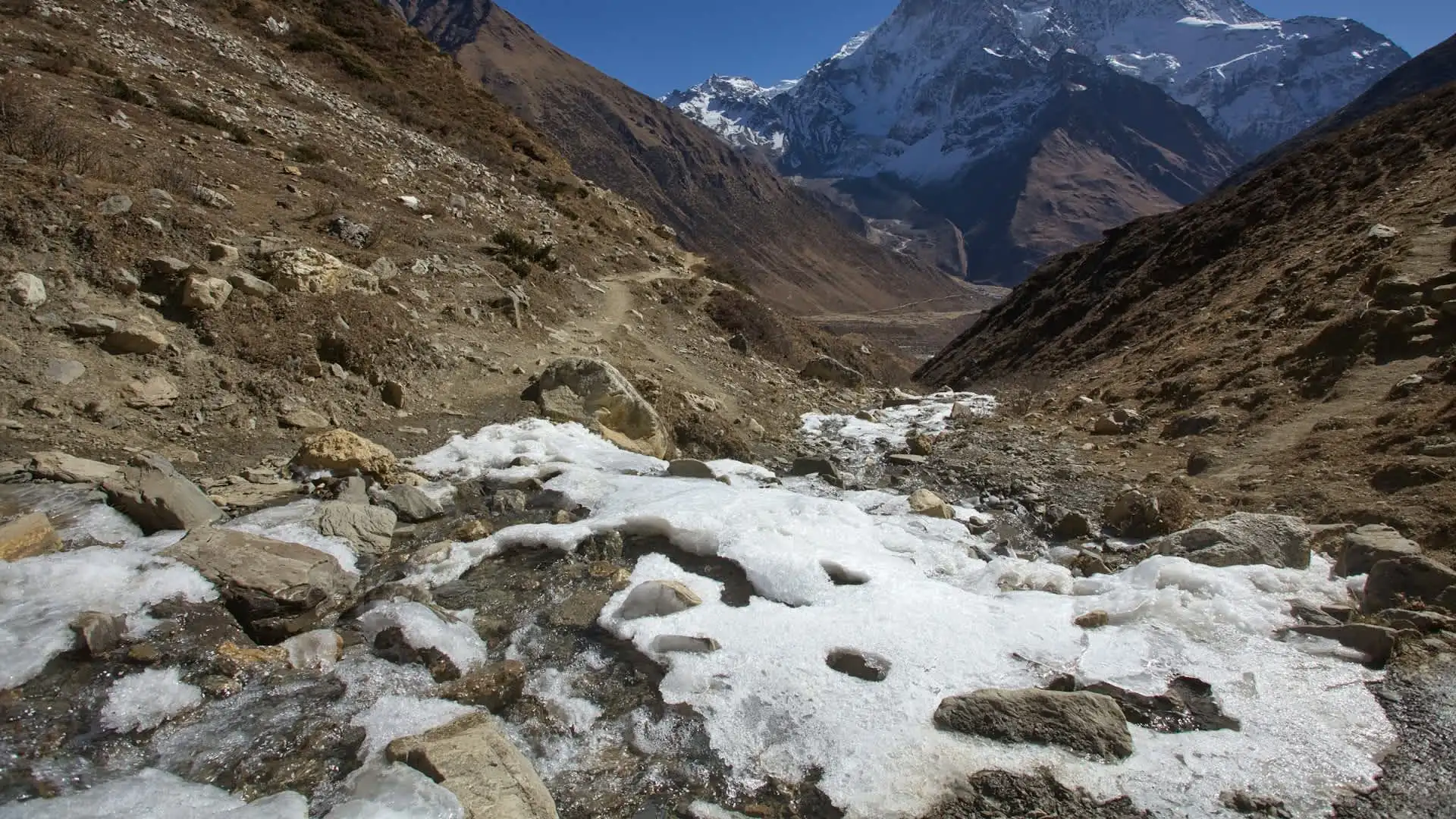
A short, considerably easier alternative or complement to the Manaslu Base Camp side trip, Birendra Lake is a glacial lake sitting beneath Manaslu's flank near Samagaon, formed by meltwater from the mountain's glaciers.
Why it's worth the visit:
A genuinely striking turquoise-blue glacial lake, framed by Manaslu and the surrounding peaks
A considerably shorter, easier excursion than the full Manaslu Base Camp trip, making it accessible even on a rest day without excessive exertion
A popular photography stop, given the reflective water and dramatic mountain backdrop
Many itineraries build in time for both Birendra Lake and, for stronger trekkers, the Manaslu Base Camp trip during the same Samagaon rest day, offering flexibility based on how trekkers are feeling at that point in the journey.
Highlight 6: Pungyen Monastery
Pungyen Monastery, near Samagaon, is one of the most historically and culturally significant religious sites along the entire route. Set against a dramatic mountain backdrop with close views of Manaslu, the monastery offers genuine insight into the Tibetan Buddhist traditions that define the upper Nupri region's culture.
Why this stop matters:
A genuinely active, functioning monastery rather than a purely historical site
Combines cultural and religious significance with some of the trek's best close-range mountain photography opportunities
A worthwhile addition for trekkers interested in the region's Buddhist heritage, typically visited as part of the broader Samagaon exploration
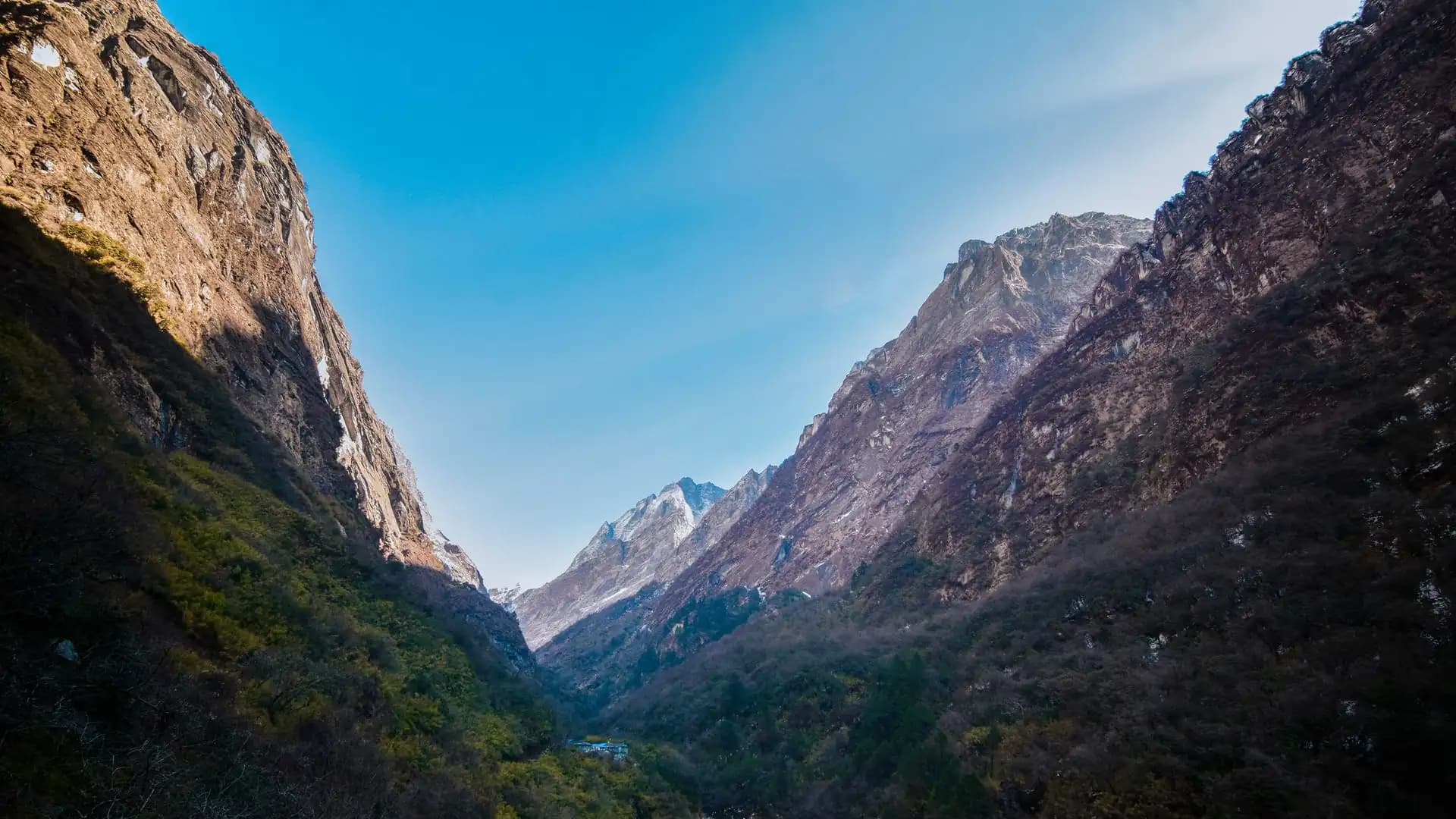
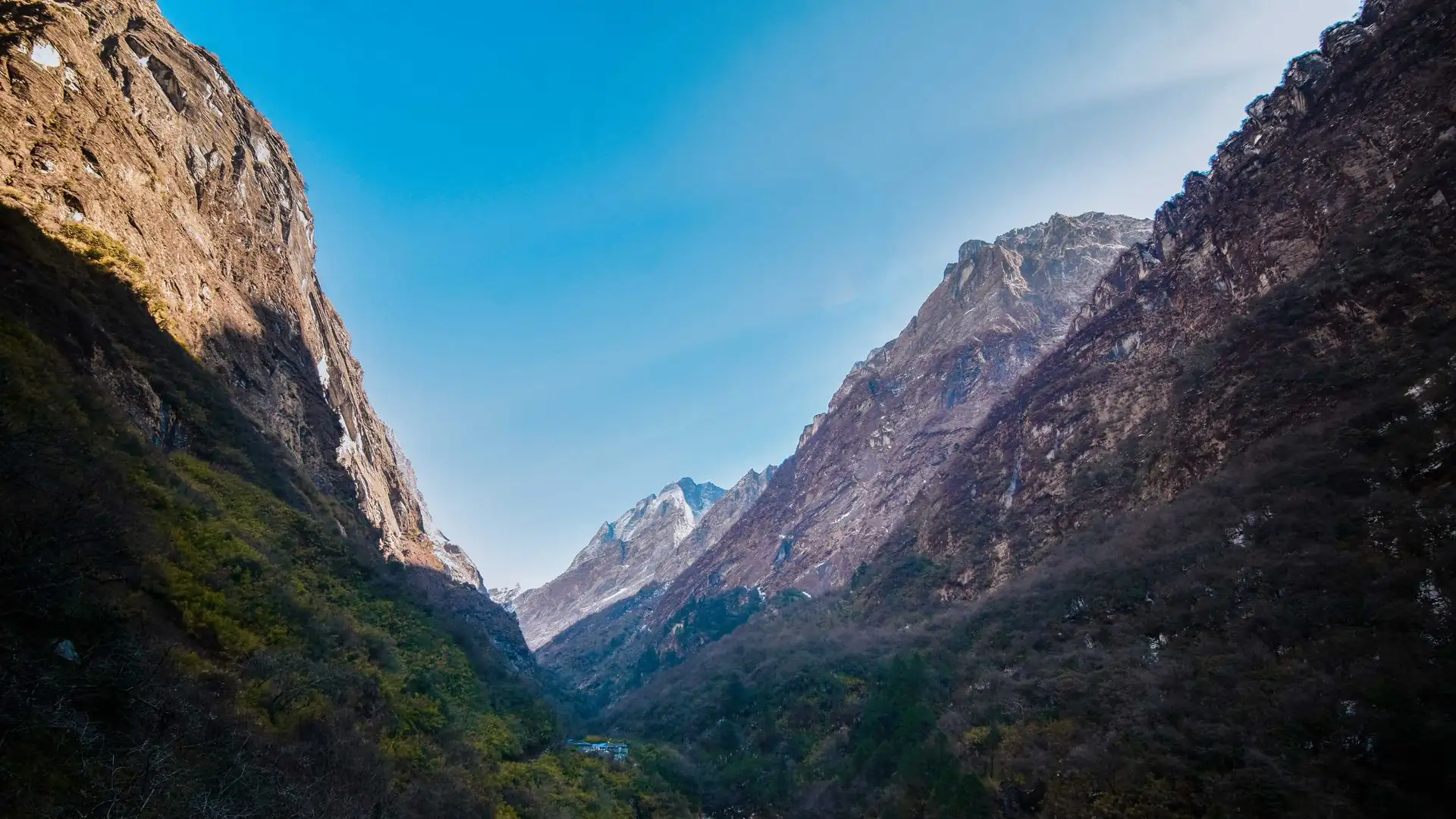
Highlight 7: The Budhi Gandaki Gorge and Suspension Bridges
The lower and middle sections of the trek follow the Budhi Gandaki River through a genuinely dramatic gorge, crossed repeatedly by suspension bridges — a defining visual and experiential feature of the route's early stages.
What makes this stretch memorable:
Dramatic river gorge scenery, with the trail often cut directly into cliff faces above the rushing Budhi Gandaki
Numerous suspension bridge crossings, a genuinely exciting and photogenic feature of the lower trail
A gradual transition from subtropical lowland terrain to increasingly alpine landscape as the trail climbs alongside the river
This section, while lower in altitude and often overlooked in favor of the trek's higher-altitude highlights, offers some of the most visually dramatic terrain of the entire route and sets the stage for the cultural and scenic transitions that follow further up the valley.
Highlight 8: The Cultural Transition Through Nupri
One of the Manaslu Circuit's most distinctive highlights isn't a single site but a genuine cultural journey — the trail passes through a clear cultural progression as it climbs from the lower Budhi Gandaki valley into the upper Nupri region.
Village/area | Cultural character |
|---|---|
Machha Khola, Jagat | Mixed lowland Nepali cultural influence |
Deng | First strong Tibetan cultural influences begin to appear |
Namrung | Alpine zone entry, increasingly visible Tibetan Buddhist architecture |
Lho | Prominent mani walls, chortens, and monastery presence |
Samagaon, Samdo | Genuinely Tibetan-influenced villages with strong historic trade connections to Tibet |
This progression — from mixed lowland culture to a genuinely Tibetan highland identity — closely parallels similar cultural transitions found on the Annapurna Circuit's approach to Manang or the Everest region's approach to the Khumbu, but with a notably less commercialized, quieter trail experience given Manaslu's restricted-area status.
Highlight 9: Jagat's Riverside Setting and Hot Springs
Jagat, the trek's key permit checkpoint and entry point to the restricted area, offers more than just administrative significance — its riverside setting along the Budhi Gandaki includes access to natural hot springs, a genuinely welcome feature for trekkers early in a multi-week journey.
Why this stop is worth appreciating:
A relaxing natural hot spring experience, relatively rare among Nepal's major trekking routes
A scenic riverside village setting that marks the meaningful transition into the trek's restricted, more remote section
The official entry point where permits are checked, making it a natural, memorable milestone early in the journey
Highlight 10: Tsum Valley — The Optional "Hidden Valley" Extension
For trekkers with additional time, Tsum Valley offers one of the Manaslu region's most distinctive optional highlights — a separate restricted area branching off the main circuit, historically significant as a Buddhist "hidden valley" with its own distinct culture, monasteries, and traditions.
Aspect | Detail |
|---|---|
Permit status | Separate Restricted Area Permit required, additional to the main Manaslu RAP |
Cultural character | Distinct from the main circuit, historically isolated Buddhist community |
Typical extension length | Several additional days beyond the standard circuit |
Best suited for | Trekkers with two-plus weeks available seeking an even quieter, more culturally immersive experience |
Tsum Valley is genuinely one of the least-visited trekking destinations in Nepal, and trekkers who add this extension consistently describe it as a highlight in its own right — arguably even quieter and more culturally distinctive than the main Manaslu Circuit itself.
Highlight 11: Genuinely Uncrowded Trails
This might be the Manaslu Circuit's most consistently cited highlight among trekkers who've also experienced Nepal's more famous routes: the restricted-area permit system and mandatory guide requirement have kept trekker numbers meaningfully lower than on the Annapurna Circuit or Everest Base Camp trek.
What this means in practice:
Teahouses feel less commercialized and more genuinely connected to daily village life
Trail encounters with other trekkers are considerably less frequent, offering a more solitary, contemplative experience
Villages haven't been as visibly reshaped by mass tourism infrastructure as some stops on Nepal's more popular circuits
For trekkers who've found Everest Base Camp or the Annapurna Circuit's busier stretches (particularly around Namche Bazaar or Chhomrong during peak season) more crowded than expected, Manaslu's quieter atmosphere is frequently cited as the single biggest draw of the entire trek.
Highlight 12: Diverse Climate and Landscape Zones
The trek's roughly 4,200-plus meters of elevation gain, from the subtropical lowlands near Machha Khola to the high alpine terrain at Larkya La, compresses a genuinely wide range of climate and landscape zones into a single continuous journey.
Elevation zone | Landscape character |
|---|---|
Below 1,500 m | Subtropical valley, terraced farmland, forest |
1,500–2,800 m | Transitional temperate zone, increasing forest density |
2,800–3,800 m | Alpine zone entry, Tibetan-influenced villages |
3,800–5,106 m | High alpine terrain, glacial features, the pass itself |
This diversity means trekkers experience genuinely different ecosystems, architecture, and cultural contexts within a single two-week trip — a distinctive feature of the trek that's easy to overlook when focused purely on the mountain views and pass crossing, but one that adds considerable variety to the overall experience.
Highlight 13: Wildlife and the Manaslu Conservation Area
The Manaslu Conservation Area, through which most of the trek passes, protects a genuinely rich range of Himalayan wildlife, and while sightings aren't guaranteed, the region's biodiversity is a notable highlight for trekkers with an interest in the area's ecology.
Wildlife the conservation area is known for protecting:
Snow leopards (rarely seen, but the region is recognized habitat)
Himalayan tahr and blue sheep on higher alpine slopes
Diverse bird species across the trek's varied elevation zones
Red pandas in the lower forested sections, though sightings are uncommon
The conservation area's protected status is part of what has allowed the region's ecology to remain relatively undisturbed compared to more heavily trafficked trekking corridors, adding an additional layer of significance to the trek beyond its cultural and scenic highlights.
Highlight 14: Samdo — The Trek's Most Remote Major Village
Samdo (3,860–3,875 m), the last significant village before the push toward Larkya La, sits close enough to the Tibetan border that its culture and historical trade connections to Tibet remain genuinely visible in daily village life.
Why Samdo stands out:
One of the most remote, culturally distinct stops on the entire route
A genuine sense of arriving at the edge of accessible Nepal, with Tibet visibly close
The last substantial village before the trek's high-altitude, glacier-adjacent final approach to the pass
Highlight 15: Bhimtang and the Descent Toward the Annapurna Region
After crossing Larkya La, the descent to Bhimtang (3,590–3,720 m) offers a genuinely dramatic shift in scenery and, for many trekkers, a well-earned sense of relief and achievement after the demanding pass crossing.
Why this stop is memorable:
Set in a broad, scenic valley with excellent views back toward the peaks just crossed
Marks the transition from the Manaslu region's Tibetan-influenced character toward landscapes and culture more reminiscent of the neighboring Annapurna region
A natural, well-earned rest point after the trek's most physically demanding day
Highlight 16: The Overall Sense of Trans-Himalayan Journey
Beyond any single site or view, the Manaslu Circuit's cumulative highlight is arguably the genuine sense of a complete trans-Himalayan journey it delivers — starting in subtropical lowlands, climbing through increasingly Tibetan-influenced mountain culture, crossing a genuinely serious high-altitude pass, and descending into an entirely different valley and cultural region on the other side, all within a two-week trek.
This structure — geographically and culturally comprehensive, physically demanding but not technical, and experienced with meaningfully fewer trekkers than Nepal's more famous circuits — is what consistently draws experienced trekkers back to Manaslu after they've completed routes like Everest Base Camp or the Annapurna Circuit and are looking for something that delivers comparable drama with considerably more solitude.
Comparing Manaslu's Highlights to Other Major Nepal Treks
Highlight category | Manaslu Circuit | Annapurna Circuit | Everest Base Camp |
|---|---|---|---|
Namesake mountain proximity | Close (Samagaon, Manaslu Base Camp) | N/A (circles the massif, doesn't approach one peak directly) | Close (Base Camp, Kala Patthar) |
High pass crossing | Larkya La, 5,106 m | Thorong La, 5,416 m | N/A (no major pass) |
Crowd levels | Low | Moderate–high | High |
Cultural distinctiveness | Strong Tibetan influence, less commercialized | Strong Tibetan influence around Manang | Strong Sherpa culture, more commercialized |
Optional "hidden valley" extension | Yes (Tsum Valley) | No direct equivalent | No direct equivalent |
Glacial lake feature | Yes (Birendra Lake) | No direct equivalent | No direct equivalent |
This comparison highlights what makes Manaslu genuinely distinctive: it combines features found individually across Nepal's other major treks — a namesake mountain approach like EBC, a serious high pass like the Annapurna Circuit, and Tibetan cultural immersion like both — while offering meaningfully fewer crowds than either.
Best Time to Experience These Highlights
Season | Months | Effect on highlights |
|---|---|---|
Autumn | September–November | Clearest views of Manaslu and the surrounding peaks; best overall season for photography and visibility |
Spring | March–May | Good visibility, plus blooming rhododendrons at lower elevations adding to the landscape highlights |
Winter | December–February | Larkya La crossing becomes genuinely difficult due to snow; lower permit cost but higher risk |
Monsoon | June–August | Reduced visibility, obscuring many of the trek's key mountain-view highlights |
Autumn is widely considered the best season for experiencing the trek's full range of highlights, offering the clearest views of Manaslu from Samagaon and the pass, along with the most stable conditions for the Larkya La crossing itself.
FAQs about Highlights of Manaslu Circuit Trek
What is the single best highlight of the Manaslu Circuit Trek? Most trekkers cite either the close-range views of Manaslu from Samagaon or the Larkya La Pass crossing itself as the trek's defining highlight, though the overall combination of mountain views, culture, and solitude is what makes the trek genuinely distinctive.
Can I see Mount Manaslu up close on this trek? Yes — Samagaon offers close, dramatic views of the mountain, and the optional Manaslu Base Camp side trip brings trekkers even closer, though without any technical climbing involved.
What is Birendra Lake, and is it worth visiting? Birendra Lake is a glacial lake near Samagaon, formed by meltwater from Manaslu's glaciers. It's a genuinely worthwhile, relatively easy side trip offering striking turquoise water framed by dramatic mountain scenery.
Is the Tsum Valley extension worth adding to my itinerary? For trekkers with additional time, yes — it's widely regarded as one of the most culturally distinctive and quietest trekking destinations in Nepal, offering an even more remote experience than the main Manaslu Circuit itself.
How high is Larkya La Pass, and why is it a highlight? 5,106 meters. It's a highlight both for its physical achievement and for the sweeping panoramic views it offers across the Manaslu massif and toward the Annapurna region on the descent side.
Is the Manaslu Circuit less crowded than other major Nepal treks? Yes, considerably — the restricted-area permit system and mandatory guide requirement have kept trekker numbers meaningfully lower than on the Annapurna Circuit or Everest Base Camp trek.
What wildlife might I see on this trek? The Manaslu Conservation Area is recognized habitat for snow leopards (rarely seen), Himalayan tahr, blue sheep, diverse bird species, and occasionally red pandas in the lower forested sections, though sightings of the rarer species are uncommon.
What's the cultural highlight of the trek? The genuine cultural transition from mixed lowland Nepali influence in the lower villages to strongly Tibetan Buddhist culture in the upper Nupri region, particularly visible in Samagaon and Samdo.
Are there monasteries worth visiting on this trek? Yes — Pungyen Monastery near Samagaon is one of the most historically and culturally significant sites on the route, offering both religious significance and excellent mountain photography opportunities.
What makes the lower section of the trek scenically interesting, beyond the mountain views? The Budhi Gandaki Gorge, with its dramatic river scenery and numerous suspension bridge crossings, is a genuinely striking feature of the trek's lower and middle sections.
Is there a hot spring on this trek? Yes — Jagat, the trek's key permit checkpoint, offers access to natural hot springs, a welcome feature early in the journey.
When is the best time to see Manaslu clearly from Samagaon? Autumn (September–November) generally offers the clearest visibility of the mountain, though spring (March–May) is also a strong option.
Does the Manaslu Circuit offer views of other mountains besides Manaslu itself? Yes — the Larkya La crossing and descent toward Bhimtang offer views extending toward the Annapurna range, and the route's higher sections offer views of several other peaks within the Manaslu massif.
Is the Manaslu Base Camp side trip suitable for all trekkers? It's generally recommended only for trekkers who feel genuinely well-acclimatized during their Samagaon rest day, given the additional exertion involved during what's meant to be a recovery period.
How does Manaslu's cultural experience compare to the Everest region's Sherpa culture? Both regions have strong Tibetan Buddhist cultural influences, but Manaslu's Nupri region is generally considered less commercialized and more traditionally preserved, given the area's more limited tourism history compared to the heavily visited Khumbu region.
What's the most photogenic single stretch of the trek? Opinions vary, but the Larkya La crossing, the views from Samagaon toward Manaslu, and the Budhi Gandaki Gorge's suspension bridges are consistently among the most cited highlights for photography.
Is the trek's remoteness itself considered a highlight? Yes, genuinely — many trekkers who've completed Nepal's more famous routes cite Manaslu's quieter trails and less commercialized villages as the single biggest draw of the entire experience.
What's a good add-on activity during the Samagaon acclimatization day? A visit to Birendra Lake (easier, shorter) and/or the Manaslu Base Camp side trip (more demanding, for well-acclimatized trekkers), often combined with a visit to Pungyen Monastery.
Does the trek pass through any UNESCO-recognized sites? No — the Manaslu Conservation Area itself is not a UNESCO World Heritage Site, though it's a nationally protected conservation area recognized for its biodiversity and cultural significance.
How does the diversity of landscape on this trek compare to other Nepal treks? The trek compresses subtropical lowland, temperate forest, and high alpine terrain into a single continuous route, offering a genuinely wide range of climate and landscape zones comparable to what's experienced on the longer Annapurna Circuit, despite Manaslu's somewhat shorter overall length.
Conclusion on Highlights of Manaslu Circuit Trek
The Manaslu Circuit Trek's highlights aren't confined to a single dramatic moment — they're spread across an entire journey that moves from subtropical river gorges and suspension bridges, through an increasingly Tibetan cultural corridor of monasteries and mani walls, past a genuine glacial lake and close-range views of the world's eighth-highest mountain, and finally over a serious high-altitude pass into an entirely different valley on the other side.
What ties every one of these highlights together is the trek's restricted-area status, which has preserved a level of quiet, cultural authenticity, and ecological richness that's become increasingly rare on Nepal's more famous circuits. For trekkers who've experienced Everest Base Camp or the Annapurna Circuit and are looking for a comparably dramatic, comparably rewarding trek with a fraction of the crowds, Manaslu delivers on every front.
Adventure Life Nepal builds every Manaslu Circuit itinerary specifically to give trekkers proper time at each of these highlights — the Samagaon rest day for Birendra Lake and Manaslu Base Camp, a well-paced approach to Larkya La, and, for those with extra time, the option to extend into Tsum Valley for an even deeper look at one of Nepal's most genuinely remote and rewarding trekking regions.