Annapurna Circuit Trek via Thorong La – 10 Days
Trip Duration: 10 Days
Trip Grade: Moderate
Group Size: Min 2 Person - Max 12 Person
Start Point: 1,400 m
Ending Point: 1,400 m
Max Altitude: 5,416 m
Overview
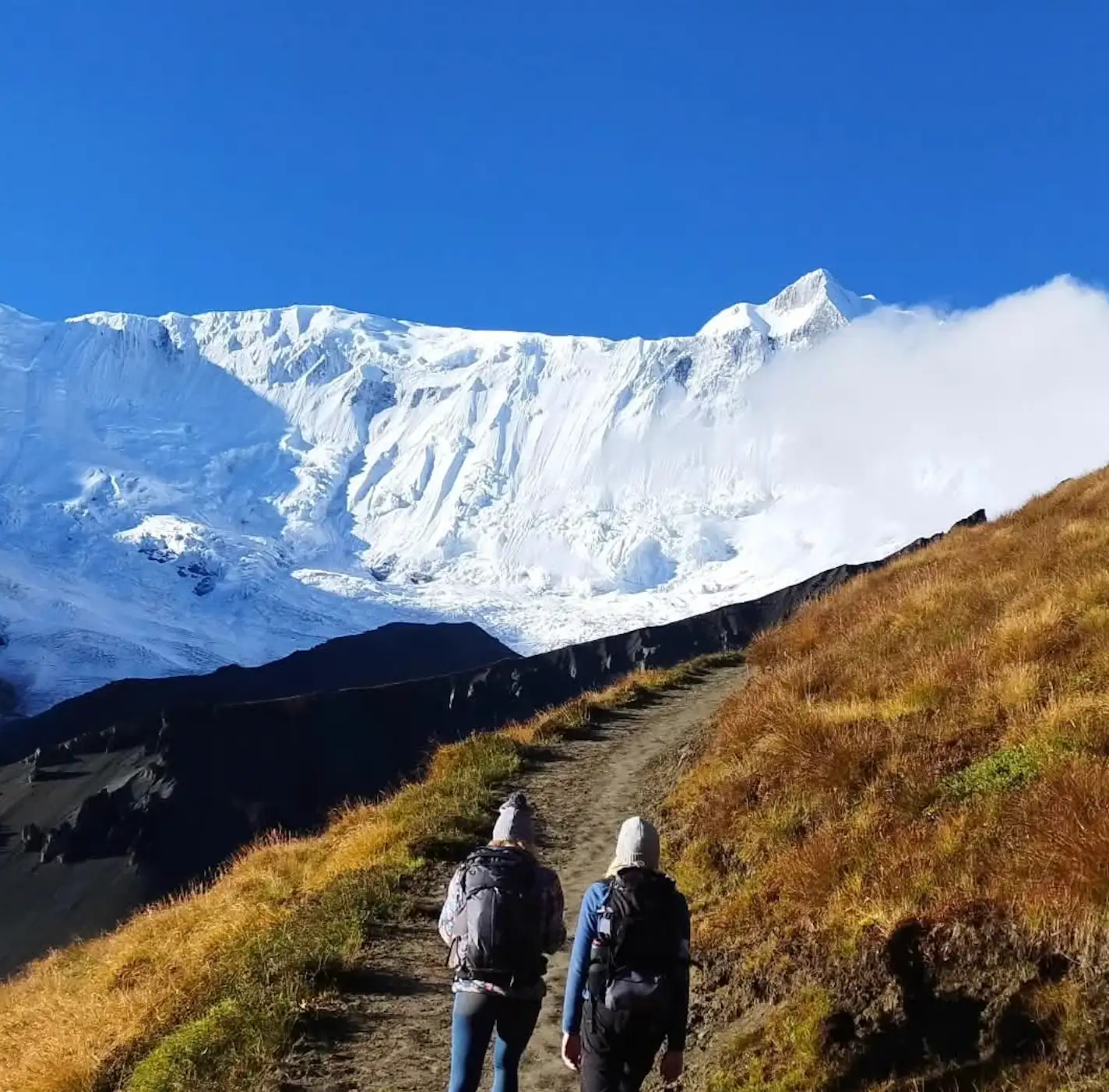
The Annapurna Circuit is one of the world's great treks, and this 10-day itinerary covers its best section. You drive to Chame and then walk through pine forest and old stone villages into the high, dry valley of Manang. From there you cross Thorong La Pass at 5,416 m, one of the highest trekking passes in the world, and descend to the sacred temples of Muktinath.
The route is built for a safe crossing. You take the scenic upper trail through Ghyaru and Ngawal, spend a full acclimatization day in Manang and have a short day to Yak Kharka. Then you sleep at High Camp, which shortens the pass day. After the pass, a jeep takes you down the Kali Gandaki gorge to Pokhara.
This trek suits fit walkers who have limited time but still want the full Thorong La experience. No technical climbing skills are needed.
Highlights
Itinerary
Drive: 9–10 hours We leave Kathmandu early and drive west to Besisahar. From there the road climbs the Marsyangdi valley through Jagat, Dharapani and Timang to Chame, the headquarters of Manang district. Views of Lamjung Himal and Annapurna II begin along the way.
Trek: 5–6 hours The trail runs through pine forest and past the huge curved rock face of Paungda Danda. We climb to Upper Pisang, an old stone village with a monastery and wide views of Annapurna II and Pisang Peak.
Trek: 6–7 hours We follow the scenic upper trail through the traditional villages of Ghyaru and Ngawal. It has some of the best Annapurna views on the whole Circuit. The trail then descends to Manang, a Tibetan-style village with stone houses, prayer wheels and monasteries.
Rest and short hikes This rest day helps your body adjust to the altitude. Short hikes to Gangapurna Lake, the Ice Lake viewpoint or Praken Gompa are a good way to spend it. Climbing high and sleeping low prepares you for the pass.
Trek: 3–4 hours This short day keeps the altitude gain gentle. We climb out of the Manang valley past Gunsang, with views of Gangapurna, Annapurna III and the Chulu peaks, and reach the grazing pastures of Yak Kharka.
Trek: 4–5 hours We cross a suspension bridge, traverse a landslide area and reach Thorong Phedi. From there, a steep climb of about an hour takes us to High Camp, which makes the pass day shorter. The afternoon is for resting and getting ready for an early start.
Drive: 8–9 hours We drive down the Kali Gandaki gorge, the deepest gorge in the world, passing Jomsom, Marpha and Tatopani on the way to Pokhara. The evening is free for a walk beside Phewa Lake.
A scenic drive along the Trishuli River brings us back to Kathmandu. The evening is free for shopping or a farewell dinner.
We transfer you to Tribhuvan International Airport for your onward flight.
Elevation Profile
Altitude Variation Chart
What's Included
Included
- Airport transfer on departure day
- Tourist bus from Pokhara to Kathmandu (private vehicle on request, at extra cost)
- One night in a hotel in Pokhara and one night in a hotel in Kathmandu, with breakfast
- Experienced, government-licensed English-speaking trekking guide
- Porter service (one porter for every two trekkers)
- Annapurna Conservation Area Project (ACAP) permit, plus a TIMS card if checkpoints require one
Excluded
- International flights and Nepal visa fees
- Travel insurance with cover for high-altitude trekking and helicopter evacuation
- Personal expenses such as hot showers, battery charging, Wi-Fi, laundry and snacks
- Extra nights caused by bad weather, landslides, illness or early return
- Personal trekking gear
Packing List
Porters carry your main bag (up to about 10–12 kg per person). You carry a daypack with what you need during the day.
Clothing
• Down jacket (warm enough for −15 °C on the Thorong La morning)
• Waterproof and windproof shell jacket and trousers
• Fleece or insulated mid-layer
• Thermal base layers, top and bottom (2 sets)
• Quick-dry trekking shirts and trekking trousers
• Warm hat, sun hat or cap, and a buff or neck gaiter
• Liner gloves and insulated waterproof gloves
• Trekking socks (4–5 pairs) and warm sleeping socks
• Quick-dry underwear
Footwear
• Broken-in waterproof trekking boots with ankle support
• Camp shoes or sandals for the evenings
• Gaiters (useful if there is snow on the pass)
Gear
• Sleeping bag rated to around −10 °C (can be rented in Kathmandu)
• Duffel bag for the porter and a 25–35 L daypack
• Trekking poles
• Headlamp with spare batteries (essential for the pre-dawn start on Day 7)
• Two 1 L water bottles or a hydration bladder
• Water purification tablets or a filter bottle
• Sunglasses with UV protection
• Power bank
Health and toiletries
• Sunscreen (SPF 50) and lip balm with SPF
• Personal medicines and a small first aid kit (blister plasters, painkillers, rehydration salts)
• Altitude medicine if your doctor advises it
• Hand sanitizer, wet wipes and toilet paper
• Quick-dry towel and basic toiletries
Documents and extras
• Passport and copies, plus 4 passport photos for permits
• Travel insurance details
• Nepali rupees in cash (ATMs on the trail are few and unreliable)
• Snacks such as energy bars, nuts and chocolate
• Waterproof bag liners or dry bags
Frequently Asked Questions
It is moderate to strenuous. Most trekking days are 4–7 hours. Pass day (Day 7) is the hardest, with an early start, a steep climb to 5,416 m and a long descent. You don't need technical climbing skills.
Yes, for fit trekkers. Driving to Chame and from Muktinath to Pokhara saves several days on roads. The itinerary still includes an acclimatization day in Manang, a short day to Yak Kharka and a night at High Camp, so you gain height gradually.
It isn't required, but it helps. Good fitness matters most. We recommend regular hiking, running, cycling or stair climbing for at least 6–8 weeks before the trip.
Spring (March–May) and autumn (late September–November) bring the most stable weather and clearest views. In winter, heavy snow can close Thorong La. In the monsoon (June–August), landslides and leeches are common on the lower sections.
Yes. Above 3,000 m anyone can get altitude sickness, however fit they are. Your guide checks on you every day. Tell them at once if you have a headache, nausea, dizziness or trouble sleeping. If symptoms get worse, the only cure is to go down.
Your guide will help you descend safely. In an emergency, a helicopter evacuation can be arranged. This is why you need travel insurance that covers high-altitude rescue.
Yes. Our 12-day Annapurna Circuit with Tilicho Lake Trek adds a detour to one of the highest lakes in the world.
You need the Annapurna Conservation Area Project (ACAP) permit. We arrange all permits for you. Just bring your passport and passport photos.
Customer Reviews
Loading reviews...